

Diabetics Doing Things FOUNDERS - Christel Oerum - Diabetes Strong
Episode summary
Christel Oerum, co-founder of Diabetes Strong, returns to the podcast to talk about managing type 1 diabetes alongside a career built around diabetes and fitness. She was diagnosed in 1997 at 19 in Denmark and credits an early diabetes nurse for telling her nothing was off limits. She and Rob Howe discuss how different types of exercise affect blood sugar, her planning routine before workouts, and why she chooses multiple daily injections over a pump. She explains how she uses the InPen smart insulin pen to track insulin on board and avoid stacking doses. They also talk about picking a doctor who fits your personality, and about normalizing less-discussed parts of diabetes, like yeast infections, within the community.
Key takeaways
- Christel Oerum was diagnosed with type 1 diabetes in 1997 at age 19 in Denmark, and a supportive diabetes nurse told her diabetes wouldn't stop her from traveling.
- Oerum says cardio-style workouts tend to drop her blood sugar, while heavier lifting with rest between sets tends to hold it steady or raise it.
- She uses the InPen smart insulin pen to track insulin on board and avoid stacking doses while on multiple daily injections.
- Oerum stays on MDI instead of a pump because, for her, using rapid-acting insulin as a basal made exercise harder to manage than a long-acting basal shot.
- She picked her endocrinologist for being data-driven and solution-oriented, since that matches how she manages her own diabetes.
Show notes
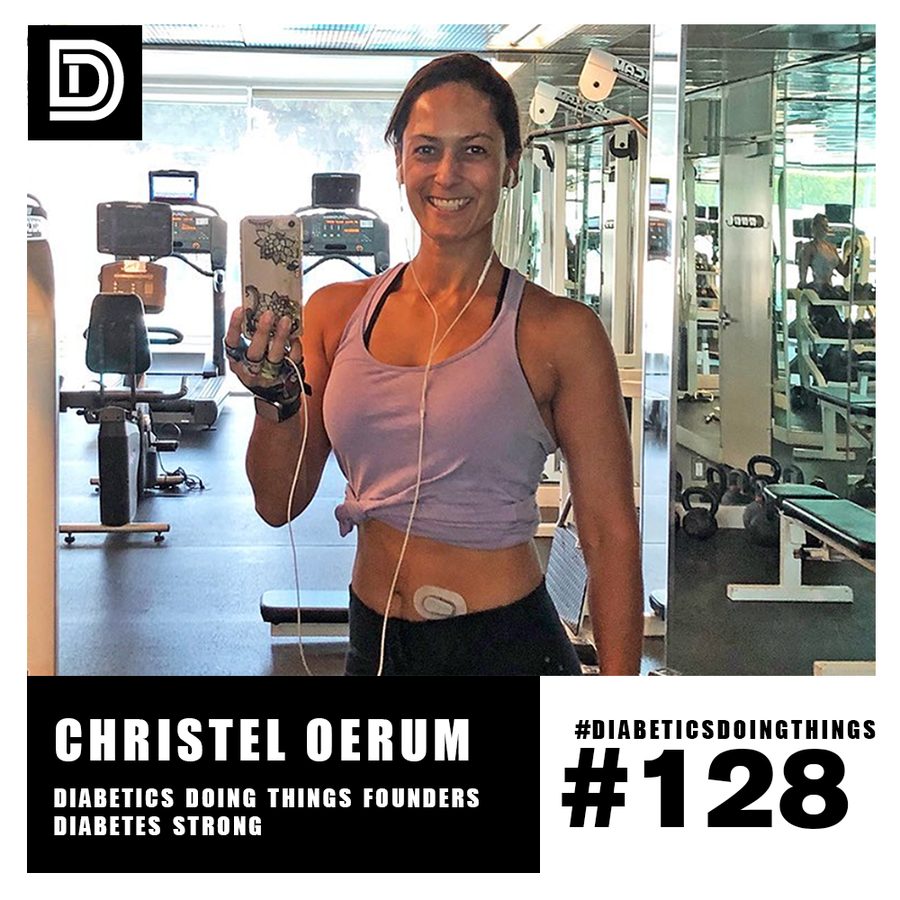
We are continuing to highlight founders with Diabetes on the podcast. The newest founder is Christel Oerum, who has appeared on the podcast twice! Once in episode 94 and again in episode 007 of Tools of Type 1s.
Christel is the co-Founder of DiabetesStrong.com along with her husband Tobias. She joins the pod to talk about how she balances life with Diabetes with a career in Diabetes, and how she stays motivated along the way. She is also accepting applications to the 4th annual Fit with Diabetes Challenge! Start 2020 strong by joining thousands of other people living with diabetes in the Fit With Diabetes Challenge on January 3!
This is the 4th year Christel hosts this free 3-week challenge on Diabetes Strong. Their team of top diabetes experts and I will take you through some of the most important things to know about diabetes and exercise, healthy nutrition, weight management, and diabetes mental health. They’ll help you reach your health and fitness goals, whatever they might be.
You can sign up for free and get ready as we kick off the Fit With Diabetes Challenge on January 3.
Christel and I also talk in-depth about Companion Medical and the In-Pen. She is currently utilizing the Companion Medical app to get insulin on board and carb ratios for her multiple daily injections. Be sure to check out Christel on Instagram and check out the amazing content on DiabetesStrong.com.
This episode is sponsored by Companion Medical. If you are on multiple daily injections, but want the data and analytics pump users have available to them, then you need the In-Pen by Companion Medical. Learn more at Companion Medical’s website!
Questions this episode answers
How does Christel Oerum manage her blood sugar during exercise?
She plans workouts in advance and tracks whether a session is more cardio-based or more resistance-based, since she says cardio tends to drop her blood sugar while heavy lifting with rest between sets does not. She adjusts her pre-workout insulin dose based on which type of workout she's doing.
Why does Christel Oerum use multiple daily injections instead of an insulin pump?
She tried a pump and liked the technology, but found that using rapid-acting insulin as her basal made exercise, especially fasted morning cardio, harder to manage than her long-acting basal shot on MDI.
What is the InPen and how does it help people on insulin injections?
The InPen is an FDA-cleared smart insulin pen that bluetooths each dose to a phone app, tracks insulin on board, and includes a bolus calculator, which Oerum says helps prevent accidentally stacking insulin doses.
What does Christel Oerum say about choosing an endocrinologist?
She says to pick a doctor who fits your personality and needs. Her own endocrinologist is data-driven and solution-oriented, which matches how Oerum approaches her own diabetes management.
Full transcript Searchable, with timestamps
Rob Howe: Welcome to the Diabetics Doing Things Podcast. We've been telling the amazing stories of type 1 diabetics all across the world since 2015, and we have over a thousand years of living with T1D on the podcast. The interviews range from incredible feats to everyday victories, and we celebrate them all just the same. Thanks for listening, and if you want to get involved even further, just send me an email at rob at diabeticsdoingthings.com. Hello again, ladies and gents. Today I have a very cool diabetes sponsor I'd like to tell you about, Companion Medical. specifically the Companion Medical InPen. When I talk to people who use multiple daily injections to treat their diabetes, one of the things that often comes up is the lack of data they're able to see about dosing, daily insulin totals, etc. In fact, Companion Medical discovered that only 7% of people who use insulin are using insulin pump therapy to control their diabetes. So Companion Medical decided to bring pump benefits to insulin pen users with the InPen. The InPen is an FDA-cleared smart insulin pen and app that gives patients the tools to manage their multiple daily injections. The InPen is compatible with the Lilly and Novolog pre-filled insulin cartridges and single-use disposable needles. Those are not included with the InPen, but that is what is compatible with it. Using the information transmitted from the Pen itself, the Companion Medical app can track insulin therapy, calculate doses, share data with your doctor and family right on your smartphone. The best part is the InPen is covered as a pharmacy benefit under most insurance plans. Currently, you pay no more than $35 for the in-pen with a special co-pay assistance program. So, if you're on multiple daily injections or just thinking about taking a break from your pump therapy and don't want to lose all the features that come with using a pump, talk to your doctor about Companion Medical in-pen and visit companionmedical.com for more information. Hello again, ladies and gentlemen. Welcome back to another episode of Diabetics Doing Things. Today, my special guest, who has been on the podcast a couple times, she was on last year at the end of 2018. And then again, as a part of tools of type ones, my good friend, Christel Oerum, who is half of the brain trust behind diabetes strong.com with her husband, Tobias, she and I are going to get a little bit into what she's doing these days in terms of diabetes management, as well as exercise. And I know for those of you who follow her on social media, she is starting her diabetes strong challenge at the beginning of the year. So be sure to check out diabetesstrong.com to learn more about how you can start off your new year with better fitness goals and diabetes management. So without further ado, I present the great and awesome good friend of mine, Christel Oerum. Welcome back to another episode of the Diabetics Doing Things podcast. I'm your host, Rob Howe. We're still telling the amazing stories of people with diabetes from all over the world. My very special guest today, Christel Oerum. Welcome to the show.
Christel Oerum: Hi, Rob. Thank you for having me.
Rob Howe: Of course. Always a pleasure. And this is obviously you and I have gotten to be good internet friends over the years and also get to hang out in person from time to time. So it's always good to have a friendly face. Somebody that I actually know on the podcast makes me more comfortable. I can joke around.
Christel Oerum: Oh, good.
Rob Howe: So get ready for some jokes and some fun. And for those that don't know you, we always start a diagnosis. So let's hear the story. Let's dive into it.
Christel Oerum: My little diagnosis story, yeah. Well, I was diagnosed in 1997, so this was December of '97, so we're coming up about 22 years. This is a long time ago. It's interesting because my diagnosis story, it's not super dramatic in the sense I didn't go into DKA or anything like that. I did show all the classical symptoms, like I had to go to the restroom all the time. I was drinking a lot of water, so explaining it through that. I fell asleep all the time, explained that with being 19 and partying a whole lot and working two jobs. So everything could just be explained until like one, again, it was December. So it was the holidays to be doing with family. And so my family was like, you know, this is not normal. You're like napping between between courses pretty much. This is not normal. Please go see a doctor. And I went and saw my primary care and he gave me a long speech about eating right, getting my sleep, blah, blah, blah. saying that to a 19 year old, right? And then he's like, but you know, let's just measure blood sugar. So he did that in the, you know, in his office. And he's like, so you have diabetes. And he might have explained more about it. I don't remember. I think a lot of times when you get sort of big news that you don't quite understand, you don't necessarily listen. So I just know that I left his office with a diagnosis of diabetes. And I grew up in Denmark so I was on my bicycle home thinking oh my god I've been handed a death sentence I am you know I don't know what this diabetes thing is but I'm clearly dying and so of course that wasn't optimal um five to home luckily my mom was home she's a nurse she understood diabetes way better than I did and could explain it to me and you know got me settled down going you're not dying and then we went and saw a specialist the week after and I think that's something Rob you and I have talked about before is that you know who are the first people you interact with or which what do the medical you know professionals you meet tell you when you get diagnosed right so my doctor didn't really tell me a whole lot but when I then got to the clinic that Monday after with my mom I got assigned this awesome diabetes nurse so just like a pediatric nurse I don't know I was 19 it was really a kid but I was still in the in the pediatric section and she was just she was just awesome in the sense that her name was Lada still is I think and she was like well you know this sucks but you can do anything you want and I think just having that instilled really really from the get-go has been really helpful she was the one so basically when I was 19, the reason why I was working two jobs was I was trying to save up money to go traveling. I wanted to like backpack around India. Right. So I was saving up money for that. And then I got this diagnosis in December and I'm like, you know, can I go? And a lot of it's just like, of course you're going. So within a year of my diagnosis, that's fall after I backpacked through India with a friend for three months. So I think if she hasn't been like, of course you're going. I probably, I probably wouldn't have, or maybe I would, I don't know. But anyway, having somebody who early on has positive influence and a positive outlook on how you can live, live happily with diabetes. I think that's really, really powerful.
Rob Howe: And that's interesting. I think, you know, you and I, obviously you mentioned that we've talked about this before. You've been on this podcast. I did just confirm you were also on tools of type ones. Fast forwarding to today. Well, Hey, I guess my, my experience is very similar. I was 16, so probably not really a peed from a pediatric standpoint, but I had a pediatric endocrinologist until I went to college, and he and I are still friends today, which has been cool to interact with him on the adult side. But how important is it, and obviously we've talked about, you know, having someone other than your doctor, other than your parents in a lot of cases that, you know, um do you take any of that experience of you know the positivity and the encouragement that you received from from your nurse that you know do you take that does that influence how you talk to people who are newly diagnosed when you reach when they reach out or they you know contact you through the website or whatever the case is um well it's interesting
Christel Oerum: because I think a lot of my approach to diabetes, because you mentioned being positive, and thank you for that, because I do try to, like, I think diabetes is a pain in the butt in so many ways, but there's also a lot of positive things. You know, it might suck, but there are things we can do, so it sucks less. So it's one of those things. So whenever I have a conversation whether or not it's, you know, newly diagnosed or actually people who have been diagnosed for a long time, it's always about well you know I hear you and working how can work what can we do from wherever you're at if it's a newly diagnosed tour often it's active parents reaching out saying you know I was so scared that my my kid wouldn't be able to you know be active when they grow up and then I see you know you being active on social media on the website that really gives me hope for my child so that's one way of sort of showing that there's nothing you can't do. And then there's people who reach out to me going like, well, I'm in a place right now where I'm frustrated or diabetes is hindering me in doing things, right? And if it's that kind of question I get, I often go into problem solving mode because that's how my brain works. But it's always, I think it's always important that when somebody reaches out and they are struggling, say, you know what? I hear you. I hear that you're struggling. I would never, you know not think that people are struggling or not acknowledge that but it's also well how can you move from there right i'm not a psychologist or anything like that but i can tell people what i do well and i and i think so in a sense that i think that's interesting as well because
Rob Howe: there's been a lot of rhetoric at least that i've been exposed to recently where um you know circumstances of which diabetes is one that's like a negative circumstance Positivity is not always, you know, all you need I think that there's in some cases a lot of people that spread information about if you just pull yourself up by your bootstraps and take ownership and And go forward. Everything's going to be okay But I do think It goes a long way, especially with diabetes because something i've been thinking about and chewing on lately is diabetes makes you better at failure because You fail often like all the time you know, every day. It's not critical failure. It's not permanent failure, but you got to bounce back from something that often doesn't go the way that you planned. And like you said, you know, there's often, you know, recognizing the struggle is a huge part of it. Diabetes does suck. It's terrible. Uh, but also what problem can I solve? Um, so for you, I guess, um, how do you start approaching those problems, especially when maybe they're not your problems or either something for, I'll give you an example. Um, a woman reached out to me, a parent of a, of a young type 1 who's been recently diagnosed who plays basketball. So of course she reaches out to me, I'm the guy that plays basketball. Um, and I'm like, yes, this is perfect. This is my wheelhouse. And she says, my son is honeymooning. He's only been diagnosed for a month. Um, and we're having a lot of lows during basketball practice. And I was like, you know what? Sounds like you guys have diabetes. It's like, you know, yeah. And I mean, at that point, you know, for me, I kind of laughed and, and, and I realized also that this is the first experience trying to overcome a big challenge for this family. And what they're realizing is exactly what anyone who's lived with diabetes for, you know, a considerable amount of time realizes is that everything that you do is going to have some sort of change or challenge. And you're going to have to approach it in the same way, kind of an open mind, being willing to experiment and also willing to fail. So how do you implement that type of mentality when you're either coaching or you're, you know, dealing with diabetes in your daily life? You know, how do you kind of overcome that diabetes sucks kind of mentality?
Christel Oerum: Well, let's say it's around exercise just because that's what we're both passionate about.
Rob Howe: Yeah, that's what we do. That's who we are.
Christel Oerum: Yeah, exactly. You know, for I often talk about so anybody who's read any of my stuff know I often talk about finding a formula for exercise and diabetes, right? So let's talk about finding patterns and figuring you out. So I would say my approach to it is, first of all, you need structure in order to figure out what the heck is going on. So let's say that the boy that you mentioned, he tends to go low. So now he's honeymooning. That's one scenario in a month or a year or whatever. He might not be honeymooning anymore. It's a completely different scenario. know um but what i always tell people is try and create structure or try and look for trends within sort of whatever framework you're in right now so let's say that you work out every morning you go for a run well try and look at the different variables so you're running in the morning you are you know maybe you have eaten maybe you have not how much insulin on board do you have iop you know are you hydrated etc look at those different variables and then look at the runs over a series of time and then you can start making changes so they can figure out to do that run without crazy blood sugars i want to re actually i should dial back reducing the risk of crazy blood sugars for that run right so it's about finding those formulas for your runs acknowledging that you can only reduce the risk you can never eliminate it because there's going to be days where you don't have full information or you might be more or less hydrated and maybe you didn't sleep well etc and one of the key things i always tell people is while you're trying to figure that out and that's back to your point is acknowledge that you're gonna you're not gonna get it right you're not gonna get it right right off the bat you're not gonna go right every time and that's okay it's okay to have crappy blood sugars i would say it's okay as long as we learn from it and then there's those one-offs like ones in a blue moon where we have no clue whatsoever why something happened and sometimes we just have to say okay that was weird and then move on um but i would definitely that that's kind of my approach and i think you know for
Rob Howe: for those listening who are nodding their heads as i was while you were talking what are some of the variables that you try to control in your own life like just for example going to the gym let's kind of break down your workout routine for us my workout routine so I always work in the a workout
Christel Oerum: in the a.m. I am usually I'm one of those I really love being at the gym and it works for me so I go there maybe five times a week and do some sort of structured workout so for me knowing and I assume you're looking for how I manage my blood sugars around it yes of course yes so what I always what I look for is what kind of workout am I doing is it something that's more cardio ish meaning that my heart rate is fairly high throughout the workout that would be for simple workouts I like resistance training so if I do higher reps maybe a lot of supersets meaning very little rest I'm basically running around the gym like crazy. Those might be a little more cardio-ish, meaning my heart rate stays up, like stays high for the whole workout, but it doesn't ever go crazy high. That kind of workout, I would expect a drop in blood sugars for the most part because it's what we call aerobic exercise, right? Versus another kind of workout where I might go in and then lift heavy, maybe I only do six to eight reps that means my heart rate comes really high up and then i rest for maybe two minutes between sets my heart rate comes down so that kind of workouts technically called an anaerobic workout can actually spike blood sugars for some part for me it usually doesn't usually spike my blood sugars but i definitely won't see a drop so that's kind of like the first piece of knowledge right is knowing that different kinds of workouts will generally impact my blood sugars and not just mine generally impact people living with diabetes blood sugars differently um so i always have a plan i know what i'm doing let's say you know tomorrow i'm gonna go do a higher rep workout it's gonna be more cardio-ish i always eat before my workouts so what i do is i manage my insulin that i take with that meal depending so i'll dial it down a little bit for those days where I do something that's more cardio-ish to reduce the risk of going low while I ask for that lower rep workouts those where my heart rate goes really high and then come down those I'll do a full bolus because I know those kinds of workouts won't really you know for the most I won't make my blood sugar's drop so putting it all together know what you're doing in the sense of which kind of workout are you doing how will it generally impact your blood sugar and you might need to test it out like at least three times to sort of get an idea get a pattern it's like one data point is not really a pattern um and then start to fiddle let's say fiddle i start to fiddle with how much insulin do you need on board in order to successfully complete your workout without going crazy high or low and i make it sound like it's easy. It's not. It does take time, right? It takes practice, right? It's one of those things that we need to tweak and we need to be on it. And it does require planning. And that is annoying. But again, if we want to, you know, if we want to be able to do a lot of things that people without diabetes just go do, we just, we need to plan. And it kind of comes back to, you know, what you
Rob Howe: said where, you know, your nurse told you, you know, whatever you want to do, you know, diabetes is not going to stop you from doing it. My doctors gave me that sort of caveat of, they said, you know, everything that you want for your life is still within reach as long as you take care of your diabetes. And so that's sort of a nebulous statement that encompasses a lot of things, but sometimes that's planning, you know, marking things down in a journal or just on a, you know, on your phone, um, learning, like you said, uh, one time is not a pattern, you know, recognizing patterns. Um, something that I was curious about while you were talking about how different workouts affect your blood sugars, how, how far ahead in advance of you going to the gym every day, do, do you have, uh, do you know what workout you're going to do by the time you get there? Or does that dependent on some of the variables like, uh, like glucose, blood glucose or insulin on board or fasting or if you've already had a meal how does that factor into everything or is it hey my blood sugar is this that means I'm going to do a workout like this
Christel Oerum: so I'm a notorious planner so I plan out everything I know which workouts I do which day I have it all excuse me I have it all like written up so I definitely know what I plan on doing some days that doesn't ping up for whatever reason most often blood sugar related I didn't need a coffee or excuse me um so basically that means that for the most part I know that Tuesday is leg day Wednesday is upper body day so here we go right but if I go to the if I show up gym and for some reason I miscalculate it or this is just one of those days where you like scratch your head go like what the heck um i'll adapt so if i get to the gym and my blood sugar is trending too high i might decide to like jump on a cardio equipment and do 20 minutes of cardio before i start my weights just to get my blood sugar down so i sometimes use that tool other times i'll just go huh that was weird inject more insulin and go do my workout right um but generally everything is planned out and I would say in regards to given I know what I'm doing I kind of know what time I'm going and as I told you before I always eat beforehand I eat beforehand for two reasons not self reasons I'm hungry that's one um I always feel like when people go like should I eat should I not eat in regards to diabetes I'm like are you hungry does it help with your performance so those things that I mean we don't have to do everything just in the name of diabetes we can also just do things because we feel like it or it's good for you know whatever we want to do absolutely so yeah so I eat beforehand because I'm hungry usually in the a.m. I eat because it helps me perform better in the gym which I am focused on and thirdly actually I find that it helps my blood sugars because if I don't eat I need a fairly large amount of insulin to get through a workout. So this sounds counterintuitive, but basically what's happening is one thing is that if I fast in the morning for a prolonged amount of time, my blood sugars will start to rise more than they usually do simply because all my body is trying to help me out, right? So I'll get more of a liver dump of glucose throughout the mid-morning. I also get more and more insulin resistant throughout the morning. I haven't found any research on why the heck that's going on. but some like my endos said maybe it's because stress hormones if I don't eat and work out that's possible so that means from a blood sugar perspective there's actually a benefit for me in eating and injecting insulin before my workouts I hope that made sense yeah absolutely so and how much I give again that depends on which kind of workout I've planned out um I usually do as I said a full I do have like a one-to-ten carb ratio in the morning so I do a full bolus for you know those heavier days and if there's a cardio component i'll usually dial it down like half to a whole unit and you hear me talking about half and whole units because i use insulin i use an insulin pen so i can i can only dial up and down half a unit i can't like you guys on pumps do all the way down to the nitty-gritty right to the 10th of a unit or
Rob Howe: whatever exactly hundredth of a unit I suppose what what do you use to treat you know you mentioned pens what do you use to treat your or inject with your pens so I use a smart pen which is brilliant
Christel Oerum: I use the InPen I have a pretty pink one so it's one of those things that you actually heard me talk about IOB quite a few times insulin active well it's active insulin on board but I will be insulin on board, which basically just means how much of the rapid acting insulin you injected is still active in your system. And of course, you know this, but just for those listening who don't.
Rob Howe: Well, and I think it's important too, because even before I have my new pump, my Medtronic 670G, like my older pumps had active insulin timing as well. You know, before I called it IOB, I called it active insulin, I suppose. and it to me you know people who aren't on pump technology kind of miss out or they don't they may not have ever even heard of insulin on board they know it as a as a concept i'm sure because they know their bodies but to be able to see it in like an app for example with the InPen that just allows you more data to be able to act on or make decisions based on right
Christel Oerum: basically i had a friend yesterday i went out yesterday and we're talking about my pen and you know people with diabetes getting together we talk about our gear um and she was like ah it's like a pump just without the tubing uh which i thought was pretty neat so she said my InPen was like a pump just without the tubing because basically what the InPen does is InPen will um when when i inject insulin it will automatically bluetooth how much i took over to the InPen app that i have on my phone. So that means it automatically records how many units I take of my rapid acting insulin. It will then also track, well, how much of that is left. So that's your IOB. So IOB is generally, I set mine to four hours. Generally, a rapid acting insulin is thought to be like active in the body from three to five hours. I chose four. Like nice average. So it keeps track of that. So basically it just does the math. If I took two units two hours ago, it's like, okay, there should be about one unit left. And yes, I can do that math, but let's say that I took three or four injections within the last four hours. First of all, can I remember when I took them? Can I remember how much I took? And then I have to do the math. So that's one thing. It also has a bolus calculator, which most pumps does. So that means that I have my carb ratios, I have my insulin sensitivity and all that in the app. And I can just go in and say, okay, my blood sugar is, let's say it's, let's say I caught a unicorn. Let's say it's 100. And I type in, okay, let's say it's 100. Then it will tell me to not take any insulin because that's my target range. But if I then say, okay, and I just ate, I'm going to eat 30 grams of carbs. So assuming there's no other IOB, it'll calculate, I told you before that my carb ratio is 1 to 10, it'll calculate, well, you should take three units. But let's say they're already taking insulin within the last four hours, it will automatically subtract the active insulin and help me calculate. So it basically helps with stacking, which is something I think most people on MDI are scared of. for stacking is when you take exactly that more units more injections within the four hours um and that's when we all of a sudden if we don't keep track of how many units we take in the last four hours all of a sudden you can end up with having a lot of insulin on board and that's like
Rob Howe: recipe for disaster most often and i think that i think there's a lot of fear and anxiety around that but there's also you know the there's no way to track on a manual pen whether or not you gave an injection and i think most people can relate to occasionally wondering if they gave themselves a dose or not so you're able to go back and wrap and check it right oh yes that's the other neat
Christel Oerum: thing about the app that i also have a reminder for my basal um so again being mdi i take both basal and rapid-acting insulin and for some reason even after 22 years i can still forget to take my basal insulin, which is silly, but it happens.
Rob Howe: Sounds human to me.
Christel Oerum: Yeah, you're right. You're right. But I mean, it's a really, really neat tool. What I like about it is, you know, there are other tools out there for people on MDI, but this is the first one that's FDA approved and that's everything in one. So it's, yeah, it's definitely helpful and it's definitely a step forward. and I don't think for some reason there's a lot of attention on you know product development for for pumpers which is great it's just it's nice to see that there finally is some focus on us on it
Rob Howe: who thrive on MDI well and I think it makes up a large percentage of the diabetes population as a whole um you know I was I was talking with some you know I work pretty closely with Medtronic and I think they shared some data with me that something like only 30% of people with type 1 diabetes are on a pump. Oh, really? I found that, and again, don't quote me on that. It was somewhere around that range. It was a lower percentage than I would have guessed. And even smaller percentage of people are on CGM. So CGM obviously is growing very rapidly. But you've worn a pump in your life before, right?
Christel Oerum: I have, yeah.
Rob Howe: But you prefer the, I guess, mobility and just like freedom that MDI provides.
Christel Oerum: Well, I didn't mind the tubing, to be honest. So I tried the pump. That wasn't my issue. And it's one of those things that just there's hardly anyone speaking up, let's say speaking up for MDI in the community. I'm kind of one of the only ones. and I've actually had quite a few people reach out to me and say, wow, it's nice to know that you can do well on MDI and that it can be okay to choose that solution. And I'm like, of course it's okay to choose that solution, but a lot of people feel like they get pressured by the medical professional or the community in general that if you're not on a pump, you're not doing your best, which I completely disagree with.
Rob Howe: I also agree with that. I agree with that sentiment. And I don't think it has anything to do with performance as much as it does preference.
Christel Oerum: Exactly. And this is all about, this is about choice, right? It's about, this is something that we have to deal with every second of our 24 hours, right? So it's really important that you find what's right for you. I tried the pump. I actually think pump technology is brilliant. I think it's absolutely brilliant. I wanted to love it. My problem is the insulin. my problem with it was that rapid acting insulin as you know as we just talked about last 3 or 4 hours in the body so I found out wearing a pump having rapid acting insulin as my basal was not optimal so that was actually my issue it was not the technology it was the insulin because having rapid acting insulin going 24 7 just made my life very hard and this again was my experience because the difference on MDI is I take a basal insulin that hardly gets impacted by exercise. That means fasted morning cardio, for example, is not a problem for me. I don't have to do anything. On a pump, I would have to set a temp basal maybe two to three hours before, and I would have to suspend. To me, it was more work than upside. But again, that's me. I coach plenty of people on pumps because I do understand them. I think it's brilliant technology. And for a lot of those people, pumps is the best solution for them.
Rob Howe: Yeah, and I think what's interesting now, and I was having this discussion, you and I were part of a marketing advisory council in Los Angeles a couple weeks ago. And one of the things that came out of that for me is that for people with diabetes now and in the future, there's so many tools that used to not be available there's inhalable insulin there's you know SGLT2 inhibitors i just butchered that acronym but uh you know there's you know different oral medication there's um you know different pumps different sites different uh hybrid closed loop there's looping there's uh you know cgms that last for 90 days and and now up to 180 days in some cases. And, you know, they're all, they're all some variants of the same thing, but preference is now in the forefront and also supplementation. Um, you know, I know people that wear pumps for the basal, uh, and inject boluses, um, with via pens or, or syringe because they find the absorption is more effective. Um, so it's really interesting to kind of see the balances and the different ways that people are evolving their care to fit what they think works best for them.
Christel Oerum: And I actually just had this question, I think, yesterday on the website so people can ask questions. And somebody actually commented on it. I wrote a post at one point about why I choose MDI or a pump, which is boiled down to basically what I told you like a minute ago. And this guy, he came on. He's like, this really made me think. you know I'm now thinking about doing exactly what you said you know using my pump just for boluses and then doing a basal for my basal do you think that will work I'm like why not try it out of course you need to talk to a medical team and you need to get their backup well not for that backup actually you need to get their expertise um and then just try and find that solution that works for you obviously also needs to work for your insurance company but sure you know
Rob Howe: if you can figure it out why not let me ask you about that too because i'm i'm going i'm going through an interesting endo journey right now i guess i haven't really shared this on the podcast so i'll kind of dive into it a little bit so i haven't had an endocrinologist for 10 years or so um because i have a really great primary care physician i see her every six months she was up on all my prescriptions and everything and it was fine um and some changes in her practice and, you know, she wasn't really able to give, it's a long story, I guess. She told me, she's like, hey, Rob, you need to get an endocrinologist. I don't really have the time to spend with you anymore from a care perspective other than just your general physical. And I was like, cool, I'll go find that. But I hadn't been to one in so long. You know, I had a little bit of like, I didn't have a great relationship with my second endocrinologist, the one that I had when I was in college. I just, you know, we had different ideas of what, you know, life should be like. And also she was just an older lady and she and I just had different opinions. But I got, I had this new endocrinologist that I really like and my relationship with him is cool. And he like kind of sees, meets me where I, where I am and understands that I'm very vocal and very, you know, So in the forefront of diabetes community and diabetes knowledge, I feel very fortunate to be there. And he and I have a good, it started what I think would be a really great relationship. What's, you know, as we're talking about, you know, treatment preferences, and you mentioned earlier that, you know, many people you talk to have had pumps pushed on them for whatever narrative by their medical providers. what's your relationship with your endo like um and you know with regards to uh you know your treatment and experimenting with different things and you know as you mentioned talking to your medical provider how have you had found that experience over the years so i have an amazing
Christel Oerum: endo um i've had the same endo since i moved to los angeles back in 2011 i just was lucky to stumble on her basically. I think she was recommended by someone and I think she's one of the best ones in the country for sure. What I love about her is first of all I would say if you when you choose your medical team and I say you choose your medical team because I believe our medical teams work for us. We're our team but they still work for us. When you choose your team if you can if you live in a city like Los Angeles you have more options than if you live in a tiny town in the Midwest. I realize that but choose one that fits your personality my endo is very data-driven she's very solution-oriented which fits perfectly with my personality and how i i manage my diabetes if i needed more let's say emotional support she probably wouldn't be the right one because i i don't think that's in her wheelhouse to be honest and i'm not looking for that from her so that's fine um so i'd say find one that that fits what your needs are and with her it's brilliant because i i would say i'm fairly well informed of what's going on in the diabetes space so i usually bring ideas to her i'm like i want to try this and i haven't had her say that is an awful idea anytime which is good i've had her say i don't think you need to fine-tune more than you are but if that's really what you want to do um she supports it right so she's pretty good at also sometimes telling you hey you don't need to fine-tune more than you do and sometimes you need
Rob Howe: to hear that right you need to be like hey you're doing enough this is what it is you're doing a
Christel Oerum: great job keep it up exactly um so no she's just she's the right one for me if i needed something else I would go out and find somebody else to be honest I mean again for the starting for starting pump therapy at one point I didn't even consult her I just did I would not recommend that I would not recommend that uh I just happened to have a pump it's like oh I'm just gonna start myself on pump therapy why not um again I have a lot of background knowledge I worked for a pump company in the past. So I'm, I'd say I'm very well educated in, in, in pumping. Um, so I would say that's my relationship with her. I pretty much just do. Well, and I think, you know,
Rob Howe: like you said, you have made your medical team work for you. And, you know, like you said, if you needed anything else, you would feel confident going out and finding it.
Christel Oerum: Yeah. But, and it's also about, you know, knowing, again, knowing what you need. So I can tell you my last appointment. I had been struggling with blood sugars that were weird. My basal had gone up substantially. I felt like I kept throwing insulin at the big fire that just never got smaller. I was like, what the heck? I know all the reasons why this could be happening. I couldn't really put my finger on why it was going on. I came into the office and she's like, oh how are you we always chat and I'm like I'm tired and she got all quiet she's like it's the first time in all the time I've seen you since 11 that I've heard you you know express that about your diabetes so let's fix this and just having somebody you know look at you go like she's like your your a1c is the best it's been in a long time so that's clearly not the issue but I also realize that when you say you're tired it means that something is going on um because i was tired and i was frustrated so what basically the solution was pretty simple it ended up being she's like well did you change you know the pen because the pen could have gone back like yes i did change the pen a chance of pen to another pen in the same box she's like huh have you tried changing the whole box i was like no in the last 22 years i've never had a whole box going gone bad so i never that thought just hadn't crossed my mind i came home i switched i got a got a new box of pens i switched to the new one and my problems disappeared so that box was bad and my endo basically just needed to you know hear me and suggest that small
Rob Howe: change so that was a long story it was but i think you know sometimes really complex problems have simple solutions and they just require the perspective of somebody else yeah but and i mean
Christel Oerum: yes it was important to me that that thing got solved but it was even more important that she's like you know i hear you even though all your numbers are good i hear that we need to make some changes right even if that's just starting your box of pens with that in mind so happy with
Rob Howe: her yeah so kind of you know with that in mind and you know we've talked a lot about we've gotten this has been a little bit more of a clinical chat than i normally have which is actually refreshing um you know for me as i look to you know this time of year to me and it might just be because i'm american and it's like we have this holidays and we take all the time off and blah, blah, blah. You know, I always try to refocus. I condense or collect what I, what I, what's happened over the year, what I've learned, you know, what I, what I would do different. And then how, you know, what do I want to work on going into the next year, both in my like professional, personal life, but also from a diabetes perspective. When you look at, you know, going into 2020, starting a new decade with diabetes, what do you, what are you looking, looking to focus on it could be with your own treatment with uh projects in the community or for diabetes strong what are you what are you focused on wow that's a big question just like to throw at me um it is i'm on i am unfair this but this is my show so i can just like be unfair
Christel Oerum: sometimes you know that is totally true it is your show i think from a personal perspective i just want to continue being happy. I've been fortunate, especially this year, to just generally be happy with what I'm doing, with, you know, the website, with my relationship, also with how my diabetes is managed. I'm really happy with the care solution I have right now, with the InPen, with my use of Dexcom, with the insulin I use. So that would be my goal. Personal goal is to continue that stride and continue to enjoy it and sometimes I pinch myself which is good it just means that I'm like I'm trying to just really enjoy being happy right now and for actually for a website perspective is that we are I'm right now I'm working on more products for the side in the sense that you know the website is like a free site everybody can go there you can enjoy all the information you want on diabetesstrong.com but i am trying to put together more when i say products like more ebooks yeah basically yeah so i've been asked i only have one ebook on there had that for a long time as you know i don't really push products because i just it's just not in my nature i'm not a good salesperson um but i've been keeping asked you know how about a cookbook how about more workouts and stuff like that so me and my partner we're definitely looking
Rob Howe: into that yes people want it we're gonna give it yeah more diabetes strong that's that's good for
Christel Oerum: the world i think thank you thank you and just you know continue pushing out content on a weekly basis that actually helps people it's it's one of those things i i feel like the diabetes community is amazing i think there's still a lot of things that doesn't get talked about enough um like what for example well just the other day i posted about something as sexy as yeast infections nice and it's it's a very sexy topic very but the amount of feedback i got was overwhelming and it was so positive because there was a lot of especially women who's like oh my god nobody's ever talking about it and it's actually really it can be a really big issue for women living with diabetes. And I think some of those things is just important to get out there also so that people know that, first of all, they're not alone. This also happens to others and this is what we can do about it. So I'm not just taking on the charge for all the unsexy subjects, but some of them at least, let's just talk about it.
Rob Howe: Yeah, and I think removing the stigma from that too. And helping people, like you said, can be kind of, again, a very nebulous topic. But people need help. They need to know real issues. And they need people to kind of walk them through it and let them know that they're normal.
Christel Oerum: Yeah, exactly. Exactly. But it's also just, and sometimes, you know, on social media, just showing a picture of illustrating that, you know, well, we all know that vacuuming is hell for blood sugars, unless you really want them to drop. so just sharing that can give a sense of um community community i guess for the community in the sense that you know okay it's not just me it's not just me and also you know posting silly memes where we poke fun of why are the test strips in my food or under my feet somebody the other day showed me a picture that she found a test strip in her eye patch right on the inside of her eye patch there's one who said yes she found it in her fish fish bowl like down you know on the bottom of the gravel and it's just some of those things where you can just laugh and we can all relate and yes diabetes sucks but it doesn't have to be loom and gloom all the time yeah i
Rob Howe: think we can laugh at those silly moments from time to time too yeah and i think just normalizing diabetes at a level, you know, I'm very fortunate. I follow and am around some of the best people with diabetes that I know that I can find. And, you know, the internet has given me that. But when I go to conferences, which I've done a lot of over the last two years, almost too much, but I enjoy those thoroughly to get face-to-face interactions with people. Because as you know, you know, a lot of impressions and a lot of engagements still, you know, a face-to-face interaction is the most quality impression and but I go to these events and so many people that attend them really their only point of contact with diabetes is the email chain with their JDRF chapter and diabetes is not normalized in their everyday life they think that they're alone they think that nobody else is experiencing these things and I see the light go on when I you know when I introduce or tell the stories of people in the community, like, oh, I, yeah, I know, I know that I've experienced that just as we all have in our own way in the social media community. You know, there's just a lot of people out there that need that message and they don't even know that they need it. They're not even looking for it. And so, yeah, the more we can do to normalize it and the more content, the more, the more people we can reach with fun and relatable and informative and talking about tough things, the better off we're going to be.
Christel Oerum: Yeah. It's so interesting. It's one of those things that I wasn't super vocal about my diabetes for a long time just because I thought it was a private thing. And I worked in the – so as I said, I mentioned before, I worked for a pump company at one point. And I remember – so pump companies tend to attract a lot of people with diabetes to work for them just because we want to work in the diabetes space or whatever. and I remember having a conversation with another type 1 and one of those, oh my gosh, it's not just me moments. I don't exactly remember what he was mentioning, but it's kind of like the vacuuming thing. And I just remember this feeling of, oh wow, you know, it's not just me. There's others who go through the same thing. And I think just that feeling of, again, maybe it's belonging, I don't know, but it's definitely feeling, hey, I'm not alone.
Rob Howe: I think that's extremely powerful. Well, I can vouch for it. And, uh, you know, even more so on a very like personal and magnified level when I talk to you, because you and I, uh, I think we get along too well sometimes. And, you know, we are very similar, almost two alike, uh, diabetes twins separated at birth. Uh, so I was about to say you're my baby brother. Yeah, that's me. I just got taller I don't know but yeah that's you know I think it's just it's enriched my life in ways that I you know it's hard to even articulate and you know I'm just glad that we get to have conversations like this I wouldn't I wouldn't trade it
Christel Oerum: no me neither thank you
Rob Howe: no thank you and thanks for coming on the show again and I apologize that I forgot you were on the show twice not just once before we got on the air but this was super super insightful and I know that people are going to get a lot out of this
Christel Oerum: so thank you excellent well thank you for having me on appreciate it of course and your diabetes
Rob Howe: strong IG on Instagram obviously diabetes strong.com and really looking forward to those new ebooks and and you know recipe guides I got to see that cookbook I got to see what you and Tobias
Christel Oerum: have cooked up. Oh, I promise. I'll send you one. Oh, great. I can't wait. Uh, all right. We'll
Rob Howe: talk to you soon, Christel, and, uh, I'll see you around the bend. What's up everybody. Just wanted to say thank you for listening to this podcast. It's been an amazing journey thus far, and I have a lot of really great stuff coming up in the future. Uh, so I'm going to do something that I haven't asked before. If you're listening to this podcast, A, I would love it if you would subscribe to the podcast just so you get the notifications whenever we publish new episodes, because if you've been listening for a while, you know I don't always publish them consistently. Sometimes I'll publish. And if you like the podcast, be sure to go to your preferred platform like iTunes and leave a review. I would love to boost my reviews and I've never asked you guys to do that before. So I figured you don't ASK, you don't G E T. I would love a review from you. So I want to hear from you there. Also, we are now available on Spotify. Turns out I was just submitting it to Spotify incorrectly, but I corrected that. So now we're on Spotify. So if that's your preferred listening platform, be sure to subscribe on there. Also just want to let you know that in 2019, we have an awesome new program coming called Tools of Type 1s. It's going to be on this podcast, so you don't have to subscribe anywhere new, but it's going to be an entirely new form of programming with some of your favorite Type 1 personalities. So they're going to be two a week starting January 8th. Be sure to tune in, and I'm going to blast all the messaging I can all around. So be sure to listen to Tools of Type 1s launching January 8th, and thank you for continuing to listen to this podcast.
About Christel
Christel Oerum is co-founder of DiabetesStrong.com with her husband Tobias. She was diagnosed with type 1 diabetes in 1997 in Denmark, has worked for an insulin pump company, and coaches people with diabetes on exercise and fitness.