

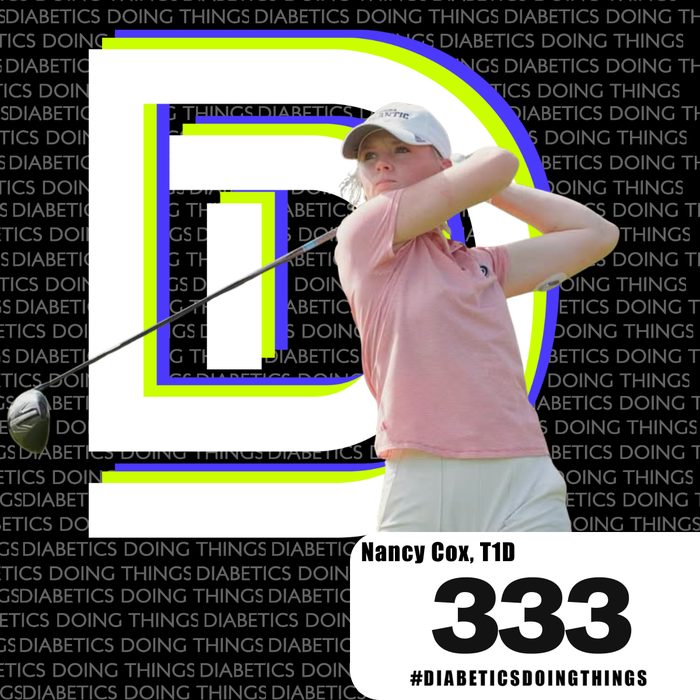
Playing College Golf with T1D - Nancy Cox

Episode summary
Nancy Cox is a sophomore golfer at Florida Atlantic University who was diagnosed with type 1 diabetes in 2021. She first suspected something was wrong after a golf tournament, when she craved McDonald's chicken nuggets and kept needing bathroom breaks. A TikTok video matched her symptoms, and her mom booked a same-day doctor's appointment that led to diagnosis. Nancy describes her pre-round routine: a high protein breakfast, checking blood sugar on the first tee, Omnipod 5 activity mode, and snacks like Rice Krispie Treats on the course. She discusses her recent win at the First Coast Women Amateur Championship, advice from her father about playing all 54 holes, and the influence of LPGA golfer Michelle McGann and 2025 U.S. Open champion JJ Spaun, who both live with type 1 diabetes.
Key takeaways
- Nancy says a TikTok video first tipped her off to possible type 1 diabetes, leading to her diagnosis in 2021.
- She checks her blood sugar on the first tee and again down the final holes because nerves tend to push her low.
- Nancy says it takes about 45 minutes to mentally recover from a low, so catching drops early matters on the course.
- She uses Omnipod 5 activity mode for walking rounds and carries snacks like Rice Krispie Treats and Gatorade.
- Nancy won the First Coast Women Amateur Championship after her dad reminded her it's a 54-hole tournament, not just round one.
Chapters
- Introduction to Nancy Cox and Her Journey
- Diagnosis and Early Experiences with Diabetes
- Preparing for Competitive Golf as a Diabetic
- Winning the First Coast Women Amateur Championship
- Inspiration from JJ Spaun and the Diabetic Community
- Advice for Young Girls with Diabetes
- Daily Life and Diabetes Management in Golf
- Conclusion and Future Aspirations
Show notes
In this episode, Nancy Cox shares her inspiring journey as a collegiate golfer living with type 1 diabetes. From her diagnosis to her recent tournament win, Nancy discusses the challenges and triumphs of managing diabetes while competing at a high level. She emphasizes the importance of preparation, mental resilience, and community support, particularly from fellow athletes like JJ Spaun. Nancy offers valuable advice for young girls with diabetes, encouraging them to embrace their dreams and navigate the unique challenges they face in sports.
Chapters
00:00 Introduction to Nancy Cox and Her Journey
02:55 Diagnosis and Early Experiences with Diabetes
05:59 Preparing for Competitive Golf as a Diabetic
08:49 Winning the First Coast Women Amateur Championship
11:40 Inspiration from JJ Spaun and the Diabetic Community
14:55 Advice for Young Girls with Diabetes
17:46 Daily Life and Diabetes Management in Golf
20:46 Conclusion and Future Aspirations
Resources:

Questions this episode answers
Does Nancy Cox have type 1 diabetes?
Yes. She was diagnosed in 2021 and now plays Division I golf at Florida Atlantic University while managing it.
How does Nancy Cox manage blood sugar during golf tournaments?
She checks her blood sugar before teeing off and again on the final holes, uses Omnipod 5 activity mode to cut back insulin while walking, and carries snacks like Rice Krispie Treats and Gatorade for lows.
What tournament did Nancy Cox win?
She won the First Coast Women Amateur Championship, the only player to finish the week under par.
Are there other golfers with type 1 diabetes Nancy Cox looks up to?
She names LPGA golfer Michelle McGann, a multiple-time tour winner diagnosed at 13, and 2025 U.S. Open champion JJ Spaun as role models who also live with type 1 diabetes.
Full transcript Searchable, with timestamps
Rob Howe: What's up, Diabetics Doing Things? Welcome back to the podcast. Very special episode for you guys this week. We're continuing to interview T1D athletes at the college level. Our guest this week is Nancy Cox. She is a Division I golfer at Florida Atlantic University, and she has been Type 1 for four years. We had a really great conversation. Many of you who know me know that I'm a hack golfer. I'm desperately trying to get my handicap under 10, and it's very difficult. Nancy recently won a tournament right prior to us recording this episode. So not only do you get to hear what it's like for her to manage her diabetes during practice and during tournaments, but also what it's like to manage your type 1 diabetes while you're in the hunt to win a tournament. She also talks about other golfers who have been instrumental to her journey. And we even get to share a little JJ Spaun moment after he won the U.S. Open earlier in 2025. Please enjoy this amazing interview with a young woman who is surely going to be a leader in type 1 diabetes for many years to come. Nancy Cox. Enjoy. I also want to take this opportunity to promote Diabetes Legends Basketball Clinics. As you guys know, the last couple of years we've started to do basketball clinics all throughout the country under our Diabetes Legends Basketball Clinics name. We've gotten to introduce over 100 campers with type 1 diabetes to diabetes legends like Lauren Cox and Gary Forbes and more. We've got clinics later in September. We're going to be returning to Denver. If you're looking for more information on the events themselves, you can visit DiabeticsDoingThings.com slash events. And if you're interested in learning more about the Diabetes Legends Foundation, which we formed in 2025 to better support our ongoing initiatives and creating opportunities for kids with diabetes to have a great day with diabetes via one of our clinics, please connect with us and fill out a form on our website, DiabeticsDoingThings.com. Okay, let's talk about our partners who help support this podcast. Today I'm going to talk about Type 0, which is typezerohealth.com. It is a business run and founded by a person with type 1 diabetes, John Jensen, who's been on this podcast a couple of times. I've been using this product since 2018. I started training for a half marathon, which I ran in Dallas in December 2018. I was looking for a workout supplement, a pre-workout that I could trust not to spike my blood sugar. And so that's what I've got here in my hand is the clean pre-workout. I use the stim-free version, which doesn't have caffeine. And I trust it, and I've used it now. So 2018, it'll be almost seven years for me using this pre-workout. It really works for me because I can drink it late in the day, and most of my basketball leagues that I'm playing in now are late at night. So I might have a game from 7 p.m., 8 p.m., 9 p.m., and I can make sure that I'm able to get up and play and also be able to fall asleep later that night so I can wake up in the morning, go to work, and meet the demands of my life. Type 0 has gone a step further this year in our partnership, and they've launched the Rob Howe stack, which also includes a couple of my other favorite products, creatine monohydrate, which I've been taking the past two years. And if you want to look up all of the good reasons you should be taking creatine, many scientists and performance coaches say if they could only take one supplement, creatine monohydrate would be the one that they chose. I agree, not only for the physical benefits, but also the mental focus and clarity. It's good for your brain. Do yourself a favor and add creatine monohydrate to your stack. Something I've also added is this clean hydration and electrolytes pack. I'll show you one of the little sticks. These are a lot smaller than some of the leading competitive brands because they just don't have as much salt in them. And there's no additives either. So you're not looking at any carbohydrates, nothing that you need a bolus for. And hydration is an essential part of anyone who has diabetes should be making sure that they're hydrated. And it's not just about drinking water. You need salt. You need magnesium. You need a little bit of the vitamin C and some vitamin B. There's a ton of zinc, selenium, chromium, all of the good electrolytes in this supplement. You mix the stick pack with 16 to 20 ounces of water. Helps you get hydrated. I've been doing mine in the beginning of the day to start my day and make sure that I'm hydrated. And it helps with your insulin sensitivity. It helps me have some clarity and make sure that I'm not a very disciplined hydrator when I'm sitting at my computer all day. It's good to be reminded to make sure that you're getting your hydration in. And it's a little bit more interesting to drink than just water. So you can get these as part of the Rob Howe pack, or you can get them on your own. You can get them on Amazon or directly from typezerohealth.com. And when you order from typezerohealth.com, if you use code Rob Howe, that'll save you 20%. So they've got some great sales going on really regularly. So if you can't save more with a promo that they're running, use code Rob Howe, and you'll always get that 20% off. And your support helps them support the podcast. So if you are a person with diabetes who's looking for a reliable supplements company that's not going to spike your blood sugar, that's going to get you into the mode to be the higher performer that you are, I recommend and I take Type Zero. I wouldn't recommend a product that I don't use myself. So please support typezerohealth.com, code ROBHOW, and search the Rob Howe stack to see which supplements I take and get a good deal on those as well. Okay, let's get to the episode. Hello and welcome back to another episode of Diabetics Doing Things. We are telling the amazing stories of people with diabetes from all over the world. Very excited to talk today. We've got a big fish in the water. She's a shark on the course. Her name is Nancy Cox. Nancy, welcome to the show.
Nancy Cox: Hi, thank you so much for having me. I'm so excited to talk about golf and diabetes and
Rob Howe: everything. Of course. Yeah, very excited. I think you're the first collegiate golfer we've had on the pod. So you're carrying the banner for golfers with diabetes out there. Although I have done an episode with another T1D golfer, but we're just like hobby golfers. We're nowhere. We're hacks, really. We're just trying to get into that single digit handicap, always, always chasing that. But Nancy is a golfer at Florida Atlantic University, and you are a sophomore at Florida Atlantic. We're super excited to talk to you now because in between the time that we got introduced from our mutual friend, Cassidy, whose episode is actually airing this week on the podcast at time of recording, you won a tournament. So you're, you're not just on the team, you're out there throwing darts on the final round and winning tournaments. So tell us a little bit about you.
Nancy Cox: So I was diagnosed in 2021. I've been playing golf a lot of my life. I started when I was probably 11. I was originally introduced to golf through my dad. He grew up playing. He always tried a bunch of different sports. I didn't originally always stick to golf, but eventually after trying a bunch of different things. I kind of gravitated back towards it. And then I tried out for the middle school golf team, then the high school golf team. And then I was like, okay, I think I really want to pursue this into college and maybe even beyond. So that kind of went from one thing to another pretty quickly. And then I hit a little bit of a, you know, hit a bit of a little bit of a wall my freshman year. Yeah, a little roadblock. Yeah, which was fine. Obviously, a lot of things to be learned from that. I think it was a blessing in disguise in a way. I think it almost prepared me a lot for what was to come. And especially in golf being a very, you know, it's not an easy sport as most of us know. And diabetes along with that has always been a struggle a little bit, but obviously learning and sensing patterns and everything is, it's been a process, but it's
Rob Howe: been great. For sure. It's, you know, there's so much we can learn from sports that always equates back to diabetes, but like golf is, is especially close to like diabetes management, right? What do you remember though, about like the early days of your diagnosis? Like what prompted you and your family to say like, Hey, like something is wrong. So it actually started,
Nancy Cox: um, from a golf tournament. I had just played in a local tournament, uh, like 15 minutes away from my house, a little like local tour. And I had just shot my best 36 hole score ever. And I was thrilled. I placed second in the tournament and I didn't sense some of the things that I was experiencing at the time, but looking back, I remember on my way back from the tournament, I was with my dad and I went to McDonald's because I was just like craving McDonald's, which I didn't know why. I ended up getting a 20 count chicken nugget meal and eating every single bit of it. And I remember my dad looking at me like, oh my gosh, she has never done this before. She's like a hundred pound girl eating 20 chicken nuggets. Like what is going on? And I had no idea. But anyway, I was on my way back from the golf course. I was just scrolling through TikTok and I came across a video randomly. I followed this girl for some reason. I don't know why. And I came across this video and it basically said, if you're experiencing these symptoms, you should maybe get checked for type 1 diabetes. And I literally checked every box in the video. And that's almost when the realization hit that I was like, whoa, like this is weird. So I told my mom, I was like, I saw this video. I don't really know what to do. Like I've gone on Google and that's a dangerous road to go down because, you know, when you go on Google, you usually see like the worst possible outcome. So I was like, oh, like there's no way. Like I've been on Google before. Like there's no way. Anyway, I was at school the next day and I got a text from my mom saying that she's booked a doctor's appointment for me that afternoon and I will be getting picked up from school early. And that's when it hit. I was like, okay, she's definitely done her research. We may know what's coming. So I went to the doctors and had a simple blood test done. And I was told to go to the ER the next, you know, as soon as possible. And that, that was the start.
Rob Howe: Yeah. So do you think that you were just having like a low blood sugar after playing 36 and that's why you wanted 20 chicken nuggets?
Nancy Cox: I have no idea. I don't know what it was, but I would just would crave these foods. And I also noticed that in some of the previous tournaments I played in, I would just order like a burger and fries halfway through the tournament, which I would never do. Like I was never somebody to eat on the golf course because I found it a bit distracting. But I ate this whole entire burger and fries on the golf course and I didn't think anything of it. I thought I was just hungry. And I also was managing to find every bathroom as soon as possible on the golf course. And yeah, it's crazy looking back though, because I would never think twice about it.
Rob Howe: Yeah. So much of it is like the symptoms are, you know, you're losing weight or you're, you know, frequent urination or, you know, nausea and things like that. But also like your blood sugar doesn't regulate down either. So if you're getting, you know, if you're, if you're going low after nine holes and it's hot outside, even chugging water, you know, you might need your brains like, Hey, we need food. We got to figure this thing out. So that's really, that's really funny. Really interesting. Yeah. So like, let's talk about it now. Like obviously different, you know, going finishing high school golf, like going up a level, you know, highly competitive NCAA division one golf. How do you prepare for like a tournament round? Because obviously that's different than, you know, just your average practice round. And like, what do you put in your diabetes golf bag? How do you get ready?
Nancy Cox: It's taken a lot of time to learn how to properly prepare. And that's mainly through like bad experiences. And obviously you don't have somebody telling you, okay, as a diabetic now, you need to pack this, this, this, and this, because you don't have any patterns to sense yet because you're still new to it. But for me, what I've noticed through time is a solid, like high protein, low carb breakfast is like the key to my day. I usually go for like some eggs, bacon. It's harder when you're further away from home because you're, you know, eating hotel food and most of the time you have muffins and cereal to start with. So we got to talk about the continental breakfast is like
Rob Howe: the enemy of the person with diabetes. It's just like, it's all fast carbs. Like, no, like the only
Nancy Cox: protein is like powdered eggs. If you're lucky. I know, I know it's, it's brutal, but you know, force feeding, you, you have to learn to force feed yourself as a diabetic. And that's just the reality of it. Not only that, but also recognizing the patterns through your blood sugar. So I sense patterns mainly when I'm nervous. So increased heart rate on the first tee. I make sure to check my blood sugar on the first tee or 15 minutes before so I have time if they're trending lower. That I've definitely teed off many times with low blood sugar and it can sometimes lead to a little bit of a shaky start to the round. Again, also going down the last few holes where let's say you have a good score going, you don't want to, you know, forget about other things and you're locked in on the golf course, but you have to almost force yourself. Okay. Like I'm getting nervous going down these last few holes. Like, let's just check to make sure, you know, I can keep, keep them up. And that's also what I noticed going down the last few holes at the tournament that I just played in. I've never been so nervous in my life, I'll tell you that. And I did see a downward trend with my sugars, like going down the 18th hole. And I was like, okay, this is the hardest hole in the golf course. Like, I just got to get through this. I just hit a good drive. And I did end up downing like half the Gatorade. I don't even know how I did that. That was the fastest chug I've ever had of a Gatorade. But I mean, you got to do what you got to do. it. Every minute counts, it feels like, because, you know, on the golf course, every hole takes 15 minutes and it takes 15 minutes for your sugars to get back up. So it's like, you can't even be
Rob Howe: willing to sacrifice one hole because it's hard. It's such a game of, you know, we can talk about all the other sports we want, but like, you're the only one. So it's just you. And you got to balance all of those thoughts from the golf course. You got people watching you, you got stakes, you're thinking about your blood sugars as part of that. It's like the worst time to be multitasking. Right. So yeah, I don't know. And it's like, when you put it that way, like the timing of it, you you're like, Oh, well, if I'm low and like trending down, I've got to chug this Gatorade and then hope that by the time I get to my next swing that, you know, I'm at least okay to do it. And we've kind of talked about this a lot more recently. You know, there are accommodations for people with diabetes in the workplace, but they don't extend to competitive sports. So it's like you know for the most part you know there's been some tennis incidences where like you can at least get a chance to go like check your sugar on the side and they'll do like a timeout but that's basically it everybody else has got to figure it out while they're competing and so you know let's let's talk about your your recent win at the first coast women amateur championship you were like the only person that shot under par all week and you shot two under on your on your final round so going up to 18, you hit a great drive, your sugars are trending down, you chug a Gatorade. What's going
Nancy Cox: through your mind as you finish that hole? I shot two under my second round. That's okay. I felt actually quite calm during that round. The third round may be a little bit different, but the second round I felt good because I think I was on a little bit of a chase for the lead. I wasn't expecting to make a big of chases I did, which I'll take it. But I was a little bit frustrated after the first round after not starting very strong because I knew like what I was capable of doing. Like I was going into the tournament playing pretty good. But I ended up having a call with my dad after and he told me, he's like, you don't win after round one. Like it's a 54 hole tournament for a reason. And that like hit pretty hard because I was like, OK, he's right. Like there's no reason why you can't go out there tomorrow and put in a good score. So I kind of went out there with like a, you know, like a motivating mindset. Like, okay, I'm going to try and climb up the leaderboard a little bit. And I did have like an earlier tee time that day. So I got out before most of the field and that's what you get for not playing great your first day. But I actually, it was, again, it was a blessing in disguise because there ended up being some weather coming in later that afternoon. And I was the second group to get in before the rain delay. So I was in, I was home because that's 15 minute drive from my house. So I was just chilling at home and everybody was still stuck at the rain delay. I did feel a little bit bad, but at the same time I had played well. I'm just now relaxing at home. Um, it was, it was, it was a good situation to be in for me. Yeah. I was just watching the leaderboard for the rest of the day. And then I, I got a text from my coach at FAU saying like, good playing today, like good comeback. And I texted her back. I was like, it's not over till it's over. You know, you got to keep pushing through.
Rob Howe: So any nerves in your final round? Like, you know, you're sitting there with on 18, you've got the lead. you're there in the fairway like you know how did that how did that finish out well like walk us
Nancy Cox: through your final shots it was I felt nervous because of how badly I wanted to win I think that was more of where my nerves came from I think I knew I had a little bit of a comfy lead um just because of who I was playing with like I was kind of keeping track of the scores like that my playing partners were doing but I wasn't checking the leaderboard so I I didn't know like if there was somebody in a group behind me that had a good day. Like I had no idea. And I told myself that I had no idea how many I was leading by, but I just said, you never know what anybody else is doing. Like somebody could go on a tear and they could be one back and I still have to, you know, make par on this last hole. So I didn't let myself get too comfortable, which maybe put a little bit of pressure on me because, you know, it maybe would have settled me down knowing I was in a comfy lead, but going down maybe the last four holes, I told myself, okay, I probably have a comfortable lead. I'll settle for a bogey on every hole. And then I thought to myself, well, no, like that doesn't make any sense. I don't want to settle for a bogey. Like if I'm going to win, I might as well win by more shots. Right. So that shift in mindset really helped me like get through those last few holes with confidence versus like timidness. Yeah. But the nerves were definitely there, but I think it's just because I wanted it so badly.
Rob Howe: Yeah, I like that. I mean, you got that dog in you. You can just tell, you don't want to just win by a little bit. It's kind of been an exciting summer for people with diabetes playing golf. Watching JJ Spaun win the 2025 US Open, did you make any parallels or kind of like, are you connected with any other T1D golfers in the community? What was that like?
Nancy Cox: Yeah, so watching JJ accomplish that was like one of the best things ever. Although I was in England at the time because I was competing in the English Women's Am in Leeds. So I actually did not watch any of it, which is extremely devastating for me. Because if I had known that that would have been the outcome, I would have stayed up until 4 a.m. regardless of my team time the next day. I would have. But I mean, what can you do? You don't know. I mean, he made such a comeback, which was great. But I woke up that next morning and I look at my phone and see the posts that JJ had won. And I literally had to take a double take. I was like, oh, my God. Oh, my God. Oh, my God. And I got out of bed. I've never gotten out of bed so fast. And I ran to my mom. I was like, mom, mom, JJ just won the U.S. Open. I was like, oh, my gosh. It was it was crazy. I was so happy, though, because I've rooted for JJ. And I watched him at the players, too. and obviously didn't go his way. But I ended up, you know, texting back and forth with him actually just regarding like his nerves and his sugar levels and all of that. And he's just been like a really good role model and inspiration for me, not only because he has diabetes, but also, you know, I would consider him an underdog. I think he has like insane potential to be one of the best and he is one of the best. And I think to watch him go from not really being known to being a major winner, it's like, you know, you wouldn't really want it for anyone else, especially somebody in the diabetic community.
Rob Howe: Yeah, I totally agree. It's like, you know, not that many people win PGA tournaments anyway. And, you know, winning a major championship, especially in that like dramatic walk-off fashion was just incredible. So a huge win. I know like I have like a photo from that tournament, like saved where he's got like both hands in the air and he and his caddy are going nuts that I'm going to try to use in some sort of diabetes meme in the future. So I've got it in my favorites folder just because like it just said so much without, you know, without saying anything. It was really cool. So, you know, you are an active Division I golfer. You are, you know, in your sophomore season. What like, what would you say to like other girls with diabetes who have big dreams, who, you know, you're, you're at the top of your craft right now. We talked about a little bit about this before we hit record. And I think it's so important for people like you to, to talk about your experience with diabetes, like doing what you're doing while you're doing it. And for me, like being past my like athletic prime and like more, I'm old and washed now, but I, you know, getting for, so hearing me say it is one thing, but hearing somebody like you, who's, who's actively doing it is another. So what would you say to girls or parents of girls who are out there living with diabetes who have big dreams for their life?
Nancy Cox: Yeah, I think you have to expect things to be hard and you have to expect adversity through anything that you do. But I think believing in yourself and dreaming about things that you want to accomplish is so important. Surrounding yourself with the right people as well. Going back to your other question, if I know any other golfers involved in type 1 diabetes, I was introduced to Michelle McGann. I don't know if you're familiar with her, but she was on the LPGA tour for 30 plus years, multiple LPGA winner. She was diagnosed with diabetes when she was 13. And being down in Boca, I was introduced to her through my coach. And she's been one of my biggest you know, support and role models through it all. And she's always told me, she's like, you know, we have it harder than everybody else and we're stronger than everybody else out here because we do have to make those additional decisions. And, you know, I think it does, it gives us grit and it motivates us too, because we're not only playing for golf, we're playing because we have a purpose. But, you know, I think it's important to celebrate the little accomplishments because it can be so easy to get down on yourself with, you know, having a high blood sugar or, you know, not catching a low on the golf course. And now you're upset at yourself because it may affect the way that you play. But I think accepting that bad days are okay and you can wake up the next day and try again. And a lot of people, you know, can get mad at themselves for it. And I have. I was playing in a tournament one time. I was was in contention to win. And I let my sugar slip and I paid for the costs. But that's how you learn at the end of the day. You have to fail before you succeed. And I think that's the biggest thing for anybody that's, you know, just starting and hasn't really experienced those hardships yet. But they will come. But just know that the hardships will lead to good things in the end.
Rob Howe: You've probably been told this before, but you got a good head on your shoulders, Nancy Cox. you know you're hearing you say that you're so right and I think for me I know I'm washed up because I sound more and more like a coach every day and you know you're you're speaking my language like you know sports are so important and chasing your dreams are so important because it teaches you how to fail in front of people and not you know and you realize that even though you put all your your effort and your energy into something and you don't get it that it's not the final chapter. You can get back up and you can try again and you can retool and rebuild. And, you know, what's better is that, you know, you, you know, you, you tried, you went out there and you did it and you don't have to wonder what if you don't have to ask or, you know, say, well, I wish I would have done this one way or the other. You got to find out. And, and then sometimes too, you, if you, if you stay out of long enough, if you return and you have that resilience, you get to hoist that trophy up, you know, at the end of a round and then get a chance to go do that again. So I think it's a really important thing. And you said it so well. So keep saying it. I think, you know, we're going to be following you for a long time. It sounds like, you know, and, you know, I'm glad also, one of the things I always say is how important it is to have a friend with diabetes. And, you know, it sounds like, you know, being able to connect with someone who did what you want to do at the highest level and did that with diabetes and really knows what it's like is such a huge way to level up. And so I'm really glad that you can potentially be that for somebody down the line as well. So where can, if people want to follow you and find you, where can they connect with you online?
Nancy Cox: It would be Instagram, probably. It's nancy.cox underscore. I would eventually maybe branch out outside of a different platform. For the time being, I'd love to communicate with people. And if anybody wants to message me, 100% do. I'd love talking about this to anybody. and I want to do anything I can really to, you know, relate or make somebody feel better about
Rob Howe: themselves or anything. So yeah. Well, I think you're going to be around for a long time and I'm really glad that we met. So, all right. My last question, this is for all of the rest of us, T1D hat golfers out there is like, how do you prepare for a round? So you're putting your bags together. Like you talked about your breakfast, like on a tournament day, but you're just going out for a loop. Like, how do you prepare so you can enjoy it versus having to
Nancy Cox: chase the roller coaster or think about your diabetes? I think my biggest thing is setting activity mode and setting a low alert on my phones. So I have an Omnipod 5, so I do have the second phone for that. And it has activity mode. And that's just like the restriction of insulin. And it's particularly good when I'm walking. And if it's, you know, even a 36 whole day where I'm walking 15 miles, I'm going to need not a lot of insulin because by the end of the day, I'm going to be exhausted. So I've set activity mode for a good 15 hours before and it's been really helpful. And setting a low alert also, I think the lowest or the highest you can set it is 100, which ideally I would like it maybe a little bit higher because when you get to 100, it's almost a little bit too late, but at least it'll notify you so you can catch it as soon as possible if you do end up forgetting. So I think that's part of my pre-round ritual. As soon as I get out the car before my warmup, I'll turn on those and then just continue watching it throughout my warmup.
Rob Howe: What's your go-to low snack on the course?
Nancy Cox: Tough question. I tend to carry a variety.
Rob Howe: Oh, is it a tough one? I like it.
Nancy Cox: It is. It is. It kind of varies week to week. But I feel like what I have realized is the most beneficial would maybe be like a Rice Krispie Treat because it's easy to eat. It's quick. It's sugary. Maybe not the best for me, but at least it tastes good.
Rob Howe: It sticks with you a little bit longer too.
Nancy Cox: Yeah, I do. I tend to carry, you know, a very large variety of snacks on my college team. I'm known as, you know, the one that always has the snacks. So if anybody's hungry, they know who to come to. But yeah, or maybe just like a swig of, you know, a Gatorade just before and then maybe, you know, even it out with maybe like half a sandwich. But if I'm teeing off at eight in the morning, I don't exactly want to eat half a sandwich. So sometimes a drink can just be quick and easy.
Rob Howe: Yeah, that's my go to as well. Like, you know, I set up, mine's called Temp Target. It's activity mode on Medtronic is the Temp Target, especially if I'm walking. and if I'm playing 36, I'm probably not walking, walking all of them these days, but yeah, you know, it's hot. You're going to be out there all day. You got to stay hydrated. You got to have the power eight zero and the regular power eight, you know, my bags also just like, it's basically a snack bar, just, just disguised as a golf bag. So, um, yeah, got to make sure you, whatever you need, if you're going to be out on the, on the course, you know, the, the cart girl's not always close by, so you got to keep, got to keep your stuff on you. Yeah. I also think regarding like
Nancy Cox: your physical ability in golf, not necessarily diabetes related. I think just trusting the preparation that you had with your coach, with your mental coach or whoever it is. And that's the thing with sometimes experiencing high or low glucose on the course is, as you probably know, it takes like 45 minutes for the brain to recover from a hypoglycemic reaction. and 45 minutes is a lot in a round of golf because that's almost a long time your round so it can get frustrating when you do hit that point but at the end of the day if you do lose that mental ability you can still go back to your fundamentals in your physical ability and just trusting that which can be difficult and i've noticed at times i can tend to be a little bit impulsive when my sugars do go low. And it's funny because I was talking to my mom and she said, sometimes when you try and pull off too much of a risky shot, I pull my phone out and see if your sugars are going low because there tends to be a little bit of a pattern there. But it's hard because it can fluctuate so quickly. I can, you know, not allow enough insulin for the breakfast in the morning and start off too high and I just linger high and my sugar is just steady at like 200, 250 sometimes. And I have no way of like getting it down because if I do, like my insulin sensitivity is so high on the golf course, even if I give myself like the littlest bit, it will just like absolutely plummet. And it's hard because high glucose can lead to frustration. frustration can be taken out on my golf and then I play bad golf and then I get mad and then it's just a whole cycle and then you know when you get frustrated your heart rate increases and then your blood flow increases and then your sugars go low and then next thing you know my sugars are like double arrows going down yeah and you know that's when a few deep breaths might be needed but you get
Rob Howe: used to it you do I was just gonna say you want to see a sad guy rob 220 swing in the golf club because it's just going to go bad. It's just never, I don't know what it is. Like just the, you're trying to force it. You're just trying to like will your way through that high blood sugar. And it's always tricky. Nancy, it was so great to meet you. I'm really glad that you reached out and I'm going to be definitely following along and cheering for you during, in your career. And you're always welcome back. So please reach out if you ever need anything, but thank you for all that you're doing for people with diabetes and spreading awareness on all the things that we can do. We look forward to continuing to follow along.
Nancy Cox: Yes. Thank you so much for having me and giving me this opportunity. I love talking about it always.
Rob Howe: Awesome. Well, we'll definitely link to your profile in the show notes. And hopefully this will introduce you to some more folks with diabetes with lots of questions about golf.
Nancy Cox: Perfect. I can't wait. Thanks so much.
About Nancy
Nancy Cox is a sophomore Division I golfer at Florida Atlantic University. She was diagnosed with type 1 diabetes in 2021 and recently won the First Coast Women Amateur Championship.