

Professional Basketball and T1D - Jordy Kuiper
Episode summary
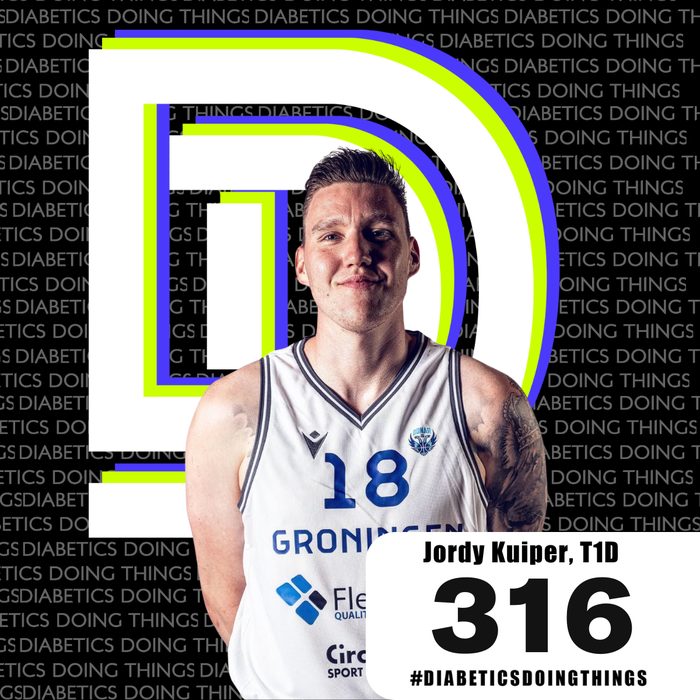
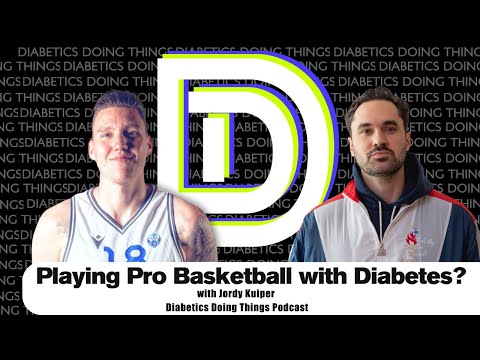
Jordy Kuiper, a 6'9" Dutch professional basketball player, talks with Rob about growing up with type 1 diabetes in the Netherlands after being diagnosed at age nine. He credits his doctor's early message that he could still play basketball, as long as he worked harder, with shaping his mindset for life. Kuiper describes the Dutch diabetes community and the Bas van de Goor Foundation, switching from insulin injections to a pump before moving to Spain at fifteen to chase a college scholarship, and being recruited to UNC Greensboro by a coach who saw his diabetes as a strength. He also discusses the shock of seeing families in the U.S. struggle to afford diabetes supplies, and how he managed blood sugar through six years as a professional player in Europe.
Key takeaways
- Jordy Kuiper's doctor told him at age nine that he could still play basketball as long as he worked harder than his teammates, a message he says shaped his whole mentality.
- Kuiper switched from insulin injections to a pump just weeks before moving to Spain at fifteen, which he says he needed to get through multiple daily practices.
- UNC Greensboro coach Wes Miller recruited Kuiper in part because of his diabetes, telling him it showed he had already overcome something and said a lot about his character.
- Kuiper checked his blood sugar five or six times in the two hours before games and relied on feel once play started, since he didn't get a continuous glucose monitor until late in his career.
- Kuiper says he was shocked to meet American families selling their cars to afford diabetes supplies, since his care was always covered back home in the Netherlands.
Chapters
- Introduction to Diabetes Legends
- Jordy's Journey with Diabetes
- The Impact of Diagnosis
- The Role of Healthcare Professionals
- Building Confidence Through Sports
- Community and Support in the Netherlands
- Transitioning to Spain and Independence
- The Game-Changing Insulin Pump
- The Journey to UNCG: A Unique Recruitment Story
- Embracing Diabetes: A Coach's Perspective
- Cultural Shock: Transitioning to College Basketball in the U.S.
- Navigating Healthcare: The Reality of Diabetes in the U.S.
- Managing Diabetes During a Professional Career
- The Reality of Living with Diabetes: Beyond the Wins
Show notes
In this conversation, Rob and Jordy Kuiper discuss the intersection of living with type 1 diabetes and pursuing a career in basketball. They share personal experiences, the importance of community support, and the challenges faced in managing diabetes while competing at high levels. They emphasize the significance of positive reinforcement from healthcare professionals and the impact of language on young athletes' perceptions of their capabilities. They also touch on the realities of transitioning to professional sports and the ongoing battle of managing diabetes in high-pressure situations.
Chapters
00:00 Introduction to Diabetes Legends
06:40 Jordy's Journey with Diabetes
08:28 The Impact of Diagnosis
14:01 The Role of Healthcare Professionals
17:33 Building Confidence Through Sports
23:05 Community and Support in the Netherlands
27:30 Transitioning to Spain and Independence
32:01 The Game-Changing Insulin Pump
33:20 The Journey to UNCG: A Unique Recruitment Story
35:45 Embracing Diabetes: A Coach's Perspective
37:22 Cultural Shock: Transitioning to College Basketball in the U.S.
39:09 Navigating Healthcare: The Reality of Diabetes in the U.S.
46:03 Managing Diabetes During a Professional Career
54:24 The Reality of Living with Diabetes: Beyond the Wins
Questions this episode answers
Can a kid with type 1 diabetes play competitive basketball?
Jordy Kuiper's doctor told him at age nine that he could, as long as he worked harder than the other kids on his team. Kuiper says that answer shaped his entire career, which included five years at UNC Greensboro and six years playing professionally in Europe.
How did Jordy Kuiper manage his blood sugar during professional basketball games?
He checked his blood sugar roughly five or six times in the two hours before tip-off, used wet-finger dosing adjustments with insulin and sugar, and then relied on feel during play, checking again at halftime. He didn't get a continuous glucose monitor until late in his career.
Why did Jordy Kuiper switch from insulin injections to a pump?
About a month before leaving the Netherlands for a basketball academy in Spain at fifteen, his healthcare team suggested switching from pens to a pump because the long-acting insulin he was using gave him no control during multiple daily practices.
What is the Bas van de Goor Foundation?
It's a Dutch foundation started by Bas van de Goor, an Olympic gold medal volleyball player who has type 1 diabetes. Kuiper says it runs camps and programs connecting young people with diabetes and became an early and lasting influence in his life.
Full transcript Searchable, with timestamps
Rob Howe: Okay, let's talk about our partners who help support this podcast. Today I'm going to talk about Type 0, which is typezerohealth.com. It is a business run and founded by a person with type 1 diabetes, John Jensen, who's been on this podcast a couple of times. I've been using this product since 2018. I started training for a half marathon, which I ran in Dallas in December 2018. I was looking for a workout supplement, a pre-workout that I could trust not to spike my blood sugar. And so that's what i've got here in my hand is the clean pre-workout. I use the stim free version, which doesn't have caffeine I trust it and i've used it now So 2018 it'll be almost seven years for me using this pre-workout It really works for me because I can drink it late in the day And most of my basketball leagues that i'm playing in now are late at night So I might have a game from 7 p.m 8 p.m 9 p.m And I can make sure that i'm able to get up and play and also be able to fall asleep later that night so I can wake up in the morning, go to work and meet the demands of my life. Type zero has gone a step further this year in our partnership, and they've launched the Rob Howe stack, which also includes a couple of my other favorite products, which is creatine monohydrate, which I've been taking the past two years. And if you wanna look up all of the good reasons you should be taking creatine, many scientists and performance coaches say if they could only take one supplement, creatine monohydrate would be the one that they chose. I agree, not only for the physical benefits, but also the mental focus and clarity. It's good for your brain. Do yourself a favor and add creatine monohydrate to your stack. Something I've also added is this clean hydration and electrolytes pack. I'll show you one of the little sticks. These are a lot smaller than some of the leading competitive brands because they just don't have as much salt in them. And there's no additives either. So you're not looking at any carbohydrates, nothing that you need a bolus for. And hydration is an essential part of anyone who has diabetes should be making sure that they're hydrated. And it's not just about drinking water. You need salt. You need magnesium. You need a little bit of the vitamin C and some vitamin B. There's a ton of zinc, selenium, chromium, all of the good electrolytes in this supplement. You mix the stick pack with 16 to 20 ounces of water. Helps you get hydrated. I've been doing mine in the beginning of the day to start my day and make sure that I'm hydrated. And it helps with your insulin sensitivity. It helps me have some clarity and make sure that I'm not a very disciplined hydrator when I'm sitting at my computer all day. It's good to be reminded to make sure that you're getting your hydration in. And it's a little bit more interesting to drink than just water. So you can get these as part of the Rob Howe pack, or you can get them on your own. You can get them on Amazon or directly from typezerohealth.com. And when you order from typezerohealth.com, if you use code Rob Howe, that'll save you 20%. So they've got some great sales going on really regularly. So if you can't save more with a promo that they're running, use code Rob Howe, and you'll always get that 20% off. And your support helps them support the podcast. so if you are a person with diabetes who's looking for a reliable supplements company that's not going to spike your blood sugar it's going to get you into the mode to be the higher performer that you are i recommend and i take type zero i wouldn't recommend a product that i don't use myself so please support type zero health.com code rob how and search the rob how stack to see which supplements i take and get a good deal on those as well okay let's get to the episode i also want to take this opportunity to promote diabetes legends basketball clinics as you guys know the last couple of years, we've started to do basketball clinics all throughout the country under our Diabetes Legends Basketball Clinics name. We've gotten to introduce over 100 campers with type 1 diabetes to diabetes legends like Lauren Cox and Gary Forbes and more. We've got three clinics coming up this year, June 7th in Dallas, a very special event at Friends for Life Conference on July 11th. And then later in September, we're going to be returning to Denver. If you're looking for more information on the events themselves, you can visit diabeticsdoingthings.com slash events. And if you're interested in learning more about the Diabetes Legends Foundation, which we formed in 2025 to better support our ongoing initiatives and creating opportunities for kids with diabetes to have a great day with diabetes via one of our clinics, please connect with us and fill out a form on our website, diabeticsdoingthings.com. Today's guest is Jordy Kuiper, who is the tallest person that we've had on the podcast. He is 6'9". He is a Dutch professional basketball player who just finished a season in Groningen in his hometown playing for Donar Groningen. And he and I talk about his life early with diabetes, growing up in the Netherlands and the diabetes education that he received there, diabetes community, and his journey through Spain and the U.S. to come and play in the NCAA tournament for UNC Greensboro, and then the last six years of his career overseas. So please enjoy this interview with Jordy Kuiper. basketball clinics here in the U.S. in 2023. We've got three clinics on the books this year in Dallas, in Orlando, and in Denver. And what we're doing is to dig into not just the people who are achieving great things worldwide, but through the game of basketball. So I'm excited to interview and introduce my very special guest today, Jordy Kuiper. Welcome to the show.
Jordy Kuiper: Happy to be here, man. I know we've been in touch for years and years. We finally get to sit down together like this, man. I've been looking forward to it, man. So thanks for having me.
Rob Howe: Yeah, me as well, man. When I first kind of really got into networking within the diabetes community, so I started like you do. I was like, I got to find these diabetes basketball players. You know, at the time, I think you were at UNC Greensboro, playing college as a young guy. And I was like, man, like, here's somebody who like definitely knows what my experience was like, whether we, you know, played at the same time or, you know, in the same areas or not. Like there's just something about that shared experience of, you know, being a person with type 1 and playing basketball at a high level. So we've we chatted over the years just just on Instagram about, you know, the experiences. But I'm really excited to dig in because I don't know, at my stage of an athlete, you know, like I'm a recreational athlete now. And a lot of the value that I can provide to the community is for young players who are trying to pursue like an elite career for people who are exercising. exercising. And so I'm excited to chop it up with you today. And also just talk about your journey
Jordy Kuiper: and your life with diabetes, man. Let's do it, man. I can't wait to get into it. I mean, I'm used to usually informing people that are maybe not as well-versed in the world of diabetes. And now it's nice to really get into the nitty gritty and the details. I had a little bit of a higher level, if you will. It's cool. I like it. Yeah, for sure, man. Well, let's start there
Rob Howe: because I want to get into your diagnosis in early life, but you really touched on a great point. So my entire career as an elite athlete, I never played or encountered anybody else with type 1 or really anybody who knew anyone, especially on my teams. And that's like a small group of people, right? But so what is your experience been like now playing six years of pro ball in Europe? Have you ever had a teammate with diabetes? Have you ever like, has there been like people who've gone to these teams beforehand? Or are you kind of like the first person with diabetes that they've had on a roster or had a chance to work with? I would say no, I've definitely
Jordy Kuiper: not played with another uh type on you can say diabetics though right because in the netherlands they're kind of changing the language a little bit you didn't want to use like people with diabetes instead of using diabetics but i like using i don't care so it's my yeah my thing but um i've never played with a fellow diabetic before which i thought it would have been awesome to have on my team you know to kind of you know kind of spar about things as well but no i never have and maybe like once or twice there was a gm that mentioned that they maybe had a player in the past but it was always like way back in history and like some of the stuff they would be telling telling me was like yeah he would kind of just casually just have to sit down and i think i've seen someone pass out one time like what's going on i just give him some chocolate and he'll be like it's like so like old school talk so i i can't really remember anyone really around me like that close obviously we hear the stories of the you know the more well names that are even active now but not as close to me as maybe i would have liked no yeah it's always so interesting you kind
Rob Howe: of have to be the guinea pig for for you know all the people around you i think of like my trainers and my teammates like they were curious and and then i think also years later like after opening up and kind of talking more and i'm sure you'll experience this as well as you you know do more things like this is your teammates will hear this and be like man i had no idea all this was going on you know i was just out there like going through going through workouts going through practices or games. I had no idea what you were balancing in your head all that time. So yeah, for sure. Yeah. Well, let's, let's talk about your life with diabetes. Like you said, you're, you're in the Netherlands, you're from the Netherlands and you finished up last season playing for your hometown club. So I want to touch on that now, but we'll get to it sort of the story of your long journey with the game of basketball. But tell us how you joined the type 1 diabetes family. What do you remember about your diagnosis? Well, I'm actually glad. I mean,
Jordy Kuiper: it kind of makes sense to start at this point in the story, but I also like to start with this first because we'll get to it in a little bit, I guess, but I feel like the diagnosis, like the moment of your diagnosis is one of the most important moments of, in my opinion, a person's life with diabetes. And I've had the pleasure of having a very positive experience, I would say, besides obviously being incredibly sick, you know, losing the weight, thirst, all the, you know, traditional stuff that they deal with. They do, but it's still important to talk about.
Rob Howe: Absolutely. Yeah. It could be the first time somebody hears it.
Jordy Kuiper: Yeah. Well, I was a nine-year-old kid, healthy, happy, playing basketball, going to school, and just got very sick out of nowhere, very thirsty, used the bathroom all the time, and made sense. I was drinking all the time. Of course, I would have to use the bathroom. Obviously, afterwards, we found out it's kind of the other way around. Your body's getting rid of everything. That makes you kind of dehydrated, get you thirsty. We didn't know that at the time. Lost a ton of weight, lost my appetite, and just kind of lingered on, lingered on, felt worse and worse to the point where we, I remember, well, I don't, I mean, I don't necessarily remember it myself, but my parents do. I had a game, um, on a Saturday, I believe, young kid, nine years old, wearing my little game Jersey, still have it in the closet somewhere, a little yellow game Jersey. And I remember I couldn't, couldn't even wear, it kind of was like a kind of tank top. I couldn't even wear it because it just kept sliding off my shoulders because of the amount of weight that I lost. And I feel like that was kind of moment when parents like, yeah, yeah, we need to take them to the ER, if you will. They kind of rushed me in there. Go down the list. Check the list. Does anyone in your family have diabetes? No one had it at all. Let's just check your blood sugar for a little bit. Check it out real quick. And then I still remember it was like a student nurse, I believe. Pricked my finger. I still kind of remember her face kind of lighting up like, what's going on here? Kind of went to the back. It was a kind of thin wall. Also, I remember her calling the doctor and be like, I'm not sure what to do. I've never seen this in my life. What does this mean? Like, I mean, we're just hearing this and we're like, what the hell is going on? So, yeah, and then it turned out to, I think it was like 45, which is, I guess, you know, our measurement, which is like millimole, I guess. So maybe you should have the, you know, I used to have a little app on my phone.
Rob Howe: Milligrams per deciliter, like 45 is.
Jordy Kuiper: It's high. It's high.
Rob Howe: That's in like the, I want to say like the three to five hundreds.
Jordy Kuiper: Yeah, I would say so. Yeah, kind of like, yeah, maybe like around 400. I don't know. Yeah, but it was rough. So then took me to the hospital and then they told me I had it. But yeah, what I was going to get to, though, is the doctor. And I actually ran into her a couple of weeks ago. The original doctor, Dr. Bucker is her name. I'm not sure she'll listen to this, but either way, I want to send it every chance I have. Radiate into the universe. Shout out to Dr. Bucker.
Rob Howe: Okay, I just did the calculation. It's 800 milligrams per deciliter. 800 so yeah 45 millimolars is yeah 800 so 810 so that's a very very high 800 i was at like in the 40s though yeah 45 millimolar equals 800 milligrams so okay that was rough that's high no wonder no wonder they were like whoa i've never seen this before yeah um okay yeah that's rough so
Jordy Kuiper: yeah but then the doctor sat me down told me about all the stuff you know the insulin i just like to get flooded with information and then and this is kind of what was i was kind of learned too is like The only question that I asked my doctor after all the information was, cool, but can I still play basketball as a nine-year-old kid? I was like, yeah, fine, whatever. I'll do that, all that stuff. But can I still play? And I feel like that is the most pivotal moment in maybe my life with diabetes because as the years went on and I've, I don't want to say mentored, but I've talked to a lot of kids and families. And this is something that keeps coming back as being very different in other people's lives. But my doctor looked me straight in my face was like, yes, you absolutely can. But you're going to have to work a little bit harder than the other boys on your team. That was the only thing she said. And that was all I needed to hear. And I was just off to the races. And that kind of shaped the trajectory of the rest of my life and my career and my mentality. Because at that moment, you're so vulnerable. And every piece of information, you just soak it up like a sponge. And that dictates the whole rest of your life, in my opinion. Because all the kids that I talked to, and I'm sure you've heard a lot of this too, they maybe ask the same question, but instead of the answer that I got, they'll, they'll, they get told, you know what, sports is very dangerous, you know, be very careful. You know, there's all these risks. Maybe I've heard kids say, you know, maybe you should stop playing basketball or stop playing soccer, you know, cause just not, maybe it's not for you, stuff like that. And when you get told that in those moments, it can take years and years and years to even kind of change that direction of your life. So that's like, I'm so grateful for that moment. And I feel like it's not really talked about enough of how important the language is that healthcare professionals use at that very, very important first moments, those first steps.
Rob Howe: It's critical, man. And like, it's interesting, like my story and yours align very much, like both what we wanted and what our care team said, and then like what happened afterwards. And so to me, I think of a couple key moments, like a, almost everybody has that thought of like, cause they, you start to think no matter how old you are, if you're, if you're very young, like you may not have this, but you think of the things that you like to do or the things that you love in the case for us, like basketball, like, yeah, I want to be able to do this. Is that possible? And that's, you know, that's kind of like how we work of like, oh my gosh, like what's going to change. And so for me, that was, you know, I was older than you, but I had this vision of what I wanted my life to be. Like, I wanted to know that was still possible. And that's the way that a lot of people find this podcast. You know, they, they search for diabetes with yoga or diabetes with traveling and they find people who've shared their stories because those first moments are really critical if you hear no you can't play basketball like that changes your whole perspective like you would have to overcome that later because of the authority that medical professionals have especially in those vulnerable traumatic moments like you think this person knows best so you know we've had people on this podcast who you know like ryan Reed was a NASCAR driver. He had to find three doctors that would, before one of them said that he could be a driver and like live his dream. So for me, like, just like you, them saying, okay, well, you know, you have to do a couple extra things. You have to work harder. Or for me, they said, you know, as long as you take care of your diabetes, you could play basketball. Here's how you do that. It was like a gateway to what I wanted. So diabetes management was just kind of like, oh yeah, I do this because I want what's on the other side of it, which is to chase my dream of playing pro ball or going to college on a scholarship or whatever the case may be. And like that identity, I think that diabetes management as a gateway to your dream is really important because you're right, man. I look at some key, the other key moment is like that summer after I was diagnosed, I wanted to go to like sleep away basketball camps, like at college campuses, because it was time for me to start thinking about where I wanted to go to school. And it would have been really easy for my parents to say, you know what, like we need to give it like a little time. We need to wait. but they let me do it and that kind of like opened up a lot of independence for me where sometimes you're right like sports are challenging i i would love to talk about your early days playing ball like i know you didn't get it right every single time but you kept trying and you kept doing it and that builds a lot of resilience that if you opt out of that and you don't take those risks and you don't learn then you know it really stunts your growth oh yeah for sure and like that's
Jordy Kuiper: why I keep referring back to that first moment because just hearing somebody tell you, yes, all this is possible. All the things that you want are possible is as long as you have your stuff in order or you have the discipline or you work harder, that stuff bleeds into not just that particular thing that you want to chase. It's like your whole mentality shifts because if the only thing that your mind keeps jumping to is like the stuff you can't do or that you have to be very careful about kind of like have that fear set the tone, you know, whether it is basketball or even anything that comes in your life or young teen years, like the first thought in your head is going to be that fear, uncertainty, negativity, and that stuff bleeds into everything, confidence, you know, your mentality with everything that comes at you in life. So yeah, it just really set the tone in the right way. And that allowed me just like you said, to kind of fall on my face several times and kind of learn and adjust and just get up like, no, I can do this. I learned from this and i don't know if i was able to go into everything with that mentality if i wasn't kind of getting that very first positive push into that world of in a new life i guess yeah
Rob Howe: it's such a foundational thing because like if you know like and you have that information that they gave you on day one like before you have any other information or before you've had a tough blood sugar day at basketball camp or like a bad performance in a game because you couldn't get your sugars right you might think that like oh i can't do this but having that like kind of a grounding principle from that authority figure at that beginning stage allowed allowed me and my family to be like okay well we didn't get it right today but it wasn't because of the diabetes it was just because of xyz or we need to try something different next time and i lately have been coming back around to like basketball because like everything in my brain goes back to hoops so like i mean you're you're a big man so you shoot a lot higher percentage than this but like the best the best shooters only make four out of ten you know like from long range and so like they're not thinking about the last miss when they step up to shoot the next one. And I think like we put this immense pressure on ourselves or our kids to be perfect and like, oh, I have to have my diabetes management exactly perfectly in control or else I'm not going to be able to do what I want. And that isn't really how it works. And so to me, I always came back to that basketball principle of like the shooter's mentality. You got to make the next one. You got to get the next one right.
Jordy Kuiper: And like, how does that show up for you? I mean, honestly, I've never thought of it this way, but it's so funny how like, well, I'm a huge Star Wars fan and George Lucas has his famous quote where he kind of talks about his two trilogies and he goes, you know, it's kind of like poetry. It rhymes. That's kind of his go-to line. And the fact that we were talking about the diagnosis part and you bringing it back to basketball, it just kind of like kind of lit up in me because when I was 16, I went to Spain for a year trying to make it to college. And my coach there, well, we don't have to get into the details, but he was a particular type of coach. And he was very hard on the kids and not just mentally, physically. It was an interesting character, let's put it that way. But he used to get so angry at me for even shooting a three. So I remember I have to run suicide. For me, it's a jump shot. He's probably getting driven crazy now.
Rob Howe: in the big-man three-point era.
Jordy Kuiper: I mean, that's the thing, though. I went to college. I'm sure maybe we'll get into the college part a little bit later, but I had a coach there that was like, you know, you're a big guy. You've got a high IQ. You've got the European style. Like, if you add a three-pointer to your game, like, it changes everything, and I believe you can do it. And that led to, like, early 6 a.m. everyday shooting with my coaches and my assistant coaches, but they kept, you know, chugging along, and I kept my head down and I ended up being like a 40% shooter in my last couple years in college. That changed my whole career because it made me so much more marketable as a pro. But it's kind of like a perfect parallel to having your diagnosis because if somebody tells you you're not a shooter, I'm stepping on the court. Like a coach, you're not a shooter. You don't shoot threes. It's not what you do. You can't do this. It's not in your capability. So don't do it, you know. And especially in a young age, I was 16. Okay, I guess I'm not a shooter. I'm just a back to the basket big guy. But then if there's a coach that comes in, you know, I believe you can do this. Like you put the work in, you got this. Like it rhymes perfectly with the diagnosis story because, you know, if the only information that you get from your coach, you can't shoot, you're not going to shoot. But if you have someone that kind of enables you to kind of open up your mind to doing more things and putting in the work that anything is possible. So that's kind of an example I never thought of before, but it kind of rhymes perfectly with my diabetes because, you know, I just kind of use the stuff that my coach told me. and I kind of, okay, I guess I'm not a shooter and that's it. But if I never had someone to tell me that I could do it and was able to work with me and have the patience, that never would have happened. I definitely wouldn't have been a five-year college player or a six-year pro afterwards. So it's kind of a good example as well of how the language matters and the people around you and the way they talk to you really matters too.
Rob Howe: And life is a confidence game, man. Yeah. There's that quote, maybe it's attributed to Henry Ford or something. it's like whether you believe you can or you can't you're right probably right yeah and i think the uh you know especially as a basketball player you know i had a i had a coach that my college coach told me never to dribble so like yeah like what if i catch it in in midcourt and i gotta like get to the rim you know like i gotta put it on the floor man like so yeah those are those things where you know like you said that language really matters and back to that like life is a confidence game it took me a long time as i matured as a player to learn that like coaches don't want players They're going to tell you what they want you to do, but they don't want players that just do what they say. They want players who are confident in their abilities and make the right play and make the best play for them or the team. And it's the same thing with diabetes. I think if you can confidently step in and say, all right, I've never had this meal before, but I'm going to go through my steps and try to make it work. Or I've never gone on a trip this long before, but here's how I think it's going to work. or I've never had to move away from home at 16, but I'm gonna do these things to make it possible to accomplish my dream. I think those are the things where that confidence and that foundation of that day one conversation with those healthcare providers, where you're saying, hey, this is possible, that really pays off. And I wanna kind of go back to that a second before we go on to your basketball career. Diabetes in the Netherlands. Like, first of all, shout out to Vichka and to Lois, who are a big Diabetes NL folks that I've met overseas over the years at some of the big events over there. You guys kind of like lead the way in terms of like education and community. We're like way ahead of the rest of the world. So like what do you remember about those early days of like education and community when you were, you know, nine and learning the ropes with diabetes?
Jordy Kuiper: Yeah. So I'm also very grateful that pretty like early on, I would say, you know, my health team, health care team, you know, got the stuff in the diagnosis, got the big book with all the carbs and all the food information. But I feel like it was within months of kind of getting to grips with my new life and trying to get to grips with it. They pretty much immediately introduced me to some of the organizations, initiatives that were helping, especially younger people getting in touch with other diabetics around the age and really using sports as well to kind of get that message out. Like, hey, like, you know, get your open your mind to all the possibilities, all the stuff that is possible. And there was one foundation, I don't know if you're familiar with, it's called the Bas van de Goor Foundation, which to me, to this day, I've been all over the world. I think it's the best organization I've ever seen to help young kids kind of push past maybe what they think are their limits and really, really have huge, tremendous positive influence on young people's lives. And Bas van de Goor was a former volleyball player and he won a gold medal at the Olympics. And he started a foundation. He is diabetic as well. And they organize these incredible events, camps, and they just take a bunch of kids and they'll go to have like a sports camp. There's no parents really allowed. They'll have health care professionals. And just having those kids around, you know, around each other, exchanging stories, and then have all these different awesome active activities and seeing them kind of manage their blood sugars and getting exposed to all these different new experiences. I think it's just absolutely beautiful. And they got me in touch with that organization pretty early on. I'm not exactly sure why, but I was a bit hesitant at first. Maybe it was just because it was a little too early for me and I wanted to kind of get my own rhythm going. But then I want to say when I was about 12, 13, they mentioned it to me again and I got in contact with them and with Bas and all the awesome people that worked there. I kind of, instead of just joining the activities, I just became like an ambassador for them at like age 13, 14. and that kind of started and it never really stopped. So I want to say we're like 15 years later now. And that kind of, even at a young age, I never, I didn't need to achieve anything with basketball, but I was still, I was already kind of sensing how incredibly important and valuable it is to put, even if it's just two diabetics in a room together and maybe even more powerful than having medical advice from a medical team. Because, you know, I always say when I meet, you know, a kid with diabetes and their parents are there or whoever, like when I look in the kids' eyes and the kids look at me, like we know each other better than probably 99% of our environments just by looking at each other. And so at a young age, I started being an ambassador and I started talking to other young people with sports and I started giving clinics and basketball practices and camps at a really young age because I kind of knew how valuable that is. Like you said, man, the Netherlands, they have awesome different organizations that do that stuff. and Luz and Witzke and Koss, you know, like Diabetes Plus. Like those, Diabetes Plus and Bas van de Goor Foundation are the two absolute best in the world, in my opinion, at what they do because they value and they see the importance of having, putting people together with diabetes and the power of that. All the WhatsApp groups that I'm in, they call them diabetes buddies. They have sports buddies. They have groups for just women. You know, they can't, the opportunities are endless with the amount of growth that can be achieved with that.
Rob Howe: It's such a simple thing that has such a huge impact. Huge. My number one piece of advice is to make a friend with diabetes. That's what we do at our camps. Because like you said, you connect on a level that 99% of other people can't and you don't have to explain anything. It's already understood. And I think that's what I've gotten out of conversations like this with people that I've never met but I know so much about. And so I think it's really powerful. And I think you can see people's lives transform when they go from not having that to what happens after they open themselves up to it. And that's the real magic. You had this great foundation. You had this great education and community and opportunity to learn. But then you got to leave home. Then you got to go from age 15, 16. And in Europe, it's different, right? you know you uh if you're identified as a basketball player as an athlete like you get to you get put into programs or attach to clubs so that you can achieve your highest potential right yeah we're starting to come around in the u.s a little bit it's just a little bit different but so going from home and like that conversation with your family and with your doctors and like with your club moving from the netherlands to spain yeah basically having to become a man overnight like and then going into a situation that was challenging like what was that like
Jordy Kuiper: I mean, the more the years go by and I look back at it, I just, I keep thinking like how completely insane it was, honestly, because I was 15, 16 years old. I had used the pen up until that point. So the short-term working, the long-term working, that system. And I mean, I remember me going to that particular academy in Spain. Yeah. So, cause I wanted to play college basketball. I had an older sister. She's the whole reason I started playing basketball to begin with i want to say she's about six foot seven six foot six six foot six tall tall girl awesome basketball player at the time and i went to visit her in denver actually when she's playing college basketball there and i was just like this is the coolest thing in the world i want this more than anything but there was no college colleges looking for players in the netherlands at all at that time there was an online scouting wasn't a thing so there was one academy in spain that was known to kind of help deliver European players to colleges or at least help them get in the picture. But it was a very hard place to be at because it was these circumstances were not great. It was super expensive to go there and we didn't have a lot of money growing up. But my parents sat me down like, if you really, really want this, we'll try to get the money. And so they started asking friends, families, companies, the community, and they raised a ton of money for me to try to go there. Didn't have enough, unfortunately, but that was fine because we did everything we could and I had peace with it. We tried. And then actually it was a diabetic foundation, the Bas van de Goor Foundation that came through and they were like, we have this bit of extra money left and we're willing to sponsor you and try to make that happen, which is unreal. And I still obviously for always being there dead for that, but that gave me the shot just to try to go for it. But the fact was that I was using the pens at the time and I already noticed that, you know, how it is the long-term work in insulin. There's no control over that. It's just in your blood all day. It's working. So every time you start practicing, I just had bottles of like liters of sports drinks or whatever it was, Gatorade at the time, just ready, just already standardly just had to drink and chug sugar just to prevent that dip from coming because there's no control over that insulin that was already active in your body. So that happened as well when I went over there for like a little short tryout week. And I was like, this is going to be, I don't want to say impossible, but how am I going to do this? Because we were practicing three, four times a day.
Rob Howe: On that Euro practice grind.
Jordy Kuiper: And 6 a.m. every morning. And like for every single practice, I would have to just ingest so much sugar just to avoid my lows that were going to come regardless because of how hard the practices were. It's like you need a little bit of time to recover every time you kind of go through that. And for me to hit those practice back to back, like I don't know what's going to happen. And it was like maybe like a month and a half or maybe even a month before I went on the plane to go to that year in Spain to try to make my dream come true when my healthcare team was like, have you ever thought of switching to the pump, an insulin pump? And I was like, this is scary because I feel like I'm giving away all my control and I don't know what this is. And I feel like back then it was like 70% pan, 30% pump. So the technology, it was getting there, but it was early days. And I was like, I don't know, I don't know. And I put my trust in them because they knew me through and through and they were like, I think you should give it a shot. And I was like, all then there was like a month or a month and a half process to kind of get used to it and everything and i think we did in like a week or two and they just put me on it and they put me on the plane and my parents were like all right son you're off you're 15 16 year old there's no medical staff there in spain at all it was just me on my own and there was like a physio there that or athletic trainer there that was every time someone had an injury they'd be like all right give you an ibuprofen and get some sleep and that was regardless that was his uh his cure for everything so there was there was nothing there and back like that that's why i said like looking back at it that's just bonkers but me switching to the pump i don't i don't think i would have able to i want to say literally survive but make it through the year without that pump because it gives me so much of that control back you know and i knew if my pump if i didn't have any active insulin in me and i kind of you know took it off because i used to take it off before i practice i never had it on i remember you you have those awesome like sleeves and shorts to put on i never had that
Rob Howe: well i have that now connected yeah exactly i didn't have it back then i switched from injections to a pump halfway through my college career yeah it was tough it was the right decision but yeah the first few months and like i felt bad for my athletic trainer but i i also had like i had to buy my own because i played division two so like you know we didn't have a ton of resources pre-nil too so like yeah i had to buy my own like gatorade palette every year so i just had tons of gatorade in there i was just chugging it every day yeah it's rough yeah but yeah me
Jordy Kuiper: me switching to the pump was a game changer because it allowed me to have that that much more control i went there and it was it was hell there's a lot i don't even remember from that year because i kind of just blocked out of my memory but yeah i just worked my ass off man and that's when the college coaches came to see me and eventually wes miller of uncg came to see me actually didn't come to see me went to see another player um and my coach in spain the head of the academy i guess uh was had this whole mindset on giving this this was like a 610 african huge athletic center that he was going to match with Wes Miller at UNCG that was his plan he was kind of like just like i don't want to say trafficking players he was like yeah get this guy over there orchestrating yeah yeah because he would even get them paid by schools and stuff but it was it was the whole thing but not wes never paid them luckily but then coach miller saw this other like kind of semi chubby white kid like diving on every loose ball talking to his teammates helping his teammates up taking charges he told me that he used to tell the coach the spanish coach like hey who's that kid and the spanish coach be like no you don't want you don't want to you don't you don't want him on your team he can't play he's got diabetes all that stuff like he would like talk talk me down and like it was like two or three days in a row my coach would saw me like see me play again he'd be like no i want to talk to that kid like you get the hell out. I just want to talk to him one-on-one. You know, we sat down together and he told me his vision of how he saw his culture in the basketball. He was a young coach just starting at UNCG and he wanted to build a culture and he, we kind of shared, shared our vision for that. And it was like a kind of love at first sight, I guess. And he promised me, if you stick with me, I believe in your last couple of years in college, we'll be fighting for championships. And I was all in. And yeah, I remember even, which was so powerful to me when my signing was announced and they had like a little, you know, how they do it in the States. It's awesome. They go media and many documentaries and footage. And it was like awesome. But he was very vocal about how my diabetes actually impacted the coaching staff's feelings about me in a very positive way. Actually, I always keep the quote kind of handy because I use it when I speak as well. And he said, yeah, Jordy's diabetes certainly impacted our feelings about him in a very positive way. because we knew he had overcome some things in his life. And it said a lot about his character. The more we learned about him, the more we knew that he was the guy we ultimately wanted. And the diabetes definitely had a lot to do with that. So for him and his position to be open and vocal about that was just huge because as I'm sure we'll get into a little bit later, like it's not all negative. There's so many upsides to the stuff, the lessons that you learn at a young age. And for him and his position, instead of being kind of scared or uncertain about that, he embraced it and he immediately saw the upside of it as well. I'm glad you shared that because,
Rob Howe: you know, there is a lot. And I think that people with diabetes know, like there are a lot of positive things that the condition teaches us. And, you know, whether that's overcoming obstacles or adversity and like, you know, really having to dig in and learn about ourselves or learn about our bodies and like be mindful of those things in a different way. You know, there were whatever, 268 division one coaches, but you found the one that saw your diabetes as an advantage or as a, as something that they could add to their culture that they wanted. And I think that's something where it can be really hard to face rejection. I know I see a lot of commentary, especially with women and dating. You encounter people who don't want you to be part of their life or part of their friend group or whatever because of your diabetes. And I think it's hard in the moment, but long-term, that's an advantage. Encountering coaches who don't want you there because of your diabetes, that's an advantage long-term because you avoided a lot of pain from being in a situation you didn't want to be in. And someone out there can see it as an advantage and can see it as something they want to add to their program. And, you know, he was right. Your last few years at Greensboro, you guys were competing for conference championships. Yeah, we're back to back. You played your last game in the NCAA tournament. You know, those are not everybody gets that. That's like a really, really, really rare group, you know, in an already rare group of people who play, you know, high level college basketball. Like, you know, Greensboro, not exactly the Netherlands. um you know what what was it like for you like again adjusting from you know going from home in the Netherlands to Spain to you know the east coast of the U.S. like and like the south too like Tobacco Road that's like basketball that's like basketball mecca man that's where it happens
Jordy Kuiper: oh man Wes Miller I mean coach Miller I'm old now that I can call him Wes sometimes back then I would never he's coaching Cincinnati now actually he's doing awesome there he played at UNC at Chapel Hill and won a national championship there so being over there having on Carolina Duke like all these huge schools there, all the rich history there. It was a world that was completely unknown to me. I'll be honest with you. I didn't grow up playing, watching college basketball at all. I didn't know the history. I didn't know the rivalries. I didn't know anything about that really. But just being thrown into that world and it, it like exceeded the wildest dreams that I had because the, the only thing that I had to compare with it was my hometown team here, which had, It's the biggest indoor sporting event in the country. And it's like a two and a half to 3,000 seated arena. And I was like, there is no way it can get bigger than this as a young kid, you know. And then we showed up to the Greensboro Coliseum. It's like 22,000 seated arena. It was our home gym in college. And I was like, what in the world is going on? So it was definitely a culture shock in the most positive sense of the word. not even mentioning how just from a basketball perspective it's a whole different ball game literally effectively because it's so physical fits you know kids in the u.s they start lifting weights i don't know 10 12 13 years old and they we just don't have that at all in europe we've kind of we're kind of behind on that part really we got some freaks over here too oh man
Rob Howe: kids who are unreal such elite athletes especially at like you see like the high level guys on tv and like the highlights and in the draft and stuff. But there's guys who are like even more athletic, just maybe less skilled or have less opportunities or less exposure at some of those other levels. It's just insane.
Jordy Kuiper: Yeah, for sure. And then having like an incredible medical staff there, my athletic trainer, Jay McCloy, and later on Tyler Congrove at UNCG, who I still talk to today, they were so important as well. It's me being welcomed there and having everything I needed medical-wise and diabetes-wise. And I feel like maybe they've had some minor experience with athletes with diabetes, but even the stuff they weren't as familiar with, they were just like all ears and gave me all the confidence. And that's also because, like I said, at a young age, I learned to be pretty vocal and open. And especially as you maneuver through like college basketball world or even professional basketball world, I feel like the more open you are, you kind of radiate confidence too. And teams and GMs and coaches will pretty quickly be, okay, you know what? He's open about this stuff. Like, I think he's got this. Like, I don't have to worry about him because he can kind of, you know, he's radiating that confidence as well. And I feel like, I know it's so much easier said than done. And I've been in that position as well. But, like, if you're just not as vocal and you're maybe kind of not giving all the details and not being upfront about everything and being uncertain a little bit by yourself, because maybe how they will perceive your diabetes, that kind of can hurt you a little bit because like the more open you are, it's really gonna be a positive impact on your relationship with any professional, I feel like, not even just sports related, yeah.
Rob Howe: I agree, it's hard though.
Jordy Kuiper: It's so hard, yeah, for sure.
Rob Howe: I look back and I've said this a lot, but my family was really open during my recruiting process of like when we narrowed down the schools, like I'm gonna go spend four years somewhere, we need to be open about what I'm going through and also that I'm gonna be okay. And that really paid off for me. You were talking about your athletic trainers, my athletic trainers, Amy and John Michael over the years, Jenny. I've gotten messages from them now, 12, 13 years later, them working with other athletes with type 1. And they're like, oh, yeah, we went through this a long time ago. Like, here's how we can do it and help you. And that's something that I think is really cool. So, like, you know, you'll I'm sure if you haven't already, like that'll happen for you as the next generation of whoever the T1D in their life will be. um and you know it is really important to be up front i think in my years trying to play pro ball there are a lot of reasons uh to cut me besides diabetes mostly like defensively like where do we put this guy um but uh i i wasn't as up front my agent had given me advice like he's like you know we want to just get you in the door like can you manage it without telling them and then we'll sign your deal and then they can tell them after the fact i wouldn't stress it man looking back i i wish i would have just been uh you know a little more open on that but it worked out for me uh one way or the other. And I just encourage people to like, someone out there can find it as an advantage, like your coach, like Coach Miller. And those people will know what they're talking about. So, you know, that there's somebody out there, there is a place for you. And it's not going to be the diabetes that stops you from getting, you know, where you want to go.
Jordy Kuiper: Yeah. And I don't also, I'm kind of, don't want to forget to mention like the adjustment, like non-basketball related, but diabetes related. And I don't want to get like, Like it's not a political podcast or anything. But like for me, adjusting to just like the healthcare world in the U.S. And me being in a D1 school, having everything paid for and covered. You know, I was like, yeah, of course it's covered because, you know, it's a chronic illness. It's going to be paid for. Like it had been my whole life. I don't have to worry about this stuff. And then me getting in, kind of setting up my community there and getting in touch with, you know, JDRF at the time. and all the other organizations that were kind of around there and maybe starting with my own events maybe and like giving basketball practices and camps there. As I got in touch with all these families and kids, I was just like completely shocked and mind blown as to like hearing parents talk about how they were selling their car just to afford test strips for their child. And I just couldn't believe my ears. And that was so shocking, bro. I cannot comprehend it, man. And it's like, it just shocked me to my core. And I don't know. So we're in 2025 right now. So I don't think I can get in trouble for this now. But like, I remember my stuff being paid for, obviously in Covered by the School. And I would order a lot more supplies than I would need just to hand them out to people, you know, whether it was test strips or like reservoirs or whatever it was at the time. Because I could not believe what I was hearing. like this we were talking about your mentality and being positive and chasing your dreams and all that stuff and it's awesome and super important but if you're not even able to get the most basic medical needs and supplies you need just to have a normal day like all that stuff doesn't matter at all talk about it talk about it yeah it's just mind-blowing you know you're right this isn't a
Rob Howe: political podcast but diabetes is political man and it's bipartisan and it doesn't discriminate who you are. And, you know, right now, like I talk to people all the time too. It's like, you know, I truly believe like the number one thing you can do for your diabetes is your mindset, but your mindset doesn't pay for your rent or your mortgage or your insurance deductible. And there's so many non-negotiable things. I'm not a scientist. So like, you know, I never heard about the social determinants of health when I was in school, you know, I was trying to, trying to be a business guy. So as I learn about that and I learn about like access to insurance coverage, access to information, you know, having to make decisions on, you know, where to go, where to get a job based on like what, how much, not only how much they're going to pay you, but like what's their coverage like. And those are things that I have gotten used to now. But I think back to when I was, you know, playing ball and there was like, I came to a decision and we'll kind of talk about your career transition here as well. It's like, I got cut from my, or my release from my contract with the Globetrotters. I had a chance to like, you know, one of my agents was like, Hey, just go to Germany and get on a train and go from town to town until you find a spot. And I'm like, yeah, but like, how am I going to buy my medication, bro? Like, you know, like this, I just don't have that, that luxury. And I think that that's what people think about day to day. Like people are making decisions on selling their car or taking a job or staying in a job that they hate because they have to provide for themselves or their family. And that is something that I really hope can change in the U.S. because countries like the Netherlands, who are miles ahead of us in that way, and Germany and other, you know, developed countries in Europe, their quality of life for their patients is so much better because that's covered. You know, access to healthcare is not a question. It's just they take it for granted. You know, it's a right.
Jordy Kuiper: It's a human right. It's a right. Absolutely. Yeah. But yeah, so yeah, I don't want to turn to, it has to be an uplifting positive, but it's, No, that's good. We got to have those
Rob Howe: discussions because it is really important you know nobody wants to see two you know successful athlete guys talking about mindset when they're trying to make ends meet and i think it's really important to talk about so um all right i want to get get us back on track here a little bit as we kind of round out the interview looking back on your career like six years of pro ball five years in college like starting your professional you know basketball career at age 16 like what was it like managing your diabetes was such like a grueling workout and travel schedule like do you remember, you know, especially for somebody who's out there like going through it now or thinking about going through it, like what, you know, what do you remember about, you know, those kind of
Jordy Kuiper: tough, rough moments? Yeah, well, I mean, those rough and tough moments, they're going to come and you can never, you can't avoid them. They will hit you at some point. And I feel like I always kind of think back of, think back at like when I was a young, young kid playing and I would get, come home from a game, I would lose a game and play really badly and really poorly. And I would just be all in my head and angry and just you know i didn't miss these shots i did this wrong this dude scored i mean i'll just be like completely overwhelmed with negativity and talking myself down and analyzing myself and i always remember my parents kind of sit me down and be like hey jordy like you know like what's wrong and i'll just go on this crazy rant of how much i sucked and i lost and this and that and they just they would just stop me in my tracks and they'd be like okay i get that but like did you give it your absolute all i'll be like yeah i did but like you know i did but whatever what do you mean like well at the end of the day like that's all you can do you know and i feel like that has come back so many times as well my you know my life with diabetes it's like there there's days where you feel like everything that you can control you did right and you just there's no rhyme or reason you're all over the place and maybe it's a game day that that happens you know and instead of just you know obviously you're going to feel those emotions are going to be so disappointed, angry with yourself or angry with the world. And that's very natural and healthy to feel. But I feel like a trick, if you will, or just a mindset thing that kind of helped me put stuff into perspective is like, I gave you my absolute all. And sometimes it's not going to, you know, the ball's not, the shot's not going to go in. And that's kind of the same with diabetes. Those days will come. And all that matters is, you know, the next play, the next day, because there's no, there's not even that much time to really sit with that stuff that happened because, you know, this defense possession is next. You got to get to the next day and your next, next day with diabetes is around the corner. So take what you can learn and just move ahead because, you know, there's always lessons to be learned. But I feel like if you're really keep staying stuck in a negative mindset, it can be, it's a very dangerous and dark place. And like I said, easier said than done. And you need a support system around you sometimes to get you through that. But like everything that you can hold on to to kind of just turn the page i gave it my best shot and it's like i was gonna go in you know it's a chronic
Rob Howe: battle right it never goes away there's gonna be good days but i think you're right like you know control what you can control connect with other people you know be able to have someone like like your family you can vent to you know what i mean really good advice yeah i think for you like you talked about game day like what do you you know like you said you may have a really important day with diabetes coming up or just a really important day in your life and all of a sudden diabetes becomes a main character yeah and that's just how it goes so like for you when you're getting ready for like big games like for me the stress of playing in a big game and like trying to do well and like having all these expectations would drive my blood sugars insane so like how did you get
Jordy Kuiper: ready for games like what was on your checklist diabetes wise yeah so a i've always used a like a finger prick like a meter we call them you know here like uh i didn't really have a a monitor a continuous glucose monitor until very late in my career. And even then I used a freestyle Libre. So it was like kind of like a mental, like a little extra support. But at game days, I couldn't really use that to kind of base my decisions. I would just basically be a monitor myself. I would just be like just constantly checking, checking, checking, checking. And just to have that moment, like this is where I'm at right now. And this is my feeling match. And I'll just be like checking a lot before a game. Within the last two hours of a game, I would probably maybe check like at least like five, six times maybe. And then once the game started, I knew I was good. I was fine. I could kind of, you know, I have a really, I was fortunate enough to have a good sense of where my sugar was kind of going, if I was going up or going down. And I can kind of ride that wave in my experience, luckily, but everything leading up to it, I was very meticulously checking and making sure I was still okay and kind of hitting my numbers. And that kind of gave me the confidence to be like, okay, I'm good now. I can just go for it. And checklist wise, I mean, I just always wanted to have my little emerging sugars ready if I needed to. I did a lot of like, there's a term in Dutch, we call it, it'll translate to like wet finger work. So it's like, yeah, a little bit of there, a little bit of there. I give like half a unit there. Maybe it's a couple of sips of Gatorade there. And I'll just kind of just like measure it off like that by the kind of feeling it out that way. It was a lot of that. And then once that ball went up for tip off, I was good. I was just going. And then I wasn't using that much time energy in the moment, just thinking about my blood sugars at that time because I knew I did everything I could to try to prepare as well as I could. And then I just was off to the races and I could just go in the game and halftime would be the next moment for me to check and see where I was at and kind of recalculate calibrate and then off to the second half.
Rob Howe: Yeah. Yeah, I think it's really important especially as you climb the levels of sport and the games become more important to be able to be present in the game. Because if you're thinking about your diabetes as you're going up and down you're not going to be in the flow.
Jordy Kuiper: No way. Impossible. At the same time, you and
Rob Howe: you and I could go break down film of mine and I, we could pick which games my blood sugar was out of range and which ones it wasn't. Cause like, I just totally, I'm a totally different player. Yeah. Something about the hands. I don't know. Oh really? I don't know. I just like, there's something like, it's just like half a second off or something. It's very weird. But, um, usually, yeah. Yeah. But, um, yeah, I think like being able to say, Hey, I did everything I could. And then also I try to encourage people to like journal it. And I, what I really like though is that you can write down what works, what didn't and try to try to replicate it but hearing from you like elite athletes professional athletes who are you know relying on their body for their livelihood and saying that it's not right all the time because i think it's really easy for us to like celebrate the big moments and like the signing day moments or like the championships and be like yes like we did it but also like there were games and practices and road trips were like it was not going smooth and you know for me even like my day my most elite days as an athlete were probably my worst diabetes management days and i I'm very lucky. My diabetes management has always been relatively in range. But the highest times were when I was playing sport at the highest level because I was making sacrifices to try to
Jordy Kuiper: be the best athlete I could be. And it's a tricky thing too, because I feel like people in your position too, you have a huge following. It's awesome. All the stuff you do is so awesome. But I can imagine, obviously, you've luckily done a great, great job of really portraying the image image realistically. But I don't know, I noticed early on when I was almost on a daily basis, I still get emails or texts from kids with diabetes all over the world just asking questions, practical questions. But I've noticed early on that I was maybe focusing a little bit too much on the wins. And it kind of created an image where people are thinking, wait, Jordy is playing basketball or whatever in college. He's got this stuff figured out. Like he's, you know, there's no mistakes. He doesn't have bad days. It's like a perfect life. he's figured it out i need to ask him how do you do it and that kind of changed my mindset because i feel like it's so important to reiterate like no we're not perfect maybe we might have good numbers to be in range but in range but we have awful days we're just all over the place and
Rob Howe: that's so important to highlight as well it happened to me a few years ago like yeah well into this kind of advocacy and online like content journey somebody commented on like a youtube video of me doing a sensor change and she just said like he makes it look so easy and i was like man like i never thought it would like that and so i was like you know later thinking like i apologize for making it look easy it's not you know sometimes it looks smooth and like you know it looks cool it looks exciting but it's a heavy burden you know and the reason i think i've been able to lighten it is because of you know making friends being more open about it has made has made my life with diabetes a
Jordy Kuiper: lot easier and at the end of the day we're literally all in the same boat we're just trying to give it our best shot man that's all we're doing and that's across the board it doesn't matter if you're playing high level sports you're just having nine to five job like we're all in the exact same position we're just giving it our best shot day to day that's all we can do well i i
Rob Howe: couldn't set it better and i want to kind of wrap our interview with some quick fire questions because i think people you know like you said they want to get practical they want to know let's do it what's jordy's quick fire question so oh boy uh all right what's your favorite hypo snack anything
Jordy Kuiper: anything i can get my hands on man all i know is that glucose that's such a big man answer bro that's i mean i mean that's what it is man like i've had so many glucose tabs now in my life i can't really i don't like those anymore but anything get my hands on really yeah a favorite thing to do on an off day i'm a huge movie nerd star wars movies not just star wars anything movie nerd movies a favorite athlete lebron james the goat sorry michael it's like the those all those
Rob Howe: lebron songs that were on tiktok like the my whole algorithm was lebron songs for like two weeks it was a wild time weird diabetes superstition or habit oh i don't know if i have a
Jordy Kuiper: superstition but like people usually say when they go on a weekend weekend trip they pack like eight pairs of underwear you know just in case that's me with like i remember i've even messaged you about this before it's like you went on a weekend trip or something and you pack like one of every or everything you need i'm like this dude just lost his mind i was getting anxiety is watching your damn reel. Like, what are you doing? I'm packing like three, four, five times of all the sites, infusion sites, reservoirs, everything I need because I cannot get on the plane without having all that with me.
Rob Howe: I used to be that way. I used to be that way. And now I have the seven-day infusion set. So I went to a conference. It was like one day, in and out one day. And I didn't bring anything. And I was like talking to a little mom. You're insane. I was like, I promise. All I have is a syringe and a vial of insulin just in case. And they were like, what? It was crazy. So I do that to like, you know, inflame the mob a little bit. But yeah, I did it. And like I used to, I too am a reformed overpacker.
Jordy Kuiper: I'm even grabbing an extra vial of insulin. I'm going to, I can drop this. I've never dropped an insulin vial in my life, but it's going to happen the moment I don't bring one.
Rob Howe: Yeah. I've only had one go down on me and now I have the little rubber things because I'm so paranoid about it. Yeah, there you go. Okay. Number one piece of advice for your younger self.
Jordy Kuiper: Ooh, just, yeah. Trust your gut, man. Just listen to your heart. It's always right.
Rob Howe: I love that, man. And well, Jordy, man, thank you for the time. And thank you for the friendship over the years, man. I've been following your career. Obviously, like Hoopers with diabetes are like, there's a slice of the pie. Those are like so much my people, man. And, you know, your career has been awesome. Wishing you the best of luck in the next phase of your career, wherever that goes. I know going back home and getting to play was like a super important thing for you. So I'm going to be following along to see how that continues to develop. Everybody can follow Jordy on Instagram. Jordy Kuiper will tag you in the show notes and link you in all the posts and everything, man. But thank you for all you do for people with diabetes. It sounds like we got to do a Diabetes Legends Netherlands camp. So put that on your 2026, 2027 kind of time frame. Let's make it happen.
Jordy Kuiper: We got a lot of excited hoopers around here, especially with diabetes. So yeah, no, thank you as well. I'm very thankful for our friendship, man. I just got to get to meet you at some point in real life, man. I don't want to shoot some hoops or at least just kind of meet up because it's been this virtual digital thing. It's cool and all, but I got to give you a real hug in real life, man.
Rob Howe: Yeah, likewise, man. I appreciate it.
About Jordy
Jordy Kuiper is a 6'9" Dutch professional basketball player from Groningen, Netherlands, diagnosed with type 1 diabetes at age nine. He played five seasons at UNC Greensboro, helping the team compete for back-to-back conference championships and reach the NCAA tournament, then spent six years playing professionally in Europe before returning home to play for Donar Groningen.