

Episode summary
Alicia Bynum is an emergency medical technician from Los Angeles who was diagnosed with type 1 diabetes at 23, nine years before this conversation. She talks about refusing to let diabetes define her identity, and about developing diabulimia, restricting insulin to control her weight after her diagnosis. She describes recovering from that eating disorder and using the experience to deal with other issues in her life. She covers how she manages blood sugar around strength training and running, wearing a Medtronic MiniMed 630G pump and a CGM, and dealing with people who say she looks too fit to have diabetes. She also discusses her EMT work, her goal of becoming a firefighter, and advice on managing stress in first-responder careers.
Key takeaways
- Alicia developed diabulimia after her diagnosis, restricting insulin to control her weight, and says recovering from it helped her deal with other issues in her life.
- She treats diet and exercise as her primary diabetes management tools and insulin as secondary, though she still takes insulin daily as a type 1 diabetic.
- She says eating two graham cracker squares with peanut butter and lowering her basal rate by 50 percent about an hour before running stopped her post-run lows.
- Alicia aims for a blood glucose of 100 to 120 about 30 minutes before lifting weights to blunt the strength-training spike.
- She wants people to stop assuming type 1 diabetes means looking sick, since she manages the disease while working as an EMT and training to become a firefighter.
Show notes
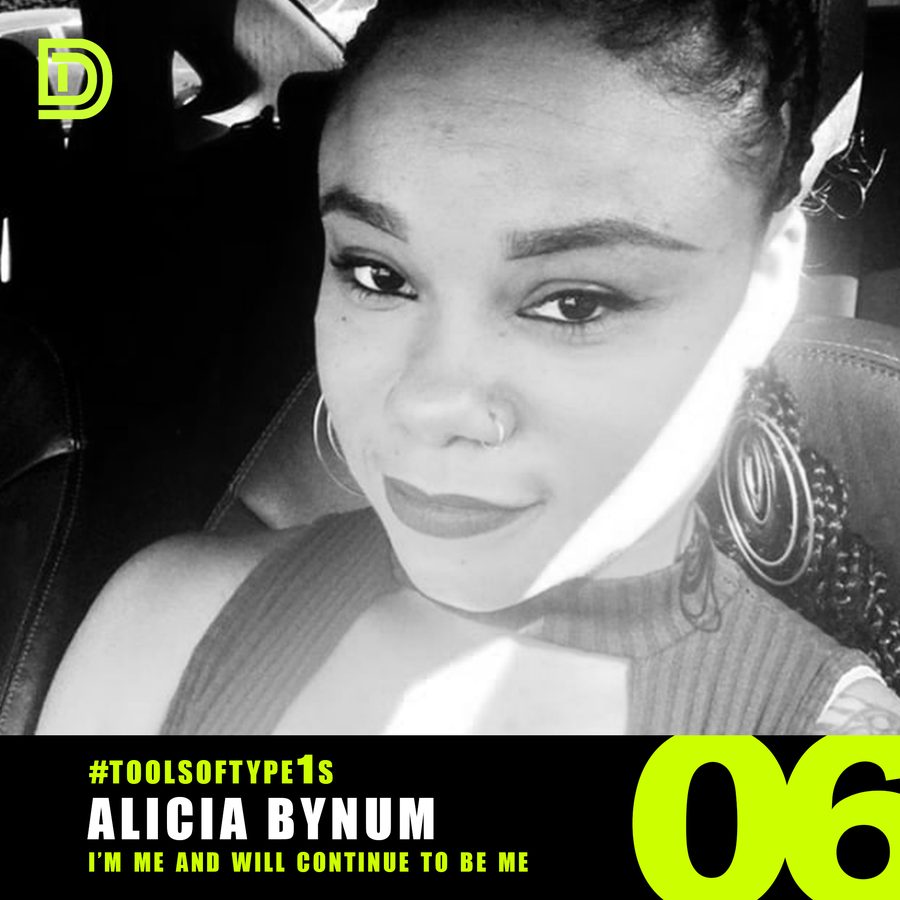
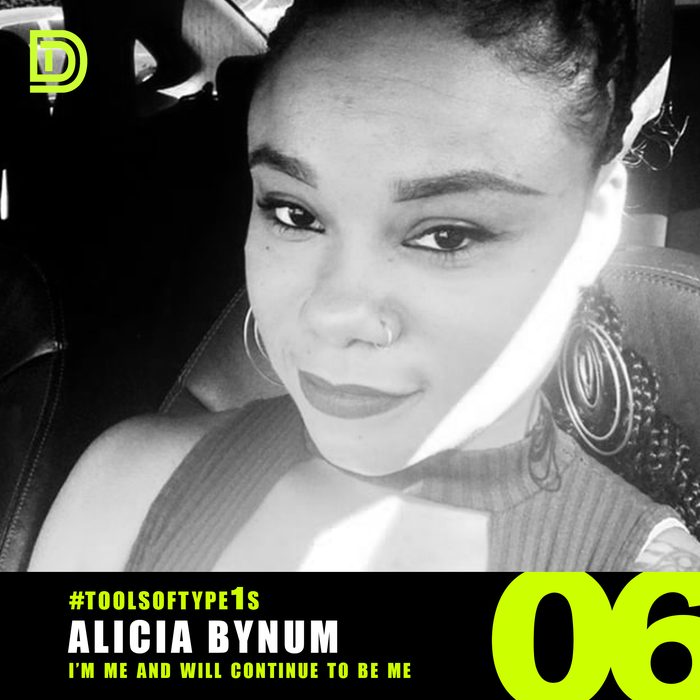
Name: Alicia Bynum
Hometown: Los Angeles, CA
Date of Diagnosis: 2010
Tool: I’m me, and will continue to be me.
Questions this episode answers
What is diabulimia?
Alicia Bynum, who has type 1 diabetes, describes diabulimia as restricting or manipulating insulin to control weight, calling it an eating disorder that is about control, much like other eating disorders.
Can exercise reduce how much insulin a type 1 diabetic needs?
Alicia says her body is more receptive to insulin when she exercises regularly, and eating mostly protein with just enough carbs has reduced the amount of insulin she needs day to day.
How does Alicia Bynum prevent low blood sugar during running?
She eats two graham cracker squares with peanut butter and sets a 50 percent lower basal rate about an hour before running, a method a friend with type 1 diabetes shared with her.
Can someone with type 1 diabetes work as an EMT or firefighter?
Alicia Bynum works as an EMT with the Los Angeles County EMS department and is training to become a firefighter while living with type 1 diabetes. She says managing stress and not taking the job home are key for anyone in that line of work.
Full transcript Searchable, with timestamps
Rob Howe: We are back with more. It's hashtag tools of type 1s on Instagram, the tools of type 1s episodes on the Diabetics Doing Things podcast. Episode 6, Alicia Bynum. She's an emergency medical technician from Los Angeles, California. She's been T1D for nine years. She's an awesome resource for fitness and T1D and an awesome source of inspiration for anybody who's ever fielded questions about how they don't look like they have diabetes. and she goes into detail about what that's like and how she answers those questions and comments. Give her a follow on Instagram at aa underscore bynum, B-Y-N-U-M, to connect with her some more. Her tool is I'm Me and Will Continue to Be Me. And she talks about how her mindset to stay herself in spite of diabetes really influenced how she lives her life. I can't wait for you to hear more straight from the source. Here she is. It's episode six, hashtag tools of type ones, the tools of type ones podcast on diabetics doing things, Alicia Bynum.
Alicia Bynum: My name is Alicia Bynum and I'm from Los Angeles, California. I've been type 1 diabetic since age 23. So for about nine years now, I'm an emergency medical technician for the Los Angeles County EMS department. My hobbies include drawing, people watching and reading. I actually love to read. I have an affinity for books about psychology and articles that attempt to delve into the mind and try to explain the reasoning behind some of our innermost thoughts. Those are among my favorite. My somewhat of an area of expertise with diabetes is that I'm an athletic individual who successfully manages this disease while still fully engaging in the sport that I love. I hope that that inspires and motivates other type 1 diabetics to not view this disease as an insurmountable life-altering sentence, but rather as a challenge. Much like one would face when attempting a new PR, which is personal record and weightlifting, or something similar to trying to perfect a jump shot. It takes a little patience and some trial and error at times, but with perseverance, you'll excel at navigating through life with this illness.
Rob Howe: What is your tool of type 1s? And what's the one thing that a person living with T1D could learn from you or your experience?
Alicia Bynum: My tool of type 1 diabetes is that I am me. So before I was diagnosed with diabetes, I was Alicia and I'll continue to be Alicia with this disease. I refuse to allow diabetes to dictate my every move or to have this disease play such an integral role in my life that I subconsciously introduce it to the world before I introduce myself. I see some diabetics on Instagram and other social media outlets with real catchy screen names that allude to them having type 1 diabetes. It's actually really unique and creative, I think. but then you go to their page and you see more pictures of their monitors displaying their blood glucose reading or images of their insulin pump device you see more of that than you actually see of them experiencing and enjoying life now I'm not criticizing anyone teaches on I just always believe that it's very very important to place more significance on what makes you you and doing what you love without allowing diabetes to disrupt or overshadow that. We can all definitely learn something from one another. I know I've learned a substantial amount of information from the different diabetics that I've encountered within the type 1 diabetic community. So with that being said, if anyone's to take anything from me, it would be to not give diabetes the leading role in your life. This disease definitely takes a backseat to all the wonderful things that encompass my life. Of course, I have to be mindful of it always, but it's not something that takes center stage. So I encourage all type 1 diabetics just to enjoy what you love and enjoy what makes life beautiful for you without allowing diabetes to take control of that.
Rob Howe: What is the simplest thing you've done that has helped you with the management of your type 1 diabetes? Where did you learn it or who showed it to you?
Alicia Bynum: Well, I've been working on building my cardiovascular endurance lately. I've been trying really, really hard to get my cardio up there. I've been doing a lot of running and aerobic exercise and I started struggling with lows. So one day I was at the gym lifting and I met another type 1 diabetic woman by the name of Mary Lynn Since then we've developed a very good friendship And we share with each other from time to time the issues that we face being type 1 diabetic So she told me she was struggling with lifting weights and going high all the time She was trying to figure out how to prevent that And I told her I was having issues with lows after my running so we shared with each other our methods of combating these issues and she told me that what works best for her during aerobic conditioning is that she would eat two graham crackers squares and some peanut butter about an hour before running and she'd do a 50% basal and I've tried this and it's worked extremely well so now I don't see the lows that I was seeing before where I would drop to about 50 60 and then I have to stop and eat something and then wait and wait and you know couldn't do anything until I get back up to a decent number now I don't see any of that. So I really have her to thank for this method because it's really been extremely helpful in helping with my aerobic exercise. What failures or apparent failures with T1D
Rob Howe: have made you better at living the rest of your life or made you more well-rounded as a person?
Alicia Bynum: When I was first diagnosed with diabetes, I was non-compliant with the treatment. This was all because I was in complete denial about having the disease. I was 23 at the time. I was really fit. I worked out every day. I ate a really healthy diet. I was lacto-ovo vegetarian. And I felt like I had good control over my health. So the diagnosis really blindsided me. Once I somewhat began to accept the disease, I started using it to manipulate and control my weight. And I developed diabulimia. So, diabulimia is an eating disorder, and much like all other eating disorders, it's all about control. So, I had a fairly good working knowledge of diabetes at this point in my life, and I knew what I needed to do to be healthy. I just simply chose not to do it. So, developing this eating disorder from diabetes has really helped to open my eyes to other issues that I neglected to properly deal with, which threatened my health. There came a point when I sat down and I thought to myself, here I am blasting my sugar to critical high limits. I could barely see most times. I was seeing spots or my vision was always blurred at that point in my life. I couldn't run anymore, which was something I love. I had to give up working out. And I was ultimately putting my body through extremely uncomfortable and dangerous conditions for the sole purpose of controlling my weight. And that's when I realized I had bigger issues to deal with. So I began digging. Diabetes really helped me to uncover something that I had a problem with for years, but it brought it to the forefront, so to speak, and forced me to take steps to correct the problem at its core. This has been one of the most challenging yet rewarding experiences that I've been through. So now I'm no longer a diabulimic. I don't use diabetes to manipulate or control my weight. But it's really helped. Overcoming this has really helped me to put everything else in perspective and get control of a lot of other issues in my life.
Rob Howe: What unusual or absurd opinion or approach regarding your diabetes do you have?
Alicia Bynum: Well, what might seem as an absurd approach would be that I tend to use my diet and my fitness regimen as primary treatment of my diabetes, and I consider the insulin secondary. Now, of course, I'm dependent upon insulin because I'm a type 1 diabetic, so I have to take it every day. But I find that when my diet is in order, and I exercise regularly, it allows me to control my diabetes a lot better. And it reduces the amount of insulin that I have to use on a daily basis. Because as we know, your body's more receptive to insulin when you exercise. And And the amount of insulin you need is reduced when you're eating a healthy diet. So my diet consists mainly of proteins and I'll eat just enough carbs to sustain daily activity. And of course, I'll bump it up a little bit on days that I'm physically active. This allows me to manage everything and not have to fret about my sugar being too high or constantly be concerned about it going too low. So this, it has really allowed me to be in a place where, of course, I think about diabetes 24-7 because it's something that has to be on your mind. But I'm not constantly worried or concerned about it being all out of whack.
Rob Howe: What's your favorite thing? What gets you to smile or laugh almost every time?
Alicia Bynum: One of my favorite things is to hang out with my niece Sarai. She's eight years old and she loves to paint, draw, and she's currently learning how to cook and bake. So whenever I come over, she's like, guess what, Auntie Alicia? I haven't been eating any candies. I haven't been baking any cookies. You know, I don't want to get diabetes like you have. And me and my sister just laugh and my sister motions to me to go along with it. So I tell her, you know, I'm really proud of you for eating healthy and it's good that you stay away from all the cookies and junk food. And then we go grab frozen yogurt. I try to convince myself that that's somewhat healthy since it's yogurt. But I always have a good time when I'm around her. It's always a good laugh. Children are so inquisitive and curious about the world around them. She's always asking me a lot of questions about fitness whenever she sees me doing workouts around the house. She's into gymnastics right now, so she's always trying to get me to do a handstand with her. It's always a good time whenever I hang out with my niece, Soraya. So that's one of the things that always puts a smile on my face.
Rob Howe: In the last five years, what new adjustment to your lifestyle has improved your life with diabetes the most?
Alicia Bynum: within the last three years I began wearing the Medtronic pump the MiniMed 630G and at first I was a little skeptical about wearing it because I didn't want something like that visible or out and on display for other people to see but this is where I'm extremely grateful for the other type 1 diabetics that I met online and just while I've been out and about and through other people because they wear it proudly. And I really learned from their example to not worry so much about, you know, what other people would think or, you know, other people ask me questions about my pump or anything. I really learned from them how not to let that bother me. So I started wearing the pump and it's made managing my diabetes a lot easier because it delivers a more accurate insulin dose than if I were to just, you know, inject myself with insulin via syringe or the pins that they have. And recently, just a few months ago, I think in July, I started wearing a CGM device. And this has really, really helped me in treating my lows and catching my highs. And it's really been a lifesaver. So especially when I'm going on like intense workouts or I have, you know, another hour left to go to some of my, you know, cardio or anything. I can constantly, you know, check and see where my sugar is at and then make corrections as I go. So the CGM device has really been a lifesaver for me. It's a godsend for all type 1 diabetics who are athletic. I really, really suggest if you're not comfortable with the pump, at least get a CGM device.
Rob Howe: What challenges related to T1D did you encounter or have to overcome while you were doing your thing?
Alicia Bynum: One of the challenges that I face with type 1 diabetes while strength training is spikes in blood sugar. Now, I'm sure all type 1 diabetics who lift weights are very familiar with this annoyance. So whenever you do anaerobic exercise, it tends to cause an increase in glucose levels because when you lift, you burn glycogen within the muscles, which causes the liver to release it from its stores to replenish the muscles. The stress of strength training also causes the body to release epinephrine, which in turn causes a release in glucagon, which is basically a hormone that breaks down glycogen to glucose in the liver. So all of this equates to increase in blood sugar. I learned to combat this by trying to prepare myself for the sugar spikes by aiming to get my blood glucose between 100 and 120 range about 30 minutes prior to me lifting weights.
Rob Howe: What bad advice regarding diabetes do you see or hear that you'd like to address?
Alicia Bynum: something I've heard often is that if I cut out carbs or if I eliminate all refined sugar from my diet that I'll be cured of type 1 diabetes I've even come across some books that suggest there exists a herbal remedy that can cure type 1 diabetes now I've always lived by Hippocrates quote let food be thy medicine and medicine be thy food so I'm a strong believer that what we eat plays a vital role in disease prevention and it can also act as a healing agent. What we take in can ultimately work for us or against us depending on what those food choices are. But in the case of diabetics, my pancreas does not make insulin at all. Type 1 diabetics, pancreas doesn't make insulin at all. And insulin is a hormone that all humans are dependent upon in order for us to utilize the food that we take in for energy. So while I can substantially lessen my chances of experiencing complications from diabetes by eating a healthy diet, unfortunately, I'm still going to be dependent on taking insulin injections for the rest of my life. There currently exists no cure for type 1 diabetes. There's no herbal remedy that will jumpstart my pancreas miraculously. I wish that were the case, but no, all type 1 diabetics are dependent upon insulin. I'll break this down into professional and personal goals that I'm currently focusing on. For a professional, my ultimate goal is to become a firefighter. So every day I train physically and I continue to prepare myself mentally for that role. Now, I'm also considering going to paramedic school at the end of next year, which will help me obtain the goal of being a firefighter. For my personal goals, they all center around character growth and development. I've been on a journey of self-discovery, which has been truly an enlightening venture to say the least. One of my favorite books at this moment is Timothy Ferriss's Tribe of Mentors And in this book he interviews some of today's brilliant minds to see what methods they employ for success And something that struck out to me was his interview with Debbie Millman She's the host of award-winning podcast Design Matters And she's also hailed as one of the most influential designers working today Now in this interview he asked her what is one of the best or most worthwhile investments that she's ever made And now she replied that the best investment she's ever made is psychoanalytical psychotherapy And she basically said that it's a good investment because it helps you get to know who you are better It helps you understand who you are and why you do the things that you do And this can help you get over bad habits so that you can live a happier, more fulfilling, more peaceful life. And this is something that is truly valuable. So I've currently been looking into this and just a lot of different methods to help me become the person that I'd like to become and just digging through my past to find out why I currently do some of the things that I do and, you know, some of the bad habits that I have. So it's all been a truly eye-opening experience, to say the least. And it's one of the best ventures I've been on thus far.
Rob Howe: Who is someone that you look up to and what have they taught you? How do you apply that to your life?
Alicia Bynum: One person that I look up to is my mother. I learned so many things from her. But I think one of the most important things I learned from her was how to be compassionate and selfless. I believe that's the main reason why I enjoy being a first responder so much. Not only do I get to help someone in their dire time of need, like when we're running Code 3, which is emergency 911 calls, but I also have the pleasure of learning from some of the patients' own life experience when talking to them. So it's truly a rewarding career. And one of the reasons why I'm very successful at it is because of the values that my mother instilled in me at a young age.
Rob Howe: What are you most hopeful for? This can be diabetes related or not.
Alicia Bynum: I realize that a lot of people tend to stop me and ask me about fitness. At least two to three people a day will inquire about my fitness regimen or compliment my physique. but when they see my pump my medtronic pump or my cgm device they'll ask me what the device is and once i tell them that it's for my diabetic therapy they look really surprised and puzzled and then i get responses like how you look so healthy or you're so jacked you can't be you can't be diabetic you can't have diabetes so i've come to the realization that um a lot of people's perception of this disease is that you're going to look decrepit and unhealthy because they're under the assumption that it's it's in a death sense that you can't really do anything about except for you know just manage up until the time that it starts picking away at you slowly So what I'm most hopeful for is that people's whole perception about this disease really changes. It's not a death sentence. There certainly are ways that you can prevent type 2 diabetes. Unfortunately, type 1, there's no cure for that. You can't prevent that. But you can manage it and still live a healthy, happy life and not look like you're dying on the outside. I know a lot of type 1 diabetics who successfully manage this disease and they don't even look like they have type 1 diabetes like I do. So I want people's whole insight about this to really, really change and for them to not necessarily look at it as something negative. I mean, it really does suck because you have to take care of it 24-7, but it's not the worst thing in the world. and you can really live a happy, healthy life with this disease. As long as you manage it well, everything will be okay.
Rob Howe: What advice would you give someone who has T1D and is trying to pursue a career in your line of work?
Alicia Bynum: The best advice I could give someone with type 1 diabetes who is currently pursuing a career as a first responder is to manage your stress level. This is very important because there are times in this line of work when it can be very very stressful And as we all know stress can have a negative effect on diabetes So learning how to manage it is crucial to being successful at this job Also, don't take the work home with you This one is really hard because there are moments when we get calls that are very distressing and they tend to play on your heartstrings, if you will. And you're left thinking about that situation long after the call's been completed. So it's definitely an acquired skill that takes some time, but it's necessary that you learn to leave what goes on while you're on duty at the station and not take it home with you. Now that's advice for not only diabetics, but anyone who's looking to pursue a career in this line of work.
Rob Howe: What's the one facet or trait that you think makes you uniquely you? Explain why.
Alicia Bynum: What makes me uniquely who I am is that I am an extremely compassionate person and I tend to empathize with those around me, which is one of the main reasons why I became a first responder and I have aspirations of becoming a firefighter. Now, I also pride myself in being very honest to the point to where I'm a little blunt sometimes because I like being transparent with other people. Now, this is something that can be seen as negative. So it's been misinterpreted at times as being, you know, not too positive. So what I've come to realize is that it doesn't really matter what I do and with what intended outcome I do it with, because it's all left to the perception of the other person. And that's really the only thing that matters. So in knowing this, I've really been working on my delivery with certain things and just trying to think ahead of time, you know, what I say and how it may be perceived by others, even though I always have the best of intentions. Sometimes it's not. It doesn't always come across that way. So I've really been working on that. and there's nothing like self-realization. I know there's a lot of things that everybody can fix within themselves and these are just a few things that I realize I need to work on and get in line.
Rob Howe: Thank you for listening to the Tools of Type 1's podcast on diabetics doing things. I'm Rob Howe and every Tuesday and Thursday in 2019 we are posting the next Tools of Type 1 episode. So follow us on Instagram, hashtag tools of type ones, or just on diabetics doing things. We will post those regularly every Tuesday, every Thursday. My favorite type ones are answering the questions I want to know the answers to. And hopefully you'll learn a few things as well. If you like this episode, be sure to review us on iTunes. And if you didn't like it, go ahead and let me know that too. I want to know. All the feedback is good to me. Thanks again for your time. I value that more than anything you could possibly give me. Thanks so much. bye bye
About Alicia
Alicia Bynum is an emergency medical technician with the Los Angeles County EMS department. She has lived with type 1 diabetes since being diagnosed at age 23, and is training to become a firefighter.