

Diabetics Doing Things FOUNDERS with Chris Polhemus of Type U Diabetic Self Journal
Episode summary
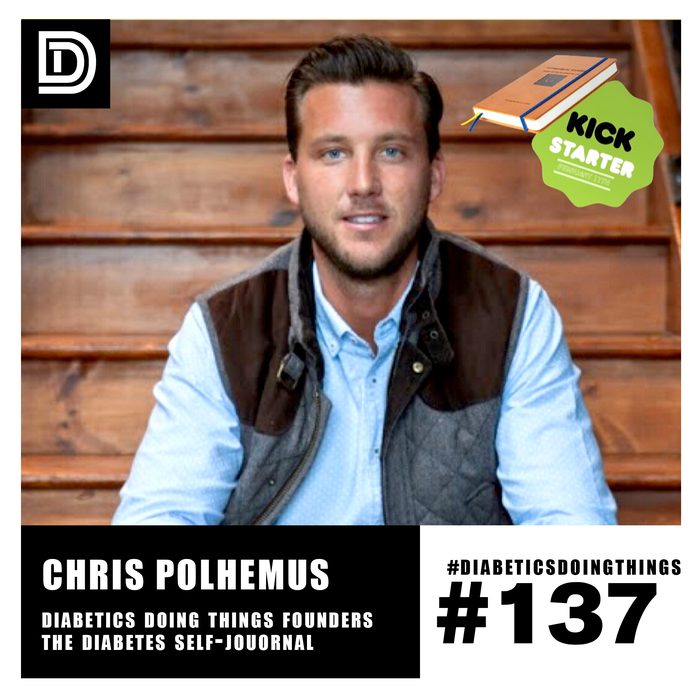
Chris Polhemus was diagnosed with type 1 diabetes at age 8 after a blood sugar reading of 1,400 put him in a coma for three days. He played football from childhood through college and later built Type U Diabetic, a company whose first product is the Diabetic Self Journal, launching on Kickstarter. The 90-day journal tracks insulin, carb ratios, exercise, and blood glucose, and includes daily and weekly self-reflection prompts built around his "remind, record, recognize, reflect" framework. Polhemus talks about the anxiety and depression that can come with diabetes, the stigma around what a diabetic is supposed to look like, and the low-cost habits (sleep, exercise, limiting alcohol) that brought his A1C down from the 11s to 5.2.
Key takeaways
- Chris Polhemus was diagnosed with type 1 diabetes at age 8 after his blood sugar hit 1,400 and he spent three days in a coma.
- He built the Type U Diabetic Self Journal, a 90-day journal for insulin, food, exercise, and blood sugar tracking, timed to quarterly A1C visits.
- Polhemus says people with diabetes are one to four times more likely to deal with anxiety and depression, and the journal has weekly self-reflections aimed at that.
- He credits sleep hygiene, exercise, and cutting back on alcohol as low-cost habits that helped drop his A1C from the 11s to 5.2.
- The journal's Kickstarter ran February 11 through March 15 and included a leather case and a dry-erase blood glucose wall calendar.
Show notes
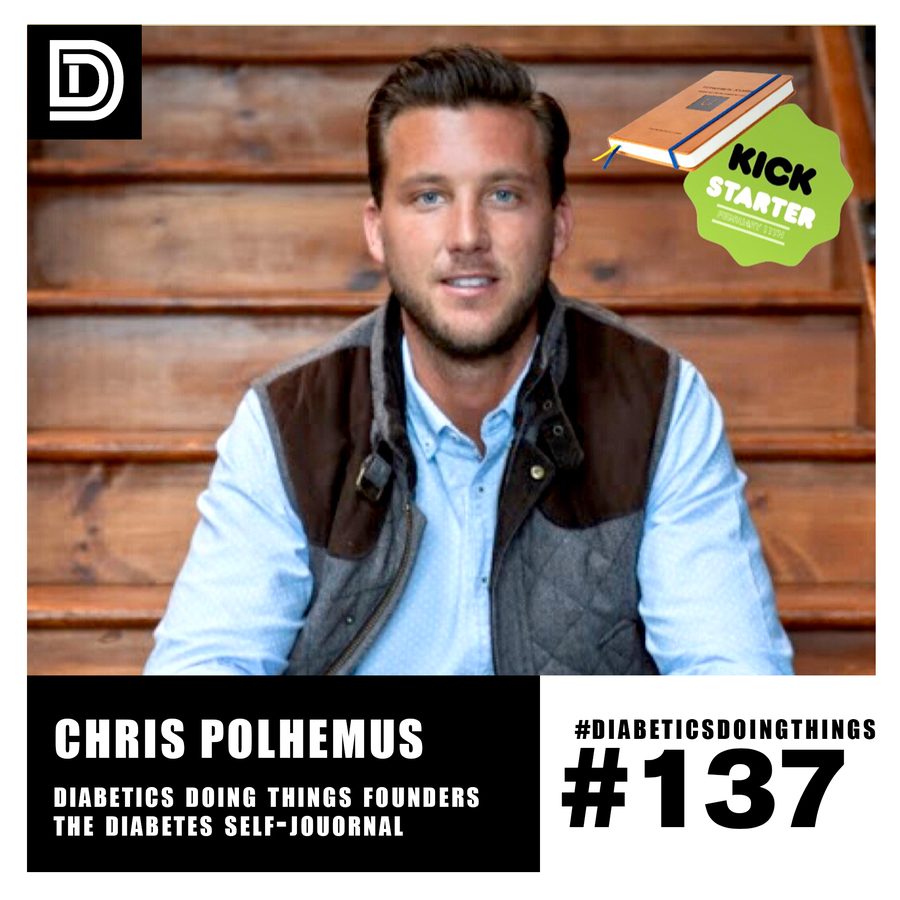
Continuing our amazing FOUNDERS series, I’d like to introduce you to Chris Polhemus, founder of the Type U Diabetic Self Journal! The journal is now on kickstarter, so be sure to get in and fund the project!
After being diagnosed at the age of 8 - Chris Polhemus has recently made a life commitment to follow his passion and purpose in life - Providing a platform to improve the mental, physical, and emotional lives of those living with diabetes.
His goal is simple - " Help millions of diabetics of all ages and types achieve a healthy physical, mental, and emotional life by providing the platform to remind, record, recognize, and reflect on critical lifestyle choices that encourage controlled blood glucose levels (sugar) and sustained HA1c success. "
The TypeUdiabetic Self Journal understands that nobody is perfect, that we all need structure, routine, and motivation to reach our goals, while understanding each person's limitations and expectations. It understands the human mind, how we think, retain, and develop habits that make us successful. This Diabetic Journal accounts for daily exercise, sleep, nutrition, hydration, insulin, medications, blood glucose readings, pump/injection sites, pump changes, and so much more! It understands the importance of developing realistic goals, the action steps to achieve those goals, and the importance of self-reflection on the human brain in reaching your goals.
IG @christopherapolhemus
FB PAGE https://www.facebook.com/typeUdiabetic.co/?modal=admin_todo_tour
FB PRIVATE GROUP https://www.facebook.com/groups/2649318351808243/?source_id=331732847721914
TWITTER: @Polhemusc typeUdiabetic.co
WEBSITE https://www.typeudiabetic.com/ - JOIN VIP SELF JOURNAL LIST
This episode is sponsored by Real Good Foods! Be sure to check out their new Breakfast Sandwiches, made with cauliflower cheesy buns with only 2g net carbs! They’re packed with protein (18g) and have no gluten or grains. Available in sausage egg & cheese and bacon egg & cheese flavors and they’re ready within seconds. Order them online or find a store near you today!
Questions this episode answers
What is the Type U Diabetic Self Journal?
It's a 90-day journal created by Chris Polhemus for logging insulin, carb ratios, exercise, and blood sugar, with a built-in self-graphing blood sugar log and weekly self-reflections, structured around quarterly A1C doctor visits.
Why is it called 'Type U' instead of type 1 or type 2?
Polhemus wanted a name that didn't stigmatize or single out one type of diabetes. He says everyone's diabetes and story is unique, so 'Type U' is meant to include type 1, type 2, gestational, and pre-diabetes.
Does diabetes increase the risk of anxiety and depression?
Polhemus says people with diabetes are one to four times more likely to experience anxiety and depression, which he attributes partly to blood sugar swings, and built self-reflection prompts into his journal to address the mental and emotional side of the disease.
When did the Type U Diabetic Self Journal launch?
Polhemus said the Kickstarter campaign launched February 11 and ran through March 15, and included a leather case and a dry-erase blood glucose wall calendar alongside the journal.
Full transcript Searchable, with timestamps
Rob Howe: What's going on, Diabetes Online community? It's your boy, Rob Howe, back with more episodes. We're back in the Founders series. Today, my very special guest is Chris Polhemus, and he is the founder of the Type U Diabetic, Diabetic Self Journal. And that's actually on Kickstarter right now, and I've included a link in the show notes for you guys to check that out. I'll also put a swipe up link in the promos for this episode on Instagram. Those will be both on my personal account and as well as on Diabetics Doing Things. So it's Monday afternoon. I am ragingly hungry. I've got to knock out a bunch of more reads, but I did want to tell you a little bit of a cool story about how I got to know Chris or how I came about meeting him rather. Some of my friends from Wolaco, who I've done a lot of work with on Instagram in the past, and they make these awesome compression gear, workout tights, running tights that have pockets in them. And they actually fit insulin pumps with tubes perfectly. You can even fit a PDM in the cell phone pocket. So if you're wearing an Omnipod, that's available for you. But Nick, one of the co-founders, is friends with Chris, and they've known each other for a long time, and he connected us, and that was how this connection took place. So you never know, you know, tertiary connections, everybody knows someone with diabetes, and often those people are doing amazing things. So I'm really excited for this episode. Hope you enjoy a great conversation with Chris Polhemus. But again, I'm really hungry, so I'm like, I know a real good foods ad is about to come after this, so I need to go get me some food now. Enjoy. Thank you for continuing to listen to Diabetics Doing Things. We've been doing this for four years now, thanks to listeners like you, and the support of amazing sponsors like Real Good Foods. If you're involved in the diabetes online community, then you have for sure heard of Real Good Foods and their low-carb pizza and enchiladas, which are delicious. But they've really outdone themselves this time with their new breakfast sandwiches. It's just like your typical breakfast sandwich, sausage, egg, and cheese, or bacon, egg, and cheese, except the biscuit is made out of cauliflower, and the whole sandwich has only two net carbs. That's two net carbs. And if you pop it in the microwave, it's ready in seconds. I'm not a big breakfast guy because I don't like having to deal with big blood sugar spikes for a high-carb breakfast. But when I'm really craving a breakfast sandwich, I grab a Real Good Food sandwich out of the freezer and hit the road without having to worry about a big spike in my blood sugar. Check out realgoodfoods.com to find them in a store near you, or use code ROBHOW, that's me, to get a discount when you order the sandwiches online. I'm a big fan of brands who continue to support creators with diabetes, and there has been no bigger supporter of me and my friends in the diabetes community than Real Good Foods. If you haven't checked them out yet, give them a shot and let me know what you think. And now let's get back to the episode. Hello and welcome back to another episode of Diabetics Doing Things. We're telling the amazing stories of people with diabetes from all across the world. And my very special guest today, It's another founder, Chris Polhemus, calling from New Jersey. Chris, welcome to the show.
Chris Polhemus: Thank you. Thanks, Rob. Thanks for having me.
Rob Howe: Super excited to dig into this. I guess let's talk a little bit about how we know each other and how we got introduced. Nick Diodato from Wolaco, who I worked with, and you guys have seen me post about wearing my insulin pump and my workout compression tights. Game changer for me. So we are mutual friends with Nick, and he was able to make the introduction to us via email. So just further example of the world being smaller than you think. So I'm just glad we were able to make this happen.
Chris Polhemus: Definitely. And I'm happy to have found you too.
Rob Howe: Yeah. So let's talk a little bit about your diagnosis story. How did you come to join the type 1 diabetes family?
Chris Polhemus: Yeah. So back in, I guess, around my eighth birthday, actually, I wasn't feeling well. I was sick. I lost a lot of weight. kind of going through a lot of the things, a lot of the symptoms that diabetics go through. And then after a couple of weeks of just not feeling better, finally went to the doctor and I actually had a blood sugar of 1,400, which is pretty off the charts. Was in and out of a coma for about three days in ICU. And then come to learn of it, diagnosed with type 1 at that such young age. You know, it's kind of hard to, you know, digest it and understand that it's going to be a lifelong sentence. But, you know, at the same time, it doesn't mean that you don't have control of your life and, you know, you can't do everything you still want to do at that age.
Rob Howe: Yeah, always a challenge, right? As you were growing up, did you, you know, being an active kid, like anything stand out to you about, you know, your life with diabetes that made, you know, kind of formed who you are today?
Chris Polhemus: Yeah, definitely. I mean, you know, growing up, I was always, I grew up in a football family. I played, you know, football from eight, probably eight, nine years old, right when I was diagnosed, to right through college. So that was always a struggle. And honestly, you know, you know, living with diabetes, you know, I think everyone, whether it's your teacher, your coach, you know, I think in the back of their mind, they always, you know, not that they doubt you, but they definitely, you know, I think they hold you to a different standard, whether that's, you know, lower or higher. but you know I think there's always that subconscious you know that now fit in the room but you know I just I always use that just to make me work harder at life whatever it was it was sports that was it was work without whatever it was in life I always just use you know type 1 as just a motivator you know no matter what it is in life you know there's always someone that has a worse situation or you know we're worse upbringing and you know and type 1's just, you know, something that you just have to, you know, learn how to control and manage, but you know, you shouldn't let it, you know, stop your life or really stop you from doing what you want
Rob Howe: to do. I love that. Yeah. And a hundred percent aligned on that. Do you looking back at your life with diabetes sort of before you, before college, like, you know, going through middle school, high school, who do you, would you attribute like in your life with diabetes, like that mindset, Like where did that mindset come from for you that you were going to live your life, you know, above and beyond your diabetes and really not let it hold you back?
Chris Polhemus: Yeah, I mean, I think a lot of it honestly was just, you know, I had joined a group, you know, in my hometown and, you know, diabetics. But there were some type 1 diabetics there. And just getting to talk to people more and, you know, learning just about the education. And obviously, you know, we kind of grew up, we're similar in age, and I think you were diagnosed around 16. But still, I mean, we grew up, you know, before all these fancy, you know, electronics and all these things. So we kind of grew up on a lot. You know, I grew up on injections, and there wasn't the technology they have today. So, you know, just talking to people. Like I said, I was part of a private diabetic group in my hometown. and you know and the longer you live with it the more you I think you definitely become you know become more comfortable with it you learn how to manage it better but at the end of the day it's still you know you still have your obstacles you still have your victories and you still have your wins day to day but it's definitely you know something that you just have to you know it's like it's like a full-time job I tell people you know there's there's always something you know that you're expected unexpected you know no matter really what it is um with type 1 yeah it's
Rob Howe: always so interesting to me like seeing and meeting people of all ages who are like doing these complex calculations like on the fly you know there's like you're in the drive-thru at a restaurant you're like okay what's my blood sugar like what am i going to eat like how much cars do i need like do i need to wait till i get home or whatever the case like uh you know even down to like five-year-old kids there's like these little data scientists making really big decisions like all day long. And it's really, it's really inspiring to me. I think like I, for a long time took that for granted that there are people, you know, as a type 1 diabetic, or even just a person with diabetes, like you're responsible for so much more knowledge and decision-making than most people without a chronic illness. And, you know, we just kind of take that for granted. Sometimes it's really, uh, just making it through a day is a superhuman achievement.
Chris Polhemus: Yeah, definitely. Sometimes you're starting your day, you can start your day whether your blood sugar is high or low, and whether you're changing your pump or you're doing injections, and before the average person is out of bed, you've already done, like you said, calculations, and you've done X, Y, and Z just to start your day before you even do anything.
Rob Howe: So let's talk a little bit about that, because this is the Founders Series. your company is type u diabetic talk a little bit about where that name comes from i think it really stood out to me as it's one very unique and i and i'd love to hear a little bit of the story behind
Chris Polhemus: it yeah definitely so um you know just i wanted i wanted a name that didn't sound like it was really stigmatizing um but really just gave ownership everyone's different um you know diabetics aside everyone you know is unique and different in their own way um and type u was kind It's not type 1, it's not type 2, it's not gestational, it's not pre-diabetics. It's type U. Everyone is different and unique, and everyone has their own story, and everyone has their own background, and everyone has their passion and their journey to really do what they want to do. So that's really where the name came up. I was thinking of a name that really gave it meaning and gave it substance and wasn't just the traditional type 1, type 2. So that's really where it came from.
Rob Howe: I love it. And I think there's a lot of, like you said, stigma around diabetes. And I think by kind of being in the middle and leaving it open, it's not just for type 1s, not just for type 2s. It's for everybody with diabetes.
Chris Polhemus: Exactly. And that was more of the mindset. And the basis of my – right now is my company, which I'm launching. Obviously, my first product is a self journal, but it's going to be for just self-care products for diabetes in general is to help them live a better quality of life and help them manage their blood sugars. Anything out there that can be of an asset to the diabetic community and diabetic family not only can it change their life, but hearing stories can change my life too.
Rob Howe: Yeah, I think that was interesting. A big learning for me when I started this podcast was my goal was to help one person. I was going to do 10 episodes. And if one person reached out, I would keep doing it, consider it a success. And I often talk to people about changing their metrics to especially when they get started to make sure that they're, you know, measuring the right things and having the right impact. And one thing I've learned along the way over the last like four years is sometimes that person is me. and you know I benefit a lot from talking to other people with diabetes or being involved in the community it's just been such a an undercover benefit of being involved that I couldn't have
Chris Polhemus: known when I started definitely that's like you know that's the cool part and you know you know you'll see someone at the gym or you'll see someone at the store with a you know with a blood sugar or an insulin pump and you have you kind of have that immediate you know connection because even if you go to doctors or nurses, until you live with it, it's kind of hard to explain. Yeah, people understand it. Yeah, your mom or dad might understand it, but until you live with it every day, it's just kind of hard to really make that connection.
Rob Howe: Definitely. So your first product for Type U Diabetic, as I dropped my phone on the floor, is the Diabetic Self Journal. Correct. So talk a little bit about that. I know you've got a Kickstarter launching very soon, and we're going to obviously link to that in the show notes. Talk a little bit about where the idea came from and how did you, from day one of this idea, how did you get to where you are today, finally releasing it to the public and making it happen?
Chris Polhemus: Yeah, so I mean this idea honestly has been years in the making. I'm always writing things down, logging things, whether it's insulin, carb ratios, basal rates, Exercise, you know, I'm big when it comes to exercise and gym and then, you know, just kind of everything. And I came to the point where I was like, you know, there's really a need for in society, especially the diabetic community, to have a one place that everyone can kind of not only record things, but also, you know, have a platform that can actually help you build habits, install routines and actually help you meet your goals. You know, it's so easy to do something for a week or for a day or for a month, but to do something for a lifetime for many of us, especially type ones, you know, type 2 is reversible in some cases, but many for type ones, this is a lifetime. And it's not easy to do this for a lifetime. It's easy to do something for a day. So that's really where the idea came from. I was tired of writing things down and having five, seven different notepads and, you know, everything kind of, you know, scattered around the house or scattered at school or in college. And it just kind of struck me that, you know, to come up with a platform that can really just be a one-stop shop for us to, you know, not only write everything down, but also to help us, you know, keep us on track, especially, you know, to reach those A1C goals.
Rob Howe: no absolutely and i think you know i often talk about uh when people ask me like what's the best way to do x with diabetes my best my best advice is to journal or to take notes and and gather data
Chris Polhemus: and be able to make decisions based on that yeah definitely and you know with uh and that was a large component of it too um i've gotten a lot of emails um you know when you come out with an app And honestly, I haven't even thought that far because, you know, my main idea for this was just the whole idea of writing things down. You know, we live in a society now that we're always on our phone. We're always going. We're always doing things. But we stop to really, you know, ever write things down and actually self-reflect. And that's a big aspect of this journal. I have a weekly self-reflection that's obviously optional for the end of each week. But I also have a daily, quick self-evaluation. because we know in today's society very rarely do we write things down. Do we take time to think about, you know, what am I doing today? What am I eating? Am I bolting out, you know, before I eat or after I eat? And am I, you know, paying attention to the little things? And I think in today's society, you know, with technology, it's good and bad, obviously. But I really wanted, you know, a platform that can really, you know, that really had a place for people to write things down and to actually self-reflect.
Rob Howe: And talk a little bit about that self-reflection because I'm a big believer in, you know, you got to find what works for you, whether it's meditation, whether that's like the five-minute journal, whether that's, you know, weekly goals or, you know, before you go to sleep, looking at the next day and, you know, trying to plan it out. How do you find, you know, what's your sort of routine when it comes to journaling?
Chris Polhemus: Yeah, so, you know, kind of my slogan is remind, record, recognize, reflect. The big four R's, I call it. And, you know, the remind process comes through just every day, you know, reminding yourself, you know, like I said, to give insulin before this, to take your medication, to check the carbohydrates, double check things, you know, record, writing everything down, you know, recognizing patterns. Diabetes is big when you, you know, with patterns and, you know, over long periods of time. I have a built-in blood sugar log in the journal that also kind of self-graphs itself so you can see patterns over time. if you're going high or low at certain times of the day. And then that last R, reflection, reflecting back on those things. With diabetes, I think one thing that goes big, everyone, I think obviously there's many more people in the world of type 2, but people think diabetes, you eat too much sugar or you're overweight, right? That's like the everyday stigma we get, I think, to some point. If you have diabetes, you're skinny, or you're fit, or X, Y, and Z. But people don't see the mental and the emotional part that diabetes has, we're anywhere from one to four times as likely to suffer from anxiety and depression. And a lot of that has to do with blood sugar swings and other chemical imbalances that diabetes brings us. But this journal, I think, does a very good job at that. I built in those many self-reflections that evaluate our mindset, how we feel physically, how our energy levels are. there's a new daily quote a motivational inspired quote on every page of the daily journey and then like I said there's 13 weekly self reflections each journal is for 90 days which is based around your A1C visits most people should be going to the doctors four times a year for their A1C and you know every of those 13 weekly self reflections it's more in detail but yeah I think this journal just does a good job of like I said not only the physical you know stress on their body but also the mentally emotional which I think goes goes wildly unnoticed I know personally you know I suffered with anxiety and a lot of different emotional things and you know I think people you know when they see someone college fit guy plays football they don't think of someone that you know goes through those you know I had a lot of emotional problems and anxiety problems you know growing up and that's part of the reason also why I wanted to make that important aspect of the journal as well talk about that a little bit
Rob Howe: because I think that's a really good place for us to kind of dig in a little bit is the anxiety mental health aspect of diabetes. I saw somebody the other day who I think she's like a YouTuber or she's some sort of internet celebrity. She's not really involved in the diabetes community yet because she's been recently diagnosed. And she tweeted, she has like a couple hundred thousand followers and was tweeting, he's like, I thought I was handling my anxiety and depression and then I got diagnosed with diabetes and now I'm having way worse anxiety and depression as before. And she was just sort of sharing this with her followers. And it was important for me, like my fiance sent it to me, and I went in there and I responded. I was like, hey, you know, it's important for you to know that this is normal for people with diabetes. Like you said, I think some research says three times as likely, anywhere between one and four times as likely, I believe what you said, to suffer from anxiety and depression. and it's important to say that because we got to normalize that conversation and so if you're already suffering from it and then diabetes gets thrown into the mix you know I think it's really important to soften the way that we look at that as people otherwise you know we can be really hard on ourselves and like you said as a as a guy as a dude with diabetes as a football player like a you know whatever red-blooded male like a guy who's out there you know really trying to make stuff, make stuff happen. Um, you know, it can be really difficult to be vulnerable. I mean, that's, that's my place in the diabetes community is like, Hey, I'm a guy with diabetes and not that many guys talk about it. So how, how have you used, you know, your journaling and your practice and, you know, even some of the diabetic self journal aspects to open yourself up to that conversation and to, you know, address the mental and mental strain of diabetes.
Chris Polhemus: Yeah, so I think that goes, and I think, you know, you kind of hit the ball in the head on me. In today's society, too, I think just in general, the culture that we live in and just having to be, you know, we're held to such a high standard, whether it's at job and, you know, at work and we take things home with us. And there's already that heightened anxiety or that heightened stress. And then you add any kind of, you know, chronic disease like diabetes to it. And I think sometimes we feel like, you know, we have to, you know, hold ourselves to a certain standard. And I found out, honestly, almost letting the disease come to you in a way, when you take a step back and you look at it, stop trying to micromanage everything to a certain extent. and really just looking back at your place in society and just realizing that take each day at a time and that with control and really be on top of things, you can definitely do what you want to do. Over the years, I've developed self-meditation, mindfulness. The gym has always been a huge outlet for stress for me. I know some people, whether they're walking or some people read, some people eat when they're stressed. My big thing is I've always worked out. I've done half marathons on the insulin pump. I'm training to do a full marathon this year in West Palm Beach this summer. So I think the mental and emotional aspect definitely, I wouldn't say it's one recipe you know, fits all, but definitely, you know, soft reflection, mindfulness, exercise, you know, exercise is definitely proven. You release adrenaline and endorphins that definitely combat stress. And I think all those things, you know, really do make a big difference. And I tell people all the time, like, look, you know, you really don't think of, when I tell people, you know, don't look at diabetes differently. And that's one thing I have in here. I have the seven principles of A1C success. and a lot of them are things that everybody should be doing, right? Sleep hygiene, doctor's visits, stress management, low alcohol intake. And I dove into the research and I came up with these seven principles and I go to them in detail and break them down. But when you step back in society and look, you know, really all these people should be doing these things because diabetes is kind of a result of our health and what we do to our body, right? It's much more manageable and easier to regulate our sugar so we don't have, you know, highs and lows and roller coasters. If you eat healthy, you work out, you have good sleep hygiene, you do things that reduce your stress. If you do all these things, you know, even if you're not a diabetic, if you do these things, you should be more successful in life or at least, you know, you increase your odds definitely. And, you know, I've kind of incorporated those things into my life and that's why I talk about them too in the journal before I even go into the daily, you know, the daily habits and stuff. all that stuff is in the beginning of the journal because you know that's what i've done and that's um you know what's what's helped me you know i had i wasn't perfect i had a1c's that were in 11 when i was younger um now i'm below i think my last one was 5.2 um so you know every everyone starts somewhere and um you know uh just one day at a time it's interesting you know some of the
Rob Howe: hearing you go through those principles something that i talk a lot about with uh other people with diabetes in social media is the idea that there really is no one silver bullet, right? There's no quick fix solution to this, right? It's a incremental progress, like continuing to do the right things, continuing to make good choices and like building good habits. How much of these principles are, you know, just good principles in general for life and, you know, and living in a happy, balanced, successful life and just good results with diabetes are just a by-product of
Chris Polhemus: that? Yeah, I mean, some of it definitely comes down to, you know, a lot of principles are things that I tell people all the time. They're, you know, they're cost efficient. They're not things that we really have to spend money on. You know, sleep hygiene. People don't realize, you know, people, you know, simple as sleep. A lot of important, you know, studies that show about sleep is what you do in preparation, right? You know, don't be on your phone or watch TV an hour. If you are, wear blue glasses. You know, maybe have tea before you go to bed. No caffeine after or 2 p.m. You know, having a bedtime, you know, built-in, you know, regimen and routine is big. You know, doctor's visits, you know, this gets a little more, you know, depending on your insurance and, you know, things like that. But everyone should be going to doctors, you know, to their endoprenologist or their specified doctor, you know, for their diabetes. Everyone should be getting, should be doing that. Alcohol intake. You really shouldn't to be having more than one to three drinks a week, not a night or a weekend. And these are all things that I think people can do. But again, it's easy to do that for a day. It's easy to do that for a week. But these are things we have to do over the course of a lifetime. And I think that's the biggest challenge. But developing habits and routines, those take months to do. So you can't expect change overnight, like you said. There's not a one fit all. But I think over time, you know, you build memory, your body builds habits, and you get into this, you know, you get into this culture almost, and it just becomes part of your life, you know. Right. You know, lower alcohol intake becomes part of your life. You don't drink a lot. Going to the gym five days a week, that becomes part of your life. And all these things kind of come together and kind of, you know, shape you into your, you know, who you are. And I think your diabetes is kind of a result of that and is a huge reflection of your blood sugars. But like I said, a lot of these principles are things that are really cost-efficient. They don't cost anything. They cost us time. That's what they cost us. They cost us time and routine. And if we're willing to invest in ourself and invest in our body, they're easily achievable by us.
Rob Howe: I love what you said about like the not expecting, you know, instant gratification, this sort of lifelong journey with diabetes, because I think that's one of the things going back to what we were talking about earlier with mental health that can be so kind of overwhelming at times about diabetes is that it doesn't go away. And just when you think you have it figured out, sometimes it throws you a curve ball, right? Or you experience something that you haven't experienced before. or you feel like you're doing the right things and your pump site kinks or your insulin in your pen goes bad or something like that. It's just full of surprises. How do you balance having diabetes for most of your life? How do you balance burnout or feeling overwhelmed and those types of mental and physical toll on your body?
Chris Polhemus: Yeah, so I think like anything in life, I think it's really balanced. You know, that goes back to not expecting too much out of yourself, but, you know, always, you know, holding yourself responsible. You know, it's easy with diabetes when you, you know, the cheat. If you're real low, it's easy to be starving and overcompensate and eat everything in your closet, right? But it's really that self-discipline, I think. And that's, I think that's really, you know, the heart of it is just being self-disciplined. And that's not easy, especially, you know, like I said, when you're super stressed out. we go through the same thing that everyone else goes through in the world. But then you throw blood sugars and you throw syringes and insulin pump changes and Dexcoms and all these devices and things for us to live really every day. And I think it just really makes your life difficult. But like I said, when you step back and think about where you are and your purpose, I think it just makes more sense when you can just kind of step back and look at the big picture.
Rob Howe: Definitely. And when you look at the big picture for you and your new company and kind of being an entrepreneur and hustling this to existence, what's that big picture look like for you? What do you, you know, dreamscaping a little bit? And like if you were to say, hey, this is what I want this to be and this is the impact that I want it to have. What does that look like?
Chris Polhemus: Yeah. So to be honest with you, Rob, I probably would have done this. This has kind of been a dream of mine. I've always wanted to do something, you know, probably since high school in the diabetic field. but you know growing up in a you know college first family I went to college and did you know had my years in education but now I you know as I'm older and I you know really really I think came into my own in the last you know five years and finding my purpose and really my purpose is just to not only improve the lives of you know diabetics but also to educate there's so much education is that, you know, not only diabetics, but non-diabetics, you know, to educate them and to spread awareness. And obviously, Type U Diabetico, my focus is going to be on self-care products. And those products are going to not only focus on improving people's physical life, but their mental and emotional lives as well. And I definitely plan to roll out, you know, perhaps some kind of podcast in the future and definitely other products, you know, out there that are going to be, you know, relatively cost effective. And I think they'll really have a big improvement on their life. And eventually I'd like to roll out, you know, a coaching aspect too later, later on. So, you know, this will probably be a couple, definitely a couple parts to this, but right now focusing on the journal and really just spreading awareness and helping people and just, you know, giving them positive, positive messages that, you know, whether I've met so many amazing people already on my journey just through social media and stuff. I mean, we have, I think we have close to about 3,500 people signed up for the drill already and just really excited.
Rob Howe: That's super cool. And, you know, I think, you know, the, the impact that you, that you're, you know, setting yourself up to have and like, you know, pouring back into the community, I really hope that comes back on you as well. I wish you all the success there. For people who are interested in Type U Diabetic and also looking for your Kickstarter, where are some places that we can point them?
Chris Polhemus: Yeah, so the nice thing about the Type U Diabetic, we have a private group on Facebook. You know, really the only requirement is you need to be a diabetic. And recently we've gotten such great feedback that we've actually allowed parents to know diabetics. so uh i you know growing that's one thing you kind of forget growing up you know our parents or whoever you're raised by you know that they kind of take some of the disease too because when you're at a young age you know they're kind of responsible for you know overlooking things so we recently opened up the group to uh parents um and any diabetic so um you can just you know search on facebook groups you can just go type you diabetic uh you'll see our icon the yellow you All you have to do is to join, and that's a great group for information. We'll have all updates in that group as well. There's all kinds of things in there from case studies to daily posts to books, all kinds of things that I posted there at daily. Then also just www.typeudiabetic.com, and that's just the letter U. There you'll find everything about Kickstarter, my journey, my story, complete product info. And then you can sign up, join the VIP list, and we'll send you updates too when we launch, which is February 11th, which is a Tuesday at 11 a.m. And that campaign will run through March 15th, a Sunday. And you can back the project and get your journal. The nice thing about this project, we also have a leather case that goes with it. And then we also have a blood glucose dry erasable wall calendar too, which will be a cool feature I think people will really like.
Rob Howe: Definitely. And I'm going to include links to the Kickstarter in the show notes of this episode, and we're going to release it after your Kickstarter goes live so people will have a chance to get in there and support the goal and obviously get their hands on the Diabetic Self Journal.
Chris Polhemus: Yeah, I think it's great, and I think this project, like I said, not only helps diabetics, but it also helps spread awareness. Anyone can back the project. You don't have to be a diabetic. If you have a loved one or a nephew or son or a parent that's a diabetic, or if you just want to donate, every little bit helps reach our goal so we can make this journal possible and have an impact on the diabetic global community, definitely for the better.
Rob Howe: Absolutely, man. And we'll definitely continue to watch and wish you the best of luck. I'm really glad we were able to get connected. Obviously, anytime I meet another guy in the community who's doing the right things and trying to help people with diabetes, that's always a great introduction from my view. So I'm glad we were able to make this happen.
Chris Polhemus: Definitely. Thanks for having me. I appreciate it.
Rob Howe: Thanks again for listening. Please follow us on Instagram. Check out our sponsor, Real Good Foods. We're diabetics doing things on all the major platforms. And we also are available on Spotify. So if you prefer Spotify or you're a subscriber, check it out. I definitely have listened to more on Spotify in the recent years. They've got a lot of great podcasts. And it's just super easy to shuffle from music to podcasts and back and forth. Leave us a review if you have a chance. And tell a friend with diabetes about this podcast. That's the best endorsement and the best support that you can provide. Thanks so much and we'll see you next time.
About Chris
Chris Polhemus was diagnosed with type 1 diabetes at age 8 and played football from childhood through college. He is the founder of Type U Diabetic and creator of the Diabetic Self Journal.