

Update Episode - Rob Gives an Update on Diabetics Doing Things in 2020
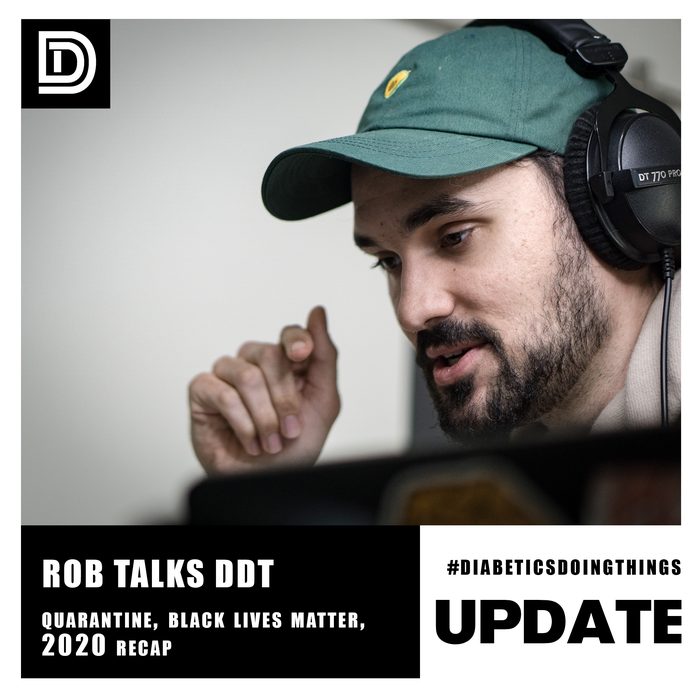
Episode summary
Rob Howe, host of Diabetics Doing Things and a person with type 1 diabetes, records a solo update after months away from the podcast. He explains that COVID-19 upended his travel, speaking gigs, and his advertising agency Recreation, forcing furloughs before the team recovered. He describes pivoting to virtual events, including a JDRF Detroit keynote and ADA's Imagine Camp interview series, and launching his own live late-night style show during lockdown. He then shifts to Black Lives Matter, sharing that only 13 of 180 podcast guests have been Black, and commits to hiring staff to hold him accountable, using his access at JDRF, ADA, and Beyond Type 1 to open doors for BIPOC voices in diabetes.
Key takeaways
- Rob paused posting backlogged episodes to give space to Black Lives Matter conversations in the diabetes community.
- Rob says COVID-19 canceled nearly all his 2020 travel and events, and his agency Recreation had to furlough staff before recovering.
- Rob says only 13 of 180 Diabetics Doing Things episodes have featured a Black guest, calling that unacceptable.
- Rob is bringing on a new employee for six months to help hold him accountable on representation and inclusion.
- Rob criticizes JDRF for not moderating racist comments on its Juneteenth posts featuring Kylene, Anita, and Keiva.
Show notes
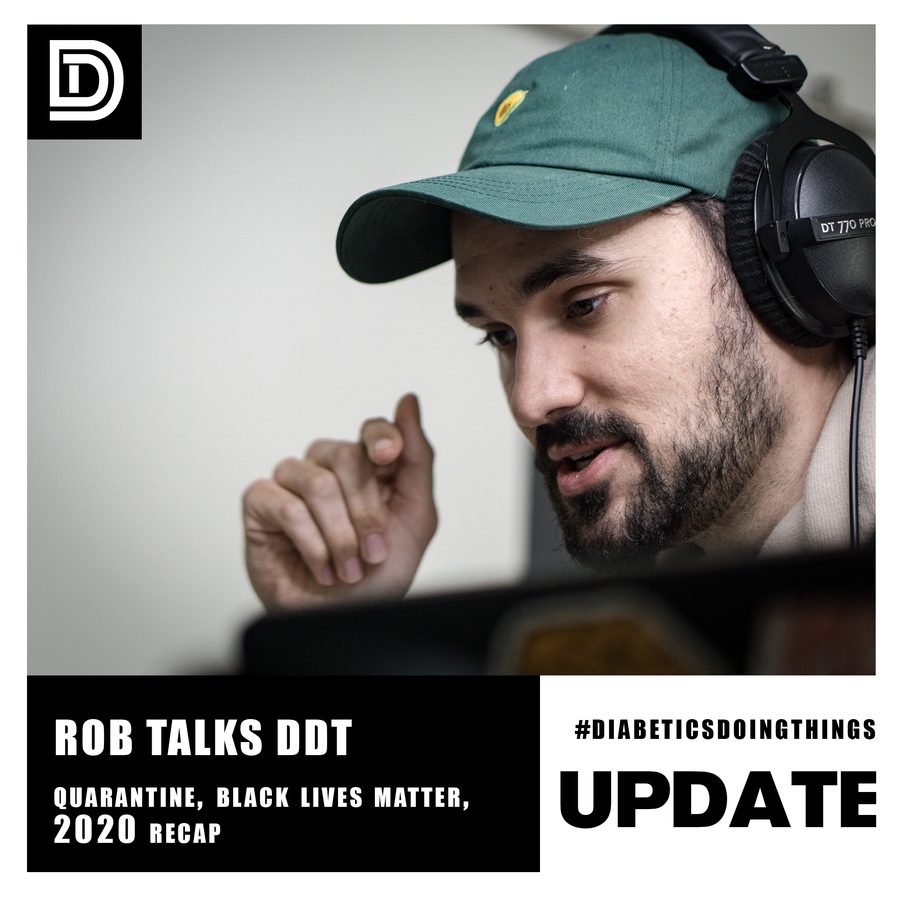
2020 has been a whirlwind for all of us, and especially in the Diabetes community. So I felt it was important to address why the podcast has been a bit more absent recently, as well as address how Diabetics Doing Things will make efforts to be more inclusive, more anti-racist, and part of the solution rather than contributing to the erasure of Black experiences in the Diabetes community.
In this episode I cover the following:
Why I’ve been so absent on the pod
The days leading up to the COVID-19 lockdown
Business updates and challenges following the lockdown
The cancellation of all the Diabetes events I was scheduled to be a part of
How my agency, Recreation has been handling the economic fallout
Updates on ADA Imagine Camp
Looking back on Rob Howe Has a Live Show
Updates on how Diabetics Doing Things is responding to the Black Lives Matter movement, and what you can expect going forward
Statistics on the lack of inclusivity on our platforms, and a candid discussion about the failure of representing Black people with Diabetes, and other BIPOC voices as well.
Addressing the failure of JDRF to protect Kylene, Anita, and Keiva on the Juneteenth social media posts, and how I plan to use my involvement with JDRF, ADA and BeyondType1 to open the door for more opportunities for BIPOC people with Diabetes to share their voices and stories to spread awareness about the challenges our BIPOC brothers and sisters face.
Ok, that’s it! Thanks to Dario Health for sponsoring this episode, and keep it locked on Diabetics Doing Things. Listeners of the pod can save 77% on the Dario Starter kit!
Questions this episode answers
Why had Rob Howe been absent from the Diabetics Doing Things podcast?
Rob says he had about 15 episodes ready to post but held off because he felt his platform needed to make room for the Black Lives Matter movement before promoting his own content.
How did COVID-19 affect Rob Howe's business and events?
Rob says his agency Recreation went fully remote in March 2020, lost more than half its clients' normal business, and had to furlough key staff for two weeks before recovering. Nearly all his diabetes speaking engagements and travel, including several JDRF type 1 Nation Summits, were canceled.
What is ADA Imagine Camp?
Imagine Camp is a virtual camp series from the American Diabetes Association, created with Beyond Type 1, where Rob interviewed guests including Sam Talbot and Victor Garber as a replacement for in-person camps he was scheduled to speak at.
What representation statistics did Rob share about his platforms?
Rob says only 13 of his podcast's 180 episodes have featured a Black guest, under 10%, while his live show featured people of color in 33% of its guest slots, and he commits to improving both.
Full transcript Searchable, with timestamps
Rob Howe: This episode is sponsored by the Dario Blood Glucose Meter. The Dario Blood Glucose Meter is not just a glucometer, but it provides a holistic engagement platform as a service. It's the only FDA-cleared glucometer designed especially for your mobile device. It helps manage your chronic condition more successfully in an all-in-one pocket-sized device that connects to your smartphone. It's definitely the smallest glucometer I've seen, and it's very on trend from a design perspective, while featuring auto test strips fulfillment, which are unlimited, by the way, and human digital coaching available through the MyDario app. So check out MyDario.com and experience diabetes management simplified, and learn about all the tools and support they offer to balance your life. Plus, Dario is HSA and FSA eligible, so get a look at what your diabetes management could look like through a meter that connects directly to the thing you use most, your smartphone, at mydario.com. Now let's get back to the episode. Hello, welcome back to Diabetics Doing Things. It's your host, Rob Howe. This episode is just going to be me. So I'm currently sitting in my home in Dallas, Texas. It is a rainy Sunday, and I've thought, given the current climate that we are in in social media, one of the reasons why I haven't been posting some of the pods that I have on Backlog, and I have about 15 that I've already gotten ready to post, made the graphics for, even teased out a few weeks ago. But I felt as though my platforms needed to add to the momentum of the Black Lives Matter movement, specifically within diabetes and health, and that anything that was promoting my own stuff needed to take a step back for a time. So that's something that I've been thinking about, wrestling with, not overthinking, but just saying, hey, you know what? We can take a beat and wait on podcasts and use this as a time to plan, decide what's appropriate and make sure that we are committed to a longer term solution. So I'm recording this. Currently it's June 28th, 2020. We are, as of recording, 107 days since March 13th, which is the day I use as the lockdown beginning. the day everything changed because that was the first day of the NBA being on lockdown. And when the NBA goes on lockdown, that's what I use as my, as my sort of de facto response. And the fact that they still have not opened anything up and are working through what that plan looks like you know, that just says that we probably the general public and different as, as Enzo, my, my dog begins to have a fit because of course I'm doing something important. And, and here he goes. we probably, you know, got back too early and really didn't think about the, you know, potential consequences. And it really stems from a lack of leadership at local, state, and federal government levels. But I don't want to dive too deep into that currently. But as it stands in Dallas, we, I think, had over 500 cases of COVID-19 yesterday and are rapidly undoing a lot of the work that we did over the first 60 days of this quarantine. So I just want to recap the week before March 13th. So the weekend was like March 5th, 6th, 7th, Thursday, Friday, Saturday. I'd love to address some of the comments that I made via my Instagram, which I quickly edited as I did more research on COVID-19. So at that point, I was in the airport on my way to San Diego and Erica was going with me. We were going to work with Xeris Pharmaceuticals to do some more content and shoot some content and do some research about their Gvoke glucagon products. And I made a post on Instagram saying that I wasn't going to let coronavirus derail what I was doing, but I was going to take all the precautions that I could, which at that point was washing hands, using hand sanitizer. I actually bought these wipes at Target, like Lysol wipes to wipe down airplane seats and seat belts for our trip. And, you know, for the most part, everything was normal on the trip. We were in San Diego. It was beautiful. Everything was open. You know, there really weren't any discussions about COVID or Corona within our small group. And it was kind of like the last time everything was normal that we, that we remember. And until, that is until Friday. So we were there Thursday and Friday. So we were flying back to Dallas Friday night and the San Diego airport was relatively slow. And I mean, typical of a late Friday night flight. Um, but we got on our plane and we were like one of 12 people on or two of 12 people on the plane. It was absolutely empty. It was the most empty flight I think I'd been on, uh, up to that point, which, uh, gave us a little bit of pause, you know, and was a little bit like, okay, this is, uh, this is about to become pretty serious. It seemed like corporate travel at that time was starting to be suspended and, you know, people were taking a serious look at what was going on. And so I decided to edit that post and say, hey, we need to take this seriously, especially for people with diabetes, because people were reporting at the time and they were reporting correctly that people with diabetes were at a higher risk if they were to contract COVID-19. So, you know, we did that. And we got back the next week. This is the week of, I guess, March 10th, I believe, 9th or 10th. And we're back in the office at Recreation, which is a small office. We only have 10, 11 employees. We're watching the situation and I got to give credit. One of my junior staff actually mentioned to me and my business partner, she asked some tough questions about, hey, when are we going to decide to shut down? What are we looking at? And we were monitoring the situation pretty closely at that point. I believe the president also got on and delivered a COVID-19 announcement, the first of many that Friday. But there was no protocol for businesses that were like 10 people. But over that weekend, the weekend of March 13th, after everything closed, we decided to go completely remote. So recreation as of March 15th went completely remote. And we, you know, we're a small staff, everybody's got laptops, everybody's got the software they need. And it was a big adjustment, but we were able to do so a lot easier than a lot lot of other businesses. Something else though that happened that week related to diabetes was I was supposed to go to New Jersey for one of the type 1 nation summits with JDRF. And as of Wednesday of that week, I was supposed to fly out on Friday. As of Wednesday that week, that event was still set to go on. And I was in contact with the chapter about the event, but Thursday morning they canceled it. And then as I looked out at the next nine weeks for me, there were not you know nine weeks i would have been on the road eight of the next nine weeks for some sort of travel most of that uh were type 1 nation summits and all of those events uh every single one eventually got postponed or eventually canceled so on that list was like five type 1 nation summits one call to con call to congress in dc with ada and then i had two bachelor parties one was my own and then my sister's wedding which i ultimately wasn't able to go to so So my travel life, my lifestyle really flipped upside down relatively quickly. All those flights, all those trips, done. Speaking gigs, hosting, whatever that is, when I'm the host of these things, whatever you want to call that. Diabetics doing things, events, revenue, sponsors, poof. Except for Type Zero Health. So big shout out to them and to John Jensen, typezerohealth.com. They stuck with us. They didn't pull their sponsorship dollars. so we're going to stick with them for the long haul. That's just the loyalty that I have for the people, especially behind some of the brands that we work with. And also, man, my workouts really, really suffer if I don't take type zero pre-workout. Check that out. You can also save money if you use Rob Howe on their website, typezerohealth.com. You can save 20% on all your orders. So good stuff. So we had to make tough calls. And, you know, tough calls on the diabetes space, You know, we're having these conversations and things are changing quickly. Back in Dallas, Recreation, my advertising agency, initially, I was even on some podcasts. One of them, I'll have a double podcast and my friend's host. And I said, you know, I thought we were recession proof was the term that I used, which in hindsight was definitely premature. But I was, I think at the time, just trying to be positive, trying to do what I do, willfully pushing positive energy into the atmosphere of which, you know, there really wasn't a whole lot of positive things at that point. But take a look at our client roster. And it was a toss up as to, you know, who was going to be affected, who was going to be able to stay in business, keep operating at a normal capacity. We really just didn't know what we didn't know. So, but then as we get kind of a couple of weeks into quarantine, back to back to back to back weeks, more than half of our clients at our agency are hit really hard by the pandemic and, you know, closures and lockdown, which trickles its way down to us, which, you know, ultimately made us for some very, very difficult decisions. We had to make some tough calls. Tough decisions was called them. Wow. I cannot talk. I've had too much caffeine today. I think culminated on us having to furlough some of our key staff for two weeks. We were working around the clock. I think at one point it looked like 29 days straight without, you know, taking a day off from my business partner and myself. And you know, we were just all day, every day working on the business. They started running together. Lots of, you know, nausea, indigestion, panic, et cetera, et cetera. Fortunately, we were able to bring back all of our staff, although we lost a really key team member who took another job. but we were able to survive. And now I feel like those boomers that you hear who talk about like their parents during the Great Depression or the dot-com bubble, the 9-11 bubble, the housing crisis, et cetera, et cetera. And like, this has become that for me. And, you know, COVID, you know, you aren't there when COVID-19 kids, you don't know what you're talking about. And I think, you know, that's been a big, I'm just grateful that we have been able to make it through and fortunate, how fortunate we are to have amazing partners who I'm indebted to. I'm very excited to continue to do great work for. But, you know, what's interesting to me is I, you know, when I read books and I study people from the past and I think about, you know, the successful people, quote unquote, in business or economics or whatever the case, I used to think about global economics markets and wish that I had been in a position to build something on the heels of a crisis or a depression, like Great Depression, housing crisis, for example, you see like all the wealth that was lost in 2008 was almost rebuilt in one year following, you know, things like case studies like that. Well, I got my wish. And I really wish I never would have put that energy into the universe because it could have easily gone bust. It could have easily, you know, ended, you know, we, I was not ready. I was not prepared. I did not have a global pandemic strategy. I did not have a global pandemic response plan, um, or, you know, rainy day fund or whatever the case that you, whatever you want to call it. Uh, we got lucky. We were very fortunate. We were in the right place at the right time. And, uh, you know, fortunately for many of our partners, uh, they also were able to weather the storm and I'm just very grateful for, for that. So, okay. That's, that's kind of the doom and gloom. Um, but during this time, we've also been able to do a lot of honestly wild diabetes community stuff. So what is the, how do we move forward? Right? So one of the first things was the JDRF Detroit chapter was, was the first chapter to go completely virtual. So they reached out almost, you know, really weeks into days, weeks into the lockdown. They said, Hey, we cannot have this in person. so we're going to do it virtually. Are you still open to doing that? So that was my first Zoom keynote that I'd ever done. So shout out to JDRF Detroit and that awesome team. Some of the employees there actually were furloughed even before the event and they worked on a volunteer basis to make sure that the event happened. And that's just, you know, they have a great team there. And I think that spirit of giving to the chapter was really admirable and I'm happy to work with them in the future. So we did that. We did a virtual Zoom and there were about 100 people there. And so there was a little bit of community. There was also some other diabetes Zooms that have popped up from some of our friends in the community, Sarah Diabetic Cactus and Maddie Spiceball hosting their weekly Zoom. the blonde type 1, Leah doing her, you know, budding betas, budding betas group and Zoom meetings on Friday nights. And, you know, it's just pretty, pretty incredible outpouring of community and going virtual. And I think something that in the diabetes community, maybe we took advantage of before, sorry, not took advantage of, but took for granted was that we had the ability to connect, even if we weren't geographically located near each other. So I think that's something that's sort of been a positive out of this, is that the strength of the community being able to connect from a lot of different areas is really on full display. Next, though, the American Diabetes Association reached out to me to be a part of what they call Imagine Camp. And I was set to go to a couple camps this year and speak to diabetes campers across the country. And that was pretty clearly not going to be able to happen. So ADA cooked up an awesome event called Imagine Camp. Shout out to Emily Fay, who is the camp director of ADA at the time. Unfortunately, you know, there's been a lot of changes in staffing because things aren't able to happen. But she came to me with this idea about Imagine Camp. And it was clear that, you know, we had an opportunity to bring people together virtually in a camp scenario. And Beyond Type 1 got involved, added a little bit more power to it, a little bit more pizzazz. And the Imagine Spotlight series was born. So I, you know, in a pretty typical podcast fashion, and, you know, something that I'm pretty used to at this point, and, you know, at least good enough to, to make happen and have enough experience with having conversations with people. They trusted me to do interviews with some pretty awesome people. And it's actually still going on. And you can check out and register your kids in for the next session starting July 13th at diabetes.org slash camp. So I've interviewed so far Gavin Lewis, Kiana Drew, Sam Talbot, which is really cool. Sam and I getting to work together. He was one of the first type ones that I saw publicly after I was diagnosed. My mom was a big fan of Top Chef and you know, his story there you can read about online, and he's one of the co-founders of Beyond Type 1 as well. Victor Garber, amazing actor and voice for people with diabetes, has had diabetes for over 50 years. My friend Dave Holmes, a comedian and podcaster and editor for Esquire. And there are more to come, so it might be some surprises, some surprise guests that I may not even know about at this point. So if you are interested in that, visit diabetes.org slash camp. Check that out. The next thing is Rob Howe has a live show. And I want to split this into two parts because I think I was really, I was beat down, you know, really in a creative funk at a lot of cobwebs. And I was wondering what to do. And I was watching all of these live videos, which now have become, I think the momentum on the lives has really died down recently. But over the first few weeks of quarantine, like everybody was on social media, Everybody was on their phone. No one really knew what to do. So, you know, we were doing lives, a lot of Instagram lives. I was watching a lot of them. I did a few of them with my friend Ben Zeal. I was on Lauren Bongiorno and Chris Rudin's live shows. But, you know, ultimately, I think lives are weird. Everybody was doing them, but there was seemingly like no real cohesive theme or no reason for them to do it. And it was hard to tell what was going on if he joined halfway through. So I was kind of studying. I was like, you know, is it just me or is there really an opportunity to do a better live show? And I was watching John Mayer's show Current Mood, which he was running on Sunday nights at the time. And I watched some other late night shows and decided that there really is a formula to a live late night style show and that the diabetes community deserved a better live show. So I was going to try to give it to him. So we had musical guests, We had comedy. We branched into non-diabetes for the first time, which was a lot of fun. We had the Sinisterhood podcast ladies on the show and, you know, just talked about things that interest us outside of the diabetes space, which I thought was really a fun thing and really stretched me. A big shout out to Austin First, who was helping me. That's Everyday T1D on Instagram, who was helping me produce the show. And honestly, you know, what's interesting about that is, I think, on a Sunday night, and it was towards the beginning of April, maybe middle of April, The Last Dance came on ESPN, which is the documentary about the 98 Chicago Bulls. And I owe a ton of credit to The Last Dance premiere because I'm sitting there on Sunday night and I'm watching this show and I just, for the first time in a long time, got a lot of creative energy out of just hearing the stories that I loved and grew up with and really identified with and shaped so much of my outlook on the world and my personal heroes, obviously, as a kid, loving the Chicago Bulls, loving Michael Jordan and idolizing him. So to see those and really connect with who I am and how I felt about things kind of launched me into this like four hours of building out a framework, hiring people to do graphics, sort of stream of consciousness that was completely brought on by the last dance, Michael Jordan, the Chicago Bulls, and cleared out the cobweb. So it was like, after I'm up till like three in the morning, which is not something I do very often anymore. And said, Hey, we're going to make this show happen. So, you know, got that, got that done. So that was kind of the first, the first side is like, I wanted to make a live show. I knew how it was going to happen or, you know, what I wanted it to be. I knew what the framework was. I had the ability to execute it. So let's just get out of my own way and make it happen. The second side of it though, the week I announced the show, we had a really tragic thing happen in the community. Sweet science chef, Chef Tommy Fields Jr. passed away from COVID-19. A young guy in his 30s, a diabetes influencer, a chef, and someone who I didn't know personally, but I followed and really enjoyed the content that he put out there and thought of him as a leader in the community. And so there was an opportunity for us there that I knew right away that this show, even though my audience is not, you know, by any stretch, a huge audience, there is one, you know, a lot of people were going to be involved. So I knew this show could be bigger than just entertainment. And it needed to create some awareness, especially around the disproportionate amount of black people who are affected by COVID-19. So, you know, we got to see that first and foremost. And I thought it was really important for us to represent not only the black community and the diabetes community at the same time, but just show how dangerous COVID-19 can be for people. Because I think at the time, we weren't really sure how dangerous it was. And there's a lot of conflicting information. I think that's been one of my primary frustrations with this entire COVID scenario is that it's very unclear what people are supposed to do. And when people have no training and they get a lot of different information and a lot of misinformation, they can make mistakes. And so what I wanted to make sure that people knew was that A, COVID was disproportionately affecting black communities and communities of color, and two, that it was dangerous for people with diabetes, so that we needed to make sure to take the extra steps to protect ourselves. So we dedicated the first episode, the premiere, to his memory, and Kiana Drew sang an incredible song dedicated to him, and just an amazing, heartfelt performance. And I just felt like there was an outpouring of love from the black diabetic community specifically that I had not been a part of before and I thought was really important. So, you know, we carried on. We did six episodes. We did two cooking remotes, the first with the hangry woman, Mila Clark Buckley, which was so much fun. And the second one we did with Chef Sam Talbot, who I mentioned earlier from Top Chef. And we had a blast in the kitchen. were, you know, again, just more fun than actually, uh, you know, cooking and, but, you know, again, just bringing people in for some entertainment for like an hour of entertainment in the diabetes world, like once a week, which was super, super fun and very, uh, I don't know. I felt a lot of passion around it. I structured my entire Sundays around putting this, uh, these on and it was just a really, really fun project. Uh, we did giveaways with my abetic, uh, Revo sunglasses. Uh, you know, It was pretty awesome, and I'm just so grateful for everybody who was a part of it, who was a viewer, a guest, the hype squad. I didn't really know some of them before that, and they gave me new friendships in the community and opened me up to meeting new people, which is always so much fun. And we even got to have my mom on it and Lauren Bongiorno's mom for a period on the Mother's Day episode, which, unfortunately, I have all the episodes saved except for that one. And, you know, I don't know if there's a way to get it from somewhere in the ether, but just a really fun moment to have moms on there and just kind of bond over what it was like for us when we were younger with diabetes. And, you know, we wouldn't be here without our moms, obviously. So, you know, that was that was the the live show. It was a lot of fun. I'm so glad that it happened and really gave me sort of a distraction, creative distraction to do something good in the community. you know, something new, which as you guys know, those of you who know me, I really like new things. So sometimes even podcasts just can get a little bit labor intensive and not, you know, not really scratch that creative itch. So I was glad I was able to do that. Okay. So finally, let's talk about Black Lives Matter and specifically highlighting Black Diabetes Voices, because I'd like to share some statistics from my shows, from Diabetics Doing things. Because I can talk about trying to open doors or be part of the solution or be a safe space, but there's some really clear work that I need to do on my platforms to make sure that there's parity in the diabetes and race conversation and space and representation. Because while I have had these discussions in the past, I have not always necessarily followed through to the degree that I need to. And I want to be, I want to have an open and candid discussion about that here. So, Diabetics Doing Things, 180 episodes currently. We're looking at 13 total guests who have their own episode. There's been some panels with some black voices on them, but 13 total guests who are black. Unacceptable. Less than 10%. Flat out, we have to be better. I, you know, can't even call myself an ally or an advocate until we correct that, until we do better. So, again, this is not, we're not going to solve it in this conversation. But, again, just being, just kind of pulling back the kimono and letting you guys into where, you know, I would consider myself an ally for black people with diabetes and BIPOC people with diabetes. but again, not really necessarily walking the walk. So we've got to do better. Rob Howe is a live show. We did a little bit better. 18 guests total, six people of color. So 33%. We're moving in the right direction. Still not representative of the incredible diverse voices of the diabetes social community, but we can take steps. We can do better and just represent like something that from a few years ago, JDRF had this campaign called T1D Looks Like Me. And if we are going to say that, We have to back it up with an actual factual representation of the very diverse diabetes population. And in a lot of ways, it just mirrors the demographic makeup of the U.S., which is also very diverse. So don't let someone tell you that diabetes, you know, doesn't affect black people differently than it does white people or Hispanic people. because the data is out there. And I think we'll talk a little bit about JDRF's missteps from last weekend as of time of recording, but they have been doing and taking the next step and sharing a lot of statistics. One I read today, black people with diabetes are twice as likely to die from diabetes as white people. Twice, 100% more likely. Again, not acceptable. we've got to do better with that. So what steps am I taking? For starters, I've entered into a six-month employee contract for a new employee for diabetics doing things who we will formally announce in the coming weeks. Part of this person's role is to give me a second set of eyes to make sure I'm opening doors to the black BIPOC diabetic communities and using my position at the table of organizations like Beyond Type 1, GDRF, ADA, et cetera, to be a part of the solution of representation rather than contributing to the erasure of black experiences and instead educate, advocate, and use the platforms I have to be an agent of change. So I'd ask all of you to hold me accountable and I promise to do the hard work. Something I shared on my social media this weekend was a post that Dwayne Wade shared from coach Mike Krzyzewski from the Duke basketball team, a white man, but a first-generation American, a veteran, went to West Point, served U.S. Army. And what he said, part of the cadet's prayer, was that a cadet pledges to do the hard right. So to do the hard work to do what's right, rather than the easy wrong. And I think in the diabetes world, we have done a lot of the easy wrong over the past many, many years, but it's easy to overlook. It's easy to say, oh, well, that's not my responsibility. It's easy to say, well, I don't know any black people with diabetes. The hard work is to get outside of our comfort zone, welcome those people in, be a true safe space, try to learn. And, you know, those are, that's the hard work and we've got to do better at it. I've got to do better at it. And so I'm committing to and bringing this person on to hold me accountable there. And I'd ask all of you to hold me accountable as well. And, you know, we're going to make these decisions for the better of people with diabetes everywhere. It's very clear to me. Let's talk about the JDRF thing for a minute. They, for Juneteenth, 2020, JDRF, rightfully, I think, and with best intentions, reached out to members of the black diabetes community to tell their stories on the JDRF platforms for Juneteenth. Again, I don't want to criticize organizations for trying to take the necessary steps to do better. It's clear that there's a lot of work that needs to be done. Where I will be critical of JDRF in this case is that they did not staff a community manager. so there were a lot of racist and misinformed, flat-out wrong, microaggressive comments from white members of the diabetes community who were claiming that, you know, basically saying like all lives matter and saying that, you know, diabetes doesn't affect one person worse than the other, which is flat-out not true. Yes, diabetes is hard for everyone. Diabetes sucks. I will give it back tomorrow. But I have privileges as a white person with diabetes that many of our black and other indigenous people of color, people with diabetes do not have. And it starts all the way down to primary care, income, inequality, and the list goes on. So to deny that that is happening is inherently racist. And that's what was happening on these posts. And the women, Kylene, Anita, Anita, who's been on this podcast a number of times, and Keiva, the message that we sent them as a diabetes community is that their stories don't matter and that we don't see them as valuable. And that's what I want to address. So I want to make sure that we are continuing to showcase not just Black Lives Matter when we protest, not just Black Lives Matter as a headline or sharing a black square on social media, but we really have to do the hard work. and I am so deeply involved with a lot of these organizations that I need to use my access to create real change. So that's my promise to you guys that I'm going to use my access, my seat at the table to open doors for black people, indigenous people of color with diabetes to get their stories shared, to have these difficult conversations and to educate the people who are out there who think that, you know, that this isn't an issue, who are living in, you know, a time. So all that to say, it's not enough to not be racist. We've got to be anti-racist. We've got to use my platform to create real change, and I'm committed to doing that. And this is just the first step. I plan on sharing more of the actionable steps to create opportunities for black, indigenous people of color, people with diabetes to have access on this show, to be able to share their stories and to educate people who otherwise have lived without a diverse background, who only see people who look like them around them because of lack of representation. What I want is for someone to discover diabetics doing things platforms and see a person who looks like them very quickly and not have to dig deep, not have to look at 180 episodes and say, okay, well, which one of these episodes is someone that looks like me? I don't see that. So that's work that I can do better, and I'm committed to doing so. So that's a little bit about what I've been up to over the past 107 days currently. I'm super grateful to be a part of the diabetes online community, especially as the world has become more online and more virtual. We get it. We understand what that's all about. We've been connecting even though we're not in the same places for years. That puts us miles ahead of everybody else. I will never though take for granted being able to gather in person within the diabetes community. I think that was something that I just thought was always going to be available. And over the past few months, it's certainly been a missing piece in my life. So you guys who are out there and who are listening, who I've met in person, I can't wait to see you again, to dap you up, to give you a hug, to shake your hand. Although, I know all those things going to be the same after this. I don't think anybody really knows. But stay safe, wear a mask, and just really understand who you vote for when you are in your local and state elections as well as federal. There's a big election this year. I think it's really important for me, something that's really been reinforced in this time is how many people in authority have our best interests at heart. I think for me, as an example, as an employer, I don't want to have to have an interview with a prospective employee down the road and they ask me a question like, hey, what was your response to COVID? How did you guys come back to work? What did you guys do during that time? I would not want to say, hey, well, I really want to get back in the office. So I told everybody to come back in the office no matter what, so that we could get back to work. I don't want to be a person who prioritizes profits over people. And what I see a lot in this country is prioritizing profits over people. And I just can't stand by while that goes on. So use your power. Your voice matters, both in the diabetes community and outside of it. And really keep an eye out. We're going to do some really exciting stuff over the next few months. We're going to close out the year strong. 2020 is not going to be the end of us. We are going to continue to stay strong, stay connected, and grow through this time of tumultuous circumstances. So again, get out there, continue to use your voice. Please respond to this podcast and send me an email if you want to have conversations about it. If there's something you don't understand, I'm happy to try to explain it to you. But ultimately, treat each other with respect. Understand that just because you haven't experienced something doesn't mean it doesn't exist and try to walk a little bit in somebody else's shoes for a little while. I think that's something that we could all just as a collective human group do a lot better with. So in the meantime, keep it locked on Diabetics Doing Things. We're going to be doing more on the Diabetics Doing Things Instagram account. We're going to be not just posting podcasts there. We're going to be actually bringing in some other people to do some takeovers, tell some more stories. We've got that nice big community there. Let's, let's use it. Let's put it to good use. Uh, and then as well, uh, you know, I'm doing some cool stuff, uh, outside of the diabetes space for the first time. So finally kind of crossing over into a little bit more mainstream, uh, in an effort to reach more people, uh, and tell more people about what it's like to live with diabetes and to show that you really can live beyond. So, uh, keep it locked here. And, uh, you know, I appreciate all you guys. This podcast is not going away. It's sort of the open-ended creative project that I did not know how long it was going to last or how much of a big part of my life it was going to become. But I'm looking forward to connecting with more of you in this platform and be on the lookout for some episodes coming soon that may seem a little bit dated, may talk about things before quarantine and COVID, but those stories still matter. And you know what? It's my job to tell them. So I have done my guests a disservice in not posting them for all this time, but I'm gonna just take steps to kind of get out of my own way and get those podcasts out there to reach more people, to tell more stories, and ultimately to help people with diabetes realize that this isn't the end of a journey. It's really the beginning. And as I think about, what does the next 50 years of Rob Howe advocacy look like? Because as you guys know, there's no cure currently in sight. and people with diabetes are going to continue to need help. There's great technology out there, but that is not a cure. And so we've got to do what we can in the meantime to continue to help people around us and lift each other up. So with that, I'm Rob. It's been great to chat with you guys. I cannot wait to see you all again in person. And keep it locked on Diabetics Doing Things and RobHow21 on Instagram in the meantime. Talk to you soon.