

Finding Community, Identity & Building The Chronically Illest with Rachael Stickles
Episode summary
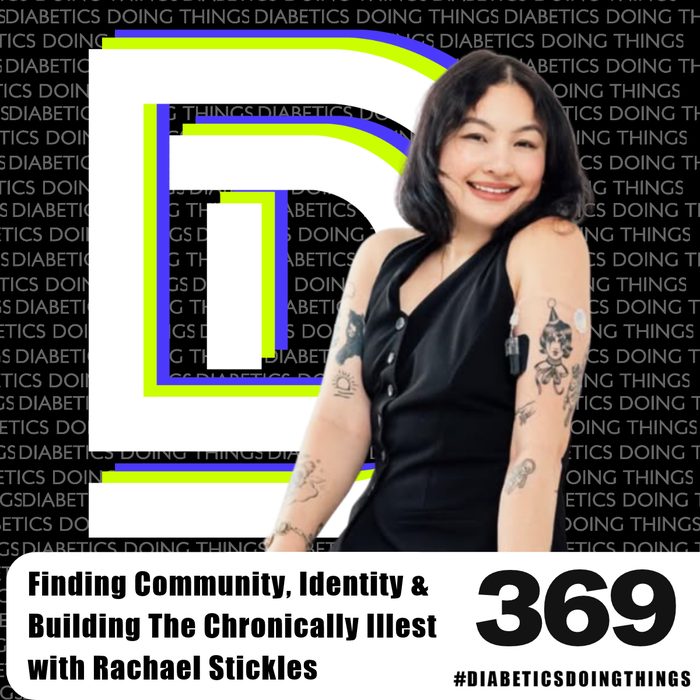
Rachael Stickles was diagnosed with type 1 diabetes at twelve and spent her teens and twenties skipping insulin doses and hiding food, ending up in DKA at sixteen. She thought she was alone until she posted about it online and heard from hundreds of people with similar stories. Stickles is half Asian, half white, and queer, and she talks about searching for community that reflected her, not just the typical diabetes-advocate image. She and her partner built The Chronically Illest, a diabetes apparel and sticker brand, out of their studio apartment while both worked full-time jobs. Stickles explains why she stayed on employer insurance for years, what let her finally leave her corporate job this year, and why she measures success by connection rather than A1C or follower counts.
Key takeaways
- Rachael says she skipped insulin doses and hid food as a teenager and landed in DKA at sixteen, then learned she wasn't alone after posting about it online.
- The Chronically Illest started as hand-made stickers in a studio apartment, with Rachael's partner asking every Sunday what she'd done on the business that week.
- Rachael worked at least one job for insurance for most of her adult life; going onto her partner's health insurance is what let her finally go full-time on the business this year.
- Rachael says 'you can do anything with diabetes' is true but often comes with extra steps, and naming those steps out loud matters.
- Rachael says a meetup with two people still counts as a meetup, and measures success by who she reaches rather than A1C or follower counts.
Chapters
- Rob introduces Rachael and The Chronically Illest
- Twenty years with T1D, diagnosed at twelve
- Skipped doses, DKA, and a secret shame
- Why the teenage years hit hardest
- Finding community online before the DOC existed
- Why one connection is worth it
- The Chronically Illest starts with zero swag
- A studio apartment becomes a sticker workshop
- Learning to say no as an entrepreneur
- The myth of "diabetes can't stop you"
- Insurance, partnership, and quitting the nine-to-five
- How to keep your heart open in hell
- Redefining success: A1C,
Show notes
Rachael Stickles started The Chronically Illest because, as Rob puts it, diabetes had absolutely no swag. People with diabetes get beige meter cases and T-shirts that don’t inspire daily wear. Rachael wanted to change that. So she and her partner turned their studio apartment into a workshop and taught themselves how to make stickers, screen printing, and web design, all while working full-time jobs. Her partner asked "So what have you done on the business this week?" every single Sunday until it became a reality. Now, this year it's Rachael's full-time work.
Getting there wasn't the glossy quit-your-job story. Diagnosed with type 1 at twelve, Rachael spent her teens and college years sneaking food, skipping doses, and taking just enough insulin to get by. She thought she was the only one, until she posted about it and hundreds of people replied: me too. As an adult she always held at least one job just for the insurance, and in this episode she's honest about what finally let her leave her corporate role.
Rob and Rachael also push back on the "you can do anything with diabetes" message. You can, Rachael says, but often with extra steps, and being honest about those steps matters. They get into finding community when you don't see yourself in the room. Rachael started posting online because she wanted to find people that looked like her and had similar experiences. Rachael is half-asian, half-white, and queer. She wanted to find the other T1D’s that were bolusing for rice! In this episode, we are redefining success away from A1Cs and follower counts, and explaining why a meetup with two people is still a meetup.
If you've ever felt like the diabetes community was a room you couldn't quite fit into, this one's for you.
Chapters
00:00 Rob introduces Rachael and The Chronically Illest
02:01 Twenty years with T1D, diagnosed at twelve
04:35 Skipped doses, DKA, and a secret shame
07:12 Why the teenage years hit hardest
09:40 Finding community online before the DOC existed
12:55 Why one connection is worth it
17:25 The Chronically Illest starts with zero swag
19:44 A studio apartment becomes a sticker workshop
21:44 Learning to say no as an entrepreneur
22:28 The myth of "diabetes can't stop you"
23:31 Insurance, partnership, and quitting the nine-to-five
31:34 How to keep your heart open in hell
34:46 Redefining success: A1C, followers, and money
39:15 Giving back through copay giveaways and picnics
42:08 Advice for anyone who doesn't fit the mold
Resources:
The Chronically Illest shop
Instagram: @thechronicallyillest
Instagram: @thechronicallyrachael
Questions this episode answers
What is The Chronically Illest?
The Chronically Illest is a diabetes apparel and accessories brand started by Rachael Stickles and her partner, selling stickers, shirts, hoodies and other merchandise, including a Stranger Things-themed collection called Diabetic Things.
When was Rachael Stickles diagnosed with type 1 diabetes?
She was diagnosed with type 1 diabetes in 2006 at age twelve, making this her 20th year living with it.
How did Rachael Stickles start The Chronically Illest?
She and her partner turned their studio apartment into a workshop, teaching themselves sticker-making, screen printing and web design while both held full-time jobs; this year is the first year she's run it full time.
How did Rachael Stickles get health insurance after leaving her corporate job?
She went on her partner's health insurance, even though they weren't married, which let her leave her nine-to-five and work on The Chronically Illest full time.
Full transcript Searchable, with timestamps
Rob Howe: What's up podcast listeners? Exciting episode for you today. We got T1D and entrepreneurial ventures. We've got the hustle. We've got the challenge of hearing that you can live whatever life you want or be whoever you want to be and the reality being a little bit different than that. It's Rachael Stickles, otherwise known as the chronically illest, awesome social media and diabetes creator, amazing designer. You can support the chronically illest by going to thechronicallyillest.com. Check out all the collections. They've got t-shirts, apparel, sweatshirts, hoodies, hats, stickers, everything that you might need to find your diabetic identity. I, in particular, was clicking on the Diabetic Things, which is a Stranger Things collab, which reminded me of a certain podcast of a similar name. So I really love this interview. Rachael also was kind enough to introduce us to Leah Orleans, who was two episodes ago, maybe three episodes ago on the podcast, and was a really amazing episode. So shout out to Rachael for all that she's doing for the diabetes community. And please support the chronically illest. Here comes Rachael Stickles. Guys, who was MVP of the chat?
Rachael Stickles: Rob Powell!
Rob Howe: Rob Powell! What were you on? We need more of that. Rachael, welcome to the show.
Rachael Stickles: Thank you. I'm excited to be here.
Rob Howe: I'm excited to have you. It's a Friday afternoon. I'm a little punchy. And I'm really excited to dig into this conversation and talk the chronically illest, talk diabetes community, talk entrepreneurship, and all of the ups and downs and crazy feelings along the way of that. I'm excited to dig in.
Rachael Stickles: Cool. I'm already buzzing.
Rob Howe: I love it. Yeah. It's like I can hear it in the recording. So that's your Moby is like starring in the episode.
Rachael Stickles: My Moby is so loud and wants all the attention. Yeah.
Rob Howe: Well, let's use that as an opportunity to jump off. I'd love to talk about your diagnosis and And then we'll weave that into the origin story. But do you need to take diabetes action?
Rachael Stickles: Nope, nope. It's doing it for me, which is the great part about it. We're good.
Rob Howe: Love it.
Rachael Stickles: But yeah, this is my 20th year with diabetes, which is really cool. It's like a milestone year for me. And I feel like I've been milking it, celebrating it all year.
Rob Howe: You get to do that, by the way.
Rachael Stickles: Yeah, I feel like we should. So that would have made it 2006 when I was diagnosed with diabetes and I was 12. So you can do the math on my age. But yeah, it's been such a journey. I feel like the diabetes that I have today is so different than the diabetes that I had in 2006 at 12 years old. You know, it was really hard, really difficult. We didn't have any of this technology. I didn't have like a fully formed frontal lobe. So, you know, tools weren't there, but come definitely a long way in 20 years.
Rob Howe: You and I, so you were diagnosed a year after I was in the chronological timeline. I was a little bit older than you, but 12 years old, tough. I think like if you think of a time where there's so much change going on in your life already, adding T1D to the mix, like you said, your frontal lobe's not fully developed, fully formed. You're learning on the fly. Not that it's really easy today, but also I even hesitate to use the word easier, but we have more technology and more treatment options, more help today. It had to have been tough.
Rachael Stickles: Absolutely. And yeah, easier, more tools, definitely of way more health. But as a 12-year-old, sorry, my dog is ruining this for us.
Rob Howe: No, it's fine. It's fine.
Rachael Stickles: But as a 12-year-old, it was just like, there was no help. And I just wanted to do these normal things that my 12-year-old, I mean, we're going to do a mobile podcast. I'm going to let my dog out. I just wanted to do these normal things that my 12-year-old friends were doing, which was like, you know, we were having our first crushes. we were getting excited about going to middle school and high school. And I was like learning how to dose for carbs and count them. And I don't know if you remember, you probably remember that we had before our iPhones, these giant carb books that we had to carry everywhere. Those like carb king books. So I would be so embarrassed to be holding this carb king book and look through it and try to figure out what my carb count was. I would hardly ever actually do that. But having to carry that thick book around at 12 years old was just, it was not cool. It was not fun. It was so also heavy and just not really, it didn't fit with the other stuff you had to carry around with you. It was not convenient.
Rob Howe: 17-year-old Rob or 16-year-old Rob, when I was diagnosed, did not resonate with the Carb King book. I was like, whatever, dude. The doc said 15 carbs a serving, do your best. And like, you know, we made it work.
Rachael Stickles: Exactly, exactly. So it was tough and I didn't take the best care of myself when I was younger. I feel guilty at my age now thinking about all of the technology and help that I have because to your point, it feels wrong to say that it's easier now because I still have really hard days. But like if I could give this technology to my kid self, like I would do anything to do that. It would have changed my life. And it did change my life when I got it, but I was 22, 23. but without it you know I really struggled like I really felt so different I would do everything to avoid taking care of myself I would sneak food so that I didn't have to take insulin for it because I'm like okay well if my parents don't see me eating it maybe I won't have to dose for it not you know not accounting for it's gonna shoot my blood sugar up but also we didn't have CGM so I didn't know what my blood sugar was until I was forced to check it again I skipped a lot of doses I skipped a lot of checking, ended up in DKA for the first time, you know, when I was 16. And I was really skinny. I just wasn't getting my needs met. And I didn't have any tools to help me. And I felt like it was just too hard for so long. And that carried into my college life. Going into college, I kind of did the same thing. I always felt like I was just getting by. I'd feel like, man, I could feel it in my body before CGMs. I'm not taking enough insulin, but I would let it go until I felt like, man, I need insulin now or I'm going to end up in a bad place. And then I would take 15 units. And I thought I was the only person doing that for so long. It was like a secret shame. I was just not doing what I was supposed to do. I was doing enough to get by until I posted about it online one day. And there were like hundreds of comments from people who were diagnosed around the same time as us, as teenagers, as kids that were like, oh, I did that for five years. I did that for 10 years. I did that up until last year. so it's such a more common experience i think than we realize that so many of us like before technology just were not mentally physically capable of dealing with it and so we didn't like we just did the best we could and we survived and i always you know to fight the grief and shame over that i'm like dude i'm proud of myself because at one point in my life i worked three jobs and my blood sugar was probably 400 the whole time. And like, I don't know how I physically did that. And it's sad, but I survived that. And I'm here now and I'm doing way better. And I have all of these tools and I'm so grateful. But man, life would have been a lot easier for me if those were available to us. But we just lived in a different time. They weren't ready yet.
Rob Howe: I think back to the normalization aspect of it, I saw at some conference midway through sort of this online advocacy or content creation life, I saw the distribution of like A1Cs over a person's life. And because I don't know about you, and I even just did it to you. Like you said you're diagnosed at 12. And I was like, oh, that's maybe like the hardest time. And I think it probably is because you're right in that teenage timeframe. But people also used to say that to me at 16. And my response was like, I kind of was already past a lot of my real hardcore teenage angsty Rob face, who was a brat, by the way. But if you look at that chart, the distribution of A1Cs is always highest there. It doesn't matter who you are. And so something you talked about, like timelines, I've been thinking a lot recently dwelling on loving myself in any timeline. And something more recently, I was having a conversation, I'm going to do a name drop. I was talking with Gary Forbes the other day, and he was talking about soul survivors and talking about diabetes legends and some of the things that we're going to be working on. And I told him, I was like, man, if you could have told 20-year-old Rob who, you know, was reading about Gary Forbes playing for the Denver Nuggets and like how much I was struggling with basketball and diabetes at the time and how badly I wanted to quit. And if I could tell that guy 15 years later, you're going to be friends with Gary talking about these projects that you're working on together, like what that would have meant to 20, you know, that younger person. And so, yeah, that same kind of thing of like being able to say, hey, like one day you're going to have help with a CGM communicating with a pump that's just going to dose for you and you don't have to carry that burden alone. And also there's other people that you can talk to about it. What would have blown your mind, right?
Rachael Stickles: It would kind of have just been like a big sigh of relief. Yeah, absolutely.
Rob Howe: Sharing that journey obviously like led people to you and opened up this shared space. So I want to talk about the origins of the chronically illest, even before where we are today, like as a business and, you know, doing merch and events and community coordination. Just like the aspect, the idea of like not having to be alone and that there were other stories, because I think there's certainly and you've shared in a Beyond Type 1 interview earlier this year, big identity gap for you throughout your diabetes journey, both like at the beginning and middle and even some today.
Rachael Stickles: Yeah.
Rob Howe: Talk a little bit about that and like maybe not seeing yourself reflected or searching for space for yourself, your authentic self, like in the diabetes community.
Rachael Stickles: Yeah. And I think there's in life, there's pros and cons to everything. So when I was first diagnosed with diabetes, I already felt weird. I was like, I'm half Asian, half white, but where I grew up is extremely white. So I already felt like a weird person in my school. I felt like I was not the popular person because everybody felt really white there. And then on top of that, I get diabetes. And I'm like, oh, great. Now I'm like diseased at school. And I'm like, great. Like, how do I talk to people about this, you know? And being 12 in 2006, I was there for when Facebook opened and when Instagram opened. I was like very much a kid of the internet. I had internet access. So I would go on the internet and talk to people in chat rooms and make friends. And that was my outlet of making friends with people who were different than me, even before I had diabetes, even just like, oh, there's other half white, half Asian people out here who feel like me. And then when I got diabetes, I told my friends on the Internet before I told my friends at school. And I told my friends on the Internet and my friends were like, oh, actually, I know somebody with diabetes. And I was like, what? Like it blew my mind. So this was before the diabetes community. It was just chat rooms and people that I was talking to on the Internet that made me feel seen and made me feel like, oh, there are people out here that I can talk to about this. So that's always been the push and pull of my life is not feeling accepted maybe at school, but having this community online where I feel seen and I feel understood and kind of riding that balance of there are some spaces I won't feel accepted in, but there are always going to be little pockets that I can find. That's always been my mentality as I got older. When I went to college, I was like, wow, this is a much more diverse space than I've been. And this is cool. And I can find way more people here. And college is when I went to my first diabetes meetup. And I was like, wow, wow, now I'm in a room with 15 people with diabetes. This is crazy. And then as I got into more rooms of people with diabetes, I'm like, cool, I'm in rooms of people with diabetes. This is blowing my mind. But now I'm starting to feel different in these rooms. This is weird. I feel like everybody who is here looks a certain way or has a certain story. And there's nobody wants to talk to me about how to bowl is for rice because they're not eating it. You know, these are the things that I'm thinking. And I'm like, well, how do I talk about this? And so online was what I did when I was 12. And that's what I decided to do in college, too. I was like, let me get online and see if there's other Asian diabetics out there. And then later in life, I found out I was gay because I fell in love with my partner. And I was like, now this is a new part of my identity that's going to make my life harder. That's always what that felt like the trap that I kept falling into was, OK, I already feel weird. Now I have diabetes. Now I'm gay. And these are all things that people are going to use to other me, but also they're all things that I actually really like about myself and I'm really proud of and I want to talk about and I want to find the people who understand that and accept me and see that in me. And going online was the answer for me. If I couldn't find it around me, I knew if I talked about it online, there would always be maybe a person or two in the comments. And that's the thing about social media that I always try to tell people you don't have to have a hundred a thousand ten thousand followers for one person to connect with you you just have to post one video and one person could dm you and be like hey i saw your video and i relate to it and that's all you need to form a connection you don't have
Rob Howe: to be an influencer or have a platform early on one of the things before even really i started posting about it was or recording the podcast it was worth it to me if one person connected to it because I felt that if that was the goal, A, I could hit that goal. And that would build momentum. And B, that would just allow me the space to really say, all right, well, even if not everybody resonates with this story or with this guest or whatever, one person does, that's great because now they have someone. And listening to your story as well, I also think you have to have space for yourself to become who you are. And some people learn who they are really quickly. I used to be kind of jealous because I can't remember exactly when this started, but I learned somewhere when I was in college that Kevin Durant and I are like a month in age apart. And Kevin Durant has known who he is supposed to be, at least professionally, for a long time. Pretty early, you identify. And I was like, I don't know that I know what my thing is yet. and in a lot of ways like you know I'm I'll be 40 in a couple of years and I still don't quite know like I'm still searching and I'm open to it and I'm obviously in a different position of my life and so I'm not as attached to it anymore but I remember being jealous of like oh I wish that my home run part of myself I was more obvious and you know that was just a really small way of looking at the world really young person's take for all these things started happening for you and then also being things that people could comment on because I think, you know, being diagnosed with diabetes or any kind of disability at age 12 is not just difficult for you dealing with it, but also because being different at that age is extremely hard and being different and open, a person who's LGBTQ plus, there's going to be people who see it who don't agree and are very vocal about it. There's a lot of hate in the world and the hate in people's hearts. And so sometimes one person commenting something negative can feel louder than even the
Rachael Stickles: hundreds of people who are not that way. Very true. A hundred percent. And that's an excellent point because those things hurt a little bit more as you're figuring yourself out. And it's something you're still learning how to live with and identify with and love about yourself. It makes it a little bit harder to hear those negative things because I identify with what you said about me and my partner both feel like we're late bloomers in life. But also it's like, who cares? We're a non-traditional couple and we don't need to follow a traditional timeline. But I feel like that about myself that, yeah, I've been a little bit of a late bloomer. Took all of these experiences and things to get to where I am and to feel really confident about my identity and myself. And when you do feel really confident about your identity and yourself, those things get easier to not let affect you. Those hater comments and those few people that don't support you because you know you're confident in who you are and what you're doing and the kind of person you are and that you will find other people who appreciate that and who see that in you and who connect with that and that's always rang true for me even if it's been harder at certain stages I've always been able to find pockets of people who care about me who resonate with me who want to share their experiences with me and that's I think the most beautiful thing that can happen to you as a person with a platform or a business or an influencer or whatever is when a random stranger is like, hey, I saw this and it made me want to tell you this about myself. And when people trust you with their stories and their experiences, it's really special.
Rob Howe: It is. And it keeps on giving back too. I had an experience earlier this year where I was at a local Breakthrough T1D community summit and a young man walked up to me and I was there with just flyers and a pretty low-key booth these days. But he said, hey, I'm 19. And And when I was 11, I came and I heard you speak at one of these. And I want you to know, it really helped me. He's a grown up now, a man. And I was like, it's over the passage of time. The impact of authentically showing up as yourself can really resonate with people in ways that you don't realize. And so that was a good reminder for me. And I know that you're having that type of impact as well.
Rachael Stickles: I really resonate with being online young. I have always loved, whether it was MySpace or whether it was Facebook groups in the early days or basketball, Twitter, NBA Twitter was one of my favorite places to be back in the day. Shout out to RIP to whatever Twitter is now. But being online and whether it was an avatar or just a fun name or a chat room and just finding that community I really resonate with.
Rob Howe: Talk to me about starting a chronically illest. When did you really dig in or decide that that was going to be your persona?
Rachael Stickles: So I had a profile online that I posted on about diabetes before the chronically illest that turned into the chronically illest. But the chronically illest was an idea that I always had because when I was 12, diabetes was just so lame. lame. It was so embarrassing to tell people that I had diabetes and there was nothing. Absolutely no swag. No swag, you know, and it was like if you needed like a meter case or if you needed anything, you go to CVS and you get beige or disgusting medical looking, whatever. I had diabetes shirts I think I had were just like the JDRF shirts that we got at the walk every year. There was nothing fun and cool about it, you know, and that's what's always been difficult for me because I just feel like this is an embarrassing part of my life that I don't want to share. And I had this idea before I met my partner and we met at church. So I had let it slip to her. Like, I want to create this brand where you go to the hospital, you get a really cool, when you get a shot, you get a cool sticker, you get a cool bandaid until you're an adult and then you don't get anything anymore. But I was like, I want like that with diabetes. Like I want like some cool swag or eventually, you know, cool medical accessories that you can give to a kid with diabetes. And they'll be like, this is so cool. This is awesome. And she was like, that's it. And I just was talking. I talked to another person. But the thing about my partner is she's a great motivator is why I fell in love with her. Every Sunday from then on, she's like, so what have you done to start your business? And I was like, what? Nothing. That's an idea. And then the next Sunday, she'd be like, so what have you done? And what can I help with? Like, she would always ask me about this. And, you know, eventually we started dating. We moved in together really quick. We lived in like a studio apartment and she's like, I think during COVID or a little bit before we really hunkered down. Okay, so what do we start with? And I was drawing stickers and stuff and then we were getting them printed. And then during COVID, she's like, what if we've learned how to make these ourselves? So we basically turned our studio apartment into a workshop. We bought a sticker machine, we bought a printer or cutting machine, and we just learned how to make everything ourselves. And we were both working nine to five jobs. So we would both go to our jobs, come home, work on our stickers and figure out how to make things. And I was like, oh, maybe we should make tote bags. And she's like, oh, we can learn how to make that too. Now maybe we can screen print. She's like, I could learn
Rob Howe: how to make that. And that's kind of how our team work started. I love this origin story. This is
Rachael Stickles: so good. Yeah. I'd have an idea and she would figure out how to do it. And that's such a beautiful part of how our relationship continues to work is I'll have an idea that I feel like is crazy. And she's like, I can figure that out and we can do this. And we've built everything from the ground up. It organically started literally in our studio apartment, one box room of us just learning how to make stickers. And then we brought them to one of the first diabetes meetups we ever went to after COVID just to hand them out to people and see if they thought they were cool. And everyone did. They thought they were super cool. And then I was like, all right, let's learn how to make a website. And we learned how to make a website. We were working full-time jobs, but we didn't have any money to hire anyone to help us. We didn't have money to hire a website designer, to manufacture stickers, to hire a team. We had to learn how to do everything ourselves. And we did. And I'm proud that we did that because we still do that. You said earlier about confidence, but the confidence you get from somebody helping you and believing in you and being a team is, it's hard to replicate that vibe. You know, that feeling is really, you know, unstoppable.
Rob Howe: People ask me all the time, like, Rob, how do you do so much stuff? Well, like the hugest part of it is that my wife, my partner is like holding it down on the home front and like allows me the space to be who I am and also reigns me in when I get a little too crazy. So it's a nice balance. And without that, I don't have the capacity to do all the different things that I'm into.
Rachael Stickles: Exactly. Exactly. And it's such a privilege and an honor to have someone like that in your life who believes in you, helps you, also lets you know when you're doing too much. She started doing that too, teaching me how to say no. She's even like, if you can't do it, send them to me and tell them that I'm your manager and I'll do it.
Rob Howe: Yeah.
Rachael Stickles: okay and i'm learning that i have capacity and pacing myself and saying no to things i really don't have the room for because i'm someone that you know wants to say yes to everything but it's impossible especially when you're your own team it's the hardest thing i think as an entrepreneur because you start out with feeling so good that somebody out there wants to do something with you and for so long that's what you dream of and then you just run into a capacity issue and you feel like you have to say yes to everyone. But I don't know, I think real business growth or real entrepreneurial growth happens when you have the courage to say, hey, I can't do this. Because they always move on. They always find another way to do it or not.
Rob Howe: But at that point, no is a complete sentence. And even with the best intentions or maybe a more kind or less direct way to say it, but you protect yourself and your creativity and your capacity and burnout is also a real challenge with entrepreneurs. So I think we've talked about this a little bit in the past, but for a long time, I was the poster child for do whatever you want with diabetes. Diabetes doesn't have to stop you. And I think the reality of living with diabetes now and my experience over the years has been like, well, that was true for me and for others, but it's not true for everyone. And there's a lot of other factors, right? It's not just like, hey, decide and do it. And I know you have grown frustrated and any of us have with the, you know, consistent like, oh, just quit your job or chase your dreams content that we all get as entrepreneurs. It's like, you know, where seemingly flippantly and without any other context, we see these amazing videos of people all over the world chasing their dreams and what have you, but we don't know how they got there or anything like that. And, you know, there's a lot of real challenges to being a T1D entrepreneur, like insurance, steady income, all these things that are real reasons that people stay attached to the nine to five. So three years of since you cut the cord and went fully on your own from a job standpoint at the Chronically Illest, what has surprised you the most? But also, what do you think back now with chasing the dream and the entrepreneurial glamorization that we see out there in content? How does that land for you today?
Rachael Stickles: It's actually, this is the first year that I've done Chronically Illest full time by itself. For the first two, I was still working a couple jobs. In the first year, I was working a nine to five job and occasionally working some shifts at a pizza restaurant, which was awful. And then the second year, I realized that was too much. So I was just working my nine to five. And that was primarily because I needed insurance. And all of my life, I have worked at least one primary job to get insurance and then usually another side job or two to pay the rest of my bills. That's historically been my life. I worked at a bakery, worked at a pizza shop. I worked at the mall to make ends meet in college. So when I met Enya, She works at a hospital. And when we met, she immediately was like trying to find ways to get me on her insurance. And we were able to get me on her insurance because we were living together, even though we're not married, which was a lifesaver. It was awesome. But we have to pay more in taxes, which is a thing we were like, whatever, as long as I have insurance. So I had been on her insurance for the last three years, but I was still working my job. I was not having a good time at my corporate job. I was just always stressed out. My blood sugars were a mess. I was having like physical stress symptoms. And my partner was telling me, I think you're doing too much. I think you should quit and you should work on the chronically illest full time. And I was like, there's no way I could do that. I couldn't even imagine doing that. Like, what are you nuts? I was like, what are you? Yes, I thought she was insane. And I was like, no, but I'm going to look for another job. So then I started applying to these diabetes marketing jobs. And I had got really far into the process with this one company of being their marketing person. And I was like, oh, my God, my life's going to change. I'm going to work for this amazing company. I'm going to do diabetes stuff. And they told me I didn't get it between my birthday and Christmas and that it was really close. And I had been through so many interviews. Like, it was devastating. It, like, just ruined my spirit. And she looked at me and was like, I think this is your sign that you're supposed to quit your job and work on the Chronically Illest. and I was like, okay, maybe you're right. Maybe that is what I do. But what do I do about insurance? And she's like, you don't even, you're insured on my insurance. And I'm like, okay, but what if you lose your job? That's what I said, you know? Cause I was just like, I have never put that level of trust into anybody. I've always made sure that I have insurance, that I'm working enough jobs to pay my bills. So for somebody to say like, I felt like I was taking this diabetes burden of having to insure myself and giving it to her and telling her like, well, now you can't quit your job and you have to be on your best behavior at work. Because that's how I was. I was like at work. I was on my best behavior. I was the number one employee because I knew how badly my life depended on that insurance policy that I was getting from my employer. Outside of work, I'm a very unfiltered person saying stuff. My co-workers meet me outside of work. They think I'm a different person. When I'm at work, I'm about my job and my business because my life depends on it. And that's the horrible part of American health care is can change at any moment. It makes you feel like you have to be the best at your job. And I don't want to be on thin ice. I don't want my managers to hate me. I want to be everyone's favorite employee because I don't want to put my job in jeopardy. Because the stuff that you have to deal with as a result of that is if you're wondering whether you're going to have a job or if there's a layoff, you're going to be in that group because of one reason or another, it creates downstream effects of stress about, you know, at nighttime, you're not getting enough sleep then your blood sugars are out of whack and you feel weird if it's a workplace where you don't get as many accommodations and you feel weird asking for things. And then it's just a, it's a
Rob Howe: real slippery slope. And you're right. I was thinking as you were talking about paying extra taxes because you weren't married is because married people deserve to have insurance. And it's like, okay, well, that's really weird. But, you know, that's really how it is in our healthcare system in the U.S. Every year now during National Diabetes Awareness Month, I'm doing this kind of campaign of the four pillars of living well with diabetes. And one of them is financial. and we don't really openly talk about it that much. And that's why I want to do that because I don't know about you, but when I was a teenager, I don't know if it was explicit, the conversation with my parents, but it felt like, hey, I'm going to always have to have a job of some kind or whether you have insurance or not, you got to make enough money to afford your medicine. And it's like, you got to do that forever. So, you know, I would, and everybody's different. And, you know, but I made a decision at one point when I was trying to play basketball, My agent was trying to just get me to move, buy a one-way ticket to Europe and just go from town to town until I got picked up by a team, which was good advice at the time. But I could not get over the uncertainty of like, well, and also I didn't know anything about the European healthcare system, which would have been way easier to get my medicine than I thought. But, you know, like going from town to town and not having any income and like not having a nest egg to be able to launch that off of was really scary. And I didn't do it. And it all worked out. But that was a decision where somebody without diabetes does that probably not as there's still risk, obviously, but there's way fewer things to balance in their mind. And that is just a reality of the extra money and the extra coverage that living with a chronic illness requires. It doesn't get discussed very often because, you know, when you're doing you're making a decision to follow your heart and you're deciding on major in college while you're looking at the end result of one versus another. And you may be a passionate, I don't know, let's say a zookeeper or something or a zoologist. And you're like, yeah, well, the top end of this job is never going to be in an area where I can buy a house or live comfortably with diabetes. But this is my passion. This is what I love to do. And then you're like, OK, well, if I go work in finance, I can afford my medicine and maybe buy a house someday. And it's like you start to negotiate with the true parts of your identity on behalf of diabetes. So anyway, props to you for doing it. And I understand the passing and sharing of that burden, but that's what family and partnership is all about.
Rachael Stickles: Yeah, it is. And it's what people who love you are supposed to want to do is to help you share that burden. It just had never happened up until that point. That's what I want to be really honest about. And I'm really intentional about being honest about it when people ask me how I get health care, how I started my business, how I did all of this. I think it's so important to be extremely honest about how I did it because not everybody is going to be in the same situation as me. Some people have it better and some people have it worse. It's just how it is. But there is a lot of content, to your point earlier, that you can do anything with type 1 diabetes. Start your business. Move to another country. Chase your dreams. And that's just not doable. That's just not realistic. And diabetes, unfortunately, takes away that ability from us. But you can still do these things with extra steps. But talking about those extra steps is incredibly important to being able to do these things successfully.
Rob Howe: You got to tell the full story because it's like I do believe it. I also I'm doing an interview later this year with a researcher who shows the clinical positive outcomes of gratitude on TND. So, you know, for me, it comes back to that, which is like, first of all, grateful to be able to be alive, like born in this timeline. so we have insulin, like that's great. Because otherwise, cooked. But I love the idea and I believe in whatever the desires of your heart, like the universe will conspire to give them to you if you do what's necessary. But what's necessary to take care of your life with diabetes is so much more than just counting carbs and dosing insulin. It's mental health care, insurance coverage, financial support. There's a baseline that, you know, just to get to living normally, People who are living without insurance on Vibes or I sort of just like laugh about, I laugh to not cry whenever I hear like a healthcare insurance presentation from every year we do our renewal or whatever at my company. And like, yeah, you know, if you don't really use your insurance, you don't ever go to the doctor. And I'm like, ha ha, like, great. Like, there's more benefits for you here if you don't need them. It's like, but if you do, well, guess what? You're gonna have to pay more and you're gonna have to do all this stuff. And so it comes back to this thing I've been meditating on a lot more recently, which is like, how do I keep my heart open in hell in these situations that are really bad? How do I make sure that I keep my heart open and the capacity for good things to happen is still an option? So I guess like for you, how does that land? And maybe what are things that we don't say out loud enough in the T1D community that we should be discussing?
Rachael Stickles: I resonate a lot with that, like how to keep your heart open in hell topic, because I feel like sometimes you feel like everything is against you and everything is awful and the state of the world is hard. But inherently, I do believe the same thing, that the universe wants to see you follow your dreams and wants to see you have good things. And for me, every step of my life, doing that is just keeping the dream alive at any capacity. Right now, I'm pursuing my dream fully. Wasn't always doing that, but it was always in my mind and I was always working on it. Even when I was working my nine to five and closing at the pizza shop, any spare moment I had, I was making art. I was making videos. I was thinking about what this thing could turn into. So even if you don't feel like you're in the position to start a business, a lot of people think like, hey, to start my dream, I need all of this money. I need an investor. I need this. I need that. And I'm like, it is possible to build your dream. It's not always the people with access to other things might become an overnight success, but they also might not have as great of a foundation as the person who built it from this little flame. So that's been an important part of how do I keep my heart open in hell? I'm hanging on to these little things that at my core are important to me, which is, you know, the dream that I started with, the things that I care about changing in the diabetes world, the people that I'm trying to bring attention to and the problems. Those are my core values that I'm hanging on to.
Rob Howe: And I think, too, that's a signal when you're in the nine to five that you don't really love, but you're thinking about this other thing and you're continuing to show up and you continue to pour it into it. There was a back when Mark Cuban was a blogger. I don't think he blogs much anymore, but he wrote a really cool blog about he called it sweat equity. And it was really just like listening to the things that you keep working on, even if there's nothing in it for you right now.
Rachael Stickles: Right.
Rob Howe: And part of me too is back to the keeping your heart open in hell. It would be a whole lot easier to have hobbies that didn't have to be businesses if your
Rachael Stickles: basic needs were met. Exactly. So, you know, we're missing a lot of that art and just whimsy because everything, every side hustle has to be monetized. And, you know, it's not successful unless you have 10,000 followers and you're making and you're selling a course and you're doing all this other stuff. And those are just the burden of our time, late stage capitalism are putting on people because they can't afford their basic needs unless they are wildly successful in content creation and turn it into a course and blah, blah, blah, blah, blah.
Rob Howe: I say this knowing that not everything has to be a business for it to be good.
Rachael Stickles: Like you can just make stuff.
Rob Howe: You can just make stuff, yeah. And I think that's what I hope for. I've been critical this week. I'm like, I've been pitched a lot of carb counting apps and AI diabetes apps. And I appreciate everybody's first idea to meet a need in the diabetes community, which is for sure a need. but sometimes you can just vibe code an app for yourself and you don't have to put it out. You don't have to burden yourself with the business side of it and just enjoy it and create around it and iterate on it and bring it in for your friends. That is an option. And, you know, I just,
Rachael Stickles: I want people to remember that, I guess. Yeah. And that's been a conversation that I've been having with myself too, which is interesting because it overlaps with both diabetes and my business and my life is reframing what my idea of success is in all of these things in my life. And I think for most people, generally, they assume that successful diabetes management is having a good A1C and successful influencing is having this many followers and a successful business is making this amount of money. And I've realized like those are not things that make me feel like I'm successful. Those are not my goals, actually. I've realized with my business and financially, like I don't need to make a million dollars. Like I just want to make enough money to maybe send my mom on vacation one day and build a little house for me and my partner in the backyard because we take care of her parents. I'm like, these are my goals financially. And they're not huge, but they're still hard. But I don't need like a yacht and like this and this and that. These are not, that's not success to me, even if that's what Instagram is promoting. And as with followers, I'm like, I don't look at my analytics ever. I don't look at how much views my video got to find it successful. Like we talked about earlier, when somebody says, hey, I feel seen by this. Thank you for posting that. I'm doing my job. I'm feeling successful. I'm reaching people that want to be seen and reached. That is my goal, posting videos. And when my goal becomes to get this many followers, I will stop because I've lost the plot. I've lost the plot of what I'm doing. And with diabetes, I feel like the AI stuff, we have so much access to data. It's like crazy. And everybody wants, I don't look at my graphs. I don't look at my time and range. I know myself. I know when I'm doing good and I know when I'm doing bad. And my goal with diabetes is for it to take up less space in my life and for me to care about it less. That's success for me. If I'm not looking at my stuff because I'm good, that's success for me. So it's like reframing success in these areas of my life. And it looks a little bit differently than I think what people would think about immediately when they think about success.
Rob Howe: Something I've been thinking a lot about more recently, I'm getting older. So people are asking me for advice. And I am also just trying to be really curious about this new change in my life that I'm about to go through. My wife and I are going to be welcoming baby Howe into the mix very soon. And we're so excited. And the question to me of like life at any stage is what are you optimizing for? And like, what is it that you want? Because it sounds to me being able to send your parents on vacation, that's a rich life. Being able to provide for your community to not be worried about that. And so it's like those things are more valuable to me. And again, everybody is different. What's important to one person may be different for another. But I get a lot of entrepreneur content and business content on my algo, which is tough. Hard to cleanse. I've been really getting the nature content in there to balance it out. But I see people at these entrepreneur conferences and a lot of the content I think there is good. But one thing I've noticed about all the people is they'll stand up, they'll give them the mic and they'll say, hey, my name is this. My business is this. We did X number of revenue top line last year. So you've seen these videos, right? Alex Hormozi does a lot of it. Not the videos. One thing that I've noticed is that no matter what the number is. So I was joking around with a friend today. It's like, I'm Darlene. I have four businesses, four salon locations. And we did five million top line last year. And I just want to take a vacation. And it's like, you have the money. You just can't. Go take a vacation. Yeah, exactly. They just are not giving themselves permission. The advice that he gives is always really straightforward. But I've just noticed that no matter how big the number is or how small the number is, there's a problem everywhere. They want something different. They want more flexibility. They want another location. They want more. They want less. They want to take time off. And I think what that comes back to is a fundamental challenge of we don't ask ourselves what we're optimizing for. We just push or go and try to get as high as we can off whatever the revenue goal is or the salary or the job title or the prestige. And we get there and we realize like, oh, did I actually want this at all? I think that's especially in the diabetes content creator community. How many people I've seen come and go over the years who were really good or really talented, but maybe just didn't have didn't really know necessarily what they wanted and and then burnout or other things take priority or maybe they got into it for the wrong reasons. And those those things don't always last. But I think the people who do are the ones who fundamentally agree that we're doing this to help other people with diabetes and find a community and plug in. And when I find people like that, I'm like, yeah, whatever we want to work on together, like we're aligned on that. So let's get busy.
Rachael Stickles: Yeah. And that's the thing that has when we started our business. That's one of the first things that I told my partner is like this business, we have to find a way to give back because every single person that purchases from us either has diabetes, loves somebody with diabetes, is impacted by diabetes, which means they use their money to buy something for me. while they're also paying for their insulin, their prescriptions, their doctor's appointments, their health care. And I've been in a position where I couldn't afford extras. And when I had the money to buy something, it was a big deal. And like, I don't take that for granted. The average sale on our website is less than $15 or $30. It's people buying something small for themselves that'll make them feel happy. And I don't take that for granted at all. Every single purchase is somebody who is affected by diabetes or chronic illness. and there's a financial impact that comes with that. So that's always been an important part of our business is putting some of that money away and giving it back. That's how we started doing our picnics. We do a picnic every year where it's 100% free. We get as many free giveaway things as we can get. We get as many companies to donate things that want to and we just give it all away and have fun. And then we started doing co-pay giveaways on Instagram where we were like, look, I made this amount of money this month and I have this much to give away and I'm going to pay somebody's co-pay for the month. And those things are really, really important to me. And those are the things that make me want on days when I'm so burnt out and I'm like, why did I make my whole life in business diabetes? I'm like, oh, this is the thing that's important to me is being able to grow my platform, my business, whatever, my income so that I can give more of it back because I've been in those shoes and I know so many people who need that help. And at the core of all of this community stuff, as you said, that's what it is about. How can we use our personal impact to help the community? That's the core of keeping me centered, of growing and doing things is like, yeah, that's important. We have something going here that we can really keep expanding and make a bigger impact.
Rob Howe: I love the copay giveaways. It was so cool. The picnic looked awesome. Southern California has just one of the best diabetes communities in the world. You know, LA and New York, greater Los Angeles and Southern California, San Diego. And you being part of that and all the other people who have continually been the change and come up with really cool and creative ways to engage with the community and be part of a community and continue to show up and also spin a little creativity on it and a little bit of delight and a little bit of fun really is exciting to me. And you said the magic words, doing things. You'll learn so much more by just doing things than you ever will just thinking about it or planning it. So the person out there listening or the person who is a true Chronically Illest fan and feels like they don't fit a typical T1D archetype, I'm guilty. I fit it. I fit it. White boy who likes sports? Come on. They're all over it. Or aren't represented or seen. What would you tell that person?
Rachael Stickles: I would tell them that the diabetes space is so much bigger than you could ever imagine. It does feel small. That is how I always felt. It feels like a small room with a locked key. And you can't get into it because it's gatekept by the same 15 people who are advocating. But that's not true. Once you get into those rooms, you realize, well, first of all, these are all normal people doing their best. And there's room for more of them. There's room for a lot more of them. They do not dominate the community anymore. There's room for more people. There's space in the community for you. And there are pockets of people that will connect with you and care about you and that are like you. Even if it doesn't look like the prominent people. if you're not feeling represented by what's out there, go find these sub-communities. And if they don't exist and you have the capacity, create them. You can do it. That's the thing with doing things is it does not have to be perfect. And you don't have to have it all together to start something. If I had waited until I felt like I was confident that my business would be successful to start it, I would have never started it. You learn along the way. If you want to host a meetup, all you have to do is pick a location and a time and show up. That's it. And a meetup, Two people is a meetup. Exactly. Because we see the picnic, for example, there were a lot of people there, but it didn't happen just one day. It wasn't the first one. It wasn't like it didn't happen all at once. And a lot of work goes on behind the scenes. But a meetup that you post about and one person comes to counts. That is a meetup. Yeah. And if you want to start something, think about why you're starting it. And if the answer is to feel seen, to build community, to fill this void that I never had as a kid, those are good answers. If the answer is, I want to be TikTok famous, I want a lot of money, and this and that, like, those are still valid answers. Do what you want, you know, but like, I would reflect on what really do you want? What would make you really feel fulfilled? Because those things are easy. Those are fast, what do you call it, serotonin boosts. They're not going to really make you feel fulfilled.
Rob Howe: It's not going to really make you feel fulfilled to hit this number of followers. Then you hit it and you're like, okay, I guess I'll hit the next goal. You have to have this thing and this passion that grounds you in what you're doing and really keep it at the center of yourself to go for it. And I also think what will sustain you? What do you really want? It's just a different way to ask that because I've been thinking and meditating on this a lot as well. It's like God comes to the hungry in the form of food. And I would reframe that too of like, if you're looking for community, it comes to you in the form of community. You can go be a part of it. You can go be that change. It doesn't require capital. It doesn't require infrastructure. It doesn't require credential. It just requires you showing up. And it is one of the great things. There's a lot of negatives about social media, but it is one of the great things about being able to connect with somebody online in an easy, frictionless way and find, feel seen, feel heard, find a friend because that is like such a force multiplier. Sorry to use big business words at the end of this really lovely inspirational podcast,
Rachael Stickles: but force multiplier on your well-being with diabetes is to just have somebody that you can talk to about it. Yeah, that's all anybody wants at the end of the day is to be seen and understood and to have somebody to connect with. And I think you just have to be authentic in that and who you are at every step of the way. You'll find that those people will come if you are brave enough and have the capacity to put yourself out there, those people will come and they will find you and they'll support you. And I am one person who knows, like, I'll do that for you. I always have that DM open policy. If you DM the chronically illest, I will get it back to you. Maybe not immediately, but I will answer my DM. If you want to share your story, I will find a way to platform it. I am trying to open doors for people that don't feel supported because it is hard to feel like, okay, what if I say something and everybody attacks me? What if I put myself out there and nobody likes me? And I'm like, I promise you that's not going to happen because there are people out there that are looking for that. They're looking for something different. They're
Rob Howe: looking for something new. They're looking for something that looks like them. And I feel like we're entering a new era in the diabetes community of welcoming that. I love that. And I think today, especially, I guess lectured at a business school thing. So that's why I'm like all dressed up. It was at the beginning, we did like an improv workshop because the person who's the teacher was at one time, one of my improv instructors. And so I just remember the power, like being teaching improv for seven years and seeing someone who's in their late forties or fifties, or maybe even older and the power of somebody supporting their idea for the first time and the walls that break down and the confidence that comes out from them putting something out there and someone saying yes and supporting it. So thank you for doing and platforming and answering those DMs. And I hope that you're able to continue to have those ripple effects because when someone believes in you and someone supports you, the ripple effects that that has in your life in every capacity is really dramatic. And so I hope that we continue to see new people coming because of that confidence that they get from being shared and being seen. And thank you for doing that. Rachael, the chronically illest. Thank you for your time and for everything that you do to the community. And I know we got some cool stuff coming up. And when this podcast gets published, I think you'll have already been kind of behind the scenes planning a really cool community event. So thank you for all that you do.
Rachael Stickles: Thank you. Thanks, Rob. Good talking to you always.
About Rachael
Rachael Stickles is the founder of The Chronically Illest, a diabetes apparel and sticker brand she built with her partner. She has lived with type 1 diabetes since age twelve and posts online as @thechronicallyillest and @thechronicallyrachael.