

Farhaneh Ahmadi - CEO & Co-Founder of Eddii
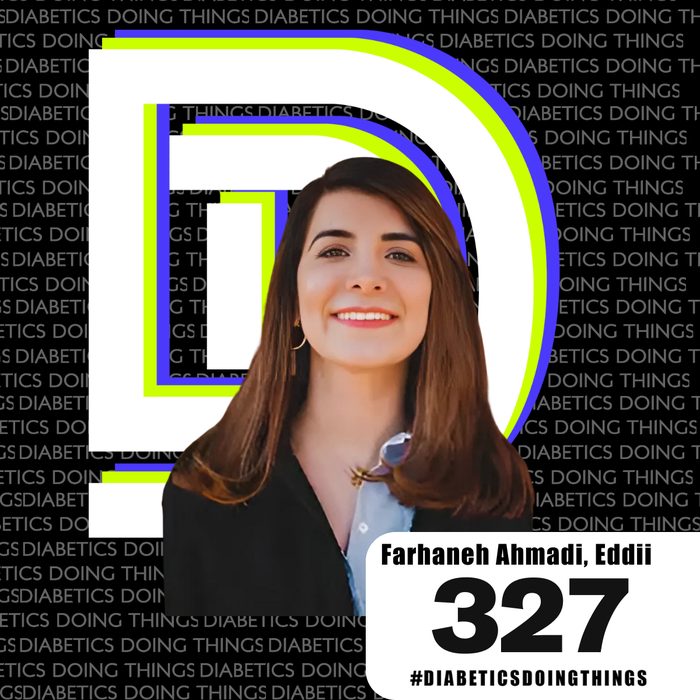

Episode summary
Farhaneh Ahmadi was diagnosed with type 1 diabetes as a young adult and later co-founded Eddii, a virtual care platform that pairs real-time glucose data with on-demand endocrinology visits. Ahmadi explains how Eddii began as a daily management app with gamification and mental health support, then grew into a full virtual clinic after users kept asking for a doctor they didn't have. She and Rob Howe discuss why so many people with diabetes see only a primary care physician, how Eddii is covered by more than 1,400 insurance plans, and how its endocrinologists are trained to question outdated advice like deliberately running blood sugar high. They also cover glucose alert phone calls, AI plans, and care for conditions like PCOS and Cushing syndrome.
Key takeaways
- Ahmadi says Eddii started as a gamified daily management app and became a full virtual clinic because so many users didn't have an endocrinologist.
- Eddii is in network with more than 1,400 insurance plans and covers pediatric endocrinology in 40 states and adult care in 10 states, Ahmadi says.
- Ahmadi says Eddii's doctors sometimes push back on advice to keep blood sugar high "to stay safe," especially for kids, and look for better options instead.
- Glucose alert phone calls, built because people sleep through or ignore their own CGM alarms, are free on both iOS and Android, Ahmadi says.
- Ahmadi says Eddii plans to expand into AI-driven insights, more endocrine conditions like Cushing syndrome, and mental health support.
Chapters
- Embracing the Cringe: Personal Reflections on Self-Image
- Introducing Eddie: A Comprehensive Virtual Care Solution
- The Evolution of Eddie: From App to Virtual Clinic
- Breaking Barriers: Access to Endocrinology Care
- Insurance and Accessibility: Making Care Affordable
- Empowering Providers: A New Model for Endocrinology
- Patient-Centric Care: Customizing the Experience
- The Inspiration Behind Eddie: A Personal Journey
- Integrating Technology: Real-Time Data for Better Management
- Unique Features: Glucose Alert Calls and Support
- Future Directions: AI and Expanding Care Options
- Raising Awareness: The Need for Accessible Endocrinology
- Navigating Care: Understanding Options and Costs
- Leadership Insights: Books and Personal Growth
Show notes
In this episode of the Diabetes Innovators Series, Rob interviews Farhaneh Ahmadi, CEO and co-founder of Eddii, a virtual care solution for diabetes management. They discuss the evolution of Eddie from a daily management app to a comprehensive virtual clinic, addressing barriers to endocrinology care, the importance of insurance coverage, and the integration of technology for better patient outcomes. Farhan shares his personal journey with diabetes and how it inspired the creation of Eddie, emphasizing the need for accessible and patient-centric care. The conversation also touches on future directions for Eddie, including expanding services and enhancing mental health support.
Chapters
00:00 Embracing the Cringe: Personal Reflections on Self-Image
01:00 Introducing Eddie: A Comprehensive Virtual Care Solution
02:17 The Evolution of Eddie: From App to Virtual Clinic
03:25 Breaking Barriers: Access to Endocrinology Care
05:18 Insurance and Accessibility: Making Care Affordable
07:38 Empowering Providers: A New Model for Endocrinology
08:56 Patient-Centric Care: Customizing the Experience
10:19 The Inspiration Behind Eddie: A Personal Journey
12:34 Integrating Technology: Real-Time Data for Better Management
13:58 Unique Features: Glucose Alert Calls and Support
15:44 Future Directions: AI and Expanding Care Options
17:54 Raising Awareness: The Need for Accessible Endocrinology
20:13 Navigating Care: Understanding Options and Costs
21:35 Leadership Insights: Books and Personal Growth
Resources:
Questions this episode answers
What is Eddii?
Eddii is a virtual care platform that combines real-time CGM data with on-demand appointments with endocrinologists, nurse practitioners, and other specialists, co-founder Farhaneh Ahmadi says.
Does Eddii take insurance?
Yes. Ahmadi says Eddii is in network with more than 1,400 insurance plans, with pediatric endocrinology available in 40 states and adult care in 10 states, and is still expanding.
What are Eddii's glucose alert calls?
Eddii staff can call a patient directly when their CGM shows a dangerous high or low. Ahmadi says the feature was built because people often ignore or sleep through their own alarms, and it's free on iOS and Android.
Does Eddii only treat diabetes?
No. Ahmadi says Eddii also treats other endocrine conditions, including thyroid disorders, PCOS, weight management, and rarer conditions like Cushing syndrome.
Full transcript Searchable, with timestamps
Rob Howe: Welcome to Diabetes Innovators, a special series from Diabetics Doing Things covering the 85th Scientific Sessions. We're held in June 2025 in Chicago, Illinois. You're going to hear interviews from leaders of tech companies, people with diabetes, diabetes creators, researchers, and more on this podcast. If you want to learn more or hear more from this series, visit DiabeticsDoingThings.com slash Diabetes Innovators. Enjoy the episode. Okay, let's talk about our partners who help support this podcast. Today, I'm going to talk about Type Zero, which is typezerohealth.com. It is a business run and founded by a person with type 1 diabetes, John Jensen, who's been on this podcast a couple of times. I've been using this product since 2018. I started training for a half marathon, which I ran in Dallas in December 2018. I was looking for a workout supplement, a pre-workout that I could trust not to spike my blood sugar. And so that's what I've got here in my hand is the clean pre-workout. I use the stim-free version, which doesn't have caffeine and I trust it and I've used it now. So 2018, it'll be almost seven years for me using this pre-workout. It really works for me because I can drink it late in the day. And most of my basketball leagues that I'm playing in now are late at night. So I might have a game from 7 p.m., 8 p.m., 9 p.m. And I can make sure that I'm able to get up and play and also be able to fall asleep later that night so I can wake up in the morning, go to work and meet the demands of my life. Type Zero has gone a step further this year in our partnership, and they've launched the Rob Howe stack, which also includes a couple of my other favorite products, creatine monohydrate, which I've been taking the past two years. And if you want to look up all of the good reasons you should be taking creatine, many scientists and performance coaches say if they could only take one supplement, creatine monohydrate would be the one that they chose. I agree not only for the physical benefits, but also the mental focus and clarity. It's good for your brain. Do yourself a favor and add creatine monohydrate to your stack. Something I've also added is this clean hydration and electrolytes pack. I'll show you one of the little sticks. These are a lot smaller than some of the leading competitive brands because they just don't have as much salt in them. And there's no additives either. So you're not looking at any carbohydrates, nothing that you need a bolus for. And hydration is an essential part of anyone who has diabetes should be making sure that they're hydrated. And it's not just about drinking water. You need salt, you need magnesium, you need a little bit of the vitamin C and some vitamin B. There's a ton of zinc, selenium, chromium, all of the good electrolytes in this supplement. You mix the stick pack with, you know, 16 to 20 ounces of water, helps you get hydrated. I've been doing mine in the beginning of the day to start my day and make sure that I'm hydrated. And it helps with your insulin sensitivity. It helps me have some clarity and make sure that, you know, Now, I'm not a very disciplined hydrator when I'm sitting at my computer all day. It's good to be reminded to make sure that you're getting your hydration in. And it's a little bit more interesting to drink than just water. So you can get these as part of the Rob Howe pack, or you can get them on your own. You can get them on Amazon or directly from typezerohealth.com. And when you order from typezerohealth.com, if you use code ROBHOWE, that'll save you 20%. So they've got some great sales going on really regularly. So if you can't save more with a promo that they're running, use code ROBHOWE, and you'll always get that 20% off. And your support helps them support the podcast. So if you are a person with diabetes who's looking for a reliable supplements company that's not gonna spike your blood sugar, that's gonna get you into the mode to be the higher performer that you are, I recommend and I take Type Zero. I wouldn't recommend a product that I don't use myself. So please support typezerohealth.com, code ROBHOWE, and search the Rob Howe stack to see which supplements I take and get a good deal on those as well. Okay, let's get to the episode. I also wanna take this opportunity to promote Diabetes Legends Basketball Clinics. As you guys know, the last couple of years, we've started to do basketball clinics all throughout the country under our Diabetes Legends Basketball Clinics name. We've gotten to introduce over 100 campers with type 1 diabetes to diabetes legends like Lauren Cox and Gary Forbes and more. We've got three clinics coming up this year, a very special event at Friends for Life Conference on July 11th, and then later in September, we're gonna be returning to Denver. If you're looking for more information on the events themselves, you can visit diabeticsdoingthings.com slash events. And if you're interested in learning more about the Diabetes Legends Foundation, which we formed in 2025, to better support our ongoing initiatives and creating opportunities for kids with diabetes to have a great day with diabetes via one of our clinics, please connect with us and fill out a form on our website, diabeticsdoingthings.com. But let's introduce yourself and let's get rolling.
Farhaneh Ahmadi: Farhaneh Ahmadi, and I'm the CEO and co-founder of Eddii.
Rob Howe: Great. Welcome to the show. And thank you so much for letting us have this time during ADA. Let's talk about Eddii. It's a virtual all-in-one care solution, which gives patients access to on-demand virtual care, motivational support, and has an option to include data from their CGM to connect it if they have one, all from their phone. And as I was preparing for this and James introduced me to the platform, it's really innovative and really easy to use. Let's talk about the early days. And I have a real passion for founders with diabetes. So this is I'm really looking forward to this interview.
Farhaneh Ahmadi: Same here. And it's a pleasure to be here. Yes, Eddii is what we call your your CGM and doc in one on the same platform that you see your real time glucose data. You can also schedule an appointment with an endocrinologist. And we started off as a daily management app. We had real-time data. We gamified it. We made it fun. We have some mental health elements in there, managing diabetes distress. But very soon, we realized that, well, a lot of our users actually don't have an endocrinologist. They were getting their CGM from other sources. And so we saw this pull, this demand in the market. And while it was a huge undertaking for us, we decided to become a virtual care clinic. And we set up the structure and now we offer both the daily management app and the virtual clinic.
Rob Howe: We know, and there's lots of rhetoric at this conference about the barriers to care for endocrinology for people with diabetes in the United States and globally. You know, we've had people on our podcast who have talked about for them to see their endocrinologist, they have to get in the car and drive two and a half hours each way, you know, multiple times per year to see their endocrinologist. Those stories are far too common. Where did the inspiration for you guys at EDDIE to not only be the virtual care or not only to be the gamification and the mental health and the connectivity, but then to add the virtual care component to eliminate those barriers to seeing an endocrinologist?
Farhaneh Ahmadi: It was exactly that. It was to provide the access to patients to improve their care and to really give them the choice. No one has to drive for hours to make it to a routine endocrinology appointment. A lot of it can happen virtually. Review CGM data. We have partnerships with labs, imaging facilities, ideology, whatever you need, we will refer you. We will refer you to other specialties, primary care. So it can all happen from the comfort of your home, or if you have an hour break at work, you don't need to take a day off. And that was really the purpose behind it. 80% of people living with diabetes in the United States are taken care of by their primary care physician. And that is obviously not ideal because a lot of the patients who we see also have a lot of comorbidities. morbidities. They need to be seen by a specialist and given the right advice and the right plans to follow. So that is what really inspired us to offer virtual care. It's critical to expanding diabetes care because there's just a limited amount of knowledge that a primary care physician
Rob Howe: has about diabetes care and a limited amount of time. And you focused on something really critical, which is not having to take a day off of work to get the care that you need. And Eddii also that accepts insurance, if I understand correctly, right? So the cash pay and insurance-based options, like how does that work for your patients and also for your providers?
Farhaneh Ahmadi: So we are in network with 1,400 plans and we are expanding by 14 different payers. We are in 40 states for pediatric endocrinology and in 10 states for adult. And we are growing as much as we can, both across coverage and across states. And for patients, that's ideal. We don't want them to pay out of pocket. We understand how expensive diabetes can be. I did some back of the envelope math of how much I had paid for my CGMs when I didn't have one, when I had to pay for one out of pocket, even my insurance. And it was in the tens of thousands of dollars that I had spent only for my CGMs, not to mention any other type of care that I had needed. And so we believe no one should have to pay for their care. So we're in constant conversations with payers to get as much coverage as possible. And how it works for our doctors is that we onboard providers. First of all, they're part of our team. We love our endocrinologists. They are talking to our tech team. They are making recommendations of what to build next in the app, what works for them. And at the same time, we help them get coverage. So we enroll them with different payer organizations. And we also deal with the bureaucracy of getting them licensed in additional states. That way, for example, compared to a brick and mortar clinic where your patients are living close by, you are only licensed in one state, the doctor gets to see different cases, expand their experience. We are always open to conducting more research with our doctors, writing white papers. And that way, we are creating really an environment for the doctors to thrive in addition to providing the best care to our patients.
Rob Howe: Yeah, I think that's something that is probably a surprise to many providers is that EDDIE is a great solution not only for patients, even though it's patient-centric, but also for providers to be able to see more patients and expand their patient network and help more people with diabetes.
Farhaneh Ahmadi: Absolutely. And it's the future of care. We think virtual care, especially in endocrinology, is where the care is headed. We are democratizing that access. You can choose from the different endocrinologists. You can see who you click with most. Some of our patients want to see a female doctor. Others want to see a doctor with a certain subspecialty who's really good in weight loss, like not just diabetes or a certain thyroid condition even. So we allow them to do that. And we see the market trends headed that way, not just in terms of the appointments, but in expanding the doctor's experience, but also automating a lot of the admin work for the doctors so that they can make the most out of that like few minutes that they have with their patient, doing a lot of the admin work for them if we can, whether through our technology or our staff, so that they can focus on the care of the patient and their research.
Rob Howe: It really does sound like the future of care. Like having a choice between providers is often not something that people with diabetes know that they can do. Or if you only have one endocrinologist nearby or one office that is in network for your insurance provider, that can be a barrier to getting the care you need.
Farhaneh Ahmadi: Yeah. And the number of times we hear patients who say that, oh my God, like my provider recommended that I stay high. I keep my blood sugars high so that I remain safe and I don't go on a hypo. And our doctors sometimes disagree. And they're like, you know, for a teenager or a child, that actually can have really long-term implications. So let's look at different options here. They are not afraid of making grassroots changes. We follow standard protocols, but we also do modify them so that we incorporate elements that are in the best interest of the patient. For example, telling them about CGMs. If they're type 1 or type 2, it's an option. not telling them that they don't need one if the patient wants to go on it, they can. So little things like that that we incorporate into our protocol, in our training of our endos and nurse practitioners that I think makes a big difference to the patients.
Rob Howe: I think that's really a modern approach because patients all have different wants and needs and meeting the patient where they are is a super important part of the future of care. I want to talk a little bit about the inspiration for Eddii and where it came from and you and your co-founder. Like, how did you bring this to life? Like, where did that was the catalyst for bringing this to market?
Farhaneh Ahmadi: It was very much through personal experience. I live with type 1. I was diagnosed as a young adult. And really that inspired the foundations of Eddii and why we created it. As I imagine, everyone who has type 1 diabetes agrees, a very hard time when you're initially diagnosed and learning to become insulin dependent and live with it and go through that initial phase and finally accepting that it will not be perfect. There are days that you have no idea what's going on and your blood sugar just simply doesn't behave, but that you're doing the best you can. So it really stemmed from that. And we started off as a daily management platform. We spoke to Dexcom. We were one of the first companies that integrated with them real-time through their real-time API. And that made such a big difference to our users. No one wanted to log data and nobody, I think no one should.
Rob Howe: Yeah, I think we all remember lying on our charts, like filling in manual finger sticks and things from the early days. And now, like, to be able to have your provider have access to your three-month data or your clarity reports on Dexcom or CareLink from Medtronic, like, it's really important to be able to integrate that and make that easier for both providers and for patients.
Farhaneh Ahmadi: Absolutely. It's all stemmed from that personal experience, really, a very lonely experience. No one really understands what it's really like to go on a low or a continuous high. But then there was the pull from the market as well, that a lot of individuals and families were asking us for endocrinology care. And while it was not an easy undertaking, we believe that solving real problems is never easy. And we decided to become a clinic, regardless of all the hurdles that we had to overcome and offer that to our patients. And now we're very proud that we're an all-in-one platform. And by no means does it stop there. So we have the virtual care now. We are democratizing care. We do want to become a marketplace for endocrinologists. Every time you have a few hours, you can provide care on EDDIE. Because why not? That way we also diversify the type of care that we provide. But also there is a lot of opportunity with the data that we have. We not only have CGM and pump data, we have clinical notes. Correlating that is a huge game changer, making life easier for our providers, triaging complex patients who are not doing well. The minute we realize someone is not managing their condition, whether it's diabetes or their other symptoms, we give them a call. We book an appointment for them that same day to see someone.
Rob Howe: So that funnel is really like patients adopting the platform and connecting their CGM and then the team identifying that they would benefit from seeing a specialist or an endocrinologist immediately and like kind of taking action for them.
Farhaneh Ahmadi: Exactly.
Rob Howe: Wow. That's really impressive. One of the things I thought that really stood out to me from reading about Eddii and spending time on the website and talking to the team is like the glucose alert calls. You talked about how diabetes is really lonely and isolating and many people are managing this condition on their own. They don't have someone to share their data with. And so someone who can actually get an alert and someone call them on the phone to make sure that they have everything they need really stood out to me.
Farhaneh Ahmadi: Yeah. I mean, I don't know about you, Rob, but like I ignore my Dexcom a lot of the time. Everyone around me is it's beeping. I literally am having a low alert like as we talk right now. And I'm like, yeah, sometimes I ignore it. Yeah. Or I sleep through it. It's a life, right? And yeah, and I sleep through it. I ignore it. I think after years of living with it, it's just like, you know, it's like the phone ringing and you want to ignore it. So that is why we introduced it. Also, parents asked for it. And we understand there were one or two other companies that were providing it, but none were for Android. So we brought in that feature and provided it for free on both iOS and Android.
Rob Howe: Wow. Yeah, that's to me, like I really stood out as something that's like very unique in the market. And I think there's a lot of talk about diabetes apps and AI and at the conference right now, like that's like digital connectivity and access on the phone and meeting patients where they are. But it really does seem like the results even early on in Eddii have been really impactful. So where do you go from here? I think like 94 percent like enjoyment rate from children who use the app and patient satisfaction rates are extremely high. Where is Eddii going next? Like what can we and our listeners do if they're interested to learn more?
Farhaneh Ahmadi: Going back to where we are, we have this real-time management API app and the virtual care. We want to work a lot on our AI and correlate the glucose data to the clinical notes, to the lifestyle notes, and feed that back both to the patient and the provider. We believe that's going to be a game changer for better health outcomes. Secondly, we not only provide care for diabetes, we provide care for entirety of endocrinology. If you have a thyroid condition, if you have PCOS, you're overweight, but also for more rare conditions like Cushing syndrome. There's very scarce care and specialty for that syndrome. And our endocrinologists are actually devising special protocols for that. We're collaborating with nonprofits for those rare conditions that we think it's even harder than diabetes to find care for. And in addition to that, we want to focus on mental health and distress caused by either diabetes or your other chronic condition. We want to help you alleviate it, teach you little techniques to deal with it through our chatbot that's also gamified and fun. You know, putting a little smile on people's faces while they're managing their conditions. So that's where we are headed. In addition to expanding nationwide for our virtual care, expanding our coverage across public, private, commercial payers so that we can see as many patients as we can.
Rob Howe: I have to tell you, Farhana, I was looking forward to this interview and like James from your team briefed me, but I am so impressed that what you and the team have been able to accomplish. And I think more people would benefit from knowing that this is an option that they can have and that they could see an endocrinologist within days or hours of signing up for the app rather than having to wait weeks or months. Because I see this and hear this all the time from people and I experience it myself. There's often because there are so few endocrinologists and we have a shortage of endocrinologists in this country compared to the number of patients that are out there. There are real barriers to getting care. And so to know that this is out there, I think
Farhaneh Ahmadi: more people should know that this is an option that they can pursue. I couldn't agree more. And not just that, we want everyone to know that we are there for them and also to not take what the hospital is telling them at face value. If the next appointment is three months and you want to want to talk to a doctor in two days, there is an option to do that. You don't have to wait. If you miss your appointment and the next one is in six months, you don't want to go a whole year without care. We were just talking to one of our partners and she's from Idaho and there are only two pediatric endocrinologists on both ends of the state. Everyone has to drive for hours. There is no other option to see other endocrinologists. So in a lot of our patients, for example, in the winter, it's snowing, they don't want to take the car out. There are so many other, so many barriers.
Rob Howe: Life happens. Things change or a flat tire or a pipe burst at the house or there's something that prevents you or your child has to be taken out of school for one reason or another or you can't get off work. There's real barriers to that. And like you said, the next appointment isn't for
Farhaneh Ahmadi: six months. That's not a solution that's viable. Yes. And we are here for them. If they want to book that appointment, give us a call, write us an email. We will check your eligibility on the spot. We will tell you exactly if you're covered by, if you're in network with your insurance, what your out of network is, what our cash pay option is. And so you can have the appointment
Rob Howe: with all of that information beforehand. Yeah, because you guys have cash pay options, you have in network and you'll be able to get information to patients who are looking for care quickly, right? So there's no mystery of like, what is it going to cost me to see a doctor?
Farhaneh Ahmadi: No mystery whatsoever.
Rob Howe: All right. Well, I'm really excited to tell our audience more and to partner with giving patients and giving our listeners and people with diabetes who are looking for options and looking for a better solution for endocrinology, the information to get that out there. Because I didn't know about Eddii and I think James reached out and made the connection so that we could help tell more people
Farhaneh Ahmadi: with diabetes about the options that are out there for them. That's great. And we, our number one priority is to raise awareness that we are here for the families and individuals who want to use Eddii as a platform to manage daily or see an endocrinologist anytime that they want.
Rob Howe: Well, I'm particularly inspired. I did have a fun question for you because I think I related to this when I, you know, I run businesses with diabetes and I'm, you know, a diabetes founder and I also love good business books. So what's your favorite business book that you've been skimming lately? I also love good coffee shops. So I think there's a lot that you and I have in common, even besides
Farhaneh Ahmadi: diabetes and business. Right. So starting with business books. So I've been reading two books recently. My favorite so far is called Radical Candor. And it's about being, it's about the value of honesty and creating a culture where feedback is given on the spot and where teams have honest conversations. And as Eddii grows, I get further and further away from the day-to-day happenings of the company. I even tell my team, I'm jealous of all of you because you're all building really cool tech or creating fancy marketing, talking to our patients. All I'm doing all day is writing emails, getting on phone calls and having coffee chats. But at the end of the day, I've also realized that it's all about people, understanding people, no matter what their background or what they're struggling with and having conversations with them from a position of curiosity. But going back to the books, yes. So Radical Candor, I'm really passionate about bringing some of that culture to Eddii so that we're more efficient in solving problems and don't waste our time being polite and nice to one another, but really being efficient instead. The second book I'm reading, and the title can be misleading, by the way, is Surrounded by Idiots. And that book also talks about understanding people and managing them and understanding that people are different from you. And at the end of the day, it might be you that are the idiot and not the person you're talking to. I often feel that way. Yes. And I'm reading through that as well. And it's a very interesting book. And at the end of the day, every patient is important to us. We want to understand them. We want them to get to know us, our stakeholders, our team. It's all about people.
Rob Howe: All of these organizations have been there. And, you know, I looked at your clinical advisory team and like you have some really great people that are working with you and behind the scenes at E. So I'm very excited to continue to follow what you guys build and, you know, help raise awareness for the awesome work that you guys are doing. Yes, thank you. Yeah, thank you for being
Farhaneh Ahmadi: part of our Diabetes Innovators series at ADA. And yeah, really appreciate your time and all the work you're doing for people like us with diabetes. Pleasure to be here. Thank you for having me.
About Farhaneh
Farhaneh Ahmadi is the CEO and co-founder of Eddii, a virtual care platform for diabetes and other endocrine conditions. She lives with type 1 diabetes, diagnosed as a young adult, which she says inspired the company.