

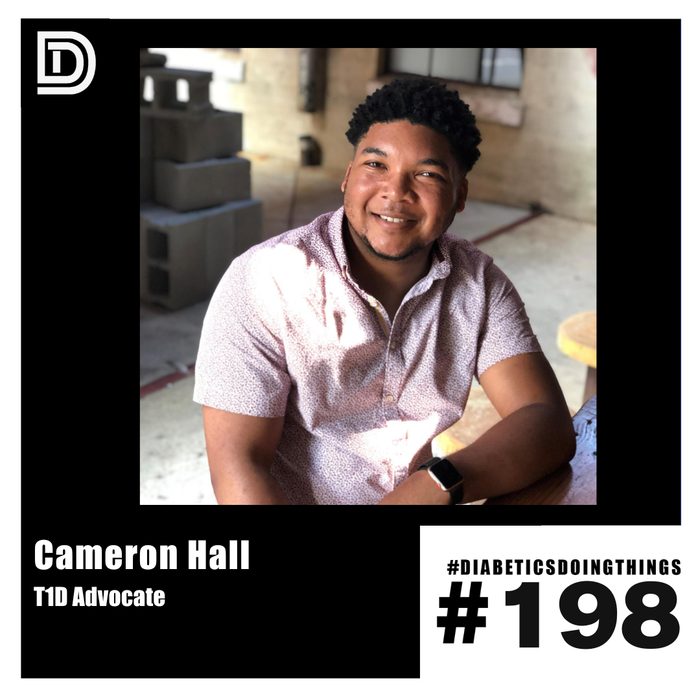
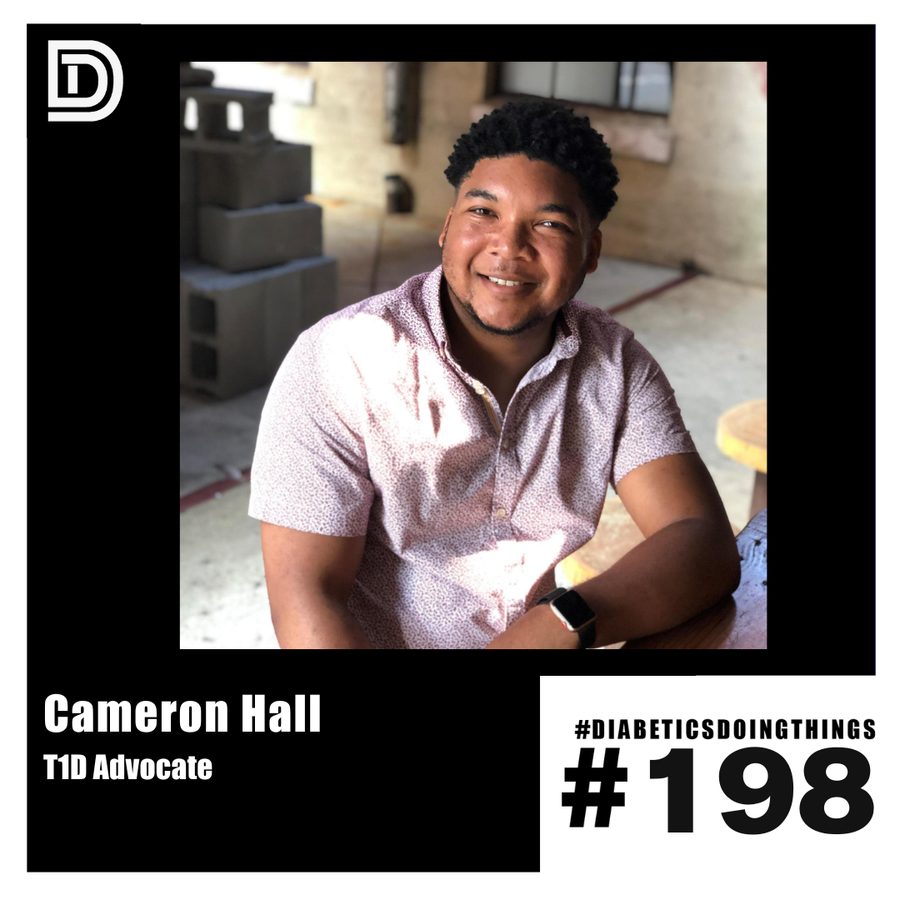
Cameron Hall, T1D Advocate

Episode summary
Cameron Hall was diagnosed with type 1 diabetes in January 1999 at age 9. His parents fired his first endocrinologist after learning she gave patients of color older insulin methods while white patients got newer pens and pumps, then switched him to a Black endocrinologist. For years he hid his diabetes at school and in sports, blacking out from low blood sugar rather than ask for help. He started living openly at 24, after watching other young professionals check their blood sugar at a Chipotle table. The episode also covers his recent move to South Carolina, where an exodus of endocrinologists left him without care for four months, and how he used his insurance company's advocacy team to get supplies. He serves on the T1 International board.
Key takeaways
- Cameron Hall's parents switched endocrinologists after learning Black patients were kept on older insulin delivery methods while white patients were moved to newer insulin pens.
- He hid his diabetes for years and blacked out from low blood sugar multiple times during sports rather than let classmates or teammates know he had it.
- He started living openly with diabetes at 24, after watching other young adults check blood sugar and give injections openly at a Chipotle table.
- After changing jobs and moving to South Carolina, Cameron went four months without an endocrinologist because of a local exodus of endocrinologists, and leaned on friends for Dexcom and insulin in the meantime.
- Cameron says calling your insurance company's client advocacy department, not just HR, can get a dedicated agent to push doctors and pharmacies on your behalf.
Show notes
In the episode, friend of the pod, Cameron Hall returns to Diabetics Doing Things. Cam, Rob, and Eritrea discuss:
Diagnosis at the age of 9
Difference of care for patients of color
Diabetes tech from back in the day
Having a family of advocates
Pretending not to have Diabetes, trying to hide it, and the price of trying to ignore it
The mental onus of being a young black man with limitations
Living openly at Chipotle
Navigating new jobs, new states, new insurance, new healthcare
Health deserts and exodus of endocrinologists
Using client advocacy with your insurance and HR
Burnout even when privileged
Mentioned in episode:
Questions this episode answers
Why did Cameron Hall's family switch his endocrinologist?
His parents learned his first endocrinologist kept patients of color on older insulin delivery methods like manual injections while white patients were moved to newer insulin pens, so they switched him to a Black endocrinologist through Children's Hospital of Birmingham, who got him his first insulin pump at age 11.
What was Cameron Hall's first insulin pump?
He started on a MiniMed 507 at age 11, and later used a Deltec Cozmo pump in middle and high school because it combined a blood glucose meter with the pump and avoided occlusions.
How did Cameron Hall get comfortable living openly with type 1 diabetes?
He hid his diabetes through school and college, but at 24 he watched other young adults check blood sugar and give injections openly at a Chipotle lunch, which he says was the moment he stopped hiding his condition.
What should someone do if they can't get insulin or diabetes supplies after a move or job change?
Cameron Hall recommends stockpiling supplies ahead of an insurance transition, budgeting for COBRA if there's a waiting period at a new job, and calling your insurance company's client advocacy department to have an agent push doctors and pharmacies on your behalf.
Full transcript Searchable, with timestamps
Rob Howe: What up, what up? Welcome back to another episode of Diabetics Doing Things. It's me and Eritrea back on the intro. It's been a while since we've done one of these intros. We're telling the amazing stories of people with diabetes on this podcast, and we've got an amazing story for you today. Yeah, we're bringing him back for his first official solo interview, Cameron Hall, cam underscore simply on Instagram. And he's been a friend of the pod for a while. He was part of our more than a diabetic series on one of the panels. and we brought it back just to do the full typical diabetics doing things interview, started a diagnosis story. And one of the really interesting things about his diagnosis is that there was a lot of advocacy from his family at the time to help him find a diabetes treatment solution and endocrinologist that could really help him and meet him where he was and be the right fit. And that really served him well, because as we talk about in this interview, you. One of the things that I think many of us take for granted who are employed, insured, and in this stable stage in their life, maybe financially, is that we don't realize how close we all can be to rationing insulin or having to ask for help with supplies or whatever the case may be. Cameron recently changed jobs and had to move states. He walks us through the challenges that he went through through insurance and offers some tips and solutions that we've also included in our show notes for if that's something that you're going through, some of the options that may be available to you via some of these insurance companies. So a really amazing story from Cameron, super vulnerable and open and really grateful that he joined us today. Plus, he's just funny. I like listening to him. We talk about a Chipotle, meeting people at Chipotle with diabetes and everybody bringing out their meters and their CGMs at the table. And I think we've, those of us who listen to this podcast and live around other people with diabetes and remember the pre-COVID and now sort of post-pandemic era meetups, that's really nice to not have to explain everything to somebody at a table. So go make a friend with diabetes and enjoy this episode with Mr. Cameron hall. Welcome back to another episode of diabetics doing things. We're still telling the amazing stories of people with diabetes from all over the world. Been a little while since we've had a guest on the show after the zine. So we figured we might as well swing for the fences and have an all time friend of the pod, Cameron hall on the show. So Cameron, welcome my friend.
Cameron Hall: Thank you all so much. Um, I don't know if you, well, you all are from the South, But in the Southeast, we have a saying that the test of being good company is when they invite you back. So thank you both for allowing me another opportunity on the pod.
Rob Howe: Of course, man. And yeah, we got to get you your own episode this time. Like, so we're even we're pulling you all in. You're part of More Than Diabetic in 2021. Our very ambitious series. The pod is sort of a series of just like Eritrea and I coming up with ideas that burn us out and then we go do them again. So yeah, you're always invited back, man. I'm glad we could make it happen. Thank you. Plus, we get an opportunity to kind of structure this like a normal diabetes interview, although they're all very special. Let's start with diagnosis, man. I've seen your diagnosis story on social media, but for our listeners who may not know you, how did you come to join this type 1 diabetes, chronic illness family?
Cameron Hall: Yeah, so I was diagnosed in January of 1999. I was nine years old. I had just turned nine years old the year prior. So I remember essentially waking up in the middle of the night being sick and my parents rushing me to the emergency room. If I recall, I think my pediatrician met us there thinking that I had type 1 diabetes. And so they went ahead and did the full antibodies test and confirmed that I indeed had type 1 diabetes. I remember the part I remember most vividly is when they told us that I couldn't have candy and sugar anymore. And me being the, well, people would describe me as a very reserved person now. back then that was not the case and I playfully passed out from being told as a nine-year-old you can't have candy anymore and so it was it was a an interesting time but they put us in the hospital and I remember being in the hospital at least for two weeks largely because my parents didn't want to leave until they felt comfortable enough to manage the disease with me and so we We stayed a little bit longer. I was ready to go back to school, but my mother and my father advocated and kept us there until they felt comfortable enough checking my blood sugar, giving me the shots and all the stuff like that. But because I was in a children's hospital, I spent most of my time in the gaming center playing video games with the kids from the cancer ward. And so we would just chill out and hang out playing video games all day while my parents were reading books and learning up on diabetes and the like. I think what's the interesting part of my story probably didn't come till later after we left the hospital. Of course, there's the whole they give you the JDRF book and the booklets and all that normal stuff. But for me, we realized very early on that, one, I was a little bit more insulin resistant than most other juvenile diabetics, was the term at the time. And we were seeing an endocrinologist who herself was also a type 1 diabetic, which was interesting. But she was treating patients differently. And this was before we had Facebook groups. This was before Discord and Twitter rooms and all the like that we have now, the whole IG community that we have today. Most of the information that was shared was in the waiting room, parents talking to parents. And so we were learning about things like insulin pumps from other parents, things that righteously a endocrinologist should have been having conversations about. Insulin pins. I was still using Humulin at the time, and Humalog had already been introduced at this time, using the old NPH and having to mix it up and all of these type of things and we learned just in passing conversation that most of her patients of color were still using manual injections and still using old diabetes insulin in tech while newer patients were using insulin pins which insulin pins were still fairly new back then but insulin pumps on the scene i think that was back when the MiniMed Medtronic 507 uh was the the pump um so that's rob you know you know that puts us way back in the day it is yeah my my pump i definitely had a
Rob Howe: five series i think i had a Paradigm Revel was my my pump i had for about 10 years there for a while so yeah definitely remember the five series i've never even heard of these pumps before like i have no idea again well back then too there were there were some other companies and i think many of them are sort of now either been acquired or or defunct or or change names or changed hands over the years but yeah i mean the the options that we have today from tubeless pumps to different hybrid closed loops to diy like they were all sort of like it was basically mini med or you know and
Cameron Hall: nothing else. That was it for the longest time. I think their biggest competitor didn't come along until it was like Deltec Cozmo or the Accu-Chek pump may have been the other one at the time.
Rob Howe: And so some real, real OGs of insulin pumps. They all swear by the Delta, that Cosmo, they say that it was like the way ahead of its time. And apparently I never had it. I never had it with my best friend had it and she loved it and after it stopped existing she never like got another pump until the Omnipod so I was just like oh it must have been a warrior of an insulin pump
Cameron Hall: because people miss it all the time it was I had one in middle school when I got to probably seventh or eighth grade maybe into high school too and I loved that pump because it never had occlusions because you could set the difference in this was before you could sell like the increments in which you could dose your insulin right like now you can go in and set it almost as low as you want to back then pumps didn't have that technology and Deltec was one of the first and so you never had occlusions with it because it could bolus at whatever speed that you wanted it to but the selling point that a lot of people liked was that it had the meter connected to the pump and so you didn't have to carry around that extra thing as long as you had like a few test strips uh and you're prickering your pocket you were good to go and so as a kid who felt like they always had to carry around some extra package with them to check their blood sugar to have it right there on my hip and be able to just quickly um before i play basketball or go out for recess to pull it out to pull a test strip out of my pocket and quickly and discreetly check my blood sugar was huge i love that pump man there's
Rob Howe: One of my, go, sorry, go ahead.
Cameron Hall: I was going to say real quick, one of my, um, early, um, uh, diabetes educators, she refused to let go of it for years. She kept that pump. Um, I think it was maybe five years past warranty. Um, and they had already closed the business and she refused to let it go.
Rob Howe: Man, there's, there's something to, uh, and you know, to use another Southern, uh, phrase, we might get a lot of these today. If it ain't broke, don't fix it. And that was my diabetes like mentality for so long. So I had my Paradigm Revel for many years past warranty as well, just because I was comfortable with it. My numbers were great. I really liked it. And at the time, you know, the hybrid closed loop pumps had not come out yet. So I get that, man. Like if you find something that works for you, like I am hesitant to change it most of the time. It can be you do some convincing on how it's going to make a significant increase in my diabetes management. But I want to go back really quick because we can wax nostalgic about pumps, but something really important that we've talked about more recently, more often in the diabetes community is the difference with a life with diabetes for a person of color and marginalized communities. So let's go back to the endocrinologist you were seeing at the time was prescribing different medications and different management structures and strategies for the patients of color versus the white patients and other patients. what did you, you mentioned that you got an insulin pump. So what was your, and you know, you may not remember exactly, but your family and like, what did, when you guys discovered that that was happening, what was the next step that you took?
Cameron Hall: The very next step that my parents took was firing her endocrinologist. It was time to, she had a rude bedside manner anyway, to be working with kids. And it may have just been with the kids of color. We don't know that to be true. But we immediately left her practice, which it was a private practice. He just worked through the Children's Hospital. And we got an endocrinologist of color through Children's Hospital of Birmingham, which is where I was diagnosed. And so we had a completely different experience from that time forward. He was probably one of the best endocrinologists that I've ever had in my lifetime. Told us things about Diabetes Camp, which is where we learned a lot more about the tech and what other kids were doing. And so I'm a Camp Seale Harris alum here, there in Alabama. And so he put us in touch with the Medtronic reps fairly quickly. And my first pump was the, I think it was the 507 MiniMed back then. And so probably within a year, we were already on a pump after training. But I had been with that first endocrinologist probably for the first a year and a half, maybe two years of living with diabetes. And so I didn't get a pump till I was 11. And that's how I started managing my blood sugars and my diabetes from that point.
Rob Howe: And for those of you who probably remember the MiniMed 507, it was the one that like looked the most like a pager maybe of any insulin pump. It had like the select and the act button and like the up and down arrows, right? Man, I remember. Yeah. And I had the, the black one. So it looked just like a page. So, you know, you're as a kid, you know, you're 10, 11 years old carrying an insulin pump, you know, at the early, early two thousands, like that was prime. Is that a pager, uh, you know, comments from people? Is that typically how it was received?
Cameron Hall: that's how almost every pump i even now i perceive uh do you have a uh a pager and what is that on your hip what do you wear um back then i was a lot more discreet with my diabetes it was just the lay of the land as a kid i didn't want people to call me the diabetic kid or the come to me for things i we had people who would scrape their knees on the playground and then because they were bleeding come to me and ask me can we check their blood sugar on your look on your meter I didn't I didn't like being that kid so I hid my insulin pump those first few years and then as I got more and more comfortable and I used it more and more it became just more of a part of who I was and I wore it on my hip all the time only thing is back then they didn't they also didn't have the protective equipment that we have for pumps now so it was just out there to the elements and it i've definitely had my share broken insulin pumps too so yeah the uh the
Rob Howe: accessories game in the last i'd say even five years has dramatically increased shout out to all of the you know type 1 entrepreneurs out there who are making it happen this is a super niche conversation because i feel like sorry to poke into y'all's privilege but i didn't get a pump as a kid so i just didn't run into any of this like it just feels very nuanced so i like I asked myself, as an adult, now that I do have a pump, I have all this extra preparation I have to do to carry my stuff around. As a little kid, did you do that? Did your parents do it for you? It sounds like they advocated a lot for you. How did you manage, as a child, having such an expensive and crazy device on you?
Cameron Hall: Yeah. My parents made sure that all of my teachers knew. We had at the beginning of every school year, I can remember having at least some type of talk from the teacher to the kids about being careful around certain things. And, you know, the list of kids who have allergies and the list of kids who have different things. So and I was fortunate enough to go to a small private school. So there wasn't a lot of opportunity for things to happen with my pump. We were a very small community. community. I think my class maybe had 10 people in it from grades K through 12. And so people knew who I was and I was able to manage it in that way. As far as carrying supplies around, that's what I hated the most. As a kid, I carried the bare minimum. My meter, my test strips, one tube of glucose tabs, and that was it. If I needed anything extra, I was going to be out of luck because that was the bare minimum and I barely used that meter I did not check my blood sugar the recommended uh four to eight times per day back then I can tell you that I checked it before I left from before I left home and probably when I got in the car my parents maybe checked it um and that was that um and so it was pretty much pretending I didn't have diabetes through those time frames it was my parents basically forcing that onto me and making me recognize that I do have limitations or quote unquote limitations and that I do need to take care of myself. And so I would say probably from elementary school when I was diagnosed through the ninth grade, maybe even into probably deeply into college too, my life was hiding diabetes and pretending that it was not a factor and that I was just Cameron, not Cameron the diabetic. I can't tell you the times where I felt highly embarrassed because like we were playing outside flag football for PE. My blood sugar dipped into the 30s and because I didn't check my blood sugar, I didn't know where it was. And we always had PE after band practice. And so my blood sugar dipped into the 30s and I black out in the locker room after PE is over. and pee is over and they have to pull me out of the locker room and force feed me juice while I'm sitting there basically nothing but my underwear and those are those are times where that we don't talk about right but those are things that happened and that happened more than once I used to push myself a lot when I played basketball I played junior high and varsity basketball I played soccer in hockey growing up. And so I was constantly pushing myself and pushing myself and ignoring diabetes. And the times where I ignored it too deeply, I paid for it and paid very deeply for it because I blacked out at least two times in PE, a couple of times in practice after school. And then once it was so bad that my sister found me and we were with my aunt and I had blacked out while we were walking from, we were actually walking from my aunt's endocrinologist, which was a good place to be. But I blacked out after a long day of playing sports then. And my sister was forced meeting, feeding me sandwiches to bring me back in juices and then pouring juice down my throat. And so that mental onus of trying to hide your sickness. And of course, that plays into sort of the mentality of being, when we talked about this last year too, the mentality of being a black man. You can't display your weakness, right? We don't want to be viewed as weak, which I would say my parents did a good job of teaching me that I wasn't weak, but there was still that sort of thought process for me. And so I definitely did a lot of pain for the times where I chose to ignore diabetes in those formative years of life, and then sort of escalating to where I am today, where I don't mind sitting in a meeting. I'll be in an interview, interviewing the candidate for a position. I will pull out my blood glucometer if I feel like I need to check my meter, but that's over 20 years of managing diabetes, right?
Rob Howe: Well, I mean, first of all, thank you for sharing those. There's so many things I want to pull out and talk about. So the first thing is like, now you're very open about your diabetes. And I think, you know, everybody goes through a different time. For me, it was like 10 years living with diabetes before I was like comfortable saying, cool, I am a diabetic. Let's all talk about it. For you, do you remember kind of when that changed for you? Because it sounds like, and I think many of our listeners would relate to this. One of the hardest parts about growing up with diabetes or being a young person with diabetes is that you get othered a little bit, especially, you know, like you said, I can't imagine how embarrassed your junior high self would be, you know, coming to or waking up and you're like in your skivvies out, you know, and your friends are all around you. And that's just the time where if anything's different about you, everyone's going to point it out. Uh, you couldn't pay me enough money to go back to junior high. It was just a really tough time for your boy. Um, but you know, like those types of things are very tangible. And I think people listening to this will relate to it. How were you able to sort of decide or what were the, what was the sort of, uh, ingredients or the, the formula for you to kind of step forward and identify as a person with diabetes publicly?
Cameron Hall: Yeah, I think that I really didn't start talking about diabetes publicly until I was a young adult, um, until I probably would have been 24. Um, so by that time living with diabetes, probably for over, what is that, 13 years almost before I finally had that aha moment. And really, I got plugged in with one of the local orgs in the area. We were sitting down at lunch at Chipotle, and I remember it like it was yesterday. And everyone, all of a sudden, no one went to the bathroom to go give themselves their shot. No one went to the bathroom to go check their blood sugar. They all pulled it out right there at the table. And that was my sort of aha moment. I can live with my disease openly with this disability without having to feel that I have to get up from the table, go to the restroom to check my blood sugar, to give myself my insulin really quickly. They all did it right there at that table. People were literally had syringes and pulling insulin out of vials and giving shots right then and there. um and so it was the the young professionals uh group um for one of the diabetes orgs and from then on i think i made the decision that i was going to do less and less hiding of my disease now i wasn't perfect in those uh from that time forward but i definitely felt more comfortable in talking about it and it was because i had that startup point
Rob Howe: uh i would love to be in that chipotle i think metaphorically we've all sort of been in that Chipotle, right, where everybody's got their Dexcoms out or their phone on their phones was like the first one. And then we're checking their blood sugar or like pulling out their pumps. And you sort of get to skip all that exposition that you normally have with a with a person who's not as familiar or who's really curious. You know, you mentioned something earlier, like not wanting to be asked or not want to be known as the kid with diabetes. And, you know, you all every time a kid scrapes their knee or somebody's curious, like, oh, you test my blood sugar. And it's like, well, no, I mean, I'm not going to do that. And also like, it just feels very, you know, you feel othered, but to like a friend with diabetes is a friend indeed, man. I cannot, that's such a life hack for people with diabetes, uh, caregivers with diabetes think, listen to this, like that, that's the key. Talk to somebody who's going through it. Uh, they're going to be able to, to share so much. And now, like you said, there's Facebook groups, there's this great Instagram community. There's communities on Twitter, uh, you know, discords now, uh, YouTube channels, all these things where you can find the information that previously was just shared by word of mouth or in waiting rooms. So, you know, I'm very grateful for that and would encourage anybody who hasn't taken that step to do what they can to do that. It was that normalization
Cameron Hall: process, making it feel normalized was the key. Well, I mean, really, that's what else is there
Rob Howe: for us at this point, you know, like feeling normal. I had this experience this weekend, And you reminded me of it when you were talking about sports, because we're encouraged to be active as people in general. And I highly recommend it. But also for people with diabetes is like, yeah, exercise is good for your blood sugar. It's good for insulin absorption. It's good for just your activity level. But especially before CGM, it was really difficult. And, you know, you're going in with insulin on board. And when you're a kid, especially your schedule is a little bit crazy. Like you said, you had band practice followed by PE, which is probably a three hour span of lots of physical activity, probably outside. So the weather is even a component, especially here in the South, like it's hot outside. That's going to affect your blood sugar. And, you know, that's top of mind, maybe for you or, you know, as a kid, maybe not, uh, you're not really even thinking about it. Um, and so this weekend I was talking to one of my teammates, who's a really good friend of mine. and we were, uh, you know, years past our playing days now, but he was saying that, you know, seeing me talk about playing basketball with diabetes made him realize he's like, yeah, I never even thought of you as like dealing with that while we were, he's like, it just never occurred to me that that was going on behind the scenes. And so, you know, I think we, we often think, and I, and it was my, uh, thought at the time to not burden other people with my problems. Uh, but it really probably would have helped me out to just say, Hey guys, this is really difficult. Like this is what I'm going through. And I think it would give people more of an appreciation of, oh yeah, Rob's out here doing this thing. But at the same time, he's dealing with this really difficult math problem that is also affecting his every move. So yeah, hearing your stories go back to normalizing it. I saw myself in that fourth grade or middle school, going out to band practice to PE. Man, I remember in high school having to go and balance that schedule. Not an easy thing to do,
Cameron Hall: especially for a kid. Yeah, it was not. And at my high school, I went to the same school from grades K through 12. And essentially the way it works is you start, they start teaching you to sing in grades kindergarten. When you get to fifth grade, you have to pick an instrument. Most kids at that time are already involved in sports. And so when I got to high school, my afternoon went after classes were done, which is already stressful enough, choir practice, band practice, basketball practice, PE basketball practice. And so that whole afternoon was nothing but push, push, push, push, push, push, push to get to the end. And I was not thinking about it. It was the furthest thing away from my mind. I just wanted to have fun and be with my friends. Right. I will say, though, I was thankful for my coach. I did have a really good coach who gave me, allowed me to have a signal so that if I needed to pull myself out of the game, I could. And so I would just pull my jersey two times. He'd look, he'd know, and then pull me out and we'd put my sub in so that I would be cool and get some Gatorade and charge back up. But it was crazy back then. And then into college, the same. I was pushing myself all the time through classes. I was that diabetic who would be driving back from, I went to college probably 45 minutes away from my hometown where my endocrinologist was. I'd be driving trying to write down my blood sugars in my law on the steering wheel, on the way to the office, trying not to get into a crash to make it back, just because those things weren't priority in mind. My mind back then was focused on class, SGA, fraternity, orgs, and all the like. And diabetes was just not the thing for me. And then I finally got to a point where I was just feeling extraordinarily burnt out. And so that in college, I think, leading to that point where I got to, when I was in Greensboro, North Carolina, I was living there when I met that group, was sort of the turning point for me. Those last few years of college, going into being in a new area, needing to meet some new people was critical in my management.
Rob Howe: You talk about not wanting to be the diabetic, focusing on all the things that we have, especially in the U.S. as young adults. college uh you know fraternity extracurriculars social life career you know family you know moving to new places you know meeting new people like diabetes is not a component for most people but you you know adding diabetes on that makes at least like one extra step i was laughing you know like you're you're writing down your logs because there's no cgm graph that they can just upload at the time uh and you know i was thinking back on my like first few years like i probably wasn't even remotely close on. I was just, you know, just guesstimating or like going back through and like whatever, whatever numbers I had stored from the last, you know, 30 tests or whatever in my, in my glucometer or whatever it did at the time. And the rest of it was just cap absolute lies on, you know, and I was thinking about, you know, like making decisions based on that data. Like, you know, I would, I would always throw a couple extra highs in there and a couple lows in there just to make sure that they knew I wasn't completely full of it. Trying to be honest, Trying to be real. Yeah. And they'd be like, well, what happened here in the morning? And I'm like, I honestly couldn't tell you, doc. I made it all up. Some of my best, some of my best creative writing work was in those blood sugar logs for sure. So you talk about all those things, like, you know, those formative moments in your life as a young adult. Let's transition a little bit because I follow you on social media and have for some time part of my T1D guys that I really enjoy following. And you did something that I think was very difficult in today's society. I think we just are not very good at understanding our sort of boundaries professionally and like making hard decisions for ourselves that, you know, like quitting, strategic quitting is what Tim Ferriss calls it. When it's time to stop doing something for your own good and move on to something else. And, um, as a part of that journey, you know, you were talking about leaving a job and you can maybe talk about, uh, you know, some of the reasons behind that, but also moving and packing and, you know, driving across the country, uh, navigating insurance in new States. And I thought, you know, these are all things that people with diabetes have to deal with that your average person, even though it's a very difficult thing to leave a career or leave a job and go somewhere new, that able-bodied people don't necessarily have to think about the same way. So kind of walk us through that process and, you know, some of the things I guess that you learned, not only about yourself, but about navigating some of those new challenges in a new place.
Cameron Hall: yeah so this last time has probably been the the hardest um in transitioning i've i've transitioned several times for my career at this point just because i was taught early on by a really good mentor when you feel you're ready for your next promotion and no one is giving it to you go find your own and so i have navigated my career and sort of that scope when i was ready for the next move. And so I have transitioned from Montevallo, Alabama, up to Greensboro, North Carolina, and had to make that transition. And then I moved to Illinois and Iowa for about four years. I was working in Illinois and living on Iowa. So that had its own nuances of where you can find healthcare, what the system was for the institution I was working at. And then I went down to Texas for a little while, which is where I recently just, I intended to be in that particular role for a little while longer. But I got to a point where I realized that the amount of potential that the organization that I was working at was not equating to the type of work that they were hoping to accomplish or that they were willing to accomplish. And so I met this conflict in the world. And this is coming from me in my career. I am very much a, I would call myself a change agent. And so a lot of times if you're looking to hire me, you're bringing me in because you know I have an experience at looking at all of your policies and procedures, how you operate. And I work in fundraising. What are the ways that you are bringing in for money for your nonprofit organization that I'm working for? And determining do we have the right approach? Are the silos in place? And can we break some of the silos down to be more effective in our approach? This particular organization, just the way the system was structured and built, it made doing my job extraordinarily hard on a day to day basis. And it wore down on me for a number of reasons. some of it was and I won't go too deeply into it but some of it was just focused on even things like remote work policy and how that related to me in the midst of a pandemic as a disabled person with disabilities right what that meant and you all are aware with Texas and and what happened to remote work in Texas, now happening also in Virginia. And so that was one of those things. And then also that coupled with the just environment there. And I didn't realize, I thought it was just happening to me until I left. And then I saw people from other departments reaching out in my inbox on LinkedIn saying, hey, I don't even know who you are. I worked in this department in this division at this particular university. And I was experiencing the exact same thing. And so we're in the same boat and another person sending me all of these emails. And so that really prompted my current transition to where I am now in South Carolina. And I'm thankful for that opportunity. I had a few opportunities on my plate and I chose the one them in now, and it was great. But in the process of doing that, what has been difficult is navigating through all of those moves. You have to navigate the insurance process for each state, and it's truly different for each state, even if you have like the same overarching carrier like Blue Cross Blue Shield. Well, Blue Cross Blue Shield of Texas is very different than Blue Cross Blue Shield of South Carolina and very different than the sort of gold standard Blue Cross Blue Shield of Illinois. And so navigating that sort of change each time, trying to, the plan that I try to make as I get ready to move from state to state is one, do I have enough supplies to last me for at least two to three months? And so I start stockpiling. So when I'm getting closer to that move date, I go ahead and place my last order is probably the date that I know my insurance is going to end. I go ahead and place that one final order so that it's processed within that last week before I know my insurance is going to transition and then make sure I have enough supplies to last me through my next job. And so especially when you have to account for things like I tend to work for state institutions in my last two roles. Well, some state institutions require you to wait a waiting period before you can even get your health insurance. And so you You may need to account for what the budgeting looks like if you need to pay for, I'm forgetting the term, but the sort of layover between employer, you have that option to like. COBRA, yes, COBRA. Yeah, you have the option to pay in full for your insurance and pay. So if you need to account for those. So budgeting for all of that has been a part of the thought process. And you don't really have to think about these things if you can go without insurance for a month or two months. But if you know that you're going to run out of supplies or you need insulin or things like that, or even if just an emergency happens and you go into ketoacidosis or whatever the case may be, you need to think about what those could be. And so I got to South Carolina and I love the area that I'm in. I love the work that I'm doing right now on paper. It was my dream job. And so transitioning here career wise was really great, but health wise, I did not recognize one South Carolina. For those who don't know, it is one of the poorest states in the community. And it we are known as being one of the areas that is while we do have some really good health systems here, we're still sort of a health desert. And when we think about health deserts, you've been hearing more talk about food deserts, these areas where there's lack of access to things like grocery store, places to go get good produce, right? But there are also areas in the country that are health deserts. And we didn't really learn about this really until the pandemic when we started to see all of these smaller areas getting hit excruciatingly hard by COVID and then not being able to travel however many miles near this hospital, right? um well south carolina uh in some areas is similar to that and on top of that when i moved here there was a mass exodus of endocrinologists i don't know what happened but at least two of the health system in the area almost all of the endocrinologists except one quit and so these two practices um now having only one endocrinologist trying to figure out what to do with all of these patients offloading some to the other practice, which has like three, but now you're straining that practice. So they may lose patients. And so I had to navigate that process when I got here and I got down to the wire. I was on my last few tubes of insulin. I was on my last Dexcom. And thankfully my mom uses Dexcom for another health. She got approved to use them for another health issue, which I didn't even know you could do. But she doesn't need them as critically as I do. So she was able to like give me some Dexcoms and the T1D community came through and made sure that I had some of the supplies I needed and some of the prescriptions that I use to manage my diabetes. But I was going through this, I would say four month long battle of going back and forth with doctors, trying to one, just getting to see someone, but also trying to get my new primary care doctor who works in internal medicine to even just give me the prescriptions that I need just for day-to-day life. And so those things were going back and forth for a month of just how do I get what I need? What do I need to do? And I was thankful enough that I am extraordinarily privileged to where I can, in the middle of my day, go get in my car, drive to the endocrinology office if I need to pick up. They have a sample of whatever I need. I can go get it, right? But that's me. I can flex my schedule in that way to be able to get up and do those things as I need to. But here, as I've made this transition, the hardest part truly was transferring care. And this has been the hardest time that I've ever had to do that. When I first moved up to North Carolina, my endocrinologist from Birmingham gave me a full list of all the endocrinologists that I should check out. And all I had to do was just call them up and do some preliminary interviews to find out which one I actually wanted to see, right? Coming clear across country, it's a little bit harder for one endocrinologist in the middle of West Texas, near New Mexico area, and Arizona area to come all the way back to the southeast, those endocrinologists may not know each other as well. So navigating that process, but then coming in when all the endocrinologists quit. And so I was looking at, I have a friend who works at one of the nonprofit orgs in North Carolina, and she was exhausting her resources for me trying to help me find an endocrinologist in the area, one of the better ones, and particularly one of color. I really wanted an endocrinologist of color, preferably a black endocrinologist. And I was unable to get one, but I'm on the waiting list now. But I was literally considering driving an hour and a half to Greenville, South Carolina, just to be able to go see a good endocrinologist. And so that was the process. And finally, after months of fighting that battle. I have all of my prescriptions filled. I've got Dexcoms, I've got insulin supplies, I've got insulin pump supplies, and all of that. But it was a true four-month battle. And I had already crossed that threshold of I had no more supplies left, give me what I need. And my internal medicine doctor was doing things they don't typically do, writing pump supply prescriptions just so I could get by to get those things processed. So it was definitely a hard transition.
Rob Howe: Well, Cameron, thank you so much for sharing that story. I think there's a lot of rhetoric. There's more rhetoric now than there ever has been about the problems that the U.S. healthcare system and the onus and burden that it puts on patients. And typically, and rightfully so, we talk about the patients who need it most, who are in times of financial peril, unemployment, uninsured. But what's, I think, so compelling about your story is that you made a successful career move. Like you said, you got into what you would call from a role perspective, like a dream job scenario. And for four months, you were still unable to get access to the medicine that you need. And, you know, I just think that that is a really salient example that, you know, we all I think we all like to see ourselves as, you know, as successful or, you know, hey, you know, we're doing well, we're managing the disease, we're managing our lives. But we're all very close to those last few vials and like kind of your heart rate perking up a little bit of like, oh, I really need to figure this out soon. and you know like you said you had multiple people helping you out you've been you know very open about you know sort of your privilege in terms of knowing where to look and knowing who to talk to and so I'm thankful that you're able to share this story because it goes to show even if you have all those boxes checked you still may find yourself in a bind to have access to the critical medication that you need to manage and almost like diabetes so man I just thank you for that. I, you know, following that and keeping an eye on, on you obviously over the last few months, man, it was eyeopening for me to just say like, you know, most of us living in the same state for a long period of time, that's also, you know, a place of privilege as well. We don't think too often about having to navigate the differences between Blue Cross Blue Shield of Texas versus Blue Cross Blue Shield of South Carolina, of Illinois, et cetera, et cetera.
Cameron Hall: and it really does all come back down to that that privilege aspect because if i had been in any other scenario i would not i probably still would be fighting that battle today i'm trying to figure out how i'm going to get my supplies and it came down i wrote a probably the most heartfelt um email that i ever wrote a doctor before just telling her how I felt I was navigating this process alone and that health care wasn't caring for me since I moved here. I broke down in an email and I was probably crying because I wrote it, honestly, just saying I've moved here. I've done what I was supposed to do. I've got my insurance. I made sure I had enough supplies to carry me through a certain time period. I've been trying to see an endocrinologist. There's no one available. you all won't see us getting you you're not even scheduling virtual appointments and I get that there's an overload on your practice right now but this bouncing around and back and forth was just not worth it to me and it was it was not working for me and it was it was it was a hard time to navigate, even with the amount of privilege that I have to be able to do so. And the only thing that played in the back of my mind, I think my mom said it to me before I even recognized it was, just imagine if you were an hourly employee trying to do this. If you were working two jobs or had kids trying to navigate this process, I can tell you I would not have been able to do it um it because of the the sheer amount of time that it took on some weeks i was probably spending um every lunch break over the course of a week so that's what five hours a week minimum of just trying to drive somewhere to go get a sample from a doctor so that i could carry over to the next um carry over to the next week of supplies not to mention the time you spent
Rob Howe: writing emails, making phone calls, uh, you know, sourcing help for yourself. Uh, and I think, you know, not to mention you're starting a new job. I imagine, uh, you know, you wanted to do well, you know, and wanted to, like you said, be an agent of change. Like that involves a lot of upfront work and a lot of, uh, you know, effort and, you know, being able to give that effort on all fronts. Uh, like you said, I think early, you know, we had reached a point of burnout. Now, that's easy to do. I mean, and like you said, being an hourly employee or being in a place, you know, I had a friend who started his career in investment banking early on, and he only was given like two bathroom breaks a day and like everything was sort of mandated. And so, you know, having the ability and privilege or just space to advocate for yourself is also a challenge. But yeah, I'm really glad that you made it and you got it and you could share this story with us because I am sure that there is somebody who's making a career change that they didn't realize that this would be part of it. Um, and yeah, you know, or any of the other challenges that come with getting, you know, insurance and the medication you need here in the U S
Cameron Hall: what I did learn through the process too, is that you can lean on your insurance to be your advocator. Um, and so, uh, I, I got worn out and was tired of making the phone calls. And so I I called my insurance and asked for the part of the organization that does client advocacy. And they literally made the calls for me at a certain point in time. And we're starting to get to the roots of the problem because they're paying into these systems too, one way or another. And they wanted to make sure that their client was getting the best service. So for those who don't have time, that's what I would say too. Make sure you talk to your HR department. Make sure you talk to, and you may not want to divulge it, but talk directly to your insurance company if you don't want to talk to your HR company. And they will make these calls for you. The only thing is make sure you get a reference number, make sure you get a name in that process so that they can do that advocacy work for you. Because if you've gone through that process, I got on the phone with one of my insurance advocacy agents, and she literally just put me on hold and put me on mute. And she called while I was sitting right there and read one lady at one of the places, their rights while I was on the phone. And within a week, got me what I needed. And so those things, too, really helped in that process. But it goes back to what you were saying, Rob, just knowing where to look and how to navigate it was the key.
Rob Howe: There's so much, you know, we spend a lot of time talking about access to medication, but also access to information is so critical. just knowing that there's somebody whose job it is at your insurance company, if you're fortunate enough to have it, that can help you do your job and knows the right person to call. I read this book years ago, and it was about some business principles book. And honestly, the book wasn't that great. But one thing I took out of it was when you talk to someone who knows how to do the job you're doing, they will be better at it than you. It's just like, yeah, if somebody is a tax attorney, they'll be better at tax law than you are. Somebody is an insurance advocacy agent, they will be better at advocacy than you are. And so find those people. And so we'll put some links in the show notes here of some of the main insurance companies and link to their helplines and their advocacy departments so that we can help connect some of our listeners to those resources. And we really will do that. So go in those show notes and look, because we do that. We're about that life.
Cameron Hall: That's awesome.
Rob Howe: Well, Cam, man, this has been an awesome interview. I don't want to kind of just end it at that. I'd love to know something that you maybe are sort of hopeful for or excited about coming up, either just in your life or in sort of the diabetes community or something diabetes or activity-wise related. This is Diabetics Doing Things. We'd love to know some of the stuff that you're doing that you're excited about.
Cameron Hall: Yeah, some of the stuff that I'm doing right now is, that's a tough question.
Rob Howe: Sorry, I totally sprung it on you too.
Cameron Hall: I guess really my work with T1 International and the work that we're doing around policy and advocacy. I'm excited now that we're finally getting to a point where our staff is back up to running. So for those who don't know, and I think I can say this without getting in trouble, but I serve on the board for T1 International, the UK entity, and on the board for the United States entity. And so people don't know that we're one organization, but we have two branches, the sort of headquarters and then the U.S. arm, which does the greatest amount of advocacy work. and we're doing a lot right now. We're reshaping a little bit of our advocacy so that we can be more effective moving forward and really trying to get insulin and diabetes tech for all and thinking about what that looks like on both the global scale and a lot for those of us here in the U.S. and how we can transition that. And so you'll see in the coming weeks some new opportunities that we'll probably be rolling out or some new ways we define things coming out, which is going to be awesome. We've been really working on reshaping how we as a board will help T1 International. For those of you who are not aware, with the organization, we're a fairly young nonprofit, and so we're at that transition stage where the board has been operating as one of the volunteer-style board and now moving to more of a governing-style board and trying to think about ways that we can increase revenue for the organization and thinking about ways that we can make sure that we're actually accomplishing the work that we're doing. And so I'm excited on some of the research that we've been able to accomplish. Had a couple opportunities to speak on behalf and do a couple of interviews for diabetes and diabetes people with living with different types of diabetes. So that's been awesome, but really just shaping the way that one of these organizations is really thinking about the next phases of really changing policies affecting diabetics, which is key. And then what I'm really excited about is to see more organizations. You probably saw one of my, or if you didn't, I hope you'll go check it out. There's this organization in Georgia that is called St. Vincent de Paul of, I think it's in St. Paul of Georgia. And one of my old college friends is their chief program officer. And she has put together one of the most innovative projects that I've seen a nonprofit do. It is a pharmacy dedicated to serving low-income communities, alleviating some of that stress. And so they're offering insulin for any other term, the Lolo for people who don't have any other way to afford it. They're offering so many other types of prescriptions that she's been able to secure through this program. And so if you live in the Atlanta area in Georgia and you know people who are in need of medical supplies, I will say they, they, right now they're trying to get more and do more. So they're looking for more volunteers to help them navigate that process, more medical professionals to help them navigate that process, but they have made a huge dent in the pharmaceutical game in making some of these prescriptions that can cost an arm and a leg very accessible to their community through this new approach to pharmacies. And so that's going to be huge moving forward if more of these organizations that claim to care about making prescriptions accessible, it's a model that they should really look at to implement if that truly is their goal.
Rob Howe: That's very cool. Just sparked a number of ideas because I'm going to have to go to Atlanta for some diabetes business here shortly. So might have to get with you offline and coordinate maybe a visit down there. We'll put those notes in the show notes as well for anybody listening. I will produce their notes again. Boom. Boom. Well, that's awesome. What a great answer. And obviously, we're always continuing to share the messages in support of T1 International, what they're doing, not just here in the US, but also globally. And grateful for you and the other board members for your time over the years and continuing to grow that and usher that to where they are today. And yeah, man, grateful for your time. Dude, you crushed this. This was the smoothest hour interview of all time. So
Cameron Hall: nicely done. Thank you all so much for having me.
About Cameron
Cameron Hall is a nonprofit fundraising professional and board member for T1 International, who has lived with type 1 diabetes since being diagnosed at age 9 in 1999.