

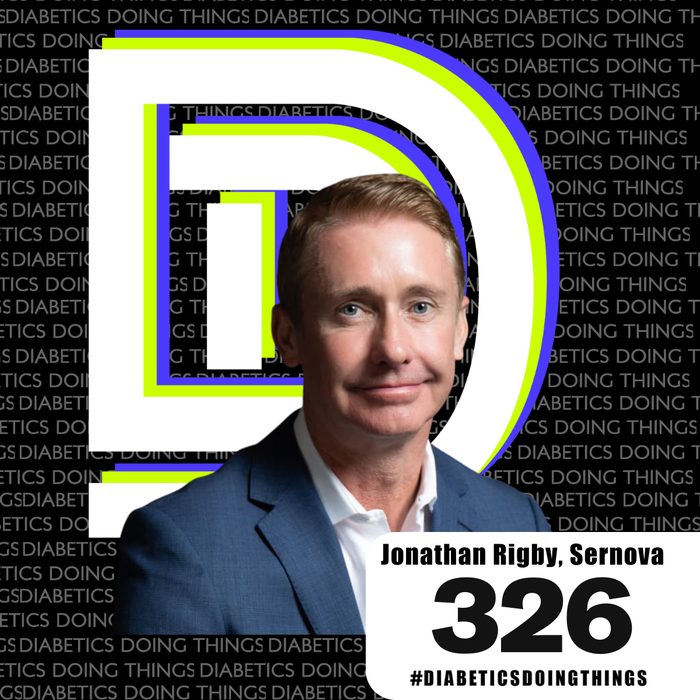
Jonathan Rigby - CEO and Chairman of Sernova


Episode summary
Jonathan Rigby, CEO and Chairman of Sernova Biotherapeutics, was diagnosed with type 1 diabetes at 18, before blood sugar testing existed, and has had eight eye surgeries and four seizures from severe hypoglycemia. He explains Sernova's cell pouch, a small implantable device that becomes a vascularized biohybrid organ and houses donor islet cells that produce insulin, glucagon, and somatostatin. In early trials, 8 of 12 patients became insulin independent. Rigby discusses the move toward stem-cell-derived islets with Evotec, immunosuppression tradeoffs, and future gene-editing approaches to avoid rejection. He also shares how diabetes pushed him into racing, including 11 Ironman triathlons, and how it shapes his drive to find a functional cure.
Key takeaways
- Sernova's cell pouch is implanted under the skin of the abdomen, vascularizes over about six weeks, then is loaded with donor islet cells that produce insulin, glucagon, and somatostatin.
- Rigby says 8 of the 12 patients in the trial so far have reached insulin independence, meaning no more daily injections or pump use.
- Because donor islets are limited and inconsistent, Sernova is working with Evotec in Germany to grow an unlimited supply of islet cells from stem cells, aiming for clinical trials by mid-2026.
- Patients currently need standard transplant-level immunosuppression, but Rigby points to gene editing and cell coating as future ways to make transplanted cells invisible to the immune system without drugs.
- Rigby was diagnosed at 18 using pork insulin and glass syringes, has had eight eye surgeries, and has had seizures from severe hypoglycemia that required his wife and young son to intervene.
Chapters
- Introduction to Diabetes and Innovation
- The Cell Pouch Biohybrid Organ
- Clinical Trials and Patient Selection
- Living with Type 1 Diabetes
- Future of Diabetes Treatment
- Immunosuppressants and Cell Acceptance
- The Complexity of Diabetes Management
- Conclusion and Future Outlook
Show notes
In this episode of the Diabetes Innovators Series, Rob interviews Jonathan Rigby, CEO of Sernova Biotherapeutics, about the innovative approaches to treating type 1 diabetes, particularly through the development of a biohybrid organ known as the cell pouch. Jonathan shares his personal journey as a type 1 diabetic and discusses the clinical trials, patient selection, and the future of diabetes treatment, including the challenges of immunosuppression and the complexities of daily diabetes management. The conversation emphasizes the importance of innovation in diabetes care and the hope for a future where patients can achieve insulin independence.
Chapters
00:00 Introduction to Diabetes and Innovation
02:51 The Cell Pouch Biohybrid Organ
05:53 Clinical Trials and Patient Selection
08:48 Living with Type 1 Diabetes
11:51 Future of Diabetes Treatment
14:47 Immunosuppressants and Cell Acceptance
17:48 The Complexity of Diabetes Management
20:44 Conclusion and Future Outlook
Resources:
Questions this episode answers
What is the Sernova cell pouch?
It's a small implantable device, about the size of a credit card, placed under the skin of the abdomen. Over about six weeks it becomes a vascularized biohybrid organ, and physicians then implant donor islet cells into chambers inside it so the cells can produce insulin.
How many patients have become insulin independent with Sernova's treatment?
In the clinical trial Rigby describes, 8 of 12 patients with type 1 diabetes and a history of severe hypoglycemia reached insulin independence, meaning they no longer need daily injections or an insulin pump.
Do patients need immunosuppressants for the cell pouch?
Yes, currently patients use immunosuppression regimens similar to those for kidney, heart, or liver transplants. Rigby says Sernova is exploring less toxic regimens and future technologies like gene editing to make transplanted cells invisible to the immune system.
What is Evotec's role in Sernova's research?
Evotec, a German regenerative medicine company, differentiates human stem cells into islet cells, giving Sernova a path to an unlimited, consistent supply of insulin-producing cells instead of relying on organ donors. Rigby says the plan is to get these stem-cell-derived cells into trials by mid-2026.
Full transcript Searchable, with timestamps
Rob Howe: Welcome to Diabetes Innovators, a special series from Diabetics Doing Things covering the 85th Scientific Sessions. We're held in June 2025 in Chicago, Illinois. You're going to hear interviews from leaders of tech companies, people with diabetes, diabetes creators, researchers, and more on this podcast. If you want to learn more or hear more from this series, visit DiabeticsDoingThings.com slash Diabetes Innovators. Enjoy the episode. Okay, let's talk about our partners who help support this podcast. Today, I'm going to talk about Type Zero, which is typezerohealth.com. It is a business run and founded by a person with type 1 diabetes, John Jensen, who's been on this podcast a couple of times. I've been using this product since 2018. I started training for a half marathon, which I ran in Dallas in December 2018. I was looking for a workout supplement, a pre-workout that I could trust not to spike my blood sugar. And so that's what I've got here in my hand is the clean pre-workout. I use the stim-free version, which doesn't have caffeine and I trust it and I've used it now. So 2018, it'll be almost seven years for me using this pre-workout. It really works for me because I can drink it late in the day. And most of my basketball leagues that I'm playing in now are late at night. So I might have a game from 7 p.m., 8 p.m., 9 p.m. And I can make sure that I'm able to get up and play and also be able to fall asleep later that night so I can wake up in the morning, go to work and meet the demands of my life. Type Zero has gone a step further this year in our partnership, and they've launched the Rob Howe stack, which also includes a couple of my other favorite products, creatine monohydrate, which I've been taking the past two years. And if you want to look up all of the good reasons you should be taking creatine, many scientists and performance coaches say if they could only take one supplement, creatine monohydrate would be the one that they chose. I agree not only for the physical benefits, but also the mental focus and clarity. It's good for your brain. Do yourself a favor and add creatine monohydrate to your stack. Something I've also added is this clean hydration and electrolytes pack. I'll show you one of the little sticks. These are a lot smaller than some of the leading competitive brands because they just don't have as much salt in them. And there's no additives either. So you're not looking at any carbohydrates, nothing that you need a bolus for. And hydration is an essential part of anyone who has diabetes should be making sure that they're hydrated. And it's not just about drinking water. You need salt, you need magnesium, you need a little bit of the vitamin C and some vitamin B. There's a ton of zinc, selenium, chromium, all of the good electrolytes in this supplement. You mix the stick pack with, you know, 16 to 20 ounces of water, helps you get hydrated. I've been doing mine in the beginning of the day to start my day and make sure that I'm hydrated. And it helps with your insulin sensitivity. It helps me have some clarity and make sure that, you know, I'm not a very disciplined hydrator when I'm sitting at my computer all day, it's good to be reminded to make sure that you're getting your hydration in. And it's a little bit more interesting to drink than just water. So you can get these as part of the Rob Howe pack, or you can get them on your own, you can get them on Amazon or directly from type zero health.com. And when you order from type zero health.com, if you use code Rob Howe, that'll save you 20%. So they've got some great sales going on really regularly. So if you can't save more with a promo that they're running, use code ROBHOW and you'll always get that 20% off and your support helps them support the podcast. So if you are a person with diabetes who's looking for a reliable supplements company that's not going to spike your blood sugar, it's going to get you into the mode to be the higher performer that you are, I recommend and I take Type Zero. I wouldn't recommend a product that I don't use myself. So please support typezerohealth.com, code ROBHOW and search the Rob How stack to see which supplements I take and get a good deal on those as well. Okay, let's get to the episode. I also want to take this opportunity to promote Diabetes Legends Basketball Clinics. As you guys know, the last couple of years, we've started to do basketball clinics all throughout the country under our Diabetes Legends Basketball Clinics name. We've gotten to introduce over 100 campers with type 1 diabetes to diabetes legends like Lauren Cox and Gary Forbes and more. We've got three clinics coming up this year, a very special event at Friends for Life conference on July 11th. And then later in September, we're going to be returning to Denver. If you're looking for more information on the events themselves, you can visit diabeticsdoingthings.com slash events. And if you're interested in learning more about the Diabetes Legends Foundation, which we formed in 2025 to better support our ongoing initiatives and creating opportunities for kids with diabetes to have a great day with diabetes via one of our clinics, please connect with us and fill out a form on our website, diabeticsdoingthings.com. All right, and we're live. Hello, Rob. How are you? I'm doing great, Jonathan. Why don't you introduce yourselves to our guests?
Jonathan Rigby: Sure. It's great to be here. And my name is Jonathan Rigby. I am a type 1 diabetic. I'm not going to tell you how long far because that will reveal how old I am. But needless to say, it's a long time being T1D. And I'm also the CEO of a company on a mission to help people with diabetes called Sernova Biotherapeutics.
Rob Howe: Jonathan, thank you so much for being here. And I promise I won't reveal your age. That's not what we're here to do on this podcast. So you are part of our Diabetes Innovators series, and you're one of the few patients as and hey, you just made a great point. You just beeped on the podcast, which puts you in rare territory as a patient with diabetes as well. So it's always great to see and hear that. So I probably heard about encapsulated cells for the first time maybe eight to ten years ago as part of, it was then JDRF, now breakthrough T1D. And the idea of becoming insulin dependent by the nature of some sort of like implanted device or a group of cells. So why don't you tell us a little bit about Sernova and the cell pouch biohybrid organ and how it works?
Jonathan Rigby: I'd be happy to do that. And Sernova is one of a number of companies that I've worked with that has a focus on diabetes. but it's my work, it's my life, and I'm completely committed to what the company is doing. So Sernova has a small implantable device. We call it the cell pouch, and it's around the size of a credit card. And what happens, the physician will surgically implant the cell pouch beneath the skin of your abdomen, but above your abdominal muscles. Your abdominal muscles are probably far more prominent than mine, But that's where it goes. And then what happens, over a period of about six weeks, the cell pouch turns into what we call a biohybrid organ. And what that means, it means the blood vessels grow around it, they go into it, and it becomes like a vascularized organ that can sustain the life of cells. So then what happens, a physician will take islet cells, which you and I being diabetic, always don't work, but they take healthy donor islets and they implant them into chambers within the cell pouch. And then over a period of time, these cells continue to produce insulin to lower glucose. They continue to secrete glucagon, which if your blood sugar is coming down too quickly, it will stop the effect of insulin. And they secrete somatostatin, which regulate both insulin and glucagon. So it starts to work like a normal healthy human pancreas. And in our clinical trials so far, we have had patients become what we call insulin independent. which means that they don't need to use injections daily. They don't need to use insulin pumps. So that's a little vision of the future of what we're trying to do is develop effectively a functional cure for type 1 diabetes.
Rob Howe: The key word there to me is future because a biohybrid organ, it's a little bit of a science fiction view in my mind. So just to talk through the process of how that works, we take the pouch and that's put into your, like you said, in between your abdominal muscles and your skin. and then it vascularizes so your body accepts it and kind of absorbs it. And then there's another process where the islet cells are then injected into it.
Jonathan Rigby: That is correct. I'll admit it does sound like science fiction, but it's actually science fact. That's cool. We have 12 volunteer patients with type 1 diabetes and a history of severe hyperglycemia in the clinical trial. And so far, eight of the 12 have reached what we just described as being insulin independent. There's also a lot of future here. We've still got a lot of work to do and a lot of science, more clinical trials. And before we can get this on the market and two patients who are very much in need of it. But that's what we're doing. We're working morning, noon and night. And we have a fantastic team to make this science, what used to be science fiction, become what is now science facts.
Rob Howe: It's really exciting to me because when I was diagnosed, which was in 2005, my doctors came into my room and were talking to my parents about what my life was going to be like with diabetes and then what the hope for the future of life with diabetes was going to be like. And they didn't have the exact terminology or really an idea of how this would work back then. But they're like, well, there will either be some sort of cure that we can work on the beta cells or there will be some sort of device that can go into your body and allow you to live insulin independently. And I think it's really cool to me to, even now 20 years later, see that those things are happening and are in these early phases of clinical trials. You mentioned that the patients that you were in the first parts of these clinical trials, and there's obviously the early phases that we're in, they had either hypo-unawareness or a history of severe hypoglycemic episodes. Did you choose those patients just to determine safety in cases that could potentially happen within a trial patient?
Jonathan Rigby: Yes, I mean, in the trial, the first thing that you are looking at is safety. That's the number one paramount objective of an early stage clinical trial. And so far, we have not seen any safety issues with doing this procedure and implanting these cells, which is great news. We have more data to generate and collect, but we have not seen any issues with safety. You know, I personally have been hypoglycemic unaware myself. I've had four seizures in the middle of the night, which was required my wife on three occasions and my nine-year-old son on one occasion to rescue me from, you know, I probably would have died. I wouldn't be here today. So these are very tough patients to treat. So we wanted to make sure that we really can affect this disease for the patients that are most in need for this kind of product offering.
Rob Howe: I want to double-click a little bit on your life as a patient and how that shows up in your work life. I know kind of reading your bio and preparing for this interview, working as a patient for 30 years in the pharmaceutical business and now building a company and pushing for what is a functional cure, right? Insulin independence, right? So how does your T1D impact your perspective as a leader?
Jonathan Rigby: Quite profoundly, actually. I've been, as I mentioned earlier, T1D for quite a while. I'm 97 years old, so I'm looking pretty good. I'm joking. So, you know, I was diagnosed at the age of 18 when people were injecting pork insulin and reusing glass syringes. No way of testing your blood sugar. So I was wildly uncontrolled for quite a while. And I went off to university and did not respect my disease like I should have done in hindsight. And as a result of that, I've had eight eye surgeries. But it's, you know this, Rob, and for anybody who's listening, If you know someone with type 1 diabetes or you're diabetic yourself, it's a disease that haunts you 24 hours a day. It haunts your wife. It haunts your children. A average diabetic, they say in the literature, makes 300 decisions a day about their diabetes. So it never lets you go when you're awake and when you're asleep. It doesn't. The fear of hypoglycemia is profound and it petrifies you. For those, again, who may not know what hypoglycemia is in the true sense, It's when you can't concentrate, your eyes start to black out, you start to get faint, you can't communicate, and you're frightened of going unconscious and ultimately dying. So it haunts you. But for me, it motivates me as well. So quite a few companies I've worked for are being focused on type 1 diabetes, including Sernova. But it makes me want to beat it and not let it beat me. It makes me want to fight it and not let it fight me. And I know you have an impressive sporting background. And this disease inspired me to start doing triathlons. It inspired me to start running marathons. And I did 11 Ironman triathlons, which for anybody is a big deal. But when you have T1D to deal with through those miserable 13 hours of flogging yourself to death, swimming, biking, and running. But that's what it does to me. Here I am and my career is driving me to do this job, to take on this role. And I love it. Nothing's easy. This is not easy, but we're making great progress.
Rob Howe: It's interesting to me. Well, first of all, you Ironman guys are just crazy. I admire your persistence and just to train and have a family and a career at the same time as that type of dedication is particularly inspiring, not to mention diabetes. And I find, especially in the community, talking to a lot of people with diabetes, there's kind of a, if I could oversimplify it, sometimes people have too much diabetes and they burn out. But there's another group, it sounds like you're a part of, that really burn in. And that is they really embrace that challenge. And like you said, you're sort of haunted by diabetes 24-7. And that can inspire you and give you energy and passion to pursue things beyond yourself because you're thinking about that, whether it's, you know, myself, for example, whether giving back to kids at basketball camp and connecting with their parents with diabetes and things like that, just to have the opportunity to, you know, break through to someone and allow them to unlock what their life's potential could be beyond diabetes. And, you know, for you now leading this cohort in the phases of the trials for Sernova, it's particularly inspiring when I see people burn in. And it makes me want to continue to do better as well. And that optimism and energy behind the innovation, because it takes a long time to bring a pharmaceutical to market, no matter what it is, but especially when it's something this revolutionary. So shifting kind of back to that discussion, you have been approved, or the phase one and two clinical trial data review was approved to move to the next phase, which is, as I understand it, cohort C later this year. It's still very early in the process, but like, what does the roadmap look like from here for Sernova?
Jonathan Rigby: Yeah, that's a great question, Rob. And you are correct. We are in the clinical trials in phase one, two study. We have completed the first cohort. We completed the second cohort and you take the learnings from those two cohorts, i.e. it's a phase of a clinical trial and then we go into the confirmatory phase. However, I must stress to the listeners that this trial has really been kind of proving the concept. And the islet cells, i.e. the insulin-producing cells that we've been putting into our cell pouch to make this biohybrid organ, have come from donors or people that donate their organs, unfortunately, when they're on life support. And then we harvest those cells and we use those cells to put into the cell pouch, which is wonderful. However, that's not commercially viable because we cannot control how many cells we get, when we get them, what quality they will be, how good are they at producing their insulin. So we have a collaboration with a company in Germany called Evotec. And Evotec are one of the pioneering regenerative medicine companies in the world. They can differentiate human stem cells. So they take stem cells, which these are very young cells that haven't decided whether they're going to be kidneys or livers or anything. And they can use, they call it a protocol, to make these stem cells differentiate and become islet cells. So then what happens when we're working with Evotec and we're aiming to have an endless supply of islet cells that are made from stem cells and a high quality endless supply of stem cells. Our plan is to get those cells into clinical trials in our cell pouch around the middle of next year. And then it'll be several years before ultimately we'll be able to get approval and get this to parents that want to see their children have it and get patients who want to get rid of this horrible disease.
Rob Howe: Well, I think in terms of the process, right, like there's different phases, obviously, to where we are. And I think the, like you're saying, the commercial viability of harvesting existing stem cells and beta cells versus, you know, being able to create them, that's a whole other factor of this. I was looking up Evotec as you were breaking that down. And for me as a basketball player, I remember early on, there was a period in Kobe Bryant's career where he went over to Germany to get regenerative cells put back into his knee and then came back to help relieve some of his pain. I know that they're very advanced in terms of regenerative medicine there. And I think for me, doing what little research I have done as a lay person on the outside, as just a person who's very interested in the development of these therapies. One of the things that kind of always comes up when you're talking about any sort of type 1 diabetes cure discussion or, you know, for this as well as like a biohybrid or anything that goes into your body is the question of immunosuppressants and the body's acceptance of this external stimuli. What are the process or what processes are the Sernova patients in trials like going
Jonathan Rigby: through from an immunosuppressant perspective? Yeah. So, you know, if you take a foreign organ or foreign cell, it's something that's not your own. I mean, look, diabetes is an autoimmune disease. So your immune system, my immune system killed my pancreas off, yours killed yours off. So what we need to do when we put foreign cells into the human body, we have to make sure that the immune system does not attack the cells and defeat the object. But we also have to get the immune suppression correct so that it's tolerable to the patient. So there's a trade-off there. So right now we are using immune suppression regimes that you would see for a kidney transplant, a heart transplant, a liver transplant. It's kind of standard of care. However, there are novel immune suppression regimes in development, which we know are not toxic to islet cells, and they're well tolerated. So we'll be looking to be doing some trials with those as well. And then in the future, there are various technologies, for example, gene editing, and Evotec know how to do this. You can gene edit these cells. So effectively, they become invisible to your immune system, so you won't need immune suppression. And then there are other technologies where you can coat the cells where they become invisible to the immune suppression. And then maybe one day in the future, they can take Rob Howe's stem cells and differentiate them into Rob Howe's own islet cells. So, you know, where we are, we're aiming to get on the first step of a ladder of curing the disease. And then there are further things that we can do to continue to improve here.
Rob Howe: It really is interesting to see how from all of these different angles, and for those listening, you can't see, but I'm making this very crude, like swirling motion with my hands. But, you know, we have the development of Sernova here with the biohybrid cell pouch. We have the techniques of the beta cells and developing those commercially. And then we also have the development of the immunosuppressants. It's kind of all happening at one time and pushing things forward rather rapidly. least. I've only had diabetes for 20 years, but just in the past 10, tracking the timeline and development of science and technology, it does seem that we're on this very rapid course for in the next 10 years or so to be happy that these conversations might be just more commonplace among people with diabetes, because there will be a lot of different options available that are more successful than what we have on the market today.
Jonathan Rigby: No, you're correct. We've seen a lot of development in the last 10, 15, certainly 20 years. And, you know, we now have drugs that are approved for those that are genetically predisposed to becoming diabetic and take these drugs and prevent the onset of diabetes by two, three years or so. that doesn't sound very much but to people like you and I who live with this that's a lot. So we're attacking this from the front end and then novel technologies I think personally for me continuous glucose monitoring that speaks to my insulin pump and tries to mimic what a pancreas has done. It's been a stellar leap forward. But the reality is people still are getting comorbidities with diabetes over the long term, heart disease, liver disease, kidney disease, eye disease, peripheral neuropathy, amputations. And unfortunately, one in 10 people with T1D may die from severe hypoglycemia. So let's not fool ourselves that what we have has fixed the disease. It's not. I use it, you use it, everybody should embrace it to its full potential because it changes your life uh is then if you add in you know a healthy lifestyle and you try and keep yourself fit and eat correctly and see all the doctors you're supposed to see then you can get through this darn thing i often have to do
Rob Howe: i often have to hold it in both hands right like i think and you're a great example like you the resources you had available and the technology that was available to you when you were first diagnosed compared to when I was diagnosed or night and day difference. And the same thing from when I was diagnosed as someone who's diagnosed today, or like you said, you know, with the, you know, current drugs on the market that allow you to delay that onset for a couple of years, which for us, we would do in a heartbeat. And, you know, at the time, you maybe don't have that sort of perspective. But, you know, you're here on this podcast now, you're traveling, you're building a company, you've had this career, you've run 100 marathons, you have a family, I would classify that as a successful life with diabetes, a great life with diabetes. And yet, there's still a lot to do. And it's still not easy. Like you said, you've had eight eye surgeries and four seizures from severe hypoglycemia. And that's holding it in both hands. It's like, yes, you can. Like, there is this great life that you can live. And yes, there's also going to be these very real and very difficult obstacles for everyone. And I think that's where it doesn't pick and choose who has to deal with certain parts of the disease versus others. It's a holistic approach. It's that shadow. It's that haunting, like you say. And to think of a world where we start to make that a little bit easier or start to take away some of those really severe far ends of it is exciting. But we also have to say, like you said, one in 10 people could die of severe hypoglycemia, comorbidities like heart disease runs in my family. So I'm now in my mid 30s going through that process with my cardiologist to make sure that my diabetes and my family history of cardio don't cause me to an untimely demise that I'm minding what I eat and what I and what I do. So it is challenging. And yet and also you can do it.
Jonathan Rigby: Yeah, I mean, given your athletic background in basketball, I think you'll appreciate this. If diabetes was one add one equals two, it would be easy. Today we're on Wednesday and one add one equals five. Tomorrow is Thursday, one add one could equal 12. And what I mean by that, every single day, my diabetes seems to be different. You know, today I will need this much insulin for this kind of meal. That can be completely different tomorrow. And then if you get stressed, that upsets your diabetes. If you have a hard workout, your sensitivity to your insulin changes. So every day, every day, it's a different battle. I'll give you an example. My son, he loves basketball, but he also loves baseball. And last year, when he was 10, I took him to his first basketball game to see the Yankees, the Yankees stadium. He's happy. I'm happy. We have a wonderful time. And we stay overnight in a hotel at seven o'clock in the morning when the previous day I've done everything the same as I was supposed to do. Seven o'clock in the morning, I'm in a severe hypoglycemic attack. I am having a seizure. I don't know it, but the seizure inevitably leads to potentially dying. I woke up to my 10-year-old putting Coca-Cola and glucose tablets in my mouth. That day was 100% different to the day before. And this is what diabetes is like. And I applaud every company in the space and I want them all to succeed so we can do something about this because we've got it.
Rob Howe: Yeah. Thank you for sharing that. I think, you know, we try to be as inspiring as we can on this podcast, but also authentic and real. And it is a day in, day out. You can have one day that's like an incredible day with your family traveling, seeing the Yankees play at Yankee Stadium. And the next morning, you're starting your day off with glucose tabs and Coca-Cola being poured in your mouth by your son, which is not part of the ideal morning routine for anybody.
Jonathan Rigby: No, not really. I don't recommend it.
Rob Howe: Well, Jonathan, thank you, man. I know you're traveling. You're abroad right now. Thank you for making this work with your schedule. And I really appreciate your perspective on this. I'm excited to continue to follow Sernova in the next phases and looking forward to having you back when we can talk a little bit more about how the cell pouch has evolved and the next results from the
Jonathan Rigby: trials. Well, Rob, look, I personally, and I'm sure many others do appreciate what you do by highlighting these technologies and these companies and these issues because it's important. And I'm sure there are many young diabetics out there who look up to you. You're probably six or eight as
Rob Howe: well so that helps that does help yeah i'm i'm much taller in person than i am on the internet
Jonathan Rigby: that's what i tell people well thank you appreciate it anytime
About Jonathan
Jonathan Rigby is CEO and Chairman of Sernova Biotherapeutics, a company developing an implantable biohybrid organ for type 1 diabetes. He has lived with type 1 diabetes since age 18, spent 30 years in the pharmaceutical industry, and has completed 11 Ironman triathlons.