

10-Time Olympic Medalist Gary Hall Jr.’s Journey with Diabetes
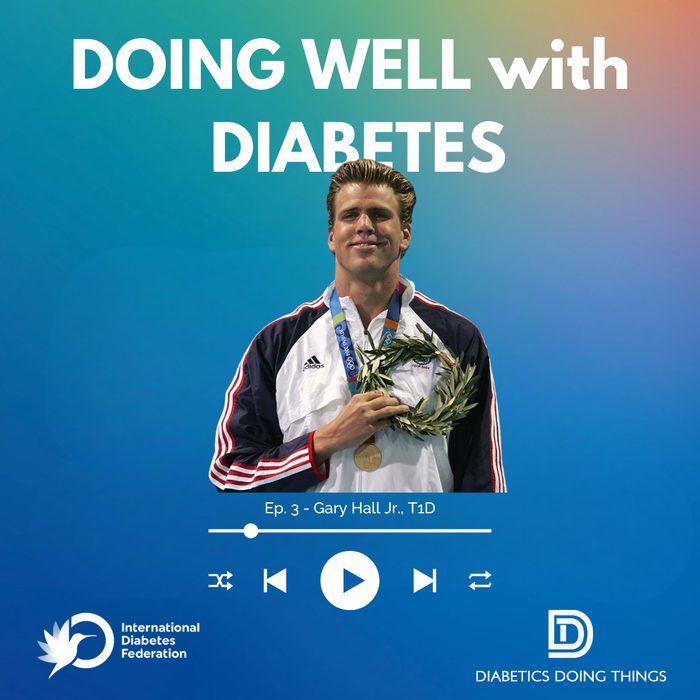

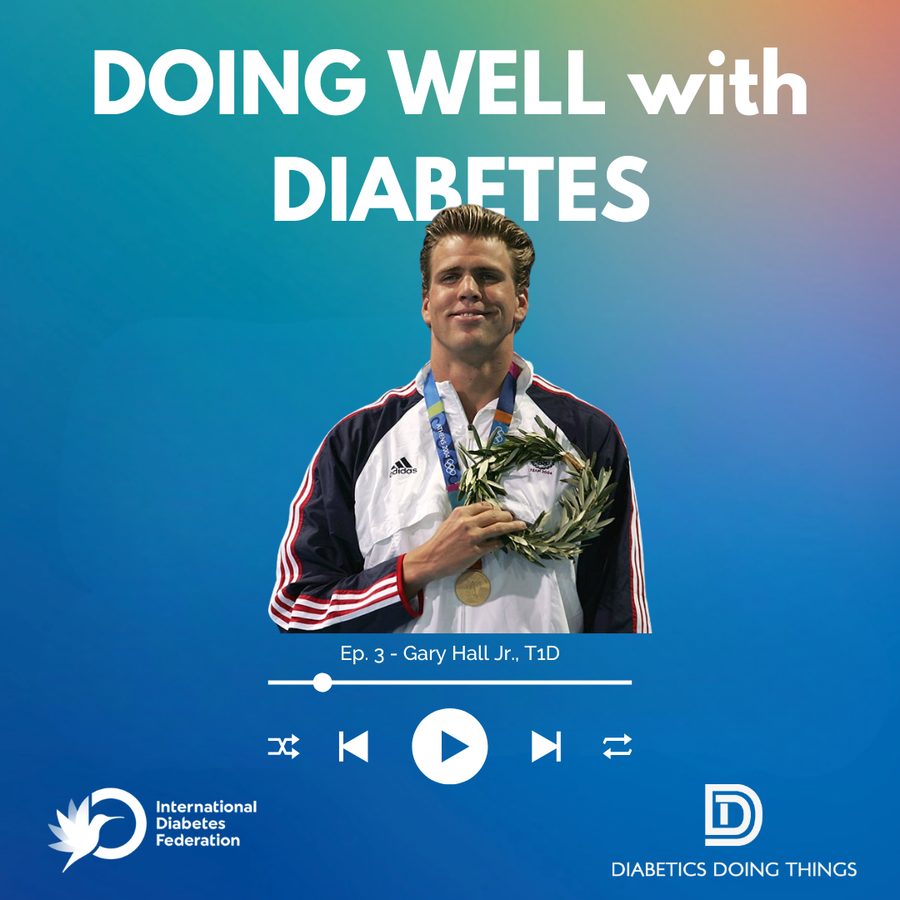
Episode summary
Gary Hall Jr., a 10-time Olympic medalist swimmer, was diagnosed with type 1 diabetes in 1999 as an adult, about a year and a half before the Sydney Olympics. He describes weight loss, thirst, and trembling hands at practice before a diagnosis of diabetic ketoacidosis, a coach who fined him for missed practices, and doctors who told him his swimming career was over. He talks about building a new team, endocrinologist Dr. Ann Peters and coach Mike Bottom, since no one had managed elite swimming and type 1 diabetes together before him. He covers high blood sugar before his first post-diagnosis race, burnout after 25 years with diabetes, using a CGM, following beta cell research, and his view on patient advocacy and drug pricing. He closes with advice for young athletes with diabetes: take care of your diabetes and do the hard work the sport demands.
Key takeaways
- Gary Hall Jr. was diagnosed with type 1 diabetes in 1999, about a year and a half before the Sydney Olympics, after months of weight loss, thirst, and shaking hands that his coach first mistook for skipped practices.
- Gary says he had to find a new coach and a new doctor; he credits endocrinologist Dr. Ann Peters and coach Mike Bottom for building a plan since no athlete had managed diabetes at that level before.
- His blood sugar ran in the high 300s before his first Olympic race after diagnosis; he says he could have managed it better but never used diabetes as an excuse for the outcome.
- Gary says a CGM has been the biggest change in his diabetes management since diagnosis, and he follows beta cell research at a Miami company called iTolerance.
- He tells young athletes with diabetes that the diabetes management is doable day to day, but the sport itself demands serious hard work and sacrifice.
Show notes
Editor’s note: This episode was recorded prior to the 2025 fires that ravaged Los Angeles, including Gary Hall Jr.’s home in the Pacific Palisades: you can donate to his go fund me at this link and support additional efforts to support those affected in Los Angeles here.
Doing Well with Diabetes is a podcast series collaboration between the International Diabetes Federation and the Diabetics Doing Things podcast. During this series, host Rob Howe interviews athletes living with diabetes from around the globe to help inspire the next generation of athletes with diabetes to continue to work towards their dreams while doing well with diabetes.
Doing Well with Diabetes is part of the Kids and Diabetes in Schools program. Diabetics Doing Things has donated all production and promotion in-kind.
In this episode of ‘Doing Well with Diabetes,’ host Rob Howe interviews Gary Hall Jr., the most decorated Olympian with type 1 diabetes. Gary shares his experiences leading up to and following his diagnosis in 1999, discussing the challenges and triumphs of managing diabetes as a top-level athlete.
They delve into the nuances of diabetes management, the importance of perseverance, and the critical support systems that aided Gary in his career. The conversation also addresses broader topics such as advocacy, the role of sports in diabetes management, and the future of diabetes care.
Resources:
Questions this episode answers
When was Gary Hall Jr. diagnosed with type 1 diabetes?
In 1999, about a year and a half before the 2000 Sydney Olympics, after months of weight loss, thirst, and shaky hands during practice that ended in diabetic ketoacidosis.
What device does Gary Hall Jr. use to manage his diabetes today?
He says he wears a continuous glucose monitor and calls it the biggest change in diabetes management since his diagnosis.
Did diabetes affect Gary Hall Jr.'s Olympic performance?
He says his blood sugar was in the high 300s before his first race after diagnosis and that he could have managed it better, but he does not use diabetes as an excuse for how his races turned out.
Who helped Gary Hall Jr. manage diabetes while training for the Olympics?
Endocrinologist Dr. Ann Peters and swim coach Mike Bottom, who worked together to build a plan since there was no existing roadmap for a top athlete with type 1 diabetes at the time.
Full transcript Searchable, with timestamps
Rob Howe: Welcome to Doing Well with Diabetes, a collaboration between the International Diabetes Federation and the Diabetics Doing Things podcast. I'm your host, Rob Howe. Doing Well with Diabetes is a series interviewing athletes living with diabetes from around the globe to help inspire the next generation of athletes with diabetes to continue to work towards their dreams while doing well with diabetes. Doing Well with Diabetes is part of the Kids and Diabetes in Schools program from the International Diabetes Federation and is supported by Sanofi and ISPAD. Diabetics Doing Things has donated all production and promotion in kind. To learn more about the Kids program, visit kids.idf.org. And to hear more from Diabetics Doing Things, visit diabeticsdoingthings.com slash subscribe. Now give it up for our next guest on Doing Well with Diabetes. five-time gold medalist in the Olympic Games. And he lives with type 1 diabetes and has been living with type 1 for 25 years now after being diagnosed as an adult in 1999. So Gary, thank you so much for your time today. You have been on my list of people to interview for many years now. So I'm excited to finally cross this off the list. Thank you for the opportunity and
Gary Hall Jr.: thank you for being here. Yeah, thanks for having me on. Yeah, you've done so many of these. I'm flattered that you finally got hold of me. Yeah, man. I appreciate you making the time. So let's dig into it, man, because I was listening to, one of my ways I prepare for interviews is to listen to other podcast interviews. And a friend of the podcast, Stacey Simms, you and Stacey got to sit down on the floor of a Friends for Life conference a few years ago. So for those who love that interview, be sure to check that, or who haven't heard it, be sure to check it out on Diabetes Connections. But I want to go back really quickly to kind of setting the stage of your diagnosis because it's extremely, you know, I think at that time, especially in 1999, type 1 diabetes was still known largely as juvenile diabetes. And you were diagnosed as an adult. And you mentioned something in that interview with Stacey that you felt like you were really fortunate to be diagnosed as a competitive swimmer and that you already had that background. So let's talk a little bit about that and what do you remember about the days leading up to your diagnosis? I was a top-level swimmer, trained to be one of the best in the world. And putting in a huge amount of work toward that, that started a long time before the diagnosis. Started experiencing the classic symptoms of diabetes. First noticeable in my hands trembling in practice. It was a hypoglycemic response. I experienced thirst and urination and 20 pounds of weight loss, which as a top-level athlete, was noticeable. There was clearly something wrong. I was getting sick. I thought it was a cold or a flu. I'd be bedridden, not eating for a couple days and not eating. help bring my blood sugar levels back down, but I'd feel better. I'd start going to practice and it kind of went in a loop like that for a little while before just devolving into a collapse and kind of blacking out and a diagnosis. So, you know, really, like you said, kind of getting into that loop and ending up basically in full-blown diabetic ketoacidosis.
Rob Howe: And, you know, the, you know, for you as an athlete as well, like really monitoring what you're putting in your body, your training schedule, you know, only about a year prior to the 2000 Olympic games in Sydney, like you were very much dialed into high level competition at that point. So what were those conversations like with you and your coaching staff or your team while you were sick? Cause I imagine you didn't get sick very often before that.
Gary Hall Jr.: No, it was, it was noticeable. And I was training with the coach at Arizona State University at the time. And he started finding me that $500 for every missed practice. And I was like really trying to explain to him that it was really, and that I was continuing it not getting better. And he thought I was just kind of shirking my responsibilities. And yeah, so I, you know, I changed coaches after that. it and I changed good doctors as well because the first few doctors that I spoke to, diagnosed saying a family practitioner and then they passed me along to an endocrinologist. The first question I was able to ask was how is this going to affect my swimming career? I had so much riding on everything. I had everything invested in this pursuit and was told in no uncertain terms that this was the end of my swimming career as I knew it, that some exercise was good, but you could give up on the Olympics. It couldn't be done. And so my network wasn't immediately needed to be built for those two, not just on finding a diabetes team, diabetes management care, but also the swimming team environment. And I was fortunate to identify Dr. Ann Peters as a primary endocrinologist. I could not have done what I did without her. And I had a coach that I had worked with previously by the name of Mike Bottom, who guided the swimming efforts. And those two connected and communicated. And we had to forge uncharted territory. Nobody had really done this. There weren't online forums where I could ask questions and get answers. There were diabetes motivational stories about people who had, you know, gone blind and were able to maintain their job despite going blind. Right. This was supposed to be an uplifting tale. And so there were a few examples of people doing incredible things despite diabetes, but not a whole lot. And so what's been really rewarding is this one, be part of a large group of athletes and people that are not letting diabetes stop them and going on doing remarkable things.
Rob Howe: Well, I want to touch really quickly on finding the confidence not only to change your swim coach that close to an Olympic Games, and also you already had been an Olympian at that point and won medals. So having success at the highest level and then having to make that change, I'm sure, was not an easy process. But then also having to add the diabetes component. And I do want to touch on as well, Dr. Ann Peters, who, you know, you mentioned, and I would say I need to have her on the podcast to talk about. She's sort of the character behind the scenes of many amazing, inspiring stories about athletes with diabetes. And also her work in underrepresented communities is documented on the global scale. But, you know, that really hadn't been done. And I think that you're right. There weren't stories. There weren't podcasts interviewing people. There wasn't a YouTube channel that you could go to and listen to another top athlete talk about how they manage their diabetes because that hadn't been done before. and part of doing well with diabetes is recognizing that in some cases you're going to have to be the first person to do something or achieve something with diabetes that there really is no roadmap there and now there's a lot of similarities but we're still early you know we're only a hundred years into living with diabetes at all much less living well so how did you and your family or your team you know, start from square one, you know, 12 months out from, you know, the highest levels of competition and feel like, you know, you could step into that Olympic Games with confidence.
Gary Hall Jr.: Yeah, there was no certainty, let alone confidence, that it could be done. But I think everybody that was involved agreed that it was worth trying and pushing the limits of where we could take this thing and it wasn't happens and that's how all great things are accomplished is let's try and and and so that's all i had and you know there were parallels in swimming and diabetes management and that you can have the best coach in the world the best strength trainer the best nutritionist and sports psychologist and this network around you but there comes a point where you have to step up on the starting blocks by yourself and do it, you know? And so that's the same with diabetes marriage, man, you can have the best endocrinologist in the world, but if you weren't bolusing after meals and testing blood sugar, when you need to test your blood sugar and make an adjustments on the fly, you're not going to have good results. So it really does come down on us. It comes down to, you know, the patient and, and, and them doing their part. And so I guess, you know, swimming had prepared me in that way and that, you know, some attention to detail was there. And that's what is needed to manage diabetes to a degree that enables us to go out and do whatever we want to do.
Rob Howe: you mentioned and you've been very outspoken about how important sport is just in general and you know i think i'm paraphrasing here but you talked about like if if there was a a pill that could be prescribed they had the same benefits that sport provides to people both from a you know athletic physical mental emotional social type of impact that they would prescribe it to all of their patients and you know so for you you know being in the water by yourself you're right. You can prepare, you can have the best team, you can have the best environment, but you're the one that's got to be, you know, in the water and jump in and do that. So, you know, do you find that that made it easier for you to adjust to owning and taking ownership of that relationship with your diabetes and saying, you know, I've got to be ready when I jump in the water, when I'm on my practices with my nutrition, with the travel, do you find that the sport really flowed into your diabetes management in that way?
Gary Hall Jr.: Yes, to a degree, yes. And when you join a sports team as a kid, they talk about all these great qualities that sport instills, you know, dedication and goal setting, goal attainment and time management and stuff like that. And I was always maybe a little too distracted.
Rob Howe: Yeah, yeah, right. Good. That's false sounds great.
Gary Hall Jr.: So I, I didn't realize how much, you know, that really had made an impression on my character and how I ended up being able to tackle and get my arms around the diabetes diagnosis and manage the disease. And so, you know, it, it takes attention to detail to be successful in the disease, especially diabetes management. But the swimmer trier, you know, if you misjudge or something, finish in swimming, or you don't get the rest that's needed, you might have an off practice or something like that. If you mismanage your diabetes, we've all been in that really scary hypo state where, as you look like you're just kind of looking over the precipice of death. Yeah. Yeah, it can be uncomfortable. It's scary. It's scary when we experience that. And because, especially at first, when I didn't understand the difference between anaerobic exercise and aerobic exercise and the varying effects that it has on your blood sugar levels, there were a trial and error process where there was a lot of error. And it's scary when that happens. And so it's real common, unfortunately, that kids try sport, have those big drops that can happen and are scared off of sport. The parents are like, no, that's too much or something like that. But there is a way to do it. And we just had to find that way.
Rob Howe: it. I want to touch on this for a moment because I think it's really important for listeners, whether they're kids or parents, to hear you and I talking about this, because when you're an athlete with diabetes and you have some sort of level of success, whether, you know, even just, you know, making the team or winning a game or being part of a winning team all the way up to, you know, meddling at the Olympics. Sometimes there's this sort of rose-colored glasses perception that we are doing all this with like perfectly in range blood glucose all the time and no late night wake ups with hypos or anything like that. So for you, you know, you're talking about anaerobic and aerobic exercise. I also experienced that just like the adrenaline and the cortisol and the difference between competition and the difference between practices. So let's just put all our cards on the table here for our listeners and say, you know, there were days for Gary Hall Jr., Olympic medalist that were out of range from a diabetes perspective, but you continued to go forward.
Gary Hall Jr.: Yeah, absolutely. Nobody's perfect. There's no revelation and, and, you know, to do what I did, it wasn't perfect. And I was still learning, you know, it was about a year and a half between when I was diagnosed and when I stepped up on the blocks at the Olympic games. And that was the only the third time that I had swum in a, in a competition since the diagnosis. So I didn't understand fully the spikes phenomenon that comes with the adrenaline and endorphins and the stress. People underestimate that component, that the stress of the Olympic Games is just so overwhelming and the effect that it had on my blood sugar levels. And so even at the Olympic Games, I was still pretty early in on the learning curve. and learned a lot from those races after the Olympic Games and made mistakes as well. So this is life, you know? How do we get a little bit better? How do we get a little bit better, you know? And to be successful in this life, that's the approach that is required.
Rob Howe: So you're talking about only having swum three times going into your second Olympic Games in Sydney, swimming as a global sport at this time, also that you were a big part of the increase in attention and increase in viewership and like this rise of now we look at swimming at the Olympic Games, you know, in the post Michael Phelps kind of era where it's one of the top billings of the entire games globally, you know, from a media perspective, from a conversations perspective. So the stress and the attention is all there. There was like a media frenzy around the Australian team and sort of rivalry there, like with the Olympics on their home turf. So how did you balance your diabetes management? Like how did you go into, you know, your events? And how did you prepare for your first games with diabetes compared to your previous?
Gary Hall Jr.: There are a couple of things that happened of note. One, we fly into the host city shortly before the Olympics start. And I was sick. I got sick going in. And so that scatters blood sugar levels. And I was still reeling that in by the time the first night of competition came round and Dr. Ann Peters can explain it in more scientific terms why that's not a good thing. And how you really can't perform at your best. If your blood sugar, if you've experienced extreme low the night before a competition, the impact that has the next day on, on, on how your body is functioning. But I, that's what was happening. And my blood sugar was, was high in the high three hundreds for that first Olympic race, because I didn't, I was still figuring out the spikes and stuff like that. And so did it affect the outcome? At a race that was, you know, came down to hundreds of a second. I've never used diabetes as an excuse, but I knew that I could have done it better and that I did do it better on the following races and didn't have the same problem that I did at that particular one. And that's no apology or excuse. I'm very proud of that relay performance. It's ranked as Australia's top Olympic moment in all sporting history, not just for the Olympics, but for all Australian sport. And they outswam us. The United States was a second and a half under the old world record. And I swam, you know, the fastest leg and swam a faster leg than the other anchor leg and was out of touch. And you win some and you lose some. And I really have a lot of respect. I always liked those guys long before that relay and, well, longer since. But could I have handled the diabetes management better on that particular time? Yeah, absolutely. And we can only speculate whether it would have made a difference or not.
Rob Howe: I love your approach, though, and your attitude of understanding that there was an opportunity maybe to do better, but also not to fixate on that and be able to learn from it to do better down the road. obviously like was not your your last swim of even that olympics and so something that i think about and i apply almost everything in my life with diabetes or otherwise through a lens of sport because of my time spent playing basketball and i think of like a shooter's mentality where the best shooters in the nba only make four out of ten from three-point range right so that means they're missing six out of every ten but every time they step up to the line they expect to make it. And, you know, I think of the same thing with diabetes is we can, we can really harm ourselves by maybe fixating on perfection as the only outcome versus, you know, having that growth mindset. So for you, is that sort of the way that you and Dr. Peters approached your diabetes management? Hey, we're going to take what happens and learn from it. And how did that come from your time as an athlete? What do you think?
Gary Hall Jr.: yeah and to your point i remember being in the team meeting that night after you know defeated devastating defeat in the relay silver medal and saying something to the effect that you can lose a battle and still win the war right and so if you have a bad day your blood sugars are all over the place you can't beat yourself up over you can't stay fixators on that and give up right And so, yeah, was that mentality part of my approach and Dr. Peter's approach? I think it's the approach of every successful person in the world in and out of sport. It's that you learn from your mistakes. They're less a mistake or not even a mistake. If you do carry something out of that, you've learned and can help make you a better person and not make that same mistake again. Is that a loss? you know, it's going to mitigate you making the same mistake in the future. I don't know. That's growth. That's development. That's the point of life for all of us, not just in diabetes management, but in our character and development of character and soul, that type of stuff.
Rob Howe: I couldn't agree more, man. You're right. That's why we're here, to learn and prove. Nobody starts off on day one being the best they'll ever be, thankfully. I think it flows well into our next question. This series is called Doing Well with Diabetes. And I'd love to talk about maybe outside of competition, how did diabetes show up in your day-to-day life as an athlete? And then how does it show up today? In that interview with Stacey, you talked about, you don't have to be swimming for the Olympic gold to be an athlete. You can be running a 5K in your neighborhood or just going weekend warrior hikes or whatever the case may be. and what steps do you take today to do well you know with your career alongside your diabetes now
Gary Hall Jr.: that you're no longer competing as you know a full-time athlete yeah it's a good question i wish i could boil it down to a soundbite you know what i'm doing but i think that i just hit 25 years with type 1 diabetes. And so burnout is real. And, you know, I have certainly experienced that through those 25 years at certain points. And so it's really important to me, and I love seeing it, you know, and what you're doing and other organizations and advocacy groups out there that are creating these communities of support and connection. And it's so important to me to see that in parallel with advances in research and better management case. So I'm using a CGM. Wouldn't try without it. I mean, this to me has been the biggest game changer in diabetes management since I was diagnosed, for sure. And, you know, I keep hope alive by following the research, particularly the cure-based research and the strides that are being made in that department and following very closely a company out of Miami called iTolerance BetaCell without immune system rejection. So that helps, that helps not give up when you do experience those days. And as an athlete, the 10 Olympic medals, you know, I had days where I didn't feel like getting out of bed, where I didn't feel like going to practice, plenty of them. Right. So we don't have to be, again, perfect, but a super highly motivated person. So much of it is just not giving up and taking those very small steps that will cross a marathon finish.
Rob Howe: yeah i think about the you know how different diabetes is today than when i was first diagnosed it'll be 20 years for me in january of 2025 so and you know just the information as well as like you're saying the research developments and the community knowledge and the spaces that are available to tap in like this where you want to learn about diabetes and sport or athletes you You can tap into this series and learn firsthand. And, you know, even some of my heroes when I was first diagnosed, you know, like yourself, now I get to have conversations with or can communicate with directly thanks to, you know, to other technology like the Internet and its rise and social media being able to connect us all. And so it really is, I think, during those difficult days, like those are those are for sure still happening and happened to me as well. But there's more good things to be excited about now.
Gary Hall Jr.: that no i didn't hear it they're blocking it out it's beaming in the background 202
Rob Howe: across the threshold it got you with that alert yeah i you know we were talking before we hit record about making sure our sugars were stable before the call so it's a 50 point jump since then so it wasn't you know when you're doing something exciting or you care about it there's there's still a little bit of you know adrenaline that comes through that i'm giving myself a shot
Gary Hall Jr.: right now as we're talking this is great not often enough does this happen on on the podcast interviews i'll go ahead and check mine as well just to make sure but look at that i mean it takes less than it takes me to brush my teeth or wash my hands to respond to that make an injection
Rob Howe: and we never even really stopped talking you know like we didn't and and wanted to take it Yeah, I want people to feel comfortable doing this in public, you know, at a dinner table or, you know, even in front of people that you don't know that well. You know, management becomes so much easier once you get over that kind of effort or desire to want to shield this or hide it in some way.
Gary Hall Jr.: Do you have a particular moment that comes to mind where you sort of made the decision to inject anyway or test your glucose anyway? even if you were in a situation that, you know, yeah, I think of my, like on an airplane, giving an injection just with other people around and eyeballs around where I'm just like, you know, I'm not going to go to the airplane restroom. I'm just going to do this right here. Yeah. You know, I'll turn or I'll pull my shirt out a little bit. Like I'll make a little bit of an effort, you know, so that it's not, you know, wanting it in front of everybody. But yeah, I'm injecting in an airplane state where, you know, with two people on either side of me. and yeah that makes the management a lot lot easier you get the results if you can do it that
Rob Howe: way and just get over it you know what other people think you'll be a lot happier in life if you can get over what other people think period i love that i think it kind of flows next into like a sound biteable part of this interview so there's been a lot of attention over the years specifically around Michael Phelps early in his Olympic journey about how much swimmers eat to fuel their bodies. And, you know, I think as athletes with diabetes, there's always that kind of challenge of, am I giving my body enough fuel? Am I giving myself the right insulin ratios and things like that? So how did you and your team work to make sure that you could manage your diabetes alongside of the tremendous demand for carbs and energy that swimmers have?
Gary Hall Jr.: Yeah. There's no getting around the demands of the sport at that level. And I heard through the diabetes channels that there was a guy that could run an ultra marathon after just consuming a glass of half and half or something like that. You know, and I don't know a single Olympic athlete that wasn't fueling themselves with a lot of carbohydrates. So there are always going to be exceptions out there, but it's a requirement of the training that is necessary to compete in a sport at that level. I was training six to eight hours every day, so I was, and yeah, I, I, I had to consume a lot. Now the Phelps piece that everybody remembers, you know, if there's a camera following you and they're a challenge, a highly competitive person to like how much you can eat. Yeah, we could put it down. Like if it becomes a competition on air, then, you know, you're probably eating more than what you would by yourself just after practice, but you still eat a lot. And, and so yeah, you're burning off those calories and you're burning the sugar with the exercise, it's the consistency of training that much every single day and eating that much every single day that made diabetes management very stable. It didn't matter how many carbs I was consuming and I can't count that high. I can't give you a number. I forget what the number was. They gave us 300,000 calories. Yeah. So, you know, if you're doing the same thing every day. You know, my, my, I would, I wasn't requiring a tremendous amount of influence just because I was offsetting with exercise to an extreme degree.
Rob Howe: Going into kind of the advice section, what do you think is the best diabetes advice you've been given? And then let's also think about like what the worst is on the other side of that. What's the best and worst diabetes advice you've been given?
Gary Hall Jr.: I think the worst in advocacy, there was a period of time when a large number of companies in the space were saying you could eat whatever you want, you just bolus for it. Or when pumps came out, they were taking a company line, marketing line or whatever, bro, like that you just unplug your pump for the time that you're exercising and stuff like that. And so I was seeing these stories a lot from kids that had heard this from companies or kind of this delet population that really are, you know, so enthused about, you know, the technology and its benefits. And so I, I don't know. I, I never really personally, I don't know, felt, felt for it, if you will. But seeing the resulting frustrations of people that did try it, that I thought was, you know, also commonly talked about people hate that a cure was promised, you know, in five years or 10 years or whatever that number is, like when they were diagnosed however many years back. That has had adverse effects on, you know, on the diabetes community. And it is, I've seen the results where a lot of people have kind of, you know, lose, lose hope. Burnout comes through in that as well. Yeah. So these are commonly referenced and talked about how frustrations. And so those kind of worst advice, I don't know, like maybe in that direction. And then the best, the best advice, I think we, you know, we're already touching upon it. And that's just not giving up. That's it. That's simple. Not giving up.
Rob Howe: Well, I think it helps to hear from people like you who have achieved success at the highest level to keep the advice that simple. Because there's somebody listening to this that's had a hard day with diabetes today or will have one tomorrow. And, you know, we may be those people in some cases, right? Right. But there's also people who have either just been dealt a diagnosis or who are growing up and living with diabetes and have big dreams for their life. And some of those kids have dreams to be athletes. So for people listening to the episode now, whether they're having a good or a bad diabetes day today or not, but they have a dream to be an athlete or a dream to push whatever their skill set or interests are to the highest level, what advice would you give them?
Gary Hall Jr.: you can do it it takes a lot of hard work i think that's the biggest piece right is that take diabetes away from it the amount of hard work that it takes to be an athlete to be a successful athlete today it is it's such a huge commitment so much sacrifice is involved and so be ready for that that's the biggest piece um you can figure out the diabetes management because you are, you are on, on the daily, you're making adjustments on the fly. You know, you're compensating here or there with juice or extra, uh, shots of insulin. And, and so that is just a, a constant that continues with the training, but be prepared to work, you know, that's, that's what it takes. And, and, and, you know, that's the advice that I give to kids out there that, that want it but if you want it you take care of your diabetes and you work hard you can do it
Rob Howe: because i imagine there were days like you talked about where you didn't want to get out of bed and go to practice or you didn't want to you know get your extra you know whatever training in that had nothing to do with diabetes it was just the grind of competing at the highest level
Gary Hall Jr.: sure the point of the olympic age is higher faster stronger is to test the limits of human capacity What can this human body do? How far can we hurl ourselves towards the finishing line? And so that is really exploring the limits, which is finding the point of failure, right? Because you will eventually reach that. And so that was the objective in practice every day. How far can I push myself before I collapse? And yeah, it could be a lot of fun, but yeah, you're exhausted through that process. And so there's plenty of days where you're just so tired. And yeah, you know, it starts with swinging those feet over the side of the bed in the morning, putting those feet on the ground, strapping on shoes and going out and facing the day, whether you feel like it or not. And you know, there's motivational slogans along the lines. half the thing was just showing up, you know? And yeah, there's, and it's something that this is human nature. There's always going to be a voice somewhere in there in the mix saying, you can't do it. You're not good enough. Here's an excuse. Here's an excuse. Here's an excuse. You know, frustration, anger, whatever, the emotions that accompany this This negative thought that occupies a space in all of our heads, right? Being brave, facing that voice, facing doubters, people who say you can't do it because there's always going to be those people. This is what it takes to be brave, right? A brave person isn't a person that does not experience fear. You're a rated person as a person that can look fear in the face and not let it stop them from doing what they want to do. And I like that. I like that about sport. You see it on display in sport a lot. You see it everywhere else too. But yeah, that's how we have to look at diabetes in the face and say, you're not going to stop. Not today, not tomorrow. I'm not giving up. Yeah.
Rob Howe: I love that. And I mean, for me as an athlete, as a competitor, that resonates with me a ton. And I think, too, it can sound or you could maybe make the quick judgment that's like, oh, that sounds like a serious, almost like pious dedication to the craft when you think of great competitors and their dedication and their discipline. But I think what's really interesting about you specifically is that you manage all that discipline, but you also remembered, especially during competition time, that it's fun and you can see the joy and enthusiasm and energy that you brought to the equation on competition day. and, you know, larger than life kind of personality and, and whether, whether that was, you know, just genuine joy or excitement or, you know, you know, celebration of achieving, you know, pinnacle milestones. Did, was that, did that come from, you know, inside from you and Italy as a person? Did you practice that? Was it a little bit of both? Was that, you know, from your family? And then like, did you, were you able to apply that same type of joy and energy towards diabetes?
Gary Hall Jr.: Yeah, I, I, it was, it was, it was an advantage that the ability, my ability to be present, enjoy the moment, be able to keep the perspective that sport is entertainment and that it should be fun. Sports should be fun. I didn't know that. and it's the fun it's the athletes who have fun that do well it's not the other way around that athletes that do well that have fun and so having that perspective i think lightened the there was overwhelming pressure of this intense competition and and yeah part of it was just being you know a ham and having some fun with it and there was an inside joke you know i i wasn't taking myself furiously out there a lot of people bought it was you know a lot of people i and i hated that people thought it was ego or bravado or you know that it was i thought it was randy macho man savage antics uh which to me as a kid growing up like in the 80s and watching it and your wrestlers trash talking and hour flexing and stuff like that it's just good entertainment and something that swimming needed a dash of uh in marketing terms that you know it can be a very dry boring sport uh dry i haven't used that one before i just um anyway yeah you know i was having fun with it and i started back in high school you know it's a 76 pound kid who was six two you know flexing behind the blocks at a high school meet where i wasn't fast i had no chance of winning this race but i'm back there this gig kid doing muscle posts behind the blocks but before his race is like i was just me it wasn't something that was like curated or anything. It was me or sitting around. And I just kept doing it, you know, and having fun and enjoying the experience. And getting out, it was such a rush. You know, I really loved the adrenaline. I loved, you know, the rates. I loved the rates. You know, I could care less with the crowd and stuff like that. I didn't particularly like the attention or anything like that. I was just living in the moment. And for me, it was just that rush of standing up on the blocks and racing some other swimmer from here to there.
Rob Howe: I want to touch on that a little bit because, you know, you talked earlier about the work and the amount of hard work that it takes. And something that people told me when I was younger and, you know, you only really, I realized, like, I got all the advice that I needed. I just wasn't in a place in my life where I was ready to hear it. But one of the things that people always say is, you know, you've got to love the game. You have to love the craft because, you know, I think looking back on a career from my perspective, if you don't love it, you'll quit. There's plenty of opportunities that suck. And there's plenty of days where you don't want to do it. But like you said, take away the crowd, take away the notoriety. And if you love the work, you love the race, then you can go a long way because, you know, all those doubters or all those fears that come up pale in comparison to your love of the thing. So if you love it, chase it. So I guess like, you know, is that what it all came down to you is that you just love to jump in and race?
Gary Hall Jr.: I mean, yeah, I recognized earlier that I that I love the race. part of it. And so I knew why I was suffering. And you want to talk about an imbalance. Women, I'm going to challenge you. The amount of time that you spend training versus the amount of time that I spent competing. It's not 1%. It's a fraction of 1%, that imbalance. And so I did have loved the training. I was willing to endure horrible abuse to be able to have that moment of being able to step up and race and the ability that I, you know, and my potential that I knew that I had if I put in the work. And, you know, I always kind of envied that there were other sports that you've had a shot at redemption after a 20 second final, you know, or, you know, or the next, the next week. But with the Olympics, it's a quadrennial. You're waiting four years for a second chance. And the likelihood that you get a second chance statistically, you know, of making one Olympic team, it's astronomical. But to make a second Olympic team, The number of people that have a chance to get, you know, a second chance or a shot at defending a pilot. It's very, very small. Well, and then it's, I knew, but in a second. That was what I wanted. That was what I wanted. That's what I loved. And that's what helped me get through those tough days and days where you just didn't enjoy doing it.
Rob Howe: Yeah. I think it's so important, too. We're going to take it back to diabetes here as we kind of round up the final questions. But I think it's a good metaphor. Or, you know, with less than 1% of your swimming output being in competition and the training is the gate towards that. It's like if you want this thing on the other side, you've got to go through this. And I think early on in my life with diabetes, that was how diabetes was framed in relationship to my goals or dreams was put in this work and on the other side is exactly what you're looking for. And I think that made a big difference to me in the way that that was framed early on. And I know not everybody has that experience. Even you didn't have that experience. But, you know, six years after your diagnosis, my team didn't say you can't do something with diabetes. They said, yeah, take care of your diabetes and whatever it is on the other side will be an option for you. And that's so critical. When you're diagnosed, it's just a shell shock, right? Like, I just, you just so overwhelming for families and to have that slight variation of messaging at the, that most critical time is really a huge improvement, a big step in the right direction. And I appreciate all your efforts with what you're doing on the advocacy front. And you know, I've been in that space for a long time and I love to see the passion, right? continuing and spreading that you're able to achieve through this medium and I could have been you know in that advocacy role for 25 years now it's been neat to see the messaging change along the way and and not just the growth of us incredible people doing incredible things in this space but but it's something that I still like to give thought to and you know really talk about well as you know what is the role of a patient advocate today and and not just reflect to to reflect on what we have accomplished in patient advocacy for these 25 years that i've been a part of this a small part of this but what is it now and and where are we going with it and and
Gary Hall Jr.: And I've struggled too because as an Olympic athlete, I really like success, isn't it? I'm success driven, I would say. And so I reflect the same way that I look back on my swimming. If I had a bad race, like what did I do wrong? What could I have done better there? I'm looking at advocacy in a similar way these days. And how did we fail, and I kept myself amongst this, in preventing Big Pharma from raising drug prices 3,000% in that same time? You know, and for all of our accomplishments and breakthroughs in technology, there have been some glaring failures in that regard, I think. And it really has forced me to kind of start examining what this relationship is between Big Pharma and the advocacy community, that they are sponsors of all these advocacy groups and what our obligations are toward fighting the hand that feeds us and speaking out on some of these issues where we could have done a better job as advocates.
Rob Howe: That's, yeah. And, you know, I think there's a couple of different things because I think the same way, you know, I've only, it's now been 20 years. I've been a patient advocate for 10 of those. I think my life has improved dramatically as a result of that. I could have kept living my life with diabetes sort of in obscurity and just doing my own thing. But because I've met people through patient advocacy, I'm in a position now. I think to hopefully make it better down the road and in the future. I do want to get back to, because I feel encouraged. I still feel encouraged by people like you. And even to have this conversation, like going this deep and knowing that you feel the same way gives me hope that we're, that the people who are in the places to make meaningful change in diabetes have the right things in mind.
Gary Hall Jr.: Yes. I'd love to see a patient representation on boards. You're talking about a white privilege and you and I sitting here. Okay, we're at a point now where we are diversifying boards. I would love to see patient representation on the board of these large diabetes companies. And I think that that would be a great starting for him and driving meaningful change and how we co-exist, right? Diabetes industry and diabetes patients. Anyway, more needs to be done. And that's, leading back to the original point, is that, you know, how do we get better? How do we get better? How do we get better? And what needs to be done? And how can we affect change and help the most amount of people and get better outcomes and have better qualities of life for the patient and still maintaining some profits over here in this area, but not at the expense of exploiting the sick. I think there's a way to do both. There's good examples throughout the world of it being done. We're all on this path of how do we get better.
Rob Howe: Yeah. Okay, favorite story, because we're about to get to the rapid fire questions, which I'm excited to dig into, but to close the interview, the long form side, do you have a favorite story about managing diabetes at a swim meet, you know, practice at an Olympic Games. There's been much written and TikTok about the Olympic cafeteria at the Athlete Village. Anything that comes to mind for you?
Gary Hall Jr.: Yeah, diabetes, they're related. I think that the two stories that I tell is that the Goodwill Games in 2001, they were in Australia, had severe low blood sugar coming into my race. Powerade was a meet sponsor. There's buckets of Powerade everywhere. I drank about three Powerades. Walking out to the block and threw up halfway through the race. And I'm the only person to throw up and still place second in international competition. The other one is that my blood sugar was going high in the ready room, the space where they put the eight competitors in the finals of the big event. And I had to give myself a shot in the ready room. and there was no hiding it. I gave myself a shot. I looked up and I saw that some of the competitors were looking at me suspiciously. And so just being a bit of a jackass, I jumped up on top of the chair and started after injecting myself, I started doing what I perceived to be like a steroid rage or something like that. Yeah, you know, have some fun with it. That's management when you can. The opportunity presents itself. You got to do it.
Rob Howe: I love that. I wish I could have seen their face. That's impressive. Okay, cool. Let's get to the rapid fire questions. Are you ready?
Gary Hall Jr.: Yeah.
Rob Howe: Okay, what's your favorite or go-to hypo snack?
Gary Hall Jr.: Kern's juice is the fastest for me. I don't know how they do it, how they pack more sugar or get it into your bloodstream faster. But for me, as soon as I have a sip of that stuff, it's a five-minute rescue rather than a 15 or 20-minute rescue.
Rob Howe: favorite thing to do on an off day or a non-trading day i like sitting on the couch
Gary Hall Jr.: i love it everything's balanced i'm really active i'm really busy it's not too often that i have a
Rob Howe: day off so sometimes i just walk down and watch tv that's that's right who's your favorite athlete are you weighing the ramifications of if you don't if you say the wrong person
Gary Hall Jr.: no i i i don't know i don't know michael jordan okay cool that's a good deep sir
Rob Howe: it's subliminal uh the suggestion with the jersey behind you okay currently listening to
Gary Hall Jr.: This week, I'm going to LCD Soundsystem and David Gilmour playing at the Hollywood Bowl. So, yeah, that's this week's concert lineup for me.
Rob Howe: Big time. Are you a homebody or an adrenaline junkie?
Gary Hall Jr.: I recharge my battery at home privately. So I like doing out once it's recharged, but I have to go back and recharge at home.
Rob Howe: Cats or dogs?
Gary Hall Jr.: Dogs.
Rob Howe: Pump or MDI?
Gary Hall Jr.: And yeah.
Rob Howe: Movies or TV shows?
Gary Hall Jr.: Both.
Rob Howe: Yeah, why choose if you don't have to? All right, well, that is the end of our rapid fire questions. And we're coming up right here on time. Gary Hall Jr., thank you so much for being part of Doing Well with Diabetes, the collaboration between the International Diabetes Federation and Diabetics Doing Things. This has been an extreme privilege for me. When I was diagnosed in 2005, you Google athletes with diabetes. there's a short list of names that came up and you were the top of that list and you're still the top of that list. So shout out to you on that. But this like was a childhood dream like come true
Gary Hall Jr.: today. So thank you so much for your time. Yeah, thanks. I will give you a hard time for waiting until episode 300 and something for having me on. Thanks so much. I do appreciate it. And I really appreciate all the advocacy work and the podcast and spreading the good word. Keep up with it.
Rob Howe: keep it up. Yeah, thank you. And for those who want to connect with you online,
Gary Hall Jr.: is there a best way to do that? I'm on Instagram. I'm not trying to sell anything. You can find me on Instagram or Facebook. That's a rare group to be in, people not selling stuff.
Rob Howe: So yeah, I love it. Doing Well with Diabetes is a series interviewing athletes living with diabetes from around the globe to help inspire the next generation of athletes with diabetes to continue to work towards their dreams while doing well with diabetes. Doing Well with Diabetes is part of the Kids and Diabetes in Schools program from the International Diabetes Federation and is supported by Sanofi and ISPAD. Diabetics Doing Things has donated all production and promotion in kind. To learn more about the Kids program, visit kids.idf.org. And to hear more from Diabetics Doing Things, visit diabeticsdoingthings.com slash subscribe. METALLINETTIBE METALLINETTIBE METALLINETTIBE METALLINETTIBE METALLINETTIBE
About Gary
Gary Hall Jr. is a 10-time Olympic medalist swimmer and, per the show notes, the most decorated Olympian living with type 1 diabetes, diagnosed in 1999 about a year and a half before the Sydney Olympics.