

For the Love of the Game and T1D - Jordan Robinson
Episode summary
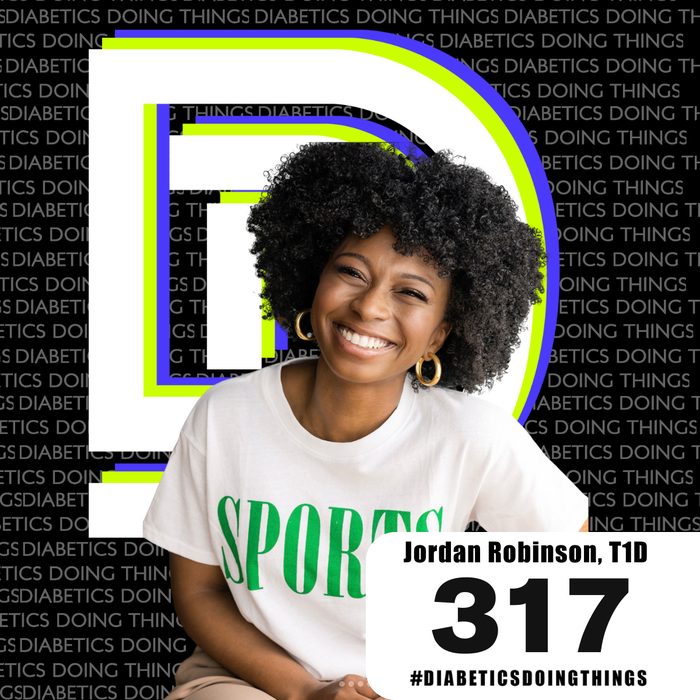
Jordan Robinson played basketball through high school and college without diabetes, then was diagnosed with type 1 at 23, right after graduating from Point Loma. She lost 30 pounds, battled repeated infections, and saw doctor after doctor who never checked her blood sugar. Her sister, a nurse, finally told her to get her finger pricked; her blood sugar read 400 and her A1C was 14. Robinson talks about relearning how to play sports with diabetes, leaning on an uncle and cousin who also have type 1, and rebuilding trust in her own body. The conversation covers her path from a disappointing college basketball career to hosting The Women's Hoop Show on Odyssey, covering the WNBA, Unrivaled, and the Olympics, and writing a book on the history of women's basketball.
Key takeaways
- Jordan Robinson wasn't diagnosed with type 1 diabetes until age 23, after months of doctors giving her antibiotics instead of checking her blood sugar.
- Her sister, a nurse, was the one who told her to get her finger pricked; her blood sugar came back at 400 with an A1C of 14.
- Robinson says trusting her own body became central to managing diabetes after doctors repeatedly dismissed her symptoms.
- She credits her uncle and cousin, both with type 1, for teaching her to carb count and for normalizing diabetes in her family.
- Robinson now hosts The Women's Hoop Show on Odyssey and is writing a book called Court Queens on the history of women's basketball.
Chapters
- Introduction to Jordan Robinson and Diabetes Legends
- Jordan's Diagnosis Story and Early Life with Diabetes
- Family Support and Advocacy in Healthcare
- Trusting Yourself and Your Body
- The Role of Basketball in Jordan's Life
- Love the Game, It Will Love You Back
- The Women's Hoop Show and Future of Women's Basketball
- The Evolution of Women's Basketball
- Personal Growth and Pinch-Me Moments
- Advice for Aspiring Creators
- Embracing Grace and Self-Compassion
- The Joy of Basketball and Community
Show notes
In this episode, Rob interviews Jordan Robinson, a passionate basketball content creator, former collegiate player and advocate for diabetes awareness. Jordan shares her journey of being diagnosed with type 1 diabetes at 23, the challenges she faced in the healthcare system, and the vital support she received from her family. The conversation delves into the importance of trusting oneself, the role of basketball in Jordan's life, and her current work in promoting women's basketball through her show, The Women's Hoop Show. In this engaging conversation, Jordan Robinson and Rob Howe explore the evolution of women's basketball, personal growth, and the importance of self-compassion. They discuss the rise of women's sports, the significance of mentorship, and the challenges faced by aspiring creators in the industry. Jordan shares her pinch-me moments and emphasizes the need for grace in both personal and professional life, especially in the context of living with diabetes. The conversation concludes with a celebration of community and the joy of basketball.
Chapters
00:00 Introduction to Jordan Robinson and Diabetes Legends
01:38 Jordan's Diagnosis Story and Early Life with Diabetes
05:16 Family Support and Advocacy in Healthcare
10:06 Trusting Yourself and Your Body
13:41 The Role of Basketball in Jordan's Life
20:02 Love the Game, It Will Love You Back
27:00 The Women's Hoop Show and Future of Women's Basketball
28:54 The Evolution of Women's Basketball
35:44 Personal Growth and Pinch-Me Moments
39:12 Advice for Aspiring Creators
47:23 Embracing Grace and Self-Compassion
51:11 The Joy of Basketball and Community
Questions this episode answers
When was Jordan Robinson diagnosed with type 1 diabetes?
She was diagnosed at age 23, shortly after graduating college, with a blood sugar of 400 and an A1C of 14.
What does Jordan Robinson do now?
She hosts The Women's Hoop Show on Odyssey, covering the WNBA, and is writing a book called Court Queens about the history of women's basketball.
Did diabetes run in Jordan Robinson's family?
Yes, her uncle and a cousin both have type 1 diabetes, though she says the family rarely discussed it before her own diagnosis.
How did Jordan Robinson's family help her after diagnosis?
Her sister, a nurse, pushed her to get tested, and her uncle and cousin taught her to carb count and manage insulin as she relearned playing basketball with diabetes.
Full transcript Searchable, with timestamps
Rob Howe: Okay, let's talk about our partners who help support this podcast. Today, I'm going to talk about Type 0, which is typezerohealth.com. It is a business run and founded by a person with type 1 diabetes, John Jensen, who's been on this podcast a couple of times. I've been using this product since 2018. I started training for a half marathon, which I ran in Dallas in December 2018. I was looking for a workout supplement, a pre-workout that I could trust not to spike my blood sugar. And so that's what I've got here in my hand is the clean pre-workout. I use the stim-free version, which doesn't have caffeine. And I trust it. And I've used it now. So 2018, it'll be almost seven years for me using this pre-workout. It really works for me because I can drink it late in the day. And most of my basketball leagues that I'm playing in now are late at night. So I might have a game from 7pm, 8pm, 9pm. And I can make sure that I'm able to get up and play and also be able to fall asleep later that night. So I can wake up in the morning, go to work and meet the demands of my life. Type 0 has gone a step further this year in our partnership. And they've launched the Rob Howe stack, which also includes a couple of my other favorite products. Creatine monohydrate, which I've been taking the past two years. And if you want to look up all of the good reasons you should be taking creatine, many scientists and performance coaches say if they could only take one supplement, creatine monohydrate would be the one that they chose. I agree, not only for the physical benefits, but also the mental focus and clarity. It's good for your brain. Do yourself a favor and add creatine monohydrate to your stack. Something I've also added is this clean hydration and electrolytes pack. I'll show you one of the little sticks. These are a lot smaller than some of the leading competitive brands because they just don't have as much salt in them. and there's no additives either. So you're not looking at any carbohydrates, nothing that you need a bolus for. And hydration is an essential part of anyone who has diabetes should be making sure that they're hydrated. And it's not just about drinking water. You need salt, you need magnesium, you need a little bit of the vitamin C and some vitamin B. There's a ton of zinc, selenium, chromium, all of the good electrolytes in this supplement. You mix the stick pack with 16 to 20 ounces of water, helps you get hydrated. I've been doing mine in the beginning of the day to start my day and make sure that I'm hydrated. And it helps with your insulin sensitivity. It helps me have some clarity and make sure that, you know, I'm not a very disciplined hydrator when I'm sitting at my computer all day. It's good to be reminded to make sure that you're getting your hydration in. And it's a little bit more interesting to drink than just water. So you can get these as part of the Rob Howe pack, or you can get them on your own. You can get them on Amazon or directly from typezerohealth.com. And when you order from typezerohealth.com, if you use code ROBHOW, that'll save you 20%. So they've got some great sales going on really regularly. So if you can't save more with a promo that they're running, use code ROBHOW, and you'll always get that 20% off. And your support helps them support the podcast. So if you are a person with diabetes who's looking for a reliable supplements company that's not going to spike your blood sugar, that's going to get you into the mode to be the higher performer that you are, I recommend and I take Type Zero. I wouldn't recommend a product that I don't use myself. So please support typezerohealth.com, code ROBHOW, and search the ROBHOW stack to see which supplements I take and get a good deal on those as well. Okay, let's get to the episode. I also want to take this opportunity to promote Diabetes Legends Basketball Clinics. As you guys know, the last couple of years, we've started to do basketball clinics all throughout the country under our Diabetes Legends Basketball Clinics name. We've gotten to introduce over 100 campers with type 1 diabetes to diabetes legends like Lauren Cox and Gary Forbes and more. We've got three clinics coming up this year, June 7th in Dallas, a very special event at Friends for Life conference on July 11th. And then later in September, we're going to be returning to Denver. If you're looking for more information on the events themselves, you can visit diabeticsdoingthings.com slash events. And if you're interested in learning more about the Diabetes Legends Foundation, which we formed in 2025 to better support our ongoing initiatives and creating opportunities for kids with diabetes to have a great day with diabetes via one of our clinics. Please connect with us and fill out a form on our website, diabeticsdoingthings.com. Here's the thing. Jordan Robinson knows ball. And we're going to talk about diabetes. Jordan Robinson is a freelance journalist and the host of the Women's Hoop Show on Odyssey. We talk about her incredible run covering women's basketball in 2024 and 2025 from covering the Olympics, hosting a podcast with the great Cheryl Swoopes, covering Unrivaled, the NCAA tournament, WNBA draft, and now hosting her own show covering the 2025 WNBA season. We also talk about loving the game and it will love you back. I really resonate with her story as an athlete at Point Loma, where going from being highly touted and celebrated in high school to really struggling to find her place in her role on her team in college and where the game will take you if you stick with it and you continue to love it. We also talk about diabetes and her family, navigating challenging diagnosis issues within the healthcare system, and the importance of listening to your gut when you know something is wrong. Everyone watches women's sports, which means that everyone should know Jordan Robinson. Please enjoy this interview with the great diabetes legend, Jordan Robinson. Hello, and welcome back to another episode of Diabetics Doing Things. We're telling the amazing stories of people with diabetes from all over the world, And occasionally we get to do an interview that's like more just like a conversation and a big, big fun moment for me. As you guys know, I love basketball and I love people with diabetes playing basketball. And today's interview is going to cross all of those borders on both sides. My guest is Jordan Robinson. Jordan, welcome to the show.
Jordan Robinson: Thank you so much for having me, Rob. It's so nice to meet you. Happy to be here.
Rob Howe: I'm just, I love to be able to be, and I'm projecting a little bit of this on you. Like as a podcaster, it's so weird to be in the other seat and in the interview seat. But I often find myself like interviewing back. I just can't help myself sometimes. So I'm looking forward to you like taking over at certain points and steering this conversation.
Jordan Robinson: No, no, no, no. I'm off the clock. I am chatting with a friend and yeah, already clocked in earlier today, interviewing, talking about the W's. So we're chilling. Don't even worry about it.
Rob Howe: I love it. Okay. So this is part of our Diabetes Legends series, which is to support awareness around our diabetes basketball clinics, which are happening around the country. We're adding a third clinic this year as part of Friends for Life conference in Florida. So we're going to our third state and we're going to continue to create awareness and grow the game of basketball and diabetes awareness through the game of basketball. So you are a perfect candidate for this campaign. You have a lot of unique perspective on this. But first, with every interview, we kind of start with your diagnosis story and your early life with diabetes. So tell us a little bit about your first introduction and like early life with diabetes.
Jordan Robinson: Yeah, well, I think it's such a great starting point because I played my whole life with basketball without diabetes. Like that was a huge thing for me that I didn't get diagnosed until 23. So I had already went to college, was playing basketball, was active six days a week in the best shape of my life. And I probably was supposed to be diagnosed like three years earlier, but because I was so active, it pushed it off a little bit. So as soon as I graduated college, my body was just deteriorating. Like I lost 30 pounds. I am a small human. I'm only like 5'5", so it was very noticeable. I kept getting infections. I kept getting yeast infections and I was like addicted to sugar. Like I kept stopping at Sonic and getting like a milkshake and downing sodas and that was never in my diet ever before. And I was like, something is wrong with me. Like there has to be something wrong. But with all the infections, you know, I thought this antibiotic would help. I kept going to an OBGYN and kept thinking that more medicine I took, the better I would feel, which you would think that when you go to a hospital or a doctor. but no one pricked my finger. Not one person. Not one person asked if diabetes was in my family. And then finally, you know, I have this very independent and this nature about myself. So I didn't really tell anyone what I was going through because I just thought I was going to be able to tackle it by myself. You know, I just graduated college. I'm in my own apartment. I'm like, I'm doing this. I'm doing life by myself. I don't want to, you know, call my mom for this thing. But it turned out to be a huge thing. And it was actually my sister who is a nurse. And I finally told her all of my symptoms. And she said, you have diabetes. Like, go back to the turn your car around, go back to the doctor, have them prick your finger. And when they did, it was at 400. So I ended up having an A1C at 14 and I was so sick. I felt horrible. Had to go to the ER, had bags and bags of fluids. I was so dehydrated. I had sores on the sides of my mouth because I was just so thirsty. And then I realized my uncle had type 1 diabetes and that my cousin had type 1 diabetes. We didn't even talk about it really in our family. And it was this whole new world. As a 23-year-old, I feel like I was starting from zero and had to relearn a lot of things, including what that meant playing sports. I don't feel like I was active anymore. That whole, I was scared. I was scared to drop low. I was scared to get hit in my Dexcom. It was just a whole new world of trying to be an athlete as a type 1 diabetic. So yeah, that was my story.
Rob Howe: Well, I want to double click on a couple things because you talked about your sister and I have a sister and I have a brother. So I know like in the family mix, sometimes like when your brother or sister thinks they know something better than you, there's not always like, you're not always the most receptive. So what was that like? Well, she was so sure that you had diabetes. She just knew right off the bat that you were experiencing the symptoms of what sounds like DKA. Did you resist that at all? Or were you just like immediately like, yeah, I need to go, I got to get answers?
Jordan Robinson: No resistance. I know that she knows a lot more about a lot than I do. She is so smart. Now she is a nurse practitioner. And, you know, just being able and she's an ER nurse, too. So just being able to have that knowledge of not knowing what's going to be thrown in your way every single day. And I dropped that on her, like, you know, in the middle of nowhere, and just kind of listed it out. And I think I got to a breaking point. Like, I was so frustrated with my healthcare provider for not really truly listening to me or taking care. Like I was in those hospital rooms and those doctor's offices crying, being like something is wrong. And you guys just keep giving me antibiotics. And like my skin was having a reaction. Like I was just breaking out because, you know, antibiotics just gets rid of everything. Right. And I was better for one day and then it would go right back. And so it was this thing of, you know, in the healthcare system, being a black woman, feeling like people believe you have a higher pain tolerance and just not listening to you. I didn't feel listened to. So finally, I got to this point of saying, no, this is a person I trust. This is my sister. She knows a lot. And I'm going to tell her what's going on. And for her to immediately listen and immediately say, did they prick your finger? And me be like, no, nobody even asked. And that was so, so frustrating. That was a quick wake up call. I had to, my mom was like, nope, you're coming back to Sacramento. I'm taking you to the emergency room. We're going to watch over you for a little bit. And then all of my family, my uncle with type 1, who at that point had lived with it for 30 years. everyone came around to help me prick my finger to help me carb count to figure it out and I didn't feel alone immediately because everyone really came by my side that was going to be my next
Rob Howe: question was like did that you know those conversations within your family with your your other family members with type 1 and just like getting to learn from them you know one of the things I always talk about is making your friend with diabetes and how critical that can be to your growth. And so to have someone in your family that you can reach out to at any time, telling you, hey, I've done this for 30 years and it's going to be okay. How critical was that for you in the beginning? It was so critical. And it was also those tough
Jordan Robinson: conversations. My uncle Gary, he felt personal for this. He felt it was his fault. And that was also really hard for him to say, I did this to you. And I had to say, no, that's not true. we are in this together. Like it was a one in 1000 chance for me to get type 1 diabetes, because neither of my parents have it. So I'm like, it's not your fault. Like it was just destined for me to go through this. But he was able to sit with me and say like, this sucks. But also you can still do everything that you want. And it was a lot of that handholding a lot of him being able to, you know, say we're in this together and reach out when you have questions, or when you just have a really hard day or when you have a really good day, like when you have a success and a win. And we were able to just have that connection and that bond. And the same with my cousin, which is his daughter. And now we just feel like we're just like the cool kids club at Thanksgiving where we're talking about, I got this, I got the G7 and I have the pump and everyone, it feels like a foreign language to everybody else, but it feels like the cool kids club to us.
Rob Howe: Oh, I love that. I don't have anyone else in my family with diabetes. So like experiencing that with friends is kind of the closest thing that I've gotten to it. But like the group mind of carb counting around like a meal is like, that's so key. It's so great.
Jordan Robinson: Yeah, it is.
Rob Howe: Before we move on to talk a little bit more about basketball, which I know is your favorite topic, but is for sure one of mine as well. You talked about not getting the answers that you were looking for and continually bringing up how terrible you were feeling and how you weren't yourself and not getting through. When you finally got that validation from your sister and you went in and your blood sugar was checked and you got that result, did you have a sense of relief and sort of confirmation that you know your body and you know yourself. I think as an athlete, like something that was a real gift for me early on with diabetes was knowing and trusting my body and having been to, you know, great links with my body up until that point. And I think that is a real gift because you know yourself better than anybody. And you're curious about that. You know, when something's not right again, like having to go back and continually advocating for yourself, what did that, did that give you confidence as to like, I really do know what I'm talking about
Jordan Robinson: here? And how did that come up for you? Yeah, I started losing trust in myself. I started losing that trust that has built for 23 years through sports, through just listening to myself and my intuition. And it felt like the doctors were looking at me and saying, No, you're wrong. We're right. Like, even though this is your fifth appointment here, we're still correct. And it started to make me feel like I was going crazy. So it definitely was this validation. But then it was a little bit of anger too because I was very very sick for like six months and they could have pricked my finger in the first appointment and a lot of that could have been avoided my mom was like she worked for Kaiser for 30 years and she was like we're gonna sue like this is horrible they did not treat you right like it it turned to anger really quick as well but once it was settled was this idea of I know myself, I trust myself, and being a diabetic is 99% of that. Listening to your body. That is what I'm going to have to do. So that was my first introduction to that going through and it was horrible and I don't recommend it to anyone. But it was this first initial step of no, you know what you're doing. You know how you feel. Advocate for yourself. make sure that nobody tells you what you're feeling inside of your body and knowing that you have something to compare it to because previous years, this was not this bad. It is horrible at this moment and it could be better. But that feeling of getting insulin inside of my body was like, I feel like I gained superpowers. Talk about it because I remember I'd never,
Rob Howe: something never felt so good. I was like, Hey, whatever that is, give me more of it.
Jordan Robinson: Give me more of that because, wow, it just feels like everything just leveled out. And I felt like myself again. And my family saw it. And I was able to, yeah, just get back to normal Jordan and a new normal. But the trusting yourself and listening to your body is a huge, huge part of it.
Rob Howe: Yeah, I'm so glad you brought that up. Like your body is organizing itself to try to get one thing. It's trying to get that insulin, like your cells, you're flushing out all the bad stuff. Like it just wants that. And when you get it, like the man, the dopamine hit, I was, I remember talking to that nurse who I think in my mind, like was an angel at that point. She was just like, she could not have like bright lights were shining. I was like, yes, whatever that was, like I'm fixed. Like I can go home now, just give me some of that and I'll be, I'll be good. She was like, hold on. Okay. So let's talk a little bit about basketball in your life. We're going to talk about your career with basketball, but you were a college basketball player. Your husband was also a Hooper. I know you guys play still in like recreation leagues, which, you know, I'm coming off at time of recording. My Sunday league won our championship last night. So I'm limping around the house after a doubleheader. But how does basketball show up for you in your life at home? We talk about ball is life, but it really is like for in your career. You know, what's Jordan like as a hooper? Like what's the, how do you got the basketball is behind you? Like, what's that like?
Jordan Robinson: I know. Well, I love that question. How does basketball show up in my life? Because it's everywhere. Like I'm just looking even ahead of me. I have all these basketballs or things that I've done on the walls. Basketball was a huge part of my life growing up. And I just fell in love with the sport, the competition. I really love to win. And I realized that you can put that towards, you know, a sport and you can beat all the boys in your neighborhood. And it was awesome and the best thing ever. And then, you know, college was rough. Like college was nothing like I had imagined. It was horrible. I got no playing time. It was not like the love and basketball story where I was going to steal someone's spot and have this superstar arc. It did not happen for me. And to that point, I kind of didn't want to write about basketball. I wanted to kind of remove myself from it. I didn't know how I was going to still have it a part of my life because college kind of, I don't know, it dimmed my light a little bit from that experience. I was able to, you know, after I graduated, to start writing more about sports, but then also joining those rec leagues after I graduated where there's no coach and there's no playing time and you could just play free like you did when you were a kid. It brought back so much of that joy for me. And I fell back in love with it all over again. And then, you know, you mentioned my husband. When I was dating before, I was like, yeah, you know, I like basketball, but I didn't really make it a huge thing. it's like a huge part of my life. So once my husband and I started dating, and he also liked basketball, I'm like, wait a second, this is perfect. Like I need this in my life. It's like
Rob Howe: at first, it's not on your dating criteria. But if you're really honest about it, it's like it's not going to work if it's not if there's not some hoops alignment there. If you're not, you know, grinding tape on a Monday night, you know what I mean? Yeah, if we're not what did we do just
Jordan Robinson: before we go to bed, we're talking about the transfer portal and NIL and like really breaking down the latest news. And I realized I need that in my life. Like it's, it's such a perfect fit. And then you talk about when we play with each other or against each other, it gets really heated. And I also need that competition in my life as well. But basketball, it's everything. Now to be able to get paid to talk about it and watch it, it really feels like a dream come true. I didn't even know that this was a possibility, honestly, not having the broadcast journalism background, but I just wanted to write for print. I wanted to write in fashion magazines like that was the goal. But it was a different plan. Knowing how to tell stories and knowing from that experience of being an athlete, maybe it's not at a pro level like a WNBA player, but that love for the game can connect you with so many people and people feel that when, when I interview, they know that I love the game and care about it. And so I just want that to shine through, um, through all of my work.
Rob Howe: Well, I want to double click on that too, because something I say, and I guess I'm spoiling this for listeners. I did write a, I wrote a book. I haven't published it or anything yet last year called things I talk about when I talk about basketball, because when I, the thing that I love the most, if I'm really being honest, is hoops. And so any kind of way I can consume it, I think that's one of the reasons why I'm such a big fan of your work. But something that I say, one of the chapters is called love the game, it will love you back. And I was reading that story from your college about your time at Point Loma and like coming from an environment in high school where you were like the top player in the city and one of the really big personalities on campus and like coming from a big high school and coming to college. And, you know, the brakes kind of being put on that, that story, which really resonated with me because like, I'm Mr. Don't Google my stats, because if it wasn't for one of my teammates, like 20 games into my senior year, like really saying that I should play, I, my career would be totally different. And so, and I remember sitting there on the bench, watching players on the other team, like we're beating us. I'm like, I'm better than this person. And could not get through like, and had this one person sitting in there as a coach, like preventing me from doing what I wanted to do and what I felt like and knew that I was really capable of. And, you know, so like coming back to what you were saying, where there really isn't this, if you're not in broadcast journalism, or you're not like an ex superstar who wants to go and be on camera, like there really isn't a pathway to stay in the game outside of maybe coaching or front office. So like coming to like now where you look back, where you've got the women's hoop show on Odyssey, you've had this insane run, you're hosting pods with like Cheryl swoops, you're talking about unrivaled the NCAA tournament WNBA draft like the Olympics and now like your own show like I just look I come back to that like love the game it will love you back and speaking authentically and like with passion and enjoying the journey also like this new media and podcasting and this this world where as a creator you can kind of have this different creative life that didn't really exist five years ago 10 years ago for sure totally so like how do you like make sense of that or like when you think about it up to this point which is like just getting started I think like what you know how do you what would you tell young Jordan? Oh my gosh I would tell her
Jordan Robinson: that exactly what you're saying love the game and it will love you back because this started as a young girl going to Sacramento Monarchs games like a WNBA team who folded when I was you know like in the sixth grade but I went to those games and I still have my Monarchs jersey that was signed by Ticha Penicheiro. And I had the thunder sticks and I got to witness this growth of a league. And I saw that this is a professional avenue. Now, I was convinced I was going to play in the WNBA. Like you couldn't tell me otherwise. I was already practicing my signature. But a little height challenge. So I stopped growing. So that dream kind of stopped. But I realized that there is an avenue to be able to still love the game that I have poured so much into. And I don't think a lot of people talk about enough when you graduate college after playing a sport that you've loved at a high level for so long that there is this mourning period. Like there is grief there that when you graduate and you stop being needed, you stop being celebrated for your athletic accomplishments. And now you have to look at yourself in the mirror and say, what else do I bring? Who am I besides an athlete? And it's an identity crisis, but it's also this moment of really profound growth. And once I sat in that and I had that, you know, moment of falling back in love with the game, I realized I'm not done yet. Like I still have more to give back to a game that gave me my best friends, that gave me a scholarship, that gave me an education, that gave me a competition, all these things that I still use to this day to be in those negotiating rooms to signing contracts, like all of that is because I was an athlete. And I've had people say, yeah, we pretty much only hire former athletes, because we know that dedication, we know what you guys went through. So all of that has helped me to get to this exact moment where I am. And I would go back and tell young Jordan that no one is going to look up your stats, no one is going to care. how many minutes you averaged, how many points that you lost that one game your sophomore year when you felt like your world is crashing down and you call your dad crying because you didn't get in, even though you believed you were the best person on the floor. Like that feels like it matters so much in that moment. But in the grand scheme and in the big perspective, it's just made you stronger and made you find ways and be creative on how else you can be a part of the game. And what college athletics taught me was that I may have not been the best, but I was a captain since my sophomore year. And I was a leader on that team. And I was very coachable. And I was like an assistant coach on that bench. Like I was sitting on the bench, but everyone still valued my opinion. And that made me feel confident that I know ball. And I think that translates to what I do now. And I'm able to talk about the game and be this version of a coach or a talking head that people listen to me and say, all right, she knows what she's talking about. Or at the very least, she loves this game. She loves the WNBA and women's basketball. She's very passionate. And I can never hide it because that genuine love always shines through.
Rob Howe: Love the way you put that because you got to be a little crazy to go through the intense sacrifice and work and practice and travel and like lack of any kind of notoriety or money or anything. You're icing yourself up after games and you're tweaking the ankle and you're running the scout team and you're watching your friends. You're cheering on your friends do what you want. And that can be like, you know, for me, like sitting in the basement with my best friends of all time, who I still talk to every day, knowing that I should be in the game with them. And like they believe it too. But they're like, you know, we're not in control of that. Like that's the that's the part where overcoming adversity. And I think I'm I know I'm getting older because I start to sound like a coach because I advocate so much for just participating in sport. And I think that's where Diabetes Legends clinics come into play, where these are not elite camps. We're not coming in trying to find the next like Lauren Cox or Adam Morrison type prospect. This is here to teach you how to move your body, how to be part of a team, how to thrive in your role, because things don't always work out the way that you want. And nobody knows that better than someone with diabetes. So to have, you know, I think the other thing like sports teaches you how to fail in public and you can't quit afterwards. You know, you like you get a shot to win the game and you miss it or you airball it or you do something embarrassing, you know, or, you know, some other top player comes in and just makes you feel like you've never played before. Being able to pick yourself back up, even just the next play, like that type of resilience, it prepares you for life. So like when you're talking about companies that strategically only hire or they, you know, try to hire ex-athletes, it's because those people know how to work. They know how to fail. They know how to thrive in their role and they know what it's like to do something for the love of the game. And I think that's something where I don't know. That's the shared language for me among athletes is, Hey, like I know you, I've been you like I've tried, I've had to power through something when it wasn't working great. Or like I didn't, I had to spend less time at home during the holidays than the other kids in school because I had to go to practice three times a day. You know, my coach thought holiday break was just extra time for us to work. So like, that's just how it goes. So, you know, I don't know, as you're now in this space where you're loving the game, it's loving you back. You've got the women's hoop show now on the odyssey network talk a little bit about what we can expect from this season as you're covering the w and then i want to dig in a little bit on the w which is like again it's on a historic run we're like really going leaps and bounds now absolutely so yeah
Jordan Robinson: the women's hoop show is kind of a continuation to the show that i've had the past couple seasons called queens of the court where it was me and Cheryl Swoopes and it was in partnership with the WNBA. But this season, we kind of branched off a little bit and have a new name, new look, and I'll have a rotation of co-hosts in there. But it's all hoops. It's women's hoops. When we thought about a name, I was like, I don't want anything to distract from what we're going to be talking about. It is the women's hoop show. And it's conversations about the basketball and the things that are happening in the league and the conversations that are happening that are important and I think that we need to keep talking about. For so many years at those early years in my career when I worked at The Ringer or other places I was yelling from the rooftops that women's basketball and WNBA is important and necessary and needed and now I'm finally like I told you so like this is what I was talking about this is what I'm I've been saying these players have always been super talented and now we're able to give them the platform that we can all see. I'm also working on and finishing up a book called Court Queens, the Rise and Reign of Women's Basketball, where we go back to the 1800s, the beginning of women's basketball to today. And we talk about all those players and those moments in history where there was 15,000 people at a high school championship girls basketball game in Iowa in 1960s. Like there have been people celebrating and cheering for women's basketball for decades. And I'm happy for people finally catching up. Welcome. Welcome to the party.
Rob Howe: It's really amazing. And I think like their star power has always been part of the women's game. You know, and I think about growing up, you know, in the 90s and obviously like the Jordan Bulls and like the NBA at that time and like NBA on NBC. and then like the rise of the W and like Rebecca Lobo and Lisa Leslie and Cheryl Swoopes and like these icons of the game who now are still part like the foundation like it really wasn't that long ago no it wasn't yeah and it's so early and I think it really clicked for me maybe a year or two ago and I think it was an article from the ringer and they were talking about comparing the WNBA's rise to the NBA's and you know just zooming back to the 40s and the 50s which is like comparable in terms of the length of time that the league has been in place. And then you have these like star power moments and you have these kind of signature moments that get more eyeballs on the league. You know, we've got this sort of like bird and magic kind of moment happening now with some of the young stars in the league. And we have, you know, this, these global moments and these March madness moments and these icons who were players and are now coaches or broadcasters are getting involved with the league. Everyone watches women's sports. It's just a fact. And, you know, now the players, I think in the player empowerment era are doubling down on that and are, and are bringing more eyeballs and are bringing more conversation around the league. And it's now like women's basketball is a leading story on the sports center and on the talk shows and on, on first take. And that's something that is just exciting to be around. So, you know, for you, like, are you, have you had any pinch yourself moments recently? Like I could think, you know, going through and I I was just writing down for this interview, like the last run, the last year's run that you've been on, like in these rooms, like having these conversations with these absolute bona fide legends. Like what's what's the biggest pinch yourself moment?
Jordan Robinson: Man, there have been so many. I feel like I pinch myself every day that I get to wake up and talk about basketball or I'm just over this past weekend. I was at my little sister in law's college graduation and I had my phone up as I was watching the game. I was like, sorry, kind of working. And I just like made a joke, but it's true. Like I have to watch basketball for my job. So those are all pinch me moments. I think just having Cheryl Swoopes's phone number in my phone and someone I can just text and say, hey, I love you, you're the best and you are such a great friend. That feels like a pinch me moment because she is an incredible basketball player, four-time champion, three-time MVP, all of those things. But she's also just a great person and a sister friend who I can know dearly. And that has opened doors for so many things. Just being able to say that I know her and we've worked together. But interviewing Candace Parker, being able to just ask her so many questions and talking to legends at WNBA All-Star, you know, seeing Teaspoon at a coffee shop and being able to just be like, you're Teresa Weatherspoon. You are incredible. She's like, I know. And she's like, so soft spoken. But like, these are just incredible people to interview A'ja Wilson, who was one of those future Hall of Famers and one of the legends that, you know, 10, 20 years from now, we're going to be talking about her as among of the greats. Um, so I think the pinch me moment is really being able to see the growth and be a part of that, like to, to be at the beginnings and say, you know, Hey, here's who to watch in the WNBA this season. And it getting like no clicks and people being like, who cares? And, and that whole conversation of the trolls coming after me for writing something like that to now where there are, you know, big money that people are wanting to invest into my show because it's about women's sports. And so much so that Odyssey gave me a whole nother show called She's Got Next, which is all women's sports and not just women's basketball. They want me to talk about the NWSL and hockey and tennis and golf because everyone is talking about the investment piece of women's sports and how you can actually make money if you invest in this because women's sports fans buy stuff. They spend money. And so it's this whole timeline that I have personally been a part of. And that feels like a pinch me moment because I know the beginnings. I've researched the very, very beginnings and to be a part of the now and feel like I'm at the top of my game and feel like the connections that I've made have paid off and, and I built trust in this community has really felt like, I don't know, the icing on the cake. Love the game. It'll love you
Rob Howe: back. I love it. I want to talk quickly about advice and then I want to get to the rapid fire questions for on the diabetes front. Cause I think that's going to be a lot of fun. Yeah. For you, like early days, like you're writing the five players to watch or five themes for the preseason and you're getting the trolls, you know, going to, you know, going to college and not working out exactly right. Like encountering that resistance, encountering that adversity, same thing with your diagnosis experience, like having, believing one thing and being told no, or being told that we don't have the answer. Like what advice, like, how does that flow into advice for whether it's aspiring women's podcasters, women's basketball players, writers, black women with a dream? Like what, what is your experience? Like how does that translate into advice for, others out there who would say like, how do I, how can I find a way to do what I love and,
Jordan Robinson: and, you know, earn a living doing that? I think that what it all boils down to, and we touched on it a little bit earlier, but trust yourself and bet on yourself. You know, when I was at a startup, I was at a nine to five and I hated it. I was like, this is not for me. And I completely bet on myself because I bet on my passion and my skill and everything that I've learned from journalism up until this point and the advice that I had taken from other people. But also just knowing what I can do and that there's not another Jordan Robinson in this world or in this space. And there's so much so many times that, you know, comparison is a thief of joy. I would just compare myself, compare myself. Well, somebody is already talking about women's basketball, so there's not room for one more person. Whereas in the NBA, there's 500,000 billion people talking about the Lakers, just the Lakers. Like there is not that barrier, it feels like, in men's sports. And it doesn't feel like men have that barrier at all. And so once you realize that no one can do what you can do, no one can bring specifically what you can bring to a conversation, whether it's sports, whether it's fashion, whether it's food, like your personal experience is worth a million bucks. Like it's worth so much than anything else that you can learn. I just remember trying to study. I was like, maybe I should go back to school to study specifically sports journalism or to do sports broadcasting. Like I feel behind. That's what I've always felt. I feel so behind. But that idea that because of my college basketball experience, because of my experience in youth sports and falling in love with the game, because of my fandom in the WNBA, all of that is why I'm able to do what I do right now. And that I mean, my journalism degree is key. I won't I won't say that. But it's my personal experience is worth more than gold. And for people who are starting out in podcasting or writing or wanting to be in content creation, and especially if you're a woman, and especially if you're going into women's sports, no one can take that away from you. There is no other you out there. And there is enough room at the table. There's enough room for all of us to talk about women's sports, because if we don't box out, these random dudes will come in and feel like they can be the talking heads and that they know everything. And that is the most annoying part because it's like, wait, wait, we were here. We actually know what's going on. So there is a confidence in that, that I try to uphold and I try to carry. And I surround myself with people who remind me of that. When there are days that I forget or I doubt myself, my husband is right there in my corner being like, these athletes aren't going to take your spot. You are trained to do this or your experience has brought you here. You are made for this moment. So having those people around you to speak life into you is so, so important. But also, you got to be able to speak life into yourself. I love that. I can't add anything else to that.
Rob Howe: That was critical. I think I also would say the same for diabetes. Yeah. People ask me a lot, like, or they feel like there's not room for another voice or it's already all been done. And what you said about, yeah, it all has been done, except you haven't done it. We haven't heard from you about it. So maybe you're the difference and there is space for you. And I think what we're trying to do is, you know, create awareness, create advocacy for people with diabetes. And there's always room for more of that. So gas yourself up a little bit of that, listeners. that's play that on repeat because that was really good stuff okay let's shift to some rapid fire
Jordan Robinson: questions here okay i'm so bad at rapid fire rob just wanting to so am i i'm glad somebody said
Rob Howe: because i love to explain you know this is a podcast we gotta we gotta give context i'm a professional yapper so doing something quick and fast no maybe it's just rapid fire in that like i know the questions ahead of time maybe that's the actual rapid okay so we'll just we'll do that okay favorite low blood sugar hypo snack fruit snacks okay you just like just rip a bag open and go and
Jordan Robinson: go right i'm trying to actually be better at that and use the glucose tablets blah blah blah i so i
Rob Howe: hear the pain in your voice i also am doing that it hurts but i actually i think it works i like
Jordan Robinson: it does work it does work but they're so gross it's such a bummer for like younger me is roasting
Rob Howe: older me right now watching me eat these glucose tabs same it's tough they work they work but fruit
Jordan Robinson: snacks typically that's what's scattered all throughout my house and then a juice box breaking
Rob Howe: case of emergency is sitting by i love it uh favorite thing to do on an off day oh i would say
Jordan Robinson: read i'm in my reading era because i feel like when i was this is also not rapid fire but what But I feel like I was so in the trenches of fact checking and writing a bunch. I didn't get to read for fun. Like I would just read for work. So now I'm like using my library card. I'm reading mysteries and thrillers and it's just fun. So a little escapism.
Rob Howe: I love it. Also, just reading in general. Couldn't recommend it highly enough. It gets you off the phone. Like pick up a paperback and enjoy it. Go outside.
Jordan Robinson: Real books. I can't do the tablet anymore or my Kindle.
Rob Howe: A favorite athlete. This may take a while.
Jordan Robinson: I know. Gosh. I can't pick one. I would just say that aside from Cheryl Swoopes, we already talked about, but Maya Moore is my GOAT. That is like when you think about everything that she did in just eight years in the league, she went to the finals seven times in eight years, won four of them. It's incredible. And I wish we would have saw 80 more years of Maya Moore play basketball. So she's.
Rob Howe: Can we talk about Maya Moore for a minute? Please. So I remember opening up Slam Magazine because Maya Moore and I were the same age. So they had like a, you know, top high school seniors article. You know, the thing at the time and maybe still like that permeates all basketball culture is like when women's basketball players dunk. Like that's sort of like always going to be like what cuts through, you know, at any level. And so there was this like article about Maya Moore dunking. So I'm like, okay, well, I'm going to pencil this person in as someone to like watch for. And then, you know, following her career at UConn and then in the league, I think the last time, so we did some work at recreation at my agency for the wings during the 2019 season.
Jordan Robinson: Okay.
Rob Howe: But prior to that, in the 2018 season, or maybe 2017, rather, we had done a little bit of sponsorship work for them. And we got tickets to the playoff game where they played the Lynx. And watching Maya Moore in that, just like how diabolical her brain was in that game. Like there's just so few athletes of that caliber. Like, you know, you're, you're talking about, you know, the Jordan, the Kobe jaw, the Maya Moore, just eye contact of that game and her imprint on that game defensively, offensively, while the whole scheme was shifted, like all the gravity was in her direction and she held it and like just manipulated it in a way that I've never seen. And I just had no doubt, like no matter where the momentum of the game was going, it was never in doubt what was happening. The Lynx are walking out with that W. And I just had never really seen, you know, that season was a little bit strange for her too. She was, I think, mentally in a transition and obviously has done so many greater things than as great of a player as she is. And probably could still walk in the door and give you 20 and 10. Like she has obviously found a greater calling and is changing lives in so many ways with her advocacy work. And so anyway, the power that she had, I never saw anything else like it from an athlete. And so, yeah, to be in the building that day where she just, you know, and like you said, WNBA fans like buy jerseys, they ride hard for their team. And she was out there snatching souls in that game. And it was diabolical. So hats off to one of the many goats of the women's game of all time.
Jordan Robinson: Yes, of all time. In our book, we're going decade by decade in the Hoops history book. And we're just in the 2010s. It's like the Maya Moore chapter. She owned the whole decade and didn't even play the full decade. This is once in a generation.
Rob Howe: Who else can say that? I know. To live with that level of intention is something to aspire to, for sure.
Jordan Robinson: For sure.
Rob Howe: Okay. We could talk all day about Maya Moore. This is not a Maya Moore podcast. weird diabetes superstition or habit this is something that i this is a newer question on the rapid fire but i'm really interested like everybody does diabetes a little differently
Jordan Robinson: do you have a weird diabetes superstition i try to think of this because i don't know i you know we talked about how i have my uncle my cousin but i don't have a lot of friends or daily reactions weekly reactions anyone with diabetes so i feel like everything i do is so weird i don't know I know that it was really bad, but when I was first diagnosed and was trying to play basketball, it was that fear. Like, I just truly feel like everyone hates to go low. So it's just that fear that I was going to be in the middle of a basketball game and my husband was going to have to flag me down because he has my Dexcom on his phone and be like, you need a sub. That's why you airballed that shot. Go sit down. Go have your snack. so I would just like I would just eat like three bags of fruit snacks and have a juice like open on the side because of that fear that I did not want him to embarrass me during the game
Rob Howe: fear of hypoglycemia is a real thing and I think we don't talk about it enough so I'm glad you
Jordan Robinson: brought it up yeah so that would probably be it but there's probably a billion other things that's
Rob Howe: the first thing that came to mind I love it we we talked really about advice but advice for you What's the number one piece of advice for your younger self?
Jordan Robinson: Number one piece of advice for my younger self, I would say give yourself grace. It's probably the number one thing that my therapist tells me. And if I would have been told it so much younger, it would have helped so many things. I'm very, very hard on myself. I'm a perfectionist. And as an athlete, that's like a part of it, it feels like. But when you get out of being an athlete and you're in the real world, that can just be really hard. and being hard on yourself is not fun. And I envy people who can give themselves grace so easily. And I extend grace so quickly to everyone else besides myself. And so that is something that I wish I would have told younger Jordan. And I'm still telling Jordan at my big age.
Rob Howe: I'm right there with you. I think it is a trait of athletes, especially like when you're really trying to challenge yourself. Sometimes the way you speak to yourself is not, you would never talk that way to somebody else. Right. You know, I had to even, I thought it was good that I was talking to myself rudely and like harshly. And I had to learn and I'm still unlearning and trying to teach myself that grace. So I needed that today. So thank you.
Jordan Robinson: Yeah. And it works with diabetes too. I think there's so much room for negative talk and for sabotage and for finger pointing when it's diabetes. It's all on you. You're correcting, you're carb counting. And when I, my numbers aren't great, it is hard to give myself grace because I can't blame anybody else. Like this is my actions and my doing like, yeah, I had that pizza and I loved it and it was great, but I don't regret it, but we got to live with these numbers on what they're doing now. So there is so much grace throughout so many areas in life that I can give myself more of.
Rob Howe: All right. This one is just for you. I added a six rapid fire question. Your go-to rec league move. what's when you're in the rec league and you get that ball on the wing or you're in transition like what are you going with what is what's in the bag oh man i know i kind of skipped over that question
Jordan Robinson: earlier when you ask who's jordan the hooper hong because i didn't even it feels so long ago i've kind of retired it was a little bit right before i got married and like i was planning for my wedding i was in like three leagues and the ladies are feisty okay the the nails are long they're going after it and i said oh no we have to keep this face very pretty for a wedding day so we're gonna step aside and i didn't really get back into it since then but um i i'm i love a little in and out i'm gonna i'm gonna blow by with the in and out coming down the court i'm a point guard i'm a shooter so an in and out usually is such a good wreck move especially these days a little hezzy and yeah I'm going to the rim I play a lot bigger than I am I feel like in another life I was 6'5 and I was a post player and I was dominant inside so I'm like soaring in for rebounds I have no business being in there at all and my husband who's actually 6'3 is like get out of there they're going to hurt you but it's just a it's a mentality it's a state of mind So that's, that's kind of Jordan the Hooper. I should probably just stay on the perimeter and pass more, but.
Rob Howe: Hey, you know what? There's a lot of bigs out there that could, could use that mentality. That's for sure. I know we've all encountered them.
Jordan Robinson: Oh yeah. And I'm that person. Like if I had their height, I would be a freaking hall of famer at this point. So yeah.
Rob Howe: Hey, still time, still time on the hall of fame. So, you know, I think you're, you're definitely on the right track. It may not be between the lines, but you're definitely on the right track for sure. Jordan, thank you for the time. This was amazing. I feel like I'm sure you have moments where you get off interviews and you're definitely like up after you came in one way and you're up a level and you have definitely taken me up a level today. So thank you so much. And for all you do for people with diabetes as well, I know I've seen you hosting panels and telling your story on Breakthrough T1D. And I know that there are people who you're connecting with who see you in those spaces and are feeling less alone and feeling more like, you know, they can they can do what they want to do and live their dream with diabetes. So thanks so much for that.
Jordan Robinson: Of course. Thank you for having me anytime to mesh both of my favorite things, diabetes hoops. And I love my diabetes basketball and hoops T-shirt that I bought for me because I love it and I rep it with pride. So thank you for all that you do. It is just a breath of fresh air. anytime you pop up on my feed. And yeah, I'm so happy we finally made this connection.
Rob Howe: This was so great. And we're speaking into existence. We're going to have you at a clinic very soon. So once we get out to the West Coast, you're going to be my first call.
Jordan Robinson: Let's do it. Thank you.
About Jordan
Jordan Robinson is a freelance journalist and host of The Women's Hoop Show on Odyssey, covering the WNBA, Unrivaled, and the NCAA tournament. She played college basketball at Point Loma and was diagnosed with type 1 diabetes at 23.