
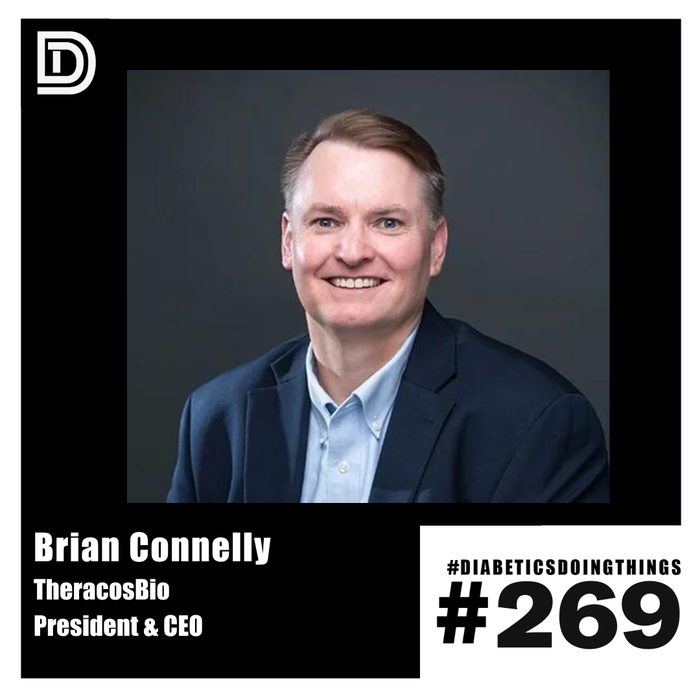
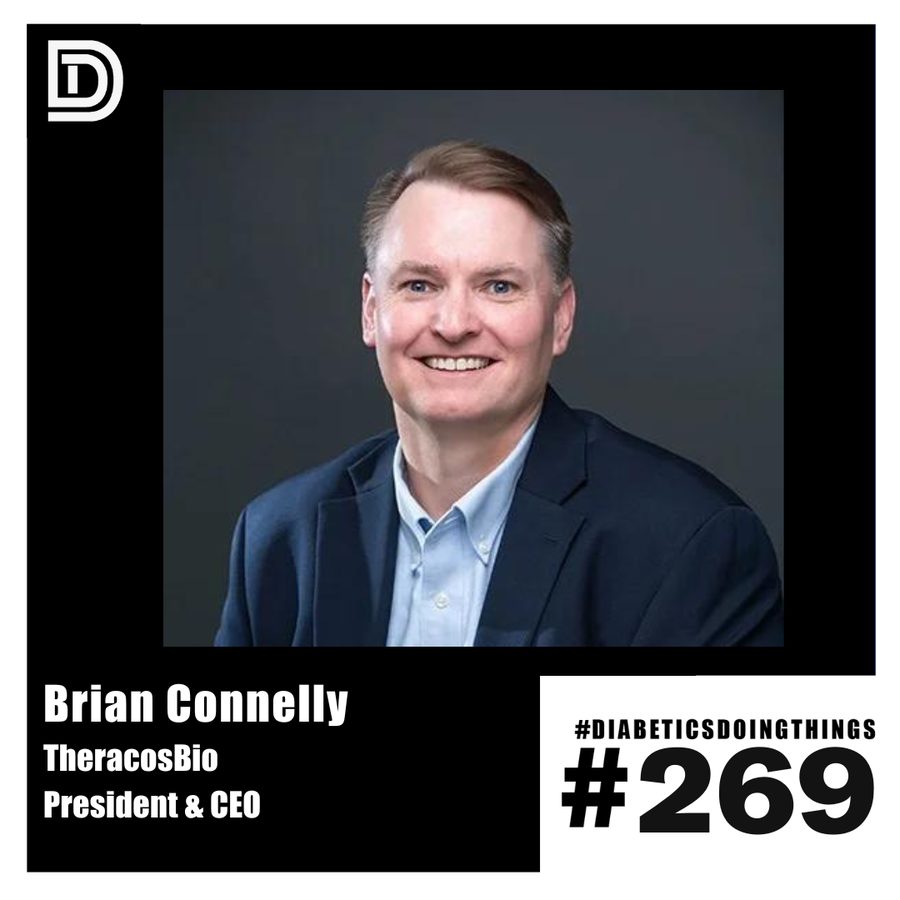
Brian Connelly with TheracosBio

Episode summary
Brian Connelly, a lawyer who has spent his career in biotech and life sciences, talks about his path to TheracosBio. He previously co-founded Increvet, which developed Bexacat, the first oral treatment for feline diabetes, before the Theracos board recruited him. Connelly lives with Crohn's disease, and he connects that experience to his interest in TheracosBio's mission: pricing Brenzavvy, its SGLT2 inhibitor for type 2 diabetes, at about fifty dollars a month through outlets like Cost Plus Drugs. He describes the industry's return-to-inventory problem, where patients abandon prescriptions they cannot afford, and shares emails from patients who switched to Brenzavvy. He also explains why TheracosBio accepts lower profit margins to keep the drug affordable.
Key takeaways
- Brian Connelly says TheracosBio prices Brenzavvy at about $50 a month regardless of insurance, versus several hundred dollars for similar SGLT2 inhibitors.
- Connelly cites a study showing only 12% of insured adults with type 2 diabetes took an SGLT2 inhibitor between 2015 and 2019, and about half who started stopped within a year due to cost.
- Connelly says he has heard the return-to-inventory rate, where patients can't afford a filled prescription, could be as high as 30%.
- Brenzavvy is sold through Mark Cuban's Cost Plus Drugs and regular pharmacies, with transparent pricing showing the markup.
- Connelly, who lives with Crohn's disease, says his own experience with chronic illness and medical costs shaped his decision to join TheracosBio.
Show notes
In this episode of Diabetics Doing Things, Rob interviews Brian Connelly from TheracosBio. Brian shares insights into his background, the mission of Theracos, and their breakthrough SGLT 2 inhibitor, Brenzavvy. The discussion delves into Brian's journey to Theracos, his work in the biotech industry, and the mission of Theracos to provide affordable medications for patients with common diseases, like type 2 diabetes.
Topics discussed:
1. Brian Connelly's background and journey to TheracosBio.
2. The mission of TheracosBio to develop affordable medications for patients with chronic diseases.
3. Introduction to Theracos' breakthrough SGLT 2 inhibitor, Brenzavvy.
4. Challenges in the pharmaceutical industry regarding drug pricing and accessibility.
5. Impact of Brenzavvy on patients with type 2 diabetes, focusing on cost, efficacy, and improved health outcomes.
6. Distribution and accessibility of Brenzavvy through Cost Plus Drugs and traditional pharmacies.
7. The importance of alignment within the organization and the societal impact of providing affordable medications.
8. Addressing public health concerns, adherence rates, and long-term cost savings for patients with chronic conditions.
Here are key takeaways and lessons:
- TheracosBio is dedicated to providing affordable medications, like Brenzavvy, to patients with chronic diseases, such as type 2 diabetes.
- Brenzavvy offers cost-effective treatment options with improved health outcomes for patients.- Share struggles to create awareness and support within the community.
- The company's mission prioritizes patient access and affordability over maximizing profits, emphasizing societal impact and improved public health.
- Collaboration with organizations like Cost Plus Drugs enhances distribution and accessibility of Brenzavvy to a wider patient population.
- The importance of transparency, patient feedback, and physician awareness in promoting the use of affordable medications for chronic conditions.
References:
00:00: Unveiling the Noble Mission of TheracosBio: A Journey from Feline Diabetes to Human Therapeutics
05:59: Finding Purpose Through Chronic Illness and Work: A Journey of Passion and Perseverance
13:02: Revolutionizing Drug Pricing: The Mission of Theracos in Making Medication Accessible
19:37: Exploring the High Cost of Diabetes Medication and Solutions
24:28: Addressing Societal Impact and Accessibility in Diabetes Treatment
29:16: Challenges and Misconceptions in the Pharmaceutical Industry
33:45: Building a Mission-Driven Company: The Journey of Theracos CEO
37:57: Revolutionizing Access to Medication: The Success Story of Brenzavvy
40:58: Unveiling Brenzavvy: The Affordable and Effective SGLT 2 Inhibitor for Type 2 Diabetes
45:06: Revolutionizing Healthcare with Low Cost Drugs: A Story of Passion and Purpose
Questions this episode answers
What is Brenzavvy and who makes it?
Brenzavvy is an SGLT2 inhibitor for type 2 diabetes made by TheracosBio, where Brian Connelly works.
How much does Brenzavvy cost?
Brian Connelly says Brenzavvy costs about $50 or less a month regardless of insurance, available through Mark Cuban's Cost Plus Drugs and regular pharmacies.
Why do people stop taking SGLT2 inhibitors?
Connelly cites a study showing about half of patients who start an SGLT2 inhibitor stop within a year because of high cost and insurance barriers.
Does Brian Connelly have diabetes?
No. Connelly does not have diabetes, but he lives with Crohn's disease, which he says shaped his interest in working on treatments for chronic illness.
Full transcript Searchable, with timestamps
Rob Howe: Hello and welcome back to another episode of Diabetics Doing Things. We are telling the amazing stories of people with diabetes from all over the world. And very special episode for you guys today. I know we've had pharma and med tech CEOs on the podcast in the past, but this one I think you guys are going to be particularly interested in. We've got Brian Connelly from TheracosBio calling in, and he is going to talk to us today a little bit about his background as well as introducing us to Theracos and their breakthrough SGLT2 inhibitor product. that is hitting the market, Brenzavvy. So Brian, welcome to the show. Thanks for having me, Rob. Great to have you here. Just for our listeners, just to kind of humanize you a little bit, I think that's one of the things that we really try to do when our executives come on is just connect to the person behind the title. So let's talk a little bit about you and your background and how you landed at Theracos.
Brian Connelly: Sure. Okay. Well, I'm a lawyer by training. Well, I'm 53. I'm a lawyer by training. I have been working in and out of industry in biotech and life sciences for the bulk of my career. I've been in-house lawyer at a public company, business development at a public company. I've started companies, some more successful than others. And when the folks at Theracos called me about joining Theracos and given the mission that Theracos has, I was really excited about it. I actually have to be honest. At first, I was not, I told him I was not so sure about it. And then I was having dinner with a really good friend. And he sort of said, wait a minute, you have an opportunity to work with a company that is doing something noble for once and trying to, is not actually going to try to gouge everybody. And you're going to say no, like, wake up. So I called back and said, yeah, maybe I should be more excited about this opportunity. So that's sort of the progression of how I landed here. And I've been at Theracos coming up on eight months now, and it's been great.
Rob Howe: That's awesome. And we're definitely going to dig into a little bit of that noble mission for Theracos compared to some of the other competitors. But one thing about your background, as I was researching you, that I think we've got to bring up because I think our listeners are really going to like it. You were working prior to Theracos on an oral medication for feline diabetes, so for cats with diabetes. So I don't want to spend too much time on that rabbit trail, but I had to ask you about it.
Brian Connelly: Yeah. So I've started a couple of companies, you know, one crashed and burned. I always like feel like I should not gloss over that because it's important. Like failures are okay. And it crashed and it burned. But with a group of people, we started a company called Increvet that, that used the same compound, Bexagliflozin, to develop the first, it was the first oral treatment for feline diabetes prior to, the product name was Bexacat. Prior to Bexacat being approved, there was only insulin therapy for feline diabetes. And we had in-licensed that from Theracos, that technology from Theracos, which is how we had, we're using the same compound. And that's also how I knew the board and investors of Theracos. And Bexacat was eventually sold, the product was eventually sold to Elanco Pharmaceuticals, which has brought it to market and it's doing well. And it's kind of great to see a product that you saw from beginning to end and get approval and be out there in the market. Every time I drive by a veterinary clinic, I want to run in and ask them like, hey, are you using Bexacat? I mean, I resist the urge to do that, but it's like you get really invested in it. It's very exciting. And so that's what led me to being at Theracos. I knew the compound. I knew the folks. I knew the investors. I knew the board. So they reached out about, I don't know, maybe it was like 18 months after the sale of Increvet, they reached out about the Theracos opportunity. Wait, I have to, I have to cut in really quick. That is an incredible story, but also I find that we work in areas that we're very passionate about. So are you passionate about cats with diabetes, maybe? Is that part of the story? Or was it just an interesting venture? And you were like, this seems cool. And you tried it out. So I'm going to answer that. I will answer that question. I'm going to take a little bit of a divergence, but I'll answer the question. And the preview is I'm not a cat person, but sorry, I'm much more of a dog person. And no, early in my career, actually my introduction to the world of biotech was through a veterinary pharmaceutical or a veterinary diagnostics company that also had a pharmaceutical division. So I knew the veterinary market pretty well through that work. I worked in the business development role for that company. It's called IDEXX Laboratories. And I worked in a business development role. I got to know the market really well, had a lot of good friends and colleagues from that experience and teamed up with a really good friend and colleague from my IDEX days to form Increvet. And so that's, so I didn't really, I can't say I had a passion for feline diabetes. I, I like much more of a dog person. I did have a passion for working with people I like and people I trust and people I think are interesting and exciting. With regard to my interest in things like, you know, novel therapeutics, I actually have a long history with, I don't have type 2 diabetes. I don't have type 1 diabetes, but I have Crohn's disease, if you know what that is. And so I spent a lot of my youth in and out of hospitals being treated for a chronic illness. So when, whether it's on the veterinary side or on the human side, like anytime there is a chronic disease that there could be something with my legal training, I'm not a scientist by any stretch. Although I'd like to feel like my high school science teachers would be really impressed with the level of knowledge I've absorbed in my career and can sort of synthesize and regurgitate in a coherent way. But my experience having a chronic illness sort of makes me interested in working in that space. And so that's sort of the nexus for me, not as much working that I love cats. It's just that it was a chance to do something that had never been done before. I would be the first in its class. It was first in its class, oral therapeutic for feline diabetes. And whether it's cats or humans, doing something that alleviates
Rob Howe: chronic illness, it speaks to me. That perspective, I think is super important and also unique because, you know, I think for us as well, for myself and Eritrea, we wouldn't have this podcast if not for the chronic illness of diabetes that we live with and the desire to connect with other people and to learn. So it really is interesting to me how life with a chronic illness can kind of point you in directions that maybe you wouldn't have chosen otherwise and give you a perspective that, you know, of a patient, whether you're living with the exact same chronic illness or not, understanding, you know, living with and managing and having to solve for a disease that doesn't go away and, you know, is difficult day in and day out, I think offers a unique perspective, especially on the, you know, business side and, you know, leadership side. It does. I mean, work is hard.
Brian Connelly: I tell us I have two college age kids and I say they call it hard work for a reason. It's really hard. And I'm not a big believer in telling people, like, if you find your passion, you'll never work a day in your life, because I think that's misleading, because work just is hard. But if you're invested in what you're doing, the hard work, at least you understand why you're doing it. And it fits in where the puzzle pieces fit, rather than just working hard at something that doesn't speak to you at all. I think, you know, rather than trying to find your passion, I just like, you know, find something that actually speaks to you. It's not going to make you make you love every moment of it, but at least makes it easier when you're up at two in
Rob Howe: the morning doing work. A hundred percent agree. And that's something I actually talk a lot to athletes about with my background in basketball is, you know, I love basketball. I loved it every day, but I did not love all the work that it took to play at a high level. And I think that's where, you know, that, that phrase, if you love what you do, you'll never work a day in your life. I understand the sentiment, but in practice, in reality, it is a lot of work and it's a lot of answering that bell even when you don't want to. And I think that's something that really reinforces how much you do love it and how rooted you are in that cause internally, because you got to get out of bed and you got to answer the bell every day, day in and day out. Like you said, whether it's two o'clock in the morning or five o'clock in the morning, working later up early, you got to find something that can power your ability to answer the bell. Yeah, I don't want to get too far afield,
Brian Connelly: but I will say I'm one of these people who I feel very lucky. I have a phenomenal wife, and she brings something to the table that I learned from that I don't have. And she has, she's incredibly disciplined. And she said something to me. I don't think it's novel thought, but once she said it, it sort of resonated with me. So I now say it to my kids all the time, which is the only difference between people who like are motivated to do, like who have discipline to do the things they love is it's not easy. They just do it. Like they don't make excuses and they just do it. It's like when you're talking about basketball, it's not easy to practice basketball or to become an elite athlete. you're just you make a decision that you want it more than you want to sit on sit at home or go out with friends or drink beer or whatever that you just do it and I think that's I think that's really important because going back to the original point like it doesn't become easy but you just you want to do it because you you can you sort of have that goal in mind you know again not to get too far afield but one thing one of the reasons why I'm excited about meeting with you and like the idea of your podcast is, you know, when I was first diagnosed with Crohn's disease, there wasn't a lot, like it wasn't talked about the way it is now. Like it, you know, given the nature of the disease and gastrointestinal issues, like people didn't really talk about it. They do now, which I think is healthy. But I remember there was a professional hockey player named Kevin Dineen, and he talked about his Crohn's disease. And like, I was a hockey player as a kid. And so, you know, that was great for me that someone who was an NHL player would say, well, I have Crohn's disease. And it showed that like, okay, this is not going to be, I can still have a full and complete life with this chronic illness and do all the things I want to do. And it motivated me to just get out there and do it rather than like feel bad that I had this chronic illness. It was just like, okay, I have a chronic illness. Like my other friend might have a learning disability. My other friend might have type 1 diabetes. We're all just going to do it because no one gets the perfect life. We're just going to get it done. And I like the fact that people talk about these things now, because I do think it's meaningful to show that you can get diagnosed with something and it doesn't have to be the life-changing event
Rob Howe: you may think it is at first instance. That's well said. I agree. I remember people getting diagnosed with Crohn's disease in high school. And like you said, there being a little bit of a stigma around, you know, just discussing gastrointestinal things, especially in high school. It's like very difficult, like one of the more difficult things to talk about. But to your point, I just want to mirror back to you like that. That's what happened for me. Adam Morrison in 2005 was a co-national player of the year in the NCAA. And ESPN did a feature on him and his mom treating his diabetes behind the bench during the games. And for 15 year old Rob that like gave me a light bulb of like, Oh, like this, this guy's dealing with it too. And, you know, that was a choice that they made to make that public. And, you know, when you are vulnerable and you're willing to share those uncomfortable things, I think I'm sure your, your NHL player would say the same thing. What comes back to you are all these other people who can relate to that and really attach onto your story. And that, I think the road to excellence is often a lonely one. Like you said, sacrificing friends and family and, and, you know, fun times to go be disciplined and make sacrifices. So when you're able to get a community of people around you who are cheering for you, not just for your achievements, but also for all the obstacles that you're overcoming and really relate to that, I think is super, super powerful. So hopefully somebody's listening to this and I say this all the time, but your story matters. Even if you don't think, even if you're not an NHL player or you're not a college athlete or whatever the case is, somebody somewhere is gonna see that story and really latch onto it. So-
Brian Connelly: I was about to say that. I was about to say, it's really cool that you guys both found people to resonate with. And I think Rob knows this, but the reason I ended up here was because I didn't see someone like me. So I was like, so to everyone listening, if you don't see someone like you, you can also become that person for others. I think that's a really important thing to put out there is like, if you don't see someone like you, write the book that you need to read, like put that out for that energy that you want other people to get.
Rob Howe: Because I think that's also important. Yeah, you got to be the change. You got to be that drill blazer, which is a great transition, a great transition to talking about Theracos because, you know, I wanted to talk a little bit about the, the why behind what you do and what Theracos does, because you're working for a biopharma brand with a mission of providing access to new medications for patients with common diseases. And so, you know, when you are, you're thinking about that type of mission and you were evaluating the decision to go join Theracos, like, what did that mean for you to have the opportunity to do that after that conversation with your friend where they were like, Hey, like, what do you mean? You're, you're about to go have an opportunity that not too many people have at a company that's very different. You know, how did you work that out?
Brian Connelly: Yeah. So just going back, I had, I was involved in some other projects and when the board of Theracos reached out and asked me if I was interested in, in joining the company, I thought, well, I don't have any experience. I've worked in biotech a long time, but I didn't have an experience with a commercial launch. I didn't know I didn't know a heck of a lot about the type 2 diabetes space I mean I knew enough from from other projects but you know I thought boy I really should know a lot more than this and this this great friend his name's Joe Martillo he actually we've hired him he's working for Theracos now he has worked in biotech for his whole career so it just so happened I was with him the night I got the call and he's a great friend and he did he said you're getting that's noble. And I remember the word was like such a unique word choice. He looked and said, that's noble. And I was like, it is actually noble. And it's not my idea. I can't take credit for it. I'm just lucky that they allowed me to sit here and implement it. But the Theracos mission, and I'll tell you more about the background of Theracos, but the mission is truly to develop drugs that in these chronic areas and areas where there may be other therapeutics, but they are out of reach or they're priced so high that uninsured folks aren't able to get them at it, you know, without making these Hobson's choices of, you know, food versus medicine or rent versus medicine. And I want to come back to that too, because I've loved it. Like, it's interesting. One of the great things about my job is people will reach out to me and I actually get to call them say like, Oh, I want to hear about your story. But you know, I don't think I'm a cynic by nature, but even I was a little bit like, really? Like the board and the stockholders are completely bought into this mission where they're not going to maximize their ROI. And they're going to price this at $1.30 a tablet. And I've been around enough to know like, Oh, that margin is so low. Like, is this really, or is this some sort of scam? And like when I was, you know, it is legit and in a way that is stunning in our modern world that there are folks who are saying, I think I could get more money out of the Theracos and I'm choosing not to, because I want this drug to be available and affordable for anyone who needs it. That is truly the mission of the company. There is no, oh, but six months from now, we'll jack prices or a year from now, you know, we're going to come out with some follow on product that where we jack prices that this is the, this is the mission of third cost. There's no, but, you know, there's no like other shooter drop.
Rob Howe: Well, I love that you approach this, the, the decision with a little bit of healthy paranoia or productive paranoia, as, as I would say, or even a little healthy skepticism, because I think a lot of our patients, you know, especially when we've had other biotech and pharma CEOs in the past is it's like, okay, well, but yeah, in six months when someone else comes in and there's an opportunity, they're going to use that chance to maximize profits. Or how can, I think the question maybe from our audience would be, all right, you guys are pricing this drug low today. Your mission is to make the drugs more accessible, but how can you meet your business needs and still provide appropriate pricing to patients when for so many years in the industry, the standard is really the opposite. And the patient experience is really with the
Brian Connelly: opposite. How do we do it? Is that like, yeah, I will just also say the patient experience is, is, and I, you know, there's been some learning on this for me, like this time of year, everyone has their deductible reset. So, you know, a drug that in December they may have hit their deductible, not have to pay for it. Now all of a sudden they're paying full price for it. It's like, there's like all to the consumer, to the patient, there's this variable pricing. Ours is not. Like, you know, if you want it, it's $50 or less a month, and it'll be $50 or less a month, regardless of what your deductible is. How do we do it? We do it because we are accepting a lower margin on every tablet we sell because our investors and are truly committed to doing that and understanding that. Well, I think they understand two things. We are trying to forge a new path and a new way of selling drugs. So we're not going through PBMs. We're not covered by payers. We are focused on anyone who wants a drug can come and pay us for it. Everyone gets the same price. And going through like Mark Cuban's Cost Plus Drugs, we're trying to keep their transparency there. So it's not like we're selling this for $4 and the Cuban selling it, that there's full transparency. transparency and so the hope is that that will spur a change in the market or at least be a catalyst for that and we're seeing i don't think we were the catalyst for this but we're seeing changes in the market with say cvs saying that you know in 2026 they're going to go to a similar model as cost plus drugs people wanting more transparency and there being a move towards that you see that with the ira the inflation reduction act price negotiations an acknowledgement that with two SGLT2 inhibitors on that first list and acknowledgement that they're an important drug treating a chronic disease that a lot of Americans suffer from and that it should be more affordable. And we're sort of saying like, yeah, welcome to the party because that's what we're doing. We don't need the government to tell us to do it. We don't need an act of Congress. We're doing it on our own initiative and kind of our own dime in the sense that we're sacrificing a return on investment by doing it this way.
Rob Howe: Right. Well, it's interesting too, because as those regulations change, you guys are already set up to operate within that new structure. So, you know, you won't have to really make, it won't be an adjustment right on the, on the business side. But I want, I want to talk a little bit about this and Eritrea actually worked on an article about Brenzavvy last year. So I want to, I want to give her a chance to kind of talk a little bit about some of the data around people with type 2 diabetes and using SGLT2 inhibitors, but then also dropping off because of the high percentage of, or like because of the high cost. So Eritrea, I know you have this
Eritrea: stat from that. Yeah. So I actually, very exciting stuff, like last year in January, probably around this time, I think it was like January 20th-ish, is when we heard about Brenzavvy. And it was really cool because at the time I already knew about Mark Cuban. I remember because everyone was like, is it a nonprofit? What is it? And I was like, it's a public benefit company. Rob Howe taught me that. So I thought it was really interesting that Brenzavvy was available through that market and that there's a lot of other drugs that people with diabetes take that are really similar to it, but they drop off of taking it. The study that was funded within this article that we like wrote about said that it showed that from 2015 to 2019, only 12% of insured adults with type 2 diabetes in the US took an SGLT2 inhibitor. And that among those who start about 50% stop treatment within a year due to high cost and insurance barriers, which is insane. And just to give like an example. So one of the other drugs that's very similar, that's within the same drug class, it started on the site for 244 for 30 tablets, like at cost plus this one, but for regular people, if you buy it at a pharmacy, it's $676 for 30 pills. Girl, Is this, are we saving for a Birkin bag? Like this is so expensive. It's crazy. And in that right there, what you just said encapsulates how really out of whack this market has become. Because I guarantee, I know the company you're talking about, we won't name them, but I guarantee you they're making really good money at the, whatever it was, 250 for a 30 count supply. So this, you know, 600 plus for a 30 count supply to the insurer. I mean, it's crazy. This variable pricing for different outlets is crazy. The amount charged for drugs that, you know, drugs, it costs money to make drugs. I mean, I think when people talk about affordability, I'm very sympathetic to that. But also, we can't go to affordability in a way that inhibits innovation. and so i'm you know but the point i'm getting at is when we get to year like 18 or 19 of the patent life on these products and they're still charging that amount of money the argument that they haven't seen a sufficient return on their the capital they invested in rnds sort of flies out the window so i understand this for a while and but after afterwards it just seems like it's price gouging. The statistic about, you know, about half of people abandoning treatment on SGLT2 inhibitors is one that kind of speaks to our mission. I mean, that's what we're trying to address is that when, if folks can't need to be on an SGLT2 inhibitor or should be on an SGLT2 inhibitor and they can't afford it, that's sort of where we think that's the gap we feel we're filling. The other interesting statistic is, and I don't have a firm number on this, I've been told that it could be as high as 30%. But this metric, different companies call it different things, but I'll call it return to inventory right now. This metric where you go to your doctor, your doctor says you should be on an SGLT2 inhibitor. They prescribe you a drug. It gets called into your local pharmacy. Your local pharmacy sends you a text message and says, your prescription is ready, come on down and pick it up. And then they say, well, that's going to It costs you $300. And you say, I can't afford that. And then the pharmacy has to put the pills back in their inventory. So it's returned to inventory that I've heard it is as high as 30%. So 30% of people go to pick up their prescriptions, the prescription that the doctor said that they need, and they go to buy it and they say, I can't afford it. Put it back in inventory. I'm going to, that to me is a shocking number. And that's why we're here. You know, a lot of these companies will have these patient assistance programs, these PAPs. So you'll see them in the commercials that say like, if you need this drug and you can't afford it, like reach out to us here. It's our patient, patient assistance program. And, and I joke around that we don't, because a few people have asked what's the patient assistance program at Theracos and I joke, but it's true. I say the patient assistance program is Theracos Bio that our entire company is priced at the same level. Most companies would put their patient assistance program price at.
Rob Howe: So let's talk about it because it's, you know, compared to the number that Eritrea put out of the competitive product, which was $250 through cost plus $600 over the counter at another pharmacy. In that same class, Brenzavvy is available for under $50, I think is that. Plus shipping.
Brian Connelly: Yeah, around $50, yep.
Rob Howe: So, you know, when you're thinking about impact and, you know, the, with the return to inventory rates being 30%, with the, you know, patients in the study who more than half of them over the course of a year stopped taking the drugs because of, because of cost. When you think of the impact on patients with diabetes, as Brenzavvy gains awareness and market share, you know, what are you guys internally at Theracos talking about that, that sort of impact and that sort of,
Brian Connelly: that's groundswell of momentum? Well, I think that the societal impact can be enormous. So setting aside that I hope what we are doing will at a minimum allow others to say, oh, that's a path we could follow or allow other pharmaceutical companies, whether they be large or small, to say, well, let's try that model because we're making enough money on this other other stuff that we can do this for important drugs that treat chronic diseases. So I hope we're doing that. But I referenced a couple of minutes ago that one of the good parts of my job is every morning I get a sample of emails that come in to like info at theracos.com. And it's really great. And I sometimes just call these people or email them back. And it's funny too, because I think of myself as just like a normal person. And like, they're like, oh my God, like you're calling me. And so it's, it's just, it's interesting, but you know, we'll get people who say like a woman in Michigan wrote me and said, you know, my husband died. I'm on a fixed income. I couldn't afford the drug, the SGLT2 inhibitor that was prescribed to me, but I went online and I found Brenzavvy and I'm now taking it in my, you know, A1C numbers are, are under control and thank you so much for giving me an option. And so I think the societal impact is phenomenal. I think there's a huge amount of people out there whose lives can be improved by this. And it's kind of an honor in a, I know it sounds melodramatic, but it's an honor to kind of be able to witness that and to interact with these people. We have, and it's also, you know, we all live in our own little bubble, right? There are things like I think of $50 a month as being like one of the most affordable branded prescription drugs out there. And, you know, we still have folks call us and ask, you know, can I split the pill because I can't afford the 50, but I can afford 25 and I can make, if I split pills, you know, obviously that's not, we can't, can't tell people. Not exactly on label, right? I'm not, I'm not advocating. I'm just saying it It was an eye opener to me that I think isn't $50 a month great. And aren't we doing this great thing? And there are still people for whom that's too much money. And that's so I think the societal impact is great. But maybe the answer is more people need to be doing this because it's great. But maybe it's not good enough. And I for folks who know me better, they know I'm like I'm sort of this died in the world capitalist. And at the same time, I am shocked that we, you know, because I now hear from these folks where they're saying I need to be on an SGLT2 inhibitor to control my blood sugar and I can't afford it because I'm on such a fixed income. And, you know, that's, I just think that's just awful.
Rob Howe: Yeah, it's interesting how a chronic illness also gives you a lens to some of those things, right? And I wonder, would you have the same thoughts if you hadn't really understood what it's like to live with a chronic illness and all the costs and doctor's visits that go along with that? That's something that we think about too. We have made podcasts now for almost nine years. And as we're looking at the distribution of patients with diabetes in the US and worldwide, the bulk of the people are over the age of 50. And also, you know, into seniors with diabetes make up a large percentage. And, you know, as good as I think our podcast is, they're probably not super tapped into the podcast world. And they're not really looking for diabetes community or content on social media. And so how can we make sure that we're delivering what they need in the community and the resources that they need in a way that's accessible, not just from a cost perspective, but like you're like you're saying, people who are living on a fixed income, but also just accessible from a tech perspective. These are folks who have, you know, probably left their professional careers before Slack and Teams and all of the Zoom, you know, post-pandemic and pandemic, you know, technology that's come across. You know, they were, you know, using fax machines and phones, which sounds old-fashioned to today's worker, right? So, you know, finding a way to make sure that we can communicate with them in a way that is first accessible to what they're used to and allows them to get what they're looking for. That's been something that our work with the food bank here in North Texas has really opened us up to.
Brian Connelly: I think you're right. I think having had a chronic illness always helps frame issues. I've had times when I was uninsured and I've had times when I've had really good insurance and still really good insurance. And still, like I had surgery around the time my first son was born. And I remember being shocked at that sort of like one, two punch of medical bills coming from both, both instances, you know, the child being born, my surgery, my post-surgical stuff. And, and I had a decent job and decent insurance and it was still like a stretch and it felt like a strain and it added stress and anxiety to what was already a very stressful time period. And I think that's, I think we all like, if you haven't had experiences like that, you don't think you have, you can sufficiently get a window into how other people are living. On the, on the other side, I think that yes, definitely one of our challenges, as you said, you know, I'll share everyone's listening to your podcast or tapped into like patient support groups on the web. One of our challenges is how do we, as a small company with a limited budget, How do we reach the patients who could most benefit from our drugs? And I'd be lying if I said we have perfectly cracked the code on that, but that's what we work on every day is, you know, how we're giving away certain goods to free and charitable clinics. Because with marketing materials feeling like that will reach the doctors and make an impact on the doctors who will be seeing those patients. We have talked to clinics that are in Texas and on the border treating immigrants who are coming over with uncontrolled diabetes and looking for more affordable therapeutics for them. So there are definitely different avenues we are exploring to reach those folks. But I think that's one of our challenges. Interestingly enough, in the cynical world we live in, one of the other challenges is doctors saying things like, well, if you're selling this drug for $50 a month and Big Pharma is selling it for $600 a month, you must be cutting some corners and there must be something wrong with your drug. And I can say, I'll just say here for the audience, like categorically, I would not have accepted this job if I thought we were not manufactured and I've been involved in the manufacture of a lot of drugs. that if we were doing anything I didn't think was of the highest quality and to the highest standards, which are required by law, by the way, I wouldn't do it. So that one really irritates me because I feel that is the product of this fear, uncertainty, and doubt that is being perpetuated maybe because we are putting price pressure on the market.
Rob Howe: Well, isn't that just sort of a consumer, you know, a price conscious consumer question is that if I'm paying less for something, the quality must also be lower, at least, you know, from a from a generic consumer perspective?
Brian Connelly: I can understand why a consumer might ask that question. Sure. I mean, if you if I went down to a car lot right now and there was a five thousand dollar car, I'd say that can't be safe. But this is a challenge, and it's probably a challenge of the cynical world we live in, where in order for us to bring low-cost drugs to the market, people need to accept that that means that what we're doing is giving up profit. We're not giving up. I'm going to guess that the amount of money we spend on our cost of goods is higher than large pharma. and I know for a fact that our quality systems are the same or better than large pharma. What we're giving up is profit. It's not that we're cutting corners on the manufacturing. It's that we are voluntarily giving up an enormous amount of that margin. So just because a drug is being sold for, let's say $20 a day or $18 a day, it doesn't cost any, the cost of goods is any different. It's probably even lower than what we're doing. We're just giving up the profit. So we're not cutting the corners on the manufacturing and the quality.
Rob Howe: But you're also, with giving up the profit, what you're saying is that there's enough profit at this price point to still run an innovative and functional company.
Brian Connelly: Yes. As a CEO, more is always better when it comes to profit. Could we do more if Brenzavvy was generating more net revenue? As the person who runs this company, could I do more with it? Yeah, absolutely. So it comes at a cost. It limits what we can do in terms of second, third, fourth products in our pipeline. But that's the mission of the company. So that's what we're doing. If we wanted to be just another pharmaceutical company, maximizing our profit and coming up with like a pipeline of 100 products so that we could make more money, then that's the model we follow. And but that's not really what we're doing. And so we're following the playbook that we've written for for us.
Rob Howe: How do you, because you mentioned having buy-in from the board, you mentioned having the culture at Theracos is fully aligned with that. How do you find, whether it's hiring folks or whether it's the board members, where does that mission and what powers that? because I think there's always going to be, like you said, you've come from the pharma background, you know the playbook. It's been done that way for quite some time and you guys are changing it. How does everybody stay aligned and how do you create that culture to continue to, like we talked about earlier, wake up day in and day out, put your heart and soul into working at the company. It's hard work. And knowing that you're limited in what you're able to do because of the profits, but you guys know it's the right thing to do.
Brian Connelly: Yeah. Well, you know, one of the reasons I was hesitant to tell too much about me is because I've just been in this in this role for eight months. There have been folks at Therapos who have worked for a decade developing Brenzavvy and have put their heart and soul into it. And they deserve a lot more of the credit for the vision of this. We are a small company, so we are run less like a large pharmaceutical company and more like a small business. I grew up in a family-owned business, and it feels way more like that where I can't say we rule democratically. But I certainly, anything major that happens in the company, it doesn't happen unless there's really buy-in from the core group of folks who've been here and built this company for a very long time. And, you know, I've had a lot of positions and over my career. And every now and again, you sort of just luck into working with a group of people who are really good at what they do, are really committed to doing it and are also just doing it with a smile. You know, when I mentioned before I increment, why did I get into feline diabetes? When a reacher asked me, I said it was because it was more about the people that I was interested in working with. And I know it's like cliched to say this, but the people at Theracos are phenomenal. They are geographically diverse. So I don't see them face to face very often. But everyone, it just works like crazy, works with a smile. There's no nonsense. Everyone's just focused on the mission. And again, I can't take credit for that. That comes from the top down. We have a lead investor who has said, this is what Theracos is all about. And this is how I want it to be. He's also on our board. This is how I want it to be. And when they reached out and, you know, there was sort of, that was sort of the litmus test of how do you, if I had said, well, I'm not, I don't know if I'm aligned with that mission. I know it would have been immediately disqualified from the job. So there's, it was sort of, this is what the mission is. do you want to do this? And as I mentioned at first I was, I was like, I'm not so sure. And this good friend of mine who said like, how could you, how could you not do that? That's how it came about. So that's sort of that's the why it's really top down. And I'm just kind of lucky enough to be asked to, to do this for the last eight months. I can't take credit for, take credit for the mission other than, you know, trying to implement it every day.
Rob Howe: Yeah, I think that really was one of my last questions of the interview is, what should we tell patients about Theracos and what's behind it and how can we humanize it? And that's a really great way to do it. I think full alignment, top to bottom, with people who've been there a long time, who have been working to bring Brenzavvy to market. And now that it is, how do they continue to grow from there? I want to talk a little bit about access and distribution and for people who are listening who want more information. Obviously, we talked about Mark Cuban's Cost Plus drugs. How does your relationship with Cost Plus and other pharmacies like it and that model contribute to Brenzavvy's success and getting it to more people?
Brian Connelly: So the Cost Plus drugs was huge in the launch of Brenzavvy. We only launched through Cost Plus drugs. you know subsequently and it still continues to be a great outlet for us and i can't i can't say enough positive things about the team there that's been a really important part of bringing the vision of theracost to reality the other reality is that we need to have broad distribution of our drugs so we still you know we still have arrangements where you can go to a local pharmacy and get Brenzavvy. And so we are distributing in other places other than cost plus drugs. But I think I love the model. I think the mail order pharmacy is sort of the, it's not really even the wave of the future anymore. It is sort of the present. I love the transparency that's right on the page. It shows you how much they buy Brenzavvy, you know, that they buy Brenzavvy from us from $39 a bottle and here's their cost. And I think that, I think that works for folks to understand that they're not getting gouged, which is the whole point here. And so I think that, and, and, you know, they're a lot like us in that they are trying to do things differently. So there's a lot of symmetry there and, and I, and I think it works. I know it works for us and I'm pretty sure it works, it works well for them
Rob Howe: too. Yeah, I think, you know, for me, just putting myself in that patient slash consumer mindset, just being able to, you know, look at that cost, see where the markup is, and, you know, be able to say, all right, well, I'm aligned with what this looks like, and the economics behind it, it's a good experience. And I know that it's one that's been missing. And it really does meet a need for patients who are, you know, looking for a different way to afford their medication. so you know i i definitely want to you know as we kind of like round out our time you know things that you know for for the patient that may be interested in you know taking a look at brenzavvy where should we send them and then you know any sort of parting thoughts about you know theracos and and you know the what's to come and what we should expect to see from you guys very soon so
Brian Connelly: to learn more about brenzavvy just go to brenzavvy.com or ask the ask your doctor in fact anyone who's listening to this, I'd love them to ask their doctor just because, as I mentioned before, one of our challenges is making sure doctors are aware that we are out here, that Brenzavvy is available, it's an affordable alternative to other drugs in the class. That is, I think, our biggest challenge given our limited marketing budget vis-a-vis the other drugs in the class. And they should also, they can find more online just by Googling Brenzavvy. We have a lot of publications that summarize clinical data. So if anyone wants to dive into the minutiae on how our clinical trials were conducted, we are, everybody, I mean, this isn't unique to us, but we're very transparent about that. And I would encourage folks to know that our goal is to keep this cost constant. There aren't going to be any, there's no other shoe to drop here where we're going to have some huge price hike. That's not something that Theracos is going to do. And that we, we are, like, as I mentioned before, there's, there's no corners being cut here. We're just giving up our profits, a lot of, of our margin so that, so that this drug will be affordable to many. And, you know, I know from the feedback we're getting that that resonates with a lot of people. And as in Retro, keep mispronouncing your name. I'm sorry. As you mentioned before, there are a whole lot of people out there who should be on an SGLT2 inhibitor and are not. And we think that doctors, when they understand, once they have more awareness of Brenzavvy, will start prescribing Brenzavvy in those situations. I'm glad there's an option for people. I mean, I have a dad who lives with type 2 and he's on an SGLT2 inhibitor, but I do look at all the drugs and I'm like, wait, why this one? Why not that one? And I think it's interesting that with Brenzavvy, just one more statistic, just because I did the research on this article and I like to toot my own horn. But I thought it was also really interesting to find out that in Brenzavvy with adults with type 2 diabetes, not only is it cheaper, but we found that on an average, the participants A1C levels dropped. So like as an example from the study, it was like a lot of the people started around 8.4, 8.5 and their A1C levels would drop to like 7.45. So not only is it cheaper, it's better for you and it's better for you and your health overall, because A1C levels over seven increase the probabilities of complications from diabetes, like heart disease and kidney disease and blindness. And so it's just like everything is connected, you know, to me in my mind. I'm just like the patient's overall health is so like like contingent on the drug that they're taking and their access to it. So companies like Thericos are very interesting to me. So thank you for being here and for explaining how everything really works to us. Sure. You know, you just, and you've done this like throughout this, you've triggered something in me that, you know, here's the other interesting thing. When we talk about, we've talked about Brenzavvy and $50 a month and whatnot in a vacuum. The reality is people with type 2 diabetes have other health issues. So Brenzavvy is not it's rare that Brenzavvy is the only drug they're on. So it's not that they're going from, you know, six hundred dollars a month of drug cost to 50. It's that they're going we're taking it's going from like twelve hundred dollars a month for all of their drugs. And we're taking one big chunk of that and compressing it down to 50. So it's really the benefit of having a low cost drug. If we could get other manufacturers to do this would be to really compress the amount of money folks are paying for all of the drugs they're on. It's not just that there's one. And so you're right. I mean, and then the ancillary benefits to society of having more people. I mean, one in 10 Americans have type 2 diabetes. So having 10 percent of the population have better glycemic control would reduce the ancillary effects that happen when someone does not have good glycemic control. And the overall impact on society and health care spend that that would result in could be enormous. I mean, so I really do think what we are trying to do, and I mean, we're not, other companies are out there trying to do this too, but what we're trying to do with low cost drugs is also has a huge societal impact for folks when we think about the ancillary health issues that might be avoided because they are on a drug that maintains their glycemic control.
Rob Howe: Oh, and that's the public health angle as well. And like getting involved with the payers where you're able to say, all right, well, these people are able to take or afford our drug for longer, more consistently, the adherence rates are higher, the outcomes are better. Here's the research that supports it. And to your point, like there, there are other medications that, that type 2 diabetes patients are taking for, you know, the host of other issues and complications that go along with it and offsetting the burden there increases the outcomes across the board and then limits that cost longer term because of hospitalizations or complications or, you know, any other of those complications that we talk about that we are sort of taboo discussions in some cases. But, you know, we're here to talk about those on this podcast and make it accessible that, you know, those are all part of this journey. So Eritrea, before we go, you have a...
Eritrea: I wanted to talk about this just for like, because it's just so interesting to me about how, when we say this all the time, Rob, how things sometimes are clandestine, like you're just in the right place with the right stuff. I think it's so interesting that Cost Plus Drugs is a public benefit company, but their CEO, not the founder, Mark Cuban, but their CEO, Alex Oshmyansky, he has diabetes. And so it's like, he's the right guy for that. And then you were like living with Crohn's disease and you were the right person to take their coast because you understood like how that patient connection was there. And then you guys connected. And I think that's so like right place, right time. And now you're here so that more people can hear about it. I just think that's so smart and also just such an intentional way of going about business. So it kind of brings me back to what you were saying at the beginning, where it's like, if you're really passionate about the stuff you do, it is going to be work, but maybe it doesn't, it's not as heavy as a load because you're in the right place for the right people. And I think that's really important to like touch on because yeah, it's cool. It is cool. And, and I, I'm, I find it very humbling to do this job and I just, I'm grateful that I have the opportunity to do it. And if, if, And like I said, one of the great parts of my job is getting these emails from patients.
Rob Howe: Well, I would say too, you were talking earlier about how AirCos operates much like a family owned, like a small business. Having the CEO respond to patient inquiries is very much that. And I really like it. So I think back to that synchronicity, I want to mirror some of that gratitude to you for coming on, giving your time today. I know that our listeners really enjoy hearing from the behind the scenes and leadership positions at some of these companies. And I think that they're really, you know, your answers and Theracos's mission and having that alignment all the way through, you know, the top to bottom within the organization is going to be really exciting. And we will include not only the link to brenzavvy.com in the show notes, but also to the article that we've referenced with all the research in there that Airtra worked on last year as well. So if you're looking for more information from the podcast, it's there in the show notes. And Brian, I really wanted to thank you for the time this morning. Thank you for giving our listeners your time.
Brian Connelly: Thanks for having me. I really appreciate it.
About Brian
Brian Connelly is a lawyer by training who has worked in biotech and life sciences for most of his career, including co-founding Increvet, which developed Bexacat, the first oral treatment for feline diabetes. He now works at TheracosBio, maker of the SGLT2 inhibitor Brenzavvy.