

Diabetics Doing Things with American Diabetes Association CEO Tracey Brown
Episode summary
Tracey Brown is CEO of the American Diabetes Association, the first ADA CEO to live with diabetes. She was diagnosed with gestational diabetes while pregnant and later developed type 2 diabetes, a turning point coming when her five-year-old daughter told her she thought her mother would die from it. Brown describes the ADA's 100-day listening tour after she took over in 2018, the organization's 1940 founding promise, and current advocacy pushing states and insurers to cap or eliminate insulin copays during COVID-19. She also discusses her path from a Walmart executive role through a local Kiss a Pig fundraiser to the ADA's national board and then its CEO seat, and why she sees representation and diversity in leadership as central to solving the diabetes epidemic.
Key takeaways
- Brown was diagnosed with gestational diabetes and fell into the 20% whose diabetes became permanent type 2 after pregnancy.
- Her daughter telling her, at age five, 'I'm gonna die from diabetes' is what pushed Brown to seriously manage her health.
- Brown says she has worked down from insulin and four oral medications to a single oral medication, with a current glucose reading around 80.
- The ADA sent letters to all 50 governors calling for elimination of insulin copays on commercial health plans during the COVID-19 crisis.
- Brown says one out of two people in the U.S. live with diabetes or prediabetes, and that someone dies from diabetes or its complications every two minutes.
Show notes
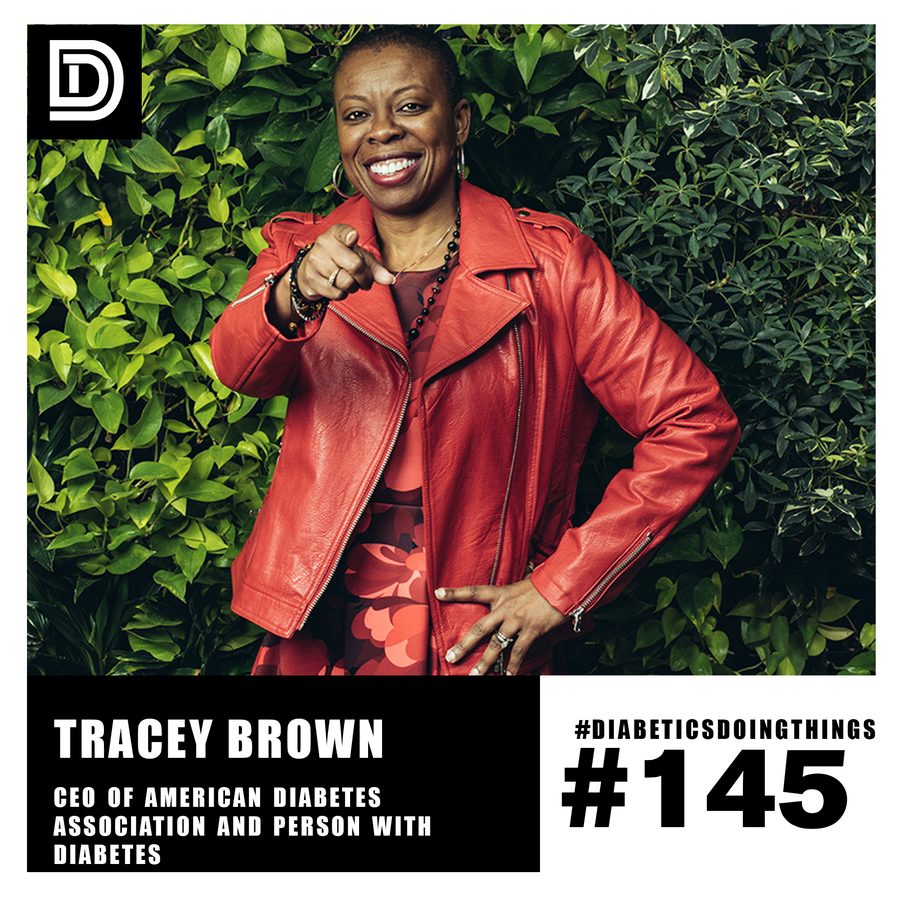
In this time of quarantine and social distancing, I’ve been fortunate to get time with some heavy hitters in the Diabetes space, and perhaps the best example is this interview with Tracey Brown, CEO of the American Diabetes Association. While you can follow Tracey on Instagram (@Type2CEO) the bulk of our conversation takes place behind the scenes of the work she and her staff have been doing with the direction of ADA since 2018.
First of all we cover the impact of COVID-19 on Diabetes populations and what ADA is doing to help. For those who don’t know ADA sent letters to all 50 governors calling on them to eliminate the copay for insulin for commercial healthcare plans and to ensure continuous healthcare coverage for those living with Diabetes who are suddenly unemployed. Tracey also publicly applauded Speaker Nancy Pelosi’s call last week for zero copays for seniors on Medicare.
Then we talk about the importance of being a person with Diabetes leading the ADA, and how Tracey feels being the first person with Type 2 Diabetes to lead the organization. We also talk about representation in the Diabetes community, and the impact of a Female, Black CEO and the importance of diverse teams, boards and committees. Tracey’s comments on “Diversity by design” are particularly impactful, and are something I have also worked to implement in my businesses.
I also put Tracey on the spot to talk about the Insulin Crisis in the United States, and the work that she and the ADA are doing behind the scenes to enact change for people with Diabetes to not have to choose between things like paying rent or buying insulin. You can learn more about the ADA’s work and learn how you can get involved to drive change at: diabetes.org/engagement
Tracey is an incredible leader, and I’m so impressed by her leadership and understanding of the complex needs of people with Diabetes across the board.
I hope you enjoy!
This episode is sponsored by Real Good Foods! Be sure to check out their new Breakfast Sandwiches, made with cauliflower cheesy buns with only 2g net carbs! They’re packed with protein (18g) and have no gluten or grains. Available in sausage egg & cheese and bacon egg & cheese flavors and they’re ready within seconds. Order them online or find a store near you today!
Questions this episode answers
Who is Tracey Brown, CEO of the American Diabetes Association?
Tracey Brown became CEO of the American Diabetes Association in 2018 after serving as SVP and Chief Experience Officer of Sam's Club at Walmart. She is the first ADA CEO to live with diabetes, managing type 2 diabetes that developed after a gestational diabetes diagnosis.
What is the ADA doing about insulin affordability?
Brown says the ADA started a stakeholder effort in 2017 on insulin pricing and has pushed for capping copay costs at the state and federal level, with seven states already signed on as of this episode. During COVID-19, the ADA called for zero copays on insulin.
How did Tracey Brown become CEO of the ADA?
Brown got involved with her local ADA chapter in Bentonville, Arkansas, while at Walmart, competing in and winning a 'Kiss a Pig' fundraising competition that raised $300,000. That led to an invitation to join the ADA's national board of directors and eventually to becoming CEO.
What is Tracey Brown's diabetes diagnosis story?
Brown was diagnosed with gestational diabetes during a routine prenatal visit and was immediately started on insulin. The diabetes did not resolve after she gave birth, as it does for most women, and progressed into type 2 diabetes, which she has now lived with for 15 years.
Full transcript Searchable, with timestamps
Rob Howe: What's going on ladies and gentlemen, got a very special episode for you today. My guest is Tracey Brown, the CEO of the American Diabetes Association, the ADA. She took over the helm of ADA in 2018 after spending the previous four years at Walmart as the SVP and Chief Experience Officer of Sam's Club. This interview is particularly important to me because Tracey is the first CEO of the ADA to live with type 2 diabetes, which she developed as gestational diabetes while she was pregnant with her daughter. Tracy goes on to tell us that about 20% of patients with gestational diabetes continue to treat their diabetes after giving birth as type 2 diabetes which Tracy has lived with now with type 2 diabetes for 15 years. Tracy and I talk about what drew her to the ADA and there's a great story behind that and the work that she and her team have undertaken since she took over in 2018. I'm super grateful for Tracy for taking the time and as always I hope you guys enjoy this interview. This episode is sponsored by Real Good Foods. Shout out Real Good Foods for supporting this podcast. I seriously love them and their products. They're awesome people as well. So big time, big time shout out, especially in the quarantine. I've been eating so many of these breakfast sandwiches. So thanks guys. Really. I appreciate it. Did you guys know Real Good Foods also makes ice cream? Yeah, you heard me right. Ice cream. And this isn't just some poor excuse for ice cream or ice cream disguised as frozen dessert or light ice cream. This is real ice cream and it's real good because, you know, real good foods. The ice cream is available right now in Kroger, Safeway, and Meijer, but you can also order delivery from realgoodfoods.com. And they're offering free shipping during the social distancing and quarantine to make it easier for you to get the super premium flavors. They're also available at Vitamin Shop. Only six grams of sugar per serving and this ice cream is sweetened with allulose to keep that premium ice cream flavor without all the added sugar. Real Good Foods currently has four super premium flavors available. Chocolate, Tanzanian vanilla, peanut butter chocolate chip, my personal favorite, and mint chocolate chip. Big shout out to Real Good Foods on their ice cream launch. Thanks for continuing to make awesome delicious products that are easy on blood sugars. Check out realgoodfoods.com or Real Good Foods on social channels for more info. Hello and welcome back to another episode of Diabetics Doing Things. We're telling the amazing stories of people living with diabetes from all across the world. And I have a very, very special guest to introduce you guys to today, Ms. Tracy Brown, the CEO of the American Diabetes Association. Thanks so much for the time and
Tracey Brown: welcome to the show. Thank you, Rob. So excited to be here. Thank you for having me.
Rob Howe: Of course, my pleasure. So you have been the CEO of the ADA since 2018. And so you've answered this question a number of times. And so, but I do want to get it out of the way because I think it's important. You are the first CEO of ADA to live with type 2 diabetes. And obviously with the population of people with type 2 diabetes and the people, you know, the constituents that ADA represents, that's a pretty powerful position to be in. What's it like for you to be the first CEO of the ADA who lives with diabetes, type 2 diabetes? Yeah. So Rob, you know,
Tracey Brown: So first and foremost, this is just so personal to me. And to have the opportunity to lead this organization when there are millions of people also living with diabetes, You know, one out of two people, Rob, are living with prediabetes or diabetes in this country. And if you think about what goes along with that, just in terms of statistics, every two minutes, someone's dying from diabetes and its complications. Every time someone's having a stroke or some kind of heart related issue. Every 10 minutes, someone's having kidney failure. and every five minutes someone is losing a limb. When you think about that and the magnitude of the problem that exists in this country and in the world, and then being in a position to actually help people, A, who are living with diabetes thrive, but more importantly, working to drive social transformation and change in this country, and then end this diabetes epidemic, I can tell you I am honored to be sitting in this position. And this is a combination of purpose meeting passion, meeting position for me personally. I believe that this role is a part of my God-driven purpose for being here on this earth. I don't think it's an accident that I am actually living with this disease and now leading this organization. Clearly, I have a lot of passion around not only helping myself thrive and live my best life, but helping other people live their best life. And then three, you know, just having this position of the CEO and leading this great organization, it's those three things coming together. And I'm so proud to be in this role and proud of my team at the American Diabetes Association and most importantly, dedicating my life to ending this epidemic.
Rob Howe: And you're right, like you speak with a lot of passion, a lot of purpose, and even pride, I think, in like the challenge and the task ahead for you and your team. As you were coming on board, obviously, those goals that you have in those statistics that you mentioned are staggering and obviously acute for lack of a better term. They're affecting millions of Americans and then also people worldwide. How did you get started? Obviously, those are big goals, and those are obviously to turn a giant ship. You know, it takes time. How did you, you know, from day one, how did you approach, you know, working on, you know, ending this diabetes epidemic?
Tracey Brown: So, Rob, the first thing that my leadership team and I did was we actually went on a 100-day listening tour. because I think it's very important as you join any organization, before you jump in and start doing a whole bunch of things, to just pause for a moment and listen. And we started by listening with the people who live with diabetes. Obviously, I have my own experience of what it is like living with this disease. But you never will say that, you know, one person's diabetes is exactly like the next one's diabetes. And so getting out into the communities and listening to people living with diabetes to truly assess and understand their needs was one of the first things that we did. Then we talked to all of the other partners and stakeholders. So we talked to not only the people living with diabetes, but our volunteers in the communities, our donors, our partners, our manufacturing, our corporate partners as well. We talked to insulin makers, uh uh diabetes supply makers we we spoke with lawmakers congress um you know just the entire ecosystem to assess and understand what it is that we would need to do to change the trajectory of what is happening in america and around the world as it relates to diabetes the other important and thing that we did, Rob, was we went back to study our history. You know, we're an 80-year organization. And so we went back to see what, in fact, did our founders actually say and promises did they make when they created the American Diabetes Association? And are we living that promise and paying it off? And so one of the most interesting things that came out of all of this was, one, when you think about our founder, our very first president and one of the founders, Dr. Cecil Stryker, was very clear. he said the only reason for being for the American Diabetes Association is that we are here to fight for people who are living with diabetes. And he went out to say that their medical, their economic, and their social problems are our problems, and that we are to fight for them until we find a cure. And that was back in 1940. And so we took a pause and asked ourselves, are we paying that off? And are we fulfilling on that promise? And we went back to revisit our vision and mission for the organization. And after all of this analysis, Rob, we discovered that the vision and the mission and the promise that was made in 1940 by our founders, all of that is still right today. So our vision is still to have a life free of diabetes and all its births. Our mission is to prevent and cure diabetes and improve the lives of all people by diabetes. And so that is where we started, listening to our assessing if our vision and mission and then the was still right. And the answer to that was yes. And then we went about the business of if our vision, our mission and our promise of why we were founded is right. then what we have to change is our how. And so we laid out a four-year transformation roadmap. And here's the deal, Rob. In 1940, there were 750,000 people living with diabetes. Today, there are over 34 million. So we truly have to do something transformative to bend the curve in this epidemic.
Rob Howe: You know, it really strikes me when you were reading the initial purpose and the initial vision of the ADA from the founders back in 1940, which, you know, as I think back to everything that's happened in the world since 1940, I mean, we're talking like pre-Pearl Harbor here. There's so much American history that has happened since then. But it really kind of hit home for me and almost stopped me how relevant that purpose statement was for today. Yes. And the economic, the medical, the social challenges that people with diabetes face are still very front center today. I don't know. I just found that very, very interesting and very poignant. As you guys are, you know, as we find ourselves in the midst of this pandemic with COVID-19 coronavirus, that mission and purpose and vision is also still very front center. And even in recent news, and I'm paraphrasing here, but you, the ADA and your team has sent letters to all 50 governors last week at the end of March, calling them to eliminate the copay for insulin for commercial health care plans. So again, like, you know, addressing the economic kind of crises, as well as, you know, Speaker Pelosi's call on yesterday, I guess, which would have been April 1st, or March 31st, rather, for zero copays for seniors on Medicare. How are you guys in this time of crisis where things are changing so quickly? How are you keeping that vision and purpose top of mind and making it very actionable?
Tracey Brown: Yeah, I mean, so to your point, Rob, that promise of people living with diabetes, their medical, economic, and social problems being our problems, just as you said, was relevant in 1940 and couldn't be more relevant today. And so we, one of our operating principles is to make sure that we are keeping the people living with diabetes at the center of every single thing that we do. And this is what fuels our passion and our motivation. Keep getting up every single day and fight another day until we have bended the curve of this epidemic. We found a cure and we've helped every single person with diabetes thrive. So with that, there are several kind of pillars of focus, so to speak. There is all of the things that you just talked about from an advocacy perspective. We have to continue to fight for people living with diabetes. And that advocacy fight goes from the things that you talked about around legislation to make sure that people can actually afford their medication. to making sure that people living with diabetes actually have insurance that they need, to making sure that people actually have access to the right kinds of health care, to making sure that people living with diabetes are not discriminated against. I mean, this is real. Children are still discriminated in schools. You might have seen some of our more historic wins over the last year around truck drivers. Now you can be living with diabetes and be a truck driver, become a pilot. Things that most people would take for granted, this is the kind of discrimination that was out there and is out there against people living with diabetes. So there's a whole advocacy realm that we play into, and they are all tied around medical, economic, and social challenges. we are trying to knock down those challenges and remove the barriers. And not to mention, Rob, the scientific portion of what we're doing, right? Driving the best science and helping, you know, foster and create the best science that not only make it easier for people to live and thrive with diabetes, So the progress in medicine, but also the research as we continue to work for a cure, right? The ultimate bend of the diabetes epidemic curve is to find a cure. So we've got the scientific medical arm of what we do. We have the advocacy arm of what we do. And then we have kind of the health care and education arm of what we do all around trying to help people live their best lives and thrive today.
Rob Howe: No, thank you for that. I think it really does showcase all the different things that you guys do and are doing behind the scenes to advocate for people with diabetes. One of my more popular episodes on this podcast is my now dear friend, Jeremy Robertson, who is a pilot, was for Qantas Airlines and was diagnosed with diabetes and has had his wings taken away. And the work that he's dedicated his life to, along with some other pilots with type 1 and type 2 is working on legislation and advocacy to get, allow, you know, pilots with diabetes to get their wings back. So very cool to see, you know, the work that you guys are doing behind the scenes there as well. I want, I want to shift a little bit and make this a little bit more personal to you on this podcast. We generally start with a diagnosis story. So I know it's been about 15 years. let's kind of go back to your journey joining the family of people with diabetes. What can you share about that story and how it impacted your life from then to today?
Tracey Brown: Yeah, so Rob, I was diagnosed with gestational diabetes when I was pregnant with my daughter. And, you know, I will never forget the moment of diagnosis. Most people who live with diabetes remember the day that they were diagnosed. I had been on a routine doctor's appointment and, you know, healthy and had no issues whatsoever. This was the one doctor's appointment that my husband was not with me on. It was a quick run in and check. And it was the day that you do the sugar glucose, the diabetes test. So I did the test, and I remember sitting in the room waiting for the doctor to come back. And all as I remember, the door opened. They whisked me out downstairs to the hospital, said that they needed to immediately get me on insulin because my blood glucose, my sugars were. Everything happened so fast that day, Rob. And I remember several hours later, you know, my husband, contact my husband, he arrives where the doctor told me, well, Mrs. Brown, you have gestational diabetes, but don't worry. For 80% of the women, this goes away after you have your baby. And it just means that you need to watch what you eat and now you have to take insulin through your pregnancy. I was like, okay. So did that and ended up having a beautiful baby girl and the diabetes did not go away for me, Rob. I was in that 20% minority and it moved from gestational diabetes and then just became full-blown type 2 diabetes. And you can probably tell I'm pretty type A. I'm pretty, you know, hard driven. I believe I can do all things. And so I was like, yeah, diabetes, no issues. I got it, whatever. But I didn't really take it seriously, to be quite honest, as serious as I should have. Until one day, my daughter was five years old at the time. My daughter and I are very close. where she's my only child. And we get ready together. She would be getting ready for kindergarten. I'd be getting ready for work. And one day she just looked, and so she would see me take my insulin, prick my finger. She looked up at me one day and just said, I'm gonna die from diabetes. And Rob, that was like, stopped me in my tracks immediately. Oh my God. My five-year-old daughter thinks I'm going to die. Like who, I can't even imagine that this would be the thought in my daughter, first of all, at five years old. That was a life-changing moment for me. You know, I should have gotten my act together when I was first diagnosed, but I didn't. But at that moment, I made a commitment to myself, to my daughter, to my husband, to my family, that absolutely not, I would not die or succumb to complications from diabetes. I also made the commitment at that moment that I would be the poster child for how you thrive while living with this disease. And that I would not give up on fighting for a cure. And literally from one day to the next, Rob, my life was forever changed. And I have been thriving ever since. I worked myself off of insulin to just oral medications. I was on four oral medications and now have walked myself off of three of those to just one oral medication. And if I were to show you, I wear a continuous glucose monitor. If I were to show you the reading on my blood glucose right now, it's about 80, which is the blood glucose level for people who are not diagnosed with diabetes. So I have taken the bull completely by the horns and thriving and fulfilling the promise that I made to my daughter at five years old. So there it is.
Rob Howe: That's powerful. you know and I think you are a little type A and you are a little bit I can do all things that I that really resonates with me and congratulations by the way on on your work you know managing your diabetes to really be you know taking one oral medication and have your blood sugar in range and being able to see that with technology and you know and see your hard work pay off in real time congratulations I don't think we pat each other on the back enough for the day-to-day work that we do with diabetes. So if nothing else, a way to take away from this call, like big pat on the back from me and from the rest of the diabetes community. I want to talk a little bit about your journey from corporate America to, you know, leading the diabetes nonprofit, like the diabetes nonprofit, right? You know, as you lived your life with diabetes and continue to thrive and live beyond it. How did you, you know, how did this sort of opportunity come into focus for you as something that, you know, you would dedicate your career to?
Tracey Brown: Yeah. So, you know, back to the story of my diagnosis and the commitment that I made to my daughter when she was five, you know, it started by me getting my own act together, right? This notion that I'm going to be the poster child. So it started there, but then after I got to managing my own and thriving Rob, I then went to, well, how can I actually start to affect the community because one of the things that you know you know diabetes is still considered the silent killer um you know you're you're you're good until you're not right because you don't look uh you know the sugars are you know elevated blood sugars through your body you can't see the damage that that is doing until you hit a complication, really. So by the time someone has hit a complication and they need to be in the hospital or what have you, you have been living your life with elevated blood sugars for quite some time. So one of the things I decided was I am not going to be silent. I am going to unapologetically tell my story as my own form of driving awareness about diabetes to as many people as possible. And so I just started talking about diabetes everywhere and sharing my story. And you won't be surprised to know this. Inevitably, people would say either, oh, my gosh, I have diabetes myself, or I know someone, my family, my brother, my sister, my friend, my mom, you know, whoever. And started getting more and more involved in the community. When I got to Bill, Arkansas, and I worked for Walmart, I got engaged with the local American Diabetes Association chapter there. And they have a competition that they do with business folks in the community to raise awareness and fundraising for diabetes called Kiss a Pig. So I was a candidate in this Kiss a Pig competition against, I think there were 10 of us, 10 prominent folks in the community. And so I thought that I had the goal wrong, Rob, I should have paid a little bit more attention. I thought that the deal was that the person who raised the most money and drove the most awareness, it didn't have to kiss the pig. Okay. I had it wrong. So I raised, my team and I raised $300,000 and drove an enormous amount of awareness. And we won the PIG competition. In fact, it was the largest fundraising done by a candidate ever. And I still hold that title. and then I had to kiss this pig, but that's a whole nother thing. But that led to people on the national office, the national board of directors of the American Diabetes Association wanting to know, well, who is this person who raised $300,000? And so I met someone from the board of directors came down to the Kiss the Pig Gala. I met them. And that led to me joining the National Board of Directors. And then, Rob, because I've already told you I'm pretty Taipei and you can see that I'm not a wallflower, I had a lot of thoughts about what, you know, I thought should be happening in the plight of people living with diabetes in this country and the world and not being satisfied with the progress that we were making and thinking that we should be going faster and doing more. Well, sometimes you, you know, people say you should be careful about what you say because one thing led to another. And then I was asked if I would consider becoming the CEO. And, you know, that wasn't initially on my radar. I love my job at Walmart. I was doing really well there as an executive officer running marketing and central operations for them. And really thought I was going to retire from Walmart. But this is where, again, being prayerful and thinking about what is my purpose? What is my passion? And here was the ultimate position. And so I just literally decided to make the leap and follow my purpose. And here I am.
Rob Howe: I love that story because I think it's just a single case study in like if you really do follow your passion and your purpose and you are the type of person that just jumps in with both feet that you never know where you're going to find yourself. Um, so, you know, from the kiss a pig to national board of directors to, you know, CEO of the organization, uh, what, what, uh, I, you probably wouldn't put that in a, like how to like step-by-step guide of the way to become CEO. But, uh, I love that story. That's so cool. And it's so personal.
Tracey Brown: Yeah.
Rob Howe: I, uh, so I have a question, you know, regarding you in, in leader leadership position, diversity and representation in the diabetes community is so important and so pivotal. making sure that all populations are represented both visually and have a seat at the table. You are a female African-American CEO. And obviously, like in the large scale of Fortune 500 CEOs and the like, large organizations, that puts you in a minority. Um, what responsibility do you have and what impact do you feel like it has having a woman's voice and an African American voice leading the charge against the diabetes epidemic?
Tracey Brown: Yeah, so, you know, Rob, African Americans in this country have a long, long history of leadership and contributions, innovation, and driving transformation and social change in this country. And there are so many, like going back to, you know, like Dr. Martin Luther King Jr. and, you know, freedom and justice and equality and his leadership there. Frederick Douglass, you know, one of the great leaders of the abolitionist movement. Harriet Tubman, of course, Underground Railroad and liberating, you know, over 700 slaves. Dr. Charles Drew, you know, created the first blood bank in the U.S. I'm trying to think of some of my favorites. Madam C.J. Walker, one of the first self-made millionaires, you know, selling hair care products and empowering armies of women. Amelia Bolton Robinson, again, civil rights activist. So when I think about just the sheer number of African-American leaders and the contributions that they made to this country, I have to tell you, I am so proud to be a part of that lineage. And I just want to continue to add great contributions to this country and hope to inspire people and the next generation of leaders as those great leaders had inspired me. So, you know, there's that. And then the second thing, Rob, is, I mean, if you think about the greatest problems and challenges that the country or the world has faced, both big and small, the greatest innovations, you know, I was listening to this NPR podcast probably a year or two ago that talked about the edge effect. and the fact that the greatest innovations happen at the edges of culture, worldviews, perspectives, colliding with others that are different. And if you rewind the tape, even as you sit and think about the greatest problems that have been solved, it's usually because of a diverse group of people and thinking and thoughts from, you know, their perspectives and what they bring to the table. This is so very important that as you think about this country, even the crisis that we find ourselves in right now, COVID-19 and what we need to do in the future it's gonna happen when we bring diverse minds skill sets perspective cultures to the table and they collide at the edges so when you start to think about how you started this question which is representation first and foremost all companies need to reflect the world in which we are living, which is diverse. And that needs to go not only in the C-suite and in the CEO realm, do we need diversity? But even in the boardroom, Rob, we need diversity. So this notion of diversity by design, that is where we're actually going to get the greatest breakthroughs, the greatest innovation, the greatest ability to solve some of these real tough problems that people face in the world.
Rob Howe: No, I totally agree. I think that's, you know, diversity by design really stuck with me, because I think you have to have an intention behind it to say that, you know, we are going to lead from a place of diversity to because that's where we believe innovation comes from. um what would you say to you know a listener out there who um you know wants to bring more representation and diversity to their local chapter what what message would you have to somebody out there who's listening who may not know what next step to take or how to you know use their voice or raise their hand um you know what would you tell that person uh and how would
Tracey Brown: you, you know, tell them to get started? Um, with the ADA in general and specifically,
Rob Howe: Bob, I want to make sure I understand the question. I think, you know, diabetes advocacy with the ADA or just in general, I think, you know, maybe just, you know, just piece of advice, you know, coming from a leader. Well, so, um, yeah, so
Tracey Brown: So with one out of two people living with diabetes or prediabetes and the fact that everybody knows somebody who is living with diabetes, I want as many people involved in helping us bring down this epidemic as possible, Rob. And so there are so many ways for people to get involved. Um, one is, uh, everybody can use their voice and drive awareness, which is why I, I, I tend to, um, always talk about advocacy, every single person. And, you know, we have 520,000 registered advocates, which is not nearly enough, given the fact that I said earlier that there are 84 million people living with prediabetes, 34 million people living with diabetes. We need millions of people to become advocates. And you can go to diabetes.org and do that. we are a voluntary health organization and we are a non-profit and we can only fulfill our mission when we have the generous donations from people and so I'm always going to also plug please donate even if it's just a dollar every donation helps and right now during this uh COVID-19 crisis we find ourself in you know we we have a campaign right now that is called give help get help so if you're in a position to give help by all means please give it donate your money donate your time and then we have stood up all kinds of resources on our website and in the local communities the offices around the local communities to also get help so that's one the second thing that I would um say Rob is to all of the listeners, do you even know your numbers? Again, we talk about the fact that diabetes is a silent killer. Do you even know your blood glucose numbers? Do you even know your A1C numbers? And I am one who says, everybody's empowered, right? We all can thrive. We all can be living our best lives today, but it starts with us. So also know your numbers. And three, if you want to volunteer, there are so many avenues to get involved, not only the local community, the camps that we run for kids. There are all kinds of voluntary committees. All of this stuff you can find on our website, diabetes.org. And more importantly, while we are all home in quarantine, we've turned everything virtual. So we still need help. We still need people to, you know, we're running virtual camps. We're running virtual campaigns. We're running virtual scientific sessions. We're running all kinds of virtual things so there's always a way to get involved and then just the the last thing that i would say is you know life um for all of us we we don't know from one day to the next what can happen like who would have ever thought that we would be in this covet 19 place what I say is every single person live your life to the fullest live your best life right now tell those that you are close to that you love them help those that you know are in need of help and take responsibility to do those things that you've always wanted to do, do them now. Don't wait. Live your best life today.
Rob Howe: That's powerful. And would be like an awesome ending. It's like a call to action for people to obviously live their best lives and live their best lives with diabetes. But I do have one more question for you because I know I want to be conscious of your time as well. And I think I just want to make sure, actually, it'll be a two-parter. So the first is affordable insulin and access to affordable insulin and ADA's role in helping lead that charge. What is something that you'd like people to know about the ongoing battle to make insulin affordable for people with diabetes?
Tracey Brown: So, Rob, I know you know this. We started this charge back in 2017 around access to affordable insulin. And this is, well, there are a lot of things that get me riled up, but this is actually one of them. Particularly when you think about the first form of insulin coming from the pig, in the ode to the pig and then vanting, discovering it, and then selling it for pennies, to a dollar to the cost of what insulin is today. And the fact that the cost has skyrocketed over the past several years and that people are having to choose between whether they get the insulin that they need to live or whether they pay their rent or their car payment or put food on the table. I mean, that's just crazy. So the ADA has been leading the charge. In 2017, we pulled together a stakeholder group with a diverse group of stakeholders across the entire diabetes ecosystem to basically say enough is enough and we need to do something. Out of that series of stakeholder meetings came a white paper of recommendations and we have been using our voice to drive inflation to work with all of the members in the insulin supply chain from the manufacturers to the wholesalers to the pharmacy benefit managers to the pharmacists to I can go on and on We have got to, as a collective, this requires people working together to drive the kind of change that is necessary to lower the cost of insulin and, oh, by the way, all diabetes medicines. And so you're going to continue to see us and hear us raise voice. We've been driving as a first step, not the end all be all, but this notion of capping copay costs for insulin. We've been driving that at both the federal and the state level. We've got seven states that have already signed on. And in this COVID-19 crisis, we're calling for zero. You're going to continue to see us talk about access to insurance so that people can have affordable insurance so that they can actually have coverage for their insulin. You're going to continue to see us work with the insulin manufacturers and researchers to create biosimilars so that we have more competition in the marketplace. And so the lens that we put on this thing, Rob, is we're going to push for and tout things that drive more dollars to be in the pocket of the person living with diabetes, point one. Two, we're going to keep driving things that encourage competition in the marketplace because when there's more competition, the cost of things, the price of things go down. And the third is we're going to continue to push things to eliminate barriers of access to health care for all. So that's what you're going to continue to hear from the American Diabetes Association. And I need more voices, Rob. As I said earlier, everybody can use their voice. So I need people to go sign up to be advocates. And oh, by the way, we've stood up a communications and engagement platform that makes it very easy for the everyday person to understand which pieces of legislation hit those things that I talked about. Does it provide money back into the pocket of the person living with? Does it eliminate barriers to access to health care? And does it drive competition? And I want people to go there. We've made it very simple for you to understand which legislation is important and meets those criteria. And then within 30 seconds, a couple of clicks, we allow you to fire an email off to your congressman or woman. I need more and more people to go there. It's diabetes.org slash engagement and use your voice and let's use our power collectively to change.
Rob Howe: Absolutely. And I will include that link in the show notes for everybody who's listening. will be able to drive traffic directly to that link so that they can use their voice and opt in and make sure that they're impacting those three key points. Tracy, I want to be conscious of time. So I've got one last question for you. Thank you. A, first of all, thank you for coming on the show and for using your platform to help people with diabetes and end the diabetes epidemic. I appreciate that. When you and your team were going in and through your deep dive of all of the different elements and kind of going through that initial process of, you know, what are we doing and how can we do it better? What was one story? Was there one story or one thing that when you heard it or when you uncovered it or when you talked to the person who was leading that program, whether it's advocacy, whether it's camps, whether it's community, is there one thing that stands out as or stood out to you at that time that says that told you like this is the work that we're doing is so impactful and so important and if so could you share you know one of those stories
Tracey Brown: well it's not you know getting down to one story is really hard rob what what i will say is that when you are out in the communities working, speaking with, talking to, engaging with the people who are living with diabetes, you cannot, you will, you will be changed when you hear their stories. And the thing that resonated the most with us is that we needed to provide a platform and a place for people to tell their story. And then through their storytelling, make sure that we are focusing all of our resources on the things that matter to them, the things that are valuable to them, the things that will make their lives easier. So that is why you saw us do a rebranding of the American Diabetes Association, is because one of the things that we heard was the people living with diabetes wanted to emotionally connect with us and each other. And what we discovered, Rob, is diabetes connects us all. Because one out of two people are living with diabetes or prediabetes, everybody knows somebody. And what we heard from the community was that people, yes, want a cure. Well, why we are fighting for a cure, help them live their best life today. And that we are all connected and we're connected for life in all that it has, all that it can be and should be for everyone. And so we launched this Connected for Life rebrand and platform and you will see that we have literally created a frame. It's a red frame. And that red frame is symbolic. And we stood it up in Crystal City, Virginia, on the sidewalk and invited people to step in front of the frame to tell their story. And that, more than anything, has been unbelievable. And the stories that we've actually been able to uncover and catalog actually drive us, Rob, to the programs, the services, the education, the community that we're actually trying to create. so that not only can we pay off the promise of our founders, their medical, social, and economic, but we're paying off the desire and the needs of the people living with diabetes to be connected for life.
Rob Howe: That's powerful. And I'll say, just from an outsider looking in, And the rebrand of the ADA has been very tangible and very noticeable over the last few years. As a person who's been involved in the online diabetes community for about five years now, a marked change happened in 2017 when you guys started really working on, you know, revisiting that purpose and that passion and that mission. And so, yeah, I thank you for that. Thank you for your leadership and for driving a lot of change for all people with diabetes. And I'm grateful for the time to come on the show. And thank you so much for the insights. I will direct everybody to follow you on Instagram as well, because then they can get a taste of your type A-ness in real life. But again, I know you're very busy, and I just thank you for taking the time to pour out into the community.
Tracey Brown: Rob, thank you for having me. It's been an honor and a pleasure to spend some time with you today. And it's just an honor to serve this great organization and more importantly, all the people living with diabetes. Thank you.
About Tracey
Tracey Brown is CEO of the American Diabetes Association, a role she has held since 2018. She previously spent four years at Walmart as SVP and Chief Experience Officer of Sam's Club, and is the first ADA CEO to live with diabetes.