

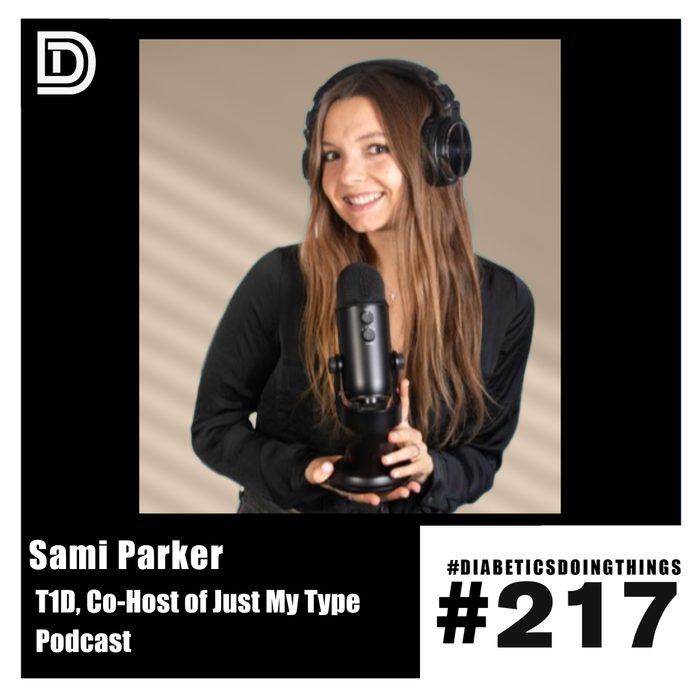
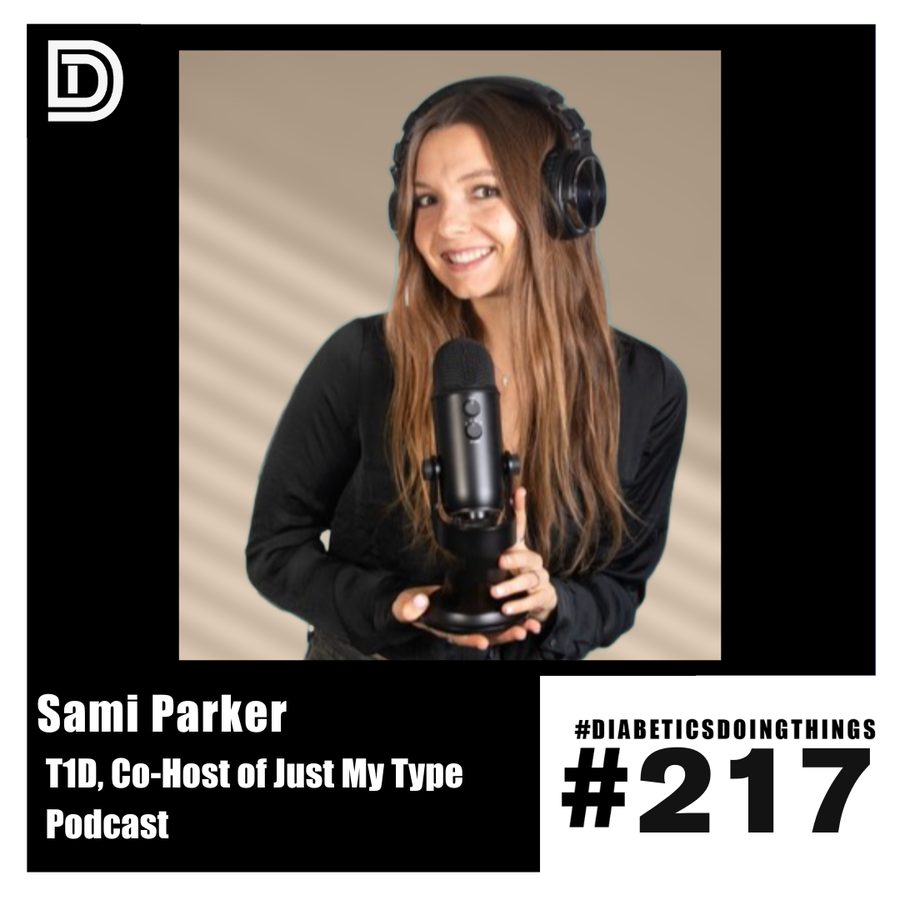
Sami Parker, T1D Co-Host of Just My Type Podcast

Episode summary
Sami Parker, co-host of the Just My Type podcast, joined Rob Howe on her 10th diaversary. Diagnosed with type 1 diabetes at 12, she describes her teen years battling adrenal PCOS, which left her insulin resistant and kept her A1C near 9 or 10 for years despite careful carb counting and insulin dosing. She talks about learning to accept imperfect numbers instead of chasing perfection, setting boundaries against unsolicited advice as a public content creator, and the value of finding other people with diabetes online after years without that connection. She also discusses launching Just My Type with co-host Dobie, her Diabetic Realities Instagram series, and how she approaches New Year's intentions over resolutions.
Key takeaways
- Sami Parker marked her 10th diaversary the day of recording and says it felt anticlimactic rather than emotional, unlike her first one.
- Parker says adrenal PCOS made her insulin resistant, keeping her A1C between 8.9 and 10.1 for about four years in high school even though she counted every carb and took all her insulin.
- She co-hosts Just My Type with Dobie, a show pairing a type 1 and type 2 diabetic, which she started after being offered the role before she finished her undergraduate degree.
- Parker runs an Instagram series called Diabetic Realities, including the joke post "If I'm being a bitch, my blood sugar's probably 300."
- She says connecting with other people with diabetes online has given her more real support than any in-person support group, calling a friend with diabetes "a friend indeed."
Show notes
It’s the first episode of 2023, and our first year of Practical Applications For People With Diabetes. We’re hitting the ground running with Sami Parker from Just My Type - the Diabetes Podcast.
Rob and Eritrea talk to Sami, podcasters to podcaster, about:
Sami’s 10th Diaversary
Teen years with Diabetes
Type 1 turning you into Type A and finding balance with imperfection
Opening yourself up to unsolicited advice vs. setting boundaries as a content creator
Just My Type podcast
Leveling up your life by being involved with the online Diabetes community
“Diabetic Realities”
Refreshing intentions for 2023
Questions this episode answers
What is adrenal PCOS and how did it affect Sami Parker's diabetes management?
Parker says she has adrenal PCOS, where her adrenal glands overproduce cortisol, which made her insulin resistant. She says this kept her A1C between 8.9 and 10.1 for about four years in high school even though she checked her blood sugar, took all her insulin, and counted carbs.
What is the Just My Type podcast?
Just My Type is a podcast Sami Parker co-hosts with Dobie, pairing a type 1 and type 2 diabetic to talk openly about diabetes and everyday life. Parker joined after a company offered her the role before she finished her undergraduate degree.
What is Sami Parker's Diabetic Realities Instagram series?
It's a series of Canva posts Parker makes about everyday diabetes moments, like joking that her job is "literally a pancreas" or that a high blood sugar explains a bad mood. She says people respond because the humor matches their own experience.
How does Sami Parker handle unsolicited advice about her diabetes online?
Parker says she gets a lot of unsolicited opinions, especially about taking birth control for her PCOS, and has learned to just share her own experience and let people take it or leave it. She credits the content creator Glitter Glucose with teaching her about setting boundaries as a woman in the diabetes community.
Full transcript Searchable, with timestamps
Rob Howe: Hello, hello, hello, everyone. Welcome back to Diabetics Doing Things. We're telling the amazing stories of people with diabetes from all over the world. And we're jumping into our first year of practical applications for people with diabetes. We have a very special guest with us today. It's not often that I get other podcasters on this podcast, but occasionally we get to have the pleasure. So, Sami Parker, welcome to the show.
Sami Parker: Thank you, Rob, for having me. And yeah, I know, podcaster to podcaster.
Rob Howe: You know, it's just like the handshake emoji. Like here we are. It is the handshake emoji. And Eritrea is here in the booth with us as well. So today is actually, you threw me for a little bit of a curve ball on, uh, on our episode because today is your 10th anniversary. So 10 years with diabetes today. So I want to talk about that. I want to, I want to nerd out a little bit on, you know, for you looking back 10 years, like what moments stand out to you, like with diabetes and like, what would you tell yourself like 10 years ago? You know, if you could visit yourself 10 years ago today, what would you, what would you say? So it was so weird because
Sami Parker: the last few weeks I like not was preparing for today, but I was like, heck yes. Like what am I going to eat? And I like, you still love this cereal called Cracklin' Oat Bran. And you know, like that is but I was like yes like this is what I'm gonna eat today like we're gonna give balls to the wall and then I woke up this morning not remembering and my mom like hit me with that soft text and and then I was like oh it's today and it's so anticlimactic like I'm getting over being sick like um and I kind of for me had a flashback to my first diversity I like walked downstairs and they were all my family was all like smiling and I think they unless I'm envisioning that they were this nice but I think they got me like a balloon or something I don't know something sweet and I I just started crying and I was like oh and it wasn't like happy tears it was like the emotions were rolling and they all looked at me like oh no and I was like I'm sorry I just because it was so much to take in so I think for me it's cool looking from where I started at first And not that like that full year was me just crying, but your approach and like how you've dealt with it for one year compared to now, like 10 years. I'm like, hell yeah, we're just another 10 to go.
Rob Howe: I've been talking recently with people about like when you're in it in that moment, things kind of seem overwhelming or they seem like you're never going to be able to get better at them. And it's very frustrating. And then, you know, if time passes, if you allow time to pass, you can look back and see that you're handling it now. better than you ever thought you would at that time. And, you know, for, for even like serious things, like you may even write it down, put it in an envelope and open it in a year or something. And like, you know, you'll realize how far you've come and how much progress that you've made. But man, you were diagnosed when you were 12. Like that's a pretty tough time to live with diabetes. We talk about a lot on the podcast of like, most people look at their teenage years as the most difficult time with diabetes in their life. And that's like right where you started.
Sami Parker: terrible i'm like i think i i really didn't i could have gone back now like and told my 12 year old self i would have been like okay the next five years they're gonna suck and then but then there's like it's gonna get great because every day is still gonna be a good day even if it's sucky and i wish i also would have just said like just take it for what it is and don't stress so much because i think and this is a to like bad mouth parents no offense parents you guys are great but like it's kind of tough like tough I guess because parents want to make that perfect range for their child and my parents weren't that way like if I was high and I was just high for three days and I couldn't get down that's what it was and we weren't gonna sit there and I wasn't gonna get in trouble I wasn't gonna be like well we gotta fake like it was just that's what it was and we knew I was resistant um obviously they weren't like oh let's just be high all the time but it was kind of one of those things where that's they were very like go with the flow with it and we tried to find the reasonings but it's also like it's not perfect and you don't have a balanced life if you're going to try to make it perfect every step of the way which is something i think it takes a while for a lot of diabetics to learn well i think too like giving yourself
Rob Howe: space to be human uh and i talk about that a lot like uh we're not robots we are people and you know having race uh and you know also i think there's like a performance aspect i talk a lot about like type 1 sometimes turns you into very type a like performance oriented and you can't like can't accept yourself if you're not worthy or your blood sugars are not like perfect or like you were saying so damn shout out to your parents i mean i think uh you know being willing to just let you
Sami Parker: fail or let you just be high for a little while yeah it was so tough like i all through high school because I deal with adrenal PCOS. So my basically adrenal glands over, it's like overproduction of cortisol. And then also for me, so I dealt with that and then I was insulin resistant. And so they were trying, it was like my medication just didn't work. Like the insulin was like, which I know we all joke like water, but this was like for four years that it was like my A1Cs were just no matter. And it wasn't like I was the kid that was, you know, in the backseat, just like, screw this. It was like, I was checking my blood sugar, giving all my insulin, I'm like counting all my carbs, not eating desserts. And I just had like 9.4, 10.1, 8.9, 8.9. And I was like, oh, oh, oh, okay. Like, and so I think that's something that a lot of times when I ask kids right now that are going through high school, it's like, oh, it's like 6.8. And then their parents.
Rob Howe: Yeah. I mean, you see a lot of times like, and I've talked to parents at conference too. And I think like this is not to, you know, talk down on on parents of kids with diabetes is very difficult. And we've had amazing parents on the show and they're amazing listeners who are parents and caregivers of people with diabetes. But, you know, you're trying to be perfect. You're trying to. And your perspective is different as a caregiver because you're like, oh, well, here's this acceptable range that's healthy. We got to do whatever we can to stay within that range. And when you're outside even a little bit like it's it's unknown, you know, what kind of damage that's causing. And, you know, we talk about the C word on this podcast a lot, like complications. You don't you don't want to open yourself up to those. And it can be scary. And I think, you know, operating from a place of fear and fear of the unknown can be difficult for parents. And, you know, Eritrea and I have talked a lot about like our dads, like couldn't really accept that they did anything wrong or they didn't do anything wrong with us getting diabetes. It was just like a hard thing for my dad specifically to connect to. yeah and you know so i think there's a lot of like guilt and and and things hanging over with that as well but yeah you know your a1c is not the end all be all it's not a reflection on you as a person uh although you know there are the acceptable and the ranges that will you know make sure that you're helping to avoid those long-term complications yeah and i think it's tricky oh
Sami Parker: sorry that's something that i'm just like wow like first of all your parents sound really really nice and also you said that you couldn't have a balanced life if you're trying to make it perfect every step of the way and i think that perfectly encapsulates like what diabetes can try to force you to become which is like perfect but it's not yeah but that would be and balanced and have everything at all like perfection actually would breed miserable like to be miserable miserable yeah yeah no it's true because i even even sometimes like when i'm doing stuff it's like oh your your blood sugar is 220 oh my god you're high i'm like oh and diabetes land like it's okay I'm like you know that's that's high but like we're we're like the adrenaline's going we're dancing like it's fine it'll come down after and so I think it's like just finding that I don't know medium and I think it's easier for kids who get diagnosed younger because you have that you don't have the adult brain yet where you're like numbers oh gosh I'm not tackling this like an adult but like I feel bad for people sometimes I get diagnosed later on because I I think some people have no issue, but other people have a really tough time because they see like ranges like on blood work or something. And they're like, wait, why is it 170? And they like freak out. And I'm like, no, no, like 170 would be like chill for like a solid five hours. Like that's OK. But it's how we approach it. It's almost like the, you know, imagination of like a child is like allows for that flexibility with numbers. Whereas I feel like when you get older, you don't allow yourself unless you grew up with it and you still have it in your like system.
Rob Howe: yeah it's almost like a binary like black and white looking at it like high is bad low is bad like only this is in the middle uh-huh yeah it can it can be tough i think you know we we talk a lot about like chasing numbers and like you know trying to and like perfection i think too is there's something in the diabetes community and maybe you you've experienced this a little bit as well of like you know we compare our numbers to each other uh even without like actively doing it because you'll see like oh a good number oh a bad number and it's like Like what I've seen in the past is like people are a lot more actively responding to bad numbers because they feel like there's no judgment for them. Like they feel like it's like the sort of the veil is off. Like, oh, you know, Rob's sharing that he's got this blood sugar that's way out of range and I can relate to that. And it's nice to see somebody who's also going through it versus this idea of, oh, perfection, perfection. Let's only share the blood sugars that we feel good about, not share all of them.
Sami Parker: Totally. Yeah, I completely agree with you because I think, too. So a lot of people, yeah, anytime I put that out there, it's like I'm like, oh, 380, like stress hormones. And people are like, oh, I'm genealogy too. And I'm like, OK, because I get it because it's like no one wants to talk about it. But then I also sometimes feel bad for people when they put good blood sugars. I'm like, nobody's even hyping them up because they're just like screw you.
Rob Howe: Right. They're just like, you know, there's something they could be celebrating and they just get eye rolled. Yeah. You know, but there is something too, and I think especially for women, and so I wonder if you've experienced this a little bit. Yeah. My experience is different. People typically don't give me very much advice, and I like that, so keep that up. But, you know, I think when you are opening yourself up to feedback from people in the community or just feedback from people in general living kind of as a content creator, public figure, you are opening yourself up to unwanted feedback and unwanted, you know, unsolicited, so to speak. Oh, how sweet of a set.
Sami Parker: yeah oh yeah i've had that so i because the pcos the adrenal which a lot of women i know type 1 that are basically like prone to it and my doctor would like recommend birth controls and you know that's one of those ones that you're never gonna have someone give you the exact perfect answer because you're gonna have someone yelling at you for taking it saying it's bad for you and then you're gonna have someone saying it's only not gonna keep your numbers down and like at one week I'm feeling it the other week I'm not whatever but it's amazing to me also like the time and energy yeah that people take to basically like shoot you down on it and you're like okay I'm just this is just I'm sharing I'm giving you my experience take it or leave it I really don't care like quite honestly when I'm talking to the phone I forget this is even going to people and then sometimes I'm like you you probably should have like filtered a little more um but I think think that's like part of what it is too and like i know for me at least this is gonna come out mean i don't like looking at people's instagrams that it's like perfect like they have a full face of
Rob Howe: makeup i'm like and it's like it's like this it's like no you didn't i'm like it was like oh my god
Sami Parker: today was the best blood sugar day ad where i'm like okay all right unfollow well yeah and i think
Rob Howe: you know there is that level of transparency that you want to have where it's like authentic yeah i think people are really quick to suss out when it doesn't feel that way
Sami Parker: oh totally and i i didn't i almost feel like it's only in the diabetes community because all my other friends are like do you follow this influencer and i'm like what and they like want to but then in the diabetes world you see somebody like that and you're like nope like cancel um so i think it's it's yeah it's definitely interesting and people definitely want to share their opinions or like no you're doing this wrong i'm like guess what there's no wrong because everybody's diabetes is different so that's why i think that as women it's so important to set boundaries and like shout out the person who taught me glitter glucose shout out the queen of boundaries wait i just elicited comments you will be black baby because this is not burger king you're not gonna have it your way this is my way so like yeah i love having women role models in a space who are like what we're not doing and what we're not putting up with is that bullshit so no i can't do it no i can't it's just it's rough i'm like this is or it's like come on did you really wake up and put on a full face of bronzer and blush to make this real like someone help me well and i think too you know like
Rob Howe: Like setting healthy boundaries as content creators. Like let's talk a little bit about, you know, your year this year. You launched and are part as the co-host of the Just My Type pod, which you guys launched this year. And like you have opened your life with diabetes up to the diabetes community and the greater public. So like what have you learned in your first year about yourself as well as like learned about the community and like living as like a content creator public figure like in this
Sami Parker: space yeah so it's it's actually really it's been interesting because I started the Instagram I don't remember like three years ago four three years ago but I was very like didn't really go on it didn't follow people like I was I'm not gonna just follow random people but then soon you know you learn like that's what you do and um I was like very confused by it because I was like wait people are just what are they talking about and then um kind of when I started like posting more just like workouts and nutrition because I was that was my undergrad degree like I'm in master's for that super interested and randomly it'd be like I met a type 1 here type 1 there and then they'd follow and be like oh it's really helpful when you like talk about this this this um and then when we launched the podcast which was so cool but basically how that worked is I I got asked, I was like working as kind of a partnership with like this one company. And they were like, hey, we have like an opening. Basically, we want to launch a podcast that's like a type 2 with a type 1 and just talks about anything and everything, like nothing really censored. And I mean, I love talking. So I was like, oh, so funny how that works. I graduate in December. I'll take it if you'll have me. so I've had the interview with them and it kind of just worked out that me and Dobie, my co-host, just like clicked like it it worked and honestly he was skeptical because he heard like 22 year old girl from California he's like what the heck and then I was thinking like okay wait what he's from where like Milwaukee and um and it kind of just worked and so it was really cool because we basically just wanted to create that space to talk about everything diabetes related and kind of like all the diabetes shiz that happens and random things or even like I joke I say it's pulling the d card like I always pull the d card I mean like that's how I if I'm really having a bad day I'm like I'm pulling it today like today's not the day to mess with me um and it's just fun to kind of create that kind of stuff with Dobie and that content and diabetes these words and whatnot, but it's really been cool because I've met everybody since then. Like in terms of like all the connections right now, I feel like I know of people or through Instagram. It's been through the podcast because we get to hear just like, you know, obviously you get to hear everybody's story, what they did, how they want to move forward, what they've accomplished, what the hardest things were, what's inspired them. And that's been the most rewarding thing out of everything because now it's like, ooh, I like in my head, I have a question. I wonder if somebody knows that oh let me text like bella krueger like or wait krieger that's how they pronounce like let me text her you know or or it's just funny or even like laura let me text laura and it's just easy and before i didn't have that and so that's been really interesting too and how it impacts the approach because i think even before that like i was so confident with diabetes and didn't care but you still feel like you're like okay well i'm putting myself like everybody sees and does it but now I want to like do good in my area and so I feel like this has given me the opportunity to like reach and find out information and provide resources for people hopefully not sure if I'm succeeding in that way but yeah it's just interesting though like like you said you
Rob Howe: kind of like go you're living your life with diabetes and this is my experience too like 10 years basically on, on your own, so to speak. And you have your, maybe your friends or, you know, peers that you've met. Maybe you went to diabetes camp. Like maybe you met somebody at a, you know, a community event of some kind, but you don't have this like community, like these people, you know, by name or at least know by Instagram handle. And you can like DM them and be like, Hey, I have a question about this or, Hey, Oh, this person knows this person knows this person and I can connect you to them. Yeah. That's, I think been the, like the biggest thing I say this, corny phrase, like a friend with diabetes is a friend indeed, because they can just demystify all the stuff you're going through. They've definitely been through it before. And if they have it, they know somebody who has, and they can either link you to the post where they're talking about it, or they can just introduce you to the person directly. And I lived 10 years of my life with diabetes without having that. And it's just such a huge life hack. And it's something, there's a lot of research articles, rhetoric around the negatives around social media, But truly, one of the positives is getting connected to communities like the diabetes community and where you can level up your life really quickly. I don't know if you guys can hear the snap on the on the audio, but you can level it up really quickly when you know the right people know the right place to go.
Sami Parker: No, I completely agree, because even I'm one of those people that I kind of get over my Instagram, not my not my diabetes. But I joke when I say to my friends, I'm deleting my Instagram. And they're like, wait, what? I'm like, no, no, no, not my type 1. That's totally different. I'm believing regular Instagram because it's so night and day in terms of like what the priority is of that account and what the need is for it. And it's even with like, I don't know, I even had a negative skew on TikTok. Like I refused to get TikTok for like, I don't know how many years it was. Hated it with like, I'm never touching this because all I saw was like girls that were in high school dancing. and I was like, okay, I grew up dancing and you would never see me putting my booty on the camera. Like just that wasn't me. And that's all I viewed it as. And then I finally had people who almost like sat me down. Like you have to understand that like, like the diabetes community is also there. And I was like, what? Like, huh? And then my best friend, Erica was like, really, she's like, look, I saw this girl. And I was like, and then it was like a whole new world. And I was like, wait, what is happening now? Which that one's hard for me. Cause I, you know, it takes no time to make those videos. So I'm like, Instagram is kind of easier. But in general, like, it's funny how, yeah, we skew social media in different ways. Like I hated it, hated regular Instagram, but then with diabetes or any kind of cause, I'm like, oh my God, it's the best thing ever. Like even if you would have asked me, would you have met you for, like, I would never have been like, oh yeah, I'm going to meet Rob in Dallas, you know, through like the Just My Type podcast and we're just going to like talk and now I can just DM him something funny.
Rob Howe: right yeah it's so wild it's amazing how like quickly you can develop those relationships too that's something that when you talk about diabetes meetups and like you know zooms or live chats we don't have to explain what we're doing you know like i think that's the power of like community meetups you go you don't have to say hey i'm rob and i live with diabetes which means i have to do all this stuff it's like oh we can just skip all of that uh and just get down to like oh this is who I am as a person. This is what I'm interested in. Like this is, you know, and we can relate to each other on a level that it's way deeper than just any other person that you've met on the street. Right. So, um, yeah, super important. Would highly encourage anyone and Eritrea put this in the chat. Like, uh, if you have a diet buddy, uh, people with diabetes have 40% better control than people who don't. So that's a, that's right there. I was going to ask you something too.
Sami Parker: do you think um i don't know like this is me but i used to so you know when like there's just different nothing against support groups support groups are great but i before like whenever i would hear someone's like oh they have a support group for this or that i'd be like i don't want to go to one of those and for some reason though i don't know if it's because it's like voluntarily you're doing it it's not like you're being forced into it but on with diet Diabetes, I'm like, oh, no, it's so different, though, with the support group. Like, these people are, like, random people, whatever. It's like I know right away what they've been through. I know that they have a down-to-earth level because they deal with diabetes, which is a full-time job, and anybody who deals with it, you're a badass. So I'm like, right away, I know. But it's funny because before, when I heard support group, I'd be like, hell, no, I'm not going to a support group. Like, what? And then voluntarily, you're like, oh, no, it's just like my friends that have diabetes. like you find a way you know it's just funny i don't know i think support group just is a terrible
Rob Howe: name it's so bad carries a lot of connotation with it because like what is what is this even right here that is just a digital support group uh and you know it's a little bit more passive same thing on instagram like you don't have to share nobody's going to call you out or like point at you like you can like just kind of do it on your own time which i think is and like everybody's different there are people who like never post who follow who like like literally every single one of my diabetes posts. And it's like, I don't know anything about them. And I know that they connect with diabetes. So it's like, you really never know. And that's why I encourage people, you know, when I used to go speak at events, like pre COVID, like share your story. It really doesn't matter what it is. It just matters that you say, Hey, I'm here. And this is me because you'll find somebody who connects with that. And so it's great to see that happening for other people like in different ways uh you as part of the passive support group that is diabetes instagram you post a series called diabetic reality which is you dropped your your d card uh post which is like i think was hilarious and and very funny um like what realities with diabetes that you share have gotten like the biggest response and like what diabetic realities do other people share with you like as a result yeah i have to look really quick so what's funny
Sami Parker: is I just like sometimes making like random posts on like Canva. Like, I don't know. I was like, oh, you know what I'm going to do? Canva thing. Because I was doing this internship and she was using Canva. So I like made one. I was like, oh, this is so funny. It's like a tieback reality. And for some reason, I don't know why it was like the weirdest thing. I was like, oh, I guess people like they like liked it. And I was like, this is so funny. It was just it was weird. Like there was no brain power going towards like oh maybe if they post this people will like like it was purely i thought it was funny no one in my family thought it was fun but i was like whatever so they were like what i it was if i'm the first one i ever did was if i'm being a bitch my blood sugars are probably 300 and they were like ah i was like hey guys come on it's funny like nobody would they you know my mom's like bitch on on instagram that's such a mom that's such a mom i asked i'm like it's fine so um so that one was a good one which i was like that's a fair one because i mean people get it the other one is people love to hear that your job is diabetes like i one day was literally at the gym and i was like 300 like frick me and i'm like running and then i was like oh my god I'm a pancreas like it just was like in my head and I was like my job is literally a pancreas and it just came that one came to my head and that way which was such a random one but that one was a good one people liked um there's been some funny ones and then I just kind of started stuck with it the other one was that you know that general one where you make it's basically now I think it's up to like they've done studies and the latest one was like 230 decisions but the standard one before was like if you make 180 more decisions a day which i feel like when i tell people they don't they like think i'm lying you know i don't know i don't know if that happens to you but they're like no you don't you just take insulin when you eat i'm like sure whatever she has a marker have you done the marker thing that's a really cool one i did right like no what's that every time you think about diabetes like what's up hopefully you're not as stupid as i am don't permanent marker but no did you use sharpie i went down yeah i was like a marker but also tattooed we were gonna put it but anyway the point is every time i thought about diabetes i was like one little line and then by the end of the day it was like my whole arm was hogar it was a little intense like i was like you're a tran did you really think about diabetes much but no really
Rob Howe: we it's just in the background like oh something too i think that we forget like and now you know and again, like not everybody has a CGM, not everybody uses one, but I feel like in the diabetes community for the most part, like they're pretty commonly used, widely used. And so, you know, when it's on your phone and you have, or on your pump and you could just check it whenever you think about it, it's way easier than it used to be where you're like, you know, you got to manually do your finger stick. And so I had like a, one of my sensors failed and it was a couple of days delayed on the shipment. So I had to go without the sensor for a few days. and I was like, man, like I'm testing my blood sugar like 18 times a day because like, I'm so used to be able to look at it anytime. And you just forget like how many times and like how many minutes that takes. And then you got to make the time you got to figure out like, do I correct? Do I, you know, eat something like, what is, what's, what's the reaction response? And yeah, that 180, the number, even though that's totally false and like that study didn't exist. It just like somebody said it somewhere and it just like picked up momentum it's wild but um that's so true
Sami Parker: though because i even just now i was like looking to see the picture and i was looking at my dex like right away i went my dex right like just you're just like opening it up because that's
Rob Howe: why i guess would you open your phone right get your number so like yeah it really is so it's tough like even people like yourself who are very outspoken about their diabetes like still deal with like people not realizing like what a big deal it is to live with diabetes. And I think like even me, like I think I've called out of work. I remember it was in like 2019. It was the first time I ever had to like get out of a meeting because of my diabetes. I was like, I got to go. I'm literally dying. Like it was like 450 and I had an occluded site and I just like wasn't getting any insulin. And I was like, I got to go now. So, yeah, but that was the first time that I had had the confidence to do that and like make a big deal out of it and people responded yeah in a way that i was kind of uncomfortable with like they were way more worried about it yeah and then you're
Sami Parker: like oh wait um people care oh right which is even weirder it's just like oh my god don't look at me yeah no it is it's true though i even um like i said so this was funny because some people asked me when it meant like people i think i don't know if they were diabetic i think like they had people in their life that were. But I said one of them was like nighttime is living in like another day for a diabetic. It really is. Like if I wake up and I slept through the night fully and really hard and like I wake up and my eyes are swollen, I go, oh, we have a high blood sugar. And then I look and it's like 350 and I'm like, yeah, that's why she was out cold. But it's funny because people ask me that and I was like, oh, well, you have to check your blood sugar like in the middle of the night or your cgn goes off or sometimes blah blah blah and he was like what you check in the middle of the night i'm like well yes i it's the same thing it's just this thing called the sun goes down and uh but we still have it he was like like you still have to manage it actively yes he was like oh my god i'm so sorry i was like no it's okay but it was funny and you know even like people ask does it hurt anymore with your like shots because i'm on injections and i'll be like yeah sometimes and if i'm with them in one shot like sometimes lately they've been hurting i don't know why but i like put it in like oh and then someone's like you okay and i'm like no i'm fine it just it's still a needle yeah i say it doesn't hurt just surprise me so since you syringes this such a random question i used to like my family used to be when you get a shooter so like have you ever like given yourself a shot and then you pull it out and for some reason the blood goes like it like shoots out of me so i haven't well a long time ago because i'm on the flex pens but a while back i had like what was it i was injecting and i pulled it out and the blood like went in the tooth in the pen and then also like shot and my sister and I were like whoa and I was like it like went on my ear at van that like don't make sense but make sense but you look like oh I guess that I'm bleeding right now okay what and I was why is it always like that too
Rob Howe: that's like oh you don't even really notice and it's like oh my god there's blood all over my arm
Sami Parker: yes here we are I was like in the gym and I just given a shot and I was like walking and I was like why is this girl like aggressively staring at me right now? Like she always sees me do this. And then I realized it was like full on gripping. I'm like, oh, sorry. I was like, sorry, I have diabetes. It's all good. I was like, we're good. She was like literally looking at me so confused. I was like, I'm just going to shut up now.
Rob Howe: So kind of continue to talk about like, you know, you're a content creator with diabetes. You are working on a podcast. Like what are, like, what are you doing when you're not doing that? When you're, you know, what's your life outside? you talked about the gym you talked about you know running getting outside being active like what's your what's your life like when you're not being a content creator with diabetes so
Sami Parker: i'm in online grad school for exercise physiology um and the goal there is basically i want to eventually create a space that is workouts for type 1 specifically um and also pcos so i kind of am hoping that's like the goal there so with the masters i'll be able to become an exercise physiologist. But then I'm also in the works of about to get certified for personal training. Just so I'm, you know, qualified. So people are like, what is she doing? So that's kind of the goal because I just, I love exercise and obviously diabetes, but I, yeah, I'm always at the gym. I'm doing grad school. I like to still, I don't know. I'm an outdoorsy person. I live by the beach. So I like to go and just kind of be around there, watch the sun set, do all that stuff. um and yeah I don't know it's it's been weird post-grad like undergrad because I said it's like a very weird transition phase and when you're doing grad school you're like wait I can't really do what I want to do right now but I like have to do something so what do I do um but yeah I've kind of oh well I forgot the big one I dance duh um so that's my thing I like grew up dancing since I was to teach dance. I go take dance classes down at, um, like in LA and different studios down there. Um, and then I also am, I don't know, she might kill me for saying this out. Watch it. She did post on her Instagram, so it's fine. But miss Laura from your, just my type 1 is, uh, trying to make a dance class in January. Uh, more details to come, but, um, I'll be doing
Rob Howe: the dance class oh exciting so yeah that's like my biggest laura's a big friend of the pot so uh she's the best yeah she's awesome and i love all the different like boys and girls events and like men events and like women's events that she's doing in la so it's so cool we we've got some stuff in the works for her to you know potentially come do one in dallas so that's that's another
Sami Parker: teaser that would be so fun and so cool i might have to like venture out well yeah all are welcome
Rob Howe: So, you know, like talking about next year, we're already like kind of in there. So you're in grad school, like we're towards the end of the year, recording in the middle of December. This will go live in January. So it's a perfect time to ask about like, you know, what's on your like 2023 vision board? Like, what are you planning? Any big plans for the new year? Are you a resolutions gal? Like what's kind of on your, what's on your 2023 vision?
Sami Parker: so i think for me i've realized with resolutions like they're so great and i love making a list and i always will stick to like one or two especially if it's like you know maybe be more compassionate or maybe don't jump the gun and settle with your thoughts before you speak
Rob Howe: like certain things like that um those are like really good i would say i don't jump the gun and
Sami Parker: think before you speak erotrae I like I'm like uh me um I there's also a part of me that like before one of them was diet coke but I quit that one so I'm like huh but I kind of like the new year's resolution to be like not a time to reflect because I know people like you know do their whole like oh my god this year was amazing um like 2022 back that whole thing but I would say I kind of like to almost do it as like a refresher for what my goals are and like what I still want my intentions to be for the year. Because I feel like it's easier to lose sight of your intentions than necessarily to constantly be like adding so many things on your plate that you can't handle it all. So I almost like to keep it like balanced. And then I just swap out things that I realize I need to like drop and then add and I want to accomplish this or maybe I'm going to I still like doing this content, but maybe I should make it all look like this and that kind of thing. Um, but in terms of like the diabetes community, I would say kind of, I just want to more bring awareness to a lot of different people that might not necessarily, like you said, be active on Instagram because I've had a lot that have basically mentioned like stories to me or something. And I'm like, why don't you share that? Like, that's something that's so like valuable. And I've been looking for someone to give me that advice or like experience. Um, but I mean, I guess that's what, that's what the diabetes podcasts are for they're pulling people's stories yeah i really like what
Rob Howe: you were saying though about like the routine or like the rhythm of like setting the uh resolutions and like the intention behind it because then like to me like so much of our lives like roll on this like rhythm in this like calendar that we are not really in control of but we sort of especially in the west just sort of adapt to like school like you know back to school in august you know fall halloween christmas new year's valentine's day spring break on and on and on repeat repeat repeat um and then like kind of in the like adult world like you said you're making that transition like from like college undergrad to grad school and like you know yeah what will be what we old's called the real world um and you know then you're like supposed to be on all the time you know like there is no like seasonality there is no like oh back to school like you're just sort of like professional you're just an adult forever after that and I think it's really important to have those rhythms where you like look back on the year and you say like oh well this was good or this was bad or I'd like to improve on this or I'd like to avoid this and I think for me at least like the end of the year is a good time for that it like allows for a little bit of reflection it allows for a little bit of like improvement or you know uh adding some things and I think like what you're talking about it's easy to just put a bunch of stuff on a list that never gets done. Totally. But if you're intentional about it and you give yourself like a little space and grace that we talked about at the beginning. Yeah. Maybe it is. Maybe it is like a big opportunity to be more compassionate or maybe you could help avoid some of the things that were difficult this year by not jumping the gun and like thinking before you speak. And like, I think those types of things are really long lasting resolutions. They're not just like a year. They're not just like a moment in time. It's like, no, I agree. Holistically as a person.
Sami Parker: yes exactly because i think it's so like i don't know especially just with how we are in society like i am the worst culprit my parents when they're listening to this they're going to be like oh she finally said it like she knows she does too much because i'm the person that's like well i didn't do all i did did it was like work go to dinner take a walk and like hang out with so-and-so and they're like what like that was like seven things yeah they're like that was like seven things i'm like guys it's fine like everybody needs to get off my back so i feel like i'm i I am the culprit of doing a lot of things. And I think that's like the biggest thing, like you were saying about improving. Like I have to get better at minimizing and then prioritize. So it's like, I think, I don't know, even for me right now, I'm working at this fun. I don't know if you know the brand of Iori. Do you know that brand? Okay. So I'm like working for fun at the shop. And I was like, yes, get my discount. Like amazing. Whatever. I'll do it for fun. But then I'm over there and I'm like, oh, I'm doing that. But then I'm also trying to get certified. and then I'm in grad school, but then I'm babysitting, then I'm doing like, it's just doing all the things, diabetics doing things. Yeah, exactly. Which, and I think it's hard though, because like I said, when you're in that weird phase, nothing is like concrete nine to five, unless it's a job, which is why like I was doing that because I liked having the nine to five. But then it's like, okay, well, I'm not at that phase yet. Like I have to get all the stepping stones to get there. And I think that's just in general for anybody, even an adult, I feel Like, it's okay. My kids are like my mom, for example, she's going through weird. My sister's getting married. So she's getting all like emo, you know, that's like, oh my God, she's moving out. And I was like, it's a, but I feel like it's all about like how to enhance next year and, you know, look back, reflect and move forward in an exciting way and look at the silver lining with it. So I don't know. That's kind of why I like New Year's because I feel like it's a silver lining and you're like, no bad blood, like only good vibes only.
Rob Howe: Yeah. I mean, it's opportunity for a fresh start. But it's also kind of like we, you can turn the page on a new year, you know, and, you know, take inventory and hopefully leave the things like behind that you don't want to take with you and bring the good stuff with you along the way. I think it's, it's good. I think it's just a weird, it could become trivial, but I think if you treat it with intention and care, like you can really allow yourself opportunity to explore, you know, new horizons and open yourself up to new opportunities. And again, like back to just giving yourself grace and like the way that you talk to yourself, like what kind of language are you using when you look at like the last year? Like, are you looking at it with judgment? Are you giving yourself grace? Are you, it's okay to want to improve. It's okay to say, to look at a number or look at, um, you know, a goal and say, Oh, well, we didn't really hit this. We didn't really meet the expectation. We didn't really win. Uh, how can we do better? Um, but you know, do so without giving yourself judgment or grief and, you know, allowing yourself to,
Sami Parker: you know, have space to grow. Yeah, no, I completely agree a thousand percent. Then Rob, without giving yourself judgment or grief, I wish I could be more like,
Rob Howe: Hey, well, the reason I'm so well versed on it is because I have to practice it all the time. You know, I was, you were talking about, uh, Sammy, you were talking about doing a lot of things. Like I, I asked myself, like it was one of my journal kind of questions the other day, was like, what would less look like? What would a life with less look like? And like, you know, asking, do I need some more space? Do I need to do some, a few less things? Like give myself, you know, not, you know, not stretch the rubber band so, so tight. My sister told me something recently, you know, a couple of years ago, she's like, you know, the brightest candle burns out the fastest. So, you know, you got to make sure like, even when you have a big light to shine, like make sure that you are doing so in a way that's still, you know, still good for you and still sustainable. So yeah. Diabetics doing things like we're doing all the things we like. Yeah, you got to make sure that, uh, you know, you're taking care of yourself as well.
Sami Parker: No, a thousand percent, which I struggle at sometimes. Hey, it's good to talk about that.
Rob Howe: That's why the podcast is here, right? We don't have everything perfect, right? We don't have, we can just be who we are. Um, yeah. So, uh, Sammy, you're on the, just my type pod. Uh, you guys had me on a guest earlier, earlier this year. So we'll include the links to the podcast, but you're also on Instagram. So go ahead and plug yourself where our listeners can find you.
Sami Parker: Yeah. So we're on Instagram, Twitter, and TikTok at JustMyTypePod underscore and Facebook at JustMyTypePod. And you can also find us online at JustMyTypePodcast.com. Awesome. Yeah. And you can find me at Type1Sammy. I'm forgetting my username. Type1Sammy.
Rob Howe: Well, Type1Sammy, thank you so much for coming.
Sami Parker: Thanks for having me. I'm so excited. Happy anniversary.
Rob Howe: Happy 10 years. That's a big one.
Sami Parker: I know this is actually like the best diversity I've had. I never get to talk to other diabetics on my diversaries.
Rob Howe: I was very psyched when I saw your post this morning. I was like, wow, we're going to get to talk to you on your diversary. I don't know if that's a first, but it's definitely one of the few. Definitely, you know, a pretty good opportunity. I'll pretend it's a first. Okay, good deal. Good deal. All right. Well, Sammy, thanks so much for coming on the show. And keep it locked on Diabetics Doing Things, everybody. We'll talk to you all soon.
Eritrea: Thanks.
About Sami
Sami Parker is a type 1 diabetic diagnosed at age 12, marking her 10th diaversary on the day of this recording. She co-hosts the Just My Type podcast with Dobie, posts about life with diabetes on Instagram as Type1Sammy, and is in grad school for exercise physiology with a goal of building workout programs for type 1 diabetics and people with PCOS.