

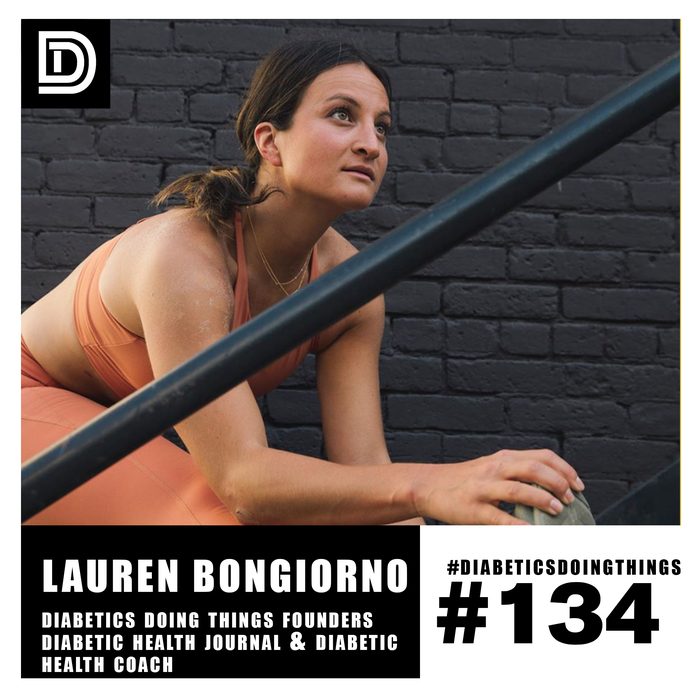
Diabetics Doing Things FOUNDERS with Lauren Bongiorno Diabetic Health Journal
Episode summary
Lauren Bongiorno returns to Diabetics Doing Things, three years after her first appearance on episode 29. She describes publishing the first Diabetic Health Journal in 2018, surveying buyers afterward, and rebuilding it into a stronger product. Her business has grown to include one-on-one coaching, a 12-week exercise and insulin sensitivity course, and the Decide and Conquer Bootcamp for women with type 1. She talks with Rob about the fear of putting a product into the world, the added pressure of now running a team, and why clients hesitate to start coaching: shame, wanting to try alone first, and finances that often mask a deeper resistance. She also explains how a 6.7 A1C in 2019 pushed her to set sleep and work boundaries and slow down.
Key takeaways
- Lauren published the first Diabetic Health Journal in 2018, then surveyed buyers and rebuilt it based on their feedback.
- Lauren says journal users have lowered their A1C by roughly 0.3 to 0.5 points on average.
- A 6.7 A1C in 2019 pushed Lauren to set firm sleep and work boundaries; by year end her A1C was back to 6.1.
- Lauren says the most common objections to coaching are shame, wanting to try alone first, and finances, which often mask a deeper resistance to change.
- Her Decide and Conquer Bootcamp runs on 'curiosity over judgment' so clients don't quit when they slip up.
Show notes
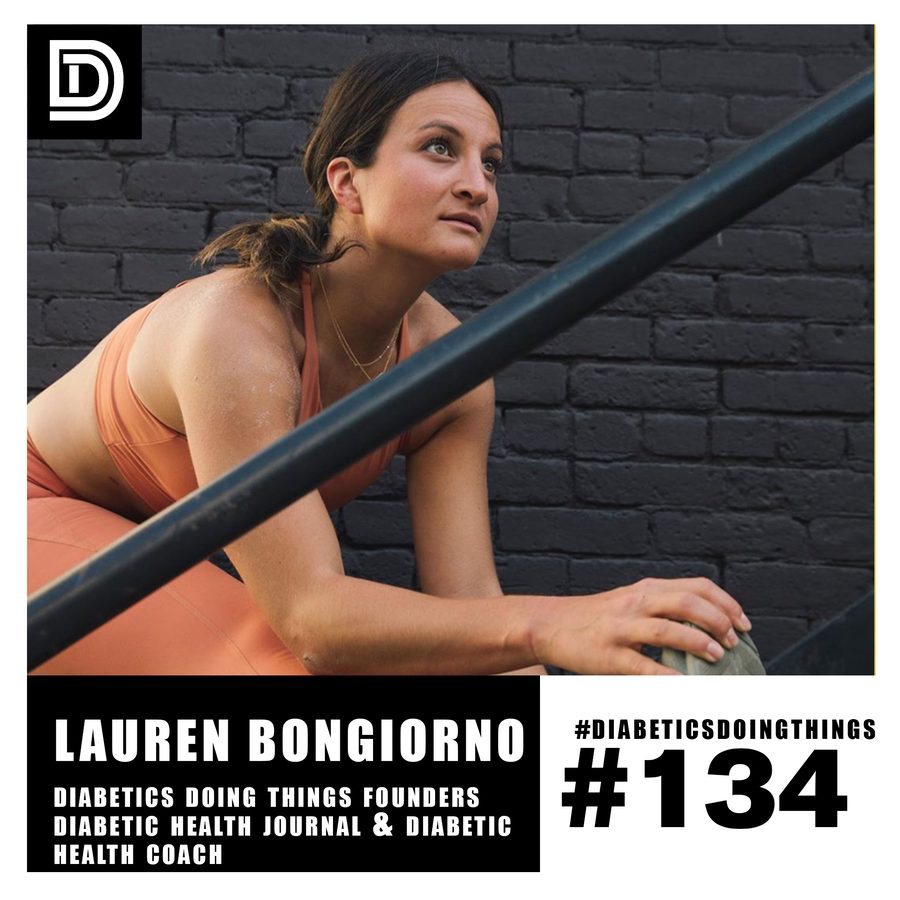
Continuing our amazing FOUNDERS series, Lauren Bongiorno (@lauren_bongiorno on Instagram) joins the pod to talk about her journey from solopreneur to entrepreneur and CEO.
Back in 2017, Lauren was one of the original guests on Diabetics Doing Things , it’s amazing to see how far she’s come in her journey since then, but be sure to check out Lauren on Episode 29 as well!
In 2018, Lauren published the first edition of her book, The Diabetic Health Journal a 3-month guide to help people with Diabetes achieve their lowest a1c. She has since added group training through her Decide and Conquer Bootcamps, as well as individual coaching. In 2020, she partnered with Lululemon to throw her first event, Together T1D, for women with T1D to come together in NYC for a weekend of workshops and empowerment.
Lauren is an incredibly inspiring person who does SO MANY THINGS! She and I dig deep into how she finds balance between her careers and in her personal life with her fiance Kris. Be sure to check out the newest edition of the Diabetic Health Journal or visit Lauren’s personal website today!
This episode is sponsored by Real Good Foods! Be sure to check out their new Breakfast Sandwiches, made with cauliflower cheesy buns with only 2g net carbs! They’re packed with protein (18g) and have no gluten or grains. Available in sausage egg & cheese and bacon egg & cheese flavors and they’re ready within seconds. Order them online or find a store near you today!
Questions this episode answers
What is the Diabetic Health Journal?
It's a journal Lauren Bongiorno published in 2018 to help people with diabetes track their numbers and habits. She says users have lowered their A1C by about 0.3 to 0.5 points on average.
What is the Decide and Conquer Bootcamp?
It's Lauren Bongiorno's 12-week group coaching program for women with type 1 diabetes, built around community support and a 'curiosity over judgment' mindset instead of self-criticism.
Why do people hesitate to start diabetes coaching?
Lauren says the most common objections are shame about needing help, wanting to try managing on their own first, and finances, which often stand in for a deeper resistance to change.
How did Lauren Bongiorno deal with her own burnout?
After her A1C rose to 6.7 in 2019, she set boundaries like protecting eight hours of sleep and limiting after-hours work, which she says helped bring her A1C back to 6.1 by year end.
Full transcript Searchable, with timestamps
Rob Howe: Welcome back, ladies and gentlemen. We are well into 2020. I hope you are crushing your 2020 New Year's resolutions and 2020 goals and that you're operating on that 2020 vision. Also, a reminder, if you have diabetes, be sure to get your eyes checked. Visit the ophthalmologist. It is not my favorite thing to do, but be sure to do it. It's important. What's also important is we are continuing our Founders Series, and today I'm very excited to introduce a very special guest. You definitely know her or have come across her in the Diabetes Online community. She was on this podcast on episode 29 back in 2017, and her name is Lauren Bongiorno. And she is an amazing diabetes health coach. She's an author. She is an influencer. She's a brand ambassador. She's an entrepreneur, CEO. And she just came off of her first Together T1D event where she had an in-person event in New York City, which is something she's just been manifesting over the last few years and finally put into the world. Her mantra is decide and conquer. She's a good friend, an absolutely inspiring individual, and I hope you guys really dig into some of the ins and outs of being an entrepreneur and growing from a solopreneur to CEO and managing travel and work and balance and relationships all at the same time. So without further ado, I want to introduce you to Lauren Bongiorno, the founder of Diabetic Health Journal. Thank you for continuing to listen to Diabetics Doing Things. We've been doing this for four years now thanks to listeners like you and the support of amazing sponsors like Real Good Foods. If you're involved in the diabetes online community, then you have for sure heard of Real Good Foods and their low-carb pizza and enchiladas, which are delicious, but they've really outdone themselves this time with their new breakfast sandwiches. It's just like your typical breakfast sandwich, sausage, egg, and cheese, or bacon, egg, and cheese, except the biscuit is made out of cauliflower and the whole sandwich has only two net carbs. That's two net carbs. And if you pop it in the microwave, it's ready in seconds. I'm not a big breakfast guy because I don't like having to deal with big blood sugar spikes for a high carb breakfast. But when I'm really craving a breakfast sandwich, I grab a Real Good Food sandwich out of the freezer and hit the road without having to worry about a big spike in my blood sugar. Check out realgoodfoods.com to find them in the store near you or use code ROBHOW, that's me, to get a discount when you order the sandwiches online. I'm a big fan of brands who continue to support creators with diabetes, and there has been no bigger supporter of me and my friends in the diabetes community than Real Good Foods. If you haven't checked them out yet, give them a shot and let me know what you think. And now let's get back to the episode. Welcome back to another episode of Diabetics Doing Things. We're still telling the amazing stories of people with diabetes from all over the world. my guest today, my good friend and a former guest on the podcast, Lauren Bongiorno. Welcome back to
Lauren Bongiorno: the show. Thank you, Rob. I'm so excited for this. Me too. I was looking forward to this.
Rob Howe: You know, you and I were chatting on Instagram about blocking off time and I'm taking Mondays and Fridays to do a lot of diabetics doing things work. And so when I saw this pop up on my calendar, I was like, yes, this is going to be a great, great energy in this episode. We get to cover a little bit of our past, right? You were on episode 29, really before this podcast was anything more than an idea. I didn't even know what it was going to be at that point. Gave your time and obviously just a killer episode. And, you know, then over the years running into each other at events, you're on the first panel here in Dallas. I just want to say how grateful I am to know you and to be friends with you and peers with you in this community. It's been an awesome couple of years and I'm looking forward to the future.
Lauren Bongiorno: Oh, well, thank you. The feeling is completely mutual. And I think I go, I can speak for many people in this community when we say thank you for all the content you put out and inspiration that you bring to us every day and being such a spokesperson, not only for the diabetes community, but also for the men with type 1, because I know it's very over the women. We have no problem speaking up, right? And then there's you and a bunch of other guys kind of pioneering the male space of the diabetes community. And I just love watching it.
Rob Howe: It's always interesting, right? Whenever somebody who's, you know, an influencer or a person in the community who shares kind of the breakdown of their demographics of who follows them and who engages with them on Instagram, it's almost always predominantly women. And I take a little bit of pride in like seeing that men number creep up a little bit. Guys are very, and all of the various, you know, diabetes bros that you mentioned that we, when we talk about this, it's uncomfortable for guys to get vulnerable. And I think the ladies in the diabetes community provide us with an excellent example of, you know, what can happen and the powerful things that can happen when you just with acceptance and vulnerability and community. And so, you know, that's what I'm trying to do and trying to show that it doesn't make you weak. It makes you strong. And there's a lot you can learn. A lot can really help your life just by being open and being willing to say, hey, I'm involved in this community and this is something I want to be a part of. Yes, I love that. And I think we can definitely, we're all learning from each other. This is a, I mean, you know, business on Instagram isn't something that's so new. It's been around for a few years, people using the platform and to, you know, give their services. But I think in the diabetes space, it's something that is still a little bit new. And to be at the forefront of it with you and so many other people. It's just to be able to learn from each other and elevate each other is so exciting. It's a great peer group too. Um, you know, just the people that I've gotten to know in this community, like yourself, people who I wouldn't have in my life otherwise. And I think that's the, when people ask me like, what's the best thing or why should I get started? Uh, it's the friendships and the peer group and you know, the support is just to see somebody who's kind of like you and, uh, out there in the world. And I think for me, when I look at somebody who, uh, is very similar, has a similar background and approaches things in a similar way, I, I look to you, to Lauren Bongiorno. So, uh, you know, I, I'm like this, I think a lot of people as well, you're a very young person for the earth. Uh, but I feel like your soul is just miles ahead, uh, and you know, much, uh, much older and much more wise and
Lauren Bongiorno: experience than maybe your birth certificate would suggest. Yeah, no, it's true. I mean, I'm turning 27 this year. And for many years, I guess I didn't share my age because out of fear of she's too young, what could she know? But, you know, I doesn't, it doesn't matter. I think what what age you are, I think it's about your experiences. And especially if you're in an industry like me, it's that it's at the end of the day, bottom line, it's the transformations that you're able to bring. And, and it's just, it's so exciting to, to, to think that, um, I, how many, how many lives, um, are, are impacted by just the Instagram community, um, and the resources available between, you know, your podcast or my coaching or the diabetic health journal, you know, all of that, um, as well as, you know, other people's things. And to think that 20 years ago when I was diagnosed, it was like, there was none of that. Like I knew one other kid in my diet, my, my school that had diabetes and like, he wasn't a resource. He was just that other kid that has the thing that I have. So, um, really exciting, really exciting.
Rob Howe: So let's talk a little bit about transformation. So I'm going to rewind a little bit, um, and talk about Diabetic Health Journal, which I believe you published in 2018, which was the first, uh, the first year it was released. Is that right? Yes, correct. Perfect. So I'm just making sure my timeline's right. So, uh, you, I remember, you know, following along in your journey and you kind of went out to a cabin and you got space and you finished and you published your first, uh, you know, book and it is now part of your business and part of your life. And what did you learn? And now, cause I love the new, the new branding and you and I were talking about that a few months ago. You've got this new look, this new feel, this reinvigorated community. What have you learned about yourself, you know, from 2018 when it first kind of came out and it was this birth, I guess, of your, you know, creativity and passion all in one piece in one package to today where it's now, it's not just you anymore. It's you and a team and you and a larger community. How have things changed? How have you transformed throughout that process?
Lauren Bongiorno: Yeah. So, I mean, it's so funny. I look back, that was the first product, product other than my coaching at the time that I had, that I, that I had put out. And it was one of those things where I just, I started before I was ready. So this reason why the new journal that just launched, you know, the rebranded one is so exciting for me was because this was in my heart, like really the quality that I wanted it to be. But if you just have that idea and you don't know how people are going to respond to it or what they're going to like, what they dislike and don't have that feedback yet of people, many people using it. It's hard. And you kind of just, instead of waiting, right, you just have to start before you're ready to get it out there. So I think putting it out there, not having that fear of, oh, it's not perfect. Oh, or, oh, people aren't going to like the color of the journal, right? Like I literally made my, the designer pick like two covers. I really was like, I don't know which one people are going to like. I put it up on Instagram, I picked the majority vote, we put that to print. And it was like, boom, you know, nine months later, everything kind of came together. And we sold out really, really quickly, quickly, quicker than we had projected. And then I got to survey everyone who had bought the journal and say, Hey, like, let let me help me help the community and make this the best possible tool. Like, what do you like? What was helpful? What wasn't helpful? And, you know, take that feedback and then implement it and now have a product that not that I wasn't proud of the first one, but this one, I'm like, I just want to like talk about it. I want to share it. And I really just want to share everybody's transformations from the people using it. Because for instance, like it's, people have lowered their A1C from like, you know, you generally, I say like on average, it's we've, we've kind of deducted that it's about 0.3 to 0.5 people lower their A1C when they're using it. And if you for somebody like who's trying to lose it to lower it from, you know, like 10 down to the sixes, maybe that's not a huge jump. But it also is a huge jump, or a huge motivating factor of like, wow, like I actually when I put work into it, and just slowing down and mindful, this is showing me that it is possible, and I'm on the right track. So I think overall, what I learned is just, you know, start before you're ready to put it out there, it doesn't have to be perfect right away. And oftentimes, you need to really just put something like I said, put it out there in order to see how you can make it better or how you can, you know, up level it on the next time. Let's talk about that for a second, because I think that's a big, like a fear,
Rob Howe: like trigger for a lot of people is, you know, when you present something like, like you said, this was your first quote, unquote, product, you had your your coaching business at this time, but this is a physical thing that exists without you. What kind of self-talk did you have? Like, did you ever experience any doubt or what kind of things did you have to tell yourself throughout that process in order to get it across the finish line, to get it into people's hands? Yeah.
Lauren Bongiorno: So, I mean, I think one of the major things for me was I knew that it worked for me and I knew that it was working for my clients because I had been giving them PDFs, right? it started out I was just writing my numbers like on sticky notes and realizing okay on the days I'm like taking track and inventory of what I'm writing down I become more mindful and become more reflective and it works for me so then I started having my clients do it early on and it was they would see they would keep saying Lauren just the act of writing it down is helping me improve my habits and my mindfulness and my blood sugars and so I had already so much proof around me that it was going to work so then the only kind of fear that there was which was only a little bit, to be honest, was just getting it from, you know, a PDF that was obviously, you know, there doesn't didn't cost anything to make to this big book that I think the I have no problem sharing numbers, but I think the first round, I think it was like around 15 K something around that. And so to put that out there and be like, oh, shoot, like this could this can fail. And one person could buy this or this can be epic and help so many people. and prove that it's not just a tool for when you're doing coaching, but you can use this on your own to kind of uplevel your diabetes management and take that first step on your own. So to be honest, Rob, I actually have more fear about the things that I'm creating now because to me it seems like there's more at stake than there was in the beginning. And because now I have a whole team, and so my business relies on – I need to make sure that it's running properly and that the operations are good and all these other elements because it's, you know, people depend on it too. Um, and so it's, to me, it feels like there's more at stake now and I'm more talking myself off of ledges now than there
Rob Howe: was in the beginning. Oh my gosh. That is, uh, that resonates with me so much. Um, I find that, you know, I had a whole lot less fear, anxiety questions about my businesses, this podcast included, but also my agency when it was just me and I had no clients and I had no, you know, calendar issues. And, you know, I was just reaching out to whoever I could to come on the pod. I didn't have to worry about sponsors or anything like that or content or whatever the case is. But something that's been, you know, really resonating with me lately is this idea of growth. And, you know, when we look at social media, for example, we think of growth as like always positive. Like we're getting more followers, we're getting more views, like we're getting more clicks or whatever those metrics are that we're looking at. It's always like going up represents growth. But growth in your life is often painful. Like when I was a kid, I think about that like 12-year-old kid who woke up every day and was like a little bit taller. And, you know, my body hurt. And I had to take time to get used to learn how to move again and how to exist in this new body that I wasn't as familiar with. And that's how I feel with business is, you know, So three years ago, this company was two people, me and my business partner. Now there's 12 people. And they each have their own lives to live. And I'm sort of responsible for them. Same thing on the podcast. It's like before, hey, there were like no downloads. And now there are a lot of downloads. And now there's like more content. And now more outreach and more systems need to be in place. And so growth is not always super positive at first. But it just takes a lot of learning. and takes a little time and takes a little different perspective. So I totally resonate with everything that you said. So after you recalibrated and were like, this diabetic health journal is something that is really good. We're looking at these results. You surveyed your customers. You really took a jump forward, right? You went from solopreneur to full-blown CEO to entrepreneur to business, to running a business. How did you go? What was that process like? Was there, did you weigh the options or did things sort of fall into place? Did you just feel like
Lauren Bongiorno: it was time? How did you coach yourself through that? Yeah, no. So, well, and I also think I just, before I answer that, I want to add to what you said about the comfortability of growth. And I think it's, it's even so applicable if somebody is listening to this and isn't a business owner, and it's just somebody who's trying to uplevel on their diabetes, right? It's like, Like your ego, your ego's main job is to keep you safe and your ego likes consistency and it likes just predictability. And so even if you're in habits or if you're in patterns of something that doesn't serve you, your ego still seeks that out. So that's why it's uncomfortable when you go to change a habit or you go to grow your business or you go to add team members or take risks because your body, your ego is like, whoa, wait a second. I don't know what's on the horizon. We've never been here before. I can't predict what's happening. And that's why there's such an overwhelming fear of the unknown for people. But I think what's really helpful and especially has been in my business is understanding that that is just my ego and kind of putting it aside, putting it aside, saying, hey, I know you're there. I see you. I know that's not what's really going on. And I know you're not really helping me move forward. So I'm going to move forward because I trust in myself. I believe in myself. and I'm going to keep you next to me and you can do your thing. But like, I'm not going to really sit in that and own that. And then I think to answer your question, like what really helped me was just understanding the potential of what was happening inside my business. So that is the diabetic health journal was it's a source of passive, not only passive income of, you know, in the sense that it was created and it's there and it's, you know, people are purchasing it every day and it's, you know, that part of that passive product that I have in addition to now my courses and my e-books and everything. But it's an entry point for people if they're not ready for coaching. So a lot of times on my consultation calls, we'll ask them before the consult calls, like, have you purchased any of the other products before? And if you kind of see what I've done in 2018, you'll see that I have a product offer for a lot of different stages of where people are in their journey. Because the truth is, is that if you haven't done any self-work, right, or any you've never invested in, let's say, a trainer or a nutritionist or anything to kind of in that self-development category, it's very hard to take somebody and guide them into, well, you should, you know, invest in yourself for a high-level coaching program because they're like, whoa, that's really uncomfortable. So let's kind of take them along the way from the Diabetic Health Journal, helping them just notice their patterns and notice the difference that reflecting and becoming a little bit more mindful makes them. And then once I had that, I realized that there was still a huge gap. And what else did people need? So at the end of the day, I figured out at the end of 2018, I had a lot of clarity on where the trajectory of my business was going and what my mission in life was. And that clarity really is that the mission of my company is to help people become empowered and self-sufficient with their diabetes management. I've even focused for now in even a little bit more to women with type 1. And it really once I had that clarity of like the self-sufficiency was really what I want to help people with and what people just feel the most transformed with when they can lean on their doctors at the end of the day. but they're like, okay, cool. But like, I know how my body works. Like, let me teach you because I've done all this self-work to understand the nutrition piece, the hormone piece, the insulin sensitivity piece, all these different aspects. Like that is just moves me. Cause I'm like, yes, like you're owning your life. And that's what I want for everybody. Um, because I wasn't always there. And when I made that step, I'm like, life feels just so much better this way. When I understand my body, it doesn't mean that I, we don't have, you know, blood sugars out of control. But when we do, we understand why they're happening and we understand the patterns and we know how to reset. So I realized I had the diabetic health journal, I had one on one coaching, and I needed to fill these fill more gaps to help people become more self sufficient. And if you break those areas down to nutrition and insulin sensitivity, and then, you know, emotional support, what's what was born was the seven day blood sugar reset, which is a, a guide to give you confidence in knowing exactly what to eat, what makes you feel best in your body. Then the 12-week climb, which is a 12-week exercise program specifically for type 1s to increase their insulin sensitivity for better blood sugars. As you know, I know you do weight training as well in addition to basketball and all that and just how important that is, that element for blood sugar control. So I wanted to teach people with exactly, you know, go to the gym and here's exactly what you have to do. You don't have to be guessing. And it's scary sometimes, especially for women to go away from the treadmill or cardio machines. And so here's a strategic way that's gonna give you exact results. And then moving up the ladder, you have courses. So I have my exercise and insulin sensitivity blueprint course, which is higher level. And it's really education-based, less coaching, some self-coaching elements in there, but video modules of explaining all the different elements that you need to increase your insulin sensitivity for blood sugar control, which is something that was mostly talked about with type 2 diabetes, but it is so important, such an important aspect to work on within yourself for type 1 management, right? And coming down from those highs quicker and not just spiking after a meal and staying up there for hours, right? Understanding how the hormones and the exercise and even intermittent fasting as a tool, I go over that in there, how to introduce that is so important. And just knowing how your body works. And then up the ladder, you go to the Decide and Conquer coaching bootcamp. And that really is the most transformational in the sense of, um, we have, we have right now in the January one, 22 women who invested in themselves to go from just isolated and kind of overwhelmed with their diabetes to feeling supported and in control in a community of people that aren't just there to chat on the group calls and in between sessions, right. About like diabetes frustrations and this and that which you generally get from like a Facebook kind of community. But everybody is there to work on themselves to better themselves and to learn how their body works. And to go from point A to point Z, and they woke up and said, I no longer want to just keep trying harder on my own, I want to be smarter and learn the tools that has worked for tons of other women in Lauren's coaching programs over the past five years. I want that for myself. Um, and that really is like, it's, it's incredible. Um, I have my assistant coach Jess inside the program who's type 1, and she helps a lot with, she does mindset work with the girls. Um, and it's just a constant community of, of people supporting each other. Um, and me, us giving them the roadmap of where
Rob Howe: they need to go. And talk, I want you to talk a little bit about that for a second, because I've seen like the Slack, the Slack group, and you've got the video chats and, you know, some of the results that you and your team share on social media of, you know, people's wins and victories. And, um, you know, it's oftentimes very amazing and like really profound stuff that people are achieving and overcoming. What's that, what's the environment like, like in a group of people like that, uh, where you have a, a place to be like, like you said, uh, people who are there like
Lauren Bongiorno: determined to accomplish something rather than necessarily looking for a support group. They're looking to take action. What, what's the energy like in a group like that? Oh, it's, it's absolutely incredible and indescribable. It's, I, I can't even, unless you're in it, like I can try to describe it, but basically I would say, um, not everybody is up to that level right now because they're coming in with like fire under their booties. They're like, I'm ready to go. Like, I know I want this. I just haven't been able to get there on their own, on my own. And it's a place. So for instance, January right now, they just started last week. And so they're actually, no, I'm sorry, two days ago. Yeah, it's only been two days. So on Tuesday, they started. They've been talking so much in the Slack channel, we've been helping them that it feels a lot longer. But in the beginning, they're really, really motivated. But what's going to start to happen is once they start about get into like week three, week four, problems are going to start to come up. It's kind of like a diet where you're really good the first, you know, three days or the first two weeks. And then you start to crave chocolate and then you eat like the whole M&Ms and you're like, oh, shoot. Or you start to say, I'm going to have a perfect week of blood sugars. And then after day one, you're like, oh, I failed. Like I had a 200. And so they're going to start putting in the Slack channels like, oh, this challenge came up, this challenge came up. But instead of giving up, we're there to support them. And everybody's there to lift them up of like, let's get curious about why this is happening. So we have like the DCB codes, which I call like the Decide and Conquer Bootcamp codes. There are five codes that I kind of introduced them on the first call. And one of them is curiosity over judgment. So for 12 weeks, just encouraging them to let go of judging themselves and letting go of expectations of themselves. Because oftentimes we set our expectations too high, which, you know, normally we're like reach for the stars, right? Like you can do anything. I almost tell them like only commit to like what you are 100% you think you can accomplish. And then, you know, if something if your blood sugar goes out of range or you're not able to stick with your commitment that you made, you know, in between sessions, like don't judge yourself or just get curious about it. And so we kind of help them get in that mindset of like, why is this happening? Why did that pattern come back up for you? Why did you, you know, decide to not eat the lunch that you packed and go out for pizza, but like forget to bowl is halfway through? Like, let's just get curious about it because judgment and judgment and curiosity take the same amount of effort. But judgment doesn't get you anywhere. Curiosity does.
Rob Howe: totally agree yeah and i think like you know being curious and i know uh you also incorporate a lot of mindfulness and a lot of meditative practices into into your programs and into your life and curiosity is a big part of that and like letting go of that judgment and asking why things are this way and looking into them a great way to solve some problems and really dig dig into things i want i want to talk a little bit about uh what you said honestly just a few minutes ago But you talked about when you talk to people for consultations, what are the hurdles that people build up in their minds before joining, signing on to some sort of coaching program or in a group coaching experience? What are the things that if someone's listening and like, hey, you know, I'm not really sure that this is for me. What are those things that you hear from people when you talk to them in those consultations?
Lauren Bongiorno: Yeah, absolutely. So I would say like some of the biggest ones. One is actually shame. which I didn't expect in the beginning because I've never felt that way. But I think for me as a coach, if I've learned anything, it's not to project yourself onto your clients, that every single person has their own journey and their own mindsets and their own beliefs and experiences. And so for a lot of people, shame comes up. Like the shame that I should be able to do this on my own. Like why am I reaching out for help? That's one thing that comes up. another thing that comes up is well let me try to do this on my own first which is always an interesting one because when somebody says that it's actually just their ego protecting them um and then what happens is they go to try to do it on their own and then they book a consultation six months later for like the next you know round and they're like okay i tried and i just wasted six months because i was in the same pattern like i'm like yeah like that was you know we talked about that that was gonna happen like it's okay like that's normal um and then another one is of course, just finances. But what's actually really interesting is when finances become an objection point, it's not really the financial thing. It's the value that they're placing on the boot camp. So if somebody, what I found is that if somebody doesn't value health as their number one priority or diabetes, it's, they, they fall back on the finances as like their thing. So I've had, for instance, some consultations where they've, they've been like, Oh, it's just too expensive for us right now. Or like, we just can't allocate that, like they're her and her husband, let's say that. And, you know, it's that at that time was what happens, but then they come back, you know, let's say three or six months later, even a year later. And they're like, we need to get pregnant like tomorrow. And my A1C is not down. And my doctor told me, you know, we can't get pregnant unless my A1C is, you know, down from a 7.5 to, you know, a six, like, I need this now. And I'm like, wait, but like, you didn't have the money. And they're like, I'm like, did anything change? And they're like, no, nothing's changed. But like, we just know we need this now. So it's actually really funny how the psyche plays a lot. And, and I think for me, I had a business coach who is, I love her to death. And she was in a spiritual psychology program. And she just helped me a lot understand more about like, what's going on inside a person's brain of getting to the point know, booking a consultation and really how much is going on inside their minds. And to really like put on my coaching hat, starting on that consultation call, like coaching them through, like instead of just trying to get them into the program, like really guiding them to say like, you know, here's where you are now. This is all the pain in your life. Like, let me give you the gift of, you know, all of this transformation that you're going to have. all you have to do is like say yes and level up and get past the ego part of your body wanting to stay in the comfortable zone so um it's really fascinating work i really enjoy it um and and it
Rob Howe: just really does show like how much mindset plays a part in you up leveling and you just need to kind of get out of your own way sometimes and i want to talk a little bit about that with you and kind of shift this back to your journey um you mentioned earlier that you know now and you were very confident when you said it. And I love that I smile really big. You said, this is my life's purpose. Uh, and like helping people with diabetes and helping women, uh, right now specifically with diabetes is, is your life's purpose. When did you know that was there a moment where, you know, obviously you are a person who, you know, part of your journey that I'm familiar with, obviously, because I'm friends with you and have followed you for a number of years, you know, you went to law school, uh, and you had this plan for your life that has totally changed. Um, and now, you know, you're talking about having multiple conversations with people on consulting calls and, and seeing that you're able to step in and help solve a problem for a person. Um, when did you know, what, was there a particular, particular moment that stands out to you, you know, in the last few years where you're like, you know what, this is exactly what I'm supposed to be doing.
Lauren Bongiorno: Oh my gosh. Well, so first I didn't go to law school. I applied twice. I took my LSATs twice and was applying to law school. And I'm so glad I decided to, quote unquote, put it off for a year. At least that's what I told my parents to pursue health coaching. Right. Like my parents were like, what is she doing? But we'll just let her do this and for a year and then, you know, put her on, have her go to law school. But I think for me and the reason why I can so confidently, I think, talk about helping other people get out of their way. Like I'm not solving any problems when people come into the boot camp or coaching. I'm not solving their problems for them. first, I don't believe that anybody has problems to be fixed. I believe that everybody is whole. I believe that whether you have a 6A1C or you have a 10A1C, that is where you are supposed to be in your journey. And it's all about just helping them, show them the way, guiding them to their higher level or that next level for themselves in a holistic manner. But I think for me, like I said, the reason why I can, I feel like it's, it's, it's easier to see this in other people now is because I was in, I stood in my own way for a while. Um, I started coaching before I was necessarily, before I necessarily had clarity on where all of this was going. All I knew was that I loved helping people. I loved helping people kind of heal, um, their frustrations within themselves and feeling lost and overwhelmed. Um, I didn't know in the beginning that that would be with diabetes. I didn't know if it would be with men or women. I didn't know in what way, but I just knew I needed to try that because that's where my passions, um, were like in college, all I was doing was working on myself. And I'm like, Oh my gosh, like there's not enough support, um, for anybody. And then I think when I realized, I think a really defining moment was I was sitting, I was sitting, um, at a dinner table with three of my girlfriends. They're like, I love them to death. And they're just such good soundboards. We all are for each other. And, um, It was when I was having diabetic clients, people with diabetes, you know, as clients, but also non-diabetics clients a few years ago. And I was just describing this one one-on-one call with the one person with diabetes. I remember who she was. And my friends were like, you light up when you talk about that. Like, why are you not leaning into that more? And I just remember being like, I don't know. I think like I'm afraid to be in a box. I think I'm afraid to identify even like as a diabetic health coach because then that means that like all I am is like my part of me that's diabetic shines more. And that was something back then that I was afraid of like four or five years ago. So it was really just me being in my own way of like self-identifying as just a diabetic when I'm like, I'm not just a diabetic. Like I'm everything. I'm whole. Right. it's like no Lauren like you need to like turn this part you need to let go of that um and you can still be whole right but like there's a whole community of people out there who feel overwhelmed and lost just like you did at one point and you kind of figured it out and you've um and you need to lean into this because like this is this is something you really enjoy and you just need to do it on a larger scale so for me it was just like that conversation kind of just put a light bulb on of like, why am I running away from this or not fully leaning into this when I know in my heart that this is what I love doing and the people that I love to help. It was just more about me at the
Rob Howe: time and the way that I identified with myself. Yeah, but that's, you know, that's an entrepreneurial struggle, I think, is, you know, constantly questioning. I think entrepreneurs question the status quo as just sort of innately. Otherwise, they would just, you know, fall in line. And so I think that's certainly a huge part of, you know, that journey. And I mean, I think for you to be able to look back now and say, hey, I'm so glad I was able to, you know, talk myself into, you know, being who I really am is just an incredible story. It's really powerful. And I think, too, this sort of feeds into my next question that I have for you. And this is something that I'm sure you see or hear a lot about just scrolling through your own Instagram feed as well. It's like diabetes burnout for people who are extra involved in the diabetes space, who have diabetes social media, who speak at diabetes conferences, who help coach people with diabetes, who think about their own diabetes, who talk to diabetes companies. And it's just a lot of diabetes can be very overwhelming. And in the same way, I'm sure, you know, being a coach and can be also overwhelming. So how do you find balance in that business owner, coach, exercise guru, influencer on Instagram, partner for Chris, and just in your general family life, as well as managing your own diabetes and your own mindset? How do you find that balance that allows you to continue to keep doing what you're doing?
Lauren Bongiorno: yeah well I mean I guess I'll first start by saying that I I my pattern so far in the past five years has been balance out of balance balance out of balance right so I'll be good for six months and then the next six months I'll just like run myself to the ground um and then 2019 so last year I just feel like the end of the decade was a really good turning point for me where things just I started to get it like it was like four years of doing that I'm like that's exhausting like we need to change something here. You can't possibly just keep going, going, going, going, going. You need to slow down and practice what you preach. And so for me, and I shared this on an IGTV earlier in 2019, I got an A1C back. And I mean, whoever's listening, no judgment. This was high for me. I know it's not high for everybody, but for me, my A1C was 6.7. And in my adult life, I'm used to keeping it between like 6.0, 6.3, kind of in that range. And that was just like a wake up call for me. Like, you know, Laura, like you need to rein this in a bit because if you don't feel your best, like you can't be the best partner, the best CEO, the best, you know, whatever for everybody around you. And for me, I am just not okay with living that type of life. And it's, it's, this is my, this is my thing. But for me, if you're living a life that you're not working towards that full potential, it's kind of like I just have this growth mindset. I'm like, what's the point? Like, this is that I want to tap into that. I want to unravel all the parts that aren't serving me. And I know it's a practice, but I'm here for it. I'm here to work. And so I think the balance piece like that really was like, OK, well, let's see what needs to happen. And what's interesting is the second half of 2019, I started to work where I guess put up some more boundaries around just like working at home, like when leaving the office, prioritizing sleep. Like that was a non-negotiable I put on my list. I wrote down like I will not negotiate with having less than eight hours of sleep a night. Like it's just not happening. and I started putting up those boundaries for myself and and I realized that I wasn't nothing was getting taken taken away from my business it was actually growing as a result of that and I was feeling more energized from it and so it's I think in our society we're taught like we need to work harder and longer where for me what I really really realized and I feel like I've been saying this on Instagram for the past five like few years or how many years I've been on the the gram, but I really deeply in my heart of hearts understand this now that mindfulness and slowing down and like stillness is actually the way to hack growth. It's not like running fast a million miles an hour. Like that's a way to burn out and that's not possible.
Rob Howe: This is something I really want to talk about. This is huge.
Lauren Bongiorno: Yeah. And I'll just end by saying so by the end of last year, in 2019, like my A1C, I brought it down back to a 6.1. And I was just like, okay, like this proves to me that whatever my ego was trying to say to me, like beforehand, that I need to work harder, longer, and I could sacrifice myself to help other people. like I was getting around like all my clients like the July Decide and Conquer boot camp that went through it every single 120 women lowered their A1Cs almost if not a point more than a point or like just under a point so like from an eight to a 6.9 kind of thing and I was like sitting there like uh like why aren't I having this transformation like I need to be in this program um and so that was just it was it was it was hard for me to watch and then I was so happy that I was able to, you know, be on this, get myself back in line.
Rob Howe: I think that's, A, I mean, good for you for being able to recognize it. And I think that I've had a similar, you know, realization, you know, for me, it's a little bit, it's not health related, but it was, you know, more like content and business related. And I was realizing that I wasn't taking a lot of my own advice and I was sacrificing my own goals and my own, you know, aspirations to serve others. And that was fine. That was serving me well for a time. But I realized, like, it was kind of making me miserable without me realizing it. And I want to go back to what you were talking about, about hustle culture. Because I think in entrepreneurs, you know, it's like work around the clock and grind all day. And, you know, I'm putting out all the work in and I'm out here at midnight and I'm making emails and doing all this stuff. And I think that can be a super slippery slope. And especially I think for, you know, in, in the male entrepreneur space, especially it's sort of this like badge of honor, if you're not sleeping and Hey, look what I, all I can get done by not sleeping. And, uh, a, that's like super not healthy. And, uh, but, and I think there are some people maybe that, that are just wired different um i was talking to somebody recently like kobe bryant for example is like a notorious notorious like three hours a night sleeper that's like oh my god i hear him so i mean he also had all these like horrible injuries throughout his career so you can kind of like do a little bit of uh like digging if you're in there it's like maybe if he got some sleep maybe he wouldn't have been hurt anyway but i think they we glorify these guys who men and women who are like, oh yeah, this guy sleeps three hours a night. He's in the office 4.30 in the morning. He lifts every day. He doesn't eat anything except wheatgrass and, you know, grass fed beef from, you know, Wyoming that's flown into his office every day via helicopter. And it's like, he's only drank water. He's never had anything else. And he loves his wife and his children, but they never see him because he's teleconferencing in. And it's like, okay, like this guy is not, this is a fantasy. This is like marketing. This is a lifestyle that doesn't exist. And in some way, in some cases, you know, I read funny tweets on Twitter. It's like, of course, a guy with a billion dollars is going to say the only way to beat him is to wake up at four and four in the morning and go to work because he doesn't wake up till 11 o'clock because he's already made it, you know? And so I don't know, I think finding that balance and, and really being, I, I have now in my, in my old age, now that I'm in my thirties, I look and I'm like, it's not hustle, it's intention. And, you know, I can go spend three hours in the gym playing basketball and I have to equate everything back to sports because I'm such an innate jock. Like that's the only way things make sense to me sometimes. But if I go into the gym for three hours and I just goof around and I don't really do anything, I'm not going to get any better. I know that. But if I go in and I work on something very specific for like 15 minutes, purposefully, intentionally, and very like plugged in and, and very attentive and I'm very mindful of what's going on. I can make a difference in a short time. And then I'm also not wiped out later because I still have energy. I've like checked something off my list. I can go on to the next thing. And I think I've tried to apply that more to my personal life, try to apply that more to my business life. And that has just resulted in so much more balance, uh, for me. and honestly happiness. And I've been working and I work with a therapist. I've talked about this a little bit on the pod, not as much, but I work with a couple of therapists with Erica and I and an individual therapist, because like you said earlier, sometimes you need somebody with you to help keep you accountable. And those people have helped clear up a lot of cobwebs that I've just been, you know, pushing to the side for many years and weren't really serving me. So finding that intention, I love one of the, one of the things like you have a bootcamp named it, but even before it was a bootcamp, it was just a mindset is deciding conquer and being intentional is like, decide that you want
Lauren Bongiorno: to fix this or that you want to tackle this and then go win. Yeah, absolutely. And it's, and I, I love what you said too, about like the intention, because the, I guess the biggest difference between, I guess the first few years when I was a five figure business to now running, you know, multiple six figure business is it's totally different. How I run my day, my calendar looks completely different. You know, in the first few years, it was just everything stacked back to back to back. And it was just like, what needs to be done? What isn't done? Like, let's just put it today. And now the intention of my week, how it's set up kind of like what you're doing with your Mondays and Fridays, like specifically putting it there. But I only have like two to three major tasks I'm getting done throughout the day. And for the most part, like I'm making sure that they're uninterrupted, like phone is in the, you know, away from me so I can't see it or it's, you know, off next to me. My Slack is off. My team knows in my calendar, like do not interrupt Lauren while she's doing this. And then also I have different days. So like one day is like content creator day. That's when I'm writing my newsletters. That's when I'm writing my Instagram posts or creating mapping out content. And then I have, you know, CEO day where I'm having team meetings and we're talking about the team's KPIs and how, you know, making sure everybody's on track with like their goals and everything and addressing any concerns or issues that came up that week within like the back end that like I needed to know about. And then another day is, you know, coaching, you know, that's usually two to three days a week. I'm a coach and I'm showing up there as like as a guide for people, whether it's the boot camp or one on one calls or, you know, consultations during our enrollment process that we have. And so I feel like it really does come back to the intention behind it and understanding that we're not machines and and it's actually more productive to take a 15 minute break in the middle of the daytime without your cell phone and just walking outside to like reconnect to yourself than to spend those 15 minutes like, you know, like rushing to, you know, answer, I don't know, like a few emails in between like your next calls, because that's not necessarily elevating you. That's not intention. That's just reactivity. Right. And it's a challenge. Yeah. Of course. Of course. And I, and you can't, if someone told me this five years ago, I would have been like, okay, cool. Like, that's awesome. But I don't have a team and I don't have people to help me with this. And I, and I don't, and I would have made excuses because it's something that I had to learn. And I think every entrepreneur has to learn at their own pace. And I'm nowhere near, I'm sure we are, I need to be for my potential for running, but I'm, I'm slowly getting there and I'm feeling more in control every,
Rob Howe: every day. Well, I'm glad to hear that. And I think, you know, what you talked about for, you know, every entrepreneur has to learn it. I think you start to see once you have that commitment, whether it's, you're starting the business, there comes those moments where you have to just jump in with both feet. At the beginning, it's, hey, I'm an entrepreneur, I'm starting this business. Then there's those micro moments along the way where you're like, hey, I'm going to carve this time out for myself. Or hey, I'm not going to do this anymore, whether it's a bad habit or whether it's a reactivity, like you said, hey, I'm going to be accountable for myself in this area. It's like working for yourself sounds really cool until you have to be accountable to yourself and you're not living up to your own expectations. It's like, those are those hard looks in the mirror where you're like, oh man, if I'm really going to do this time to be accountable, time to actually, you know, check this box and really, you know, decide and conquer this and kind of overcome this challenge. And that's part of that growth and props to you for doing it. And also like, I think it's cool. I get to be, and a lot of us get to be on the sidelines, getting to watch you do it. It's pretty inspiring.
Lauren Bongiorno: oh well thank you and I mean I think at the end of the day that that keep what the thing that keeps me moving forward is like the the results and just seeing people's transformations I mean like getting dms sometimes for people's women's husbands being like she her her diabetes is in so much control now that like our relationship has improved um or getting moms you know like texting me or not texting me, but sending me emails or DMs. And it's just like, that's a small little ripple effect that she's going to that person's going to make, you know, for for their entire, you know, the people that they get in touch, you know, they encounter, whether it's in their family life or friends or, you know, social life or work. So I mean, it's something that I love, like, I really can say, full heartedly that I don't get overwhelmed by the fact of having type 1 and working in the diabetes space. It never like dawned on me until somebody asked me if that was the case. But I just think that during my business, I really put on a different hat. Like I'm not Lauren, just the personal person with diabetes. I'm like Lauren, the coach or Lauren, the CEO. And I'm here to just like guide people into their highest selves, whether that's my team or, you know, the people that I'm helping with in my clients in the group coaching programs, or, you know, even in courses and using the diabetic health journal, like I'm here to help you like be that best level, that best person and, you know, unlock your greatest potential of diabetes.
Rob Howe: And it brings me joy every day. Well, it's so great that we have you. And I'm just a very fortunate person to get to interact with you and to be, you know, your friend and peer in the diabetes space and looking forward to the next time that I get to run into you in person.
Lauren Bongiorno: Yeah, Rob, I hope it's soon. 2020, let's do it.
Rob Howe: I think it's, I'm sure it's going to happen at some point because I also have, I gotta, I gotta leave you with this. You know, as we sort of wrap up this episode, I have a life goal that you've inspired for me. So if you're, if you're ready, I'm going to put this on right now. I haven't told anybody else this, maybe Erica, but here's the deal. Bongiorno squats, right?
Lauren Bongiorno: Bongiorno squats.
Rob Howe: Usually like the most common place that you see them is in an airplane bathroom, like a laboratory.
Lauren Bongiorno: Right. I, next time I'm on a plane, I will take a picture of what I look like in an airplane bathroom. I don't fit. Like I have to lean back just to like use the bathroom. Like I'm like basically not in it. So the idea of doing a squat in one is like beyond not possible.
Rob Howe: Oh my gosh. That is hilarious. I never thought about that before. It's a very limited group. Like you got to be very tall and large to not fit in one. And I, I am, I'm like right at that threshold. So my goal is to someday be on a plane with a big enough bathroom that I can do a Bongiorno squat. And that will mean that I'm either like flying first class on Emirates air, which is great, or like a private jet or something. And when that moment comes, I'm going to tag you
Lauren Bongiorno: and I'm going to be like, Hey, achievement unlocked goal achieved. I love this. Oh, manifesting. And we have the proof to back it up. We'll come back to this one day, whether it's in a year or five years. Um, and I'm looking forward to getting tagged in that post. I'll even put it on my highlights. Just Rob's Bongiorno squats. Just one, just one video. I'm going to hold you
Rob Howe: to that. All right. Um, well, thank you so much for taking the time today to, uh, to chat with us and to just update us on, on where your journey has taken you and all the amazing things that you and your team are accomplishing and, and the wins of your, of your clients. Um, obviously like those, those things kind of spill out. And I'm, you know, they stopped me in my feet. I like looking like, wow, like an impact on a person's life for reducing their A1C by, you know, even just one, one point is incredible. So thanks for all that you do. If people want to, obviously you're an
Lauren Bongiorno: easy person to find, but this is our chance to plug. If someone has heard you on this podcast today and wants to get started, where do they go? Yeah, absolutely guys. So my Instagram is Lauren underscore Bongiorno. You can find me there. Shoot me a DM. Let me know that you found me on Rob's podcast. Introduce yourself. I'd love to meet you. And then if you're looking for a good resource to just kind of kick things off with your diabetes to just become more mindful and reflective with it, the Diabetic Health Journal is a great place to start. And that's just www.diabetichealthjournal.com.
Rob Howe: Awesome. Well, we will include all your relevant links in the show notes. And Lauren, just again, thanks so much for coming.
Lauren Bongiorno: Awesome. Thanks, Rob.
Rob Howe: Thanks again for listening. Please follow us on Instagram. Check out our sponsor, Real Good Foods. We're diabetics doing things on all the major platforms, and we also are available on Spotify. So if you prefer Spotify or your subscriber, check it out. I definitely have listened to more on Spotify in the recent years. They've got a lot of great podcasts, and it's just super easy to shuffle from music to podcasts and back and forth. Leave us a review if you have a chance, and tell a friend with diabetes about this podcast. That's the best endorsement and the best support that you can provide. Thanks so much, and we'll see you next time.
About Lauren
Lauren Bongiorno is a diabetes health coach, author, and entrepreneur who created the Diabetic Health Journal and the Decide and Conquer Bootcamp coaching program for women with type 1 diabetes. She first appeared on Diabetics Doing Things on episode 29 in 2017.