

Quarantine Fitness with Nic Caracandas
Episode summary
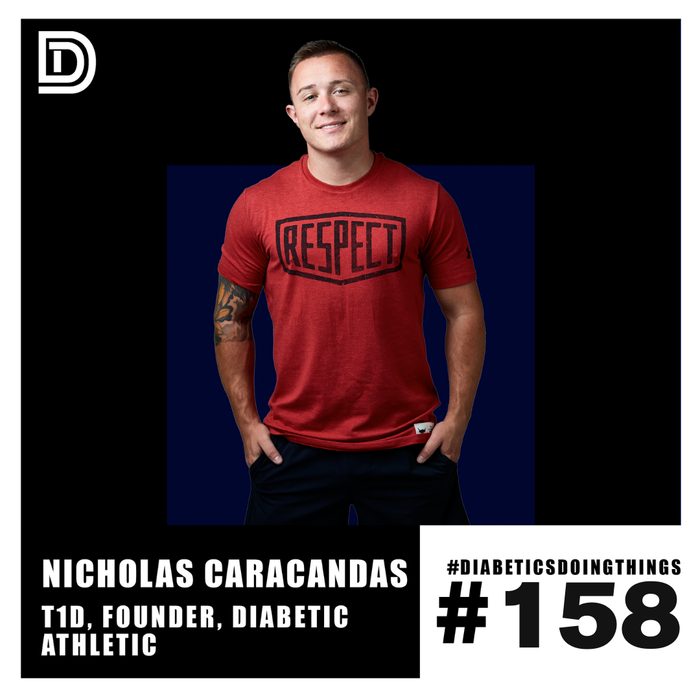
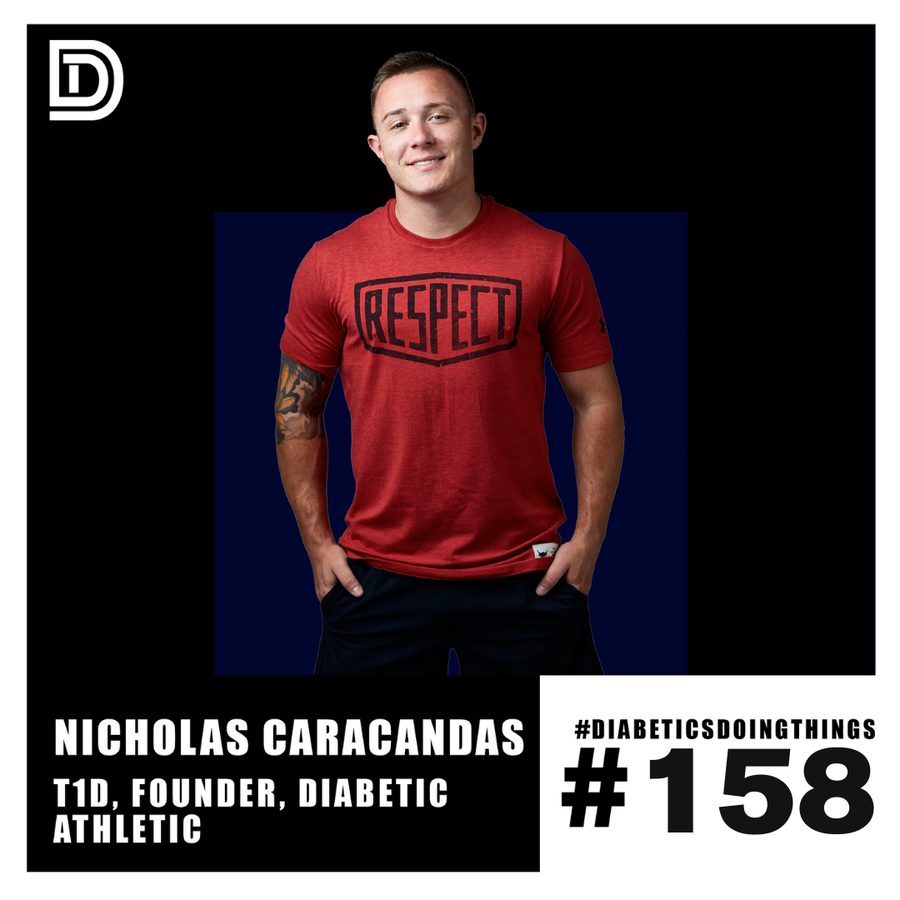
Nicolas Caracandas, from Cape Town, South Africa, was diagnosed with type 1 diabetes at age 10, five years after his mother. An endocrinologist told him diabetes would be the biggest part of his life and that he could choose to control it or let it control him. After a difficult, non-compliant adolescence, he moved into the fitness industry, eventually buying into a gym at 23 and unknowingly taking on its debt. He later built Diabetic Athletic, an online training and nutrition platform for diabetics, after years running in-person gyms. The conversation also covers healthcare and insulin access in South Africa, the small local diabetes community, and daily life under COVID-19 lockdown.
Key takeaways
- Nicolas's endocrinologist told him at age 10 that diabetes would either control him or he would control it, and that framing stuck with him.
- He didn't fully understand the gym's finances before buying a 20% stake and ended up taking on part of 3 million rand in debt, which his now-wife, an attorney, helped him resolve.
- Nicolas built Diabetic Athletic around a 'triangle of control': training, nutrition, and medication.
- He says carbohydrates aren't the enemy for an educated diabetic, since understanding insulin resistance and carb intolerance allows better food choices.
- In South Africa, public hospital insulin is free but slower-acting, and government healthcare means long waits, while the Cape Town diabetes community is small but open.
Show notes
Delayed Publishing Due to COVID-19
Nicolas Caracandas (@Diabetic_Athletic on Instagram) from Cape Town, South Africa joins the pod to talk about his winding journey with Diabetes and Fitness.
Diagnosed at age 10, Nicolas’ only experience with Diabetes was with his Mother, who was not involved in his life when he was diagnosed. Always athletic as a kid, Diabetes provided Nicolas with a love and extra focus on sports and athletics, and early in his career he knew that he wanted a career in fitness. Fast forward to today, where he runs Diabetic Athletic a training and nutrition platform for people with Diabetes.
We talk about:
Living with Diabetes in South Africa
Life as an entrepreneur
What it’s like to help other people with Diabetes
Embracing the grind as a small business owner
What quarantine is like in South Africa
Thanks to Nick for coming on the show, and apologies for the late posting!
In this episode I mention that Lilly has put a program in place for people who have lost insurance due to COVID-19 to get their insulin capped at $35 per month, for more information on that program, follow this link
All of Nick’s links below:
Questions this episode answers
What is Diabetic Athletic?
Diabetic Athletic is an online training and nutrition platform founded by Nicolas Caracandas for people with diabetes, offering programs, free resources, and carb counting webinars.
What is it like to get insulin in South Africa?
Nicolas says insulin from government hospitals is free but involves long waits and a less fast-acting formula than options like Humalog; insulin bought privately is pricey but not prohibitively expensive compared to other costs.
How did Nicolas Caracandas get into the fitness industry as a diabetic?
His endocrinologist told him at 17 that managing diabetes came down to training, nutrition, and medication, so he chose a career centered on fitness rather than a desk job, starting as a personal trainer and later buying into and running gyms.
What was South Africa's COVID-19 lockdown like?
Nicolas describes a strict 21-day lockdown (then a second one) where only essential goods could be bought, no deliveries or restaurants were allowed, and people without permits could be arrested if caught outside.
Full transcript Searchable, with timestamps
Rob Howe: Yo, yo, welcome back. It's Rob Howe. This is Diabetics Doing Things. I am working my way through my COVID stash. I've only got a couple episodes left before we can start with new programming, but I'm not going to make or record anymore until I get these episodes done. So thanks for hanging with me. Did want to say before I introduce this week's guest, whose name is Nicholas Caracandas from Cape Town, South Africa. Did want to apologize. We did this interview back in April. It's great. it's the first person from Africa on the podcast, but not the last. We're going to do a whole lot more here very soon, but I should have prioritized this interview to get out sooner. So Nick, I'm sorry it took so long. He's diabetic underscore athletic on Instagram, diabeticathletic.com. And he was diagnosed at age 10 as a type 1 diabetic. And we are on this podcast talking all things diabetes in Africa, diabetes and fitness, entrepreneurialism, starting your own business. It's going to be a fun one. So please enjoy this interview with Nicolas Caracandas. Everyone, before we get to this interview, I just want to let you know that we have a new newsletter that is going out every single month. It's called The Drip, and I'm super proud of all the hard work that Eritrea has put into it. It's basically a monthly roundup of what I've been thinking and a little bit of a just background on what's going on with me, as well as all the things we've been up to at Diabetics Doing Things. If you don't know, on Mondays, twice a month, we're doing a Doing Things Day takeover. So twice a month on Monday is Doing Things Day on Diabetics Doing Things Instagram. That's where we're giving the Instagram login and letting someone take over to tell us about their day. We've had people from all over the world. We've had people from Lebanon, people from Gaza. So we're going places we've never been and we're covering topics we've never covered. We've also done two takeovers here in the United States. So some at home, some away, ultimately trying to showcase a lot of different perspectives and diverse perspectives of life with diabetes. So if you want to catch a roundup of all that stuff, subscribe on diabeticsdoingthings.com to The Drip and just have a little bit of fun in your inbox from a diabetes perspective. Okay, let's get back to the episode. Hello and welcome back to another episode of Diabetics Doing Things. We are telling the amazing stories of people with diabetes from all over the world. And all over the world is a key today because my next guest is joining me all the way from South Africa. Please welcome Nick to the show. Nick, I don't want to butcher your last name. How do you say your last name? So it's Caracandas.
Nicolas Caracandas: So Nic Caracandas. Okay. Yeah, but we all say Karakandas. Caracandas is good.
Rob Howe: Okay, good. All right. Well, my US, like my American Texas accent is just butchering your South African vernacular. So I apologize. But welcome to the show, man. You have lived with diabetes for, I believe, like 23 years. So why don't we give it a start on like diagnosis and
Nicolas Caracandas: then we'll learn a little bit about you. Cool. Thank you. Thanks, Rob. Thanks for having me on the show. I'm really happy and excited to be here. Well, starting at diagnosis, gosh, okay. So I was 10 years old when I was diagnosed with diabetes. And yeah, like I said before, my mom had been diagnosed with type 1 diabetes five years prior to me. So I dealt with it, you know, I suppose vicariously through her for about five years. And so it started just before I was heading to high school, just as I was at about two years left of primary school. And yeah, it was tough. You know, I had a really good endocrinologist at first and he kind of set really good foundations for me. Um, and that was really, that was really, that really helped, you know, he basically told me that diabetes was going to be the biggest part, the biggest thing in my life. And I had a, I had a choice at that stage where I was either going to let it control me, or I was going to take, make a choice and control my diabetes. And for a 10 year old, that was that was it resonated with me more than it should have so it was it was really good and he said you know you can eat whatever you like you just like as long as your sugars are in range and so those two things are one of the most foundational factors that I actually pass on to my own my own clients but I suppose high school happened high school as a diabetic teenager is difficult. We don't listen. You know, our minds as kids are not wired to think of future consequences, just isn't. So diabetes didn't really feature much in my high school career. I mean, there were days where I just didn't even carry my insulin with me. I left it at home. And that's not great. However,
Rob Howe: yeah, that happened. And I think, you know, it speaks more to being a teenager than I think it does being a person with diabetes, because, you know, when you're a teenager, you don't want to listen. You feel like you know everything. You definitely don't want to listen to your family. So, you know, there's, there's a lot of, I think a lot of people look back and they say, oh, my teen years with diabetes were really tough, but really it's just your teen years are tough. And
Nicolas Caracandas: sometimes diabetes is part of that. Yeah. And diabetes compounds that. I didn't grow up with my parents though. So I was staying with my grandmother from quite a lot, from quite a young age. So there I was, funny enough, she's also diabetic, my dad's mom. So she, but she's type 2. um so she was you know she was great she is a great grandmother um but uh not not yeah she wasn't present so there was really no one to check up on my diabetic control and so the overwhelm almost set in as denial I guess and for many years that's what it was however you know I'm good at making a long story longer I um I got into the fitness industry at the age well I knew I wanted to be there at the age of 17 because my endocrinologist, like I said, he said to me that there's, you know, there's really only one way to really manage your diabetes. And that is through training and nutrition, uh, with your medication. And he said, and he spoke to me about a triangle of control and I actually call it now the diabetic athletic triangle of control. And that is really how I, I see diabetes is that there's three sides to the control. Um, and, uh, and that was when I was choosing a job that was pretty much where my mind was at I was like cool so I need to choose a career where I'm going to be able to concentrate on training and nutrition before my medication I can't be behind a desk I can't be too corporate you know I enjoy sports I played first team in quite a lot of sports made inter-province sports and I thought no that's definitely where it needs to go so um my job shadowed nutritionist it was a very female-led industry at that time so that's not where i went biokineticist was also good um the studies and the the discipline where biokineticists are concerned was really more rehab than it was um performance and i suppose the aesthetics is what i was really into at that stage so personal training was where i where i headed with that and i thought no i can definitely you know nail my nutrition and my training and I can look after my diabetes while earning a living and personal training led into owning my first fitness facility and that was at the age of 23 I had um it was a hairy story um I don't know if you want me to go into it yeah why not but I'm
Rob Howe: I think uh you know you're talking about uh making a long story long like sounds like you're perfect
Nicolas Caracandas: for a podcast because that's basically what this is oh man you got to be careful what you wish for I can seriously make a long story longer, but I'll leave out the boring bits. I had worked at a gym for about three and a half years and I was working about 120 hours a week, which is, it was a lot. I was working from 5 a.m. in the morning till like eight, sometimes 9 p.m. at night with two hours break in the day. So I went from thinking that I was going to really manage my diabetes well to not even having time to really manage it that well because I was on the gym floor. um that didn't happen for too long but three years is a long time and well I got offered to buy into the gym um and so I did for 15 percent uh it ended up it ended up at about 20 percent and I thought you know great you know we chase titles when we're young and titles are everything although they're not important at all we realize this as we get older and I was like wow okay so I've moved up from personal trainer to gym owner this is great 20 percent I was like sweet um you know they were taking 55 to 65 percent of my salary at that time anyway so it was 120 hours but still kind of selling the tv to pay for the tv license at that stage um but uh yeah being being 22 years old 23 years old i didn't actually find out much about the business so i'd actually bought 20 of 3 million rand debt that the gym had uh so that was a shock to the system so i went from yeah it was the start of my career to going cool well now I'm three million in the red and what now and so my girlfriend at the time who's now my wife and mother of my child she's an attorney and she basically came in and said to the owners Nick's going to take the assets of the business and you guys are going to take the liabilities because it's yours and that's where it's come from and that was that and that was how I had my first I suppose clientele base all to myself and i really had to roll with the punches in and learn how to manage a fitness facility and uh and everything tax business people yeah and everything else from there and i think
Rob Howe: that's one thing that i love talking to people who own their own businesses about because the challenges that you're describing kind of they just come with a territory right it's like you say you want to own your own business but you don't really know what goes into that until you buy into it and you have to like everybody thinks it's so cool to work for yourself until you are working for yourself and like not doing a good job and you have to like give yourself a performance review you know like yeah because no one else can manage it for you yeah and in the deep end i mean
Nicolas Caracandas: it was deep end of note you either swim or you sank it was just one of those things kind of like diabetes right we don't know anything about it we got it and we just say right you can deal with it and hopefully live well or don't deal with it. And, you know, complications come knocking. So that was that. And obviously being a diabetic, I had started diabetic athletic at that stage already. I had, you know, I was making diabetic athletic tops and I had a blog, diabeticathletic.wordpress.com, you know, free blog and so on. And I wrote articles about it, but I never really got into the diabetic niche because I didn't feel educated enough to do so. So I kept it very non-diabetic with a diabetic athletic kind of name. And it was on my sports performance and so on. And so that went on. I closed that gym down just because the lease came to an end, moved up to a facility double the size. And that was for another three and a half years, moved out of there, moved into an even bigger facility. And then I really started to take diabetic athletics seriously. I mean, I'd owned fitness facilities for about eight years then and realized that there's really no money in the owning of gyms. It's difficult to make a good living because the overheads are so high. Margins are so low. Yeah, and the margins are low. So, you know, rent is really high. You need to have a whole lot of members to be able to pay staff, to be able to run the facility and then take enough home to live well. and so I closed the gym down and I decided that I needed to figure out how I was going to take my in-person training and figure out how I was going to move that online so that I could provide a service either as good or better to diabetics around the world and that's really where I started making diabetic athletic a full-time job. And you know as you're making that shift
Rob Howe: obviously you really understand the you know fitness business uh from like owning a gym perspective than like actual brick and mortar gym was it you know was it challenging for you personally did it feel like taking a risk to jump into something that's a little bit more online that did it feel different or did it feel right at the time it felt right but i think it felt right
Nicolas Caracandas: because ignorance is bliss you know i didn't know i didn't know how hard online would be you know Online, when you try and, you know, my service comes from a place of empathy because I am diabetic and I've lived the very struggle that I try and provide a solution for. And it's a very real struggle and we need those very real solutions. But I had no idea how hard it would be and hard in a good way. But it's easy to sell something to someone when you're selling in person because, you know, people buy from people they like. If I talk to you in person and I look into your eyes, you know, you get that feel.
Rob Howe: there's that connection and and it's hard to say no to somebody when they're standing right in
Nicolas Caracandas: front of you yeah that too that too now online there's a lot of trust that has to go into it you've got to you've got to try and establish like you've got to try get people to know you and to trust you before they even consider um using your services and online it's not as easy as you know brick and brick and mortar if there's a gym in your area you know you need a gym it's close you're going to join because you know what you're getting um and uh everybody's trying to make money off of diabetes these days and uh that is it's that i think that's also a biggest challenge challenge because there's just so many non-diabetics and diabetics that feel that they have that they i suppose not everyone's got an opinion but um there's just way too much information out there and you've got to try and separate yourself from those that feel that just because they have a car they are now trying to be a mechanic and that's really not what it is so what i did was i put a lot of effort into trying to separate myself from that and being sure that although i had the terminology the industry jargon the knowledge and the ability to get myself in shape and and my clients i needed to try and be above average as to how I could translate my understanding into my fellow diabetics understanding as far as nutrition, training, and diabetes is concerned. And that's really what I've been working on. And it's been going well.
Rob Howe: So let's talk about that for a minute, because I think it's one thing when you have it down for yourself and you have this plan and you kind of go, you work on executing the plan, having good results, maybe, you know, just getting in, working with a few clients, feeling like you're on getting into a rhythm, getting on a roll, what was it like for you? And maybe describe the moment where you, where you recognize that this is really helping someone, that this was like really clicking for, for one of your clients or for, you know, as you and your client were working through something, you'd like, Oh, like, this is really what I'm supposed to be doing. Sort of the, uh, you know, every, everybody has a plan until they get punched in the face is what Mike Tyson said, uh, one time. So, and business plans are kind of like that. Can your business plan survive a client? Did you find that, you know, your assumptions you made were right? Did you have to make pivots? Did you have to change anything? And what was it like when it
Nicolas Caracandas: really started to work? Very good question. Wow, where do I start there? Let me just say that Diabetic Athletic Now is a product that has taken a lot of failure. You know, the feeling of being able to help a client and get them to the end goal i knew that from my years of in-person training um the feeling of being a diabetic that's overwhelmed by our diabetes not being able to be our own secret weapon as far as our diabetes is concerned was really why i started diabetic athletic like i said personally i knew what diabetic overwhelm felt like and overwhelm always leads to inaction, always. So I wanted to be there for my clients, not only in that one hour they trained with me in the gym. And that is where, so I kind of reverse engineered what I wanted. I knew what I wanted to do. And I knew the feeling that I had when I was able to deliver the promise. I just had to figure out how I was going to do that online. Be there for, you know, my clients literally 24-7. but being able to supply that online. And that's really, I suppose, where the trial and error started. It's been tested over and over and over again. We started Diabetic Athletic off quite simply. It was a three-week program just really teaching people about diabetes, a little bit more about diabetes, basic nutrition, and PDF training plans. And that was it. And that was going well. But then I realized that, you know, the prescription is easy to get. You can Google a training plan, a nutrition plan, things to do. The prescription is easy, but people, when we get the prescription, you know, you get emailed an eating plan in your inbox. We don't use it. So I had to ask myself, why don't we use it? And that's because there's no, there was no accountability and it wasn't enjoyable, but it's also just not enough because, you know, we need, we need guidance and step-by-step guidance and diabetics.
Rob Howe: something that i that i think about sorry for interrupting you i think it's you you make a really good point so let's just put let's just do a little case study and talk it through so if i'm online and i want to hire a trainer i want to get in shape i'm not happy with the way that i look or weigh or i'm training for something um so i fill out a form or i make a purchase of like a pdf and it goes into my inbox and in my brain something goes off that like i've done it i've check the box. I've got a trainer. I've got a plan. So my brain reacts like I'm doing something good. And then maybe I never go back to it. You know, like I think somebody was telling me, a guy who's also in the fitness industry was saying that his clients, he sold like, you know, something like 10,000 eBooks and 50% of them didn't even get opened. So somebody gave him money for them and they never even opened them. And I was thinking, I was like, that's probably like a dopamine response in your brain. Like, Hey, I've, I've done this. I've got a trainer. I've got a plan. Now I can just say it and talk about it. I don't have to actually do it. Right. Um, yeah, absolutely. So how do you, how do you deal with that? A and then B, how did you take that accountability and make it something that's a little bit more tangible?
Nicolas Caracandas: Well, that's the difference, I guess, you know, when you just need to lose weight or when you just want to start training or you want to, you know, people, what guys want to buff up and ladies want more muscle tone. They just want a nicer shaped behind and firmer legs and arms. Those aren't important goals. Those are not important to most people because if they were important, people would achieve that. So those are blanket goals. So diabetes and helping diabetics is a far deeper value ladder, I suppose, because there's a lot more benefit to having a program that's going to take away your diabetic overwhelm that's going to make you not only feel better in your own skin but keep you away from diabetic complications which we all stress about as diabetics so you know when a diabetic signs up to the program they are already so much more invested in it because it's not just a wishy-washy kind of i want to lose weight it's a i want to improve my lifestyle improve how I feel emotionally, improve the amount of time that I'm going to spend on this earth without complications, but also be more educated and empowered about our condition. And that is, it pretty much does it for itself. Diabetes is serious and people that are on my program are diabetics wanting to improve their diabetes. So they're invested from the get go. And I think that investment is key, right? You got to have skin in the game. and yeah even to kind of put it into your your business perspective like you bought into that
Rob Howe: business because you wanted skin in the game not you know not necessarily that you wanted to also take part in the debt which i'm glad you were able to get out of uh yeah i'm glad you married that awesome lawyer that you yeah that's that's a great business decision uh as well as life decision um but you know you're you want skin in the game you want to uh you want to play you know for you know, and play in the big leagues under the bright lights, right? So how, you know, when you, I love what you're saying about, you know, the importance of people with diabetes, you know, when they come into a management program and the goals are different than just looking good physically, right? That they're, I can live a long, I can live longer with less complications. What's your approach for when you first start with someone? What do you, what are the questions that you ask as you go in and kind of take on a new client? Well, the thing is diabetes is diabetes,
Nicolas Caracandas: right? Diabetes is the same for all of us. However, all diabetics are different. So you have to kind of understand where the client is coming from. So for example, if you were, if you were you and you came to me, I would want to understand how your life with diabetes has been so far. You know, what are your stresses? What are your struggles? Because if I don't understand your struggles, there's no ways that I can help you to overcome them. And for most people, now I'm generalizing, it comes down to diabetic education. How well do we know how our diabetes works? Yes, we know that, well, do we? I mean, we all think, a lot of us think because we've seen that carbohydrates are the enemy, but are they the enemy? Carbohydrates are only the enemy to a diabetic that's uneducated as to how carbohydrates affect us as diabetics. So once we understand that we are one as diabetics resistant to insulin and two carbohydrate intolerant we can then make far more educated decisions to live a life where we actually enjoy being a diabetic where we actually get to enjoy foods that we eat because we've got the empowerment and the education to make educated decisions to live the life we want to live with diabetes that isn't out of range and when diabetes is in range diabetes isn't happening it only happens when our sugars are out of range and that translates into absolutely everything when you're not stressed about your diet your sugars being out of range when you have small micro wins on a weekly basis that your weight is actually coming down your sugars are in range you're less dependent on your medication that translates into almost and pretty much absolutely everything you do and that's the biggest win because you see how people's mindsets change you see how their approach to their own condition changes and as a diabetic I know that feeling. And that is, that is exactly why, well, one, why I do it. And two, I know exactly what's going on in your mind when you're feeling a lot more confident as a diabetic, because while we're in the same boat, right. You've experienced it. Yeah. So I want to change
Rob Howe: gears and shift gears a little bit. If you're, if you're open to it. Um, one of the things that I think a lot of my listeners often respond well to when I have guests from overseas on the podcast is learning about what it's like to live with diabetes in another place. So you are the first guest, I believe the first guest from Africa on the podcast. So you're representing all of Africa here, at least for now. What's it like for a person with diabetes in South Africa? Just give us an idea of what people with diabetes are going through.
Nicolas Caracandas: Sure. That's a good question. So it's changed over the last 23 years that I've had diabetes. When I was first diagnosed with diabetes, I was getting my insulin at a government hospital. The endocrinologist that I had, Dr. Francois Bonici, he's also, well, his wife's Greek, like me, and he's an Italian. But he moved to a private hospital where he still is now. So I was at a government hospital and the government hospitals here, our healthcare system is not a very good healthcare system. It's, you know, we've got good hospitals, but things aren't run well. And so I would miss a day of school to go fetch my insulin from the hospital. And I'd get there at like seven, eight in the morning, and I'd have a number of like 323. and the way we wait in queues here especially the african community is that they put their shoes behind each other and then they all go sit down so the shoes keep their place in the line and then you know there's things about theft you know i had a pair of shoes stolen once by doing that little did i know that they don't actually bring the shoes that they were wearing they bought another pair of shoes and i learned that quite quickly but sometimes i'd wait there all day long to have to go back the next day and get another number of like 320 something um so that was that was interesting but i think in general um for diabetics here in south africa it's actually it's not i don't think it's i don't think it's bad at all and if you're not covered by medical aid insulin isn't too expensive um it's pricey but it's not too expensive compared to to other things and the insulin that you do get for free from the government hospitals isn't so bad it's just not as fast acting as I would have liked I can't remember the name of the insulin I used to use back then but yeah I had to wait like 30 minutes before I could eat and then it was it was a mission it wasn't as fast acting as a you know Humalog or whatever other fast acting's that we use, but not bad. And the doctors that were on the, you know, the public system, they are great. It's just, you are in a very long queue of fellow people using that same system, but it's great. I mean, it's, it's not bad. And what is, what would you say the like diabetes
Rob Howe: community is like, do you think people are open about it? Do you think that they're more personal and keep it very private? Are there, you know, advocacy foundations or organizations that, you know, that are to help people with diabetes or anything like that? You know, funny enough, here
Nicolas Caracandas: in Cape Town, there isn't much of a diabetic community. There are a few fellow type ones that are trying to get it off the ground, but there are no real type 1 meetups and that kind of thing here in Pretoria and in Joburg, they are, those do exist and, you know, they happen. However, you know, I'm, I'm quite a big part of a lot of the groups as far as diabetes is concerned and the overall education to how diabetics are educated about their own condition is the most shocking part. You know, you'll see quite a lot of questions on the groups saying things as serious as I can't feel my right leg, what should I do? I mean, you would, you know, normally you would go straight to the doctor and that's not really a question to ask in a support group. But yeah, meetups and so on, the community is small. If I had to answer that briefly, the community is small, People are open about their diabetes, but the community is quite small here.
Rob Howe: Yeah, I think it's always interesting just to see how life is different in different places. And I mean, you know, in the United States, we have a lot of difficulties around the affordability of insulin. Even in a time like this, a crisis where finally Lilly has capped the cost for insulin at about $35, even for people with... Yeah, so the co-pay is $35 for insurance, but also for people who lost insurance due to being laid off from the COVID crisis. So there's some good things happening, but it can be very challenging. And I think a lot of people also, if you have a public hospital or you go to a state-run endocrine center, there's just a long line. It's very difficult. So looking to spread awareness about what it's like for people all over the world. But, you know, for me personally, I'd love to come to Cape Town. It's on one of my sort of bucket lists. It's not an easy place to get to from where I am, a little bit out of the way. But I'd love to come there someday and for sure make diabetes a part of that now that we've made this connection.
Nicolas Caracandas: Absolutely. Well, you know, there's a spare room here, so you've always got a place to stay. But, man, I tell you, if you come to Cape Town, it'll be like Monopoly money here for you, buddy. Oh, is that right? 19 to 1 you got you as a free holiday that's for sure that's not bad maybe i'll have to move that
Rob Howe: up the list that's not a bad for sure man for sure yeah um so let's talk a little bit about you know at the covid crisis right now you and i were talking uh before we started recording but i'd love to for you to share kind of what it's like for you and your family uh in south africa and um you know how you guys are coping with uh the covid crisis so it's been interesting you know
Nicolas Caracandas: we are we've been on lockdown for 21 days right so only essentials can be bought online and uh from the shops so none of the shops are allowed to sell anything else other than essentials um no deliveries no restaurants none of that kind of thing and if you're caught outside without a permit uh you know you'll be arrested kind of thing and um it's been good because we need that here um you know i suppose places you know america australia uk there's been a lot more leeway um i just don't feel that south africa is the type the kind of place where you can give that leeway because you know you give a hand an arm is taken and that wouldn't be it wouldn't be good especially because we've got such dense populations and communities where you know you've got six to 12 people staying in a small room, I suppose we call it checks here. So the virus would spread quickly and it hasn't, but that's because I think, you know, our president took action, closed the borders. We did the 21 day lockdown and yesterday, well, today is day one of our second 21 days. But it's been, it's actually been not for everybody, but for me personally, it's been great. Lots more time with the family. Spending time with my daughter and my wife, it's been good. It's been really good, which is nice. And I think a lot of people are realizing that we actually, we fill our days with so much unnecessary clutter. And it's been quite a good cleanse as far as, well, it could be anything. The amount of money I spend on a daily basis, realize that it's not actually that necessary. The amount of time that I spend not doing things like food prep or exercise or activity or meditation or something just to grow ourselves as far as our mind or our body or nutrition is concerned. I think a lot of people are finding out that we've actually got a lot more time for ourselves and how important that actually is.
Rob Howe: Yeah, I think for me as well, like we talked about consumerism and, you know, things that I need versus things that I want or I just like, you know, I look at my, I was joking with some friends via text. I have this like shoe rack in my closet and I've worn like one pair of shoes for the last three weeks, you know? So I look at my, I'm like, do I need all these shoes? Like what, you know, I think really questioning, you know, what we, things that we used to think were really important suddenly are not that important anymore. And we're able to, you know, have fun with family and friends and eat good food and treat ourselves well and, you know, exercise and find time for meditation and journaling and reading and things that are good for us. And I think there is just a good recognition of essentialism and what's really important. And I hope that that's one of the things that, you know, extends beyond this sort of crisis that we learn from, because I think it's it's it's scary, but it's nice to have a reset from time to time of what's really, really important. So, well, I'm glad you and your family are safe above all. Yeah. Yeah. Thank you very much. The
Nicolas Caracandas: The world, it was spinning a little bit too fast though. I think everybody needed just to pull the handbrake up in some way. You know, obviously there's those that are getting hit unnecessarily hard during this time. But I think as a whole, the world needed to just spin a little bit slower. And that's what this has done.
Rob Howe: Yeah, I agree. And like you mentioned, there's a lot of people that have been affected. A lot of friends of mine have lost work or, you know, reduced hours or furlough or things like that. And obviously those are terrible tragedies and we got to make sure that we take care of each other. But I agree with you. It's nice to have the world spin a little bit slower from now. And at the same time, my business is like and yours as well take place mostly online. So it's pretty much been business as usual for me, except in the same place.
Nicolas Caracandas: Yeah, yeah, yeah, yeah. So I actually when I closed my gyms down in June 2017, I actually closed my fitness facilities down. My lease was coming to an end and well, the rate of what my rent would be going up from what it was, was just ridiculous. And so I decided to, that's when I decided, right, it's going to be online from now. And I must say, I kitted out my garage. I kept the things that I wanted to keep here at home. It's about 250 square meters. And I built a nice thatch lapa outside. We've got a thatch house. So we just extended the thatch slightly for the gym. And then people in Pinelands kind of found out that there was a gym here and who I was. And started eight-week courses. And that had been sold out for about 95 weeks. And then fast forward, we're here in the COVID pandemic. And I've got to say, once this is over, I don't think I will be carrying on training people in person. I've really found the value of the time that's needed for myself, which is quite cool. And it'll be tough because that's an income stream gone. But income stream gone versus growth mentally and more time for my diabetes and so on. And that's important to me. And that's priceless, I think.
Rob Howe: It is. And finding that balance, I think, is very difficult just normally. But having something to kick you into thinking about it, like a little bit of external stimulus, sometimes makes it a little easier to make those decisions.
Nicolas Caracandas: Forced to, forced to, which is what, yeah, I say the same thing about diabetes. One day you, the next day you're getting told, right, you've got to deal with this condition. And if you don't, X, Y, and Z. And so you think, okay. And then you do it. And that's what this has been.
Rob Howe: Well, Nicholas, thank you so much, man, for taking the time and for coming on and just a great interview. I'm glad we met. I'm glad we got to have a chance to have a conversation because, yeah, you and I think about things very similarly. And I don't know. It's great to meet you, my friend.
Nicolas Caracandas: Likewise, buddy. Thank you so much.
Rob Howe: Before we go, I'd like to give you a chance to say if you wanted to leave one thing that you want to just say to people who are listening, to listening with diabetes, What's one thing that somebody with diabetes listening could take away from you?
Nicolas Caracandas: What's the one thing you'd want them to know? Wow. Okay. One thing I would say that we need to realize that diabetes is important and we can't put ourselves second or our diabetes. If we wanting to look after the people that are closest to us, you know, often you'll hear people say that they don't have enough time to look after themselves because they're busy moms. or they're working moms. The thing is that our loved ones deserve us at our best. And if we're not at our best, we can't give them our best. And diabetes is a beast. And we have to learn to control the beast. And it's not hard if you have the right kind of support system. Diabetes comes down to, well, anything comes down to the support system you have. And the better your support system, you know, we need to make as diabetics, we've got hundreds of decisions that we have to make in a week. and when we've got a support system to help us make those decisions, life in general becomes a whole lot easier. Education, understanding your diabetes is very important. Put some time into concentrating on, like I said, the triangle of control, just some kind of activity. You don't need a gym membership. You just need to improve your overall activity throughout the day. Eat foods that are friendly to your diabetes, that don't cause you the need to create more management issues as far as diabetes is concerned. And you'll find that what can be a curse is not so much a curse. It's a blessing. And, well, we're not alone as diabetics. We've got a massive community around the world, and all we need to do is reach out and ask for help.
Rob Howe: I love that, man. That's some great advice, and I totally agree. And I know that being involved in the community has changed my life, and all it took was me to choose to opt in.
Nicolas Caracandas: Yeah, exactly.
Rob Howe: Nicholas, thanks so much for your time, man. And for people who want to follow you and the Diabetic Athletic, where can they find you?
Nicolas Caracandas: Diabetic Athletic. If you're on Facebook, Diabetic Athletic. If you're on Instagram, Diabetic underscore athletic. If you're on YouTube, Diabetic Athletic or DiabeticAthletic.com. I've got a lot of free resources out there as well. So it's not all charged services. Like I said, the service comes from a place of empathy and a place of shared struggle. So there are free three-week training and nutrition programs that are out there for you to use. All you need to do is just message me and I'll send you that via Facebook. And there's also carb counting webinars. So if there are any type 1 diabetics out there that are wanting to understand a little bit more about carb counting, why we carb count, how we can use it as a method to help us with our diabetes and to work out our own insulin to carb ratios, that is also another amazing free resource. And then obviously the YouTube channel, there's a lot of information that I've tried to create in ways that we can understand easily so that we can apply it. And, uh, well, that's all there diabetic athletic.
Rob Howe: Awesome. Well, I will also link all those in the show notes when I publish this episode. So if
Nicolas Caracandas: you're listening, uh, check out the show notes and you can find links to everything Nicholas just mentioned. Thanks, my buddy. Thanks for having me. Thank you for listening. If you are
Rob Howe: listening to this episode. Thank you so much for supporting Diabetics Doing Things. You listening to this episode and to this content and supporting me over the years has continued to allow me to do this and do this work, and I just really love it. If you haven't subscribed to The Drip, head to diabeticsdoingthings.com. Subscribe today. That's going to be in your inbox on the first of every month. And if you are living in the United States and you have not registered to vote, please do so ASAP for the November 3rd election. Okay, you guys have an awesome day.
Nicolas Caracandas: Thank you.
About Nicolas
Nicolas Caracandas is a type 1 diabetic from Cape Town, South Africa, diagnosed at age 10. He spent years running personal training and gym businesses before founding Diabetic Athletic, an online training and nutrition platform for people with diabetes.