

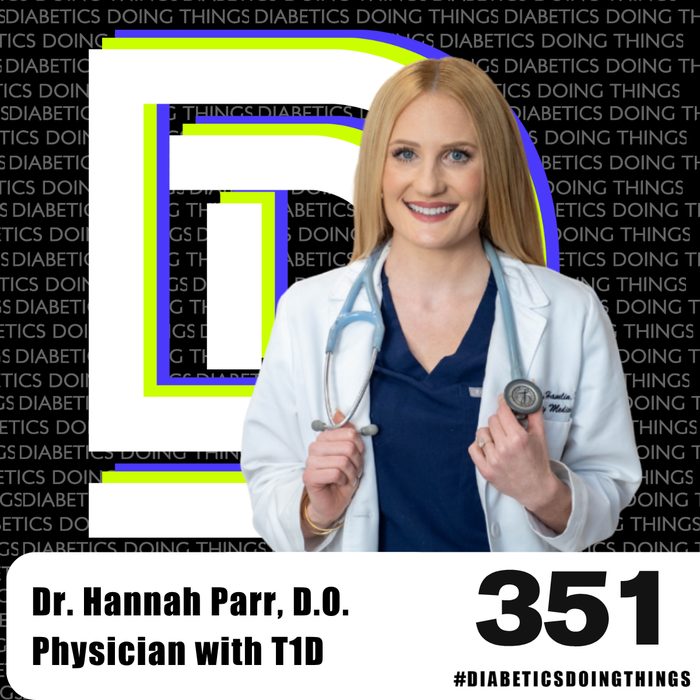
What Your Doctor Was Never Taught About Diabetes with Dr. Hannah Parr, D.O.


Episode summary
Dr. Hannah Parr, known as Hannah Hamlin when she first appeared on the podcast ten years ago as a medical student, returns as a physician trained in family medicine, integrative medicine, and diabetes education. She describes her diagnosis, her frustration with short doctor appointments in her twenties, and what medical school teaches about disease versus health. She explains why many adults with type 1 diabetes see primary care instead of endocrinology, how to prepare for an appointment, and why a good A1C does not guarantee good health. She recalls a stretch of near perfect blood sugar on a low carb diet that came with rising cholesterol, irregular hormones, and weight gain. She now runs a free monthly support group and a six week course called Living Well with Diabetes.
Key takeaways
- Dr. Parr says doctors often don't have time to cover anything beyond blood sugar numbers, so patients need to bring a specific goal to each appointment.
- Dr. Parr says up to 50 percent of adults with type 1 diabetes see primary care instead of an endocrinologist.
- Dr. Parr says a near perfect A1C on a low carb diet came with rising cholesterol, irregular hormones, and weight gain, showing one number isn't the whole picture.
- Rob Howe says lows can hit hard emotionally, and managing diabetes includes managing mood, not just glucose.
- Dr. Parr says treating herself as a human first, through sleep, nutrition, and movement, made her diabetes management easier, not harder.
Chapters
- Rob introduces Dr. Hannah Parr, 10 years later
- Reconnecting after a decade on the podcast
- The diagnosis story: DVD in Spanish, sent home
- Going from frustrated patient to med school
- What medical training actually covers (and skips)
- Why endocrinologists aren't failing you
- How to prepare for your next diabetes appointment
- Taking ownership when the system can't do it for you
- Why A1C alone doesn't equal quality of life
- The balance between control and actually living your life
- Resilience, heart health, and the unexpected gifts of T1D
- How Hannah found her way through six months of illness
- Letting go of limiting beliefs about what's possible
- The Living Well with Diabetes course and free support group
- What Hannah has changed her mind about in 10 years
Show notes
Ten years ago, Hannah Hamlin came on the pod (Episode 8!) as a medical school student with type 1 diabetes trying to figure out how to manage blood sugar while surviving boards. She's back now as Dr. Hannah Parr, D.O., a physician with additional training in integrative medicine and diabetes education, and the conversation is a completely different one.
This episode is about what happens after you get the diagnosis under control, the emotional, philosophical, and practical work of actually living well with a chronic illness. Hannah walks through why she felt angry at her doctors in her early 20s (and why that anger wasn't entirely fair), what medical school actually teaches versus what it leaves out, and how she eventually built education specifically designed to fill the gap between a 15-minute endocrinology appointment and real, whole-person health.
One of the most honest moments in the episode comes when Hannah describes a phase of her life where she had nearly perfect blood sugars on a low-carb diet and her cholesterol was climbing, her hormones were off, and she was gaining weight. Her A1C looked great. The rest of her health didn't. It's a good reminder that optimizing one number in isolation isn't the same as taking care of yourself. What she landed on instead is something much simpler: treat yourself like a human first. The diabetes management follows.
Dr. Parr also shares details about her free monthly support group for people living with diabetes and her six-week Living Well with Diabetes course built for the emotional and psychological side of chronic illness that most diabetes education never touches.
Chapters:
00:00 Rob introduces Dr. Hannah Parr, 10 years later
01:04 Reconnecting after a decade on the podcast
02:23 The diagnosis story: DVD in Spanish, sent home
03:53 Going from frustrated patient to med school
06:41 What medical training actually covers (and skips)
09:56 Why endocrinologists aren't failing you
12:50 How to prepare for your next diabetes appointment
17:36 Taking ownership when the system can't do it for you
20:30 Why A1C alone doesn't equal quality of life
24:42 The balance between control and actually living your life
28:27 Resilience, heart health, and the unexpected gifts of T1D
30:42 How Hannah found her way through six months of illness
36:28 Letting go of limiting beliefs about what's possible
38:49 The Living Well with Diabetes course and free support group
41:00 What Hannah has changed her mind about in 10 years
Resources:
Questions this episode answers
Why do many adults with type 1 diabetes see a primary care doctor instead of an endocrinologist?
Dr. Hannah Parr says up to 50 percent of adults with type 1 diabetes get their diabetes care from primary care, often because of a shortage of endocrinologists or long travel distances to one.
How can someone prepare for a diabetes appointment to make the most of limited time?
Dr. Parr recommends going in with a specific goal, reviewing your own CGM data such as Dexcom Clarity reports or the Freestyle Libre app beforehand, and raising non-diabetes symptoms like hair loss or irregular bowel movements that your doctor might not think to ask about.
Does a good A1C mean someone is healthy?
Not necessarily, says Dr. Parr. She describes a period when her A1C was in the high 5 percent range on a low carb diet, but her cholesterol rose, her hormones became irregular, and she gained weight.
What is the Living Well with Diabetes course?
It's a six week self-paced course created by Dr. Hannah Parr that focuses on the emotional and psychological side of living with diabetes, separate from insulin or carb management, alongside a free monthly support group she runs on Zoom.
Full transcript Searchable, with timestamps
Rob Howe: Hello and welcome back to another episode of Diabetics Doing Things. Today's guest is a special one because she was on the podcast 10 years ago, episode 8, Diabetics Doing Medical School. She was Hannah Hamlin then. She's Dr. Hannah Parr now. She is an evidence-based root cause health educator. For people ready to take ownership of their well-being, you can visit her website at drhannahparr.com and her YouTube channel at drhannahparr. She makes a lot of really great content about type 1 diabetes. and she and I talk a lot about living well with diabetes and how it's not just a blood sugar management problem. And the question that I asked her at the end is what has she changed her mind about the most since the last time we had an interview? So in the past 10 years, going from patient to HCP, she's a CDCES as well. Please enjoy this interview with Dr. Hannah Parr. You're going to enjoy it. Guys, who was MVP of the chat? Rob Powell! Rob Freeman Powell! What are you on? We need more of that. Hello, welcome back to Diabetics Doing Things. It's year 10. It's 2026, April 2026. So what's really interesting is if we went back in time, it's almost like 10 years to the week that this guest came on the podcast for the first time. So as I'm celebrating 10 years of publishing podcasts on this feed, I'm going back to connect with some of my friends from previous interviews and revisiting kind of all the ground that we've covered in 10 years. Her first episode was episode eight, and we were talking about her diagnosis story, living with type 1 diabetes, and her time in medical school, kind of questioning at that time where she was going to choose her focus. Her last name has changed since then, and Dr. Hannah Parr, I'm welcoming back to the show after 10 years. Welcome, Hannah.
Hannah Parr: Thanks. I'm so excited to be here.
Rob Howe: So I was kind of telling you this in an email earlier today, but those episodes, only 300 episodes fit on a podcast feed. So you got to go way back and find it on random podcast platforms now. But I'll republish the episode at some point just so people can reference it. But your diagnosis story, I've probably told maybe like the second or third most times of all of them on the podcast because it was so specific. And I remember you being diagnosed in maybe the Houston area and you and your family were basically given like a DVD in Spanish to learn your diabetes management and some prescriptions and being sent on your way. And that has always stuck out to me so much. So I think I've referenced it on the podcast a bunch of times. Whenever people talk about like the variance in being diagnosed with diabetes, I always think of you and your story.
Hannah Parr: Well, thanks. I'm honored you remember it. But yeah, it was. I think there are a lot of inpatient diagnosis in the hospital setting, like you've talked about, and most people now. And more and more, we're catching diabetes outpatient clinic. And so that's kind of where I was. I was just at a primary care doctor, went to the endocrinology office right before they closed, and they did a quick appointment, kind of sent us with some insulin and what they thought was the English diabetes education, but it was mistakenly Spanish. So we had a night trying to figure it out. And I think with all the emotions, you know, it just It takes time to learn how to take care of ourselves with this and started with a little bit and glad to be where I am now.
Rob Howe: Yeah. So let's talk about where you've been over the past 10 years, obviously come a long way, done a lot of different things. And I think, you know, now you mentioned going to the primary care, being diagnosed by a GP. And now you're kind of on the other side of that, you know, and being a GP yourself. So talk a little bit about your kind of journey as a patient and seeing that pathway through that patient lens and now being a provider and being able to maybe give those people, whether it's diabetes or otherwise, like, I don't know, a different experience than you had when you were diagnosed.
Hannah Parr: Yeah. So I think it helps having the memory of what it feels like to be a patient and still showing up as a patient, you know, in doctor's offices. But it really started for me, I think, when I left high school and went to college, I had no idea what I wanted to do. And I knew I wanted to feel better in my body. I had a lot of questions as a patient, as a lot of us do, you know, what types of foods should I be eating for my blood sugar? How can I exercise more and have less lows, right? these common questions. I just really had all these ideas of how I could feel better and not really sure how to navigate that. As you probably know, many of our listeners from whether primary care or endocrinology experiences, we are capped with our appointment times. And so I would leave my office often with questions I didn't feel I had answers to. And when I was in my early 20s, honestly, I was really frustrated about that. I kind of thought like, these are the people that are supposed to, that I'm supposed to trust and rely on to teach me how to stay healthy. And I feel like I can't get answers from them. Is it because they don't care about me? You know, I had all these ideas, like these stories that weren't true. Is it they just don't know? They don't like taking the time for that. They just want to prescribe things. You know, I was really kind of angry about it and had to make peace with that over time. So I studied nutrition at A&M for undergrad, and I started learning about how to read medical studies, nutrition science. And I I thought, oh, a lot of these answers are out here. You know, the things that I thought there weren't answers for I could find started implementing them into my life. And I started feeling better. And I thought, OK, you know, there are things here that are out there. There's just somehow a disconnect in the world, you know, between the patient and the medical study. And how do we bridge that gap? And that was right about the time I was deciding what I wanted to do with my nutrition degree. And I decided I wanted to go to medical school, specifically an osteopathic medical school, school, which is a little bit kind of more holistic minded, or that was my thought about it at the time. And so I got into medical school and went through the training. And this is what's so interesting, Rob. I think a lot of people with type 1 diabetes don't fully realize is that in medical school, the first two years are lectures and kind of the second two years are more clinical. And in the lectures, we really learn about how the body works, you know, what each organ does, what kind of biochemistry feedback loops there are, you know, how it functions. And then we learn in lectures about how it can break and what to do when it breaks. You know, so if there's high blood pressure, how do we bring it back down? If there's a broken bone, how do we support it so that it can grow back together? We learn what to do when it breaks. And I kind of got to this idea at the end of medical training. It's like, oh, the part about how to optimize our health never really came up. You know, the part that I was really, you know, wanting to learn was never really taught. And I thought, wow, that's interesting. And I kind of had a sense of forgiveness for the people that I had blamed, you know, for feeling like they didn't have the answers when it wasn't that they didn't want to share them with me. It was just that they really had to learn so much in training and they didn't get the pieces I was looking for. And so when I realized that, I thought I need to look at the medical system as a patient a little bit differently. You know, what are the things they're prepared to answer for us and what can they help me with? and then what things am I responsible for figuring out on my own? And when I looked at it that way, I thought, well, what type of doctor do I want to be? So I thought about endocrinology. That's kind of what I was set on through most of school. And towards the end, I thought, well, I know with health, if we just help with blood sugar management, we get our insulin settings right, you know, maybe our E1C is a perfect patient, exactly where we want them to be. If we're not eating in a way that's healthy, if we're not sleeping well, right, if we're not able to move and play basketball or whatever it is, we don't really feel healthy. So how do I help people learn about health? So I went to a family medicine residency and realized there that primary care doctors are able to help, again, with many of those big picture things. Look at the holistic health, right? We know as patients that different things impact our blood sugar, not just carbohydrates, right? It's stress, you know, it's sickness. There are all these things, hormones, right? All these pieces have to play together for us to really feel healthy. But I learned that becoming a board certified family medicine doctor might not give me the type of career I wanted where I really got to answer those questions that I was looking for. So I got my Texas. Oh, go ahead.
Rob Howe: No, no, no. So, well, this is great. And I think this is really like the crux of why I wanted to have you on. Obviously, we want to celebrate like the 10 years and look back fondly on like the first interview. But you and I are kind of on a similar path in terms of like the content that you've been sharing more publicly on your social media, because I think, you know, you had shared with me before we started recording, you have a little bit more space now in your workday and you're creating this content that's very similar to this series that I'm doing this year on the podcast of living well with diabetes. And it kind of comes down to this thing where I'm quoting Naval Ravikant now, where he said, you know, a healthy person wants 10,000 things, a sick person wants one thing. And so when you mentioned, you know, I wanted to feel better in my body, What do I do for that? And is my doctor set up to even help me with that from a baseline level? They don't have enough time to cover those things. And as you're describing like medical school and like treating acute things and like fixing a problem that's bothering us today and that we need to figure out, patch up and move forward. Like that's that's not life with diabetes. It's a it's a chronic illness. It's a long term. It's so many different things. And then there's also all of these either holistic, but backed in research types of solutions that we've kind of gone into. We did this very popular vinegar episode on the podcast this year, which is fascinating. It's got there's there's hundreds of studies backing up, you know, the connection between vinegar and glucose. And so going through all of these different ones, but your doctor's not going to bring you those studies and review them with you during your endocrinology appointment. They don't have time for that. They're not set up for that. So I'd love to know for you, how did you navigate that? What made you making those decisions and knowing how much time you would be able to spend with patients and understanding your priority and your viewpoint as a patient? How did that start to inform what career choice you made?
Hannah Parr: Yeah. So I want to be very clear that I think endocrinology, family medicine doctors are excellent doctors and they go through intense training and they're very good at what they're trained to do. For me, it was not understanding what they were trained to do.
Rob Howe: Right.
Hannah Parr: And so looking at that.
Rob Howe: Well, that's true for all of us, too. Like, we don't understand what. Yeah. Really. We are going in with our set of things that we want or we need. And then if we don't get that, then we feel upset. Like you like you were saying, feeling angry about maybe being shortchanged. But we maybe just don't understand at all what their role is.
Hannah Parr: Right. Yeah. Like how the system's set up and what they can do within the time that they're given. And so I think for me, I saw myself, you know, as an endocrinologist, I imagine myself as a primary care, you know, family medicine doctor in a hospital clinic, you know, seeing maybe 30 patients a day. And I thought, is that how I want to be the change here? And it seemed hard to be the change in a system that I'm sovereign for improvement in doing that. And so I got my medical license here in Texas, and I went to do further training in integrative medicine, and I also became a diabetes educator. And I thought those are kind of the pieces. And then I set myself up in clinics where I had longer appointment times. And so right now I work for a membership practice where we can have up to 90 minutes, depending on the type of appointment, with a patient. So we can really talk about those other things, right? Sleep, relationships, nutrition, all the other pieces that impact health, not just medication management.
Rob Howe: And there are so many things, right? The categories of living well that I, or the pillars, so to speak, that I've been covering are, you know, physical, mental, social, and financial. And then you kind of break them out underneath. There's so many things. It honestly seems like short-sighted to even say that there's only four buckets because there's so many more. But for you, like, you know, I'd love to think about like physical health, like and in those appointments, right? Like when usually like hopefully we have like a mental health practice and a mental health therapist or psychiatrist who's helping us navigate that side of things. But your primary care physician or your endocrinologist are really focusing on your your physical health. So for you as a patient and a practitioner and a doctor, you've got a certain amount of time, right? So let's just say for your everyday run-of-the-mill endocrinology appointment, you mentioned 30 patients a day. Even in a 12-hour shift, that's not very much time to go from patient to patient, right? What can you bring to your physician in that timeframe to help make that appointment productive? And also for somebody who's like, well, I don't even really know where to begin. what's a good framework, I guess, or good things to bring to your next appointment with any doctor, like from your perspective. And obviously, I think we're unnecessarily hard on our practitioners, right? Because we don't understand all the other things. And we want the one thing. We want to feel good in our body. We want to feel like we're making progress. And so, yeah, everything will
Hannah Parr: be caveated within that. Well, I think I love to imagine this gradient of if you think we've got kind of disease where, let's say on one side, you know, we're close to death, very disease state. And on the other side of the health gradient, we've got like living your best life, optimal health, abundant energy every day, right? All these pieces. And then at some point in medicine, our doctors have, we've drawn lines on where we call the disease diagnosis. And so, you know, it's a certain blood sugar number, blood pressure level. It's a certain, you know, cholesterol piece, right? And then that's where we say, okay, that's where the disease is. And so if we think about our primary care doctor and our endocrinologist as being very good at the line between where that disease diagnosis is and death, you know, that's where their expertise is. And we do some prevention, but often in those shorter appointments, we're not talking about things for optimizing health as much. And so really looking at, I think the first step is asking yourself, what within that category of kind of my diagnosis and on, can they help me with that I need support in? And then understanding what part is yours to learn on your own or to ask questions about or to learn about and then maybe ask them if it's safe for you to try. And so I think that's the first piece is looking at what makes sense to ask here and what doesn't. And when I think about type 1 diabetes, an interesting statistic, Rob, is that in people with type 1 diabetes in their 20s and beyond, up to 50% see primary care for all of their diabetes. I mean, not everybody's at an endocrinology office. And so you're talking to these physicians that are very good at lots of diseases. And so they may not know all the ins and outs of every insulin pump on the market because they're, you know, they're bandwidth and they have to kind of be able to look at the big picture and treat lots of things. And so figuring out what your goals are within treating your diabetes. So if you are wearing like a Dexcom and you're able to look at your own Dexcom clarity reports, which I highly recommend everybody does. It's a separate website where you can get kind of a weekly email of your breakdown of your blood sugar. Or if you're on Freestyle Libre, you know, using the app to go back and do some data analytics on your own before you show up. That can be helpful because if you go in and you don't have a goal, they're going to think, OK, we need to refill prescriptions. We need to do the diabetic foot exam. Let's make sure they've got their retinopathy screening, et cetera. If you go in with a goal and you're able to ask more specific questions, for example, hey, I notice that my blood sugars are a lot higher the week before my menstrual cycle every month. Is there something I can do with my insulin settings then, right? Then they're going to know what to look at in that brief time where they may not have known to ask you that. And I think it's even hard in some settings to expect them to ask you that. So knowing what your goal is, I think, is number one. And then understanding that a lot of times you're going to have to do your own research on if you want an improvement in quality of life with your diabetes care. So let's say your A1C is below seven and you're on a pump, maybe it's not an autonomous pump. Maybe it's one of the older models. They might not offer you a new one, you know, because they're just thinking, okay, what you're doing is generally working to prevent extreme complications. And so that works for their box, but it might not align with your box. So then you can ask, you know, those other pieces. And the last thing I would say is that if you have symptoms that are related to your health that aren't related to diabetes, like let's say you're not having regular bowel movements, your hair is falling out, you're gaining weight. There are so many other things, right, like celiac disease, hypothyroidism that are correlated with diabetes. They might not ask you about that, you know, and so you may have to volunteer those symptoms and not expect them to
Rob Howe: ask it. Yeah, I think as usual with diabetes, there's so much prep work and extra steps that you have to go through and advocate for yourself. And I think there's a big question, right? What is advocacy? I think it starts with self-advocacy and it starts with these types of conversations because, you know, doing that prep work, figuring out your goal and trying to decide on that, it can be a little bit, you know, complex. You may not know, you may not be connected. And I think your point about most people, like 50%, I believe is the number that you said of people with type 1 diabetes who are adults are seeing general practitioners because there's a shortage of endocrinologists or the closest one might be hundreds of miles away in some cases. In extreme cases, I know that that's the case. And so it is challenging to, again, like kind of put that burden or it feels like a burden to put that on ourselves. But again, what do I want for my life? What outcomes am I looking for? And, you know, what kind of quality of life do I want? And I think you've talked a little bit about doing your own research and like understanding what is your responsibility as a patient. So you, the patient. And I think that's a great step. I love that three-step framework of the preparation and, you know, knowing what you want to do and then doing some of the research on your own to take to that appointment. For you, outside of those appointments, like what were the things that came up for you as you were doing your own research that kind of led you to some of these
Hannah Parr: different realizations or kind of aha moments? Yeah, I think I love what you said about how we have to figure out what agency we have, you know, about our health. And it does feel a little bit like an extra burden, you know, like, oh, our medical system, I think we think to some extent should be set up, you know, to help us with optimizing health. And the reality is, is that Our medical system is very good, but it's not doing that for most people right now. And so I think that piece is helpful to understand. But it's not just with type 1 diabetes. It's with obesity. It's with high blood pressure. It's with high cholesterol. Everyone's in that boat. I mean, it's not just us. It's not the woe is the type 1 diabetes crew. I think that's just the state of the U.S. at this time. And I think there is a lot in motion to do it differently and improve that. But with my own journey, trying to figure out what worked for me, as I learned very early, I guess in college, I got Epstein-Barr virus and I got really sick, kind of that classic mono where your throat swells up, you're very tired. And I had those high antibodies in my system for much longer than the average person. Usually it lasts about a month or so for people. And I was six months into it and I was still having swollen lymph nodes and fevers and couldn't get past it. And that's when I really had this moment of I went to, you know, the student health center. I went to my primary care doctor back home. I went to my endocrinologist. I asked my OBGYN. And I just nobody could really help me figure out how to feel healthier. And how do I get my immune system to be stronger? And that was really hard. And in that moment, I kind of had this idea of like, OK, it's up to me. You know, they're not going to come and save me. They're not going to go home and do all this research to figure it out. And that's where I started learning about, okay, nutrition matters, sleep quality matters, you know, movement makes a big difference. And I got really into looking at just what are the general recommendations? Like a lot of people don't know what the American Diabetes Association recommends for people with type 1 diabetes as far as how much movement per week. And that's very established in the literature, you know, but a lot of people don't know that. And so looking up, what are those recommendations? I think was a great place to start. We can use small studies, but there are great agencies to put together big picture recommendations.
Rob Howe: There's been a lot of discussion about this, right? Like in the doing the nutritional guidelines. But if you really looked at it, it wasn't a guidelines problem. It was an adherence problem. Like the guidelines themselves were fine. It's just no one was following them or no one knew about them. The awareness was low. So, yeah, very similar to the ADA guidelines get updated. The standards of care get updated every year. And yet, like the majority of people in the United States living with diabetes don't have like aren't on an automated insulin delivery pump. Right. Like the majority of people are not on a continuous glucose monitor. You know, there could be access issues as part of that, but a lot of it is just awareness or they're fine or they don't, they're not preparing for their endocrinology appointments or they're with their GP. They're looking at their numbers and they're fine and they just say, OK, let's just keep doing what we're doing and move forward. It's kind of there's not a problem. Don't fix it. It doesn't mean that you're going to feel your best.
Hannah Parr: And what I learned in my own story was, and I don't know how you feel, Rob, but I mean, foundation of A1C under seven is good. I mean, that's great if you can get that. Amazing. But for me, when I was in high school, my A1C was about 7%. And then I was able to get it kind of mid-college med school down to, you know, 6.5 and then 6% lower. And the way that I feel my day-to-day, if my A1C is 7 versus if my A1C is 6%, you know, is massive difference in quality of life. How much time I'm spending sitting out trying to treat a low blood sugar feeling shaky. How much time I'm trying not to be grumpy to people around me because I'm spiking so fast, right? You know how that feels. And most of us do. And so they're going to look out for that kind of population health standard and you have to look out for the quality of life piece, you know.
Rob Howe: Yeah, I mean, just little things. I would feel like, so I took a brief break from my pump in 2022 because I was having some lipohypertrophy. My sites were failing because I was on an insulin that I was allergic to. And so it was giving me lipohypertrophy at a high rate. And so I had, you know, these lumps that were then causing my sites to kink and to get occluded really quickly, which was annoying and frustrating. And so I went on injections for six months to give my body a chance to heal. And, you know, what I didn't anticipate was being on an automated insulin delivery system for so long that's so reliable. And I was comfortable with like going off of that, the lows would hit and sometimes they hit really hard. And there are other side effects besides being shaky and having some sweats and like, you know, the usual things. but like just feeling bad, like mentally, you know, like the sort of like the sky is falling. And so like even emotional regulation becomes a part of managing diabetes. And it's so integrated into all of our systems. And yeah, I mean, thinking today where, you know, I've been on a seven day infusion set, the extended wear infusion set for three years, and my body has more time to heal and the materials and those are agreeing with my body more. So I'm able to stay in the the automated insulin delivery and my time and range is higher. And those things like really compound in my day-to-day life. I'm able to show up in ways that I wouldn't be, you know, if I was having to, even if I was doing it the same way, if the results were the same, the mental load and the amount of time it would take me to think about those things is not required by me. And so that's something that I think, you know, has given me opportunities to do a lot of stuff. doing things is like a big part of what I love to what of how I like to live. So, you know, I was so fortunate to be able to be encouraged and be in areas where I was encouraged to do things with my diabetes and that didn't have to stop me. And I know for a lot of people, that's not the case. But, you know, one of the reasons is because I put myself in a position to find kind of the right toolbox to make it work. And I benefit from, like you were saying, sleep, movement, hydration, sunshine. Like all those things have been part of my life. I'm a great sleeper, always have been. And so that's awesome. That's just a lucky luck of the draw for me. And I play basketball. You were telling me before we recorded that you met a patient who loves basketball and his whole mission with his diabetes is to be able to get his sugars in control so that he can do the thing that he loves. And I was the same way. And it just so happens that the thing I love is really good for me on the downstream effects, right? If you're talking about long-term health and optimization, And that's, I'm just so lucky that that's happened. And so, yeah, when I think of the simple things that are really good for my diabetes, I'm able to show up and focus on those because, like you said, my A1C is at a level where, A, I feel really good most of the time, feel normal most of the time. And I don't have to have the cognitive load to get it done. And as a result, I get to do the things that I like to do. And those are also good for me. So that's kind of my flywheel where not everybody has that. And some people like are afraid to get started or maybe just don't have all the information that they need. That's why I'm glad we're having this conversation. Because I think like everybody back to the quote of a healthy person wants 10,000 things. So if we can get our diabetes into a healthy place, a balanced place that opens up all these other things we can do. But sometimes it's that first part that can be really challenging.
Hannah Parr: Yeah. Yeah, absolutely. And I think to add to that is sometimes we can get our diabetes really well kind of titrated, but we are so rigid that we are not able to go out and do the thing we want to do. And it takes both to live a happy, healthy life with type 1 diabetes, in my opinion, is that we have to be able to have our control or management at a place where we can do most of the things we want to do. And then we also have to be able to have the flexibility to go out and do it. And that's a hard balance to find, right?
Rob Howe: Right. I think it's kind of easy to live in a box and be strict and get better control, but then not be able not want to eat dinner with your friends or go out and run the 5K or whatever it is. Yeah. And also, you know, I'm I find myself now as I as I become more chopped, as the kids say, as I'm as I'm getting older, you know, I'm speaking more to parents who are my same age, parents of and caregivers of people with type 1 of kids with type 1. And I think they're very much in that kind of fight or flight, like very holding on tightly to making sure that their children's sugars are in range. And I have total empathy for that. So I wonder, you know, from a patient perspective for you, we had a guest recently who talked about, I don't want to live a small life because of my diabetes. You know, I on the other side of that, like my best years playing basketball were definitely my worst years of diabetes management. I had no CGM. It was years before it would come out at a level that would be widely accepted. I played with my pump disconnected. I was under high stress and, you know, I was doing things that were really good for me, but I was making sacrifices to do what I wanted to do. and fortunately my my a1cs were still fine still in within range but there were really hard days in there and it wasn't pretty all the time and so i think you know being okay with that too say yeah i am going to run this 5k and you know if my sugars are a little wacky after that like i i still did it i'll learn from it maybe i'll i'll get it right next time and then also there's no points for being 100 time in range you know like it's nice i'm happy for people who are able to do that, if it takes me out of the present moment of enjoying the thing I'm trying to do, then maybe it's not worth it. Obviously, being safe is extremely important. But, you know, if we're going to have a high blood sugar for the afternoon from a piece of birthday cake or some pizza at a birthday party and we had a blast, let's deal with it together later on. And I think tomorrow's a new
Hannah Parr: day. Yeah, it is. It's that kind of, you know, you have to figure out what's your priority in the moment. And sometimes it's the fun or the new experience or the novelty, and that can help. And I think to add to that, what I used to think it was one or the other. And I kind of I think I even got stuck in a place of my own A1C where I felt like if I'm more strict, I'm going to have less quality of life. You know, so I don't want to be more careful with the way I treat those or not overcorrect, you know, all the things that we need to do. And so I kind of got in this place where I felt like if my control got better, I would have less quality of life. Or as my control got better, I would think that I had to be more strict to keep it that way, et cetera. And what I've learned to look at it differently, and this really helps me, is that what diabetes teaches me about my health and taking care of myself actually also helps me with a thing that I want to do more. It's kind of that is the lessons that I learned from having to take care of my diabetes that, you know, don't give up. You can't give up when it's hard. Persistence, you know, you have to try and you might fail to try again and might fail. Oh, then you finally figured out, you know, how to eat that one meal and bowl a sport, whatever it is. The diligence. when you take those skills that you have to have to have, you know, more management with type 1 diabetes and you throw them at the thing that you love, right, whether it's basketball or went to med school or all these different things in life, even hard relationships, you know, if you take those skills and you put them there, then both things can increase at the same time. And that's kind of, if I look at it that way, it feels more possible to be healthy and have a good quality of
Rob Howe: life and not feel trapped with one or the other. I love that. I think sometimes it can be really challenging to have gratitude for type 1 diabetes. And I mean, I certainly, you know, we're seeing awesome breakthrough stuff from on the cure standpoint. And, you know, hopefully there will be something for all of us down the road. But, you know, like you said, there's the, whether it's diligence, perseverance, like learning how to fail and not quit and keep going forward, wake up, you know, if you didn't get it right one day, wake up and do it again the next day. That resilience, you know, we now know is practiced. It's like you get better at it. So if you continue showing up, you get better at overcoming those obstacles. And that creates so much momentum in your life. And momentum can be like the most powerful thing. Like sometimes you just get on a roll and you start feeling confident and, you know, whatever you want to do, you can make happen. And, you know, I think that's true for people with diabetes for sure. And I think the gift that I'm looking at now from a diabetes perspective is you mentioned heart disease. You mentioned we talked about exercise a lot. You know, these are things that are affecting the population in mass. Like the heart disease, the number one comorbidity of being a human in the United States. There's a large percentage of us die of heart disease every year. And heart disease is the number one comorbidity of diabetes. And so, OK, now I'm a little younger. Heart disease runs in my family. I'm having conversations with my cardiologist. cardiologist. And he's like, what are you doing in here? You haven't had a heart attack. Nobody comes in here until they've had a heart attack. And I said, well, I think no matter what I do, I'm probably going to end up here with a heart attack at some point if we don't do some work now. And he's like, all right, cool. Well, just so you know, I've never had a patient like that, but I'm happy that you're here. Let's get to work. And so, you know, it can be, you can learn, you can get ahead of things and you can find an advantage in this knowledge of like, oh, I have a really intimate knowledge of what's going on in my body and I can trust it, but I'm also interested in making sure that I can stay this way. So I want to put back to you on your journey of like, I want to feel better in my body, like recovering from that six months of symptoms when you were in college and like not feeling like yourself. Like what were the things that you kind of went through to get to the other side of feeling, you know, hey, I'm feeling like myself Again, I'm trusting my body. I feel like, you know, I want to feel. What was that like?
Hannah Parr: Yeah. So it took a lot of looking at kind of lifestyle piece. I focused in on nutrition first because that's what I knew, you know, in school. But I realized that there was more to the story. And so that's when I found a family medicine physician who was also trained in integrative medicine. And we were able to take a little bit of a deeper look at my lab work, you know, not Just looking at whether or not something was in range or out of range on the lab work, but saying, okay, my vitamin D isn't deficient, but it's almost deficient. And vitamin D is related to immune function. So perhaps if I supplement vitamin D, that could help me get past this. You know, that makes sense. It's very logical. And we've got studies to back it up. Not necessarily standard of care in family medicine, but something that was taught to this physician in integrative medicine. And also looking at kind of nutrition and whether there were food sensitivities or something else causing inflammation in my body that wasn't just blood sugar. They could be holding my immune system back. And so I played a little bit around with an elimination diet where I took out some foods and then reintroduced them to see which ones were and weren't working for me. By the time I had had this rash on my body for months and months and just didn't know what, you know, if it was correlated to anything and couldn't figure out, tried all the different deodorants, etc. When I took dairy out, I realized the rash went away. And when I reintroduced dairy, the rash came back. And I thought, well, I don't know exactly what type of sensitivity this is, but I'll just take dairy out for a little while until I can start feeling better. And now I'm a lot more flexible with my diet. But it was that. It was kind of those questions and finding a physician that had different training. Most likely why I am where I am today where I did the additional integrative functional medicine training was sometimes we can look at those ADA algorithms and get to the end. We could do all of the things that it's recommending correctly and still have challenges with their health. And so it's taking a deeper look. You know, is there something in our environment? Is there something else going on? And that's really what integrative and functional medicine is designed to do.
Rob Howe: And you got to have perseverance with that, too, because, you know, in a two minute answer on a podcast, it sounds like, oh, we just eliminated these things. We were experimenting. We did this. But it took, I'm sure, months and lots of frustrating, you know, time. I know myself, I don't want to explain the whole thing because it's not my story to tell. But, you know, one of my friends was going through that and it took them years and just, you know, lots of time, effort, money and energy and testing, you know, and a lot of people saying, hey, we can't figure out what's wrong. Like everything's coming back normal. And you have to like, you know, having that gut instinct of like, no, like I shouldn't feel this way can feel really challenging.
Hannah Parr: Yeah. Yeah. And it's hard. And I think what I've learned, well, what I experienced personally and I've learned working with lots of patients now is that so much about how we feel about our health is entwined with how severe our symptoms impact our quality of life. And that's not something we talk too much about in medical school. But we as people with diabetes know that intuitively, right, because we remember that diagnosis. So we remember that it wasn't just the learning how to count carbs that was hard. It was learning how to accept the fact that we had diabetes and tell our friends about it that was hard, too. It was how we felt about ourselves. And that happens with any health story. And I see that in all kinds of diagnosis. People get that with blood pressure. You know, people have similar feelings with all kinds of things. And what I learned with that going through is that if we have a sense of shame about our diabetes diagnosis or whatever else is going on with our, if we feel like it's our fault, if we're feeling angry at other people for not being able to help us more, all that's going to hold us back in our healing. And so I can talk about the physical things I did for my journey, but a lot of it too was learning how to accept where I was, accept that, you know, some things didn't work for me, let go of limiting beliefs that I had about what was possible for my health, my ability to do things with type 1 diabetes, because I'm sure there are a lot of people watching this that look at you as an example, Rob, and they say, well, he could do, you know, these amazing things in basketball with type 1, but I don't know if I could. Right. And I felt that. I know there are doctors with type 1 diabetes. I don't know if I could go to med school. Would that be possible? You know, kind of pulling back those layers of limitations about health and what we're capable of. And that's how I found health, too. And if I didn't say that part of the story, it wouldn't be fully accurate because that was a big piece of it.
Rob Howe: I heard something recently. I'm going to pull it up so I don't get it wrong. But I heard it yesterday and it's who could you be in the absence of your concerns? And I really resonated with that of like, you know, just a prompt, like asking yourself the question of like, if I wasn't concerned about anything else, like who could I be? If like diabetes wasn't concerned, who could I be? If I wasn't so concerned about getting this grade on this test or like hitting this number at my job or, you know, meeting this partner or whatever, like who could I be in those moments? And I think that's something that I really resonated with that quote that you talked about, like the impact of the disease status based on the impact on our quality of life because diabetes does affect your quality of life. And I think that's sometimes the biggest hit. Like I have to tell my friends now when I go out with my friends and we're going to have a night out, I have to stop everything and give myself an injection. I have to have this awesome outfit on, but I've got to I also have to see this continuous glucose monitor. And that relationship, healing that relationship is very difficult. and you know i would encourage you know who could you be if you didn't see yourself that way and it's sometimes a perspective shift and this is i love this like this living well with diabetes journey and i want to talk about your living well with diabetes series too has kind of like it it always ventures a little bit into some woo woo like a little like culture of like hey it can't be that simple rob but like it i think it really can in that way of like if you weren't so concerned about this. Like if you, if you got that A1C number and it was 7.1, but you still didn't look at it without judgment and you just said, Hey, you know what? I'm going to continue to try to do better. I'm going to adjust some things and hopefully, you know, I can, I can help improve it. I can still want more for myself without looking at it with judgment, without being so concerned about it. And that's a really important part of that healing journey.
Hannah Parr: That's so true. It reminds me of Dr. Arthur Brooks is a Harvard professor and he teaches
Rob Howe: a course on happiness at the Harvard Business School. He's got a book out right now too, right? He's doing all the podcast stuff. Yeah. If your feed is anything like mine, you've probably seen him. Yeah, exactly.
Hannah Parr: Yeah. It's amazing. But he, I listened to an interview recently and he talked about the two questions he asks all of his students. And it's, you know, what do you live for? And what would you die for? And that's how you can find your purpose. And I think it feels woo-woo at times, but if you think about this Harvard training professor and we look at, you know, if we can find the two answers to those questions that are true for us, then type 1 diabetes doesn't really matter. You know, that's just like a thing we have to do to get to that place of what's most important in our life. And I think that's kind of what we're getting at here, you know, is that you have to make peace with all those pieces and grieving the diagnosis, figuring out how to impact
Rob Howe: your quality of life. That's important. But once you figure out, you know, why you're here and you can find those answers for yourself, diabetes is just something we do to get there. And it doesn't become the main problem anymore. It's on the backseat now. And I think that that's part of healing with diabetes is being able to kind of move past it and do the things you need to do to take care of yourself, but focus on what's important to you and your... Yeah, and remove the judgment. Like nobody makes it out of here perfect, you know. And I think you can... We've had some discussions on the podcast about diabetes complications. And you can have really great glucose numbers, really great A1Cs, and still get diabetes complications because our bodies are decaying every day, all of us. You know, we're all headed to the same destination, ultimately. And it's just what we do between now and then that, you know, those things that what are we living for? What will we die for? Forcing ourselves to answer those questions, which, you know, many of us don't do, you know, myself included for a long time. Like, you can find yourself just kind of getting into a routine of doing what somebody else tells you to do and realizing, oh, no, I haven't really made a conscious choice about what I want. And maybe that's why I feel the way that I do in my life. So important work. So Living Well with Diabetes, I want to talk about your series. Like what can you share about it?
Hannah Parr: Because we're all like that's I'm so deep into the Living Well with Diabetes. I'm Living Well with Diabetes pilled right now. I'm deep into the zeitgeist. Tell us about your program. About a year ago, I started sharing educational content on YouTube about diabetes. And a lot of that came from working with patients who had gone to YouTube or different podcasts and learned health information to try and take care of their diabetes type 1 or type 2 that actually was harmful for them because it just wasn't backed by evidence-based medicine. And so I really try to share evidence-based information there so people can find it if they're looking for it. And so from that, I then started a support group that's completely free once a month, just on Zoom with anybody who needs a place where they can talk about living with diabetes and kind of working through the challenges that come up. And so that's something that I'm doing. But through that, I created this Living Well with Diabetes course, which is really not a diabetes education course where we talk about insulin ratios. There's really nothing we do related to management in this course. It's a six-week self-paced course that you can kind of walk through and we'll do meetings each week to talk about the lessons from it. But it's designed to help people who are struggling with just what we were talking about, the emotional part of figuring out how to live with a chronic disease and feel like you're not holding yourself back, that you are who you want to be, you know, in this life. And so it really looks at kind of the emotional piece, the stuff that we didn't get most of us in our diabetes education or can't ask our doctors because we don't have the time for it. And so it's really designed for the person who's either newly diagnosed and struggling with accepting it, someone who's wanting to change their management in a big way but feels held back by some of the beliefs that they have about diabetes. And I think it's really helpful for letting go of the stress related to diabetes.
Rob Howe: It's not the actual pain of doing the thing, but it's the suffering we create by how we think about it. Yeah. When I was young, my dad told me pain is inevitable, suffering is optional. And I've thought about it a lot in my life when I'm like, am I making this for myself? Certainly the situation, it might be able to be better, but am I causing a lot of this pain myself? Very cool. I'll include links to your YouTube channel, and I've seen your post about the support group. I'm going to have to pop into one of those one of these days.
Hannah Parr: If you see me pop in, I'm coming in to share. That'll be really awesome.
Rob Howe: That'd be great. I want to celebrate, and I'm sorry I didn't prepare you for this, so we're going to go off the brain here. But thinking through like how to how to frame these episodes of people who've been on the podcast years ago and are back, what do you think related to diabetes?
Hannah Parr: Like what's one thing that maybe you've changed your mind about or something new that a new way that you think about diabetes between the last time you were on the podcast and today? I love this question because I have thought about it actually quite a bit this week. You know, when we met 10 years ago, I was in the middle of med school. And my main goal at that time was to make my blood sugars as stable as possible so that I could study more and I could get through these tests that I was terrified of. And it was so stressful. We were kind of in the thick of our testing and studying. And gosh, we were studying for so many hours where I gave up a lot of my health habits, you know, like just incredibly sedentary. So I was so interested in using food to manage my blood sugar at the time. I really leaned into eating a more ketogenic diet. In med school, I was able to keep my A1C in like the high of 5%. I really did live in a box and have a pretty stable line, which worked for that very short chapter, but stopped working for me later. And what I realized in my training and kind of more integrative medicine is that I was focusing on what diet would be best for my blood sugars. and for me that was a low carb diet at the time, but it was not best for the rest of my health. My cholesterol went up, my female hormones, my menstrual cycle started becoming irregular and I actually gained a little bit of weight even though my calories were the same and it just didn't work for my body. And so I realized I was so focused on trying to make my diabetes perfect that I had let go of the rest of the things I needed to do to take care of my health as a human because I felt like diabetes was a big problem I had to constantly fix. And so that's what I've changed is now I look at diabetes as a small portion of all the things that I like to do to take care of my body because I'm a human. And sometimes those are considered with diabetes. But what's really interesting is when you look at the nutrition plans that are best for people with type 1 diabetes in the studies, it's also the nutrition plans that are best for people without type 1 diabetes. When we look at how exercise is best for someone with type 1 diabetes during 50 minutes a week, it's also best for people without type 1 diabetes. So I've shifted my narrative and let me just take care of myself because I'm a human and I'll manage my insulin along the way. You know, and so that's very different than where I was before.
Rob Howe: I love that. You were talking about med school and like the low carb and keto working for a short period of time. But like during that time as well, like you're not sleeping as much like you're sitting, you're studying, you're in lab. Like and you're, you know, people without diabetes are experiencing the same insulin resistance that you're experiencing. They just don't know, you know, their body is still working on it. And so I love the idea of treating yourself like a human and making sure that the diabetes will just be part of the diabetes management will get better as a result. But just because you're doing the things that you need, you're nourishing your body, you're giving yourself the things that you need as a human. And we're kind of like plants. We need light water, air and sleep. So, yeah, really cool. Really, really great. And Hannah, thank you so much for the friendship over the years. And I met you and your now husband at a Breakthrough T1D event a few years ago. and it's been so great to connect with you off and on. So thank you for saying yes to doing the podcast 10 years ago and also for doing this one today.
Hannah Parr: Well, thanks for having me. And I'm just such a fan of everything you've done over 10 years. I was saying before we started, just watching you grow over the last 10 years has been amazing to see what's possible with diabetes. So thanks for being a good example for all of us. I couldn't do it without you. So thank you.
About Hannah
Dr. Hannah Parr is a physician trained in family medicine and integrative medicine and a certified diabetes care and education specialist. She lives with type 1 diabetes and first appeared on the podcast ten years ago, as Hannah Hamlin, while in medical school.