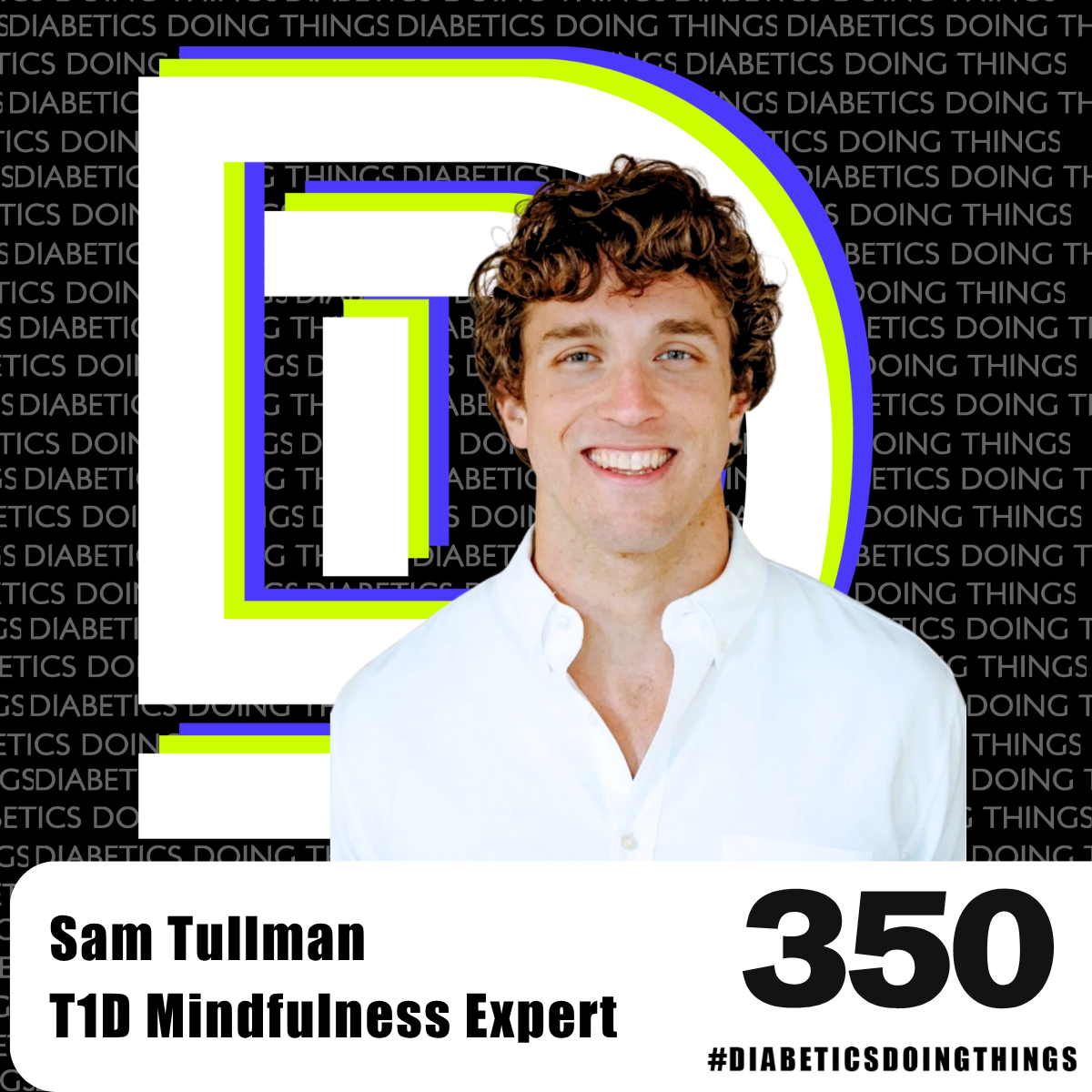
Most of us know diabetes affects the body. Fewer of us talk honestly about what it does to the mind and what the mind does right back. In this episode, Rob sits down with Sam Tullman, co-founder and facilitator of Diabetes Sangha and a dedicated student of Rinzai Zen, for a wide-ranging conversation on mental health, mindfulness, and what it actually means to live well with diabetes. Not managing it perfectly. Live well with it.
They get into the neuroscience of why checking your CGM makes you hold your breath, why rage bolusing is as much an emotional event as it is a physical one, and how the concept of interoception, your brain's ability to read signals from inside your body, turns out to be both a burden and a hidden advantage of life with type 1. Sam introduces a question that quietly reframes everything: what is your actual goal in living with diabetes? His answer might surprise you.
The conversation winds through predictive processing theory, Zen master stories dating back to 17th-century Japan, the research behind mindfulness-based stress reduction, and Rob's own discovery of what he calls "rage gratitude", a practice that started with 35 lines scribbled on a page and changed how he moves through his days. If you've ever wondered whether mindfulness is actually practical for someone who's already managing a chronic illness on top of everything else, this episode makes the case.
Sam is also a fellow podcaster and one of the most thoughtful voices in the T1D mental health space. By the time this episode is published, Rob will be sitting with Sam and the rest of Diabetes Sangha at their spring retreat. Which, honestly, feels like the right note to publish on.
Chapters:
00:00 Introduction: Sam Tullman and Diabetes Sangha
01:14 Welcome back: catching up since last time
02:03 Mental health as part of the whole body
03:29 How the mind directly impacts blood sugar
04:42 Rage bolusing: a behavioral health problem
07:16 Rob's real-time low and what he noticed
08:58 Predictive processing theory and Dr. Lisa Feldman Barrett
10:12 How the brain makes its best guess
13:03 Interoception: the hidden strength of living with T1D
15:02 Awareness as both burden and advantage
18:33 Holding it in both hands: grief and gratitude together
24:09 Mindfulness as a muscle: how to start building it
25:22 The question that reframes everything: what is your goal?
29:00 Two kinds of meditation practice: relief and long-term growth
31:51 Growth is uncomfortable — and that's okay
36:18 The Zen master Hakuin story
40:34 After ecstasy, the laundry — and changing your CGM
44:44 Rage gratitude: Rob's discovery of a simple practice
47:17 Many paths to the same place: finding what works for you
48:13 Diabetes Sangha: community, retreats, and resources
Resources:
Diabetes Sangha — weekly meditations, newsletters, events, and retreats for people living with diabetes
How Emotions Are Made by Dr. Lisa Feldman Barrett — referenced by Sam on predictive processing theory and interoception
Dr. Brad Liechtenstein — retreat facilitator and breath expert mentioned by Sam, works with people with chronic conditions: search "Dr. Brad Liechtenstein" or find him through naturopathic health directories