

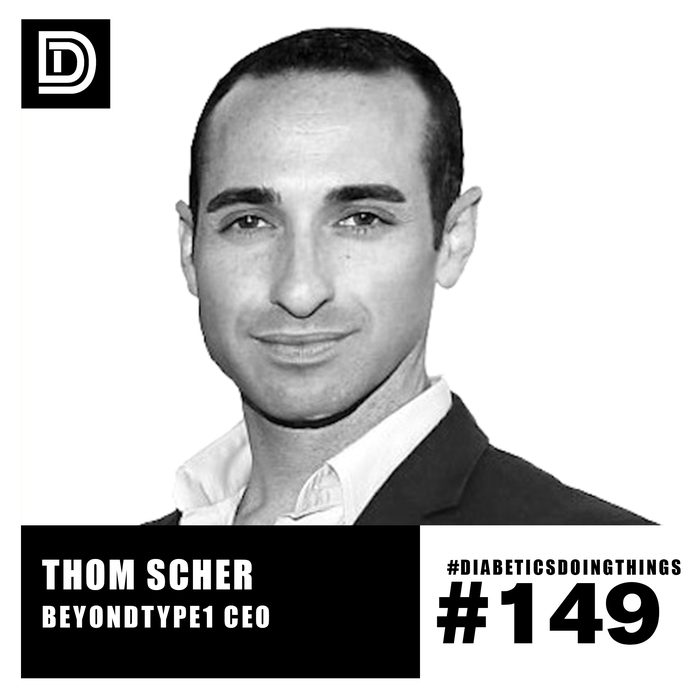
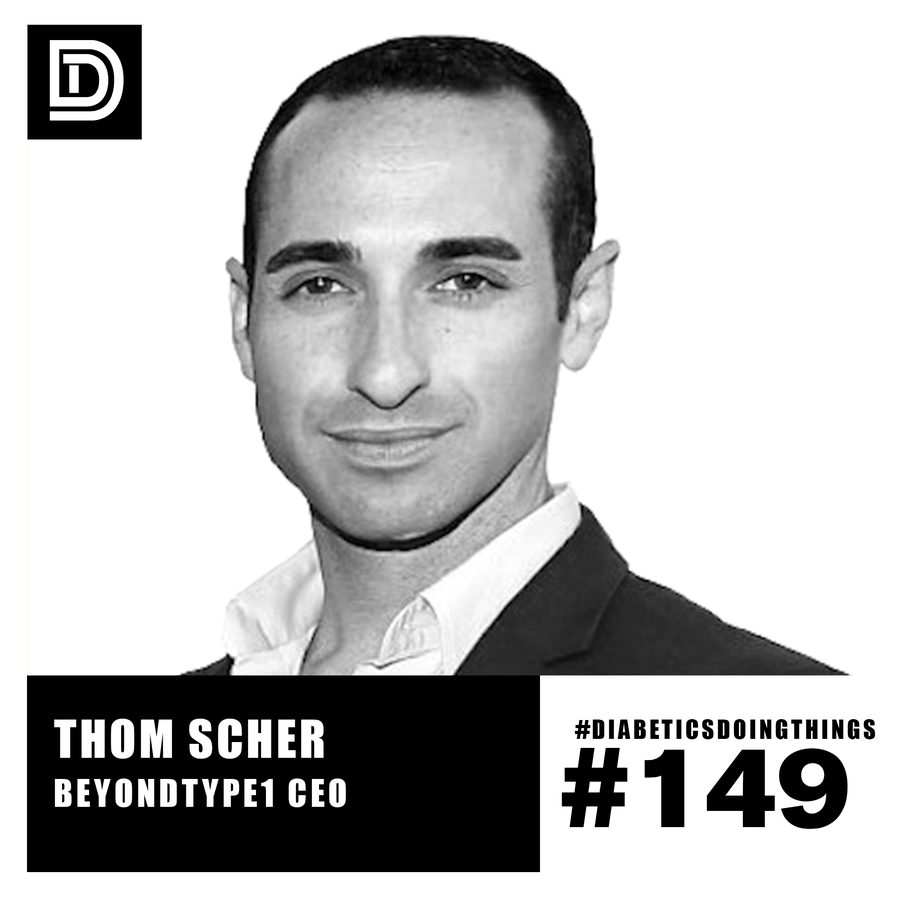
Diabetics Doing Things with BeyondType1 CEO Thom Scher
Episode summary
Thom Scher, CEO of Beyond Type 1, talks with Rob Howe about leading the organization through the early months of COVID-19. Scher explains how Beyond Type 1 and Beyond Type 2 scaled up content, advocacy, and coordination with JDRF, the ADA, and insulin manufacturers to respond to real-time community concerns, including local insulin and CGM access problems. He describes his path from a for-profit tech career in Silicon Valley to joining Beyond Type 1 in 2015 with no personal connection to diabetes, and what he has learned about the community since. He also discusses the JDRF-Beyond Type 1 Alliance, Eli Lilly's expanded $35 copay program, the launch of Beyond Type 2, and a new content partnership with Team Novo Nordisk.
Key takeaways
- Thom Scher says the JDRF-Beyond Type 1 Alliance helped resolve a Texas CGM access problem in about a day and a half by getting the ADA, Dexcom, and Blue Cross Blue Shield on the phone quickly.
- Scher says Eli Lilly expanded its $35 copay program during COVID to cover uninsured people and most of Lilly's insulin line, with no plan announced to end it after 2020.
- Scher had no personal connection to diabetes when he joined Beyond Type 1 in 2015, in what was supposed to be a three-month commitment.
- Beyond Type 2 launched with English and Spanish content from day one and was reaching tens of thousands of people a week within about 18 months, Scher says.
- Scher says Beyond Type 1 and JDRF now share staff and work jointly on content, community programs, and advocacy rather than treating each other as competitors.
Show notes
With COVID-19 continuing to wreak havoc upon the world at large, the Jdrf x Beyondtype1 Alliance have spun up two important campaigns that I want to make you aware of:
The first is coronavirusdiabetes.org
This special site is full of information that people with diabetes can use to help keep our community safe until we’re all safe. It’s available in 5 languages and has the simple goal of tapping into the power of the global diabetes community to SAVE LIVES. It’s packed with recommendations, resources, sharable information, interviews, toolkits, links to financial programs and much more. So tell a friend to tell a friend to check out coronavirusdiabetes.org brought to you by the JDRF x Beyondtype1 Alliance.
SECOND is a campaign called #Biglittlechanges - we all need to work together to keep the most vulnerable among us safe. We know not everyone can take every precaution but every precaution you can take makes a difference. The Diabetes community especially needs to look out for one another and our communities - we know what’s at stake.
So! Check out the recommendations and resources at Coronavirusdiabetes.org and check out the hashtag #biglittlechanges on social media for more information
This episode was recorded on April 16, 2020 My interview is with Beyond Type 1 CEO Thom Scher, who took over the reigns of BT1 in 2019 after being with the company since its inception in 2015.
Thom and I talk about talk about COVID and what BT1 has been focused on in light of the crisis/quarantine/storytelling for people with Diabetes, Thom’s background before joining BT1, and what he’s most proud of since becoming CEO last year.
I’m so grateful to Thom and the BT1 team for the time and I’m looking forward to continuing to work together with them as part of the leadership council. If you want more information on Beyondtype1 and how you can get involved, just head to beyondtype1.org!
Thom, and I talk about his background and what made him join the organization back in 2015.
What he’s most proud of since taking the helm as CEO in 2019.
Where BT1 fits in the “Big 3” Diabetes nonprofits
What BT1 is doing to continue to advocate for insulin affordability
What BT1 and BeyondType2 are doing to create community within the Diabetes communities and make them more inclusive for people with all kinds of Diabetes.
What he’s excited about for the future, even with all the uncertainty around COVID.
Questions this episode answers
Who is Thom Scher?
Thom Scher is the CEO of Beyond Type 1, a diabetes advocacy nonprofit. He joined the organization in 2015 from a for-profit tech career in Silicon Valley and became CEO in 2019.
What is the JDRF Beyond Type 1 Alliance?
It's a partnership announced in late 2019 between JDRF and Beyond Type 1 in which the two organizations share staff and work jointly on content, community programs, and advocacy instead of competing.
What did Eli Lilly's insulin copay program change during COVID-19?
According to Scher, Lilly expanded its $35 copay program to cover uninsured people and a wide range of its insulin products, and told Beyond Type 1 it had no plans to end the program after 2020.
What is Beyond Type 2?
Beyond Type 2 is Beyond Type 1's platform for people with type 2 diabetes. It launched in English and Spanish from the start and was reaching tens of thousands of people a week within its first two years, Scher says.
Full transcript Searchable, with timestamps
Rob Howe: What's up ladies and gentlemen? I hope you are safe and sound with your families during this time. With COVID-19 continuing to wreak havoc upon the world at large, the JDRF and Beyond Type 1 Alliance have spun up two important campaigns that I, Rob Howe and Diabetics Doing Things, want to make you aware of. The first is coronavirusdiabetes.org. That's coronavirusdiabetes, all one word, .org. This special site is full of information that people with diabetes can use to help keep our community safe until we're all safe. It's available in five languages and has the simple goal of tapping into the power of the global diabetes community to save lives. It's packed with recommendations, resources, shareable information, interviews, toolkits, links to financial programs, and much more. So tell a friend to tell a friend to check out coronavirusdiabetes.org, brought to you by the JDRF and Beyond Type 1 Alliance. Second is a campaign called Big Little Changes. That's hashtag Big Little Changes. We all need to work together to keep the most vulnerable among us safe. We know not everyone can take every precaution, but every precaution you can take makes a difference. The diabetes community especially needs to look out for one another and our communities because we know what's at stake. So check out the recommendations and resources at coronavirusdiabetes.org and check out the hashtag BigLittleChanges on social media for more information on how those changes can make a big difference. Okay, so this episode. It was recorded on April 16th, though it's hard for me to keep track of days in quarantine. I meant to post it sooner, but the best laid plans have just gone to rest. My interview is with Beyond Type 1 CEO Thom Scher, who took over the reins of Beyond Type 1 in 2019 after being with the company for four years. Thom and I talk a little bit about COVID and the work that became coronavirusdiabetes.org, as well as talking about Tom's career before joining Beyond Type 1 and what it's like to be so heavily involved in the diabetes community looking back. I'm really grateful to Thom and the Beyond Type 1 team for the time that they gave us, and I'm looking forward to continuing to work together with them as part of the Leadership Council. If you want more information on Beyond Type 1 and how you can get involved, just head to beyondtype1.org. Okay, let's get to the episode. Hello and welcome back to another episode of Diabetics Doing Things. We're telling the amazing stories of people with diabetes from all across the world. And as we sit in, I guess now week five, maybe six for some folks of the social distancing, shelter at home orders due to COVID-19 and coronavirus, one of the positives out of that has been some high-powered executives in the diabetes world have a little bit extra time. And I'm very excited to introduce you to Mr. Tom Scheer from Beyond Type 1, CEO of Beyond Type 1. Welcome to the show, sir.
Thom Scher: Thank you for having me, Rob.
Rob Howe: And Thom, you and I know each other. We've obviously, it's publicized, highly public. You can Google us. I sit on the Leadership Council for Beyond Type 1, the leader of the spokesperson committee. So you and I know each other. So I'm really excited to just have a friendly conversation with you today rather than a very buttoned up, very compliant, lots of legal compliance that I've had to go through with some of these other CEOs who were great, but you and I obviously know each other a little bit better. I'm very, very proud of the fact that I did not make you go through any legal or regulatory to have me on. Yeah, it was honestly a huge milestone and I appreciate it. So fair enough. So let's talk a little bit. How are you? How is beyond type 1? Obviously right now COVID-19 is causing all kinds of problems all over the world. And that is not limited just to people with diabetes, but even outside of that. How have you guys been, how's your team doing? And how have you guys been asked to change your strategy and step up to the plate during this time of crisis?
Thom Scher: So the team is good. Let me start there. I think this is hard and weird, challenging times for everybody. We've got a small, nimble team, and they're really close, and not being able to be in the office together is, you know, candidly, kind of sucks. That said, it's forced us to polish Our ability to work remote and all of that has gone well, and I'm happy that our team is good and working hard. I think on the COVID front more generally, the way that we look at it is that we play sort of three different roles. We play a role on education and content and publishing. We play a role in advocacy, and we play a role in collaboration. I'm more than happy to sort of break those down, but I think what we've really done is reallocated a bunch of our time over to internally. Currently, we refer to it as our digital business unit, and they are producing a huge amount of content involved in a bunch of advocacy efforts and then leading on a couple of coalitions that are doing real important work. On that education front, we've published over 100 things on Beyond Type 1 and Beyond Type 2 and in other languages. We've made it all available to syndicate to a bunch of our partners. We release that in an email every couple of days to now close to 100 different partners. On the advocacy front, we're working on both policy work and grassroots work, some of which is done directly, some of which is done via coalitions. And then on the collaboration front, look, we have the digital reach to help support the work that's going on in the space. You're seeing a bunch of nonprofits, for example, try to get out there and launch virtual camps or virtual summits or new types of events and hangouts online. And we're really able to help amplify those efforts with the reach that we have. And I, for a long time, have sort of said that I view the Beyond Type 1 community sort of audience and reach as something that is communal for the rest of the diabetes space. And I'm happy to see it being taken advantage of.
Rob Howe: Me as well. I think I have to applaud you guys and your team. I also know that it's very small and really it's about the same size as my agency recreation. And I kind of echo what you're saying is like, it seems like, you know, for companies like, like Beyond Type 1 who are small and nimble and able to be connected and still deliver on, you know, their core competencies, you know, remotely, this has been a very different time for them in that like the scope of the work and that you guys, you know, the amount of content everyone's producing has been dramatically increased. What has that been like for your team? I know I also get those partner emails, and the amount, even yesterday's email, the amount of links that came from beyondtype1.org and beyondtype2.org in different languages was massive. And honestly, I was like, wow, this team is really, really focused on providing timely information to the right people who need it.
Thom Scher: Yeah, you know, I am a long-time listener, our first time caller over here, but I went back and listened to the Dana Howe interview from 2017. And it's just nuts to see how far her and Todd Boudreau and Mariana Gomez, the three that really lead our digital effort, have come over the last couple of years. They are churning it out and doing so with the support of our leadership council, which you're on. We're doing stuff that, as I would frame it, is both about COVID and inspired by COVID. So there's things like video interviews with Anne Peters that we're doing regularly and mental health check-ins with Mark Heyman. These are really important pieces, but so are, for example, pump-up sessions with Jiggy or yoga sessions with Lauren Bongiorno. Those kinds of things that are really inspired by what's happening are just as important right now. So I think for us, it was about getting out there early and thinking creatively about the kind of content needed and then listening to what was starting to bubble up in terms of concerns. And I'm sure we'll end up talking about this more later, Rob, but I look at things like concerns about insulin shortages in local pharmacies, where we'd already published assurances from all the insulin manufacturers that the supply chain was fine. But that didn't square with what we were seeing on Facebook comments, for example. And that led us to then doing more content to explain what was actually going on, to try to calm some of that fear and explain what people needed to do and what options were available to them. So a huge amount of it is just about listening and responding. Yeah. And I think,
Rob Howe: you know, you talked about the community and, you know, addressing those concerns sort of as they pop up. I remember you guys published March 3rd, I think the, you know, the announcement from the big three that said that, you know, they didn't anticipate any supply chain issues. And then immediately after when, when people were getting delays on prescriptions from their pharmacy. You guys responded again. How much of that is just being in tune to what's happening in the diabetes community? And you guys obviously have a team that's very plugged in. You mentioned, you know, Dana and Todd specifically. There's probably not a topic of conversation that goes on in the diabetes space at large that they're not privy to at any given time. How is that advantageous for you guys and the rest of the team, as you're continuing to crank out content?
Thom Scher: Yeah, it's advantageous, but I don't think that I would even use that word. I think what it is, it's a huge amount of responsibility with a huge amount of potential impact. So there's a lot of conversations that happen in the diabetes community that are fantastic, some of which are about things that are very challenging to solve. And we need to be saying that those things are challenging to solve. And then sometimes there's just everyday concerns that are popping up, people saying, you know, my pharmacy told me that they don't know when they're going to have insulin again. And that's the kind of thing that shouldn't be happening in a local pharmacy. And so when we see those conversations and see them building, you know, we're plugged in enough to be able to then have the conversation locally with the person's experience, understand the story, and then go to somebody who can help, be that ADA or DRS, or the manufacturers and device companies themselves. I think an example that came up recently was we saw this decision out of Texas where all of a sudden a bunch of folks in the Houston area, I think, were struggling to get CGM. They'd been told by a distributor that they could no longer get G6. And we heard that straight from the community. And I think it was a day and a half later, and that decision had been reversed. And we had been on the phone with the ADA, and we'd been on the phone with Dexcom, We've been on Blue Cross Blue Shield. And that's us being really plugged in and saying, hey, that's a solvable one. Let's jump in. And I think if there's anything beyond type 1 has really done incredibly well, it's that we like to find those gaps where, for whatever reason, something isn't getting solved and step in and see if we can solve it.
Rob Howe: I 100% agree. And I think, you know, you guys in the last five years, you know, the idea that there's now, you know, being referred to, I guess, even colloquially as the big three diabetes organizations and beyond type 1 being those because of that collaboration, because of that digital reach and because of that injection into the community and that, that participation within the community. This has been an interesting time just kind of from the outside looking in from a collaboration standpoint. I know that's one of your three tenants you shared at the beginning. What, what has the collaboration been like, or how has it been different working with, you know, JDRF and ADA, working with insurance companies, working with pharma companies during this time? Do you feel like there's sort of a damn the torpedoes or burn the ships type of mentality on both sides where we're really just looking to get solutions done?
Thom Scher: I do. I think that people are moving fast and trying to figure out where they can drive impact. And that means long standing workflows break down a little bit and it just becomes easier to text somebody that you need two minutes of their time to solve something. And I think we're seeing that. And I say it a lot internally to my own team, but I really pride myself on Beyond Type 1 focusing on being nimble and this idea that we always have to have that startup nimble mentality. And it's been nice to see huge entities, manufacturers, big nonprofit organizations sort of say, hey, we're with you on that. Let me hop on a phone call right now and try to solve it. So I do think we're seeing that. I think there's always more, though, that can be done there. And, you know, with JDRF, because of the JDRF Beyond Type 1 Alliance, we've got a really good, strong working relationship. And I think we have a growing relationship with ADA. And, you know, the work Tracy is doing over there is A, critical, and B, a set of areas that we're really passionate about working with the ADA on.
Rob Howe: well it's really interesting to see how quickly you know i think that the jdrf beyond type 1 alliance when you guys announced it later last year uh it couldn't have happened really at a better time opening up and setting up those lines of communication for this you know for a crisis for such a time as this for lack of a better word um and you mentioned being scrappy and uh and nimble and i think this is a good point to kind of talk a little bit about your background and introduce folks to you who may not know much about you. Your background is in tech and you're a Silicon Valley guy, you're a Stanford guy. And four years ago, give or take, you made a choice to come into the diabetes community. I'd love to talk a little bit about what inspired that change. And as you look back for where you guys are today as Beyond Type 1, scrappy, nimble, digital, how much of your previous life in tech has influenced the way that Beyond Type 1 is today?
Thom Scher: It's definitely influenced it. I think, you know, I never planned on staying in the diabetes space or in the nonprofit space. I was in for-profit tech and enjoying it. And when I came over, the plan was three months. It's become kind of a running joke. I committed to three months. And the goal was to set up a budget, operationalize it, and probably go back to for-profit tech. and you know and i i like to share this story just because i think it really encapsulates those early days of beyond type 1 i think it was eight or nine weeks in when people started getting our drop logo tattooed on themselves and that's just crazy nobody's tattooing google on themselves and if they are that person should you know be second guessing said decision but for us it meant that Obviously, the brand was resonating with the community. The community was finding value in the brand. We had to make PDFs of the logo available because we saw some shaky versions of our logo. Some off-brand. It was incredible. Yes, some aspect ratios. I think that for us, I really found this incredible value in the work that we were doing. I felt like we were having meaningful change. I was super inspired. And I mean, that has turned into what is now nearly five years in the space where I don't see myself leaving anytime soon. I am loving what we're doing. And I think that in terms of the tech background specifically, you know, I'm fortunate to have worked for some really cool and brilliant people who've done big, innovative and disruptive things in Silicon Valley. And I look to my board in that same way. And I've got some really tremendous leadership at the board level. And I think we often start from a place of, okay, what are the lessons that we can learn, not just from other nonprofits or from other diabetes entities or other healthcare entities, but in the greater, you know, sort of greater ecosystem of companies that have done cool things. things and so we look for comparables in tech we look for comparables in lifestyle brands fashion brands we talk a lot about red and and the work that was done around hiv and so we draw a lot of inspiration from all of that and then try to apply it to diabetes i definitely think it's informed it for me personally i think this idea of quick and nimble and scrappy just allows you to get a lot done and for me far too often i feel like when i look at and not just in the diabetes space but in the world, there's a lot of talk and just sort of a lot of bloat where if you really just put your head down and try to get a lot of things done, you can make real magic happen. And so for me, I really look at how much time we're all spending in these games, how much time we're spending on hour-long calls, how much time we're spending just doing logo sharing to logo share. That stuff just is minimal return compared to what you get from a little bit more of a startup mentality. I don't know. Maybe that's me feeling like the Stanford and Silicon Valley is just a
Rob Howe: little too infused in my veins, but I love it. Well, I think, you know, as we think of the quote unquote big three diabetes nonprofits, that's a distinct point of difference for Beyond Type 1. And certainly there's nothing wrong with large enterprise organizations and they have a place in this world, obviously. But having a scrappy upstart, get things done, challenge the status quo mentality. I think you hear a lot in the diabetes space, especially in the medical device space, is competition breeds innovation. And I think taking a step back and not really looking at it as competitive, but saying, hey, Beyond Type 1 has the ability to get something like this done. Why don't we work together on this and find a way to be partners for the greater diabetes good? And I think that's really obvious, even in the last six months of the work that you have done with the JDRF and Beyond Type 1 Alliance.
Thom Scher: Yeah, and look, let me add to that too here. So I think two things. I think we came in and even from a board standpoint, didn't have a bunch of players who were longstanding players inside of the diabetes space. So one of the things we really set out to do early was, hey, the diabetes space spends a lot of time talking to itself and that's really productive for education and for alignment. But let's make sure we're getting out there and talking to the rest of the world. I think for me personally, as somebody who didn't have a personal connection when I started and now have, you know, infinite quantities of family and friends that are immediately impacted. When I started, I didn't. It made me look at the diabetes world and the needs of the world, I think, from a little bit more of a standpoint of what is going on here in a couple of instances where I think that there was just obvious opportunities to drive innovation.
Rob Howe: And you mentioned that, you know, early on, you didn't have a, you know, an immediate personal connection. And obviously, those have grown in that time. You know, what is it? What is that like for somebody who's on the outside and maybe and maybe doesn't have a personal connection or is just looking to learn more? What is how? How did that happen? How did you? This is such a, you know, I feel like I know the answer to this question. But as you working and becoming part of beyond type 1, learning more about the diabetes space, interacting with it on a 24-7, 365 basis. What do they need to know about this diabetes community that you didn't know when you got started but have discovered since?
Thom Scher: Well, so look, I think first off, there's just a huge amount of understanding of the disease state in general and the impact that the disease state has on not just people living with diabetes, but those impacted by diabetes, the family, the friends. And so I'll start with the really early days of the sheer number of times that I remember saying something to Mary Lucas like, wait, and that on your arm is a what? And how does that relate to the one on your stomach? What does that one do? And why aren't those one device? And just the raw number of times that conversations like that happen in those first couple of months. I think the thing that I would say now, though, looking back, is that there's this incredible, vibrant community of people impacted. And that community involves not just big outspoken voices like CEOs of enterprise entities or you, Rob, and the work that you do, but also people that are reading the content and drawing inspiration from it, sharing it with their friends and families and school nurses, etc. So for me, I think realizing that there was this body of people that were hungry for solutions is just this incredible moment of realization once you really started to see how many people were impacted and passionate about the disease.
Rob Howe: yeah it's really impactful and even you know i appreciate you lumping me in with the the amazing outspoken voices uh i i sure have owned that but you know even four years ago when i got started doing it didn't necessarily understand the scope of what i was getting into you're right this community is super impactful whether they are a influencer doing you know xyz number of diabetes events and inspiring other people with living with the disease or they're just a person who consume some content or was able to connect the dots for a school nurse or for a job interview or whatever the case may be living with the disease. It's pretty inspiring to be a part of.
Thom Scher: It is absolutely inspiring to be a part of, and I'm really honored to be a part of that. I think that this idea that I'm a part of a community that I did not know, understand, or have a natural connection to and now very much feel a part of, it's part of the reason I'm in the space and have stayed in the space. Tom Karlya likes to say to me, good old diabetes dad, likes to say to me to stop saying I had no personal connection because these days that's just wild. All of my personal connections are people impacted by this disease. But I think that that whole thing is part of my experience in the last five years. It's been learning more, getting more ingrained, listening and a better understanding what's going on in the space and how we can help.
Rob Howe: So when you think about that, when you think about all of the things that Beyond Type 1 has accomplished, what do you take the most personal pride in? And I know I'm kind of putting you on the spot here, but after taking over as CEO in 2019, what comes to mind as something that you're like, wow, we really did something impactful here, and I'm most proud of this particular thing?
Thom Scher: Alliance.
Rob Howe: That's like a fast and rapid answer.
Thom Scher: I think that the JDRF Beyond Type 1 Alliance is an example of something I am incredibly proud of, and not just because of what it is and what it is doing and will do, but because of what it represents. I think, you know, Aaron Kowalski and I are close, and I love that I can call him a friend and a colleague. Aaron and I sat in a room and had a conversation about the work that we need to do well and what we could do to bring additional value to the community. And it really started from a place of shirking this idea of being competitors. There shouldn't be competitors in a chronic illness space. We're all fighting against diabetes, certainly not on the nonprofit side. And this idea that him and I were able to sit down and work that out and have our teams work that out and then get to a place where we are working deeply in mind. We're sharing staff on projects. We share responsibility on a handful of things. We work together constantly now on everything from content to community programs to advocacy initiatives. And that's deep, deep, deep collaboration. And it's something that's not necessarily what the community thought was going on between JDRF and beyond type 1. In my experience, we got a lot of sort of this forced picking of sides. And I think it really tore that open and it put a stake in the ground that said, hey, collaboration matters, big, important collaboration matters. This is an example of us doing that. Everybody else should be thinking about that too and we can help bring people together like we're doing under alliance so for me we announced it midway through after i'd taken over a studio and i'm really proud of
Rob Howe: that between erin and i and our teams well i think for for me as well i i echo that sentiment i think it was such a huge uh and you know you and i had a conversation uh you know at aade in 2019 just about you know they just kind of give me a little peek behind the behind the scenes of what was going on. And I think it just makes so much sense, but it also represents, I think, a huge step in leadership to say, Hey, from the top, uh, you know, you and Aaron got together and sat down and said, Hey, how can we make this better? And for me, somebody who works deeply with both organizations, it immediately has been like this ultra tangible, noticeable, uh, response. I haven't even told you this, but every time I now have contact with somebody at JDRF, they're like, Hey, we're working with beyond type 1 on this Alliance. And I'm working with a member of your email. And so it's like, Hey, now I don't have to go, you know, walk a careful line of, you know, who do I, you know, not to upset anyone or, you know, mess up anybody's territory, but they're instantly connected and more collaborative and it just speeds things up. So, uh, you know, for me, I'm able to see that on a one-to-one basis, but then also globally. Uh, and, you know, I think that leads perfectly into the next question. You know, recently beyond type 1, the JDRF Alliance announced that Lilly had capped co-pays at $35 for people without commercial health insurance and for people with commercial health insurance during COVID-19, I think to the end of 2020, at least for now. What can you share about that process? And I believe, it seems as though, that probably doesn't happen without the alliance. So give us a look behind the scenes of what that
Thom Scher: was like so first off look insulin pricing is controversial and it it well should be you know insulin is expensive and you need it to literally survive um and the data year over year is really bad like i we spend a lot of time talking about insulin pricing because you know we really fundamentally believe in everyone having access to high quality modern insulin regardless of their circumstances this one this Lilly announcement look there are a lot of these announcements about insulin affordability and programs and new rollouts of new programs and they come from all the manufacturers and they come from all over the world this one felt different to us we read it we saw what was going on we saw what the version of this program was going to look like It was not only in response to COVID, but on the record, them telling us that they had no plans to end it at the end of 2020, and that's in our coverage. It was them rolling it out across a wide swath of lily insulin, and it was applicable to the uninsured, which in a time of crisis with the unemployment rates, what they are, that is a massive change to that program. So it's not just the cost, but it's also who is covered and brings that $35 in line with what we're seeing on government programs as well now. So for us, I think it was that this one really did feel bigger than some of the other ones. And then, you know, we were included in the press release, and that was a dual quote from Kowalski and myself under Alliance. And I'm with you. I don't know what that looks like without Alliance. And I'm proud of the conversations that we had. I think that it's a really fine line in terms of the relationship with pharmaceutical companies and device manufacturers always. But on this one in particular, it was a pretty easy call in that that program has the potential to help a lot of people in need. And every step forward that can help people in need is a worthwhile step.
Rob Howe: I agree. And I agree even more about when you said it felt different. I think the narrative, at least in the diabetes community, is that, you know, literally they hear the complaints, they hear the advocacy, but they're not going to do anything about it. And to see them take a, you know, a very big step forward, you know, and certainly there's been a lot of dialogue of like, you know, this isn't an end-all be-all solution. But for right now, I think an awesome step forward, especially like you said, for people who are uninsured or suddenly uninsured or suddenly furloughed or unemployed and really have to watch their pennies and making sure that they can afford the care that they need, the modern insulins, like you said, I think I was very impressed that it wasn't just one type of insulin. It was across almost the entire library of Lilly Insulins, which have a great impact on a ton of people living with diabetes.
Thom Scher: You mentioned that. Yeah. And I'll go ahead. Sorry. Oh, let me add on that. No, you're fine. Let me add, too, here that the rollout of that program is something that required there to be partners to get it out because it wasn't automatic at pharmacy counters. It wasn't automatic. People needed to call to get access to a copay card, et cetera. So I view that the responsibility of patient advocacy organizations is to the patients. It's to people at the end of the day, these families that are impacted. And this is an example where I just don't know that you get the kind of response if that comes out in a Lilly press release alone and gets picked up in, you know, enterprise and economics press, but doesn't actually trickle down to the diabetes community. Or if it does, it feels like it's corporate talk down as opposed to an integration with Alliance early to say, hey, this one does feel different. This is a meaningful one that's going to help people, help us get it out there to make sure that people who need it know about it.
Rob Howe: And I think that's important for a member organization like Beyond Type 1 where you guys are really representing the voice of the patient. You know, in that same vein, I think there are a lot of patients who feel as though they're critical or skeptical of nonprofits like Beyond Type 1, JDRF, ADA interfacing and partnering with pharmaceutical companies that they feel necessarily don't have their best interests at heart. How can you, you know, what would you say to address those comments? And how are you and the organization positioning yourself to make sure that the patient needs don't get swept under the rug or don't get swept up in some sort of other piece?
Thom Scher: so look i think community members being skeptical or it giving them pause to see organizations working with pharmaceutical companies or device companies i think that is entirely fair and legit i think that people have every right to be and every reason to have concern over that we look at it on a very case-by-case basis there is no black and white situation on this because you don't get something like that Lilly Copay program over the line without a combination of patient advocacy like we already talked about here, that's an important one and of value. We really look at our involvement with pharmaceutical companies and device manufacturers in general as driven by what is it that we're trying to achieve to help people impacted by diabetes? And is there a reason why we need to work with one of those companies to be able to either make our solution to that more robust, hit more people, be more impactful? And are we able to align with a corporate partner who can help us execute on that? Or do we need to align with a corporate partner that can help us execute on that? So I think we really look at it on a case-by-case basis. What that then does, though, and I think this gets to a fundamental tenet of beyond type ones, which is we do believe in the power of people being stronger together, organizations being stronger together, often one door opens others. So building on Lilly for a second, we have a project with them that has been in place for a year and a half or two years around low blood sugar. And for us, it is a core area of content focus that we talk about is fear of severe lows, management of lows, approach to management of lows, et cetera, nasal glucagon was a big development. And there was alignment in talking about next generation glucagon more generally. And so we had that partnership with Lilly. We made a calculation that in effect, that was worthwhile in terms of the scale and reach that we could bring. What that then does is create a working relationship where we are able to do things like the supply chain coverage that we did during COVID, because that wasn't part of any deal with Lilly whatsoever. But here we are getting entities like people in the community telling us they've got local pharmacy shortages. And we turned around and did an interview with Wade Noix of Lilly Solution Center, and he explained that process. And it wasn't an ad. It wasn't a paid deal. It wasn't any of that. It was us saying, hey, there's a need here, and we have a working relationship with this company from a severe hypo project that we care about, as well as the fact that we care about the supply chain and people knowing that they're going to be able to get their insulin. Let's do this coverage right now from more of an editorial lens. So I think that's our angle. We really do approach it on a case by case. And it's hard. It is a fine line because ultimately, we are not here at all to be assisting corporations, Far from. But if by working with corporations in certain instances, we can be more impactful, then game on. I think that that outweighs the concern. But I hear it. It's a real concern and something that we have to actually look at and analyze every step of the way.
Rob Howe: And I think it's interesting, you know, one of your points that you brought up is at the very beginning, and we've talked about it a lot is collaboration and that being a tenant of what you guys do. And, you know, it's always easier when you know who to go to, to get the right answers and the right information. And I think reshuffling and I heard this quote from Terry Crews, who, you know, since then has, has also, you know, said weird things in the media. So I don't want to, you know, put him up on a pedestal, but he said this thing that has stuck with me for a long time and about competition. and he said you know people always talk about it's a dog eat dog world but if you think about it dogs really don't eat other dogs so that doesn't necessarily make sense like that's a flawed way of looking at things so i like the opportunity and keeping those doors open and keeping those lines of communication open so that on a case-by-case basis good things are able to happen versus sitting there and saying oh well wouldn't it be great if we had done this but no we've closed the door because we have you know completely you know alienated ourselves from that type of conversation. Well, and look at this. We spent a lot of time talking about this with insulin
Thom Scher: manufacturers and for good reason, but this is healthcare more generally, right? And we have a problem with the healthcare system in this country anyway, and globally we have problems with healthcare. But when I look at, for example, the situation I referenced earlier, the Texas situation with Blue Cross Blue Shield and a distributor down there, one of the first things I did was shoot an email to the advocates via Dexcom saying, what's the deal with this? And got a response four minutes later that gave me a little bit of insight and made it clear that it wasn't necessarily on certain pieces of the space and that it wasn't necessarily COVID related. And pointing me in the direction of where I likely needed to go to get more information. That's incredibly valuable and comes from these other relationships. That's what allows us to get in there and make quick, rapid change.
Rob Howe: It's important. I think it really is. And I'm glad to see that that spirit of collaboration is alive and well and is really having measurable outcomes, you know, as immediately as two weeks ago and last week. So I know that patients, especially in Texas, where I'm currently residing and my blood, I guess, flows from, I'm glad that, you know, there's impact for people with diabetes living here from you guys and your team having those conversations. So thank you.
Thom Scher: I'll also add to there, the ADA was deeply involved in that one and deserves credit, both national and state. And I think it's also an indication, though, of how fast we're able to move when we're all aligned on COVID matters. We've all got a lot moving between us and we're all just trying to solve problems and help people. And in that case, we were able to. But I think that requires a level of relationship building and trust and understanding of where people are coming from that you only get by really working with each other a lot.
Rob Howe: Yeah, I kind of equate it to, you know, celebrities or saying that it takes 10 years to create an overnight success. It's like in order to get these legislation matters and these different stakeholders aligned and move things forward, it takes a lot of prep work that was done behind the scenes before we got to this point.
Thom Scher: Yep. Couldn't agree more.
Rob Howe: So let's shift gears a little bit. Last year, Beyond Type 1 rolled out Beyond Type 2. And I believe in an awesome effort to make the diabetes space more inclusive. And I think even personally, over the last two years, really just meeting a lot of these incredibly inspiring advocates for type 2 diabetes and learning more about type 2 diabetes has made me more aware of some of the, you know, the, again, back to collaboration, the sort of headbutting between the type 1 and type 2 patient communities online over the past few years. and conversations that would normally be seen as productive for type 1s can sometimes negatively affect people with type 2 diabetes. And so I love that Beyond Type 1 and Beyond Type 2 and the teams have created those channels to make those more inclusive. What can you share about that program and the success of that program and what you guys are continuing to do?
Thom Scher: So first off, I love Beyond Type 2. I love that we were able to launch it. Something people don't know is that Beyond Type 2 was part of the original co-founder's vision for the org. There was a vision back in those early days, sort of before the 501c3 with PowerPoint decks that these days I'm sure Sarah Jensen would make me throw away as quickly as she possibly could. But those early days had a vision for beyond type 1 and beyond type 2 a couple years down the line, because ultimately, you know, the numbers, when you combine them, can be wildly impactful for advocacy and education of the greater community. And the diseases meet in complication. And so there's definitely opportunity to learn from the things on the type 1 side for type 2. We've seen that borne out over and over again. Two diabetes and has two diabetes really demonstrated that under the Diabetes Hands Foundation back in the day. I think for us, Beyond Type 2's first year was about learning and building a community and not, for example, trying to throw a ton of media at it and see a spike in numbers out of the gate. We really wanted to learn and see it grow and understand the needs of that community organically as it grew. So here we are almost 18 months later, I guess, into a second year of it, and it's serving tens of thousands of people every week. and the work that Tiara, the project manager on that, does is really important. And it, you know, I think it is really helping people and is becoming a model for how to do peer support and content on the type 2 diabetes side, leveraging the lessons from beyond type 1. We were really told when we were trying to launch it, and I'm really grateful to the corporate partners who helped us do that, but we were told by a lot of people that our look and feel and our brand, it wouldn't work in type 2. And I just, I remember thinking that that felt silly, but people kept saying it to us. And, you know, and I'm glad that we really stuck to our guns on this because it has worked and our look and feel is relevant and not everything needs to feel clinical and sterile, not even when you're talking about healthcare. And so I'm really proud of the approach that we've taken. I think there's one other thing that's also happened as a result of Beyond Type 2, which is, I think it forced us to look really openly and honestly at the importance of diversity and inclusivity. You know, it was really, Beyond Type 2 was built from the very beginning with a very, very, very diverse audience in mind. It was built with English and Spanish at the same time. It was built with intersectionality in mind at the same time. And I think that's allowed us to really look back at Beyond Type 1 and take lessons from it and be able to do things like add more, you know, diverse representation to our leadership council and focus on diverse representation across all of our platforms. There's a lot of work to be done there and we are scratching the surface on it, but I'm proud of the work that we're doing there. And I think it takes a lot of inspiration from the work that advocates in the space have done before us. People like Cherise Shockley, who has stood up in meetings so many times and said, this is a problem. We have to do better. And I think that Beyond Type 2 has forced us to really look honestly at how we can do better.
Rob Howe: And I remember as you were taking over as the interim CEO back in 2018, some emails just you and I exchanged back and forth, talking about diversity, talking about inclusivity and representation. And it's very obvious to me, you know, having been on behind the scenes on that, at the work and the steps that you guys have taken as an organization, leveraging with people like Cherise and continuing to highlight those voices in a way that, you know, was was missing and was, you know, at the community at large. And I'm proud to, you know, sitting on a leadership council and looking at it as like, am I proud of the work that the organizations that I'm affiliated with are doing? And that is one of the top, you know, pieces of moments of pride for me is that there are more opportunities for people with diabetes who do not fit the, you know, diagnosed as a juvenile, you know, white family, suburban kid doing walks type archetype. And, you know, we have more diverse people and more diverse voices. And I'm very, very proud of that. I'm very proud. I also know there is a lot more to do on it. And so, you know, I think we beat this drum a lot. Every opportunity I get, I sent the latest digest email of all that, the COVID related content I was mentioning earlier, had a huge call out to a piece on massive health disparities, in particular in black communities, as it relates to coronavirus and the mortality rate of it. And I'm really proud that we published that and that we then pushed it to partners and said, A, read this, B, get back to us on what you're doing to drive content for underserved and underrepresented groups, to drive resources to those populations. And how could we help? And I think those types of conversations and TRS piece was powerful. And I'm so glad that you guys were able to publish it. Those conversations weren't happening. They were publicly and they weren't being led by organizations. So it's one, it's sort of a drop in the bucket of what needs to be done, but I think it's a step in the right direction. And I'm excited that you guys are leading the charge there.
Thom Scher: Well, thank you.
Rob Howe: In terms of shifting gears yet again, as I do, and shifting gears, no pun intended, earlier this week, and we're recording now, it's April 17th, 16th. Yeah, who knows what day it is anymore. You guys announced a partnership with Team Novo Nordisk, the professional cycling team comprised completely of people with diabetes. We actually had Mary Marquette, who is on that team, was on the podcast at the beginning of 2019. What can you tell us about the announcement, and what are you excited about, and what can we expect to see?
Thom Scher: Look, in times of COVID, we can't have bike beyond two, so we had to find a new cycling team. um look we recently launched five european languages um of beyond type 1 and over the last year we've had team nova nordisk you know athletes on some of our channels and done some content on some instagram takeovers that kind of stuff and it was really well received this gave us an opportunity to provide content in particular really inspirational content to those new uh those new channels that we've launched, the European language channels. And that's an opportunity to bring those tremendously inspiring athletes to that European audience in their own native languages often, or, you know, from their own countries of residence. And that's just a cool angle. So I think that for us, that's really what this was. This was an example of two entities that had something that was really mutually beneficial. They've got these incredible athletes. We have these new channels with audience on them that is looking for cool, inspiring content from the type 1 world. And so, you know, more than anything, that's what that was. And that's what that's going to be here over the next year.
Rob Howe: Yeah, excited to see it. And also, you know, diversity going into foreign languages and extending that European reach. Obviously, Nova Nordisk has a big presence there. So I'm excited to see what that becomes as well.
Thom Scher: Nothing I like better than great athlete stories, you know, just shameless. We do well. Look, we need stories of all kinds. We need everyday stuff, but hardcore professional athletes with type 1 is always going to be an area that we want to put a spotlight on. It does well not just with our community for inspiration, but it breaks down the misunderstanding and stigma in the global world. Everybody outside of the diabetes space, we often encourage the sharing of that kind of content with people's networks not in the diabetes space. Because what it does is it helps drive greater understanding of the disease as a whole. And look, people don't fund or care about the things that they don't understand. And type 1 in particular is something that is wildly misunderstood.
Rob Howe: Yeah, it is. And it's amazing, you know, kind of going back to, you know, having a million personal ties now from five years ago, not having any. I think that really mirrors what the general population's experience can be if we continue to create awareness of the amazing things that people are doing to live beyond their diabetes, whatever that may look like.
Thom Scher: Well, and so let me say this about that, too. It's not that I didn't have connections. It's that I didn't know I had connections. And this is the same thing that we see with all sorts of advocacy efforts. It's the thing that we see in LGBTQ work, where people in more rural communities will say, well, I've never met a gay person. You're like, you have. You just don't know that you've met a gay person. And that idea is the same thing here. Mary Lucas interned for me when I was in college. She had type 1. I cared a lot about Mary. I did not know that Mary had type 1 diabetes until much, much, much later in my life. And that's an example for me of the importance of people getting out there and living and talking about their life with diabetes. You never know who you're going to connect with. You also never know who you're going to change what their understanding of the disease is and turn them into someone that cares and can help you advocate.
Rob Howe: 100% agree. I 100% agree. I think even in my own personal life outside of Instagram advocacy or the crazy world of the diabetes internet, I've met and been introduced to people who I would not have known had diabetes had I not told my own story. So I'm glad that you guys are continuing to push for those stories to be told. So speaking of, let's look to the future. I understand that's a little bit muddled right now. I think obviously the acute situation around COVID-19 is like what we're all most focused on getting through. But as you look forward, what are you most excited about maybe in the next 12 months or the projects that are coming down the pipeline that you are excited about for Beyond Type 1, Beyond Type 2?
Thom Scher: Yeah. So I think right now we're so COVID-focused on a lot of fronts. and there's so much uncertainty that it's hard to get into huge plans. What I'll tell you is there's a couple things sort of short term that I'm really excited about and then a few bigger ones. But on the short term side, we have an expansion of our DKA campaign, the misdiagnosis effort that now involves the National Association of School Nurses, which is made possible by Helmsley, which is fantastic. But that's going to allow us come fall to do a more robust campaign on what type 1 is and how to identify it and prevent misdiagnosis. We have expansion going on with the European sites that I'm really proud of. And we've got some new initiatives on the research front and trial participation front that are done under alliance with JDRF that we'll announce more formally. But I'm really excited about just in terms of us being able to work with them on something that they do so incredibly well, which is the funding of research and the management and direction of that research. For us to be able to take that and help drive awareness of the importance of that research, drive awareness of trial participation, it's a core area of Alliance that we really care about long-term. And I think you're going to see big progress on that over the next couple of months. And then, look, I think more broadly, without giving away too many secrets, COVID didn't change our broader strategy. So I think that in 2020, you're going to see some new big initiatives from Beyond Type 1 on the U.S. advocacy front, both on insulin affordability and more broadly. And I think you're going to see some big initiatives from us in the developing world in terms of resources and access that I am really passionate about, and our board is really passionate about long-term. Well, I'm super excited to be along
Rob Howe: for the ride and be on Team Beyond Type 1 and looking forward to see the continued development of the programs that you guys are doing. And I'm glad that you guys have not been too disrupted by COVID-19 and honestly have just really risen to the occasion and provided a lot of leadership for not only people with diabetes, but the greater community, as well as extending into organizations, medical devices, pharma, et cetera. So thank you and thank everybody on the staff because I'm not going to email them individually. I'll probably just message them over the next few weeks.
Thom Scher: Well, thank you, Rob. I think, you know, I'm really proud of our team, but more than anything, they're really proud of the work that they do that helps people impacted by diabetes. And I think that, you know, COVID has brought to light how, you know, in a lot of cases, just how much need there really is here. And so to the extent we've risen to the occasion, great. But my God, is there still a lot of work to do. So I think we're far from done yet.
Rob Howe: Well, good. I'm glad. because if you guys were done, I'd be SOL. So I'm glad that you guys are pushing forward. Thom, thank you, man, so much for your time. I know that you have infinite amounts of demands on your time right now. And I'm sure people are not respecting calendars and calling you at all hours of the day and night. So I appreciate you taking the time to talk to our community and our listeners. And I'm just wondering what took me so long to ask you to get on the pod.
Thom Scher: Well, hey, I'm thrilled that I got to be on the pod. Like I said earlier, you know, long-time listener, first-time caller. That's how I feel. I can officially call myself a friend of the pod now, Rob.
Rob Howe: You are. You're a friend of the program. I love it.
Thom Scher: Awesome. Thank you for having me.
Rob Howe: It's a pleasure. Guys, thanks so much for listening. And don't forget, if you're looking for information on COVID-19 and diabetes, please head to coronavirusdiabetes.org. That's brought to you by the JDRF and Beyond Type 1 Alliance. and check out beyondtype1.org for more information on Beyond Type 1.
About Thom
Thom Scher is CEO of Beyond Type 1, a diabetes advocacy nonprofit he joined in 2015 after a career in for-profit tech in Silicon Valley. He became CEO in 2019 and had no personal connection to diabetes before joining the organization.