

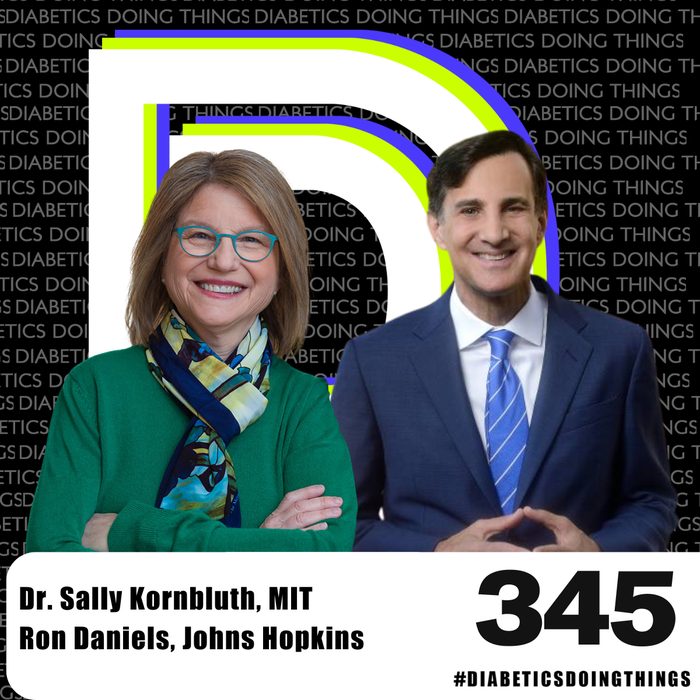
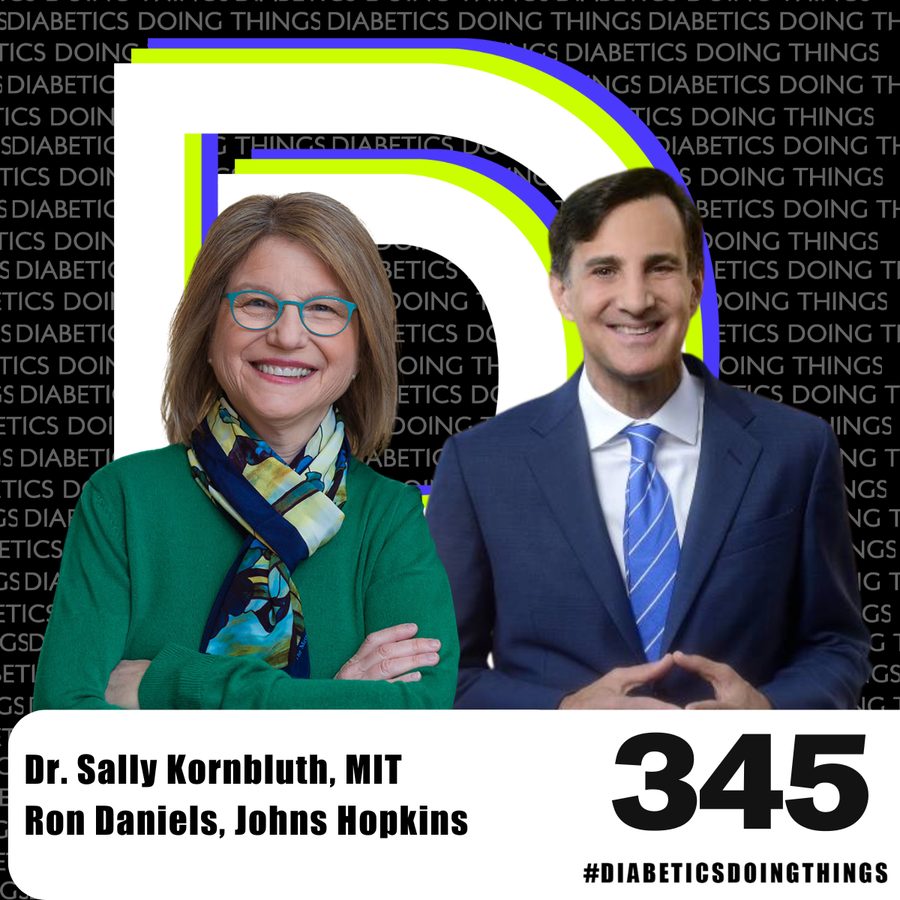
Leading with T1D featuring University Presidents Dr. Sally Kornbluth (MIT) and Ron Daniels (Johns Hopkins)

Episode summary
Dr. Sally Kornbluth, president of MIT, and Ron Daniels, president of Johns Hopkins University, both developed type 1 diabetes as adults. Kornbluth was diagnosed with LADA at 61 after losing weight on a trip; Daniels was diagnosed after unquenchable thirst and blurry vision sent him to an emergency room during a move to a new job. The two knew each other professionally for years before either learned the other had diabetes, then became close friends who check pumps in meetings, manage blood sugar during major speeches, and talk through the mental load of the disease together. They discuss adult-onset misdiagnosis risk, the discovery of insulin at their universities, and current research into stem cell and islet cell transplants that could eventually reverse type 1 diabetes.
Key takeaways
- Sally Kornbluth says she was diagnosed with LADA at 61 after noticing unexplained weight loss and thirst on a trip.
- Ron Daniels says he was diagnosed with type 1 diabetes in an emergency room, with a blood sugar reading around 500, after weeks of unquenchable thirst in Italy.
- Both leaders say eating carbs and dessert is still part of their lives, managed with insulin dosing and exercise.
- Daniels says he has had to pop glucose tablets mid-speech when his blood sugar crashed on stage.
- Kornbluth says her blood sugar was 40 right before her MIT inauguration speech, so she drank two cans of Coke to bring it up.
Show notes
Summary
In this episode, two university presidents, Dr. Sally Kornbluth (MIT) and Ron Daniels (Johns Hopkins) join Rob to talk about adult-onset Type 1 (LADA), leading in high-performance environments, and the single most “practical” diabetes upgrade: making a friend with diabetes. What stands out isn’t prestige—it’s how candidly they describe the everyday realities: managing highs and lows during major speeches, checking pumps in meetings, and staying open about diabetes to normalize it for everyone around them. The conversation also connects diabetes progress to the university research engine—past (insulin’s discovery era) and future (stem cell/islet replacement, closed-loop algorithms, and emerging trials).
Chapters
00:26: Diagnosis stories through high-performance leadership lens + “patients first” approach
01:02: Sally Kornbluth’s adult-onset Type 1 (LADA) diagnosis
02:55: Ron Daniels’ adult-onset Type 1 diagnosis
06:08: Adult-onset Type 1, LADA, and misdiagnosis risk
08:29: Carbs, discipline, and the real lifestyle tradeoffs
10:19: The biggest adjustment: mental load + fear of lows
13:30: How they found each other + why “a friend with diabetes” changes everything
21:41: Universities power diabetes progress (and what’s next)
42:45: Closing lessons: openness, resilience, and gratitude
Resources
Questions this episode answers
What is LADA, or latent autoimmune diabetes in adults?
LADA is adult-onset type 1 diabetes. In this episode, Sally Kornbluth describes being diagnosed with LADA at 61 after her doctor tested GAD antibodies, and notes it is often missed because type 1 is still associated with children.
Can people with type 1 diabetes still eat carbs and sugar?
Yes. Sally Kornbluth and Ron Daniels both say they regularly eat carbs and dessert, managing their blood sugar through insulin dosing and exercise rather than avoiding carbs altogether.
Why does Rob Howe recommend making a friend with diabetes?
Rob Howe says having someone who understands diabetes without explanation improves outcomes. Kornbluth and Daniels describe how becoming friends gave them someone to talk to about fears like crashing blood sugar during a major speech.
Is there progress toward a cure for type 1 diabetes?
Ron Daniels points to clinical trials, including work with Vertex, exploring stem cell and islet cell transplants that could reverse rather than just manage type 1 diabetes, calling the results promising.
Full transcript Searchable, with timestamps
Rob Howe: Welcome to the Diabetics Doing Things podcast, where we share the amazing stories of people living with diabetes from around the world. Since 2015, this show has been dedicated to exploring what it actually takes to live well with diabetes. I'm your host, Rob Howe. I've been living with type 1 diabetes since 2005. I'm an entrepreneur, an athlete, and a diabetes advocate. The focus of this podcast is to explore what it means and what it takes to live well with diabetes. We do that by tapping into live experience and guest expertise with the goal of giving people with diabetes free tools, language, and perspective to help unlock their potential. That means looking at life with diabetes through four core lenses, physical, mental, social, and financial. Because living well with diabetes isn't just about managing numbers. It's about navigating an entire life. At the same time, we don't ignore the obstacles. We acknowledge the weight, friction, and the real challenges that come with a life with type 1 diabetes. And we talk honestly about how people navigate them. If you want to go deeper, you can subscribe to the podcast and our newsletter at subscribe.diabeticsdoingthings.com. And for more information about our work, visit diabeticsdoingthings.com. Guys, who was MVP of the chat? Rob Howe! Rob Howe! What were you on? We need more of that. Today's episode sits at a rare intersection. Elite leadership, high performance environments, and the very human reality of living with diabetes. Over the years on this podcast, we've spoken with founders, athletes, executives, and creators, people operating at a very high level who are also managing diabetes. And I'm endlessly curious about what we can learn from high performers and how those lessons translate into greater productivity, creativity, and resilience in our own lives. My guests this week are Dr. Sally Kornbluth, president of Massachusetts Institute of Technology, and Ron Daniels, president of Johns Hopkins University, two leaders at the very top of R1 higher education institutions. But this is not an academic conversation. It's not stiff. It's not corporate. Instead, we're focusing on one of the most consistent pieces of advice I give to people living with diabetes, which is make a friend with diabetes. Because there's something uniquely grounding about having someone who understands without explanation why you're checking your glucose in the middle of a long day of meetings, why you have candy in your bag during a high-stakes conversation, what it feels like to push through a stubborn high or to recover from a low while the world keeps moving. What makes this interview so powerful to me is how human it is. Sally and Ron clearly respect each other professionally, but diabetes has created a deeper bond, one that likely wouldn't exist otherwise. Their warmth, candor, and openness bring this conversation to life in a way that really surprised me and I really enjoyed. So no matter where you are in your career, no matter when you were diagnosed, diabetes is always disruptive. It's always challenging. And living well with diabetes isn't just about technology or discipline, It's about community, and this conversation is proof of that. So especially if you were diagnosed as an adult, I think you're going to really enjoy this conversation with Dr. Sally Kornbluth from MIT and Ron Daniels from Johns Hopkins University. Welcome back to another episode of Diabetics Doing Things. We are telling the amazing stories of people with diabetes from all over the world. I have two very special guests today who happen to share careers. They're not just both people living with diabetes, but they are also peers in their respective industries. Dr. Sally Kornbluth is the president of MIT and Ron Daniels is the president of Johns Hopkins University. So welcome to the show, you guys. Thank you. Thank you. So when your teams reached out to coordinate this interview, it was really exciting. I was like, OK, awesome. We're going to have two presidents of higher learning institutions and we're going to have a discussion of what it's like to lead in high performance environments and high performance cultures. But also we get to have this lens of people with diabetes finding each other. So at Diabetics Know Anything is we like to start our interviews with patients discussing their diagnosis stories. That's always a great place to start. I know that the two of you have quite a few similarities in your diagnosis. So Sally, why don't you kind of start by telling us about discovering you had diabetes and then we'll let Ron share after that. Yeah, absolutely. So first of all, I was 61 when I was diagnosed. You know, the notion, I know you know, the notion of type 1 diabetes as sort of a juvenile disease. It was never really on my radar. But, you know, what happened was I was away with some friends, you know, traveling and I was a little thirsty. It wasn't like crazy. But, you know, I came back and, you know, I have always been in the habit of like weighing myself every day. And I thought, wow, we ate so much on this trip. And look, I lost weight. And, you know, I was like all proud of myself. And then like every day I was losing a pound. And I thought, you know, I'm a biologist. It didn't take like a PhD in biology to think that this is really not the most healthy sign. And so I had this fantastic primary care doctor at Duke, Ann Phelps, when I was on the faculty at Duke. I was provost at the time, and I called her and I said, hey, Ann, I've been losing a pound today. She was like, OK, come on down. So I went to her office. She figured it out that day. I mean, she took a blood test, and I got the result before she did. I was, you know, now you can look on, you know, my chart or whatever. I was like, HbA1c 8.5, not good. And I called her. I said, Ann, I'm a diabetic. She goes, I haven't even looked at the results yet. And I'm like, trust me, Ann, I'm a diabetic. And the amazing thing is my daughter was getting married the next day. It was during COVID. And so it wasn't her big wedding, but it was one of these town hall things. And we had to fly across the country. My doctor had me with, you know, insulin pens in hand. And, you know, off I went the next morning. It was pretty incredible. I love that because I think, you know, that a diagnosis of diabetes at any age is a great reason to kind of stop and take inventory. It's funny that you mentioned, you know, you were the provost at Duke. one of the first things my parents let me do was go to sleepaway camp at Duke University to go play basketball. So they said they put me on the plane with my pens and said, you figure it out. Talk to the trainers. And if you want to do it, you got to do it. So that was really instrumental for me. Ron, how about you? How did you learn that you were living with diabetes?
Ron Daniels: So I was a slightly less delayed adult onset diabetic than Sally was. For me, it did actually start. Similarly, I was on vacation. It was actually, I had moved, I was the dean of the law school at University of Toronto, and I was moving to University of Pennsylvania. And we decided to take a family trip to Italy for a few weeks before we started at UPenn. And I guess about a week into the trip, I was noticing this unquenchable thirst. And I can remember being at these in various restaurants. And I was looking at my wife and saying, why isn't there water on the table? When are they bringing the water? She's like, just calm down. It's just like, I've been here for two minutes. What's with you in the water? And in fact, just this incredible thirst. I was only in hindsight, it doesn't seem so bizarre, but I was waking up in the middle of the night, again, with this unquenchable thirst, going to the fridge and just taking back like tons and tons of fruit juice to quench the thirst, which was not, again, the big strategy. So after about another week, and I could see something was going on, that just this constant, constant thirst, which was the principal symptom. But already my wife, and this was at a time that it was dial-up, but she was starting to Google the symptoms. So we had thirst, and she thought I was maybe losing a little bit of weight, but then I went out one day and I can remember standing in Florence and trying to read Bill, and all of a sudden there was blurry vision. So we threw that into the mix and we had a pretty good idea that something was up. So now coming back to when I started at Penn, I took my family, I got them set up. We weren't able to move into our new house. It was a day or two till the booming truck came down. I parked them at a hotel and I literally walked to the emergency room at UPenn. I checked in and right away, the triage nurse took my glucose level and said, you're about 500. I think something's going on. So fast forward pretty quickly. I'm fairly thin. They quickly came to a type 1 diagnosis.
Rob Howe: Well, thank you guys both for sharing. So it's funny how when we're on vacation, we're outside of our normal routine, we start to notice things that are also sort of out of the ordinary, right? Whether it's losing weight or a run, you're talking about the unquenchable thirst. I just never have experienced the joy of water like I did during those times. So like just feeling out of the water fountain, I was my night of diagnosis. I was at like a New Year's Eve kind of lock-in type of party. And as a kid, and I just remember, oh, my coaches are going to be so excited that I'm drinking so much water because I couldn't get enough of it. And that great thirst is obviously a huge part of the symptoms of diabetes. Sally, you mentioned this a little bit earlier, being diagnosed at 61 doesn't necessarily line up with what we had historically known as a juvenile diabetes diagnosis. And in the past 10 years, updating that terminology of T1D versus juvenile diabetes and adding LADA, late in autoimmune diabetes in adults. And yet many adults still experience misdiagnosis when they present with diabetes symptoms as adults. So, you know, Sally, you mentioned that you had a great relationship with your primary care physician at the time already. And Ron, you were diagnosed in the emergency room. Like, what can you share about that experience within your family or your peer groups or with your primary care team after being diagnosed as adults? Did they know right away that it was LADA or type 1 or was there a little bit of misdiagnosis or some time there? Yeah, I mean, I'm like, you know, the merry-go-round of autoimmunity. So I already had Crohn's disease. I got thyroid things rocking. You know, for me, she tested the GAD antibodies right away, you know, and there'd been all kinds of autoimmune stuff in my family. So there wasn't really any delay. I mean, the first thing she said to me was, you have LADA, like, and that was, you know, very, very quick. And, you know, interestingly, since then, I've met, you know, five or six adults that were in a similar circumstance. But, you know, again, it had never crossed my consciousness before.
Ron Daniels: Yeah, for me, it moved pretty quickly from, you know, a diagnosis of diabetes to type 1. It was really not more than a few days that they played around with the possibility that it was type 2. but they didn't think it was terribly plausible. And just given my weight and other sort of habits around exercise and so forth. So they just, they got there pretty quickly. It was days, not weeks. And I can remember being in the emergency room and the physician to whom I had been introduced who was going to be my primary care physician, but I'd never met him. But I reached out from the emergency room to say that something was up. But I remember him calling me and saying, well, Provost Daniels, we've never met before. But he said, how do I put this? Are you a portly man? And I thought that was, I said later on to my primary care physician, Jack, that was just so refined the way you asked that question. But they pretty quickly zeroed in on it. And there was a few days that I sort of went sort of low carb. My poor family was enduring these salads and lentils with me, but nothing really needed much difference until I started insulin.
Rob Howe: You know, it's funny you should say that because I remember this because before I was even diabetic, I was a sugar fanatic. Like I'm known among all my friends as like the candy aficionado. And I also, you know, as I said, I was packed off with insulin pens, but I thought I'll just try to, you know, go low carb for a while and not eat insulin. And I turned into like a raving lunatic. Like the only thing that changed my mood was a cookie. You know, it's like, thank God. Called the doctor and said, you know, I really I really need to use the insulin. That's clinical hangryism, right? You know, with no glucose for your brain to feed on.
Ron Daniels: But this is why I really like there's so many reasons why I value my friendship with Sally. But the best part of all is that she's not just a type 1 diabetic, but she's a type 1 diabetic who continues to eat carbs and sweets. So I have these moments of intermittent guilt about my lack of discipline. It's good to be able to touch base and realize that there's someone who shares that propensity.
Rob Howe: Well, this is a carb safe zone. So you are in, this is like the cone of carb safety. I have also experimented with all manners of low carb and no sugar. I have seen, you know, I understand why people recommend that and people do that because it does make the diabetes management sometimes a little bit easier. gets that. We see those low numbers on the time and range and the A1C. We're like, okay, this is good. I'm going to keep doing this. But you know, you got to live a little bit in your life as well. And I think for so long, so many people with diabetes had to sacrifice some of the joy of living. And now I think with technology and with new medicines, we can live a very normal and joy filled life and do the things that we love to do our life with diabetes and living well with
Ron Daniels: diabetes, I think is a big component of that. Still have a good A1C. It's the magic of combining those moments of carb intake and just recognizing there's exercise to follow on.
Rob Howe: That's okay. That's right. I often think of diabetes as just adds one extra step to almost everything that you could think of, whether it's preparation or thinking about a pre-bolus or a walk after dinner or something like that, making sure you're staying hydrated. All those things are just an extra couple of steps. So for you guys, was there any difficulty or like, you know, when you think about your life before, what was maybe the most, the biggest adjustment that you had to make post-diagnosis to continue to be in the leadership position at your universities and show up for your families and your careers after your diagnosis? You know, for me, I think originally I thought, am I ever going to not have to think about this all the time? You know, for the first couple of months, it took up this huge brain space. You know, the notion of counting carbs, et cetera, was fine, but just having to think. And then I think over time you see a spike, you know, it's going to come down, as Ron said, if you exercise. I did not originally somehow believe that if I had low blood sugar, I could eat sweets and it would come right up. You know, I was always kind of like on the edge of the precipice. And, you know, finally, my endocrinologist said, you know, Sally, if you eat sugar, your blood sugar will come up. And, you know, just kind of letting go of that fear that you're going to go low and not have any way to rectify it. And you got to be on it all the time. You know, it took a couple of months to adjust to that. But then it kind of became part of lifestyle.
Ron Daniels: But I think it's, you know, just building on what Sally said is, you know, I think the, you know, the unrelenting, the unavoidable discipline and attentiveness that's required, even though it can become more normalized. I mean, I'm constantly in meetings, pulling out my pump to look at, you know, where my sugar level is, you know, the kind of constant management of thinking whether or not you're balancing carbs, insulin, exercise. So I think that for me, it's not that I was completely bereft of self-discipline, but I'm sure pushed it to a different level. And like Sally, I've got a really fatal attraction to carbs. I love sweet. I've got my wife constantly says, like, how is it that like at the end of the dinner, you're always looking so plaintive in the sense that we've got to have dessert. Most normal people don't do dessert, you know, every dinner. And so that's, you know, I guess again.
Rob Howe: If loving dessert is wrong, I don't want to be right. You know, I think that's where I stand. So it's just this cruel cosmic joke.
Ron Daniels: Someone with my tastes, I have to be afflicted with anything. And it's just so ironic that it's type 1 diabetes.
Rob Howe: Well, you know, I think both of you are great examples of like that. But even, you know, a diagnosis, a diagnosis at any time in your life is inconvenient. And I think especially when you have, I think in the diabetes community, we often talk about kind of grieving the life we had prior. And, you know, there is some sort of death that comes along with that, right, where this person you were before who could eat carbs freely is a little bit has changed. But you can adapt and you can accept the circumstances that you're in. And so for me, I don't really remember much of my life with diabetes or much of my life at all before I was 16 years old. And eventually now I think of every every meal I'm counting the carbs and I'm dosing the insulin because that's what I've done for the past 20 years. And so, you know, I applaud you both on your your ability to find joy and newness in something after, you know, living one way for such a long period of time. Ron, you mentioned that you're often in meetings, checking your pump, whether dosing your insulin or just checking your number. And I want to I'm working my way around to this question because we talk a lot about on this podcast, the improved outcomes that come from being part of the diabetes community and the advice that I give to people at any age to make a friend with diabetes. And I have found and seen over the years the outcomes that improve as a result of that. And so I want to talk about how the two of you came to know that the other had diabetes. And I assume there's probably a story there. You guys are both university presidents. You both wear the same insulin pump now. So I imagine maybe there was a meeting of some sort and there was a checking of some technology. How did you guys learn about each other's diabetes? And how has that helped you have a resource and live better with the disease with someone to connect with?
Ron Daniels: The name would be Daniel Ennis, right? Daniel Ennis. But I'll tell you why.
Sally Kornbluth: Even before that, years before I became provost at Duke, when Ron was a fairly new president at Hopkins, I interviewed to be his provost. I did not get the job. I just want to say that. Ron, in the middle of the interview, I remember Ron eating a glucose tablet. This was way before, like, I, you know, had diabetes on my radar and thought, huh, I bet this guy's diabetic. Anyway, years pass and Ron's EVP, sort of chief finance person, moves to Duke to become the chief finance person. And I get diagnosed with diabetes. And I say to Daniel Ennis, this guy, hey, wasn't Ron diabetic? He's like, yeah, absolutely. And then he introduced us. And I called Ron to ask him, you know, start asking him questions. And Ron sent me like a gigantic Amazon-sized box of popcorn. And he said, well, I'll send you a snack to get you started. And that was our first interaction.
Ron Daniels: And it's been great because the truth is, although, you know, I checked in on various online communities, I'm not terribly active in social media. So I'm interested in some of the research and the technological innovations that impact our lives. But really didn't have, until Sally came along, really no one to talk to who was a type 1 diabetic other than talking to my endocrinologist. And so that's been just terrific to have that friendship. But I do remember, Sally, that we had talked again about how we were each managing the disease and quickly found neither one of us have scrupulously excluded carbs from our diet. Both of us, both of us do Peloton and other things to basically stay in shape, but also to manage carb intake. I remember very clearly, Sally, when you got the invitation to become president of MIT, we talked and Sally was saying, are you just sure that this is, I can do this? And I said, like, seriously, like, look what you're doing now, what you've done. Yeah. It's been, I think we've been really good for each other in terms of being able to just talk about these kinds of moments of anxiety. Again, there's nothing I fear. I don't fear much in truth about diabetes and the management of it and how I live day to day. I think I've got it down pretty well. And it's very much for me, people say, well, that's a really tough disease. And I say, you know, the truth is I kind of treat it as a condition. I'm just managing to a condition and it's different. You can lead a rich, full professional and personal life. And this really has no constraint. But having said that, the fear that I've, Sally, you and I have talked about this. The fear that I have is being in the middle of a major address. And then all of a sudden you've miscalibrated and you crash. And there have been moments when I take the stage knowing, damn, I'm crashing right now. I'll pop some glucose pills. You know, it's going to take a little bit of time till you get back to where you need to be. But it was just good to be able to talk to someone who had the same sort of anxiety that I did about that moment when you feel most vulnerable.
Sally Kornbluth: Yeah, the day of my inauguration as president at MIT, my blood sugar right before I was about to go on the stage was 40. And I was like, this is not good. And I like, seriously, I was like in such a rush. I slammed two cans of Coke. You know, I like to bike, not like, you know, Ron really likes to bike. And I'm thinking, can I ride these 15 miles? And he's like, well, I rode 80 miles today. And I, you know, so it's given me a little bit of confidence that, you know, I can sort of navigate the exercise piece. And, you know, we've been at meetings together. It's the end of the night. It's like, you know, the AAU meet, president's meeting. And Ron's heading out the door. I'm like, where are you going? And he goes, I have to walk. I have to walk. So, you know, this is definitely that sort of, you know, control is helpful to see. You know, what's really refreshing for me is to be able to talk with two people like yourselves who are in very high up leadership positions. And I think as the general public, we would see your name in a headline or in your title or, you know, be reading a news article where you're cited and think like, oh, well, this person has got to have it all figured out. They certainly don't have any anxiety about their their blood sugar or they're not worried about anything at all. And so to hear you voice those and be open and transparent about what's going on behind the scenes in your day-to-day life and some of the things that you fear. And I think I've been very outspoken in my life with diabetes that diabetes doesn't necessarily have to stop you or take you away from what you want to accomplish in your life. But the reality is that it's going to be there. It's going to require management and the resources to manage it. And it certainly does get in the way sometimes. And so, you know, I think normalizing that even for folks like yourself who are responsible for institutions of higher learning and having lots of meetings and lots of public speaking opportunities and high stress situations, that diabetes is there with you along the way. You know, I lurk on Reddit a little bit sometimes on the type 1 diabetes log. And the thing about it is I often feel bad. Like you'll see a young person come on and they'll ask a question about can they have this career or that career. You know, they're obviously worried. And I restrain myself from going on and saying, I'm a university president because I thought that might like, you know, I don't know. My team likes me to stay off of social media. So I thought maybe not go there. But I do see that people are worried, you know, about the limitations. But this is not one of them.
Ron Daniels: It's so funny, Sally, you know, that you say that early, I guess it was a few years into my time when I was at Penn as provost. And a friend of mine called me and said, look, my son is dating this woman who's in medical school. She just found out that she's a type 1 diabetic. She's quite depressed about it all. And in particular, she really wanted to be a surgeon. And she now feels that she has to give that path up. She said, would you talk to her? And so I said, of course. And I said to her, what are you thinking? Like, if you decide that you really don't want, you know, you don't want a life of surgery because, you know, you don't you don't want the hours or you can't stand on the side of blood anymore or whatever, then that's a good reason. And like, don't for a moment think about abandoning something that's really important to you because of, and I said, this condition. It's manageable. And the truth was, this was probably about 18 years ago we had this discussion. And at that time, I was wearing a very crude version of the Dexcom continuous glucose monitor, which in truth, at best, it just gave you directional directions. Like it was not at all accurate.
Rob Howe: Calling it continuous was a bit of a stretch at that point.
Ron Daniels: It was a stretch. And yeah. So even there, you felt like the technology was moving in a direction that would give you even greater support and capacity to do whatever you wanted to do. And to the extent that was true 20 years ago, it's just that much more true today with the technical assistance we have now.
Rob Howe: It is. And, you know, I think diabetes is such a thing that you have to hold in both hands. Like, yes, it is hard. Yes, it is difficult. but you can also manage it and do it. And there is a way and there is a path. And I think this actually transitions nicely into the next question. It's only been a hundred years. We're still early. You know, we're still seeing the first person with diabetes to do X, Y, Z.
Ron Daniels: Rob, you're going to mention my hometown now, aren't you? I sure am. I sure am. And my home university.
Rob Howe: Your team did a really great job of briefing me because I didn't know this going into today's conversation or prior to preparing for today's conversation, But I'm not only going to mention your hometown, your home university, but also Johns Hopkins University, because two of the first patients who were ever treated with insulin came from Johns Hopkins and they were they were transported up to Toronto for for treatment. You know, the discovery of insulin by Banting, Best, McLeod and Collip like took place at a university. And, you know, those patients from Johns Hopkins came to that university as a result of 20 years later or 20 years prior. rather, islet cells in the pancreas were discovered at Johns Hopkins. I want to give you an opportunity to talk about that because I'm also interested, like, you know, MIT and health technology and innovation obviously has been a huge component outside of diabetes even. But, you know, how do you, how does that like knowledge of historical accomplishments, and we'll start with Ron on this one because I've just been bragging about all of his various paths, like, how does that, especially one that affects you so directly and so personally, help inform like how you lead at Johns Hopkins today?
Ron Daniels: So I think it's fair to say, and because Sally and I talk a lot about this, surprise, surprise, diabetes isn't the only thing that we talk about. But I think both of us feel incredibly privileged to be able to lead great research-intensive universities. And the magic of the research that's being done at a basic and an applied level and the The extent to which these activities ultimately result not just in advancement of knowledge, which of course is important, but real changes in technologies and drugs and therapies that fundamentally changed the way we live and the quality of life. It's just to be part of those communities is just so inspiring. And I think both of us feel really lucky. I think I'll speak for both of us again. I think when you take out your insulin pump and look where your glucose is, know that you can calibrate to not just to different meals that you're having, but to different times of the day, to different stressful situations and so forth. just the power of all this technology. And when you look at the hundred years, as you noted, Rob, since the isolation of insulin, you can't think about all of those developments and the ease with which we manage our condition without thinking about universities and university research and just so many different disciplines that have contributed in so many different meaningful ways to the development of synthetic insulin to the, again, it's like comes out of Sally's institution, the quality of continuous glucose monitoring, not just in terms of the electrical tree, but even the algorithms that give us closed loop systems, pump technology, even understanding how important tight control is and worrying about the prospect of complications and how you control it again, all of those things come out of universities. And universities often are working in close concert just in the way Banting, Best, Collip and McLeod did with industry. So I think you, I feel like we are often walking testimonials to the power of the enterprise that we get to lead because we wouldn't be leading these lives were it not for universities. And I will just say one last thing is, you know, it's been late in coming, but I finally picked up Michael Bliss's book on the discovery of insulin, which I should have given that I was born and bred in Toronto. And I spent a lot of years at the University of Toronto. I should have known the story in a more detailed way than I do now. But when you think back 100 years ago to what it meant to have a diagnosis of now we say type 1 diabetes, I mean, it was it was a death sentence. And the best treatment at that time was starvation diet. I mean, just like it was horrific and people died horrific deaths with this. And so, again, commencing with the discovery of insulin, but then so much more, as I keep saying, we've turned it into a condition that's manageable.
Sally Kornbluth: No, I think that's right. You know, and it's interesting. We think about sort of the pace of technology. And, you know, Rah mentioned partnership with industry, but, you know, much on our minds these days, and honestly, what we talk about the most is our partnership with the government and the engine that drove basic science in this country for so many years. And my main concern looking forward is that as we look at particularly financial threats to the health of the research enterprise, what's that going to say in terms of the pipeline for 10 years from now? So even if I look at things going on at MIT that are sort of nascent, like, you know, a pill that people can swallow that injects, you know, can inject insulin in the stomach that can reside in the stomach and inject. Or one of our investigators has a reservoir for glucagon that will get activated, you know, that can be implanted and activated if your blood sugar goes low, things like that. But, you know, the many places that are working on stem cell potential cures for type 1 diabetes. And, you know, there are certainly hurdles, namely, you know, recognition by the immune system, rejection, etc. But those sort of hurdles are not only, you know, end-stage translational questions. They're understanding the fundamental biology well enough to work around them. And so, you know, for us, diabetes, as you say, is just one of the sort of technologies that technologically informed areas we would work on here. But, you know, it's true for scores of illnesses. I mean, how many of us know people who had immunotherapy for cancer? That represents decades and decades and decades of research into basic immunology, research into basic cancer biology. And, you know, I can't say enough how concerned I know we both are and our colleagues are about that fundamental issue, the threat to the basic science pipeline that will fuel the treatments for things like diabetes down the road. We've been incredibly fortunate that the science that came before, as Ron said, not to be hyperbolic, we would not be alive now without that technology. And there are people in the future who will not be alive without the kind of work we're doing now in a range of areas. I actually don't think it's hyperbolic at all. I've adopted a perspective in the last two years or so that because I would be dead, like everything I do is a bonus. You know, I, you know, a hundred years ago, like, like you said, Ron, there was only the starvation diet and a slow march towards the inevitable. And, you know, at whatever point that you found that. And so, Sally, listening to you talk about, you know, immunotherapies and cancer and, you know, the many like very similar slow march towards, you know, towards death, unfortunately, for many people with cancer is like the threat of losing those prevents the great story that we get to tell about Toronto University 100 years later and that incredible discovery.
Ron Daniels: And I think just building on what you're all saying is, you know, we're at this incredible moment when we see so many different fields of research coming together. And you really do see the possibility, you know, as Sally indicated, as we know, if we can manage in an effective way these stem cell transplants and find effective ways to make those islet cell transplants, for instance, work. without having to use heavy immunosuppression. I mean, this isn't just slowing down. This could be curative. I mean, it's not inconceivable, certainly in your lifetime, Rob, but even for Sally and myself, that we might be able to get, you know, that kind of treatment that actually reverses this condition. And so, I mean, this is more than fanciful. And as you well know, there are really interesting clinical trials underway where some very promising results have been shown with Vertex and so forth, where these things are within reach and our colleagues are really excited about and quite optimistic that they're on the precipice of yet another really revolutionary set of changes that truly could reverse in a fundamental way, not just manage, but reverse this disease. So that's why I think both of us feel so passionate about continuing not just to support financially, but more importantly, structurally, the culture of merit-based science that our colleagues compete vigorously to get support from the government that ultimately those funds are assigned on the merits, not on a political basis, not on the basis of who you know, but simply on the basis of the quality of your ideas and the credibility that you'll be able to effectively deliver on the research projects that you propose.
Rob Howe: I agree. And I want to step back a little bit because I think the, you know, we talked about, you know, curative and the promise of cure. You mentioned the Vertex trial. There's other trials going on in the stem cell side that are even, you know, replacement therapy without immunosuppression that are currently in progress. Like this is not something that is, we're not speaking speculatively. These are things that are actually happening. And, you know, there's the cynical angle that, you know, I was told very similar to what you just said, Ron, like in my lifetime, diabetes would likely be cured 20 years ago when I was diagnosed. And many people, I think, not for any fault of the care team, were told something similar and maybe feel cynical about it today. But a thing that helps me is thinking about a person diagnosed today and their experience and the technology and insulin that is available to them and thankfully becoming more accessible as we see, you know, horrifying numbers of the amounts of people in this country who are rationing their insulin. And we're doing work and taking steps to help work on that. Their experience today is so much better than mine was 20 years ago, is so much better than people 20 years before that. And it's all due to the work that's happening at institutions like MIT and Johns Hopkins. You mentioned, Ron, algorithms and working with industry on research at universities going directly into products that patients use every day. The two different products that we're using are great examples of that. So for the next question, Sally, about a year ago at MIT, you announced MIT Heals, the Health and Life Sciences Collaborative. So from you, I want to obviously like that's I read your speech online as the president of the university, but I want to shift the perspectives of a little bit for you as a patient. And you mentioned you live with other chronic illnesses as well. And like thinking about the potential breakthroughs that this collaborative collaborative is capable of. Like, how does that land for you? Yeah. First of all, I'm so impressed by the work going on here in general. But the idea of HEALS and some of the other collaboratives we're doing is to really make the whole greater than the sum of the parts. To really think about what novel synergies you might get, for instance, between somebody in the biology department and someone in bioengineering and someone in chemistry and someone in physics, etc. All with the notion of improving human health. And, you know, again, I don't mean to stick so hard on the funding issue, but part of it for us is to find ways to raise money and to work with our institutional funds to fund the very best, most exciting interdisciplinary collaborative approaches. As part of MIT Heals, we were very fortunate. Analog Devices gave us a gift. We can now do a collaboration on AI and health with Mass General Brigham. There are lots of things you can do when people who have very different backgrounds come together and start thinking about problems. So, for example, you know, we have a lot of people at MIT who are really, really great in terms of fundamental AI. And obviously, MGB has fantastic clinicians. But what we need is for the clinicians to really define the problems that can be best impacted by AI. What sort of advances could they make if they had cutting edge AI? And then those clinicians get together with our, you know, AI experts, design projects, and then we find ways to fund those projects and really move them forward. So what initiatives like MIT Heals are about for me is to take the exciting work that goes on and bring it really to the next level by creating interesting combinations. And like all great, you know, research, I think a lot of things come out serendipitously. A lot of the things that are now medical treatments started really because people were just curious to answer the problem of how things work. And, you know, so even though HEALS has both, you know, really translational and where people know how things work and they want to, you know, make a product or move things forward, it also touches, again, the most basic pipeline, putting people together, understanding what clinical problems are out there so that they can really, you know, drive their curiosity, but also identify things that might be helpful in future treatments. And so, you know, I just think the more you get, you know, we talk about collisions, the more we get random collisions between really great people, the more kind of excitement you're going to see. And, you know, this comes back to Ron's comment about merit-based science. You know, there are some political wins about, you know, spreading research funding across the country. In other words, avoiding the notion of centers of excellence. And it's not that I begrudge anywhere in the country from research funding, but I do think there's a benefit when you have a concentration of incredibly talented people and top-notch facilities. You want to continue to put resources there because you're going to get things that you cannot get in the absence of that level of talent and that level of infrastructure. Yeah, it's almost as simple as like the principle of you're the average of the five people you spend the most time with, right? If you're in those environments, you're going to get different results. Yep. And we get fabulous students. And, you know, when people talk about industry doing the R&D, first of all, that financial model doesn't work. And, you know, industry is not going to wait 30 years for something exciting to come out. But the other thing I like to say is, would you want to fly a plane with a pilot who's never flown? Where do they think graduate students learn to be sophisticated researchers? It's at these places of excellence. Then if they go to industry, that's great, you know, if that's where their interest lies. But they need to have the sort of rigorous training that they get at these, you know, top universities. You know, I want to talk a little bit about like the leading in these, you know, high performance environments. So, Ron, we can maybe start with you. And, you know, obviously, like the reputations of these institutions are extremely prestigious. Like, how do you prepare to lead every day in your job at Johns Hopkins?
Ron Daniels: Well, I think first and foremost, it just goes back to what I said a moment ago. I think you never lose sight, at least for me, of the magic of the institutions with which we're affiliated. And of course, you have a sense of the history of these institutions and the contributions they've made. But more than that, you're just inspired by the work you see today, the students you're admitting, the careers you know you're launching. The ideas, again, I totally agree with Sally. Like sometimes breakthroughs come from really intentional, studied, passive discovery. And then sometimes they're just really serendipitous conversations and those unexpected collisions just spark something. And again, to be part of those communities where all that's happening, I think, you know, first and foremost, just gives you a sense of joy and kind of the wonder of it all to be able to lead. So that helps. But even as the last year in particular has been a challenging one for those of us who lead research intensive universities, I think you still feel lucky to be affiliated and part of these communities and get to lead them. I think in terms of what more leadership requires, I think it's their institutions, which are characterized by a lot of really smart people who have a lot of strong views on what's possible for the place. And I think, you know, as much as it's important that you're able to provide direction, support, at times inspiration, but I think a lot of what we do is truly servant leadership, which is that you're taking advice and counsel and looking to enable others to chart together with you a course for the place. And I think that's what sets at least our institutions, universities, as kind of a place apart from other institutions where there's much greater scope for more centralized or top-down management. It's not that we don't lead, but it's a particular kind of leadership in which there's a real premium on deliberation and collaboration in terms of advancing the mission of the place.
Sally Kornbluth: Yeah, I agree. I mean, you know, for me, actually, leadership is, you know, sort of trying to get the boulders out of the way of the really good people. You know, my own science was decent, but every day here I hear stuff that I never could have imagined. And I think, you know, a good administrator will try to smooth the path for those people. The other thing I was thinking as Ron was talking, one thing you do learn as a university president is you can raise your blood sugar to 300 without eating anything. Yes, yes, you can. There are definitely days like that. But, you know, amidst that stress, I think there's just a lot of just wonder now where I go, really? You know, almost every day. Like, we did that? Like, you did? Yeah. You did that, right? Yeah. Like, that's amazing. So. So I'm glad it's not just me that's having that reaction because, you know, that's I think the wonder and the curiosity you hope and you imagine that that happens. But it's really great to see that even at the positions of leadership, like you guys are still like, wait, what is this?
Ron Daniels: Exactly. Exactly. Going back to diabetes, in particular, type 1 diabetes. I think it's true to say, as you said before, Rob, things have really advanced over the last 20 years in terms of the refinement of the technology that supports us. But we haven't seen yet a widespread adoption of a set of therapies that could simply reverse diabetes. So the big one is yet to come for us. We know there's lots of different trials underway and people are inching closer to that kind of breakthrough. But I think for Sally and me, what's really interesting is the number of times that we've seen in other diseases really magical transformative things happen. One of the things that I would tell you that this too is possible in type 1, I can remember early on in my time at Hopkins, an area that's been remarkable in terms of the transformation of clinical outcomes is melanoma, malignant melanoma. And I can remember, as it turns out, when we were back in Toronto, we had someone whom we came into contact with, a young woman who got a diagnosis of advanced stage melanoma and ultimately succumbed to that pretty quickly. And a woman who was quite tragic in her 20s. Fast forward, when I got to Hopkins, I can remember the first meetings that I was at where the physician scientists with whom I was meeting were showing the impact of various checkpoint inhibitors, cancer immunotherapies. And they have these before and after pictures from just the imaging. And I don't know if, Sally, you've had the same experience. I've seen these, yeah. Literally, you see they will put up a slide of the imaging and you see they will say that cancer is everywhere. Then they show the effect of the treatment. And again, about half of current advanced melanoma patients will have this response. Literally, the cancer disappears. It was the first time I'd heard the verb melted, melted away, used in the context of advanced and very deadly cancer. So seeing that and seeing those moments when you see truly the capacity of research in an area like melanoma, which for so many people, that too, that diagnosis, particularly in advanced stages, was tantamount to a death sentence. And knowing that I know people who have had these treatments 15, 20 years ago and who are disease-free today. So you know these kinds of merely miraculous innovations are possible. And for us, you know we're on the cusp of that.
Rob Howe: Well, and I think, you know, it's kind of interesting. Like humans, right? The novelty wears off for us about things really quickly. And so that same response that you're having about melanoma, I imagine was happening about type 1 diabetes 100 years ago. We've seen the photos of the children. They're waking up and they're no longer so emaciated and tragic and passing away. And they're getting up and they're waking up and living their life and they're gaining their weight back. And all of a sudden, this thing, what was totally impossible is possible. And so for us today, I know that those researchers would love, I'm sure, a big smile to their face if they knew this conversation that we were having today about life with diabetes, being totally manageable, being a condition downgraded from a disease state to a condition. So I want to, as we kind of close, I want to hear something again about maybe the diabetes has taught you and the everyday management that has taught you that it was maybe unexpected or surprising throughout your day to day. Like anything that even as simple as it's true, your blood sugar can go up to 300 with no carbs, just the stress and a lot of sitting. You know, I have to say there's sort of, you know, people handle this disease differently and I certainly would not be critical of anybody's approach. But one thing that for me has been clear is I really believe in being sort of transparent and open about it as possible. You know, some people really, really don't want to talk about their diabetes or, you know, want to hide it. I mean, my office is like so awash in like Smarties and other candies that, you know, when people come in, they're like, oh, I want one of those, etc. And I think it's just been part and parcel for me of the whole sort of, you know, I find it easier not to hide things from people. You know, just be very open about it. You know, I also check things in meetings. In fact, during my team meetings, I sometimes pace around the table because I'm like, I have to walk down my blood sugar or what have you. And I just think that sort of feeling of, look, we're a community where everybody, you know, has something going on. And by admitting that you have something going on, I think it makes things easier for other people. There's a great book by Frank Bruni called The Beauty of Dusk, where he talks about the loss of vision in one of his eyes. And he talks about what if everybody had like a plaque or a sandwich board on that said, you know, what their conditions were or what they were worried about or whatever. And, you know, it makes it a lot easier for other people to just kind of be relaxed and be open if, you know, you're not that stressed about those things. So I think that's been really important for me, at least. I mean, you can apply that to this podcast exists because of the willingness of the guests to have that vulnerability exchange and let people into what's going on. So I totally agree. Ron, how about you?
Ron Daniels: I agree with what Sally has said. I have to confess, most people in my leadership team know I'm a type 1 diabetic. I still have to confess, though, there's moments like when I'm meeting someone for the first time and you're locked in intense conversation. You're either peeping going down or going up and you're trying to figure out, like, I got to check. But like the thing I worry about is that people, when they see you take out your insulin pump, they think you're like in the middle of a conversation. You've decided to check your messages and it's kind of a diss to them. So that's inevitably of saying I'm just a type 1 diabetic and this is what I've got to do. So there's I still find there's moments that I'm I struggle with this issue of when I want to reveal it and when I don't. So that's, and I admire Sally for the forthright way in which she's led with acknowledgement of the condition. I guess for me, what it's just taught me is just a sense of resilience. I think when I first got the diagnosis, I have to say, like for a few weeks, I started thinking about, oh my God, my life expectancy just changed. You know, like even with tight control, there's still higher risks of this or that complication and cardiovascular disease and so forth. And so I think there was a little bit of a period for me where I'm just struggling to acknowledge the new reality that I found myself in. But I think what's good is how quickly we move through those moments. And I spend a lot less time now thinking about, well, what diabetes is or isn't going to do to my long-term life expectancy. It's just a question of how you manage it and the sense of as much as there's moments when you feel you've lost mastery or agency, that you don't have exactly the control you want. Like when you're about to give a major speech and you're at 40, your sugar levels at 40, that's not good. But I think for the most part, it really gives you a sense of just, and I don't take this individually, it's just like the human condition, what we can adopt to. You know, now that the truth is, I'll resist having that second donut, which I would have had previously, but I still go for the first one. And then I'm walking. And the things that you can just basically accommodate to and overcome. And I think that's it's a good personalism, but it's it's just good to see the ways, as Sally said, just other people walking around with things that they, too, have overcome. And and that's that's that's what it means to be human, I think, in a lot of ways.
Rob Howe: Really well said. I agree with both of you. I think, you know, what strikes me a little bit interesting in this conversation is something that I've seen among my fellow patients and social media users and diabetes creators is that the women with diabetes are leading the way in the vulnerability. They're so much more willing to share and be open about than the guys.
Ron Daniels: And so not just in the vulnerability area, they lead in so many other areas as well.
Rob Howe: They do. That's absolutely true. Absolutely true. Well, the guys wouldn't even go to the doctor to get diagnosed if it were. Go ahead. Well, I was going to say one thing, though. You know, I think the other thing you're seeing here for both of us, we are university presidents, but there are so many other things. And, you know, in this guise, we're patients, but we're also, you know, advocates now in many ways. In other words, we're talking about the science at our own institutions. But this is true of hundreds of institutions in this country, the things we're saying. And, you know, for us, I know I speak for Ron here, too, standing up for the science is another thing, regardless of the diabetes. But the diabetes for us has made it even more salient that this is critical. And advocacy happens for everyone at different times and in different ways. And I think you're absolutely right. Being open and sharing even one on one or keeping the smarties around your desk and just telling the next person who comes in for a meeting that you live with diabetes. That is advocacy for yourself and for others. and it'll make the next interaction that they have with someone with diabetes that much better. And so, yeah, I think advocacy can look a lot of different ways. We don't all have to be giving speeches, although that certainly helps. But, you know, even just each one to another, you know, talking about diabetes more openly, it can make it easier for someone somewhere else. Yeah, I applaud you both for being advocates for people with diabetes and for being open to this discussion. And the thing I think that I have learned the most about diabetes is to always leave room for gratitude, because if we were born at any other time in history outside the past hundred years, we wouldn't be able to have this conversation. And I find when I start there, everything else kind of flows and gets easier. So I want to extend that gratitude to you guys both today for your time, for all that you're doing for people with diabetes and for all the work that you and your teams are doing to push the science forward and defending that science for people like us. Thanks, Rob. Thank you.
Ron Daniels: It's been great that you brought us together for this conversation. So we are really so impressed by the work that you do as an advocate within the community. And just keeping this discussion alive with so many different folks, it's yet another important contribution to the resilience that the community needs. So thank you for that.
Rob Howe: Well, thank you. I think this is now 10 years of the podcast. So amazing how many places you can go and how many people you can connect with if you just keep going. So thank you both so much for this. And I look forward to the next time we can connect, I'm sure, with some breakthrough news about diabetes therapies or technology. So thank you both. We would love that. Fantastic. Thank you. Thank you for listening to Diabetics Doing Things. If you enjoyed this episode, please consider leaving us a review on Apple Music or Spotify. And for more content, subscribe to Diabetics Doing Things at subscribe.diabeticsdoingthings.com.
About Ron
Dr. Sally Kornbluth is president of MIT and was diagnosed with LADA, or adult-onset type 1 diabetes, at 61. Ron Daniels is president of Johns Hopkins University and was diagnosed with adult-onset type 1 diabetes while moving to a new role at the University of Pennsylvania.