

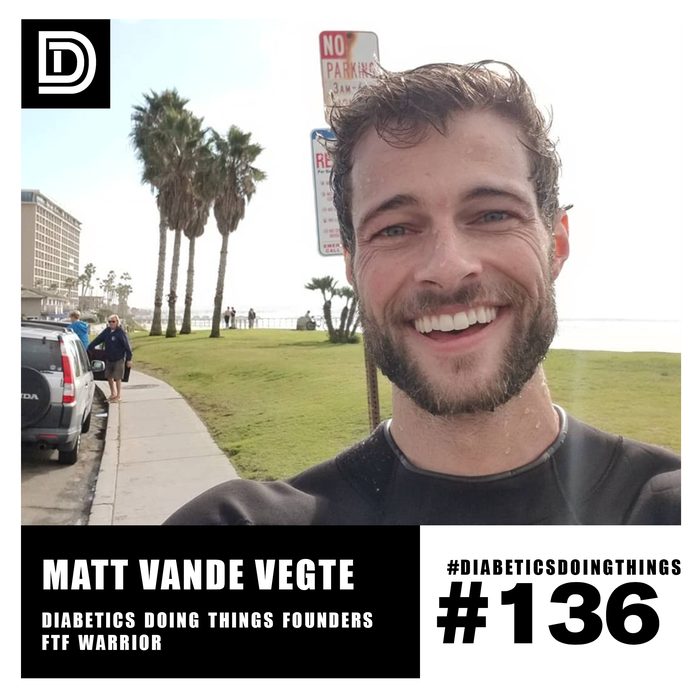
Diabetics Doing Things FOUNDERS with Matt Vande Vegte the FTF Warrior
Episode summary
Matt Vande Vegte, founder of FTF Warrior and co-host of the Pardon My Pancreas podcast, was diagnosed with type 1 diabetes on December 23, 2009. He describes years of denial, hiding injections, and avoiding blood testing until a health scare pushed him to change. He recounts a frightening low blood sugar episode alone in Paris that led to a four-hour hospital stay, followed by panic attacks, PTSD, and depression. Matt explains how therapy and small, consistent habit changes, including hydration, sleep quality, and identifying food sensitivities, rebuilt his health and confidence. He and Rob also discuss pricing his coaching services without guilt, hustle culture, sleep myths borrowed from athletes like Kobe Bryant, and the value of being vulnerable as men in the diabetes community.
Key takeaways
- Matt was diagnosed with type 1 diabetes on December 23, 2009, and for years avoided testing his blood sugar out of denial and embarrassment.
- A severe low blood sugar episode alone in Paris led to a four-hour hospital stay and afterward triggered panic attacks, PTSD, and depression for Matt.
- Matt describes a choice between 'fake control,' keeping life rigidly consistent, and 'true control,' building the skill to adapt blood sugar management on the go.
- He rebuilt his health through small steps first, like short walks, before working back up to running three miles for a firefighter exam.
- Matt and Rob both say therapy and professional mental health support matter as much as physical diabetes management.
Show notes
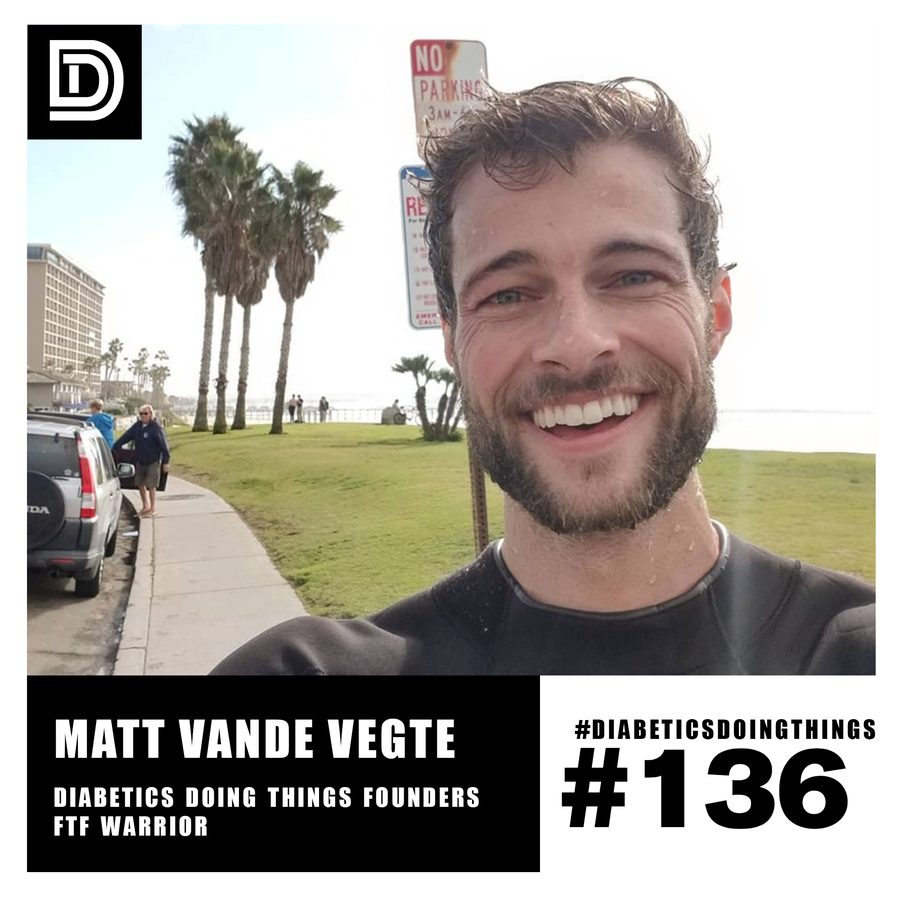
Continuing our amazing FOUNDERS series, I’d like to introduce you to Matt Vande Vegte (@ftfwarrior on Instagram) from the Pardon My Pancreas Podcast and FTF Warrior!
Matt and I met about two years ago when he was debuting his first of many video projects in the Diabetes community. Since then we’ve run into each other a few times, Matt even co-hosted a meetup with me in Dallas, and we both serve on the Beyond Type 1 Ambassador Council.
Matt is a super kind, thoughtful and energetic guy, and we talk a lot about how that plays into his various businesses. Diagnosed with Diabetes on December 23 2009, Matt and I discuss how his life has changed (in many ways for the better) since his diagnosis.
I say this with no hyperbole, Matt is an incredible friend. I’m grateful not only for his presence in the community and his heart for helping people with Diabetes, but also for the spirit of collaboration and friendship he exudes at every turn. It’s good to know that we can rely on each other in the Diabetes community, and Matt has become someone that I rely on over the past few months, and I’m so happy to have discovered that.
This episode is sponsored by Real Good Foods! Be sure to check out their new Breakfast Sandwiches, made with cauliflower cheesy buns with only 2g net carbs! They’re packed with protein (18g) and have no gluten or grains. Available in sausage egg & cheese and bacon egg & cheese flavors and they’re ready within seconds. Order them online or find a store near you today!
Questions this episode answers
When was Matt Vande Vegte diagnosed with type 1 diabetes?
He was diagnosed on December 23, 2009, the day before Christmas Eve, and says it took him about five years before he started actively managing his blood sugar.
What happened to Matt Vande Vegte in Paris?
While traveling alone, he had a severe low blood sugar episode with no emergency snacks left and no English-speaking help nearby. He ended up in a hospital for four hours, which later triggered panic attacks, PTSD, and depression.
What is FTF Warrior?
FTF Warrior is Matt Vande Vegte's diabetes coaching brand, where he works with type 1 diabetics on exercise, nutrition, and blood sugar strategy. He also co-hosts the Pardon My Pancreas podcast.
What is Matt Vande Vegte's program Diabetes in Action?
It is a coaching program built around the formulas and frameworks Matt developed for predicting and adapting to his own blood sugar patterns, focused on implementation rather than just information.
Full transcript Searchable, with timestamps
Rob Howe: Welcome back, ladies and gentlemen. Welcome back to the Diabetics Doing Things podcast. It's your host, Rob Howe. Today, we have another Founders episode. Our very special guest is Matt Vande Vegte. You might remember him from the last episode from the Pardon My Pancreas podcast with him and his co-host, Ali Abdul Kareem. But today, we're focusing just on Matt in his persona, the FTF Warrior. It's not only his persona, it's his brand. And he is offering diabetes coaching. He's an author of Thriving, a diabetes journal. And he's also just an all around awesome dude, especially to follow on social media. But I want to focus, I want to take a step a little bit away from the business because a lot of times you guys see public personas, you see business people, you see these titans of industry really grabbing it by the horns. But I just want to let you guys know that Matt really walks the walk. He lives it out. And he's also just a great friend. Even last week, he just left me a voicemail on Instagram, checking in, making sure I was doing good. and really just like no action items, no agenda, just an all-around nice guy. Also a tremendous resource for not just exercise, not just nutrition, not just diabetes strategy and managing blood sugar, but also just all-around good energy, good vibes. He's going to be hitting the speaking circuit at JDRF events throughout the country, so keep an eye out for those. And I'm just grateful for his friendship and glad that I get to know the real Matt Vande Vegte. But you can know him too on his podcast, on his platform, in his diabetes journal. Check him out now. And without further ado, here's a word from our sponsors. Thank you for continuing to listen to Diabetics Doing Things. We've been doing this for four years now, thanks to listeners like you and the support of amazing sponsors like Real Good Foods. If you're involved in the diabetes online community, then you have for sure heard of Real Good Foods and their low-carb pizza and enchiladas, which are delicious. but they've really outdone themselves this time with their new breakfast sandwiches. It's just like your typical breakfast sandwich, sausage, egg, and cheese, or bacon, egg, and cheese, except the biscuit is made out of cauliflower, and the whole sandwich has only two net carbs. That's two net carbs, and if you pop it in the microwave, it's ready in seconds. I'm not a big breakfast guy, because I don't like having to deal with big blood sugar spikes for a high-carb breakfast, but when I'm really craving a breakfast sandwich, I grab a real good food sandwich out of the freezer and hit the road without having to worry about a big spike in my blood sugar. Check out realgoodfoods.com to find them in a store near you or use code ROBHOW, that's me, to get a discount when you order the sandwiches online. I'm a big fan of brands who continue to support creators with diabetes and there has been no bigger supporter of me and my friends with Diabetes Community than Real Good Foods. If you haven't checked them out yet, give them a shot and let me know what you think. What is up? Oh, no, I just stepped all over you. Wow. Just totally ruined that. I was giving you the FTF Warrior buildup and I ruined it
Matt Vande Vegte: I love that buildup that's amazing too I was surprised you got my last name right I jumped in I was like well we got it what's up
Rob Howe: dude I cannot lie I've mentally been getting myself in the zone to get people's names right and so I was like you know what I remember in our conversation on you guys' podcast on you and Ali's podcast it's Vande Vegte and now that's permanently ingrained in my mind. So anytime you need an intro, anywhere you're going, man, just let me know. I'm fully there to hype man you.
Matt Vande Vegte: I love it. No, it's amazing. Most people, they try their hardest and I love that they're trying. But yeah, it's very rare someone gets that right. But you had a little intro with that last podcast. So I did. Very good job. You held on to it.
Rob Howe: So Matt, I assume a large number of our listeners are familiar with you via your social media platforms and FTF Warrior. What they may not be as familiar with is your story of how you came to be a part of this type 1 diabetes family. So why don't we start there?
Matt Vande Vegte: For sure. Unfortunately, it did not start early enough. It took me a long time to realize there was a community. So I was diagnosed just over 10 years ago, just crossed my decade with diabetes, which is kind of sweet. Congratulations. I was diagnosed the day before Christmas Eve in 2009, December 23rd. And, you know, it's like a fun little Merry Christmas to me and trying to figure out how to navigate all the sweets for Christmas and family time. But thankfully, my family is very supportive and they they're all in the medical field. So like they kind of knew what was going on already. I didn't have to educate them too much, which is very lucky on my part. But, you know, the first couple of years I I was ignorant. I like to pretend I didn't have diabetes really. I still took my insulin for the most part, but I didn't test my blood sugars. And it's like painful to admit that now because I'm so on top of it. But yeah, when I first started out, I just did not care what the numbers were. And I was embarrassed about diabetes, didn't tell anybody about it. I'd run off to the bathroom at restaurants to inject and I'd come back and pretend nothing happened. And just over the years learning about how important it was, I finally had this aha moment like five years in was like, crap, if I don't take care of myself right now, I'm going to develop diabetic complications like this. I can't hide from this. You know, it's a real thing that is uncontrolled right now. So I had to switch up my life habits and get things under control, start testing, start making sure I knew what was in the food that I was eating, seeing how exercise affected blood sugars. And over all of that time, you know, years of frustration and messy blood sugars finally figuring it out and understanding, you know, different types of foods affect us differently, different types of exercises affect us differently. And that's actually what led me into the community, ultimately, where I was like, all right, I figured this thing out. I want to help people. I want to see what I can do. There's got to be somebody out there that I can change their life with this like formula and framework that I've created for myself. You know, I'm like, there's got to be someone I can help. I'm going to go and look up like diabetic on Instagram, which as you know, the second I did that, just like a thousand accounts. I'm like, holy crap. What is this? And it's something, okay, this is incredible. And, uh, started making friends, started making connections and just seeing the absolute amazingness that we call the diabetic online community. And I was blown away at how tight knit everyone was.
Rob Howe: So let's talk about that for a second because I think most people who we interact with in the community could have a similar story like that, right? When we decide it's our time to either get involved or find some other people with diabetes or ask somebody a question or try to help some people, we go to that hashtag because that's the best way we can find other people who are using it, right? Yeah. And, you know, for me, I think I did that in late 2015, like maybe September, August, September 2015. And I found a couple of people who are still, you know, very close to all of us today. I found Jill Rippleone, T1D Chick. I found Glitter Glucose. I found Paloma. And I'm trying to think. I found a couple of other people who at the time I thought were like, wow, this person is super active in the community. And they were just like, no, I made one post one time, dude. I don't know what you're talking about. and but then you know now fast forward almost five years and the community has grown rapidly and there's all these cool unique inspiring people who are just bound together by this you know type 1 diabetes diagnosis and it's kind of a best kept secret I think on the internet are these like niche communities is it I don't know why I said niche I normally say niche but I felt I felt a little extra special, a little extra sauce on it. But, uh, you know, you find these niche communities of people with chronic illnesses and it's not just unique to diabetes, but I think diabetes is probably the most popular example, uh, of people coming together with one thing in common and trying to make friends, help each other, and ultimately just make their life a little bit easier and kind of share that burden. Um, what, when did you, once you got into the community, What was, you know, this was a few years ago, I imagine. What was the next, what was the next phase for you? How did you, you know, what, what did you decide was going to be your area of, you know, getting your, the word out to your peeps?
Matt Vande Vegte: You know, that's an interesting question. And it's funny because you mentioned niche versus niche. That was the question between my wife and I were like, which one do we use? What is it? You know, it's like, okay, is it a demographic type thing? Is it like Australians say one and the other one's us? Yeah, it took us a while just to like, who cares? But we settled on niche. But within, you know, finding the community and trying to help others and finding my place in this whole world. Right. I just wanted to help everybody. Initially, I was like, there's no such thing as a niche. That's that's selfish. I should help everyone that I can. And so I was like, I'm going to help type ones, type twos, pre-diabetic, gestational diabetes. And I was like, anyone that wants my help, I'm going to help them. And it took me like a year to realize that I'm not being the best helper in my area if I'm trying to help everybody. Right. If I'm just giving general knowledge out, that's not specific to one person. So ultimately, I'm less of a value to my audience, to my community, if I am not niched down. So then it was making the decision to serve type 1 diabetics because I was like, you know what? That's me. It's my personal experience. I know this thing inside and out. That's who I can help the best. And then furthering in the next year, my wife, it's funny, she called this like on day one. She's like, you're going to end up serving this one really specific audience. It's going to be like type ones and exercise and maybe even just guys like, I don't know. And then every year it keeps getting narrower and narrower and it's following what she predicted. I'm like, well, she nailed it. That woman's intuition, man, it's strong. Yeah. And so now it's more along the lines of exercise and type ones and helping people live fearlessly with those blood sugars on autopilot.
Rob Howe: So let's talk a little bit about the plan. So as you were developing this for yourself, you said five years into your diagnosis, was there a triggering moment that you encountered that decided to send you on this path? Or did you sort of just have a light bulb moment? Or you talked about complications. Was there anything that spurred you to think that way? And the follow-up to that is what was the first thing that you did? and the first thing that you would tell people who join your program is, you know, the biggest
Matt Vande Vegte: change that you have to make. Love it. There were a number of light bulb moments. Honestly, it wasn't just one. The first one was that five-year marker where I was like, all right, you know, I came back home from work. It was a long day, blood sugars, who knew where they were because I wasn't testing. Sat on the couch was just like, huh, so diabetes is going to be with me forever. I need to accept that. And I kind of had a flashback moment to my diagnosis where my doctor was like, all right, so you can't have sugar and your life's never going to be the same and you're going to develop diabetic complications probably around 10 years in. All right, have a good life. I was like, what? And I believed him at first. I believed that I couldn't have sugars. I was like, what about granola bars? I love granola bars. And like, that was my biggest worry at that time. It was like, chewy granola bars. So delicious. Oh, man. Still processed too, but I loved them. Oh my God. Yeah. Not healthy at all. But yeah, realizing that, you know, I can have carbs. He's got to match it with insulin and my life doesn't have to be this massive difference. And turns out diabetic complications are kind of optional if you take care of yourself. And so that five year marker, I was like, crap, he told me it was 10 years of bad control that that's where you start seeing the diabetic complications arise and I don't know if that's even super factual but that's what stuck in my head and I was like Matt you're halfway there like you have not taken care of yourself these complications could be right around the corner you need to make a change and so that's when I started paying attention testing my blood sugars again and trying to figure it out but a couple years later which is actually a couple years ago we my wife and I were traveling through Europe for a couple months and I was working out there. She was just kind of along for the ride, enjoying the traveling. And long story short, there was this moment in Paris where she had gone home for an interview for her grad school. I was out there by myself and I had this really scary low where I was out kind of in the middle of nowhere. Nobody spoke English and I was running really low on emergency low snacks and none of the shops were open. So I was like, all right, it's hospital or I'd die on the street somewhere with no streetlights. I have to go. Got to the hospital. They didn't speak English. They didn't know what was going on. They locked me in a back room pretty much by myself. There's two homeless guys in there. And that's just kind of where they put the people to wait after you finish the waiting room. It was nuts. Anyways, I was in there for four hours before I walked out by myself because I had used all my low treats. And I was like, well, I'm fine now, but they didn't help me at all. And that was my wake up moment. So instead of a light bulb, That was like a holy crap. I still don't know this thing inside and out. So ended up kind of flipping me on the side mentally. I got some pretty messed up like PTSD from that event. And I had never experienced panic attacks before in my entire life. And those became a normal thing for me, like almost daily. And I fell back into depression. That's something I struggled with when I was younger. and just this whole mess of mental health. And through that period of obsessing over blood sugars, because I got really obsessed over it, I realized I had two choices going in from that moment on. I could choose fake control where I keep everything consistent. No options for going out with friends. No options for travel. If I keep everything consistent, I notice patterns and I can keep everything even and level and safe. but what kind of quality of life is that right you're giving up adventure spontaneity everything or I could you know spend a couple years months whatever it is studying learning experimenting and develop true control which is being able to adapt in the moment so that's ultimately what I chose even though for the first few months it was that fake control which I feel like I had to go through that moment to learn but it's it's almost embarrassing that I fell into that mindset where I was like, I have to control everything. And I was just so obsessed over diabetes. But it was necessary for my own growth. So eventually got to a place mentally after going through therapy and anxiety classes, I had to go through all of that, where I was like, okay, I need to switch things up. No more consistent schedule, no more routines. I need to make sure I can control this thing on the go if I ever expect to live my life to the fullest again. and that is ultimately what led to my formulas my frameworks of you know what are the important pieces that go into blood sugar fluctuations that we can control and the rest you got to just kind
Rob Howe: of roll with it you know it's interesting um you're talking about the fake control versus the being flexible it's really even if we take a step back from the day-to-day it's really like a mindset that thing. It's like, am I going to allow diabetes to dictate what I do or am I going to do what I want to do and just make sure I take care of my diabetes along the way? And that's been a consistent theme. It's interesting. Over, you know, all of the podcasts that I've done or, and hearing other people speak as well. The first, I think the first people's first initial, sometimes from medical practitioners and also just from their, you know, just, just as their reading or trying to experiment that maybe the first thing that they do is apply diabetes to their life and say, I'm going to live my life through diabetes. And then they kind of find, you know, what you really articulated really well was like, you know, what kind of quality of life is that? And then they have to go look for something else, or maybe they don't, or maybe they try to experiment on their own. So I really love the way you put that. So for you, after you said, Hey, I'm going to break this routine, what we're, and I'm going to live my life on my own terms and learn how to take care of my diabetes along the way. What were some of the first steps that you took, um, and experiments that you did in, in trying to do that? So that's a great
Matt Vande Vegte: question. Um, but first I want to touch on the mental health aspect, how I don't want anyone to think that I just flipped a switch, went to a therapist and it was done. It was a process. You know, it took months for me to heal and learn coping strategies and take baby steps of facing my fears, right? And getting used to stepping outside of my scheduled routines. So I just wanted to
Rob Howe: clarify that. Sure. No, of course. And I mean, we can even put a pin in that question and come back to it. If we, cause I think mental health and diabetes is something that I think you see a lot of headlines about, but maybe, um, you know, let's, let's just be fair. I think you, you and I maybe in our niche diabetes communities are like big dudes. We're both tall athletic guys who work out and are, you know, maybe a tough guy exterior looking if you judge a book at face value. Right. But I also invest in my mental health. I see two different therapists. I go to couples therapy with my fiance, Erica, and I go to individual therapy because I have, I'm a real person and And I get sad and I have thoughts and anxious and anxious thinking and negative patterns, like you said. And I need strategies to kind of break in some of these bad patterns I've had throughout my life or patterns that aren't serving me currently. And that's been super, super beneficial. And honestly, I believe in my truest core down to my soul that therapy is medicine and that it's just as effective as any kind of treatment for any other ailment. and highly recommend it to anybody who's interested. And if you are interested or afraid to talk to somebody about it, feel free to message me, and I'm sure Matt would say the same. So if you're listening and you're curious about that, feel free to reach out. This is an open, safe space.
Matt Vande Vegte: Absolutely. And, I mean, there's such a negative stigma around it too, right, where it's like, oh, you see a therapist? Oh, I wonder what's wrong. And it's like, no, calm down. This is important because if you're not right in your head, nothing's going to be right in your life.
Rob Howe: Man, and what you're talking about is bro science. from the old school, right? You know, I think, uh, same thing right now, uh, you know, being plant-based and, you know, plant-based nutrition, um, is very, you know, popular. It's kind of having its moment right now. But I remember 10 years ago where if you were an athlete who is even thinking about being vegan, like there was this entire like stigma and just like small mindedness and very like, uh, I'm honestly like anti-feminist, uh, like, I don't know. It was very negative, like toxic culture around that type of thing. And now, uh, you know, forget that it had science to back it up, but it was really, you know, now you look at, you know, the trends and where things are going. It's like, wow. Yeah. I feel like people have been saying this for a long time. We just weren't ready to accept it. Um, and it's, it's always really interesting. And I hope that, you know, as people continue to see the benefits of, you know, positive mental health and investing in their, you know, own mental health. And really it's like strength training. You know, you're always going to be able to make more progress with a personal trainer or in your case, like a health coach. And I like to use the auto mechanic example. You know, I know, I guess ultimately I know how oil is changed and how an oil change works. And I've been taught how to do it when I was like a kid in Boy Scouts. but uh i when i when something's wrong with my car i bring in an expert because they know what to do way better than i do and so i that's the way i think about my mind and my heart man it's like when i need somebody to work on that i need an expert so that's why i go to therapy
Matt Vande Vegte: oh absolutely and i think there's different sections of the mind if you will where it's like okay this is great for therapy or for example i last year started hiring my own coach It was like, if I'm going to be a coach, why shouldn't I have a coach to coach me to be a better coach for them? You know what I mean? And so I went out and I found a guy that would coach me on how to be a better person and grow as an individual and as a leader. So I think it's super important to take care of your mind, whether it's your mindset, your mental health, all different kinds of stuff.
Rob Howe: Totally. How have you seen, and this is, you know, we're diving into you personally, you know, away from kind of the founder thing now. But talk about being a coach and being coached. How have those things, you know, have you had any, you know, light bulb moments or has that opened up new pathways or, you know, perspectives for you and able to, you know, pass through to your clients?
Matt Vande Vegte: Absolutely. Most of them, I would say, which is funny to talk about the topic, are mindset based where it's like, all right, what false beliefs do you have that you're currently living out? do I believe that it's impossible for me to have perfect blood sugars or even manageable blood sugars if I don't believe it's possible I'm not gonna even attempt it you know I mean so breaking through different false beliefs in my own world and teaching my clients like look if you don't believe this is possible we got to figure out what's holding you back because you're not even going to attempt it you know there's like there's a great example of the first time the four-minute mile was broken which I'm sure you're familiar with the story, but I forget the exact year. I want to say it was like 1940 something. But the first time the four minute mile was broken, nobody thought it was possible. Everyone's like human body cannot compete at that level. Then some dude broke it and everyone's like, what? This is insane. Boom. Shattering false beliefs. Within a year, there's like five other guys that had done it because they knew it was possible now. So being able to shatter false beliefs opens up this whole new world of possibilities. A lot of the time, it's our own self limitations that are holding us back.
Rob Howe: And, you know, for most people, I think, you know, a lot of it is fear manifested as self doubt, or, you know, imposter syndrome, or whatever the case may be. You know, it's interesting, I have an exercise that I do, called fear setting, and I got it from Tim Ferriss. And essentially, it's, you know, whatever that whatever that thing that you want, there are the thing that you're trying to do. In some cases, people ask me a lot about like, hey, I have an idea to start a diabetes account or a diabetes website or a piece of, you know, a book or something like that. And my initial response is always, that's awesome. That's so good. And then the fear setting exercise is basically like, what's the worst possible outcome that could happen from trying to do this? And so for me, when my business partner and I were starting our agency, I went through the exercise with myself. And I really sat down and I was like, okay, what, let's weigh out the pros and cons. Let's, let's go worst case scenario here. And so it's like, okay, I quit my job. I had a good job. I quit my job. I do this thing. It doesn't work. We lose all of our money. We, you know, my, my business partner and I are no longer friends. We don't speak. Nope. Nobody wants to work with us. And three months later we're done and I have to go get another job. And I was just like, you know what? That sounds not so bad. So we can figure this out. Uh, and I think oftentimes like our own fear of consequences, uh, you know, outweigh, outweighs the actual consequences and that prevents us from chasing after what we really want.
Matt Vande Vegte: Very interesting. I haven't heard it laid out like that before. It's pretty cool.
Rob Howe: It's interesting. Yeah. I don't know. I mean, for some people, like, you know, if you're going to jump over a ravine full of crocodiles, like the worst case scenario is that they get you. I mean, so it may not be worth it, but it's a good exercise, I think. And even on small scales, it just helps me really make sure I know why I'm doing something.
Matt Vande Vegte: Yeah, for sure.
Rob Howe: So what obstacles did it help you kind of clear up and be able to pour back into your business and your clients?
Matt Vande Vegte: This is going to sound weird to a lot of people listening probably, but how can I go for it? But for me, it was this massive false belief that if I charge people money for what I do, that I'm greedy and that I'm not doing it to help people. And so for the longest time, I would charge less than what it cost me to do things. And I lost money for like the first year. And I was just so stuck in this mindset of, you know, if you're charging somebody, you're this greedy CEO, tycoon, business guy, and you just can't do life like that. And it was really tough for me to break through that and be like, no, you know what? And then this is where my coach came in. He was like, you understand that if your business fails, you can't help anyone ever again, right? I was like, oh, shoot. That's a really good point. It's like, yeah, you have to survive if you expect to help more people. I was like, oh, dang. That's very true. That's a solid piece of advice.
Rob Howe: It is. And, you know, that's innately bad. you know that's a that's a terrible loss if you can't help people then you know there's a gap that needs to be filled right there's people out there that can need that haven't heard about you yet that you need to reach and in order to do that you have to make this you know a business be able
Matt Vande Vegte: to survive exactly so that was a massive breakthrough for me that even once i had the breakthrough it still took me like another year to make the necessary changes because i was like no, I'm just, I'm a big helping person. And, you know, everyone's like, this is your job though. Like you don't do anything else. This is your 24 seven thing. You kind of have to make this work
Rob Howe: like, Oh, all right, fine. Yeah. I mean, that's a super, you know, mature response. I think, you know, talking conversations about money are often uncomfortable. Um, and I think that has a negative stigma associated with it. I think in the diabetes space, especially it can be hard because let's be honest, diabetes is expensive. Nobody asked for it. And especially in the U.S., there are a lot of cost ramifications that can prevent people from having the best care, prevent people from being able to spend on extra things. A lot of people's flexible income, extra income, goes towards diabetes care, mine especially. And I look at, hey, the amount of money that I have to spend on my diabetes every year doesn't get me anything except for to be as healthy as somebody who doesn't have diabetes. But it's a challenge. So I understand sometimes the fear of putting that out there because we understand who this consumer is. But ultimately, I also think that it's worth it. And ultimately, a pricing strategy is like, okay, well, what is this worth to somebody? Can I deliver on this value? And a lot of times when you start thinking about it that way, the type of value you're delivering, maybe somebody lives an extra 10 years that's incredible right there's no way to measure that now but you know just believing in that is such a you know a strong place to come from
Matt Vande Vegte: absolutely and uh ultimately that that's what got me to believe in it i was like all right my goal is to change lives if i don't change my belief i can't change lives therefore i must change my belief logic dude i love it i know we put pins in like four questions we did we did we
Rob Howe: like went down a big rabbit hole. I think, uh, do you remember what they were? Cause I've got, I think I have an idea. I don't remember at all. Okay. So the one that we talked about mental health, I was thinking the, the actual tactical steps that you took, um, after, you know, that you had that wake up moment in that hospital, uh, you're like, I'm going to throw away my routine. I'm going to make diabetes fit my lifestyle. What were the first things that you did?
Matt Vande Vegte: the very first thing that i did was decide on small steps because i knew that if i took one massive step and i failed that it would cement the idea in my head that it wasn't safe or that i couldn't accomplish that and i think that's important for pretty much anybody that if you go for the biggest goal you can possibly achieve without taking any small steps and you fail it's like oh why did i do that but if you take the smaller steps on the pathway it's going to be a lot easier because you'd build those foundational steps. And so for me, like just kind of a look into where I was at. I was re-diagnosed with depression. I was actually for the first time diagnosed with panic attacks. They told me I had PTSD. They almost labeled me as agoraphobic because I was scared to leave the house. But I wasn't scared to leave the house because like outside is dangerous. It was because I was scared to leave all my low treats. And so I was like, Oh man, I gotta have my stash, you know? Um, and so for me, a big step that I took in the beginning was, you know, making sure I had a good blood sugar going out of course, but leaving the house, just going for a walk, hanging out with my sister and taking the dog for a walk or something. And, you know, I walk further and further each time and then I go for runs and then I go to the gym and I build on those foundational steps until I was back to where I was that where, okay, you know, it's been X amount of time. It's time for me to go run three miles and just go hard, you know? And I, I think that's because I took those baby steps of assuring myself, everything was going according to plan that I was able to achieve the higher steps, which was, I had to be able to run three miles in 24 minutes or less for a firefighter exam. And so I was like, well, I got to get to that goal. So better start somewhere. And, uh, yeah,
Rob Howe: it was those baby steps that got me back on track. You know, so much of where we are in 2020, and especially you and I are people who I would classify you and I as people who are very online, like we're, you know, very online in the space, easy to find us easy to communicate. We are in a quick fix culture. Every, every new product comes out every new piece of software, this is going to maximize your, you know, your workflow is going to save you 50%. That's going to help you lose weight in two weeks and blah, blah, blah. And that type of rhetoric is so backwards because most of, you know, I like to say most of life's great treasures come from compound interest. And what that means is it's just incremental progress a little bit at a time, every single day, all the time. King, you know, you look back and you say, you know, what have we, you know, what have we accomplished in this amount of time? You look back and you say, wow, this little bit of consistency has yielded me a great return. Tony Robbins, who, you know, ultimate guru guy, but, you know, has had some not so great PR moments in the last year. So, you know, I'm going to say his name with a little bit of, with that caveat. Same time, his advice of, you know, most people overestimate what they can do in a year and underestimate what they can do in a decade. And that's something that's always stuck out to me is like, if you just stick with it and if you just put one foot in front of the other and like you said, you know, day by day, just chipping away at that goal, I think you're much more likely to be successful and also build habits that are going to serve you even past that initial goal.
Matt Vande Vegte: Exactly. And I love that quote too, by the way. It's a fantastic one. And it's so true. You know, if you look at the big picture, people often do times underestimate what they can do in a longer period of time, but in the short period, they're like, I can do 50 things today. And you're
Rob Howe: like, you should probably just do three. Yeah. And I think, you know, even in let's, let's use the gym, for example, um, you know, you don't want to go in and lift as hard as you can every single day, uh, because you have no recovery and that's not part of the, you know, your, your cycle and making sure that you're giving the body the rest it needs to grow and actually maximize the results that you're giving it. Um, but you know, a lot of people do that and they're like, they go super hard right up front and then they're too sore to move and they miss the gym. Right. Or, you know, I see a lot of people when new diabetes accounts sprout up, they have like six or seven pieces of content that they put out right away and they're very excited, very gung-ho, but then they burn themselves out or they, you know, life gets too busy and they didn't leave any room, uh, for error or, or realize kind of why they're doing it or, you know, build that sort incremental piece. So, uh, you know, I think, I think incremental progress and patience, uh, can, man, it can really, really help a lot of, uh, help solve a lot of the problems that many people are facing today. Myself included. Yeah. Yeah. It's super important. Um, that it's
Matt Vande Vegte: funny you mentioned the healthy habits because the next program that I put out after I had that whole phase, I took some time off, uh, every week I put in their homework was healthy habits was It's like, all right, today you're going to park in the back of the parking lot and you're going to walk all the way to the grocery store, like just small little shifts. And then throughout the week, they're like, oh, my gosh, now I drink all my water every day instead of dehydrating myself. I'm like, yeah, it's because you were doing a little healthy habit at the beginning of week, too. You know, it's those little shifts that make a huge difference.
Rob Howe: And what were some of those shifts for you like early on? Do you remember any of the habits that you started to form that started to really make a difference?
Matt Vande Vegte: So water was one of them. I was like, you know what? I'm going to drink a gallon a day. And then I was like too aggressive. So I was like, all right, I'm going to drink two thirds of a gallon a day. And it got to a point where I was drinking the proper amount. I felt great. So water was a huge one for me. Sleep. Sleep one is so overrated. People are not overrated, underrated. People don't realize that their quality of sleep is equally or even more important than the quantity where it's like, all right, if you're going to bed stressed out or right after you turn the TV off, right when you finish work, you know, like you're not going to get good quality sleep. And so trying to incorporate more like let's turn the TV off an hour before bed or two hours before bed and focus more on relationships or reading or something like that. It was these habits that I'd never even considered as part of my health before, because to me in college, I was like health just means fruits and vegetables and exercise. Right. But there's so much more to it. Um, so those were big ones for me. And then I think the last one that I didn't expect was identifying how different foods made me feel and realizing after kind of a little experimental phase that my body does not like hummus, which was super sad. Cause I love hummus. Oh, that's a sad, sad story, dude. I know. Cause I was vegan at the time too. So I was like, that's all I put on everything. So, uh, yeah. Understanding food sensitivities and was like, wow, I feel so much better now that I know what I'm not supposed to eat. And that made me more aware of kind of what I put on my plate and, you know, discovering a lot of different health factors within macronutrients and micronutrients and all of that too. And that's really interesting.
Rob Howe: I want to, I want to talk about a couple of things from, from that, from your response. Number one, sleep. If you're like me, I mean, rest in peace, Kobe Bryant, one of the all time great competitors and great basketball players and, you know, obviously an international icon. One of the famous things that people always talked about him is he would, like, wake up at 2 in the morning and go work out, and then he'd go work out again, and then he'd have, like, practice. And so by the time his regular teammates were out there, he had already gotten 2,000 shots up or whatever because he only slept three hours a night. Jeez. Which is crazy, right? And, you know, at face level you're like, wow, that is absolutely nuts. But then he's performing really well all the time, So you're like, hmm, maybe there's something to that. So for me, a young impressionable basketball player looking for, you know, somebody to strive for, it always bothered me. And I kind of beat myself up that I wasn't able to perform with that amount of sleep that I I needed more. And I felt like that made me soft or that made me, you know, not elite or not special or not dedicated or whatever the case, whatever the negative self-talk was. and really only recently because I've always tried, I've tried like every year for five or six years to try to just wake up at 5 a.m. every day and like set myself up for that because I felt like I was being sold this story where I couldn't be successful unless I was up before everybody else, handling my business before the workday started. But then at four o'clock in the afternoon, I'd be exhausted and wouldn't be able to have an enjoyable rest of the day. So this year is the first year where, and I got to credit my fiance. So I loved hearing you credit your wife for a lot of the other ideas in business wise, because she was like, why don't you just wake up when your body wakes up? So you don't have to beat yourself up like for an hour. I'm hitting snooze every 15 minutes in the morning. And, you know, I finally got like a whoop strap, which is a cool little thing that like tracks your sleep and recovery. And one of the first things that noticed in the insights was like, Hey, you need more sleep than the average whoop user. And didn't give me a reason why other than it measures your like resting heart rate and recovery and things like that. And I, so now I finally like accepted a little bit that I need more sleep than Kobe Bryant and other like elite people that don't sleep and that's okay. And I'm gonna love myself anyway. And honestly, I feel a lot healthier. I'm able to get my stuff done still. Um, and I don't know, that's, that was a long sleep story from me, but I don't know if that was, that really hit me
Matt Vande Vegte: really hit a home yeah i mean it's super important i i was fed the same i want to call it a lie because you know especially as entrepreneurs we're taught that if you're not up before the sun not before everybody else that you're gonna fail like only the successful people are the ones that are getting up at 3 and 4 a.m and just going nuts hustle culture gary v do it all do it all a
Rob Howe: thousand videos a day it's ridiculous let's talk about it though because i think it's impressionable I mean, you and I obviously have encountered a lot of the same types of, you know, content, inspirational content, whatever, reading books, like reading about successful people. And it's a trap, I think. And I wish I would have been able to recognize some of the good from the bad or how they would impact me early on. But I guess that's what life's all about. But there's a trap in hustle culture, the always go, go, go, go, go. So, you know, there's really no consideration for other parts of your life. And it's like you can be an entrepreneur and have a balanced life and that is successful. And that was never something that I thought was an option up until, you know, the last few years.
Matt Vande Vegte: Yeah. And if I'm being completely honest, because I love being honest and it's more fun that way. Yeah. Man, I'm still fighting that. It's tough. I always thought that I had beaten that whole false lie that was fed to me because I don't get up at four and five. For the first two years of running an FTF Warrior, I was up at eight. And I was like, you know what? That's kind of early. I like to get up at nine, so we'll call it eight. And that's productive for me. Good job, Matt. You're up at eight. And then over the last year, I pushed that to seven. And I have loved getting up at seven. I'm like, dude, I get so much more work done. It fits my schedule. Everything is so amazing. and I finally found my sweet spot for when I'm waking up and I told my wife that I was like I'm getting up early now and she's like Matt that's not early that's like average American I'm like what but what I have noticed you mentioned that you know finding the balance that you can have balance as an entrepreneur that is the hardest part for me and it's interesting this is another thing that my coach taught me he was like based on your disc profile right you take some it's like the Enneagram test kind of. Yeah. He was like, you are likely to become addicted to your work, like an actual addiction. And I was like, really? It's like, yeah, the things that you value in life are all being fed to you by your business. You get to help people. It's like you derive enjoyment from helping people. You're going to keep doing it. Like, that's just how addiction works. And so, you know, I might not wake up till seven, but oftentimes, especially during this last couple weeks when I was launching a new program, like I've been working until 10 or 11 o'clock at night all day long. And I take a break to go to the gym, but that's it. And, uh, just like watching webinars through my mealtimes and that is not balance at all. And I know that, but it's so difficult for me to pull myself away from work because I enjoy it so much. But I hear you talk about balance and I'm like, Oh man, someday.
Rob Howe: Oh, well, make no mistake. I have, I have not figured it all out. Um, one thing that, uh, that I've come to grips a little bit with, and I have to equate everything to athletics because that's what I know. That's what, for the better part of my life, I was playing sports and I was trying to be the best that I could be at basketball specifically. and so like I think I think about the idea of work and I think about if I went to the gym even when I was in my prime and for two hours just went as hard as I could and worked on you know whatever whatever the case is like ball handling shooting uh you know some post moves like defense agility like conditioning all those things like going all out I probably only have two hours of a full tank, uh, working on solo work. After that, I'm going to start seeing diminishing marginal returns from the work. It would be better for me to just step away and be intentional. And so, um, that may mean coming back later in the day and doing something that's a little bit more technique focused or, you know, balance focused or whatever the case is, or hit the weight room, uh, and adjust, but being intentional. And so I realized that I was trying to go a hundred miles an hour for that two hour workout in other parts of my life with my business, with this podcast, with traveling. I was trying to go balls to the wall the whole time. And that was creating an imbalance in my personal life. It was creating a lot of unhappiness. And so I had to sort of break that cycle and I'm still working on it. But the biggest piece is being intentional. If I'm going to put something on my to-do list or my calendar and with a time I'm going to sit down and I'm going to do it. And then that way I don't, I may not have to, you know, sit there and grind all day. Um, but then there's also seasons. And like you, like you just said, you were working on a masterclass, which I really want to talk about with you now, you know, sometimes you have to invest that extra time and say, Hey, you know what, this may not be balanced, but in order to achieve what I want to achieve, this is the sacrifice that I need to make right now. And as
Matt Vande Vegte: long as you're honest with yourself, I think that's okay. Yeah, absolutely. And I, there is a second side to that though, where I've kind of fallen into the trap of looking back and like, oh man, I'm so busy right now, but it's just a phase. And I tell my friends and family, it's just a phase. Like I'm working through this. It's just a heavy, hectic time of life. And then they're like, Matt, you've been in this quote unquote phase for like three months. Like, come on. I'm like, well, it's almost over. No, I mean, it's not, but I'll get there eventually. yeah so but you're totally right like on a normal healthy balance there is some room for those hectic phases where it's like no i have to get this done there are deadlines and i can relax in you know a week or two weeks or whatever it is
Rob Howe: so with that too like i think prioritization comes into effect right you have to decide what's most important to you and sometimes you know you're in those seasons you're like i gotta serve my projects. That was one of those things, you know, we've talked a little bit about Kobe today, but I put a post up and I was like, you know, I'm a lot of times very focused on my own work. And I heard a lot of other of Kobe's peers say that too. Like Shaq had a speech, Shaquille O'Neal had a speech where he was like, you know, I'm working. People know that I'm a worker. I'm always working on my stuff. He's like, but I'm sorry for not telling my friends that I love them or I care about them more because I'm too focused on my own things. And I think that's something I'm guilty of too. It's like, you know, I'm, I'm real quick to prioritize my own stuff, even if it means helping people, but it's still my own thing. And so I'm trying to, this year, one of my, one of my goals for the year is just to be a better friend, a better son, a better brother, a better, you know, partner and tell people that I appreciate it more. I think that's something that I've kind of detaching away from my like alpha male persona that I've built in my mind over the last 25, 30 years, you know, but, uh, it's something that I, that I know is most important to me and like really gives so much back to me. So anyway, enough about me. Um, that was a nice, uh, thank you for that, man. That was a really nice, like vulnerable, open, like you said, honesty is, uh, you prefer it. I appreciate that, uh, we were able to have that discussion. That was really nice.
Matt Vande Vegte: Absolutely. And I want to add something into that too. I love being open and vulnerable with my words. It's something that for a long time I struggled with too, because you know, the hyper masculine culture. Guys don't talk about feelings. You know, if you hug, it's two pats on the back and then separate like all these rules we follow. Right. And being able to look someone in the eyes and be like, hey, man, I really appreciate you. You've been putting a lot of effort in a lot of work. I see you and I want you to know that I value every bit of effort you're putting into this. Like to be able to say that it took so much of energy and breaking false beliefs and just like accepting that if somebody wants to judge you for this, that's okay, but this needs to be said. And then realizing people actually like it when you tell them how you really feel. You know what I mean? Like being vulnerable is you're showing them that A, you value them, but B, that you feel safe to be vulnerable with them, which then encourages them to be vulnerable with you. And it just creates this deeper relationship and it's incredible. It really is. And it's so simple,
Rob Howe: right it's just yeah but but very difficult and i think you know we're not really taught that at a young age um you know especially as young men so uh you know props to uh to you man for really
Matt Vande Vegte: pushing that forward that's huge and i encourage everyone share your feelings it's good for you it's good medicine like watch we're gonna practice right now rob you're an incredible leader you were one of the first guys that i saw leading in this space and i mean first guys i saw lots of girls doing it, but you're one of the first male role model figures that I saw in the diabetic space. And I want to acknowledge you for doing that. That takes a lot of effort for you to be vulnerable in front of everyone and to lead as a male in the diabetic community. So great job doing that.
Rob Howe: Well, thank you, man. I appreciate you. I feel, I feel seen and I, and you know, like you said, that sometimes that's all you have to say. I think I'll send that back to you. Uh, And I appreciate you. We had a conversation on you guys' podcast. It will have been released by the time we publish this. But I came away from that conversation with you and Ali just feeling so encouraged by the type of people that are giving back to people in this community. And it's changed the way that I, you know, whenever I see you, I had seen your post and, you know, and like and follow. And we met last year in July. but I feel like I have such a more appreciation of where your efforts come from and giving of your heart. And that was something that I just couldn't have known without you giving me access to conversations like this. And I'm just a big fan, man. I'm just glad that we're in this together. And I just can't wait to see where you're going to go and what's next for you. It's really exciting.
Matt Vande Vegte: Well, thank you so much. It means a lot, Rob.
Rob Howe: yeah yeah dude i appreciate you man that's like look at this podcast this is great this is incredible uh super fun i love this it's good and like you know i'm gonna i know that i'm gonna walk away from this conversation feeling better than i did before uh and that you know to me that's that's a clear metric that more conversations like this need to happen absolutely so back to the originally scheduled programming i suppose um you have been you've mentioned it. You've been putting a lot of work in. It's a season where you've got a new program coming out. Can you give us a little teaser of what we can expect?
Matt Vande Vegte: Ooh, that's an interesting question. So we just finished up a launch for Thrive with Diabetes, which is that program I was talking about with healthy habits and essentially increasing your quality of life, right? Lessen the burden of diabetes and learn what you can do to keep those blood sugar stable but um a part of the reason why i pushed so hard for that one is because i want everyone to get in there to just take all the value they can from it because there is actually a new program that we've been working on for probably six months now and uh we just wrapped up the beta group which was super fun had about 10 people go through it and the feedback was incredible they gave me a few points that i can improve the program with and i love knowing how i can improve it and having people who are honest with me, right? Where it's like, okay, this little piece could have been better. I'm like, sweet, let's make that better. But the new one, actually, I haven't really mentioned it anywhere. So this is an exciting moment.
Rob Howe: This is big. We get the exclusive.
Matt Vande Vegte: Oh man, Rob Howe with the exclusive interview.
Rob Howe: This is why I do it. I'm the journalist, man. I dig in.
Matt Vande Vegte: But it's this new program. It's actually called Diabetes in Action. And this is everything that I've learned as far as adapting in life, taking your life back, right? Automating your blood sugars. And that is where I finally released my actual formula, my frameworks that I use personally. And it's not as much knowledge based, it's more implementation based. So I'm like, hey, go do this thing. We're going to figure you out personally and and get you to a point where you can predict what your blood sugars are going to be so that it's less of a burden mentally. And And it's super fun watching people go through it and just understand that they have more power than they ever thought they did. You know, it used to be this mysterious disease. And when I was first diagnosed, the same thing. I was just like, OK, blood sugars do whatever they want. They're stupid. I'm going to stop trying now. But realizing that, and I'm sure as you know, we have a lot more power over our blood sugars than we thought. You know, different food choices, different pre-bolus timings, different types of exercise and sleep patterns. And, you know, there are strategies that we can use to tame the beast, if you will.
Rob Howe: Well, the one thing I love about your programs is that you use yourself as the guinea pig. And we get to benefit from your experience. So I'm super excited to see and hear more of the success stories of people who are going through that course of diabetes in action. And thanks for the exclusive, by the way. That's exciting. For people who are looking for more information on that, can they visit you on website, Instagram? Where's the best place for them to go?
Matt Vande Vegte: Well, to get the exclusive first look at it, we do have a wait list set up. So if anybody wants to go check it out, since it hasn't had any traffic yet, no one knows about it. You as a listener will be the first. If you guys go to diabetesinaction.com, then you can enter your email and you'll be the first to know what it is, when it's going to be launched, and how you can learn more about it.
Rob Howe: Well, we will definitely include a link to that in the show notes to make it easy for listeners to find. I also wanted to throw a little bit more gratitude your way Matt because you in this world of Instagram personas and taking people at face value dude you walk the walk and I just you know I got to say I appreciate that when I meet people with diabetes in the diabetes kind of influencer space and content space this is a small community of people and I just have a lot of respect for you and the work that you do and the man you are. So, you know, thank you for sharing that with us and, you know, letting others benefit from what you've learned.
Matt Vande Vegte: Thank you so much. Again, that means a lot coming from you. As someone that I've looked up to, it's like it's a weird feeling for me to hear this come from you. But I really appreciate that.
Rob Howe: Well, dude, you know, it's a two-way street, my man. So this is an interesting world that we live in, right? Like this ultimately like didn't exist. It's an emerging market. We're all learning and kind of discovering our way on the fly. But I just love the friendships that we all get to make along the way. It's super exciting for me. So, you know, also you and all these podcasts is hilarious. So I can't wait for everybody to give feedback on our comments and things on, you know, when those, when those episodes air, which a time of recording will be next week, but obviously in the future people will be listening to this. So.
Matt Vande Vegte: yeah well it's a note on that real quick it's like the uh the positive side of diabetes right where i've made so many new friends i literally would never would have met you unless it was like a dunking contest but i don't even go to those so yeah neither do i i don't get invited i don't know oh man but yeah there's so many new friends and this community is so cool there's so many positives that no one talks about right like i am so much healthier than i ever would have been I'm positive of that if I didn't have diabetes. Like in college, that's probably the diet I would have kept for my entire life. Just California burritos, every meal. And you know, I became a personal trainer and a nutritionist because of my diabetes. Like I was like, you know what? I'm learning this stuff anyways to figure out my blood sugars. I might as well get certified. That never would have happened if I didn't get diagnosed. You know what I mean?
Rob Howe: Yeah, I think about it a lot. I mean, so many of the people who I interact with and some of the opportunities that I've come across, honestly, like this purpose of life that I feel from helping people with diabetes or being involved with people with diabetes wouldn't exist. and I just don't, you know, I, I'm grateful that this is the path that I've, that I've been given because, you know, if I hadn't, you know, I don't know what, what, what life would look like. And I think it's just given a lot of meaning and purpose. And fortunately I've been able to make the best out of a, you know, bad situation, which is, you know, diabetes is always a bad situation, but if you've got it, there are ways to management and manage it and people to, to be around to really rely on his resources. So I'm grateful.
Matt Vande Vegte: 100%. Yeah. There's always a silver lining to find.
Rob Howe: Definitely. Definitely. You got to keep that positive mindset. Yeah. So Matt, we're at like 53 minutes here. So this has been a solid, solid episode and honestly flew by any parting thoughts. You know, if you, if you were going to give, I used to ask the same question at the end and I was always kind of getting the same responses. So I've shifted a little bit. If there's one thing that you want our listeners to take away from this conversation, what would you say? You know, from this conversation
Matt Vande Vegte: specifically, I would say that mental health is more important than you're giving it. It's more, it has a bigger impact on your life than you realize. And diabetes-specific mental health, For example, the burden that it takes to take care of type 1 diabetes is real. You have to deal with a disease literally 24-7, 365 days out of the year. You don't get a break. That's why we experience things like burnout, right? And understanding that it's okay to talk about feelings and to talk about the burden that you have to deal with. It's okay to seek out community and to have these conversations that Rob and I are having today. And it's okay to seek professional help. Whether that's a therapist, whether that's a trusted friend, just talking about what's going on. Because I think too often people just get knocked down by the negative stigma associated with it. Like, oh, I can't talk about my mental health. It's not cool. It's not fun to talk about. But really, if you don't protect your mental health, it's going to affect every area of your entire life. So understand the value of your mental health. And the burden that diabetes can play, seek out community, seek out help. And it gets a whole lot better from there.
Rob Howe: Is there a retweet button on this pod? Okay. Yeah. Retweet. Yeah. That was, I love that, man. That's great. And again, I want to thank you for your time today for coming in and pouring into, to our listeners and our community. And we'll include all your relevant links in the show notes. But yeah, Matt, FTF Warrior, Vande Vegte, pronunciation on point. Thank you so much for your time, man.
Matt Vande Vegte: Thank you so much for having me, Rob. It's been a blast chatting with you today.
Rob Howe: Thanks again for listening. Please follow us on Instagram. Check out our sponsor, Real Good Foods. We're diabetics doing things on all the major platforms, and we also are available on Spotify. So if you prefer Spotify or your subscriber, check it out. I definitely have listened to more on Spotify in the recent years. They've got a lot of great podcasts, and it's just super easy to shuffle from music to podcasts and back and forth. Leave us a review if you have a chance, and tell a friend with diabetes about this podcast. That's the best endorsement and the best support that you can provide. Thanks so much, and we'll see you next time.
About Matt
Matt Vande Vegte runs FTF Warrior, a type 1 diabetes coaching brand, and co-hosts the Pardon My Pancreas podcast with Ali Abdul Kareem. He was diagnosed with type 1 diabetes on December 23, 2009, and now works as a personal trainer and nutritionist helping other people with diabetes build sustainable habits.