

Diabetics Doing Things COLLAB with Pardon My Pancreas Podcast
Episode summary
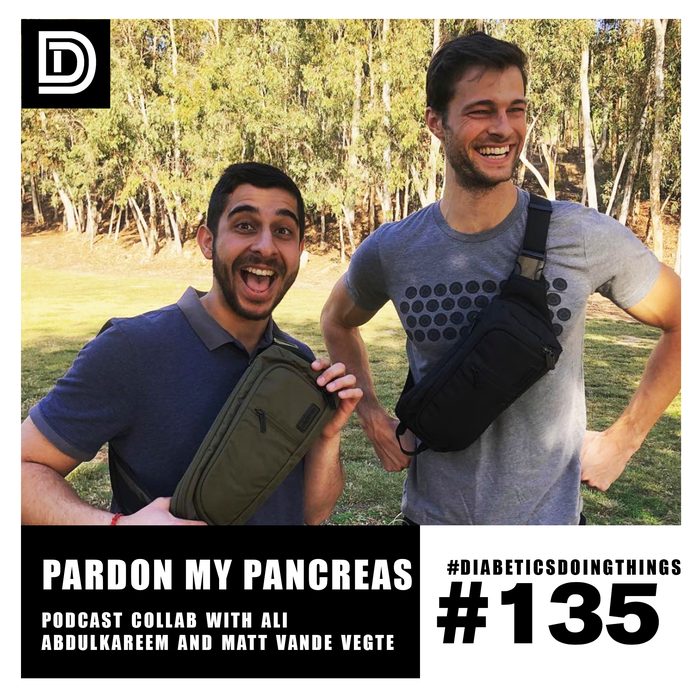
This episode is part one of a collaboration with Matt Vande Vegte and Ali Abdulkareem, hosts of the Pardon My Pancreas podcast in Southern California. Ali was diagnosed with type 1 diabetes at 18, in his senior year of high school, while getting into basketball and hip hop production. Matt was diagnosed on December 23, 2009, after a rough month that included losing his childhood dog and failing his first college semester. About a year and a half later his younger sister was also diagnosed. The three talk about how Matt and Ali met through a diabetes video project, how Pardon My Pancreas launched in January 2018, and how they balance content creation, coaching, and daily life with diabetes. Part two continues on Pardon My Pancreas.
Key takeaways
- Ali Abdulkareem was diagnosed with type 1 diabetes at 18, during his senior year of high school.
- Matt Vande Vegte was diagnosed with type 1 diabetes on December 23, 2009, and his younger sister was diagnosed about a year and a half later.
- Matt says his own coach told him that skipping work on his diabetes content meant other people might not get help they needed.
- Ali says he stopped making daily vlogs for about a year and learned to share without telling people what they should do.
- Matt and Ali met at diabetes meetups in San Diego and launched Pardon My Pancreas in January 2018.
Show notes
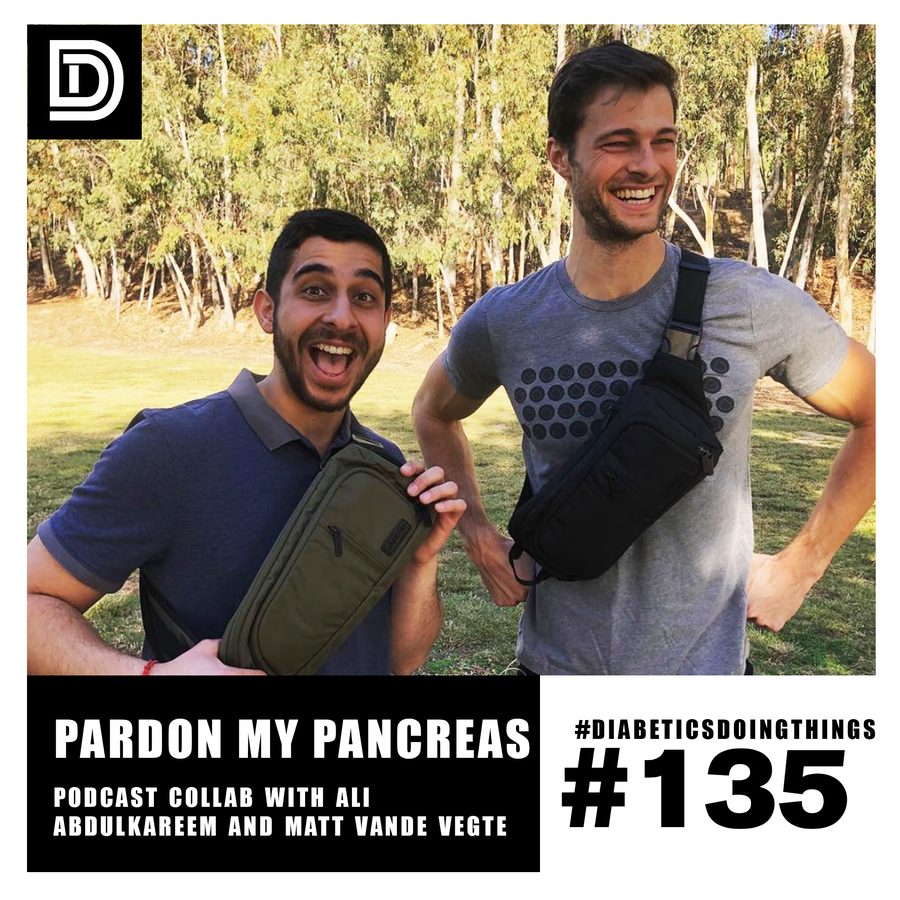
This is part 1 of a podcast collaboration with my friends from the Pardon My Pancreas podcast you can check out part 2 (the continuation) on the Pardon My Pancreas podcast.
Pardon My Pancreas is hosted by Matt Vande Vegte and Ali Abdulkareem, two men with Diabetes living in Southern California. We discuss how they met and the process of starting their Diabetes pod and what being involved in the Diabetes community has meant to them.
In typical Diabetics Doing Things fashion, we start with Diagnosis and work our way through Matt and Ali’s lives with Diabetes all the way to the present. The episode ends on a cliffhanger so be sure to listen to part 2 on the Pardon My Pancreas podcast!
This episode is sponsored by Real Good Foods! Be sure to check out their new Breakfast Sandwiches, made with cauliflower cheesy buns with only 2g net carbs! They’re packed with protein (18g) and have no gluten or grains. Available in sausage egg & cheese and bacon egg & cheese flavors and they’re ready within seconds. Order them online or find a store near you today!
Questions this episode answers
When was Ali Abdulkareem diagnosed with type 1 diabetes?
Ali was diagnosed at age 18, during his senior year of high school.
When was Matt Vande Vegte diagnosed with type 1 diabetes?
Matt was diagnosed on December 23, 2009, and his younger sister was diagnosed with type 1 diabetes about a year and a half later.
How did the Pardon My Pancreas podcast start?
Matt and Ali met through a diabetes community video project and at local San Diego meetups, then launched Pardon My Pancreas in January 2018.
Where can I hear part two of this collaboration episode?
Part two is hosted on the Pardon My Pancreas podcast, where Rob is interviewed in return.
Full transcript Searchable, with timestamps
Rob Howe: Welcome back, podcast fans. When I told you I wasn't playing around in 2020, I meant it. We're back with another episode that's different than anyone we've ever done before. We are having two guests from another podcast. They are diabetes podcasters as well. From the Pardon My Pancreas Podcast, Ali Abdulkareem and Matt Vande Vegte, also known as the FTF Warrior. We decided that there just aren't enough diabetes podcast collaborations, and so we are going to do one and talk a little bit about how they started their podcast. and the first half of the episode on diabetics doing things. That's this half. And then the second half of the interview will be posted today. It's already live on Pardon My Pancreas, and that's a little bit more about me. So I have committed to make sure that people listen to both halves of the interview. So start here. Go to Pardon My Pancreas after it's done. It's a giant cliffhanger ending, which we did on purpose. Hello, marketing. And I really hope you enjoy it. These two are some of my favorite guys in the community, and I was really interested in how their friendship developed. And I think in terms of the, to use movie screenwriter quotes, it's like a meet cute almost how this happened. So a Hollywood story taking place in Southern California. You love to see it. Matt Vande Vegte and Ali Abdulkareem coming at you. Hello, ladies and gentlemen. Thank you for continuing to listen to Diabetics Doing Things. We've been doing this for four years now thanks to listeners like you and the support of amazing sponsors like Real Good Foods. If you're involved in the diabetes online community, then you have for sure heard of Real Good Foods and their low-carb pizza and enchiladas, which are delicious. But they've really outdone themselves this time with their new breakfast sandwiches. It's just like your typical breakfast sandwich, sausage, egg, and cheese, or bacon, egg, and cheese, except the biscuit is made out of cauliflower and the whole sandwich has only two net carbs. That's two net carbs. And if you pop it in the microwave, it's ready in seconds. I'm not a big breakfast guy because I don't like having to deal with big blood sugar spikes for a high-carb breakfast. But when I'm really craving a breakfast sandwich, I grab a Real Good Food sandwich out of the freezer and hit the road without having to worry about a big spike in my blood sugar. Check out realgoodfoods.com to find them in the store near you or use code ROBHOW, that's me, to get a discount when you order the sandwiches online. I'm a big fan of brands who continue to support creators with diabetes, and there has been no bigger supporter of me and my friends in the diabetes community than Real Good Foods. If you haven't checked them out yet, give them a shot and let me know what you think. And now let's get back to the episode. All right, welcome back to another episode of Diabetics Doing Things. We're telling amazing stories of people with diabetes from all over the world. And this is a very special episode because I am collaborating with two of my great diabetes, buddies, my diet bros, Ali and Matt from the Pardon My Pancreas podcast. So the first part of this episode is going to be diabetics doing things. The second half is going to be hosted on Pardon My Pancreas and it is available on their podcast. So be sure to check it out. But before we get to that point, a very special guest today, Ali Abdulkareem and Matt, you got to help me with your last name because I want to say Vande Vegte, but I know that's like, is that right? That can't be right. It was so close. Okay. Vande Vegte. Vect. Okay. Yeah. I knew that there was some nuance there that I was missing and I appreciate that you were able to correct me. So welcome to the pod guys. Thanks so much for having us on, man. Appreciate it. Well, I always like having other podcast hosts on the mic because I think there are times when we interview people where the interview is not about us and it's obviously about highlighting the other person and adding some of our own commentary. But there are times, I'm sure you guys get this as well, where you just wish you could dig in a little bit deeper, or that person had asked you to clarify something that you had said. And sometimes we're just doing so many episodes and so many hours of content that we forget to go back. So I'm really excited to let you guys get on the other side of the mic. And then obviously, in return on your pod, get behind the microphone as the interviewee, as it were. So welcome. Thank you. Thank you so much. And you're absolutely right with sometimes you forget to dive back. I can't even tell you how many times I've been like, yeah, let's do a part two. And then it's like six months later. Like, oh, yeah. Yeah. Podcast years are almost like dog years. You just have to, you know, it's funny. Like we're almost this is the I've recorded the first episode of Diabetics Doing Things in December of 2015. So we're going on five years for me. And yeah, so you're looking at thousands of hours of just work and me talking, which nobody needs. but it's nice to be able to say, hey, you know what? Let's take some time and go back and do that part two or do that podcast collab. So I'm really excited for this episode with you guys.
Ali Abdulkareem: Major props.
Rob Howe: So usually where I start, and it's always interesting with two other guests, but you guys are podcast pros, so I'm not really worried about it. We always start with your diagnosis story. And I know you guys have two very different ones and two different perspectives. So I want to ask a clarifying question as well. Tell me a little bit about your diagnosis story, but also in the early days of Pardon My Pancreas. How did this podcast come to be as a collaboration between you two? Ooh, I love that. Let's go in alphabetical order. Ali.
Ali Abdulkareem: Ali. A, B, D.
Rob Howe: A, baby.
Ali Abdulkareem: Starting off with a diagnosis story. Is that what you want first, Rob?
Rob Howe: Yeah, definitely.
Ali Abdulkareem: So I got diagnosed when I was 18. That was my senior year of high school. And it was like kind of the tail end of trying to adventure out into basketball world and then starting to learn how to produce hip hop music. And I got diagnosed, you know, typical symptoms. And it was definitely a challenge for me because, you know, high school is just an awkward moment. You know, kids are mean. And it's not about learning. It's about who's cooler or, you know, who's the coolest kid, basically. and then here comes along getting diagnosed not understanding anything or anything what diabetes was I just knew it had something to do with sugar and yeah that was my diagnosis story and it's been almost almost I'm not doing the math right but I think almost six years maybe the past five years but leading along into how we started the podcast Matt and I we're both I don't know Matt were you born in San Diego? I was, yeah. Yeah, so Matt is a San Diego native, and I've been living here in San Diego ever since we moved to the States when I was three in 1999. And we went to meetups, and Matt actually emailed me about a project, which I think most of you heard of with the diabetes community, with just a bunch of people in the diabetes space recording about who they are, and just like, you know, what everything FTF is all about, you know, fearless to fight, uh, being a warrior. And I had just reached out and said, I just loved your content. And then I saw him at a meetup, which was really cool after that with Kayla, um, Kayla who hosted the diabetic meetup. And we just talked from there. And the next thing you know, uh, versus history on the podcast part. Yeah. I think actually Rob was on, actually, I know Rob was in that video too. I just watched a week ago. Yeah, he is. It was, I remember, I remember filming that. I was like, I hope I'm doing it because I think Matt had sent me a reminder email. I was like, oh, I need to do this right now. And I just like sat down and knocked it out. Yeah. Yeah. No, it was incredible having all you guys jump in on that. It was so last minute. It was like, hey, there's this thing happening. Who wants to jump in? I loved it. It was great. And I remember you, I don't know if you've ever told anyone this, Matt, but like we were, or I say you were like short on a couple of people. And I was like, no, no, no, no. We're not going to have this video not go because of some people couldn't respond. So I just DM'd a couple more people after that and we got it, we got it to go. And I love the video. I messed up like three, I had to re-record like three different times. You're like, I like the energy, but can you stick to the script? I'm like, I can't, I can't do scripts, man. I don't like scripts.
Matt Vande Vegte: Oh man. Yeah. I remember that too. Yeah. So I have a slightly different version, uh, or I guess perspective, you could say from the, uh, how part of my pancreas started, which is funny. So I wanted to hear what yours was. but I'll start with my diagnosis story I was diagnosed December 23rd 2009 which I like to joke around saying you know Merry Christmas to me right before Christmas Eve and I had a pretty rough month going into it I had to take my dog and he put to sleep my childhood dog there's the death in the family that I totaled my car I failed like the majority of my classes for my first semester in college. And it was just a mess. And on top of that, I got diagnosed with type 1 diabetes right before Christmas. And, you know, being surrounded by the sugar and everybody's trying to figure out what I can have. And I think usually I would ask for like Cheez-Its and Doritos and all this great stuff for Christmas because my family didn't really like junk food. So I was like, oh, I'll just ask for it for presents. And they can't say no to that. And then that year, they're just like, crap, what do we get him? You know? And so I remember opening a bunch of sugar free candies and thinking that was okay. You know, I didn't have to bolus for it because there's no sugar, right? Which no, it's not always right. But just that whole learning curve of figuring it out. And I think it was about a year and a half later, my little sister got diagnosed with type 1 diabetes. And I broke down in tears. I was living out of the house in my fraternity house at the time. And I drove home and halfway home, I just started bawling because I knew what she was in for. And I hated that she had to go through this. And it was one of the most emotional times of my life. I walked in the front door, we both started crying, I ran over and hugged her. And she basically self diagnosed herself, because she was studying to be a nurse. And it's incredible looking back at how diabetes has brought me and my little sister together, where before that, we didn't have anything in common, we didn't really hang out. But it's incredible how a disease like that, some life changing event can bring people together. And we talk about, you know, me and Ali, how we become friends, me and Rob and all these different great people out in the diabetic online community that I didn't even know existed until like eight years into my diagnosis. And, um, you know, at this point I've had diabetes for, I just crossed 10 years. I got my cool 10 year medal for having diabetes. But, you know, seeing how much of a positive it can be, if you choose to see it as a positive, where you make new friends, you see how strong you truly are, and you're able to take control of your life and really take that step forward. You know, it's up to you and you can do that. So I guess looking back and seeing how far I've grown since then has been incredible but uh back to the the friends right diabetes brings new friends like ali said i reached out to him via email to join that video thing and um that was super cool we saw him at the meetup and it cracks me up every time i think about this because he's at kayla's meetup and ali i recognized him so i was like i know i emailed that guy but i'm not gonna say hi first because i felt weird you know i was like i'm not gonna go say hi if he didn't want to be of the video thing do his own thing and he came over i don't know if all he remembers this but
Ali Abdulkareem: he was like hey you're ftf that's your name i was like no i'm matt
Rob Howe: it's like you're ftf warrior i'm like well yeah kind of okay yeah that works oh my god that's ridiculous i was just dying laughing inside my head like trying to keep a straight face but you know that's we get known for our usernames but that's just kind of how it is and um like david mina i was like oh he's type only the medic wait no he's david crap but the uh the podcast if ali remembers this or maybe it's just my perspective i saw him again at another meetup for Beyond Type 1, Mary organized it in san diego they happened to be here for like a night and uh at the end of the meetup Ali brought the podcast idea up to me I was like hey man um I don't know like what you think about this but I just spit on my mind like I want to do a podcast thing I thought it'd be cool if we could do it together he's like we could use FTF Warriors this platform to launch it and you know we could both just start interviewing people and talking about real life with diabetes like what do you think and I was Like, whoa, that's a really cool idea, man. And a couple months later, which was actually exactly a year ago, January of 2018, we launched Pardon My Pancreas. And that's how it got its start. Yeah, I was actually looking back at you guys' episode list just to not only see who had been on the pod and some of the topics that you guys had covered, but look at the time. And something about the new year, right? Like you just, it's a good time to launch new projects. It's, you know, you can kind of work in silence over the holidays, maybe get a little bit of space and time to create some things. And then Jan 1 comes along in that first week, you release that. And I was like, wow, you know, these guys are celebrating one year. And I think like in the startup world, which is where I live most of the time, you know, the classic saying is that most businesses, most startups don't last more than a year. So you guys, if you consider your podcast a startup, which you absolutely can, you guys have made it past the official one-year mark, and you've got more episodes and more momentum. So congratulations to you guys. That's huge.
Ali Abdulkareem: Thank you. Thank you so much. It means a lot. And Rob, we're huge fans of your podcast. I loved hearing diabetics doing things. It was like you were one of the first people when I got into the online community of like, wow, there's somebody actually creating content and putting a name for us. And that was kind of like, you know, when I first, when we, when we and Matt and I first clicked, I, it's just rare to see someone make content. And especially Matt, who's, who's just thriving to, who, to make this his, his full-time contribution. And it's like, and on top of it, we live in the same city. So I was like, yo, we have to connect.
Rob Howe: yeah i think like a finding friends and a but also thank you for for saying those kind words man like it really makes makes my day i think like it's it was interesting going back and looking back to what i you know where the diabetes community was as a whole and what i thought my role was going to be in it way back then um and somebody asked me you know maybe like at a jdr event jdrf event last year they're like hey like there's a lot of other diabetes podcasts there's a lot of diabetes YouTube. There's a lot of diabetes Instagrams. Like, what do you think about that? And, you know, does it worry you or does it blah, blah, blah. And I was like, absolutely not. Like to me, I mean, this community, like the ultimate goal is to help. My ultimate goal is to help one person. Right. And I feel like all of us have some sort of goal that's very similar or iterative from that. And the more of us doing this, the better it is. Like we're talking about baseline awareness of type 1. I don't know the same people that Matt knows. I don't know the same people that, you know, So it's like, you know, even in our just immediate friend groups, if even if it doesn't spread to the overall community, like just the one people that were saying, hey, these people have diabetes and they're doing amazing things and they're having fun and they're creating funny content and they seem like really cool people. The more of that we have, the better. And so, you know, people are like, yeah, this is like a competition and all this stuff. It's like, no, no, no, no, no. You're not looking at it the right way. um and i think you know that's just a the way that i personally look at a lot of different competition and i got it from i definitely stole it from my guy Terry Crews who was doing this interview at the end of 2018 uh on Tim Ferriss's podcast and he was like uh tim asked him about competition and actors and things like this and he's like yeah i used to have this doggy dog mentality it's very old school like macho man kind of thing and he's like and then it clicked for me one day, dogs don't eat other dogs. And it's like, I laughed and I was like, wow, like that is so true. Like we can all like the competition makes us all better. It makes us, it makes our goal higher. It allows people to discover this amazing community. And the more of that we have, the better off we are. So I got to give you guys major props for, for doing that given of yourselves, given time to give back to people. I don't think it gets said enough to the awesome creators and entrepreneurs and thinkers and dreamers that we have in our community. Thank you, Rob. Thank you so much. There's something I want to add on that, though. You said that they asked you, does that threaten you? Is that a competition? You're like, absolutely not, right? We're all here to help the community. That's why we do this. But I have a slightly different twist on that where I see them as competition. I'm like, yeah, they are competitors. Technically, I'm competing for the audience that we're all trying to help. But I see them as competitors because I believe that competition drives innovation. And that if we are all driving to create unique content, that's going to help our target market that we're all in effect, a team in bettering the community. Iron sharpens iron. Yeah, exactly. So with that, I want to, I want to kind of focus in on the pod a little bit for you guys, as you guys were starting part of my pancreas. Um, what, what, how, how did you guys set off to differentiate yourselves or what was your ultimate like a dream state of what PMP could become? Matt, I guess I'll let Matt go first. You guys warned me that this would happen. I got it like yeah. So we'll do Matt first and then we'll go to Ollie. For sure. So when it first started out, Ollie, you know, obviously he brought up the idea and was like, Hey, what if we did this thing and just kind of got voices up and spread the word kind of thing. And I thought that was a great way to start it off where we initially, I think our first two episodes was just us bantering, just talking about stuff, diabetes and talking real life. We talked about careers that you can and can't have. And I talked about how I wanted to be in the military, but I couldn't. So I tried to be a firefighter and then all this stuff. But it morphed into kind of me and Ali trying to find experts that we could interview and try to get their perspectives and then deliver it to the general public. Because let's be real, not everyone has the greatest doctors, right? They're not going to have doctors that know everything about diabetes or the cutting edge of what is inhalable insulin? What is a CGM, right? So getting those experts and enabling them to reach our audience to get more information to the people who need to hear it. And then over time, it's become kind of a mix of the expert interviews, but also as a tool for me to spread what FTF4 can do for the community, what programs we offer, what I can give out for free and what resources we have to help people gain that tight control over their blood sugars. So I'd say over the last year, it kind of morphed, really, there was a goal and that was to help the community. And I believe that we've achieved that. And we, we were never going to be finished helping the community. So it's going to consistently morph and
Ali Abdulkareem: become what it has to to help people yeah um on my part i think uh when we and matt and i first clicked i was just a fan of what he was doing you know he was putting out good content and matt was an actual coach like he knew the ins and outs of exercise and health and maintaining good blood sugar so i had my own podcast before uh matt and i created pardon and uh i was just like i need like I think it would be a great idea to have a actual business a company like FTF Warrior and not like necessarily have a podcast and be like go to FTF FTF FTF it's not necessarily about that but and looking at it in a marketing way it was more like let's put out great value and then hope in return that people are like hmm like who is this person Matt who is Ali you know and kind of like just put out good content from, you know, mumbo jumbo of just Matt and I talking to interviewing experts from authors to, you know, small town heroes.
Rob Howe: Yeah. And I think it's an interesting point you make Ali. I like to call it, and this is like totally just happened by accident, but Everest versus every day. Because I think in the diabetes world, we are as just as people with diabetes are kind of bombarded by these amazing stories. Right. Uh, and there's no shortage of people with diabetes doing incredible feats like all over the world, whether climbing Everest, my man in Santa and San Diego resident, Eric Tozer, uh, running seven marathons in seven days on seven continents, like just unbelievable, like athletic and, uh, you know, academic and Olympic or whatever achievements. But then there's also those heroes that are just getting their kids to school on time every day or treating a low blood sugar in a bar out with their friends or injecting in the middle of a meeting with their coworkers or having their Dexcom alarms go off at different times. And I think those people's stories, what I learned from just looking at feedback from different podcasts, that those stories were oftentimes more relatable and impactful to just the people who are generally listening to the pod because they don't necessarily relate to Eric who can run all those podcasts or all those marathons as much as they do somebody who, you know, is just going about their everyday life. And I always found that really interesting because it never occurred to me before. And now every time I go to a JDRF event, I look at myself and it's like, it's really important for people to look past the athlete background that I have and say, Hey, Rob's just a guy who is living his life with diabetes the way that he wants to. And that could be me. And, you know, it's just a really cool way to look at. And as I was looking through some of your episodes, I was like, man, like this shows a life with diabetes that is more than just going to the endo. It's more than just where your devices are. It's you putting passion and creativity into something that you really, you know, curious about. Yeah. Yeah, absolutely. And bringing that to the light where it's like, yeah, people can be intimidated, right? When they see these examples of Olympic athletes. And we had a guest on recently that she's way younger than me and she's traveling the world as a world champion athlete. I'm like, holy cow, how did you do that so young? And it was like a year or two after she was diagnosed too. I'm like, wow, you guys are way better than I was when I was first diagnosed. But then you remember that there's so many people, like you mentioned, the small town heroes, the everyday lives that are just, you know, doing what they can to get by, but enjoying their life, staying healthy. It's not this massive achievement, but the achievement itself is that they are continuing to live their life their way on a healthy schedule and they're maintaining great blood sugars and all that. So yeah, it's definitely important to remember that. Yeah. Everest versus every day. I love that. Yeah. Just be prepared for me to overuse that over the next year. That's going to be fair. You guys have been warned. Matt, you mentioned something about the work never being done. And that's something that I think I relate to extremely now, you know, looking back over the last four years. And, you know, we're really no closer as a community to none of us having diabetes as we were back then. Obviously, there's research going on behind the scenes that I'm nowhere near qualified enough to report on. And, you know, obviously, we certainly don't want to diminish our cause or lose hope that we will find a cure one day. I really do believe that will happen at some point. I'm not holding my breath, but I believe it'll happen. Um, but the creative work and, and like what you guys have stumbled into both with FD, FTF and PMP, uh, I'm just abbreviating everything for the sake of this conversation. Uh, at that, like a life's work of creativity. Uh, and you know, you guys a year ago, maybe assume that you would continue to be doing it this year, but now you're like into the second year of your pod and you're into maybe what is it the third or fourth year of FTF Matt. And I think, you know, those things are, you know, we, when we start them, they seem like these really cool things. And then over time they become bigger and they grow and they take more work and, you know, late nights, early mornings traveling. And I just want to talk a little bit about what that's like for you guys and how you guys have dealt with the expanding universe of diabetes content. Um, and my, in my agency and advertising background, we always say content begats more content. Once you start finding something that people like, and that you like the, the onus is on you then to create more. How do you guys find balance with that? Great question. I'll start, I guess. Um, man balance, honestly, that is my biggest struggle. If I'm being completely honest, uh, it's a conversation that I have with my wife often because she knows that I work until like 10 or 11 o'clock at night. But it's not so much that I'm a workaholic as it is that I thoroughly enjoy what I do. And it's hard for me to pull myself away when I know that if I stop working early, that means that somebody else might not get the help they need. And so I see it as my responsibility. As you mentioned, you find content that works, content that helps people. It's like a responsibility now that you have to create that content that will drive the world forward, that will help the people you aim to serve. And so it almost feels like I'm cheating the world when I'm not doing all that I can to help. Totally.
Ali Abdulkareem: Yeah. Speaking on my part, and I'll keep it real with you guys, it's been probably, I want to say a year since I stopped really making content. Like I used to do daily vlogs, you know, posting on Instagram, my own podcast, yada, yada. But I can answer it from that time being. It wasn't as difficult to manage, you know, what I was doing with, you know, I used to work at the rec and then I would help my mom at work on the weekends and then make all that content. It wasn't easy, but I also had to remember that like when I documented my life with diabetes, that was my accountability. I had to keep myself in check for other people. So it wasn't more like the stuff I was doing, the work that I was doing was holding me back from diabetes. It was more empowering me. It was like, okay, you know, let's check in with Facebook group. I got to make sure that I'm on top of my stuff if I'm trying to document my journey. But obviously, you know, keeping it real was really important. You know, if I was having a bad day, I showcased it to everyone and I kept it real myself. I was like, okay, I'm not doing good. I'm having kind of a burnout crisis or I'm eating too much. I don't care about anything. I don't feel like working out. and um yeah it's it's definitely it's definitely the accountability that almost kept me in balance but yeah i really i really agree with matt on having trouble with balance when i do something i do it there's no like oh i'm perfectly balanced i'm spending time hanging out with my family i'm working i'm no it's it's all in and then now i'm like almost doing nothing well and it's and first
Rob Howe: of all i appreciate both of you guys digging deep i mean we're relatively early in this podcast but I appreciate you guys being vulnerable and opening up. I think that's a huge part of being a podcast host is being willing to do that. And that's why you guys are so good. Ali, I want to focus a little bit because when I first got to know you, you were doing those daily vlogs and you were posting every day on Instagram to promote those vlogs and showcase that lifestyle. What did you learn from the time you started those to the time you ended? What was the biggest thing that you took out of that that has helped you today find a little bit more balance or, you know, create or find new ideas for
Ali Abdulkareem: content and things like that? That's a really good question. I think the first thing that's hitting my head is not necessarily when you press record or make something, it was a challenge for me. And it's something that I still try to take away is I don't judge. I don't want to judge. I don't want to be like, you should do this. I want to put myself out to the world and be like, hey, I'm doing this today. I'm going through this today. I'm going through a burnout right now. Instead of being like, you should do this, you should do that. I'm like this. And just kind of getting rid of the judgment was my biggest lesson. And it still is. When I put out a vlog and it's been forever, I try to be like, you should, oh, I'm doing this. It's a whole different language difference. So that was my
Rob Howe: biggest lesson. Yeah. I love that. That's, and that can be a hard place to come from sometimes to balance again, back to balance. I feel like we're going to keep coming back to that word throughout this entire conversation, but you know, because you're in a position where you're giving advice and it feels like it could come from a place of judgment at times. So that's a really interesting way to make sure that you're you know, that you're sort of checking yourself and making sure that's coming from an authentic place. Yeah. And I mean, sorry to cut you off,
Ali Abdulkareem: but like there's no like it's easy for someone to record or make a post and give people advice but it's one thing to tell the world I don't know what I'm talking about but here's what I'm doing
Rob Howe: 100 yeah and I think that's you know one of the things that that draws me to you Ali is that you specifically so you are so transparent you're not trying to put on a show you're just being who you are and talking openly about what you're going through and I really appreciate that man And because it's really easy, even sometimes I have to check myself of like, well, if I'm going to share this blood sugar, why shouldn't I share another one? Or if I'm going to share this moment, these peak moments, why shouldn't I share moments that just are boring or not as good? And I use a guy like you to keep me accountable with that, even without knowing. So thanks for that.
Ali Abdulkareem: Thank you, Rob.
Rob Howe: Matt, earlier you mentioned something that I think gets thrown around a lot as a cliche sort of in the business world or the career world. And it's the phrase is like, if you love what you do, you'll never work a day in your life. But what you talked about is something that I relate to, you know, especially, you know, talking to with it about your wife, similar to me and my fiance is, you know, I'm a workaholic. I really love doing the work and I really enjoy the process. And sometimes it doesn't feel like work. And like you said, you know, you say like taking one or two hours or, you know, working a regular schedule just limits the amount of people that you could potentially help. And that's something that's interesting to me because I say this a lot when I talk to people about who ask me about how can I start my own diabetes blog? How can I start my own diabetes outreach platform or podcast or Instagram or whatever the case is? And one of the things I always say is change your metrics. And metrics for a lot of people are, you know, money or views or subscribers or whatever the case. But you mentioned like, you know, your time directly impacts the amount of people that you're able to help. Is that what, you know, when you're in those moments and like you think about what's really important, is that how you filter, you know, what to do next or, you know, your next creative project or your next entrepreneurial endeavor for people with diabetes? Absolutely. And I didn't realize that that was the mindset I needed to get into until I myself hired a coach. I found that it was silly of me to tell people they should hire a coach and tell me that they want to work with me when I didn't have a coach myself. So I went out, got myself a coach and I was like, help me to be a better person, you know, help me to grow, help me to have the most impact that I can. And that was one of the things where I came to him one day and I was like, look, man, I am just burnt out. You know, I've launched X amount of projects and it's just there's so much work I have to do. I don't know if I can do this. He was like, you are being selfish. I was like, what? he's like do you not understand that every day you do not work on these projects that other people are suffering people could be heading towards their death because you are not giving them the gift that you've learned the experiences the knowledge you have a responsibility to share that with the world and that was like oh my gosh when you put it that way shoot you're right my work does directly impact people's lives you know it's not a matter of something that they want like a I don't know remote control car comes to mind for some reason but you know it's like a Christmas gift it's the the quality of their lives that's being impacted and so for me that has become a massive driving force of you know not only do I love what I do but I also have a direct impact so it's kind of a two double-edged sword where I get to see one side of I love doing this, but the other side is also that this is going to help people, you know? And it's really interesting. You know, you talk about, you know, adding to their life, you, you may not even see the rewards that they receive today or a month from now or a year from now, but we're talking like, like you said, when you're talking about a life, this could be down the road 20 years where they're getting to play with their grandkids because they were able to start taking care of themselves today. Um, and those are one of those things that, you know, you may never get the credit for, uh, but, and, you know, unfortunately, I guess maybe they will, but you know, the little micro impacts that, uh, either, you know, a post or somebody who's taking your program, uh, those minor adjustments later in their life, they're going to look back on that as one of the best decisions they've ever made. Uh, similar to the way you'll probably look at your, uh, your coaches like, yeah, this was a moment where I was able to kind of like break through and really grow. Oh, yeah. And I think it's fun to take that down a notch to where it's not just the entrepreneur who's sitting out to help people and change their lives, right? The health coach or fitness coach or whatever. But every single person can have that same or similar impact on people they encounter on a daily basis, whether it's smiling at somebody or holding a door open or just being a good person. You could change their life because maybe they're having a really rough day and they just could not find any positives. And all of a sudden, Hey, someone's being nice to me. That's weird. And it can shift that trajectory. You know, it's, it's incredible how much a small act of kindness can change the world. Yeah. I, well, I think about it in a sense
Ali Abdulkareem: of like Rob, Matt, you guys are probably one video or one episode away from reaching a eight year old who just got diagnosed and they were super confused. You know, you just never know.
Rob Howe: yeah yeah and you know sometimes i forget that uh you know being totally honest uh because i'm a pretty goofy funny guy and i sometimes i think uh that it's more fun for me to make jokes about some of the stuff that involve with diabetes than it is to be you know super serious and that you know maybe reaches some people differently but you're right you know it could be the that person's day one and i was talking with uh i was on a phone call with some other diabetes folks earlier last week. And I think someone was voicing a very vulnerable conversation about feeling like they couldn't find their position in the diabetes online community, that there were so many voices that they felt like, you know, a couple of years ago, they felt very confident in what they were doing. And today they felt sometimes just a little bit vulnerable and a little bit self-conscious as to all these amazing voices and platforms and people that were out there. And, you know, in that moment of clarity, which is something that I experienced sometimes as well. And I just had this quick moment of clarity and I just sort of interrupted. I was just like you did earlier, Ali. You're like, I don't mean to cut you off, but this is what I'm being compelled to say was just what you just said. We forget that every year there's 40,000 new people in the United States who get diagnosed with type 1. And it could be their first day looking for people. And you could be the first person they find. They could look on your first post and see something about, you know, that you use hashtag diabetes or hashtag type 1 diabetes, and they're looking and they see you on their first day, they may have a question and how you respond could set them up for, uh, you know, better or worse, uh, in their diabetes lives for years to come. And, you know, so in that moment, I was like, you know what, we cannot judge ourselves for feeling like we're in a sea of noise, uh, because for that one person who either rides bikes or climbs mountains, or just wants to go to school or loves to make, you know, rap music and finds Ali, we owe them to be our authentic selves. And like, you know, like what Matt said, Matt's coach said, you know, we're maybe one breakthrough away from changing somebody's life. Like, let's not be selfish and judge ourselves. And, you know, sometimes comparison is that thief of joy and social media, I think, plays a huge part of that. And I'm certainly experienced that a lot in my own life. But, you know, it just it just drove home to me when we're alone and we're working on our stuff or with our type 1 friends or our diabetes or our podcast partners. It's easy to stay focused on ourselves. And then we see outside that there are almost a million and a half people in the United States with diabetes. And 90 percent of those people have never experienced anything from us before. So we're doing it for them. That that silent majority. That's what keeps me up at night trying to reach those people who haven't opted in yet. because when we get a hold of them, it's going to be great.
Ali Abdulkareem: Yeah, I think that's probably the first or second biggest lesson I got when you asked me, Rob. And it's not even necessarily on the note of seriousness. You don't even have to be serious to make an impact. You can make funny videos and put a smile on someone's face who's been down about their diabetes. It's just a matter of putting it out.
Rob Howe: 100%. yeah um okay so let's let's shift gears a little bit let's have a little fun um what was the has there been a moment on the podcast that stands out to you guys as it was either not like a mistake but like something that unexpected that happened that you really like or you know really stands out
Ali Abdulkareem: that's a good question i can't think right now but matt you got something in mind
Matt Vande Vegte: um early early on we were uh trying to figure out where we could record episodes like you know what we gotta we gotta figure out this this recording spot because we don't have a professional studio but yet we live in the same city like there's gotta be a way for us to meet up and record somewhere so we can have an actual conversation face to face and i was like you know what i went to san diego state university they have this awesome library on campus with these soundproof rooms like what if we jumped in there they've got whiteboards we can write down ideas and just go for it right record a couple batch episodes it'll be awesome and uh we get there and first of all, we find Ali, he's parked in the street and he hasn't even opened up his microphone from the case yet. So he's like, here you go. And I'm like, hold up. What? And he's like, here you go. I was like, you don't even know how it works yet. And he's like, right. Yeah, I'll figure it out. Until last minute. Oh, no. Because he had the only microphone at that time. So I was like, OK, well, yeah, sure. I guess we'll figure it out. We walk on campus, get to the library. And we spent like, I don't know, 30, 40 minutes just walking around looking for a room. we totally forgot that it was freaking finals week and so every student ever was in the library using the soundproof rooms to do their little group studies and i was like oh no we're supposed to go live with our podcast in like two weeks we have to get this done yeah and uh we were like all right we got to leave go somewhere else what else can we meet up my wife's grandparents lived like a mile down the road i was like let's go to her grandparents house so we drived all the way in their house knocking they're like hey uh this is my friend ali can we record an episode here and they're like what like we have a podcast this cool thing we're going to do like record for like diabetics never mind can we just use a bedroom and we walk into the bedroom set up two silver like tin folding chairs and put the bot the the microphone on top of a stack of books and we just hooked up his laptop we're like all right let's do this thing and we record there's background noise there's stuff going on it's ridiculous but we got it done and that to me is just one of the funniest moments of trying to bootstrap this thing in the beginning and it still cracks me up
Ali Abdulkareem: that's funny because i'm uh i was thinking about how like how hard it is rob like when you know this rob and you too matt creating energy creating something from nothing i'm not saying like me and matt sitting in room is nothing but like you're in a bedroom and you're just like okay well let's
Rob Howe: press record what are we doing yeah i mean you guys are bringing me back to my early days as well like i remember my first i and granted i haven't listened to my first episodes in a couple of years because they just make me cringe so bad fortunately i've made more episodes than like squarespace only lets you host 11 or 100 at a time on like itunes and stuff so like which i did not know and now I have this incredible task that I'm not qualified for to figure out how to move my host over to another one without breaking all my links anyway that's that's a conversation for another day that hopefully somebody listening will be able to help me figure out yeah please help me please help me but I remember like I had this old computer and I used to joke I think it was a 2008 MacBook Pro and I used to joke that the only great things I'd ever done I'd done on that computer because at that time it was probably you know eight or nine years old And I'm like walking into rooms with it, recording two people through the same microphone, just on my computer, through Skype, like through the speakers of my computer and recording it simultaneously on my phone, like for the first three or four episodes. I was like, God, there's got to be a better way than this. Oh, man. And so I was like, just it's just a miracle that they worked at all. And that, you know, I was so fortunate. And even I was looking it up, Elizabeth Pfiester, who's the CEO or founder of T1International, who's doing a lot of amazing work leading the voice and advocacy for the insulin crisis and fighting for and advocating for insulin reform. We recorded her interview. She's in London. We record her interview. And then like halfway through the interview, the mic cut off or the feed just like GarageBand stopped recording. I had no idea. So I had to go back to her and be like, Elizabeth, I'm so sorry. Can we do our interview again? And she's such a champ and such a great sport. We did the entire interview over again. So I just like, when I think of the things that I've learned along the way, it's like, A, people are a whole lot more giving and forgiving than you think. And that goes for audio quality. That goes for rescheduling interviews. That goes for patience as things evolve and grow. And I'm just so grateful that people haven't shut this podcast off completely a hundred different times. So yeah, I guess,
Ali Abdulkareem: shout out people for being kind. Yeah, for sure. People. Yeah. We've been there, Rob.
Rob Howe: Yeah. I, I, and I know you guys have, and I think that's, that's an interesting thing for me is like being able to talk to you guys about, you know, putting yourself out there, like Ali, like you said, creating memory or creating energy, uh, you gotta have to, it's not fake it till you make it. I don't necessarily subscribe to that, uh, that thought, but it's just like really putting yourself into something and just believing that it's going to, you know, take off and it's going to, you know, if you pour yourself into it enough, it's going to give you what you want.
Ali Abdulkareem: Yeah. And, and on to the question you asked us about, like, what are the, I wouldn't say like, this is exactly answering your question, but when, when me and Matt and I were looking for a room, it's the in-between parts that I really enjoyed from our podcast that weren't off the record, not because we didn't want to record it but you know just the conversations of getting to know matt as well where he'll tell me stories about college or you know basically where he came from prior to being a coach and i was just like mind blown to hear everything and and just really getting to know matt you know and that's like a shout out to everyone listening when you're making content or you're building content with a team like get to know those people and it's really beautiful because you create a community within the community well i i think what you're talking
Rob Howe: about really like at its core is you got to find the right partner um and you guys are a great team but i'm sure you guys have grown as teammates uh throughout this entire process i'm gonna i'm gonna put you guys both on the spot now so just get ready um and i'll start with ali just because you you know you kind of brought this brought this up but like what are the things like that you that you've come to appreciate about Matt as a partner that you didn't know getting into it or, you know, moments that surprised you or that you look back and you say, man, I'm just really glad
Ali Abdulkareem: that we're on this journey together. I would really say Matt just blew me away of how his work ethic is when putting out content for the diabetes community. Cause you know, a lot of us putting out content have, you know, are just doing it for fun or it's a part-time gig or just putting a post here and there. Matt like dedicates his life. And I really learned that through when we would just text or, you know, walkie talkie on the phone. And he'll just tell me, go, I've been, you know, busy with client calls and this going on. And then like, I'll watch another video go up and I'm like, wow, this is like what I used to do with daily vlogs. But on top of it, I didn't coach people and I didn't design programs. And it just his work ethic plus his responsibility is something that I just don't take for granted. Oh, thanks, man.
Matt Vande Vegte: I feel like I'm listening in through like the wall and no one knows that I'm there. And I'm just listening to you compliment me.
Ali Abdulkareem: It's a book like a couples therapy or something.
Rob Howe: Oh, I think I just found the name for this episode, man. Couples therapy. Oh my gosh. I think like you'd never, you never know how uncomfortable it is to hear somebody compliment you. And I think that just goes to kind of where we are as a culture is, you know, we're so quick. People are so quick to pass negative judgments on people. and negative feedback. But often we just forget, we forget that like there's so much good stuff that we could call out. And with that in mind, Matt asking you the same question, like what are the things that you've learned about Ali that you couldn't have known going into it that you're just grateful for? You know, one of the things that I've learned recently about Ali, and I hope he hears this episode because I want him to hear this. Is that tough? I can't hear you at all. Oh man. Um, no, that recently he's got a driving force behind him where he is trying to become the best that he can be to help those around him. And he doesn't a hundred percent know where he's going yet, but he knows that he's going to attack it with tenacity and he's going to become the best that he can be, whether that's a CDE or a nutritionist or some kind of an entrepreneur and start his own thing. Um, and we saw that with his previous content, right, where he was putting up content all the time. and uh if i'm being completely honest here ali is the reason we have an active instagram the only reason uh i do not have time to you know apply myself for a third instagram account so ali took that over and he has been doing a rock star job on it and it that's what's fun for me to see just things pop up in my feed and i'm like oh that's a cool post oh that's us that's awesome you know like not even realize that we are posting but it's because ali is so on top of the instagram so thank you ali for being on top of that and uh putting all that creativity into that so it's
Ali Abdulkareem: awesome you are very welcome thank you man i really appreciate it well dudes uh i just i don't
Rob Howe: i think like bros don't get enough time to where we can just be like hey man i appreciate you dude so um i'm glad that we were able to like create that little uh avenue for that to happen today I definitely appreciate you guys in continuing to add new voices and add new value and just add new friends, honestly, to the diabetes community. I'm going to ask you guys this, and then we're going to pause the episode. And in order to hear their answer, you're going to have to go pick this up part two on Pardon My Pancreas, which is just this. We're puppet masters behind the scenes. You guys will listen to both these episodes. I'm looking at you audience. You're going to go after you hear this question and you're going to be like, yeah, I got to hear the rest of this episode. What are you guys looking forward to most next about the 2020 vision for Pardon My Pancreas? And you guys can get that answer and an interview with me on Pardon My Pancreas, which is available. It'll be available when this podcast is out. Thanks again for listening. Please follow us on Instagram. check out our sponsor Real Good Foods. We're diabetics doing things on all the major platforms and we also are available on Spotify. So if you prefer Spotify or your subscriber, check it out. I definitely have listened to more on Spotify in the recent years. They've got a lot of great podcasts and it's just super easy to shuffle from music to podcasts and back and forth. Leave us a review if you have a chance and tell a friend with diabetes about this podcast. That's the best endorsement and the best support that you can provide. Thanks so much and we'll see you next time.
Ali Abdulkareem: Thank you.
About Ali
Matt Vande Vegte and Ali Abdulkareem host the Pardon My Pancreas podcast and live with type 1 diabetes in Southern California. Matt also runs FTF Warrior, a coaching platform for people with diabetes, and Ali has produced daily vlogs about his life with the condition.