

Diabetics Doing Things FOUNDERS - Dan Katzki - Frio Cooling Case
Episode summary
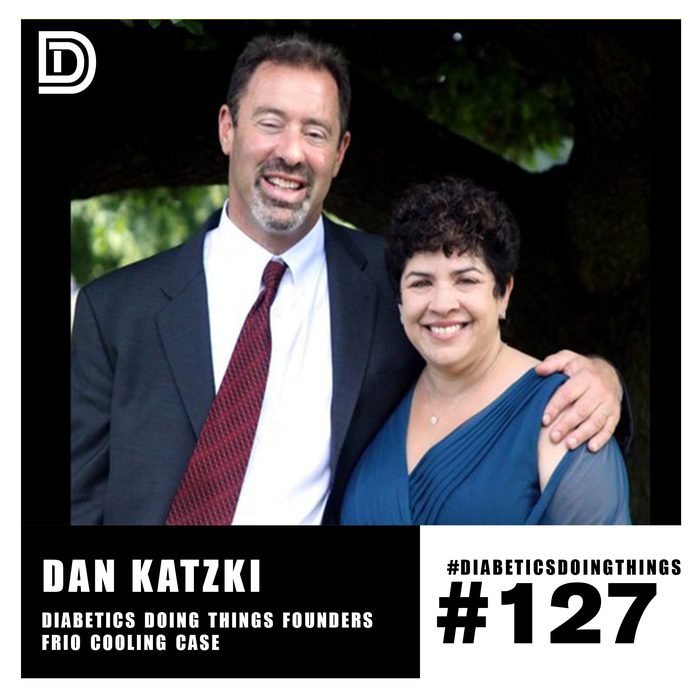
Dan Katzki was diagnosed with type 1 diabetes in 1986, midway through a cross-country road trip with his wife Lisa. He had lost 65 pounds before a newspaper symptom checklist prompted a hospital stop in Oklahoma, where his blood sugar measured 800. Lisa later became a registered nurse, and the couple went on to become the exclusive US distributors of the Frio, an evaporative insulin cooling case made in Wales that needs only water, no ice or refrigeration. Dan and Rob cover his diagnosis, 33 years of treatment changes from urine test strips to CGMs, and the 2017 effort that sent 25,000 Frio cases to Puerto Rico after Hurricane Maria, with help from JDRF, Sanofi, and former Yankees catcher Jorge Posada.
Key takeaways
- Dan Katzki was diagnosed with type 1 diabetes in 1986 during a cross-country road trip, after losing 65 pounds.
- His wife Lisa became a registered nurse after using CPR to save a stranger's life, and later co-founded the Frio business with him.
- The Frio cooling case uses evaporation, not ice or electricity, and keeps insulin cool for two to four days after soaking in water for a few minutes.
- After Hurricane Maria in 2017, Dan and Lisa helped get 25,000 Frio cases to Puerto Rico with help from JDRF, Sanofi, and Jorge Posada.
- Dan says getting a CGM made a bigger difference in how he felt day to day than almost any other change in his 33 years with diabetes.
Show notes
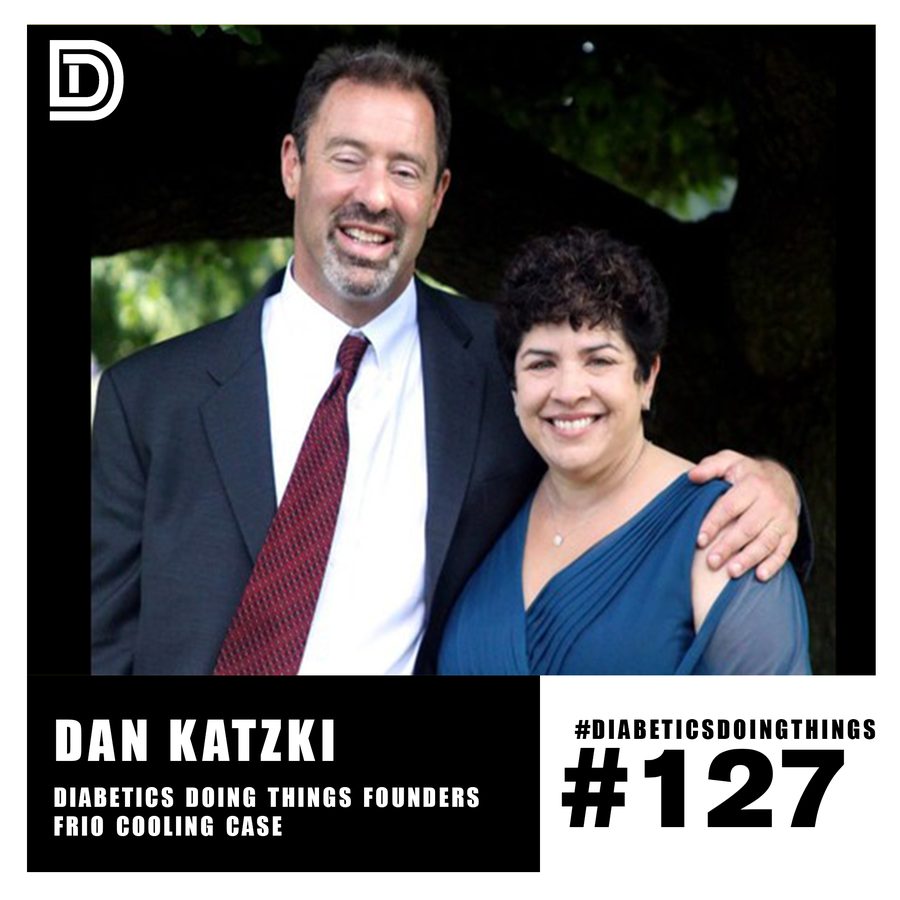
In our first episode in our Diabetics Doing Things Founders series, Dan Katzki, COO of Ready Care, makers of Frio Cooling Case joins the pod to talk about the journey he and his wife and co-founder Lisa took on with Frio.
It’s an awesome story of the importance of proof of concept, and includes an incredible tale of how Dan and Lisa were able to work to supply over 2500 FRIO cases to victims of Hurricane Maria in Puerto Rico in 2017 so they could keep their insulin cold without electricity.
Frio is also sponsoring this podcast, and listeners of Diabetics Doing Things can get 10% off their order from FrioCoolingCase.com by using code DDT at checkout. Dan and Lisa are also generously sponsoring Erik Douds and Annalisa Van Den Bergh on their next Miles of Portraits trip to India next year, so keep an eye out for that!
Questions this episode answers
What is the Frio Cooling Case and how does it work?
The Frio is an evaporative insulin cooling case made in Wales. It needs no ice packs or refrigeration; soaking it in water for a few minutes keeps medication cool for two to four days, and re-soaking it reactivates it.
How did Frio help diabetics in Puerto Rico after Hurricane Maria?
After the 2017 hurricane knocked out power for months, Dan and his wife Lisa coordinated with JDRF, Sanofi, and the Diabetes Foundation of Puerto Rico, and former Yankees catcher Jorge Posada chartered a plane to deliver supplies. In total, 25,000 Frio cases reached the island.
How was Dan Katzki diagnosed with type 1 diabetes?
In 1986, while on a cross-country road trip with his wife, Dan lost about 65 pounds and was going to the bathroom roughly 28 times a day. A newspaper symptom list led them to a hospital in Oklahoma, where his blood sugar measured 800.
What discount code can Diabetics Doing Things listeners use for Frio?
Listeners can use code DDT at checkout on FrioCase.com for 10% off.
Full transcript Searchable, with timestamps
Rob Howe: Welcome to the Diabetics Doing Things Podcast. We've been telling the amazing stories of type 1 diabetics all across the world since 2015, and we have over a thousand years of living with T1D on the podcast. The interviews range from incredible feats to everyday victories, and we celebrate them all just the same. Thanks for listening, and if you want to get involved even further, just send me an email. at rob at diabeticsdoingthings.com. What's up, podcast fans? Coming at you from the home studio here in Dallas, Texas at the beginning of December. Really excited to put the finishing touches on what's been an awesome year in the diabetes world for me and meeting a lot of you guys face-to-face, which has been super awesome. I'm starting a series about founders with diabetes. As an entrepreneur myself, I'm super interested to hear these stories and meet the people behind some of the brands that we know really well. So I'm also going to include an ad with hopefully a discount code on most of them for you guys on each of the founder episodes. So on today's episode, I'm interviewing Dan Katzki, who's the COO of Ready Care Co., who make the Frio Insulin Cooling Case. Now, Dan is at T1D, and he and his wife, Lisa, co-founded Ready Care Co., and are the official distributors in the U.S. of the Frio Cooling Case. So, if you enter code DDT at checkout at FrioCase.com, you'll get 10% off your order. The cases are super neat. I actually didn't know anything about them. I thought they were just ice packs, you know, where you like slide the ice pack in and it keeps it cool. But actually, they're water activated and can keep your insulin safe and cool for about 45 hours. The process takes just about 15 minutes. I have one. I tried it. It's really, really neat. I'm going to share some of it on my Instagram as well, so keep an eye out. Dan and Lisa are so cool. I was able to link them up with Eric Dowds and Annalisa Vandenberg from a few episodes ago. And now they're an official sponsor of Miles of Portraits. and FrioCases will be helping Eric and Annalisa keep their insulin cool on their way across India as they bike across India in 2020. So check out FrioCase.com and use code DDT for Diabetics Doing Things at the checkout. I'm a huge believer in supporting type 1 owned businesses and I'm grateful that Dan and Lisa feel that way as well. So now enjoy this awesome episode on a T1D founder with Dan Katzki. Hello and welcome back to another episode of Diabetics Doing Things. I'm here with Dan Katzki, my very special guest today. He's a COO of Frio USA, and you guys are ReadyCare Co. is the company name, I believe. But Dan, welcome to the show.
Dan Katzki: Thank you so much. I'm so happy to be here.
Rob Howe: Well, we're happy to have you as well. And I know I already told the listeners about your title, and we're going to talk a lot about Frio today. But you also are a type 1 diabetic. You're T1D. So like we always do on this show, why don't we start with when you joined the type 1 diabetes family?
Dan Katzki: Yeah, well, it was in the year of 1986. And it was my wife and I just got married and we decided to go off on an adventure. She's from New York and I'm from the Bay Area, the San Francisco Bay Area. We met in the Bay Area, but we decided that we were going to go live for a year and a half in New York. but before we get the anchors of life, home, job, children, we decided to do an adventure. So we were going to take six weeks to cross the country. So we started out on our trip and I knew real quickly there was something wrong, namely because when you're sleeping in a tent, you notice when you need to go out of the tent to relieve yourself about, I counted, 28 times in 24 hours. And I lost about 65 pounds and had no idea what was going on. Frankly, I started to think it was some sort of deadly disease. I just had no idea. And then as fate had it, we were driving in the middle of the country in Oklahoma. We opened up a newspaper. And sure enough, on the last page, it had that list of, do you have these symptoms? You may have diabetes. And I checked off absolutely everything on the boxes. So we were halfway across the country in Oklahoma. And at that point, we checked in a hospital and my sugar was 800. I lost about 65 pounds by then. So I spent a few days in the hospital in Oklahoma. They taught me how to live with what I'm going to live with the rest of my life. And then we were off on our way and we finished our adventure across
Rob Howe: the country and life with T1D began. Well, I love diagnosis stories that have an adventure component. I think that they always just make it a little bit different, right? And I want to, for those of us, obviously this is podcast, we're in the new media world, a newspaper with symptoms of diabetes on it. What are the odds? Now, I just don't know, and I maybe, you know, forgive my ignorance for listeners out there. Was that a normal thing to just have sort of advertisements for symptoms of potential diseases out there? Or was that just guardian angel, just fate? What was that?
Dan Katzki: First of all, you're right, boy. That was a 20th century statement, wasn't it? And, you know, it was not the usual thing. Or if it was, I sure didn't notice it. And we were just, it just sort of was the guardian angel putting that right in front of me. because, you know, I don't know if it's a guy thing or if it's just me, but I hate going to doctors. And, uh, you know, I already realized I lost 60 pounds. I already realized something was going on, but I still wasn't going to go to the doctor, um, until that popped up. Then maybe I should, maybe I should check. There might just be something wrong. So it wasn't the 65 pounds of
Rob Howe: weight loss or the 28 times going to stepping out of the tent during 24 hours. It was the symptoms matching up with the ad. That was what it was that pushed you over the edge. I'm not proud. Well, I think if we're, if we're being honest, I think that the consumer behavior and the behavior of guys, as it relates to going to the doctor or going to the dentist, that you're just like all the rest of us. So totally relatable.
Dan Katzki: Sort of a silver lining to it. So, you know, I guess the reason I didn't go to the doctor until that really came up is the way I can liken it I have horrible eyes you know just nearsighted and as the eyes get worse every year especially when you're a kid you sort of don't notice that you're not seeing as well and then suddenly when you get the new glasses oh my goodness everything's so clear I sort of wasn't realizing as I slowly was getting less energetic and not feeling well But then when I got when they put me on insulin, oh, my goodness, I felt so much better. I forgot how good a person can feel. So I really don't know how long this was going on. But a funny thing then really is so, you know, we were crossing the country and our destination was New York. When we got to New York, I was feeling pretty good after being on insulin. I realized I was down 60 pounds. And then so I said to my wife, you know something? Tie me in the mile. because I'm 60 pounds lighter. I'll never run a mile better than I do right now. And I beat my time by about 25 seconds. I did a 519 mile, which is nothing spectacular, but was amazingly spectacular for me. Well, and you mentioned something
Rob Howe: as well that I think I relate to. And sometimes, you know, it's weird when I go to events, I always try to see if people had the same response because I was very similar to you. I, when I got insulin, I was in the emergency room. They had told me that they thought I had type 1 diabetes. They gave me the saline bag and they put the insulin drip in there as well. And I just remember like the minute I felt that saline and insulin hit my body, I just felt so much better. And I was like, yeah, whatever this was, this is what was wrong. And I was kind of ready to get up and move on at that point. I was like, all right, cool. We fixed it. What's going on? What's next? So what was that like for you? You know, as you started, you're in a new place. Obviously, you and your wife had just got married. You're, you know, traveled across the country. Now you got this new disease. What was the what were the early days like?
Dan Katzki: Right. So, you know, it's interesting. So I was actually relieved because, like I said, I thought I thought I was dying. You know, I just didn't know what it was. And maybe that's maybe that's another reason I didn't want to go to the doctor because I didn't want to hear what I didn't want to hear. so I was actually in a weird way relieved and and but what's interesting is you know when I called my parents there was like denial so I didn't have the denial but my parents had the denial and another interesting thing is my wife and I I mean we just realized you know we need to go on with white with life and it's just sort of the next challenge and uh it's always encouraging where it's the kind of thing of if you do this this and this you can help your own cause. If there's nothing you can do, you feel real helpless. But I clearly learned that, okay, I have a mission ahead. If I take care of myself, I can live a normal or at least a near normal life. And my wife, who you met, just she's just a saint. As a matter of fact, I remember early on, when we were in New York, we went to a diabetes event. We weren't working in the world of diabetes then, but we just simply went to an event. And this one guy heard that we just got married. And And he asked my wife, he said, he said, you know, now that he has diabetes, are you do you regret that you married him? Are you going to stay with him? And that and that set my wife and I so far aback because she never thought anything like that. And I guess because she's so wonderful, I never thought that she would think anything like that. It's very strange that other people did. But to us, it was just, OK, life is now going to go on. there's always challenges in life this is one of them we're simply going to rise to it well and I
Rob Howe: think you know how much of that you know when we look at our lives with diabetes as as you know people with type 1 having that support system especially in those early days yeah I think sets you up with an entirely different relationship like if you don't have that you know I think fear can creep in misconceptions comments from strangers where you know like Like that person asking you that, maybe they don't even really know or asking your wife that. They don't even really know what they're asking. Right. And, you know, what the sort of ripple effects of what that can do to a person. And, you know, I was very lucky to have a super supportive parents and family. And, you know, with your wife, obviously, like that confidence that you guys had in each other really, you know, allowed that to never really creep into your mind. So, you know, your relationship with diabetes was strengthened by your relationship with your wife. That's pretty awesome.
Dan Katzki: Yeah, I'm really, really lucky. You know, she's been the support all along because just like all of us. So it's now, what, 33 years. And it's, you know, we I think we've done well with this. But of course, there's been the challenges. And she's just been so wonderful about it.
Rob Howe: And she, if I'm not mistaken, is a certified diabetes educator. Now, when did when did that come into the equation?
Dan Katzki: No, so she's not a certified, she's not a CDE. She is a registered nurse.
Rob Howe: Okay, got it, got it.
Dan Katzki: That came into the equation much, much, much later. That's sort of a whole story by itself. So she was in school. She came to California and sort of started studying but sort of ran out of money before she completed the four years. So life went on with us. We had our three kids. And after our three kids were born, we decided even though we have three small kids, let's get her degree. And the reason it ended up nursing is basically because my wife and I had a situation where we learned CPR. And the day that we drove away from getting the certification for CPR, long story short, this kid stopped us on the street because he had asthma and he couldn't breathe. and we exercised the CPR and saved the kid's life that day. That changed, it's the weirdest story. But that changed my wife's life in that she decided at that point to become a nurse.
Rob Howe: I mean, I feel like we could, that story is incredible.
Dan Katzki: It gets more strange. I lived in Israel and as it turns out, this is in San Francisco. It was a kid that spoke Hebrew to us straight away. It just was so strange.
Rob Howe: Wow. So just right place at the right time.
Dan Katzki: Out of this world.
Rob Howe: Well, great. Well, this is, I mean, this has been obviously like, I think there's so many things that we could dive into. I want to talk, you know, before we get into talking about Frio, I want to talk about the difference between, you know, of the last 33 years, right? So treatment options, obviously very different. You know, technology that was available. How has your life changed with diabetes over the last 33 years? You know, and are there any big moments that you remember like, wow, this is this is going to be a game changer?
Dan Katzki: Well, I guess a quick and easy measurement would be a one sees in the high eights. And now it's in the high sixes or seven flat. So that tells you the whole thing in a nutshell. And it is because of better technology and better support. So in 1986, it was at the point where it wasn't the urine sticks, which was sort of bad news because that news was – it wasn't bad news. It was old news. That was news of what your blood sugar was three days earlier. So an array was where you put your blood on the test strip and then you compare it manually to the different colors that are on the pill case, that are on the strip case. so and it took about if I remember right 45 seconds you wait 45 seconds and then you compare it so in the meantime what happened you know in the years to come real quickly was uh the machine that you could put it in and get a reading instead of 45 seconds you know it worked its way down to 30 15 and then five uh the fast-acting insulin and oh my goodness you know more recently the cgm that that's made all the difference. And so, so it's made a difference in my life. I feel better. Matter of fact, so let's say I'm 25 years into it or something before the CGM came around, I felt a decline. I just felt it. I didn't have horrible complications or anything, but I just said, Oh my goodness, if I continue at this rate and then really with the CGM, I really felt things turned around. And I always thought it would be an interesting thing. And, you know, there's been the studies, what was it, 10, 15 years ago, that, no kidding, but with better control complications come later. I always thought now with CGMs and so on, there should be a study. If you have real good control, does it reverse some of the complications? And I think the answer would be yes.
Rob Howe: Totally agree. Yeah. Yeah, I think, you know, as we look at that, you know, and I have I have a lot of deep seated issues with the with the term better outcomes, because I think it's nebulous. But there's no doubt that, you know, CGM and the increases in available therapy, whether it's technology or, you know, actual drugs have improved outcomes and improve the lives of people with diabetes. This past weekend, I was at an event where there were, I think, three people who had had diabetes for longer than 60 years who came to one of my presentations. And then there were about five or six people who were recently diagnosed in the last year. And I remember just thinking in that room, these people are kind of sitting next to each other or, you know, within, you know, a relatively close distance to each other. And I thought, you know, at surface level, you can't tell the difference between these people. And that's what gives me, I think, when I see people like that who have lived with this disease 30 years, 40 years, 50 years, 60 years or more, and they're still at the same event that I'm at, only 15 years in. It just gives me hope for people who are diagnosed today who, you know, they're the people who are 50, 60 years in are saying, hey, well, I don't have to boil my needles anymore. And we're going to say in 30, 40 years, oh, well, you know, I used to have to calibrate my CGM. And people are going to be like, what? So I think it really gives me hope for people who are going to be diagnosed now and in the future with diabetes, that they're going to be able to manage it a whole lot easier.
Dan Katzki: Right, right. I mean, even with technology the way it is now, all of us, I mean, I think I'm living a pretty normal life. I do have highs. I do have lows. But it helps so much in the day-to-day life, the way I feel every day. and hopefully I'll live a longer life because of it.
Rob Howe: That's what I'm banking on as well.
Dan Katzki: Yeah. We have things to do, right?
Rob Howe: We do. I got stuff I want to accomplish before I get out of here. I got a lot of ideas, and I want to be able to chase them.
Dan Katzki: Well, you know, I think you could have a career as an award show host.
Rob Howe: Oh, well, thank you for saying that. We actually got to meet in person at the Myabetic Awards.
Dan Katzki: Yes, and Rob hosted it. And I just have to tell you, I don't think Bob Hope, Whoopi Goldberg, Jimmy Kimmel, or even Billy Crystal have anything on you.
Rob Howe: Oh, well, thank you very much. That's good company. Yeah, you just crushed it. Thank you. And so much fun. Gosh, I'd do that every day if I could. That'd be so much fun.
Dan Katzki: That really was a great event.
Rob Howe: It was. It was so cool to kind of be out there and mingle with a, first of all, a host is nothing without his audience. And it was a great crowd. Basically just friends, my friends and family that were there and so much fun. You know, before the before and after the part after the show and everyone getting the awards, I think just a really well, well done event by a really awesome team at Myabetic. They really put a lot of heart and soul into that event.
Dan Katzki: yeah it's amazing you know Myabetic started their thing about the same time that we started ours and uh Lauren and Kira we um often sort of exchange notes just you know on business like what to do and so it's just so great to see how great they're doing and the great things that they
Rob Howe: are doing well that's actually a great transition um into the business side of things because as as you said you got a lot of stuff that you're trying to do um talk to me about uh you know where Frio USA, you know, where that idea stemmed from. Tell us a little bit about the company and, you know, what the, you know, obviously, you know, you guys have been in business for a few years and have some pretty exciting stories. And I definitely want to dig into what you guys' work in Puerto Rico, but why don't you give us a little bit of background about where the idea
Dan Katzki: came from? Sure. Should I just quickly explain what the Frio is? Of course. Yeah. Okay. So the Frio is an evaporative insulin cooling case that never needs ice packs or refrigeration. So often when I explain or do a presentation on the Frio, I start with in 1986, I left out of the hospital in Oklahoma with a cooler because they told me I need to keep the insulin below 86 degrees at all times. Later, I got one of those insulated ice packs, but, you know, they were still quite big and and I needed to refreeze them every few hours. and then fast forward to the Frio and I pull a little Frio out of my pocket and it's so compact and all you have to do is soak it in water for a few minutes it will keep the medication cool for two to four days and then all you need to do is re-soak it in water again so instead of carrying a big thing that you need a freezer that you need to freeze it for a few hours then you only get a few hours here you're carrying a little thing and you just water, you soak it a few minutes, you get days, and then to reactivate, you know, you just do that again. So that's what the Frio is. So backing up of how I found the Frio. So first of all, let me explain. The Frio was invented and manufactured in Wales, Wales, Great Britain. the way I found the Frio was I think it was we traveled overseas and traveling anyone who travels with type 1 diabetes it is a challenge and the biggest challenge in the very hot climate that we were in was to keep the medication cool I always had to beg places to refreeze the ice pack then I had to go back to that place to get the ice pack and life just wasn't fun I just really if that's called traveling for pleasure It was not a pleasure. And I really started to think that I don't want to do that anymore. Well, just then in the in the diabetes forecast, the English, the people from Wales put a very small ad about the frio, you know, explaining basically what I just explained. I'm going, this sounds too good to be true, but I'm going to try it. So I tried it and it really just was the answer to my prayers. So fast forward from – at that time, I was a CFO, a chief financial officer in the company. And my wife, who was a nurse by now, just started an emergency preparedness business, just a little business out of our home. So when I saw the Frio, I suggested to her that she carry it. She carried it small time. And basically, we grew the business. and then at a certain point, we were offered to be the exclusive distributors for the United States. At that point, both of us did this, and we've been doing this now for a dozen years.
Rob Howe: Wow. That's impressive. And to me, even, I felt like I, because I've seen you guys' social media posts, and I've seen people talking about the Frio, but I really didn't know exactly what it did. I didn't know how it worked. it's pretty breakthrough technology. I think, like you said, from an emergency response or emergency preparedness can really get you out of a jam, especially if, you know, during the summer
Dan Katzki: when it's pretty hot. Yeah. So let me, so let me tell you my one experience, which really isn't that dramatic, but in my world, it's what, so the free, the big deal that the Frio is, I sort of mentioned for travel already, the even bigger deal is for emergency preparedness. Cause what do you do when when the disaster happens any disaster electricity always goes out what do you do to you can't freeze an ice pack what do you do so the free is really the answer to that you know you just need water and it's an evaporative cooler so my scare was here in the san francisco bay area in the 1989 loma prieta earthquake and during that time after the earthquake power was out for as it turns out three to four days but but it was out it was october and weirdly in the san francisco bay area that's the warmest time of the year so it was hot there was no electricity what i did in the first couple days is i put my insulin in the freezer where you know the peas are still frozen right so it's sort of serving as an ice box but i didn't know what i do as time goes on now there's no dramatic ending to the story because after three, four days, the electricity came on and everything was fine. But I just remember that feeling. The best way to describe it is you feel like, you know, if there's not much oxygen in the room, you start getting that little bit of panic. I started feeling that panic, like, what am I going to do if my insulin goes bad? And I don't ever want to have that feeling again. And, you know, I wish I had the Frio at that point. I'm certainly glad I do now.
Rob Howe: No kidding. Yeah. I mean, I think as you look at that, I mean, how many stories that are similar must there be out there? People who narrowly avoided, in some cases, what would be a catastrophe?
Dan Katzki: Yeah. I mean, so the two biggest ones in the United States have to be New Orleans, Katrina. Yep. And you may remember, or you may not. Well, you may remember being type 1 diabetic that, you know, how on CNN, like before there's a big story, they always have their dramatic sort of like big music moment. And then they then they go to the then they go to the Katrina story. So the big the big scene that they always had there was the person on top of their roof with the water all around and didn't say SOS or help. It said diabetic. And the backstory on that is not that the person didn't have their insulin, but that their insulin went bad because it was hot, no electricity. Time went on and it became a huge problem.
Rob Howe: August in Louisiana, hot.
Dan Katzki: Yep.
Rob Howe: Wow. Yeah, I don't remember that one specifically. I think I'll probably have to Google it. I'm sure that it's a Google image that we can pull up and put in the show notes.
Dan Katzki: Yeah, you know, I'll try to find that for you because a funny story. I now don't know where I put it, but that happened years before. You know, most probably I told that story many, many times, but the image was gone. The story was gone. But then there was like a 10-year retrospect or something, and I caught it. I caught it literally from – so I'll see if I can find it and send it to you.
Rob Howe: No, yeah. That would be awesome, I think. And, you know, then in that case as well, you know, that was early, early days of diabetes for me. Yep. And, you know, now when you look at something, you know, whenever there's a natural disaster, I think, you know, being in the, you know, the forefront of the diabetes online community, there's always a, you know, there's people raising awareness or trying to collect supplies or try to coordinate efforts for people on the ground because, you know, not just people with diabetes, but, you know, medicine and logistics in those types of tragedies, sort of active God events can be very difficult.
Dan Katzki: um i know you guys so the ultimate of course was puerto rico more recently because because 2017 i believe correct right right so two years ago i mean i think it was just the anniversary yeah because it was during hurricane season two years ago so think of that situation as far as being a type 1 diabetic it's the ultimate nightmare as far as keeping the medication cool so it's a tropical tropical area where it's it's warm all the time and electricity went out not for a few hours not for a few days but basically for most people for 11 months and it was a huge problem and you may remember uh once again uh watching the news uh so uh The mayor of Puerto Rico was the mayor of of the mayor of San Juan and Senator Rubio were on TV a lot. And of all the problems that they listed, the first one that they listed was people keeping medication, people keeping insulin cool. And oh, my goodness. So so think of it from Lisa, my wife and my point of view. You know, you're put on this earth and, you know, rarely a moment arises. And oh my goodness, was that our moment that we better do something. We have the solution to the number one problem of this disaster, at least as, you know, some people saw it. And so we absolutely realize that we have to do something.
Rob Howe: so um you know in those moments right like you're you realize that there's this obviously a need and that you guys can meet it um but it does not come without challenges right it's not it's not a thing that you just decide okay we're gonna do it and it's done so walk me through like you know immediately after you guys decide to do this uh walk me through those first
Dan Katzki: few hours, days, weeks? Right. So the first thing I did is I called, um, there was the coalition of the JDRF, ADA, insulin for life, uh, various groups. And, um, you know, us saying, what can we do? And, um, it's, that's actually a wonderful coalition. They did, they did so many things, but at the beginning there wasn't much they could do, um, as far as getting frios out there. um but what happened very quickly when this was on the news it and we're wondering what we can do in the meantime our phone starts ringing because we realize that hey you know we this is our moment that we have to do something but everybody that had a frio or hundreds of people scored at least scores of people that had frios called us and said you have the product that can solve this What can we do to help? So real quickly, money, people want to donate money. So we created or or actually JDRF over here in the Bay Area and Carpe Diem, what's the name of the group? they put together a thing where people could send money. So they sent money to get Frios over to Puerto Rico. What we did in turn is we subsidized it by putting the price very low, the cost very low, and together we were able to get a bunch of Frios available for Puerto Rico. But there still was a challenge of how to get it out there, and then when it's out there, what to do, how to distribute it. So, sure enough, out of all people, Jorge Posada, the Hall of Fame catcher, excuse me, the all-star catcher from the Yankees, he chartered a plane to get insulin, to get diabetes supplies, and to get the Frios out to Puerto Rico. And then in Puerto Rico, the head of the Diabetes Foundation out there basically set up a distribution network for it. So bottom line, we were able to get the Frios out there. This accounted for a few thousand Frios. And then Sanofi rose to the occasion and sponsored 15,000 Frios for Puerto Rico. So at the end of the day, we sent 25,000 Frios out to Puerto Rico. And if you think about it, it's an island of 3 million people, assume 1% diabetic, 30,000 people. So basically, this took care of the entire T1D population as far as keeping their medication cool. that's that's incredible that that is my you know um most gratifying moment in this business that my
Rob Howe: wife and i are in because yeah i mean i remember like you said some people were without power for 11 months it's just like when the world the news cycle had sort of moved on from from the hurricane there were still people on the ground who needed uh you know day-to-day care and you know the frio was basically all they could have for, from a cooling perspective. That's pretty impressive.
Dan Katzki: That's awesome. Yep. Yep. Yep. It certainly made us feel good and, and, you know, it's good to be able to help. It's, it's, it's hard to make a difference and this one might've made a difference.
Rob Howe: So it was fun. It was good. That's good. I love that. Um, and I mean, you know, for you, obviously like in, in, in this business, you know, business in general, like you don't often get those kind of big peak emotional, like, Hey, we are really making a difference type moments. Um, you know, how do you got, you know, after that sort of, uh, how did you reset and say, you know what, we're going to continue to do this. We're going to continue to run this business and run this company. Uh, cause we know, you know, the, the end game is, you know, people are going to get the help that they need or be able to go on the adventures they want to go on and kind of
Dan Katzki: not have to worry. Yeah. So, so sort of backing up on this, it, I realized how lucky I am because I'm working, um, you know, in the area that's such a big part of my life. And, uh, boy, I hate to sound corny here, but it really is true. Oh my goodness. You know, uh, someone gets a $25 thing from us. And I know firsthand because of my own life that, that we're changing their life. They pain in the butt things to keep their medication cool, that problem is simply solved. So wow, I'm making a living helping people. It's always nice to have such a quick solution for something. So many things in life take so long to solve. But as far as solving that problem of running around with keeping your medication cool and safe, I'm able to provide that to somebody for the rest of their life and make a living at it. So that, so I consider myself pretty fortunate.
Rob Howe: So let's, let's talk about that for a second too. Um, because I, as a, as a diabetic entrepreneur, uh, I have a, just a soft spot for other diabetic entrepreneurs. Um, and you know, we live in this very cool age where, uh, you know, being niche is kind of cool. Uh, and you can open yourself up to these amazing communities and the, you know, the type 1 community, for example, I know obviously that you guys didn't jump in feet first and this business kind of grew incrementally over the years. As a person with diabetes and you were, as you were kind of striking out into this world, what was that like for you knowing that, you know, your business was going to be for people like you? So I always joke, you know, so my wife and
Dan Katzki: I run this business and I always joke that her credentials are that she has a medical certification. She's she's a registered nurse and experience in that world. My my qualifications are that I have a chronic disease. But it really is the firsthand experience that gives me obviously an understanding, you know, of all things involved with this. I have to tell you. So we get calls, you know, from, from people about the Frio. And oftentimes it's, it's, um, the mother whose child was just diagnosed and, oh my goodness, is sheer wreck, you know, nervous, nervous about, um, the life that she's gonna, you know, that have to help for many, many years and worried about that if her kid's going to be able to live a normal life or live a, uh, uh, uh, you know, it's like live life for its full years. And I'm sometimes on the phone for 20, 30 minutes with the person just reassuring them, talking about my own experiences. And it really makes a difference. And I am nothing compared to Lisa. Lisa, her compassion and, you know, her training as a nurse, she will spend that half hour on the phone and then do research and call the person back, helping them with things so unrelated to the Frio, you know, obviously referring them to their doctor, but at the same time, giving them reassurance and giving them guidance. And that's part of the satisfaction of the job. So sort of the Puerto Rico thing on a smaller scale happens every day.
Rob Howe: Yeah, because I mean, you know, and that's the interesting thing about, you know a life with diabetes is you know you don't necessarily need a you know mass power outage hurricane type experience to have a crisis in a particular moment yeah and you know i think that's true for a lot of people with chronic illnesses but you know the it's a fine line between uh you know it being too hot and you're or your air conditioning go out and you're going out in your car or you know getting getting lost on a hike and your insulin going bad and then all All of a sudden, something that's pretty leisurely turns into something pretty drastic. Yep. Oh, my goodness.
Dan Katzki: I realize when I go, when I travel, just I joke and call myself H.M., high maintenance, because there's so many things involved in, you know, just making sure that no crises occur as you're out there.
Rob Howe: well and i think too do you have any do you have any stories that you can share from you know for potential customers where a frio kind of got them out of a tough spot
Dan Katzki: i know i just put you on the spot there no no no there are there are many i mean there's uh the situations where where they're wondering you know if they could travel at all and uh They really just didn't know what to do and here it's the day before they're traveling and then they happen to see in a magazine or in a blog or something the Frio. And then basically from their point of view, the fact that they found the Frio means that they can go on this vacation or go on this mission or send their kid to Europe. I mean this kind of thing has happened over and over and over. I'm trying to think of a more dramatic type thing. It's just not at the tip of my tongue.
Rob Howe: Well, and I'm sure there's, like I said, just hundreds of little micro victories that allows people to have and live a more less high maintenance, for lack of a better, just to poke fun at your travel than it would be later on. So for people who want more information on the Frio or some good examples of ways that they can use it, what are some resources we can point them to?
Dan Katzki: Well, the best is our site, FrioCase.com. So it has – there's a section about the Frio that just shows all of the testing. And there's a video there showing how to use it. Of course, all our different sizes of Frios are there. And so it's really a good resource. Just simply FrioCase, F-R-I-O, Case.com. And our phone number is on there. People can call us at any time.
Rob Howe: And we'll include a link in the show notes for sure to give everybody easy access to get to the site.
Dan Katzki: I appreciate that.
Rob Howe: What are you hopeful for kind of as you go forward with Frio or anything cool coming that you can kind of tease for the listeners?
Dan Katzki: Well, so our hope is just for this to continue and get Frio's out to everybody. uh what's new so when we're at a trade show or i i always say you know happily we are the lowest tech product on this entire floor so there's just such amazing technology um our products is an evaporative cooler basically mother nature's doing all the work so in the world of a frio itself the technology isn't changing much um but sure enough we have uh uh different styles coming out next year, you know, sort of higher end fashionable Frios that hopefully will make the Myabetic people proud. And so that's going to be new with the Frio as well.
Rob Howe: Well, that's exciting. Yeah. And, you know, hopefully you'll keep me in the loop and I'll be able to continue to update the listeners on the goings on over at Frio. I have to ask you, because this is my sort of de facto. I got off of it for a while, but this is something that for really the first hundred episodes I asked almost every guest. And it's really simple. And I mean, you're a guy that travels a lot. So the context is really important. And it's if you're in an airport and you're at your gate and they're about to take off and about to close the door to your gate and you've got to be on the flight, whatever's on the other end, you can't miss it. But you run into somebody who's either recently been diagnosed or is struggling with their life with diabetes. what's the one thing that you tell them before you jump on the plane?
Dan Katzki: Oh, I would absolutely assure them that I've been through this for 33 years and it's been okay for me and it will be okay for them. Pragmatically, I tell them to get a CGM because, oh, my God, has that made a difference. Oh, and I tell them to get a Frio too.
Rob Howe: Sure, yeah. It's interesting and I obviously, you know, as we kind of wind out, But I think what you said about CGM is really interesting. And it's been a game changer, obviously, for me, just from a monitoring perspective. But I also think, like, early on now, the CGM is the first device that's recommended. And that's changed over the last, I think, maybe four years, maybe, as CGMs have really gotten dialed in. And, you know, just the difference that that's making for people early in their journey with diabetes is just astounding. I can't wait to look at the data years from now and see the difference that CGM is making for people with diabetes.
Dan Katzki: Right. I really want them to do that study for them to see if complications reverse themselves. I think that would be really interesting because you couldn't really do that before. It was just a question of things are going to get worse. Try to slow it down. But this is such a quantum leap in treatment with A1Cs going down so much that I really think it makes a difference.
Rob Howe: Yeah, and hopefully we'll be able to see that symptoms like neuropathy and things going way down over time, like you said, even reversing, which would be astounding.
Dan Katzki: What I found so interesting with the CGM when I just got it is my analogy was it's like the Hubble telescope. because you can only see so far in space, but then when the Hubble telescope was out there, it could see galaxies beyond and so on. So it's sort of, you can only figure out so much with your own diabetes, how you react to the pizza and this and that. But when I got a CGM, it just made everything so obvious. I got such a clear vision beyond what I could see before, and it's just helped so much.
Rob Howe: Well, I have no doubt that CGM and people like you who are investing in the diabetes community and starting businesses and really finding ways to help are going to continue to kind of add to that Hubble telescope and add to that toolkit of things that people with diabetes use to live a better life.
Dan Katzki: thank you and you know what you and um all of the the people out there in social media and in the media are doing uh that wasn't around in 1986 either and uh it's really made a difference for me and i know it's making a difference for so many people well thank you it's made a difference for
Rob Howe: me as well um and you know i uh not stopping anytime soon so all right that sounds good i'm glad we were able to meet and thanks so much, Dan, for coming on the show. And looking forward to see what you and the Frio team are cooking up for 2020. Yep. I know our paths will cross soon
Dan Katzki: again. I'm looking forward to it. Likewise.
Rob Howe: ...far and I have a lot of really great stuff coming up in the future. So I'm going to do something that I haven't asked before. If you're listening to this podcast, A, I would love it if you would subscribe to the podcast just so you get the notifications whenever we publish new episodes because if you've been listening for a while you know I don't always publish them consistently sometimes I'll publish five in a week sometimes it'll be only a couple in a month and you need to know when these episodes drop so be sure to subscribe and if you like the podcast be sure to go to your preferred platform like iTunes and leave a review I would love to boost my reviews and I've never asked you guys to do that before. So I figured you don't ASK, you don't G E T. I would love a review from you. So I want to hear from you there. Also, we are now available on Spotify. Turns out I was just submitting it to Spotify incorrectly, but I corrected that. So now we're on Spotify. So if that's your preferred listening platform, be sure to subscribe on there. Also just want to let you know that in 2019, we have an awesome new program coming called Tools of Type 1s. It's going to be on this podcast, so you don't have to subscribe anywhere new, but it's going to be an entirely new form of programming with some of your favorite Type 1 personalities. So they're going to be two a week starting January 8th. Be sure to tune in, and I'm going to blast all the messaging I can all around. So be sure to listen to Tools of Type 1s launching January 8th, and thank you for continuing to listen to this podcast.
About Dan
Dan Katzki is the COO of Ready Care Co., the exclusive US distributor of the Frio insulin cooling case. He was diagnosed with type 1 diabetes in 1986 and runs the company with his wife and co-founder, Lisa, a registered nurse.