

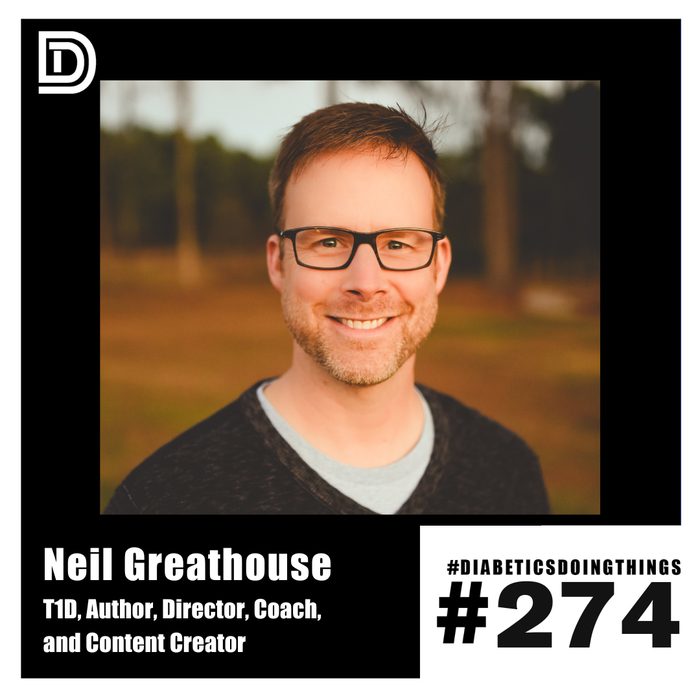
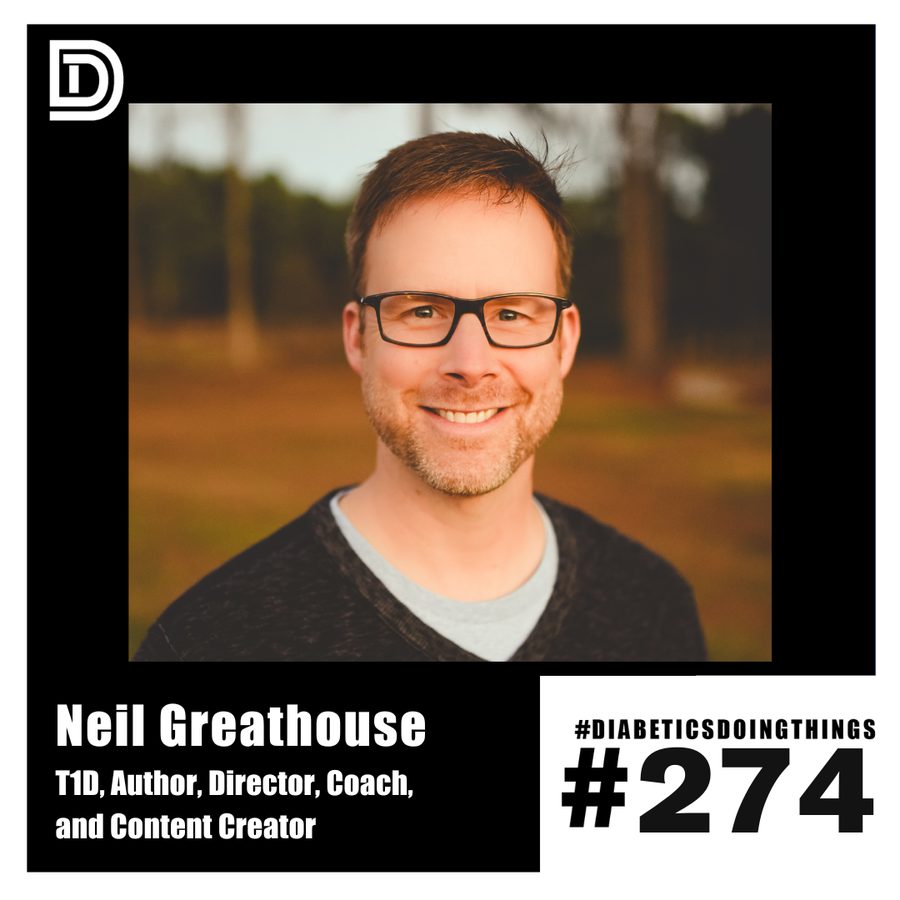
Neil Greathouse - T1D, Author, Director, Coach, and Content Creator

Episode summary
Neil Greathouse has lived with type 1 diabetes for 32 years. A former military aviator discharged over his diabetes, he later worked in computer science before becoming a full-time diabetes content creator and health coach at Risely Health. He and Rob talk about the grind of making diabetes content for years, and Neil walks through a year he spent posting a diabetes TikTok every single day, 400 videos total, and what he learned from caregivers' engagement and from which topics spread versus which ones last. The three debate using diabetes as an excuse, wearing it as a badge, and stigma. They close with a mailbag on insulin dosing for tricky foods like croissants, pizza, and ethnic dishes.
Key takeaways
- Neil Greathouse made one diabetes TikTok video a day for a year, 400 videos total, after a video about a steroid shot spiking his blood sugar got a bigger response than expected.
- Neil says caregivers turned out to be the most passionate and most exhausted group that engaged with his content.
- Neil says posts about lows, highs, and diabetes distress spread fast but fade quickly, while positive or educational posts grow slower but last longer.
- Neil no longer believes using real accommodations is wrong, but says he dislikes it when people stretch the truth about what diabetes stops them from doing.
- Rob and Eritrea push back that what's manageable for one person with diabetes can genuinely limit someone else, so diabetes isn't one-size-fits-all.
Show notes
In this episode of Diabetics Doing Things, Rob, Eritrea, and guest, Neil Greathouse, reflect on the journey of the podcast, challenges in the diabetes community, the evolution of content creation, and the importance of authenticity and vulnerability. They delve into topics like creating daily TikTok videos about diabetes, analyzing content performance, managing type 1 diabetes in everyday life, the impact of ethnic food on blood sugar levels, and addressing stigma surrounding diabetes.
Topics discussed:
Challenges and Rewards of Sustaining a Podcast in the Diabetes Community
Importance of long-term dedication
Building trust in the diabetes community
Challenges such as burnout and sustainability
Fulfillment from connecting and helping others
Transformation of the Podcast and Personal Journeys
Transition from a one-man show to a collaborative effort
Guest's career shift to full-time content creator and diabetes advocate
Importance of building relationships and staying connected in the industry
Content Creation and Engagement in the Diabetes Community
Commitment to consistency and connection
Authenticity and vulnerability in content creation
Analyzing content performance and focusing on positive impact
Managing Type 1 Diabetes in Everyday Life
Practical demonstration over verbal instructions
Balancing accommodations and self-expectations
Addressing misconceptions and stigma surrounding diabetes
Dosage Challenges for Different Foods
Estimating carb counts for challenging foods like pizza, pasta, and ethnic dishes
Importance of timing insulin doses and considering hidden ingredients
Personal anecdotes and tips for navigating tricky food situations
Cultural Influences on Blood Sugar Levels
Impact of lifestyle choices, traditional diets, and activity levels
Understanding individual responses to carbs and influences of sleep and exercise
Balancing modern sedentary lifestyles with dietary needs
Addressing Stigma and Sharing Stories
Encouraging listeners to open up about encounters with stigma
Discussing trauma related to diabetes and promoting unity within the community
Key takeaways:
Long-term dedication and authenticity are crucial in sustaining a podcast and building trust within the diabetes community.
Consistency, connection, and vulnerability are key elements in content creation that resonate with audiences.
Managing type 1 diabetes requires a balance between accommodations and self-expectations, with a focus on honesty and self-assessment.
Understanding individual responses to different foods and cultural influences is essential in managing blood sugar levels effectively.
Addressing stigma surrounding diabetes through open conversations and shared experiences can help foster unity and understanding within the community.
00:00 Celebrating Friendship and Longevity in the Diabetic Community
01:25 Building Trust and Longevity in the Diabetes Community
08:21 From Computer Science to Diabetes Advocacy: A Journey of Transformation
11:47 The Journey of Consistent Content Creation and Connection in the Diabetes Community
21:47 Navigating Vulnerability and Transparency in Social Media Content Creation
24:05 Insights on Content Strategy and Audience Engagement in the Diabetes Community
28:07 Unpacking the Impact of Content Creation and the Journey of Self-Discovery
31:36 The Importance of Showing vs. Telling in Managing Type 1 Diabetes
35:27 Challenging Misuse of Type 1 Diabetes for Personal Gain and the Importance of Honesty in Self-Assessment
40:15 Breaking the Stigma: Courage and Honesty in Living with Diabetes
50:15 Heartfelt Gratitude and Mailbag Fun on Diabetics Podcast
52:24 Cracking the Code: Dosing Insulin for Tricky Foods
57:19 Exploring the Impact of Ethnic Food and Lifestyle on Blood Sugar Levels
01:00:54 Breaking the Stigma: Sharing Diabetes Trauma
Questions this episode answers
Who is Neil Greathouse?
Neil Greathouse is a content creator who has lived with type 1 diabetes for 32 years. He was discharged from the military over his diabetes, later worked in computer science, and now works full time as a health coach at Risely Health and diabetes advocate, and has written a book about living with diabetes.
Why did Neil Greathouse post a diabetes TikTok every day for a year?
He started after an off-the-cuff video about a steroid shot raising his blood sugar got a strong response. He realized new people are diagnosed every year who hadn't seen his earlier content, so he mapped out a full year of daily topics, including diabetes burnout and the cost of insulin.
Is it okay to use diabetes as an excuse to get out of things?
Neil says real accommodations, like TSA or national park access, are fair to use when genuinely needed, but he dislikes stretching the truth to avoid things people simply don't want to do. Rob and Eritrea counter that what's easy for one person with diabetes can be truly limiting for another.
What foods are hardest to dose insulin for?
Rob and Eritrea say ethnic foods are hardest, citing a croissant chicken salad sandwich, hummus and pita, Palestinian maqluba, and Ethiopian and Eritrean dishes like injera and doro wat, since hidden carbs, oils, and spices are hard to estimate, and sleep, activity level, and lifestyle change how the same food affects blood sugar.
Full transcript Searchable, with timestamps
Rob Howe: Welcome back to another episode of Diabetics Doing Things. We're telling the amazing stories of people with diabetes from all over the world. And I'm psyched for today's episode because this is a longtime friend of the pod. And I'm going to even talk a little bit about our conversation in 2017 because after we hung up, Neil Greathouse is our guest, the Beatys on all the platforms. But you gave me a compliment. I think you were episode 14 or 17 or somewhere around there. And you were like, dude, you need to keep doing this. This is really cool. And I just coming away from that, like, from somebody at that time to like, I just really looked up to in the space and still do. And, and also just really respect you as it, from a creative standpoint, that just gave me a ton of really positive feedback and your friendship over the years has me means a lot to me and has meant a
Neil Greathouse: lot to dive into something. So thank you for being here too. Oh man. Thank you. Look at you though. Seriously. What are you? 260 episodes after episode 17? Yeah. So something like that. You're close.
Rob Howe: we're crushing it. We've actually done over 300 if you include the tools of type 1. So, you know, we're, but yeah, we're on this feed, you know, this'll be two,
Neil Greathouse: probably two 70 something. A lot of times what happens is people, I think you guys know this in this space, there are a lot of people that make a big splash for a very short amount of time. They don't do this for the long haul because this can be, it can be a grind, but it also, the rewarding and the fulfillment part of it only comes over time. It only comes for doing this. And what you're doing is you're building trust. That's what you guys have been doing is building trust over the years. Like I just stood up. I know I told you this in email, but I just stood up at a type 1 nation summit, literally with a picture of your faces on the screen. And I said, if you are not listening to this podcast, you're doing the wrong thing. Cause there's so many people that are like, they don't know other people with type 1. They don't have anyone in the community. This could be their only real connection. So I'm just, I'm glad you guys are still doing it. And I think it's growing. So it's not even just like, well, we're still plugging along. No, you're thriving. So good for you. Well, thank you. And I think
Rob Howe: we talk a lot about this in our meetings, but like daily deposits showing up consistently. Ashley on our team, who is not really public facing a lot, has just been such a huge anchor point for us to continue to grow. And like you said, not just chug along, but like grow and proliferate. But I think also what's interesting, and I love your perspective on this as well, because you are also one of those longstanding diabetes creators. We talk a lot about the plight of a diabetes creator because you sort of, it takes time to build momentum. It takes time to invest. And if you run into diabetes burnout, if you run into a job change or a big life change, it can be really difficult to find the energy and the time to continue to make diabetes content or contribute whatever your perspective is to the diabetes community. And, you know, so I really feel a lot of, you know, I feel that pain of a diabetes creator. I feel that like, oh man, I had this great idea. I had all this momentum, but I just ran out of resources. I just ran out of time. And so, you know, we're actively working on, you know, because of our position and because of that longevity, we've learned a lot. We are not, we do not hit a home run every time we get up to bat. And we've learned a lot. And I think we can help hopefully minimize some of that churn and burnout of diabetes creators, because I think the next great diabetes innovation is going to come from a creator. It's going to come from somebody, somebody like us, somebody like our listeners. Like maybe they're out there listening to it. Maybe they're a Risely Health student. Maybe they're, you know, they just don't know yet that they have, you know, what everybody is looking for. And I just want to be a part of making space for the next great
Neil Greathouse: diabetes innovation from a creator. Yeah. Why not them? Why not? Why not? I think people severely underestimate what can be done over the long haul, but they overestimate what can be done in a short amount of time. And that takes a little while. Yeah. Oh yeah. Looking back, like yesterday was 32 years for me. And I went back, you said like I've been doing it a long time. The very first video I ever posted was 2008. I look back at that. I looked like a small child. What in the world? I had no facial hair, weird glasses, hair is just totally weird. It was just a YouTube video that I put out there. But then to continue doing that for a long time, to be fair, Instagram used to be 15 seconds. You can do anything somewhat decent for 15 seconds and not be an absolute bore, but it's gotten different now. You know what I mean? There's so much time you have. You're like, well, I'd rather keep it short. Like that's where I've, I've tried to limit myself on keep it as short as possible. Cause if you go too long, it's just boring.
Rob Howe: Nobody wants that. And diabetes is pretty complex as we know. Yeah. Yeah. Well, let's see. Like, so your Eritrea has 23 years last week. You're 32 years yesterday. Yeah. I'm 19 years. So I'm the junior statesman here. I'm here to learn from both of you guys, but we've got going on 70 years of people living with diabetes just in this one podcast. So you talked about longevity, thousands of years of life experience on this feed. And again, I continue to learn new things every day. I was thinking today, I was trying to count carbs for a chicken salad sandwich, but the bread of the sandwich was a croissant, which we know is a little flaky and a little bit different. So So, you know, there's always going to be a challenge out there. There's always going to be, you know, diabetes is always going to throw a left turn in you there somewhere. So grateful to continue to learn from amazing folks. I think it's funny that you said you've had diabetes for 32 years. Last time that you were on the pod, you said 26 years and 17 days. Do you have the days and the months? I used to have like this. Do you still have it?
Neil Greathouse: I'd still literally have the app because every time I post, I put what year it is and what day it is. And I do, I had to get the paid version of it, which is ridiculous because I don't want to do the math for myself, but I have a countdown of, yeah, it's right there. So 32 years, one day right there.
Rob Howe: Cool. That's really interesting that we're hitting basically the anniversary of you living with diabetes for such a long time. I remember your story. Airtria has some great show notes in here for us, but I remember you were an aviator in the military. Yes. And they gave you the option to drive a garbage truck or get discharged. And you were like, hey, no disrespect to sanitation, but I need to get out of here.
Neil Greathouse: Well, there were two options they gave me, garbage truck or bus driver. And so no disrespect for either of those. But I just said, that's not what I signed. I didn't sign up for that. And I don't even think I'm going to be really good at it. I don't like germs. So I was like, nah, I'm out. Yeah, that was the career path. I was talking with somebody today. It's like the fault line cracked and shifted. And so the path veered off from there drastically. I love what I'm doing now. Didn't think I would ever choose this. Like not in a million years would I have gone this direction. I had other dreams, but I love what I'm doing now.
Rob Howe: Well, I think, you know, the Pinterest quote, right, is that life is, you know, 10% what happens to you and 90% how you respond. And I think like, and again, Eritrea knows this, like I'm a big mindset guy and I have to really like check myself most times that there are other things besides mindset that impact what you do. But that I think, you know, to our point about diabetes creators, none of us knew this was going to happen to us. And we respond and how we respond and how we deal with that really is just kind of our own personal choice. Right. We get to be get to connect with other people. Like you said, many people are walking around, maybe listen to this podcast and don't have people with diabetes that they can just skip all the exposition and explanation and just connect with over blood sugars or croissant carb counts or, you know. pulling the diabetes card yeah yeah and you and so we we get the the benefit of you know just being able to connect with people on a different level and and for you for me personally you are a big part of that of like you know my my close friends with diabetes who i can talk to if i you know if i ever needed to about whatever diabetes related so same same something you guys were talking about when we were opening the episode is that when you first started when you came onto the pod show so different first of all i was not here i was not part of this conglomerate it was a one-man program oh so when i got to listen to the content for the first time i feel like i heard it but i don't know like i got to re-know you and the things that i've gotten from your content since i discovered you on tiktok like i feel that i discovered your content but no it's so interesting to me that a diagnosis completely changed your career path because you went to school later on for computer science and then you got diagnosed and then it was like, okay, and now we're looking in the future. What is it like six years since you came on the pod and now you're, are you a full-time
Neil Greathouse: content creator work in diabetes person? Yeah. So yeah, I work for Risely Health. I'm a health coach and help out with marketing for them as well. And I do a lot of contract work for some pretty large diabetes, either, you know, tech companies or, you know, pharmaceutical companies, whatever is out there. But then the majority of the time that I spend is trying to help educate people. It's this fine line between educate and encourage, maybe inspire, I guess would be a little bit about it. It's probably actually more acknowledged and understood, I think is probably part of what I'm trying to do. So if you split out a week and I have seven posts that come out, it's going to be a balance between those. But yeah, that's what I'm doing now full-time.
Eritrea Musa: that's such a jump and it's also very interesting well for people for myself who's who used to have a normal computer science job and now works full-time in diabetes it's interesting to see and also i guess hopeful you know that there could be longevity to this career of helping shape the diabetes world around us or do you find that that it's still like a huge obstacle like are you out there like hunting and foraging or is it like the work just kind of comes um
Neil Greathouse: It moves as fast as the relationships do. That's really where the trust is built and relationships. I've had the privilege recently of helping out on the Tandem team do some of the content creation and promotion for the Mobi pump. that only came about because of a great relationship with Blair Ryan and some of their team at Tandem and just always connecting, like always staying connected and developing those relationships. You never know when the next one's going to come out there, but I'll say this, it hasn't been easy. That's for sure. Like none of that is easy because you have to keep the flywheel moving. So, you know, if, if I were to just take my foot off the gas pedal, this thing would eventually run out, you know, like it would stop that, that stuff would stop. So you do have to keep, keep going. I don't, I don't, that doesn't frustrate me. Like I enjoy doing this. So if, if there were no other companies that were out there doing, I would still do this just because of the engagement with real people that know I'm not trying to sell them anything. it's probably the biggest like i'm trying not to you know what i mean like i'm not trying to sell you anything i'm trying to walk with you i'm not trying to influence you i'm trying to help be somebody that is in it with you it reminds me of that movie the was it called
Rob Howe: the boiler room raw where the guy's like a ben affleck movie and instead of always be closing it's always be connecting i guess is the neil gray house takeaway yeah i man first of all boiler room great movie yeah good reference iconic ben affleck reference you want details fine i drive a ferrari 65 yeah you know like uh great movie highly recommend young vin diesel too vin diesel with hair you want to see oh gosh um but i want to talk a little bit about that because we've talked about longevity we've talked about consistency we've talked about your kind of content creation and i feel very similar like if i stopped like eventually this will go away like there will be someone else that either replaces me or moves in a different direction, whatever the case. I don't do it because of that. I do it because of continued, renewed sense of finding that person at the right time, connecting them to the resources that they need. And I've seen the, you know, talk about flywheel, the hockey stick up in the relationship with diabetes and the diabetes management by finding the right people in the community and getting connected to them. and I want to go back a little bit to about a year ago, a little over a year ago, where you set out to make a video about diabetes on TikTok every day. So 365 videos, which as I like, I didn't know you were doing that ahead of time, but I started seeing these videos. I was like, Neil is grinding. He is putting these out. He's back. He's back because early on you were again, making those 15 second videos. That's how I got introduced to you. I was like, yes, Neil is back. There's a new video algorithm. There's a new platform, but it's still the same, Neil. Really high-quality information wrapped in a very funny and relatable package, which I always just find so great about you. So walk us through the ideation of that and the commitment to do one of those every day and what you learn from it.
Neil Greathouse: Okay. How it actually came about is I posted a YouTube video with no edits. maybe three weeks before I started that process of every day. And it was just me. I literally, I'm sitting in my garage. I set up a camera and I just kind of vented for a little bit because diabetes was really tiring. It wasn't like I was like burned out. I was just tired. I was like, so tired of it. And I was verbalizing where I realized that it started getting more tiring, started to get a little heavier is almost all of what I was doing was focused on me. And so the shift started there. I, about two weeks later, had, I don't know if I got, I think I got like bronchitis or something like that. And I had to get one of those steroid shots. And of course, it messed with my blood sugar. And so I just made a video about that because I thought, if other people don't know that this can raise their blood sugar, I'll do something. And the response was pretty, I hadn't really left the space, but I just hadn't done anything super consistent. You know what I mean? There was no real driver motivation. And that video, it did something for me to remember that there are brand new people in this space that don't know any of this. and even if they saw a video I did on this three or four years ago, they're brand new to this platform. They're brand new to diabetes. I mean, how many people every year are diagnosed? You know, we're at like 1.89 million in the U S like, okay. They say what JDRF numbers are like 40,000 give or take every year, just in the U S just here. Right. Yeah. Yeah. So I made the decision that day. And I just started mapping it out while I was doing it. So I wrote a month ahead. And then after I got done with that month, I wrote, okay, I'll write three months ahead. Then I started going by quarter. And so I mapped out what I wanted to accomplish in a year. Some very difficult topics. Diabetes burnout was one of them. But I also realized this, Rob, I don't have to be the expert on all of this, I could feature other people that are the experts or that can have some expertise. I just need to show empathy. They can show the expertise. And so I started featuring other people on there. You were on there. Lauren was on there. There were a bunch of people that jumped on and started showing. And so I built that out for a year, covering all those topics, covered the cost of insulin, like right in the middle of that whole big, you know, that whole big Twitter thing that that happened and really broke it down in 90 seconds, 60 seconds a day. Here's why these things are happening. And then here's why these, you know, things raise your blood sugar. Here's why things lower your blood sugar. And the response was, was kind of shocking. I don't think I expected that kind of response, but it's so much work to write, research, film, edit, post, respond. Like that's the other thing. I'm not just putting this out there in the ether and saying good luck with that. Like if they have questions, I want them to realize this is a real human being. And then a couple of times in there just saying, look, I don't need anything from you. I'm not, I'm not pitching anything for you. I'm just here because I wish I had this a lot, a lot longer ago. Like what do we, how often do we see our doctor? Now, how often do you go see your endo? Like legitimately? Twice? Every time?
Rob Howe: I think it's different for everybody. We did a poll lunch. Remember Rob? And it was like once every three months for me, same for you. Other people will 90 days or something like that. Yeah. And like some people's insurance like won't cover it more than twice a year. It really just depends on your situation. And also like some endocrinologists don't want to see you every six months, you know, like or every three months. They're like, hey, you kind of got it. Like we're good or, you know, whatever they look like. But I think like minimum a year, but again, one day a year for something that you're thinking about a hundred times a day. Yeah. So I think it's like
Neil Greathouse: And that's what this was kind of born out of is if you get a sum total of 35 to 40 minutes in a year with the one healthcare professional that can help you, it's probably not enough. So maybe we could create something that's just a little drip every day. Maybe they learned something. Maybe they already knew it. Maybe it's a reminder. I forgot things about protein and fat and carbs. You know, I mean, you just forget them over time. That's where it came from.
Eritrea Musa: i think it's really great that you mentioned like how you realized how the thought process of creating the content began because though i found your content randomly so i didn't even know that you and rob were friends so for me there was a minute that i was like hey rob there's this guy on the internet he's really great i was like this guy and he's like i know him i was just like oh well because i there was a point in time where i had noticed that you were using i think it's the 42 factors from adam brown that impact diabetes that diaTribe champions isn't you know a big deal and i thought it was so cool that you'd found a way you know i made under social over there and i thought it was really cool that you take in our content and found a way to make it way more digestible and fun and interesting like yes talk to me about lack of sleep and how that impacts my blood sugars because i didn't know that you know for the longest time until rob told me so i think it's a different way of getting information from a friend with diabetes in your pocket in a way. I don't know, but it was very interesting to me that you got to do that. And the question becomes, Neil Greathouse, how do you speak Gen Z? So how do you speak that? How are you doing that?
Neil Greathouse: Somebody asked me this recently. They said, you don't do a lot of the trends. You don't do a lot of these, the audio or the whatever. I know who I am. I can make fun of myself enough tough and I think authenticity will carry over from one generation to another. Because look at it. What's that guy's name on TikTok? I don't know. He's like your dad on TikTok giving you advice about things you didn't know, like changing the air filter in your car or whatever. And he's blowing up over there. Just be yourself. How do I do it? If my kids call me later on and tell me like, dad, you're, this is dumb. Like I'll, okay, I'll back off. Like they're really a good filter for me, but I also, I have enough self-awareness to realize I'm not going to go out there and dance. I'm not going to do some of these other things. And those are great. And I think there are people that can and let them do that. I can do the one thing that I can do. Yesterday I posted in my stories, all of these old diaversary videos that I had done, I was unhinged. like you guys going back to like 2014, 2015, I put my face in a cake and like, and, and like sang a song on my diaversary, like eight years ago. So yeah, just, just, just so we're clear, like I've over time, I've started to realize like who I am, what, what, what can I get away with what I can't. And I just need to be authentic to myself. I'm glad to hear this because I believe
Rob Howe: that content is truly the, the, the most real chronic illness and it affects so many of us. And so just to know, like, hey, guys, it's not always these really polished, great TikTok videos. At one point, even Neil was putting his face in a cake for the algorithm. We were doing we've all been there. We've all done it. Yeah. Oh, yeah. Oh, my God. You guys have no shame. You can't.
Eritrea Musa: You cannot waterboard that out of me. Like I.
Rob Howe: Well, like when you're putting yourself out there, though, on the Internet, you kind of have to like like Neil said, like you never know which videos are going to strike a particular nerve and like, you know, open you up to. whether it's positive sentiment or engagement or sometimes negative or misunderstanding, like you said, explaining really complicated, complex healthcare topics in 90 seconds is not easy. And you kind of have to have no shame with this. Like you have to be willing to put yourself out there to try something, learn from it, adjust, move on. But I think I want to, in this conversation, just admit we shared this last year transparently on the podcast about events. Like if you think that this is all going super smooth and behind the scenes, Like everything's just, everyone's saying yes to us all the time and there's no challenges or anything that come up. Let me dispel that because this is hard and takes vulnerability and commitment to doing stuff that's a little bit uncomfortable.
Neil Greathouse: Yeah. Yeah. Very, very much so. You know, like you said, you don't know which ones are going to get backlash. You don't know which ones are going to get praise or engagement or whatever. So if the one thing that I can control is that I'm just, I'm never going to cross that that line, but also I am going to push myself in somebody told me a long time ago, like be real with everybody, but be transparent with a few every once in a while, the things that do really well is when we are transparent on social media. And those are the ones that are difficult to post because you're not sure how it's going to go. Cause you're like, I got, you know, this didn't go well, or this was super frustrating or that I messed up. You know, like I, I made a big mistake here. Those are the ones that actually end up doing really, really well.
Rob Howe: I agree. And I think like, I remember having conversations with you around like that particular time, like when everyone was very online, there was a lot of like, especially around, you know, diabetes content and around the insulin crisis and all of these sort of different opinions coming through. And I remember having like very transparent, like very vulnerable conversations of like, Hey, you know, I'm speaking for you in this case, like I was trying to do something good to help people understand what was happening. And unfortunately, people sort of turned this back on me like I was doing something wrong. I don't understand it helped me out. And I think in those times, I was just really grateful to have somebody else to talk to about that. Because at that point, I was also dealing with a lot of trying to navigate what the right thing to do. And what you said, I know who I am and I know what I believe. I haven't taken the content Hippocratic Oath, but I operate that way. First, do no harm. Like, you know, first, like make sure that we're doing the right thing always. And I just found myself kind of upside down. Like, I thought I was doing the right thing here. I don't know what the, where the disconnect is. Like help me out. And I didn't really have anyone to go to.
Neil Greathouse: So it was nice to have that conversation with you at that time. Yeah. Helps, helps to be able to talk to somebody else who's also dealing with it. Like that's, that's just the reality that I was dealing with it too, for sure.
Eritrea Musa: Yep.
Rob Howe: Yeah. So I want, I want to shift in, like you made a video, a couple of videos actually, after you completed your year of diabetes videos. And they were like built around learnings. And one in particular is something that I have experienced and noticed because I think you and I also have like the marketing strategist brain kind of always going in the background. And so we noticed things about videos and about topics that maybe not everybody does. And one that you had expressed in your one of your recap videos was that videos about hypoglycemia and low blood sugars and any sort of like anxiety or fear around those always performed better than videos, you know, the average. And I also experienced this on videos like about hyperglycemia or any sort of like diabetes distress or insurance troubles or kinked sites or delivery issues or whatever the case may be. Any kind of like video like that or content like that seems to outperform. And so the insight there would be like, well, I'm just going to post more content like this, except, you know, you obviously don't want to be optimizing your diabetes for hyper or hyperglycemia. So I don't know, what were some of the other things that were interesting to you that stood out about the data
Neil Greathouse: you gathered and the experience you gathered from your year? The most vocal and sometimes underappreciated people group were caregivers. I did not realize how passionate they are, how exhausted they are, how desperate they can be, but also how supportive they are of each other. Because I've never sat in that seat. I've been around them, but I did a bunch of posts in a row and just realized, my gosh, what a force of nature that group of people can be, but also what the need was. That's one thing that stood out to me, the caregiver side of, I mean, I'm living with type 1. You know, like my wife has different thoughts about it entirely, you know, her, her side of it, her perspective of it, but like parents, grandparents, babysitters, spouses, they, they have a different thing that they have to carry that one. And then there are, there are some, some pretty obvious things you could do in type 1 diabetes in this space that will get you likes comments, whatever. And I just don't, I just decided not to go there. It's like, kind of like what you said about what, and this is social media in general, this is any kind of content in general. The negative side of things gets a massive response fast, but it has an equally large and rapid fall off of staying power. Good, positive, encouraging, or educational, or affirming content has a slower rise, but lasts longer over time. And so I just made the decision that I wasn't going to do it, but man, you see people come out of the woodwork, like what you said on some of those lows, highs, all kinds of stuff. And some of it is this, they want someone else to verbalize what is difficult for them because they don't want to be the one that's complaining about it. So when you do, when you say something about a low or a hypo or a hyper or something like that that's difficult, you are really projecting out there for everybody else. And they're going, yeah, that's me. And they'll repost that all day long because it's not them saying it's you saying and reaffirming what they are afraid to say. That's not bad. It's just, I can't do that all day, every day. I'd rather have the longer lasting impact over time.
Rob Howe: It kind of comes back to me, like ultimately, and I think this is, you know, my jokes about content as a chronic disease come from this. Like most people want to be seen as they are. They want to be heard and they often don't have an outlet in their personal life where that's possible. And so like you're saying, if I see something that I agree with, and I think this is one of the challenges of social media algorithms in general is I call it enrage and engage because you'll often see these accounts that will just say things to try to get a rise out of people. and so they'll either share it or they'll comment or they'll take some sort of engagement and then that will cause the loop back to the flywheel you mentioned flywheels you and i are just we we go to the same marketing church i think is you know you okay now the algorithm is going to feed you more controversial content so that you react and you're going to become more and more miserable because you're just contributing to this i think many people especially of a certain demographic don't realize that the platforms are optimized to do that to them and that they don't realize what fallout is coming to them because of those actions. And it's very manipulative and it's very, you know, in a lot of ways discouraging to me of like how the platforms work that way. Because then it also sends a negative feedback loop to the creators who are saying, okay, well, if you want this content to do well, this is the type of stuff that you need to make. And then that flywheel continues to turn.
Neil Greathouse: Yeah.
Rob Howe: So I think it's really interesting. Like it's important to be seen. It's important to be affirmed and to share, you know, sometimes the most shared diabetes messages are memes because people feel that, you know, that we all have felt the way that we see those visualized. And there are amazing accounts that contribute to that stuff. And so it's just an interesting balance. And I think for somebody who is so open with that journey over and created so much content over a long period of time,
Neil Greathouse: to hear that like data aggregation was super interesting to me. Yeah. I wrote this down. I didn't say this. I didn't come over this, but I literally wrote this quote down today. We don't see things as they are. We see them as we are. And a lot of people are processing through what we're posting with that lens. They're identifying or latching on or connecting. So yeah. Yeah. Learned a lot. Learned a lot over a year. I mean, in that year, I made 400 videos. Like, that's just, I don't like the sound of my own voice anymore. I can't, You know, it's like, I am, I annoy myself. My family's like, dad, are you doing another? I'm like, yeah, man. Like, here we go. Still going. It's kind of funny because you do really get used to pushing past some of those boundaries. You're like, I'm going to do it because I committed to this, but I think it's also helping somebody. At least I hope it is. Two things I want to talk about.
Rob Howe: One, I heard a quote recently to tag on to a quote that we've said on this podcast before. We don't see them as they are. We see them as we are. The only thing I can do for you is work on myself. The only thing you can do for me is work on yourself. Yeah. And I think like so much of that is, you know, we we are existing in this world as ourselves and how we perceive things says more about us than it does anyone else. And that's hard. Like we all want to be seen. We all want to be heard. On the other hand. So another creator, massive creator, Mr. Beast, popular, popular quote of his is for anyone wanting to become a content creator, make 100 videos. all of them will suck but something will happen at the 101st video that that you'll have learned something you'll have changed something your process will be more dialed in you'll have a perspective that's different so you are already an accomplished filmmaker content creator marketer before you started this and then you added 400 videos to your reel in in less more than one video per day, right? In that timeframe. What did you learn? What's the, what did you look at as you look at video 400 compared to video number one, whether it's process, whether it's, you know, like you said, being tired of your own voice, you know, ideation, like what did you learn about you
Neil Greathouse: and your process and your videos from that time? There's a, this is a motto or a theme that I live by and it showed up in this process. It's show, don't tell. So many people are told how to live, how to function with type 1, but very few of us have someone showing us how to do it. And more people learn by seeing someone else do it and be there alongside them than someone saying, do this list of things. Oh gosh. I actually heard this from, from a CDCES in Columbus, Ohio. And they said that they were joking around with their endos very, very difficult on them, like hard on them, very difficult. And she said, feel free to say back to your endo, if they are being too rough on you about your numbers or whatever, do you think you could do better than I am doing right now. I was like, oh gosh. Okay. Because it's easy to get this list of things that you have to do, but it's so different to actually have to do it. So that's the biggest thing that I learned is people want someone to show them, not tell them. That's the major takeaway. If I could boil down a
Rob Howe: year plus, it would come down to that. Strong. It's amazing how improv and theater and all these like kind of principles like show don't tell just like keep popping up in in every day life yeah it's really important stuff i i want to i want to spend some time on this because this is a from eritrea's notes preparing for the episode and kind of revisiting some of our thoughts from years ago now the idea of the diabetes card and playing it to get out of certain things so eritrea do you want to talk a little bit about like because because i also go on both sides of this where i i think it's super important to have accommodations. I think it's super important to have the Americans with Disabilities Act and 504 plans to get out of things. But I don't really abide by those in my everyday life. I give very little grace to myself to like, oh, if I'm having a low blood sugar before a meeting, I'm just going to treat it and go to the meeting. I'm not making these. I typically don't make the excuse. I talked about this recently on the podcast. I've only really one time taken myself out of a meeting for diabetes. And I had ketones and my insulin site had been kinked for three plus hours and I was like on the verge of hospitalization. So like it took a lot like the red alert alarms were going off before I even was like, hey, you know, maybe I should like give myself some help here. So I want to talk with you about the diabetes card and and also let Eritrea guide us through this, because a lot of this I think comes back to my just like psycho athlete mentality where I just do whatever, whatever the situation is, I'm going to do it regardless of how I feel. I will. First of all, when I wrote this, I was having an Ayo Edebiri moment. Like, so Ayo Edebiri is a comedian who recently talked about something she said on a podcast a long time ago about Jennifer Lopez. And then she had to go and co-host SNL with Jennifer Lopez. And I thought that this is great. I was like, I'm going to do that to Neil Greathouse. Because I have questions. Because I went back and I listened to your episode and you mentioned that people who use type 1 diabetes as a car to get out of things are wrong. Like a gym class. You're like, just take the class. Like, just do it. And I, maybe a hit dog's gun holler, as we say in Texas, but I played the diabetes card in high school because I didn't want to take gym. Like, I just simply did not want to do it. And so I used my 504 to not take it. And my parents were like, yes, cheat the system. Because the system cheats you every day. So sometimes I just don't want to go to a freaking gym class. So why, like what, I guess I wanted to really understand what was, what's your problem, Neil?
Neil Greathouse: Oh, man. Man, well, I'm glad. This is a therapy session now. I'm glad I'm here for this. I'm going to lay down on the couch. This is what it's all about. So how do you feel about that, Neil? Okay, so in all reality, what that probably should say is this. Don't lie about what type 1 diabetes is making you incapable of doing. just don't use that don't don't don't stretch the truth to your advantage like yeah get the card to go to all the national parks yes getting on to an airplane going through tsa and all those things all the extras that you get of course you can take advantage of those i will be honest with you i rarely do i don't know why i just still rarely do i don't i it's like i think i'm gonna be found out or somebody's going to roll their eyes at me. I was getting onto a plane recently and I had just heard from an ADA lawyer that she said, you can go early onto the plane when they say, if you need special assistance, I'm in my head rationalizing, I think I need special assistance, but I don't want to be in main boarding group five. Is that really what I want to do? And so I went up on main main boarding group two. And I was ready to have the conversation. I was so nervous. And she didn't say a thing, beeped me and let me go through. I was like sweating. Oh, I have diabetes. So I need to get access to my stuff. Really? Do I really? No, not really. So like, it's that bending the truth that I'm not a fan of. If you genuinely can't do it, okay, then type 1 is there for you. And I don't think you should have to do it, But I just don't like it when we use it as a crutch for something we don't want to do. Sorry. Or that we, there are times people want to get out of meetings or family functions, or I don't want to hang out with those friends. I'm sorry, my blood sugar was really high yesterday or whatever. I mean, you know, like, okay. But the problem is, so the real basis of that frustration is you're actually painting our inability to function. And that bugs me. Like, like I know we supposed to have friends come over tonight and we're supposed to hang out and watch the show together. What about my blood sugar was really messed up a couple of days ago. Like, is that really stopping you from hanging out with friends? Just because you don't want to hang out with a friend. Just say that as opposed to using it as a crutch. That's probably what I should have said back on episode 17.
Eritrea Musa: No, that's OK. I think I understood that from what you said. I just still think that I disagree. I still do now. OK.
Rob Howe: Which was because I similarly was in a situation where I got on a plane with a friend who also has diabetes. We both have type 1. We're coming back from Alaska. And I do board priority. And there was a woman who was boarding in front of us who was like on crutches. And my friend was, I feel so bad right now, Airtran. Why are you making this board priority? Once we sat down, my buddy got on the plane. And I was just like, she got on the plane the same as us. Like, it didn't make a difference. If I can get something out of a system, like a journey that is mentally taxing to me in some ways, I'm going to. So I get that. And I also see your argument being like, hey, I don't I don't want people to perpetuate diabetes as a disease where I am unable to function in certain functions. But my overall thought here is that just because it's not taxing the Neil Greathouse, if he had a low during lunchtime to have to go out for dinner with friends, doesn't mean that it wouldn't be taxing to Eritrea Musa or to Raul or whoever. So diabetes isn't a monolith. And when we label it that way, it's dangerous. But in the episode, I also want to say you do acknowledge that. And you say that you're on a soapbox and you have to be really careful here. It all pushes you. So go back and listen to the episode if you want to. friends. I need to go back and visit that just because I think sometimes we lean into toxic, not on purpose, but like this toxic masculine energy of like, yes, this happened to me, but I still have to do this. And sometimes I don't want to stand up. I want to lay down,
Neil Greathouse: and that's okay. Yeah. Yeah. There's sometimes it makes me lay down. Like there are sometimes I shouldn't push through it. And I don't know why I am, to be totally honest with you. I'm just really stubborn about it like i'm gonna i'm not gonna let this stop me and it probably should have probably should have so i think it's different for everybody for me that's something i battle like i think about this all the time i do too i think like why am i this way who made me that
Eritrea Musa: hurt me uh you know and at the same time like it's a positive we need people like you guys
Rob Howe: we need villains like yous at scarface but but i do think though i i want to i want to tap back for a second though because it neil neil spoke about something like the honesty aspect of like what's what is true and like i think what's really that it takes courage to be honest about ourselves and how we're feeling i think sometimes diabetes is a especially for for in these situations that we're talking about because it's real and because the accommodations are there sometimes it's easier to say diabetes is keeping me from doing something than it is to say, you know what, dude, I don't really want to go out to lunch with you. Yeah. Yeah. Because like that can be hurtful and like it opens up other things. But again, like kind of comes back to what Neil was talking about earlier about like knowing who you are and like the diabetes is a part of who you are. It is not a monolith. I'm going to name drop here because I'm that guy. But like when we did Diabetes Legends, we were driving back from the gym with Gary Forbes and he and I were talking about the mindset of diabetes and how important it is and how our background as athletes, especially in extremely cutthroat competitive, like upper echelon prepared us for when like things don't go our way with diabetes and like having to adjust and not having anyone that you could say like, Oh, I'm blaming on this. Like if you did that in a pro basketball scenario, like no one gives a shit. Sorry for cursing parents listening, but like they don't care. there's somebody else who's willing to do what you wouldn't do right behind you. And so I think that some of that comes to me and to Gary and maybe you, Neil, as well of like thinking of, like you said, you have to keep showing up and doing this or else it's not going to happen anymore. Eventually there'll be someone else that does it. So I do think there's a little bit of like that scarcity in, in those like masculine kind of like have to do these types of things. But what it comes back down to is again, it's courage. It takes real courage to say, I don't want to hang out with you today because I don't feel like it. And like, you know, that's like a radical thing today because we, it would be awesome to have, it's like a really great back pocket thing to have diabetes to blame for something. Cause then the other person doesn't take it personally.
Neil Greathouse: Yeah. Yeah. What I don't want them to do is I don't want them to go. Really? Is that right? Cause then when you really need it. Oh yeah. A hundred percent.
Rob Howe: Yeah. Or when I was like, I'm sorry, I feel bad. I don't know. I guess it does take more, more courage to be like, I just don't have the emotional capacity to hang out.
Eritrea Musa: I don't want to, you know? Whatever it might be.
Rob Howe: Interesting. So since we're talking about things that you said on that episode. Great. In that episode, you also say, and I quote, Do not wear your type 1 diabetes as a badge. No one is against you. Do you still feel that way in 2024? No.
Eritrea Musa: Okay. Let's unpack.
Rob Howe: I want to touch on this too, because I think what we're kind of getting on is like thoughts become words, words become actions. so are we putting ourselves in a box if we give ourselves permission to not do things because of the hands that we've been dealt no one chose this we'd all give it back if we could right so return to sender yeah exactly i think we all like that that was one of my first like hot takes so somebody asked like hey would you give it back about yeah yeah for sure now right now take it back it's all good good podcast about other stuff and neil and i often do so i do want to say like the like i it's interesting revisiting this and i would love to because i didn't listen to the episode all the way through i because i too hate the sound of my own voice and in those days i was recording through my macbook pro microphone through this like really convoluted web of recording software and so my voice sounds terrible uh but i want to go i need to go revisit I'm going to put it on the car when I go home today because I want to see this because I think there is power to the badge of diabetes. And I also in that conversation with Gary was like, I strive to not always be a mindset guy because of the reasons that we talked about just now. Like for some people, a low blood sugar, a hypoglycemic event, even one that's not severe by like medical standards, knocks you out for three to four hours. Dude, it knocks me out for the day. I'm going to be real. If I have a bad low, I don't want to talk to anybody for the rest of the day. Leave me the fuck alone. Like, leave me alone. And that's just who I am. I've canceled recordings of this podcast. I've canceled meetings with Rob because I don't want to look at you right now, dog. I'm going to cuss you out. And that's not going to be productive for you or for me. And that's my emotional and mental capacity. But I don't feel bad about it. And I wear that proudly. I do feel bad. But I also don't punish you for it. Because he got, yeah, I mean, it's fine. I'll take the punishment. But the thing is, I feel bad for Neil because he got Black History Month Menace Eritrea listening to that. I'm so sorry.
Neil Greathouse: I'm here for it. I'm here for it. Look, look.
Rob Howe: I do want to talk about wearing a badge because there were so many, there's so many movements specifically now. I don't even think it's specific to you, but like there are so many. We've taken a pledge to end stigma at diabetics doing things. So is everybody else because now it's like this whole conversation about how in the episode, just to give context to you, if you guys don't remember, you're talking about how like Jimmy Fallon doesn't hate people with diabetes just because he makes a late night joke. And other people who make small social commentary around diabetes, it doesn't really impact us and there's bigger battles. But now there's all these pharma funded stigma fighting stuff, which is it? Do those jokes harm us healthcare wise or not?
Eritrea Musa: That's the conversation for us.
Neil Greathouse: Yeah, I think wearing it as a badge, I just don't think there should be any shame to it. I do know people who wear it for attention versus a badge. If you press my fingers hard enough, the holes from where I stuck my fingers will still bleed. We all have scars. Those are a badge of honor that we are doing something that is difficult. I say this all the time. You're not doing a bad job. You're doing a difficult job. What we are doing has built resilience in us. And it does mean that we're doing the difficult things. And the fact that we just celebrated you guys as well, you know, a diaversary, it's another year of doing the hard work. Yes. Wear that as a badge all day long. Yep. All day long. Not as not for attention. I think that's a difference. And that might be what I was trying to say back then. I don't I don't know. But I will say there are people who do that. And I feel like, ah, you're kind of giving us a bad rap.
Eritrea Musa: for that your weight goes look bad yeah yeah you're doing the two like i'm just kidding you
Rob Howe: know yeah i remember so my perspective on those jokes like at the time especially was more of like the comedic perspective of like this is a low like percentage joke in any way like whether whether yeah lazy like whether it was based in stigma or not it's like you could probably challenge yourself as a comedian to make a funnier reference right uh and to kind of get out of those stereotypes. If it was a stereotype about black people or a stereotype about Hispanic people, like you would, you would recognize quicker what, why that that was not a high percentage choice. Right. And I think that's, what's interesting to me about the stigma campaigns and the pledge that we took to end diabetes stigma, which was okay, cool. At least there's awareness now that there is a lot of diabetes information that's rooted in stigma and shame is a big part of stigma. So what we should collectively do, especially in the type 1 community, include people with type 2 in our struggle. They are testing, you know, they probably can squeeze their fingers and blood will still come out. They're still injecting themselves. They're still dealing with insurance challenges. One is not better than the other.
Eritrea Musa: Even if they weren't doing those things, they deserve respect and honor. Yeah, 100%.
Rob Howe: Because all disabilities do. yeah no i think my whole question i guess it just got me thinking about how like maybe we used to think that those jokes and like talking like that it's like that thing you're always saying rob about how important it is how you talk to yourself so it's like oh those jokes around diabetes that people were making i remember a time when type 1 would just other themselves from those jokes oh those jokes aren't about us those are about other people with diabetes but now we're under all this huge umbrella so we kind of have to fight the stigma together and i'm down to do that you know We changed the intro to the show. It used to be, we're telling the amazing stories of people with type 1 diabetes all around the world. Now it's people with diabetes. We took the distinction out because why not? Yeah, agreed. Better together. Okay, Neil, I know we're at time. We've got to let you go to your next call. But I wanted you to share one final thing. Like we're talking about shame and stigma. For you in your life with diabetes, forget the concept, forget all of that. But when do you remember a time where you felt either othered or like uncomfortable or in a situation where your diabetes may drew attention to you in a negative way that you felt really at the time like was different than just just other times? I don't know that you just that sticks out to you. And I'm sorry for putting you on the spot with very little time left.
Neil Greathouse: No. I think if there have been times where I feel like I've been made uncomfortable is in scenarios where people think they know or understand what type 1 is, and then they project on you what you are able to do or not able to do. And that's not like an easy answer, but in those scenarios where people automatically limit you because of what you have, when in the back of my head, I want to go, you don't have a clue what this is or whatever. And so you just placed a guardrail up on what I can't get. And that's just not right. Like those things do happen to me. There are people, they just make assumptions is really what it comes down to. Assumptions that can be frustrating, but I know a lot of them are well-meaning, but then there are other people that they're not well-meaning. Those are the ones that bug me.
Eritrea Musa: it's uncomfortable.
Neil Greathouse: And I think too, there's so much, like you said, it's so much exposition. There's so much information. How in one conversation are you going to get them to see your point of view?
Rob Howe: Nope. And I think a lot of times I, myself will just kind of like, all right, I'm going to opt out of this discussion right now. I can't, I can't change it. And I need to move on to feel better anyway. Right. Right. It's above me now. That's what I think in my head. Like this is above me, dog. Somebody else going to have to step in here. Somebody else.
Neil Greathouse: Neil, I know you got to go. So thank you so much for the time today,
Rob Howe: but also for what you've committed to showing and not just telling. And the time I know, time away from your family, time editing, time producing, time helping people. It's not your job to do that. You give of yourself and I'm just grateful to know you and to be your friend. And I've also been through airport security with Neil and we talked about TSA Pre. So I'm a happy TSA Pre influencer to Neil at that point. But our friendship over the years has brought so much good to my life.
Neil Greathouse: And I just appreciate you, man. Thanks, man. You wrote an acknowledgement in that book for me. And your words mean so much because you're out there doing it too. I've just got so much respect for you, what you've done over time. I'm trying to show people it can be done. That's why I even wrote the book to begin with is you can do this. It's literally one day at a time. You just have to take it one day at a time. This is a marathon. This is not a sprint. That was the whole goal for it. And I hope it helps.
Rob Howe: Well, I appreciate it. And have a great rest of your day. And I cannot wait to release this episode. Thanks, man.
Neil Greathouse: Thank you. This is fun. Thanks. You guys are awesome. Mailbag time.
Rob Howe: Here's the mail. It never fails. We're just still workshopping this tune, guys. It's fine. Yeah, we've got to actually put some real dedicated time to. I'm going to get in my. writing i'm gonna get in my quinta brunson and find a beat like from a song that we already really like so don't be surprised if you guys get on here it's like some meek mill i'm just kidding i am joking anyways the mailbag i was just trying to have like a meek mill like dreams and nightmares yeah i was raised i was raised by the stop sign anyway Wow. True. Wow. That's where we're millennials now. Now everyone knows. Okay. The email as always is mailbag at diabeticstowingthings.com. Today we're answering a question about foods that are difficult to dose for. So it's not just about the carbs, not just about the fat. It's all about timing the popular ones. So the question here is the popular foods that people talk about having difficulty with are often pizza, pasta, chips and salsa at a Mexican restaurant and Chinese food. what other foods do you guys find are difficult to count carbs for. And so for you and I, let's just talk about that. For me today, it's actually top of mind because I got my haircut today at lunch and I went to go grab a sandwich at a little bakery that's kind of down the street from my barbershop. And they have a chicken salad sandwich that's made on a croissant. And it is unbelievably good. But if it was on like regular bread, like sourdough bread or something, I would know exactly how many carbs to dose for. But in the past, I've not given myself enough carbs or enough insulin for the spike from the carbs because there definitely are some. But then also croissant rolls are like, you know, flaky and they fall apart and like they're really not that thick sometimes. And so how many carbs are in there? How much of it has been cut out to fill in the chicken salad? It's always a mystery to me. So today I over I'd rather be a little bit low then then go high that's just my preference so i kind of over over bolus over calculated so still learning how big was it like we're talking about croissant like size of your head like how like what are we talking like all right i have a 40 pound head so that's different for me sorry sorry everybody now you know that a little bit about me it was a large croissant texas size but it was not the same size as my head that would be a little bit okay i'm just i was trying to think because like a regular croissant if you ask google producer job here is 26 grams of carbs so if we're thinking like a little bit of a larger than average i'm thinking 34 what did you bowl this for how much did you bowl so i bowl this for 50 because there was there was you know there's chicken salad i thought there you know there's grapes in the chicken salad there's like probably some sugar in the mayonnaise you know like and it was a larger than average croissant so i was like okay i'm gonna over index for this a little bit and see what happens you're never allowed to bring chicken salad to my house first of all is what happens were you high were you low what happened with your i went a little bit low i also pre-bolus maybe too early so that's sometimes a tricky thing too with like some of the faster insulins pre-bolusing is a little bit tricky yeah i'm 150 right now and there's 0.8 units on board so i think i did okay yeah that's totally you stuck that landing like you are then straight up that sounds good no but i did have to eat a little bit of a i did have to eat a little bit of a snack before we recorded this interview just to because I was feeling sweaty and all that. Like how many, like small, like lots of gummies or like a juice box or like a little carby snack? A few gummies. There's probably like 18 carbs. Okay. Okay. Okay. Okay. So like we had to do, I feel like there was like a flag on the plate. I don't know. I'm learning football terms. Anyways, the Taylor Swift effect. I'm just kidding. I hate right now. A food that is hard for me to dose for. I mean, I guess ethnic foods are really difficult. Like Mediterranean foods can kind of be hard. Like if you're thinking about like a hummus, like pita bread, right? like the bread itself only has like the 30 carbs but they like the hummus like how many carbs was it also hummus and stuff like did i buy it from the store or is it like did sarah's mom make it or did my dad make it like who made the hummus how much olive oil did they put in it like it's just that was hard i would also say like if have you ever had maqluba maybe months i'm sure we don't make a lot of months at the at the house but i've eaten pretty yet like you're at once i'm sure what he's talking about. Now you got to tell your homie to have his wife make myself for you. But it's a Palestinian dish and it's like chicken and like rice and like they turn it over. And that's a hard one too, because it's like you get the protein with the carb already. And the carb is kind of like distributed and there's like nuts in there. So it's like random other things and that you're not maybe thinking about. So usually what I do is I just think about that. The size of your fist is 25 carbs if it's a cup of rice. Think about it that way. So I just like look at the food and I'm like, how much of this fits in my fist? It's like, you know? The size of your fist is 25 pounds. Exactly, exactly, dog. But you know what? Podcast's about to find out. I have LeBron James hands. You know that, bro. I thought, haven't you ever shown you me and Erica did the thing in her hand? I was like that much smaller than mine. I have mess. I can palm a basketball, ladies and gentlemen. Anyways. Incredible. Disgusting. Disgusting. I am LeBron James. Anyways, the point is here that I think ethnic food is hard, especially if we're talking about, like, say you got to eat Ethiopian, like how would you dose for that? Have you ever had Ethiopian food? Like the injera on the bottom, which is Eritrean food, the injera on the bottom is like this spongy texture. Bro, that is not a 30 carb thing. Like that's way less. And then you've got all these vegetables that are in different stews. But like if you make Eritrean food, the meat that you put in the stew, like there's certain spices going there, but you also put other stuff like honey or cardamom or stuff that adds carbs to the food. So ethnic food is going to be my answer. one thing i would say though that i like about ethnic food as or you know if it's indian food and there's a lot of different things around like and you're adding to your plate like or you're eating tapas maybe and there's a lot of different like little options is that there's sort of always a good like fiber precursor so like vegetables like i i find when i'm eating either like family style or buffet style if i can sort of create a some cushion for those carbs in that protein of some vegetables okay uh some water i think that's a big part of like when i strategize for pizza i got to make sure that for every slice of pizza i eat i'm taking down a whole glass of water i have to help if i'm gonna have like a lot of injera and a lot of rice like a lot of doro wat and all this like ericine food that's a day that i went for a walk like i went for a walk that day it's crazy to me that impacts my back years later that's so interesting too because in those cultures they don't live the same way that we do we move around as sedentary like even in mexico mexican food like it's because i just came back home from riding for like six hours and i like ran in a field and like i did all this movement oh yeah so like those things you know it's not all the same and we talked about this in this episode but like what affects one person one way is not you know not necessarily going to affect another person the same way we all count our carbs differently we all have different insulin sensitivity we all have different factors like sleep, you know, exercise, all those things that go into like the 42 factors or whatever. Shout out to Adam Brown for those. It's like, yeah, there's so many other things in there that, that are causing that or affecting that. And I think that was a big thing for me last year is understanding that my high blood sugars are because my diabetes is out of whack after I don't get any sleep, but it's because my body's out of whack after not getting sleep, whether I have diabetes or not. And so, you know, that's something that, you know, we really just have to take into, into equation is like, yeah, the standard American diet, if you look at like your typical tacos, rice and beans, like Mexican food dish, it doesn't fit those things because the lifestyle, like if you're going to be working all day and you're having a siesta and you have your lunch packed up and like you're going to open that up, you have a calorie deficit that you've got to fill that you need long sustained energy for. So tortilla and beans and rice and meat is like a great fuel for that. But not if you're sitting at your little desk like us, eat your tacos and you sit at your desk for like four hours, you're going to have yourself a tough time. I don't care if you have that easy or not. My takeaway here is because you were like, you know, if I'm not sleeping, if I'm not eating. So go back to your country, Eritrea. I need to return to my land. This is not for me. Hey, you know what? I think about that all the time. Mexico and I have way better water when I'm in Egypt. Like, I hate it here. Yeah. You know, like people talk about this a lot online of like, oh, I went to Italy and I had wine and I didn't have a hangover. Well, it's because there's no preservatives in their wine. You know, they have to ship it overseas. No. So, you know, my brother and I always talk about like if we if our family had never immigrated from Germany and the modern world had not developed, we would just be the guys swinging the hammer at the front of the barbarian village, you know, and like we that would be probably like our physiology is better suited to that than it is to sit at our little computers and tic tac type of way. Anyway, thank God for that. Yeah, exactly. Now you guys know a little bit more about us. Thank you for coming to the mailbag. This is an unhinged version of it. Please write in mailbag at DiabeticsDoingThings.com. We will answer questions or tell your anecdotes. Also, I think we can accept diabetes stories. If you have a crazy diabetes story, please send it in mailbag. Bring us your diabetes drama. If you've experienced stigma, write in so we can talk about it. We can shade these people who are encountering you in the real world. I love diabetes drama. Share it with me. See you next time.
About Neil
Neil Greathouse has lived with type 1 diabetes for 32 years. He was discharged from the military over his diabetes, later worked in computer science, and now works full time as a health coach at Risely Health and diabetes content creator, including a yearlong daily TikTok series and a book about living with diabetes.