

Six Marathons in Two Years: Steven Cannady on T1D, Race Prep, and Living Big

Episode summary
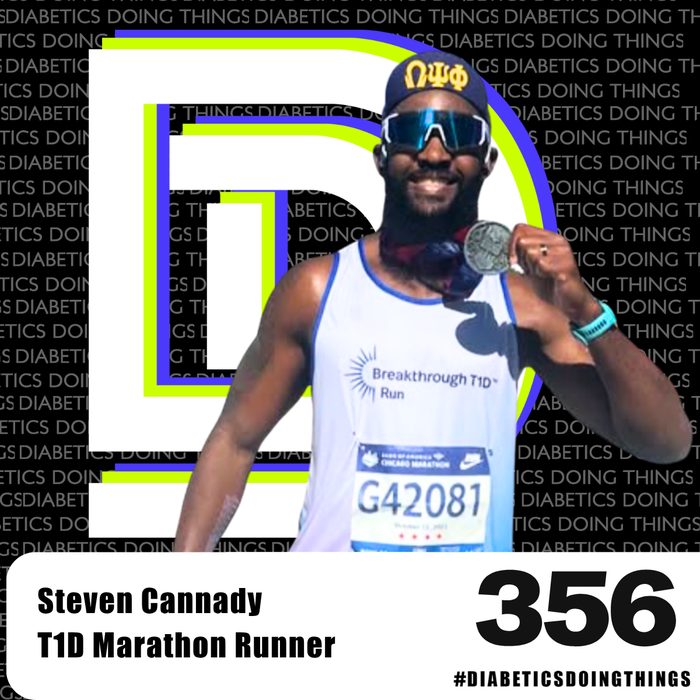
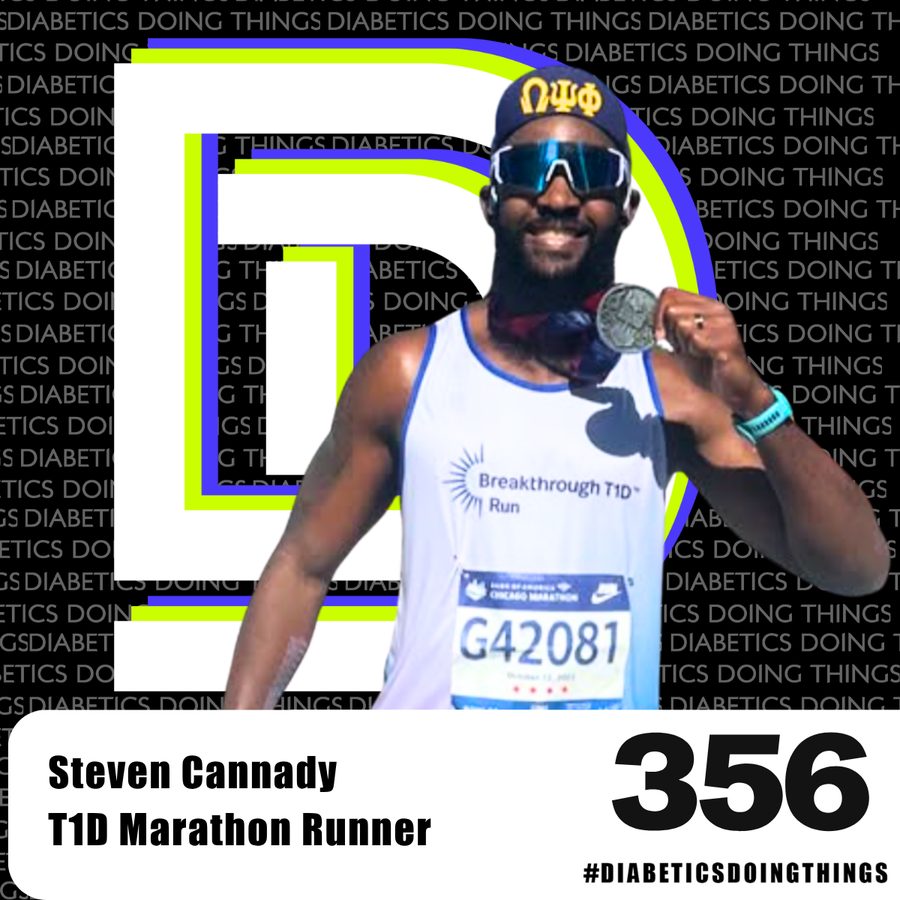
Steven Cannady was diagnosed with type 1 diabetes in eighth grade, on December 21, 2004, after a day of eating Froot Loops and getting sick while home alone. Rob Howe was diagnosed a week later, something they discover mid-conversation. Steven describes two DKA hospitalizations in high school and a doctor's blunt warning in 11th grade that changed how he managed his diabetes. He later started sharing his life with diabetes online and has since run six marathons in about two years, including New York City with Beyond Type 1, and just made Team Abbott for the Sydney Marathon. He explains how he carb loads with Maurten, skips insulin on race day, and would rather run high than low. His slowest marathon, run through his hometown of Durham, meant the most to him.
Key takeaways
- Steven was diagnosed with type 1 diabetes on December 21, 2004, after a day of eating Froot Loops and feeling sick alone at home; Rob was diagnosed one week later.
- Steven says he would rather run a marathon high than risk going low, because running high still lets him keep moving.
- Steven carb loads with Maurten products in race week and takes no insulin on race day, eating around seven gels during a marathon.
- Steven says a doctor's blunt warning during his second DKA in 11th grade, about losing toes, feet, or his eyesight, changed how seriously he took his insulin.
- Steven says his last 90 days of data show 77% time in range, which he calls an achievement rather than something to stress over.
Chapters
- Introduction — who is Steven Cannady?
- Duke fan crashes Carolina basketball camp
- Eighth grade, Christmas break, DKA diagnosis
- First weeks with T1D — family holds him down
- Rob and Steven were diagnosed one week apart
- Going back to school and the Seattle trip prank
- Going public with diabetes — why Steven started sharing
- Six marathons in two years — how it started
- Running as therapy and running through Durham
- Running is more mental than physical
- Race prep breakdown: 3 miles vs. 10 miles vs. marathon
- Carb loading, Maurten, MDI, and skipping insulin on race day
- Diabetes in the background — not the only conversation
- Diet Coke, cookies, and the food police
- Learning to run while high — reframing the numbers
- Duke Camp, honeymoon phase, and bringing diabetes along for the ride
- Wrapping up — Diabetes Legends camps and Team Abbott
Show notes
Steven Cannady was diagnosed with Type 1 diabetes on December 21, 2004, during Christmas break, in eighth grade, after eating a family-size box of Fruit Loops and spending hours on the kitchen floor before his mom got home from work. Rob was diagnosed one week later on New Year's Day 2005. Neither of them knew this until they were halfway through this conversation. Twenty-one years later, they're both living actively with T1D and talking openly about it, and it shows.
Steven has run six marathons in roughly two years, starting with the New York City Marathon in 2024 as part of the Beyond Type 1 team. He just earned a spot on Team Abbott for the Sydney Marathon, a seriously competitive field. But the race that meant the most wasn't the fastest one — it was the Raleigh-Durham marathon earlier this year, where he ran slowly through the streets of the city that raised him, stopped to talk to friends at mile markers, and decided that running doesn't always have to be about the clock.
This episode gets into the nuts and bolts of marathon prep with T1D — carb loading with Maurten, skipping insulin entirely on race day, why Steven would rather run high than risk going low at mile 20, and how 77% time-in-range can be genuinely excellent management. He also gets into how a doctor scared him straight during his second DKA in 11th grade, why he doesn't drink Diet Coke and won't pretend otherwise, and how a single conversation shifted how he thinks about living with diabetes versus managing around it.
Steven is MDI — no pump — and runs with fruit snacks in his pocket. He's not interested in letting diabetes set the terms of his life. This one's worth a full listen.
Chapters:
00:00 Introduction — who is Steven Cannady?
01:17 Duke fan crashes Carolina basketball camp
02:14 Eighth grade, Christmas break, DKA diagnosis
04:05 First weeks with T1D — family holds him down
05:42 Rob and Steven were diagnosed one week apart
06:35 Going back to school and the Seattle trip prank
08:58 Going public with diabetes — why Steven started sharing
10:45 Six marathons in two years — how it started
11:42 Running as therapy and running through Durham
15:08 Running is more mental than physical
16:56 Race prep breakdown: 3 miles vs. 10 miles vs. marathon
19:12 Carb loading, Maurten, MDI, and skipping insulin on race day
22:32 Diabetes in the background — not the only conversation
24:23 Diet Coke, cookies, and the food police
25:40 Learning to run while high — reframing the numbers
28:59 Duke Camp, honeymoon phase, and bringing diabetes along for the ride
31:33 Wrapping up — Diabetes Legends camps and Team Abbott
Resources:
Questions this episode answers
When was Steven Cannady diagnosed with type 1 diabetes?
Steven was diagnosed on December 21, 2004, during eighth grade Christmas break, after a day of eating Froot Loops and feeling sick while home alone.
How many marathons has Steven Cannady run?
As of this episode, Steven has run six marathons in about two years, starting with the New York City Marathon in 2024 on the Beyond Type 1 team, with a seventh planned in six weeks and a spot on Team Abbott for the Sydney Marathon.
How does Steven manage his blood sugar during a marathon?
Steven carb loads with Maurten products in race week, takes no insulin on race day, and eats about seven gels with 25 grams of carbs each during the race. He says he would rather run high than risk going low.
What is Steven Cannady's time in range?
Steven says his last 90 days of data show 77% time in range, which he considers a strong result rather than something to beat himself up over.
Full transcript Searchable, with timestamps
Rob Howe: Hey podcast listeners, very exciting episode for you guys today. You may have seen this man running all over social media from the past couple of years. His name is Steven Cannady. He's from North Carolina and he and I dig in and talk about not only his diagnosis, we were diagnosed one week apart. He was diagnosed in 2004 and I was diagnosed at the end of 2004 and I was diagnosed January 1st, 2005. So that's a fun discovery that we make halfway through this podcast. Steven has also run a number of marathons over the past few years. And started with the New York City Marathon on the Beyond Type 1 team, which he's done now twice. And at the time of posting, I wanted to give Steven a big congratulations because he just published that he's going to be joining Team Abbott, which is a very competitive marathon team for the Sydney Marathon that's coming soon. So I want to wish Steven a great race prep. And he breaks down sort of his race prep checklist, his training checklist, and why his most recent marathon, which he ran in Raleigh-Durham, was his most meaningful. So please enjoy this podcast episode's special conversation with Steven Cannady. Guys, who was MVP of the chat? Rob Powell! Rob Morgan Powell! What were you on? We need more of that. It's official. We got Steven Cannady here on the pod. The man that needs no introduction when he's not running a marathon. He's the first ever undercover Duke participant in the Carolina men's basketball camp and survived it. Steven, man, welcome to the show.
Steven Cannady: Hey, thanks, Rob, for having me. Yeah, that camp was, I'm not going, it was a fun camp. I can't, an opportunity came up. Again, I know a lot of people. My mom worked for CareSource, who was a sponsor. He didn't want to go, asked me if I wanted to go. I looked at the itinerary and said, yeah, sign me up. And I let it be known that I was a Duke fan to everyone there. I got a lot of hate for it, but wonderful camp. The facilities at UNC were amazing. We got, you know, free swag that I gave out.
Rob Howe: You keep any of the swag from the camp?
Steven Cannady: I kept the Jordans because they're Jordans. Yeah. I kept like two shirts. Anything that was Jordan branded only, I kept. But if it was like UNC, I was like, anybody want this?
Rob Howe: You can't. Let's talk about, because I was digging into like the box scores. I was like locked in for you on this camp. Oh, yeah, yeah, yeah. Love those like... opportunities to do like the adult basketball camps. We had a Ben Zeal friend of the pod, like a adult spring training with like one of the MLB teams. So like the fantasy camps, like a cool, really cool thing. Um, all right. Anyway, let's talk about you, man. Let's talk about your life with diabetes. How did you learn that you got type one?
Steven Cannady: Eighth grade Christmas break. I was 13 and I'm just, you know, doing what any young man would do on Christmas break, eating cereal and watching cartoons. I think that day I might've had an entire box of Froot Loops, the family size box. I was just eating Froot Loops. And I kept using the bathroom. I felt nauseous. I was thirsty as I don't know what, really thirsty. And at the time we were staying all together. So it was like me, my three brothers and sisters, which was four of us. And then my grandma and my mom, we're all staying in the same house. And my mom was the only person who drove at the time and she was at work. And I don't know, from like four to six, I was just laying on the kitchen floor, could barely move. And my mom gets home, takes me to the hospital. I'm in the ER for four to five hours. They finally take me back. Now I'm in the back for another additional, like an hour and a half. And I kept using the bathroom. And one of the nurses was like, hey, you used to use the bathroom maybe like 10 times in the last hour, hour and a half. They said, okay, somebody took his blood sugar and ketones and all that stuff. Again, two and a half hours after I'm in the back. And then they was like, oh, yeah, you have diabetes. So that was the story. I think my sugar was like five, five, five weeks. And again, this is 04. So I guess people didn't know what to do then or maybe that they weren't trained enough to know like, oh, let's take the blood sugar when you first go back. But yeah, that's how I found out. When they told me, I really didn't understand it because all I knew about diabetes was something about sugar. And that was the extent of me knowing anything about diabetes. So it definitely was a shock.
Rob Howe: I think you'd still be surprised, like even now with all the knowledge we have, depending on where you are and the time of day or like what people notice, it doesn't get flagged sometimes. Like some people get sent out without their sugars getting checked at times. So it is interesting though how somebody noticed you going back and forth to the restroom so much. Like, oh, hey, let's check his sugars based on everything else that's going on.
Steven Cannady: That seems like it.
Rob Howe: What do you remember about like your first couple of weeks, months, like adjusting and learning how to care for yourself?
Steven Cannady: Yeah. So again, it's since Christmas break. I actually left the hospital Christmas morning in 2004, left the hospital Christmas morning. I remember the night before we went back to school, I like that in the hallway. So everybody can hear me crying. I wanted some attention, but no, I was just like nervous and scared. Like I got to go to school. I have to go to the nurse's office. I was like, what is going to happen to me? Diabetes. You know, that Monday or Tuesday, my mom goes up to school. We have a meeting with the nurse, do all the things. Honestly, what I remember the most is the support I had for my family. Like I said, it was seven of us all staying together at the time. And everyone like pitched in. Like my aunt, my grandma. We went to classes at Duke, Lennox Baker, which is the children's hospital still, or was the children. No, Lennox Baker stood around, so the children's side of things at Duke University. The classes were amazing. But yeah, my family, yo, my family held me down. Made sure that we would go to Hardee's. I would do the low carb burger, just the lettuce burger. And then, and then they would count my fries out. It was, yeah. So those first weeks, months definitely was more family support. And as I got used to it, which didn't really happen until like 10th grade, it was, it was most of my
Rob Howe: family helping me out. I'm sitting here listening to you share your story. We were diagnosed over the same Christmas break, bro. Well, because I was diagnosed on New Year's day, 2005. So you were Christmas day, 2004, you know, six days later, I was right where you were. So that's,
Steven Cannady: So that's crazy.
Rob Howe: 21 years ago.
Steven Cannady: Happy New Year.
Rob Howe: Right.
Steven Cannady: Yeah.
Rob Howe: Merry Christmas. How does that land for you now in your diversities on Christmas Day?
Steven Cannady: So technically December 21st, I left the hospital. I left the hospital like Christmas Day, like Christmas morning. It was like, okay, you got it. You're good enough to, not good enough, but you can go home now. And I actually snowed that Christmas. I remember like going home and I got, I had a stuffed animal. I think I gave it to a girl, whatever. I had like a stuffed animal that I had for years that I would keep with me as like my diabetic companion. I remember Santa Claus walked around the hospital, was playing the banjo and doing all the stuff. But yeah, 12-21-04. I might get that tatted somewhere, actually.
Rob Howe: Yeah. Important days to remember, you know what I mean? Let me ask you this, because this is something that I kind of have a fake beef with my mom about, because she made me go back to school. So I didn't miss any school. My whole Christmas break was messed up, but I went back to school when school got back in. And people were like, we heard you died. Like we heard you were dead. And I was like, okay, that's crazy. But I was back. So did you miss any school or did you have to go right back after the break?
Steven Cannady: No, I went right back. So down in here, North Carolina, you know, I think we started the, what, January 6th, 7th, I don't know, like the second week of January. So I still had a little time. And also I was a new kid at that school. So I didn't really have many friends who knew me. I think we had just started, I had just started a school like October, like in the fall. No, the first nine weeks. So August, September, October, somewhere in October, we had just came there and didn't give them the Thanksgiving break, then Christmas break. So I didn't really have many friends, new friends anyway. So I was like, oh, that's the new weird kid. Now he has diabetes. And a lot of people, like my teachers knew, the nurses knew, students maybe knew I kept going to like to see the nurse during class. Yeah. And then I remember also later that year in like March or April, we went on a trip to Seattle and And that's when like all the people there on a trip really knew, oh, I have diabetes. Because like we had a hotel room with all the guys and all the girls had a hotel room. So it was like, oh, okay, you have diabetes. And then they pranked me really bad on that trip. I fell asleep first. And you know how that goes.
Rob Howe: Yeah.
Steven Cannady: Yeah.
Rob Howe: What did they do? What was the prank?
Steven Cannady: Neared my eyebrows. No, not neared. Yeah, near.
Rob Howe: Is that the near my eyebrows?
Steven Cannady: I had a near the back of my head.
Rob Howe: Dude, that is some savage. That is a savage. But you had no eyebrows and like a spiral in your head.
Steven Cannady: Yeah, I legit had to use my grandma's for weeks. It just got a super ball fade. My mom, they paid for it. They paid for it, but I was hurt. Because I got in the shower. I was like, when they washed my hair, I'm like, oh my gosh, what's going on? And I started screaming. And they all ended up laughing. And yeah, I fell asleep first. We were going to try to prank the girls because we ended up getting the girls' room key somehow because we just talked to the hotel. And we were going to prank the girls. And I was with it. And I just fell asleep first.
Rob Howe: Dude, adolescence. bro. Middle school, God, you couldn't pay me enough to go back. It was just terrible. It was tough. It was tough. All right. Well, I want to talk a little bit about, since you and I have lived with diabetes about the same amount of time, you started really publicly sharing your diabetes journey online, I would say what, two or three years ago? It is 2020, 2021-ish. Like coming out of the pandemic, like really kind of leaning into sharing your story, what made you decide that that was something you wanted to do?
Steven Cannady: So high school, I hated, I mean, I still hate diabetes. High school, I was DKA like twice within, I don't know, two months because I wanted to go off campus and have lunch with the homies and eat what I wanted to eat. And I honestly didn't have a Dexcom then. I didn't, I barely checked my blood sugar and I would just guesstimate and just take insulin whenever I thought I would take insulin. So I almost, you know, died twice in high school. When I got to college, actually, I became more just like vocal and who I am today. Hey, I'm Steve. Around sophomore year, I started doing different events on campus around diabetes. I was Mr. North Carolina century university. My entire campaign was just like diabetes awareness. So I hosted three to five, six, I don't know, a skate for diabetes. We did a walk for diabetes and we did on World Diabetes Day, I had a big booth at the student union. So I was doing things then. So social media, I just picked up my phone one day and was just talking. I would just post a lot. I would just post my numbers, Dexcom. And I know every post I posted, I was just tagged Dexcom. And then that happened. And then I think in 2023, they reached out to me and that's how I was able to do the New York campaign with them. And that was pretty cool. But yeah, I just became more comfortable sharing it. People asking questions and talking. This is my life. A lot of people don't know what diabetes is. Also for me, I don't see a lot of black folk with diabetes or, and I don't see a lot of fit people or the perception is like, you can't do these things. You can't run. You can't go to the gym. You can't work out. You have to be like a certain shape or size when people think about diabetes. So I was just able to, you know, And I also was able to connect with people and meet friends online and it just kind of blossoms into where it is today.
Rob Howe: Yeah, man. Because I mean, I think since I've gotten to know you and we got to meet at the Rising Above T1D event in New York before the 2024 marathon, which I was following you on as well. And I mean, even since that time, was that your first marathon?
Steven Cannady: Yeah. 2024. Very first one.
Rob Howe: You've now ran it again in 25. And how many total marathons have you run in that, like, let's say like 24 month time?
Steven Cannady: As of Saturday, six. six marathons in so like what let's just call it like two years coming up well i got one more in
Rob Howe: six weeks okay so you got another one in six weeks what are you running from what are you running from like who is chasing you uh how did you discover this passion obviously it's more than just loving to run powering diabetes awareness is a huge part of how i know you and how people get introduced to you and your fundraising for whether it's breakthrough t1d or beyond type one or other ABDs related causes. How did you get into this?
Steven Cannady: I was always a runner. Going back to eighth grade again, get diagnosed, go to school. I wanted to run track. And my mom said no. Well, she didn't say no. She said not today. So I get home and I'm frustrated. I'm like, I want to track practice. First day of track practice, I'm just going to go. And I end up cutting the blinds in our room and just doing stupid stuff. And she came home with like Gatorade zeros and Gatorades and fruit snacks and all this stuff. And she was like, I said no, because of you need snacks. And she wanted me to show up what's prepared. But then she saw what I did to the room and was like, you know what? You're not running track this year. Also, I didn't run track in eighth grade because I had a height. So freshman year in high school, I ran track. Instantly realized I was not fast enough to be a sprinter. Sprinting is not my ministry. I'm fast for a 35-year-old. I could probably beat my friends in a sprint today. But I wasn't 100-meter Usain Bolton anything. But I felt I had realized that, oh, the 800 is my thing. And I can run miles. And I can just run for a long time. So I did track and cross-country. free. So in 2024, I was following Beyond Type 1. I met Tiana somewhere and he's like, oh, I just followed Beyond Type 1. And the application came up to run the New York City Marathon. And I was just like, you know what? Why not? I fill it out and they selected me. So the passion, honestly, man, I found a passion for running. I like it. I enjoy it. I see it as therapy. Even now, personal stuff going on in my life, I just go for a run. And it clears my mind. The other part is, Yes, raising money for diabetes nonprofits and awareness. But then I think the biggest thing is, oh, wow, Steven, you are running and you have diabetes. And again, showing folks who don't live with diabetes or showing folks who do live with diabetes. Also, like you can do anything. You can run 26.2 miles on a Saturday because you want to run 26.2 miles. And you can also fundraise and do all these other things. And now more like mental, oh, I can do it. And like I like to challenge myself. However, like Saturday's marathon, it was in Durham. I'm from Durham. I was not chasing PRs. I was just enjoying running through the city that I'm from and like seeing people that I know. So that one was way, that was actually my slowest marathon I've ever run. But it was for me the most, the best one. It was like, I'm running through the streets that literally raised me. So yeah, man, I'm just like challenging myself. And also I like to put on the fit and got to, you know, flick it up. So yeah, man.
Rob Howe: Well, I love a couple of things you said. I like you as not a sprinter. So nobody ever accused me of being too fast, especially when I was younger. But now I feel like there's very few of my friends that I couldn't meet in a foot race now. So some of that is just like longevity, which brings me to my next point is like resilience, challenging the stigma, like fighting the prototypical diabetic aesthetic that is either advertised or sort of purported. And also the idea that you can do hard things and we get better at doing hard things over time. That's something I've been thinking about a lot more recently, which is, I don't know if you asked a thousand people with diabetes, like, is diabetes easier to manage today? than it was when you were first diagnosed, however long ago that was. I don't know that everybody would say yes, but I think the ones that do, it wouldn't be because it's actually easier, but you just get better at managing the load. And that's what I think about resilience and I think about running. Like I saw yesterday, yesterday evening I was coming home. I had a basketball game. I was driving back from it. It was about 7.30. And there was like a woman on the road running by herself. And I was like, you know, it takes a particular mindset. It takes a particular type of person to on a Sunday afternoon, evening, like get up off the couch and like go challenge themselves with no one else around and maybe nothing to train for and say, you know what, I'm going to go, you know, just get the demons out maybe and just run around the block or run a couple of miles or just run to enjoy being outside. Because it's hard. I mean, a lot of it you got to do by yourself. Like you were saying, like whether it's in Europe, you know, in the heat or it's in your hometown, seeing places that, you know, like the back of your hand and seeing people that you recognize. So it's something that you just have to kind of
Steven Cannady: it's physical but also mental yeah that's what I would argue it's more mental than physical depending on the day like I said Saturday um I was running with my buddy and he had a goal he's like 3 30 sub 3 30 I'm like yep that's cool I can do that you know I'm not saying it like it's nothing but like yeah eight minutes eight minutes a mile sure and then mile 10 I got I might have posted at mile 10 mentally I'm like I don't feel like running 16.2 miles like I don't feel like running another 60.2 miles. And I was like, hey, we get to the halfway point. Just just go ahead because I might just slow down. And like I had people out there supporting me. So like I had my homies, like I would see them at like random mile markers and I would just stop, talk to them, chat, drink water, eat a little salt tab. They took photos. It was just like, you know what? I'm going to chill because like mentally my body felt fine. Nothing was wrong physically, but mentally I was checked out and I was also just like ready to like do something else. Yeah, it's definitely a, I feel like running is one-on-one. And for me, like I said, it helps. It's a challenge. It also clears my mind. Like literally I'll go out. I feel better most of the times after I go for a run, even if it's, you know, two miles or if it's 10 miles, it's like, I feel better, a little clearer. and I have a little bit more pepping my stuff, a little bit more like happiness, maybe because of sunlight or whatever it is. My mood definitely changes from when I left to when I come back from just running for me.
Rob Howe: Well, you talk about the mental side of it. I agree, like whether it's runner's high or just like clearing the chronic stress or like moving your body, being outside, like getting hydrated, all those things, I think make me feel better as well. But the physical side, I think can be really challenging for a lot of people with diabetes. So give me like three different runs. So like a training run, say like 10 miles, you're going to do a mid-level training run versus a quick little like on a break from work or something like that. Or like, you know, right before dinner, like a three mile, like quick little loop and then a race day. Like, how do you how do you prepare your diabetes or what's in your pockets or like a little pack that you carry with you? Like, how do you prepare yourself to go do that? And I think within that, what I'm trying to kind of express is like that there's obviously different levels of people, physical ability or conditioning when it comes to running or comfortability with like a run. So, you know, releasing the judgment from that and just saying, OK, I want to go try a three mile run. What does Steven recommend bringing?
Steven Cannady: Yeah.
Rob Howe: Versus a full blown marathon.
Steven Cannady: So, yeah, it obviously definitely depends on how long you plan on running. It doesn't matter. So again, I would think time over distance because again, my three miles is faster than most people I know. You know, people that I know personally, like you want me to do a 5k like you want me to run a 5k? Yeah, I'm going to run a 5k in like 20, sub 20 if I'm like go crazy. But just again, I would say first thing is time. Yeah, I'm going to run five miles. How long is it going to take you? And then adjust. So I always, you know, check, obviously check the Dexcom before I leave, have it on me, my watch. So it alerts me. I keep, you know, the Welch's fruit snacks. I keep those fruit snacks are my go-to. And so that's all I'll take on a three mile. If I'm doing like an easy run, most of my easy runs are like five or less miles throughout the week. And I'm going at a really slow pace, well, slower pace for me because it's just an easy mile, just flushing the legs. And then let's say I do a speed workout. Pretty much anytime I run, I always have fruit. The fruit snacks are on me. The fruit snacks are on me for sure. This doesn't matter what distance. And then race day, obviously it's the gels. It's race week. It's carb loading from this week until Thursday. I started carb loading, just chicken, rice, chicken, rice, chicken, rice, three meals a day up into the amount of carbs I eat. A couple of bananas Friday, similar things. A couple more bananas. Then Saturday morning, wake up. Like Martin has a, I like Martin. I don't know if it's Morton or Martin, M-A-U-R-T-E-N. I say Martin, however you say it. They have a kit that is like a marathon kit that they send you. And it pretty much kind of gives you instruction. And they, day before, drink this thing with 80 carbs and eat this bar with 40 carbs. The morning of, drink this thing with 40 carbs, eat this gel with 40 carbs. And then they have seven gels that you take throughout the race. And each gel has 25 grams of carbohydrates. So keeping that in my mind. And then I'm also MDI. So I've never owned a pump. I've never used a pump. I'm thinking about it, but I haven't just made that commitment yet. So like being MDI and not having a wake up, I don't think I have any insulin on board, but the last three marathons I've dialed in to where I don't take any insulin. So I might consume, I don't know, I just said 400, 370 carbs, 380 carbs on race day, more before and during the race, don't take any insulin. And when I finish, I'm still going low.
Rob Howe: Right. I think like insulin on board, right, is the key. So do you adjust your basal insulin race week or anything like that? Or are you regular basal dose?
Steven Cannady: During, even like if I wake up, like Saturday I woke up, my sugar was like 180. And I'm like, that's a little bit, I don't really want to be 180. And this is before I ate. Again, I drank the 40 carbs and I ate another 40 carbs and a banana. But like, okay, I started the race. I think I was like 277, 290, like an arrow going up.
Rob Howe: You got adrenaline too, like, you know, doing all that stuff at the starting line.
Steven Cannady: Yep. So arrow going up and I'm just like, okay. And again, I eat seven gels with 25 carbs each and I run and then I stop and drink Gatorade at the Gatorade stations and things like that. And I still finish and I'm going low. I need to find a banana as soon as I feel like I'm like cross finish line. Where are the snacks? Banana lady over here. Where's the Gatorade lady? Because you're going low. In Chicago and Myrtle Beach in this last marathon, I did it right. New York, I saw 280. I panicked. At mile 16, took some insulin, had to stop because at mile 21, it's like, okay, now you're going low. I tell people all the time, I would rather run high than run low because I can at least keep running. if I'm low I'm going to have to stop eventually I'm running high I'm a little bit higher than normal I feel a little different but not in a way that's going to make me
Rob Howe: legit stop running. Yeah that was a problem for me I started my race really like too low I was like an 88 and I messed up my pre-race prep I only did a half marathon but I messed up my pre-race prep and I had to like basically just hustle over to the starting line and go you know that kind of messed up my that wasn't part of my race day plan and I had to stop mile 10. I like jumped into 7-Eleven and got like a bunch of Gatorade and then kept going. 7-Eleven came with the perfect time. I was like, oh, thank heaven. It sounds like to me though, regarding like marathon prep in particular, you're not thinking as much about your diabetes during the race week as you are just like any other person preparing for a marathon. Like you're trying to ready your body. You're trying to make sure you have the energy stores, the glycogen, the carbohydrates, like so that when you're running those last 10 miles,
Steven Cannady: like your body has something to run on. Yeah. I mean, obviously diabetes is never going to leave my mind, you know, our minds, but it's not like, yeah, I'm not waking up like, oh, it's Wednesday. I need to eat this certain thing because my sugar is going to spike. No, I'm just like, okay. Like, and honestly, I don't, I don't really ever, like I think about diabetes. I talk about diabetes every single day, multiple times a day to anybody, but I've never looked at it and made it the thing that's the only conversation. If that makes sense. I've never been too high or too low about my diabetes. Like I know I have it. I know how to manage it. It's going to go high. It's going to go low. Something, you know, it's part of who I am. I can't really change it. I took my insulin. I'll be good. And that's kind of how I've lived my life with diabetes. And I think when I was in the second time I had DKA, maybe 11th grade, Dr. Jean, I was running track and she came to me and she just looked at me and said, Hey, all right, you're 16. You want to have kids one day? I was like, yeah. Okay. Do you want to keep running track? I'm like, yeah. Do you want to, She listed all the things you asked me. You want to do this? You want to do this? You want to do this? I'm like, yeah, yeah, yeah. And she's like, okay, well, do you want me to start chopping your toes off? Do you want me to, do you want to lose a foot? Do you want to go blind? Do you want to not have feeling in your life? I'm like, bro, what are you talking about? So she's kind of scared me straight in that sense. And then she also, she whispered, she said, oh, look, right now, all I need you to do is take your insulin. She said, look, if you want to go off campus to eat, cook out with your friends and grab a milkshake, can you just take some insulin? And she said, if you want the milkshake, take extra insulin. And she told me that. She's like, that's what I need you to do right now because you're not even doing that. So that one conversation kind of, to me, changed how I thought about things. And even now, like, you know, you have the food police who always want to tell me what I can eat. If I'm eating a cookie or a donut or I'm drinking a regular Coke because I, me personally, I hate Diet Coke. I hate the taste. I might be the only diabetic who's going to admit that. I'm not a Diet Coke fan. It's not good. So if I drink a regular Coke. We're going to have to clip that and like the Diet Coke police are going to come out. I'm not a Diet Coke fan. I don't know how y'all do. I don't know how. What's the fuss? I'm like, it's not good. So I'll just take a little extra insulin and enjoy the thing that I want. And I'll people, you eat a cookie. Yeah, because I wanted a cookie. And I also know my sugar's at 120. And if I just took a few extra units of insulin, my sugar's still going to be around 120 after I eat this cookie. So mind you a minute. So yeah, I started to go on that tangent. it. But yeah, I don't ever, I've never really made it like, oh, diabetes is going to change
Rob Howe: how I do things. Yeah. And I mean, like, it's just that extra step or those extra steps, you know, and I think, you know, for me, I also, I feel very like aligned with you in a lot of ways, like the way that I view diabetes and something, some things I'm like, I'm giving myself now, I love what you said about if you're high, you'll run high. And something that I think I've been examining about my own relationship with my diabetes is like, maybe I wasn't giving it as much credit as it deserved for how it was influencing how I make decisions because like this idea of, well, I can be happy, but only if my sugars are in range or like, you know, oh, I'm 260 right now. So I'm having a bad day until I'm back with an arrow down, like 160 with an arrow down, like, and I'm back and I can now go live my life. And that wasn't something that I necessarily thought was part of my relationship with diabetes, but I'm learning to run while I'm high. I'm learning to do my work that I need to do while I'm high. It's just part of my life. and it's not going to last forever. It's just temporary. And, you know, I think for me, like the mild inconvenience or like annoyance is short term. And as long as I'm taking care of myself to view, you know, to know that it's not a long-term complication in many cases, right? I'm just doing what I need to do to get my sugars down. Then it's fine. And I can remove the punishment of like judgment from myself for that.
Steven Cannady: Yeah. I don't know if you know Chris Ruden?
Rob Howe: Chris Ruden?
Steven Cannady: Yeah.
Rob Howe: I know Chris.
Steven Cannady: Yeah, I went to some... Yeah, he spoke. And he was like, he did a whole presentation about numbers and just like, if you see this number, what do you think? And everybody's like, ah, like it was like 380. And you're like, ah, he was like, well, that's how much money I'm going to give you. And he was just like, yo, it's just a number. At the end of the day, I mean, yes, it is our diabetes and we want to make sure our sugar is in range and all these other calculations. But like, yo, it's a number. He was like, well, why are you letting a number determine like, how do you feel about yourself or about anything? It could be, you know, it's 405. That's the time right now. But if, you know, you see 405 on your desk on, you're going to lose your mind and things like that. And like, I'm looking at my, my thing now, I'm again, I'm MDI the last 90 days. I've been 77% in range and I'm like, okay, well that's, that's doable. 77% out of a hundred, you know, and I'll do that on a, on a, you know, and it's like, you know, 4% very high. Okay. So, or 13% high. So it was like, oh, I'm not, I'm actually above average in keeping my diabetes together. And like you said, yo, if I'm way above average, your type one diabetes, you know, a hundred percent time and range, like, forget it.
Rob Howe: Like somebody came on the pod recently and said, like, I don't want to live a small life because of my diabetes. You know, 100% time and range is feasible for somebody who doesn't have diabetes. Like we don't have that available to us all the time. You know, you could, if that was, you know, what are you optimizing for? Are you optimizing for 100% time and range? Or are you optimizing for living a full life, a balanced life as best you can? And like you said, dude, 77% time and range. if you could go tell i forgot uh you said her name if you could go tell your doctor who was talking to you when you were in the doctor you know for your second dka hey 15 years later time and range is 77 like you know that that's a that's an incredible achievement and incredible growth from that and so it doesn't happen overnight but i think it is possible if you you know like you said you can still drink the coke you can uh you can say hey i don't like diet a Coke and I can, you know, just bolus for it. Yeah, I agree. It's a number. It doesn't define
Steven Cannady: my life. And, you know, my A1C, I think my last one was like a 5.8. So I'm like, oh, I'm going to have a bad day or a bad day. Sometimes, you know, we can do everything right. And it's still, oh, you're going two arrows up because of whatever other factors. So I'm like, okay, I'm not going to stress. Like I yell and say, I hate you diabetes 20 times a week, like diabetes and I was like okay but I don't take that outside of me in that moment looking at my phone and being just not disappointed being annoyed because I took the insulin I waited 15 minutes before I ate I did the things I just finished working out but I know that I ate the same meal I ate yesterday and it's like oh now you want to go three arrows up not three two arrows up and it's like you know what diabetes all right you got it and then I just go back to my life well you you reminded me um with your marathon prep uh of a story that I'll only tell you because
Rob Howe: you're probably the only person who cares about it. But I went to Duke camp when I was the first year after I was diagnosed. It was my first like flight by myself. I think I had gone somewhere with my family previously, but my parents like made a really cool decision to let me go to camp my first year with diabetes, like on my own and trust that I was able to manage it. And I, you know, talk to the training staff and all that stuff. But my whole week was just like your race day is like, I just took my long acting insulin and I would eat lunch and eat Gatorade, but we were playing so much basketball all day long everywhere that I didn't ever have to bolus for my for my insulin I was probably having a little bit of like honeymoon uh symptoms as well uh yeah man just like a a week that like I think looking back being able to be like a Duke fan now as well and be like oh yeah I've been there I've been to Cameron Indoor and I played there you know I played there is the stuff so yeah I mean I don't know like there is a there is a way to even if you're figuring it out to go live your life that you want to live with diabetes and just bring it along with
Steven Cannady: That's it. You have to. Because again, like you said, I want to live a big life. I want to live a fun life. And not saying like you shouldn't, because again, I'm super healthy. I make mainly the best decisions for my diabetes every single day. I'm not eating cookies every day, but you know, if I want something sweet, I want to like, I like Coke. I like to eat fries. You know, I like carbohydrates. And also, again, I know me, which is I think one of the videos I posted on whatever Instagram the last time I did a marathon, like I know my body. I know again, if I take two units of insulin and I eat 400 carbs while I'm racing. When I finish racing, I'm going to still be low the rest of the day. It happens after every marathon. Like Saturday, I took no insulin pretty much all day Saturday and was still like dropping. We finished, I finished the race, da-da-da, Chick-fil-A, my mom bought me some Chick-fil-A, fried, I had lemonade, number one Chick-fil-A and the fries. Two hours later, I'm still dropping. And it's like, I took no insulin still. And I had a Chick-fil-A lemonade. Okay. So, you know, I'm just like, Oh, you got it, buddy. But yeah, I'm not letting that stop me from living, man. I can't. And you know, like all that stuff is happening, you know, to a person without diabetes too. Their body's just pumping them with glucagon, you know, like, so, you know, they just have the example or the, you know, the physiology to be able to do that. And, you know, your muscles are just uptaking all that glucose, man. Like you just, you put all that out and now, and they're, and it's pulling it back in and that's just how it works.
Rob Howe: Well, man, it's been really cool to follow you on the journey to all six of those marathons now following you over the next six weeks to the seventh. I appreciate all you do, man, for, you know, being an outspoken of like a man with diabetes, living an active life, living a cool, creative life and doing what he wants to do. I think that's something that I see myself a lot in. And I'm just glad that you're doing that. And who knew we were diagnosed like the same week. So shout out to Christmas break 2004. Yielded two people with diabetes that, you know, 21 years later would connect on a pod. It was a nice camp, man. actually funny that you asked we're going to be doing camps in um at friends for life we'll be there in july uh in orlando and then we've got camps in august in dallas and september in denver and then back in orlando so we're going to have ourselves a busy fall of a daily diabetes legends year four so yeah i'm trying to get out there one of them i'm trying
Steven Cannady: to get out to one of them man we got to connect on that yeah maybe we'll have a set texas link up here soon man hello praise the lord speaking in advance
Rob Howe: Yes.
About Steven
Steven Cannady is a type 1 diabetes advocate from Durham, North Carolina, who has run six marathons in about two years, including the New York City Marathon with Beyond Type 1, and recently earned a spot on Team Abbott for the Sydney Marathon.