

#ToolsofType1s - 019 - The Brzozowski Family
Episode summary
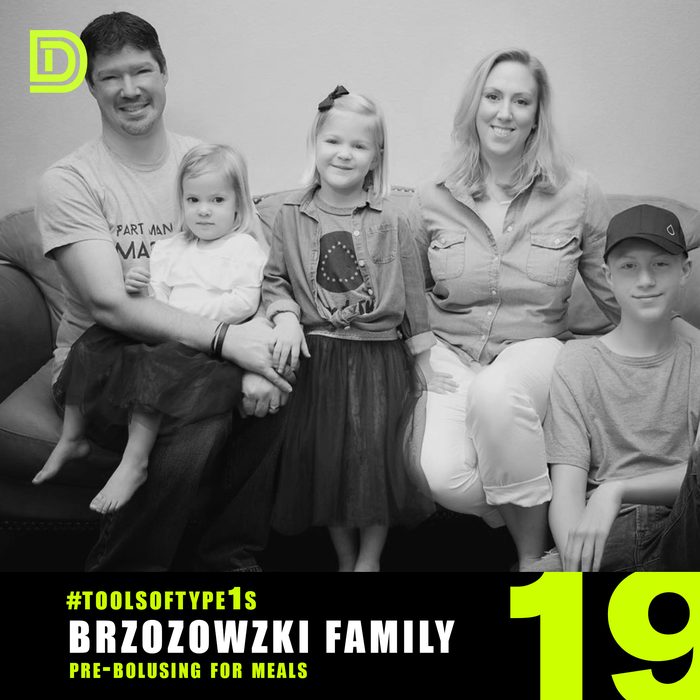
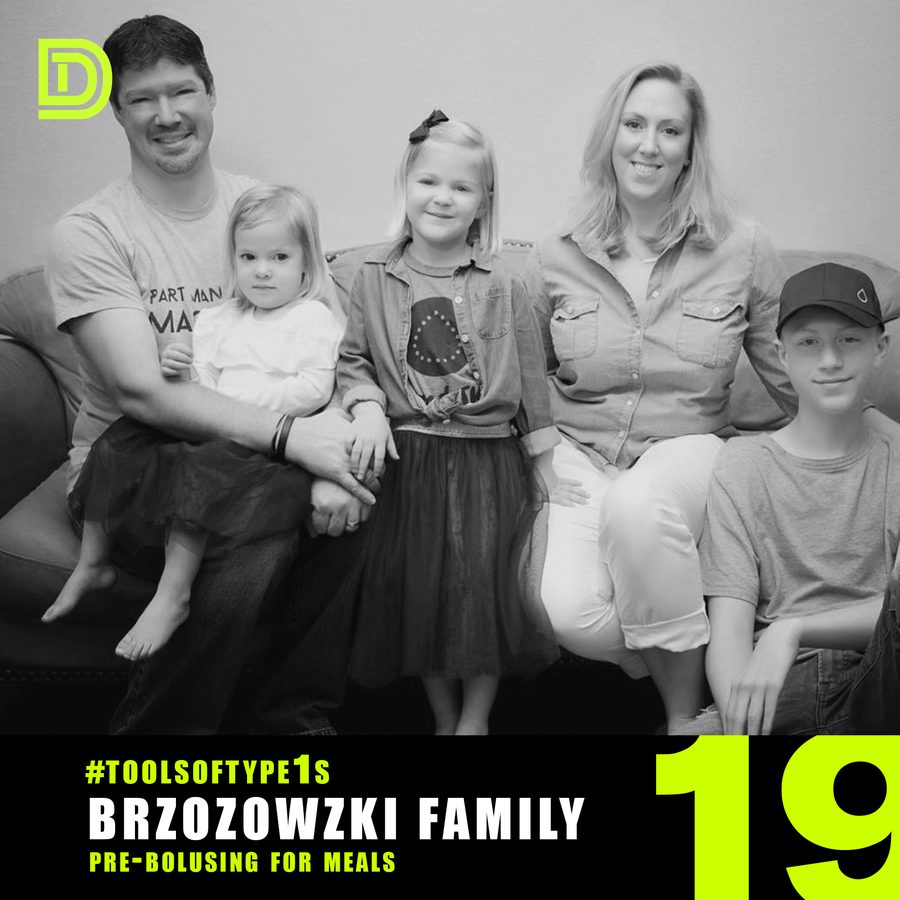
Gerry and Vivian Brzozowski, joined by Gerry's wife Sam, talk with Rob about building a family life around type 1 diabetes. Gerry was diagnosed at 18, at the veterinary clinic where he worked, and spent years managing quietly on his own. Everything changed when their daughter Vivian was diagnosed at age two, the same year Sam was also treating cancer. Sam describes learning to manage Vivian's diabetes from scratch, switching Gerry and Vivian to Dexcom and Omnipod together, and finding support through other parents and podcasts. They discuss pre-bolusing, looping, CGMs in veterinary medicine, guilt, and getting involved in the type 1 community through JDRF and Beyond Type 1.
Key takeaways
- Gerry was diagnosed with type 1 at 18, at the veterinary clinic where he worked, after a coworker tested his blood sugar.
- Sam says pre-bolusing made a big difference once Gerry had a CGM, while toddler Vivian's grazing made pre-bolusing harder to time at first.
- Sam switched Gerry to Dexcom and Omnipod after Vivian's diagnosis so father and daughter could wear matching devices and do site changes together.
- Gerry says switching to a tubeless pump forced regular site changes and improved his control after years of overusing the same injection sites.
- Sam says getting involved in the type 1 community helped ease guilt Gerry carried about his diagnosis, which doctors linked to a Coxsackievirus.
Show notes
Name: Gerry and Vivian Brzozowski ft. Sam Brzozowski
Hometown: Houston, TX
Date of Diagnosis:
Tool: Pre-Bolusing for Meals
Diabetes Devices/Treatment Methods: Looping! Medtronic pump & Dexcom G5
Questions this episode answers
What tool does the Brzozowski family use to manage type 1 diabetes?
Gerry says pre-bolusing meals, once he understood how it worked alongside a CGM, made the biggest difference in his blood sugar control.
At what age was Gerry Brzozowski diagnosed with type 1 diabetes, and how?
Gerry was diagnosed at 18 at the veterinary clinic where he worked, after a coworker there used a glucometer meant for animals to test his blood sugar.
How did Vivian Brzozowski's diagnosis affect her father Gerry's diabetes management?
Sam says managing Vivian's diabetes pushed the family to switch Gerry to a Dexcom CGM and Omnipod, and the renewed focus on numbers improved his own A1C.
Are continuous glucose monitors used on pets with diabetes?
Sam, who worked at Gerry's veterinary clinic, says some vets including Gerry have started using CGMs on diabetic cats and dogs instead of all-day blood glucose curves, though insurance does not cover them for pets.
Full transcript Searchable, with timestamps
Rob Howe: Tools of Type 1s Podcast, Episode 19, The Brzozowski Family. I didn't know this family before last year, before Jerry flew his plane up to Dallas from Houston to go skydiving with us early, early, early on a Saturday morning. And Sam and the girls drove up as well. They've got their Beyond Type 1 license plate, vanity plate on their car. They are amazing advocates for people with diabetes. And this interview is a little bit different for Tools of Type 1s. Some of the people who I reached out to asked me to do a more traditional interview where I'm on talking to them. So this is a more free-flowing, one of those free-flowing episodes on Tools of Type 1s. And it really did stop me in my tracks. Jerry and Sam's insights as to not only Jerry's life with Type 1, but also Vivian's life with Type 1 diabetes, their daughter. what that's been like for their family and how they've had to adjust and how they've really dove into the diabetes community with both feet. I'm very grateful that I got to meet them in person multiple times, most recently at the type 1 Nation here in Dallas. I've gone skydiving with Jerry. I've seen him jump out of a plane. It was comforting to know that he's been in the sky all over the place, over Texas, and he had no problem jumping out, So I just followed him. Sam goes deep into this interview about what it's like being a type 1 diabetes caregiver and what it's like not only for Vivian now, but also in the future for the rest of their family. So stay tuned to this interview. It is incredibly powerful. I'm very grateful that the Brzozowski family took the time to chat with me. And I'm just glad that I got to hear it firsthand right away. This is the Tools of Type 1s podcast, episode 19, the Brzozowski family. Stay tuned. I'm going to hit record here. Vivian, why don't you tell everybody your name, how old you are, and how long you've had diabetes?
Vivian Brzozowski: What's your name? What's your name? Vivian. And how old are you? Five. And how long have you had diabetes? A long year. A long year? Since you were two? Mm-hmm.
Rob Howe: And since you were two years old. Awesome. yeah and uh what uh trying to think who's your who's your favorite person that you've met with uh with diabetes um marie yeah that's what i was looking for i didn't good good for you no coaching necessary that was the right i think that was always the right answer
Sam Brzozowski: he does she like marie is one of her favorite people to play with so
Rob Howe: Well, I know that's probably going to make Marie have a panic attack when she hears this. But that's a great answer. And what's your favorite thing to do, Vivian? What do you like to do?
Vivian Brzozowski: I like to go outside with my sister. Go outside and play? Mm-hmm. What else do you like to do? What did you do today? After you got out of school, what did you go and do? put a helmet on and i went horseback riding you went horseback riding you take riding lessons right i love horses yeah so we do too very therapeutic we think no doubt i get to ride a lot of horses i have a lot of horses i know Oh, and I even ride a white one I don't ride it anymore
Rob Howe: That's so great Vivian, you do whatever you and your parents decide you want to do, right? You don't ever let having diabetes hold you back, do you?
Vivian Brzozowski: Mm-mm
Rob Howe: You just do it, yeah? Yeah I love it all right well thank you for talking to me that was very you did very good thanks yeah uh isa isa duly came on my podcast i think she was a little bit younger than you when she came on so you are i think the second youngest person who's ever been on my podcast so this was awesome say thank you wow say thank you it's such an honor thank you I'm Gerry Brzozowski
Gerry Brzozowski: We live here in Montgomery, Texas. I'm originally from Corpus Christi, Texas. I am 22 years with type 1. I was diagnosed at 18 upon graduation from high school. I guess my connection is my wife and Vivian, honestly. I was 18 when I was diagnosed. so there weren't any camps or kind of workshops for my age. So luckily I was going into the medical profession, so that was my own project to a certain degree. And I'm his wife, Samantha Brzozowski. I am not originally from Texas. I am from Iowa, so I'm kind of the Midwestern Yankee. And my connection to T1D is my husband, obviously, But to be honest, I really did not know that much about the disease until our daughter was diagnosed at two years of age. So it was then that I kind of dove headfirst into understanding how complicated this disease can be and how scary it can be at times, especially with young children. And that kind of had a domino effect on how Jerry became connected. When I kind of go for something, I go all the way. There's not just a little bit. So I instantly started reaching out to other parents that had children with type 1. And that kind of led to, on Instagram, meeting young adults with type 1 and me asking them questions and trying to get insight. I just kind of I wanted to gather as much information as I possibly could, because before Vivian was diagnosed, Jerry, he didn't hide his disease, but it wasn't something that he openly talked about to the point where knowing what I know now. I'm glad nothing really bad happened When I were married Because I really When I thought I knew what to do I know now that I would not have known what to do So yeah That's us
Rob Howe: That's so great And I do want to focus a little bit too Jerry Me, I was the same way I sort of just managed my T1D and I was fine. And I just kind of was living my life, carrying on not really too focused on talking about it or being externally facing with it. I'd go to a walk every now and then, but I didn't consider myself very involved. And then that changed. What do you think that is about guys with type 1 or just guys in general? Is that a man thing that we just don't talk about, things that we struggle with, or just focused on other things?
Gerry Brzozowski: for me I was focused on like say undergrad knowing that it was going to be a struggle to first being diagnosed and then trying to manage it on top of school schedules and all that kind of jazz and then putting my nose in the books to get into vet school I think that yeah some of it's the man thing and the other thing too nobody I say nobody nobody in my direct family was ever diagnosed with it. So it was kind of foreign. Um, and just the, the not understanding of what it actually is from and what caused it. And so the unknowns of not being able to really talk about it in depth, I guess I'm more of a detailed person. I want to know X, Y, Z before I kind of talk about it. And so not until I really got into probably my third year of undergrad in genetics is when I kind of looked at it and understood it more in depth.
Rob Howe: That's great. That's very cool. And a very good answer, a unique answer, I think, and relatable. I think understanding the why and the how kind of before you really go out and talk about it is something that maybe more of us could do better at, I'm sure.
Gerry Brzozowski: It was also very confusing because I was honestly pretty much diagnosed at the clinic that I worked at in high school. An animal clinic, not a human hospital.
Rob Howe: Okay, wait a minute, wait a minute, wait a minute, wait a minute. Now we've got to hear the story.
Gerry Brzozowski: Right. So I've been drinking and peeing like it's going out of style. Luckily, my grandmother was the manager for the high school cafeteria, so I'd take two three gallons of orange juice and stick them in the fridge there at the high school and just drink in between class of course peeing in between class also as 18 I was like oh dang I didn't think I'd be wet in the bed at 18 so one day I got out of school and went to work and of course as soon as I got to work I'd go use the restroom and walked out I said god dang is there a disease that makes you want to drink and pee like it's going out of style and one of the technicians, which is kind of our equivalent to nurses, he's actually going to nursing school. And he says, come here. So he went and grabbed the glucometer from the clinic and pricked my finger. And it just said, hi. I said, you need to, you need to go make an appointment. Have your, have your mom make an appointment with the doctor. And so she did. And I came back and said, Oh, she said it'd be about two weeks. No, no, no, no, no. You need to make this seem more urgent. Um, so I was like, okay. So I went that evening and I was at 675 and as a GP, um, I was 80 pounds lighter than I am now. No, no difference in height. Um, he put me on Glucophage, metformin. So I was like, okay, this'll work until it didn't. Right. So, um, went to the children's Hospital in Corpus and Driscoll Children's Hospital. And actually one of, Dr. Ponder used to work. And one of his nurses said that as soon as I get up to College Station, I need to make the trek to see him as probably one of his oldest pediatric patients. So went up there and at the time that was, pumps were in the fad and got to put on a Disetronic pump and c'est la vie.
Rob Howe: Wow, very cool I think you're the first person that I've talked to Definitely on the podcast that was diagnosed at a veterinary clinic So I think that you should wear that badge with pride, my friend Okay, so what is the Brzozowski family tool of Type 1? So this is also going to be the title of your episode But what's the one thing that a person living with Type 1 could learn from you or your family's experience? I think as a married couple, um, and I've even
Sam Brzozowski: met some people who have connected me with other young couples that the spouse lived with type 1. Um, and their significant other didn't fully understand the disease. Knowing what I know now, I honestly unless Vivian was diagnosed I don't think that I would have ever fully understood what type 1 diabetes is like and and I don't live with it but I'm the closest thing to it because of managing Vivian and um it's scary for me to think Jerry is very good because he does he does do medicine, although it's for animals, he's still in the medical field. And I think that that is, was my saving grace. But I know that there are many young couples out there who they could be on a hike somewhere. And if something happened to their spouse living with type 1, they may not know what to do. So I, I learned a valuable lesson very early on that speaking to your spouse in depth about what to do in case there's an emergency. If they become incoherent, they're not able to advocate for themselves, how to advocate for them in a hospital. That's very scary. I learned very early on with Vivian that, you know, not all doctors know everything and going to an emergency room is not always a safe place. And you as a parent of a child with type 1 have to be their advocate in those situations and it could very easily work the same with an adult and it was it was to the point that when Vivian was diagnosed our neighbors who were all very close with the first thing that they asked me was oh my goodness is type 1 running your family and that was a huge eye-opening conversation so I was like well her dad Jerry Jerry, but they just didn't know. And it wasn't that he, again, tried to hide it. It was just, he manages it. He lives with it. It's not something, Jerry's first and his diabetes is second. And that's how it looks to the outside world. So for me, I would say, I don't know if that necessarily answers your question, but that's for me what I would say.
Rob Howe: totally that honestly yeah i don't know if there could be a better answer that was very very that's great that's awesome and i think it's tough too right because you want for you know to use it as a metaphor you want jerry to come first right you want but there's also this element of you know management especially with young children that's just a different level right
Sam Brzozowski: Yes, right. Yeah, exactly. So, dot, dot, dot, my husband's diabetic. What do I know? I know it's kind of hard to think of a caption or a title to put. I'm just racking my brain as something clever that would be short. yeah it's i just i've never been that i guess you can say open about diabetes just because it is so complex and i even i see a bunch of my colleagues endocrine cases just because they don't want to deal with it it's like well i don't mind dealing with it i deal with it every day so it's a lot easier it's kind of like the back of my hand versus somebody that doesn't live with the disease like that. So, um, yeah, it, again, for, for me, it's trying to make it as understandable and relatable as possible. Well, and I think there's such a practical element
Rob Howe: to it because it really is like all the basic things that you just take for granted as a person without diabetes, when you have to manage it there, you know, eating and exercising, those are all very normal human things that just take a little bit of extra thought sleeping you know you don't the things you worry about as a type 1 parent or as a type 1 are not the same things that people who don't have diabetes worry about when they go to sleep uh or when their kids go stay the night somewhere else or go for on a school activity like those are extra anxious things so it's good that you guys are you know also just trying to make it understandable
Sam Brzozowski: Yeah, and I think especially for Jerry's patients, like he had said, his clients really relate to that because it's easy for him in the animal world to explain their pet's disease and how to manage it when he's living with it himself. This is pretty common, diabetes is in pets, unfortunately. And when Vivian was diagnosed, that was one of the first things that popped in my mind because I used to work in the hospital with him. I was essentially the nurse for the animals. And clients would call and they would say, my pet is drinking a lot and urinating a lot. And, you know, we would immediately get them appointment. But we all knew what that diagnosis was going to be when they walked in the door. so it is a very shock and awe moment when it happens to you and your child
Rob Howe: well and so you know kind of to that end like I want to keep make sure we keep moving but like there's on the other side of it I you know I've I'm Mr. Diabetes I guess that's my you know when I joke about that with my friends and people who are not involved in the community That's like a huge thing that I do. And one of our, we hired a guy at my company who, uh, earlier this summer, whose dog was very old and had type 1. And, you know, I was, I messaged Jerry. I was like, Hey, do you have, do you have any advice that I could give this guy, uh, from a veterinary, veterinary perspective? Cause I just don't want to throw out a bunch of diabetes advice for his aging dog. Who's, you know, really on his poor guy was just an old, old, old dog and had lived a long time. And this was probably the end and diabetes ended up being the, you know, type 2 diabetes ended up being the thing that obviously, you know, was the reason he passed away. But, you know, I was like, hey, yeah, let's put a CGM on him and see what happens. I saw this koala bear wear it and, you know, might as well. But I also was trying to have to tread softly because I didn't want to just, you know, throw a bunch of overwhelming information at this guy who was coming to work for me, hopefully for a long time. So one of those careful balances.
Sam Brzozowski: But no, yeah, CGMs and pets are, I mean, they definitely need to happen more. I know Jerry started using them on his patients, but they do need to happen more because from the nurse side of working with animals, we would do blood glucose curves on pets, mostly cats. It was usually cats that would be diagnosed with diabetes. And they would have to spend the entire day with us in the hospital. And we would feed them on a schedule, give them insulin on a schedule, and then check their blood sugars every two hours for 10 to 12 hours. And those results from that one day would be how the doctors would base their insulin dosing. And now I look at that and I'm like, oh my God, like, no, they need CGMs for sure. Because not every day is the same. And we know that. And it doesn't, I mean, in type 1 or type 2, it doesn't matter. And so I definitely think that CGMs need to come into the pet world but it's kind of a touchy subject for some people because insurance is not easy for humans to get it. I don't think a lot of people though look at it that the patients in the animal world who are wearing it, those people are paying out of pocket for those. Insurance isn't covering their CGM for the pet either so they just decided that that would be the easiest thing for them. Or if you happen to have a veterinarian who's type 1 and he has maybe a Libre laying around somewhere.
Rob Howe: Right. Well, you know, and, you know, I don't want to devolve totally off topic into treating diabetes with pets and how, you know, we could do better with that. But yeah, it just made sense to me. I was like, yeah, I don't want to have to prick this dog's paw every couple hours to get a glucose curve for the day. Like, let's just throw a Libre on him and scan it. It won't hurt him. I promise. That's what I was like. I was trying to explain to my coworker. I was like, yeah, hey, it's not going to hurt him. It'll be fine. Trust me. I wear one or wear a ACGM. It'll be, it'll be fine.
Sam Brzozowski: Exactly.
Rob Howe: Okay. So, uh, moving, moving forward. What, uh, what is the simplest thing that either you have done, Jerry, or that, uh, Sam, you guys have gotten done with the girls, uh, that, that a person living with, uh, yeah, here we go. That has helped you guys with the management of type 1 diabetes. Where did you learn it or who showed it to you?
Gerry Brzozowski: I didn't, I don't know if it's necessarily for me. I guess it'd be self-taught, just trial and error, but just pre-bolusing. I mean, that made such a big difference in my, I mean, look at numbers, but A1Cs in that regard, and then especially once you had a CGM on board and saw what was happening if you didn't pre-bolus. So that would be, for me, the simplest thing.
Rob Howe: And how long before a meal do you pre-bolus, give or take? What are your rules for pre-bolusing?
Gerry Brzozowski: Actually, I was put on Humalog right after it came out because it was 96 in my pump. So I probably didn't pre-bolus for at least a good year or two. But afterwards, it was just a matter of knowing that it takes about 30 minutes. So either as I'm cooking it or as many college students do, about 20 minutes before I went through the drive-thru, knowing what I'm going to eat and then pre-bolusing for it. That way that it's, like I say, insulin's on board and working before it gets in your system versus trying to play the whole catch-up game.
Rob Howe: great and uh sam what about you do you think do you have one anything for you and the girls
Sam Brzozowski: i think honestly um i was scared to death in the beginning after vivian was diagnosed i was um because we weren't on a pump right away we didn't have a cgm right away so chasing a two year old around the house giving her injections and checking her blood sugars when she was still, you know, she still somewhat is too young to comprehend it. But it's just, you know, mommy and daddy are poking me and hurting me and I don't understand why. And it was hard for me. I think a lot of people thought that I was going to be a step ahead because Jerry lives with the disease already. And I think he kind of thought that himself. But very quickly, we learned that being diagnosed as an adult, essentially, as he was, and then having a child diagnosed is very different. And pre-molacine and things like that were not always realistic, because, especially when she didn't have a CGM, because you don't know if they're going to eat. toddlers tend to graze and she definitely was a normal toddler who grazed on food all day so it was hard to withhold certain foods from her at times because I didn't know she would finish it and giving her insulin after the fact it was just I mean I look back at some of the the graphs that I would screenshot and take pictures of and think oh wow like you know now I would definitely have manage that a lot differently. But about six months in, I started listening to a podcast for parents called Bold with Insulin or Juicebox podcast. Yeah, Scott Benner's podcast. Yeah. Sorry. And listening to other parents talk about how they manage this disease helped give me the confidence to do it myself and having Jerry there as a safety net helped me kind of accelerate it and then it had this beautiful domino effect of you know as I got better at managing Vivian's type 1 he maybe it was a little competitive he started managing himself better the more I learned about how insulin works and how certain foods work with her. She, you know, got on a pump about six weeks after she was diagnosed and she was on a CGM about four or five weeks after she was diagnosed, I believe. So, um, I would say that that was probably one of the best things that happened to me. So now I definitely encourage parents with children who are diagnosed to definitely take a listen to podcasts, all podcasts, because you can learn so much information from even young adults, other parents that are treating the same disease and living through it just like you. I mean, you benefit a lot from that and enfold your child and their health benefits. And in our situation, Jerry benefited. Friendly competition of A1Cs.
Rob Howe: You know, it's funny. I went to, again, this episode is off the rails. We're having a great time. I went to ADA conference this year in Florida for the first time, and I found this board. I was looking at all these boards that people submit of research that they're trying to get more funding for, and it's sort of like a science fair of research. It was pretty amazing. one of them that stuck out to me was uh are is there a link between diabetes blogs and better outcomes better a1c outcomes sure and i knew the answer because i experienced it for myself which i'm just now going to call the the jerry the jerry principle um is that when you start to become more involved with diabetes social media diabetes podcast diabetes blogs you people who do that have better a1c outcomes than people who don't and i'm you know my a1c dropped down a little bit and flattened out after i started doing that i'm living proof so i gotta
Sam Brzozowski: say the jerry principle works it does because i tell my clients knowledge is power walking out the door knowing why and like you said who when where and why um people can be a little more compliant as to why we're doing this or what we're doing this for, how it's going to improve you. That's one of my biggest things with my clients. Knowledge is power. If you know what you're giving this medication for, you're more likely to finish that prescription versus, well, this is the antibiotic. No, that's actually a pain control. I mean, knowing the tools that are available out there, I did not know. I only had what, you know the pump that jerry was on the cgm that came with his medtronic pump that he never wore because at the time he called them harpoons i think they just were not very reliable they were painful um so when vivian was diagnosed and somebody told us about dexcom he immediately switched to dexcom and then he also because he's just an awesome dad switched to omnipod too because it's what Vivian was going to wear. So that way she would feel more comfortable about wearing these devices on her body because daddy was wearing them too. And that, that was a huge help. You know, they do site changes together and that I think helped her adjust probably a little sooner than most kids. But we're also very in, in all the life struggles that we had, because at the time, and this is way off, but at the time that Vivian was diagnosed, we had a new baby. I was diagnosed with cancer. I was going through chemo and radiation. We had my sister living with us because she was helping me take care of the new baby. Jerry had just opened a brand new business. It was just a storm of things that were happening in our house, but we're not the type of people that let really anything defeat us. It's, this is what it is and we're going to make the best of each day, no matter what. And I think that that also is why Vivian is who she is and where she is in this disease. Because we are, we're, you know, this is life and this is what we have and we want to make the most of it. Jerry is a perfect example of that. because he's never allowed this disease to tell him what he's going to do.
Rob Howe: I love it. And I also like just the idea of getting plugged into the right resources for you. And back to Jerry's comment about knowledge being power. There was a time where I only interacted with diabetes when I went to my endo every three to six months. And that was the only diabetes education I got. so of course I'm managing it better now that I interact with people on a daily basis and there's resources like uh Scott's podcast which I think is so good for parents or Stacey's podcast which is great sort of all around um which is uh diabetes connections I think and um and then you know my
Sam Brzozowski: podcast is awesome guys don't let's be honest no I do I absolutely I think that's why I'm connected to so many on social media, why I connect to so many adults living with type 1. Um, because I want all the information that I can get. And you're right. I mean, the endocrinologist for Jerry too, it was basically going in and getting a prescription, but now he goes in and he talks about, you know, he's a looper and he goes in and he talks about looping. I mean, he gives his endocrinologist probably more information than she gives him. and that wouldn't happen if it wasn't for the connections that we've made since Vivian's been diagnosed I mean I'm I am so incredibly grateful for every age of people that I've met living with this disease because it gives me perspective for my child but also for my husband what to expect when my daughter grows up. I mean, you know, like Marie, you know, I watch her go through running the marathon or going to college and all of those things. And it kind of, she's so real and open. It gives you a really good perspective as a parent is kind of what you hope to expect for them when your child grows up and goes to college, I guess, if that makes sense.
Rob Howe: No, it's perfect. All right, I'm going to get back to my questions here or else this is going to be... This is going to be like the least formatted Tools of Type 1's interview. I'm sorry. No, no, no. It's so good. I can't help myself. No, it's very good. You guys are – we really are doing great. Okay. What failures or apparent failures with Type 1 have made you better at living the rest of your life or made you more well-rounded as a person or parent?
Sam Brzozowski: You want me to answer that? I can answer what idea I have in my head. Honestly, I think for me, very early on in just the panic and the paranoia of where Vivian's blood sugars were and how to manage it and trying to get perfection. Because I was constantly watching Dexcom and just when things weren't working out the way that I did, it would make me very frustrated. and her doctor she sees Dr. Ponder um the first time that I went in and saw him with Vivian one of the things that he said to me that just it's always stuck with me and I know I've heard other people mention it too but it's a marathon not a sprint and I had to really let that sink in and it didn't happen overnight, but eventually it did kind of calm my paranoia, I guess, of, of how I manage her and I manage her better because of it. Um, I, I no longer set those unrealistic expectations. So that is to me, I feel like in the beginning where I maybe kind of failed in managing her. Although I don't know that that's the right word to say, but I, I, I now, it's one of the first things that I tell parents that are just, you know, glued to Dexcom and watching it every five minutes and get so upset when things don't work out the way that it is, is just keeping that in mind that it is a marathon and not a sprint and that you will get better over time um at figuring out things and eventually learning how to teach them how to figure those things out to manage themselves so that's a learning curve i mean pun intended i mean for for me i guess i'll i'll take it from the uh the doctor or technical perspective of sight changes, holy smokes. Granted, I had okay insurance through my dad, but when insurance changed, I had to get it on my own and paying for it on my own in college. I mean, I would fill that three-mil cartridge up, and I would not change my sight until that was empty. And I got a six-pack of scar tissue to prove it. After actually, honestly, getting put on a pod where once that pod is done three days you're you're done no matter how much insulin is left in there um i saw my my sugars do better my diabetes was better i felt better um so i've forcibly put myself in that position once i've gone back on a tube pump just to say okay it's just it'd be better just to take it out and change it whenever you're supposed to that would be one of the biggest things i've learned as the diabetic myself.
Rob Howe: Awesome. Do you guys have any unusual or absurd opinions or approaches regarding diabetes? This is a clickbait. This is a clickbait one.
Gerry Brzozowski: It certainly is. I think for me, being the scientist, It's just the causes, the cause and effect, and getting to the bottom of what those causes are. I mean, I've got my, I guess, theories, whether or not they'll ever be, I guess, somewhat investigated just because of how big oil and gas is. I mean, I grew up in Corpus, and every one of my cousins has an autoimmune disease. Somewhat in the thick of oil and gas. um i think you know this goes back to the whole erin brockovich stuff i mean you are what you eat and drink so whether it was rheumatoid arthritis hashimoto's one of my cousins had gosh what is it the multiple endocrine neoplasia syndrome um and his doctors thought he was celiac just celiac and totally missed it so it was it's interesting but yeah I can sit and talk for hours
Rob Howe: on just that little topic okay let's shift gears what's your favorite thing what gets you guys to smile or laugh almost all the time this could be diabetes related or not for me I like this is so
Sam Brzozowski: easy for me. I have this, it's, I think it's a fun obsession. Other people might look at it as an unhealthy one, but when, cause I follow Vivian and Jerry on my phone on share and when they're twinning, when they're numbers, which happens all the time, I, to me, it's like the funniest, most enlightening part of my day. I don't know why I feel like they have this crazy special connection because their blood sugars will ride almost side by side for so long and I don't just screenshot it constantly to the point where now if I miss something and Jerry catches it he'll screenshot it and then text it to me so I have this weird log of screenshots of Dexcoms that I have no idea what I'm going to do with but I just keep them that's kind of crazy and when I talk about it out loud I sound really crazy no this is what these interviews are for
Rob Howe: this is to uncover the crazy fun gems this is great uncovering all my deepest
Sam Brzozowski: darkest secrets I mean for me as is blessing and a curse I guess you say it the curse is what will make me cry but it's I live with the die buddy now Vivian's his Diabetic Yeah
Rob Howe: Well For you as a I mean Because I you know I don't think I've ever Interviewed a type 1 A type 1 dad about his type 1 Child what was that like I can't imagine that was And I you know I don't imagine it gets Easier and although as she gets older things you know as we as you mentioned earlier sam you know it's different being 18 versus being 18 months uh or a young a young child what was that like for you as a as a dad as a you know just
Gerry Brzozowski: you know it was definitely different i said when i when i was diagnosed it was more of a because i was going to the medical field it was kind of a fun project for myself but to come home and have your daughter yelling, daddy, don't hurt me. And that, that, that really resonated at home. Yeah. Where I was trying to help her. She just didn't understand it. And even though doctors would say, well, it'll be her new normal one of these days. It's like, well, that's, it's not normal. he's a pretty stoic guy. So it was hard to see him, I feel like blame himself for it. That's, that's kind of, I think he had a lot of guilt. I think he carried a lot of guilt for a long time, which was another great thing about getting out into the community, because I think that that helped lighten that guilt a little bit. Um, because he, I did not realize, and I think that that's another reason why I pushed him so hard to get involved with people. And another reason why I reached out to so many adults living with type 1, because Jerry did not have that connection with other people. And I didn't realize until Vivian was diagnosed how isolating it really can be. And I really felt like he needed that. And I think that it also helped him feel a little less guilty about it. Because when he when he was diagnosed, he was told he was just kind of a fluke case. He tested really high positive for the Coxsackievirus, I believe on his lab work. So they kind of just said, well, you're, you know, this fluke case of diabetes brought on by the Coxsackievirus and this isn't anything that's genetic or passed on or anything like that and then as an adult and when you go into college it's not something your endocrinologist talks to you about so because he is such a knowledge is power type of guy i feel like that is where that guilt came from that he feels like maybe he should have known yeah but we're over that we've moved on and we're happy and i mean we've met the most amazing people and done the most amazing things and and that's that i mean it's life
Rob Howe: it is and i mean um you know thank you guys for for digging in a little deep with me there it's important to talk about you know it's it's uh there is guilt associated there is a lot of weight that people carry outside of outside of just the day-to-day management you know it's uh and it's important to talk about yeah um in the last five years i mean i feel like this is going to be a very uh you guys are gonna have a really good answer to this question what new adjustment to your lifestyle has improved with your life with diabetes the most would it be adding a second
Gerry Brzozowski: person with diabetes to your life right for forcing the i mean i'm a technophile as it is i love i mean i can say i i pushed i won't say pushed but ponder put me on a pump after my first appointment so um when i like said Disetronic went out of business and i went on a medtronic pump and as soon as a cgm was available i was put in line to do it even though it hurt the jesus out of me and it was just inaccurate but um but no just the techno technological advances and kind of staying on top of that and then going from i mean i i was on a 670 and um loved it and And then when I met Eric, he kind of introduced me to Loop. And I'm a numbers kind of guy. This is the scientist in me. And being able to see all of that information just a little differently and a little more detailed and just trying it. Like I say, being able to build this from your watch and your phone. Yeah, yeah, yeah. It's all fun and games. But just seeing the difference in my A1C and seeing the difference in how I felt and sleeping through the night without hardly any worries. And just knowing that that's kind of Star Trek is here. It's just going to be a matter of time before it's going to be a lot more simpler for Vivian as she gets older and hopefully a cure in the not-too-distant future. But yeah.
Rob Howe: What bad advice regarding diabetes do you guys see or do you hear or have encountered anything that triggers you?
Gerry Brzozowski: I think that chuckle was, you know those answers. Just the stereotypes. I mean, all of the ones that you typically will see. and believe me I hear a lot more of them with Sam being more into social media and just the hot buttons and I mean just to show how much my family didn't understand it at all I mean granted it's my stepmother and we really didn't have that big of a relationship but she she piped in and was like well can't we just put her on like a keto diet and that'll fix her Vivian was diagnosed so So, again, it always kind of boils down to there's just not enough out there in the sense of, I guess, differentiating between type 1, type 2, and just what diabetes is in general and how it's not a matter of just taking one medication two times a day and you're all good. it's a it's a very fluid disease that changes minute by minute based off of how you feel or what you're doing exercising or just having fun in general i think i'm going to add something to that i think from a parent's perspective one of the things that i hear bad advice come from unfortunately, is a lot of parents of newly diagnosed kids from their endocrinologist. And maybe it comes from the knowledge that I have now, but the waiting to dose them until after. And then the really young, I think that that's important because, you know, in the beginning, should be given more knowledge about how to better manage their children's diabetes because of the CGM. So being a little less fearful of maybe pre-bolusing them or, you know, if they're just having crazy numbers for multiple days on end, but, you know, I'll hear parents say, well, I can't make any adjustments because we don't see our endocrinologist for another three months. And that's so discouraging to me. And I understand that there's a liability involved in it, but I really do wish that more CDEs and more endocrinologists would have that conversation. We're very fortunate because Dr. Ponder is very open to conversations like that. His CDEs live with type 1 as well. So they're very open to conversations like that. But yeah, I really wish that, I wish that those doctor's offices had a little bit more involvement in the type 1 community so that they could help parents better understand.
Rob Howe: No, I think I totally agree with that. I think it's a, it's a slowly but surely type of thing. And I think if it sounds like Dr. Ponter's approach for him has, has really opened up, you know, a different relationship with his patients than some other CDEs have access to. So it's one of those things that, you know, if I wish it was easier to get and reach those people, that's something that keeps me up at night is how do I reach the silent majority of people living with diabetes rather than the ones that I interact with, people like you who are like in the top 5% of all knowledge and resources associated with diabetes, which is tends to be the people I interact with the most, which is great. and I'm grateful for. But, you know, I got to figure out a way to figure out how to reach those people on the other end of the spectrum as well.
Sam Brzozowski: Yeah.
Rob Howe: And it starts with their endos, unfortunately. And I got to figure out a way to get through to them. Okay, let's keep on moving. Who is someone you look up to and what have they taught you? So how did you and how have you applied it to to your life or life with diabetes?
Gerry Brzozowski: I don't know. You have anybody you look up to? You look up to Vivian, huh? I do. Yeah, that's a great answer. Her audacity and her spunk and charisma and how we think it can be dramatic at times for pump changes and CGM changes. but she pushes through it and then just how much of an advocate she is for type 1 we went to the park the other day and probably, I don't know, 6-7 kids she rounded them up so she could tell them about type 1 and show her her CGM and show her her pump and kind of talk about it she inspires me she inspires me too i'm also inspired by you eric marie like all these amazing people Marie Lucas um i mean the entire lucas family they're like the most amazing but it's just all of the people that i've connected with are just they're i'm i really am like your biggest fan and very inspired and look, I don't know. I just, I see so many positives in these relationships that we've built. It's just too many to count and we don't have that much time. But I was grateful to be, you know, an honorary brunch member at the brunch club and just getting to know everybody and, you know, Knowing now how many years Jerry kind of lived in isolation with this disease, I don't want anybody to ever feel like that. And so I think that's why I push so hard, too, to support so many people in the type 1 community. And I think that's where a lot of our connections were made. but I genuinely am your biggest fan because, man, I know without living with it, but for managing Vivian what y'all go through to be awesome every day. It's a lot. I will say, I guess, somebody that shares a passion of mine in the sense of flying, Jeremy over in Australia. I mean, you've done a podcast with him and doing what he loves and then turning around and becoming an aviation medical examiner and trying to change the future for us. And for us as type ones, there are now eight countries that allow us to sit in, as we say, the left seat and be captains of our own airplanes or work for airlines. in that sense. Um, that's, I'd say, uh, I love what he's doing and I'm in the process of, of making that change myself. My, my application is submitted and is sitting in Washington waiting for FAA to get their stuff together and, and start looking at that and trying to break the, the, I guess the, the stigma or negativity that they see, what they kind of call diabetes, that is treated with insulin. I understand they don't want a hypoglycemic event to end up in an airplane crashing somewhere. There's definitely steps that are taken and there's guidelines that are made. So I understand that. But looking at his CGM data, my CGM data, what they're looking for, we meet and exceed. And I'm sure the 50 other applications that are sitting at Washington are probably the same way if somebody's passionate about it enough.
Rob Howe: and you know i can't i couldn't agree more with that statement i think like jeremy echo jeremy and people like him i can't even imagine how much better my life it's i'm so glad i'm doing this because i get to meet people like that people like you um i mean the guy the guy's life story i could tell it all day i hope one day i can just be his like manager or something because guy lives his entire life to be a pilot makes it happen for himself is living his absolute dream to the ninth degree and and then it's taken away from him and he doesn't pout about it he just decides to go to medical school instead and change it for people uh like come on i'll i'll sell that to hollywood all day let's go let's make it happen right right um okay what uh what are you most hopeful for i mean i think obviously we know and we talk about a cure and everything, but this can be diabetes related or not.
Gerry Brzozowski: Just a better understanding of the disease, making it more widespread knowledge and it being, like I said, I think that's why we love being a part of beyond type 1. Just the, again, the knowledge is power. Letting people really understand it is quick, simple, and to the point that way that it's not, I can make things a lot more complex than they should be just because of the scientist in me, but just letting them know the cause and effect. And that's how the disease is.
Rob Howe: And what advice would you give to someone who has type 1 and is trying to pursue a career in your line of work or even your passions or, you know, just as a type 1 parent?
Gerry Brzozowski: That's a good Jerry question. As Sam says, I never let diabetes be my guiding stick. It was something that was a part of me, but I did me. I did what I do and didn't let it stop me. I was denied probably eight times by FAA. A lot. stop me from pursuing a passion of at least just recreational flying and doing, I can say, the Pilots N Paws and those type of things, being involved in that type of thing, getting pets out of areas that are going to be put to sleep and rehoming them and getting them into homes that they would not have otherwise. I think in adding I for his birthday like two years after him and I were together I didn't what do they call those discovery flight for his birthday not realizing what a challenge it was going to be for him to get his pilot's license it's like oh this will be a birthday present for you to get him started on that because like I said I never really had an understanding of what type 1 diabetes was. And oh, man, did that. It really set him off. I think that it really, them telling him no, not one time, but eight times. It really sparked a fire in him, I guess, that, you know, absolutely not. Diabetes is not going to hold me back. It didn't hold him back from vet school. It didn't hold him back from pursuing his MBA, opening up his own practice. I'm incredibly proud to be married to Jerry Brzoski.
Rob Howe: Oh my gosh. I'm tearing up over here. This is great. What's one facet or trait that makes you uniquely you? what makes you and I think you know Jerry you talked a lot about kind of the scientist in you what about you Sam what do you guys think
Sam Brzozowski: I'm very stubborn so I would say equally to him when somebody tells me no or oh that just seems like it would be too hard to do or too much I make it my mission to prove them wrong which is probably why I got our family so heavily involved in so much, like Beyond Type 1 Family Council. We're co-chairs for our local JDRF for the JDRF walk. I mean, if there's something, I think Greg Dooley said it, I'm like the party donation party planner. Like we, I can throw a party to help raise money or Jerry the Bear or things like that. I think I, if somebody says, oh, that might be too hard to do. I'm like, well, no, it won't be. And I'm going to do it really good. It wasn't that hard to do. I don't know. I don't want my children to ever, you know, look at this disease as something that stops them from doing things. And, you know, my pancreas works. I don't have to live with those challenges. And so I feel this need to do things extra. I guess that would be it. I don't know. That didn't seem very exciting.
Rob Howe: No, of course. And, I mean, you know, I think when people ask me, like, hey, you know, how did you start a successful podcast? or how did you start doing that? I was like, honestly, the only thing that makes it remotely successful is that I refuse to stop doing it. Just very stubborn. Yeah. And that's a skill. That is 100% a skill. I'm really curious, or not curious necessarily, but I'm really excited to hear you guys' answer to my bonus question, which is where do you get plugged into the T1D community the most? Because I think you guys do a ton, all the way down to your license plate, vanity plate. um i mean like just being involved uh and i think people often ask me how i do that and and how to get started but i'm really excited to kind of hear what you guys would say to to that
Sam Brzozowski: question i i think we're not just sayers we're doers um and i i noticed that a lot especially when it came to like volunteering for certain things at like camps or walks and things like that. Um, I, it was, there was a lot of people that said, Oh, you know, absolutely. I'm going to help. I'm going to do this. I want to help do this. Um, but didn't always show up. And I, I saw that kind of early on and very quickly. I was like, I don't, I don't want to just promise somebody something I want to fulfill that promise for them so you know I'm somebody who's very loyal to her word so if I say I'm going to be there to help you it's going to take a lot to hold me back from being there to help you so I think for us getting involved it stuck because we consistently got involved and really got involved um you know asking the right people maybe at the right place at the right time. Um, but if somebody, if somebody sends me a message, um, like my whole connection to you was through Marie and Eric, um, you know, Marie sent me a message through social media. Hey, there's this guy named Eric, who's going to be in your area. And he really wants to meet you and your family. I'm, you know, maybe some people would look at that and be like, okay I don't really go anywhere with it but I'm like sure yeah and then like a week later Jerry's telling me he's gonna come and he's gonna stay with us for a week I'm like okay you know I'm very open to things like that and I think that that's where it comes from we put ourselves out there and we really put ourselves out there and we really do you know go forward with supporting the community and mean it i mean we flew all the way up to new york to hold some really cool signs that sarah jensen made to cheer on all the awesome marathon runners that were running for beyond type 1 and it was the most amazing experience so
Rob Howe: well yeah i mean i i think erica could probably speak with more clarity than i can of like the first time I met you guys, you not only did Jerry fly up here with, uh, in like a rainstorm and like high winds. Uh, but then Sam, you guys drove as well with the girls and we scratched, we scratched our, uh, skydive because it was too windy. And then we just went to have brunch and then everybody just left to went home and I remember explaining it like after to my parents at the era I was like hey there's these these people these amazing people that I met and they just like the amount of effort that they put into getting up here to skydive and then you know when we couldn't do it and they were still like not really that bummed they were just like super cool about it I was like
Sam Brzozowski: I need to be way more like these people and so yeah it is it's important to me for our kids to see that like you know things aren't always going to work out the way that you make the best of it you just make the best of it and we had a we still had the best time I mean we started a club a brunch club and to me I think that that that's the I don't know the the greatest caveat to it all I don't know I want her to I I don't ever want her to feel isolated I want her to always feel like she is part of this wonderful community and so you know me showing her is is the best way for
Rob Howe: that to happen i think no it's too true and um you know i like all those meme quotes whoever actually said it no one actually knows i'm sure but life's whatever 90 percent how you 10 what happens to you and 90 how you react and um i'm a big believer in that yes us too
Sam Brzozowski: like 100% for sure.
Rob Howe: All right, Brzozowskis. We've reached the end. It's time for you to plug yourself. Where can we find you on social media? How do we get Jerry to come pick us up in our local regional airport? What are the secrets? How do we put up the signal?
Sam Brzozowski: I mean, him picking you up in an airplane, you do not need to twist his arm for that. Like he needs absolutely no reason or excuse to fly. It's hard to keep his feet on the ground. So he's happy to fly and pick anybody up. And you can find him on Instagram. He's slowly starting to get into the social media world. As a technophile, I was never that big on social media. I know when MySpace came out and then Facebook, I'm like, I don't have time for this. This is a little odd. Wait, Jerry, you had a MySpace? No, I didn't because it was like, what in the world is this? who's going to want to look at this so I didn't even bother with it so I guess from there I just I just never got into it until I met my wife so but yeah but he's already GW Brzozowski everything so how I was the trick is for people to spell the last name correctly because that's what both of us are are under I'm S. Brzozowski. He's GW Brzozowski. A little bit easier now that the Subaru has a BRZ. I always tell people I'm a little bit of a car fanatic as well. So, yeah, we're both under Brzozowski's on Instagram. I do have – I do say – I think it – I don't know how that pops up, though, on her name, but it says typewildfamily. I'm, that comes from, I was obsessed as a child and now my children are obsessed with, um, where the wild things are, the, the book. Um, so that's kind of where that comes from, but also because all middle, middle children, and I, I fully believe this now because Vivian is our middle child. They're a little wild. She is, she is definitely a wild child. As you know, you've, you've met her. pretty sure she was climbing like two stories up on something at one of the places we were eating
Rob Howe: brunch so yeah just you turn around for one second and then uh there she goes there she goes yeah
Gerry Brzozowski: yeah so that's where that where that comes from but yes s underscore brzoski and for jerry it's gw brzoski but again that last name it's a tricky one you know i say you don't do much i took my brother-in-law to Dublin for Thanksgiving. He drinks a six-pack of Dr. Pepper a day. And the local little airport had a feral cat. So I guess I told him I'd help him out. So I'm flying up there at some point to get him, get him fixed and take him back. Oh, this is news to me, Rob, as we're having this conversation. I did not know he was doing that. It doesn't take much to get me in the air. You will neuter your cat. So if you have a cat that needs to be neutered, Jerry will fly and neuter your cat for you. Heck yeah.
Rob Howe: I feel like I just got like a very intimate look at how some conversations in the Brzozowski household get broached. Like, oh yeah, by the way, I gotta go take this cat.
Sam Brzozowski: By the way, I'm flying to Dublin next week to neuter a cat. Jeez. Yeah.
Rob Howe: Awesome.
Sam Brzozowski: This is fun. That's our life.
Rob Howe: Guys, it's been an absolute pleasure having you on the podcast. I long overdue and just exceeded my every expectation as is the Brzozowski way. You guys are just awesome. And I'm so glad to have met you and looking forward to any type of interaction or collaboration or just brunch that I can have with you guys. We will never have a real dinner meal in a restaurant. As long as we are friends, we will always eat brunch. That is just my promise to you guys.
Sam Brzozowski: I like that idea. That's good. Yes. Ditto.
Rob Howe: Thank you for listening to the Tools of Type 1's podcast on diabetics doing things. I'm Rob Howe, and every Tuesday and Thursday in 2019, we are posting the next Tools of Type 1 episode. So, follow us on Instagram, hashtag toolsoftype1s, or just on diabeticsdoingthings. We will post these regularly every Tuesday, every Thursday. My favorite type 1s are answering the questions I want to know the answers to. And hopefully, you'll learn a few things as well. if you like this episode be sure to review us on itunes and if you didn't like it go ahead and let me know that too i want to know all the feedback is good to me thanks again for your time i value that more than anything you could possibly give me thanks so much bye
About Sam
Gerry Brzozowski is a veterinarian in Montgomery, Texas who has lived with type 1 diabetes since he was diagnosed at 18. His wife Sam and their daughter Vivian, who was diagnosed with type 1 at age two, joined him for this conversation about managing the disease as a family.