

Diabetics Doing YouTube and T1D with Andrew Slyfox

Episode summary
Andrew Slyfox, real name Andrew Brown, is a full-time YouTuber known for the Slyfox Family channel and has lived with type 1 diabetes for 21 years. Diagnosed at 14, he describes a diagnosis that leaned on fear and complications instead of hope, which led him to quit sports for years. He talks about hiding his insulin pump from his future wife Hannah until after they got engaged, just days after meeting in person, and nearly a decade without insurance paying for insulin and supplies himself. He also talks about hateful YouTube comments aimed at his diabetes, how discovering the diabetes online community pulled him out of managing the disease alone, and his new channel, Andrew Slyfox, built around sharing his type 1 life more openly.
Key takeaways
- Andrew hid his insulin pump from Hannah, injecting in his thigh and hip, until after they got engaged just days after meeting in person.
- He went nearly ten years without health insurance, buying insulin shipped from Canada and relying on a doctor who worked with uninsured patients.
- Andrew says a cruel YouTube comment about his diet, meant to hurt him, ended up pushing him to actually improve it.
- Finding the diabetes online community on Instagram pulled Andrew out of years of managing type 1 in isolation.
- His new channel, Andrew Slyfox, puts his life with type 1 front and center instead of keeping it in the background like his family channel did.
Show notes
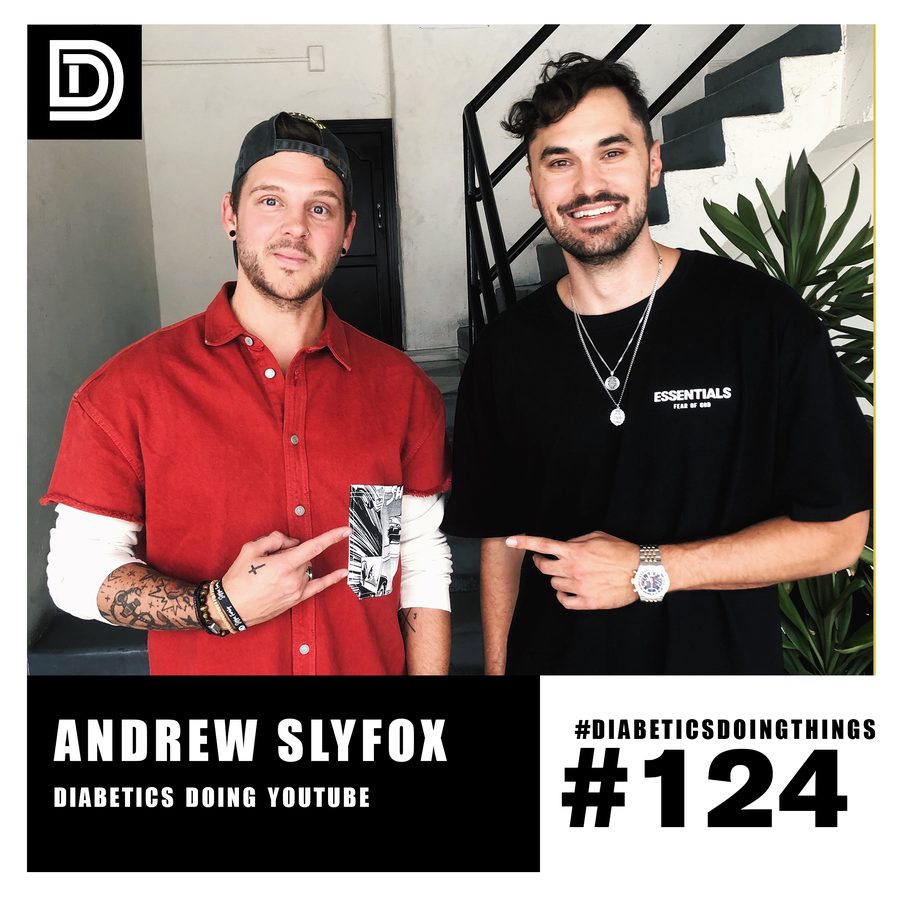
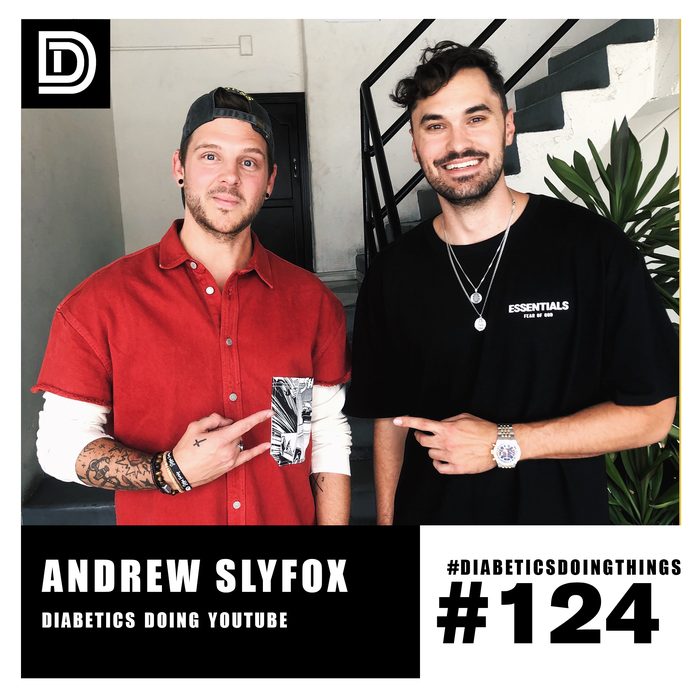
Andrew Slyfox (@andrewslyfox on Instagram) joins the podcast in yet another live interview (noticing a trend here?) from Los Angeles California.
Andrew has been T1D for 21 years, and is the father of the Slyfox Family, whose adventures you can follow on their incredible family YouTube channel. Andrew’s story takes us from diagnosis, to meeting his wife Hannah and how he didn’t reveal he had T1D until after they were engaged!
We also talk about what it’s like to be a full-time YouTuber, and how comments from people on the internet can really affect us negatively if we let them. But we also talk about his new YouTube channel Andrew Slyfox, which has a much more prominent focus on Andrew’s life with T1D, and what inspired him to start sharing that part of his life.
Andrew and I also filmed a video for his vlog, which you can check out HERE!
Be sure to give him a shoutout on social media with your favorite sound bytes!
This episode is sponsored by Companion Medical. If you are on multiple daily injections, but want the data and analytics pump users have available to them, then you need the In-Pen by Companion Medical. Learn more at Companion Medical’s website!
Questions this episode answers
Who is Andrew Slyfox?
Andrew Slyfox, real name Andrew Brown, is a full-time YouTuber who has lived with type 1 diabetes for 21 years. He and his wife Hannah run the family channel Slyfox Family, and he also has a newer channel, Andrew Slyfox, focused on his life with type 1.
How did Andrew Slyfox and his wife meet?
They met online through MySpace after he noticed she had the same guitar as him. He flew to California to meet her in person, proposed within days, and they married seven days after meeting face to face.
Did Andrew Slyfox always talk about his diabetes on YouTube?
No. On the Slyfox Family channel he mostly kept diabetes in the background because he didn't want to be known as 'the diabetic' and because commenters would attack that part of him. His new channel, Andrew Slyfox, covers it much more directly.
Did Andrew Slyfox have health insurance for his diabetes care?
He says he went without insurance for almost ten years while working as a musician, which forced him to buy insulin shipped from Canada and find a doctor who worked with uninsured patients.
Full transcript Searchable, with timestamps
Rob Howe: Welcome to the Diabetics Doing Things podcast. We've been telling the amazing stories of type 1 diabetics all across the world since 2015, and we have over a thousand years of living with T1D on the podcast. The interviews range from incredible feats to everyday victories, and we celebrate them all just the same. Thanks for listening, and if you want to get involved even further, just send me an email at rob at diabeticsdoingthings.com. Hello again, ladies and gents. Today I have a very cool diabetes sponsor I'd like to tell you about, Companion Medical, specifically the Companion Medical InPen. When I talk to people who use multiple daily injections to treat their diabetes, one of the things that often comes up is the lack of data they're able to see about dosing, daily insulin totals, etc. In fact, Companion Medical discovered that only 7% of people who use insulin are using insulin pump therapy to control their diabetes. So Companion Medical decided to bring pump benefits to insulin pen users with the InPen. The InPen is an FDA-cleared smart insulin pen and app that gives patients the tools to manage their multiple daily injections. The InPen is compatible with the Lilly and Novolog pre-filled insulin cartridges and single-use disposable needles. Those are not included with the InPen, but that is what is compatible with it. Using the information transmitted from the pen itself, the Companion Medical app can track insulin therapy, calculate doses, share data with your doctor and family right on your smartphone. The best part is the InPen is covered as a pharmacy benefit under most insurance plans. Currently, you pay no more than $35 for the in-pen with a special co-pay assistance program. So, if you're on multiple daily injections or just thinking about taking a break from your pump therapy and don't want to lose all the features that come with using a pump, talk to your doctor about Companion Medical InPen and visit companionmedical.com for more information. Hello, ladies and gentlemen. My guest today is Andrew Slyfox. You may know from his YouTube channel, The Slyfox Family. He's a full-time YouTuber with his family. With his wife Hannah, daughter Jaden, and son Caspian. They are the Sly Fox family. They have 1.6 million subscribers on YouTube. He's also been type 1 diabetic for 21 years. But he doesn't talk about that as much on the family channel. And so we also talk about his new channel, Andrew Sly Fox, and how he's integrating diabetes into it more and more. He and I have a great conversation about coming of age with diabetes. And he has an amazing story of meeting his wife, Hannah, and getting engaged within a week of actually hanging out with her and then revealing that he has type 1 after they were engaged. So we have a pretty awesome story today. Andrew has become a good friend. We met at a Xeris event last year in Chicago and met up in L.A. for a live interview in this really cool downtown L.A. fashion district loft. And I'm also in his vlog. So be sure to check out his new YouTube channel, subscribe to that, and get a lot of really cool diabetes content delivered straight from the master YouTuber himself, Andrew Sly Fox. Enjoy. Andrew Sly Fox in the studio. Yes. Downtown LA. Welcome to Diabetics Doing Things, bro.
Andrew Slyfox: Hey, thank you, bro. I've been listening to you guys a long time. I'm really excited.
Rob Howe: yeah i've i'm sure you deal with this even more than i do it's like sometimes you just get in a phase where you're doing a lot of stuff and it's hard to just like sit down for an hour and have a conversation and like crank out a bunch of content so totally uh thanks for taking the time dude absolutely thanks for having me so we're here in los angeles this is where you where you live yep um for those who don't know um make a little introduction about yourself and then we'll start talking about diabetes because like obviously that's why we're here today cool absolutely well
Andrew Slyfox: I am Andrew Sly Fox is what everybody knows me as, but my realest name you might not know is actually Andrew Brown
Rob Howe: I have it actually in because we met in Chicago At a Xeris event and was it in there so I put it in my contact you're like Yeah, my name my last name is brown. I was like cool. Oh cool. Cool. Yeah, so your sly fox parentheses brown. Yeah, very nice
Andrew Slyfox: Cool. Yeah, so that that's really who I am And I have been a type 1 diabetic for 21 years
Rob Howe: Wow, your diabetes can drink, dude.
Andrew Slyfox: Officially, yes, officially, which is kind of cool. So, yeah, that's good. I am a full-time YouTuber. I used to do daily vlogs with my family, my kids, my wife, the whole deal, and a little bit of diabetes was always added into that aspect. But, yeah, full-time social media influencer.
Rob Howe: Love it. Yeah, I mean, you guys are family, you know, essentially. And we were talking about this in Chicago when we first met. But, I mean, that's you and you guys obviously use the Sly Fox name as the brand, but also to keep, you know, your identities. Yeah. You know, away from people who might, you know, be harmful. Yeah, yeah. It used to be crazy.
Andrew Slyfox: It used to be like people would show up at the house and show up at the door and leave little packages. And it was never like, it was never bad stuff, right? It was never like scary or dangerous situations. But, you know how it is. It's like when we were in the peak, it was happening a lot. And we just, for the kids' sake and our sake, and even for the safety aspect, we just kind of wanted to have some privacy still. Because it's like you're out there every day. You're showing your life every day, your whole family, your kids, everything. So when it starts showing up at your front door, you're kind of like, oh, it's time to move. Yeah. And let's just start going by Sly Fox because it made more sense at the time.
Rob Howe: Definitely. Well, I appreciate you saying that you know what it's like. I have no idea what that's like. So what I do know about, though, is life with diabetes. So this podcast, we usually start with diagnosis. So let's go back 21 years. You were 14.
Andrew Slyfox: I was 14 years old. The day I vividly remember is the funny thing is I don't remember being like sick before. I remember after that emotional kind of traumatic moment for me when I was diagnosed. So I remember the day of everything before that's kind of blank. I can't really remember the early stages when I was probably already becoming diabetic, you know, but I vividly remember the day before I was diagnosed, and I was out riding my bikes, my bike, with my friends, and we were all just out riding and having a good time, and I was about two blocks from my house, and I got so weak and lethargic that I ended up just like, I'm like, I can't make it home, and I just I rode my bike as far as I could I found this nice spot in the shade like on a hill it's like a grassy hill I just laid my bike down I went just laid like on the ground I'm like uh miserable what's wrong with me something's wrong right like that was the point where I remember thinking like something's not okay at this point in high school um I think yeah I was a freshman high school I had friends who were going bro like you're not looking so good are you okay and at that point I was already like six foot tall or something like that something crazy and probably not compared to you you're probably taller than that. That age was about the same yeah yeah um they were like Andrew you're you're looking like you're losing a lot of weight they all everyone's like oh he's got mono he's got mono and then some people got even more scared I got down to 93 pounds that's six foot tall. Man I thought I was skinny I ended up being like six
Rob Howe: five, like 170, 165. Yeah, that's pretty small. For me, though, for me, your big frame. Yeah.
Andrew Slyfox: So 93 pounds. And people started saying he's got leukemia, right? Family members were getting concerned. And then this was all right before the diagnosis, right? Lay my bike down, finally get enough energy. It's like, you got to psych yourself up mentally at that point, like something's not right. I got to get home, you know, so I laid there for I don't know me, it feels like 30 minutes is probably longer when I was in that moment I mean shorter but it probably feels longer got my bike uh walked it home just like threw it down on the front and went aside and just laid on the couch right and my mom was so frustrated at me because it seemed like I was lazy yeah um and she's going you're why are you just being lazy stop being lazy you're laying on the couch you're just laying here I'm like mom I can't move like I'm not okay like something's wrong and and uh she was worried too she's like are you eating when I was losing all that way are you how come you're not eating you're just playing too much and I was playing soccer and um I end up finally getting up and getting some like juice right grab some orange juice and I'm like I start to come back to life a little bit you know and uh back then it must have been like a little bit of the honeymoon phase and stuff so it just dropped and uh I go to the I go to the the doctor the next day because the next morning I'm just like I was just just not doing okay so take me through that like so you
Rob Howe: wake up you're not feeling good or you know there's already been some symptoms your friends are giving you feedback how did you have that conversation with your mom or did she did she
Andrew Slyfox: come forward and be like we're going to the doctor yeah yeah so my mom was like we need to go to the we need to go to the doctor she makes an appointment we go in right and they started doing it never ever ever occurred to me that diabetes is what the doctor would say right it's like yeah we go that day yeah and i'm thinking i've got mono yeah i'm thinking it's something i don't know it's just something different i'm just sick something stomach flu is something's off right and um we, we go there, and the only diabetic that I ever knew, like, this is what I was picturing, right, like, well, actually, let me say this first, so we go there, they take a bunch of blood work, we're sitting in the room, right, it's cold, my hands are clammy, I'm just, like, sitting there on the table, not feeling well at all, sugar's pretty high, and the doctor comes back, like, 30 minutes later, right, like, I'm sitting there a long time, and he's like, okay, so, after your blood work, we tested, they tested my sugar and the whole thing, they're like, you actually have type 1 diabetes, and they called it junior onset type 1 diabetes, right? Juvenile, yeah. Juvenile, yeah, and I'm like, okay, right, I'm kind of speechless for a minute, and then I'm mad, you know, and I'm like, there's no way, there's no way, are you kidding me, there's no way, right, and they come and they show me that, they show me the results, and now sugar is a little bit over 500, like 540 something around there and um my mom's like what you know and then all that's going through my mind is the only diabetic that I knew the type 1 diabetic she was legally blind she didn't take care of herself at all very very different generations too you know this is a long time ago um she had diabetes for a long time too um she's you know she just was not in good shape right kidney failure uh leg amputated right the whole thing right I'm flipping out because I'm going wait a minute I hate shots I don't even like to get shots, you know, for school. So all I'm thinking is needles, pain, shots, leg amputated, blind, and kidney failure, right? That's everything that's going through my mind. It's like, ugh. So I remember actually, like, getting, like, really mad, just, like, kicking the side of the thing. Like, I'm just mad, right, at that point. Trying to, like, it was traumatic for me to just caught me so off guard, you know? And then you know how it is. Like, I stayed in the hospital for a little while, and they kind of trained me. And during the night, I'm like, ugh, they wake up and give me shots. and stuff. But yeah, that was, that was my diagnosis, man. It was, it was probably similar to a lot of other people's, but traumatic for me at the time. Yeah. I think, I mean,
Rob Howe: talking about different types of trauma, like big T trauma, little T trauma, I think like some people's go both ways. Oh, there's my pump yelling at me. But it's really interesting. Do you remember what the doctors told you when you were in the hospital? I think like for me, I was, you know, I had an awesome diagnosis experience. Like, you know, I call it like the 1% diagnosis experience because like I thought everybody got like this super encouraging message because I was like you the only people that I knew with diabetes at the time there were a few people around me not like great friends but closer close enough and they were in and out of the hospital all the time in and out of school and you know it seemed like they weren't handling it very well and I was like okay well is this what my life's gonna be like I wasn't really sure I didn't really know much about diabetes and do you remember what the doctors told you they actually scared the life out of me
Andrew Slyfox: initially. Like, they were, they were not positive, and honestly, I think a lot of it has to do with that they just didn't know much about it. I really think it is. I think it was that they were not endocrinologists, they were not specialists, they were not dieticians, they were not anything that could really understand the lifestyle of what it was. Plus, it was 21 years ago, so the care was very different, but they basically told me, this is funny now, they're like, oh, well, my, you know, know they're scaring my parents too they're like the life expectancy i'm like what life expectancy like never even crossed my mind life expectancy i'm 14 i'm gonna live forever yeah what are you talking about so they're like it's like 65 i'm like 65 you know what i mean like it's funny to think about that now because you know obviously we're i i'm fully confident if without some crazy i'll live past that but hopefully um and uh so they kind of freaked us out they told us all the things that are real right but they didn't present any of the positive it wasn't like yes there's all this right here but you can still do anything that you really want to do with these additional steps right which I love that message that that you know that you were told um but mine was more don't do this don't do this don't do this if you do this this could happen if you do this this could happen you could go blind you have kidney failure right everything that I was already fearful of they were confirming the danger or the risk of right um which honestly I know was important but But again, they weren't necessarily experts.
Rob Howe: This is really interesting, though, because I think it frames up a lot of what I have come to believe about diagnosis and how it sets you up for success or failure. It really defines your relationship with diabetes right off the bat. So in your vlog that we just recorded, which I'm going to release this alongside that so that we can get a little promotion out of it, right? You talked about fear playing a huge part in why you really didn't pursue sports past a certain point. And you were a really active kid and it was a big part of your life. I wonder, and this is obviously a small sample size, the don'ts, the if you do this, this could happen. And the fear kind of infused in the medical advice from someone. And like you're old enough now, obviously, you're like, oh, well, these doctors really didn't just didn't know much about diabetes. Right. But at the time, I think we think we're in there like this person is a doctor. They're the doctor. They know everything. They know everything. And it's unfair to them. I definitely see both sides of it. I mean, for most people, diabetes is just like one chapter in med school and you just move on. Right, totally. But yeah, I mean, it's so interesting to see like the echo and ripple effects of just small little language and bedside manner. Oh, totally. One or two sentences can change the whole thing.
Andrew Slyfox: 100%. Yeah, because they could have said exactly like you said, all these things. This could happen. This could happen. This is the risk. This is the risk. But you are still you, right? Diabetes is not you. because I lived so many years thinking diabetes is this all-consuming big thing and chaos and 180-something thoughts in your brain every day, right? Like, that's how I always held this whole thing around me. Like, I lived in this giant big bubble of chaos, and I was at the center of it, but I'm no longer me, right? This is me first, the filter through, and then to get to me, it's down in here, right? And that, I think it's so cool that you would say that, because thinking back now of saying about the diagnosis, setting you up for your future, even your mental health or your mindset of how do I approach life now, right? Because how I moved forward with at 14 years old, hearing all the negativity and none of the positivity, I did approach life at that age as it's over, right? It's, it's over. Sports are over for me. Uh, going out and riding my bike, these long 20 miles are over for me, right? Like all these types of things, it just felt over. Um, after that point, you know, and like you said, it's taken a long time to get to the point where now I'm old enough and educated enough to look at it and go, wow. And I don't even blame the doctor. Like you said, it's not fair to them. Like I get it. Like they didn't know either. And we didn't have the internet even back then. Like we legitimately did not have.
Rob Howe: Isn't that crazy to think? One of my talks that I do when I go speak at conferences is about what I call the T1D renaissance, where we're doing this thing right now for diabetes. This was not around when you were diagnosed when I was diagnosed five years ago when someone was diagnosed and how we're all kind of connected now. And I think it's really interesting because, you know, Google was so new. Like I didn't, there was no phone. I had texting and I had to like log on to the internet to text people. I remember being in the hospital doing that. And it's now we're just able to communicate, connect, like learn. And so now, you know, I know that when that doctor took a long time coming back to you, someone today, they're telling you, Hey, we think you have type 1 diabetes. We'll be right back. Right. They're pulling their phone out and they're like 10 pages deep in WebMD. Right. So I never thought of that, but yeah, you're right. And so it's really interesting. It's just like now like technology has, has changed so much of what that those first few moments are like yep and then the education
Andrew Slyfox: aspect of being a part of like the online diabetes community alone is leaps and bounds ahead of where most endos are right now yeah you know what I mean like we we living with this and being a part of this community we're pushing the boundaries daily because I think a lot of it has to do with like what I said like with like on the on the vlog we were just talking about like with having the technology now, I probably would have never dropped out of anything. And I probably would have been more empowered and confident to be like, oh, I got this, right? Like, I know that all these risks are there, but they're not there now. Well, and I think there's a lot of hope in that message,
Rob Howe: right? Like, as technology advances, as research advances, you talked about the diabetes online community and like putting you ahead of endos, not just that. Because I think, you know, the endocrinology world, there's a few that are extremely ahead of the curve, right? But then the mass of the majority I think are in small places and they don't necessarily even maybe see type 1 patients. Yeah, totally. But, uh, the other pieces, uh, in 2018, I went to the American Diabetes Association conference in Orlando and I found this board that showed a survey of a, like a study on people who are involved in the diabetes online community in blogs or social media and then what their A1C was. And they were saying like definitively a hundred percent of people who are involved in blogs and social media have a better A1C outcome than people who aren't. Interesting. And my own life reflects that too. It's just interesting to see like not much of my real life changed I just learned from people right and I have community and there was just other like-minded people around So yeah, we talked about that on the blog as well
Andrew Slyfox: Like my regret is I just didn't do that soon enough. Yep, totally and another thing that I personally like about now that I you like have come out with my diabetes publicly in a sense where I am In the public eye as a diabetic versus like when I was like on the YouTube thing one of the reasons I didn't share much about diabetes on YouTube as well is I couldn't handle, the hate that I would get, they would always attack your weak points on YouTube, right? It's vicious on there. So they would always attack my diabetes first. Like, out of anything in the whole family, that's what they would go after.
Rob Howe: Do you remember a specific example of something that, like, really kind of got to you?
Andrew Slyfox: Yeah, it's really hurtful. And, like, even just thinking about it is embarrassing and hurtful. But at the time, my wife and I were trying to have another baby. And somebody commented and said, look at Andrew's diet. He's eating hamburgers. He's eating all these fatty foods. He's eating french fries. He even had pizza at this one birthday party for these kids. He had pizza right here. The guy's going to die by the time he's 40 from a heart attack or diabetes. And no wonder they can't have kids with this kind of diet and diabetes. these. And so that, that one was, that one was hurtful for sure. But I also always appreciated the, the, the crap that they would say because it made me better. Right. Like I read that and it was hurtful and, and I thought it was really mean. I'm like, that's just mean, bro. Like to attack the pregnancy because we were having a hard time getting pregnant. So they attacked, no wonder he can't get his wife pregnant because of his bad diet. And they were just trying to be mean too. But I was just like, okay. But then it did encourage me to go, but they're right. I should be improving on my diet. Why am I just staying here? And why am I not challenging myself as a human diabetic or not to have a better diet? Yeah. Right. So I appreciated that, that those kinds of comments, because it did, it really, truly did help me to be a healthier person.
Rob Howe: I'm proud to introduce Companion Medical as a sponsor of this podcast. and I have just a few questions for you. Are you on a regimen of multiple daily injections but want to automatically record and store insulin doses? Keep track of active insulin? Calculate mealtime and correction doses? Get reminders about dosing? Have robust reporting you can share with your doctor or family? Integrate your CGM data via an app? Then you need the InPen from Companion Medical. The InPen is available in the United States and is covered as a pharmacy benefit under most insurance plans. Currently, you pay no more than $35 for an InPen with a special co-pay assistance program. The InPen is only available through a prescription, so be sure to talk to your doctor. Or for more information, visit companionmedical.com. Okay, let's get back to the episode. It's interesting how those things can, you know, something that is initially bad and kind of devastating, like even uncomfortable to talk about now, can at least come around in a positive way. I think it speaks obviously to character, obviously. it. But is it, does it surprise anyone listening that people say mean things on the internet? Right? Who knew? It's wild. You mentioned your wife. Something that I think a lot of people ask me about or are very interested in when previous guests come on the podcast is dating and diabetes. So how did you and your wife meet? And you guys have a pretty unique story. It's a crazy story.
Andrew Slyfox: So let's, let's hear it. Oh man. Buckle up. This thing's fast. Yeah. I'm ready. I'm in this chair. I'm locked in. It's high speeds, man. Yeah. So, uh, I've always been a singer songwriter, um, played music through all through high school. Um, I think that was, that came about from quitting sports, right? I wanted, I was just, like you said, active and creative and I wanted to be doing stuff and, uh, picked up bass guitar and, um, then electric guitar and then acoustic guitar. And then I began singing and songwriting. Um, and, uh, all across, I lived in, uh, South Haven, Michigan, uh, Holland, Michigan, and then South Haven, Michigan for a little while way up there. And all the way from over there, a little spot in Michigan, there was a girl in Southern California, Orange County, who was doing a similar kind of thing, writing songs and learning guitar. And eventually our paths crossed on the Internet. I happened to see this beautiful girl who at the time was 19. I was 20. She had the exact same guitar as me. She just came out with a record. She was signed to a record label and all that kind of stuff. and I was like, I was ready, like at 20 years old, I was like, I was ready to get out. Like, I'm ready to get out, do something crazy. I was out in Dallas, in your area for a while, at college, and then I only did one semester. Turns out I wasn't cut out to be in college material. So I bailed out of there. Probably a mutual thing between them and me.
Rob Howe: Yeah, parted on good terms.
Andrew Slyfox: We parted on good terms. I actually am still really good friends to this day with a lot of people I went to college with, and even some of the directors there, which is cool, but anyway, so left that, and I was, I was just actively pursuing music, just non-stop, I was working in marketing, and I'd come home, and I'd play my guitar for literally eight hours a day, man, just playing, playing, playing, playing, playing, saw her, reached out to her, and I was like, hey, you have the same guitar as me, let me know, I just saw you just released an album, let me know if you ever need a guitar player right never imagined she'd ever respond this was on myspace at the
Rob Howe: time wow big time yeah big this is old time great yeah great myspace line though right yeah we have
Andrew Slyfox: the same guitar yeah exactly so that was my in uh she she ended up responding and we talked for about a month um through just like myspace messenger chat right big time big mood yeah big move right and then one day i was going out bowling with a church group and i was like oh shoot we Like at this point we had graduated into like talking like AOL messenger. You remember all that? Big time. Big, we took a big step. That's like almost official on the internet. Yeah, because you got to remember this is almost 15 years ago now at this point, right? So the internet was still fresh. People didn't, Tinder didn't exist. It wasn't a common thing to just network and meet with people like that. There was MySpace and that was about it. And to find strangers on there was sketchy.
Rob Howe: And like instant messenger, you'd have like maybe like a close group of your friends, like people you actually knew. Totally, yeah.
Andrew Slyfox: Yeah, exactly. So we were chatting and I was like, well, here's my number because I didn't want to ask her for her number. I thought that was kind of creepy on the Internet, you know. So here's my number. If you want to call. It was like this big. Because back then you called. Yeah, you called. You called, right? So I didn't even know I could get text messages, by the way. She was way more advanced than me. She texted me. So then we started texting and moved on to a phone call. This was all within a span of about a month, month and a half, right? and then and then during this conversation I end up talking with her dad and her mom and maybe even maybe even some of her siblings and stuff as well all within a month right and then I'm like okay well I'm gonna I'm gonna fly out there to meet you right it just we just kind of like we're hitting it off just clicking you know just so many things in common she's really creative and really cool and so we're talking I fly out to California take my mom with me we stayed at her house I was out her for five days. Ended up going like, is it cool if I hold your hand? You know, it was like super slow. It was cool. Yeah. And like really respectful. She was a really, really good girl. She never even had kissed anybody in her entire life. At 20 years old at this point, she had turned 19 to 20. And so that was her very first kiss and all that stuff. But so five days, I fly back home to Michigan, which was a Saturday. And the next day I wake up on a Saturday morning and I'm like, I tell my parents, I'm going to go buy a ring for this girl. And everybody's laughing at me. Oh, his internet girlfriend, my sister and everything. I was like, okay, well, when you're at the wedding, we'll see who's laughing, you know? Cause I knew, you know, I just knew, um, I went and bought her a ring. She flew out like two weeks later out to Michigan with her mom and I was supposed to wait. Right. So when she's in the air flying out, I call her dad. I'm like, Hey, I bought a wedding ring. I really want to marry Hannah. Um, and, and he knows at this point we've only spent five days together in person. He's like, okay. So he spends like an hour on the phone with me, just like asking me a ton of questions. And we just like went deep, you know? And I was supposed to wait a while. And then I saw her that night and I wrote her this song and I was just like, let me play a song. And I proposed and she said, yes. Crazy, bro. So this was like, yeah, after five days of knowing each other in person, right? This was the six days spent together, which was only a matter of hours. She got in at like five o'clock at night or something like that. so I asked her to marry me we were engaged by probably like seven seven thirty just get right to it just got right to it bro um and then we go out to Nashville because my parents wanted to move to Nashville this is like the next day right so we all decide we're all going to go out to Nashville her mom goes with us my parents my sister a brother-in-law and all that we're all we all go out to Nashville and she we're talking she's like I don't want to go I'm so bummed like I wish you could come back to California with me because like at this point we're engaged now right and you guys are a couple for a couple like we're not we we hadn't even like kissed bro like we got engaged there was like nothing like her first kiss was right after i proposed and it was all teeth because she was smiling so big and i was like eden you ever done this before and she's like no so long story short the next day we're talking she doesn't want to go back to california without me we're engaged at this point she's like we should just get married and i'm like uh okay, I'm in. I know. I know. I know I want to be with you. She's like, don't you want to be with me? You know, she gave me the little shiny red apple, like Adam and Eve over here, bro. And I was like, I'll take a bite. So I took the bite and we went for it and we went down to the courthouse. We got married. This was seven days after knowing each other in person and we got married. Two kids
Rob Howe: later, 14 years later, we're still together. That's awesome, man. Yeah. So obviously like you guys didn't talk about a lot of a lot of stuff oh yeah she didn't even know i was diabetic well because you guys were online you know and i hit it yep yeah because i didn't want to be known as
Andrew Slyfox: the diabetic so you you hit it from her 100 hit it from her i actually uh i had the mini med at the time or the animus i forget one of them tubed and i'm like man she can't see this so i put it in my butt cheek it hurt like nothing i have ever experienced before in my life but i was like shoot like if we go like swimming or something like i don't want to see it like in my stomach Yeah. So so I hide this thing at this point because it's like I was embarrassed. And I thought I thought it made me less valuable because it makes you different. It makes you different. And it feels like makes you less.
Rob Howe: We can act like and especially when you're young, it's just such a tough time in your life to be different, especially as a kid. I think about when I talk to parents about being a teenager with diabetes and like have a day or raising teens. sometimes we forget like even now like how difficult it is to be a teen anyway oh man yeah much less a teen with diabetes yeah so you know you're still you're 20 at this point you said i was 21 so like you know all due respect to 21 year olds out there but you don't know anything about i don't know anything so it's like you know you're still being very careful do you remember
Andrew Slyfox: how you brought it up to her we had this how did i bring it up to her i think first of all she had no clue. She's never known a diabetic before in her life at this point, right? She has no clue the seriousness of it. It just seems invisible. It seems like nothing, right? She doesn't even realize, right? At this point. And so I remember just being like, hey, I've been really hesitant to tell you this, but I actually have a disease called type 1 diabetes. What does that mean? Well, not much. I just have to do insulin, you know, and I have this insulin pump and it kind It gives me insulin. My body doesn't produce insulin when I eat food like yours does. So that was kind of like the very basic that I could explain to her. So she never thought much of it, really. It was just kind of like an ignored thing. It was just like, oh, okay, whatever. You've got it. No big deal. It was the years to come where it became, you know, the evil mistress over here taking my time and attention and causing trouble.
Rob Howe: And what kind of, I mean, I know you guys were, obviously you moved to Nashville. Yep. We lived in Nashville. And you're musicians in Nashville. So the lifestyle you lived there.
Andrew Slyfox: Oh, yeah. Late nights, long hours, sometimes in the studio, traveling. Eating fast food. Oh, yeah, all the time. Terrible control for a lot of years. And I think that was a lot of the impact on top of the fact that we were, what do you call it, like a contractor base. When you're a musician like that, back then, we didn't have like an incorporation. We didn't have a boss. We didn't have it. So I didn't have insurance for like almost 10 years of diabetes. Yeah. Insane, bro.
Rob Howe: and i mean that that opens up an entire other can of worms right because just cost for one gosh the cost alone man and then just you know treatment and getting supplies it's just like an entire
Andrew Slyfox: window that visits hundreds and hundreds of dollars you know yeah just to get seen and it's like so it's just that she she was with me probably through the worst possible time with me having diabetes um and that was the beginning of it right because she had no idea what she was getting into at all so then all of a sudden we're like uh the cost alone we're not making much money we're just these early she was just 20 years old right and I'm only 21 and we're just like trying to get started and yeah make things work and at the time because we jumped into things so quickly that we got an apartment and we decided oh it's not a good idea we're trying to travel and make music so we moved in the basement of her parents house and you know we're just ground level everything right um and like you said just eating bad and that on top of the amount of insulin i was using just the costs were even higher you know and it's like in it on and off of pumps because i was paying for pump supplies out of pocket yep so then i'm on you know i'm on these i'm on the injections and then i'm back on the pump when i can afford it and then then off and then how do i explain to her like hey can i spend you know like thousands of dollars to get these supplies Like it really helps, you know, right. Well, why can't you just use the shots? Right. She doesn't fully understand. Why can't you just use the shots? And I'm like, I just don't do a very good job on the shots. My, I'm a lot better. My A1C is better on the pump, you know?
Rob Howe: So those kinds of conversations are difficult. Those are tough conversations. They are. Especially when you're that age.
Andrew Slyfox: That age, zero understanding of it. She wasn't educated. I was not really educated either because at 14, I didn't remember really anything except for the negative, right? That's what stuck with me in the beginning. So I kick myself now because I'm like, I wish I would have put in the time and effort to not ignore the fact that I needed to be educated on the fact of like, well, how does your body handle these fats? How does your body handle these types of carbohydrates? What are the brutal kind of carbohydrates? How does that affect you versus these simple carbs? And you know, those types of things. Because I didn't even understand a basic diet.
Rob Howe: Yeah. And I think it's, it's interesting. Like, of course you didn't, you were young. Like, that is, that's why I'm always so impressed with when I meet young people with diabetes who, you know, are asking super adult questions and they like manage themselves. I went to a couple of camps this year where it's just hundreds of kids there who are so used to taking care of themselves and they're like talking to each other about different things. And there's so many things to know. So many different factors. Like we were talking stress and sleep and all those different, all those different things that go into what could be simple, but on the surface seems simple. And when you dive into it, it's hard to explain to people. It's an invisible illness. Yeah. But yeah, you know, it's interesting that, you know, I, my response to people when they ask about dating and diabetes is that, you know, most dates happen over a meal. So I, you know, would always test my blood sugar and, and give, you know, my insulin through my pump on those dates. And it's interesting, you know, but when you meet somebody online, Like there are no dates like that.
Andrew Slyfox: There are none. Yeah, we dated through the marriage. So then all those additional pressures of, like you said, like I'm bolusing at dinner or like it's just that was so foreign, you know, to her. But yeah, it's exactly like you said, like those dating. But at that point, we're already married, right? We're already sharing financial responsibilities. And I'm over here trying to find like the lowest cost insulin. So at this point, there's an Internet, which is great. Yeah, shout out the Internet. Yeah, so I was buying insulin from Canada, like getting it shipped from Canada, like all the time. That's how I was getting it. I forget what it's called at this point.
Rob Howe: You're ahead of the curve, dude. Dude, I know.
Andrew Slyfox: When I see people doing that now, I'm like, hey, I used to do that. I used to get insulin from Canada and stuff all the time. And this is at least 10 years ago at that point. And then I got lucky enough to find a doctor that worked with, like, people who didn't have insurance. He just, that was his business. And he actually knew a decent amount about diabetes. Now, he was definitely not an endocrinologist, and he was definitely not an expert, but neither was I at this point. So the fact that he could get me insulin or get me syringes or prescriptions or anything like that kind of stuff. because I also have a thyroid. So I take like levothyroxine. Yeah, same. Okay, cool. Yeah, mine doesn't work at all. Yeah, hypothyroidism.
Rob Howe: I think four years after I was diagnosed with diabetes. Yeah, I think mine was like a year. So one pill a day, every morning.
Andrew Slyfox: Yeah. I'm like, man, I'd rather have diabetes than that any day. But yeah, so our dating experience was, you know, with the first couple years of being married, you throw in the aspect of, guess what? We're not just dating, but you also share in the financial responsibility of diabetes. and we don't have insurance. So it was interesting. She definitely has some probably resentment that she works through still today because we'll have our conversations now about diabetes, now thanks to the community and thanks to the education and thanks to the fact, like you said, I think in my vlog, where you raise your hand, like, okay, I'm going to put in that effort to really invest into this and really help people but also learn from it as you're meeting more people and seeing how people do things, you can tweak, you know, to make adjustments, to make it better. So our conversations now are much deeper about diabetes, right? Like our conversations are much more like in depth, which is good because it's helping her as well to better understand, you know, where I'm currently at with type 1 and where type 1 care is currently at,
Rob Howe: you know, it relieves a lot of pressure. It's really interesting, like the way the relationship with diabetes changes once you kind of opt into that. And I want to talk about that specifically, you're a person who is in the public eye before, you know, you guys are obviously, you know, I've seen on your stories, like you guys have the million subscriber plaque on the wall at the house, right? You know, you guys are, you know, a family who is in the public eye and you've invited everybody to be a part of your lives. And part of that is with the diabetes piece. Like, and I've noticed since I've met you and really in the last year or so, right, you've become more proactive on making diabetes a bigger part of your story. Absolutely. What What made you, what were kind of the decision criteria like that made you commit to that? And how has it changed? How has it opened up this kind of world for you?
Andrew Slyfox: Yeah, great question, man. So when I initially started YouTube, I never actually wanted to talk about diabetes much, which is funny. It's crazy looking back at it now. And it was just the same kind of thing where it's like I never really wanted to be known as Andrew the diabetic. plus I didn't know like I posted a video not too long ago on Instagram where it's like I said I've really felt alone at this point like I got to the point of all these years 20 some years of just owning it by myself right over the last five years or so like Hannah my wife she's not really involved whatsoever with my diabetes nothing at all like she would she did so much for me in the beginning She carried so much of that weight, that financial stress, finding the insulin, helping out with everything. Booking even. I was such a little punk, you know, back then. I feel so bad for her. But so I don't put any of that on her at all. She still helps out, though. You know, she's just an awesome wife that way. But she doesn't help out. Well, she doesn't. I don't require that, I should say. I've grown independent. You don't need her help as much anymore. And I don't want her help because I actually enjoy taking full responsibility over this and managing this now. But yeah, so as I started creating on YouTube and I started making these diabetes videos here and there, sometimes for clickbait, there's a couple of them that were like a clickbait opportunity where like I just, it was crazy, right? I was on an airplane. We were heading to Mexico. I changed my pump, which was in my arm. And when I did in the airplane, blood just pouring, bro. It was everywhere. I couldn't even manage it. I was trying to put like anything and people had to like come in like, Oh my God, it was bad. It was like embarrassing too, right? Like you're just so embarrassing dude. And they're trying to get me off. Nobody speaks English. And I'm like, Oh my gosh, oh my gosh, oh my gosh. And we actually were vlogging because I was changing the pump. So the camera's already rolling. I was just, Hannah's like, should you shut up? Just let it roll, you know? So, um, but we ended up shutting it off. And I explained the situation because it was a lot of blood. It was too, it was too much to show on YouTube. Um, so that was pretty crazy, but beginning to see other type ones responses in the comments, I was like, Whoa, whoa, like I'm not alone, you know, this is crazy. So I really appreciated that. And then I went to Instagram and I just started like searching like the hashtag, like type 1 diabetes, like holy crap. There's like 500,000 posts on here about this, right? And then I kind of went down that rabbit hole of like just looking, looking, looking, looking, looking through and like, whoa. And then I saw some repeat people. One of the guys is Rob Howe who was doing a podcast called Diabetics Doing Things. and so I checked that out and I met some other people just just in the community who are regularly posting and posting content that was actually helping me to improve again on health on diet and just opening my eyes to things that I didn't even know existed yet right because I was kind of in the dark because I kept myself isolated I don't know if that was a coping mechanism or just I accepted it for what it was and that I would never get any better right and then I kind of like I mentioned earlier in this podcast where it's like I kind of stopped trying you know it was like I just am coasting right it wasn't improving it wasn't getting worse but I wasn't going anywhere just coasting right um and I got to that point where it's like those hate comments on YouTube and seeing all you guys on the community on on Instagram really motivated me um and then And putting two and two together going, whoa, every time I post, I'm seeing hundreds of people responding in my DMs going, I have type 1, I have type 1. I'm like, what? I had no idea all these people there. And then all of a sudden you get, I'm sure you get this a lot, where you get all these people who then will begin to share their story with you. And they're like, you helped me so much. I was having so much anxiety this day about my diabetes. but seeing you post about having a really high blood sugar, for example, just seeing that they're not the only ones going through those moments, those days meant so much to people just like it has to me. And I was like, man, I've got this platform. Like YouTube has given me this platform and Instagram has given me this platform. And I'm like, I need to like, I want to help people the way that people have helped me, you know? And that's why like over the last year when, when all this happened, And I am much more active on advocating and helping and educating. And because a lot of my followers are not type ones. Right. So I think it's important for them to see some of that lifestyle and see what we do, but also bring awareness, just like my wife had no idea. Sure. And now she knows. And it's just awesome.
Rob Howe: You know, it's really cool. And I think, you know, I obviously most of the people that follow me have diabetes. So it's kind of the, sometimes it works in the opposite for me is like, I'll want to just post some regular life stuff. And it's like, really, these people want to know what my life with diabetes is like. And I remember that. And I, and yeah, people have shared stories with me and thankfully, like, so I can share them on the podcast, you know? And I think some of my, I've met some of my closest friends that I otherwise would not have met had I not opted in, like you said, raise your hand. And yeah, I mean, it's been, it's been great. If I hadn't done that, I wouldn't be here with you right now in Los Angeles recording. Yeah, same. Yeah, it's still growing. It's still, it's changing. I'm excited for the opportunities that are coming. And like kind of catching up and bringing diabetes into the world that you and your family have been into in social media. It was like there are now opportunities for people. There's community, there are meetups, and companies are getting behind it as well. So it's an exciting time.
Andrew Slyfox: Yeah, it really is, man. I say that all the time. I'm like, man, what a time to be alive with diabetes, though. Yeah, it's great. Like the time where that first lady that I was talking about with the blind, she's blind, empty legs and all that kind of stuff. Like that was a harder time with diabetes, you know. And now, like you said, the technology is what a time to be alive.
Rob Howe: Well, I think when I go to conferences and I meet people, obviously when there's like, you know, stories of people with complications, it's heartbreaking, you know. And I think there are real complications. This is a dangerous disease. And I think like that sometimes goes overlooked because, you know, we're out there living our best life and we're trying to do what we can. But there are, you know, there are complications to diabetes for sure. Yep. But when I meet somebody at a conference who's had diabetes for 50 plus years, 60 plus years, and they're walking around and they're happy and they've got family and grandkids and they, you know, their life hasn't been changed for the worst because of diabetes. Right. And they are still who they want to be. Absolutely. And it's like, if they can do that 40 years ago, boiling needles and like with cow insulin, and I'm like, I for sure can with a CGM and like a hybrid loop and, you know, everything that I need. And, you know, 10,000 of people that I can ask questions to, I'm going to be fine. And that gives me a lot of hope. And I really like that. And then also people like you, you know, who I wouldn't have known had diabetes and now you've opted in. It's like, yeah, I get to be friends with you guys.
Andrew Slyfox: Yeah, same dude. So cool.
Rob Howe: All right. I usually ask this question. I got a little bit away from it lately, but I think it's really relevant here. So obviously you and your family travel all the time. So this is the context of this question is important. So imagine you're in an airport and you're about to board last for whatever reason. They're about to shut the door to your gate. But somebody walks up to you who has type 1 diabetes and has been recently diagnosed. You have to go in 30 seconds and you can't miss this flight. But what's the one thing that you tell them before you have to jump on the jet and roll out to that person who's just been recently diagnosed or has been struggling with their diabetes? What do you tell them?
Andrew Slyfox: I would say the most important thing right now is to get online and check out the community because they're going to learn a whole lot more than I could share with them in a few seconds, you know, at their own pace. And they can be encouraged and they can learn about pretty much anything, the advances of diabetes, the cost of diabetes. There's everything that you can learn right at your fingertips by just getting on Instagram and following some of these accounts of people who are openly talking about type 1.
Rob Howe: and I really do think that there's somebody for everybody I do 100 which is so cool there's people who talk about fitness people who talk about diet people who talk about traveling bloggers
Andrew Slyfox: yeah it's crazy I'll see people you know and I'm like how how the how the heck are they doing that
Rob Howe: how they're doing that oh it's wild man yeah I love it I just try to keep up yeah and then I'm
Andrew Slyfox: that's like a brag point dude I gotta show all my friends like then my non-type 1 friends which is pretty much everybody you know and I'm like look at this dude this is a diabetic right here bro this dude look how big he is he's all good all kinds of muscle and he's doing this and that
Rob Howe: so yeah man it's dope it is all right man i think we're up on time here in our awesome studio space obviously andrew slyfox on instagram yes you're starting a new youtube channel i am uh what's
Andrew Slyfox: it called where can they find it uh andrew slyfox okay love it yes they can find it under andrew slyfox so it's just the the i call it uh diabetic centric which means everything you know every single video pretty much will have an element of type 1 lifestyle. Not every video is just exclusively diabetes because I just feel like there's more to me than just diabetes and more to the lifestyle and things that I do with my family. But yeah, check it out. Yeah. New channel coming soon. Got a good vlog with Rob coming soon. Yeah. Can't wait to see it, man. Can't wait to
Rob Howe: follow it. Smash that subscribe button. Absolutely. All right. We'll see you guys next time. this podcast it's been an amazing journey thus far and I have a lot of really great stuff coming up in the future so I'm going to do something that I haven't asked before if you're listening to this podcast a I would love it if you would subscribe to the podcast just so you get the notifications whenever we publish new episodes because if you've been listening for a while you know I don't always publish them consistently. Sometimes I'll publish five in a week. Sometimes it'll be only a couple in a month and you need to know when these episodes drop. So be sure to subscribe. Yes, be sure to go to your preferred platform like iTunes and leave a review. I would love to boost my reviews and I've never asked you guys to do that before. So I figured you don't ASK, you don't GET. I would love a review from you. So I want to hear from you there. Also, we are now available on Spotify. Turns out I was just submitting it to Spotify incorrectly, but I corrected that. So now we're on Spotify. So if that's your preferred listening platform, be sure to subscribe on there. Also just want to let you know that in 2019, we have an awesome new program coming called Tools of Type 1s. It's going to be on this podcast, so you don't have to subscribe anywhere new, but it's going to be an entirely new form of programming with some of your favorite Type 1 personalities. So they're going to be two a week starting January 8th. Be sure to tune in and I'm going to blast all the messaging I can all around. So be sure to listen to Tools of Type 1s launching January 8th. And thank you for continuing to listen to this podcast.
About Andrew
Andrew Slyfox, real name Andrew Brown, is a full-time YouTuber and father who runs the family channel Slyfox Family with his wife Hannah. He has lived with type 1 diabetes for 21 years and recently launched a new channel, Andrew Slyfox, focused more directly on his life with type 1.