

The Hidden Mental Load: A T1D Pshycotherapist on Burnout, Grief, and Letting Go

Episode summary
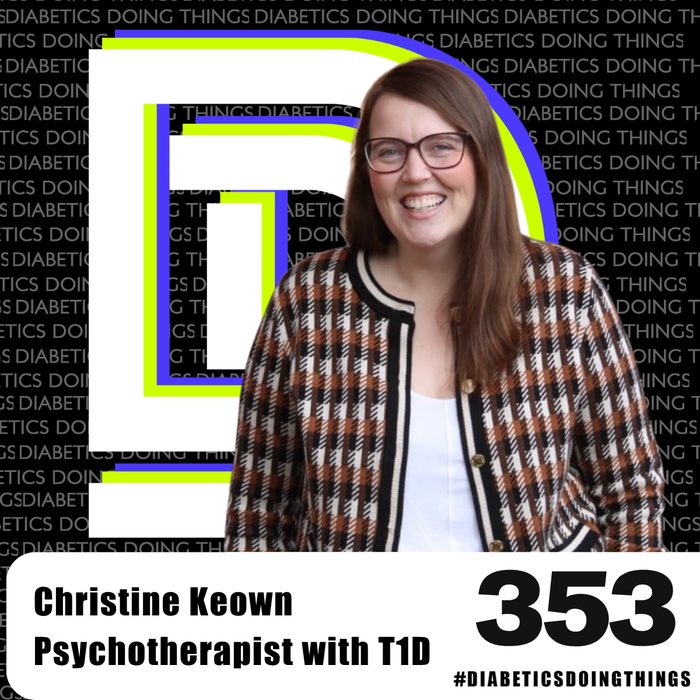
Christine Keown, a registered psychotherapist who has lived with type 1 diabetes since age four, talks with Rob about the mental weight of chronic illness. Recorded at the Diabetes and Mental Health Conference, the conversation covers the fear of judgment that keeps people from diabetes communities, why some avoid their endocrinologist even while wanting care, and the identity shifts that follow a diagnosis. Christine describes patterns across her clients, including comparison over blood sugar numbers and high-functioning burnout that stays hidden at work and only shows up at home. She walks Rob through an ACT therapy exercise using a piece of paper to show how pushing fears away is more exhausting than sitting with them. Rob shares his own struggle with control and conditional joy tied to his glucose readings.
Key takeaways
- Christine says many clients come to therapy simply to know another person with diabetes, something they couldn't find anywhere else.
- Christine names diabetes distress, including fear of judgment from doctors, as a common reason people avoid care they actually want.
- Christine says identity can fracture after a chronic illness diagnosis because people build identity around what they do, not who they are.
- In an ACT exercise, Christine has clients hold a piece of paper representing their fears, then set it in their lap, to show that fighting fear is more exhausting than sitting with it.
- Christine describes 'high-functioning burnout' as burnout that stays invisible at work and only surfaces at home as irritability or flatness.
Chapters
- : Rob introduces Christine Keown, registered psychotherapist
- : Recording live at the Diabetes and Mental Health Conference 02:26: Why people seek out a therapist who also has diabetes
- : Fear of judgment keeps people away from community
- : When the endocrinologist becomes the threat
- : Diabetes distress and physician-related avoidance
- : The compounding loop: wanting care, avoiding it anyway
- : The therapist’s privilege: normalizing what everyone feels
- : The meta-analysis: what every T1D client shares
- : Fear of comparison and the myth of perfect control
- : Conditional joy: happiness gated behind blood sugar
- : Christine’s pre-podcast low and the reality of T1D
- : The messenger matters more than the message
- : A joy shared is a joy multiplied
- : Identity shifts after a chronic illness diagnosis
- : Christine’s story: leg muscles, mountains, and Costco 21:07: Rob on learning to ‘be’ instead of always ‘do’ 21:31: Grief, anxiety, and diabetes pulling us from the present
- : ACT therapy: the paper exercise for carrying fear
- : Naming the fear instead of making it the main character
- : Chronic illness and the desperate need for control
- : High-functioning burnout: invisible to everyone around you
- : Signs at home no one at work will ever see
- : Distraction through overwork and the “next thing” trap
- : A call to curiosity, self-compassion, and getting help
Show notes
What happens in the room when a therapist with Type 1 diabetes hears the same fear over and over, that everyone else has their numbers under control, and you’re the only one who doesn’t? Rob sits down with Christine Keown, a registered psychotherapist and T1D since age four, to have the conversation that doesn’t get nearly enough airtime. Recorded right in the middle of the Diabetes and Mental Health Conference, this one covers a lot of ground and goes places most diabetes content never does.
Christine shares what she calls her “meta-analysis” of her clients: the common threads she sees across every person with diabetes who walks through her door. The fear of judgment around numbers. A fractured sense of identity after diagnosis. The compounding spiral of healthcare avoidance. And high-functioning burnout, the kind that looks completely fine at work and only shows up at home. Rob opens up, sharing what a recent diabetes meditation retreat revealed to him about conditional joy, self-compassion, and why he’s been sitting with the uncomfortable truth that he’s not nearly as in control as he’d like to be.
One of the standout moments is Christine’s live demonstration of an ACT (Acceptance and Commitment Therapy) exercise using a literal piece of paper. The idea: we exhaust ourselves pushing our fears away. What if we just put them down instead? Rob couldn’t stop laughing, and neither could we.
This episode is for anyone who has ever felt like they’re failing at diabetes, quietly avoided the endocrinologist, or thought everyone else has it figured out except them. You’re not alone. Not even a little bit. As Christine and Rob both land on: we’re all just doing our best, every single day.
Chapters:
00:00: Rob introduces Christine Keown, registered psychotherapist
01:46: Recording live at the Diabetes and Mental Health Conference
02:26: Why people seek out a therapist who also has diabetes
04:01: Fear of judgment keeps people away from community
05:45: When the endocrinologist becomes the threat
06:44: Diabetes distress and physician-related avoidance
07:58: The compounding loop: wanting care, avoiding it anyway
08:58: The therapist’s privilege: normalizing what everyone feels
10:27: The meta-analysis: what every T1D client shares
11:11: Fear of comparison and the myth of perfect control
12:36: Conditional joy: happiness gated behind blood sugar
13:37: Christine’s pre-podcast low and the reality of T1D
15:13: The messenger matters more than the message
16:23: A joy shared is a joy multiplied
17:42: Identity shifts after a chronic illness diagnosis
18:15: Christine’s story: leg muscles, mountains, and Costco
21:07: Rob on learning to ‘be’ instead of always ‘do’
21:31: Grief, anxiety, and diabetes pulling us from the present
23:51: ACT therapy: the paper exercise for carrying fear
28:03: Naming the fear instead of making it the main character
30:18: Chronic illness and the desperate need for control
31:08: High-functioning burnout: invisible to everyone around you
32:43: Signs at home no one at work will ever see
34:49: Distraction through overwork and the “next thing” trap
35:30: A call to curiosity, self-compassion, and getting help
Resources:
Christine Keown on Instagram: @your_health_therapist
Diabetes & Mental Health Conference: Session recordings still available at dmhconference.com
Questions this episode answers
What is high-functioning burnout?
Christine Keown describes it as burnout that looks completely fine at work, where performance may not change or even improve, but shows up at home as irritability, anger, or flatness that partners and family notice first.
Why do people with diabetes avoid going to the endocrinologist?
Christine says this is a form of diabetes distress tied to physician-related avoidance: past judgment or outdated advice from doctors creates hesitancy, even years later and even when the person wants care.
What is the ACT paper exercise for coping with fear or grief?
Christine has clients write their fears on paper and physically push it away, then instead set it on their lap. She says fighting to push fears away is exhausting and blocks you, while sitting with them allows more presence and function.
Does a diabetes diagnosis change a person's identity?
Christine says it often does, because people tend to base identity on what they do rather than who they are. She uses her own experience losing leg muscle and being unable to climb mountains to explain how she held onto being 'adventurous' in a different form.
Full transcript Searchable, with timestamps
Rob Howe: Hello listeners, this week's guest is Christine Keown. Christine is a registered psychotherapist with nearly two decades of teaching experience and practicing therapy who specializes in chronic illness work, including T1D and cancer. And Christine has lived with type 1 diabetes since she was four years old, so she brings a ton of experience to the table. We're talking all about living well with diabetes this year and all of the different pillars that it takes. And this is another really great contribution in the mental side of living well with diabetes. Christine brings a ton of experience to the table, not just as a health care provider, but as a patient herself. So for the sake of this week's conversation, which was really interesting and lively, we recorded late on a Friday and it was one that I really enjoyed. If you want to learn more about working with Christine, you can find her on Instagram at your underscore health underscore therapist. We'll tag her and link to her and her website in the show notes. I also want to shout out the Diabetes and Mental Health Conference put on by Allison Nimlas and her team. I was the closing keynote speaker this year at the 2026 conference. It was really special and all the sessions were extremely beneficial and informative. And you can actually still register to access the session recordings. just go to dmhconference.com for more info. So thank you to Allison and her team for including me and for the introduction to Christine who taught a session at the conference as well. So again, if you want more of Christine you can find out on her website, her Instagram or on dmhconference.com. I really hope you enjoyed this episode with Christine Kewin. Guys, who was MVP of the chat? Rob Howell! Rob Freakowell! What were you on? We need more of that. for this very important interview to talk about diabetes and chronic illnesses and mental health and the intersection of those two, which is so much more commonly linked than maybe we are told on day one. So, Christine, thank you for being with us.
Christine Keown: Thanks for having me, Rob.
Rob Howe: So I'd love to talk about, you know, working as a therapist with people with chronic illnesses, as a person living with diabetes yourself. And let's just let's normalize some of the stuff because we've got to do it. I think the more that we speak openly and the more that we talk about these things publicly or online and social media or person to person, we start to realize, oh, we're not alone feeling the way that we're feeling. At least that's been a lot of my experience even recently in the diabetes community in person. And I think you just feel less alone in that capacity. Right. So let's talk about it.
Christine Keown: Yeah, absolutely. I think that's so true, right? I think so many of us and so many of the clients that I work with, they're just seeking out someone else who lives with diabetes. And I think I'm often shocked by that, but then I'm not shocked by that. They don't know a single person who lives with diabetes. And it's really hard to hear that. But then that's their connection point to coming to therapy is, I just wanted to know someone with diabetes. That's kind of like just knowing that that to them is therapeutic in itself. To have someone that they can know. And I'm like, okay, do you want other spaces? Do you want other things where that can be found? And for some people, that's like an absolute no. And for some people, they're like, oh, that exists? I can have that. And they don't even know that that's out there, that they can have spaces and places where people with diabetes gather. That's a thing. So they've sought out, you know, someone with diabetes. And that's like a huge eye-opener for them.
Rob Howe: I want to double click a little bit on someone who's seeking you out as a LMFT, like a counselor, a therapist with type 1 diabetes. Yeah. As a connection point of, oh, I'm just looking to talk to someone with diabetes, like within a safe space. Right. I'm looking for safety to self-identify as a type 1 diabetic with somebody else who also does. And then they shut down. They're like, oh, no, I don't want this with anyone else. It's not safe out there with other people, only here with you.
Christine Keown: I think it's an interesting thing because I think a lot of the times there's fear of judgment. One of the big things in my therapy space is that I talk about very openly on my website, very openly on my Instagram, is there will be no judgment of numbers. We don't need to talk about numbers. We don't need to talk about anything to do with that. And I think there is a huge fear of going to spaces and places and not knowing if that's what you're going to get. And I guess it's not knowing who you might meet and what judgment you might receive from different places. So that's maybe a bit of a security when you meet one person and they've kind of put it out there that this is who I am. And they're like, OK, I can I can approach slowly. This is OK for me. But I don't know if I go to a bigger space if I'm going to get that from everyone.
Rob Howe: What comes up for me is there are places where we do go openly present our diabetes and experience judgment. Not all the time, not everyone. But like the endocrinologist comes to mind. Right. And not everybody's endocrinologist is this way. But yeah, there are, you know, difficult conversations and out of date thinking or incorrect thinking that come up in those ways. Judgment based diabetes management is certainly a way that it is taught, I guess, you know, at a certain point. Although we have, I think, a lot of really promising data that show how ineffective and damaging it can be. Not everybody has seen that. And it takes a little while for those things to permeate. Right. So I wonder if that experience of like presenting diabetes to someone, experiencing judgment sort of compounds into like, well, it's not actually safe for me to open up about this because I'm going to experience something in return that I don't want.
Christine Keown: Yeah. And I think a lot of people are coming for some sort of diabetes distress too, right? Which we now know a lot of people experience. Like it's not, this is not some rare phenomenon. It's a very, very common occurrence. So when you bring that up, you're actually hitting on one of the points of diabetes distress. That's the physician or healthcare related distress. And so often I think we're seeing, I'm seeing like a lot more who are tuning in and wanting to learn more. I think we see a lot of archaic beliefs. And the thing is, a lot of people also that we heard things or we learned things a long time ago, but still are there. They're still in minds. They don't just go away. It causes hesitancies for people to want to go to endocrinologists to maybe not go to an endocrinologist at the moment. So they're not receiving care that they want to be receiving. They want to go to an endocrinologist, but they have a hesitancy to even reach out to a team because of past experiences or the care that they received when they were diagnosed. But it's been 20 years. It's been a long time and they're just really nervous to do so.
Rob Howe: That avoidance kind of causes a compounding negative feedback loop of needing and wanting, having a desire to go, but avoiding it because it doesn't feel safe.
Christine Keown: Yeah, absolutely. And I think a lot of the times it's going to the provider that's feeling the safest, that's feeling like they're providing the most accessible care and the safest feeling care for them in the moment, which I don't doubt that that's going to be where most people are landing. For some people, that's also not landing in chair during periods of time. So we see all sorts of different things.
Rob Howe: Well, and then I think back to our kind of first person we were talking about who doesn't have diabetes community or diabetes relationships. And then their only one that they ever really have is not well and they're avoiding it, pushing them even more into isolation and more into distress.
Christine Keown: I think from my perspective, I say this all the time as a therapist, that I have such a privilege of the role I have because I get to see all of these different things. And I get to know, yeah, this is how things are for you and you and you and you and you. And I take the example of COVID, for instance. I have an idea of, well, this is not great. But it's not great for all of us. But I'm talking to so many people day in and day out that I was like, well, we're all doing pretty shitty over here. So it gave that perspective of like, as a therapist, you can normalize a lot of things by like, okay, this is what's happening here. And sometimes it's really nice to be like, okay, that isolation that you're feeling, really, so many other people are coming into my office and telling me this exact thing. There's so many people afraid of that. There's so many people feeling this exact thing and they're afraid to go also. They're afraid to meet different people. And I wonder if you all met each other, what that would be like. Because for those who are feeling socially isolated or for those who are feeling certain ways, but they don't have that information, right? I have that information because I'm sitting there as the therapist and because I have this aggregate of information and I've heard it from everyone. So sometimes it's just this space that I wish they could have.
Rob Howe: Well, what if we did this? What if we did this right here, this crazy thing? And let's even just call it a meta-analysis.
Christine Keown: Okay.
Rob Howe: Let's call it a meta-analysis of what your patients with type 1 diabetes experience, let's say the majority of them experience. And maybe they're not saying it out loud to other people in their life, but they're saying it in a safe space to you. And you are like, oh, yeah, you're definitely not the only person experienced. Like, let's just name like two or three of them.
Christine Keown: Okay. Well, what you just brought up is being so scared that they're the only one not controlling their diabetes well. And that other people are going to judge that. That fear of what are other people are going to think. Comparison to everybody else. I hear this all the time. You know, I think everyone else is going to think this about me. You know, they talk about wanting to have supports, but the fear of what if they found out that I don't have good or perfect diabetes control? And that being what stops them from being able to go to different spaces. And we try to break down those things as saying, do we think that every single person, do we think perfect diabetes control is a thing? Do we think that, you know.
Rob Howe: Well, like, what is that? you know i i really want to dig into this we'll move on to the others shortly but this is really important i think because i personally experienced i saw a poll the other day from a popular creator who i really like and they had put out a poll to their audience and asked kind of what their what the time and range that they typically see on their cgm was and they got back and like 60 percent were over 80 percent time and range and it's i i know from looking at research that somebody's lying like yeah and this is an automated this is like an anonymous poll i guess the creator could see the poll if they wanted like the creator could see who responded but i was like people are lying like i just like there's there's some sort of judgment so it goes back to another thing that i've been thinking about a lot and i just came off of a meditation retreat last weekend, a diabetes meditation retreat. And so these things are, as I reintegrate from like silence and lots of meditation, things have been coming up for me. And one of the things is conditional joy around my diabetes that I didn't really know I was experiencing, but I subconsciously would be like, well, if I'm out of range, I'm not, I can't be happy if I'm out of range. So when I get my glucose in range, then I'm allowed to be happy. Then I can enjoy the present moment. Then I'm deserving of love. And so what I'm hearing from you is that like, there's a lot of guilt around the inherent ups and downs, the inherent variance of diabetes, which is just living with diabetes and some judgment and comparison, taking people away from maybe the love that they want to show themselves because they can't, they say, well, my diabetes is out of control, so I'm not deserving of love.
Christine Keown: It's so hard because I'll tell you, like I recorded a video because 10 minutes before this podcast, I was having a low and I was like, my gosh, like I was like, you're supposed to be on a podcast in 10 minutes and I'm having a wild low over here. And like, well, this is life. I was like, I don't like you right now, diabetes, but this is just what's going on right now. And I do not have perfect diabetes care. I do not have, you know, this quote unquote, it's not what we aim for. I do not have that 80% time in range. It's not sustainable. Diabetes is hard. I will tell you that every day. It's hard. And I will tell my clients. When I went to one of the slipstreams in Canada, it was one of the best things for me to start. like actually I started using a cgm after and I'm the most late adopter to change like late adopter to things and it helped me to be around people and like they're all using different things like maybe what is all this stuff and my blood sugars weren't great at the time and I didn't feel amazing about it but I also was like they're all using these things that I've heard about for a really long time. And maybe the clinic's been trying to get you to use it for so long, but it wasn't until I saw people using it. And I was like, okay, maybe I can try that. And
Rob Howe: if I hate it, I'll rip it off me. The messenger matters, right? Yeah. You know, and we're all different. And I think it also matters like who the person is sharing it with you. For me, I didn't use the cgm i had already started this podcast before i used the cgm and one of my guests we stopped recording and she was like rob i know you don't use the cgm but i'm telling you that you would love it yeah and she's like and then she helped introduce me to a rep that helped me get my first cgm and that's sort of what i needed i needed some help now i didn't see it as help at the time but now i really do is like it was i needed a friend to help me treat myself a little bit better and she was right and i think so often people look at people like you and i people who working in diabetes or working with diabetes, it's like, well, you must have been the first
Christine Keown: people to ever do anything. And it's like, actually, no, that's not how it was. And I think sometimes that's a nice, refreshing thing to hear is I didn't jump on that. Like, I also was like, cared of that. I'm not the first person doing everything. And I will tell you my story of this.
Rob Howe: And it's actually really nice to hear your story of that, too. I think we all are, like life, kind of doing the best that we can with the information we have. And sometimes we just are so focused on ourselves and the other parts of our life that we just assume diabetes is this burden we've got to carry on our own. And we don't know that a joy shared is a joy multiplied and a sorrow shared is a sorrow subtracted, right? But that's so true of diabetes and you can learn so much from everyone. So I want to finish this point and go back to your to our very scientific meta analysis. But there is no perfect glucose like you and I are both acknowledging that. And that's life with diabetes. And anybody who tells you otherwise, I think, is not telling the full story. And at the same time, you are deserving of love and happiness and compassion, even if your sugars are out of control. It's not a zero sum game.
Christine Keown: And I think that, you know, compassion without self is incomplete. And so, you know, starting with compassion for yourself, if you're having a hard time and you can't figure it out, like that's that's something where you really need that self-compassion and you really need to kind of remove that judgment. That's number one. Number two, what do you got? What's the what's the next commonality that your patients with diabetes have that that you've noticed? Number two, there's a lot of that identity piece, people struggling with who am I? Who am I? Especially after diagnosis, like that can be a real like big piece of trying to get to the core of how is this shifted who I am? And I talk about that a lot in my practice. I think chronic illness in general, diabetes. You can go on the TED Talk on this one, but I'll keep it brief.
Rob Howe: No, I'm ready. Actually, you know, I've got a question that was sort of related to this, so I'm going to weave it in. We got time.
Christine Keown: I think like so often we shape our identity around the things we do and not who we are as people. So I think it's a big part of when illnesses come into our lives, it can be a really big shift for people. I like to work with people to understand like what it is that like makes them who they are. And oftentimes give the example of my leg muscles removed when I was quite a bit younger now. But I am in that moment. Like I would always say like I'm I'm Chrissy or Christine and I love to climb mountains. I love to be outdoors. I love to do these things. And in a snap moment, I can't do these things. I can't introduce myself as someone who likes to climb mountains because I can't get up a mountain right now. How do you kind of explain to yourself? I just had my leg muscles removed. I can't climb a mountain. I don't even know who I am anymore. And it was really, really hard. And I was asked to speak for my university prof. And he was like, what do you want to tell these students? And I was like, I don't know, nothing. I have nothing to tell them. I was like, OK, well, I think like the thing I want to talk about is this piece of identity. Realistically, it's really important that we shape our identity. I said the one thing that did not change is I'm adventurous. I after that, I still could take my wheelchair and race around Costco. I still could do these things, but that didn't change. There was still an adventurous part of me, and that was still in me. But I couldn't do these things. And this is a lot of the work that I do with people when I feel like our identity has shifted, but it's what we base our identity in. We base our identity in a lot of the things we do, not who we are as a person. And I think when an illness comes in, and I work a lot with people who have major illness shifts in their life, and it can be diabetes, it can be cancer, it can be lots of different things. So we have to really look at what's going to happen if we have a really big thing come up in our life and how are we defining identity? What is it that's happening in us and what are those things that are remaining the same? Are we still adventurous? Are we still spontaneous? How are we going to bring that out in ourselves and what do we need to do to be able to bring those things out? Because that still exists in you and you still want to be able to spark that. So that's some of the work that I
Rob Howe: think we need to be able to bring out in people. Thank you for sharing that and being so vulnerable. I think, you know, for me, something I've been thinking about, journaling about a lot, meditating on is like, I'm really good at thinking and doing. That's what I thought I was supposed to do. That was what I thought, you know, I was raised or in my environment kind of formed me to be. And as I get older and like this, this podcast is diabetics doing things. I'm a very different person today than I was when I came up with the name and started that. But I'm, I'm not as good or I'm learning to be good at, at being and feeling. And so, you know, for you, like, yeah, in your wheelchair racing around Costco, you're still adventurous. Like you're just not on the mountain. Like you're not, you don't have to be on the mountaintop to be adventurous and to be who you really are. Also, I think the who am I question comes up for me every few months as well. Like, and I think for people even without chronic illness, there's always that search of who am I becoming? What is the purpose of my life? And where am I now? And I do want to talk a little bit about grief. I told you I was going to weave in one of my questions because like we've heard the statistics, especially this weekend at the Diabetes and Mental Health Conference, where many people are hearing for the first time at like the likelihood that someone with diabetes will suffer from anxiety and depression is double or triple what a person without will go through. And, you know, we see today as well, the numbers are higher, increasingly higher for people who don't have chronic illnesses to experience anxiety and depression. And a lot of that is around kind of fear of what may happen. You know, we're talking about mourning, you know, and remembering our life without diabetes, right? Or are you remembering your life before your accident? And, you know, and then afraid of what happens if I get on a plane and I don't have all the right stuff, or what happens if I am on a hike and I didn't bring enough low snacks, right? And then the grief about what was lost. And sometimes they go hand in hand. And you were talking about having a bad low. I've had one of the, you know, lesser known or lesser discussed symptoms of low blood sugar is like just these feelings of like dread and depression. And sometimes you have to ask, I have to ask myself, like, do I really feel this way or is this just like a symptom of a severe low blood sugar? And more often than not, it's the latter. But I think I want to come back to so much of mindfulness, of therapy, spoken about becoming and being in the present. And so much of diabetes pulls us out of the present moment, whether the grief about what we've lost or the fear about and anxiety about what may happen if we don't do things right.
Christine Keown: Right. And I just love to know how that how that lands for you in the same sort of kind of grieving that person we once were or thinking of the person we used to be and the fear of not being able to continue to be that. Yeah. Yeah. And this is a really great question, actually. I work a lot from an ACT lens, which I don't know if you're familiar with that acceptance and commitment therapy. So I'm just going to bring a prop and don't worry, it's not going to be weird. It actually is going to be a little bit weird.
Rob Howe: Okay, please me.
Christine Keown: I hope it's a little bit weird now. It just says happy diaversary on it. You know, sometimes you got to celebrate your client's diaversaries, right? One of the things, one of the act exercises that I really like when I think of this is when we've got different things that are coming up. So if we're talking about the fear of future complications or we've got, say, the blood sugar worries or different things like that. I like to have clients write them on a piece of paper and we're going to put them, you know, there are different things that we're dealing with. And we say, OK, this is what we have going on in our life. and what we tend to do with this is we're trying our hardest to get rid of this stuff right so we're effectively trying as we always try to do we're going to try to push it away so we're going to push as hard as we can but it's not far enough so we're just gonna push it a little bit harder okay okay and like now we just gotta hold it there just forever and ever and ever and ever and ever and ever more. I'm like, okay. And then I asked them how it feels and like, I'm already dying. So I'm hoping that they're dying. And we do this together. So what's effectively happening is with our fears of things, with stuff going on, it's when we try to push those things away, we're actually like blocking. We're actually like blocking our own vision. We're blocking our own way. We can't do anything. But the other option is we can actually like lay this paper beside us or we can like lay it on our lap and it can feel way more terrifying because you're like what that grief is in my lap it's like way closer to me but now i can use my hands and it feels really weird but i'm actually able to function with it more it's now lighter and it's this thing of it actually allows us to be more present in our lives where you're like oh okay i'm not pushing this thing away constantly from me where like when we actually allow some of the stuff that's in the past and in the future to just sit with us it feels really really scary but it actually can effectively allow us to open that stuff up and be like oh hey i'm actually allowed to move i'm actually allowed to do things and sometimes that moment when we show this in session it can allow people to be like, hey, I actually get that because I can feel that when I'm feeling anxiety about things. Because you will feel that grief. You will feel those things. But it's noticing, okay, I don't want to be pushing it away so often. I don't want to be in this fight with that. So coming back and noticing, okay, am I pushing so hard that I can't, that I'm like blocking my own way. I'm blocking my own vision here. And that is kind of that play with that mindfulness in the current moment to be like, hmm, okay, how is this here? Obviously, we have a couple things to keep in mind. Is it a safety issue? Okay, if there's blood sugars in the current moment, you know, these are things to keep like, you know, we need to know if it's a real or perceived threat. We're going to deal with things differently if it's real or perceived. And those are going to be the things that we're checking for. We don't want to be using all the strategies in the world to get rid of a real thread because that's just silly. But this is one of the things that can be helpful to recognize I'm pushing so hard, but it's just pushing something away that's actually making me way more exhausted. It's kind of making that the main character. I think the other part that's sort of the follow-up of that acceptance, putting down, I love being able to name things that we're afraid of, like name it to tame it. If you're if you're into sayings, like I'm afraid that I'm not the same person I was before my diagnosis. Let's use that as a as an example. Well, first of all, it's like you're not. So like accepting that is OK. And being able to sit with that and like literally in your example, literally sit with it instead of making it like the wedge that drives everything in your life and like giving it and taking away that power. and then practicing acceptance of like, yeah, I can exist as this same version of my evolved self now that I have this grief. And, you know, grief is so difficult and comes in waves and is always with you. And it may be bigger and stronger in other times than sometimes, but I like the idea of just kind of like having those papers and like the metaphor of, you know, you're just going to keep adding to that stack and it'll shuffle and some things will be more difficult to put down
Rob Howe: than others but you know my my default is yeah i really resonated with your first of all your performance of the of the shoving the the diaversary piece that if you got to watch it on video if you're listening it's audio only it was really good and you know i i resonated with that though because my default is to grab the bull by the horns and like control control control control And it's hard for me. It's sort of this like, you know, constant ego check where, hey, Rob, like you're actually not as in control as you would like to think. You kind of have like nothing. And I just have this self-belief of like hard work and perseverance and like, you know, commitment and these positive momentum can like really change things. And then on the other side, it's like even when good things happen that are like that I had nothing to do with, it's just like hard for me to accept and be like, wait, like you have nothing to do with this, you dummy. Like this just happened to you. And like accept it with with the same gratitude as if you had worked really hard for it. And then don't be surprised if like all of your efforts like yield nothing sometimes because it's really not like up to you. And that's just hard. That's hard for me even now to say it's like I'm I'm trying to write it down and put it in my lap and accept it like good or bad.
Christine Keown: Like you're really not in charge of much. Right, right. Well, I mean, I also see that one in my practice a lot is that what wanting to control everything because we've lost control of like one really massive thing, right, is our health and that autonomy over our body, right? So that can be a really big piece of things, too, for people with chronic illness in general is that piece of control. And I mean, it's for people like outside of chronic illness, too.
Rob Howe: But in the chronic illness community, it's feeling like I want control of something like a place.
Christine Keown: Right. So that can be that can be big.
Rob Howe: They say a healthy person wants a thousand things and a sick person wants one thing. I want to talk about because you call this out on your website and it really read the terminology I had not heard before and so I'd love to to discuss it is high functioning burnout okay yeah
Christine Keown: so diabetes burnout diabetes distress is a topic in the diabetes community I don't think outside of
Rob Howe: that it gets much run it's not leading the morning shows on on you know culture podcasts or uh or tv
Christine Keown: I know, I know. Shame on them. But I loved the idea of kind of taking the diabetes out of it and saying high functioning burnout. It's like, yeah, you're working, you're a parent, you know, you have a good social life, you're doing the things you want to do, but you are burned out. Yeah. You maybe don't even know what signs, what it may look like to not be. So tell me, tell me about that and what that looks like. So background, I worked in Ottawa prior and worked with people who were CEOs, directors, and, you know, running very, very top jobs. High-functioning burnout, like, you're not going to be able to see it, basically. You're going to look fine. But internally, you are going to be running on absolute empty. And this is like when we think of high-functioning anxiety, high-functioning depression, kind of like that, but with burnout. It's not going to be someone who's lying in bed all day burnt out in that sort of way. So when we say like high functioning, it's completely masked. Like you are not going to be able to recognize that this person is burnt out. It's a lot trickier to find the person that is someone who's high functioning and burnt out, basically.
Rob Howe: Well, yeah, like they're great at hiding it. That might be another thing where like they're saying, well, other people may get burned out, but that's not for me. I'm not going to get burned out.
Christine Keown: Exactly. And it's a thing of pride to be able to continue to do your job, to continue to do things at this level for a very long time. But there's a number of things. Either it's a health issue, will bring people to therapy, or it's eventually, okay, like, I really can't sustain this. I can't be going on like this. But it's usually like the burnout has been going on for a long period of time. It's not someone's going to be, oh, yes, I think I might be starting to feel a little bit of high functioning burnout. I do have the symptoms of high functioning burnout. It's not. Yeah. Which is ironic because it's like, why would I even post about these early signs of high functioning burnout? Like it's not for those people to be like, that's me. I'm coming in.
Rob Howe: I'm sure there's so much resistance. It often, I'm sure, has to be some sort of professional or personal crisis that brings them to the point where they have to seek help, you know, for those types of things.
Christine Keown: Yeah. And very honestly, home life is going to see things before other people are going to see it. You're going to see a lot more irritability. You're going to see a lot more anger or flatness. So it's nothingness. So change in mood is a big one. It can be irritability. It can be anger or it could just be like there's not a lot of things going on. So a lot of times you'll hear from partners, loved ones. I'm just not getting anything out of this person. Whereas work, probably, they're amazing. I don't even know what you're talking about. So it will be really hard to understand that because the performance at work will probably not change. In fact, they might be over committing to things at work.
Rob Howe: Interesting.
Christine Keown: Feeling like, but in that sense, it could be overcommitting, but also not getting anything out of what they're doing at work. So it could be like constantly burning the midnight oil, but not feeling fulfilled by anything. Just masking their, distracting themselves with work stimulus. So prevents them from having to sit with whatever's going on. And then when it comes to the stuff that they're actually producing will still be the same quality of work, but then they will feel anxious instead of restored when they're resting. So that's another big sign. And then they keep saying that they're going to slow down after the next thing.
Rob Howe: So back to like conditional circumstances.
Christine Keown: Once I get to this place and then it never happens.
Rob Howe: Yeah, exactly.
Christine Keown: A lot of physiological symptoms like headaches, gastrointestinal, it can keep getting worse and worse and worse without any sort of.
Rob Howe: Well, I think this is a good place for us to leave with a call to action because I think, to me, what people with diabetes may be feeling even as we discuss high-functioning burnout is, you know, there's a lot of ways out to justify, oh, that's not me, that's not me, that's not me, or I'm not really distressed. I think increasing the curiosity for the way that we respond to the numbers that we see on our CGM or on our glucometers and what that does to our body, what that does to our mind. Even myself, who I consider myself very mentally healthy when it comes to my diabetes. I have uncovered as I've gotten more curious in the past couple of weeks and like really focused on it. Like what's going what's coming up for me when I'm interacting with my diabetes? Like, what is there? Could I give myself a little bit more time, a little bit more space, be a little softer with the way that I deal with it? And that's made a big difference to me. And I'm not a person lately, you know, who because of my social ties to people with diabetes and my knowledge of, you know, technology and the options that I have available that work for me. I've been talking about it all year. Like I live well with diabetes and maybe I'm the best equipped person to ever do that. And like, and I still have opportunities to improve and mostly help love myself more with diabetes than before. So if you are out there and you are experiencing some sort of diabetes distress, no matter how small or large, I think my advice would be to get help with that and to find someone. If you're not comfortable having a friend with diabetes, that you could have a therapist with diabetes. And Christine could be a potential match for you. And also to know that you're not alone in thinking that way, I think is really important.
Christine Keown: I think those are all really good points. None of us are perfect, right? I think what Rob said is just so important. We are all a continual work in progress. And I think just the authenticity part of it is I strive to be authentic with all of my clients. And I love the authenticity that you've been sharing here is just so nice. We're all just trying our best every single day. We are.
Rob Howe: And, you know, some days I don't do too well. you know and but like we have to just keep trying and keep doing it so i think that's just what we all need is people who are out here trying our best doing our best to keep going definitely definitely christine thank you so much for your time you are adventurous i have to say you got to go watch this on youtube because the physical performance was just inspiring i was laughing I had a really great time watching you. So thank you so much. And we'll have your social media handles are in the show notes and your website. And thank you also for using your life with diabetes as a branch for others and helping others as a result of that.
Christine Keown: So I really appreciate it. Thank you so much for having me, Rob. It's been great.
About Christine
Christine Keown is a registered psychotherapist with nearly two decades of experience who specializes in chronic illness work, including type 1 diabetes and cancer. She has lived with type 1 diabetes since she was four years old.