

Stacey Simms - Author & Host of Diabetes Connections & Diabetes Connections Presents Mom's Night Out

Episode summary
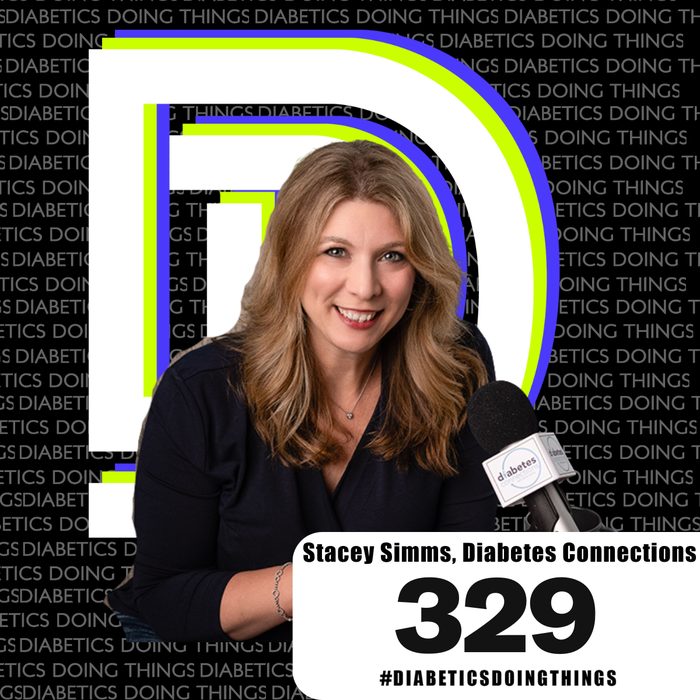
Stacey Simms has hosted the Diabetes Connections podcast for ten years, started after her son Benny was diagnosed with type 1 diabetes at age two. He is now 20 and manages his own care. Simms talks with Rob about creating Mom's Night Out, an event born from a 2019 book launch that grew into nine events held around the country, with a tenth and eleventh planned for fall 2025. She explains why the events focus on moms and women with type 1, how her husband Slade became the event planner, and the recurring moment when a mom returns from a night away to find her child handled things fine. They also cover media literacy at ADA and Simms's shift to running her work on her own terms in her 50s.
Key takeaways
- Simms started Mom's Night Out in 2019 as a book launch and has since run nine events, with two more planned this fall.
- About 15% of attendees travel more than 100 miles, and some fly in regularly, Simms says.
- Simms limits the events to moms and women with type 1 on purpose, so parents aren't distracted watching their kids.
- At nearly every event, a mom returns the next morning to learn her child managed a site change, pod change, or blood sugar check alone for the first time.
- Simms warns listeners to watch for conference coverage that never shows a mistake or a disagreement, calling that a sign of PR rather than real reporting.
Chapters
- Introduction to Diabetes Connections and Innovators
- The Evolution of Diabetes Support and Community
- The Birth of Moms Night Out
- The Impact of Moms Night Out Events
- Navigating the Challenges of Diabetes Caregiving
- Memorable Moments from Moms Night Out
- The Journey of a Diabetes Creator
- The Importance of Media Literacy in Diabetes Advocacy
- Looking Ahead: Future of Diabetes Innovations
Show notes
In this episode of the Diabetes Innovators Series, Rob interviews Stacey Simms, host of Diabetes Connections, author of World’s Worst Diabetes Mom Series, and host and creator of Diabetes Connections Presents Mom’s Night Out event. They discuss the innovative approaches to diabetes support, particularly through the Moms Night Out events. Stacey shares her journey from being a diabetes mom to creating a community for other mothers, emphasizing the importance of connection and support. They explore the evolution of diabetes care, the challenges faced by caregivers, and the significance of media literacy in diabetes advocacy. The discussion highlights memorable moments from the events and the impact they have on participants, as well as the future of diabetes innovations.
Chapters
00:00 Introduction to Diabetes Connections and Innovators
03:03 The Evolution of Diabetes Support and Community
05:54 The Birth of Moms Night Out
08:51 The Impact of Moms Night Out Events
11:47 Navigating the Challenges of Diabetes Caregiving
14:50 Memorable Moments from Moms Night Out
17:56 The Journey of a Diabetes Creator
20:46 The Importance of Media Literacy in Diabetes Advocacy
23:45 Looking Ahead: Future of Diabetes Innovations
Resources:
World’s Worst Diabetes Mom Series
Questions this episode answers
What is Diabetes Connections Presents Mom's Night Out?
It's an event created by Stacey Simms for moms of kids with type 1 diabetes and women who live with type 1 themselves. It mixes diabetes technology education with an overnight getaway away from kids, and Simms has run nine events since 2019 with two more in fall 2025.
Why does Mom's Night Out only include moms and women with type 1, not dads or other caregivers?
Simms says every part of the diabetes community has different needs, and she built the event for the group she knows best. She also wants attendees away from their kids so they can focus and connect instead of worrying about blood sugar in the moment.
How did Stacey Simms start the Diabetes Connections podcast?
She started it because there wasn't a news-focused diabetes podcast doing journalistic interviews, drawing on her background as a radio and TV reporter. Her son Benny was diagnosed with type 1 at age two, and the show is now in its tenth year.
What does Stacey Simms say about media literacy and diabetes conference coverage?
She warns that some content creators cover events like ADA without checking facts and make things up if they don't know an answer. She says a red flag is any creator who never admits a mistake, since that usually signals PR rather than real reporting.
Full transcript Searchable, with timestamps
Rob Howe: Welcome to Diabetes Innovators, a special series from Diabetics Doing Things covering the 85th Scientific Sessions. We're held in June 2025 in Chicago, Illinois. You're going to hear interviews from leaders of tech companies, people with diabetes, diabetes creators, researchers, and more on this podcast. If you want to learn more or hear more from this series, visit DiabeticsDoingThings.com slash Diabetes Innovators. Enjoy the episode. Okay, let's talk about our partners who help support this podcast. Today, I'm going to talk about Type Zero, which is typezerohealth.com. It is a business run and founded by a person with type 1 diabetes, John Jensen, who's been on this podcast a couple of times. I've been using this product since 2018. I started training for a half marathon, which I ran in Dallas in December 2018. I was looking for a workout supplement, a pre-workout that I could trust not to spike my blood sugar. And so that's what I've got here in my hand is the clean pre-workout. I use the stim-free version, which doesn't have caffeine and I trust it and I've used it now. So 2018, it'll be almost seven years for me using this pre-workout. It really works for me because I can drink it late in the day. And most of my basketball leagues that I'm playing in now are late at night. So I might have a game from 7 p.m., 8 p.m., 9 p.m. And I can make sure that I'm able to get up and play and also be able to fall asleep later that night so I can wake up in the morning, go to work and meet the demands of my life. Type Zero has gone a step further this year in our partnership, and they've launched the Rob Howe stack, which also includes a couple of my other favorite products, creatine monohydrate, which I've been taking the past two years. And if you want to look up all of the good reasons you should be taking creatine, many scientists and performance coaches say if they could only take one supplement, creatine monohydrate would be the one that they chose. I agree not only for the physical benefits, but also the mental focus and clarity. It's good for your brain. Do yourself a favor and add creatine monohydrate to your stack. Something I've also added is this clean hydration and electrolytes pack. I'll show you one of the little sticks. These are a lot smaller than some of the leading competitive brands because they just don't have as much salt in them. And there's no additives either. So you're not looking at any carbohydrates, nothing that you need a bolus for. And hydration is an essential part of anyone who has diabetes should be making sure that they're hydrated. And it's not just about drinking water. You need salt, you need magnesium, you need a little bit of the vitamin C and some vitamin B. There's a ton of zinc, selenium, chromium, all of the good electrolytes in this supplement. You mix the stick pack with, you know, 16 to 20 ounces of water, helps you get hydrated. I've been doing mine in the beginning of the day to start my day and make sure that I'm hydrated. And it helps with your insulin sensitivity. It helps me have some clarity and make sure that, I'm not a very disciplined hydrator when I'm sitting at my computer all day. It's good to be reminded to make sure that you're getting your hydration in. And it's a little bit more interesting to drink than just water. So you can get these as part of the Rob Howe pack, or you can get them on your own. You can get them on Amazon or directly from typezerohealth.com. And when you order from typezerohealth.com, if you use code ROBHOWE, that'll save you 20%. So they've got some great sales going on really regularly. So if you can't save more with a promo that they're running, use code ROBHOWE, and you'll always get that 20% off. And your support helps them support the podcast. So if you are a person with diabetes who's looking for a reliable supplements company that's not gonna spike your blood sugar, that's gonna get you into the mode to be the higher performer that you are, I recommend and I take Type Zero. I wouldn't recommend a product that I don't use myself. So please support typezerohealth.com, code ROBHOWE, and search the Rob Howe stack to see which supplements I take and get a good deal on those as well. Okay, let's get to the episode. I also wanna take this opportunity to promote Diabetes Legends Basketball Clinics. As you guys know, the last couple of years, we've started to do basketball clinics all throughout the country under our Diabetes Legends Basketball Clinics name. We've gotten to introduce over 100 campers with type 1 diabetes to diabetes legends like Lauren Cox and Gary Forbes and more. We've got three clinics coming up this year, a very special event at Friends for Life Conference on July 11th, and then later in September, we're gonna be returning to Denver. If you're looking for more information on the events themselves, you can visit diabeticsdoingthings.com slash events. And if you're interested in learning more about the Diabetes Legends Foundation, which we formed in 2025, to better support our ongoing initiatives and creating opportunities for kids with diabetes to have a great day with diabetes via one of our clinics, please connect with us and fill out a form on our website, diabeticsdoingthings.com. Hi, Stacey. I'm very excited to have you here. Very professional podcaster, diabetes creator. Why don't you introduce yourself
Stacey Simms: for the audience. Rob, thanks so much for having me. It's so great to see you. Hi, I'm Stacey Simms. I am the host of Diabetes Connections. I am the author of the World's Worst Diabetes Mom book series, and I am the host and creator of Diabetes Connections Presents Mom's Night Out, an event for moms of kids with diabetes and women with type 1.
Rob Howe: We're going to dig into all of that today. You and I get along very well and have for a long time, and I think part of the reason we relate so much is sometimes the titles just continue to expand. And we're great at creating jobs for ourselves, which I love. And this series is called Diabetes Innovators. So we're talking to people who are researchers, people who are building and leading companies, who are pushing new products into market. And I just felt that you belonged in this group because what you've done with Moms Night Out, it's one of the most innovative things in the diabetes space. It meets a huge need. And I think, honestly, the space was pretty desperate for. And so, you know, for me, I've gotten to go to two of them. Thank you for having me as a speaker. I don't know, for you, three years in now and, you know, releasing the new dates very soon at the time of recording. How does that land to you?
Stacey Simms: It was amazing to be asked to be on this series because I don't think of myself as a diabetes innovator. And as soon as you said that, I said, wait a minute, wait a minute. I am. And I really am happy to talk about it in that sense. because like so many people in the diabetes community, when you get diagnosed or your child gets diagnosed, you know, you get your feet under you, it takes a little bit of time. And then I think most people start looking around to say, what's my skill set? How can I help? What can I do? What's missing? I'm at the age and stage where my son is a young adult, completely independent. He's 20, diagnosed at two, had this for a long time. I'm at the age and stage where most moms in the diabetes world kind of step aside, right? We're not really blogging or meeting up or doing things anymore. And I was so excited to find this new way of connecting and helping other people connect. And I think it's really become, selfishly and personally, a new outlet for me. And we can talk about how it helps other people. And I'm really excited about it. But it's kind of kept me in the diabetes community in a way that I did not expect. I've seen it firsthand a couple
Rob Howe: of times. And so, you know, it's really fun to watch you in your element in that way. And I think you're right. There's a, as a diabetes creator, there's sort of that evolution, right? You get diagnosed, you, you ask like, how can I help? What is my skillset? What is needed? What do I have capacity for? What am I interested in? And then you kind of bring that to life. And I think there's a lot of patient creators like myself who say, all right, well, this, this is a space for me. And I think everybody listening, caregiver, patient, what have you, there is a space for your idea. It's certainly not a totally tapped market. There's someone for you who needs what you bring. So I'd encourage you to do that. But also, like you said, your primary inspiration for Diabetes Everything is now on his own outside that. And you've talked about how you and Benny communicate now about his diabetes, but he's doing it on his own. Congratulations. You did it. You got him out of the house and he's operating on his own, right? That's what we all want. And I think When he was diagnosed 18 years ago, certainly was a question for you in the back of your mind.
Stacey Simms: Yeah. Well, first of all, Benny would tell you, my mom has me to thank for her career. He says that all the time, which obviously, I mean, I did have a career before diabetes. But I started Diabetes Connections because there was not a news-focused podcast. There have always been amazing diabetes podcasts. But there wasn't one that was, you know, filling the need that I wanted. As a huge podcast listeners back in the day, I wanted somebody to do more journalistic interviews. And that's why I started that show. But then it evolves. Right. And you kind of change. I kind of was thinking of giving up the podcast a couple of years ago. It's like you. It's 10 years this year. That's a long time to do. And I do a weekly, you know, episodes every week. I do a newscast every two weeks. So, yeah, Benny's doing great. And I would never have thought at each two when we were doing 10 shots a day and manual finger sticks that he'd be where he is today in terms of the. It's not the ease of diabetes, certainly, but it's the automation.
Rob Howe: Yeah. And it's a different era as well for technology, obviously, and automation and also his ability to do it on his own, like that kind of sort of delegating it to him.
Stacey Simms: Yeah. I also never thought he'd be so relaxed. He's so relaxed. I want to like smack him in the back of the head sometimes. I feel like stop being so relaxed.
Rob Howe: I love it. Let's go back a little bit because you talked about how much content, like content begats more content. That's something that I continually remind myself, not only personally in the space, but just professionally as well.
Stacey Simms: I don't know if I have frozen, but it is trying to reconnect.
Rob Howe: You've been producing the podcast weekly for years. Okay, you're back. And you also do the newsletter and you also do the social media clips. And now you're doing Moms Night Out. In those moments where you're like, well, do I continue to do this? Then something totally new sprouted up. So talk about where the idea, I guess, or the early stages of Moms Night Out, where did that come from?
Stacey Simms: Yeah. So it was going to be a book launch. So I wrote The World's Worst Diabetes Mom in 2019, and I had a book tour. I was all set in 2020. I had all these stops. And of course, 2020 didn't go the way anybody wanted it to go. So when I wrote the second book, I thought, what do I want this book launch and quote unquote book tour to look like? And I thought, you know, if you've ever gone to a book launch of someone who's not a bestselling author, you know, it can be kind of depressing. Yeah. Maybe it's a couple of friends standing around and saying, good job, you know. There's rarely a line out the door of a bookstore. And this was not – these books – and I know I'm getting into the weeds a little bit, but for creators, you need to know this. These books were developed completely independently. There are books and projects and things that are done with sponsors. That's great. I did not want to have to get any kind of approval. I mean, it was down to, I talked to a few people, and I would have had to say blood glucose instead of blood sugar every single time, not abbreviated to BG or anything like that. It's a very different world when you have that kind of approval. But you also get the backing, the financing, and the launching of help of those companies. So I did this completely on my own, and I thought, what am I going to do to launch the book in the Charlotte area where I live, Charlotte, North Carolina? I had done a book launch for the first one, and it was a nice little event. But I thought, you know, I know all these women who have kids. We've known these women for 16 years at that point. And I asked a few of them. And I used to do, and I had forgotten about this, Rob, back in the day, I've always done in-person meetups. I always liked getting people together. And I used to do these technology nights. I was friendly with the Animas rep back in the day because he was helpful with Benny. And we would put together twice a year technology nights where all the local reps would come, like at a JDRF or Breakthrough T1D vendor fair. And they would just come to a hotel. I didn't charge anything. I didn't ask for anything. But I would organize the whole thing and then tell people to show up. And they said, do one of those. And I was like, ooh, all right. But at this point, I really wanted to make it education, you know, technology heavy, but community. And there were so many new moms. How are we going to get them to meet each other? I didn't know all these people. And so I decided to really give it a shot. I hired an event planner. Let's make it something. And it went great. You know, we had almost 80 women. It was so much fun. We only had one speaker, but Anna Sabino came in, a great diabetes educator who has a terrific message, lives with type 1. And then I posted it on Facebook. And my husband got me a big cake the next day. Congratulations on a great event. Like, kind of, what's next? That was one and done. And then I heard from people all over the country who wanted me to bring it to them. And we thought, can we really do this?
Rob Howe: Well, and then now, how many have you done to this point? Eight? Nine?
Stacey Simms: We have done, okay, three plus four, seven. We've done nine. And 10 and 11 are this fall.
Rob Howe: Incredible. Yeah. And I think all from a really magical event that sort of, like you said, existed a little bit before and sort of happens. You know, we have the Breakthrough T1D Summits. That was the first sort of diabetes conference that I went to. Those are all the same and they're consistent and I go to them all the time. But that's it. And they're only once a year. And like you said, the crazy thing about 10 years in the space for me and for you, I'm sure, you know, even 16 years, 18 years in the space, people keep getting diagnosed. There's more people all the time. You know, some people lose interest or they get burned out and they kind of go or they move and they go away. But there's always a new influx of people getting diagnosed with type 1 and and their caregivers. You know, it's really incredible that, you know, because of your diabetes creator investment in the podcast, you have listeners and fans and friends from around the country. And they said, well, hey, let's how can we bring that to a little bit closer to me? Because at the few that I've been to, some people have driven three, four hours from wherever they're from to come visit.
Stacey Simms: We get, I want to say, 15 percent of attendees come from more than 100 miles away. People get on planes. I have a couple of sets of ladies who I call them my frequent flyers. They're just coming. They're coming from different parts of the country. And I want to get ahead of something, Rob, if I could. And that is the comments which are totally understandable of why don't you do this for dads? Why aren't you doing this for teens? Why aren't you doing this for grandparents? Why aren't you doing this for people with diabetes? And I get it. Every single cohort of the diabetes community has unique and individual needs. But the reason I'm doing this for moms, and I expand it to women with type 1 as well, because I think those two mesh very well. I've learned more from women with type 1 than I have from other moms. And I know that's kind of a hard thing to hear sometimes. But they've lived with it for so much longer that that's who I want to inspire me. But I do it for that group because that's who I am. That's who I know. So as you said earlier, like there's a lot of room left. If you're a dad, if you're a grandparent, it's got to come from you. But also, you know, I've gone to so many diabetes events and I love my kids. I got two. But when you bring your kids to an event, you're not learning. You're not paying attention. You're not connecting. You are rightly worried about your kids, especially with diabetes. What's Benny's blood sugar? What is he doing? Why is he a maniac? Will he stop running around so I can get a juice box in him? And you don't remember anything. And I want these moms away from their kids. And I did that very purposefully. And so, you know, there's a lot of reasons to get these ladies together. And I think it's really it's bearing out in how these events are going.
Rob Howe: I'm glad you said that. So those who are hardcore listeners of the podcast know that I'm on this year of doing more with less. And in practice, that looks like saying no to more things than I say yes to. And also being a little bit selfish with the energy that I put into projects, which sounds bad. Both of those things like no and selfish sound like, you know, the negative connotation around them. But for you, like in order for you to run, like you got to do one thing right first. I think it's awesome that people want you to lead those other those other charges. And certainly, I'm sure if someone stepped up to that and wanted to pick your brain or talk about it, you would give your time for that. Yeah, 100%. But in order for something to be special, you have to not do certain things. And it can't be accessible to everybody in terms of a programming standpoint because you're trying to meet the need of a specific audience. And I really love what you said about being able to be there in the room and be present. And, you know, some of the ladies and, you know, I think this may be a hot take, but I think unfairly, a lot of the caregiving and diabetes falls to mom in many cases. Not to take away from those amazing diabetes dads. I know them. I care about you guys. You guys are doing the work. But a lot of times what I see is and notice is that the moms do a lot of the heavy lifting. So some of the moms that moms and dad are joking about their husband having to ask questions for the first time about watching the kids for 24 hours while they're at this event. And that connects them as well. So I think being able to be there and be present because there's so many things about diabetes that take us out of the present moment. And we see that in our basketball clinics as well. As soon as we handle the med staff and the low snack table and the parents who stick around, they just talk to each other and they're able to connect in a way that's very different than if they were at a regular basketball camp and they were solely worried about being the caregiver. So it's the magic of Moms Night Out is like it's a secret sauce of like connection, support and vacation.
Stacey Simms: Yeah. And we're very deliberate. Like I said, I worked with an event planner on that first event. And since then, I never thought this would happen. My husband has kind of semi-retired and he's helping me with all of this. He became my event planner. We met at work and we met at a TV station. He was a newscast director and I was on air and whatever. But we vowed we'd never work together again because we don't work together that well. But this works together great because I'm the boss and I just tell him what to do. And he's like, yes, whatever. He can say no, but, you know, he knows that it's my event and I know the people. And as he's gotten to know it more and more, it's been a lot easier. But all of that to say, like, his perspective has been super helpful as well as a diabetes dad who did. I mean, I worked super early mornings. So he did half of the caregiving in the morning. He did all the mornings and I did all the nights. And we had very different ideas about how to do diabetes. And that's really, I think that's helped. I think so, too.
Rob Howe: He's also like a local celebrity at the conference because he's the only diabetes dad there. That's true. It's fun to see him in his element, really, like being the event planner, like putting out fires, moving things around, directing traffic, and then also just being your right hand man. So it's very fun to see.
Stacey Simms: That's great. I love it.
Rob Howe: So for you, like now, nine in, there's two more this year. You're announcing the schedule for 2026 coming soon. If you had to pick a favorite moment thus far from Moms Night Out, is there anything like specific that comes to mind?
Stacey Simms: There are so many. There are so many. I will say in Cleveland, which was our last event, as I'm talking to you, back in February. And I live in, like I said, North Carolina. It was so cold. It was so cold. I mean, we went in February because I don't like to counter program against, you know, other events and busy schedules. And so it was perfect. But, oh, my God, it was so cold. And you were there. I was there, yeah.
Rob Howe: There was like four feet of snow on the ground, which is very different from my normal day to day in Texas.
Stacey Simms: But I walked in the room when the event had started and two women walked in. And if you've seen any of the social media posts, there's two women that I use a lot in the photos because they're wearing really fun shirts. They were wearing like Halloween diabetes-themed shirts at one of the events. And I think that was in Providence. And I recognized them right away. And I said, wait a minute, I know you. It's a mom and a grandma. They've been to three of these events now. And they say that there's nothing like it. They want to learn more. You know, grandma wants to help. And just seeing them and realizing, like, I have gotten to know these people is incredible. The other moment that I say, and this happens every single time, on Saturday morning when we come back because it's a Friday afternoon, people stay overnight. Not everybody, but most people do stay. And then Saturday morning, you know, we continue with the programming. I always ask at breakfast, like, what happened last night? Anything crazy happen at home? Like, who didn't sleep? Who did sleep? And inevitably, at every event, there is an issue. The mom has not left. And the kid and the husband or the boyfriend or the babysitter or whoever is there has handled it. And the mom has been surprised. And the kid, as you know, has felt great. I did it. I did my sight change for the first time. I did a pod change for the first time. You know, I checked my own blood sugar. I did my own thing. And we share it with the group because we all know that moment. I mean, we remember that moment when your kid does something for the first time. They may not do it again for themselves for another couple of years, and that's fine. But they know they can do it. You know they can do it. And you get to see ahead to when they will be okay and independent. It happens at every single Mom's Night Out conference, and it always makes me cry. I'm almost crying now.
Rob Howe: It's really incredible. I think it unlocks in everybody's mind, mom, caregiver at home, dad, boyfriend, whoever it is, grandma, and also the kid. because, oh, hey, I didn't have mom here and everything was okay, or something went wrong and everything was still okay. It's very similar to the first few nights of diabetes camp where the kids are, you know, they have the first time awards or whatever. Hey, first time I changed my site on my own. First time I gave an injection on my own. First time I swapped my CGM on my own. Those things build momentum and, you know, unlock possibilities in everybody's mind. Ideally, we'd like to all be there at all the time to make sure everything goes right, but we get a little bit more trust. We get a little bit more leeway and also just in internal trust, I think, for the patient. As somebody who was a little bit older when I was diagnosed, so I had a lot of independence already, you start to say, oh, I can do that. I can do that. I can do that. Or here's how I'll do this differently next time. You don't have to get it perfect every single time, which is another thing that I like. You have somebody there, like not everybody, you know, and I think that that relieves some of the pressure in your mind of being perfect as well. And we see that at our camps too. One kid comes out and normally in a practice. They're the only kid with diabetes. So there's like panic and focus on that person. But at our camp, one kid comes out, goes back in. Another kid comes out, goes back in. Another kid comes out in. Like every single time there's a collective sigh of relief of like, oh, this is
Stacey Simms: normal. This is just life with diabetes. Weren't you a little surprised, though, and this happened in Dallas and in Cleveland, the two events that you were at, that there are many moms who do think they need to be perfect. I feel like that message is out there. Like, it's okay. You're going to be fine. You don't have to be perfect. They still come in. And your talk, When you tell them, and I'll put words in your mouth here, but it's one of my favorite things you say is when you were younger, right, without the tools in the community you have now and a high-performing athlete, your pleasure was terrible, right? They hear that and you see them say, but he's alive. Like, he's okay. He's in front of me. And they really, someone has told them or they've internalized it somehow that if their child goes above 250, that's it. That's it. They've failed and, you know, it's over. It's amazing to me how that message needs to be continually shared. So thank you for doing that because it's amazing.
Rob Howe: Yeah, thank you for letting me do it. I think that's the thing that I think I've learned maybe the most in my time sort of putting myself in the center of the conversation and in the space around my advocacy is like it's awesome to celebrate the high highs of athletes with diabetes. But we're not always, I don't know, we don't lead with, hey, by the way, on this road trip, Rob had to be up all night eating gummy bears and running, finding the vending machine at the Holiday Inn in Shadron, Nebraska, and make sure that I had cash on hand to be able to do that transaction at two in the morning so that I could be awake for shoot around and then have a good game that night. So, yeah, you know, my most difficult years of managing diabetes were the years where I was the best athlete that I ever was. And I made those sacrifices. And, you know, now my diabetes management is way better. I think when I talk to people about it and I try to get them to understand, like, yes, managing hyperglycemia is super important. It's like the most important, least important thing. It's one of those great paradoxes in life, right? If you go over 250 and you can't get it down for a little while, that's normal. That's just you have diabetes and your sight fails or your insulin fails or whatever it is. Like there's going to be stuff that goes wrong. And I think what is really important is what you do after that. Do you keep trying? Do you try something new? Do you keep going forward? And that to me is what being an athlete taught me the most about diabetes, which is don't give up. You're not going to make every shot. You're not going to win every game. You can try all you want to be the best you can be, but leave room for when things go wrong and then take action on those things.
Stacey Simms: That's great. Right. That is so good. And it's so hard as a parent, right? Because you do feel like everything you do is going to have a result down the road and it's terrifying. So that's what I mean. Like to meet someone like you, to talk for me, to talk to adults with type 1 when Benny was three years old was incredible to shift my outlook and prioritize our relationship. And now I have a kid who is, you know, he makes fun of me all the time, which is our relationship, which is fine with me. Right. He talks to me. He hugs me every day. And when I see he's home for the summer, It's great. It's great. But he's so far from perfect.
Rob Howe: Yeah, you have an adult with diabetes now.
Stacey Simms: So far from perfect. But he's also 20. So everybody tells me 25, 26, like that brain fusion thing is going to happen. But he's fine.
Rob Howe: Yeah, especially for young men. Like our brain doesn't stop growing until we're 25 or 26, right? So maybe even later than that. Okay. You're a diabetes creator, you're an entrepreneur, you're a parent and a partner. You know, you're in the midst of living this very creative, non-traditional life career. What comes to mind when you think about like your journey from, like you said, being on air at a network and being, you know, being up early in the morning and being a newscaster to now on the other side of this, like working with Slade, like building, running a family business and a technology and news podcasts around diabetes and blazing your own path? How does that land for you?
Stacey Simms: It's so interesting. What a great question. You know, I was one of these people that knew what I wanted to do in middle school. I was going to do news. I was either going to write for a newspaper or I was going to be on a TV reporter. Funny, I never thought I'd be in radio, which was really what I did for the bulk of my career. I was a radio reporter in college. It was like the worst weekend radio reporter you ever heard. But I was paid. I was professional. Horrible. And then I was in television for 10 years as a reporter and an anchor. And then I worked in radio for more than a decade. And as you said, those early morning hours. You know, I stopped. Honestly, I got sick. I wasn't sleeping. And that's a diabetes thing also. But I truly got less than five hours of sleep a night for a long time. And I wound up with my own autoimmune condition. So it's not a good and healthy way to live. And I said, I'm not going to do anything. And Slade had a great job. We were very fortunate. And that's when I started the podcast because I got bored. I guess to answer your question, it's a funny thing, Rob, because I'm in my 50s. And being a creator in your 50s right now is a really interesting thing. Because we talked about this off air before we jumped on. I hate video. I'm very self-conscious, you know, especially of being a news anchor. I used to do hair, makeup, the whole thing. You know, now I'm like, I just came from the gym. Thank God for reading glasses because I can cover up half my face. It's hard. It's very hard to kind of keep up. And I've decided, like you, doing more with less. I'm going to do what I feel is important, impactful, and make sense to me. I'm so lucky to have the flexibility of my schedule to do what I want to do in this phase of my life. Because with podcasting and everything else, I can kind of do this at my own time. Last year, I did a type 2 podcast. I did it for one year. I really enjoyed it. That audience was amazing. They're kind of hidden out there. So to have something just for people with type 2 was very much appreciated. But between everything I was doing, it was too much. So I was able to wrap that up. It's a one-year project. And you can't do that if you're working for a network or you're working for somebody else or you're doing other things. So I'm grateful that it's there. And I'm grateful that I was able to end it. And I'm really happy that I have the flexibility to kind of end my career this way. I don't know how much longer I'm going to be doing this for. It's not now. It's not next year. I'm going to be going for a while. But to be able to help people in this way, to be able to make it a business, which is kind of hard to talk about sometimes too, right? But that's the reality of it. And to do it on my own terms is pretty remarkable. I'm really lucky. I'm excited every day to do it. I love doing interviews. I'm still, you know, there's still some times when you're like, why am I talking to this person? What did I agree to? But, you know, for the most part, I'm really excited. And I pick and choose. I'm not, a good example is I'm not going to ADA this year. ADA Scientific Sessions, biggest diabetes conference in the world. I've been a couple of times. I go on my own dime. Even with a media pass, it's very expensive. And I just decided this year between all the summer travel I'm doing and the other things I'm prioritizing, it was better to covered virtually, which is what I'm doing.
Rob Howe: Yeah. And you have the option to do that, right? I think that's where, I don't know, my wife and I joke that everything that we've learned about business has been against our will because you just never know. No, it's so much more complicated than just bringing enough revenue to cover the expenses. And you have to constantly rethink that. You have to manage your energy. You have to manage. You spend so much time doing things that you don't really think have anything to do with running the actual business once you really get going. And I, you know, I have the benefit now of being part of an entrepreneurial community through a program I did through Goldman Sachs. I learned that if you've made money in your first three years of business, you're actually more likely to fail in your next year because you don't know what you've missed out on, which is mind-blowing to me. So that was very true for my agency businesses. We had a really great first three years, and it was really hard because we got used to some success, and we got a little bit ahead of our skis. Anyway, back to the ADA thing. I think what's interesting about being a creator and what's interesting about this space is you learn a few things. And ADA, obviously, is the biggest U.S. event. everybody's there. I think what I'm focusing on this year is like in every industry, there's one meeting where everybody goes. And, you know, a lot of it is, you know, there's press built around it. There's a lot of money that the brands spend on their booths and their activations and things like that. And then everybody goes there. And so, yeah, I'm like you, I get to be pressed, but investing my own money to try to make something a little bit different, a little bit more focused this year, which means I'm not going to be able to do as much stuff on site because I'm going to be doing nine podcast interviews in two days. So I will definitely be in that mode of like, who is this? Who am I talking to? I've got all my notes. I've got all built out. But yeah, just trying to find a new way. And like you said, all those sessions can be covered virtually. Well, can I say something crummy too? Yeah, tell me.
Stacey Simms: All right. So I've only been to ADA twice because, again, I really didn't see the need to go in years past. There is so much nonsense and garbage at that conference. And there's wonderful stuff. There's going to be great studies and wonderful things that come out of it. But my Lord, there is people who pay, you know, tens of thousands of dollars to go. And I'll just put it out there. Like there's going to be CGM companies from all over the world. They're there to showcase their stuff, to get attention, to get investors. You're never going to hear from them again, right? They're there, they're making money and they're gone. And then there's like some very useful products that they've spent their two years budget to be there and hopefully they catch on. But it's a real, and I'll stay on the soapbox for a minute, Rob. As you listen or watch, There are also a lot of content creators who don't know what the hell they're talking about. And they don't care. They're going to go to these events. They're going to bring you information. There's no ethics. There's no screening. They're going to make stuff up if they don't know it. It's so frustrating. And you have to be really careful. So, you know, I don't say that to say don't watch coverage of ADA. It's an industry-wide problem. It's a social media-wide problem. But just be careful. Check your sources. Check your disclaimers.
Rob Howe: I think two, something that I've learned. So this will be my sixth one, I think. And I was fortunate the first few, the first really four that I went to, I got to go as part of with a brand with Medtronic brought me to be a patient speaking at some event about a product, right? Which you see a lot of. And the past two years, I've gone as media, and you and I had talked about that previously as well. It's definitely a shift in how to approach it. And then there's obviously when you get your press credential approved, they want to see what you make based on your time there and how you use the access. And it can be really hard to distinguish like what's really like real and what is just PR spin or what is what's actually being developed versus what is just either a fundraising pitch. It can be very challenging. And I think I'm still learning that, too. But my favorite part of ADA, and this is really from my first year, was the poster hall. Because the poster hall is this huge, huge room full of all of these posters in these different categories. From psychosocial to media, digital and social media, to cardiovascular, to brain health, Alzheimer's. All of these things that are related to some sort of diabetes research. And there are sessions where you can see the poster authors present them. But for the most part, it's just empty and you can just walk up and down. And that to me is where the most like richness comes from of being there on site is like, oh, I can learn about this. I can take a photo of it and follow up with these people later. Or this is what people are researching and how they're talking about life with diabetes for people with type 2 in rural areas who need digital health solutions. and like what impact that has on people or what is the actual clinical impact of being involved in diabetes social media. All of those things I learned at ADA from the poster halls because those are really like one or two people, sometimes sponsored, sometimes not. Most of the time it's part of their job at like a university or a university hospital and they've just put all their time and energy into this small study and then it gets published. And that I think is my favorite part of ADA.
Stacey Simms: It's an amazing part and there is so much incredible information and I hope I didn't, you know, poo-poo the conference because I think it's incredible.
Rob Howe: I love an alternative take because it can be really overwhelming. And I think for patients, because it's an HCP conference, like there's mostly, it's all geared towards key opinion leaders and healthcare providers who are there to get their continuing education credits. And it's a lot of money being spent and there aren't a lot of patients there. And so I think for patients who are watching the coverage, it kind of feels like, is this even for me? I have diabetes, but is this for me? I'm not sure.
Stacey Simms: And the other thing I'd say, too, just a little media literacy, if you follow somebody and they have never made a mistake and they've never or they've never acknowledged a mistake, right, that's a big problem. Big red flag. If you've got somebody you've been playing for three, four, five years, they've never had a retraction. That's a red flag. And also, as you read and listen to articles, articles, I'm so old, but, you know, content. If you think that no one could ever be upset by something somebody's saying, that's just PR. So, you know, if you listen to a podcast and you realize that there's no way anybody could ever be upset by any question or any answer, you've just listened to half an hour of PR. So just little things to kind of put in the back of your head. But as you hear all the stuff that comes out of ADA, and there's going to be some incredible information. I can't wait. I'm so excited about all the GLP-1 stuff for type 1. That's what I'm number one looking for this year.
Rob Howe: Well, I have an interview lined up with one of the doctors from the ADJUST T1D study. And the thing I've learned more as well over the years is all the PR gets released around ADA. So new products get announced or new studies. So year one, the new product gets announced. Year two, the research of the product gets announced. And then year three, everybody else gets to have it. So right now, this is the first year where for semaglutide and GLP-1 and SGLT-2 for type 1 is coming out, which means that maybe a year from now, we'll be able to get prescriptions approved by insurance for people with type 1 to get on the GLP-1 drugs, which will be really great.
Stacey Simms: Amazing. All right. So I will watch your coverage from ADA. I'm excited.
Rob Howe: Great. I'll just send you the really abbreviated stuff so you don't have to filter through it. So Stacey, thank you so much for all that you do for people with diabetes. I really have valued our friendship over the years. And thank you for making me part of the Moms Night Out events that I've been to thus far. I maintain what I said at the top. It's the most innovative community thing I've seen in almost 10 years now in this space. And the impact that you're having for people like you and people who are in the situation that you were in, you know, 18 years ago is really remarkable. So keep doing what you're doing and tell Slade I said hello.
Stacey Simms: I absolutely will. And Rob, I'll just say there's a lot more to Moms Night Out than we've even talked about. We keep adding to it. There's little surprises. There's some very cool stuff. You've got to experience it. But Rob, without support from people like you in the community, there's no way I could do this because you guys, there's no BS. You would tell me straight up if this was not working or what the problem was. And I appreciate that so much. So thanks for letting me chat here. But more importantly, thank you for all your help over the years. I really appreciate you.
Rob Howe: I mean, I really I really love you and your family and all that you do for people like me. And I'll tell you this because we've talked about media literacy. We've talked about other things like this full of gems. Look, I don't know if there's anyone. This is me to listeners. I don't know if there's anyone who's been to as many diabetes conferences as I have, especially in the past five years. Every different kind, small, large history, patient forward, whatever. Mom's Night Out stands on its own as a really great use of your time. And so if you're a mom with diabetes or know a mom with diabetes, I highly recommend checking out a Mom's Night Out in a city near you.
About Stacey
Stacey Simms hosts the Diabetes Connections podcast, which she started after her son Benny was diagnosed with type 1 diabetes at age two. She wrote the World's Worst Diabetes Mom book series and created Diabetes Connections Presents Mom's Night Out, a live event for moms of kids with diabetes and women with type 1.