

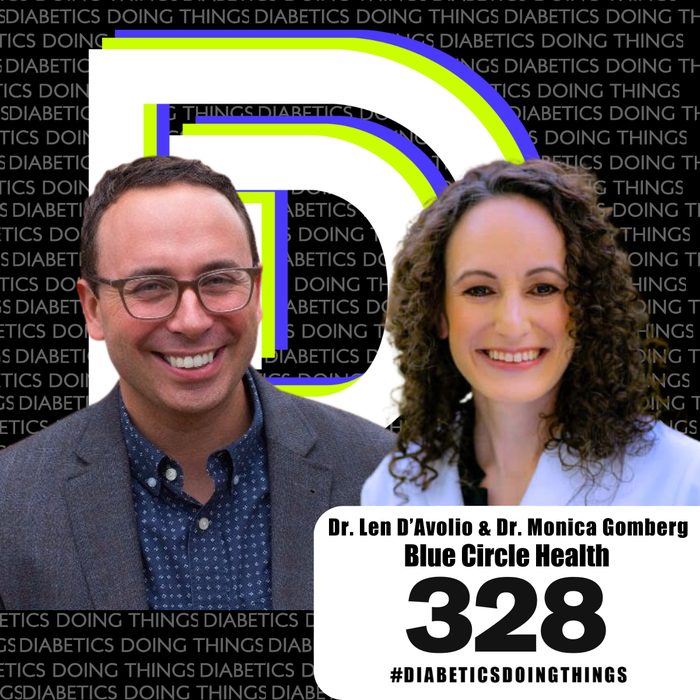
Dr. Leonard D'Avolio & Dr. Monica Gomberg - Blue Circle Health

Episode summary
Dr. Monica Gomberg, VP of Clinical Care and an endocrinologist, and Leonard D'Avolio, CEO of Blue Circle Health, talk with Rob about building a free care program for adults with type 1 diabetes. Blue Circle Health grew out of a challenge from the Helmsley Charitable Trust to design T1D care without worrying about insurance reimbursement. The six-month virtual program pairs patients with endocrinologists, nurse practitioners, social workers, certified diabetes educators, insurance navigators, and peer support guides, many of whom live with type 1 themselves. They talk about why access, not just new technology, is the real barrier to good care, how the program works alongside a patient's existing doctors instead of replacing them, and the outcomes they track as they grow from one state to ten.
Key takeaways
- Leonard says 70% of U.S. counties have no endocrinologist, and only 6% of commercially insured people with type 1 diabetes have ever had a diabetes educator.
- Blue Circle Health's six-month program is free, fully virtual, and offered in English and Spanish, with a team that includes endocrinologists, social workers, educators, and peer guides.
- Leonard says over 40% of Blue Circle Health's patient-facing team lives with type 1 diabetes.
- The team tracks a diabetes distress scale, and nine of ten distress categories improved significantly by the end of the six months.
- The program does not replace a patient's endocrinologist or PCP. It works alongside them and also helps with insurance navigation and prescription costs, including an average of about $2,000 per patient in prescription assistance.
Chapters
- Introduction to Blue Circle Health
- The Promise of Accessibility in Diabetes Care
- Innovative Care Models for Type 1 Diabetes
- Holistic Support and Community Connection
- Building a Dedicated Team for Diabetes Care
- Collaboration with Healthcare Providers
- Measuring Outcomes and Patient Satisfaction
- Expanding Access and Future Plans
Show notes
In this episode of the Diabetes Innovators Series, Rob interviews Dr. Monica Gomberg and Leonard D'Avolio from Blue Circle Health, discussing the innovative approaches they are taking to improve diabetes care, particularly for those with type 1 diabetes. They emphasize the importance of accessibility, community support, and a holistic approach to healthcare, aiming to bridge the gap between patients and the resources they need. The team shares insights on their personalized care model, collaboration with healthcare providers, and the positive outcomes they are achieving for their patients.
Chapters
00:00 Introduction to Blue Circle Health
01:44 The Promise of Accessibility in Diabetes Care
04:55 Innovative Care Models for Type 1 Diabetes
10:21 Holistic Support and Community Connection
15:02 Building a Dedicated Team for Diabetes Care
19:54 Collaboration with Healthcare Providers
25:14 Measuring Outcomes and Patient Satisfaction
29:28 Expanding Access and Future Plans
Resources:
Blue Circle Health
Questions this episode answers
What is Blue Circle Health and is it really free?
Blue Circle Health is a free, six-month virtual care program for adults with type 1 diabetes, funded by the Helmsley Charitable Trust. It includes endocrinology care, education, behavioral health support, and insurance help at no cost to patients.
Which states does Blue Circle Health serve?
At the time of this interview, Blue Circle Health was live in 10 states across the eastern and central time zones, with plans to add six to eight more states over the following year.
Who is eligible for Blue Circle Health?
The program serves adults living with type 1 diabetes in the states it covers. The only exclusion is current pregnancy, since those patients need in-person exams the virtual program can't provide.
Does Blue Circle Health replace my endocrinologist?
No. Leonard D'Avolio describes it as an extension of a patient's existing care team, handling things like insurance navigation and education rather than replacing a PCP or endocrinologist.
Full transcript Searchable, with timestamps
Rob Howe: Welcome to Diabetes Innovators, a special series from Diabetics Doing Things covering the 85th Scientific Sessions. We're held in June 2025 in Chicago, Illinois. You're going to hear interviews from leaders of tech companies, people with diabetes, diabetes creators, researchers, and more on this podcast. If you want to learn more or hear more from this series, visit DiabeticsDoingThings.com slash Diabetes Innovators. Enjoy the episode. Okay, let's talk about our partners who help support this podcast. Today, I'm going to talk about Type Zero, which is typezerohealth.com. It is a business run and founded by a person with type 1 diabetes, John Jensen, who's been on this podcast a couple of times. I've been using this product since 2018. I started training for a half marathon, which I ran in Dallas in December 2018. I was looking for a workout supplement, a pre-workout that I could trust not to spike my blood sugar. And so that's what I've got here in my hand is the clean pre-workout. I use the stim-free version, which doesn't have caffeine and I trust it and I've used it now. So 2018, it'll be almost seven years for me using this pre-workout. It really works for me because I can drink it late in the day. And most of my basketball leagues that I'm playing in now are late at night. So I might have a game from 7 p.m., 8 p.m., 9 p.m. And I can make sure that I'm able to get up and play and also be able to fall asleep later that night so I can wake up in the morning, go to work and meet the demands of my life. Type Zero has gone a step further this year in our partnership, and they've launched the Rob Howe stack, which also includes a couple of my other favorite products, creatine monohydrate, which I've been taking the past two years. And if you want to look up all of the good reasons you should be taking creatine, many scientists and performance coaches say if they could only take one supplement, creatine monohydrate would be the one that they chose. I agree not only for the physical benefits, but also the mental focus and clarity. It's good for your brain. Do yourself a favor and add creatine monohydrate to your stack. Something I've also added is this clean hydration and electrolytes pack. I'll show you one of the little sticks. These are a lot smaller than some of the leading competitive brands because they just don't have as much salt in them. And there's no additives either. So you're not looking at any carbohydrates, nothing that you need a bolus for. And hydration is an essential part of anyone who has diabetes should be making sure that they're hydrated. And it's not just about drinking water. You need salt, you need magnesium, you need a little bit of the vitamin C and some vitamin B. There's a ton of zinc, selenium, chromium, all of the good electrolytes in this supplement. You mix the stick pack with, you know, 16 to 20 ounces of water, helps you get hydrated. I've been doing mine in the beginning of the day to start my day and make sure that I'm hydrated. And it helps with your insulin sensitivity. It helps me have some clarity and make sure that, you know, Now, I'm not a very disciplined hydrator when I'm sitting at my computer all day. It's good to be reminded to make sure that you're getting your hydration in. And it's a little bit more interesting to drink than just water. So you can get these as part of the Rob Howe pack, or you can get them on your own. You can get them on Amazon or directly from typezerohealth.com. And when you order from typezerohealth.com, if you use code ROBHOWE, that'll save you 20%. So they've got some great sales going on really regularly. So if you can't save more with a promo that they're running, use code ROBHOWE, and you'll always get that 20% off. And your support helps them support the podcast. So if you are a person with diabetes who's looking for a reliable supplements company that's not gonna spike your blood sugar, that's gonna get you into the mode to be the higher performer that you are, I recommend and I take Type Zero. I wouldn't recommend a product that I don't use myself. So please support typezerohealth.com, code ROBHOW, and search the Rob Howe stack to see which supplements I take and get a good deal on those as well. Okay, let's get to the episode. I also wanna take this opportunity to promote Diabetes Legends Basketball Clinics. As you guys know, the last couple of years, we've started to do basketball clinics all throughout the country under our Diabetes Legends Basketball Clinics name. We've gotten to introduce over 100 campers with type 1 diabetes to diabetes legends like Lauren Cox and Gary Forbes and more. We've got three clinics coming up this year, a very special event at Friends for Life conference on July 11th, and then later in September, we're gonna be returning to Denver. If you're looking for more information on the events themselves, you can visit diabeticsdoingthings.com slash events. And if you're interested in learning more about the Diabetes Legends Foundation, which we formed in 2025, to better support our ongoing initiatives and creating opportunities for kids with diabetes to have a great day with diabetes via one of our clinics, please connect with us and fill out a form on our website, diabeticsdoingthings.com. I'm Dr. Monica Gomberg. I'm the Vice President
Leonard D'Avolio: of Clinical Care and an endocrinologist at Blue Circle Health. I'm Dr. Len D'Avolio, CEO of Blue Circle Health, assistant professor at Harvard Medical School and Mass General Brigham.
Rob Howe: Welcome to the show, guys. This is Diabetes Innovators. We're reporting live from the 85th Scientific Sessions. I'm very excited that you guys are here. I've been circling this interview for about a year because Scott, our mutual friend and your teammate, told me early on about Blue Circle Health. Obviously, there's probably been, in my opinion, no bigger, more organic news circulation of a cool innovation in diabetes than Blue Circle Health in the past year. So welcome to the show. Thanks for making the time. Thank you so much for having us. Okay, so let's talk about the buzz. I don't think I've seen in the diabetes online community from a patient perspective a company that's gotten as much buzz as you guys, peer-to-peer, word-of-mouth in the past year, and the promise of Blue Circle Health is the key word, free, right? How and why does it work? Give
Leonard D'Avolio: us the full story. Sure. Well, I think this is an appropriate setting to sort of set the stage. ADA is the future of diabetes care. Yeah. You walk through these halls and you see companies that are creating better tools, devices, instruments, molecules, drugs, and it gives you hope for what could be. But that doesn't match up with the reality of what the community is experiencing. I think, you know, for most people, that future isn't accessible. I think just to walk through some of the numbers, like 70% of counties in the U.S. don't even have endocrinologists. The average medical debt, personal medical debt of a patient with type 1 diabetes is $9,000 related to their disease. Only 6% of people ever have access to an educator. So we're creating this amazing future, but it's just not accessible to most people. So the whole idea of Blue Circle Health is, and we were challenged, a group of people were brought together by David Panzirer, the trustee, one of the trustees at the Helmsley Charitable Trust, with the question, if we could do over, if we could design the care that should exist for adults living with type 1, unconstrained by either tradition or what is or isn't reimbursed, what would that look like? And so that turned into a lot of debate and white papers and ideas from experts and ideas from people that live with T1D. And not surprisingly, the ideas from the experts did not necessarily align with what the community believed that we should offer. And that turned into Blue Circle Health. I think the organic buzz is because just like you feel a sense of outrage with the way things are today and the challenges that our system has created for people, you also, when you introduce hope or something that's very real, when you put a team together whose only job is to try to make life better for people with type 1, the community rallies behind that. And I think we're really blessed to have the community start to recognize that they've always recognized that the problem exists. But I think it's great that they rallied behind us and sort of pushed us forward and supported us in so many ways as we brought our care, you know, from one to now 10 states across the U.S.
Rob Howe: Well said. I mean, I think for me, when I walk these halls, and this is my fifth scientific sessions, so I'm proud of the progress that I've made in like filtering out an experience. because the first time you come in here as a patient, I think it's a little bit jarring at how big everything is in the scale and how many people are here. And the question becomes like, at the end of every presentation, at the end of every announcement, for who? And I think like you mentioned, all the stats, the 6% of people don't even have access to an educator.
Leonard D'Avolio: Only six have ever had an educator. And that's 6% of commercially insured, right? Right. What about the majority of people that are on Medicaid or Medicare or some form of duels? I think it was described to me most succinctly, people with T1D fight two wars. In one of them, this whole conference is all about it, which is the war against the disease. But the other is a war against the system that we created that makes it more difficult and expensive to gain access to every single thing that a person with type 1 needs to live a healthy life, whether it's access to insulin or education or even community. And so, yeah, I think the opportunity here is to take this future that everyone down there is creating and try to bring more people into it with just better care and less hassle from the system we created. And just to add to that, I think this is a dream as an endocrinologist, thinking in my previous life before Blue Circle Health, what I would have given to have this for my patients. It is such an asset to us healthcare providers to say, I want this for every single one of my patients living with type 1, and I'm not able to provide it. I am fighting to see you, to get everything done and giving you such a lack of follow-up in terms of, because I don't have the time and everything in my power trying to do it. But the system is set up for me to not be able to. And so it's such an asset for the healthcare providers to be able to provide the best care
Rob Howe: that we always want and strive for. And, you know, I think from my perspective as well, like how can we continue to spread that message? Because like from a provider perspective, does it seem, is there like a scarcity mindset around that sometimes? Like, do they feel, does the old way of the system feel like this is encroaching on something? Or how does that work? Because providers, more access to their patients is part of it as well. Like the access word is really interesting. You talked about access to information. That information is free most times. Like we think of health care and health equity. It starts with access to information. It starts to knowing where to go and like hearing that and having a chance to have a discussion with a provider with so many people with diabetes, not even seeing an endocrinologist or managing their diabetes with their primary care physician or overcoming crazy obstacles to drive hundreds of miles and take days off of work. And you talk about the medical debt. It's like this really tough feedback loop where I have to choose between, oh, my kid needs me to pick them up from school early because they're sick or something happened. And I got to drive 100 miles to my endocrinologist or, you know, I need to pick up an extra shift to make rent or I need to go see my endo. And, you know, they only have 15 minutes for me because they have too many patients and the burden on them is too
Leonard D'Avolio: Right. And I think, and to add to that too, I mean, you have patients who don't have access to keeping their refrigerator on to keep their insulin cold, to then take it to see their endo. They're not able to prioritize seeing the endocrinologist, even if that were available to them, because they need to sustain their life. They need to, like you said, be with their kids, take their insulin, get their food, turn the lights on. And these are the things that are really active, really large barriers in our population. And so being, even being and meeting with their endocrinologist is maybe not what they need at the moment. They needed these other access points in order to get to thrive in their life.
Rob Howe: Yeah, it's so, you know, you talk about the system and how it's set up in the negative feedback loops and the sacrifices that people have to make, whether it's, you know, even getting the access to the diabetes care only allows them now that they have now the foundation just so that they can overwork themselves for income inequality is expanding. It's difficult for them, single parent homes, especially. They've got kids that they need to talk to care about, working with multiple jobs. It's almost impossible to juggle all those things.
Leonard D'Avolio: Right. And that's the war. And who's set up to fight war? You shouldn't have to fight war, let alone two wars. They're fighting to strive to stay alive to do these things when we should be fighting to just make it accessible to all. And that's really what we're trying to do and trying to connect everyone to be able to do. Rob, would it help if we just describe what we offer briefly? Yeah, I think so. So this is a six-month program, and it's designed for adults living with type 1 diabetes. We're now in 10 states, but we're working really hard to cover all of the eastern and central time zones. And anyone that's interested in what states we're now getting to should go to the website and pay attention. And it's a race to get to whoever will allow us to get licensed quickest. Then we open up in that state. The goal over the six months is to bring you from whatever point you're coming in at and to give you the tools and the confidence and the skills and the education and the care and the medicine and the supplies you need to be in a much better place at the end of the six months. It's an individualized program. So this is not a factory production. You must get what we give you. We ask you that the whole thing is designed around understanding what are your needs and how can we work together over the next six months as a team to meet your needs. So totally personalized. 100%. Some people come in and they say, I am in a real spot. I don't have insulin right now. I never really learned how to pre-bolus. My insurance is a wreck. I lost my job. And the whole team gets together. We prioritize them urgently and they're seeing the endocrinologist, which may be Monica or you and another endocrinologist on the team. but it's endocrinology care with the ability to prescribe and practice medicine. Nurse practitioners, there are social workers who do two different things. Licensed clinical social workers that can provide behavioral health support specific to type 1 diabetes. How do you cope with the stresses, the distresses of having type 1, which is a major issue that I'm sure you're aware of. Social workers whose job it is to connect you to local resources. If you're having trouble making it to an appointment, you're unemployed, you got to start with the basics. So we have social workers who can work with you to address what medicine would call social determinants of health, what I would call just like life's challenges thrown in your way. There are certified diabetes educators that can help you understand your disease and devices and how to cope with situations. There are peer support guides. Their job is to be a fellow adult living with type 1. And if you say what your problem is, they'll connect you to the appropriate service on our team. So not disconnected, sort of one-off transactional health care.
Rob Howe: Farmed out.
Leonard D'Avolio: You text your guide and they're like, what's going on? How can I help you? I live with this condition. I could be there for you, but I can also tell you we need to get you in the room with whoever it is that can solve your problems. I know I'm going to forget other.
Rob Howe: Are you suggesting that diabetes management is complicated?
Leonard D'Avolio: I would never. Case management, peer support guides, education, nutrition, insurance navigation. Oh, insurance navigation. There's a team of people whose job it is to help you understand your insurance and use it to the most of its ability. They'll get on the phone with you and the insurance company and help you fight the good fight. Because, again, the goal is not just to give you the things. It's not just give a person a fish. It's teach them how to fish, bring you up from a skills, education, confidence standpoint. So learning how to battle insurance is like a fundamental, unfortunately, a fundamental skill that's required.
Rob Howe: The holistic approach is particularly interesting to me. And I think you mentioned the social determinants of health. Type 1 diabetes in the community is often referred to as a full-time job with no vacation and very little benefits. And no days off. And exactly what you're describing there is a set of skills and even just social skills and getting on the phone and talking to people and learning about prior authorizations. It's like everything I've learned about insurance has been against my will. And I've been very blessed with capacity to learn those things and have those conversations and skills that were just I lucked into the genetic lottery. I had great parents that taught me those things and I had access to that. That holistic approach is, you know, living with diabetes in a nutshell. It's not just the endocrinologist appointment. It's how do I get the right prescription and then afford it and then afford it over time so that I can get a job or go to school or take care of my family or be a community service or whatever a functioning member of society wants to do. Like that's an ambitious thing that doesn't exist.
Leonard D'Avolio: It doesn't exist. You're right. And I think the other part of that, too, which you hit on, like your parents were involved, you were going to school, all these aspects of community are involved. And I think that's a lot of type 1 diabetes. And those who live with type 1 have been telling me like connection to other people who have lived with it, who have a connection to it. That's what they learn. And that's how they connect. And that's how they get further to their goals. And so one of the things we're also doing is prescribing community. Let us get patients connected to one another, get patients connected to our team, who Len said also live with type 1. But connection to one another and beyond and beyond the time of our program and making sure that there is this support system that lasts for a lifetime.
Rob Howe: I want to talk about the team because this community, prescribing community, I'm sticking on it. I love that. At our clinics, we talk about a lot on the podcast, the best life hack with diabetes is to make a friend with diabetes. Because they'll know somebody somewhere or they've gone through this before and they can meet you where you are and they talk to you like a person. There's a lot of people that I recognize and have recognized over the years who work at Blue Circle Health and are bringing that community piece of it. So what kind of people are you guys looking for to join the team as part of this community and prescribing community? What does that look like? What's on the prescription?
Leonard D'Avolio: So our team really consists of and we want people on the team who are truly dedicated to type 1 diabetes, whether it is a personal lived experience or it is something that they're very invested in making better in the world. And so everyone comes to the table with some sort of experience that we learn from one another. I've learned a lot from my team who lives with type 1. They have taught me so many things that I have never learned in med school residency fellowship. I could not speak to any of that as much as I speak to how much I've learned from the team. And so what they bring to the team is what we pass on to our patients and what is really, I think, the most helpful for them. So that's been part of building our team. And then the community has built off of that. It's been asking the people on our team, what helped you? What has been impactful in your life? Let's serve that to everyone so it's available to everyone that we see. I don't know the exact number, but something like over 40 percent of our patient-facing care team lives with type 1 diabetes. And a number of folks behind the scenes live with type 1 diabetes. And it makes a big difference to have a whole team of people focused on one condition that live that condition.
Rob Howe: It's a flywheel, right? You identify something behind the scenes and can transfer it into patient facing quicker.
Leonard D'Avolio: The other important part when we talk about community, we recognize that we're part of an ecosystem. So we're connecting patients, not just to community offerings that we provide. But if you look at the website, you'll see upcoming or past events with the diabetes link and touch by type 1. And a few of us are going to Vermont to play in a wiffle ball tournament.
Rob Howe: Flam T1D. Shout out, Jeff, man. What a guy.
Leonard D'Avolio: Yeah, he's fantastic. I look forward to meeting him in person. And if you don't have anything to do that weekend, we're short players.
Rob Howe: Oh, my gosh. Do you want my baseball skills on display?
Leonard D'Avolio: You look pretty athletic. And if you saw the rest of our team, you like instantly.
Rob Howe: We can talk. We can talk.
Leonard D'Avolio: But I think that's it's been a real privilege to get the support, not just of the online community, but the other organizations that work in this space are like they're part of our care team. And to be able to partner with Beyond or Breakthrough or Diabetes Link and to have them announce that we're in a new state with their longstanding trusted voices makes a huge difference. So it's kind of cool to not be this like virtual online clinic, but this contributing member of an ecosystem that can hopefully give to both patients, but also give back to some of the other organizations with new types of partnerships. We love for any of these T1D organizations to be able to say, we can connect you to care through Blue Circle. And we love to be able to say, you need a friend with T1D, you should find your way into Diabetes Link or you should attend a walk that Breakthroughs hosting. So that's been really fun and really rewarding to be part of that.
Rob Howe: From my perspective as like an insider and somebody who's been doing this a while, I think it's really interesting to have the connector to all those things, because I think that's a challenge, whether it's in a city or whether it's, you know, putting on an event in certain places or making announcements or even, you know, releases about research and things like that. But it's pretty fragmented at times. And it's cool to see the one thing we all agree on and one thing we can all get behind in our various missions is that people with diabetes need better care and they need it at a cost they can afford. And that they need more than just their prescriptions at a cost they can afford. It's really cool to see you guys as that connector. And, yeah, I'm looking forward to continuing to share announcements on as you guys extend across the country. I think a question that I have, and you've answered this already to an extent, but if I'm listening and I'm a caregiver, for example, and I'm in one of the states that's currently you're covering, or if I'm a person with type 2 diabetes, or if I'm a person with type 1, who is this for? If they're hearing and they're like, oh, I want this, who should call?
Leonard D'Avolio: So our program serves adults living with type 1 diabetes in the 10 states that we're in. That being said, it is really important to us that we are connecting everyone who calls us, that we are not saying, sorry, we're not for you. Everyone who calls us and says, I have type 2 diabetes, where do I go? We're connecting to resources that we know exist and that we know are good community resources or clinical resources for patients. So we are serving adults who live with type 1 in the 10 states that we're in. We serve our entire program in English and in Spanish. So we're texting with patients. It's a very unique program in that people can directly contact the care team that's providing care. And we can do that in English and in Spanish. And then they just need to be able to access us. So we are all virtual. And so we provide our services over Zoom or over the phone, depending on the service line. And so they need to be able to access us over a video virtually. The only exclusion criteria right now is that no current pregnancy. We want to make sure that those patients who are pregnant are connected to those in-person exams and labs that they need. but everyone else, the door's wide open and there's no exclusion otherwise. Can I just add one thing? We're also here for providers. I think it's important to talk about our relationship to the medical teams of the patients that we serve. Some come to us without a PCP or an endocrinologist. And one of our sort of enrollment questions is, do you have or are you willing to be connected to a PCP or an endo? Because we need people to have medical homes. We're an empowerment program. We're not care for life. We can't do eye exams. We can't do foot exams. There's the most meaningful relationships that we work so hard to forge are, of course, with the patients we serve, but also with the providers that care for them on a full-time basis. So when they're enrolled in our program, the providers, whether PCP or endo, are made aware that the patients are part of this program and we work as an extension of their team. If they already have an amazing endocrinologist, they don't have to see Monica or Oon or other members of the team. If they just need some help with insurance navigation, that's a real benefit to the providers who don't get reimbursed to do that kind of work, but you have to do that work to help people. We love it when we get a chance to introduce ourselves in our program to clinics, and we'll do Zoom calls with their whole team. And usually it's Monica or Sarah, others saying, this is who we are. This is what we do. We fax our clinical notes back and forth so they know what's happening. We'll get on phone calls with them so they understand what we're doing during this time. We have a monthly meeting where we invite any provider to listen to updates on our program to talk about what we're experiencing and what they're, we've actually adapted our program based on their feedback that we get from providers. So this is not a replacement for whatever care you have access to. It's an extension because of the recognition that it's not, the doctors and nurses and educators that are out there are amazing, but they've got one hand tied behind their back because of what is or isn't reimbursed. So if we can extend their power, if we can lift up their patients with them, that's really what we think is needed as opposed to being competitive or an alternative to in any way. I'm glad you said that, I think, too, because
Rob Howe: I want to make sure everybody listening is like, you know, you might have a lot of the pieces to that puzzle already addressed. You might be doing it and handling them well. You know what? I don't know if I'm getting all of my insurance benefits that I could be getting. I don't know how to go and navigate this. I could use a chat with a counselor or a social worker because maybe I am experiencing diabetes distress and I haven't really addressed it. So like that brings us to the next point is like outcomes of the six months. You know, you guys have been operating, I'm sure how many, I don't know how they go through in terms of timelines or cohorts or like, or if it's just six months from start to finish for every person. But when you see, like, what are you seeing at the end of the six months? The missing gaps that you've been able to fill and all the measures that you guys are taking into account. So we're really excited. That's why
Leonard D'Avolio: we're here at ADA, obviously to meet with you and for many other reasons. Oh, wow. Just to meet with me? I came to meet you, Rob. I don't know about you. I came to recruit him to the wiffle ball team.
Rob Howe: Okay, well, mission accomplished, I guess. You know, that's a pitch I could take.
Leonard D'Avolio: Yes. So we have our presentation here at ADA to say, here are our outcome data. We're looking at patients who come into our door. We provide a new patient registration. And in that, we assess a diabetes distress scale. It's called the DDS. There's a very smart group of people who put that together. And we ask patients what their levels of distress are in different categories. And it's very normal to have distress when you have a chronic disease. and it's experienced across the board. What we're looking at is what is that distress when they enter the door and what is that level of distress when they exit Blue Circle Health? And we're talking to them about it. We're acknowledging that that exists while they're here in the program. And so what we found is there's 10 categories that are assessed across the board. There are things like fear of hypoglycemia, technology concerns, interpersonal concerns. And what we found is that nine of those 10 categories are statistically significant and clinically meaningful, and they were reduced during their time at Blue Circle Health. So we're really proud to say that it's working, that patients are saying it's making their lives better. And we know that those outcomes are related to and correlated with improved clinical outcomes, such as lowering A1C. And so that's the first outcome that we're sharing. And we've had over 100 patients in that particular part of our study. We're also looking at other things. We'll look at data like A1C. We'll look at data from their CGM reports that we have access to with patients and we'll see what's improving and we'll share it with the world because the whole point is that we're not doing this in isolation. We want everyone to benefit from this, and we want to disseminate what we're learning here. And then one more measure, and we haven't published it yet, is we actually, it's very important to us that patients are happy with the services they receive from us. So we do a five-point Likert scale for every service we provide, and we get back feedback on that, and it's very, very good. It averages very close to five out of five. But we also use a net promoter score, and we survey the whole population once every six months. I don't know it's the greatest measure in the world, but it's widely accepted, at least in retail. And like Apple, for example, had like a 63. Like Chick-fil-A was like a 54, right? And so like why not if this is what people use to measure? Yeah, it's a standard measure. It's a standard. I think some medical researchers would go after me for saying that. But we think it matters, right, to measure how people feel about the care they're receiving. And the three times that we've done it every six months has so far been 91, 93, 93. So that makes us really happy. And even better than that is we give them a free text area to say, well, what did you appreciate about the program? But what could we do better? And, man, it's so fulfilling to hear some of the feedback we get. And, yes, we do give things to people for free. It is free care. You get a 90-day supply of free CGMs if you'd like access to that. For people that are at or below 300% of the federal poverty level, we have a prescription assistance program, which gives on average $2,000 per patient that they can use toward their co-pays. So we are giving people a lot in an effort to put them on solid ground to get them what they need. But the feedback that we get over and over again is, I've never been listened to in this way. I've never had care in this way. I didn't even know that care could be this way. And we have an amazing team, but really the credit goes to we've designed a program with only one thing as our North Star. What is best for people that live with type 1? As opposed to these doctors and nurses and educators that work so hard every day but have to do what they do in a seven-minute period, in a 20-minute period, once every six months, right? And a patient who walks through the door having had to take a day off of work and drive two hours and sit and pay $40 to park, right? We're just doing common sense things, and we're incredibly grateful to the Helmsley Charitable Trust for funding this to try to answer the question both for the patient community but for the provider community. What could T1D care look like if it wasn't constrained by the current fee-for-service reimbursement model?
Rob Howe: It's an exciting proposition. The scores don't surprise me. The feedback I see and like just the championing even of people who aren't able to access yet because it's not available yet in their state. It's amazing. And I think it's so needed. And back to the access and health equity starts with access to information and access to care and access to, you know, how do I navigate this entire very complicated system? We talked about the quantitative. What about the qualitative? What's your favorite story from the first 18 months of Blue Circle Health?
Leonard D'Avolio: There are so many stories.
Rob Howe: You can't cry when you do that. I cry.
Leonard D'Avolio: cried. No one's cried yet. It's time. I mean, it's being in the room with patients and have them tell me that no one's ever heard me like this. And no one that you came to the appointment and you asked me, how am I doing starting the visit that way? Because I had the time and I had the ability. Patients are saying that their son wouldn't have been alive had it not been for Blue Circle Health, that their life has changed because of Blue Circle Health. I mean, we hear this from a lot of patients. And it's so important to us because it's what they're asking for. It's what they need. And we're able to provide it so gratefully. And the other thing is we've heard from providers as well that we've helped improve their outcomes, that we've helped keep their doors open, that we've helped their patients, them be able to do what they do every day because we can take on these other aspects that they weren't able to provide because they don't have access to. So we're getting feedback both from the patient and the healthcare provider side that has just been really meaningful. And we're telling those stories. We have a member of our team that is putting this all together and will disseminate it out there. And I hope you all listen and you won't have a dry eye when you do watch those videos. I won't attempt to tell a patient story because I will tear up. But when this is like this is all relationship based, right? When you do a new thing, right, like the new needs friends, you need people to give you a chance. So we're building a new organization. in one of the first states we went to after Florida was Maine. And we were invited by, there's a wonderful woman up there that owns a bakery that has a daughter with T1D. Sarah on our team knows her because their family vacation's in Maine. And I got an invitation to go play golf in their T1D fundraiser. And I met sales reps from Beta Bionics, Pete and Ed, and we played in a charity and Jess Hafford, a nurse practitioner up in Maine. And that led to our very first Maine patient because I talked about what we do for a living And they said, well, of course, we have patients we'd love to send your way. And that first patient had told our enrollment specialist that they had spent over a year looking for an endocrinologist that would take them, would take them, would take their insurance. And they were over the moon with the fact that this is available, even though they're in a rural part of the state and they would have to drive and no one would take them. And that's what we're here for, right? And if you're not sure if we can help, right, because I think you had mentioned, like, who knows? If you're not sure if we can help, send a note. It's like just to enter your name and phone number, and Christina will call you and just talk about whether or not we could be of assistance. And if we can, we'd love to help you. And we've had some people come through the programs that they didn't even know that they said, well, I think I'm in a pretty good spot. I don't want to take up the resources. And they came in, and they just got a little bit of help, and they said, I had no idea. I had no idea how to deal with lows during exercise. And I met with Eleni, and it was incredibly helpful. And then they go off into the world and they say, hey, there's something out there for you and care can be better. And that's a win, too.
Rob Howe: Yeah, I think it's always important to know that no matter where you are, care could be better. You don't know what you might be missing if you had the right resources to address it. Big question. Ten states now. You mentioned eastern and central time zones. Seems like we're going east to west. We're going to keep tuned in to the website and the social channels and the announcements of new states. Reasonable expectation to what you can say at this point. When should those of us who are a little bit more West keep our eyes peeled?
Leonard D'Avolio: So our game plan for the short term is we'll probably be in about six to eight states over the next year. In addition to the 10 that we have. And that will start from the East Coast through the central time zone because we want to make sure one of the things that we're really passionate about is being accessible to patients at the time that they need us. And so right now we're serving our care from 8 a.m. to 8 p.m. in the eastern time zone. And so in order to do that and access patients, we need to build our care team and grow it and add a lot more people. And so with that will come additional funding and additional ways to make this happen. And so our plan is to go in that direction. And we're moving very quickly. Last year at this time, we were in one state and now we're in 10. So we're moving rapidly.
Rob Howe: Very cool. I can't wait to see it. Yeah. You guys got a good energy. This is good. You know, see, it's the best jobs in the world.
Leonard D'Avolio: We get to help people and meet other people that are interested in helping people. Yeah. Yeah. We meet the best patients in the world and it's just an honor to be a part of their care and we're really happy about it.
Rob Howe: Yeah, I think one of the connective tissue for me in this space is we're all here to help people with diabetes. And if we can agree on that, then I mean, almost anything is possible. So thank you guys for your time today. And thanks for being a part of Diabetes Invaders.
Leonard D'Avolio: Thank you. Thanks for having us.
About Leonard
Dr. Monica Gomberg is Vice President of Clinical Care and an endocrinologist at Blue Circle Health. Leonard D'Avolio is CEO of Blue Circle Health and an assistant professor at Harvard Medical School and Mass General Brigham.