

Karate Champion Alizée Agier’s Journey

Episode summary
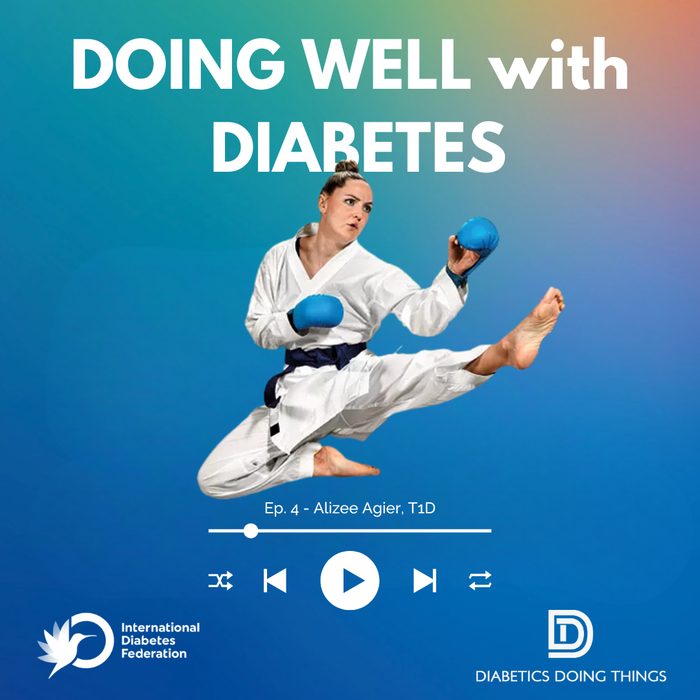
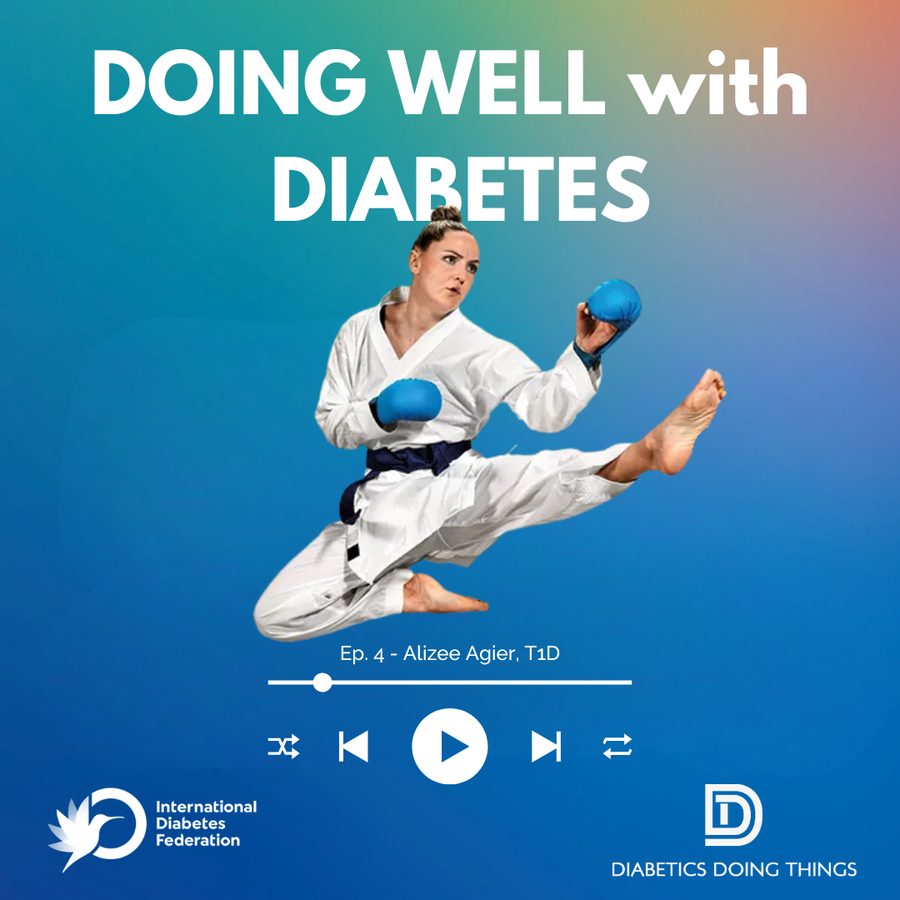
Alizée Agier is a French karate champion who competes in kumite for the national team. Doctors spotted markers of type 1 diabetes a year before her official diagnosis at 19, so she learned about the condition gradually instead of through a hospital emergency. She talks with Rob Howe about carrying the Olympic torch through her hometown ahead of the 2024 Paris Games, missing qualification for Tokyo 2020, and winning gold at the European Championships. Agier explains how competition stress sends her glucose high during matches, why she has never had a hypo mid-fight but sometimes goes low in training, and how putting on her karate uniform lets her focus only on herself. She also describes finding a type 1 diabetes friend on Instagram.
Key takeaways
- Agier's doctor spotted markers of diabetes on a routine blood test a year before her official type 1 diagnosis at age 19.
- She says her glucose tends to run high during karate matches from stress and intensity, and she has never had a hypo in competition.
- Carrying the Olympic torch through her hometown before the 2024 Paris Games felt like a reward after missing out on qualifying for Tokyo 2020.
- She manages glucose during warm-up with a small insulin injection and stays careful about lows for about an hour after a match ends.
- Agier found a type 1 diabetes friend on Instagram and says hearing other people's stories helps her set new goals.
Show notes
Doing Well with Diabetes is a podcast series collaboration between the International Diabetes Federation and the Diabetics Doing Things podcast. During this series, host Rob Howe interviews athletes living with diabetes from around the globe to help inspire the next generation of athletes with diabetes to continue to work towards their dreams while doing well with diabetes.
Doing Well with Diabetes is part of the Kids and Diabetes in Schools program. Diabetics Doing Things has donated all production and promotion in-kind.
In this episode of ‘Doing Well with Diabetes,’ host Rob Howe interviews Alizée Agier, a karate champion from France, about her experiences as an athlete living with type 1 diabetes. Alizee shares her diabetes diagnosis journey being identified for the markers of T1D prior to developing it, the impact of diabetes on her athletic career, her strategies for managing glucose levels during intense training and competition, and the significance of carrying the Olympic torch through her hometown prior to the 2024 Paris Olympics.
The conversation also touches on the importance of connecting with the diabetes community and maintaining a positive mindset.
Resources:
Questions this episode answers
How was Alizée Agier diagnosed with type 1 diabetes?
A routine blood test at age 18 showed elevated glucose, and her endocrinologist told her she would likely develop type 1 diabetes. A year later, at 19, she was officially diagnosed and spent three or four days in the hospital starting treatment.
Does Alizée Agier's blood sugar go high or low during karate competition?
She says her glucose tends to run high during matches because of the intensity and stress, and she has never had a hypo in competition. She watches closely for lows in the hour after a match ends.
What was it like for Agier to carry the Olympic torch?
She carried the torch through her hometown ahead of the 2024 Paris Games with her family watching. She calls it a reward for her career after missing out on qualifying for the Tokyo 2020 Olympics, the last Games to include karate.
How does Agier manage her mindset as an athlete with diabetes?
She talks with friends and family when she needs reminding to go easy on herself. She compares diabetes to sport: some days go well and some don't, but that doesn't erase the work put in.
Full transcript Searchable, with timestamps
Rob Howe: Welcome to Doing Well with Diabetes, a collaboration between the International Diabetes Federation and the Diabetics Doing Things podcast. I'm your host, Rob Howe. Doing Well with Diabetes is a series interviewing athletes living with diabetes from around the globe to help inspire the next generation of athletes with diabetes to continue to work towards their dreams while doing well with diabetes. Doing Well with Diabetes is part of the Kids and Diabetes in Schools program from the International Diabetes Federation and is supported by Sanofi and ISPAD. Diabetics Doing Things has donated all production and promotion in kind. To learn more about the Kids program, visit kids.idf.org. And to hear more from Diabetics Doing Things, visit diabeticsdoingthings.com slash subscribe. Now give it up for our next guest on Doing Well with Diabetes. Hello and welcome to Doing Well with Diabetes. This is a series from the International Diabetes Federation and Diabetics Doing Things, our 2024 collaboration. And I'm very excited to introduce our very special guest here with me today, Alizée Agier from France calling in an international karate superstar is what I'm going to call you here. And we are going to have a really great conversation about doing well with diabetes today. So welcome to the show, Alize.
Alizée Agier: Thank you. Hello, everyone. I'm really happy to talk with you about my career and about type 1 diabetes. So thank you again for having me. I'm really happy.
Rob Howe: It's such a pleasure to have you here. And this obviously is conversations between athletes with diabetes. And you've had a pretty exciting summer of 2024 and the last few months, both competition-wise and in your home country of France and all of the excitement around the Paris Olympics. So really excited to dig into that with you today. But let's start where we typically start with the diabetes diagnosis. So you've been living with diabetes type 1 for about 11 years. What do you remember about the early days leading up to your diagnosis?
Alizée Agier: Yes, I became a type 1 diabetic at the age of 19. But actually, I knew a year before that I was going to have type 1. So at 18, actually, my doctor sent me to do some regular tests, you know, blood tests. And so my glucose level was a little high. Good, but I need to look at this. and especially my endocrinologist told me that I will be a type 1 diabetic someday. We didn't know when at this time. So every three months, I had to do some tests. And then a year after, I became officially type 1 sick. So it's like a soft way of learning about type 1 diabetic. So it's, you know, for this year, it was in my mind, but I was not focusing on that. I was living my life normally. but I knew that some days I have a call to go to the hospital and to get treatment.
Rob Howe: You are actually, so I've had almost 400 conversations over the years with people with diabetes of all kinds from all over the world. And I think you're the first person to come on the show who has had that diagnosis experience. And I know that that happens. And in the United States, there was a big study in Colorado where a large population of children were screened and and they identified 12 children, and they were able to early diagnose type 1. So you didn't have a hospital stay necessarily or go into diabetic ketoacidosis. What was it like? When did you and your care team decide that, you know, it was officially time?
Alizée Agier: Yes. You know, it's funny because funny, really funny, funny, funny-ish. Two weeks before the official diagnosis, I was in a training camp, actually, And I ate some M&Ms, a lot of them. And I remember having a really, really bad headache at this time. I was like, maybe now that I think about it, I'm like, maybe it was, you know, the beginning of something. Because I had to stop my training because it was a really, really, really bad headache. And then two weeks after, my doctor called me and then he was like, okay, he said, now it's time. You need to go to the hospital to get the treatment. So I went to the hospital like maybe for three or four days to get my treatment and to know more about everything. But yes, I was like, OK, I'm packing. And it was not like a hurry. Maybe like everyone with high glucose level and you go to emergency, you don't know what's going on, what's happening. I was like, OK, it's slowly. I went to the hospital and then it was a slow process, if I can say it like that.
Rob Howe: Yeah, obviously like important, but like you said, not an emergency, not a rush to the hospital. That's really fascinating. Did you, like when your doctor found your elevated glucose levels, did you do any other tests or screenings or, you know, to confirm maybe your antibodies? Or how did that, you know, going back every three months, like what were those conversations like with you, if you remember?
Alizée Agier: first. After every three months, it was like, okay, it's good. Go on. And then three months after, okay, good. And then he called me. So I went to the hospital and at first in my mind, I was really, I was not concerned about my career as an athlete because I was already practicing karate, being an athlete in the French team. I was more concerned about my work because I wanted to become a police officer at this time. So I was more focused on them, on this. than my career as an athlete, because for my career as an athlete, I was like, okay, I know it's going to be okay. I will do my best. But I was more concerned for that. And it was in my mind. And then I had to learn how to live with everything. But before the official diagnosis, I knew a little bit about type 1, but not that much. So I really learned everything at the hospital and then during the next months and years after that.
Rob Howe: We're going to talk a little bit about how diabetes shows up in your training as an athlete. But I want to transition first and talk about this past summer, because when, you know, the world's eyes were on Paris and we were looking at the Olympics. And one of my favorite things that I saw leading up to the Games was you carrying the torch on its way to Paris. So what was that experience like for you to get to carry the Olympic torch on behalf of your country as it made its way to the Olympics?
Alizée Agier: Yes. I become a little bit emotional when I talk about it because it means many things. Because the first one, it was in my hometown. So my family was there and they saw me carrying the torch. So it was a really important moment for me and for them. I saw in their eyes how proud they were. And it was really a beautiful moment for me to share with them. and the second point is as you know karate was not unfortunately unfortunately at the olympics in paris we had a one chance in tokyo because we became olympics for tokyo and i missed my chance qualifying at the olympic tournament so i was not in tokyo and it was really a hard time you know because as you know as an athlete you have big dreams the olympics are are fascinating and it's unbelievable. So it was really a hard time for me and carrying the torch was like, okay, like a little reward for me for everything that I've done in my career, even if I didn't make it to the Olympics.
Rob Howe: Well, I felt, you're right, I did know that karate was not on the Olympic sport ballot for 2024 and we'll talk a little bit more about why I know that later, but I did want to just say like for me as a person with diabetes as well. Like it meant a lot to, even though I'm not French, even though, you know, I'm, I wouldn't say like, you know, a huge, I don't follow karate super closely. And we had not yet met each other. I was excited just to see how much it meant to, you know, have the torch pass through your hometown and for you to be the person that carries it. It's a huge honor and well-deserved. So it was cool to see from afar and like share. We even, you know, had conversations internally about like how much, how cool it was to see a person with diabetes carrying the torch on the way to Paris. So it was awesome representation. And I think a lot of people, maybe who you have never thought of or met, were really cheering for you as well.
Alizée Agier: Yeah, thank you for your words. And like you said, it was more than sports. It's like everyone can recognize a part of their life, maybe that I had two in my life, like diabetes, like sports, everything. So it's really an important moment. Like it's not only me carrying the torch, it was like everyone who supports me, who lives through difficulties sometimes? Was that to carry the torch with me?
Rob Howe: Well, I don't want to get too deep into the politics of sport, but just so the listeners are aware. So like you said, in 2020 or 2021, really, the Tokyo Games was the first time in many years that karate had been part of the Olympics. And so this year, for example, is very popular. Breakdancing and surfing are newer sports. And previously, golf was added as well. But there's only a certain number of sports that can participate in the Olympic Games at a particular time. And so if a new sport is added, that often means that another sport has to be removed. And in this case, unfortunately, for karate. And the reason I know this is because I started my career working at USA Karate and worked on the U.S. Open Las Vegas tournament. And so I got to see up close how passionate and how many athletes from all over the world participate in karate on a given basis. And we'll talk a little bit more about your event because it's particularly exciting at a karate event. So I don't want to dig too much deeper into that, but hopefully for you and your teammates and opponents worldwide, we'll get to see karate again at the Olympic Games very soon.
Alizée Agier: Yeah, thank you. We hope to. Maybe if I'm not an athlete, maybe as a coach, it will be amazing. So we hope, we hope, yes.
Rob Howe: So this series is called Doing Well with Diabetes. And I want to talk a little bit about how diabetes shows up in your day-to-day life as an athlete. And, you know, whether that's training and getting ready for competition. Also, competition days are very long. And I think we've talked to some track and field athletes as well, which is a very similar style of day-long meets and competitions. so I want to talk a little bit about how you what steps you take to continue to do well as you're
Alizée Agier: competing yes it's important to know that when I practice karate my glucose level tend to be high because it's like short and really intense moments so it's important part that I have to manage because when I'm on the tatami I don't really have an eye on my glucose level so I need to be an expert of myself. I need to understand what my body tells me. So when I train, I was like, okay, I sweat a lot. Maybe is it like just the training or maybe it's a hypo or a hyper. So I need to manage a high glucose level, especially during competitions because with the stress, getting nervous, sometimes I tend to be high too. so it's like a little routine when I start to warm up I look at my glucose level I do a little injection so it's going to go up but not too much and then I really need to be careful after competition too training it's not that much but competition when I finish my matches it takes me like one hour for the competition at fighting we say because we have multiple fights. So it lasts one hour, not including the warm-up. So after the competition, I need to be really careful about not getting too low. And then I really have something with me to eat every time. I never had a big hypo in competition. Not even a little hypoglycemia. It's really hyper. but at my training sometimes it can happen when I have a training camp and we are the last day and my body is really tired and maybe I did too much insulin at the breakfast and then I train just after so sometimes I go low but usually it's a hyperglycemic that I need to be really careful
Rob Howe: about. I'm glad that she said that because two things I want to talk about like how intense the Kumite competition is and how fast it moves. And also in competition, when you're stressed or you're excited and you really want to do well or the stakes are very high, glucose going up is part of that. And I think it's really important for successful athletes like yourself to normalize that at the highest levels of sport, sometimes the glucose levels are not always flat or not always in range. And I think for young athletes or for parents of athletes who really want to keep those levels in range, of course, we're always trying our best to do that. But, you know, really understanding how your body responds to competition and stress and different from from practice to competition is really important because I was the same way. In practice, I had really fairly good sugar levels most of the time. In competition, it was totally, I was so excited and stressed out, my sugars would go high. So talk a little bit about how you manage those expectations.
Alizée Agier: Yes, it's important to have a little step back. And when you look at the picture of your glucose level, and in competition, it go high, but not for too long. It's like high and then it come back normally. So yes, it's important to say that we are doing our best, like you said. And even with that, our body reacts. So it's okay. Sometimes it's okay. We do our best. And go easy on yourself. You do your best in competition, stress. Of course, your body needs to react to that one way or another.
Rob Howe: Yeah, I think, you know, you're a fight sport, a combat sport athlete. So, you know, having grace for yourself and like being, you know, giving yourself the space to maybe, you know, not be perfect all the time, sort of they're in opposition to each other. But so like, how do you how do you help be gentle with yourself when you're, you know, so, you know, you're in the fighter fight mindset?
Alizée Agier: Yes, when I'm on this fighter mindset, I talk a lot with my friends and family about it. So sometimes they remind me that easy, go easy on yourself. You are doing your best. And there's something I really like to say about type 1 diabetes and karate or being an athlete. It's, you know, I remember that, okay, when you are an athlete, you train every day, you do your best for one goal at one competition. And when you arrive at this competition, sometimes you win, sometimes you are not on the podium. But it doesn't mean that everything that you have done before is lost. It's the same with type 1 diabetics. Sometimes you are doing your best and it works. sometimes you have a bad day, but it doesn't mean that you didn't do your best that day. So it's important to remind that it's not a sprint, it's a marathon. So it's important to be good in your head too.
Rob Howe: I love that perspective and I totally agree with it. I think you have to be careful to celebrate all the work that you put in, even if you don't get the result that you wanted, because it really is a long game. It's a marathon, like you said. And also, sometimes you do podium like you and your team just did at the European Championships. So congratulations on gold medal at the European Championships. What did that feel like?
Alizée Agier: It's awesome. Awesome to be on the top of the podium and hearing national anthem. It's a really strong moment because, like you say, it's a moment that we celebrate everything that we have done before. So sometimes we don't have this opportunity and sometimes we are at the top of the podium. It's really good and amazing feelings.
Rob Howe: So let's talk a little bit about karate. And, you know, early in my career, like I said, I worked at USA Karate. So I learned about kumite and kata and how a karate competition works. But for our listeners who maybe aren't as familiar with karate events, talk a little bit about the kumite event and also just reference the kata event and talk about how, you know, a karate team would enter a competition.
Alizée Agier: Yes, and for kata, it's techniques, real techniques. You are alone or in team doing your kata. You learn your kata by heart, so you have to repeat it in front of the referee. And they will judge your kata the way you did it. Techniques, speed, trends, and everything. In kumite, we have an opponent in front of us. And we have three-minute matches. so we need to score more than our opponents with our points and legs over the belt. It's important. And we don't have knockouts in karate, so if you knockout your opponents, you can be disqualified. So it's really a sport that needs speed and self-control, strength, agility, so it's important to know that your opponent wants to score too, so you need to be faster than him, but maybe it will counter your attack or block. So you have to think about everything at the same time. So really in Kumite, we repeat movement again and again and again. And then in the fight, we don't really think about what we are going to do. It's like unthinked, you know. And in three minutes, we need to score more than our opponents. So if you score with your points, it's one point. with legs at the head, three points, and in the back of the stomach, two points.
Rob Howe: Like you said, it's speed and reaction time is so key when you're watching a kumite event. I'm having some sort of glucose alert here. Okay, we're all good. But self-control, I think the speed and the self-control and the discipline aspect of karate truly make it different than other fight sports. Because like you said, there are no knockouts. And in some cases, a knockout would reflect poorly upon your score. You could be disqualified. So scoring points, and you see often like the quickness and the restraint. So scoring the point and pulling back. And like you said, the reactions and the technique, the energy is extremely high and everything happens extremely fast. And so as a viewer, I would encourage people, if you have a chance to go watch a Kumite event at a karate competition, I highly recommend it. It's a really exciting atmosphere. Being down there on the mats and like the very high stakes, it's cool to watch.
Alizée Agier: Yes, and don't be afraid. We do KI, so we need to scream when we score a technique. You are prepared. You know that.
Rob Howe: Yeah, very fun. Okay, shifting back to diabetes a little bit. What do you think is the best diabetes advice that you've been given? And then also, what do you think about is the worst advice you've been given?
Alizée Agier: it i start with the best advice i think it's it's the one i said earlier about getting a step back and go easy on yourself because it's it can be really hard sometimes and it's important to talk about about it and to to talk about it with with other type 1 diabetic because they can who can relate the the most about what you live that someone will do the same things and the worst
Rob Howe: advice is like oh you need to avoid carbs attack no no not at all yeah and i think i really want to echo what you said about connecting with other people with diabetes for you like when you sort of got opted into that are you you know connected with other people with diabetes like how did that did you do that early did you do that later in or more recently like how did you find
Alizée Agier: diabetes community? I find diabetes community on social media and I find my type 1 buddy on Instagram. So we talk about everything, but sometimes we can talk about where we live through the day with type 1 diabetes. So it's really important. And then in association, you know, sometimes the organization, we have some events so we can see each other, talk about everything and it's important to to know everyone's story because it's really inspiring and it helps finding other way to to be really connected and to have some goals always you know you have your goals but when you learn about someone's story you're like okay is that good it's really inspiring it helps you finding new goals too
Rob Howe: this kind of flows into that answer because i totally agree but you know if you're talking to a young person living with diabetes who has a dream to be an athlete what advice would you give
Alizée Agier: them i will give them some advice about making his own choice it's really important and to always believe in himself to work hard for it you know if you are if in your mind you really want it your body will follow and to go step by step in the process of being an athlete. And if you want it, there is nothing that can stop you.
Rob Howe: I love the mind-body connection because I think the belief in yourself to do things, I think sometimes we underestimate what we're capable of in our self-talk. And mental health in this series has been a topic that has come up. So for you, like, how do you keep your mind in that position to push your body forward? And, you know, when you're working hard or, like you said, that long sort of marathon of training, how do you keep a positive mindset?
Alizée Agier: Yes. Sometimes it's hard, but passion, passion. And, you know, when I put my kimono, I just look at my glucose level and then I forget about everything else. So it's my moment. I think it's sometimes I'm just Alize, you know, not Alize with type 1 doing karate. So when I do, when I put my kimono, I'm just myself and I forget about everything. You know, I leave everything behind the type of me. And when I'm on the, I just focus on myself and my well-being. So it helps me when I do sports, not only karate. it helps me to be there and to keep believing in me and to do what I like to do
Rob Howe: So do you have a favorite story? I love the idea that you're just Elize that that's your truest self and you're so focused on being who you really are and I feel the same way when I play basketball I'm not Rob with diabetes I'm just Rob, I'm just out there playing Do you have a favorite story about diabetes or managing diabetes during a specific competition or in a practice or a tournament?
Alizée Agier: Oh, one at a competition. I already compete and I am like sitting and looking at the competition. It was the day after maybe. And I was like, in the morning, I didn't remember if I did my insulin, my slow insulin, you know. And I was like, it was panic. I was panicking. I was like, okay, what I'm going to do? I'm not in France. I don't know if I have my insulin working inside my body. I don't know. I can't remember everything. I was like, okay. And then I called my doctor and he told me what to do for it. But yes, I remember that day that I didn't remember if I did my insulin. I was like, it was crazy. Like, okay, did I do it? But it's not like a few hours after the time you need to do it. It's like the day after. I was like, okay. Am I going to die?
Rob Howe: No? You better come. It's always those panicky moments when we have to call our doctor or email our doctor and be like, hey, what's going on here? Okay, well, I want to get to our rapid fire questions really quick. So for this, we're just giving as quick answers as you can. We're in the hot seat, but these should be pretty fun. Are you ready?
Alizée Agier: I'm ready, yeah.
Rob Howe: Okay, what is your favorite hypo snack?
Alizée Agier: Juice.
Rob Howe: Any juice specifically or just all juice?
Alizée Agier: Tropico.
Rob Howe: All right. Favorite thing to do on an off day?
Alizée Agier: Going on concert.
Rob Howe: Who's your favorite athlete?
Alizée Agier: Clarisse Agbegnenou, French judoka.
Rob Howe: What are you currently listening to?
Alizée Agier: Oh, I'm in Linkin Park mood.
Rob Howe: Oh, okay, cool. I saw they were just on European tour. Did you get to go see them?
Alizée Agier: Yes, I saw them. Oh, it's big fun.
Rob Howe: Are you a homebody or a thrill seeker?
Alizée Agier: Thrill seeker.
Rob Howe: Cats or dogs? Pump or multiple daily injections?
Alizée Agier: MDI, but soon a pump, maybe.
Rob Howe: And movies or a TV show?
Alizée Agier: TV shows.
Rob Howe: All right. Cool. Well, Alizé, thank you so much for being part of Doing Well with Diabetes and for all that you do to create awareness for what people with diabetes can do that I think most people don't think of. And again, just being able to see you from afar, carrying the Olympic torch and competing at the highest level is inspiring to me. And I know our listeners are really grateful for your time.
Alizée Agier: Thank you. And thank you for sharing stories. That is inspiring. It's really important for us to listen to everyone's voice.
Rob Howe: If our listeners want to follow you more closely or get in touch with you online, what's the best way to do that?
Alizée Agier: On Instagram. My Instagram, Alizée Agier.
Rob Howe: Awesome. We will tag your account in the show notes as well. So, Alize, thank you again for being part of this series, and good luck at your upcoming World Cup.
Alizée Agier: Yep, thank you.
Rob Howe: Doing Well with Diabetes is a series interviewing athletes living with diabetes from around the globe to help inspire the next generation of athletes with diabetes to continue to work towards their dreams while doing well with diabetes. Doing Well with Diabetes is part of the Kids and Diabetes in Schools program from the International Diabetes Federation and is supported by Sanofi and ISPAD. Diabetics Doing Things has donated all production and promotion in kind. To learn more about the Kids program, visit kids.idf.org. And to hear more from Diabetics Doing Things, visit diabeticsdoingthings.com slash subscribe. Now give it up for our next guest on Doing Well with Diabetes.
About Alizée
Alizée Agier is a French karate champion competing in kumite for the national team. She has lived with type 1 diabetes since being diagnosed at 19 and carried the Olympic torch through her hometown ahead of the 2024 Paris Games.