

Lara McSpadden on Balancing Professional Basketball and Diabetes Management

Episode summary
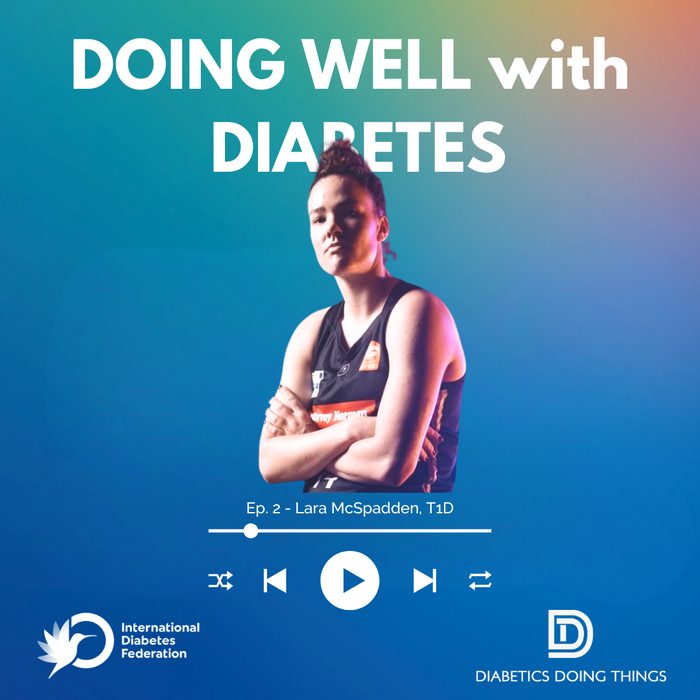
Lara McSpadden, a professional basketball player from Australia, has lived with type 1 diabetes for nearly 18 years since being diagnosed at age eight. She talks with host Rob Howe about growing up in Newcastle, starting basketball at 12, and playing nine pro seasons, including time with the Sydney Flames and now with Tauranga Whai in New Zealand. Lara describes the support from her parents, friends, and coaches, how she manages insulin and meal timing around games, and a memorable low blood sugar moment during a game. She shares the best and worst diabetes advice she has received, her approach to mental health, and encourages young athletes with diabetes to be open about their condition with teammates and coaches.
Key takeaways
- Lara tries to keep her blood sugar between 9 and 11 mmol/L two hours before a game so she doesn't crash or spike while playing.
- She tells every new team about her diabetes up front so teammates and staff know what to watch for.
- Lara's diabetes doctor told her that managing diabetes is a marathon, not a sprint, advice she leans on after a rough day.
- She says she's never understood why paramedics give a big glucose dose for a severe low without accounting for the rebound spike that follows.
- Lara manages her mental health by talking with close friends, getting outside, and reminding herself that a hard moment will not last.
Show notes
Doing Well with Diabetes is a podcast series collaboration between the International Diabetes Federation and the Diabetics Doing Things podcast. During this series, host Rob Howe interviews athletes living with diabetes from around the globe to help inspire the next generation of athletes with diabetes to continue to work towards their dreams while doing well with diabetes.
Doing Well with Diabetes is part of the Kids and Diabetes in Schools program. Diabetics Doing Things has donated all production and promotion in-kind.
In this episode of Doing Well with Diabetes, host Rob Howe interviews professional basketball player Lara McSpadden. Lara shares her experiences of living with diabetes for nearly 18 years and how it intersects with her career as an athlete.
They discuss the challenges of managing diabetes while maintaining a rigorous training and playing schedule, the importance of a strong support system, and mental health. Lara also provides insights into her routines, favorite diabetes management tips, and advice for young athletes with diabetes.
This inspiring conversation aims to encourage those living with diabetes to pursue their dreams while effectively managing their condition.
Resources:
Questions this episode answers
How long has Lara McSpadden had type 1 diabetes?
She was diagnosed at age eight and has lived with type 1 diabetes for nearly 18 years.
What team does Lara McSpadden play for?
She plays professionally in Australia's WNBL and NBL1 and is currently in her ninth pro season, playing for Tauranga Whai in New Zealand's basketball league.
How does Lara McSpadden manage her blood sugar before basketball games?
She aims to keep her blood glucose between 9 and 11 mmol/L about two hours before tip-off and keeps her meals and timing close to a normal day to avoid swings during the game.
What is the best diabetes advice Lara McSpadden has received?
Her diabetes doctor told her that managing diabetes is a marathon, not a sprint, meaning one bad day with her numbers will not ruin the long-term picture.
Full transcript Searchable, with timestamps
Rob Howe: Welcome to Doing Well with Diabetes, a collaboration between the International Diabetes Federation and the Diabetics Doing Things podcast. I'm your host, Rob Howe. Doing Well with Diabetes is a series interviewing athletes living with diabetes from around the globe to help inspire the next generation of athletes with diabetes to continue to work towards their dreams while doing well with diabetes. Doing Well with Diabetes is part of the Kids and Diabetes in Schools program from the International Diabetes Federation and is supported by Sanofi and ISPAD. Diabetics Doing Things has donated all production and promotion in kind. To learn more about the Kids program, visit kids.idf.org. And to hear more from Diabetics Doing Things, visit diabeticsdoingthings.com slash subscribe. Now give it up for our next guest on Doing Well with Diabetes. Hello and welcome to a very special collaboration and series between the International Diabetes Federation and Diabetics Doing Things. This is Doing Well with Diabetes and I'm your host Rob Howe. And today's guest I'm extremely excited to introduce to you because we share a passion for basketball and we're both living with diabetes for almost the same number of years. Lara McSpadden. I'm so excited that you're here. Welcome to the show.
Lara McSpadden: Thanks so much for having me on, Rob.
Rob Howe: So, Lara, let's talk a little bit about who you are, and then let's dig into your life with diabetes, because you've been living with diabetes for nearly 18 years. And as a professional basketball player, I imagine there were some crazy ups and downs in the early years that have led you to where you are today. But for those who may not know you, introduce yourself.
Lara McSpadden: As you said, my name is Lara. Yeah, I've had diabetes for almost 18 years. I'm from, I was born in Western Sydney, but I've spent most of my life growing up in Newcastle, which is about an hour and 45 minutes north of Sydney. It's one of the best, I would say, like beach surfing towns in Australia. So big beach girls spent a lot of my life by at the beach doing self-life saving. I am finishing my degree right now in high school teaching in HPE, so health and physical education and geography in high school, which is different to America, I believe. High school is like middle and high school combined here, I think. So yeah, finishing that i've been a professional basketball player for this is my ninth season so straight out of high school was lucky enough to get into the wnbl and this is my first year playing overseas i guess which i guess it's not really that far from home it's only like three hours so but yeah that's kind
Rob Howe: of me yeah well and you also were a member of the u17 australian national team i think they won gold at a FIBA World Championships. So like you said, for nine years, straight out of that high school, like turning 18 and turning pro, you're not new to this. That's pretty exciting to be in your ninth year.
Lara McSpadden: Oh, for sure. I mean, it's the way the league is going now. There's so many good players that miss out. We only have eight teams in Australia. So I was really fortunate to be given the opportunity to play for my home team as well for the Sydney Flames. I'm straight out of high school. And yeah, we won a championship in that year, which was in the same year as the under-17 Sapphires team. So it was kind of everything was going on. It was good.
Rob Howe: Oh, that's exciting. And like you mentioned, you're now overseas. For those who aren't watching on video, we're doing the air quotes because you're in New Zealand playing for the Tauranga Whai. And I also know as a beach girl, it's probably great to be in Tarangarh because I was looking out where that is and what that's like. It seems like a really amazing beach town.
Lara McSpadden: Oh, for sure. I mean, everyone that I spoke to about coming here before I got here was like, oh, it's the best tourist beach destination in New Zealand. And I was like, well, I made the right choice. Pretty easy.
Rob Howe: Yeah, pretty easy. Just to sell you on that. I love it. Okay. Well, let's dig into sort of the early years of your life with diabetes, because we're going to talk about living well and doing well with diabetes over a long period of time. And so what do you remember about the early days of your diagnosis or some of the early years of you living with diabetes? I think one of the main things I would
Lara McSpadden: say is from my memory I had I was very lucky to have like super locked in like parents and family and like a support group yeah my mum and dad were really like crucial in embedding kind of the good habits that you need to have as a diabetic so yeah they were really good for me my friends were always on top of it like more so like if I was acting weird or you know like slurring I'm not with it they're like Lara you need to sort yourself out I'm like okay yeah even as much as I didn't want to be like oh it's my diabetes but yeah probably the other thing was I definitely did struggle with the way that it changed my thinking about how I ate like you know being eight years old and going to like kids parties and having to be like oh I actually can't just go to the lolly table and like grab all of these lollies that was definitely a struggle but I mean again I had like all of my friends parents were aware of the situation so they would they wouldn't say no they would be like oh make sure you do you know you check your bloods and you do your insulin if you need to do it and I definitely saw it as a hassle and I still do see it as a hassle sometimes but yeah they were really supportive so that was definitely the main thing that I remember from when I was first diagnosed. That's such a challenge being so young
Rob Howe: right and to see all your friends running over we don't have lolly tables in the U.S. but like you know, a big pile of cake is, you know, I imagine as well. And I know that many people talk about as like a really challenging point for them adjusting to living with diabetes. But like you said, your parents were really locked in and, you know, I'm sure they were having conversations with your friends' parents as well. And it seems like, you know, that supportive environment, do you feel like that allowed you to, I don't know if normalize is the right word, but at least sort of make peace with the day-to-day of diabetes management? Oh yeah, absolutely. I mean,
Lara McSpadden: And especially when you're freshly diagnosed, it's like a big new thing. So it already feels like out of luck. But yeah, with the support of, yeah, the support groups that I had, it definitely made it feel like less of a change to the way I was going to have to live my life. Yeah.
Rob Howe: And what do you remember about your diagnosis? You know, being eight years old, like, you know, it can be, you know, some people don't really remember. I know even I was 16 and there's not too much of the life before diabetes that I really remember as far as details these days. But what do you remember about your actual diagnosis?
Lara McSpadden: So I remember the night before and the night before. Sorry, I was saying before we're from Western Sydney where my mom and dad's family are from Penrith. So we were watching the Penrith Panthers play the NRL. It was like a Thursday night or something. And I just went to the toilet like six times during the game. And mum was like, that's not right. Like, take you to get checked out the next morning. And the next day I had my primary school, so like elementary school netball gala day. I was so gassed for this day. Like, I really wanted to go. But mum was like, no, we got to go to the doctors. So it was like before school and everything. My brother had just been born. So my brother was like really young. So mum and dad are in there and I get like my blood test done and I'm waiting with Campbell outside and they walk out and I was crying and I'm like, what's going on? But yeah, that's what I remember. And then I just spent the next like, I don't know, however many days it was, 10 or something like that, learning about diabetes
Rob Howe: in hospital and that's it. Yeah. Yeah. And I mean, I think like those early days, especially having to learn so much and like, you know, especially being so young, I can, I imagine that It was probably a lot of information. And, you know, like you, I had amazing parents who really helped me out a lot. And I attribute all of my especially early success with diabetes to them. So, you know, when did you know you've been a pro here for now nine years? When did basketball become a part of your of your life?
Lara McSpadden: so i've started playing basketball when i was i was 12 so kind of late in the game most people in australia start i mean around the world they're like baby bowlers and they have a ball in their hand i'm like three years old but i'd get here i'd come from i'd come from surf life saving and netball and like netball and basketball have this whole like war thing where it's like you do one or the other but one of my dad's colleagues whose daughter was doing basketball at the time and he was like oh you should get lara to try basketball like i mean you can't like see how tall i am but i'm like i'm the tallest girl like most people have seen in their lives so they were like she's tall she's gonna be like have an advantage you should give it a crack so yeah started at 12 and then yeah and that had to kind of be the only thing that I did so I was trying to do like most kids do two things at the same time but I couldn't just because I was really lucky to get opportunities and progress my game quite quickly I guess yeah one of the first questions
Rob Howe: that I get and my sister and my brother always get is, do you play basketball? So, you know, anytime you're here for the international listeners, anytime you're over, you know, 190 centimeters, you're going to be, you know, in, in rare territory. So, you know, what do you, I guess, as you were growing up too, and this is really interesting because I know you, you mentioned that you're going to, you're majoring in a high school, like physical education. Like, what do you remember about your school environment as you were growing up? Like, Like, did you feel supported? You know, this program and this podcast is supported by the IDF, but also by the kids program. And so it's really important for us to kind of dig into, you know, did you feel supported by your teachers, by your programs? Like, what were the challenges that you faced? Like, anything that comes up for you?
Lara McSpadden: um again I was really lucky to be supported in like I would say all of the environments that I've kind of existed in I guess my I guess in high school like you would know like the onus of your health kind of shifts more onto you the longer you have it the older you get so So I definitely had a bit more control, but my friends were really, yeah, really locked in and they'd like get really involved. They'd be like, oh, can I, I don't know if it's weird, but I would be like, do you want to like, do you want to practice? Do you want to like help me give my insulin? And then, and I had this one friend who was always like, oh my God, let me do it. Because she was like obsessed with that sort of thing. but yeah no I had very good like supportive environments from staff to my friends in high school yeah I can't really I can't really complain about anything yeah well I think like you know
Rob Howe: being open is such a huge obstacle that many people have to face at some point in their in their life with diabetes. Over the years, I've kind of, after talking to so many people, come up with this sort of idea that you're diagnosed twice, you know, once when the doctor tells you, and then once when you really have that acceptance and you make it part of your life. And something that my parents and I decided for me when I was being recruited to play at university was that we were going to be upfront with the teams about my diabetes because like I was going have to be there and manage my diabetes with them. And not knowing it at the time, it had only been a few years of living with diabetes for me, that made a huge difference in the way that the next four years played out for me. So for you, you know, how does diabetes show up in your day-to-day life as a professional, you know, going from team to team sometimes, like for, you know, this year, starting with a new team, having to meet a new staff, like having to meet, you know, new teammates, how does how do you continue to do well with diabetes and what steps do you take to
Lara McSpadden: to make sure that you're set up for success i guess the first thing that i do is if i like this is a perfect example i'm coming onto a new team there is one player on the team that i have played with before several times but majority of the like none of the staff none of the local girls know none of the imports know I have diabetes I get them all together and I just basically tell them this is what it is and what I have to do and what that looks like at trainings and games and then what they should be kind of looking out for if they notice anything yeah but But other than that, like, it's just, it's so much about being like thinking ahead for me with the, you know, even 24 hours ahead. What do I need to do now to put me in good stead for tomorrow? Whether that be like my insulin, reducing it. Like if I'm about to have a big day, my long acting. Yeah. What I eat. Yeah. I saw this graphic on Instagram and it was like, diabetics have to make like over 250 more decisions each day. And I was like thinking about that. And then I caught myself in the car driving and I was just like subconsciously thinking about, okay, when am I eating next? Like, what am I going to eat? And I was like, damn, that's actually what we have to, like, that's what happens in our brains. So it's just, it's that probably times two for me, I guess, because my energy levels get depleted more often than non-athletes, I guess. Sure. Yeah. Yeah. So.
Rob Howe: Well, I think it's, I've seen those graphics and those stats. And recently someone came on the podcast and they told me something that was similar, but it added a little bit more information. It was like the average person has like 3,000 thoughts a day or something like that, three to three to five thousand thoughts a day. Even if it's just like, oh, that that water is blue or this shirt is black. Like you're not really thinking about it actively, but it's it's crossing your mind. And people with diabetes have double with that because you're thinking about. So then it's like 10,000 thoughts or whatever the number, whatever the number of thoughts per day that you have. So, you know, that's why people are fatigued. That's why, you know, we get burned out. That's why we have anxiety because there's so much going on in our minds. And then you throw that in for you being a professional athlete where the demands on your time and your fitness and your schedule or your travel are also much higher. Diabetes just adds another layer of complexity to that.
Lara McSpadden: Yeah, for sure. That's I mean, that's definitely crazy to think. and we don't yeah we don't really have a choice hey we can't just be like oh it's all right today i'm just not gonna think about it i'm gonna pretend like i don't have diabetes like i mean we can't really do that so yeah the fact that we just having diabetes is like hard enough so when if we can just like keep you know pursuing and keep doing as best we can that's pretty cool
Rob Howe: yeah yeah and like you said there's no days off there's no there's no paid time off there's no vacations, you know, you know, benefits, right? Yeah, literally. So yeah, it's, it can be challenging. And then for you, I guess, what is sort of on your, if you're going to have a big day, because I know, you know, when I talk to athletes with diabetes, that that's some of the questions that they have is that when it's a training camp or it's a tournament or it's something, you know, a big game that means a lot, like what's on your diabetes checklist? How do you get ready for, how do you get ready for competition in that way? I, I'm one of those
Lara McSpadden: people I'm not really superstitious I don't have like a game day routine outside of diabetes what I the main thing I try to focus on is I try to make sure I'm between nine and eleven two hours before the game and if I can do that and then like kind of ride that zone through that's gonna set me up um to not like crash or go high throughout the game yeah so i keep my like meal times and what i eat pretty similar to normal days just so that i don't get that fluctuation which is what i found for me obviously like it's different for everyone but yeah just kind of making sure that i'm in between that zone like a couple of hours before the game has worked for me yeah yeah i think
Rob Howe: for me it's always like how many variables can i minimize right so so i can count on my blood sugars being stable in a range that i like because i don't know about you but if my blood sugars are out of range i can i play terrible sometimes like and then other times i i don't know just i feel if my bloods are low i'm i'm kind of like goofy and fluid and if my bloods are high i like can't catch and I'm like angry. It's just, I don't know, crazy. So I always have to make sure that I kept my sugars in range as much as possible.
Lara McSpadden: Yeah, for sure. I feel the same way. Like I had this game in our season that we just won with Rockhampton where I had like seven turnovers and that is uncharacteristic of me. And I literally sucked myself off. I was like, this better be my diabetes because if it's just me, I should quit. But yeah, but just... being out yeah being out of range is annoying but then when you're trying to perform it's hard as well because it affects your concentration and your coordination so yeah having those things under control always helps i love that yeah it's it's just nice to
Rob Howe: know that i was the only one going through that and it's good to have the diabetes to blame sometimes too on that yeah oh for sure yeah so i want to dig into like some of the you you've You've talked about your support system, talked about having, you know, people around you that have empowered you and helped you in your diabetes journey. What do you think the best diabetes advice you've been given is?
Lara McSpadden: Definitely from my diabetes doctor. She told me it's a marathon, like it's a marathon, not a sprint. I was like, yeah. Well, I mean, it's true. Like we're trying to live as long as we can with managing this disease. So it's not like, even though the small choices that we make impact the long run, like if we have a shit day, it's going to be okay. Like, yeah, that was definitely the best advice. I think that also helps like mentally, like you don't have to be absolutely perfect. You just have to be doing the best that you can. To some extent, you want it to be pretty good, obviously your control. But yeah, that definitely helps me on the days where I feel like I can't get with it. So, yeah.
Rob Howe: It's such an interesting metaphor, too, because it's like a never-ending marathon. And you have to, you mentioned it, like celebrate small wins. It's interesting to me. I've been thinking a lot about the way basketball and diabetes affect the way that I see the world. And something recently that's come up for me a lot is, you know, the best shooters in the world miss six out of 10 in a game. you know and so like how can i expect to get every single bolus and every single dose 100 percent right all the time or 100 percent time and range that was just an unrealistic expectation and you know what makes those shooters great is that they're not thinking about the last miss they're just focused on the next one and so you know trying to find a way to even if like you said you had a shit day of your diabetes management the next day you're going to get back up and you're
Lara McSpadden: going to try again yeah for sure like yeah the fact that it can correlate between the basketball and the diabetes it's just yeah it it makes sense though like it's not like you're going to base your decisions on the mis like in the name of the mistakes that you've made like you're trying to improve and yeah just keep living each day as it comes really 100 what do you think on the other
Rob Howe: side of that question what do you think is the worst diabetes advice you've been given
Lara McSpadden: i wouldn't know that's a question i've never been asked that question actually
Rob Howe: i yeah it's new for me so i i like i was trying to think of what because i think so many times there's so many like stigmas or misinformation that people give and so i wanted to see if there was just bad advice or, you know, bad information that people have been given. And I'm also trying to challenge myself to ask better questions. So, you know, this is what I get, I guess.
Lara McSpadden: Success, yeah. I don't know. Okay, this isn't necessarily information, but the last time I had like a big hypo and I had to go in the ambulance, they like jack you up with glucose, right? And we all know what happens after you have a low and you have a lot of glucose. You go right back up. So I've always wondered, like, why do the ambos just jack you up with glucose? They should know that you're going to spike. Do you know what I mean?
Rob Howe: It's so, it is wild. I think like, and this is something in the States that we're dealing with, especially is just like diabetes education across our medical fields and, you know, people who aren't specialists. often don't experience more than a few days of diabetes education in their medical school. And so, as you know, like there's so much more information and, you know, they just may not have gotten it. So that ambulance tech, they know that if you're having a hypo that you need glucose, but they may not know how much. And, you know, they, and then I think also it can be really challenging in those moments where they want to protect you, but you're like, oh no, I'm like, 250 going way up double A grows up or you know I guess yeah 20 20 millimolars going up like I need to stop having this glucose and they don't necessarily know you know that that's what's
Lara McSpadden: what's going on yeah I mean I don't know what it's like I'm not very across the what people get taught like in paramedicine or whatever but yeah that always blew my mind because yeah I had a big low and then they would just give we have the glucose tubes or whatever and i was with my friend and my friend had never seen like me have a hypo like badly before and she was stressed whole thing but they just keep giving them to me and then later like literally i came with it like about 10 minutes later and i was like i'm gonna be so high later and it's just gonna be the cycle but yeah just riding that roller coaster literally yeah i wouldn't say i've been getting given any bad advice or information but just experience some weird things i guess for sure
Rob Howe: so i want to i want to have some advice from you to some young people who are living with diabetes who either have a dream to be an athlete or just have a big dream to do something you know in their life like what advice would you give someone out there listening with diabetes today i would just
Lara McSpadden: say that especially in today's environment with the social media awareness especially i mean that's how most of us are connected and find out things i guess these days you definitely don't have to hide you don't have to hide it and i think just being up front with it and talking to your team team or talking to the people who you're going to you could be working with if you for example are trialing for a state team or you're trialing for a team that's about to go into tournament yeah definitely don't hide it that just shows like how you know good your character is you want to take ownership and just be like you don't want to have to worry about not being able to be fully yourself and take care of yourself when you know trying to do things that you enjoy so I would just say yeah don't have to hide it and people will look after you yeah if you're in if you're in the right great people will look after you so yeah were you always open about your
Rob Howe: diabetes while you were you know playing them with your with your teammates with your with your staff
Lara McSpadden: with your coaches things like that yeah absolutely especially with like the first few like state teams I was with it was kind of the first situations where I would have to go away from home and I would be in the care of other people essentially because I wasn't 18 yet yeah so I always had to be like open with them and I'd always I'd also always just had people around me that asked a lot of questions, which sometimes can literally be the bane of my existence. But it's good, I guess, because like the question asking is just like representative of their, they want to learn. And if they care about you, they'll ask you questions as well so that they can be prepared for situations that might happen. Yeah. I definitely understand though.
Rob Howe: Sometimes those questions, you know, if your blood sugars are a little out of range, maybe they hit you in the wrong in the wrong time and they just feel really invasive oh yeah for sure and just
Lara McSpadden: and even sometimes i've had this i was sitting sitting in a shopping center one time and i was with my dad and i was like clearly doing my blood sugar levels because i didn't have the cgm at the time and this random guy just wakes up and was like oh walks up and was like oh can you do mine and i'm like right it's off leave me alone but yeah no they definitely rub me the wrong way
Rob Howe: yeah me too i'm guilty of it just you know sometimes it's especially if i'm in a situation where it's i'm not doing well with it and i'm having to juggle a couple of things like it occasionally will come off you know i've said some said some things even i had a teammate one time who was asking me a very like innocent like fine question and i i jumped down as to fraud it pretty funny but i apologize later it's all don't don't i apologize for what i said when my blood sugar was high that's for sure yeah yeah i love it i saw a video of you the other day on social media and you mentioned you know social media is how we all kind of get connected and you were like wearing the mic going through practice and chatting it up having a good time you know during a shoot around what kind of teammate is lara mcspadden like for those not familiar with your game on
Lara McSpadden: the court like what do you bring to your team I ability aside that's like the person and the teammate that I am is definitely what I pride myself on growing up like outside of my professional career I didn't really like I didn't play much so I just had to be I had to be a good teammate and I I had to know what I had to do to remain on team. So listen to coaches, make sure I was helping other people as well whilst doing the job that the coaches want me to do. But yeah, I mean, I would say that I'm pretty silly. I love having fun. But also when it's crunch time, I'm so serious and I've definitely gotten more competitive as my career has gone on. But yeah, I was the captain of my NBL1 team for the last three years. And that's, I think that's definitely helped develop my character as a teammate as well. Just rather than having, you know, you're focused on yourself and now like having to see the team from a whole perspective and make sure that everyone's doing well, because I mean, you would know like it's hard sometimes playing basketball, like people have different roles. They're doing it for different reasons. Not everyone's had the same experience. So yeah, doing it from that perspective has definitely kind of changed the way that I even approach like my game these days. Like I just want to make sure people feel that they are valued no matter what they do. like you're on a team because you bring something so yeah that's my that's kind of I guess who I am
Rob Howe: but yeah I love to have a joke so that's me you gotta have those people around too I love I love that though because I know I'm getting older I'll be 36 in a couple of weeks and I know I'm getting older because I'm starting to talk like a coach and it is really really scary it really is but But I just, I love people who really take on the role of being a great teammate because it's a skill. And it doesn't get credit a lot of times for being a skill. But if you look at, you know, the players who continue to get contracts, the players who continue to get responsibility and minutes, even if there's somebody out there maybe whose skills are a little bit better or who are equal, the job is going to go to the good teammate. And, you know, the good teams have more good teammates than bad. And so I think that's something as a, as a young player, like you said, everybody has their role and everybody wants to, at least I wanted to have, I wanted to shoot every time I wanted to be the volume scorer. That's the fun stuff. I wanted to see my name in the paper, you know, but as my career progressed, my role was not that. And, you know, I had to be the guy that showed up to practice to get the team ready. And I, and then, you know, when my number got called, I had to stay ready for that. And so I think that's something where I think it's really inspiring to see someone like you who went from, like you said earlier in your career, not playing as many minutes and then being the captain of your, you know, WNBL team like three years in a row. I imagine there were days where, you know, you didn't want to go and get to work. You didn't want to be a good teammate, but you did it anyway.
Lara McSpadden: Yeah, for sure. And like we all have those days, but at the end of the day, I guess, I mean, I really want to win. So I was like, even though today I don't want to deal with you or you or you or you, I want to, I want to win and I want everyone to get better. And I know if I'm having a bad time, other people are going to be able to see that I'm having a bad time because I can't control my facial expressions. So I need to fake it. I need to fake it a lot of the time, but most of the time it's genuine. But yeah, no, I've really loved that part of basketball.
Rob Howe: all right so now diabetes and basketball we're coming back to it do you have a favorite story about managing diabetes in a basketball game or practice or road trip or something that stands out
Lara McSpadden: i do so when i was playing for i played the first four of my pro years in sydney and i think it was in the third year i was and we were warming up so it was me my mate ali wilson and vanessa panusa I've said this story so many times. She's going to be like, wow. Anyway, I'm one of those people that can eat anything before a game and not feel sick.
Rob Howe: I knew those people were out there. I wish it was one of them.
Lara McSpadden: So in this situation, I was, I can't remember what blood sugar level I was. I wasn't low, but I was like on the lower side of my range. I was like, mom, can you get me some banana bread from the cafe? Like, I just want it now. and it won't like it's not gonna like mess with my levels like too much and I was eating it as we were like doing leg swings or stretches or something and Vanessa my teammate she was like oh you a bit hungry la and I was like mate you know I have diabetes and I'm eating this for my like my health and she just like she was like I'm so sorry like every time people make a joke about me eating and I'm like I've got diabetes and they like feel so incredibly bad but half the time I'm just taking the test so yeah that was that was really funny in the moment I mean we bring it up
Rob Howe: all the time but yeah you know it sounds like you're living somebody's dream being able to eat banana bread during warm-ups I mean come on literally who says no who says no absolutely oh I love it all right well we got some rapid fire questions for you as we kind of lock in so lock in here this is we we got some fun ones coming so all right on the diabetes front what's
Lara McSpadden: your favorite hypo snack at the moment there's these like there's these lollies or candy that have it's like raspberry but they have sherbet on the inside they're called they're called like twisters or something like that yeah but i mean i've are introduces like my thing yeah i should
Rob Howe: go too i like it all right favorite thing to do on an off day go to the beach for sure yeah yeah you got a great event now i know you know the reason number two at least top five reasons why you you're with the the Tauranga Whai hey nice day okay who's your favorite athlete
Lara McSpadden: oh damn that's tough and i wish i could answer this quicker i really like jack mcveigh that's not even a hard question i should have said that sooner yeah he's kind of he's just like not that he started from the bottom but where he is now like started from the bottom now he's like achieving his dreams kind of guy so and yeah he does a really good job of like promoting like i guess mental health for athletes and how he deals with his like or the anxieties he based during
Rob Howe: playing basketball yeah i want to i want to hold on that because we can talk about that maybe at the end as like mental health as part of your as part of being an athlete but we got to stay stick with the rapid fire series so we got to keep getting them up current what's what are you currently listening to shits and gigs all right as in wait podcast or music podcast or music so So that Shits and Gigs is a podcast, I assume. Yeah. Okay, so what about music?
Lara McSpadden: I'm, well, I'm in New Zealand, so I'm currently on my Polynesian wave.
Rob Howe: All right, I like it.
Lara McSpadden: But yeah, I like it. It's cool.
Rob Howe: Okay, so are you a homebody or an adrenaline junkie?
Lara McSpadden: Oh, God. Is there an in-between?
Rob Howe: I guess so.
Lara McSpadden: I guess if you're asking me to pick not an adrenaline junkie, I have a fear of heights, which I like to prove to myself that I can still do things, but no.
Rob Howe: Heights is where you draw the line? Yeah. All right. All right. Cats or dogs? Dogs. Pump or MDI? MDI. Oh, my God.
Lara McSpadden: Why do I speak so long?
Rob Howe: Well, I thought I was judging myself at first because of the MDI. Maybe it doesn't translate to the Australian side of the millimolar side. So injections, you know? Yes. All right. Movies or TV shows? TV shows. All right. Cool. Well, as we kind of wrap up, I loved the, you know, the idea and we didn't necessarily have it in the outline, but like talking about mental health, especially as an athlete, like it's so important. You mentioned, you know, being on social media and connecting with other people with diabetes and how like that community and that what ties us together can really help. But one of the things, and I think we just had like World Mental Health Day a couple days ago. And, you know, we know that people with diabetes suffer from anxiety and depression at higher rates than the rest of the population. So for you, you know, when you encounter those low moments, either as an athlete or living with diabetes, like what's kind of your mental health checklist? How do you, how do you make sure you, you know, kind of get back into the positive side?
Lara McSpadden: Definitely talking to my friends, my, I would say my close friends helps fill my cup a lot. But yeah, just getting outside, reading my book, or just even just like reminding myself that like, this is just what's happening right now and it's not going to last forever. Yeah. Because I mean, like we've talked about, we have to think like so far ahead and we ask ourselves so many questions. So kind of just resetting and acknowledging that like what's happening now is happening now. and it's not going to last and trying to move forward and asking myself like what I can do to, you know, like get out of it is that's kind of what my checklist is. Yeah.
Rob Howe: That's really good. I think, you know, there's so much emphasis now on living in the present and, you know, now I'm a very, very washed in terms of my basketball abilities now as a 36-year-old. But, you know, that's an important part of my mental health is to, because I can't be on the phone. I can't be thinking about something else. I have to be in the moment and in the flow. And, you know, all these, the world's greatest scientists and researchers have done the work. And they just said, hey, maybe go outside, touch some grass a couple times a day. And it'll remind you that you're just a person on a big spinning planet. And it's, you know, we can slow down a little bit. So that's really, really good advice. Nice. So Laura, as we kind of wrap the interview up, any kind of parting thoughts or anything as you think about doing well with diabetes and anything that you'd like our listeners to know?
Lara McSpadden: Well, really, I feel like we've kind of covered a lot, I guess. Oh, I don't know. I guess I just like remind people to keep doing what makes them happy because like we have this thing that we have to deal with every day and it can be tough but if we're doing like which is one good thing for ourselves every day then that'll make the job a whole lot easier so yeah and be kind to yourself
Rob Howe: too don't be so hard on yourself yeah yeah that's that's great advice i think you know you're we have to be kind and treat ourselves the way we would treat our friends. You know, I think that sometimes we could be a little bit too hard, speaking for myself, and be a little too hard on myself and with my diabetes management than I would ever be on somebody else. And so good to remember. Well, Lara, for people who want to get, you know, follow you or follow you more closely or obviously, like, stream a game if they're over here in the U.S. or across the world, where's the best place to find you?
Lara McSpadden: On Instagram, my handle is laramcspadden14. in terms of our games we are on espn yep espn also we're on the FIBA Tohu which is the nzbl streaming website so yeah if you just search FIBA Tohu new zealand basketball league our games will come up yeah i'm on twitter as well laramcspadden yeah that's me
Rob Howe: I love it well I'm definitely going to stream a game of this season and yeah we got got to be like we'll get the we'll get the calendar synced up it'll be you know we'll figure it out and yeah I can't wait so thank you so much for being a part of this series and we'll include all the links to your profiles in the show notes for those who want to get in contact with you and thank you for being such a great example for doing well with diabetes oh cheers Rob it's been great
Lara McSpadden: to be on the show and meet you and talk to you likewise been a long time coming right
Rob Howe: Right. First with diabetes, it's like such a small group of people. And I just thought, you know, I love meeting people who, you know, we have so much in common and didn't even really know until the Internet is able to connect us. So really great. Right. All right. Cheers, Lara. Doing Well with Diabetes is a series interviewing athletes living with diabetes from around the globe to help inspire the next generation of athletes with diabetes to continue to work towards their dreams while doing well with diabetes. Doing Well with Diabetes is part of the Kids and Diabetes in Schools program from the International Diabetes Federation and is supported by Sanofi and ISPAD. Diabetics Doing Things has donated all production and promotion in kind. To learn more about the Kids program, visit kids.idf.org. And to hear more from Diabetics Doing Things, visit diabeticsdoingthings.com slash subscribe. Now give it up for our next guest on Doing Well with Diabetes.
About Lara
Lara McSpadden is an Australian professional basketball player who has lived with type 1 diabetes for nearly 18 years. She has played in Australia's WNBL and NBL1, represented Australia's under-17 national team, and is currently playing for Tauranga Whai in New Zealand.