

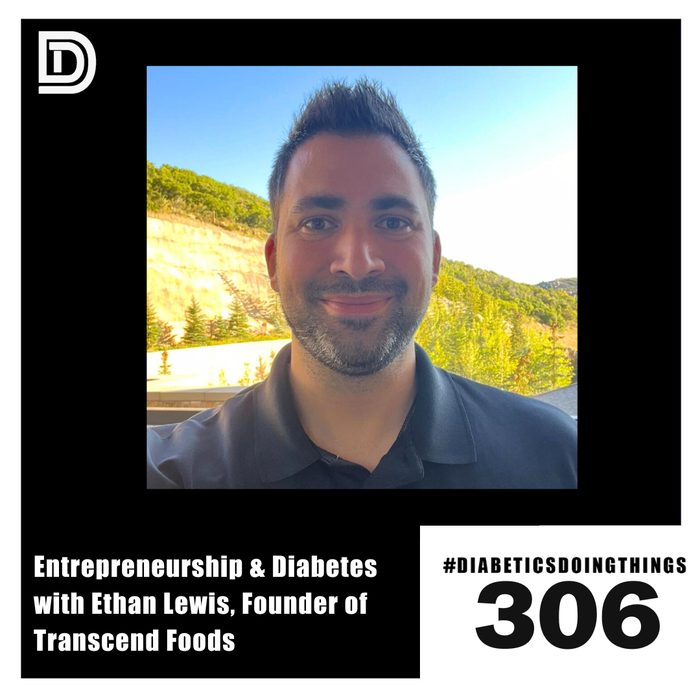
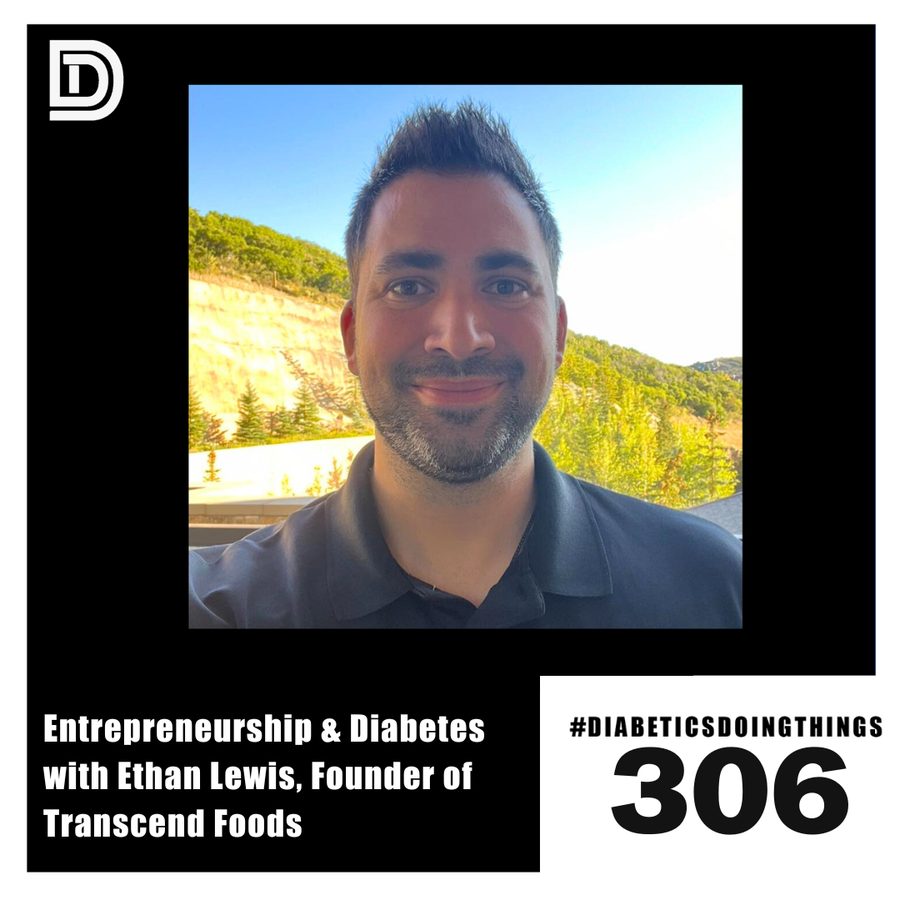
Entrepreneurship & Diabetes with Ethan Lewis, Founder of Transcend Foods
Episode summary
Ethan Lewis, founder of Transcend Foods, was diagnosed with type 1 diabetes at age 12 and told by a doctor he had about 25 good years before complications. He used that timeline as motivation, starting his first business at 16. Years later, repeated severe lows as a young adult, including waking up to paramedics with a glucose tube in his mouth, pushed him to build Transcend Foods: glucose gels and shots that taste good, cost less, and do not look medical. He talks about his own discomfort treating lows in public, therapy he sought around it, and how he built trust by selling first to ambulance and fire services before reaching consumers. The conversation also covers hydration, a new drink mix line, and daily routines for managing diabetes while running a company.
Key takeaways
- Ethan Lewis says a doctor told him at diagnosis he had about 25 good years before complications, and he used that as motivation to start his first business at 16.
- Repeated severe lows in his 20s, including waking up to paramedics with a glucose tube in his mouth, led Ethan Lewis to found Transcend Foods.
- Ethan Lewis says Transcend Foods is used by 60 to 70 percent of ambulance, fire, and border patrol services across the US, which built trust before the product reached consumers.
- Ethan Lewis says he still gets uneasy taking a shot or checking his blood sugar in front of others and worked with a therapist on it for years.
- Transcend Foods' new hydration drink mixes, built on World Health Organization hydration research, are rolling out to customers in the coming weeks.
Show notes
Special Bonus! If you use code DiabeticsDoingThings on TranscendFoods.com you can save 20% off your order!
In this episode of 'Diabetics Doing Things, Rob reflects on the 10-year anniversary of the podcast and welcomes guest Ethan Lewis, founder of Transcend Foods. They explore Ethan's journey, from his diagnosis of type 1 diabetes at age 12 to becoming an entrepreneur. Ethan talks about the challenges and stigmas people with diabetes face and how his company, Transcend Foods, aims to provide accessible, effective, and non-clinical solutions for helping navigate highs and lows. They discuss the importance of mental health, the role of innovation, and the evolving landscape of diabetes management. The conversation also touches on new product developments like hydration drink mixes and highlights the significance of normalizing life with diabetes.
00:00 Welcome and Introduction
00:40 Meeting Ethan Lewis from Transcend Foods
01:45 Ethan's Diagnosis and Early Life with Diabetes
05:45 Entrepreneurial Journey Begins 08:30 Founding Transcend Foods
12:53 Making Diabetes Management Easier
16:27 Challenges of Living with Diabetes
18:59 Embracing Vulnerability in Business
19:36 Normalizing Diabetes Management
21:28 Mental Health and Diabetes
22:14 Daily Routines for Managing Diabetes
24:24 The Importance of Hydration
25:33 Innovations in Diabetes Care
32:10 The Reality of Living with Diabetes
35:54 Inspiration and Gratitude
37:17 Conclusion and Final Thoughts
Resources:
Questions this episode answers
What is Transcend Foods?
Transcend Foods is a company founded by Ethan Lewis, who has type 1 diabetes, making glucose gels and shots for treating low blood sugar, plus a new hydration drink mix line.
Why did Ethan Lewis start Transcend Foods?
After years of severe low blood sugar episodes as a young adult, including waking up to paramedics, Ethan Lewis wanted an affordable glucose product that tasted good and did not look medical.
Does Transcend Foods sell to EMS and hospitals?
Yes. Ethan Lewis says Transcend is used by 60 to 70 percent of ambulance services, fire departments, and border patrol across the US, and reached consumers after that.
What is the difference between Transcend's 8 gram and 15 gram gels?
Ethan Lewis says the two sizes let people treat lows more precisely, an 8 gram gel for a smaller dip and a 15 gram gel for a bigger one, to avoid overcorrecting.
Full transcript Searchable, with timestamps
Rob Howe: A couple quick things before this week's episode for you listeners. This episode is with Ethan Lewis, who's the founder of Transcend Foods. He has type 1 diabetes and we talk a lot about running a business with type 1 diabetes. It's sort of a continuation of our Founders series from a few years ago. You guys can check that out. But the team at Transcend Foods was like, cool, we're going to have Ethan on the podcast, but we want to do something extra for the listeners. So using code DiabeticsDoingThings at checkout on TranscendFoods.com is going to get you 20% off of your order. I just put it in to test it out. That's code DiabeticsDoingThings, and that's going to get you guys 20% off on TranscendFoods.com. I've been using the gels. Now Transcend came through for our Diabetes Legends basketball clinic for our low blood sugar booth and gave us some gels to try the eights and the 15 gram packs. And I got to say, I was a resistor of using a glucose product that was like continuing to use gummy bears over the years. But my control is better with these because I know how many carbs I'm taking in. So usually 15 does the trick, but sometimes just a little eight gram bump is all I need. And it does help me from overcorrecting as well. So I highly recommend it. Also, if you guys are still on the fence about registering for the Diabetics Doing Things Pickleball Classic, check us out. It's the link in our bio on Instagram and diabeticsdoingthings.com slash events. Okay, back to the episode with T1D founder of Transcend Foods, Ethan Lewis. Hello and welcome back to another episode of Diabetics Doing Things. We are telling the amazing stories of people with diabetes from all over the world. And we've been doing that since early 2016. And we're talking about approaching the 10-year anniversary in 2015 of the podcast, coinciding alongside my 20-year anniversary coming up next year. So exciting stuff. But before we get to that, we've got an exciting guest for you guys today. We've done a series on founders with diabetes in the past. And this would, I guess, be a continuation of that. And you all know that that is a passion point of mine and really digging into living with diabetes, managing a business, running your own shop. and then also meeting a need for people with diabetes. And my guest today, Ethan Lewis from Transcend Foods, makers of the Transcend Glucose Gels and Shots, is here, person with diabetes, type 1. Welcome to the show. Thank you. Thank you for having me. This is exciting. And kind of listener, first time caller, so excited to be here. First time, long time. I love to see it, man. Just to give a little bit of context for listeners too, I met you at ADCES in New Orleans earlier this summer. and funny enough, I like stumbled up to the Transcend booth just as my low glucose alarm went off because I was on the travel schedule conference, like a breakfast and so, you know, messing up my carb count and I got to try the Transcend 8 gram gels, which are new for you guys very recently, right in front. So that was a great, you know, just sort of serendipity with diabetes right in the moment.
Ethan Lewis: Yeah, we act as a low blood sugar station at all the conferences we go to and it's funny and myself included, it. I go out all the time at the booth. It's just life. And we're always happy to help.
Rob Howe: Yeah, it was just what I needed. So Ethan, I'd love to dig in with you on diabetes and business. But first of all, let's kind of begin where we always do at your diagnosis and your early life
Ethan Lewis: with diabetes and what you remember from those days. Sure. So I was diagnosed when I was 12. I'm weeks in the summer just before school started. So it'd probably be late August. And I had all the signs and symptoms you can think of. I'd lost 20 pounds as a kid, which at that time was a good amount of weight. And nobody could figure out what was going on at home. So we went to the doctor, tested my sugar. My sugar, of course, came back way high and doctor walks in the room and he says, you've got type 1 diabetes. and if you're lucky, you're going to get 25 good years out of life before you succumb to all the complications, right? And he described like blindness and amputation and things like that. So I immediately internalized that as, okay, I'm 12 now. I'm going to get 25 good years out of life and then I'm going to kind of fall apart because that's what the doctor said. But really I use that moments from there on as a catalyst amount of life to do more at a younger age. And so for example, I started my first business when I was 16. I've had a few businesses since, but, you know, that's how I was diagnosed. And like everyone else, it's a shock out of nowhere. But I really use that for the benefit for the rest of what I've done.
Rob Howe: That's a really interesting perspective because one thing I've learned from this podcast over the years is the words and information that were given at the moment of our diagnosis really inform, especially that those first few years with diabetes. And so, you know, oftentimes, especially back 25 years ago, where you could be told pretty regularly and pretty consistently that your life with diabetes was going to be difficult or your life may be cut short from the complications of diabetes. And that can be a really difficult thing to hear, especially as a young person. But then, you know, you were able to kind of flip that on instead and say, hey, well, because I'm going to have less time, I need to be maybe more assertive or more aggressive with the time that I have. That's a really interesting perspective.
Ethan Lewis: Yeah. And clearly the physician was just wrong, right? He just, he was definitely wrong. And over time with technology, you know, managing the disease has gotten significantly easier because there's just more tools. But I completely agree. I think somebody's really expecting that to happen, right? You go to the doctor because you're sick. And we've gone to the doctor many times in our lives because we've been sick. And they've never walked in and said, hey, you've got diabetes. So it's usually kind of out of the blue. And you're exactly right. The words spoken in those moments, I have found talking to other people with type 1 or even other chronic ailments, those words are kind of etched in their mind. And it's really how you use them is how they define you or you define it.
Rob Howe: I feel very grateful looking back now at the words that I heard early on, because at the time I didn't I didn't have anything to compare it to. And my experience was the only one that I knew about. But one of the many things that this podcast has brought to me is different perspectives of people who didn't have that same great experience that I had. And I'm very proud of the things that I was able to do as a person with diabetes. But I now think if some of those words have been different or if the information or if my doctor had been wrong, like yours was, what impact that would have had on the first six months to a year, which were critical for me in my pursuit of like athletics, that could have been a totally different story. And so I think it's such an interesting, like thin margin of information that we get. And now I think it's weird to think of like 25 years ago, there was very little internet searchability and like there definitely was a shortage of online communities and places to find other opinions. Because I think also, I don't know if you felt this way, but I never really questioned my doctor early on as a kid, as a young person, because they were authority figure. And that's sort of, if they say it, it must be true. Right. and that can be really challenging as well. So to kind of put it back to you, when it came down to like, okay, I want to go do something now. I don't want to wait to, you know, maybe graduate from college and figure out this business thing. And I also think like entrepreneurs, some of it is just boring. Like you just love to be the change. So how did you decide early on, age 16, to start your first business and what did that look like?
Ethan Lewis: So I really credit my love for cars for everything in my life, right? Good, bad, and ugly. so at the age of five i really just fell head over here in love with cars right and so i was dreamed of having cool cars and so certainly around the time of like driving age and things like that i said okay well i don't have a lot of time to do this so let's go do something let's go build a business and that was you know the carrot if you'd say we're doing stuff sooner and younger but really again i think about life in terms of compressed timeline i think about when i even Even today, I think about my days in terms of minutes. And that's a blessing and a curse for sure. But I just decided there's an opportunity or an idea I want to pursue. And I said, hey, like, I don't need a business degree and I don't need to be in college. And I'm just going to start this thing now and see what happens. And it was great. It taught me a lot. But really kind of the general theme in my life is really why not? You know, I think of life in terms of life on my terms. terms. So the question is always like, why wouldn't I do this? And why wouldn't I do this now? Right. Yeah. The expression of best time to plant trees yesterday could not be more true in so many things in life. And so that's really what drove me.
Rob Howe: That's a really interesting entrepreneurial mindset, like really beneficial as well. I'm a big quotes guy and I'm from Dallas. So, you know, Mark Cuban has always sort of been a presence in my life as a person who's been interested in business. He always talks about there's never a great time to take a great risk. Like you're always going to be able to talk yourself out of it. So the why not mindset, you know, comes to mind there. Why not you? Why not start a business now? What's the worst that could really happen? And just taking action once you realize it's really not that bad. What I want to know though, is what was the car that you wanted that drove you to start that first business? What was like living rent-free in your mind? Like what did you have? Cause I also like loved cars. I love cars, but when I was 16, I was crazy about cars. So like, what was the one that, that you wanted to have that drove you to start that business?
Ethan Lewis: 1994 black Mustang Cobra and the coupe with a manual transmission. I mean, crystal clear. And that's funny because it's a car that I've actually never bought. Not for a particular reason. I've just never actually bought it. I'm convicted that I will. But I just remember seeing that car and just, it's literally that car that made everything else make sense.
Rob Howe: Man, it's just a good old-fashioned rear-wheel drive American muscle. Big fun.
Ethan Lewis: Yeah.
Rob Howe: So let's fast forward a little bit. You've started multiple companies. Your company now that we know in the diabetes community is Transcend Foods. You guys make glucose gels and shots for treatment of hypoglycemia. I've tried them. I'm actually using them right now. You guys were very generous and gave us some for our low blood sugar station at our Diabetes Legends Clinic. And so we have a few left over. So I'm using them actively. And, you know, with the 15 gram and the 8 gram, it's really nice to have a precise dose of carbs to give yourself really quickly. So let's talk about like the journey to starting a business in the diabetes space, because you live with diabetes, you obviously recognize the need. How did Transcend Foods come to be?
Ethan Lewis: This is kind of a long lost passion of mine. So when I was 21, so I went to college down here in Florida and out of college, I was working full time. I had a good job at a media company that all they did was media for cars, car dealers, of course. and so I had a good job and I was having a lot of problems with lows kind of unexpectedly and that's I think that's really true of all people with diabetes things kind of come in waves and challenges arise out of nowhere even when all things are the same and so I was having a lot of problems with lows and I had several severe lows where I'd wake up and they'd be you know I'd be the middle of the night and there'd be four paramedics standing over me the lights are are on full blast. And I would just look, you know, my eyes open and say, oh no, not again. And each of those experiences, I'd wake up with a tube of glucose, the old tubes of glucose hanging out of my mouth. And it was just disgusting. I mean, it could not be worse, right? And my sister has always been a paramedic in fact. And so I knew kind of a little bit about, you know, what EMS uses through her and through my own experience of waking up in this nasty tube hanging out in my mouth. And so what I would do is after the event, I would go to CVS or Walgreens and I'd go and buy and replace my stock of glucose products. I wasn't a tablet person. I made tablets as a kid and couldn't be more awkward, couldn't be more terrible. And anyway, so I would go and buy the replacement product, but the replacement products, the tubes of glucose would be like $5 each. And it was totally insane to me. And I'm like, Hey, I've got a good job and I'll like, this stuff is really expensive for me. Surely other people have this problem too. And the tubes of glucose tasted like junk. They're way too expensive and they're packaged like I had a disease. And so I just set off on this mission to create a company and a brand that didn't scream, Hey, I have a disease. I have a problem. So not some medical, more lifestyle, more normal because we are normal people. Something that tasted good because let's to be honest, this is glorified sugar water and something that was reasonable cost. You know, diabetes as a disease is so expensive, right? And I don't care whether you have great insurance or you have bad insurance. You know, certainly people with poor insurance spend a lot more on their care, but diabetes overall is very, very expensive for everyone involved. And so my objective was to cut the cost out as much as I could, but make a sustainable business that would actually have And so that's what I did. I worked with formulas, fighters, you know, all over the country. I worked with manufacturers all over the country to really dial in what we have today. I've got the product here. So just for reference of what it looks like, but everything we do, we try and blend in. And the blend in part is really rooted in my experience as a kid having diabetes, because I was always the one that they pulled aside. I was always the outcast, right? I was the one that needed the kid clubs because I had a disease and they weren't really sure what to do with me. And so I really take that approach to our packaging, which is like, just make it look good. Just make it blend in. So that's kind of why I started the business. I started in it by selling to ambulance services and hospitals across the U.S. because I knew that if I could get their buy-in, right, if they tried it, they liked it, they trusted it, then it was safe and good for everybody else involved. So that's what we did. So to date, we're on board 60 to 70% of all ambulances across the U.S., fire services, border patrol, things like that. And then I took this product and I offered it to consumers, to people with diabetes. And I said, hey, if it's good for them, it's good for us. So that would kind of path.
Rob Howe: I want to dig in and kind of double click on a lot of different things because the first one, though, is the, and I think it's getting better. companies like transcend and brands like transcend have pushed us way forward i think of other brands that we work with on the podcast and i've worked with like skin grip and other more diabetes consumer brands type zero health where you're making diabetes a little bit more cool and a lot less clinical because especially 10 years ago i haven't talked about this too much lately but one of the reasons that i my first kind of iteration into the diabetes community was very much around that idea where how can we make something that's really inconvenient and really sometimes gross and very clinical just a little bit cool or something where you can you know take those the eyeballs that you're getting when you're checking your sugars on a glucometer or you're pulling out your low snacks in the middle of a meeting or like and just make that a little bit easier and what I know now that is really like diabetes stigma is when you're othering someone Like you said, putting the kid gloves on. And so now as we do things like Diabetes Legends Basketball Clinic, where everyone has diabetes and you're not the only one coming out of the drill to check your sugars or to grab a glucose gel and then get back in, it's accepted, it's normalized. Those are the things that I think are really impactful to people with diabetes. Because like you said, it's expensive. It's inconvenient. It is a real disability. it's we're covered under the Americans with Disabilities Act but we need things to feel good about our diabetes or to at least make really inconvenient moments a little bit yeah easier to manage and so I love that brief that focus of okay how can we make this taste good be a low cost and above all like not draw unnecessary eyeballs to you that make you feel bad yeah I mean I remember
Ethan Lewis: as a kid treating Lowe's with, I just remember so vividly, I mean, my backpack, forget the books, the books like didn't even count. My backpack was filled with like eight juice boxes and snack bars and this and that and whatever. And if it wasn't that, it was me in the middle of the class getting a 50 count bottle of tablets out. And people are like, oh, what's wrong? What's wrong with that guy? What is that? And looking back on it and look, I think kids still go through this to a degree today. for sure. It doesn't have to be that way. You know, we can just be normal people that are quietly managing this, even in a public setting without the noise. Let's talk about the noise and like
Rob Howe: being public about diabetes, because I think I often again now my first 10 years with diabetes, I was extremely private about it. I wasn't embarrassed necessarily. I did feel the eyeballs, but I wasn't going out of my way to educate or to be outgoing. And there weren't that many people that I was encountering at the time that were doing that. The last 10 years, you know, sharing my life with diabetes online, connecting with other people who are living out loud, so to speak, with their diabetes, and now taking their diabetes awareness that they're able to create as a point of pride. And I think that's a really important thing. There's a lot of work to be done, and a lot of that diabetes awareness comes from one-on-one interactions with people. So for you, as a person with diabetes, as an entrepreneur, on the website About Us This is a letter from you basically explaining where this came from. How outward are you about your diabetes and your conversations with people on a day to day?
Ethan Lewis: Yeah, this has easily been the toughest part for me over the years. And I still have moments where I struggle with it today. So, for example, when I was growing up, I didn't tell anybody I had diabetes. My secret and my secret only. And, you know, for better or for worse, that's that's how I approached it. And once I actually started working in Transcend and working in this business, was really kind of the first time that I started to meet other people with diabetes, as crazy as it was. I mean, I went to my first diabetes camp when I was 23 as an adult. I didn't even know it existed until I started working in this business. And I loved it. I loved every ounce of it. Even today, I love going to trade shows. I loved our interaction when I got to meet you, right? Because I was like, oh my gosh, there's somebody else in the world with it. Of course there is, right? But it's the most heartwarming feeling for me even today. And it happens to me all the time. And I love every ounce of it. But it's something that I really struggle with. Even when I was in my 20s and even 30s, I was flying for the business. I was flying pretty much almost every week. And I had so many moments where, for example, I would be on an airplane. And an airplane is an easy example because so often I'd be on a flight and after I was sitting in the aisle seat, my sugar would be high. I wasn't wearing a pump at the time. And let's pretend that the seatbelt sign was on. Let's pretend I couldn't get out of my seat to go to the bathroom. I really struggled with times where I would just let my sugar go high because I was embarrassed to take a shot in front of other people or I'd be embarrassed to check my sugar in front of other people. I saw for many years a wonderful therapist who also has type 1 to work through that kind of block of like, I was deathly afraid to take a shot in front of other people in an airport on a plane. And even today I get a little squeamish. I kind of look left. I look right. I'm like, okay, now's a good time. And that's kind of maybe a by-product of how I purchased when I was a kid. so so yeah i mean it's so challenging it's gotten better i mean i see people all the time as i travel who are i'll see their cgm or i'll see their pump tube or something like that and i never approach them but i at least recognize it but you know it's something that i think a lot of people have to deal with and find a way to one like first and foremost be able to take care of themselves in any situation, regardless of who's looking. And number two, feel okay doing it.
Rob Howe: I love this piece because I think especially as dudes and guys in business and guys who are chasing and saying, why not? And who are saying, why not me? I like this idea of vulnerability too, that we still, it's hard to be different. It's hard to need and take up space for yourself in those situations where it's a little bit abnormal and you don't want to, your blood sugar is already high. You feel like trash. You know, you're having to go out of your way to solve a problem. And then you have to get questions from strangers or weird looks from people. It's like, count me out. That's always, that's always bad. Right? So that's why I want to come back to the product and that original feeling for you of like finding a way to make it a little bit more normal, a little bit more acceptable. If you pull out a transcend gel on a plane and you take it, nobody's going to think twice about it because it looks like a regular product. It looks like a cool consumer brand. And so I think finding those ways that we forget, I talk to parents a lot who ask me questions about their kids who are trying to play sports or their kids who are in high school because I was diagnosed at that time. We just forget how hard it is to be different and how hard it is to be a teenager anyway. And like you're saying, those things stick with us for a long time. If we internalize that stigma or we feel like that's part of us that we're uncomfortable with, it can stay with us for a long time, you know, and I deal with it as well. So I think it's really important to acknowledge that there's like, you can, you can still be a business person crushing it, you know, trying to chase your dreams and your goals and have these, these moments where
Ethan Lewis: you still feel shame around managing your diabetes. Definitely. It's so challenging. And even in different environments, you know, I think of an environment like the classroom where it's quiet. I think of, I mean, I've been in countless conference rooms and boardrooms and things like that where, or a really important meeting, like a hyper important meeting. And you go into that meeting and the thing that I, that goes through my head is like, okay, is my sugar at a good state? Is it elevated so I don't drop and I can't think properly? Is my desk, I'm going to go off like crazy and bananas, right? But those are all considerations. And the reality is that stuff takes up a lot of mindshare. You know, that stuff is very distracting. And I think the tools we have make managing the disease easier, not easy, but all the mind game, all the head stuff, that's real. That still persists. You know, so often I think about mental health with this disease. And the thing I tell most people when I talk about this is really, you know, there are no days off. This is a long game. There are no minutes off. Forget days. and you need to find a system or practice to manage your sugar as best you can because it's like a wild animal, it never wants to be tamed, that does not drive you crazy, that lets you be a normal human and not play the mind game.
Rob Howe: So what does that look like for you? How do you find, because I know running your own business and running your own companies, that's a whole nother pattern of stress and anxiety and volatility that, you know, can manifest itself in many different ways. What is your routine to keep yourself physically and mentally in the right place to be able to show up for yourself with diabetes?
Ethan Lewis: Sure. I'll start with my weakness and tell you where I do the worst at. And I'll talk about kind of how I try and work through that. You know, the hardest part for me, the part that I struggle with even today is bouncing from meeting to meeting to meeting. And especially if I'm excited about what I'm talking about, like something like this. I get so excited and wrapped up in the conversation and the meeting or whatever the thing is that my blood sugar takes backseat sometimes. And I can have three or four days in a row, right? Many, many days I'll turn around at three o'clock and I've yet to eat lunch. And that's just, that is the reality of the situation. What I really try and do is carve out breaks throughout the day where I go get something, where I go get a drink or go get food or something. And that's, you know, like in my house, it's not like late in the house, but I need to step away. I need to have separation and breaks from work and the computer or the phone or all those things for me to frankly acknowledge, you know, my blood sugar. I purposely set pretty wide ranges on my Dexcom so that it's not alerting, you know, all the time because that for me is mentally very tiresome. And also like your blood sugar swings when you eat and there's, that's just reality of So yeah, that's true for people who don't have OBDs, right? That's right. Yeah. Everybody's one sugar swings. And so because I have a wider range on my alerts, what the downside to that is I could be hanging out at 180 all day and I didn't get an alert and I got busy and doing other things. I hung out at 180 all day instead of my target. Let's say it was 130 on a busy day and 100 on not a busy day. But I really try and step away from work as often as possible. I'm always trying to consume something. So if that's water or hydration or this or that, because that's kind of a time for me to step away from it and then tune into my day versus my diabetes, you know, annoying me all day. And I use the word annoying very purposefully because that's what this is. It gets pretty annoying sometimes.
Rob Howe: I'm glad you mentioned hydration because that's something that I am struggling with. So like you, I'm in meeting to meeting to meeting most days. And like you, I also get excited about things. And I'm in the moment. I'm not really thinking about my diabetes. I am on an AID pump, so it can do a little bit of work for me in the background, which has allowed me so much extra mental headspace to be able to focus on my work. But the things that really affect my blood sugar the most and allow me to be in range are movement, sleep, and hydration, which is true for most people. But I will go, I don't know if I can just go from meeting to meeting to meeting and whether I'm presenting or I'm listening or I'm just in the meeting and I will just forget to drink water and i'll just be consuming coffee and i'll have three or four cups of coffee and no water for like six hours not a great recipe for success for your blood sugar so definitely feel you on the hydration thing that's like on the top of my list of optimizations i'm making for my work day that are also good for my diabetes i'm right with you i'm a huge coffee lover i'm probably the
Ethan Lewis: number four of the day and i just love it hydration is is hypercritical you know we learned this from our first responder community and customers we serve. This was not scripted, I promise. But we have this new line of hydration drip mixes. We worked on it for a year. They're just rolling out and they're right here. So I'll know some to you. Look at that. All right. We didn't promise we
Rob Howe: didn't know. That was an authentic organic conversation. I did not know you guys were
Ethan Lewis: doing that. Yeah. Yeah. So we've been working on this. We thought it would take us a month, to be honest with you, to formulate like a really great product. And it took us a year. And it took us a year because we focus so heavily on the science. We follow the latest science from a world health organization and all their work on looking at how to hydrate the body. And so, I'll give you the short story without going down the science rabbit hole is you have to have the right mix of nutrients, right? So more is more, more is not better. And so you have to have the right balance, right mix. You have to have super high quality ingredients. And so for us, we We obviously use zero sugar formula and we use monk fruit as sweetener, right? So like this stuff really tastes good, but more importantly, like it really works. So as a follow-up, I'll send some to you.
Rob Howe: Yeah, I'll definitely review that because I think I also nerd out over the science and I know it's not as simple as just drinking more water. There's so many nutrients that your body loses throughout the day, especially if you're exercising or if you're like having an alcoholic beverage or whatever the case may be, you're losing potassium and sodium and glucose and like all of that is part of it. So really excited to
Ethan Lewis: see that. Yeah, we're so excited. We haven't even yet. I think it launches in like a handful of weeks, like for all of our customers from our website, we're starting to include them in all their orders. It's just like a, hey, here's a sneak peek. But this is how we think about our business at Transcend is, you know, forever treating low blood sugar was literally throwing spaghetti on the wall. It was like, oh, Rule of 15 or this or that or whatever, or just, you know, I mean, if you look at the ADA's guidelines, it is still treating a lot with four saltines, a glass of orange juice, a glass of milk, a this, a that. It's just, it's madness. And we forever made a 15 gram glucose gel, but now we made an eight gram glucose gel. And the reason is because when I'm 70, I'm going to use an eight grammer. And it's going to take me from 70 to I'd say 95. When I'm 50, I need a 15 grammer. But diabetes management through what you consume, because we're big believers in this, is not one size fits all. It's just not. That's right. And keeping your body hydrated is a very important part of that too. But you got to have good stuff. Like you have the best ingredients you can find because otherwise it's not going to work. And by the way, it's got to taste amazing because if it doesn't taste good, regardless of how good it is for you, people just aren't going to do it. They're just not going to bother with it.
Rob Howe: Yeah. Yeah. And that's just true of consumers, right? Like if it's not easy, it doesn't taste good, we're not going to choose it. Absolutely. When I think there's something also that's really important about the having the flexibility of the 15 and the eight gram. And I'm going through this currently because I, as listeners will know, joke, I even made the joke this weekend when my family was in town because they saw my giant bag of gummy bears in the pantry. And I'm like, no, those are strictly medicinal. And what, But what I like about having the carb counts in the 15 and the 8 range is that I think it's a Dr. Bernstein maybe saying of like hypoglycemia causes hyperglycemia and hyperglycemia causes hypoglycemia. Because you start riding that roller coaster and rebounding where either what you're eating doesn't act fast enough. You don't have an accurate idea of how many carbs that you're taking in. And, you know, maybe you're doing saltine crackers or like orange juice or whatever the case may be. and your body processes those things differently than it does just straight glucose. And so what I'm seeing, and now, you know, when I'm looking at my CareLink reports and I'm, I'm trying to be more intentional about my diabetes management and look at it holistically. And because I know, you know, in 20 years living with it, I, I'm going to be living 20 more years and I want my life to be, you know, as complication free as I can during that time. So what can I do today to do that. And having those little micro adjustments, so to speak, or those half measures allows me to make sure, hey, I can keep my blood sugar in the right range without going overboard
Ethan Lewis: or coming back down. Absolutely. You know, it's like, I always make the joke, like we're micro dosing glucose. That's what we should be doing, right? We're titrating in insulin all the time. And there's no reason why we shouldn't be doing this on the other end of the spectrum. When we overshoot the target and we have a low, there's no reason why we shouldn't adjust it up. Now, the reality is, is when I'm low, depending on how low I am, sometimes I'm not with it, right? That's why it's pre-measured. There's no counting. It's relatively brainless.
Rob Howe: Yeah. That's me with gummy bears. I'm an unreliable narrator. I might think I just had eight of them, but I really had 15, and that can make a big difference for me in the next 15 minutes.
Ethan Lewis: Absolutely. So, you know, again, that's where I think like I tell people all the time, I think treating lows has always been relatively barbaric. So if we can play a little bit of a part in helping people have these micro adjustments, so you don't swing from low to high and high to low, low to high and high to low, because once you're on the roller coaster, your day is blown. I don't care. I don't care who you are. I mean, it is so hard to recover from a day when you've been low and high and high and low, because a few things happen. One, you feel bad. Two, You have no energy left. And three, you know, for me, at least, I'm pretty upset at myself. Yeah. I look at myself, I'm like, how many times are we going to do this? We've been on this roller coaster before. We know we don't like this. So let's stop the madness. So any part we can do to have less of those types of events or days, we're excited to be part of it.
Rob Howe: Yeah, I've been seeing more recently people having more open discussions about how long it takes or can take to recover from even a minor episode of hypoglycemia. And it's up to like 45 minutes or an hour for, you know, something that's not even what we would consider severe hypoglycemia. And severe hypoglycemia, even worse. And like you said, your energy stores are low. All the science that's happening in your body to try to get you to snap out of it, it drains you. It's challenging. and then not, you know, compounding that with the mental burden and kind of like self-talk can also be difficult. So I think this kind of like transitions well. We've talked a lot about the mental burden, about having no days, hours, minutes off, and, you know, sometimes compounding that with the mental health side of it. What do you wish more people knew about diabetes? You interact with a lot of people, I'm sure, who know about diabetes, but don't live with it. And I'm sure you encounter a lot of misconceptions, but like, what do you wish more people knew about
Ethan Lewis: living with diabetes? I wish people knew that it wasn't a total death sentence. You know, I was talking to somebody the other day, not in the work world. It was just the regular world. And I said, oh yeah, I've got type 1 diabetes and that's why I've got this business and all this stuff. And they said, oh my gosh, like, you know, oh my gosh, I'm so sorry. And this and that. And like, thanks but honestly it could be like so much worse that's not to take away from from the challenge of having the disease but i mean it is so amazing to me if i watch a football game i was watching a football game i don't know a couple weeks ago sunday afternoon national broadcast and there's a commercial for dexcom and i'm like wow we have come so far there's i'd say one commercial for Dexcom is probably like three commercials for Libre. You know, this idea that diabetes management is out there and it's mainstream. So I almost want to tell people like throw the kid gloves away, right? Like we have the tools. It's still really challenging and it's not going that way anytime soon, but I'd love to just normalize everything we do
Rob Howe: so we can get on with life. I agree. It's such a challenge, right? Because when it's happening to you, it feels heavy and the burden is day to day. And like, depending on what my blood sugar is and how my week's been, and depending on when you asked me about how my diabetes management is going, my answer is going to change depending on that, you know? And I also, I live in an able body. And even though my pancreas doesn't work, most of my other stuff does. And so when I see people who that's not true for who diabetes has taken pieces of them, or it can be really different and it can be really hard and it is you know truly disabling for many and so yeah you know i think over the years like you know now doing this almost 10 years versus like trying to say hey like you can do whatever you want like you can it doesn't have to stop you i think acknowledging and holding space for like the real challenges and saying hey you know my life is still worth pursuing why not do this with diabetes because the option the other option is to not do it and you know i think that's where I've kind of adjusted my perspective. And I think I credit the people who I've met with more debilitating life with diabetes who have inspired me to think about that differently
Ethan Lewis: and kind of get outside of my own perspective. Definitely. I mean, for people who are diagnosed today, right, let's say, or recently, not terrible times to have the disease, right? There's a bunch of technology and tools that give us information and help us do our job. They do not solve the problems, but they certainly help it. It's significantly more accurate than it used to be. It's significantly smaller than it used to be. So yeah, I mean, you know, I think about the people that had this disease a long time ago, right? I think that was so tough. And I think today, like we are lucky to all have tools. Some are more accessible than others. Insurance still doesn't like me getting X, Y, and Z, but everybody has that fight. Everybody has that fight in different ways. And, and they always seem to send us one, one short of a full month. Find out how that works. But you know, I, I feel so lucky to live in a time with a disease where we have these tools to make things a bit easier. I agree. I am overwhelmed with gratitude
Rob Howe: for the time and I live with diabetes. And I'm also inspired by people who I've met today living with diabetes for 70, 60 plus years who have navigated all of the animal insulin and boiling syringes and now are having CGMs and living with advanced insulin and using hybrid closed loop technology or whatever the case may be. And still being able to share their life over the past 70, 60 years where they have grandchildren, They've had careers. They've had amazing experiences because they didn't necessarily listen. Their doctor was also wrong about what their outlook on their life could be. So now you also get to live in a time where people like you living with diabetes are creating products and companies to serve people with diabetes, which wasn't always the case.
Ethan Lewis: to your point it's so cool i love love love meeting people with diabetes but especially those that have had it for for a long time i am so inspired by them i've got several friends i've had it now over 50 years and you would never know it and it's just it's so incredible and that's where i really get my inspiration is from those who have been doing it a long time who have lived through many iterations of this and who continue to fight.
Rob Howe: Well, I think that's a great place for us to leave it because I also am inspired by those people. You get up every day and you carry that burden of diabetes with such grace and courage. And those are the people that I think about every time I get to do this podcast. You know, I get to meet people like yourself from all over the world. And I just am continually rooted in gratitude. This episode is going to go live during National Diabetes Awareness Month 2024. And I think it's a great opportunity for us to remember that diabetes awareness is sometimes just us telling one person and dispelling one piece of stigma or one piece of misinformation at a time. And we carry that burden with grace and courage. So shout out to you guys out there listening and living with diabetes. And Ethan, your company is Transcend Foods. You guys are Transcend Foods on Instagram and TranscendFoods.com. I'm sure we're going to have between the time of recording and publishing, we'll have a link where we can offer our listeners some sort of little perk. So more on that. I'll put that in the intro, but thank you so much for your time today.
Ethan Lewis: Thanks for having me. I love this and thank you for what you did because this is like really what people need to hear.
Rob Howe: Thank you, man.
Ethan Lewis: Talk to you soon.
About Ethan
Ethan Lewis is the founder of Transcend Foods, which makes glucose gels, shots, and hydration drink mixes for people with diabetes. He was diagnosed with type 1 diabetes at age 12 and has started multiple businesses since launching his first at 16.