

Episode summary
Libby Russell was diagnosed with type 1 diabetes in 2005 as a junior in high school in Portland, Maine, and now lives in Brooklyn, New York, where she works as a copywriter at Peloton and runs the Instagram account and shop 'I Have the Sugars.' She describes a severe low blood sugar episode that left her afraid of insulin and dealing with panic attacks for nearly a year, and how making small daily trade-offs in food and exercise timing helped her feel safe in her body again. She talks about learning how stress hormones affect her blood sugar, bringing her Omnipod PDM into work meetings, pushing back on the idea that diabetics can eat anything, and staying hopeful about new technology and mental health awareness.
Key takeaways
- Libby says a severe, scary low left her afraid of insulin and having panic attacks for close to a year, until small daily trade-offs in food and workout timing helped her feel safe again.
- Libby says learning how stress hormones like cortisol and adrenaline move her blood sugar, including during intense workouts and flights, changed how she manages insulin.
- She brings her Omnipod PDM out at work meetings on purpose so coworkers see it and ask about it instead of her hiding it.
- Libby disagrees with the common advice that diabetics can eat whatever they want as long as they cover it, and says she eats for her body and her peace of mind instead.
- Her tool 'give your diabetes a seat at the table' means treating diabetes as a normal daily routine instead of fighting it.
Show notes
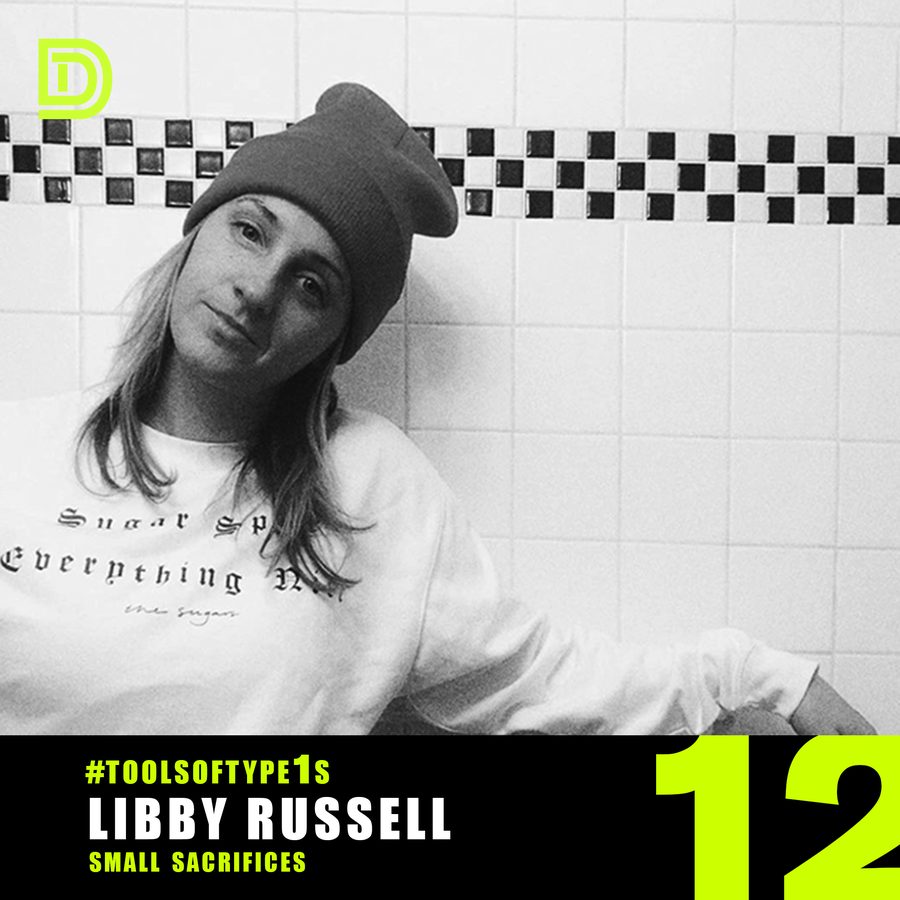
Name: Libby Russell
Hometown: Portland, ME
Date of Diagnosis: 4 . 2005
Tool: Small Sacrifices & Giving Your Diabetes a Seat at the Table
Diabetes Devices/Treatment Methods: Omnipod & Dexcom G6
This podcast is part of #DPodcastWeek, which is the annual event where Type-1 Diabetes podcasts come together to raise awareness for Spare A Rose, which supports Life for a Child. The mission is simple, instead of spending money on flowers this Valentine’s Day, donate the money to help children with Diabetes.
Questions this episode answers
What is Libby Russell's 'tool of type 1'?
She names two: 'small sacrifices,' small daily trade-offs in food and exercise timing that reduce anxiety around her blood sugar, and 'give your diabetes a seat at the table,' treating diabetes as a normal part of daily life instead of resisting it.
How does stress affect Libby Russell's blood sugar?
She says stress hormones like cortisol and adrenaline raise her blood sugar during high-intensity workouts, in the stressful afternoon stretch of her workday, and even during a bumpy flight.
What diabetes devices does Libby Russell use?
Per the show notes, she uses Omnipod and the Dexcom G6, and in the episode she describes bringing her Omnipod PDM into work meetings and relying on her Dexcom daily.
How does Libby Russell talk about diabetes at work?
She says she started by openly setting her Omnipod PDM on the table in meetings to normalize it, and that she leans on HR and coworkers' questions rather than hiding her diabetes.
Full transcript Searchable, with timestamps
Rob Howe: What's up guys, it's Rob Howe. Before we get started, I just want to let you know that this podcast is part of D Podcast Week. That's hashtag D Podcast Week on Instagram and Twitter, which is an annual event put on by Stacey Simms from Diabetes Connections, where Type 1 diabetes podcasts come together to raise awareness for Spare a Rose, which supports life for a child. The mission is really simple. Instead of spending money on flowers this Valentine's Day, donate the money to help children with diabetes. Donate that to Life for a Child, the campaign is called Spare a Rose. Spare a Rose, get it? So what's going to happen here is you're going to hear an ad from another type 1 diabetes podcast coming up right after this. Then we're going to get into our episode. So thanks so much to Stacey for having us. This is our second year on D Podcast week, and we're hoping to do it long into the future. So support the podcast that you hear after this. Support all type 1 diabetes podcasts. Find one that's right for you, and then just dig in and live there. I'm a big believer in supporting the efforts of other type 1 diabetics. So D podcast week, we're proud to be a part of it. And this episode is coming right at you.
Stephen Shaw: Hi, this is Stephen Shaw from Diabetes by the Numbers, the podcast chock full of bite-sized nuggets of information, interviews with diabetes newsmakers and celebrities, and something for you to think about, all in 20 minutes or less. Life is short. Make it count. Plug in, turn it up, and join me and a guest for Diabetes by the Numbers, proud to be a part of Diabetes Podcast
Rob Howe: Week 2019. Tools of Type 1s, episode 12. We've got 12 episodes down. This is a Valentine's Day episode, February 14th, 2019. One of my good, good friends, she mentions in this episode, but you know, I really have not found a more kindred spirit maybe of anyone I've ever met in my life, just like our entire backgrounds down to the year we were diagnosed with diabetes, to the ages that we were, to what we did after as athletes and what we do today as diabetes advocates and bloggers and working in advertising, being taller than average people. I don't know, there's a million different things, liking Netflix, liking cats, Libby Russell, my good friend. I have the sugars on Instagram. One of the more unique, funny, quirky voices in the diabetes community. And I just rely on her greatly for just talking through different issues. She's always just been a good resource for me to shoot a text to if I'm ever dealing with some sort of complex problem or feeling overwhelmed. she's just a good friend of mine and i am very grateful that she took the time to appear on this podcast also shout out her fiance sean who also makes a brief appearance in this podcast both laughing and contributing so uh thanks to sean for being the rock kind of behind the scenes for libby and you know i really hope you guys enjoy this episode oops started there had a little bit too much cold brew today happy valentine's day to everybody who's listening to this episode today and you know happy valentine's day every day if you're not listening on valentine's day so today libby russell enjoy this very fun very light very real episode from one of my really
Libby Russell: really good friends thanks libby so much uh i am libby russell i am originally from portland maine um but i've lived all over i went to college north carolina lived in boston for a few years and now I am happily residing in BK, Brooklyn, New York, and have been here for almost five years. I've been a type 1 diabetic since 2005. I was a junior in high school when I was diagnosed. Two to three things that I do, like in general, or what is my area of type 1 expertise? I wouldn't really say I'm an expert on really anything. I run an Instagram account and blog and t-shirt shop called I Have the Sugars and the Sugar Shop. And I've been at that fun gig for roughly five years. It's a little labor of love, passion project, side hustle. And I met Rob when he asked me to be on Diabetics Doing Things. and it happened to be at the most pivotal time in my entire diabetic career. And I am convinced that he and I are actually the same person. We're just in different bodies. So I don't know if it's possible for you to be reincarnated twice at the same time. But we think that may have happened. Two or three things outside of living with type 1 and running an Instagram account that I do. Let's see. I am a creative at heart. I work for Peloton, and I am on the creative team as a copywriter. Formerly was at an agency before that, making ads for our dear friends at Budweiser, Shock Top, Stella Artois, and a few other really fun brands. I used to be a musician, which is a big fat joke. I used to sing in high school, so I sing in the shower now. That's something I like to do, and in the car. I love to sing in the car. uh i'm really into health wellness holistic stuff uh non-toxic clean beauty i don't know if those are things that i do but they are things that i love and i'm interested in and fitness and being outside mostly on boats i love the ocean i'm a main girl at heart what is your tool of type ones
Rob Howe: and what's the one thing that a person living with t1d could learn from you or your experience
Libby Russell: So my tool of type 1 is something, well, I guess it's two parts. Part one being, oh, my cat just attacked my microphone. Hey, little man. My tool is what I like to call small sacrifices. And it's something that I learned the hard way. And it also taught me my other tool. my other tool being give your diabetes a seat at the table your life is your life and type 1 diabetes is a part of your life no matter what and you have to just keep living it and you have to incorporate diabetes into your life whether you like it or not I think it's really important that we establish a relationship with our diabetes and the positive one and a proactive one and an open and honest one and without including diabetes in your day-to-day life in a positive and light-hearted manner, it becomes really hard to manage it. I think if we look at diabetes as just another part of our routine, such as brushing our teeth or taking our contacts out at night before we go to bed, it really helps us to not resent it and not fight it, but work with it and learn how to cooperate with it. So that is tool number one. That one doesn't have a name. That one is just sort of a mindset that I like to practice pretty actively. My other tool, which is something I really do think is proprietary, I'm going to name it, is this small sacrifices idea. So this is a very long-winded answer, and I'm going to try to give you the long and the short of it. But a couple years ago, I had a really scary low, like one that was as close to life-threatening as I've ever been. and it really rocked me, like really, really deeply, deeply. Hurt me, upset me, scared me, set me back, put me on extreme edge for close to a year. I started seeing a therapist. I was having panic attacks all the time. Normal life was not proceeding as usual. I really let diabetes take over. I was afraid of insulin. It was pretty bad, and I was in a pretty rough place, and it got to a point where getting out of bed in the morning was a massive, massive, massive chore. So basically, I sort of had a come-to-Jesus moment, and a lot of it had to do with the conversation I had with you, Rob, was I learned that there's a lot of stuff in life we can control. There's a lot of stuff we can't, but there really is a lot that we can. And unfortunately, with diabetes, we're often told, you can do whatever you want. You can eat whatever you want. There's nothing stopping you. And as human beings, as mortal beings, that's actually kind of an unfair thing to be telling people because then you create this illusion that you are invincible. And none of us are invincible. And I think it's really important for us to learn where our boundaries and our limits are and what kind of tweaks we can be making in our lives to live our happiest, most comfortable, fulfilled, most fulfilled day-to-day lives. And for me, what it came down to was I'm never someone that has ever done well with limiting myself or cutting myself off. I'm a terribly disciplined human being. So it was really important to me to try and whittle away at the idea of limitations. And because I was struggling so much with anxiety, like I'm talking deep in the chest, stomach, crying on the floor of a bathroom anxiety, anxiety, I knew that I was going to have to say no to some things in order to empower me to say yes to other things. And that was really hard for me to wrap my head around. But it really virtually came down to my diet, what I was putting in my body. What I'm putting in my body should not be causing me crippling panic attacks. Meaning, if I want two slices of pizza, is it really worth me being afraid that I've over or under bolus for said pizza and therefore causing a meltdown later in the night. I would rather eat one piece of pizza and pick the cheese and pepperoni off of the second piece of pizza so that I don't have to worry about having a lot of insulin in my body that makes me uncomfortable. Working out. Is it, do I really, am I really so lazy in the morning that I can't take a 7 or 8 a.m. spin class to avoid crashing. You know, every spin is like my favorite workout. And if I took a 6, 30, 7 o'clock class after work, I would always go low every time no matter what because my adrenaline and my cortisol levels from the workday would decrease at the end of the day so that when I was in a class, everything would crash at the same time. Like most of us know, you're a little bit more insulin resistant in the morning. A lot of us have a little bit of a liver dump or a little bit of a spike in the morning. So going low in the morning is really rare for me. So basically, I learned that the sacrifice I have to make there is like, if I can get up an hour earlier and do a workout in the morning, that doesn't cause me really severe anxiety, I will feel so much safer in my own body throughout the rest of the day. And that is so much more worth it to me. So that came down to a lot of other things of like chipping away and making teeny tiny sacrifices here and there that really, really helped me get back in the saddle and helped me feel like I just said, like safe in my own body again. And I have to say very proudly that like I have not felt that level of fear and anxiety based on insulin or blood sugars or double arrows up and down on my Dexcom in almost a year now. And I really attribute it to that sort of mentality of trimming fat that will really pay massive dividends in the long run.
Rob Howe: What is the simplest thing you've done that has helped you with the management of your type 1 diabetes? Where did you learn it or who showed it to you?
Libby Russell: I think understanding stress. Now that doesn't sound simple at all, but I'm a pretty routine person. I have a day job. I work 9 or 10 in the morning until 6 or 8 o'clock at night. And I have a very predictable day-to-day, which I feel very fortunate about. And understanding my body's stress cycles has really helped me understand insulin dosing. And like I said before, how my body metabolizes during workouts and how it functions under that kind of stress. For example, I had no idea that some high-intensity workouts can actually spike your blood sugar because of adrenaline. I had no idea that in the afternoon my blood sugar would have a harder time coming down from a post-lunch high because that's the peak stress time of the day. I had no idea that when I am on a flight that gets really bumpy and I get nervous that that will potentially spike my blood sugar. and it took me years to learn that stress hormones like cortisol, adrenaline, etc really impact the way your body manages insulin and absorption of other nutrients so it's kind of like encourages me even more to manage my stress levels to you know peek at my breathe bubble on my calm app a couple times a day or you know use supplements like CBD rub we've talked about this before, or yoga or breathing exercises or going for a walk, not just for the physical impact that it will have on my blood sugars throughout the day, but my holistic being will improve dramatically just because I've created a better place for my body to manage all hormones, whether they're synthetic and from my insulin pump or natural and from my stress level. So I know that may not have sounded terribly simple, but it really is just about like understanding the holistic picture of what your body does during the day and what those impacts are on your blood sugars.
Rob Howe: What failures or apparent failures with T1D have made you better at living the rest of your life or made you more well-rounded as a person?
Libby Russell: I would say that the failures that I've had or apparent failures with type 1 have made me better at living the rest of my life or at least made me a more well-rounded person uh excuse me uh in a lot of ways as a kid I was kind of this like very I called myself a b student in life I was kind of a perfectionist about appearances but the effort that I was putting it on the back end wasn't always terribly admirable I liked to coast through things I didn't like to get uncomfortable, but I still like to kind of cruise at the top of the food chain. And I think that type 1 diabetes, um, has a really sneaky way of sort of whacking you in the back of the knees when you least expect it. And it is humbling. It's very, very humbling. And it's sort of helped me learn how to be a more organized person and a more prepared person, somebody who puts in a little extra effort on a daily basis to have my shit together and to have backup plans and how to deal with adversity when things go wrong. As a kid, if I had plans with a friend and those plans changed, I was meltdown city and I was not flexible. And I'm still constantly working on being more flexible. But I think, you know, the first time I ever traveled outside the country with type 1 when I was in high school, I left all my extra test strips in the States. Like I think I put the box on the top of my parents' car. We pulled out of the driveway and we land in London and where are my test strips? Not there. Like that was one of the first big failures where I was like, I need to pay more attention to my daily actions and be more present in what's going on around me because I can't afford to be a little bit aloof. I really have to like be locked in. And with time, a lot of that organization has become, you know, subconscious or second nature, but man, has that helped me professionally. It's helped me cut ties with friends.
Rob Howe: What unusual or absurd opinion or approach regarding your diabetes do you have?
Libby Russell: so I don't really know if I have any unusual or absurd opinions or approach regarding diabetes but I do have some like bizarre practices that I surround myself with that are so surface level and probably so placebo but I've always kind of had that mindset of like if it works for you then it works. One time, Sean and I were in Sedona, Arizona, and I picked myself up a little crystal that says it helps with diabetes management, and I've kept it with me every day since, and I'm like so attached to this thing, and I charge it every full moon, and I rinse it with salt water, and so that could be considered absurd probably by quite a few people, but I love my little crystals.
Rob Howe: What's your favorite thing? What gets you to smile or laugh almost every time?
Libby Russell: So my answer to this is pretty unanimous. So my favorite thing and what gets me to smile or laugh almost every time is videos of cockatoos or virtually any bird video. there's something about just like the absolute sassy asshole sense of humor that cockatoos have that destroy like I don't cry when I laugh at literally anything except for cockatoo videos I absolutely destroys me on the floor I'm a human emoji just a mess every time I watch them follow uh Harley the cockatoo on Instagram you will not be disappointed Another thing that Sean, my fiancé, has taught me to really enjoy in the late hours is also news bloopers. You can go on YouTube and watch hours of poor reporters just absolutely messing up everything. And that is comedy at its purest, purest level. And that gets me every time as well.
Rob Howe: In the last five years, what new adjustment to your lifestyle has improved your life with diabetes the most?
Libby Russell: I would say in the last five years, the new adjustment to my lifestyle that has improved my life with diabetes the most has been my openness to new technology. I can barely turn on a television, let alone work like our Roku or Hulu or any of these streaming things. So I'm not a very savvy person. And a lot of times I get, I like shut down. Like if I have too many apps open or tabs open, I get very overheated technologically speaking. However, when my friend and spin instructor Liz convinced me to get a Dexcom a couple years ago, that was truly, truly life-changing. and I'm currently dexless at the moment and it's taken me almost 24 hours to even like wrap my head around what life was like before it. So I don't know if that's like a dependency issue, but I do have to say just having a more open mind about the evolution of biotech is really important and crucial because at the moment that's advancing way faster than any other thing that's helping us live with diabetes better.
Rob Howe: What challenges related to T1D did you encounter or have to overcome while you were doing your thing?
Libby Russell: Some of the challenges related to T1D that I had to encounter and overcome while doing my thing was being the same person online and offline. I get really comfortable on Instagram. I feel like I can share a lot about myself and be really, really honest and authentic when I post. I really don't hide much. I don't really care what I look like. I'm not super vain. I'm not super self-conscious online, but I have a tendency to not really put myself out there. I don't show up to things. I'm not very active, uh, in person in the diabetes community. And that's something that I'm constantly trying to do a better job at. Um, I think it's really important these days when everything is so digital to show up for people and I have really struggled to sort of overcome my actual fear of people with type 1 diabetes in person like online no problem total breeze I could DM with you I could respond to a comment no problem but I really do like when I'm in a room full of type 1s I still really struggle with like accepting the fact that there's a bunch of people in the room all with broken pancreas and I have kind of like I get a little shy and it's kind of counter to what people expect from me and that's something that I'm always working with.
Rob Howe: What bad advice regarding diabetes do you see or hear that you'd like to address?
Libby Russell: So some bad advice regarding diabetes that I see a lot and I hear a lot that I would like to address and this might be an unpopular opinion but I really don't like that people preach that as diabetics we can eat whatever the hell we want you just have to cover it and I just don't think that that is fair or reasonable and I think it's a little dangerous honestly I think it's kind of a slippery slope because a we're mortal humans and honestly no one should be eating anything they want like of course I want to eat fried dough and pizza and chicken fingers and Caesar salads for every single meal but I don't care if I have enough insulin to cover it it's still the wrong mentality to have about food and as someone who has struggled all throughout her life with my relationship with food, I think it's really important to instead preach the concept of eat for your body and for your peace of mind. I think when I was going through my really anxious year of being afraid of insulin, it made things with food really complicated. And when I sort of gave myself permission to eat a simpler, more whole, clean, low-carb diet, it helped me back away from the edge of being so afraid. And I think that that is a really responsible way to approach the diet that type 1 people should live with. I think now that we see so many people living with inflammatory diseases, like autoimmune craziness, I have a lot of friends with celiac. People don't tell them you can just eat whatever you want as long as it's gluten free. I think that there's an important, there's important cutoffs of how much freedom people should give each other. Sorry, I just got interrupted and completely lost my train of thought. I think there's a limit. Everyone has limits and I think it's important to know what yours are personally. And I think it's really important for you to build a responsible and respectful relationship with food.
Rob Howe: What priority are you focusing on in your own life currently? This can be diabetes related or not.
Libby Russell: So priorities that I'm focusing on in my own life currently are, I have a few. Some are diabetes related, some are not. Diabetes related, I am trying to be more disciplined and hold myself more accountable with patterns that I'm very aware of. For example, afternoon highs. So I am really prioritizing getting my numbers down in the afternoon because I know that's a trouble spot for me and I don't think I should make an excuse for myself that because that's a stressful time of day at work, I should let myself get away with it. I think because it's a really small micro goal, I do really well with those. I'm not really a big picture goal setter. That's something that I'm really prioritizing. And then the other thing that I'm really working on is, like I said before, holding myself accountable socially and surrounding myself with a diverse group of awesome people that can provide value to my life and that hopefully I can provide value in return. And in order to do that, I have to show up and I have to say yes to things that make me uncomfortable. And yeah, that's something that I'm really working on.
Rob Howe: Who is someone that you look up to and what have they taught you? How do you apply that to your life?
Libby Russell: This is such a tough question for me because I have so many people. But someone that I look up to and what have they taught you and how do you apply that to your life? I would say I've been really, really lucky to know some really incredible women. And moving to New York has exposed me to another type of woman altogether that I didn't even know could possibly exist. Especially the women that I work with that are moms and are incredibly talented creative professionals. and they are not perfect and they work their asses off and they're open-minded and they're willing to be vulnerable. And those are the types of women that I really admire because it's so hard to do that and to authentically live that every day. So I really admire them. Also, people like Grace Bonney, who a lot of you know as Design Sponge, She is a recently diagnosed type 1, but outside of that, she is a force in the creative world. And she's really opened up my mind to the idea of inclusivity and diversity and something that I've also always sort of struggled to, like, be outside my comfort zone or meet different types of people or have friends that are unique and different from who I am. And she just, she creates such incredible platforms that are so empowering for every single walk of life. And I really admire her willingness to be the person that leads that charge because that's also very difficult. Also you, Rob, you are someone that I look up to.
Rob Howe: What are you most hopeful for? This can be diabetes related or not.
Libby Russell: Oh boy. Anyway, some of the things that I am most hopeful for are, wow, this is tough because I feel like right now the world feels very heavy and it feels like every time you get hopeful about one thing, something else digresses. and that can get really frustrating after a while and sort of wear you down and create this kind of pessimistic outlook on the world. But when you really look at things through a microscope, we've come so far in so many aspects, whether it's diabetes or health care or humanity as a whole. I think we are really starting to understand and embrace things like mental health should just be treated as a medical problem. It is not a choice. I think just even in the past few years, I would say that is something that has massively improved and at least just the types of conversations that are being had about it are really inspiring to me, and I feel really hopeful that in a few years, you know talking to your friends at lunch at a work lunch about your therapist isn't going to be something people are embarrassed to to admit I'm hopeful for things like that so that people are more encouraged to take care of their whole selves I'm hopeful that um biotech and nerdy dads in Silicon Valley are going to discover something really big in the next few years that, you know, there's absolutely no denying that my life with diabetes today is far, far easier than it was 10 years ago. Um, like beyond light years easier than it once was. And there's no denying that it's only going to get easier. Um, our pumps are getting smaller. Our CGMs are getting more efficient and more accurate. And, you know, it might seem kind of like a cluster of technology right now because I feel like there's a big boom happening but I am hopeful that eventually it will be easier for good um I'm also hopeful that this generation below me is gonna fix some shit from an advocacy perspective I feel like um they are movers and shakers and doers and it's amazing that when large groups of people organize like a lot can get done and from a policy perspective on how being a type 1 is managed when it comes to the system I can only believe that that's going to improve with time as well and obviously only time will tell but I feel very hopeful about the future leaders of our world for now. Just kidding. But I really, I really do feel that.
Rob Howe: What advice would you give someone who has T1D and is trying to pursue a career in your line of work?
Libby Russell: What advice would I give someone, or I guess the advice that I would give someone who has type 1 and is trying to pursue a career in my line of work is be open. I think luckily working in brand marketing in the tech world, it's a very young, progressive, open-minded field, I would say, with a lot of people have medical issues or have a thing or are covered in tattoos or are, I don't know, have something that they might be a little bit afraid to share at first. But in general, I would say, you know, I basically started out by, okay, I'm just going to bring my Omnipod PDM into a meeting with me and put it on the table next to me. I'm not going to say anything, but I'm just going to put it there. And I'm going to normalize the association of that device with me. And I can guarantee you when I walk out of that room, somebody's going to say to somebody else what's that thing that Libby had and somebody else is going to say oh she has diabetes and that's going to be the end of it and every now and then there will be a little bit of progression in the comfort level of the conversation but I think just go for it there's absolutely no reason to hide it I think the more open you are the more safe you'll feel and honestly like HR is there for you if it ever gets weird like they're going to accommodate you And I think being open is really the only way. And if you start out on that foot, you know, that definitely makes it a lot easier. And it can be really hard and embarrassing and awkward at first. Yesterday, I had my pod fail as I was walking into a meeting. And everyone looked at my screaming arm like I had 10 heads. And I've worked at Peloton for almost a year. And it was a moment of like, shit, like, what do I do? This is really uncomfortable for me. Um, but I just handled it. And one person asked if everything was okay. And that was enough to just even acknowledge that there was a situation and move on. And I felt better after. So I don't know if that's wishful thinking that you can just tell someone to be open about it, because I know that that's really not easy for, for everyone. It's certainly not easy for me all the time, but if that could just be a mindset that you try to have from the get go, then
Rob Howe: you will probably be better off. What's the one facet or trait that you think makes you uniquely
Libby Russell: you? Explain why. Okay. One facet or trait about me that I think makes me uniquely me is that I feel things in a very seriously, whoa, that was not English. I feel things that are very serious and I feel things that are very heavy, but I try to always be the person that brings levity to the room. At work, in friend groups, I don't take things terribly seriously on a day-to-day basis. I can't. I'm too sensitive of a person. I fight pain with humor and crack jokes and really boring meetings, and I'm the person that has to go back to that childlike place of play and joy in order to feel human. And I think I'm like that pretty much across the board no matter what circumstance. And I feel very proud of the fact that I'm a chameleon, but I'm also really consistent. And I try to really stay true to myself that way. And I don't try to ever be overly intellectual. And I don't try to ever be overly emo. I feel like I am a voice of reason, but also a silly, a silly voice.
Rob Howe: Plug yourself. Tell us where we can find you in the diabetes online community.
Libby Russell: Plug myself. Okay. I'm going to plug myself. What I'm up to right now, right now I'm about to kick off some really fun partnerships for now. I can always get this wrong. National Diabetes Awareness Month. I'm going to be working with our friends at Real Good Foods to promote this awesome fundraising campaign or I guess donation that they're going to be making to be on type 1 at the end of the month. If you've not checked out Real Good Foods, you should. Delicious frozen treats that are low carb and not for vegetarians, but truly an incredible evolution in food. I'm also working on a new line of shirts for the holiday season. So stay tuned for some new Sugars Shop swag coming to you hopefully around Thanksgiving. Where else? At the moment, you can find me in New York City on the side of some telephone booths, which has been really fun. I was selected as Bumble, the dating app and the networking app and the friend making app. I was selected as one of New York's 100 most inspiring individuals, which has been a really, really cool experience. And so if you're ever walking around the west side of New York, most of my billboard type things are in the Chelsea area. So be on the lookout until probably within the next few weeks, I'll be out of there. thank god um i think that's it otherwise i am planning a wedding and just got a tv in my bedroom so i'm really planning on just uh spending a lot of time hibernating over the next few months
Rob Howe: if you need me where do you get plugged into the t1d community the most
Libby Russell: okay so this this question i feel really strongly about uh where do you get plugged into the type 1 diabetes community the most I get plugged as like the funny friend whose Instagram you need to follow and you know what I am so fine with being that person because I know myself and I don't like to over commit I get very scared when I'm over committed and I am fine being a a friend to you or your aunt or your cousin or your neighbor's dog walker with diabetes. I love being a peer-to-peer contact. Like I said, I'm really trying to work on being more involved from an event planning perspective or speaking engagements. I really I do like to do a lot more in-person stuff. But yeah, I'm the friend on Instagram that you have to follow and whose shirts you have to buy. That's where I typically am found. My thing, though, my secrets, tactics, and hidden tricks is know thyself and know your limits because it can be a really slippery slope once you start getting involved. Rob, I know you've experienced this occasionally. sometimes you're like, I have more diabetes commitments this week than I do diabetes. Like I think diabetes is your, is a disease that you live with. And sometimes when you want to get involved, all of a sudden you feel like your whole life in every single angle is diabetes. So I feel like be, just be aware and like, listen to your mind and body about just how much diabetes you're signing up for, because sometimes you can take on the world and other times you can't. And so I I think just staying mindful of what you are emotionally capable of doing. It's kind of like the oxygen mask analogy of like make sure you always put your own oxygen mask on before someone else is. I think it's tough because obviously diabetes burnout is kind of like an ebb and flow roller coaster and you never really know how that cycle is going to go. But yeah, I would say just be reasonable and take baby steps into the community because it's huge and it's vast and there's lots of ways to get involved. So I would say just take your time getting involved. Slowly, go slow. Also, check out, I would say Beyond Type 1 is an amazing place to get started. There are so many facets of Beyond Type 1, whether it's riding on insulin, if you're into skiing and snowboarding, or if you're into camp. There are so many different camps through Beyond Type 1 that you can get involved with. or if it's pen pals or mentoring or even just meeting other people through it that you can grab coffee with on a weekend or a drink after work. It's a good place to sort of like feel out what's your style. The Beyond type 1 has an app also that you could download, which is also great. Anyway, that is all I have for you. And if I keep talking, I won't ever stop. So thank you for including me. I will send this to you ASAP. Love you. Have a great whatever based on whenever this actually hits your inbox. Thank you. Goodbye.
Rob Howe: Thank you for listening to the Tools of Type 1's podcast on diabetics doing things. I'm Rob Howe. And every Tuesday and Thursday in 2019, we are posting the next Tools of Type 1 episode. So follow us on Instagram, hashtag tools of type ones, or just on diabetics doing things. We will post those regularly every Tuesday, every Thursday. My favorite type ones are answering the questions I want to know the answers to. And hopefully you'll learn a few things as well. If you like this episode, be sure to review us on iTunes. And if you didn't like it, go ahead and let me know that too. I want to know. All the feedback is good to me. Thanks again for your time. I value that more than anything you could possibly give me. Thanks so much. Bye-bye.
About Libby
Libby Russell has lived with type 1 diabetes since 2005, when she was diagnosed as a junior in high school in Portland, Maine. She now lives in Brooklyn, New York, works as a copywriter at Peloton, and runs the Instagram account, blog, and shop 'I Have the Sugars' and 'The Sugar Shop.'