

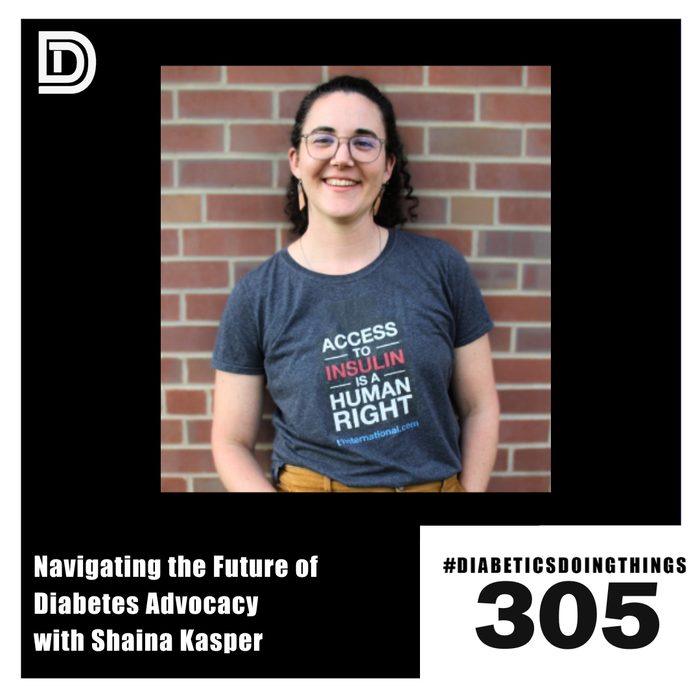
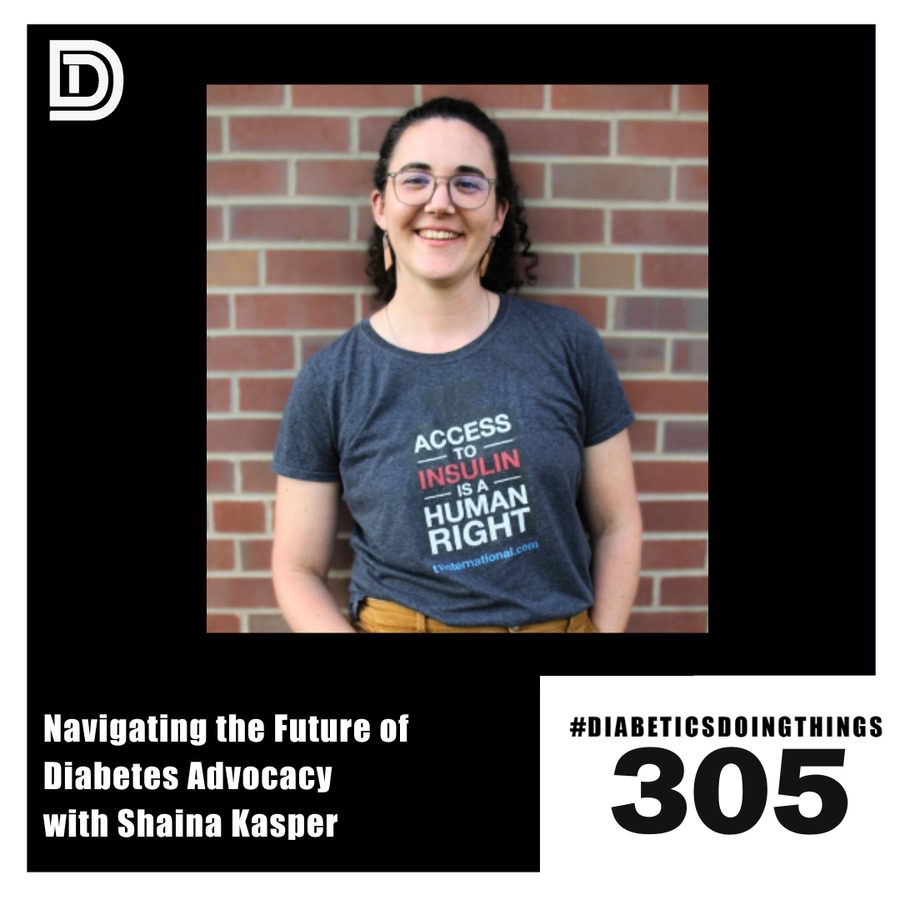
Navigating the Future of Diabetes Advocacy with Shaina Kasper

Episode summary
Shaina Kasper, the new executive director of T1 International, returns to the podcast for part two of a series with the organization's leadership. Kasper was diagnosed with type 1 diabetes about twelve years before this recording and did not find a diabetes community that matched her values until she heard founder Liz Pfiester on a podcast. She later realized she had been rationing her own insulin without naming it. Kasper explains T1 International's focus on policy over direct aid: a fight for insulin and testing supplies to cost no more than 5% of income, insulin price caps, patent reform, and public pharmaceutical manufacturing. She covers insulin access during climate disasters and conflicts, the 2024 US election, pharmaceutical industry lobbying, and why the organization refuses pharma funding.
Key takeaways
- Shaina Kasper says T1 International's recurring global survey has found that about one in four people with diabetes ration insulin due to cost.
- Kasper says insulin price caps and copay caps are different: copay caps limit what insured patients pay, while price caps lower the actual list price.
- T1 International refuses funding from pharmaceutical companies and from funders who take pharma money, which Kasper says is rare among diabetes nonprofits.
- Kasper says Novo Nordisk stopped distributing insulin in South Africa, forcing patients to switch to insulins, vials, and syringes they had never used before.
- T1 International is translating its out-of-pocket cost survey into French, Spanish, Swahili, and Arabic to reach more people worldwide.
Show notes
In this episode of Diabetics Doing Things, Shaina Kasper, the newly appointed executive director of T1 International, joins the podcast to discuss the organization's ongoing and future initiatives. Shaina elaborates on key topics such as the transition of leadership, the global fight for affordable insulin, the role of policy in diabetes advocacy, and why T1 International refuses pharmaceutical funding. The conversation also touches on the impact of climate disasters, conflict zones, and political actions on insulin access. Additionally, Shaina emphasizes the importance of community and patient-led research and how listeners can contribute to the cause through surveys, petitions, and grassroots support. The episode calls for voters to be informed about the implications of policy changes and to participate actively in advocacy efforts for systemic change.
00:00 Introduction and Recap of Part One
00:16 Welcoming Shaina Kasper
01:48 Global Challenges and Human Rights
03:57 T1 International's Policy Focus
07:20 Personal Stories and Advocacy
09:36 Survey and Research Initiatives
10:58 Policy Priorities and Legislative Actions
14:22 Challenges in the Pharmaceutical Industry
30:07 The Importance of Independent Advocacy
35:41 Call to Action and Conclusion
Resources:
Public Citizen Report: Mapping the Phrma Grant Universe
T1 International - How to Get Involved
Questions this episode answers
What is T1 International?
T1 International is a patient-led diabetes advocacy nonprofit focused on policy change, not direct supply distribution. Its goal, as Shaina Kasper describes it, is a world where no one spends more than 5% of their income on insulin and testing supplies.
Why doesn't T1 International accept pharmaceutical company funding?
Kasper says taking money from pharma or from funders tied to pharma compromises an organization's ability to advocate against industry pricing practices. T1 International relies instead on individual donors and independent funders.
What is the difference between an insulin price cap and a copay cap?
Kasper explains that a copay cap only lowers what an insured patient pays out of pocket, while a price cap lowers the actual list price of insulin for everyone, including the uninsured.
How many people ration insulin because of cost?
According to T1 International's out-of-pocket expenses survey, cited by Kasper, roughly one in four people with diabetes worldwide ration insulin due to cost, regardless of their country's health care system.
Full transcript Searchable, with timestamps
Rob Howe: What's up, podcast fans? Welcome back. Hopefully you listened last week to part one of this two-part series with the leadership of T1 International. Last week we had Liz Pfiester, the founder and former executive director. And this week we have Shaina Kasper returning to the podcast, who is the current executive director of T1 International. We dig into a lot of things in this episode. The future of T1 International, the transition plan, why diabetes. is political and following the 2024 election. Good information for people with diabetes to hear about how diabetes is political, no matter who is in office. And some really good information about industry funding and why T1 International will never take pharmaceutical money. If you're looking for more information on T1 International, go to t1international.com. And if you're looking for the public citizen report that Shana references in this episode, you can get that in the show notes to this episode. Okay, please enjoy part two of our series with T1 International with Shaina Kasper. Hello, and welcome back to another episode of Diabetics Doing Things. We are telling the amazing stories of people with diabetes all over the world, and I'm really excited to dig into today's episode. You guys recently heard from Liz Pfiester, who is the founder and former executive director of T1 International. And as part of really a two-part interview, I'd love to welcome back Shaina Kasper, to the pod. Last year, you were coming on the pod to talk about where is the $35 insulin here in the U.S. as the leader of policy at T1 International. And I also now want to congratulate you as the recently named executive director of T1 International. So welcome back to the show. Thanks so much for having me. It's good to have you back. We were kind of talking before we hit record. There's still unprecedented times all around us. And the need for access to insulin worldwide has, at least for me, never been more central in the sort of global conversation as something that is more needed now than ever. And I'm excited to talk about that with you today.
Shaina Kasper: Yeah, we were talking right before this about what's happening in Gaza and then also with the flooding. Our North Carolina chapter is having a meeting as we're recording this in October. The North Carolina chapter has just recently had a meeting about getting access to insulin and supplies out to making sure that people in that flood recovery have access to the drugs that they need. I'm sure we're going to be seeing more in Florida between the recording and the publish of this. And of course, it just keeps happening everywhere, all over the globe. You know, working on this work is working on climate change, is working on peace, is working on building meaningful relationships all across the globe. And it just continues to be really hard.
Rob Howe: Well, it really comes down to human rights. And I think something that has always stood out to to me about T1 International is the access to insulin is a human right line. And, you know, as we look at whether it's man-made conflict zones like in Gaza or in the Congo or in other places throughout the world, Ukraine, or we look at natural disasters, if there's a large group of people being adversely affected by any source, there are people with diabetes who are also being disproportionately affected. And I did see, and this was sort of in the internet viral virality of videos after Hurricane Helene, there was insulin being delivered via donkey.
Shaina Kasper: Oh, my gosh.
Rob Howe: In North Carolina.
Shaina Kasper: So people are going through all sorts of links to get supplies and medication to our brothers and sisters with diabetes all over. And yeah, as you know, at T1 International, we don't exist to get supplies into people's hands. There's a lot of other really great organizations that are doing that work in humanitarian crises or in a day-to-day world where we're under crises of capitalism and of structural oppressions. At T1 International, our vision is a world where everyone with diabetes has everything that they need to survive and achieve their dreams. And our theory for how we're going to do that as our organization is through policy. And so working towards a world where no one has to spend more than 5% of their income on insulin and testing supplies by getting strong standards from the World Health Organization, by passing policies in countries all across the world, including price caps, emergency access to insulin laws, things like that, working on dismantling big pharma's power, so including passing policies around public pharma and patent reform, and overall making sure that everyone has equitable and quality access to healthcare. And we do that by running big campaign campaigns, building strong relationships with partners, building strong local groups to be able to do that, organizing and advocacy work at the local level, and to really just make sure that there's leadership from those most impacted by the insulin price crisis at all levels. We know that being a person living with diabetes, we have to rely on each other. Like we have to be able to have a strong community and build these strong groups. And our lane in the movement is to be able to do that in a way to create structural change. And that often means working with and supporting organizations that are doing that direct humanitarian relief effort on the ground. but organizationally we're really focused on policy change.
Rob Howe: I want to dig in more on the policy change side and your priorities as you are steering the organization forward now in the executive director position. But something that's been sort of top of mind for me this week, I went on a golf trip with some friends last weekend and my insulin pump sort of became a central character in the golf towards the last day.
Shaina Kasper: Like make it unknown.
Rob Howe: Yeah, it wanted to be heard. And so, of course, playing around with friends, you know, questions came through. And I think one of the things that I've been reflecting on as we've crossed 300 episodes as the week of recording here, Friday, October 11th.
Shaina Kasper: And thank you.
Rob Howe: Thank you very much. And the companionship and community aspect of the diabetes community. And then sort of what you're talking about is influencing policy at large. We've got to build those connections outside of the diabetes community for more people to care about the plight of our lives with diabetes has to extend beyond just the people who were immediately affected by it. And so kind of explaining the cost of diabetes, that was a question from one of my friends that, you know, hey, like, you know, what does it cost to manage this? And I don't know what his expectation was, but I was, you know, it's about $10,000 a year when you really total everything up. And that's forever. And I'm very fortunate to be in a position where, while that does certainly affect me, I'm able to pay those fees. And their response was kind of interesting. And I felt is right is until there is a need at a policymaker level where a child or a family member lives with diabetes, their ability to care about it is really only influenced by advocacy groups. And that may be for an advocacy group coming and speaking or trying to influence that policy. Maybe the first time they've heard about this type of need, at least for the guys I was playing with this weekend. Like they have children, they're working or running businesses, and they have no idea about the person to the left or to the right of them, what they're dealing with from a diabetes perspective. So there is much work to be done. And educating our communities that we are adjacent to outside of just diabetes communities are extremely important for us. and everyone listening to this podcast knows that all too well.
Shaina Kasper: I think that is something that's really special in the access to medicines movement that we bring as people living with diabetes is that everyone knows someone and loves someone who has diabetes. They may not be the person that that person is vulnerable to and opens up about the challenges and about the costs of living with diabetes, those extra 180 decisions that we're making every day. But so many people do live with diabetes. And that means that we have this like leg up when we're talking about access to insulin, when people are able to be brave and vulnerable and share their personal stories. that means that we were able to build this huge movement that other disease areas or other disability areas might not be able to have access to because many people know someone who has diabetes and who has maybe struggled to access insulin even if they haven't been able to be publicly vulnerable about that and just really briefly like my personal story and I shared it a little bit in the last podcast interview but that I was diagnosed when I was already really politicized And my little sister had diabetes and had so much great community. But I saw them all as being so tied in with pharma and representing pharma's interests. So I didn't think that there was a diabetes community for me. And it wasn't until I rationed insulin that I really said, oh, my gosh, this is a problem. Like, I need to be more open and dismantle some of the stigma that I'm holding in myself and find that diabetes community that does represent my values. And it wasn't until I heard Liz on a podcast that I said, oh, my gosh, T1 International exists. This is the group that I need to be a part of. This is a group that I need to find a way to support. And then I've been on the team for about three years now in different policy roles. And yeah, just took up the helm of executive director last month.
Rob Howe: Well, before we get into that, because that's going to be a large part of our conversation today, I remember specifically from that episode and listeners can go back and find it. It's called Where is the $35 Insulin? It's from 2023. You had to recognize, and I think that interview with Liz helped you recognize that you were in fact rationing insulin you hadn't necessarily come into that language yourself you had to really measure what you were doing and how you were living and realizing oh this is me it's not just other people out there that are rationing their insulin i am actually rationing my own insulin
Shaina Kasper: yeah and we do this survey every couple of years a shout out to having everyone on the podcast take our out-of-pocket expenses survey right now to take put it in the show notes and our out-of-pocket cost survey shows year after year that globally one in four people are rationing insulin due to cost. And that means that, you know, people in countries where there's no universal health care and everyone has to pay full price out of pocket. And that means here in the United States where people have private insurance and in people where there is full universal health care and they have access to it overall, altogether, one in four patients are rationing insulin to the cost. And that's just horrific. And that number is probably being underreported because people are probably not like me, not realizing that, oh, I just went without for a day because I was on vacation and I knew I'd be coming home and I didn't want to have to pay $400 out of pocket to get insulin for one day while I was traveling home or whatever it is. We as humans, we're incredibly biased in the way that we report on ourselves. And I think one of the things that, you know, it's been reported in many different surveys across many different topics over the years is that we, as people in the West, at least, or just humans, are much less likely to report ourselves as in need or indicate that we that we're having a difficult time.
Rob Howe: And so you're right. It's probably is just from our inherent human biases that comes out. It's probably more, which, again, speaks to the need. So as you are going into your priorities, leading the organization for the first time, you know, what are your priorities stepping into the executive director position? And what are you and your team focused on from a planning perspective?
Shaina Kasper: Yeah, so Liz founded and led this organization for 10 years and has just built such a huge global network of patient advocates, caregivers, loved ones, people who want to change the status quo and believe in our vision of affordable and accessible insulin for all. And so I'm not looking to go from zero to 60. We're already cruising pretty strong here. And I'm just trying to keep the ship going the right direction and at the right speed, maybe 60 to 70. We'll see. But I'm not known for my speeding tickets. But at T1 International, we really want to focus on our global strategy on breaking down the barriers that perpetuate discrimination and inequality. So at T1 International, we have our ethical patient engagement principles to ensure that those who are most impacted by the insulin price crisis are those whose perspectives and goals are centered in finding the solutions in a not in a tokenizing way, but in a real and meaningful and fully embodied way across our organization. And so our goals are led by our community and our global advocacy priority is this fight for five. So working for a world where no one has to spend more than 5% of their income on insulin and testing supplies. And so when this podcast come out in November, we're probably going to be hearing back from the WHO around their metrics about what affordable and accessible insulin goals that the WHO is setting is going to mean. And that's been, you know, two and a half year fight. And just be this beginning of that. We're going to have to make sure that that gets implemented and enforced in countries all across the globe. And so thankfully, we've got a really incredible network of advocates and partners who have been running strategic, thoughtful campaigns around this goal for years already. So continuing to support those chapters, those advocates, those partners, we are building up some of our global advocacy staff. So we just hired a global advocacy manager and regional advocacy consultants in Egypt and Tanzania and Brazil to support chapters and partners in that work on the ground and to better communicate that work with our global community and with T1 International as a staff to be able to learn from these experiences, to network and to take action together. We're going to be kicking off 2025 with a big action in D.C. to let the 119th Congress know that patients living with diabetes are not happy with the policies that have passed already, that we need much more, that we need actual insulin price caps that are not just copay caps but are actually lowering the price for all. Again, can go back and listen to that podcast from last year about the difference between price caps and copay caps and to make sure that we have patent reform so that we can actually have more competition in the market, which will lower prices organically by having more robust competition and anti-competitive practices.
Rob Howe: I just wanted to step in on that a little bit because recently the CEO of Novo Nordisk came before the Senate and Bernie Sanders was pushing him. And I think I'm probably paraphrasing a bit here, but he's saying, you know, stop ripping off Americans for paying too much for their medication. And they were talking specifically about GLP-1 and around like Mounjaro and GIP. but two years ago now, I guess in the beginning of 2023, very similar with the CEOs of the big three pharma companies in front of the Senate Judiciary Committee and talking about copay caps and then our response from that being that, and T1 International's response being that, you know, copay caps are not price caps despite what the headline has been. And I think now in an election year in the U.S., and this will be published or come out after the presidential election in November. But, you know, prior to that, because you are one of the people who I consider a really great policy person, I am not a policy person. It makes me so bored to read policy. So I really have to rely on people like yourself to really help me make sense of what's being said and cut through a lot of the marketing and a lot of the posturing. And so there's been a lot of conversation on both parties about insulin specifically. Looking to you as the expert here, like what should U.S. voters know about the candidates regarding health care and access to insulin or diabetes care specifically with all of the headlines that have been sort of driven about insulin prices
Shaina Kasper: specifically? Yeah, we know that both parties have been making a lot of promises and using our lives as topping points for a decade now. And since before I was diagnosed with diabetes 12 years ago, I've been hearing in stump speeches and in campaign ads about how the price of insulin is skyrocketing and about how we need to cap the cost of insulin. And yet, and we've had so many victories around that, right? We've been able to have dollar insulin for the first time since my diagnosis with Lispro being available at $25 a vial, if you can find it, which is definitely still a huge concern. And we have $35 insulin available for people who are Medicare beneficiaries. And we have $35 insulin available for many people using these manufactured sponsored cost sharing programs. And like we've lowered the list price of insulin. That is huge. Not just the copays, but also the list price. So the insulin manufacturers have voluntarily lowered the list price of many of their insulins due to patient advocacy. And Medicare has actually negotiated a lower price for Novo Nordisk short-acting products, Aspart products. And so that is huge. That is so important. And yet, there's a reason why politicians are still stumping on insulin for all talking points, right? We still need to have lower-priced insulin. Our policy analysis at T1 International is that we need to have insulin price cap laws. We need patent reform policies. We need public pharma. We need publicly manufactured insulin and publicly distributed insulin. We need to expand pharmacist scope of practice. We need emergency access to insulin. We need to pass more policy to hold insulin manufacturers to account. It's so extreme in the access to medicine space. You know, there's three lobbyists for every one member of Congress. That's bonkers. That means the pharma industry is one of the most powerful industries in the nation. It means they're able to fight off well-meaning politicians and constituents that represent them. And so this election is really critically important. I feel like we've been saying this for decades. I feel like every election of my life has been more important than the last. And I feel like you keep hearing that because it's more true than ever. Like every two years, the election is more important than the election before it. It's nuts. But because, yeah, these companies have been able to fight off virtually all attempts to rein in our outrageous drug prices. And again, we've had these really significant victories. We've had policy change. We've had the Inflation Reduction Act and Alec's Law policies passed in Minnesota and other states. We've had copay caps passed. And the industry's lobbying and campaign contributions and paid media means that they're able to stave off the reform that their constituents are calling for. So with this election, we need people to vote. We need people to get out there because we know that our lives are not talking points. And we need to pass policies to have public pharma. We need to pass policies to have pace caps on insulin. We need to pass policies for emergency access to insulin. We need to pass policies for patent reform. We have so many policies that we need to pass to make sure that our lives, our access to insulin is actually being taken into consideration in the election. and it doesn't stop at the election. No matter who gets in office, we need to make sure that patient advocates are being heard by policymakers. We need to demand this meaningful change, but by electing the right people into office, that's how we're going to be able to make sure that we're fighting policymakers who can make those changes.
Rob Howe: And I agree with you. I mean, it's so challenging, I think, as a person who believes in people organizing and wants to continue to push forward, like patient led advocacy and really activate and encourage patients to use their voice. And that's something that I think I've been really vocal about from the start, whether you're trying to start a creative podcast or you're trying to advocate for people with diabetes and just tell stories or just make fun content or you're organizing and protesting and working on, you know, really boots on the ground political work. It is discouraging because the way that the country operates is through this sort of back channel money game where the person with the biggest pocketbook can drown out the people who can actually really want to influence policy. And it's not illegal to do that. And so I think that's where when I look at why is insulin so much cheaper in Germany or in Switzerland or in countries that are as mature as we should be in the U.S. or where they have democratized health care and it's not for profit necessarily and there's not political donations from corporations are not allowed. How can we grow or make our way to that? And it's just really challenging because then again, the next election cycle comes up and insulin is another very top of the line headline point that all the candidates make. I see in TV ads and unfortunately it works because the people who don't live with diabetes, they say, OK, well, I know someone with diabetes and looks like the insulin crisis has been solved. So when I tell them that it hasn't, it's always a surprise. And that has real repercussions on our lives and on our health as people living with diabetes. We've heard stories of people reading all of the news about $35 insulin being available January 1st and people making decisions about their jobs and their health care and their insurance based on that data. And then showing up to the pharmacy counter and saying, wait a minute, I thought I was getting $35 insulin. What do you mean I have to pay thousands of dollars that I now don't have? I've budgeted differently. people who thought that they were being informed and were just reading the news and thought that these policies applied to them. Well, it's challenging because you have this headline from CNN, from Fox News, from wherever you're getting your information or getting your news. And it says, you know, $35 insulin is approved and starts this date and you go there after that date. And unfortunately, that headline, that publication is not going to get you that price. And I think I see stories, really heartbreaking stories of people who get a lot of empathy from the pharmacist or the pharmacy tech. And they say, do you know how much this is going to cost you? And they wonder, how is this person going to pay $2,000 out of pocket for this medication? And then you also get deeper in that there's no other option. And back to what you're talking about on the patent reform side of things and the public pharma side, like there's no generic ultra rapid acting insulin. And so it's very different than other medications. And so, yeah, I'm getting really riled up about it, but I think it kind of blows into the next question, which is because we're in this time where global access to insulin in not only just areas where there are humanitarian crises or emerging nations, which I think people in emerging countries, we have no idea at large what they're going through to live with diabetes. And that doesn't diminish the real challenges that we have here in the United States. What can our listeners do? How can our listeners get involved and contribute to that patient-led mission of T1 International?
Shaina Kasper: At T1 International, we always have different ways for people to get involved. So as I had said earlier, we have our out-of-pocket cost survey. This is going to be the sixth time that we've run this research. We think that having patient-led research is really important, not just to answer the questions that patients are actually asking. I think there's so much really important scientific research out there that's happening on finding cures or finding other treatments and other products to be able to manage our diabetes. But as a person living with diabetes, I want to know how can I access what's out there now? And so at T1 International, over the past 10 years, every other year we've run this out-of-pocket expenses survey to answer that question that people all across the globe are asking is, how much is accessing essential medicines living with diabetes costing? And how much are we rationing insulin? And this year, we're translating our out-of-pocket expenses survey, not just in English, but in French, Spanish, Swahili, and Arabic as well, to try to get that survey out there to as many people as possible. And so filling out that survey is a great way to support the research that will fuel this movement. But at T1 International, we also do need funds. You know, we don't take any funding from pharma companies. And so we're also running fundraisers. We're asking people to fundraise to support T1 International and to donate to support T1 International during World Diabetes Month. And at the end of the year, this is when we get most of the support. And as a small grassroots organization, we don't take funding from pharma or from foundations that take money from pharma. We do rely on individuals and from other funders who are truly independent to be able to best represent our values. And then we also always have petitions and actions on our website. You can also sign up for our newsletter. Our newsletter has lots of different calls to action, sharing information, sharing stories from across the globe of what people are doing to take action and how you can support those actions that are happening on the ground in different countries and at the state and local level all over the world. So I don't know where we'll be in a month from now. We're always responding to requests. But right now we've got an ask out for people to sign a petition to support our advocacy in South Africa where Novo Nordisk has no longer been distributing insulin and where patients are having to shift to using insulins that they've often never used before, using vials and syringes they've often never used before. We have a petition out there for a supporting group in Nigeria on their advocacy for more funding for diabetes care and for NCD's care overall. And there's so much work happening in Pakistan with our partners, Meethi Zindagi. And then all across the U.S., there's campaigns happening in states to pass policies that are most needed for those different people. In Connecticut, we're working on public pharma. In Washington, we're working on Alec's Law. We've just got lots of really powerful ways that people can take action with chapters and at the advocacy level.
Rob Howe: Awesome. I will link to as many of those as we can here in the show notes and obviously direct people in the communications for the episode to T1International.com. And so they can get involved both here in the U.S. and overseas. and I think expanding it again I touched on this a little bit earlier but emerging nations and I was having a discussion with someone who was focused on doing some work in Malawi in recent years and there was the discussion was four or five years ago they're like well we don't have anyone with diabetes you know so we don't have to do that what they really didn't realize is that they didn't have anyone with diabetes because all those people were dying and so when they put some clinics in and they put had a presence there on the ground to identify those signs now there's 3,500 people with diabetes living there. So diabetes care, diabetes access sort of runs this very large spectrum across the world of what you're able to get. And it makes my Novo insulin that's on back order here in the U.S. and nobody can seem to find is very different than Novo products being distributed throughout the whole country like our brothers and sisters in South Africa are dealing with. So always really good to engage with T1 International. I think that's That was the first time my first podcast interview with Liz now almost 10 years ago. You know, she talked about people living in conflict zones in Syria and having to walk across minefields to access their insulin. And that to me, after going through a frustrating but not particularly difficult pharmacy exchange that week, gave me a whole new perspective on how lucky we are here in the West, despite the real challenges that we face. And I'll just say, yeah, here in the U.S., we are facing extremely real challenges as well. I just don't want to undermine your experience of experiencing these shortages. I think that we referenced the Novo hearing, you know, just a couple of weeks ago. It'll be a few months ago by the time this podcast come out. But that Novo Nordisk was one of the companies that brought you the insulin price crisis. And now they're bringing the GLP-1 crisis. So while all these people are working on getting access to Ozempic and Wegovy, quietly, these companies are switching over their fill and finish factories from filling insulin vials and insulin pens to instead filling them with this other drug that they can make a lot more money off of. And that has real implications on access to insulin, which is a life-sustaining medication. And for example, Levemir, which is the long-acting insulin that I use, was discontinued. We know that there's been shortages of so many insulins by the big three insulin manufacturers all across the country. And I'm lucky enough to be able to live close to Canada where I can just drive up and get over-the-counter insulin during these moments of crisis, but that I know so many folks are not able to access insulin either because of these shortages, because of the price, because of horrific climate disasters that we've been experiencing and flooding and all these other hurricanes and other issues. So we're all experiencing, you know, I don't want to diminish the problem that you're experiencing and accessing insulin because they all have real impacts on our bodies and on our mental health and on who we are
Shaina Kasper: as people living with diabetes. Yeah. And even at a micro level, right, there's just the extra decisions that you have to make, the extra thoughts that you have to have as a person who's, you know, managing a chronic illness long term with all these other very real challenges that are facing the world today, facing people today. It's very challenging. And, you know, it kind of comes back to and flows into our next question is when you start to look at, all right, well, if this company has the ability to prioritize certain medications over others, but there's no other way for those medications to be made, that is, I think, a real clear indicator of reform. And maybe that will allow some different levers to be pulled in regulation of those is to say, OK, well, if this is the way that the system is set up and there's real shortages and people having to switch and going through real crises because a company is prioritizing a more profitable product over another, that maybe we need to find a way to make sure that there are some checks and balances here.
Rob Howe: So hopefully that will come to head. So you've mentioned this before. This is one of, I think, the keys. When I think of the diabetes nonprofits of the space, I was talking with Liz about this earlier when we did her interview. T1 International remains one of the only nonprofits in the diabetes space that does not accept pharmaceutical money or from funders who are supported by pharma to avoid compromising the ability to advocate on behalf of the patients that you guys serve. That makes things harder. I think that's just what I want to, because you, like you said, you're a grassroots org, you're asking for money from people who are already having to pay extra money out of pocket. So I just want to dig into how that conviction shows up for you and the T1 international advocates in the day-to-day work, because it makes things more challenging, but remains a steadfast conviction of the org. So how can we drum up support for the organization to continue to do the work that you guys do, even from grassroots, small donations here and there? How do you guys stay galvanized and strong through those difficult circumstances?
Shaina Kasper: Just before answering that specific question, I just want to take a step back to kind of paint the picture of what we're up against, because I mentioned this before. There's three lobbyists in Congress for every member of Congress. And the health care lobbying has gone up 70 percent from 2000 to 2020. And pharma in just the third quarter of 2022, when the Inflation Reduction Act was happening, pharma, which I'm not just saying pharma in general, pharma is the Pharmaceutical Researchers and Manufacturers of America lobby, the pharmaceutical company trade group. They spent over $7 million just in that one quarter on lobbying alone. But that's just a fraction of what pharma and the pharma as a trade group and all of these companies are spending to move the public to support their campaigns. Because we know that the pharma network, you know, so pharmaceutical companies and the pharmaceutical trade group has spent tens of millions of dollars per organization by paying patient advocacy organizations to be on the sidelines of negotiations around drug pricing reform provisions or actively lobbying against the interests of patients living with these diseases. And so I don't want to name names. It's not our role here at T1 International, but Public Citizen has a really great report out there called Mapping the Pharma Grant Universe, and it's Pharma, P-H-R-M-A, meaning that trade organization, and just shows the billions of dollars in grants that Pharma and its member companies have distributed and the impact that that has on policy. So being independent and not taking funding from these trade groups and from these corporations is really, really unique in this space. I think I grew up fundraising for organizations by doing walks and being part of this really powerful mobilization and thinking that the funds that I was raising by doing these experiences and by sharing the word with my community, I thought that was having such a big impact and was able to support the causes that I believed in and I represented me. And it was really, it took a lot of grief when I understood, when I was like being politicized and realized that a lot of these organizations are not just in the patient advocacy space, but like in lots of different work that we're wanting to take action on, that they're not actually representing our best interests, that they're representing the interests of those who fund them, which are in the case of patient advocacy organizations, big pharma. And so being an independent group that doesn't take any of that funding is really, really rare and puts us as the oftentimes the only people in the room who are actually representing patient perspectives when looking when on a patient advisory council in California working on public pharma or in negotiations in Connecticut working on PDAB. What is the PDAB for public drug assistance boards there and working on these different things? So it was kind of shocking to me coming into this space after so many years in the environmental health world of how rare that actually was and how much our whole movement has been hindered by Pharma having so much power, not just in lobbying, but in influencing all of our peer organizations. We need a bigger movement.
Rob Howe: That's right. And I think if you're listening to this and you're like, OK, well, Rob and Shaina have their tinfoil hats on and this and this and that and the other. Go listen to the episode with Liz where she and I talk about one incident in particular on a public shareholder meeting about the role that the money that one of the pharmaceutical companies gives to a patient advocacy organization, what it is for from their perspective. And my thoughts on that, because I think when I am looking at partners or when I do partner content and I have to say, you know, I'm a partner with this company, there's a shared goal for each of us that we're working together for a reason that we believe in what the other is working for. And I think to have the good work that that organization does be minimized so publicly and swept under the rug and all these accusations becoming true on public record to me was especially embarrassing. And so, you know, I think for patients who want to learn a little bit more of that, there are a link to that public citizen report in the show notes as well so that you can do that. And I think that's why there's need for independence and there's need for people to get excited about that and to mobilize because there are really big, challenging obstacles. But like you said at the beginning, people power is stronger than money power longer term. And the more people we can get on board with that ideology, I think the better off we'll be.
Shaina Kasper: And so how can people take action? Yeah, we are running, we're always running big campaigns, right? So as I said, in January, we're going to be in D.C. taking on Congress, letting them know that we need change, we need patent reform, we need price caps on insulin. We're going to be exposing what Congress has done to be accountable to big pharma rather than to their patient constituents. And so we do skilled advocacy and mobilization with people who want to take action, whether that's in a big way, you know, coming to an action or in some small way. We're also we're a really small, scrappy organization, and we rely on our community to be the experts in their local area. We can't follow every policy that's happening in every state. And so we need people who are on the ground in states and countries all across the globe to let us know when there are campaigns that are mobilizing and escalating into. We can provide support to chapters and to advocates that are on the ground, but we can't be there just us as T1 International. We are such a distributed movement. And so we build these strong collaborations with partners. We build strong chapters and groups to win campaign goals that are specifically relevant to that local context. We can help groups build support and build their community and network with other existing organizations and communities to make sure that we have that leadership that from those who are most impacted by unaffordable and inaccessible insulin to be leading the movement. But we need our community to help make that happen. And we need support with research, getting with that technical expertise. Our partners can only do so much technical expertise without our leadership, without the patient advocacy perspective. And, you know, we're the experts in our lived experience. And to be a organization that supports research that is answering the questions that we most need, we need people to participate in that research and to support that research. So again, filling out a pocket cost survey, or if you are a researcher or an academic, finding ways to support the work that's happening on the ground by patient advocates working on insulin access and affordability.
Rob Howe: I love it. And, you know, I think I couldn't have said a better call to action myself. I'm excited for the future of T1 International. I'm excited to have another patient leader at the helm of a diabetes nonprofit focused on advocating for people with diabetes. Congratulations to you for, I know there was an extensive search. I know that it's a heavy burden to share and to have Liz pass off after her many years of service. And I'm just excited to continue to partner together in whatever little ways that we can and our community can. But just know that our community does believe in the work that you guys do. And that influencing policy is not something that just happens all at once. It is a long march. And I think that the more educated that I've become on it, the more I realize that it truly will not happen unless we continue to maintain the energy, to continue to spread the word, and to continue to think about what the future could look like for people with diabetes. So, Shaina, thank you so much.
Shaina Kasper: Thank you so much. Yeah, I'm just so grateful to have found this movement. It took years of me living with diabetes before I knew that this community existed. and having this global, inclusive, independent community that embraces disability justice principles and is led by people most impacted. It's just so powerful to be a part of this community. And I'm like, how the hell am I supposed to lead this group? And it's because I'm not going to be leading it. We're all leading, everyone in this movement is leading the part of the movement that they're a part of. And we need everyone and includes people running peer-to-peer fundraisers doing fundraisers for World Diabetes Month or for people taking action. So I was really grateful for you, Rob, for this opportunity to share the word and for all of your advocacy and grateful for this whole movement, this leaderful movement to work alongside with.
Rob Howe: Well, you said it best. I think work is the operative word. And, you know, I think the only way we can do that is together. So, Shaina, thank you so much for your time, for coming back on the pod, a two-time guest and looking forward to continuing to follow and see all the work that you and Team International will do.
Shaina Kasper: Thank you so much, Rob. Talk to you later.
About Shaina
Shaina Kasper is the executive director of T1 International, a patient-led nonprofit advocating for affordable, accessible insulin worldwide. She previously led the organization's policy work and was diagnosed with type 1 diabetes about twelve years before this recording.