

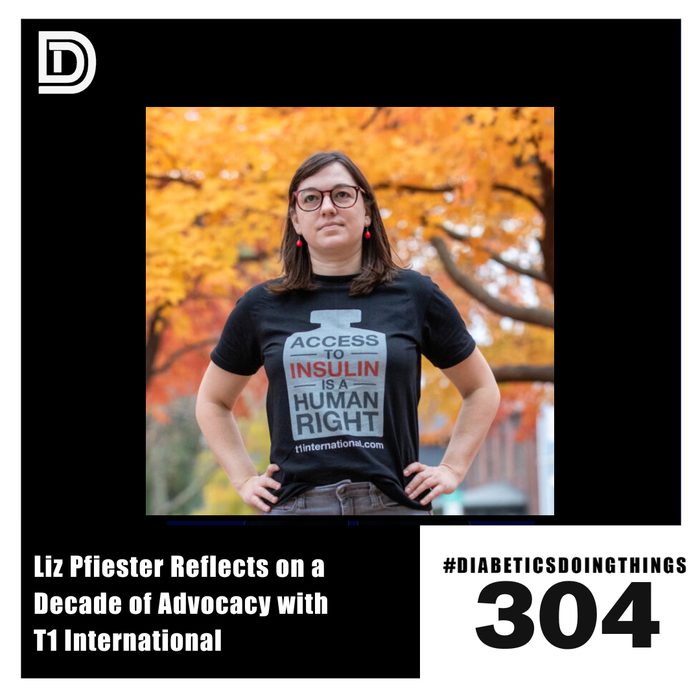
Liz Pfiester Reflects on a Decade of Advocacy with T1 International

Episode summary
Liz Pfiester, founder and outgoing executive director of T1 International, talks with Rob Howe about stepping down after 10 years leading the organization. She explains how she planned the transition years in advance, the wins she is proudest of, including changes to the World Health Organization's essential medicines list, and the reality that insulin access gaps persist, especially in conflict zones like Gaza and Congo. Pfiester discusses advocacy burnout, why T1 International has never accepted pharmaceutical industry funding, and how researchers Merith Basey and David Beran shaped her thinking on industry influence. She reflects on moving past an us versus them view of type 1 and type 2 diabetes, and hands the organization's future to incoming executive director Shaina Kasper.
Key takeaways
- Liz Pfiester is stepping down after a decade as founder and executive director of T1 International, passing leadership to Shaina Kasper.
- Pfiester says T1 International has never taken pharmaceutical funding and that independence will not change under new leadership.
- Rob notes a stat that one in two people worldwide ration insulin, and the two discuss how conflict zones like Gaza and Congo make access even harder.
- Pfiester says burnout is common among diabetes advocates, and T1 International tries to let volunteers step away and return without judgment.
- Pfiester credits researchers Merith Basey and David Beran with shaping her early understanding of pharmaceutical industry influence on diabetes nonprofits.
Show notes
Transition in Leadership: Liz Pfeister Reflects on a Decade of Advocacy with T1 International In this episode of Diabetics Doing Things, host Rob Howe interviews Liz Pfeister, the founder and outgoing Executive Director of T1 International. They discuss Liz's journey from founding the organization to advocating for insulin access and addressing overwhelming challenges in conflict zones. Liz shares insights on the emotional and logistical difficulties of stepping down and the vital importance of community in advocacy work. They also explore the future of T1 International under the new leadership of Shaina Kasper and emphasize the enduring fight for global insulin access.
00:00 Welcome and Introduction
01:46 Meet Liz Pfeister: Founder of T1 International
02:59 The Journey of T1 International
07:01 The Highs and Lows of Advocacy
16:08 Future of T1 International
19:28 Global South and Conflict Zones
27:28 Reflections on Advocacy and Independence
32:54 Advice for Aspiring Advocates
38:10 Final Thoughts and Farewell
Questions this episode answers
Who is taking over as executive director of T1 International?
Shaina Kasper, the organization's current policy and advocacy director, is becoming the new executive director as Liz Pfiester steps down.
Why does T1 International refuse pharmaceutical industry funding?
Pfiester says pharma money would compromise the organization's ability to criticize insulin pricing and speak freely for patients, so T1 International has never accepted it and does not plan to.
How does T1 International help people with diabetes in conflict zones?
Pfiester says the organization is not a first responder, but it amplifies stories from places like Gaza and works with partners such as MSF Access to push for insulin to be included in humanitarian aid packages.
What does Liz Pfiester see as the hardest part of 10 years leading T1 International?
Pfiester says the hardest part is that change isn't happening fast enough, and that more than 100 years after insulin's discovery, people are still dying because they can't access or afford it.
Full transcript Searchable, with timestamps
Rob Howe: Hey podcast fans. If you are listening to this as one of your first new episodes after the Rising Above T1D event with Risley Health on November 1st, 20, welcome. This is Diabetics Doing Things and I'm Rob Howe, your host. This episode is the first part of a two part series with T1 International. And this interview is with the founder and now former executive director, Liz Pfiester. and she and I connected prior to her announcing the succession and the new executive director, Shaina Kasper, who has been on the podcast before. Liz was one of my first guests in 2016. She was one of the first people who made me aware of the struggle of access to insulin and access to the standards of care that we take for granted probably in the West for our brothers and sisters with diabetes overseas. In that episode, we actually recorded and then something happened with the file and my recording system was not as sophisticated or as easy as it is now. And we lost the file. And Liz lives in the UK and was gracious enough to reschedule and rerecord the podcast. So that's a little bit of behind the scenes of the podcast that she and I reminisce about in this episode. She talks about the process of making the decision to step down as the founder and executive director and start the succession planning and choosing the next executive director and the future of T1 International and what that may look like. So please enjoy part one of this two-part series with T1 International executive directors, former executive director and founder of T1 International, Liz. Hello and welcome back to another episode of Diabetes Doing Things. We're telling the amazing stories of people with diabetes all across the world. My very special guest today was one of the first people who introduced me to the struggles of our brothers and sisters with diabetes in conflict zones, in emerging countries, in third world countries, and has been over the last 10 years fighting for insulin access all across the world. She's the executive director of T1 International. Liz Pfiester, welcome to the show.
Liz Pfiester: Hi, thank you. Thanks so much for having me.
Rob Howe: Going back in time to March 2016, when you were on the podcast for the first time, we had not recorded that many episodes. I think you were episode six. And recording totally failed. And we had to re-record it. I just remember the first interview, which no one will ever, you know, it disappeared into the ether, was super impactful. But I also remember early on before really I had any sort of credibility or credentials in the space, you gave your time to rerecord that episode. And so all these years later, I appreciate it.
Liz Pfiester: Yeah. Well, thank you. Yeah, it was great to have that conversation. And I don't remember the duplicative conversation. I just remember it was a good conversation. So, yeah, really, really cool to be back and sharing more now.
Rob Howe: Well, that was eight years ago. You are celebrating 10 years of advocacy and activism as the leader of T1 International. And earlier this year, I got on the email subscription list and I got the email announcement that at the end of this year, you are going to be stepping down as the lead of T1 International and moving on to the next thing in your life. And what stuck out to me as a person who is a founder and a person who starts and builds things, how difficult that must have been to A, come to that realization and B, start to put those pieces of transitional time into place and the emotional and physical toll and intellectual toll of like building something and that you put so much passion and time into over the years. And so I'd like to talk about that. When did you decide that there was going to be a transition for you in your work, in your life's work at this point as well, a cause that you're extremely passionate about and still will be. But when did you know that it was going to be something that you turned over to a new leader?
Liz Pfiester: Really, when I started the organization, my hope and vision, if you can say that, was that I would help build something, a movement, an organization, whatever it ended up being, kind of both and built with many other people and incredible, dedicated volunteers, advocates. It would be not about me, about our community and that there was a gap that needed to be filled. I looked for ways to try to fill it without starting an organization, but it kind of culminated and seemed like there was a need for that, but always kind of hoped and had this idea that it's not something I would do forever. It was something that I was incredibly passionate about. So lucky that I'd gotten to do it as a job eventually after many years of doing it as a volunteer myself. But that I knew I wanted it to be something that was much bigger than me and could live on as long as we needed it to. Unfortunately, I think it's going to be a long time before we actually get to a world where insulin for all is a reality and where no one's struggling and suffering with their costs. But I do believe that world is possible and hopefully it happens in my lifetime, but it might take more than my lifetime. And so knowing it's going to be a long haul fight, wanting to really fit that groundwork and set those structures so that the organization could exist as long as it needed to. So in some ways that was helpful, knowing that I wanted this thing to just keep living on. But in terms of the more real practical things, I think it is sort of several years in of being a more formalized, structured organization. Just all the things that come with that, the struggle for funding, the people management, which is a joy and a challenge, and all of the nitty-goody operations and human resources things, in addition to the actual work that we're doing for and with our communities. It's a lot for any one person, especially in a small organization. So, yeah, I think I knew a couple of years into that that I wanted to create a long term transition plan. And I think I was telling you at one point setting out a couple of years in advance of, OK, this is coming. Let's make sure the organization is prepared and set up for success. And I think and I hope that we are.
Rob Howe: And it's kind of one of those things that like starting a business or like starting an advocacy organization or starting a passion project, there sort of is no perfect time. There's always going to be something that needs to be done or another little detail that needs to be addressed. And you just have to do it. You just have to go and sort of jump. And so, yeah, thinking through and talking through the dichotomy of being a founder and somebody who starts things that eventually they finish. And it's good to celebrate the endings of things because it means that something important happened. Although there is often a stigma in the West of quitting and being a word that doesn't get spoken out loud too often in a way of being proud of things. But as we kind of recap the 10 years of advocacy and activism leading T1 International, I'd like to have like a framing of like diabetes, like framing it as highs and lows. So when you think of the highs and the lows of this journey, what comes to mind for you?
Liz Pfiester: I know I've said it before, but it continues to ring true. It's just is this community, the people that I have met and connected with and that I now call my friend and that are in this fight together. People with diabetes are some of the most resilient people. And so just getting to experience that resilience, sort of living it myself, but seeing that through people all around the world, I think that is just a high and a thing that has kept me in this for so long. And the wins that we've achieved, of course, getting changes to the essential World Health Organization essential medicines list to make sure that different types of insulin are considered essential, which they are. And, you know, policy change, lower insulin prices, some prices in the U.S., all of those things show that advocacy is absolutely worth it, even if it takes time. And then I guess lows, I think one of the hardest things is just that change isn't happening fast enough. People are dying because they can't access or afford their insulin. And 100 plus years after its discovery and first use, that is outrageous. That's what started me in this work and what will stay with me and I think hopefully stay with those of us in this fight to drive us. you know I'm taking a break but I'm not leaving this fight I'm never gonna stop being outraged and I think for all the things that we want to celebrate and should celebrate because celebrating your wins especially in advocacy is so important it is something that we need to hold is this reality that while we're getting more and more advances in technology and and maybe working towards a cure who knows the stratification between the people who have the best and I was just listening to your interview with Vivian Nabeta and had mentioned a lot of people get CGMs on diagnosis right away in the United States. And there are places where people don't even get diagnosed, let alone get access to testing strips and insulin consistently. So that is a low that exists, has always existed. And hopefully the amount of those and the number of people having more baseline access is, have been improved over the last 10 years, but we still have a long way
Rob Howe: to go. I want to talk a little bit about that march and I love your perspective on this because it brought it up for me earlier when you're talking about how much further we have to go talking about like in our lifetime and something for me like people human years it's very different than business years or policy years or government years right and it can be really challenging especially and I'm sure we can talk a little bit about advocacy burnout and I'm sure you've seen over the years, like many people who come in with a ton of energy and then they realize that this is a really long, difficult, arduous type of fight. And there's a lot of other things going on in your life. And so sometimes it's the sustainability of that is difficult. But sometime in peak pandemic era years like 2022, I kind of had this thought comparing the movement of insulin access and insulin affordability in the U.S. because that's where I live. That's what I have to compare it to to LGBTQ plus marriage rights and even the way it's just discussed in the media. And so today you look at the Supreme Court rulings legalizing same-sex marriage in the U.S. in 2016. But I know that there were times in the 70s, 80s where advocates thought this would never happen. And you hear these stories of people who've been partners for decades who weren't able to be publicly together. And so I kind of compared that to, or at least I saw some parallels to, you have to get a lot of people to care. You have to get the right people to influence those policies. And there's real systemic change and reform that has to take place. And still, we hear things, and there's still bias, there's still bigotry, there's still, you know, real challenges for the LGBTQ plus community. And I thought of the insulin crisis in that way. It's like right now, I think there's a really small but very passionate group of people who are continuing to raise that awareness. And yet, in the grand zeitgeist of cultural discussion, it doesn't really crack the top 50, probably. And so, I don't know, thinking of framing it in that way of like, it's still early. It's still early in our advocacy efforts. And I hope as well one day that it will be more widely accepted whether we get to a cure or not. Day-to-day treatments of life with diabetes for people not only in this country but throughout the world and addressing those inequities. I hope that we as advocates can stay the course and stay rooted to that because it may take longer than we think. But the grandchildren of the people with diabetes now who need insulin could potentially really benefit from that.
Liz Pfiester: Yeah. And I do think that kind of to your point, too, there's there is strength in numbers. And I think it made me think of two things as you were sharing what you were sharing in that. I don't know if I've shared this, but my even my own personal journey with diabetes and identifying myself, there's two elements that over time I've really grown and learned. I know when I was growing up, there was a lot of frustration of being compared with someone with type 2 diabetes. And there can become this othering of, well, I'm not type 2. And that's something that my thinking has really shifted on in terms of all the stigma that type 2, that diabetes gets in general, but type 2 especially. And how we're much stronger together and we've really tried to make shifts, even though our name is T1 International. And that's, you know, an urgency and a focus for us. We really want the whole diabetes community to feel welcome and be involved because there are people with type 2 who definitely need insulin and can't access and afford it. And equally, I was just talking to one of our advocates, Danny in Costa Rica, who's working on some policy there. And she was talking about how they've gone under the umbrella of diabetes as a whole and working really closely in the whole diabetes community to push forward these policies that require anyone who is infant independent to have affordable access. And that is just something that I think as our diabetes community grows, we can try strategies like that because there are just more numbers that people impacted by diabetes on the whole. So that's one thing that I think in terms, in addition to just staying the course and keep fighting the fight, I think the more that we can expand our minds and have a more holistic community view as opposed to us and them. And on that note, we've been doing a lot of conversation within the team about disability justice and identifying whether we identify as people with disabilities. And my thinking has shifted on that as well. There's so much stigma around the word disability. And I think that's why a lot of people with diabetes are afraid to identify or don't want to identify. and we encourage everyone to identify however they would like, but I think there's some community building and education to be done around the disability justice movement. And there are so many conditions that fit under that category that how powerful would we be at the movement if we can rink up with the disability justice community and use our strength and our power for that already incredibly strong, amazing movement. So there's a lot that we can still learn from and grow and a lot of potential, I think.
Rob Howe: I totally agree with everything that you said. I think it really mirrors my journey as well. And I keep mentioning it. I guess if I keep talking about it eventually, I'll actually have to put it together. But I have this idea of a patient advocate life cycle in diabetes. And when you become aware of certain things, like what knowledge you come in with, and over time, the x-axis is what your awareness leads you to. The y-axis is time. And the more time that you spend, you learn some things that are really challenging, like you know, pharmaceutical funding in nonprofits. And then you learn things like making sure that we don't other people with type 2 diabetes and that we are stronger together. And then you start to get into the disability aspect and how much sort of toxic positivity and really just trauma response, which is to say, you know, my kid is not going to have complications or I'm not going to have complications because we're going to manage our diabetes really well. And even if you do that for 60 years, like you're just going to have some issues like they're just going to be. And that doesn't make your life less important. That doesn't make you a failure, quote unquote. And so I think that our thinking on that is very aligned. And I think more people are, especially in the small but very passionate diabetes community, are coming around to that as well. You see a lot more discussion about stigma in the open. You see a lot more, a lot less, well, I don't have type 2 diabetes. I didn't do this to myself. You see fewer of conversations like that going unchecked. I think there are people saying, hey, well, you know, that that's not exactly right. And, you know, I think that's where that advocacy is really like one to one. That diabetes awareness is really we are learning it and then we teach one or two people along the way. And it grows that way. I want to kind of shift that to what do you think the future looks like for T1 International as as you, you know, transition out into and, you know, your diabetes, like you said, is not going away. Your passion for people with diabetes is not going away. But as the organization moves forward, what does the future look like? Yeah, well, I'm really,
Liz Pfiester: really excited because our next executive director is going to be Shaina Kasper, who is our current policy and advocacy director. And I think, yeah, the future is much bigger than just who is at the helm. Again, I think we've shared, you know, what has made T1 International is this community and is the learning that I have had and that we have all had together. But leadership is important. And so having someone as passionate and skilled and experienced as Shaina is going to help really keep T1 International there. You know, I don't want to speak too much for her, but she has said something along the line, you know, I brought, Mila brought T1 International from like zero to 60 and she is hoping to, you know, at least maintain that 60, maybe go up to 75, as in what we're doing and have been doing is working well. And I think we've seen that we've grown to be different sizes over the years at T1 International. A lot of that is funding dependent. We've kind of found our sweet spot of, okay, what is the staff team size that works for us, the kind of programs offering that we have? So we all feel good about where that is. And Shaina definitely has skills and experience to keep refining that and honing it and making sure that with the limited capacity that we do have, we can make the most impact while making sure that everything we're doing is still 100% led by the community. And I know we've talked about this before, but T1 International has never and will never take pharmaceutical industry funding or any funding that we feel will compromise our ability to speak out. So that's not going to change. Our vision and mission are not going to change, but we're hoping to really, I think, double down on our investment of being a global organization because Shaina is based in the U.S. and a lot of our staff team is based in the U.S. and T1 International was originally founded here in the UK, not even really looking to do too much work in the US originally when we were very first founded. It was really to focus on lower and middle income countries or the global south. And so everywhere in the world, diabetes care can be improved. And we are a tiny organization that covers many, many countries. And again, we're just continually trying to find how we can best do that, that is best responsive to our community and recognizes that we can't be everything to everyone, but we're trying to fill a lot of gaps because there are a lot of gaps. So I think I'm really excited about what's ahead. We're really set up for the team and the organization to kind of keep doing what we're doing, but hopefully keep doing it better and continue to hear back from our community that we're moving in the right direction. And that's going to be our real measure. But I feel like hopefully in another 10 years, we'll have made some more really, really important policy change. And we'll be seeing some of those who kind of have the most unfair situations where insulin isn't even available or you're not even diagnosed. Hopefully those places we'll see the most change. And then we'll keep on for another 10 years after that until we want it to be. I want to double click on a couple of things that you said. And
Rob Howe: so bear with me as I kind of roll this out, because I do really want to focus on the global south and like where you're not even diagnosed and something that i thought of every day since we talked to vivian a few months ago is that there's only four endocrinologists in like a tri-country area in in central africa we talked about in the us we have a shortage of endocrinologists as well but it's very a very different number 8 000 endocrinologists compared to four you know serving that number of people is just unbelievable and so when i think of like the most some of the most impactful work in the world that we can support or create awareness around like what Vivian Nabeta is doing in those camps where their warriors are growing up and turning into nurses and clinicians and endocrinologists to help the people in their community. I can just think of nothing like more impactful to people like us because we have all won the genetic lottery of being born in the West to have the resources that we have available compared to our brothers and sisters in the global south. So that's what I want to talk about next is complex issues, especially in conflict zones, man-made conflict zones is what I heard it described at a diabetes conference, which we're talking about Gaza, Ukraine, Congo, or things like just humanitarian crises like the Beirut blast in 2021, where infrastructure supply chain is totally gone. And insulin needs don't change when you're talking about stress and you're talking about lack of sleep and you're talking about eating MREs, which are extremely high carb and having to deal with the challenges like at T1 International, maybe wanting to be able to help people in these areas, but not having either the resources or the pathways or to do that and talk about some of
Liz Pfiester: those challenges. Yeah, yeah, that's a great, great topic. And it is it is tough. Several of the key things that we do are to just try to amplify what's happening and make sure that the voices of those going through those situations or close to those situations. Again, we try to do all of that as ethically as possible because there's a lot of complications, too, of showing photos and voices of those. And so for us, what's most important is having those close relationships with our communities. Of course, you've spoken with Mohammed, who's our MENA chapter leader, and really trying to be led by him and those in the region and who are close to the situation in terms of the actions that we're taking as an organization. Again, within what we're able to do, as you noted, we're not an emergency provision organization. We don't have the tools and resources, but we have partnerships with MSF Access and other groups who do things on the ground. So at least we can get and share information and network to at least support those who are wanting more information or wanting connections to try to do something. But it is, you know, when you asked about highs and lows, I think these are some of the most difficult circumstances that people with diabetes can be in. And knowing that so many of us just feel incredibly helpless makes it hard when the work that we're doing is to create policy solutions and long term change to either prevent these things from happening in the first place or ensure that there's better provisions in these situations. like there's these humanitarian aid packages that get put in and we did some work some years back kind of early on in the organization to make sure that those packets included insulin and included different types of insulin so there are ways in which we can contribute and again a lot of that is amplifying calls to action we have a platform called action network where we can put out petitions and and things like that to at least try to keep things on the radar we've done some blog posts throughout time. And again, just a lot of connections being made. But the real answer is that it never feels work enough. And it's hard when the core of our work is not to respond to emergencies, but it is so integrated with the core of our values. I think a lot of people in the
Rob Howe: diabetes community go through that when they read stories. And I know you guys have shared recent stories of people with diabetes living in Gaza or living in, you know, in camps where they've been moved and rationing insulin. And so when you think of the stat, one in two people globally is rationing insulin, like some of those people are in camps or in conflict zones. We at least get some information from people in Gaza, but we don't get any information from people in Congo, right, where there's hundreds of thousands of people. So you know there are thousands of people with diabetes and the needs that we all have. And yeah, I think that is really challenging because the heart of the mission is close to that, is access to those. But then there's these real barriers that prevent immediate response. And I think that that's a place where you can start to feel helpless. So how do you guys in the organization stay rooted to that cause, even in those difficult circumstances? Yeah. And again, as you're saying that,
Liz Pfiester: it reminded me of, I think it was maybe when there was an insulin crisis in Iran and we were getting some requests, we did put out a story on that. And we were just doing some thinking. And that's one thing that I always appreciate about T1 International is kind of we try to be reflective and learn and grow and shift our language with the times and those kinds of things. So one of the things that we were thinking about was how can we, yeah, how can we kind of articulate this to our community and our supporters that like we deeply care about this. We're not a first responder in these situations, but here's the things we can do to help. And these things that are, as you just noted, like Gaza is getting probably 10 times more attention than the Congo situation and not, we don't want to compare too much of, you know, again, not one crisis is more important or awful than the other. They're all horrific and should not be happening. But that's a lot of the work that we do day to day is, is in regions and countries and with individuals who maybe are facing really similar things to what people in Gaza who are rationing don't have enough food, can't access the basics that they need. We're doing that around the world in places that, yeah, almost never get traction. And so I think it's just, I don't have an answer for this and I might not be articulating it very well, but it's that kind of thing where, of course, we want attention on these horrible things and we want people to not feel forgotten And then we want to support because it's completely unjust to be in a war zone and not have insulin. And then there's these day-to-day atrocities that will never get the kind of coverage that certain crises get. And how do you get the community to get invested in those things when they're quieter and they're more under the radar? So it's not really answering your question that you asked, but I think that's something that we've been doing a lot of thinking about and how we can thoughtfully communicate that and hear back from the diabetes community of sort of like what makes you invest in an issue or what is important to you or, yeah, those kinds of things. And so I think that is also part of what, you know, we do a lot of just conversations. We held a really interesting network call about direct supply donations and advocacy and the sort of different approaches and why certain, we had guest speakers from organizations about why they take one approach or the other and the difference and importance in those. So I think it's doing what we can, where we can, and recognizing that it's painful things to think about and work on, but we also can't shy away from it. I think too many organizations and individuals are shying away from it, and that's the way we need to do better for
Rob Howe: our diabetes community. Yeah, I think keeping community and people and patients at the front is the way to do that. And yeah, it is extremely challenging. So I want to, going back to your response to sort of the last question about like the future, and you doubled down on and brought up the, you know, part of the mission, which is to never accept pharmaceutical funds or funds that would compromise your ability to advocate for patients. Recently, there was some awareness on an earnings call from one of the diabetes insulin manufacturers about an organization and, you know, that the line item on the earnings report was effectively to keep them from criticizing pricing. And when you see that, does it like make you more rooted in the decision to stay independent from that? And because to me, and I haven't talked really about this publicly, so here I go, but it was just really embarrassing. First of all, like we can all put our tinfoil hats on for a second and you're like, okay, well, this is all rigged and this is all, you know, sort of a big conspiracy and the nonprofits are in bed with the manufacturer, so it's never going to be what it's supposed to be. But when you actually see it written down and read on like an earnings report, which goes into the public record, I just felt like I don't want to be partner. I would never want to be partners with someone who felt that way about the work that I do and who there was no even PR approved language about advancing the mission or helping people or helping patients or anything like that. It was just a very cut and dry, kind of dismissive throwaway comment. And I just felt in that moment, outside of all of the other funding and all of the other discussion, I would just never want to be partners with somebody who felt that way about me. So for you, as you look, funding is always going to be a big part of nonprofits. It's a huge challenge with small organizations. We're intentionally not a nonprofit. So I don't have to deal with as much of that, but that also makes it challenging when you get into patient advocacy and like events and things like that. So all that to say, like looking back 10 years on that decision or even further back, when you saw that sort of headline and that discussion in the community, what did you think about? What did it bring up for you?
Liz Pfiester: Yeah. Well, I do have to credit some folks like Merith Basey, who now is an executive director at Patients for Affordable Drugs, and David Beran, who did and still does a lot of the research on access and affordability related to insulin and they were some of the first people who had written things or who I got to have conversations with about industry influence and so that was really really big in my development of sort of understanding the space and and because of that I think really early on it was just so clear once you it's like once you see something you just can't unsee it like this is a total tangent but I've been watching the Paralympics and I love it I love the disability representation and there is almost no African representation and it's like once you start to notice that it just it just further shows the inequities in disability rights around the world because the facilities and the acceptance of disabilities so different around the world anyway once so once you see it you can't unsee it and they helped me see that and so when I was looking for spaces where I could contribute and learning. I mean, as I think, you know, I worked for several diabetes organizations before I founded 2N International. So I think I was able to sort of hear that, read that, and then experience it firsthand, even as a very kind of low-level employee at big diabetes organizations. You could just see sort of the influence of sponsors and things like that. So I think, yeah, it's always been really strong. It's part of, again, why it sort of culminated in, okay, let's start this organization because there aren't a lot of organizations that are truly completely independent. And any funding is going to have complications. So even a non-pharma funder will have things that you may feel even subconsciously influenced by. I'm not going to pretend that you can find a perfect funder. But I think to your point about some ways where we've seen kind of what seems to be blatant or other cases where it's less blatant, meaning that this money is trying to direct what organizations can and can't say it. Yeah, I think I don't doubt our decision for one second, and I've had to make some really tough decisions because of big losses in funding, you know, letting some incredible staff team members go and things like that. It's just something we can't compromise on, And I think we've heard from our community that have said, we can't speak out about this, but you can. So please speak for us or, you know, use what we're telling you in order to keep your advocacy going. And so having heard that a couple of times, yeah, we have to maintain this independence. And it's hard because we try to keep the focus on industry. That's our target. That's who needs to change. We're not here to put down other organizations by any means, but it's hard when we're the small one and those groups are bigger. And yeah, they do have a lot more presence and power and money, even if that power and money is coming from Big Pharma, who's even more powerful and have even more money. And that's kind of where the problem lies.
Rob Howe: Not a simple thing to address, but important. Okay, let's talk about diabetes advocacy because I know I want to be respectful of time and we've both got hard stops today. So the busy life of people running companies. So what do you wish more people knew about diabetes advocacy? This could be people without diabetes. This could be people who are just getting started. What do you wish they knew?
Liz Pfiester: I think the big one, which I've heard you mention, and I actually was just chatting with Muhammad, who's in London from Gaza, that it is a long road. It's thrilling when change happens. And, you know, that's one of our challenges is as much as we try to let folks know that it takes time, it can, unlike other activities where, you know, sometimes you make a donation and you see that change a lot quicker. Someone goes to school or has a meal or gets their insulin. And this is a much slower burn. And it's a lot harder at times because, again, we're going for impacting as many people as possible. And, yeah, that just takes time. And you also hit a lot of roadblocks and can do things and spend a year on a plan that doesn't reach that goal that you set. And it feels sometimes like, what was the point? But on the other side of that coin, I've worked with people, you know, since day one of T1 International who maybe didn't achieve their original goal, but the skills that they learned and the moves that they did make have impacted the diabetes community for the better in maybe ways they couldn't even predict. so I know how valuable the work is, but yeah, burnout is real. And we're all, most of us who are doing advocacy are living with or deeply impacted by diabetes. And that means we're a bunch of sick people trying to change the world. And that's hard.
Rob Howe: Well, and I think you look at all the statistics that we've seen about diabetes distress and mental health and depression statistics statistics within chronic illness communities, diabetes communities. And that's not including people who are spending their free time and their side quests and their non-working hours or even their working hours advocating for people with diabetes. It's very challenging. Because I think too, I talked about this a little bit more. I did a side quest in 2023 going on participating in the Diabetes Center Burn Innovation Challenge. And I have seen since the time that we did our first podcast, hundreds of amazing diabetes creators and, you know, advocates, content creators, you know, bloggers, Instagrammers, TikTokers, whatever, whatever, you know, their, their choice was. And I've seen so many of them come and go. And I think you, you probably have seen it even more on the advocacy side of the volunteers where, you know, you can come in with a lot of energy, with a lot of passion and, and burn out because of real issues like or real just like life getting in the way like having children or having a family or getting a new job or moving or you know whatever the case may be like all of those are real things that prevent you from staying the course so in some ways and I think where I've changed a lot since the first time that we talked is understanding I think I joke with my friends and my wife about you know it sounds like I'm just aging in like a really difficult time period. So like, you know, we're in the modern era where, you know, just realizing that I'm never going to wake up one day and be master of the universe. I'm never going to wake up one day and every single issue for people with diabetes across the world is going to be solved. And that sort of relieves me from any pressure of having to live up to that. And I think when you think about the longevity of any kind of work, going back to the, you know, in the West, right the most simple fable of like the tortoise in the air and like just continuing to show up and not getting attached to results and just finding love in the journey and in the work it'll lead you to to interesting places that you know may not be like the highest heights or like the highest peaks like you know where you're sitting next to the president or the prime minister and they're signing a bill for for insulin for all right but you know finding a way to connect somebody to the right resource or, and, you know, what we talk about a lot at Diabetics Doing Things is health equity starts with access to information. And if you don't know what you don't know, how will you ever, you know, be able to fix it? And so celebrating the small wins, we've talked about that too. I think it's especially, you know, I think of Muhammad, like, you know, in his heart, you know, I'll never know what he's going through because, you know, seeing your people every day on the news and no one willing to help them, I, you know, I'll never know what that's like, but I do know that, you know, continuing to show up for each other and for the community and, and not giving up and not, you know, feeling like your work doesn't matter because I've, I've been, you know, very vocal on this podcast about sharing your story, no matter who you are, can connect with somebody that could save or change their life long-term. And I still believe that. So I don't want to talk anymore. I want to ask you this because as we come to our time, you know, 10 years ago, you sat on this journey. You're on the final lap now. Is there any advice that you would give yourself today that going back and it's sort of just a clickbaity question, but I'm interested. It's like, what have you learned in the last 10 years that you wish you could have told yourself or that you would have told yourself
Liz Pfiester: when you started out? Well, actually, I think it ties that question as a similar answer to what we were just talking about before in terms of you know i'm talking about what a challenge advocacy is but one thing that i really love about the T1 International and insulin for all community is that it's some of the most fierce and loyal community you're ever going to find and so even if i love the framing of side quest side note i'm a big Baldur's Gate fan maybe a surprise too but yeah if if you come in on your side quest it may it may become your main quest or maybe it is something that you did then and out of but that community is going to be there for you no matter what and i think that is something that is hugely valuable because as you're saying big or small whatever whatever level you end up ending on or continuing on the space that we've created is one that i think and hope really recognizes again that we all have we're all living with diabetes in addition to probably other things and have our lives. So being able to step away when you need to step away. We have so many advocates that step away and then come back and then step away again and then come back. And to make that okay, we were talking about how quitting is hard or that framing. But for us, it's like you're in this fight forever, whether you come back and have a formal volunteer role or not. And so I think that that is something that is really, really valuable. I didn't see it that way when I first started. And so being able to know that we can provide that, again, even for not having an advocacy win every week, we can provide that community space, which I know there are so many valuable communities, different types for people with diabetes. But I guess the other thing is just looking back when I first started the organization and just seeing where we are now. For a few years, I didn't know you know I wasn't taken seriously for who knows a number of reasons and so just to be able to tell myself that yeah this persistence will pay off and will make an impact because yeah there are days when when you're as as I know you know putting in putting in many hours on top of a full-time job and trying to get something off the ground and and feel like well is this the right thing is this making any difference and so being able to know that hey you've impacted some lives you and the community together, I think might've been nice to hear in some of the tough moments.
Rob Howe: Yeah. I think I'll mirror that back to you. I'm always surprised when, you know, like you said, and this is kind of just my heart and brain goes through highs and lows of feeling motivated, feeling like we're doing the right stuff or not. And it's always the conversations with people in the community, simple little things. And, you know, I mentioned it a couple of times, but like a woman who volunteers with CASA, which is an organization in the U.S. that helps pair adults with kids who are in the foster system. Her CASA kid got diagnosed with type 1 diabetes and loves basketball and she found me. And so like right off the bat, like that's like, okay, well, at least I'm doing, that's going to have it. That would have had an impact on me if I was in that situation. So we're doing the right stuff. And so I, you know, applaud the consistency and And I've seen the growth. It's been a long time coming. It's a nice kind of like arc for, you know, the first interview that you did with us. And now this final one, or maybe not the final one, maybe just the final one with T1 International. And we're going to have Shaina on the podcast as well to talk about her taking over and what that looks like. But I just want to say thank you. I think early on, as I was getting involved in the diabetes community, I feel very fortunate to have met you and to have somebody who kind of educated me about things that I wouldn't have discovered otherwise. as quickly and made me feel very welcome. So I just appreciate you and wish you the best of luck
Liz Pfiester: in your next endeavor. Thanks, Rob. Yeah, it's been a joy also seeing, you know, how Diabetics Doing Things has come from second podcast I was on maybe or whatever number it was and the incredible people you've been able to feature and, you know, all these different journeys and stories. It's going to be there to look back on. And yeah, really, really amazing to be reconnecting now. And thanks for taking the time to chat with me and hope everybody stays tuned with what T1 International is going to achieve next.
Rob Howe: Definitely will. And yeah, I'm looking forward to what you're going to do next as well. And I'm wishing you the best in your next endeavor.
Liz Pfiester: Thanks, Rob.
About Liz
Liz Pfiester is the founder and outgoing executive director of T1 International, an organization that advocates for insulin access worldwide. She is stepping down after 10 years leading the organization, handing the role to Shaina Kasper.