

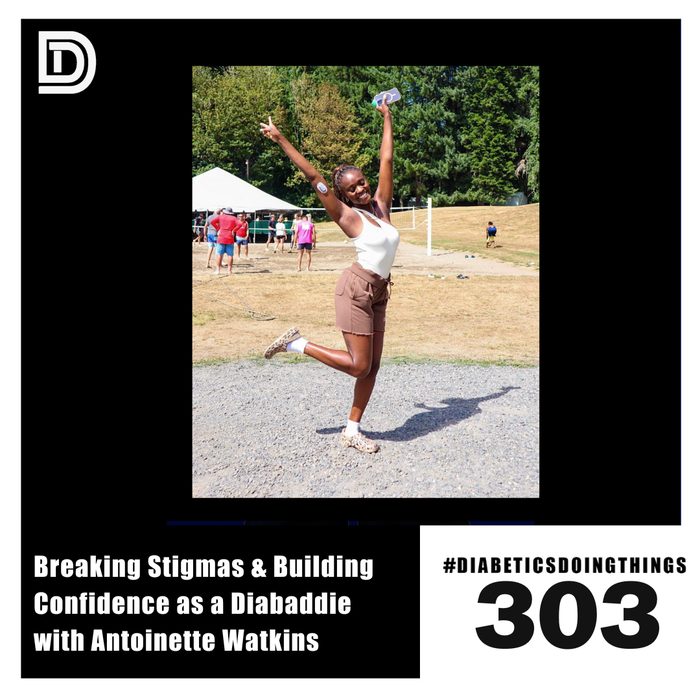
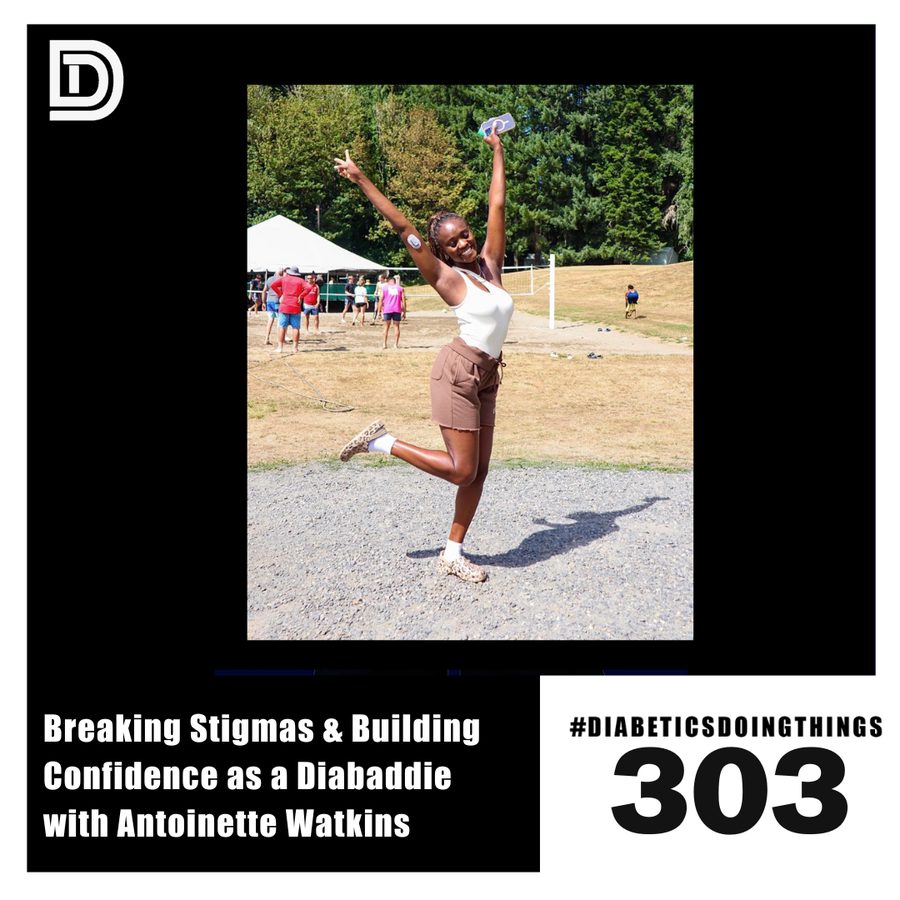
Breaking Stigmas & Building Confidence as a Diabaddie with Antoinette Watkins


Episode summary
Antoinette Watkins, founder of the Diabaddie Org, was diagnosed with type 1 diabetes in 2006 in Tampa, Florida, and was not hospitalized the night she found out. A competitive dancer growing up, she stepped away from a dance scholarship at Virginia Commonwealth University around age 19, deciding the career would not provide the steady health insurance diabetes requires. In 2019 she volunteered at the diabetes camp she attended as a child and noticed none of the campers looked like her, which led her to found the Diabaddie Org. The group funds camp scholarships, including spots at the Chris Dudley Basketball Camp, where she now works as a sports nutritionist. She and Rob discuss stigma in minority communities and the need for more role models.
Key takeaways
- Antoinette Watkins was diagnosed with type 1 diabetes in 2006 and was not hospitalized the night of her diagnosis.
- She stepped away from a dance scholarship at Virginia Commonwealth University around age 19 because she felt the career would not provide the steady health insurance diabetes requires.
- A 2019 return to her childhood diabetes camp as a volunteer, where she noticed no other campers looked like her, led her to found the Diabaddie Org.
- The Diabaddie Org funds camp scholarships for kids with diabetes, including spots at the Chris Dudley Basketball Camp, where Watkins now works as a sports nutritionist.
- Watkins says minority communities have less access to diabetes technology and fewer role models, and that seeing someone who looks like them makes a path feel possible to kids with diabetes.
Show notes
Embecta disclaims any control over, relationship with, or endorsement of, or the accuracy, truthfulness or completeness of the content or view expressed in this Podcast, which are solely those of the speaker and not necessarily those of embecta. embecta does not guarantee the accuracy or reliability of the information provided therein. Any and all comments and post are from members of the public community and do not necessarily reflect the views of embecta.
This episode of Diabeteics Doing Things features Antoinette Watkins, the founder of Diabaddie Org. She discusses her personal journey with Type 1 Diabetes (T1D), from being diagnosed at a young age to her extensive dance career and eventual pivot to healthcare to better support the T1D community. Antoinette highlights the importance of diabetes camps in normalizing the experience for young diabetics and her efforts to make these opportunities more accessible to minority communities. She also delves into the stigmas faced by minority diabetics and the need for representation and role models in the diabetes community. Sponsored by Embecta, this episode is a beacon of inspiration and empowerment for anyone affected by diabetes.
00:00 Introduction and Sponsor Message
00:35 Meet Antoinette Watkins
02:42 Antoinette's Diabetes Journey
06:52 Living with Diabetes: Challenges and Triumphs
13:55 Diabaddie Org and Community Impact
20:41 Starting Diabaddie: The Inspiration and Mission
22:07 The Importance of Diabetes Camp
23:16 Challenges and Triumphs of Diabetic Kids at Camp
25:20 Expanding Horizons: Chris Dudley Basketball Camp
32:57 Personal Journey and Stigma in Minority Communities
37:13 The Power of Representation and Role Models
42:51 Final Thoughts and Future Plans
Questions this episode answers
Who is Antoinette Watkins and what is the Diabaddie Org?
Antoinette Watkins is the founder of the Diabaddie Org, a nonprofit that provides camp scholarships for kids with type 1 diabetes, including scholarships to the Chris Dudley Basketball Camp for kids from underserved communities.
When was Antoinette Watkins diagnosed with type 1 diabetes?
She was diagnosed in 2006 in Tampa, Florida. She was not hospitalized the night of her diagnosis, and her doctors cleared her to travel to New York two days later.
Why did Antoinette Watkins give up her dance career?
Around age 19 she decided a dance and modeling career would not provide the steady income and health insurance she needed to manage type 1 diabetes, so she moved toward a career in healthcare instead.
What stigma do minority communities face around type 1 diabetes, according to Watkins?
Watkins says people often assume her diabetes is type 2 and diet-related, that minority communities have less access to diabetes technology, and that a lack of visible role models makes the disease feel more isolating.
Full transcript Searchable, with timestamps
Rob Howe: This episode is sponsored by Embecta. Formerly known as BD Diabetes Care, Embecta is now a standalone company solely focused on serving the diabetes community. They are partnering with Doing Things to help bring awareness to diabetes stigma by sharing stories from people living with diabetes like the one you're about to hear on this episode. Whether you're a person who has diabetes or you're helping someone else manage it, Embecta wants to empower people to live a life unlimited by diabetes through innovative products and educational resources. You can learn more at www.embecta.com. That's E-M-B-E-C-T-A dot com. Hello, listeners. Welcome back to another episode of Diabetics Doing Things. This episode is with Antoinette Watkins. She's the founder of the Diabaddie Org, which provides scholarships for kids with diabetes to go to camp. Mostly, and I think a topic very special to my heart, provides scholarships for kids to attend the Chris Dudley basketball camp in Oregon from underserved communities throughout the country. So they get plane tickets and admission to camp, which I know can be a life-changing experience through the game of basketball. I met Antoinette at the ADA conference in Orlando, Florida in 2024, and very excited to continue to work with her and partner on some exciting things that you should keep an eye out for. So without further ado, type 1 diabetic since 2006, Antoinette Watkins, the founder of the Diabaddie Org. Welcome back to another episode of Diabetics Doing Things. We are telling the amazing stories of people with diabetes from all over the world. And I'm very excited to introduce my special guest today. She's joining us from the East Coast. She is the founder of the Diabaddie Organization. And her name is Antoinette Watkins. Welcome to the show.
Antoinette Watkins: Thanks so much, Rob. Thank you for inviting me. I'm happy to be here.
Rob Howe: It's so exciting to have you on the show and for us to have a little bit of time to talk about you and your life with diabetes and your work with the Diabaddie Org. We met at the ADA conference in 2024. I was linking up with Cheney and we were both like running to different places. So we got to talk for like exactly five seconds, but like three months later, that seed was planted and here we are. So I'm really glad that we've got the time to spend some time getting to know each other today.
Antoinette Watkins: Yeah, I'm so excited. Like that whole conference is fat-fooling for everyone, but it was so good to see all the different people in that community for sure.
Rob Howe: It was. It's always like every time I leave the ADA conference, because this is my fourth one, I believe. And I'm always like, oh my gosh, how many people did I meet that either I would, like I had all these meetings planned and then I had all these other unexpected ones. So it's always good to see everyone. Okay, well, for our listeners who may not be as familiar with you or the Diabaddie Org, Let's talk about where your journey with diabetes started. Give us your diagnosis story. And like, what do you remember learning about diabetes from the beginning?
Antoinette Watkins: So I was diagnosed in 2006. I'm actually a diabetic adult now because I've had diabetes for 18 years.
Rob Howe: All right.
Antoinette Watkins: So different being a diabetic adult versus a diabetic teen. I think they correlate with the years. They were just developing through it. I was first diagnosed in Tampa, Florida. I'm a Tampa coordinator. And I was diagnosed at St. Joseph's Hospital. It was the day before my mom's birthday, July 27. And we ended up going to the doctor for a urinary tract infection. And my parents thought I was going to be quick. So my dad took me to Chick-fil-A actually right before my doctor's appointment. And I think that was the reason they were able to catch it. Because I had a full milkshake and french fries and chicken nuggets right before going in there.
Rob Howe: Like you do.
Antoinette Watkins: Yep. And spine co-evilage showed her right up. I went into the doctor's office and they sat me in the room. They have the urinary tract infection test like they normally do. And then they came back. Took a little while for them to come back. And they were like, well, we have some different news. And they let me know I was type 1 diabetic. But By God's grace, I actually didn't have to be hospitalized that night. They actually said, she's stable. Like, we'll give you the regimen. She has to take insulin. and then you guys can come back and meet us at St. Joseph's in the morning and we'll kind of go through everything with you. So my type 1 diabetes experience is not the same as everyone else as far as like being hospitalized for the first week or first couple days. I actually went home the first time I was diabetic, diagnosed with type 1 diabetes and kind of just took it in from there. I think it didn't actually settle since I wasn't hospitalized until the next morning when we went that and started having to hear about giving myself a shot before I eat. My parents were just like trying to figure out what was going on, like how did this happen, figuring out, you know, what it was that was done that caused the diabetes. And that's when the doctors explained to them that it's not like type 2, which most African-American families or just families and minorities assume when you talk about type 1 diabetes, then it's type 2. And so my parents thought they had done something wrong or needed to change my diet to fix the issue and figured out it actually wasn't something that was resolvable without insulin and a constant regimen and that it was a common disease. So that whole experience was mind opening for our family. It actually changed my whole family's diet, but we never really let diabetes stop us because once I had that in hospital experience, they walked my parents through everything. My mom asked the funniest question at the end. She was like, okay, well, you know, if she's not going to be hospitalized, we're supposed to go to New York in the next two days. Can we still go? And they were like, yep, there's hospitals in New York. So take her out there. And I went to New York. Like it was nothing. The next day I am a retired dancer. So I went to dance classes in New York. My mom's birthday party was actually a successful surprise because I got diagnosed with diabetes and she couldn't quite talk. Great distraction. Yeah. It was an amazing distraction. My dad was like, thing I did that. I mean, it was really neat that I did that, but he did that too. And so that's really how it started. You know, I got diagnosed, got pushed to learn a lot of different things, but I didn't let it stop me. And I still went through phases afterwards. I just remember having to give myself a shot and crying in the kitchen area and the bathroom, like moving to different areas, thinking that maybe if I moved to a different area, I'd be more comfortable giving myself a shot. But it just was a reality that I had to accept while I was even in New York, just experiencing what it was to now put a syringe on my body because when I was diagnosed that was before we had cgms and before we had insulin pumps that were or they there were so they weren't that popular you know so I was giving myself syringes taking two shots per in the morning and at night because I was taking long acting and that was before you know you could mix them so we weren't mixing now we were separating them I was taking almost six shots a day it was
Rob Howe: but made it. Yeah. Well, there's a lot I want to unpack because I was diagnosed in 2005. So very much like the same type of like time range and my diabetes turns 20 next year. So I got to figure out what to do, what to do with all of that. And also I woke up with like nausea the day I was diagnosed and you know, people without diabetes, sometimes your parents will give you like a soda. So that was part of my blood sugars too, was I had just drank like a Dr. Pepper right before I I went to the doctor for them to check my sugar. So shout out to the Dr. Pepper for making it very clear what was going on with me that day. You're right. Your diagnosis story is very different. Like, because you're pretty young, like going home, not having to be hospitalized the night of, and then going through that like education process the next day and then immediately going to New York. And something that I think in my life with diabetes, the summer after I was diagnosed, my parents let me go to sleep away basketball camp. and looking back, like they didn't have to do that. It would have been like pretty logical for them to be like, well, you know, we're not really sure yet. He has diabetes now. There's some risks, but they chose to let me do that. And it made a big difference in my life, like long-term because I didn't have to overcome that barrier later. And, you know, your doctors like gave you permission and gave your parents permission to take you on that trip. And so much of what we learn about diabetes in the beginning influences and impacts our decisions long-term. So like when you look back on going to New York and learning to navigate traveling with diabetes and like giving yourself shots as you're learning, like in a hotel room and like a foreign environment, unfamiliar environment, did that continue to impact you down the line?
Antoinette Watkins: I think it shaped me and to some of my experiences that I had now of kind of, I think it, I don't want to say it forced me, but it trained me to get used to just taking care of my diabetes in the open. I think that is one of my biggest takeaways from going to New York right after being diagnosed is getting myself shot in public bathrooms, getting myself a shot in a public restaurant, you know, on the street, walking across. We get across the crosswalk right before we go to the next destination. My sugar is going high and I need to pre-bolus before eating then. It's like we pre-bolus 30 minutes beforehand, but we're still walking to where we had to go eat. So I would take insulin in the middle of moving, walking people on the sidewalk in New York, which is basically like par traffic. And took that shot and kept it going. I think I never had the chance to really marinate on the embarrassment part from a young age because our family is just such a fast elite family. So it was my mom, my dad, my brother. My brother's a basketball player. So I feel you for your basketball experience of like going to basketball camp right after. I couldn't imagine what it would be like to be diagnosed with diabetes. And then based off how I hear from you athletes, some of my patients with type 1 diabetes, that's like your heart. And so I couldn't imagine that being taken from me. But that's what really impacted me, like having to stop in the middle. I think I would get nervous about it. But my parents, and especially my dad, would always say, if you don't do this, you're not going to be able to eat. where you're not going to be able to enjoy the cupcakes we're about to have or enjoy, you know, the coffee and all of that. And so I was just like, okay, well, if I want to enjoy the food, then I need to do what I got to do so that I can enjoy the experience and not be separated from my cousins and my brother and all the people that were enjoying our time in New York.
Rob Howe: Yeah, I think it's so important to frame it as a gateway or a pathway to what you want. So, you know, my care team was awesome. And they, right from the jump, told me, whatever you want to do, whatever your dreams are in your life, because I wanted to play basketball. That was the first thing I asked them. And they said, yeah, it's possible as long as you take care of your diabetes. So basically all of that care energy and all of the decisions I made through that process were to, okay, well, I have to do this in order to get what I want. So I prioritized it. I compartmentalized it. I tried to do whatever I can to minimize those variables so that I could get what I, live the life that I wanted to do. And, you know, some of that, like you said, there's highs and lows. There were days that were really difficult and felt like it was alone. But like you said, sometimes you just got to keep moving and allow yourself to surprise yourself by where it leads you. So you mentioned you were a dancer and I imagine that with your family involved and just what I know about you as well, you were likely the poster child for type 1 diabetes in your life, in your community, and living outwardly, skipping some of the embarrassment and educating people around you. Is that right?
Antoinette Watkins: Yeah, for the most part. I mean, I didn't grow up going to school with anyone that was type 1 diabetic, even at my dance studio, there was no one else that had type 1 diabetes. So I kind of immediately experienced the one-on-one extra support you get from your coach or your dance teacher because I was diabetic. I think that was the diabetic privilege. That's what I call it. Being type 1 diabetic is all the teachers needed to know that I had type 1 diabetes. All the coaches needed to know that I had type 1 diabetes because I had a whole regimen that I needed to follow just to keep my blood sugars steady while I was on stage. Or if I was going to a competition with a group of girls and having to ride in the car, then one of the dance moms needs to know she has type 1 diabetes. This is her regimen. If she goes low, give her this snack. If she goes high, you know, have her drink water, give her this much insulin. If it's above 50, above, you know, 180, they had to go through all that. So it singled me out in some ways because I felt I was slow in areas because I didn't have no one else around me had to take a shot or, you know, count their carbs before they ate. And that stuff kind of bothered me because it was just like, I wish I didn't have to like have all these extra steps. And it would hurt my feelings sometimes when my friend, especially like my dance friends would be like, oh, like, we're ready to go. Come on, let's let's go. Like, and they're always like, and so slow. And it's like, I wasn't slow. I just have more steps than you guys. But yeah, it had its ups and it had its downfalls. Like every teacher knew who I was because I was type 1 diabetic. Every dance coach knew who I was because I was type 1 diabetic. But the singling out made it obvious when I was a little bit behind because I had a little bit more steps to complete than everyone else. And even just as far as performance-wise, if my blood sugar went low in the middle of a dance rehearsal, it would affect my ability to perform at my best. And other people didn't have that experience and that frustrated me a lot too.
Rob Howe: I totally agree. It's that just dichotomy, right? Of holding things in both hands with diabetes. Like on one hand, you stand out from the crowd and you have maybe deeper relationships with your teachers or with your RA if you're in college or the coaches. And on the other side, there's that social disability, right? Of like, takes you longer to do things. You know, young people, teens, and can especially say mean things just quickly and flippantly. And, you know, sometimes you take those to heart. And I remember I would always like try to use it as motivation and like galvanize myself or make myself a chip on my shoulder to prove that I was still good enough even with my diabetes. And I don't know, it's just an interesting balance that we have to walk.
Antoinette Watkins: Yeah, for sure.
Rob Howe: Well, your life with diabetes has led you to a career in health care. And we're going to talk more about the Diabaddie Org and some Diabaddie privilege. But as you were growing up with diabetes, was there a moment where you knew this was going to be professionally a passionate part of your life?
Antoinette Watkins: I think I know diabetes is my purpose. I definitely, genuinely feel like I was put on this earth to be an example to people to not allow it to stop them, especially in minority communities. Being a woman, being black and being type 1 diabetic automatically makes me a triple minority. and growing up with type 1 diabetes, especially because I was diagnosed in 2006, even going to camps, I did not see other African-American, Spanish type 1 diabetics. Most of my peers were white individuals and that was fine because I still felt included when I was at camp because we all had diabetes. So, you know, diabetes doesn't have a color, doesn't pick a favorite. We're all diagnosed and we all have similar experiences. Every journey is different, but we still like connect on that one thing of the experience of being type 1 diabetic. but it's just different to have that conversation with someone who is a minority because of the stigmas that come with being a minority with type 1 diabetes. And so I didn't really see it until I got to college. That was when I really started having a lot of people my age at 19 asking me, oh, was it type 2? Like, what did you do to have that? You know, and oh, like I always hear my grandma has type 2 diabetes, especially in a lot of communities. Or like, you don't look like you have type 1 or type 2, you're not overweight. And so now I was at the peak of my dance career. And I actually put my dance career down because I realized even with the financial burden that comes with being type 1 diabetic, that maybe being a professional dancer wasn't the best route. And I needed something more steady to when I separate from my parents to be able to hold me with health insurance. And that realization early, like even talking to you right now, I'm thinking about, I can't believe at 19, I was thinking about when I'm going to have to call my parents insurance at 26. But diabetes does that to you. You have to think ahead of the game every single day. It grows you up so fast. You know, like there's so much to grieve about a life with diabetes because it takes a lot of things away from you. I had a friend who quit his job and backpacked around Europe for 18 months. And it's like, it was a beautiful experience for him. And And I was just thinking like in the back of my mind, yeah, I mean, that's probably not an option for me, man. I got to have this insulin's got to get paid for every month. And this insurance is not going to get covered on its own. Not to say that if I hadn't really set my mind to it, I couldn't have tried something like that.
Rob Howe: But for you to be 19 years old and looking at your passion as a dancer and this career and all this effort and time and energy you put into this to say, man, maybe this isn't practical because I have diabetes. That hits home. It really does.
Antoinette Watkins: I felt like I had no choice to give it up. And even with modeling, it's like people see Diabaddiec and they're like, it's always pink. It's always pink. It's always something cute and artsy and put together. And it's just like, I am an artist at heart. I grew up, I went to a performing arts club. I went to Blake High School in Tampa, Florida. I grew up dancing for Alonzo King Lines, Alvin Ailey, Debbie Allen. I danced on coin. I did jazz. I did Fortnite. I did the mall. I did character. Flamenco. So I danced every type of dance you could ever see. I just had to give it up because I thought I wouldn't produce a steady amount of income for me to get care of myself with type of diabetes. And then on top of that, the next thing I wanted to do was modeling, but it's still an art. And I couldn't, I still couldn't get that steady background. And so I gave it up, but I lost my confidence in 2019 on like who I was as an individual. but for some odd reason my confidence in being type 1 diabetic peaked again when I went back to camp as a volunteer in the summer of 2019 I went back to Camp Winona in Florida in Orlando area to the diabetes camp I grew up at and I volunteered as a counselor there and I was old enough now to realize the systems of what was actually happening at camp and I noticed none of the kids there looked like me when I was a kid. I noticed that an amazing thing, I noticed that the counselors there were pre-med students or medical students trying to get clinical hours. And so it just opened my mind to so many different things. And I got hunker and diabetes camp. And I remember vividly, I was in the transition of moving from the college. I had a dance scholarship at Virginia Commonwealth University. So I started my freshman year at Virginia Commonwealth. up and I left when I figured out I couldn't be a dancer and I came back home and I remember just waking up one night after camp and I was just like on Instagram I saw all these that was the word when the word baddie was popping that word was coming out the gate. Take time. Well there was it if you weren't there I can't explain it to you. Right so I remember still on Instagram and just seeing all the girls and the baddies being cute and confident still didn't see someone type of night back and I was just like, dang, I really don't see any of myself. And I went, hung out with my friends the next day, started calling myself a Diabaddie and they loved it. And Diabaddie just grew from there. Wanted to start getting camp scholarships. I wanted to start just exemplifying what a Diabaddie is, finding more Diabaddie's in the community, Instagram. More people started actually coming out on Instagram about having it. I wanted to build a community, you know but i'm still young so i'm still building it now and even with my confidence now it still
Rob Howe: hasn't fully grown but it's growing every day who i am as a dynamic well i want to applaud you because it's a great idea and like great ideas it takes time to build momentum right we don't always have the time to throw ourselves full force into it and you know it takes whatever capacity we have to keep them alive but i want to dig back into the insight which is we we all agree I think we're going to hold things in both hands for the next little while. We all agree diabetes camp is super impactful, especially for young people with diabetes. Like I've been to Camp Colorado. I've been to a couple of the camps. We have an amazing camp here in Dallas. But the other side of that is that they look a very certain way. There's a very specific diabetes camp demographic, and they're mostly white kids or white presenting kids. And with some exceptions, I'm sure. But the opportunity there is, you know, as you said, you went back as an older person, as a counselor, and now you see the machinations of how camp works, right? And the opportunities are maybe, or the awareness in these, you know, minority communities is just not as high. There aren't people going in there actively saying, hey, you can come to camp. Or even if there are scholarships available, the right people who would claim them aren't aware that they're happening. So how did you start that? And then I want to dig into more of what Diabaddie Org does today, because it's just so important for kids to have the opportunity to go to camp. And another reason why Diabetes Legends is low cost, because we don't want people to have to make the decision of, well, I would love my kid to do that, but I can't afford it. And so dig into how you got started on that.
Antoinette Watkins: As I grew as Diabaddie the Individual and I started the organization, I asked my mom, I asked her, I said, how much was camp every summer? and she was like after i have to ask you know my boss our church rivers that shout out to rivers of like church ministries in tampa florida she's like they paid for you to go every summer i didn't pay and i was like oh okay and she ended up reaching out for them and getting back to him letting me know it was five hundred dollars every summer and to some people that may sound like a little but to others that's a whole especially when camps are they're like right before school starts in the summer. The last camp session that I went to was in August for my age. And so $500 can prepare a kid to go to school. So it's either you go to school or you go to diabetes camp. And I'm pretty sure they're choosing to go to school with a fresh pair of kicks, a couple of new outfits, nice new notebooks, a nice backpack and a lunchbox. It's just the whole, you know, set up for school. And so my mom didn't have to make me make that choice because I was afforded that opportunity, God willing, every single summer. So I never miss the session at camp. And so Diabaddie, I put that as my first pillar, which is providing scholarships for the Diabaddie Organization, because the least I could do is give that back because it's changed my life so much. And I try to stress that to people about the camp experience is there's so much that happens there. You know, we have kids that come to camp that don't eat normal food when they're outside of camp. They get to camp. You know, they have people there counting all the carbs up for them for the french fries, the chicken nuggets, the salad, pizza, the normal food that we feed them that they're told they can't eat or they feel like they are limited to eat. And we let them eat however much they want and we help them chop their carbs and do their dosings. And I think that helped my parents a lot, too. My parents came back with knowing how to feed me the food that I wanted to eat as a kid. And I wasn't stripped of my childhood. Right. As of like the camp experience, even for my mental health, just reconnecting with people that could be moving on the same page with me. Now I don't have anybody saying, it's not even taking too long because it's like we all got tests and shots at 830. Yeah. When we have tests and shots, that's when everybody's taking their tests and taking their shots. So, I mean, it's mind-boggling to think of how many minorities don't have that experience because I know how isolated it used to feel. and I know how isolated some of my peers who do have type 1 diabetes that our minorities feel
Rob Howe: because they never had that experience. Well, and we see the data, right? In minority communities, there's lower percentage of diabetes technology, of CGM, of insulin pumps, and the outcomes as a result, it's like, are the outcomes worse in minority communities or are the outcomes worse in minority communities because they're not getting the same information and the same access and the same advantages as these other communities. And when you normalize that data, you see, it really is just these patients are not being served the way that they need to be. And they don't have the community side where you can normalize your alarms going off. I'll never forget going to my first diabetes event here in Dallas where we had like 300 people were at the Diabetes JDRF Summit in 2016. And I just had never seen that many people with diabetes in the same place before. And it really does. like there's all this clinical data to back it up that it improves your outcomes because you're not so hard on yourself. There's other alarms going off and you're like, oh, well, all of a sudden, I'm not the only one. At our first basketball clinic last summer or last fall, we had parents that stuck around because parents stick around. You know, it's hard for parents with their kids go, yeah, they need it too. And I'll never forget the first kid came out and went over to our low blood sugar station and got his juice box and then checked himself back in. And I saw all the parents just like sigh relief because before their kid had been the only one that did that but slowly like two or three more came out check back in came out check back in and it was normal and i think like the collective sigh of relief from the parents really made that clear and there were some kids who had only been diagnosed for six months very recently and it allows you to take huge steps forward very quickly so it's super super important i'm so excited it fires me up that you are being the change here. And I also know you've extended now. So you're sending like this close to my heart, right? Like there's Chris Dudley's basketball camp is the premier basketball camp for kids with diabetes. And you have gotten to be able to send kids through Diabaddie to Chris Dudley's camp.
Antoinette Watkins: Yes, we love Chris Dudley basketball camp. Yeah, I actually connected with them and I believe 2021 one or 2022 one of those years it's been three years now so i actually did that because i want to be a sports dietitian that's in my background of like non-diabetic work but i want to be a sports dietitian for type 1 diabetics for the exact reason that you explained um just now with your clinic you know because i'm a dancer so i know what it's like to know your blood sugars have to go low before you go on stage which you don't want to be held back so you just go on and push through. And I know the way my brother is because he is an athlete. I know that there are times when kids are sitting on the sidelines and they don't want to tell their coach that their sugar's going low because they don't want their coach to change them. And when they start, I mean, it's so mind boggling to think about even just some of the athletes that I work with on football teams. I had an athlete my junior year of college reach out to me because he was type of diabetic and played D1 football core college. And he was just like, yeah, I don't really like telling my coach what's going on because I don't want him to mess up my game. Like I don't want him to mess up the plays for me. And I don't want him to start doubting me. And once I realized that was a big thing, it really got me into dietetics of like how to think about just pre-snacking and post-snack, post-game snacks for them, things like that to like help keep their blood sugars up. And so I threw a basketball tournament. Mind you, I'm not a baller. I'm not a baller. This is a public service announcement in case Chris Dudley already knows. The whole Chris Dudley team, all the campers know. I cannot even shoot a ball. But I ended up hosting a tournament just to see who I could get to come out during my internship exchange for dietetics in Virginia. And we held a basketball tournament there. And I was looking for a camp that was a basketball diabetes camp to send a camper with type of diabetes to a camp that was sports oriented. And I ran across the Chris Dudley basketball camp. So my mom, I said, Hey, I'm trying to send a kid to your camp. They ended up looking through all the work that I've done and found out that I was studying sports nutrition and asked me to actually come out and visit the camp. So we raised the money from that basketball tournament for our first ever event. I ended up going out there and now I work at the Chris Dudley basketball camp sports nutritionist. I'm in training because I haven't finished my dietetics degree yet, but you know, I'm working with them and it's amazing to see just with the kids. I mean, some of my, some of my babies at Priscilla Leigh Bathwater Camp have celiac disease and, you know, even creating a gluten-free diet for athletes is a whole nother experience. And they're a challenge. Yeah. It's a challenge, but we do it. And shout out to Mama Yost, that's what we call our daily Yost at Priscilla Leigh Bathwater Camp. She got those gluten-free recipe down and when she does it I break them down I do all the car counts to make sure that they are doing the right car count that's really what I do when I'm with them and sending a kid that they're what we did that for the first time two years back so I went work the first year as a sports nutritionist and then I took um a camper the next year and he never played sports before in his life got to Chris Dudley basketball camp um and was just like I'd had diabetes for 10 years never knew that there was people playing sports type of diabetes and you know these kids are athletes at Chris Dudley Basketball Camp. So they not only just play basketball, they play baseball, soccer, volleyball. So you're just explaining to him all the things that they do and it completely changes mine. Now he plays football. So yeah, I got, I'm not an athlete, but I have a, I mean, they, I consider dancers athletes. Yeah. A hundred percent. I still have a heart for, for athletes. And I put a lot of my effort into them in the background because
Rob Howe: it's a lot that goes into being an athlete, especially type 1 diabetic athlete, major respect to you guys. I'm glad you said that because, you know, you say you're not an athlete, but you sound like one. And I think, you know, just understanding that there is so much that goes into it and so many people are doing it on their own and they're doing the best they can. And I so relate to that conversation you had with your football player who has finally gotten to this level where he is doing what every kid who plays football wants to do, like lacing it up, playing on Saturday, name on the front of the jersey, name on the back of a jersey, what have you, and doesn't want something like diabetes, which he considers probably not that big of a deal most of the time, to be planted in his coach's mind to take him out of the rotation. And I feel that too. There were many, many conditioning drills that I had to pull myself out of. My coach singled me out one time my freshman year when I was having a tough day, and he didn't know any better. I think neither did my, I always felt worse because I knew my teammates were going through something that I just had to pull myself out of. And at the same time, I wanted to be ready and like available and dependable when the game was on the line. That was my dream. And so it's a really tough thing. And I think though, what's really cool is to hear stories like that kid who went to Chris Dudley's camp and had never played sports and now is, as the confidence and the ability and the memory of, oh, I did this here. I can maybe do this at home and take this somewhere. That's particularly inspiring.
Antoinette Watkins: I just, I love to hear that. Yeah, I mean, Chris Dudley, he does the darn thing. He's really good with those kids. I mean, the whole team is good. Even the counselors are all athletes of some sort. Some of the counselors play overseas. And I think one thing that really inspires the kids about Chris is that he played in the NBA. and he really trains them to think about thinking forward on what they can do to make sure that their diabetes doesn't stop them from playing at their best. And of course it's diabetes camp so we have juice on the sidelines. I mean, the kids eat every two hours because I'm the sports nutritionist along with Gail. And so we're doing the carb counts, giving it to the nursing staff, getting the snacks prepared for them and we have everything in arms reach for them. But he really teaches them to not let that stop them. Don't let your diabetes stop you from performing at your best when you get on that court. I'm not even being biased. Some of these kids that are type 1 diabetic are really good. So it's like the stigma that may come from having a chronic disease and being type 1 diabetic and playing basketball. I mean, I can't get with it. And maybe I'm biased because I'm a diabetic. But we got some athletes out there that that would be some stiff competition. And I know that's true because it comes to my brother. And he's not type 1 diabetic. But sometimes he pretends he wants to be in it. It makes him so mad. But when he's out there coaching them, he's just, hey, some cheese. Like, they could really play. I think, like, those are the people who are breaking the stigma on the front. Like, look at them. You know, there are a couple girls who came to our camp with Lauren Cox this summer who are real hoopers. Real hoopers. One of them was chugging a juice box right before camp because her blood sugar was a little low. But she got in and was a problem. She was a problem out there. And yeah, it's great to see. I got to speak the virtual camp in 2021 during the pandemic. I got to, maybe it was 2020 or 2021. I got to speak with coach Dudley and the rest of the group. Really cool. So that's on my like diabetes bucket list is to make it out there for a session and be
Rob Howe: a coach or something. So you can quote me on that down the road. You talked about stigma. So we've hinted at it a couple of times. So I'd love to talk a little bit more about like specific diabetes stigma in minority communities, but as well as experiences that you've had in your life, both as a dancer or things that you think about with your athletes and maybe what you wish more people knew about diabetes.
Antoinette Watkins: Wow. We're so much to go into about stigmas. I'll start with my personal story of why I've started to push Diabaddie a lot more. I have done a lot of personal work and journeying with my confidence of how I look with my diabetes and even showing my diabetes technology along with taking shots and stuff in the open because it's different when you take a shot in the open and then you put it away and nobody has to see it before. Okay, maybe we'll stop, but everybody didn't see it. But now, you know, I have my birds on the sun, have my ducks on my arm in a visible area. You know, it took a lot of time for me to even get to that point because it just once it's there, it's there and it doesn't move unless you got the money to get another one. It doesn't move until it's time for that 10 days to wrap up. And I went through a huge period in high school where I would put my device on in front of my parents and then I would take it off when I got to school and be like, oh, it fell well because I didn't want to wear it because I don't want people to see it. And I didn't know I was a diabetic then in high school. Now that I know I'm a diabetic, I'm like, I'll go out with my friends to the market, to a yacht party, dinner party or whatever it is. And I know because I know that I'm beautiful and know who I am as a diabetic body, I can wear my technology for people to see. And body imaging is a huge issue with type 1 diabetes. And I think it comes from the stigma of, especially for minorities of, oh, it's because you didn't do something right with what you're eating and you shouldn't be eating what you're eating. And you can't be beautiful because you have a chronic disease or it's going to mess up your outfit if you have your technology showing. Someone's going to think something crazy about me. You won't be accepted in certain spaces because you don't look like everybody else because your technology is showing. Those signals have a huge mental impact on people. And it starts from a young age. I mean, I work at Johns Hopkins as a diabetes navigator and my patients will come through and parents will say, I can't get them to change their sight off their leg. I wanted to put it on their stomach. I wanted to put it on their arm like you, like, why can't you just do that? And it's just like, they don't hear what we here and so it's even like getting grace to my patients of like i'm a diabetic like i know what you're talking about i know what you're talking about i know what you're going through mom or dad may not understand it but that's why we're here together to like navigate this this thing i really tell them that they're diabetics like i tell them that and it puts a smile on their face because it just opens their their mind to that the stigma doesn't really matter i mean if i can walk around to call myself a diabetic and feel confident because I'm a diabetic baddie, who cares about my technology? You can't be a diabetic because you don't have type 1 diabetes. I look good and I'm type 1 diabetic. Making it exclusive instead of exclusionary, right? Making it exclusive. Yeah. And so that's kind of how I shift through those stigmas. But those stigmas are real and they can cause extreme mental health problems for people. I know people who have been diagnosed with type 1 diabetes and have hid their diabetes so far to the point that they actually stop taking care of it because they're trying hard to hide it. It's frustrating, but it's something I really, really hope and work on helping people get through because the stigma is really, they really put a dent in your diabetes care for yourself and your mental health if you allow it to.
Rob Howe: It's so tough too, because like you said, they don't hear what we hear, especially when you're a teen. I try to tell parents when they talk to me because I'm 35 now, So I'm getting to the point where like kids are going to start thinking I'm really old and not cool. So like my days of relevance are numbered. But I try to remind parents how difficult it is to be a teenager without diabetes. And, you know, it can be isolating. People say mean things. It's hard to be different no matter what your difference is. And when your difference is incurable and relentless and requires, you know, you to beep and have devices on you or give yourself injections, it can just be really difficult. and it's really important to have role models. And I think this is another piece of the stigma conversation I want to have with you is it's important to have role models who look like you because early on in my sort of advocacy journey, we did a panel of some of my friends from social media at the time in 2018. There were two black kids in the room and there were no people that looked like them on the panel. And I could tell that they weren't having a good time and there was nothing that I could say because I don't look like that. I don't have the same experience. And so I thought at that point, it's like, okay, well, there's a clear opportunity here. We're doing something wrong. We don't have the right people in here to attract the people that we want to help. And so for you, allowing and getting back to that camp mentality where you guys were united as people with diabetes, that was the common denominator. But there weren't as many kids that looked like you, you know, as we continue to grow and have role models like you, other diabetes like yourself, who kids can look at and say, I see myself here, you know, how important is that? And how can we help as a community? Because for a long time, diabetes in media and advertising or whatever in type 1 diabetes looked a very specific way. And I think there's been steps like we're aware of that now and we're taking steps to
Antoinette Watkins: make it better, but there's still a lot of work to do. I want to start with, I really appreciate you noticing that and taking accountability with that and making an effort to fix that, because that's the first step, especially for us, because it's already hard to get us to even talk about it. So making an effort to even ask how to add more people that look like us with T1D to the spaces is really, really, really, really, you know, amazing. And I'm happy that you're doing it. I will say, I think the more we can find people to speak up and the more people we can put on panels and even people like me are speaking and talking about my journey I mean, now that I'm fully confident enough to get on a podcast and to talk to you about it from not the business side, but from the personal side, that's important because if someone else sees someone like me and they're like, oh, she wears lip gloss like me. She wears her hair like I do. She likes the same clothes I like, type of jewelry I like. You know, it puts it into a visual perspective for them because they see it. Now they feel it because they hear what I'm saying and then it looks achievable because it is. it's just they didn't know it existed before just like recipes like you don't know something is able to be made into a dish until someone gets in the kitchen starts throwing stuff together now all of a sudden we got you know spaghetti or all the different types because somebody put through a whole bunch of different things together and they made something possible and so that's what I really think for us is important it's just finding as many people you can of different sizes different shapes of different colors that are living with the same experience but doing their own thing. That's just so important because you would be surprised how many of my diabetes, like the girls that I talked to, didn't know they could be a lawyer until they met one of my friends who's a diabetes. She's in law school. You know, one of my friends who's a diabetes getting her PhD in research and she's at Hopkins. Like, got another friend who's a diabetes who's a model. Got another friend who's a diabetes who does track. It's just, you got to see it. Or they feel like it's not possible. Yeah. So I'm thankful for social media. And I really hope that other communities will make more of an effort to find us because we're out there. It's just how you present it to us because we're also trying our best to remove ourselves from the feel so sorry for us extent or feel like it's wrong for us. Image and more for the empowerment image. You know, there's people on the entertainment industry that have type 1 diabetes that are music garden, journalists. You just you don't know because they don't tell you because they don't think they don't want it to overshadow their accomplishments. They don't want it to overshadow who they are as an individual. They don't want it to take over.
Rob Howe: They're like your football player. They're focused on their thing. That was my mentality for a long time. I wanted to be a basketball player. I wanted to be a businessman. I didn't want to be. I felt like it was a like I was using it as an excuse or a crutch or like a way to differentiate. And it took a lot of work to like overcome that and to lead with it and make people comfortable with like, hey, I'm going to talk about my diabetes and I don't expect you to treat me any differently, but I'm going to be open about what I'm going through. And it took a lot of work, though, because it doesn't come naturally to everybody. And, you know, just like you had to grow and emerge into your full diabetes self to to really know and become rooted in that purpose. And I kind of talk about this sometimes, like everyone's diagnosed twice, once when the doctor tells them and then once when they really accept their role in it. And for a lot of people, it looks like just managing their own diabetes on the day to day. And for some people like yourself, it's giving back to others. And then other people are somewhere in the middle. And, you know, I think back to what you were talking about, though, when you see somebody who's doing what you want to do or who looks like you and is chasing after their dream in a way, it unlocks something in your mind. And that's something like that. Those girls I talked, I told you about from our clinic, they got to, you know, see, touch and hear from Lauren Cox that day. The first woman with diabetes to play in the WNBA. And I could see in their eyes, like something changed. Like there's, there's more out there now because of they, they see somebody who's doing it. and I think that that's something that you know gets me out of bed every day working on this stuff because I can see the impact that it's going to have and that those kids can be in their communities as well and the ripple effects from that. Gotta see to believe it. That's right that's right it sure does help it sure does help. So Antoinette thank you for the time thank you for everything that you're doing for people with diabetes you know I know these are labors of love and they take place outside of the regular nine to five hours and so keep doing it. Teeing this up for the podcast and our listeners. There will be more. You'll hear more from the Diabaddie Org and Diabetics Doing Things going forward, but really great and so fortunate and lucky that we got to meet in Orlando and yeah, wherever that was in Orlando this year. And thank you for your
Antoinette Watkins: time and for sharing your story with us. Yeah, it's anytime. Thank you for inviting me on. I love talking about this stuff. Again, special place in my heart, not only for the diabetes, But for the athletes, my athletes are diabaddies too. They say it. So yeah, you got to just embrace it. You got to be a baddie. So thanks for giving me the opportunity to speak with you guys about this. I really appreciate it.
Rob Howe: Happy to do it. And we, of course, will include all your links in the show notes. So if you're looking for more information, check it out there and we'll link your website and Instagram and things like that. So Antoinette, thank you so much.
About Antoinette
Antoinette Watkins is the founder of the Diabaddie Org, which provides camp scholarships for kids with type 1 diabetes, and works as a diabetes navigator at Johns Hopkins and a sports nutritionist at the Chris Dudley Basketball Camp.