

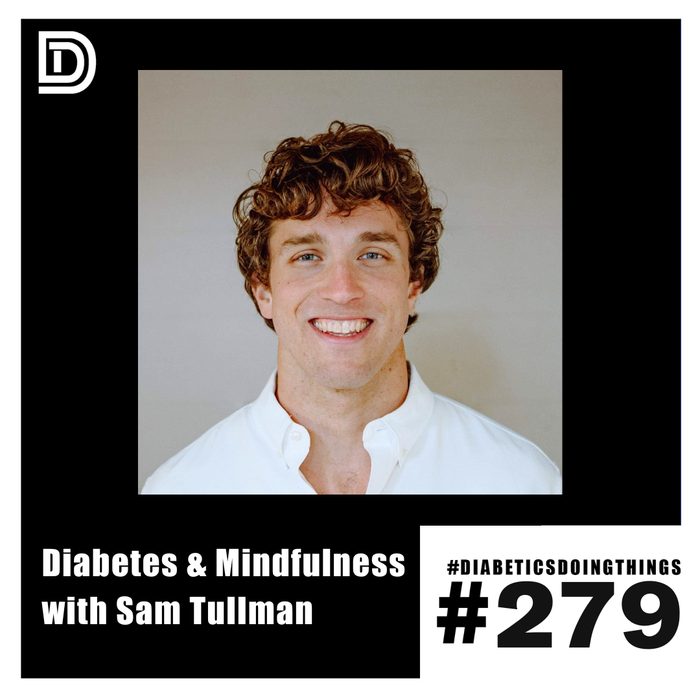
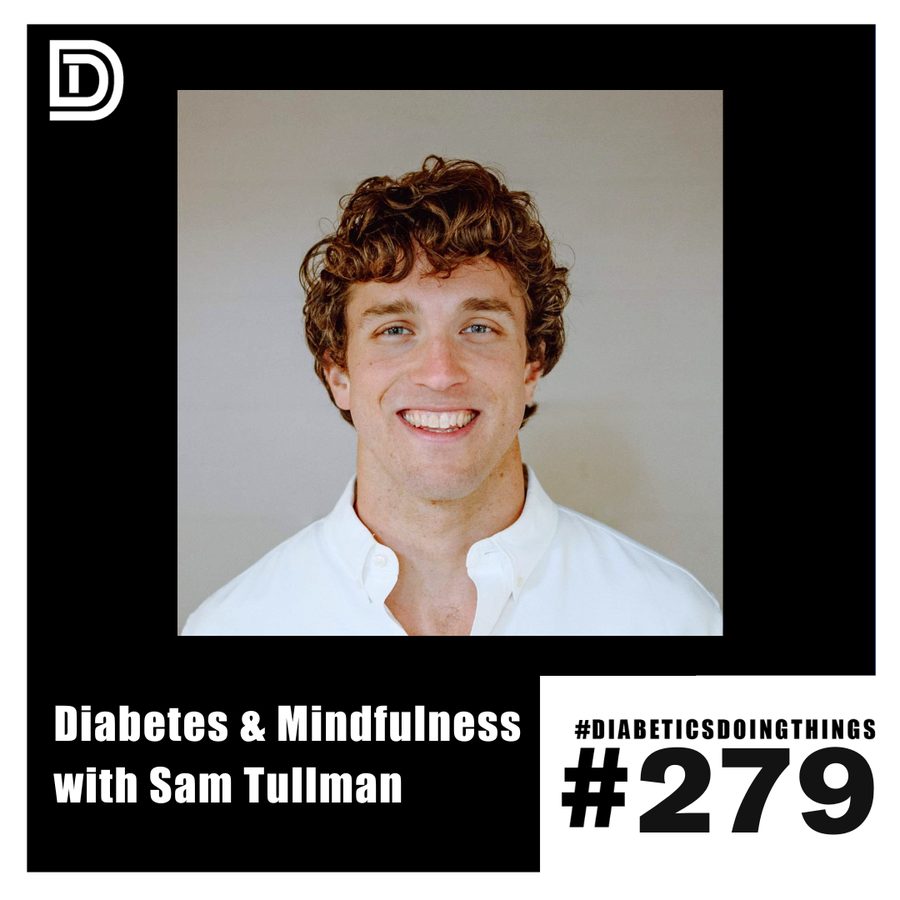
Diabetes and Mindfulness with Sam Tullman

Episode summary
Sam Tullman has lived with type 1 diabetes since age 8, over 21 years. Shortly before this recording he was diagnosed with mast cell activation syndrome, a rare condition that caused full-body rashes and anaphylaxis episodes. He talks about his parents' early response to his diabetes diagnosis, playing football at Penn, and a period of depression that led him to meditation. Sam describes using psychedelics under careful supervision during a Fulbright-supported project on treatment-resistant depression. He, Rob, and Eritrea discuss how mindfulness practice can help people with diabetes manage anxiety and stress, breaking mindfulness into intention, attention, and retention. Sam also introduces Diabetes Sangha, the meditation community he co-founded for people with diabetes, and its upcoming course on mindfulness and diabetes.
Key takeaways
- Sam Tullman was diagnosed with type 1 diabetes at age 8 and with mast cell activation syndrome as an adult, after months of rashes and anaphylaxis episodes.
- Sam says therapy, self-awareness, and his parents' support shaped how he coped with both diagnoses.
- Sam played football at Penn and later became a Fulbright scholar researching psychedelics for treatment-resistant depression, and stresses that psychedelics should only be used with supervision and tempered expectations.
- Sam breaks mindfulness into three parts: intention (how you want to be), attention (where you focus), and retention (coming back when your mind wanders).
- Sam co-founded Diabetes Sangha, a free weekly meditation community for people with diabetes, which is running a five-week course on mindfulness and diabetes starting April 21st.
Show notes
In this podcast episode, Rob, Eritrea, and guest, Sam Tullman, discuss the transformative power of mindfulness, meditation, and resilience in the face of chronic illnesses like diabetes and mast cell activation syndrome. The conversation delves into personal experiences, coping mechanisms, the impact of support systems, and the importance of self-awareness in navigating health challenges.
Trigger Warning: psychedelic drug use
Topics discussed:
Sam Tolman's Journey with Chronic Illnesses
Reflection on challenges and benefits of facing a new diagnosis after 20 years of living with diabetes.
Importance of therapy, self-awareness, and familial support in managing chronic illnesses.
Managing Expectations and Finding Resilience
Coping with fragmented realities and embracing change.
Utilizing mindfulness practices in managing chronic illness.
Addressing the impact of chronic stressors, trauma, and social media addiction on mental health.
Transition from focusing on physical health (football) to mental health (research, meditation).
Experiences with psychedelics, emphasizing safety, supervision, and managing expectations.
Momentum in the scientific community regarding psychedelics for treating conditions like depression.
Benefits of mindfulness and meditation in healing trauma and personal growth.
Exploring how mindfulness and meditation can help individuals with diabetes cope with anxiety and stress.
Importance of setting realistic expectations and navigating discomfort in meditation.
Cyclical nature of meditation experiences and finding calmness in challenging moments.
Embracing mindfulness as a journey of self-awareness and acceptance.
Introduction to the Diabetes Sangha community and upcoming course on mindfulness and diabetes.
Exploring the connection between mindfulness, diabetes, and transforming suffering into joy and compassion.
Importance of gratitude and resilience in facing challenging situations.
Personal story of shifting perspectives through gratitude.
Impact of childhood experiences, karate, and vulnerability in personal growth.
Key takeaways:
Mindfulness and meditation can aid in coping with chronic illnesses by promoting self-awareness and managing stress.
Support systems, therapy, and self-awareness play crucial roles in navigating health challenges.
Embracing mindfulness as a personal journey can lead to personal growth and resilience in the face of adversity.
Gratitude and resilience are powerful tools in shifting perspectives and facing life's challenges with strength.
References:
00:00 Exploring the Power of Mindfulness and Meditation
00:04 Navigating Chronic Illness: A Journey of Resilience and Growth
06:26 Navigating Life with Diabetes: Self-awareness, Support, and Mindfulness
16:26 Unpacking the Mind-Body Connection and the Impact of Stress on Mental Health
26:26 Exploring the Intersection of Meditation, Psychedelics, and Healing Trauma
32:28 Exploring the Relationship Between Mindfulness, Meditation, and Diabetes
35:59 Navigating Life's Ups and Downs through Mindfulness and Investigation
39:00 Unlocking Mindfulness: Intention, Attention, and Retention
49:00 The Importance of Tuning into Yourself and Deep Self-Reflection
50:53 Transforming Suffering into Joy: Mindfulness and Diabetes
57:40 The Power of Gratitude and Resilience: A Conversation with Sam
Questions this episode answers
What is mast cell activation syndrome?
Sam Tullman describes MCAS as a rare immune condition that caused him full-body rashes, anaphylaxis-like reactions, and facial swelling for months before diagnosis. He says it responds to treatment but still causes occasional fatigue and rashes.
How can mindfulness help someone with diabetes manage anxiety?
Sam says mindfulness helps people notice the difference between what's physically happening, like a blood sugar swing, and the thoughts or feelings it produces, so they don't have to buy into every reaction as true.
What is Diabetes Sangha?
Diabetes Sangha is a free meditation community for people with diabetes that Sam co-founded with Brooke Kassoff. It holds guided meditation sessions most days of the week and can be found at diabetessangha.com.
Are psychedelics safe for treating depression?
Sam, who researched treatment-resistant depression as a Fulbright scholar, says psychedelics can be beneficial but only with careful supervision, a trusted guide, and tempered expectations. He does not recommend unsupervised or illicit use.
Full transcript Searchable, with timestamps
Rob Howe: Very special interview for you guys tonight. Very excited to dig into this. It's a topic that I am particularly passionate about and have seen a lot of growth and resonance in my life from my experience with mindfulness and meditation. We have an amazing expert here to talk through everything. Sam Tullman is here. Sam Tullman, T1D, and also a member of Diabetes Sangha. So welcome to the show. Background information for everybody is that we've been trying to have Sam on the show for a while. And we originally had a recording date, but this is just too juicy. I can't wait till later in the interview, Sam was diagnosed with another chronic illness adjacent to diabetes. So Sam, first of all, welcome to the show. I'm so glad that you're here, but let's talk about what you've been going through over the past few weeks.
Sam Tullman: I love how, genuinely love how lightly we can hold these things that like we living with an autoimmune condition can say like, oh, this is juicy. Let's talk about this other autoimmune condition. You know, that's different. That's something we don't all have. I'm happy to talk about that. We had this date a few months ago and you guys graciously rescheduled. I'd been dealing with some kind of mysterious symptoms for a few months and possibly longer. You know, that's how these things often go. It's like, were those other issues I was having? Was that related? These like random fatigue or, you know, getting sick more. but basically started having really intense full body rashes that just didn't go away for months. And then I had a few cases where I would kind of have anaphylaxis, kind of like you have with the allergic reaction and angioedema, like where your face is blowing up. I actually, maybe I'll send it to you all afterwards. I have a pretty amazing video of one time when it happened. Like I kind of wanted to be captured so people didn't think I was making it up, but also my girlfriend and I were joking around and, you know, basically recording videos of me, like doing a Rocky Balboa act, like acting, acting as if I had just gotten, you know,
Eritrea Musa: crap beaten out. If ice could change, you could change too. Totally. So that, that was pretty fun,
Sam Tullman: but yeah, this happened a few times and it was like, Hey, I can't keep going to the emergency room. Like this is not a sustainable way of living. So I got a diagnosis. It was, it's called mast cell activation syndrome. It's a fairly rare, you know, rare is, you know, there's an official term rare in the medical community. It's about how many diagnoses you get per year. So technically it's rare. Fortunately, it's not extremely, extremely rare. So there are some treatments for it. There are some things that are known about it. And I've been responding pretty well to treatment. Of course, it's, you know, no walk in the park. We know the same thing with T1D. even when things are going fairly well it's still not perfect so yeah I don't have full body rashes anymore I have had no ER visit I've even done some international travel but still having some fatigue and every once in a while still getting some rashes or indigestion it's been an interesting run you know it's brought some interesting things up for me because I was diagnosed with T1D over 20 years ago now, 21 years ago. And not to say that it had become easy or anything like that. You know, T1D always comes with difficult moments, but it'd become kind of like the norm. And so I did have a sense that sometimes talking to somebody who was newly diagnosed, I could understand some of the things that they were going through. And I could totally recognize like, you know what, I'm not living that right now. It's been many years and I was eight years old when I was first diagnosed. So like, I don't understand everything you're going through, actually. And in a way, it's been a kind of a beautiful thing. I wouldn't wish it upon myself, but I can also see the beauty and benefit in it of really having a new diagnosis and being like, oh, right, this is what it's like to feel like your imagination of the way things that we're we're going to be is falling apart. And, you know, you're faced with a kind of fragmented reality that is not what you thought it was going to be. So, you know, difficult, very difficult,
Rob Howe: but beneficial in a way too. And almost familiar, maybe is that, is that all like taking you back to maybe the way, like, I think as we, with regular skill acquisition, as we continue to learn things, we get better at learning them and get better. And, and I wonder if like that burden of a chronic illness. Like you said, diabetes has sort of been, you're not taking it for granted or having it on autopilot, but you're familiar with the rhythms and you understand what the expectations should be. And then we're going to use a lot of therapy coded language today. And I'm already very excited about it. Like we've talked about like holding it lightly and like being able to see both sides of things, like attaching ourselves to the way things should be or the way that, and I'm doing the air quotes for people listening and attaching yourself to that outcome and only to have it changed and like to change that future is, you know, a reality that many people with chronic illnesses know all too well, whether they also live with a rare disease
Sam Tullman: or not. Yeah. I would say, you know, I actually, I don't know that it was familiar and in a good way, I would say almost, and using some of those therapy concepts, which I have found therapy extremely beneficial in the past and recommend it broadly for many, maybe even most people, at least at some point in their lives. Absolutely. It's almost like, so being diagnosed at age eight, a big part of my experience was my parents and my parents' reactions. And fortunately, actually, I've seen many people and kids diagnosed at that age. And sometimes their parents don't react in the most beneficial ways, which is totally natural. They're entitled to their human reactions as well. It does impact the kid though. Fortunately, my parents actually had really mature, incredible responses. And I'm very grateful for that. But their responses were very much a part of that early experience. And the interesting and kind of cool thing, having done some, and I have a long way to go, but some of the work on myself and some of the meditation and therapy and maturity work and self analysis, self-awareness is like I actually got to play those roles. I got to be my mom and my dad going through this. Not that I didn't have other support. I had amazing support, critical support, but I also got to kind of frame it the way that it needed to look for me, that I knew that it should look based on how I know I respond to life. And that's really cool. And also, I will jump in and say I had a lot of people shout out to my dear friend and co-facilitator and co-founder of the Diabetes Sangha, Brooke, Brooke Kassoff. She was one of many people, including my partner, Sydney, who slowed me down because my tendency is to be like, all right, I took a breath, let's keep going. And so it was really nice to have some people say, hey, you just got a lifelong autoimmune condition. You might want to like chill out a little bit, you know, for a few weeks. And I was like, okay,
Rob Howe: fine. I'll chill out. What, what was that like for you to have that? I mean, and you and Brooke work very closely together. Brooke also lives with diabetes. So, and I've met her a couple of times and is just an amazing person to have that like person who's your, you know, one of your coworkers is not the right word, but like partners, like business partners or collaborators to recognize something in you that you needed? Like, what did you find that hard to accept? Or was that familiar? Because I find sometimes with myself, even with people very close to me, like my wife, like will recognize something and she's like, Hey, like what, what if you're wrong? You know? And it's just like, or, you know, what if you need to do this another way? Eritrea as well, it's like good to have that perspective there. So what was that like for you? Did you encounter any resistance? Was that something, did it give you any sort of like aha moments?
Sam Tullman: Yes. Yes to all of the above. So I think like there's the initial, like I can feel myself internally fighting and saying like, no, but like, I want this and justifying it. And some of that justification was, was real. You know, it's like, Hey, I really care about this. I don't want to put the course off. This really impacts people. For example, we were going to launch a course, which we'll talk about later, we ended up delaying that because of what was going on with my health. And so, you know, not wanting to do that and not wanting to put off the travel that I had planned and, you know, wanting to keep charging hard into work. And so that was the resistance that came up and continued to come up. And then having so many like people who I'm just so grateful for throughout my life. I've just had lots of really positive influences and I feel grateful for them. Brooke being one of them that at that point was like, hey, if you really feel really strongly about this, I will support you with going forward. But my recommendation and caution to you is let's slow things down. Sydney saying the same thing, a dear friend of mine and mentor of mine who some people who've been around diabetes sangha for a long time might remember uh brad lichtenstein who's he's somebody that i learned a lot about the breath and the body and physiology from he also knows me quite well and he and he you know he has a funny way of of poking fun at my my desire to go straight on as we would say in zen practice so i needed to go straight on right into bed and rest
Rob Howe: and so I did. Sometimes that's just what the doctor ordered. And I think I want to kind of fold this into our diabetes discussion and where we often start with either with diagnosis. And you mentioned already, you know, 21 years living with diabetes, eight years old and your parents role and their response to your diagnosis really informing, you know, how you started your life with diabetes. What do you remember about like the diagnosis and your diagnosis story and your
Sam Tullman: early life about diabetes? Well, I remember one of the first things that I said with like tears in my eyes to my dad when I was in the hospital bed was, does this mean I can't have ice cream anymore? Which was sad at the time. Of course, I've had lots of ice cream since. So it all turned out okay. And it's funny that that's what I was most worried about. Because that was like the only thing that I could imagine of a good life the rest of my life was like, if it includes ice
Rob Howe: cream, then everything's probably going to be fine. Honestly, like you're not far off.
Sam Tullman: So there was something that touched my dad about that because he also loves ice cream. You know, two of the things that I really remember, I think to speak about my dad since I was talking about him, he's had a really cool role, like being very active in fundraising and making connections in the diabetes space. And he was one of the first things he said to me was basically like, we're going to figure this out and this is not going to limit you in any way for the rest of your life. which was exactly what I needed to hear at that time. Now, I think a number of years later, I realized that that was kind of a double-edged sword and I can get to that. It was in some ways like also a burden and a source of self-judgment as well, but it was exactly what I needed to hear at the time. And I think that's often the way that medicine, and I'm saying in air quotes, you know, goes in our lives, something that works and is helpful in one moment. what we need in one moment, we often have to work out of our systems a few years later. A coping mechanism or something that can be so helpful and critical in our life process needs to be cast away at a later time so that we can continue to grow. And that was one such message that I got early on, which was so, so important. And then my mom's constant care and devotion, and of course, being worried, loving on me, and having both ends of that, I think was really positive. They both did a really good job of not projecting their fears of what was going to happen to me too much. Of course, it's inevitable. Some of that will seep through, but that I think was the most helpful. I think a lot of times parents don't realize how tightly they can kind of grasp around how afraid they are of what could happen. And the result is that they don't allow their child with diabetes life to actually unfold right in front of them the way that it needs to be, which is like a normal
Rob Howe: childhood more or less. It's, you mentioned it already, like those, those coping mechanisms that we commit to at a part of our life don't serve us maybe in the long run. I think it's so amazing. Somebody should make a talk called the dichotomy of diabetes and go speak about it, which is my, you probably don't know this, but that's my, one of my talks is called that, but like, it just, there's so much about, yeah, I know I'm plugging book me to speak at your event. The, like there really are two sides to things. And I think that's why to me, a mindfulness this practice and we're going to talk a lot about this like throughout this episode, but like, it's so important to be able to separate how you feel in a moment or, you know, what your blood sugar is doing to you to like, what's, what's really happening. And it's like, is this really happening to me? Or is my blood sugar just kind of been a rollercoaster today and I'm tired and, you know, or am I just having a hypo air train? I did an episode last year where sometimes like when you're having a low blood sugar, like some of the worst thoughts you've ever imagined come for you. And it's like, is this true? Or am I just, is my body just responding to this chronic
Sam Tullman: illness? And there's a wonderful, wonderful quote. It was a teacher training that I did a number of years ago with Tara Brach, who some of you might be familiar with. She's a teacher of the
Rob Howe: mindfulness space. She's amazing. If you're a Tim Ferriss head, you know Tara Brach.
Sam Tullman: Yeah, sure. Sure. That's great that she's been on there. Anyways, she has this phrase. I think she came up with this, that something can be real. So you might say about your own experience, this is real, but it's not true. It's real, but it's not true. This is a real experience I'm having. It deserves my attention and care, but that doesn't mean I need to buy into it. Those are actually two different things when we can separate them. It's really useful in dealing with people as well. Like, hey, my feelings about this person are real. I'm really angry, but it doesn't mean that they're true. It doesn't mean whatever I'm thinking is true. And this also ties in in a really interesting way to what we know about the brain and predictive processing theory, which is a really kind of, I would say, one of the more prominent theories and understandings of the brain now, which will probably sound really familiar to you guys from a psychological therapeutic perspective. it's basically like our brain gets all these different inputs and it's constantly trying to guess at what the heck is going on from all of these various inputs. It's getting inputs from our body. It's getting inputs from other parts of our brain. It's getting inputs from the sensory fields. And so that's the predictive part, right? Our brain is like the most complicated machine learning ever. Sometimes I don't like making the comparison between brain and machine, but here it's a good comparison in this one case. And so we can say it's like constantly trying to predict what's the best output, you know, for reality. And it's also based on its memory of what just happened. So if I'm in a room giving a podcast with you guys, there's no way that the next moment could be like, all of a sudden skip to me like in a rainbow, just color prism where I'm like not seeing any shapes like that, you know, those two experiences don't really follow each other.
Rob Howe: Just wait till the second half of the podcast and you'll see.
Sam Tullman: Don't worry. But point being, so that's the predictive processing theory. So when it starts to get these inputs from our body, like our heart rate all of a sudden plummets or our heart rate really speeds up, it might start to predict, oh, I must be stressed or my heart rate speeds up and I'm thinking about this person. Oh, I must be angry at that person. There's a great example that that same mentor, Brad, loved to give where he was working with a patient of his. And he was asking her something. She was saying that she was anxious about this opportunity that came up and they talked it through. And he was like, wait a second, are you anxious? Are you excited? And she was like, oh yeah, I think I am excited. But it's like, wait a second, those two things actually feel really similar. So our signals that we're getting from our body and what we're getting from our brain and our previous patterns, they predict these things and sometimes they don't get it quite right. And it gives a confusing experience, especially for those of us with diabetes, where our physiology is constantly moving in these different ways that's disconnected from the ways that the body
Rob Howe: otherwise would be regulating itself. The human body continues to be the most fascinating thing. And I think my brother and I were having this conversation maybe a year ago, and this sort of on the same path and i want to you know get us back to your story here in a minute as well because i can already tell you and i could go down five or six different rabbit trails and like really nerd out over this like this is very much my very much my stuff so i'm super psyched that you're here but like we think of the body and mind as like separate things and yet they're still part of the same meat yeah like it's all system we have one one nervous system like one unit, like not separated, but we constantly talk to them or speak, think of them as different entities. And we're processing all this information at rapid speeds. And, you know, we talk a lot, talk a lot about trauma. We've talked a lot about grief on this podcast. It's like your body remembers its ability to remember and adapt and protect. And we talked about like just the, the mindset that your dad gave you was exactly what you needed at the time. Did that serve you long-term? Maybe not always, but you remember and your body's ability to adapt and survive and get used to new treatments or get used to new rhythms, new relationships is so fascinating and resilient, even in the face of real adversity. Yes. Yes. That's so right. If we
Sam Tullman: can understand our brain and our body and that model of constantly trying to make predictions based on our concepts, based on the signals we're getting from our body. Like, what can we do to set them up to make nice predictions so that, you know, because predictions are just our reality, right? So, you know, the better predictions, the nicer things feel. And there's things that you can do to make an impact on what your brain is predicting is happening. And there's things that you can't do. Like, you know, sometimes your blood sugar gets high and that means your blood pressure is high. It means your heart rate might be up depending on what stage, you know, it's like, even that's complicated, but you know, your body's going to probably interpret that as stress or lethargy or something. And it's confusing. And I think now more than ever, there's been a
Rob Howe: lot of discussion about kind of life in the modern age that we're, we're prone and we're exposed to more stress chronically now than any time in history. And I, there, there was a, an article this week that the guardian published about self-harm rates in young people since the event, you know, since the smartphone came, came about and, you know, dramatic, like really high increases in depression and anxiety and these very real like pandemic of, of mental health issues that are facing this younger generation, because maybe sitting, you know, what do they call it? What do they call rotting in bed? That's the, that's the thing people call Eritrea. That's the trend, like rotting in bed, watching the most beautiful, smart people over and over and over again, delivered right into your brain, like maybe that's not good for you. And now we're seeing
Sam Tullman: kind of the fallout from that. Right. Yeah. It's really, it's tough to see. And I'd also like to say like, it's not that we are exposed to the most stress, like stress is our reaction. We're the most stimulated. We're more stimulated. And the circuitry, the same circuitry that's associated with addiction. It is the same circuitry. It's the ventromedial reward pathway. The dopamine pathway in our brain is so overexposed and just oversaturated. And so there is this despair and kind of the sense of vapidness. I don't even know if that's a word, but this feeling of meaninglessness that starts to emerge when that gets overtaxed. We don't have any other source of stimulation or pleasure. And we can't actually appreciate what's right in front of us because what's on the screen is genuinely, it's much more engaging. That's just true. We can learn to be engaged and appreciate the world. And that's part of what a mindfulness practice is about. But man, it can be an uphill battle. The social media companies and the rest of the attention economy, they've got that stuff worked out. They know how to keep you engaged.
Rob Howe: They do. And they're designed to keep you on them. And I don't want to detract too much from our discussion today, but I really do think that those are so linked because mindfulness, especially in my life, has been such a tool to recognize when my wife and I would call it, hell, you got sucked in when you don't even realize that you're opting into what these social media platforms have created, which is a trap for your attention. And a lot of time can can be lost there. And like you said, that your dopamine sensors are just firing off like as, as hot and running as hot as they can. And that can have a diminishing marginal return over time. I want to give you a chance really quick to kind of talk a little bit about your credentials, because you, you know, you were a Fulbright scholar, you played football at Penn. I was like, you know, doing my typical podcast research. And I was like, all my buddies that played football in college, like your roster photos, you just look like a scaled up version of yourself. And I was like, okay, that's got, that is definitely Sam, but he's like football scaled up. So like, okay, cool. Let's talk a little bit about being an athlete, you know, division one school with diabetes. And then also, you know, going in and talking about your transition into research. And, and I'm really interested in, you know, some of the work that you did as a Fulbright scholar.
Sam Tullman: So we can talk about that as well. Yeah. Cool. Okay. So I think the place to pick up then is probably high school, you know, I'll briefly say I had a really difficult time emotionally, psychologically in middle school. And I, you know, look back on it and recognize like, oh, I was like clinically depressed. I was very depressed at that time. And fortunately, you know, by the good graces of some, again, some positive influences in my life and that, you know, I became six feet tall, like very quickly and put on a lot of muscle almost out of nowhere, I became a really good football player. And so I had these like distractions and things kind of turned in a positive direction in my life between that and, you know, having some good influences. And so, yeah, things kind of continued that way and football went well. I was naturally big and fast and I was excited to learn the game. And I had a lot of internal aggression that I didn't have another outlet for. I didn't have a maybe, I would say that was a relatively healthy outlet because it was, you know, possible, you know, but it was not a long-term outlet. So I didn't have other good outlets for that. So it worked, it worked well. And I went to college, went to Penn for football. I was on the team for four years. I didn't play very much at all, which was a really big struggle. And actually that is one of the things that ended up leading me to meditation. So I'll get there. Let me backtrack again and say, when I was in high school and going into college, I knew that what I was interested in was I wanted to understand behavior and why people do the things that they do. And really kind of the subtext of that is like, I want to understand why we do all these harmful things. The way I would have said it then is why do we do all these crazy things that we do? By which I meant, why do we do so much harm? And what I realized over time, and I went through another really difficult period in college. My high school sweetheart relationship that I was like so invested in was totally falling apart and football was totally falling apart. And I was worried about how it was impacting my relationship with my dad and my other friends. And my whole self-image was just crumbling. It was really horrible. Externally, it was like, yeah, boo-hoo, you know, you didn't get playing time and you broke up with your high school girlfriend. Not a big deal. But internally, it was my whole sense of self just like totally ripped apart. So it felt like a really big deal. It was a very rough time. And again, just at the right moment, I met this guy who ended up being a great mentor to me. And he recommended, he was like, hey, why don't you start meditating? It'll be good for football. It'll help you be a little clearer and sharper on the field. And I was like, cool, clearer and sharper on the field, like sign me up, whatever it takes, coach. So I went for it. And I kind of dove headfirst into it and very quickly found that there was something else there. And not everybody finds this immediately with meditation. So I don't want to create a Cinderella story. There's lots of other versions of this story that totally work. But for me, I quickly found that, wow, there's something here that I want to look more into. Like I can't place a finger on it exactly, but there's something really meaningful here. I think part of it was it was also connecting me to done some meditation as a child in Shotokan karate because I did some martial arts growing up. And so I was like, oh, yeah, there's this whole thing. OK, like let's let's go into this. And I started realizing the more I went into that and kind of challenging my corrosive and detrimental beliefs about myself and kind of reworking my life, I was like, oh, it's not that I want to understand why we do the harmful things that we do. I want to understand what does it work when we like make things better? How does it work when we grow? How does it work when we become healthier mentally or more present or more caring? How does that work in the brain? And so I kind of started shifting focus and that kind of became my driving force from a more academic and then later professional standpoint. The end of the football story was, I think, actually the meditation did help and made me sharper and feel a little more flow more of the time. It was a little bit of a too little, too late case because I was already going into my senior year. So I didn't have the Cinderella football story that I wanted, but I ended up finding something that I was much more excited to go way deeper into and that I can spend a whole life going into without exhausting, unlike football, which I didn't even play pro and I'm still, my body still feels it even now. I really started taking a deeper and deeper dive into meditation, both personally and different spiritual traditions. And then also from a more professional standpoint, I started working at this retreat center that was combining different neuroscience technology. And so we were seeing their impact on the brain. We were making an impact on the brain using other things like direct stimulation, doing different forms of biofeedback. And I saw some just remarkable things. I had the chance to take brain scans of multiple meditation masters and see what it looked like when people would go through these life-changing experiences. I mean, it was a very cool place to work. I spent a couple of years there and realized like there wasn't a lot more room for me to grow there. And so I continued on. There were a couple of different things that I was working on, but it was probably around that time that I applied for this Fulbright. In that kind of those first few years out of school, I had taken a deep dive into meditation, but I had also had some exposure to psychedelics as well. They were really incredibly useful for me and incredibly profound. And I want to say, I think there's a lot of hype about psychedelics right now, and I understand why the hype is there. And I would also caution and say, you know, temper your expectations. Expectations are like, you know, counterproductive actually to, you know, psychedelics having any beneficial impact. So, you know, the more you can temper your expectations, the better. And also safety is really important. It's not, it's actually not the best thing in every single case. It happened to work for me because I had a very fast mind, very like perfectionistic and type a and they're interesting in that they force you to let go of control because you at a certain point, if you take enough, you can't control anything anymore. And your sense of reality kind of falls apart. And so, yeah, go ahead. Yeah. I want to,
Rob Howe: first of all, you're, you're a great storyteller. So it's like my, my job here is just to kind of give you the space to, to, to explore that, you know, when you're talking about psychedelics, I think I want to make sure that we, again, reinforce like safety first and also like address that, you know, now there is momentum, I think, especially within the scientific community. And I think it's really supported by some of the like more public domain, you know, figures who are kind of having these discussions and bringing in researchers and people, you know, to come talk about, you know, different explorations and treatments for like, for example, treatment resistance, resistance depression, which is, you know, what your Fulbright Scholar program like was focused on. So, you know, again, like you're talking about this as an expert, as somebody, you know, who was, you know, participating in this with the right supervision. So this is, you know, for people listening and are curious, like definitely there are really structured and safe and supportive programs to look into. Definitely not something
Sam Tullman: to just do unsupervised. Yeah. I, yeah, I can just like double down on that and say that, you know, first of all, any like illicit usage, I wouldn't recommend, like, I'll be honest and say that, you know, a lot of my psychedelic experiences weren't under the auspices of some kind of official circumstance. And I was really fortunate, but it wasn't just that I was lucky. I also had some really good people and guides and friends around. And so whatever circumstance you're in, And, you know, if it's a therapeutic circumstance, you want a therapist that you really feel a connection to and really get. Not just somebody who's like, great, we had one meeting, like, next time, like, let's do some drugs. It's like, no, that's not beneficial. You know, doing it around people that you know well, that you're comfortable with, even once you have experience, that just makes such a world of difference. It's so important. And then, yeah, I think the expectations thing is really important. And I think the way that you go into it is really important. Like people have taken psychedelics for like a very long time in a kind of party context. And nobody was coming out saying like, wow, my life is just like drastically better. It's like, no, like the context actually really matters, right? So in my case, I was using them actually as a way to explore what was going on in my mind and how I could do some more healing, what the next direction was. And so that was really beneficial for me. And I think in a therapeutic context, that's something that you get a lot of too. It's like, hey, let's explore how this can really help you rather than just being another experience that you're going for.
Rob Howe: And I think as we progress the conversation towards more actionable for our audience, right? And we think about mindfulness and meditation and healing trauma and healing and giving yourself space to heal for people with diabetes. Like talk about how that has impacted your life with diabetes as well as like, and I think it's a good opportunity for us to talk about diabetes sangha. And because I've seen Peter and Brooke's presentation on meditation and diabetes and like the clinical outcomes that can be experienced. I know from my own personal experience of, of a mindfulness practice and even just a beginner basic guided meditation. I did a year of guided meditation every day to work on myself and have seen the benefits in so many different ways in my life. So what does that look like for someone with diabetes? And even for someone like an Eritrea and I were talking about this before we hit record is we're coming from this from two different perspectives. Like everybody's different. Everybody's experience with meditation is different. Some people are like, well, this is not for me. Some people like me are a little bit more woo woo and a little open to like the spiritual realm of those types of things and connectedness to the mind and body and is a little bit more natural. But like for someone out there listening, it's like, you know, I experienced anxiety and stress around my diabetes or in my everyday life. And I think I would benefit from a mindfulness practice. Like how can mindfulness help people with diabetes? Yeah. So I want to say this,
Sam Tullman: and this is also a nice, you know, tie in kind of change over to the psychedelics. This is like really important to set up the expectation that as you start, we have this idea that like, okay, this is supposed to like relax me and relieve my stress and like make everything better. Right. And naturally we want that because, you know, in some way, shape or form, we're all uncomfortable. There's something about our experience that we don't like. That's what it is to be human. And so we're going towards these things for that reason. Most people don't really think through that. Sometimes people think through that, but that at the outset, because both of these tools are ways to come into contact with what's going on in your mind and body. And so sometimes when you first get exposed to what's going on in your mind and body, you're like, whoa, really wish I had not seen that. Like, no, thank you. Close that door. Let's not do it. And so it can be really uncomfortable. It can be uncomfortable to sit for 10 minutes, have the idea that I'm going to follow my breath. And the whole time your mind is elsewhere. And no matter how hard you try, you can't bring it back. That is an incredibly unpleasant experience, right? You become very aware that A, I don't have that much control over my mind. B, the thoughts that I'm thinking are not very pleasant and they're actually really stressing me out. And C, I want to move around at the very least because sitting still becomes uncomfortable and you build up tolerance to that over time. And there's a reason that sitting still can be useful. There's also a reason that moving meditation can be useful. So I want to say that, that like, even, you know, at any level of experience, people will go through phases where, you know, things will be like comfortable and joyous. And you're like, oh my gosh, how much more space I have now that I'm doing these things. So you hear that from people, but then you'll also go through experiences where it's like, man, this sucks. Like my experience sucks in the day to day. This is not comfortable. And it's not a statement about like how advanced that person is or how clear their mind is. This is a big misconception that is just rampant in meditation communities. But it's been known for thousands of years that people will go through cycles. It's been documented for thousands of years. People will go through cycles where there will be times where, you know, you're going through your meditation practice and things will be wonderful. And like, wow, I'm reaching new heights. And then everything comes crashing down because you start to explore new parts of yourself that, you know, not even at a cognitive level that you can recognize, but you have some increased awareness and it's unpleasant and it's not always great. And so you might find yourself anywhere in that cycle. And what mindfulness or other forms of meditation do is actually just help you like ride those waves rather than getting tossed around by them. So it's really not, it can be a tool and there's practices that are associated to help you relax and feel more calm. I don't want to discredit that. That's part of it for sure. But the bigger picture is these are things to help you navigate the ebbs and flows of your life. and sometimes when things are flowing, it doesn't feel like you need anything to help navigate. Actually, it's really important to investigate during those times too. What is this like? Why is it so great? What's making this up? How can I bring this more to my life? How is this setting up the fall that I'm inevitably going to have too? Because that's part of the mental cycle, right? Oh, I'm really grasping onto this thing that I really like right now. Oh, this bite of ice cream. I don't want it to end. Oh, whoops, whole pint is gone. That's a problem, right? If I realized how much I was craving the ice cream while I was eating it, maybe I could say, oh, wonderful. I'm still going to be craving this after I finish the whole pint. So, you know, what's the difference stopping now after I've enjoyed a few bites? Same thing in investigating mindfully pleasant experiences in your own life, which, you know, maybe they don't feel like they need as much mindful awareness. So we want to bring our kind of investigative mindfulness mind to the good things in life for that reason, because they make us kind of crave and want more and more, and that can be unsavory and unhealthy. And also to the difficult things in our life, because, you know, we know why we want to bring it to those things, right? We want to be able to deconstruct and understand and let go of some of these things that make the difficult moments hard. And so mindfulness practice helps us learn how to kind of deconstruct and hold all of those things a little more loosely. It can also be good for the same reasons to help us relax because if we're not feeling relaxed as we hold things more loosely, okay, we start to relax. Even if we're excited and happy, we actually sometimes get like really tight and more and more amped up and it's like, okay, relaxed. I'm a little more clear headed now. I can make a little bit better decisions.
Eritrea Musa: all the things that you're talking about with like mindfulness and i don't know why maybe this is me i feel just like this is all so narrow typical coded like i am a person like that's on a spectrum with adhd and sometimes like misdiagnosis autistic i struggle with like social anxiety or just like sitting in my body so like this sounds like my nightmare like this truly sounds like my nightmare and it doesn't sound like something that is inviting to a person who might be neurodivergent or like living with like chronic pain while they're sitting in those poses or stances. So I guess I'm just trying to be a little bit open-minded and really like ask or lean into what is there for people like me in meditation and mindfulness?
Sam Tullman: Yeah, thank you, Eritrea. And I also want to say like, you know, that's definitely like a bias that I have, because I probably fall within the more neurotypical side of things. And so that's a bias that I definitely bring. I hear kind of one or two questions in there, but let me kind of start to talk about it. It can be a conversation back and forth. Yeah. First of all, kind of sitting, just sitting and sitting still, that can be like a very difficult and nearly unsurmountable task for a lot of people. It can feel like a kind of a punishment. And some of that is, you know, it can be for all sorts of reasons, right? It can be because of what's going on in our brain or mind. It can be because of our history. Maybe we associate like, you know, sitting still or not moving with punishment or something. And so there's lots of reasons that that might not be a helpful approach. Really, like when Brooke and I, when we talk about mindfulness, and this is kind of like our approach, and I like it, I think it's experientially useful. We talk about three things. And I think those three things really help open up this idea that it doesn't need to be this stereotypical picture of like sitting still and, you know, focusing on what's uncomfortable or, you know, orienting your mind in such a way. It's just these three things. So the first is intention. And intention is just the most important one, by the way. And it's the one that's most often skipped over. People focus the least on this one. This is what makes mindfulness, mindfulness is intention. So intention is how do I want to be whatever is happening? How do I want to be? Doesn't mean I'm always going to be that way. But how do I want to be? What's my intention of living in this world or just living in this moment? You know, let's decrease the stakes. How do I want to be right now? Maybe it's calm. Maybe it's kind or caring, whatever it is. So that is the most important one, right? And then we carry that with us to some kind of attention. And attention, I don't, you know, that word can be a little bit fraught, but we can just say, you know, another word we could say is orientation, right? So in which way am I going, right? Which way, you know, is it that I'm going to be doing dishes right now? You know, that's a mindfulness practice that I love. I can feel the warm water washing over my hands. So if I'm, you know, doing the dishes, what I might say is my attention or my, we could also say like my orientation is towards water, it's towards the feeling of the water over my hands or my hands. So we're saying, here's how I want to be. And here's where I'm going to be in this moment. And the reason that we say that is because we know all the tricks that our minds can play on us, right? They pull this way, they pull that way, they add in these ideas, we get frustrated, we have an argument in our head, all sorts of things. And so that's the utility of saying, here's how I want to orient, even though all those things are going to happen. I need an anchor, I need a base that I can come back to. So that's part two. Part one is, how do I want to be? Part two is, where do I want to be? And that's just useful to anchor us when the mind has us like swaying all over the place. And then part three is what I say is retention because then, you know, you get intention, attention, retention. So it's easy mnemonic. Retention is actually another thing that's not emphasized enough. So the word for mindfulness in kind of the original language that it was spoken about, I think, you know, in truth, every tradition and culture has had their own version of kind of being mindfully aware in some way, shape or form. It turns out that in South and East Asia, especially in the Buddhist tradition, they really worked on this a lot and it became kind of the central cornerstone. And so we refer to a lot of that tradition when we talk about mindfulness. But it's really, this is a human experience. It's a human, say like a human birthright. It's something that belongs to all of us as human beings. So yes, so this retention, so the word for mindfulness in Sanskrit or in Pali, which are the kind of the languages that it was originally talked about in, it shares the same word root as memory. It's to remember, not to stay deeply focused and, you know, not have any distractions or, you know, be serene. None of those things. There are words for those things and they're useful, But that's not what we're talking about here. Actually, the practice is just coming back over and over. And so it's so easy to get this misconception of, ah, man, I was supposed to have my mind on my breath and my mind was all these other places or I'm supposed to be washing the dishes, but I was washing the dishes and doing my laundry list of things to do tomorrow. And we can beat ourselves up. And especially, I think, for people who are neurodivergent, kind of trying to fit into this neurotypical world, we have all these additional kind of judgments or pressures around like, oh, yet another example of like me not being able to do X, Y, Z thing. So there's that additional self-judgment or pressure. But that's a common misconception that we people who are talking about mindfulness need to dispel. Mindfulness is just about the act of coming back with our intention. It's not about staying focused. There's lots of really good trainings that you can do to stay focused. And mindfulness can help with that in its own ways. But that's not the core of mindfulness. The core of mindfulness is how do I want to be, and when I fall off of it, just coming back. It's how do you come back. It's not about whether or not you fell off of whatever you were doing it's how do you come back um so yeah yeah while you
Eritrea Musa: were talking you said the how do i want to be and you said something really interesting you were talking about intention and how important intention is so i don't know rob i don't think i've ever told you this before but islamically something my dad's always taught me is about this word called niyyah and so it's like how you do things is more important than how it turns out in islam like if If you plant a seed or a tree, but the tree doesn't grow, you still get the credit because you tried. So that really spoke to me when you said that. I think for me, mindfulness is better done when I'm moving. If I go for a walk, I can be more mindful. I struggle with sitting still and having a broken ankle and stuff. So I think bringing it back to people who are neurodivergent or living with chronic pain and want to practice mindfulness, there's other ways than just sitting in one position and saying or making certain noises or listening so it sounds like there's other not everybody levitates on their first try you know you don't often i don't know if you're the last airbender or something raga i'm not sure but basically what i'm hearing is that there are options available if i want to practice mindfulness that are not necessarily requiring me to be so stiff or rigid or there's some
Sam Tullman: flexibility here. Absolutely. Absolutely. And it really, it comes down to these three things, which you find in so many different exercises, practices, intention, how do I want to be attention? You know, what am I doing? You could just say broadly and retention. Oh, whoops, coming back. Just those three things. And I mean, I personally have found that the most kind of deep immersion in a mindfulness practice often comes to me when I'm dancing. It's been a while, So I've been saying this recently, I'm like, I need to get back to do dancing in some way, shape or form. But dancing, it's like, oh, you have a feeling of like, okay, this is like the vibe that I'm bringing to this dance, according to whatever the dance is. And then you have attention. It's like, oh, I'm noticing my own movements. How does that feel? Or I'm noticing, you know, if I'm dancing with a partner, I'm noticing their movements. So naturally, you know, we don't need to think about stressing our attention. We naturally come to these things. What am I doing right now? Okay, I'm doing this dance. Uh, and then retention, like, Oh, while I was doing that dance, I thought about, ah, I wanted to do that thing better. Okay. Okay. Now come back to the dance. Same thing with walking. I find walking also, like you were saying, Eritrea, it's just to be a beautiful, beautiful practice, feeling my footsteps, hearing my footsteps, listening to the birds. Wonderful practice.
Rob Howe: It's amazing how, you know, all the science, all the technology, all the advancements of our civilization where we find ourselves today. And the best cure for most of it is either to sit still or to go outside and take a walk. He doesn't have, you know, you don't have to go run a marathon. I also, because I'm so type a and so neurotypical that I was so prone to judging myself for not being the best meditator, you know, my, my first try, you know, getting distracted. I'm not focusing on my breath and I'd feel that like tension in my body. And then, you know, learning from, you know, great teachers, like, Oh, that's just, all you got to do is notice that like, that's the, the job is just to be here. And, and you know, my, one of my best friends and, and great influences on me is my friend, Alexis. And she reminds me sometimes that there's nowhere to be. There's no one to be. There's nothing to do. I just need to be, just be. And I think my mind to meditation and to mindfulness totally opened up when I realized that the judgment that I was feeling was coming from myself. And I was attached to some outcome that someone somewhere was getting that I must not be getting. And once I let that go and realized like, oh, this is just time for me to sit and notice myself and remember that I'm here. That opened up my entire, like I'm such a different person now because of that. Yes. Yes. Well said. And I
Sam Tullman: think like that's the edge that we all need to find. Like whatever we find accessible to us, it's having enough. We don't always want to be putting pressure on ourselves or having, you know, making mindfulness a growth project where we need to get better in some way. That's very alluring, I think, especially to people like it sounds like you and I are maybe especially in that category, Rob. But that's not it. Really, it's being with yourself. And it could be while you're going for a walk. It could be while you're sitting. But tuning into yourself and not just that surface level, like tuning into yourself deeply enough that you can really start to get a sense of like, oh, here are these layers underneath that I don't normally investigate. Here are these things that are really stressing me. Here's what it feels like in my body to be stressed because that stuff can really carry over. And that could be doing all sorts of things. Maybe it's while I'm dancing and I notice, man, I keep having this thought about X, Y, Z thing. Like, what's that about? And I can feel it in my body because I'm feeling very embodied because I'm dancing. And all of a sudden, like, oh, that's something I can investigate a little bit more or not do some journaling on or something like that. So it is this like getting in touch with ourself enough that we can see both our joys and our discomfort. It's a deeper root to plant ourselves in in life. This kind of surface level root of, you know, the experiences of our thoughts, those change so much. And so much of our life is so stressed because we plant ourselves in that kind of shallower layer of soil that moves around a lot. But when we can plant ourselves in those deeper roots of like, what are the things that make me deeply fulfilled or feel deeply connected? Or what are the things that like really scare me or feel really uncomfortable? When we can connect with those things, when we can be with ourselves and our body, that's really one of the greatest
Rob Howe: benefits that we can get from a practice. That's a really nice way, I think, to kind of wind this episode down. I know we, I had, I think had planned to, to do a guided meditation at the end of this episode. I want to leave room for that in the future. I think this is feels like a really, a really nice kind of bow. I do want to, it also is just a great transition to talk about being with diabetes and diabetes sangha. And for those of you guys who are not as familiar diabetes sangha, especially on Instagram, but I think also diabetes sangha.org, You guys have weekly meetings, virtual, where you can come into a meditation or maybe a yoga class and connect with other people with diabetes who are there to connect with you. And I think, I don't know, I'll let you speak a little bit more about the programs, but there are a lot of different options for people, whatever you're into. And I think it's a great opportunity for someone who might be curious about starting a mindfulness practice or has curiosity about their diabetes and their relationship to it would be a great place for them to start.
Sam Tullman: Yes. I couldn't agree more. I think doing these things in community with people that you feel like you share some experience with, it can be so beneficial. So yeah, Diabetes Sangha, and you can go to our website right now. It's diabetessangha.com. So diabetes and then S-A-N-G-H-A.com. And you can see the schedule on the website. We have something almost every day of the week. It's completely free. You know, it's meant to be accessible, whether you have a lot of experience with meditation or not very much experience at all. And normally it's about, you know, 15 to 20 minutes of guided meditation practice and then some conversation with really cool people. So that's the diabetes sangha. And all of the facilitators have type 1 diabetes and many of us have other kind of relationships with diabetes as well. And so, yeah, I'd like to say that we're a pretty wonderful group of people, too. As far as being with diabetes, we have a course coming up. It's not too late to sign up, although, you know, it is pretty full. So if it's something that you're excited about and really serious about, you know, please do sign up. Check it out. Could be worth your time. Yeah, give yourself the chance to see whether you find something useful in there. And that will start, let's see, a week from this Sunday, which is going to make me get my calendar out. Anyone?
Rob Howe: Yeah, it's...
Sam Tullman: Well, this Sunday is the 14th, I think it says, right? Yeah, 14th.
Rob Howe: Because our event is the 13th. So this won't even be live till later. So that's on us as well. But I will make sure to include it in our upcoming newsletter. The Drip will come out. So those of you who received the drip prior to this episode and signed up for being with diabetes, this soundbite is for you. Yeah, cool.
Sam Tullman: All right. So it'll be April 21st. That's when it'll be. And it's going to run from 4 p.m. Pacific or 7 p.m. Eastern time for about an hour every Sunday for five weeks. And then we're going to have content like in between for you to listen to or watch and kind of work with. I'm really excited about what we've put together. And it's not just me and Brooke. I mean, Broken My Faces are the ones that you're going to see, but there's a whole team behind it. Peter had a huge role in it. Doug, Sean, lots of people have had really a big hand in it. My dear friend from high school, Io, also. So I highly recommend it. Yeah, basically the course is an intro to not only mindfulness, but intro to mindfulness and diabetes. How are the two related? How are the two connected? and I think there's you know I'd love to end today on a quote and so we can have just maybe not a full guided meditation but a brief meditative moment with a quote and maybe we can close that way I love it all right and this is kind of I think encompasses what this course is about and what being with diabetes both the course and just being with diabetes in your life what that's about and so let's take a moment before I read this to just pay attention to the way that we're seated. And you might find it even comforting to kind of have a gentle rocking back and forth motion. Maybe that motion even matches your breath. Inhaling on the way back, exhaling forward. You might notice places where your body's tense. So your hands are clenched or your shoulders are up high. Seeing if they can drop. You can just let gravity take some of that stress downwards into your seat or the ground. And just see how you hear this quote. Take a look over your body and listen to what this quote has to say. See how it resonates for your experience with diabetes. As you sit here, just breathing, maybe rocking back and forth, maybe just your breath and noticing your mind and body. If you have experienced hunger, you know that having food is a miracle. If you have suffered from the cold, you know the preciousness of warmth. When you have suffered, you know how to appreciate the elements of paradise that are present now. Don't run away from things that are unpleasant. Embrace your suffering, smile to it, and discover the source of happiness that is right there within it. Wise people suffer too. The difference between them and us is that they know how to transform their suffering into joy and compassion. Like good organic gardeners, they do not discriminate in favor of the flowers or against the garbage. They know how to transform garbage into flowers. Don't throw away your suffering. Touch your suffering. Face it directly and your joy will become deeper. So, let me take some deeper breaths and make some small movements of having a little moment there. so in the spirit of that quote which came from the late Thich Nhat Hanh who was a just beloved peace activist and meditation teacher and spiritual leader let us all consider in what ways we can be better gardeners of our own lives or as Rob also likes to put it better better
Rob Howe: farmers of our own houses yeah that's right you guys know real Rob heads know every homeowner is a farmer. Sam, thank you for your time today, man. I caught myself. I was telling Eritrea earlier in our staff meeting that on Friday, I got like some unpleasant news late in the day. And I was like, just felt like the smoke coming out of my ears and just my, I was seeing red and I went to the gym to play basketball, to try to like, that's a, I was doing that anyway. And that's a great way for me to de-stress. And I got done with it. And I was like, you know, I feel a little bit better, but I'm still kind of worked up. Like what's, what, what's going on with that? Why I'm curious. And I was like, you know what I didn't do today? I didn't take time to be grateful for what I have and where I am. And after I did that, it didn't solve all that. I still was upset a little bit, but I just remembered that like, this isn't permanent and that I have been hungry and experienced food and, and, and know that that's a miracle. And I think that that was like just that awareness and that curiosity and reminder to, you know, this is just temporary. it's yeah i can be upset that's interesting let's figure out why oh well we didn't we weren't grateful today well guess what we can do right now we can be grateful and start that momentum to to feeling better so that was an excellent way to finish this interview i feel like you and i could probably do a three or four hour podcast together we can go all the way back to karate you and i had a very similar like no one i've ever told my karate story on this podcast but you know four years of Shotokan Karate and little Rob. Just that's basically informed my entire life. Just the guy, I just was the only kid that never quit and ended up getting my black belt with a bunch of grown men. So when I was nine years old, so there you go. That's just how things work when you have amazing people like you on the podcast. So looking forward to having you back. Thank you to Diabetes Sangha and for Peter for introducing us and making this happen and for you for your time today. And thank you for sharing and being vulnerable as well with your new diagnosis. I really appreciate it.
Sam Tullman: Totally. Thank you for your time, Rob. Eritrea, thank you so much. Really appreciate both of you
Rob Howe: and excited to talk more soon. Sounds great. This episode was produced by Eritrea Musa, edited by Ashley Bright and Laura Kowalczyk. Thank you guys so much for listening. We'll see you next time.
About Sam
Sam Tullman has lived with type 1 diabetes since age 8 and was later diagnosed with mast cell activation syndrome. He played football at the University of Pennsylvania, researched psychedelics and treatment-resistant depression as a Fulbright scholar, and co-founded Diabetes Sangha, a meditation community for people with diabetes.