

Aging with Diabetes with Phyllis Kaplan

Episode summary
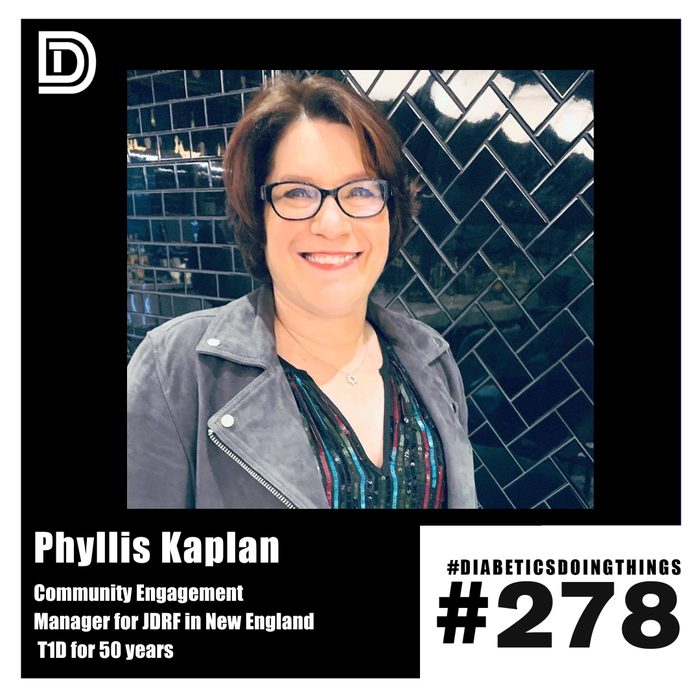
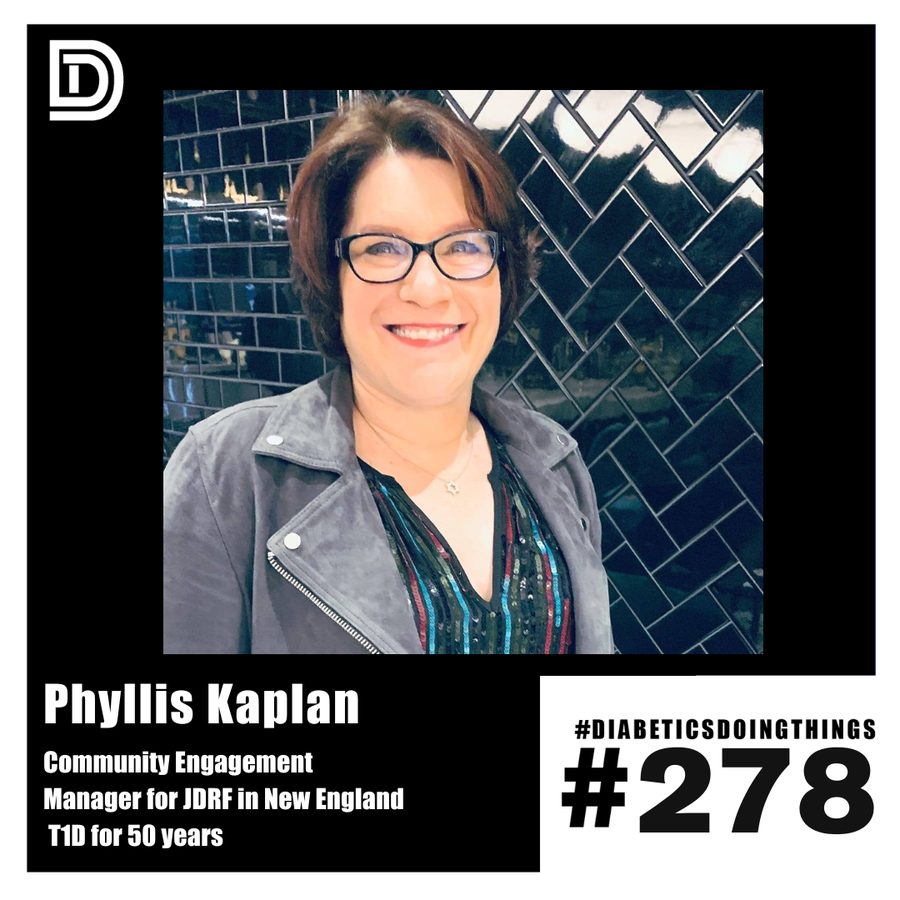
Phyllis Kaplan has lived with type 1 diabetes for 50 years, since she was diagnosed at two and a half years old. She and Rob Howe, joined by Eritrea Musa, trace her path from urine testing with Clinitest tablets through her first glucometer, the Accu-Chek II, to the Medtronic MiniMed 508 pump she started in 2000 and the hybrid closed-loop system she uses now. Phyllis talks about Camp Nejeda, where she gave herself her first insulin injection, childhood teasing over hypertrophy from injections, and diabetes retinopathy that led to laser surgery in graduate school. She describes learning to separate her self-worth from her blood sugar numbers and finding relief in modern technology.
Key takeaways
- Phyllis Kaplan was diagnosed with type 1 diabetes at two and a half years old and has lived with it for 50 years.
- Phyllis says Camp Nejeda, where she gave her first insulin injection as a 12-year-old, connected her to other kids with diabetes and became a lifelong source of friendship.
- Phyllis says her first insulin pump, the Medtronic MiniMed 508 in 2000, gave her flexibility she never had on NPH and Humalog injections.
- Phyllis lives with diabetes retinopathy and says reminding herself that complications come from having diabetes, not from something she did wrong, helps her cope.
- Phyllis says her hybrid closed-loop system now gives her relief and normalcy, and she sometimes catches herself taking waking up in range for granted.
Show notes
In this episode of Diabetics Doing Things, Rob and Eritrea interview Phyllis Kaplan, who has been living with type 1 diabetes for 50 years. They talk about various aspects of Phyllis's journey with diabetes, including her early diagnosis, managing diabetes in childhood, attending diabetes camp, dealing with diabetes-related complications, and the impact of technology on her diabetes management.
Topics discussed:
Introduction to Phyllis Kaplan and her 50-year journey with type 1 diabetes
Early memories of being diagnosed with diabetes at a young age
Childhood experiences of managing diabetes, including testing sugars with rudimentary methods
Attending diabetes camp and the importance of the diabetes community
Transitioning to insulin pump therapy to gain flexibility in diabetes management
Coping with diabetes-related complications, such as retinopathy
The psychological impact of living with diabetes and dealing with guilt and self-blame
The importance of accepting the uncontrollable aspects of diabetes and seeking support from healthcare providers
The relief and normalcy brought by modern diabetes technology, such as hybrid closed-loop systems
Gratitude for waking up in range and the shift in perspective over time
Key takeaways:
Acceptance and Perspective: Phyllis emphasizes the importance of accepting the uncontrollable aspects of living with diabetes and shifting perspectives to avoid self-blame and guilt for complications or high/low blood sugars.
Community and Support: Being part of the diabetes community and connecting with others who understand the challenges of diabetes can provide comfort, understanding, and a sense of belonging.
Adaptation to Technology: The advancement of technology in diabetes management, such as insulin pumps and CGMs, can bring relief, normalcy, and added flexibility to daily life.
Growth and Resilience: Over time, individuals with diabetes learn to navigate the challenges, adapt to new circumstances, and find ways to thrive despite the ups and downs of living with a chronic condition.
Gratitude and Reflection: Reflecting on the journey with diabetes, celebrating milestones, and finding gratitude in waking up in range can bring a sense of accomplishment and appreciation for progress made.
References:
00:00 Celebrating 50 Years with Type 1 Diabetes: A Journey with Phyllis Kaplan
00:31 Celebrating 50 Years with Type 1 Diabetes: A Journey of Resilience and Community
04:57 The Impact and Nostalgia of Diabetes Camp: A Journey of Empowerment and Friendship
14:57 Evolution of Diabetes Management: From Manual Checks to Advanced Automated Systems
19:37 Navigating Stigma and Building Connections Through Diabetes Advocacy
29:37 Navigating Diabetes Conversations and Reflecting on Milestones
31:40 Celebrating a Life with Diabetes: Reflections on Surviving and Thriving
35:37 Empowering Advice for Living with Type 1 Diabetes for 50 Years
39:06 Navigating Complications and Control in Life with Diabetes
48:36 Finding Relief and Normalcy with Technology in Managing Diabetes: A Personal Journey
Questions this episode answers
How long has Phyllis Kaplan lived with type 1 diabetes?
Fifty years as of 2024. Phyllis Kaplan was diagnosed at two and a half years old.
What is Camp Nejeda?
Camp Nejeda is an overnight diabetes camp in New Jersey. Phyllis Kaplan attended as a child, gave herself her first insulin injection there, and still advocates for it today.
What insulin pump did Phyllis Kaplan start with?
The Medtronic MiniMed 508 in 2000. She says it gave her more flexibility than the multiple daily injections of NPH and Humalog she was using before.
How does Phyllis Kaplan cope with diabetes complications like retinopathy?
She says she reminds herself that complications come from having diabetes, not from something she did wrong, and that ongoing research into complications helps her get through it.
Full transcript Searchable, with timestamps
Rob Howe: Welcome back to another episode of Diabetics Doing Things. We're here telling the amazing stories of people with diabetes from all over the world and very excited for today's episode because today's guest is a longtime peer and friend in the diabetes community that I have gotten introduced to on the Medtronic side of things even way back before Medtronic champions even existed back in the Medtronic ambassador days. My good friend Phyllis Kaplan, welcome to the show. Hi, thanks for having me. I'm so excited to have you here. And to give context to our listeners, today we're going to be going on a wide-ranging journey, but the central point of our interview today is going to be celebrating Phyllis living for 50 years with type 1 diabetes in 2024. So for me, I think that's been one of the biggest surprise benefits from making friends with diabetes is meeting people who have been living with the disease for 50, 60, 70 plus years and to see all of the fruit that their lives have have borne and all of the things that wouldn't have been possible 100 years ago without the discovery of insulin and without the continued advancement and care in the community. And so, Phyllis, I'm super psyched to celebrate this milestone with you. And for our listeners, as you're introducing yourself, let's talk about when you were diagnosed 50 years ago, what do you remember? Well, I was two and a half years old. So for those of you who are good at math, I am not. So it was a very long time ago, 50 years plus. I don't really remember a lot of it. The one or two things I do remember about being in the hospital and were pulling out the IV multiple times that was then put in my foot. I guess I kept saying, take the plug out. And as a two and a half year old, I think I just kept yanking the IV out. And over time, I'm not quite sure, of course, how much time that was. But initially the doctor, the doctors ended up stitching it into my ankle and I still have the scar to remember that by. And other than that, I don't really remember a lot about that. Well, I'm sure our parents and caregivers of young kids with diabetes are very much relating to the story of you wanting to pull the plug out. So obviously when you're two and a half, you don't remember a whole lot, right? You've got that scar to remember the experience by. But as you sort of started to grow up with diabetes and checking your sugars And, you know, at that point, right, like peeing on keto sticks was probably the way that you tested your sugars early on. It was a little more rudimentary. It was urine testing with what seemed like a chemistry set. So it was Clinitest tablets and you dropped maybe five drops of one thing and 10 drops of another thing. And you drop this little tablet in and it fizzed and it turned a different color based on how much glucose was in your system at that time. man i can't imagine you know having to do that with with a young child multiple times per day it's got to be really tricky yep maybe you should have my mom on here with me next time well i i imagine that you know parents like you know we hear a lot about their experience today with technology and learning to you know whether it's calibrating cgms or getting alerts on some of the share, you know, apps that some of the different companies provide. But back then, there was really, like you said, a chemistry set and you were kind of on your own.
Phyllis Kaplan: Yeah.
Rob Howe: What comes to mind for you, like when you think about growing up with diabetes, like in your, you know, when did you maybe meet another person with diabetes or like going to school and all of those sort of like things that we sort of take for granted as general kind of childhood interactions? Like where did diabetes show up for you in those early days? We have some family members that have type 1 diabetes. I have a cousin and an older, well, a cousin around my age and then an older cousin. So I've always known there were people in my life with diabetes, but whenever we had kind of family gatherings, that was never the focus or even conversation. I feel like that's one big thing that has changed over the years back then. You know, 70s, 80s, even into the 90s, people didn't really talk about their medical conditions or their health, really health, anything. You kind of dealt with it internally. So the first time I really met other people around my age living with type 1 was going to diabetes camp in New Jersey where I grew up. and that was kind of a life-changing experience for me. Let's talk about it because diabetes camps are still, and Eritrea, between the two of us, obviously, is the one that went to diabetes camp as a kid. I only got to go as an adult, which still was super impactful for me. So let's talk about your experience at diabetes camp, and you're still an advocate for diabetes camps. I remember a few years ago with Camp Nejeda, I think it was. We did a little speaking engagement. So talk about how important Diabetes Camp is to you. I didn't realize how important it was until when I went to regular camp first. It was day camp and they didn't know what to do with the diabetic kids. So they put a lot of attention to me and they didn't leave my side. And I really just wanted to go to camp. And that wasn't the experience I had. And I remember my parents turned to JDF. There was no R in JDRF then. And they recommended Camp Nejeda, which turned out to be an overnight camp. But to be surrounded by people who got it was just truly amazing. I didn't I just, you know, I don't feel well. And immediately, well, it was probably still urine testing then. but the the entire staff the campers the counselors all knew immediately what to do and i didn't have
Eritrea Musa: to explain anything so oh that's right i just want to know like it's so that long ago like there wasn't any access obviously just like tgm didn't exist you're like you're in testing like sending your child away for a sleep away experience sounds kind of scary from like a parent's perspective i know that my parents were really wary because i was like nine so how old were you when you went to your first week of week i was 12 okay and how long did you stay like the first time that you went
Rob Howe: to camp it was a two-week session okay and you're never there's a lot there i had never been away from really i was never really went away from home overnight by myself i wasn't doing my own insulin injections yet. So even when I went to sleepovers, my parents would have to come at the crack of dawn to give me my insulin injection. And so I'm sure there was concern from their part about dropping their kid off at this place that was two hour drive. And I really think the staff and basically the medical staff reassuring my parents every step of the way through the intake intake process and the counselors really, you know, left them feeling okay about it. Did you, by chance, do your first insulin injection at camp? I did because I was the only kid in my cabin and the nursing staff kind of let me slide for the first day or two and it got to probably day three and there was like a shop room, for lack of a better term. So we went as a cabin to the health center and we all sat in the same room and the nurse basically said, I'm not doing this. You are. And it sounds tough, but I think they realized that my personality, if they kept saying, are you ready? I would have said no the entire two weeks. So they kind of pushed me to it and I did it and I got a sharpshooter award, which was the camp's to celebrate kids doing things like that for the first time at camp. Oh, that's so cool. I, so that still happens today. And in terms of like kids doing those for the first time, I remember I got to go to Camp Colorado, which is an ADA camp in Woodland Park. And I got there on the check-in day. So like all the parents were driving up and they had this big caravan of cars and they're dropping kids off. And I didn't really have anything like agenda wise to do that day. So I was just kind of walking around and watching. And I was talking to some of the med staff and some of the counselors and they were like, you know, a lot of kids come to camp and they've never changed a site on their own and they've never given an injection on their own. And so I want you to watch. They were telling me, like, I want you to watch for the award ceremony that every day at our rally, we're going to give awards out for people who've done things for the first time. So I remember watching one kid in particular and his parents were both there and they were very anxious. I could tell about, you know, leaving their kid very similar to, like you said, for your parents, like two hours away, you know, they're used to having them in close proximity, used to really handling every aspect of their diabetes management. And they're like having to turn off their Dexcom share and they're having to turn over all the supplies. And I could see how difficult it was. And the one of the counselors was telling me, Hey, you know, this kid has never done an injection by himself. And who did I see on the first night in the award ceremony portion of the rally? But that kid running up on stage, not only gave his first injection, but also changed his CGM. And I just, that to me is, you know, anybody that always asks, well, Rob, like, what are your thoughts on diabetes camp? That's like, well, to me, it's just every kid is different, but I think it takes some time. Like you said, that nurse noticing you and learning about you, about how you learn and about how you do things. And then you just needed to be given the opportunity to give yourself a shot and not, not ask your permission and just, you know, Hey, just do this. And I think that's something that, that outside perspective, as well as the security of having med staff and, and other people with diabetes, you can skip all of the sort of exposition and explanation. That to me is the most valuable thing about diabetes camp, even from the start. And then, you know, the next piece is you make lifelong friends. Like, you know, Eritrea has Sweeney friends for life. You know, and so I think that's something where I am a big diabetes camp advocate, despite not going to diabetes camp myself. That is something that I really believe in.
Eritrea Musa: I, Sweeney, we have the first time we're closed. So every day at camp, so I went to Camp Sweeney, which is here in Texas, which is in Gainesville. I think it's like an hour and a half out of Dallas. And we do a flag lorry ceremony every single day. So every day, and this is so crazy to say, Rob, because I was being politicized and I didn't even know. Okay, think about it. You're sitting there, you're saying, you know whenever they're lowering the flag and then we turn around like great tent hut and then it would do the first timers club so every kid that took their shot for by themselves for the first time would come up the front they'd go like go first time they're singing and dance and do all this stuff to make it a thing and i was too cool like i took my first timer shot at home whatever
Rob Howe: but i did always think about those kids and i was like oh how interesting for you that that happened here yeah and i do have to say that i probably sat in that room for an hour it wasn't like okay phyllis here you go it was you know holding the needle on my leg going all right i'm ready i'm not ready i'm ready so i was late for whatever meal was you know coming up next but as you can tell it was still a like i still feel proud of that moment and it's such a good good fond memory
Eritrea Musa: i have i i think i'm proud too especially it was that long ago like what did needles look like i Like, sure, they didn't look the way they do now.
Rob Howe: They were much bigger, I guess, too.
Eritrea Musa: That's why some little Eritrean downplay, like, 2003 children. Like, their needles are, like, what are we talking about, right? But I'm thinking about, like, what Phil's experience was like, and it's like, what is it?
Rob Howe: I feel, and so I have a diet, I call it my diabetes museum, but it's basically a giant Tupperware bin of things I've accumulated over the years. And the oldest insulin syringe I have is 100 units. But I don't know that it wasn't a big scary, although I guess to a kid it's scary, but look, thinking back, it wasn't this big giant glass thing. It was not much different than the ones we have today. It was just 100 units is what the maximum capacity of it was versus I think the last time I used a syringe, it was maybe 15 or 30 units. So I don't think it changed that much. Maybe the needle size got a little bit thinner, but I don't have any horror stories of it. So I'm thinking it wasn't that bad. And, you know, back then, too, you reuse needles, right? You would boil them and like clean them or did you guys? Mine were plastics or OAs. Use once. So. Not that old.
Eritrea Musa: Why not? You, I think it's hard to gauge how fast diabetes advanced, right? Because if you think about it, we've only had insulin for 100 years. And if you've had diabetes for 50, so I don't think it's crazy for me and Rob to have assumed that it was still glass needles then, right? Because people have made us believe that diabetes technology adapted really slowly. But it sounds like it's actually faster than we thought if you were already using the single use throwaway glass.
Phyllis Kaplan: Yeah. And again, I don't know if it was just, it could have even been the year before. So I'm just kind of, yeah, I'm at myself here a little bit.
Eritrea Musa: And it's like, no, just for the, for the listener, I think I'm, I don't know, maybe we are making too many assumptions of what diabetes was like 50 years ago.
Rob Howe: Well, I think that's like kind of what I want to get at as we continue to talk about this, because I imagine after we talked about the chemistry set, do you remember the first time you used a glucometer where, you know, you were, you know, plugged in a test strip and tested it and it gave you an actual number? Yep. So I actually found one on, this isn't my first one. It was my second one. I found it on eBay because I've been, as I've been coming up to this milestone, like I wonder if anyone's selling some of this old stuff, but this is an Accu-Chek II and it took two minutes to get the result. basically where is it i have all kinds of things with me today you used something called the Chemstrip so if you didn't have the meter you could also do a visual check against this color code and to give you an idea of what it says it starts at 20 so it's 20 40 80 120 180 240 so it wasn't exact by any means, but it was better than what came before it. So, yeah. Well, now I'm curious as to what other things you have in your little goodie box over the years. Let's see. Let's have a show and tell. What do you got? I don't, it's under my desk. So, but that was the best, that I think is the best thing just because it kind of puts in perspective, you know, now if I have, if I have to do a finger stick, I think it's five seconds. So two minutes to five seconds. But again, this thing, it's kind of like a brick, was a huge technology and huge advancement. And, you know, it's kind of funny saying that now, given the fact that I wear an insulin pump and a CGM and it does all the things on the side and I rarely have to interact with it. But it's a good reminder to me about how far we've come. it is and i think you know that's something that we kind of talked about a lot more recently with like all of the research that's coming out about how impactful automated insulin delivery systems and advanced hybrid closed loop systems are and all the good outcomes that people are getting and even the ada updating the standard of care this year to to reflect that like aid system should be recommended for all people living with type 1 if they want it and you know also like to understand like that, you know, running diabetes on manual, you know, you, you and your peers and even Eritrea and I back before CGM, we were all kind of doing our own thing and, you know, managing with, you know, multiple daily injections or early insulin pumps. Like how, how did your technology, you know, after glucometer, like how did you make it go from multiple daily injections to now wearing like a hybrid closed loop system? My first insulin pump was the MiniMed 508 in 2000. And it became a necessity because the NPH and probably Humalog I was taking at the time would peak. So insulin, the NPH to get in the morning and it would start to peak at around lunchtime. And the first job I had, I was an assistant and in charge of ordering lunch and managing meetings and not being able to not being able to eat when I had to became problematic. Just like that insulin that I took in the morning would be out of my system by five o'clock at night. And if I had to work late. So basically, long story short, I needed more flexibility than the insulins that were available then. So I asked my health care provider, I said, what are my options? and we spoke about an insulin pump. And, but my very first one basically just delivered a basal rate. You know, I could change it, you know, based there are basal settings and bolus. There was no calculator. There was no, it was manual and kind of rudimentary when you think about what we have today. But back then it, it was, I keep saying life changing, but that first pump truly gave me flexibility. I never had before. And, you know, 2000, you know, it's 2024. That's almost 25 years ago. So, but I remember it, you know, I remember I was young then I didn't have diabetes yet, but, you know, my first pump was the, you know, MiniMed Paradigm 550. So, you know, it was just a couple of models after your first one. And yeah, I mean, it's a huge step. I mean, I think it's easy to take for granted the amazing technology we have today, but it really wasn't that long ago where people with diabetes had to eat at the same time every day. And if they didn't, you'd have like a really big hypoglycemic episode, or if you didn't give your NPH or your long acting at the right time, you would be high for a couple of hours. And so like it used to be much more of like a timing game and there wasn't a whole lot of room for flexibility. Yeah. so like when you think about like your like coming of age with diabetes like going to college like you know growing up with diabetes like did you ever encounter any stigma or any sort of like difficulties with like acceptance around your diabetes like even in your career or as you were you know growing up no this is a question I get asked a lot and I don't remember ever hearing the things like a cure is coming in five, 10 years or, you know, diabetics, people with diabetes can't do certain things. I do remember though, being teased as a kid in elementary school, junior high school, because, you know, I was the only one who was allowed to have snacks whenever I needed them. Or for a very long time, I only let my dad, who was the one who did my insulin injections, do them in my arms. So I got hypertrophy and was kind of bullied and made fun of a lot for that. But I think it, I hate to say it made me stronger, but it's probably my personality not to kind of give into it and just kind of laughed it off of, yeah, I have muscles. You kind of want to mess with me. And of course, I was teeny tiny, always the smallest one. I was like, come on, bring it people. So it's probably my personality more than anything else. But, you know, that was one way I dealt with it of just putting it out there. And yeah, I have diabetes and I need special things sometimes and there's nothing I can do about it. I wonder though, too, like you mentioned, it's your personality. I wonder how much, because Eritrea and I have talked about this a lot, like how diabetes sort of infiltrates itself into our personalities. And, you know, because we don't know any different or because we, you know, when we're a certain age, we, we, we kind of build up that armor, you know, or we build up that like bravado because we have to advocate for ourselves and learning, you know, learn to advocate for ourselves at an early age. It's really interesting to see how that kind of translates differently for people. I think even for me, like hearing about like the, you know, diabetes could stop you from doing something kind of always galvanized me to try to prove people wrong, even just subconsciously. So it's interesting how it sort of flows into all aspects of our life. I think it's probably pushed me harder. You know, I'm sure I heard you can't do certain things with diabetes. I don't remember it, but I'm sure somewhere along the way. But I think it pushed me harder to say, yeah, I might have to stop or I might have to change my plans because there's a look, I want to do something, but my blood sugar is high or low. So I don't want to say I can do anything with diabetes because, well, there's some things I just don't want to do regardless of it having to do with diabetes or not. But I feel like I pushed myself harder to accomplish anything that I wanted to do in spite of having diabetes. I think too, like you have been an awesome example of what a life of advocacy looks like, both for yourself and for others. So whether that's like your work with Camp Nejeda or, you know, your work as a Medtronic ambassador or, and now, you know, in your career working with JDRF, like, and you even mentioned like JDF, like prior to like the R being added and, you know, and now, you know, we don't even really refer to diabetes as juvenile diabetes anymore. So like when you think about, you know, giving back to the diabetes community and like meeting other people with diabetes, like what comes to mind for you of like over your 50 years, like the people that diabetes has brought into your life? Well, I like I always say that the people who have crossed my life or crossed paths with, I wouldn't have without having diabetes. Like I would never have met you. That's right. Either of you without having diabetes. And that to me is something special that all the people that I have met, regardless if it's once at an event or long term or, you know, like my first diabetes camp counselor, I'm still friends with and we're going to Italy next month. So I feel like I've kind of lost track of my thoughts. No, I think I think you're Let me try to like bring me back in because I think you're what you're speaking about is exactly right. Like somebody you met a long time ago at camp as a counselor is now a lifelong friend. You and I met almost 10 years ago in our first kind of Medtronic ambassador calls. And then I remember meeting you in person at a panel in Baltimore and just getting to hear other people's stories and how like no matter how different we all are or different places that we all come from. Diabetes is the thing that links us. And I think it also sometimes makes us different. It makes us feel isolated in the public. But when we get together and we get to, you know, share that with each other, it's what brings us closer and allows us to really bond. So I don't know. I think you're nailing it. It's not it's not that is the answer. It is it is like what links us together and being open about it, I think, is is the key to that. And you don't even have to talk to somebody else. Like I've just been walking around. I live near Boston and have eyed someone wearing an insulin pump and of course have to do that kind of weird stalker thing. Is it a pump? Is it not a pump? And I don't always approach the person, but there's that instance of I know exactly what they're going through. And, you know, hopefully we can make eye contact and kind of, hey, look, I have a pump too. Even if no words are exchanged, there's that instant. They know what I'm going through. and there's something magical about that. I haven't told this story on the podcast in a long time. I don't even think Eritrea knows it, but you just remind me of this because, and just to give a little bit of a preface, yesterday I was running errands and I was moving quickly and I looked at a guy's pocket and I saw just like a little cable coming out of his pocket and it looked kind of like pump tubing at first and it ended up just being like a cell phone cable. But that was one of those things, like your brain is always searching for something that you see that's familiar. You know, when we hear beeps, it's like, oh, where'd that beep come from? But the first time I ever met someone in public in the wild with diabetes, I was in college and I don't know if they still do this, but whenever a Chipotle opened at the time, they would give out free burritos for like the first two days. So there was one that opened right by campus and it was a big deal. There was like people lying out the door and around the block for like days and my roommates and I went there like multiple times because we were we were we were burrito grifters we just needed those burritos so I'm sitting there and I had standing in the line and a guy walks out and he had like a you know a tie-dye like hoodie on that was kind of like you know made out of some he was like a hippie snowboarder dude and he saw my pump tubing and he pumped he's like what's up dude me too and he just had his pump and then he basically like skipped away like a little like diabetes goblin and i just remember being like that is like that guy didn't know me that guy didn't know anything about me he didn't stop to like exchange information there was no like real social media community at the time he just like showed that he had diabetes and then then then he was gone he just poofed into the mist forever but that was the first guy that ever identified me publicly and i just i'll never forget that that was like you know in that moment my one of my roommates and teammates was next to me like what what was that with that and i didn't really have the words to explain it at the time, but that was, you know, just the power of being able to notice something different in a good way and, you know, be able to say, oh yeah, okay, that guy knows what I'm going through in this line at Chipotle. Have you ever met somebody in the wilds where you had that connection and they just did not want to talk to you or talk about their diabetes? Yeah, I had that once. It had an expletive rob and 15 other people.
Eritrea Musa: we had a meetup at pax and beneficia for people with diabetes quite literally the same meetup they were hosting in two weeks you guys should come but it was last year and uh there was a dude there who was ready like Omnipod and like this whole thing and i walked up to him and i was like hey man like are you here for the meetup and he looked at me he's like no and i was oh if you want to come say hello he's like i'm good like i'm getting my coffee and i was just like i was so he got me together so quickly that was like diabetes is not special go away like i it was
Rob Howe: yeah it was crazy it was funny because like it was still a little bit early before the event so not that many people had showed up yet so you know when you're throwing an event and no one's there you're like really anxious to see people so we saw a guy with he had the Omnipod on his arm and air trade was like should we like do we think he's here for the event i was like no i don't think so but we should invite him anyway and you know sometimes it's not the right time for everybody but i guarantee you he's thought about that that he's like man some some ladies taught
Eritrea Musa: me said come to my meetup maybe a goblin just turned to a miss i have a photo of you buddy we got a picture of you rob was like taking a creeper pic from far away i could like to see if like you know this person becomes our friend that did not happen did not live up hey it it's
Rob Howe: okay though because i also have had that happen so like a couple years ago when i was doing the improv at the dallas comedy house we had a late night show and the interesting thing as you guys know whenever you're involved in other communities and there's other people with diabetes you start to find each other so there were three comedians and we all lived with type 1 and we were all there at the same time and so this this girl walked in she had a Dexcom and omnipod on and so we we saw them and her boyfriend who was with her also had diabetes and so we like cornered them and i think we freaked them out i think we really did because we're like hey like we have diabetes too like come watch our improv show and they were very much like not looking to talk about it with anyone and i think they didn't even go to the show i think we scared them away so you know you never know sometimes it goes bad sometimes it goes bad monsters from pixie are the aliens they're like join us join us let's keep going that's i'm sure that's what it felt like yeah i had that once getting on the commuter train i the person in front of me i same insulin pump i was like oh you know excuse me sorry to bug you but you know i have i'm wearing the same pump i don't want to talk about it okay all right all right that was the first time first and last time that ever happened but it's like there's not even a okay yep nice to meet you have a good day she's clearly not in the not in the headspace to do that but he's just having a bad day i've had a bad day yeah me too and honestly good on them for not wanting to like have their boundaries encroached upon for that. Exactly. Yeah. And I think too, like listeners just know, like go talk to people, but sometimes it won't go right. And it's not you. It's not a reflection of you. It's not a signal that you shouldn't continue to do it because for every negative interaction that we've talked about or interactions that didn't go so well, there are positive ones as well. Yeah. And she still might remember that day of, Hey, there was somebody else on the train that day, but I, she was like you said not in a good mood and i didn't take it personally but you know just curious if either of you have experienced that yeah definitely definitely and sometimes you know i'm a little bit too positive about my diabetes i'm a little bit too outgoing i will just say not only that
Eritrea Musa: i probably like experience it i'm sure i've been the mean girl on the train before like i'm 150 sure i've done that before but i can't remember the person and i don't really remember the moment but I do know I have bad days where I'm just like, I don't want to stop this. Do people like something like it's kind of off topic, but still on topic. Like when you beep and stuff, like if your monitor goes off and then someone will ask me like, hey, are you okay? I don't know why that is my biggest it.
Rob Howe: I hate that. Don't ask me. Leave me alone. So yeah, that's why I know I've been mean to people. Grace for the evil people of the world. I am one of them. yes yeah so you know shifting away back to good from evil what do we like what comes to mind for you fellas like over your life with diabetes like were big moments for you and and that you're looking back on this year as like something to celebrate because i'm you know you talked about you found your old meter on ebay you're thinking proactively about like 50 years with diabetes and all that means like what are the moments that stand out to you what are you celebrating this year that's a really good question i feel like just surviving that long although i this past weekend i was at a local diabetes event and i was told i was a kid with type 1 because there were some folks celebrating 75 years with type 1 so like oh you let me you've got nothing you're you're a kid with type 1, which kind of made me feel a little good there. But I think really, like I was saying, just surviving, you know, sometimes it's thriving and sometimes it's just making it to the end of the day. And I for a long time didn't really tell people how many years I've had type 1 because I felt like it aged me immediately. But I've come to terms with that. And I think I think, you know, So part of the reason I'm trying to make a big deal about this is to give people hope and say, look, you know, diabetes isn't always easy. It's very hard a lot of the times. But, you know, hey, look at me. You know, I can do it. You can do it. So kind of that's really the focus that I'm trying to give this. That's such an important message. It really is. Like, and it's, it doesn't mean that it's always been easy or it doesn't mean that you have it all figured out. I love that you have a community of people that give you context and perspective that they, you know, have been living with diabetes, you know, for 50% longer than you have, you know, and you have been living with diabetes for 60% longer than I have, you know? So like, I, I just, that has given me, it's been one of the things I think over the years in the community, especially going to like JDRF type 1 nation events, which I did a whole lot before the pandemic. And I think most of them are coming back, but I'd encourage people to go to them because there are many people like you who've been involved with diabetes and diabetes community for a long, long time. And even just laying eyes on them and just saying, hey, I'm Rob, I've had diabetes for 19 years. And they say, hi, I'm whoever, and I've lived with diabetes for 80 years, 75 years, 60 years, 50 years. Like, and to me, like there's nothing magical about those people. And that's what's special about it is that they're not superheroes. They're not, you know, they're not blessed with some sort of extra ability to, to survive or some extra, you know, ability to weather these difficult moments with diabetes. They're just regular people. And that That is what's so important is that you can live a life with diabetes. And like when I think of you, you're one of the people that I think of who are one of my friends with diabetes who has lived with it for many years and has an amazing life experience. And you're living the life that you want to live. And to me, like, what else do you need to know other than to see these examples of people who have lived with diabetes for decades and, you know, half a century? and you're still doing, you're still in it. You're still volunteering, working with Camp Nejeda. You're still working and volunteering with JDRF. You're still connecting with people. You're going to local diabetes meetups. I hope that in 30 years, I'm able to say the same. And that's just a really inspiring thing. And it doesn't mean that the people who run seven marathons in seven days or play professional sports or who are advocating on Capitol Hill or running across Canada or whatever the case may be of these amazing feats, it doesn't take anything away from those, but I think it's much more relatable to say, hey, I'm just living my life and I've been doing it for 50 years and it's possible for you too.
Phyllis Kaplan: Yep.
Rob Howe: So like, you know, you're two and a half years old and you're trying to pull the plug. The doctors had to stitch it into your ankle to get you to stop pulling it out. You know, obviously like in that moment, there's probably nothing that you could say to your two and a half year old self that's going to allow you to have any understanding. But maybe like before you go to diabetes camp, let's just like say you're 12 years old, thinking back to that moment, if you were able to transport yourself back and be the welcome, welcome yourself at age 12 to diabetes camp and just have like one word, like what if you were able to tell your younger self, like what what your life has been like and what you've been able to do and the things that are coming ahead. Do you think that that would have allowed you to relax without giving you hope? What would that have been like for you if you could make this sort of impossible interaction happen? I feel like I want to answer that a little bit differently. I feel like maybe the advice I would give my 12-year-old self is to remember that I didn't do anything to have type 1 diabetes. And even if my blood sugar or however the testing was back then is high, it's not my fault. It's high because I have type 1 diabetes. And I think it's really, you know, whether it's a parent, a caregiver, a person with type 1, we take those numbers so personally. And it's hard not to because I know my blood sugar is high because of whatever I ate and I didn't do something correctly. But I have to take a step back. And I do this on a regular basis of, yes, my math might not be great. But the reason I'm in this whole mess is because I have type 1 diabetes. And that's kind of the advice I would really give anybody, my 12-year-old self or anyone living with type 1 today is to remember that. I have to do that myself pretty regularly. We did an in-depth episode last year about sort of the lies you tell yourself when your blood sugar is low, when you're having hypoglycemia. You feel down, you feel tired, you feel depressed, you feel like nothing you do is right. And I just had to remember like, oh, that's just having a low blood sugar. That's just what happens. And that's just because I have diabetes and nobody, I'm not doing that to myself. It's just part of it. So that's great perspective. Great, great perspective.
Eritrea Musa: Is that something that you kind of had to like teach yourself over the 50 years? Yeah. Like, is it repeatedly blaming yourself in that feeling of blame and shame that you're like, I'm just not, I wish I could have left that at the door at the beginning.
Rob Howe: Somebody else with type 1 said something like this to me because we were talking about diabetes complications and I have several of them. And she reminded me of the reason you have a diabetes complication is because you have diabetes. I said, but, and she kept cutting me off, like, but, but if only, and said it over and over, and this conversation probably was five or 10 minutes of me going, but no. So I've kind of taken that advice and kind of added on to it about, you know, higher low blood sugar as well. We talk about the C word a lot on this podcast and we're trying to do more of it because complications are ugly. We don't talk about them enough and we take a lot of blame or we hide them. It's funny, like we're so confident and quick to say, oh, well, diabetes is not something we should be ashamed of. But then we don't apply that same thinking to the complications of living with diabetes. And so I'd love to talk to you about those complications. And because, you know, a life with diabetes, like you mentioned, lipohypertrophy, you know, sometimes you get the scar tissue around your fingers. You can have, you know, microvascular complications in your eyes and neuropathy and different things like that. And I think I want to be as open as we can on this podcast to talk about, you know, a life with diabetes, amazing life with diabetes is absolutely possible, but there are always going to be bumps in the road or complications or things that come as a result for living with diabetes. So like, how did, how did those things, like, how did you approach those as they came up in your life? I guess my, my biggest one is diabetes retinopathy. And I was diagnosed that with that when I was, I should say diagnosed, but it kind of reared its ugly head when I was in graduate school. um you know and i knew i knew about the you know all the c words and what that could mean but my you know parents made sure i got my eyes checked on a regular basis and it was a slow progression to okay you know every year every six months every three months every week because i needed to have laser surgery i cried i cried my eyes out that first probably month of dealing with that and still dealing with it today. And I don't, I think it's another one of those things of you get through it. I don't know how, but I think part of that is my stubbornness and my, I'm going to do anything. And, you know, remember having laser treatment in the afternoon and still in graduate school, going to class that night, despite everyone saying, that's not the best thing you should do, but wearing sunglasses at night, sitting in the back of the rooms, like, well, I can sit here and listen to a professor. But it wasn't great, you know, and it was kind of my whole world coming down on me. And again, that guilt of if only and why didn't I do this? And I'm sure my parents felt the same way. But, you know, something that helps me sleep at night is knowing, you know, kind of going in a slightly different direction from this, but knowing that I can't go back and change something I did yesterday or an hour ago. And sometimes these things happen. But what helps me is that all the research that's going on and there's so much more awareness about complications, even though we as a type T1D community don't often talk about it much, But just knowing that all the research that's going on, the clinical trials that are happening to learn more and more every day about all this kind of helps me get through any of these things. i love that yeah i think like the perspective shift is is the key right like and and i think also experience changes things about you you know like you you know the first time i'm sure it was really difficult it's like now you can look back on it and have a little bit more acceptance and like i think part of we talk about this a lot on the podcast as well like grief like grieving your your uncomplicated life, your uncomplicated, you know, going to a birthday party and just eating whatever you want or going to a pizza party and not having to think about things or taking a trip without packing, you know, every imaginable diabetes thing. Like those are normal to, to grieve. And even, you know, as your body, you know, experiences those complications, you know, grieving a life without retinopathy and like those things are okay. It's okay to have those feelings. And I think that it's important to notice and to grow from those. yep and it's also important to go like you know work with your care team and talk about it and i think keep that attitude of hey i i have diabetes so they're going going to be things that come into my life as a result of the diabetes that are not my fault and i think you know what you mentioned is something that i really try to apply to other things in my life too is that you can only control what you can control there's actually a really small amount of things in your life that you're able to actually influence and actually control. And when I am the most unhappy, it's because I catch myself trying to control things that I can't control, that I have no control of. I want to control every session. Me too. I haven't figured out the cure for that yet.
Eritrea Musa: Is that the problem?
Rob Howe: Yeah. I feel like somebody- Oh, no, I'm the problem. I look in the mirror and it's like, oh, what's the problem? Oh, it's me. Or diabetes. Well, somebody recently told me, and it might have been a behavioral psychologist who also has type 1, that type ones are as a whole controlling and want to control everything. So I think that's kind of a side effect, if you will, of having type 1. I noticed it a few years ago. I started calling it like the type 1 to type a pipeline because like it just turns you into this like control go getter. Like, oh, I'm going to manage every single variable so that I can, you know, out achieve my diabetes. It turns out that that's not a cure for diabetes either.
Eritrea Musa: No. What?
Rob Howe: Oh, yeah, for sure. It's it. And I'm not a behavioral psychologist, so I don't have the credibility to actually like turn it into a real theory. But it's for sure a thing.
Eritrea Musa: Wow.
Rob Howe: we're gonna have to peel the layers back on that yeah put put me on the operating table and dissect it because it's it's definitely something that i deal with i think it's it's it's okay to just i don't want to say let things go but in an in a semi-controlled environment um i i did a i skydive skydive i jumped out of an airplane last year and i was determined to keep all my diabetes technology on because that to me made sense of, you know, adrenaline's pump pushing. I want my system on and to do its thing in the background. And I made a split second decision of I took the insulin pump off toward the CGM off and thought, you know, it's it's no more than an hour of time without these things. But I didn't want to worry that, you know, when the parachute parachute pop that, oh my gosh, where's my insulin pump? And the fear of the insulin pump falling 10,000 feet was a greater scare than me falling 10,000 feet. But I think it's important to know that that's okay. Again, in a controlled environment and having, you know, here's a type A and, you know, controlling of it's a short amount of time. I have extra supplies in the car. this is a calculated risk I'm willing to take. And I think that's also an important part of living with a chronic disease where we have so many things we have to be on top of is to kind of know when it's okay to have that flexibility. And of course, work with your healthcare provider on, you know, how to do that safely. Absolutely. And, you know, don't make decisions without talking to your doctor. I will say I did jump out of a plane with my, with my pump and CGM on, but a funny part of that is like I because I had it in my like my workout legging tights you know so and it's underneath my shorts and underneath my like jumpsuit so I felt pretty confident it wasn't gonna pop out but then I got like a big alert like I I couldn't really hear it because you know the runway is loud and I so I hear like urgent and so I finally get it out and it's like my blood sugar I have like one arrow down and I'm like 60 and going down about to get on the plane and they had just hooked up and when you tandem skydive they try to balance out your weight so for me i'm a very large man so they paired me with a very small woman and i was like hey i need like i need orange juice asap i need to like get this right now like is there anything and she's and like she's like we're already hooked up i was like jump on my back so i she jumped on my back and i like ran inside just pound orange juice and then jump back in and then i remember like we're parachuting down and I'm getting the rise alert notification trying to like clear it through my pants. So anyway, just wild times when you're jumping out of a plane with diabetes. Sorry for that diversion right there, but. No, I love it. I actually, I think I'm going to land the plane on this because I, this is what I do. And I have a lot of experience. We've done almost 315 episodes now of this podcast. And that's a lot of landing. That's a lot of conclusions, a lot of transitions. Earlier, you talked about, you know, today you're managing your diabetes with a hybrid closed loop system and automated insulin delivery. And so you're not having to think about your diabetes so much. It's not the same as when you were using that Accu-Chek II, and you're having to actively manage almost every variable. So like, what has that given you back? Like now, as you look back on your life with diabetes, where you had to be so on top of every single variable and now we have the technology to work a little bit harder for you in the background you're able probably to wake up in range more consistently without having to think so much like what has that given you back at this stage in your life with diabetes i feel like it's a more of a a feeling it's like a ah than a specific you know oh it's given me my sleep back it's giving me this it's more of that sense of relief i guess that's that uh feeling of, you know, I, you know, when you get stressed and you have a lot of things going on in your life or work or whatever, sometimes the, what you should do with type 1, I should, you know, look, figure out my carbs and I should bolus 20 minutes before and blah, blah, blah. All those things were told and we know help, but sometimes life doesn't happen that way. And having this system that, you know, does an auto correction, basically whenever I need it has given me some relief of, oh, I'm eating while I'm giving myself insulin. This isn't great. And I'm not sure how many carbs I'm eating, but the system is going to correct it in the background. I don't beep high or low. Usually, sometimes it does. But knowing that the system has my back, for lack of a better term, has just given me some relief and some what I feel of normalness back in my life. I love that. And you don't really know normal, right? You are quote unquote normal. What is normal? But you've lived with diabetes almost your entire life. And so just to be able to have that relief and to be able to relax and not have to obsess over every little detail, that's what I feel as well. And I think Eritrea as well. So I caught myself the other day not being grateful for waking up in range. I used to just hope that I would wake up in range. I'd be like, man, Oh, I'm not low or high this morning. That's a huge win. And now I take it for granted because of the technology. And it's easy to just, you get so used to it so quickly. And that was a surprise for me. Yeah, me as well. Well, Phyllis, thank you so much for taking the time to share the year of 50 years with diabetes and your journey, because it is definitely something worth celebrating. I hope you've got your, you know, working with friends for life or children with diabetes to get your coin because I can't wait. I can't wait to like that post when I see it, because that is certainly something to celebrate. And thank you for all that you do for people with diabetes, both professionally and personally. And I'm just proud to know you. It's been seven or eight years now since since we met for the first time. So I'm sorry it took me so long to have you on the podcast. You've been you've been busy doing other things. That's OK. We do think we do things. side of things, you know? Well, thank you as much. Thank you as much. Words aren't always my forte, but thank you as well for having me. I appreciate it. My pleasure. All right, guys, keep it locked. This episode was produced by Eritrea Musa and edited by Ashley Bright and Laura Kowalczyk. So thank you guys again for listening.
About Phyllis
Phyllis Kaplan has lived with type 1 diabetes for 50 years, diagnosed at two and a half years old. She is active in the diabetes community as a longtime Medtronic ambassador, a JDRF volunteer, and an advocate for Camp Nejeda, the New Jersey diabetes camp she attended as a child.