

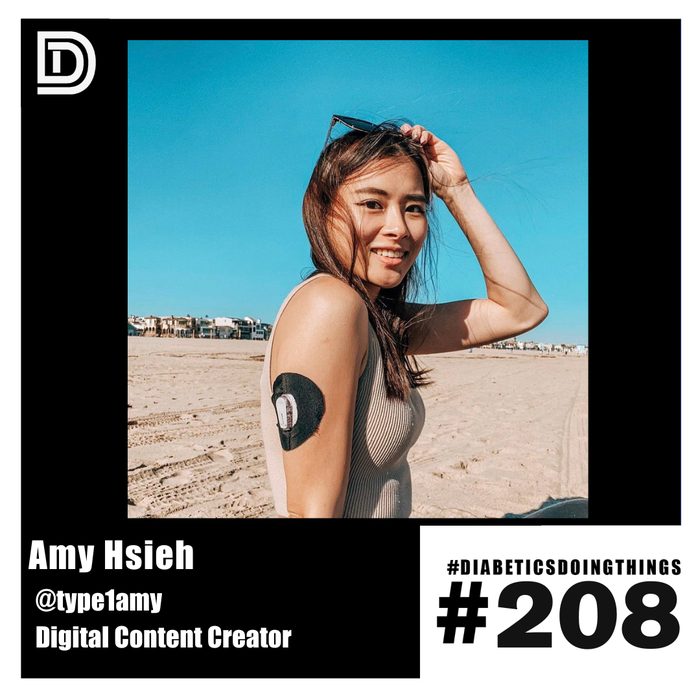
Amy Hsieh, @type1amy, Digital Content Creator

Episode summary
Amy Hsieh, known online as @type1amy, talks with Rob Howe about being diagnosed with type 1 diabetes at the end of 2018, at age 25, while visiting family in Taiwan. She was hospitalized for over a week with DKA and pneumonia, with no family history of type 1 diabetes. Amy compares the limited diabetes care and technology she received in Taiwan to what she later found in the US. She explains how her Type1Amy account grew out of the DiaBuddies app, a diabetes dating-style app she built during her master's program at USC. Amy talks about facing online trolls and stigma, disabling comments after backlash, and managing burnout from content creation on top of diabetes. She credits the diabetes community and in-person friendships for keeping her going.
Key takeaways
- Amy Hsieh was diagnosed with type 1 diabetes in 2018 at 25, in DKA with pneumonia, while visiting family in Taiwan.
- She says care in Taiwan gave her only insulin instructions and a glucometer, with no CGM or pump access.
- Amy started Type1Amy while building the DiaBuddies app, a diabetes-dating-style app, during her master's program at USC.
- She says a viral video can bring harsh, uneducated comments, and she disabled comments on one post after backlash.
- Amy says content creation burnout is real on top of diabetes burnout, and she takes mental health days to manage both.
Show notes
Type1Amy is on the pod! Rob talks to Amy Hsieh about:
Diagnosis in 2018: in the hospital with DKA and pneumonia
Diagnosed in Taiwan vs. treatment in the U.S.
the genesis of @type1amy and the @mydiabuddies app
Online trolls and diabetes stigma
Burnout and content fatigue
Having friends that are also Diabetics and the importance of community
Questions this episode answers
When was Amy Hsieh (Type1Amy) diagnosed with type 1 diabetes?
She was diagnosed at the end of 2018 at age 25, while in Taiwan visiting family. She was hospitalized for over a week with DKA and pneumonia.
What is the DiaBuddies app?
It's an app Amy Hsieh built as a capstone project in her master's program at USC, meant for people with diabetes to meet each other online, which she compares to Bumble BFF or Tinder.
How does diabetes care in Taiwan compare to the US, according to Amy?
Amy says in Taiwan she was only given insulin instructions, a glucometer, and an insulin pen, without a CGM or pump, which she says differs from the technology available to her in the US.
Does Amy Hsieh deal with trolls on social media?
Yes. She says a viral video can reach a lot of people unfamiliar with diabetes, leading to ignorant comments, and she has disabled commenting on at least one post because of the backlash.
Full transcript Searchable, with timestamps
Rob Howe: Hello and welcome back to another episode of Diabetics Doing Things. We are telling the amazing stories of people with diabetes from all over the world. And I'm very excited to introduce our next guest, who is part of our Diabetes Creators series that we're doing on the podcast. The very funny, very cool Amy Hsieh. Welcome to the show.
Amy Hsieh: Hello.
Rob Howe: Excited to have you.
Amy Hsieh: I'm excited to be here.
Rob Howe: And for many of our listeners who aren't watching this interview, you probably know Amy best as type 1 Amy on Instagram. Because I know many of her, I see many of her videos all over and really love the perspective that you offer on diabetes. So Amy, tell us a little bit about yourself. I know you have recently been diagnosed in the last four or five years, if I'm not mistaken. And why don't you tell us a little bit about what your diagnosis with diabetes was like?
Amy Hsieh: yeah I was pretty recently diagnosed I was diagnosed in and at the end of 2018 so I was 25 and uh I was back in Asia in Taiwan with my family and that was when I was diagnosed with DKA and you know I was put into hospital for like over a week and I had DKA plus pneumonia so like um it was definitely a struggle yeah you were sick for sure it was a shock for everybody because like uh there was no type 1 diabetics in a family and it's only type 2s um so yeah it was like really really difficult um i previous before the diagnosis i had all the symptoms of diabetes but i had no idea they were the symptoms of diabetes. I was like thirsty. I was hungry. I lost a lot of weight. But yeah, I just didn't know anything about T1Ds before all of this happened. Yeah. And you were diagnosed in Taiwan. So do you,
Rob Howe: what do you remember about your diagnosis experience and you know, how does it compare? Cause I know you live in the U S now, like how, how does it compare to the kind of the care that
Amy Hsieh: you've received here now in the United States? Oh my God. I realized in Asia or like in Taiwan, I was only given just like instructions to do insulin and like what to do when you're low, just have sugar. And that's pretty much it. I wasn't getting a lot of help. I feel like in Taiwan compared to the help I'm getting here in the U.S. I was going to say that it's always so
Rob Howe: interesting to see people's experiences and how they measure up to kind of where we are today in the U.S. because we've had guests before who were either diagnosed internationally because they were on vacation or because they were working and you know it's always interesting to see the comparison of you know diabetes education worldwide because it's very different. Yeah and then they only have
Amy Hsieh: a glucometer and just insulin pen. They don't have CGM or pump there. Yeah. And I think sometimes
Rob Howe: we take that for granted here in the United States where, you know, especially on like on Instagram, we see everybody with CGMs or Omnipods or pumps or smart pens and apps. And I think we just assume it's like that everywhere, but it's very different from country to country for sure.
Amy Hsieh: yeah for sure I'm like still grateful for all the technologies I have now
Rob Howe: so you're you know you were recently diagnosed like uh coming up on you know like you said end of 2018 so coming up on four years living with diabetes uh and you know I I was telling this kind of before we got on the recording I've often been quoted saying like you're diagnosed twice kind of once when the doctor tells you and once when you really embrace it and kind of like make it part of your life. So how did you decide to come up with your account, Type 1 Amy,
Amy Hsieh: and really share your diabetes with the world? It's a very interesting story of how I started Type 1 Amy, because I was working on this other app, it's called the DiaBuddies app. It was a project I was working on grad school around after diagnosis. So, and that was like a capstone project I worked on with some of my classmates. And it was pretty much an app for diabetics to meet online. It's kind of like Bumble, BFF, or like Tinder for people living with diabetes. And so after I had the app published, I thought that maybe I should like do something to market at this this app and then I just feel like on top of doing a diabetes project there's I there's probably like a lot more I can offer online and so yeah I decided to launch Type 1 Amy with the goal of becoming an influencer so I just decided to do it and see where that it would take me so I've always been interested in social media and I worked in social media before and so like I really have a really big passion for it and in terms of like doing a call different kinds of content creation so and also I want to be a part of the community so yeah I'm just I'm just like really happy like I started for it it's a lot of work obviously because like of all the all the different videos I have to do and I have having to do all the research coming up with the content but I feel like it's like really rewarding towards
Rob Howe: the end yeah well and you know I think people probably have questions of like you know how you, you create a lot of content and a lot of videos and, and, you know, pretty basically every time I'm on Instagram scrolling through, uh, and I see a diabetes reel, there's a good chance. It's going to be you popping up and, uh, I, I love your perspective on it. So how much I get, I guess for you, like, where does your inspiration come from and like, what kind of content do you really like to create? And then, uh, you know, what responses have really stood out to you, uh, since you've been creating content that you really feel like you're making a difference?
Amy Hsieh: Yeah, I guess so I was just trying to make all these different contents based on my own experience with diagnosis and just like my day to day struggles with diabetes. um and also like I guess just to change all this I wanted to advocate diabetes and you know talk about other different stigmas of diabetes which I totally faced at the beginning of diagnosis especially in Asia um it was really difficult um and yeah just like I guess like the more content I create, the more I realize what kind of content people really like. I started to do more blogging and just showing how the day-to-day lives of type 1 diabetes is like. People really want to see that and how I manage my diabetes. You were talking about stigma in Asia. Can you
Rob Howe: tell us a little bit about how diabetes is viewed and type 1 diabetes specifically is viewed in and like some of the stigma that uh you know you were facing yeah just like i guess it's also
Amy Hsieh: it's pretty common everywhere but like just you know just stigma about you oh you can't eat that or you can't have sugar or you know it's because you your lifestyle like you're now diabetic
Rob Howe: It seems like, you know, especially life as a diabetes content creator, there's always that education aspect. And like, you're always kind of explaining yourself. I think that's one of the things, uh, you know, about the diabetes community that's so welcoming is that you don't have to explain diabetes to people. Like they already understand it and they can already like latch on. That's always the, the, the challenge to just, you know, overcoming the stigma and especially when you're like opening yourself up to strangers on the internet. So like for you like uh do you ever face some of like you know opening yourself up to like the general public do you ever face like you know trolls or people who are uneducated about diabetes
Amy Hsieh: online oh yeah definitely like sometimes when real that does really well it's a good thing for me it does really well but also like instagram or tiktok it pushes to a lot of you know people who have no idea about diabetes or no so they so they just leave a lot of different like comments that are ignorant I feel like and so yeah I guess like it can be really harsh to me like why do they say that but i guess it's also an educational opportunity for me to correct them
Rob Howe: and you know educate them too yeah it's tough right because like you know you have a reel that's like reaching a hundred hundreds of thousands of people and it's like well most of the you know some of those people then start to not be in the diabetes community maybe that's the first video
Amy Hsieh: about diabetes they've ever seen yeah i know like i think like one of the my one of my first videos i posted it reached like 100k views or something and and it was like a post about like things that non-diabetic said to diabetics um and so that like causes a lot of uh the comfort controversy in a comment session. But yeah, oh well, I have to like, even like just disabled commenting because of that. Yeah, sometimes it's just like at some point,
Rob Howe: you know, like the comments are no longer, are no longer like, you know, actionable or, you know, able to like change people's minds. And that's, that's actually like a thing I say often is like, it's very difficult to change people's minds and internet comments they kind of just come in there with their you know with whatever they want yeah what's been one of your favorite uh or maybe
Amy Hsieh: unexpected responses from some of your reels uh i could say all like pretty typical like you know oh you're so young or like you're you just probably really have a lot of sugar have like a black sesame oil, have some high black sesame oil and that will treat your diabetes or something.
Rob Howe: It's crazy. Yeah. There's never any shortage of strange homeopathic remedies that people recommend. So something I think that a lot of people maybe don't understand about being a diabetes creator is like you have to live with diabetes and manage your diabetes and then also your you know creative and artistic output is related to diabetes do you ever kind of experience any like burnout or like uh you know fatigue from like just talking about diabetes and living with diabetes
Amy Hsieh: oh yeah for sure i feel like being a content creator is so can lead to a lot of burnout for and on top of diabetes, which is obviously already causing a lot of burnouts. Because as a content creator, you kind of have to be on top of your content. You have to post regularly and coming up with ideas and post regularly. I'm trying to post every day, but if I'm getting too overwhelmed and burnt out, I would just try to take a step back and take a mental health day or something. I think that really really helps me to go forward or else I don't know how I would do this part-time job because I do have a full time and this is just my part-time job and yeah I'm also diabetic and like obviously I made myself really busy um so just like try to juggle with everything it's very difficult um but so i just ended up putting my mental health first so that you know i that's that way i can function my day-to-day yeah it's such an interesting balance
Rob Howe: like you know because like you said there's the the demands of uh you know creating content trying to do it every day but then also you know most content creators especially diabetes content creators I know have full-time jobs, you know, to pay the bills and to, you know, keep things moving. And then they also have to manage their diabetes. It can be really tough. I've seen like, I think over the years, so many people like start out like with their accounts, like really, you know, going hard, they've got a lot of content planned and then they run out of steam or they get, you know, real life gets in the way because, uh, or, you know, diabetes burnout comes in because there's
Amy Hsieh: just a lot going on all the time yeah i know it's just so much going on um but i feel like what keeps me pushing for is because of this amazing community uh diabetes community they're just so supportive and i just crazy to see there's so many followers like are out there how many people are interesting to see more of my content so i'm just i feel really i feel like really rewarded too it only not only helps me but it also helps them so it's definitely a mutual
Rob Howe: yeah i think like yeah and that's like a super positive outcome right of the community and there's like so many negative things about diabetes that you can focus on but meeting friends with diabetes and like you know connecting with people online is definitely a super positive
Amy Hsieh: yeah i know i i got to meet so many diet like diabetes like in person too and i i'm not only online but like i was able to meet my one of my first uh closest diabetes they're also um in orange county so they're like not too far from me so i got like i'm super happy with
Rob Howe: my decision to set up type 1AV yeah because like you know meeting I think especially like when you meet other creators or people that you just met through Instagram or online like meeting them in person is like such a cool moment yeah and I feel like in LA like LA Orange County like Southern California there's so many cool like people with diabetes who do awesome things yeah yeah for sure
Amy Hsieh: It's like definitely very different when you meet another diabetic in person. It's just like, I feel like when you meet, you just kind of know them for, you feel like you know them for a long time, even though we just met, you know.
Rob Howe: Yeah, you get to skip that. You get to skip all like the explanation. It's funny, you know, the person who introduced you and I, and this is, you know, just a story for you guys on listening to the podcast. podcast. So Emily Krinsky, her maiden name was Swan Cut. She was like the third ever guest on this podcast. Like, so like 250 episodes ago, she was like one of my first guests, one of my first friends with diabetes, because for the first few years that I lived with diabetes, I didn't really know anyone. And there was no Instagram back then. So, you know, there was no way, you know, I hadn't like tried to connect with people. And so it was cool that she introduced us while you were working on the DiaBuddies app and, you know, now to a couple of years later, get to have you back on the podcast and talk about, you know, you as a diabetes creator is, you know, really just represented to me, like, you know, making a friend with diabetes and the diabetes community can lead you to places you never would have expected. So it's just really exciting.
Amy Hsieh: Yeah, I know. It's totally exciting because like, I know Emily through her husband, she her husband was my classmate when i was working on this project so that was like really exciting i was at usc um doing master my master's program at the time that's when i met him yeah
Rob Howe: which is such a small world and like when you have diabetes like you're automatically like just one step away from like meeting like almost everybody else she's like one of probably one of
Amy Hsieh: the first diabetic segment as well yeah you uh you never forget your first uh friend she's about
Rob Howe: to have her second baby so uh congrats to the krinskis um so for you like if you could go back and like tell yourself like four years ago when you were diagnosed like what would you what would you go back and like is there any like advice that you would give your younger self like as you were kind of like starting out your life with diabetes
Amy Hsieh: um i yeah i think there's like a lot i would say to myself because at the time of diagnosis i was struggling with a lot with like anxiety and depression and i think it's a way common to a lot of newly diagnosed diabetics and so i would just tell myself like you know just take one day at a time and you know it's gonna get better no matter what you get better at managing it it's not your diabetes is not gonna go away but you're gonna get really good at figuring things out
Rob Howe: at the end so that's great advice I I think so often like it's so overwhelming at the beginning and you have to remember that like you're a beginner and you will get better at it and uh Just like anything else, it takes time and effort and energy, but you can do it.
Amy Hsieh: Yeah. Yeah. It's really hard, but I feel like it's something that you just have to learn most of the time on your own.
Rob Howe: on your own and if you were if you're going to get if if one of your like fans or followers was listening to this and they were thinking like man i want to i want to be a diabetes content creator like i want to like tell my story and share my share my perspective with the community like what advice would you have to somebody who is like just ready to get started uh if you want to start to
Amy Hsieh: become a content creator in the diabetes space i was saying just start sharing whatever just start posting and um right now instagram is really pushing real so i recommend you do more reels and just really just try to show your story and tell your story and and you know and don't be afraid to share all of your different struggles with your diabetes. And it just, I think it's a really good way to connect with the diabetes community. Yeah, I totally agree. I think like
Rob Howe: you may look at it, you may be out there listening and saying, oh, well, there's a lot of people already, but there's nobody that's you, you know what I mean? So I think that's one of the cool things about being a content creator is you get to share your perspective and that's, that's it. I mean, that's what makes you unique and that's what kind of makes you stand out as well. Oh, cool. Well, Amy, I want to thank you so much for your time today. And, you know, for all of us out there living with diabetes, I know Eritrea and my wife was like, just tell Amy how much we love her videos and to keep doing what you're doing. So thank you so much for giving of yourself and for the community. And, you know, I know there's so many of us out there who enjoy watching your videos and your content. So thanks so much for all that you do for people with diabetes.
Amy Hsieh: Yeah. Thanks so much for having me.
About Amy
Amy Hsieh is a type 1 diabetes content creator known as @type1amy on Instagram. She was diagnosed with type 1 diabetes in 2018 and built the DiaBuddies app, a social app for people with diabetes, during her master's program at USC.