

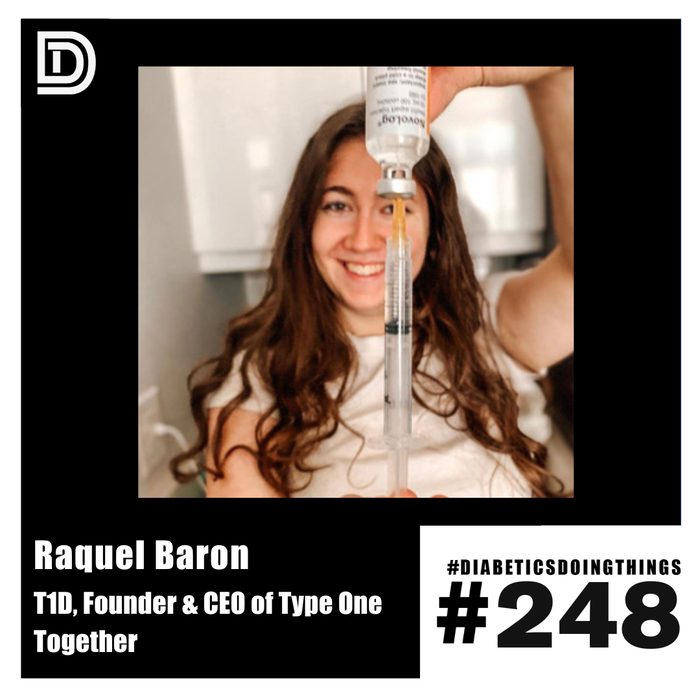
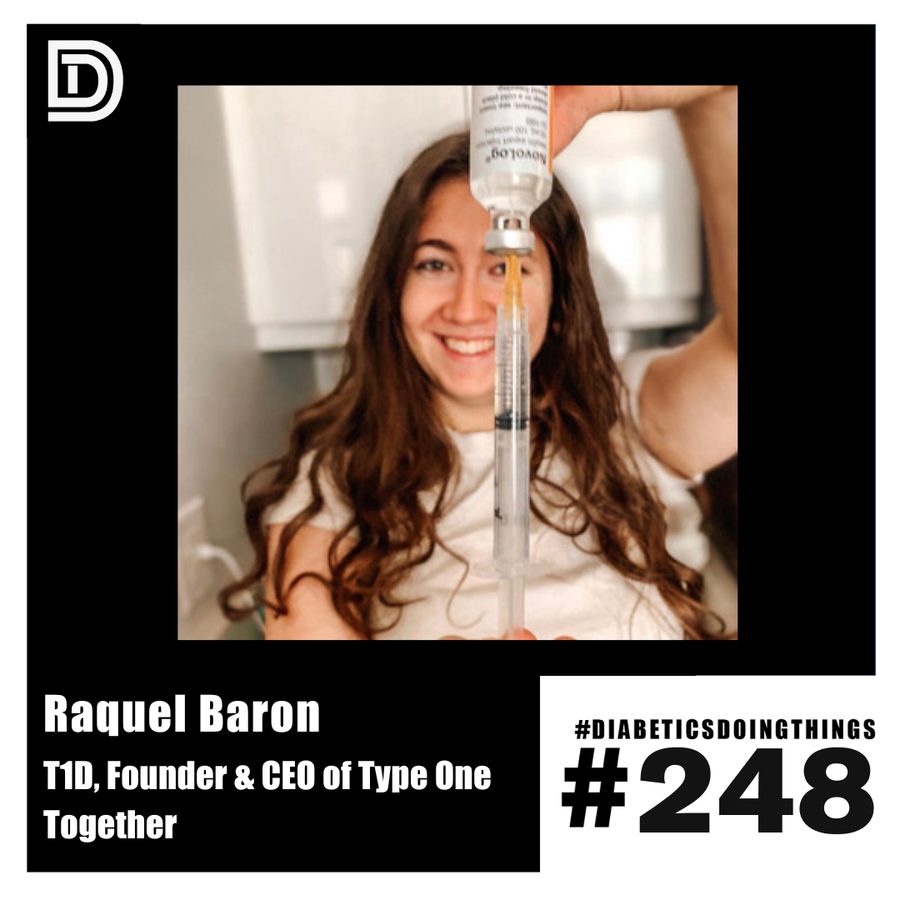
Raquel Baron, T1D, Founder & CEO of Type One Together

Episode summary
Raquel Baron has lived with type 1 diabetes since she was diagnosed at age five. She found community in college through the College Diabetes Network, then built type 1 Together, which now connects more than 1,200 trained babysitters with families raising kids with diabetes. She talks with Rob Howe and Eritrea Amusa about recognizing Rob at a Dallas basketball game years ago, leaving a seven-year relationship after a two-month stay with friends in Arizona and Utah showed her what she wanted instead, and the guilt and fear many parents of kids with diabetes carry. She also discusses her move from Texas to Los Angeles, turning type 1 Together into full-time work, and being Jewish, including her father's work as a rabbi.
Key takeaways
- Raquel Baron founded type 1 Together, which now has more than 1,200 trained babysitters available to families raising kids with type 1 diabetes across the country.
- Raquel left a seven-year relationship after a two-month stay with friends in Arizona and Utah showed her what she was missing, and she says the relief she felt afterward surprised her.
- Raquel says parents of kids with T1D carry guilt and fear that children don't always see, partly because parents can't feel a low or high the way their child can.
- Raquel's father is a rabbi, and she talks about representing Jewish people living with diabetes, including managing carbs around holidays.
- Raquel says she treats a high blood sugar as information rather than a failure, and applies that same mindset to trying new things in business.
Show notes
We’re bringing founder of @typeonetogether Raquel Baron to the pod! After catching up at FFL this summer, Raquel joined Rob and Eritrea as they get into:
Her first time on the pod (lost files of 2020)
Being the first person who ever recognized Rob IN THE WILD with T1D!
Her transition across the country, out of a long-term relationship, and letting go of what wasn't serving her
A LIVE DIABETES ROLL CALL!
Being a Diabetes Founder
Founding @typeonetogether, a virtual and IRL resourced community of babysitters and families living with diabetes
Dedicating a certain amount of time to move forward at something instead of giving up
Being a Jewish person and representing for other Jewish people living with diabetes.
You can find Raquel on instagram at @typeoneday or check her out @typeonetogether or her podcasts or more info about Type One Together.
We want to hear from you. Send those questions, comments, queries, and general diabetes concerns to THE MAILBAG at mailbag@diabeticsdoingthings.com!
Questions this episode answers
Who is Raquel Baron?
Raquel Baron is a content creator living with type 1 diabetes since age five. She is the founder of type 1 Together and co-hosts a podcast with Amanda, type 1 Together's director of parent support.
What is type 1 Together?
type 1 Together is a community Raquel Baron started in college that provides a free network of over 1,200 babysitters trained to care for kids with diabetes, plus resources to help families through the first year of a diagnosis and beyond.
How did Raquel Baron and Rob Howe first meet?
Raquel recognized Rob from his Instagram while he was playing basketball at the Jewish Community Center in Dallas, making her the first person to ever spot him in public because of his diabetes content.
What does Raquel Baron say about parents of kids with type 1 diabetes?
Raquel says parents carry a different kind of weight than the person with diabetes does, including guilt, constant monitoring anxiety, and strain on their marriage and other children, even though they can't feel what their child is feeling physically.
Full transcript Searchable, with timestamps
Rob Howe: Hello and welcome back to another episode of Diabetics Doing Things. We're telling the amazing stories of people with diabetes from all over the world. And I'm very excited for our guest today because back in 2020, there are a few podcast episodes during the early parts of the pandemic that got lost forever. I don't know what happened to them. And unfortunately, this guest was one of those who was lost. But before we get in, I do have a tiny diabetes rant to make because diabetes does not care if you have a lot going on. if you are in the middle of important projects, if you are following the IFU steps to the letter of the law or not, or if you are on your last piece of supplies, or if it's 3 a.m. and your battery dies on your pump or whatever it is, diabetes does not care. It is not a collaborative disease. And I just wanted to let you guys know that today I'm coming to this podcast. My blood sugar is over 300 for the first time in over a week, which I know is kind of like a flex. I don't mean that to say like if your blood sugar has been over 300, that's not good. But like I feel irritated. I feel frustrated. I had a bleeding site. I did a sensor change. It bled. It fell off right before it even started. It didn't even have a chance to be great. And I'm coming into this interview. All this happened within the 10 minutes before we started this interview. So just know that when you are dealing with a podcast with hosts, producers, whoever that live with diabetes, There's a lot going on in the background that isn't always visible or audible. So all that to say, diabetes sucks, but you can handle it. And shout out to Dr. Mark because that's the title of his book. We had him on the podcast. Anyway.
Eritrea Amusa: No, wait, wait. Not anyway. I up you one and go from having a podcast to having a job, having a relationship, having a life around a person with diabetes. This shit is hard. And we all just make it look super easy so that when we are having a hard time, like, it's hard to give that grace. But good for you for still showing up, Rob, because we need you.
Rob Howe: Well, thank you. Okay, so enough about me. This is a podcast interviewing one of our great friends from the diabetes community, Raquel Type 1 Day. She's the co-founder of Type 1 Together. She's the co-host of the 108 podcast. Welcome to the show.
Raquel Baron: Thank you, Rob. I'm so excited to finally be doing this. And yeah, it's about time. Let's do it.
Rob Howe: It is about time. So I also want to preface this with you. You're from Dallas. I've told this story before to many people. You're probably tired of hearing it. You were the first person that ever spotted me in the wild from my Instagram days at the Jewish Community Center here in Dallas, which Team Recreation just won the Monday League, which was the same league we were playing in at that time. So you just got to keep at it. You can accomplish anything you want. you also were in our kind of type 1 texas group with marie diaz shout out and the brazowski's and eric dowds came part of it we skydived and like almost skydived and we brunched a lot you drove all over for type 1 nation so you're a huge supporter and now you i think are one of my favorite content creators and a real voice in the community in a bunch of different ways so it's excited to it's exciting for me to see like how far you've grown and And just that we're lucky to be friends with you. So why don't you just dig in? Let's talk about your diagnosis story. And then let's get into all of the things that you're doing. Because this podcast is diabetics doing things after all.
Raquel Baron: All right. Wow. What an introduction. Thank you, Rob. And yes, I remember that day very clearly where I spotted you playing basketball. And I was like, is that the guy from Instagram? Like, I'm going to be the most creepy person ever. And did not say hi in person. I messaged him after to be like, was that you? He was like, yes, you should have said hi. But yeah, I was not going to do that. No way. So I'm glad that we've officially met many times after that since I am from Dallas and now I see you at all the things. But OK, where to even start? So I was diagnosed when I was five and really didn't want anything to do with the type 1 community for most of my life growing up. It wasn't until I went to college at the University of Texas at Austin and I joined the College Diabetes Network, which is now the Diabetes link. And I immediately realized like, oh, it's actually so nice to have people in my life who understand what I'm going through. Like, duh, why didn't I realize that sooner? It's the best thing ever, which is why we're all doing this all day, every day now. But yeah, it was such a light bulb moment. And then I started learning so much from the community that I had not learned from my doctors. And it became like this huge fire that kind of was lit. And I was like, wow, why are we not taught like how to really live with diabetes? And I was a dancer at the time, dance major in college. So that was just a lot to try to figure out with diabetes. And through the diabetes link, I found online community as well, learned a lot from that. And then I started interning at JDRF in Austin and they started connecting me to all these different people who needed babysitters because it's such a big need and these parents literally never get nights out. And so I started babysitting for tons of type 1 kids in Austin, kind of became like the Austin T1D babysitter. People would randomly get my number and text me all the time needing help, and I could not keep up with the requests. And so I started connecting all my CDN friends to these families, and I was like, this needs to be a thing. And so very long story short, I just totally dove into the diabetes community around that time, which is when I met you in Texas and all the different things in Dallas and Austin. And now Type 1 Together, it was born at the end of my senior year, and we've grown it into so much more. We do still have a babysitter resource with over 1200 sitters across the country. And then we also now have just things to help families through their first year of diabetes and beyond, because my mom wishes and I wish that I knew things so much earlier than I did. And it's not about like having a doctor that's like or having people that are telling you exactly what to do every second of every day. I'll never claim to be a doctor and I never want to come across like I'm trying to give medical advice. But it's just like, hey, you're feeling this way about diabetes. you like you're definitely not alone and the parents have it in such a different way that we can't even understand i think they almost have it harder and so yeah i recently brought on amanda who is director of parent support and she has a three-year-old with type 1 and she shares so openly just about her mental health journey throughout the diagnosis and even today because we all have our ups and downs so that was a lot but yeah that's me well i really like so i want
Rob Howe: to talk about the like parents perspective because that's that was new to me too so you guys's account and the the content that you and amanda share about i think last week or something you shared a post that was like one day you you're not going to be your kid's diabetes anymore or like they're going to take that on for themselves and like you're gonna have to let them do that and i just i thought about like you know for me my parents it's weird to say like lucky but like they they didn't have to deal with my diabetes when I was young. They didn't have to really become attached to it. I was old enough and we had a good enough relationship that they were involved with my diabetes, but it was pretty much mine from the get-go. And I also embraced that and I was fortunate to do that. Eritrea is a little bit different because she was younger and also like the language barriers and like the psychosocial elements of diabetes we talk about often as patients, but not as much as parents. So I think that's been something that I've learned from following you guys' content is that there really is a lot of invisible stuff that goes along. Even if you're not a type 1 parent, you're just a parent of a type 1, that there's so much that's going on underneath the surface that doesn't often get talked about.
Raquel Baron: Yeah. Well, first of all, they can't feel what we're feeling in our bodies. And so I don't know about you, but I make a lot of treatment decisions based on how I feel now. I've learned that over time, but they can't feel if their child's dropping. They don't ever really know if their cgm is accurate and then it also just impacts their family life so much like their marriage like they're not getting as much individual time if they're married with their spouse and you know it impacts the siblings and they have so much guilt for feeling like it's their fault that their child has type 1 even though there is no resource or research supporting that for most of the situations and yeah there's my mom definitely managed my diabetes completely I was five when I was diagnosed. So that was the only way. And now I always try to get her to like come on the podcast or, you know, share something. And she feels like she doesn't know what diabetes is anymore because of how much things have changed. And I think it's been really challenging for my whole family to kind of just let me take it on. And I did that at a young-ish age, like probably by the time I was 10, I was like in dance classes without them. And, you know, there were no CGMs at the time. And that's what these parents now they don't realize how good they have it but I also think it adds such a layer of intensity and they're just you know attached their phones 24 7 just watching the numbers and it's like maybe it was better to not have that but yeah there's so much that I don't know it's just
Eritrea Amusa: I think that I'm okay with it more than my mom was I think diabetes makes our moms a little bit I don't like this word I hate the word meek but it makes them a little bit more reserved because it's like they're constantly like jumping through these like all the loops and things that we do now they did for us as children and so they were constantly doing that and I also think that like there's such a culture around telling moms what to do so like my mom specifically will never do that she'll never tell another mom what to do with their kid unless it's to put a coat on them because it's cold outside but otherwise like no because as a parent so maybe that's why your mom is so hesitant to like join the pod or doesn't want to answer the question I know when my mom comes to the events Rob has seen her. She seems like the shyest lady ever. And I'm just like, where's the lady who screams at me and throws chanclas? Like, where is she? So I think that there's something really, I also don't want to say trauma all the time, but just traumatic for them in that process that it was for them to kind of grow as an adult and have a small child with diabetes.
Rob Howe: It is traumatic. I think trauma is, you know, a word that gets thrown a lot, a lot more around a lot more. And that's OK. I think that's good, too. Mental health also, I think, gets put in marketing campaigns a little bit too often for my comfort. But I also think it's not up to me. Maybe somebody hears it for the first time or connects with them for the first time, and that's important. So it is traumatic. When you're a mom, and I don't know this, I'll never be a mom, but I don't have children yet. I hope to have some of my own someday. You are your children, and your children are you, and you bear those burdens alongside them. And, you know, for my parents, I know I often talk about hitting the genetic lottery with my parents. Like they're just, A, I love them, but B, they just, you know, really cared about like my brothers and sister, brother and sister being really intentional about how they, you know, raised us and like wanting to, you know, make sure that we had everything that we need and the support that we needed, no matter what we were trying to go after. And the weird part about their trauma was like my my dad had a hard time understanding or accepting that there wasn't anything that they could do to prevent me being diagnosed with diabetes. And years later, I think about that, because like at the time I was like, oh, well, like they just say like nothing can happen. Like it's it's nobody's fault. But then you start to learn about, you know, biomarkers and you start to learn about, you know, you know, recessive traits and antibodies and things. and like chronic illnesses run in my family. And I am just the only person who has manifested that as type 1 diabetes that we know of. So, you know, it's just, there's a lot of guilt. There's a lot of trauma. There's a lot of new stuff. And, you know, as frustrating as diabetes is for those who have it, it's equally or more important or frustrating for parents who are waking up in the middle of the night. And I think you really hit the nail on the head. Like I do believe right now, the technology that we have is, makes it the best time to live with diabetes. There's access issues, certainly, but there's a double edge to that coin. Shout out the dichotomy of diabetes because you might be too attached to looking at your butcher. You might be unconsciously just opening up your apps on your phone and attaching a whole lot of feelings, positive or negative, to that number that you see.
Raquel Baron: Mm-hmm. And there's such a sacrifice between, like if you're trying to give your child the best childhood possible, you know, it's like, do you care so much about the numbers that that's all you're focused on getting that perfect blood sugar line? Or it's like, are you going to let them be a kid sometimes? And personally, like, I hope that families are taking that approach as much as possible because I'm so thankful that my family let me eat all the things just, you know, you can eat it, but you need a dose for it. Or maybe the timing's a little different, but it was never a no. It's just a when, when are you going to do this thing? And yeah, I think that it's hard for parents to find that balance. And like you were saying, Eritrea, the amount of parents that like to tell other parents what to do and how to do it, it's like, just let people manage diabetes in the way that works for them. We really, really, really believe that. And I just, I don't understand any other way. I want to talk about transitions because
Rob Howe: I think it is, we've talked about type 1 together and how big a part of a kid's life with diabetes your parents are. You mentioned that, you know, you felt like it was so important that your parents let you kind of eat all the things and test and learn about, you know, all of the stuff. Eritrea, we had our first, we actually are doing like weekly producer meetings now, which is pretty exciting for us. We're like growing up and becoming more organized. And we were talking about you because we both knew you kind of like prior to the pandemic, like prior to type 1 together, really growing. And you have also like kind of like grown and And we're very proud of like you, Raquel, like the way you're growing up, like you moved from Texas to California. You're a diabetes creator, like fully embodying like that. You have multiple diabetes projects. You're working with diabetes organizations as a content creator. You're starting, you're being the change that you need in the world with diabetes. And, you know, what can you tell us about that transition and like kind of coming into your own, like as you have really like made diabetes a different occupy a different part of your life in the past few years?
Raquel Baron: wow well first of all thank you I agree I feel like my life has taken a turn that I did not expect and I kind of fell into it but I also I feel like diabetes has given me such given me such a like different perspective on life and it's made it so much more precious and also I just have kind of fallen in love lately with taking risks and just going for things and that That was not me at all growing up. I was not spontaneous in any way. But basically, after I graduated college, I was in Austin for a few years. I was doing marketing for a cycling studio, actually. And, you know, Type 1 Together was happening on the side, but it wasn't anything that I thought would really be a full-time thing. And yeah, I was invited to live with these other entrepreneurs in Arizona for like a two-month thing. It was actually by my friend Ashley, who also lives at Type 1. She has her own startup that's not diabetes-related. and she was like just come it's a two-month thing whatever and I was like no I have all this stuff going on at home I have a dog a job an apartment I had a boyfriend like I can't just leave and I said no originally and then a week later she was there and she was like just come for a week it'll just be fun and so I went and while I was there it was also you know towards the end-ish of the pandemic and so I had been not very social for a while and just being around new inspiring people and in nature we were in Utah but well Arizona and Utah kind of on the border and so we were like going to Zion on the weekends and just exploring and hiking I had this moment where I was like wow I'm really not happy with my life right now I'm not happy in my relationship that was a seven-year relationship at the time and I knew something had to change and I was like well if I don't do it now when will I so I literally went back to Texas and did things I mean it was a slow it wasn't that dramatic but I was like okay it's time and then stayed in Arizona for the full two months then from there they were like oh do you want to go to LA and I was working remote for my marketing job and at that point I was gonna have to quit because they didn't want me to work remote anymore and I was like you know what type 1 together like there's something there I just know there is and and just like my personal page like I want to share about this more and so I quit my job and I went for it and I moved to LA it was supposed to just be for a month and now I've been here for two years and so it was not planned at all and I don't know I think I kind of cringe at the fact that I like post about diabetes all day long and I was talking to someone about this recently because I don't think about diabetes as much as I talk about it because I know that like that's what people are there for I don't know if you feel it's right too but like people are there to yeah consume that content but I feel like having my page and working in this field it allows me to heal through the work I'm doing. And so at the end of the day, I'm just like with my boyfriend now and like hanging out with my dog and doing whatever. And I don't really think about diabetes. I'm so on autopilot about it. So I never wanted to come across as like inauthentic or sometimes I'm like, there's just nothing to share about diabetes today. And that's how it's going to be. But I just I think that you can make whatever life that you want for yourself if you really lean into it. And I just kind of don't see a way to fail because I feel like there's always other directions to go so like if one thing doesn't work with type 1 together I just pivot to something else and I've done that like we've had so many programs that we don't do anymore you know because you just got to try things and it's like I think people are scared to just try and put stuff out there without it being perfect but I really go off of like the done is better than perfect thing and I'm just kind of going and now it's growing and I'm pretty much doing it full-time now which is crazy like literally within the last two months because I've had a lot of side jobs over the years um but besides teaching dance on the side because i still love dancing i'm doing type 1 together so yeah i don't know what it's been yeah wait she's putting on her podcaster hat i'm not gonna let her i'm not no i i i mean you're like basically like
Rob Howe: this is very much my shit sorry yeah i know it is but i want to eritrea has some like big questions because i i will talk about saying yes in your life and like following that and taking big steps like I want to hold that and I want to hear a trade to dig into some of like the other things like overcoming that self-talk of like I can't leave this relationship I can't leave this
Eritrea Amusa: job yeah okay so for me a lot of what you were going through I was going to do something very similar at the time but I don't think I was as positive about it and then you and I had a phone call a couple of weeks months ago once ago where you just really I learned so much about you and just I think as women we center relationships and that's just something that we've been like programmed to do. So for me, when you're like, I left a seven year relationship, I'm doing all this healing, all this growing, et cetera. Like, I don't want to gloss over that. Like, I want to break it down a little bit more. And it's like, OK, like you're in this really unhappy place of your life. So how are you like, this is what I need to do to wake up tomorrow and be happier? Or was it not like that? Like, what happened? Basically, like, give me the tea.
Raquel Baron: Yeah. Oh, my gosh. So, OK, not to go too deep into that relationship, but there was definitely like a lot of negativity towards me like even my diabetes a little bit and things that I clearly knew were not okay but I was too scared to leave because like I thought that everyone would see me that way because it was like so put on me all the time and I don't know it's like it kind of was a slow fade in my brain without realizing it but then there was just that moment where I was like I have to end this and I will be okay and like if I don't do this I'm going to regret it and I just don't I rather just know that I tried you know that's really what it comes down to and I did wait way too long like it's not like I just knew this and I was like all right gotta change and I'm constantly re-evaluating my life every day but I don't know you just you just have to go for it there's no other way like you just jump I don't know does that is that no yeah it does is that
Eritrea Amusa: also what prompted the move halfway across the country because ma'am you literally like goodbye
Raquel Baron: my man hello new state like yeah well I have to say I was lost at that point because you know that person was my everything and so when I was with these new people who had such a different perspective on life where they were pushing me to take this full time because if I never were to take it full time and give it a chance because I actually did quit all jobs for a full three months I told myself you get three months to try to make some money or like get this to go somewhere and then you can always get side jobs. But then it's never going to be a full time thing if you never give it that time is what I realized. And so I just saved up and, you know, went for it. And then I did work at a yoga studio and all this stuff in L.A. when I decided to actually move here. But I was feeling safe with those people like I had made a little group of friends. And so as much as I want to be like, yeah, I was just on my own and it was fine. Like that's I needed that. Like I needed to be surrounded by those people in order to make it through that horrible time. But the crazy thing about it was once I finally ended that relationship, I felt this crazy sense of relief. And I didn't expect that. Like, I thought I was just going to be sad, but it's like, that's what I really needed the whole time. And it was like the two months after that, all these people were telling me, Raquel, you look so happy. You sound so happy. You look different. Like I kind of turned into this totally different person and I just didn't even know it was possible. And so, yeah, I don't know. I'm very into this as well. It's just like, go for it because you don't have anything to lose and you can always like figure it out.
Eritrea Amusa: The average weight of a man is about 180 pounds. So it's just, you went through extreme rapid weight loss that year.
Raquel Baron: You lost 180 pounds of baggage, okay?
Rob Howe: Baggage, absolutely. Yeah, it's fun to laugh about now. I think though, there's people out there listening to this. We can even look in the mirror at other parts of our lives or like things that we're holding on too tight to or we're telling ourselves a story that we can't move on from or that we can't change. And I think 2022 is a really hard year for me. I got really caught up in trying to control everything. And when things weren't going my way, I was really looking outward and blaming other things. And I had to remind myself that I am an active participant in my life. And I think that's where you kind of have these moments. And I often talk about, shout out JDRF Austin. I was just there last week and I mentioned this And it reminded me, like, I think you're diagnosed twice with diabetes, once when the doctor tells you and once when you kind of really make that part of who you are and own that management. That happens for different people at different times. Some people do it all at once or some people it takes years. For me, it took about 10 years. I was managing my diabetes fine, but I hadn't really accepted it. And I think, you know, whether it's relationships, whether it's career, all of those things are like fear based. And there was something that really stood out to me. And I heard first from Tim Ferriss, who you probably know, and most of the listeners know that I really love Tim Ferriss. But he has this amazing framework called fear setting, where if you just imagine the worst possible outcome from an action that you're taking, like you move to LA, what's the worst thing possible that can happen? most often the worst possible outcome is like really not that bad. Like you were saying, you gave yourself three months. If it didn't work, like you could get some side jobs or you could go do another job or like wait or try again. And I think as adults too, especially in creative outputs or careers or starting businesses, we have this immense pressure on ourselves to be perfect right from the get-go. And with any other practice in our life, we would never hold ourselves to that kind of standard. You know, when we're kids and we learn to play sports, for example, or you start out as a dancer, me as a basketball player, like you don't expect on day one to be the best person. And you kind of understand that the longer you do it, the better that you'll get at it. Yeah. But in our professional careers or with our creative outputs or ideas, if it doesn't go viral right away, like how many pieces of diabetes content have you made? And not all of them are as successful as the ones that you post now. But if you don't post them and embrace the suck, as I say, but, you know, just like get used to being a beginner and say, hey, you know, I found like Thomas Edison, a thousand ways not to make a light bulb. then then you can you can find yourself like show continuing to show up continuing to take risks continuing to say yes then you can find yourself in a totally different position and what i really believe is that when you step into your purpose or you follow your heart which sounds really corny the universe conspires to give you what you want when you're doing those things you will be so surprised as to who says yes. For this podcast, it was people at the beginning, before I had even recorded an episode, who had lots of followers who were willing to say yes. Derek Theler, one email close. Melissa Hartwig, who, Melissa Urban now, Melissa Hartwig Urban, founder of Whole30, was like episode six on my podcast. And she was like, yeah, let's talk about Whole30 and diabetes. And people will say yes to you if you are stepping into your purpose. so you know whether it's a relationship or it's a job or it's fear of going somewhere like you can change you can today take ownership of your life and the things you'll find the things that are holding you back I imagine you don't think too much about anymore yes I also well
Raquel Baron: yes just yes all of that I had an experience as a dancer that I think also kind of led to all of I was like working on a solo with one of my choreographers in a solo within a bigger piece but we were working one-on-one and I couldn't get what she wanted me to get and I was getting really frustrated and so was she and she was like wait I know what's going on Raquel you don't trust yourself and I was like what do you mean like where did that come from and she was like I think it has to do with diabetes and this might sound like harsh but it actually was a beautiful moment because she was like your body literally hasn't been working for so many years you're not able to trust that your body can do what it's supposed to do. And I think it's led into other areas of your life. And that was like a, whoa. And I ended up crying and like it was a whole thing. That was great. It was very sweet. And it made me think a lot about how I didn't trust myself in a lot of areas in my life. And now that I've made that huge life shift, I feel like I can do anything. It's like if I ever get out of a relationship again, I can figure it out because I've done it before. If I need to move again, I can figure it out. And I think that that's exactly what you were saying, Rob, like all these little things that you're putting out and just embracing the suck, you're building up that trust for yourself. And sometimes it just takes time and a lot of those little things. But if you're just doing the same thing every single day,
Rob Howe: nothing's ever going to change. That's nothing changes if nothing changes. And, you know, I study the maps, guys. I'm deep in and, you know, I'm trying right now, like to become a 10 Xer in my, in my career. I've, I've said my business is 10 X a couple of times, but like, we're at this point where I need to grow if we're going to, to take on new things. Same with diabetics doing things is that I am a work in progress and I want more for this. And in order for me to do that, I've got to participate. I've got to change that story about what my potential is. And so, you know, I think for young people out there or people who think they have an idea and they're afraid that they just don't have it all figured out or that it's not going to be perfect. The worst thing that people can literally say to you is no, like, hey, no, I don't want this. And usually they don't pile anything else on top of that. And that's true in most things. But we tell this story to ourselves that we're not good enough or we let the truths about diabetes creep into other parts of our lives. And we realize that maybe these things are self-imposed that we're worried about these outcomes and we don't even try we get that analysis paralysis so you know we've kind of gone all over on this but i last night i was watching ahsoka shout out my star wars listeners and she's teaching another character in the show sabine if you're a real star wars nerd you know her but she's teaching her like basics in the force and she's like having a really hard time moving things around with her force powers and she's like Like talent is a part of it. Talent comes into play, but it's discipline and perseverance that lead to success. And I think that's where, do you have the discipline to suck at something for six weeks every day? Because if you do on the other side of that is you can look back and say, man, I'm way better than I was before. You don't, you know, you don't make yourself strong in one workout. You don't make yourself an endurance athlete in one. You don't make yourself a great dancer with one dance step. You don't make yourself a YouTuber. You don't make yourself a business owner. You have to show up every single day for yourself. You don't make a relationship by one date. Like very, very few things happen that way. But it's the little incremental marches, like showing up for yourself and saying, yes, like this is who I am. This is what I want to do that can lead you to totally different paths. And just like you were saying earlier, like open up parts of your life that you never would have imagined yourself being in. And now that's your every day. So I think it's important to like track progress in that as well. But, you know, this is a diabetes podcast for diabetes creators. Like I know that there are amazing diabetes creator ideas that are out there that haven't been like voiced yet because people are. and I want to somebody listening who has an idea like you can you can start a you know you can end up with 1200 babysitters on your roster with diabetes you babysit for kids all around the country but you could start a podcast that you know has amazing people on it you know there was no there's no there's sometimes no framework to follow you just the limit does not exist
Eritrea Amusa: you just gotta try things when you were when you were saying that do you have the discipline do you this all i could think about was do you have the ability to be told yes and then be ghosted ralph barbosa i am talking to you i hope this clip goes viral on the internet sir text me back ralph but no yeah you guys i mean i don't know rob says it to me all the time i get really i i'm really lucky to like be his little mentee like he puts all this like protege stuff into me and it's like Like I had to show up all the time and sometimes I don't want to.
Raquel Baron: But I'm like, but Rob said I have to clog into the desk of air, Trey Amusa.
Eritrea Amusa: And it's just true. Not everybody is lucky to have a Rob in their life, but this podcast doesn't exist. So please listen to it because it will motivate you to do better. Because it is hard to find that self-motivation to show up every day when people are saying no, to start a new project when it feels like the world is inundated with those projects already. You know what I mean? It's scary. It can be scary, guys.
Rob Howe: And I think, too, you kind of there's a lot of really good advice out there. Like there's probably a thousand good reasons for you to not do what you did. There's always a good reason not to start. There's always something that was something when I started my agency. I think it's like a Mark Cuban quote or something. It's like there's always a thousand reasons not to do something, not to take a giant risk. but everything you want for yourself is on the other side of that risk you know like that you have no idea what you're capable of and so okay we've talked a lot about this this is said by jan
Eritrea Amusa: in the office is what i want to say it's not a mark cuban quote it's from serenity by jan and there are always a million reasons not to do so to not to do something said by jan from the office
Rob Howe: Well, a thousand reasons not to take a great risk. Whatever. Shout out Jan from The Office.
Raquel Baron: Serenity by Jan.
Rob Howe: I do love Jan from The Office. She was a tough leader, but, you know, she did our boy Michael wrong. I have so much to say. Moving on. You're so far off. So one thing I do want to give you your flowers for, because I told you this at Friends for Life, but I believe that this is you. In terms of the modern diabetes roll call and of the reels where we're all showing our numbers on video. Yeah. I credit you with bringing that, you know, that that iteration of that content to to the forefront. So I'm saying it. You are I'm crediting you with the diabetes roll call. Oh, gee.
Raquel Baron: Thank you. I very much appreciate that. Yeah. Right now. We should. Let's do it. do you know or yeah you both were in the friends who liked roll call there should be a theme song
Eritrea Amusa: that goes with it it's like roll call i don't know i'm sorry i'm getting real black right now
Raquel Baron: okay so you gotta say i'm raquel singing name and i'm 189 okay i'm eritrea and i'm 158 i'm rob and i'm 258 whoa 150 or 258 yeah i don't know that just kind of came to be and now i'm seeing them everywhere and it makes me happy that people are loving the idea and sharing it but i do
Rob Howe: appreciate the credit thank you yeah and i think we were talking about this before like you have a podcast now uh and i have a podcast and i feel the same way like i would love everybody who wants to have a diabetes podcast to have one. Because I think that that's such an important part of the iteration. I wouldn't have been a diabetes creator if there weren't diabetes bloggers and Instagrammers when I decided that I wanted to do this. And that's the power of community. We got to support each other's projects, even if they're in the same vein. It takes real confidence and it takes real community mindset to support other people who are winning in your space. And I think that's just something as humans like we compare ourselves too much or we like get jealous of things and especially as adults with like money and opportunity and things like that but yeah i don't know i'm a big like if somebody says that you can't do something because they are doing it like that's
Raquel Baron: that's rude and i just don't agree with that yeah everyone has such different things to share you know and honestly rob like i learned so much from your podcast i've been a listener for so many years
Rob Howe: now how many years have you done this now we're in year eight now so like okay and that coming up
Raquel Baron: on your eight that's a lot and that's what i'm gonna say about the business stuff like i think one of the only reasons why i'm like still in this and you are too is because we've done it for so long like it's literally it's been four years for me which feels like a long time but it's like just now just now starting to like bring in a little income and like actually like you know the word is spreading organically finally but it just takes so long and i feel like so many of the people that you and I were connected with four or five years ago, like aren't doing their thing anymore, which is totally fine, but it just takes so much consistency. So thank you for creating your platform because it really you were one of the ones who like I found on Instagram first and you were teaching so many things that I was like, wait, people manage like this? Like I had no idea.
Rob Howe: Crazy. Well, I've learned so much, too. And I think that was really the like the impetus of it. I was curious as to what other people were doing. I learned about CGMs through the podcast. I had a podcast before I had a CGM. Like that's super weird, you know, like, and, you know, it's funny to think about that now, but you know, all these people were kind of going back now and Airtray are planning this series where we, we do like a, where are they now? Like the first 10 people that we interviewed on the podcast, because as you guys know, spoiler alert, diabetes doesn't go away. And you know, I recently met Hannah. One of the first 10 people that I interviewed is now an endocrinologist in Austin. And so it's so amazing to see, like tracking back to that progress of like putting in the time. It's amazing to see where people go. And congratulations on four years. You know, like people say it all the time. Like most businesses don't make it a year because it's really hard. And, you know, it's not, progress is not linear. And you gotta deal with the ups and downs. And, you know, people ask me like, well, what advice would you give yourself? Like if you're going to look back, I'd be like, hey, there's a global pandemic in 2020, March, 2020. to just look out seriously and uh you know i i think i used to guilt myself a lot for like not having enough like plan to be able to like for something like that to happen and i was like well nobody's plan for it so like why am i beating myself up for it so anyway so as a diabetes podcaster as well i want to give you a chance to like you know get into the hot seat a little bit like what what would you ask us like if we're you know give you what's swap spots what question do
Raquel Baron: you have for us okay like about the podcast world is that okay yeah of course yeah well let's see what has been like the best part about doing a podcast and growing it this far and then also like logistically what's been the most challenging thing because i will say what people don't realize is how much time it takes to edit and produce like were you doing that all yourself at one point you know if you're willing to share any of that i'm very curious sure air traded do
Rob Howe: you want to go first and then i can my answer is probably a little bit longer but why don't you go
Raquel Baron: first and then that way you can integrate the part that is has anything to do with me yeah for sure
Rob Howe: so for many years it was just me and it's kind of like gone up and down like progress again not linear i've had all all of the people who have been associated with the podcast were my friends first. Eritrea was the first person who I didn't really know that well. But part of me starting the podcast was learning how to podcast. I think it's a lot easier now. There's a lot more platforms. I think I saw a stat a few years ago that there's like 10,000% more podcasts now in 2023 than there were in 2018. And that was even after we started this podcast. So it was a lot harder to syndicate it. It was a lot more manual, but I learned so much about preparing the audio and what equipment to use and what platforms to use and how to schedule. And I learned really quickly how difficult that was as a one man operation, but I was really, I really didn't want to spend a lot of money on it at the beginning because I didn't want it to fail because I couldn't support it. So I want it. It's intentionally light in terms of production and cost. And I also didn't want to have to depend on sponsorship because like, let's be honest, like nobody would want to sponsor a podcast that was as small as mine was at the beginning. And I still, I'm really glad that I did that. I was very lucky again, listening to Tim Ferriss and like kind of taking advice from him that he was publicly giving out. So I did have, I want to shout out some people that have been along the way. Sarah Wyatt was my friend. She bought me my first microphone. She He gave me like an Amazon gift card and I bought my first microphone with it. Mitch Green, who basically cold emailed me and volunteered. He was in college at the time at the University of Alabama. And he's like, hey, I want to get involved. I love your podcast. Like, would you let me like edit it? So he was my first editor. And I think we would not have come close to getting to episode 100 without him. He probably edited about 40 episodes. And then I came back and I did all the editing myself for a while. and then we brought on Eritrea in 2020 as a as a producer and co-host and you know so she's now been almost on almost 100 episodes we got to figure out when your first one was but like you know so that that was a big change and now I have Ashley is our chief of staff who's my also one of my great friends and she also works with me at recreation so she's very close to me and and she you know, editing and syndicating. I also now have DJ and Corey who helped me with the video editing and they are also diabetes creators. So that's kind of like my ecosystem is people with diabetes and trying to give back to that. And we have a really cool thing coming very soon that you will definitely hear about from us, the Diabetes Creator Collective, that Diabetics Doing Things is undertaking to help provide support and opportunities to diabetes creators all over the world. So because, you know, like you said, there's been so many people over the years that we've known each other that were really involved. And now, you know, for one reason or another, sometimes life just gets busy or they start families or they sort of just, you know, move on to other projects. But I know that there are a lot of people who haven't sustained their creative project because it's hard and diabetes gets in the way and it costs money. And, you know, they try to get sponsorships and they're not consistent or they don't know where to go for opportunities. And I've just been very fortunate that my marketing brain and business side of my brain really have helped me to create some of those opportunities. And also for like having support of brands and companies, you know, like I'm the Medtronic guy and I'm very thankful that they have been willing to, you know, do new things with me. And, you know, so without that support, you know, we wouldn't be having this conversation today. So all that to say, you can literally get a podcast started in like 15 minutes through some of these platforms online now. And if you're curious about it, I think you should try it for sure.
Raquel Baron: Oh, yeah, I agree. Now that Amanda and I have been doing it together, we're on episode seven. It's become like my favorite version of content creation just because you can actually get into deep topics like we have today instead of just this one minute long Instagram reel.
Eritrea Amusa: So it's awesome. I think it's funny that we're talking about content podcast creation. when so today TMI I went and got my eyebrows waxed that's right awesome and I was talking to my brow waxer thank you babe and she's starting a podcast with her sister and she was like you know I kind of want to talk to you about it but I didn't want it to be weird because most people don't want me to start one I was like you're going to be the wrong person because start one everyone should start a podcast do it because I learned from Rob and there's so much space for all of us to eat like I promise you that if you start a podcast it will benefit at least one person will it maybe take 100 episodes like it's a rob and maybe less episodes i actually don't know rob but it's gonna take a while of you just showing up and maybe not seeing like the fruits of those labors immediately something that we were talking about earlier is like you create this content it doesn't go viral it's like a negative feedback week cycle right it's like you almost beating yourself up but if you just keep showing up i feel like you'll get somewhere rob has also said before it doesn't mean you're gonna go where you want to go but you're gonna go somewhere right and i think you said
Rob Howe: you said that earlier, Raquel, like you could, you could never have planned for your endeavors to lead you to where you are because it's sort of like the great unknown and no one's ever done it before. You don't really have a model to follow. And yeah, you know, most content doesn't go viral guys. And, you know, especially in diabetes, like if you're doing big numbers, that's pretty significant because like most people don't know anything about it. And it's not, most people don't want to hear it. I'm sure like, and the more people that see your stuff, the weirder the comments get. And so you kind of have to just like be comfortable with that. And also remember why. And I think that to me is like, I started this podcast to help one person. I always remember you say that. It's true. And some days like it's me, like I'm going to feel better after we record this than I did prior, partially because I feel my blood sugar going down. And that's like a big part of me feeling good, but like also because I get to connect with my friends who are doing things that I'm interested in for people that I love. And if you are doing some creative project to get rich or be famous or whatever, like good for you. But I promise you like that will make you feel more empty sometimes. And it's also not all it's cracked up to be. So you got to remember your why. And especially when you get into decisions like, oh, well, do I want to take on this project? Or do I want to work with this person or do I want to work with this organization? Does it tie back to why you got started in the first place? We, we, this summer, thanks to Ashley really dug in and decided what we want diabetics doing things to be long-term. And our vision is to create a more equitable world for people with diabetes. That was not our vision on day one, because I, who would have even known what that meant? And so, but again, like when you start these things and it's interesting where they will lead you if you follow that and stay rooted in that purpose and follow your heart. So that was a long answer. You guys know I love to talk, but that's why I have a podcast. Like you said,
Raquel Baron: we can dig into this stuff. Yeah. I think that I also see diabetes, like the way my mindset is around it now because of all the mindset work I've done over the last few years is kind of how I see like all this business stuff too. Like if I have a blood sugar that goes a different way than I want because of a food that I tried to eat for the first time, I take that as information instead of a failure, you know, and it's the same in reels or podcasting, whatever it is. Like you just have to try things and see what works and not get so mad at yourself if they don't work the way you want, because there's just no point in that. Ultimately, like you already have the high blood sugar, just figure out how to deal with it and move on is kind of how I look at it. I mean, you don't feel good, obviously, and that sucks, but that's enough of a punishment. You don't need to put more on yourself. And so I try to look at everything like that and it just makes it easier. And also just, I put stuff out on the type 1 together Instagram before I even knew what we were doing. Like I was in college and I was like, I'm just going to create this account and start like asking people if they want to be featured. So I was like doing random stuff if you go like far, far back on the feed. And then eventually I already had a little community. So when I knew what I was doing, I was able to put more out there. So even if you don't want to start a podcast for two years, like now, because we have, you know, a decent ish following, like people are already listening to the podcast because I didn't start from ground zero. So just put something out, just try things. And I also think that's important with diabetes, Like, don't let things scare you too much.
Rob Howe: That's a great, you know, it's so funny how diabetes, like metaphors can like teach you all these things, you know, like, uh, I really resonate with that. I think you got to try another thing that Mark Cuban says, sorry for all the Mark Cuban quotes, but shout out Mark Cuban's cost plus drugs pharmacy. They're doing some cool stuff, especially for people with diabetes. But, you know, he talks about like, whether you're in a shitty job or you're in a shitty relationship, I'm using, you know, I'm cursing a lot. Sorry, parents. Hope you guys aren't in the car with your kids. We can edit, we can edit. But will we? And you can learn something. So you can learn what not to look for in your relationship. You can learn what kind of job that you don't want to do or what doesn't work to help grow your Instagram or your podcast or what doesn't make you feel good. And nobody is good at everything. And I think sometimes our, because we have to have so much control and we have to take so much ownership over our diabetes, we apply that to other things in our life. And they're not really the same kind of application. And, you know, so if you're if you're out there holding on too tight to something else that's really not serving you, you know, ask yourself, be curious back to doing the work. Be curious about like, what is that giving you? My pops used to tell me because I was really beating myself up hard about not being not getting minutes playing basketball in college. And he's like, man, if you want to stop hitting yourself in the head with a hammer, step one is to put down the hammer. You don't even have to stop hitting. You can just hit yourself in the head with your hand. It's like, first, we got to put down the hammer. Let's take little steps to learn like, you know, failure is not final or fatal, but failure to change might be. Be aware, you know, keep your eyes open. Remember that this is the only life that we get and it's happening right now. It's not a it's not a thing down the road.
Eritrea Amusa: yeah i have to remind myself of that a lot today same lady i was talking to melissa shout out to her but i literally quoted you and i was just like life is happening to you right now we cannot celebrate when we win at the end of whatever we have to celebrate the little stuff right now because what if we never get to the end of whatever you deserve to be celebrated so i live at the church of rob howe and somebody please pack my shit with me out move me out of
Rob Howe: I think though, like what, what a happy accident though, that we're all together in this diabetes community. Think about all the things that had to happen, good and bad that led us here. And how crazy that is that it's even possible. Imagine trying to explain that to, you know, your great grandparents or somebody who didn't understand how, how lucky we are to be able to find each other. Even people who I, there was a woman at the Austin event who'd had diabetes for 54 years. And she was at the event, you know, before probably for 40 years of that, there was no way for her to get in touch with other people. And then the internet comes on and social media comes here. And here we are on a podcast over Zoom, all three in different locations talking about the same thing. And what a cool time, what a cool opportunity, what an opportunity for us to look at that as an opportunity for growth that we can, we can share these stories and that we can link up together and we can change things for the better, even if that's just in conversations
Raquel Baron: one-on-one. Yeah, I feel like I have more friends, sorry, with diabetes than without right now, which is really weird. Like my best. No, it's awesome. It's awesome. Yeah. I'm like, wait, would I not have any friends if it wasn't? But I just, I love them and we have this thing in common, but we don't even talk about it half the time, right? It's just this like shared understanding and we don't have to explain anything and it's just easy. So I love it.
Rob Howe: it takes all of the exposition out of it and we just get to get down to the good stuff. It's I feel the same way. I never would have imagined how how grateful I am to know so many people with diabetes and how much they've changed my life for the better. So I know we're wrapping,
Eritrea Amusa: but before we get off this call, I have been doing a lot of work about intersectionality and people who aren't being recognized because we have this weird culture in America where like, if you're not melanated enough, we don't recognize your intersectionality. and I want to highlight the fact that Raquel is Jewish. Like, she doesn't talk about it enough. It is a community that deserves to be spoken about. So if you are Jewish and you're looking for someone to look up to and to talk to, Raquel Baron is right here. Like, look at her. No, I was talking to a friend at work about you because she's Jewish. And I was like, oh, do you know Raquel Baron? She was like, no, who's that? And then she went to go look up your Instagram. She was like, oh, my gosh, like, there's a great resource for me because I'm a mom. And then she was like, and I'm Jewish. like she doesn't do certain things because of her religion i was like this is an intersection that we need to talk about for people because it's real so raquel please tell people yeah i am jewish
Raquel Baron: fun fact people don't know this my dad's actually a rabbi um he is also like he kind of just did it for himself to learn all the things he's also like a surfer like yoga dad so it's like a weird mix of things he lived in san diego for most of my life and he lives in maine now like in the middle of nowhere but he technically is a rabbi and much more religious than i am right now but yeah i grew up around a lot of jewish people in dallas it's a big thing here yeah it's a very big thing there and so i think yes i felt like it was much more like normal and common but now that i'm like more out into the world i'm like oh yeah like they're not just everywhere and also and anti-semitism
Eritrea Amusa: is a real thing like i don't think yes that we highlighted enough on this podcast or in general because sometimes I forget and I center myself. So I'm trying to be better about centering other people and like their intersectionalities. But yeah, like it's important to say like, yeah, I am a Jewish person. I'm proud of being a Jewish person. And like I can offer help to other people with diabetes who are experiencing whatever challenges because they think we forget, like there's all these holidays where you guys gotta eat all these carbs. And I've been reading about it at Diatribe. So very interesting for me to learn more and for you to be more open about it.
Rob Howe: Yeah, and I think too, like I also, you know, I'm living my life not religiously affiliated and like, you know, pretty simple, like white guy. Like I don't have to worry about a lot of like cultural stuff for me. You gringo. I know. That's fine. It's true. But like, you know, I plan this event and it's on Rosh Hashanah. So it's like right off the bat, like, you know, there's probably Jewish kids with diabetes that want to come to our clinic that I, you know, unintentionally excluded. So it's like.
Eritrea Amusa: That I told you about. Didn't I say? I said it. Did I not say in our meeting? I think I said it.
Rob Howe: You did, but I already knew it.
Eritrea Amusa: Yeah, he had already booked it.
Rob Howe: but I felt that. I did. And I was like, oh, well, I wish I would have thought of that. But you know, it's, it's one of those things that you never know who's going to be diagnosed with diabetes. And also like whether you're orthodox or practicing or not, you know, you may have to figure out like Passover carb counts, you know, and that's why, again, it's important to have friends with diabetes who, you know, can help you navigate those situations. And maybe a babysitter.
Raquel Baron: So if you need one, call Raquel. Yeah. And the babysitter list is free for all sitters to join. There's no commitment for signing up. You can always turn down a job that doesn't work for you. So if anyone listening wants to join, jump on there. And if you're trying to pursue some other job and you're worried about not having income, people need type 1 babysitters. We could all do it full time if we wanted to. I promise you. I'm signed up. There's so many people. I'm signed up, y'all. And y'all know I'm busy. So come on.
Rob Howe: But I also like, I want to reinforce how important it is because there's a family out there right now listening to this podcast, maybe or maybe not, but one day they discover it where they're like, oh my gosh, we can go out to dinner for the first time and have somebody at the house who knows the ins and outs of carb counting, CGM monitoring, glucagon, all the things. And I think that's just such a, the value that you're adding to those date nights or to those vacations or whatever they may be, or, you know, work events is, I cannot tell you, I bet you're changing people's lives like weekly because they are able to be present in their situation without having to worry about their their children's diabetes you know back at home thank you for that yeah it's the
Raquel Baron: biggest compliment when parents come home because i still babysit a little it's just fun and so fulfilling but they're like yeah i didn't even look at their desk on the whole time like when they get to that point where they actually trust you to just do it all it's like i would like a
Rob Howe: break from that can someone do that for me yeah no kidding maybe maybe i'll have somebody just bolus for me in the background someday just like hey i can be at this we talked about this before
Eritrea Amusa: about having a diabetes team a whole team of people to just run your life this is my goal i want to be rich only for that reason any i don't care about anything else i just want who was it we're talking about Nick Cannon who used to have like a lady in the back of his classroom like do his bunch of years i was like i just want that forever it's like a glam squad
Rob Howe: but for diabetes i love it period raquel your type 1 day on instagram will include the link to the babysitter link for type 1 together and the 108 podcast in the show notes so get connected if you have any questions please reach out to us and we'll connect you with raquel thanks so much and thanks for having me, thanks for coming yeah thanks for tolerating the rant at the beginning
Raquel Baron: as well this was this was a really fun episode hopefully you're feeling better now thank you rob and eritrea sorry about that i love y'all
Eritrea Amusa: Thank you.
About Raquel
Raquel Baron was diagnosed with type 1 diabetes at age five and is known online as type 1 Day. She founded type 1 Together, a babysitter resource and support community for families living with diabetes, and co-hosts a podcast with Amanda, the organization's director of parent support.