

Episode summary
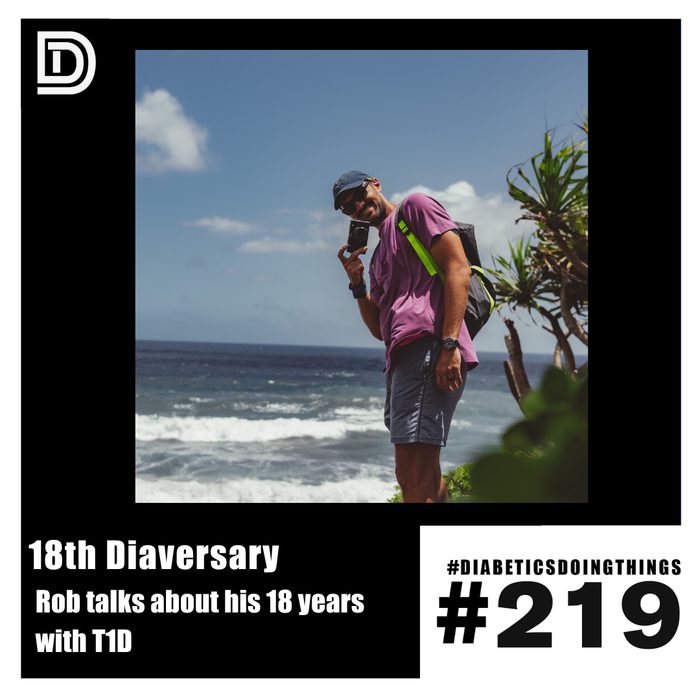
On the anniversary of his type 1 diagnosis, Rob Howe reflects on 18 years with the disease. He describes feeling the Sunday Scaries over the holidays, then reconnecting with his diagnosis story while sharing a family meal with his mom, who recalled preparing that same meal the day they went to urgent care in 2005. Rob talks about what he built since then: a basketball career, marriage, two businesses, and seven years of this podcast. He introduces a framework he calls the dichotomy of diabetes, the idea that the disease holds highs and lows, achievement and struggle, at the same time, and that no single story represents everyone living with it.
Key takeaways
- Rob was diagnosed with type 1 diabetes on January 1, 2005, during Christmas break, and missed no school.
- He calls his new framework the dichotomy of diabetes: you can do anything, but it may not be easy, and sometimes you can't, and that's okay too.
- Rob says diabetes is not a monolith; everyone's day-to-day experience with it is different even when the approach looks the same.
- He's debuting a talk called The Dichotomy of Diabetes on February 25 for JDRF North Carolina in Greensboro, his first keynote since January 2020.
- Rob credits the podcast community for showing him experiences beyond his own, calling it a reciprocal relationship with listeners.
Show notes
On this solo episode, Rob dives into his 18 years of living with Type 1 Diabetes. He talks about:
The Sunday Scaries
Reliving the diagnosis day with his mom on New Year’s
The reciprocal relationship with the listeners and the importance of community
The duality and dichotomy of Diabetes
Celebrating the highs and acknowledging the lows
If you’re a listener, thank you for being along for the ride.
Questions this episode answers
When was Rob Howe diagnosed with type 1 diabetes?
Rob Howe was diagnosed with type 1 diabetes on January 1, 2005, which he calls his diaversary. This episode marks 18 years living with it.
What is Rob Howe's 'dichotomy of diabetes'?
It's a framework Rob introduces in this episode: diabetes has highs and lows, achievement and struggle, at once. You can do anything you want as long as you take care of your diabetes, but taking care of it isn't simple, and some days you can't, and that's okay.
What has Rob Howe accomplished while living with type 1 diabetes?
Since his 2005 diagnosis, Rob played college and professional basketball, married his wife Erica Howe, started two businesses before turning 30, and has hosted the Diabetics Doing Things podcast for about seven years.
Is Rob Howe speaking at any upcoming diabetes events?
Yes. He's delivering a new talk called The Dichotomy of Diabetes on February 25 in Greensboro, North Carolina for JDRF North Carolina, his first keynote since speaking in Dallas and Phoenix in January 2020.
Full transcript Searchable, with timestamps
Rob Howe: Welcome back, pod fans. Very excited to be coming to you in our first official recording of 2023. Hope your new year has been great and you're off to a great start. Recording this on Martin Luther King Day, January 16th, 2023. And the title of today's episode is 18 Years with Diabetes, which is 18th Diaversary, which was on January 1st, just over two weeks ago. and as I've been thinking and noodling on it over the past couple of weeks, I just wanted to take a few minutes and talk about notable things from 18 years of living with diabetes. So why is 18 years notable? Well, when you turn 18 in the United States as a, as like an adult, as a person, you're like legally an adult in the U S you can vote, you can enlist in the military. You can see an R-rated movie. Maybe that's 17. I don't know. It's been a while. When I turned 18, you could buy cigarettes. I think that was a big, the big deal for me and my friends who wanted to be cool smokers, you know, when you're a teenage idiot. But I think for good reason, the legal age for smoking cigarettes and vapes is now 21. And you can also play the lottery. It's funny. Basically, all these things are bad. It's really weird. You can also be tried as an adult in court. So yeah, basically turning 18 is bad, but there are a lot of good things, obviously. And so for me, my diabetes is 18 and I spent my diaversary kind of in a holiday funk. I was overtired and sort of just semi-dreading going back to the day-to-day work. I didn't feel like I had gotten enough rest over the holidays. I had a kind of have a Sunday scaries perpetually. And I know many of you feel that way. So I just wanted to show that I also feel that way. And I think sometimes it's even worse is because this is the life I've designed. I work for myself in both Diabetics Doing Things and at Recreation. And so if my work life is tough, it's my own fault, which is always a tough thing to realize. But my mom came over to my house with my wife and I, and we had our annual family meal, black-eyed peas, cabbage, pork shoulder with cornbread. And honestly, it kind of snapped me out of my funk. I don't know if you guys have those moments where you just like get really charged up and you know, those feelings of dread kind of dissipate and you're able to get into the mode of productivity or whatever you may be chasing. But during that time, during that dinner, you know, my mom talked about, you know, she remembered she was like preparing to make that same meal when she and I went to the hospital, went to the urgent care. and so it's kind of funny you know just reliving that with her and you know i didn't really feel like talking about it that day but now with a little bit of time between us looking back on 18 years and i feel good about it i posted this on on instagram earlier this week a reel about it you know a lot of things kept happening since since 1-1-2005 the world kept turning and i think that's kind of the hardest part for me about grieving your former self is you don't really get time. You kind of have to get back to the day to day. And that's been a pattern in my life that I've noticed. And I didn't even miss any school. It happened over Christmas break, New Year's break. So, you know, two or three days in the hospital and then right back to it. And, you know, so I thought, all right, well, what would my 16 year old self have needed to hear or wanted to hear sitting in that hospital room? So here's kind of what I would have told myself if I would been able to sneak into my hospital room, so to speak, today. You know, I played college in professional basketball. You guys can't hear me talk about anything without talking about that. I met the love of my life and I married her, Erica Howe. I started two businesses before I turned 30. The only thing that's relevant there about like before you turn 30 is like young founder, you know, doing that whole thing. So, you know, I feel like that would have been a thing that I would like to hear. I've traveled all over the world, both playing basketball and just otherwise. And I met thousands of people with diabetes who inspire me daily. And that one really is for you guys. You guys, the listeners really do inspire me. And I think a lot of what I was reflecting on going into this episode, and I'm not going to keep you long. This is going to be a really short pod compared to some of our other interviews, but you guys really do inspire me. And you've given me a new perspective, uh, someone else's perspective prior to starting this podcast. You know, it's been going on seven years now. The only person's experience that I have with diabetes was my own. And then also the experiences that I had met from people who I just run into, uh, or people that I knew in my sort of close personal network. And there were really not that many diverse experiences. We all sort of had the same type of experience. And, you know, I, I wanted to, you know, dig into that because you guys have really helped me and it's not just, you know, me interviewing guests. It's not just going to meetups or going to speak or, you know, getting these opportunities used to work with brands. I mean, you guys really have benefited. You guys have created a lot of benefit in my life from this sort of reciprocal relationship. So this podcasting and speaking and social media, you know, has really taught me that there's a duality of diabetes, that diabetes has a dichotomy, that diabetes is not a monolith. And everyone's experience is as unique as their diabetes. And so we all often talk about, you know, on the online community, well, how many units of insulin would you dose for this amount of carbs? Or how would you approach this exercise situation? And for the most part, everybody's experiences are slightly different. Even if you find somebody who approaches it the same way as you, the way that you react day in, day out, one day to the next is going to be different because that's just how diabetes is. And I think that is the sort of duality and the dichotomy that I'm talking about. And that's been a more recent discovery for me and naming that has been important because I didn't have a name for it before. And I didn't have a way to express that, especially externally to people who don't live with diabetes. But I also wanted a way to address the whole person and as well as the whole community, because, you know, for every person like me, there's, there's 50 other people in different types who maybe don't want to be athletes or maybe don't want to be entrepreneurs who maybe feel more disabled than, uh, than some of the rhetoric that I have, I've shared in the past. And other people like me who I consider like diabetes overachievers, people who want everything with their diabetes, who want to live a life that has everything. And I want to come back to this and just really focus on that duality and that dichotomy. Um, and it comes back to me for the beginning. I've told many times, uh, both on this podcast, on social media, in conferences, the first thing that was told to me by my diabetes care team was that you can do anything you want as long as you take care of your diabetes, that every dream I have for my life is still within reach. Now there's dichotomy even there, right? Because it comes to like, you can X as long as you Y, but Y is not straightforward. And diabetes has too many inputs. It's not a just X plus Y scenario. It's so many things holistically. It goes back to sleep, diet, exercise, hydration, stress, time of day, amount of activity, all these things. And that's just the beginning that duality stands, right? So you can do anything that you want, but there's that sort of caveat there as long as you take care of your diabetes. But within that taking care of your diabetes, it's not just as simple as counting carbs. It's not just as simple as dosing insulin. It's not as simple as testing your blood sugar. There's so many other elements, both social, financial, mental, physical, emotional. All of those things come into your taking care of, and I'm giving the air quotes for those who are listening and on the audio only, air quotes for taking care of your diabetes. So there's so much that goes into that. And that duality, you know, I think over the past few years, especially really since the pandemic has opened me up to what it means to live with a disability. And it's not just positive, positive, positive, positive all the time every day. I think we have to acknowledge that holistic journey of a life with diabetes. So as I continue to live with diabetes in year 18 and beyond, I am more focused than ever on the true duality of diabetes. You can, but it may not be easy. you may not, you maybe cannot. And that's okay too. And I think too often I have skipped over that part where some of us living with diabetes are totally debilitated by the disease and that is okay. And I have space for that. And I want to create awareness and talk to people who have skipped over those people in the past. And really it's thanks to you guys in the community and my time in the community, which is now seven years and counting, I've learned so much about other people's experiences with the same disease that I live with. And I continue to learn because people are different and people have different experiences and have a wealth of knowledge to offer people like me who are curious about the way that people live with diabetes throughout the world. And I also now know that there are people like me who seemingly have everything and have diabetes. And that can often seem like inauthentic or disingenuous and even rage inducing at times. And I understand that as well. It's really my hope to represent people who are overlooked, who may not be high achievers, but are immensely valuable to me and to diabetics doing things. So just because you're not out there doing, whether it's ultra marathons or whether it's starting businesses or whether it's doing these, you know, world changing feats or, uh, you know, really giving of themselves or getting outside the box or really going above and beyond. If you're out there struggling, I know what that's like. I struggle too. Uh, if you feel hopeless, I also feel hopeless at times. If you feel like a badass, a warrior, a champion, et cetera, I feel like that too, but I also don't feel like that sometimes. And I think depending on where my blood sugar is or where, how tired I am or what's going on in my life, either stress-wise or work-wise. Like I may not vibe with being a badass or a warrior or a champion, but I want you to know that you are seen and you are welcome here. And also that none of those feelings are permanent and multiple can be true at the same time. Yeah, you can be whatever you want with diabetes and acknowledge that it's not going to be easy to get there. And there are a lot of problems inherent to the system, systemic challenges that could prevent you from doing that. So I'm kind of debuting this new philosophy, this new perspective in a talk. I'm calling it the dichotomy of diabetes. I'll be delivering that on February 25th in Greensboro, North Carolina for JDRF North Carolina. Thank you guys so much at JDRF North Carolina for bringing me back to the keynote speaking world. It's been since really January, 2020, when I, when I last spoke in Dallas and Phoenix, and I'm really looking forward to getting back. And I'm also looking forward to having that new perspective and sharing that with you and, and knowing that it's not a monolith. It's not a monolith. Diabetes is not a monolith. This what's true for me today may not be true for me six months from now. It may not be true for you today. And being able to acknowledge that both of those things can be true and we can partner forward and move forward together. Even if there's a disagreement, even if we don't feel the same way on the same day. So 18 years with diabetes, what I've learned is that we're all different, that there will be highs, there will be lows. And I'm not just talking about blood sugars. I'm not just talking about emotions. I'm not just talking about energy. I'm not just talking about wins and losses. I'm talking about the whole being there's, there's going to be days where your mind feels like a sunless space. And I've been there and there's going to be days where, uh, like me, I was in my backyard earlier this weekend. Those of you who are my close friends on Instagram, know this, I was digging a ditch and I'll tell you what, there's nothing better for diabetes than digging a ditch. Uh, I basically just didn't even need insulin for hours. I was just crushing through carbs, no worries. Uh, so there's going to be highs, there's going to be lows. And I want to celebrate those with you and be there for you when the ground feels slippery below you and you're having a hard time getting through it. So 18 years with diabetes, still going, still cranking away, still doing all the things. And I'm really looking forward to spending year 18 and 19 going on to 19 with you here on this podcast. We've got a lot of cool stuff. We've got a lot of cool stuff coming up this year and looking forward to sharing it all with you. Peace out and I'll see you next time. Thank you.