

Kelly Wild USA Weightlifting National Champion
Episode summary
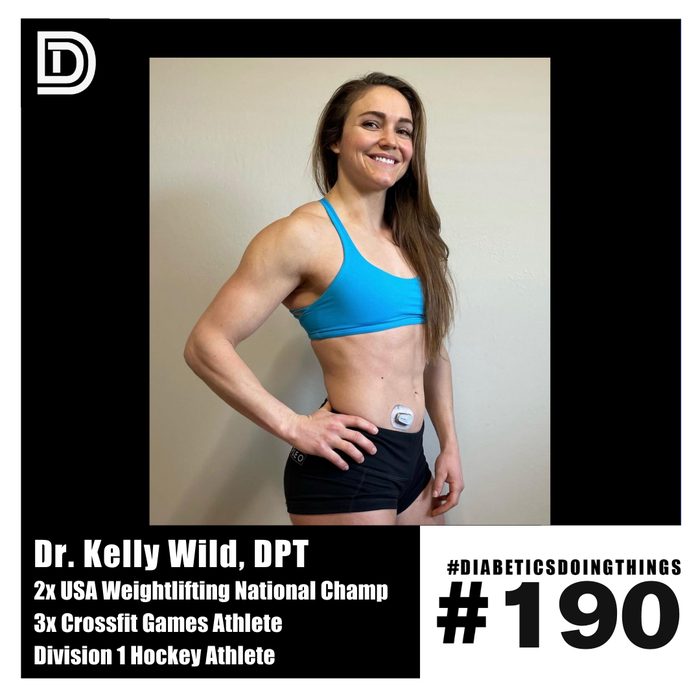
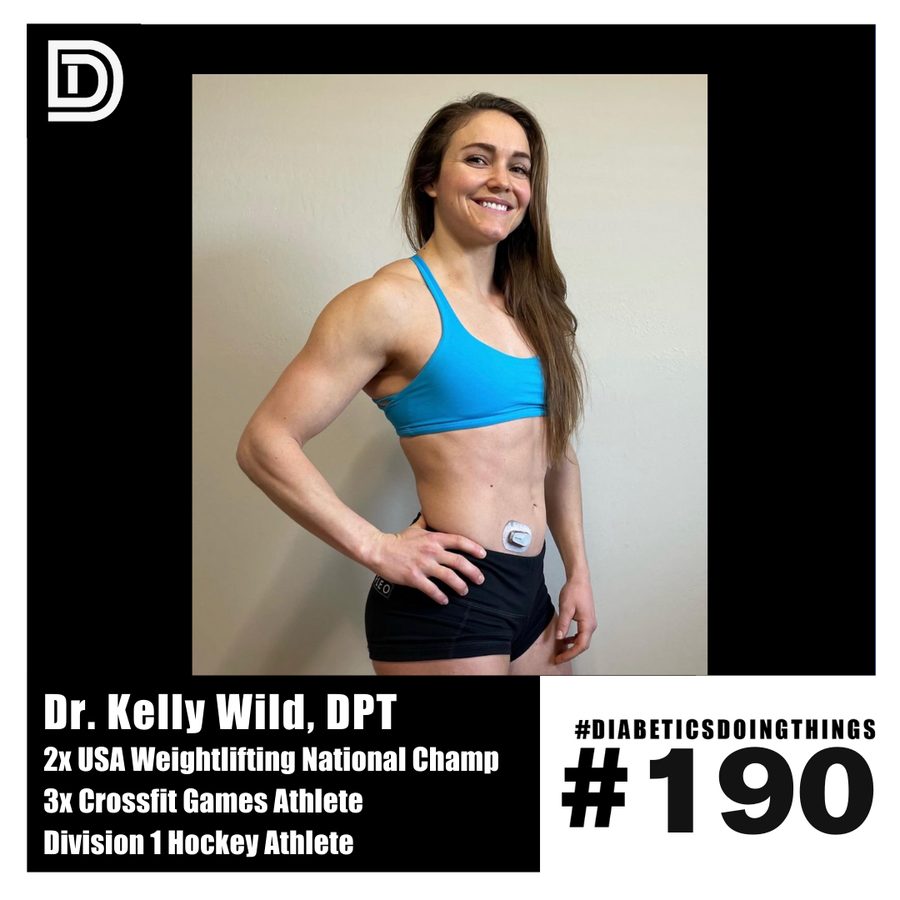
Kelly Wild was diagnosed with type 1 diabetes in 1995 at age five. Her father was diagnosed as an adult and her older sister was diagnosed later in her twenties, so Kelly grew up with diabetes already understood in the house. Her parents moved her from gymnastics into hockey and soccer so her dad could coach and watch her blood sugar. She played Division I hockey at Ohio State, then became a three-time CrossFit Games athlete, and now competes in Olympic weightlifting, ranked second in the US at 59 kilograms. She talks about managing blood sugar during long unpredictable workouts, adrenaline spikes during competition, getting her first CGM before the 2014 CrossFit Games, and representing Team USA at the 2021 Pan Am Games. She also discusses her path to becoming a doctor of physical therapy.
Key takeaways
- Kelly Wild was diagnosed with type 1 diabetes at age five in 1995; her father and older sister were later diagnosed too, so diabetes felt normal at home.
- She switched from gymnastics to hockey and soccer as a kid so her dad could coach her and keep an eye on her blood sugar.
- At the CrossFit Games, Kelly says she ran slightly higher and often skipped eating between events to avoid unpredictable swings during long, unfamiliar workouts.
- She says competition adrenaline reliably spikes her blood sugar during the snatch and then drops it during the clean and jerk, making insulin timing difficult.
- Kelly is ranked No. 2 in the US at 59 kilograms in weightlifting and competed for Team USA at the 2021 Pan Am Games after moving to California to train.
Show notes
We’re back with all new exclusive interviews, our guest this week is Dr. Kelly Wild!
On this episode, Rob and Kelly chat about:
Rob talks about his connection to Kelly via the Olympic movement and USA Weightlifting (where Rob started his marketing career)
Growing up in an environment with Diabetes normalized
Evolving as an athlete through the years in various sports
Playing Hockey, which Rob also did, and becoming a Division 1 Athlete
Competing in the CrossFit Games with Diabetes
Kelly’s Day-Of Crossfit Games Routine and blood sugar management plan
The athleticism of Olympic Weightlifting
Kelly’s journey to becoming a Doctor of Physical Therapy
Rob and Kelly nerd out over mobility, adaptability, functional strength, and its relationship to Diabetes.
More discussion about athletics and sport related to Diabetes and the lessons it teaches you
What’s next for Kelly with Team USA and what its like to represent the USA in international competition
What goes through Kelly’s mind on competition day (hint: she gets nervous too)
Kelly’s Diabetes management leading up to competition
Questions this episode answers
Does Kelly Wild have type 1 diabetes?
Yes. She was diagnosed in 1995 at age five, and her father and older sister also live with type 1 diabetes.
How does Kelly Wild manage blood sugar during CrossFit Games competitions?
She says she went in a bit higher before long or unpredictable events and often avoided eating between events on competition day, since the turnover between events was too short to safely dose and level off.
What sports has Kelly Wild competed in?
She played Division I ice hockey at Ohio State, competed three times at the CrossFit Games, and now competes in Olympic weightlifting for Team USA.
What is Kelly Wild's career outside of athletics?
She is a doctor of physical therapy. She briefly attended dental school before switching to physical therapy.
Full transcript Searchable, with timestamps
Rob Howe: What's up, everybody? Hope your 2022 is rolling off to a great start. We're publishing this show on March 30th, 2022, which is 15 days, almost exactly, just a little over two weeks, when we are launching our first issue of the Diabetics Doing Things zine. we are evolving the podcast a little bit and adding written stories and visuals for people with diabetes by people with diabetes and you will be supporting creators when you see the amazing work that they put together for our first issue of the zine so keep on the lookout for that at diabeticsdoingthings.com and on the diabeticsdoingthings social media channels so the next few interviews will be part of issue one volume one of the zine now this episode we recorded at late 2021 So we've been delayed a little bit in getting it published, but it's with the amazing Kelly Wild, Dr. Kelly Wild. And she is a two-time USA weightlifting national champion. And, you know, that would be amazing on its own. However, she's also a three-time CrossFit Games athlete and was a division one hockey player at Ohio State. So she is an incredible athlete and has been for a number of years. She's also a type 1 diabetic, and not only herself, but her sister and her dad also live with diabetes, type 1 diabetes in their family. Kelly has been a friend of the pod for a long time and even uses the Diabetics Doing Things hashtag quite a bit on Instagram, so Kelly, thank you so much for that. But my favorite part of this interview is how it came to be. My friend from my career before I was an entrepreneur, before I was an agency guy and a content creator, I was an intern with the class of 2011 interns at the United States Olympic Committee and one of my co-interns and roommates, so to speak, was Brandon Penny. And I just wanted to shout out Brandon Penny for connecting us for this interview because it also connects another dot in my professional journey. Not that many of you guys know this because I didn't know hardly any of you back then, but I was an intern. my first internship in the sports marketing world, my first like real job was at USA Weightlifting. So it's a lot of dots getting connected through those Olympic inroads. So lots of backstory and Kelly and I talk a lot about USA Weightlifting. We talk a lot about the Olympic movement and also hockey, which we have a background. There's a lot of different things that we connect on. Most importantly, hip mobility, which if you guys spend any time around me in person to know me is to know that I'm going to get on the floor and roll out my hips. So I tried to take a different angle in this interview. Kelly does a lot of interviews and has done some great podcasts on some other diabetes podcasts, the type 1 lifting podcast she has done. And it was a great episode that she recorded before this one. And so I tried to make this one as different as possible to give you a look at the complete person that is Kelly Wild. Hope you enjoy. Okay. Welcome back to another episode of Diabetics Doing Things. We are telling the amazing stories of people with diabetes from all over the world. I'm very excited to introduce my very special guest for you guys today. Also, you may notice it's just me today. Eritrea is overseas and bringing supplies to people with diabetes over in Egypt and Lebanon. So shout out to her, but it's just going to be me today on the episode. So for all the Eritrea fans, sorry, you can keep fast forwarding, I suppose. But Kelly Wild is my guest and you guys may know her from Instagram. She is an amazing person with diabetes who, whether it's CrossFit, whether it's Division I hockey, whether it's now competing with the Team USA weightlifting team, she is an amazing person with diabetes. I'm so excited that she's
Kelly Wild: here today. Welcome to the show. Thank you so much for having me. That was quite the introduction.
Rob Howe: You know, it's my job to curate a hyped environment. You know, I want, this is a safe space for you, but I want our guests to be as excited as I am to talk to amazing people like you who live with diabetes, but also live beyond that and do so many cool things that we'll talk a lot about today.
Kelly Wild: Yeah. Okay. Well, again, thank you for having me. I'm excited to be here.
Rob Howe: Well, let's just jump right into it then. So I, when I bring somebody like you, who's a very high profile athlete or person who does other interviews, I want to make sure that this interview is different than some of the other ones that you've done. So I was listening to your interview on the type 1 lifting podcast, and I was reading some of the articles that our mutual friend Brandon sent up and shout out to Brandon Penny for setting up this interview today. We'll talk a little bit more about that in the intro later, later when I published the episode, but you were diagnosed with diabetes in 1995. and you were, you are not the only person in your family who lives with type 1 diabetes. So let's talk a little bit about your family's like adjustment and like your actual diagnosis. But then I really want to focus on growing up with type 1 sort of normalized in your, in your house and in your family and, and how you guys, you and your dad and your sister, I believe, uh, also live with type 1 and like what that was like for you to have those relationships early on in your life.
Kelly Wild: yeah so like you said I was it was 1995 so I was five about to be six when I was diagnosed and at the time my dad was also a type 1 diabetic but he hadn't been diagnosed until he was in his late 20s so he he didn't like grow up with it and then same thing with my sister who is she's about four years older than me. She wasn't diagnosed until just a couple of years ago when she was also in her late twenties. So neither of them grew up with it in terms of them actually having diabetes themselves. But I mean, it was definitely way more helpful, like having my dad be a diabetic. And then also my mom is a nurse. So in terms of them, like freaking out with the diagnosis, it wasn't like that. It was just kind of like, okay, this is your life now. So this is, you know, they made it, um, I would say like an easier transition probably than most. And then also getting that diagnosis itself, we jumped on it, or at least they jumped on it pretty quickly. Whereas you hear stories of people like, oh, for months and months, I was like losing weight, feeling really sick. And no one can, it was like one day I was just like really thirsty, had to go to the bathroom a lot. They just checked my blood sugar with my dad's meter. And it was like, oh yeah, you're like 400. So that was good that it didn't, you know, get dragged on for months and months. But then actually like growing up with it from probably age, like uh well so they managed my diabetes themselves obviously for like those first probably like couple years and then probably like middle school and high school I was not great as you can imagine a child with diabetes would be um not great about my management so A1Cs were pretty high for a long time. And then it probably wasn't until college that I started like making the connection. Like, oh, if my blood sugar is really high, I don't play hockey very well. So that was like, what was important to me, like perform, like my athletic performance. I was like, okay, I need to handle my diabetes better so that I can like play hockey better.
Rob Howe: I love that you said that because it, as I'm reading your background and obviously Obviously, we've followed you on Instagram for a while. Like you can look at somebody from afar and say, wow, there's a lot of similarities between us. And I think for me, you talk about when you really focused in on your management, it was because you had something that you wanted on the other side. And that was for me so key early on. I was diagnosed at 16 and was already, you wanted to be a basketball player. And it was framed to diabetes was framed to me as if I take care of this, then I can be the athlete that I want to be. And so it was kind of like a, oh, just a checklist. Let me make sure that my diabetes is taken care of. Then I can be the player that I need to be. And I've, I've told people many times, we could probably go look at my college game tape and say, okay, well, I bet this was a high blood sugar game. I bet this was a blood sugar and range game because I was flat out, not as good. and, and it sounds like that was the same way for you. Do you like, remember, I mean, and you've been an athlete, I assume since you were before even you were five years old. And, um, do you remember like difficult times, like growing up, like participating in team sports or, you know, running into diabetes issues? I think you mentioned on the other podcast that you'd like to run a little bit high just to avoid lows and like all the difficulties that come with that. Uh, where, where did that sort of structure come from?
Kelly Wild: Yeah. Well, so initially before I was diagnosed, I was in gymnastics and so were all of my older sisters. And there was like this track that we were all on, like you move up at levels and then you're traveling more with like the team and stuff like that. And my parents decided it would be better for me to not be in gymnastics and be in a sport that my dad could like basically coach me so he could keep an eye on my blood sugars better. So that's why I switched to hockey and soccer. And he just would coach me and, you know, like I said, be able to monitor everything better. And like, if we did happen to travel, he would be traveling with me versus gymnastics. You were on the road a lot, like just with your teammates and parents didn't go a whole lot on those trips. So that was like the first big thing. I remember being like really upset being pulled out of gymnastics, But now looking back, I'm like, I think I enjoyed hockey a lot more than I ever would have enjoyed gymnastics. So ultimately, that was a good thing. But playing those sports where it's like cardio intensive, so hockey and soccer, I remember pretty much every practice, like having to at least come out for part of it, you know, drink a juice box, sit on the bench for a little bit, wait for my blood sugar to go up. And I was always just like, so annoyed having to sit there and like not be in practice. And a lot of times even in college, so college, we would practice on ice for like two hours. And ultimately by the end of practice, I would be like crashing. And I always felt bad because it was like during our conditioning. And I was like, I promise I'm not like just getting out of this using my diabetes. Like I want to be conditioning.
Rob Howe: I want to, I want to talk about this because this is so relevant to me. I, I missed, I mean, if any of my teammates still listen to this podcast after all these years, shout out to you guys, but I missed a lot of conditioning drills because my blood sugar either was too high or too low. And at the end of practice, like you said, that's usually where you do a lot of that conditioning. And after a couple, you know, suicides or ladders or minute drills, I would pull myself out most of the time because, you know, diabetes makes that stuff really difficult. And I felt a lot of, you know, my teammates never held it against me, like to my face. They were, they were awesome about it, but I felt so much shame and embarrassment, honestly. Did you,
Kelly Wild: did you go through that and how did you deal with it? Oh yeah, exactly the same. And like, I, I liked conditioning like so yeah I I felt like I I mean I could see how other teammates would like use an injury to get out of things like that and I was like I probably like I'm not that person but you can't do anything like if your blood sugar is 40 you can't you can't do anything let alone try to like run for a minute straight or whatever and I mean not all blood sugars are
Rob Howe: created equal either. Sometimes a 40 is like, Oh, let me just pop some gummy bears or some Gatorade and let's get that back in there. And then other times, like I had one the other day where I couldn't even doom scroll social media. I had no energy at all. I was just like sitting down, like it took everything I could to just like be in that position. And so, yeah, it's very difficult.
Kelly Wild: Yeah. So I had a lot of those moments and I don't know if it was the same for you, but then in games, um like adrenaline would spike my blood sugar so by like middle of second definitely third period my blood sugar was high so and i'd be just like insulin insulin insulin and then by like the end of the third period i'd be like tanking and it's like coach wants me to get out there and then i'm low now and it's just like the adrenaline i don't know if it was the same for you but adrenaline
Rob Howe: It absolutely was. And I think in high school, it wasn't as bad, I think, because I was comfortable in that scenario. Like I sort of knew what to expect. And even though there were certain expectations and pressure, it wasn't the same as at the college level where, you know, it's whether it's coaches or whether it's personal expectations or whether it's teammates or just like a big game. I could go from like fasted blood sugars at 80 to 400 with no food or anything just because of that cortisol, adrenaline stress. And you know, they don't, they don't teach you that on day one in the hospital with diabetes, you know, and it's like, am I doing something wrong? Like what's going on here? Right. And I, especially, I think you, you and I are about the same age. Like there, there wasn't as much access to like blogs or social media or websites to ask for help. You're
Kelly Wild: sort of on your own at that point. Right. Yeah. Exactly the same experience like high school. I mean, I guess in general high school, I ran a little bit higher, but I never saw that like adrenaline spike in games that at least that I remember it wasn't, it wasn't until like my senior year of high school when I was on team USA for hockey and we were playing in the world championships tips and I, yeah, I remember distinctly like middle of the game spiking to like three 40. And I just like, I didn't know what I didn't know. I didn't know what was going on.
Rob Howe: Yeah. And I mean, you, you nailed it. Like, you don't, you don't know what you don't know. And at the time as well, you know, CGM access and like technology just was not where it is today where we can now like, you know, have on a phone, I can't imagine how difficult it was. And also like, so there's another story I haven't told very often on this podcast is like, I used to play hockey. I played hockey for six years, ice hockey in Dallas, Texas, because the stars won the Stanley cup in 99. And they built a bunch of rinks around DFW. And so there was one right by my house and I love, I loved hockey. I thought it was so fun, but people who really know hockey know that hockey smells bad. Like it's like hockey gloves stink. You know what I mean? Like they stink and there's really no way around it. You just got to deal with it. And I just can't imagine like having to take a glove off in the middle of the game. Like the steam is coming off your hand cause it's cold in the, in the rink and you got to test your blood sugar like in the middle of a game. Like
Kelly Wild: that had to be just maddeningly frustrating. Um, I don't remember that being a huge problem, but now that you say that, um, like the colder ice rinks, my, my meter wouldn't work, you know, cause it got too cold. So like, I'd have to like wrap my meter in like some sort of like towel or something. Cause that would happen a lot. But in terms of like taking my glove off to check my blood sugar, that wasn't a problem relative to all the other problems.
Rob Howe: Right. It's like a small thing on the scale of like diabetes problems, which are, which are wild. So, all right, we've taken this nice little trip down memory lane. I want to talk about, and you mentioned something about your parents changing you out or taking you out of gymnastics and putting you into a sport that your dad could coach you in. And I'm going to do a little, I'm going to jump to a conclusion here because I'm a podcast host and that's what I do. I want to talk a lot about your career as an athlete, even at the elite level, like you have changed sports multiple times and continue to push to that elite level, which is, I think, rare for many athletes that like puts you in a class all of your own. Does that, does some of that come from a little bit of that understanding early on of like not getting too attached or, you know, for me, I, I, I, when I talk to athletes, I have a real heart for like that sort of death of retirement. You just, your old self sort of dies and you have to reinvent who you are, whether that's with another sport or, you know, with a career, how did, how do you focus on that? Like going from division one hockey and elite level hockey to, um, CrossFit to now USA weightlifting.
Kelly Wild: Yeah. Um, I don't feel like the chain, like the later changes of sport were really influenced by my switching from like gymnastics to hockey and soccer. I think it was just more of like, okay, So once my collegiate hockey career was done, I still had like a desire to do some sort of like competitive athletic endeavor. And I also was not ever someone who is good at just like, I'm just going to go to the gym and like get on the treadmill. Like I needed some sort of like team or community environment that was like somewhat structured. So that's how I got into CrossFit. And that was like a very seamless transition. Like, oh, I can still be like super competitive and, you know, work out every day, but it's something different every day. And I just, I loved it right away. And so that's how I transitioned to CrossFit. And I was lucky enough to be at a really competitive CrossFit gym in Ohio, CrossFit Grandview, who they had sent teams and individuals to the games multiple times. And so they're like, the owner was like, hey, you're going to be on our team this year. And I did not know what that meant at all. Because every CrossFit gym is different. Like some are, you know, not as competitive. And then this was on the other end of the spectrum. So that was perfect for me. So got right into that. So I've been very lucky to have like very competitive environments for CrossFit through the years. And then I had a CrossFit coach who had been into Olympic weightlifting and had competed in it. And he basically like forced me to sign up for Olympic weightlifting meets. And I like hated it and didn't want to do it, but he's like, you're good at it. You have to do it. Cause I like, I've been a team sport athlete my whole life and Olympic weightlifting. It's like, you're on your own, like very much a solo type thing. Yeah. So I'm still kind of that way in that I love training Olympic weightlifting, but hate competing. so I don't know I just like continue to have that like competitive drive and then once once that dies out and I don't want to train quite that hard anymore then I feel like I'll be able to give it up but it is hard especially as I get older like when do I hang it up because like I
Rob Howe: could continue to push but well and like obviously you're having success too right like I think and you're feeling in those competitive environments, you feel at home, it sounds like. And I think that competitiveness doesn't die off. It just gets repurposed many times. And whether that's with family or with career or something else, I think everybody has their own journey. But for you, you get to continue to push and pull and hang clean jerk, snatch your way to, you know, hopefully to, you know, to success on the Olympic weightlifting level. And I think I want to talk a little bit about that, but I don't want to skip the CrossFit games because you were a three-time CrossFit games participant. And for someone with diabetes, that puts you in very, very, very rare territory. Uh, I think that there, even on the men's and the women's side, there's only a few, uh, folks over the years who have even hit that mark. Uh, and also you were like competing and placing at a high level. So what was, What was that like to you, like looking back on that journey, like for a person with diabetes, for someone who's interested in CrossFit and looking to you as like, oh, here's a person with diabetes who's doing this at the highest level. Maybe I can too.
Kelly Wild: Yeah. Looking back, I'm surprised at how much success I had because, I mean, part of the thing that I liked about CrossFit was that it was something different every day, but then that makes diabetes management very challenging because how you manage your blood sugar going into like say the workouts a one rep max you know like back squat and then like a quick three minute you know Fran-type workout that is over like i said in three minutes versus like okay we're doing murph today which is like 60 minutes of continuous cardio it's like this is totally different um but and then on top of that, like getting into competing, the competitions I had done prior to competing at the CrossFit games were usually like two day events, maybe three days with like the old regionals format where the longest workout was probably like a 20 minute workout. So super quick, Like, you know, you don't really need to plan for anything unknown to come up. Then going into the CrossFit games, there are days when you show up and you don't even know what the workout's going to be. And then on top of that, the workouts are a lot longer typically at the CrossFit games. So it's like we had a Murph type workout in my very first CrossFit games. And it was like over, I think it was a 60 minute time cap. And so I'm just like, I, I brought like, I think a fanny pack and I like had a bunch of fruit snacks in there. And I don't even think I brought insulin with me. Oh, and we had a swim event too. That was really long. So like those longer workouts had me pretty stressed out in terms of management. so looking back I think I went into them just a little bit higher with my blood sugar because I'm like if I'm higher I can get through it it's not going to be great but if I'm low like you can't sit out in the middle of a swim event so um that made it very challenging because those weren't workouts that we had done on a regular basis at all um but it's just you just gotta roll with it and plan as best you can. And, you know, with any, anyone with diabetes knows that it's like, you can plan all you want and it's going to go to shit sooner or later. But then on top of that, going into the 2014 CrossFit games, that was when I actually got my first CGM. So that was a game changer for sure. So that, that definitely helped. Cause I would just have my little, like, whatever it's called reader thing with me during those longer workouts except for the swim. Um, so that helped a lot though, getting that right before the games.
Rob Howe: Well, and yeah, you know, like knowledge is power, right? Like you're at least you can move confidently when you know that your blood sugars are, are behaving well without having to rely on your gut instinct. Right. Right. How, like kind of knowing that, and maybe like after you got the CGM, uh, that preparation changed, but leading up to a competition, you know, then, and we can talk a little bit about now, uh, as well, when we get to the Olympic weightlifting, like meet format, like how would you prepare your body and like prepare, you know, with your diabetes, you mentioned your fanny pack with snacks in it. Like, how would you prepare for a CrossFit games competition?
Kelly Wild: Um, in terms of like the day of, or like training.
Rob Howe: Yeah, I suppose more like day of like the, the training cycle. I think obviously like you would, you would go through probably what, six weeks or more of like a training cycle to prepare your body to make sure that you were physically ready?
Kelly Wild: Yeah. Yeah. Okay. So like day of, um, because so that was hard because I, so I would definitely eat breakfast day of because I knew when that first event was going to be. So I, I would eat, you know, about three hours in advance, get my short acting in, have it pretty much leveled off by the time we were competing. And then I really wouldn't eat for the rest of the day because the turnover between like event one to event two to typically there were, you know, three or four events in a day was too short where I would feel, I wouldn't feel comfortable eating something, doing more insulin, and then feeling like it was going to like level off. So I really wouldn't eat at all during the day and then just wait till the events were over for the day to eat again. So that also made it hard. Cause I do remember being like hungry going into events, but it's like, I would rather be hungry, but sitting at a good blood sugar than have eaten something and like seeing spikes or drops or whatever. So that's always challenging.
Rob Howe: Insulin timing is difficult and it stays in your system for a while. And, you know, like minimizing those variables, especially on competition day, I think is, uh, a good way. So it's a way that I've done it as well, like during multiple day, like basketball tournaments or something is the best way to do it is to get steady, stay steady as much as you can. But yeah, like you said, you could probably see some of your teammates like eating and kind of like refilling their energy stores. And you're like, well, well, can't do that today.
Kelly Wild: Right. Exactly. There's a lot of that. So I feel like I've gotten pretty good at working out in a somewhat fasted state.
Rob Howe: Yeah. I, I like when I go, even now it's like just going to play like a rec league or something. I like to play hungry just like, cause there's less to think about, but also I have that, like, I just get more, it helps me stay motivated or stay angry. I could be, I could be hangry and like harder. I don't know.
Kelly Wild: Yeah, definitely. I would definitely choose being hungry with this steady blood sugar than the other way around for sure.
Rob Howe: So let's talk a little bit about like after, after your CrossFit games and like you mentioned that your coach, uh, had basically forced you into like Olympic competition. How did you like go going from that first taste of like, uh, Olympic weightlifting competition, which for those who are listening and aren't as familiar with Olympic weightlifting, it's essentially, and like, correct me if I, if I say anything out of bounds here, although I was an Olympic weightlifting intern in the summer of 2010. So I'm, I'm a, you guys who are listeners, if that's a big shock to you. Uh, I've, I've got more surprises up my sleeve, but you basically have weight classes, kilogram weight classes, and they generally are like five kilos apart each. And they go similar to like a fighter where you go like lightweight and flyweight all the way up to heavyweights. Um, and you do basically two lifts. You, you do the clean and jerk and you do the snatch and you get a certain number of attempts and then you take your two biggest attempts. And that is your, that is your meat basically. Is that, does that sound right?
Kelly Wild: Yep. That was perfect.
Rob Howe: Look at me go. Shout out to my trainers at USA Waylifting who taught me the right way. So that's a legacy right there. So for you, talk about how did your first competition go and training? And you mentioned loving team sports and identifying and really resonating with the team environment, but then going to that solo performance, what was that like?
Kelly Wild: Yeah. Um, I honestly can't remember my first meet, but it's pretty consistently like, I'm very nervous. It's a fight or flight that kicks in very strongly when you're about to walk out onto the platform for like your first attempt. Um, but I like, I'm with CrossFit. I always love the barbell movement. So like snatch and clean and jerk, those are barbell lifts. and you're just trying to lift as much as you can. So the transition was easy in that sense and that I liked training those. And they're also very technical. So I like appreciate how challenging they are and you can do, you could snatch, you know, thousands of times and it still isn't going to be perfect. So I appreciate that aspect of Olympic weightlifting, which is different from like power lifting, I think, which is deadlift squat bench press, where it's a lot more just like pure strength, like just do it. Whereas snatch clean jerk,
Rob Howe: you got to like be a little more technical. And you can say really more athletic, right? You see, you know, some of the best, uh, some of the best Olympic weightlifters do not look like physically imposing people, right? They're in some cases, and like yourself, you are a small person, uh, relatively speaking, you're 59 kilos, uh, which is what 125 ish pounds, uh, on competition. So, you know, you passing you on the street, you may not know like, Oh, that you wouldn't say immediately that that person is a professional weightlifter or an Olympic weightlifter, but your ability to manipulate the bar and, you know, athletically move and technical from a technical perspective, uh, you know, you for sure can snatch more than I can as a 225 pound man with super long limbs. My, my, uh, my physics are off when it comes to Olympic.
Kelly Wild: Yeah. Yeah, definitely. You, you look at some people, even at like the high level, like of Olympic weightlifting and you're like, there's no way like, and they just, they, they have the technique down. That's just like, they can do it with seemingly a body that is not athletic. So I'm, I continue to be impressed by a lot of people in the sport. It's also impressive.
Rob Howe: I think like when you see them do athletic feats or just like on Instagram stories or something, like jump over a 60 inch box, like all flat footed, you know, like the explosiveness that Olympic weightlifting athletes have in their body. They are just really, it's amazing. The human body is incredibly resilient and it adapts, uh, you know, so much. It's very cool. And you also know more about this because you're not just an amazing athlete, but you're also a doctor of physical therapy. I am. Yeah. Where did like, you know, we've talked about like your athletic career. is that what drew you to that science and like learning more about your body and being
Kelly Wild: more in tune with that? Uh, like talk about that a little bit. Yeah. So actually I went to, so after undergrad, I did a year of dental school. I was going to become a dentist and that was like plan from, you know, 15 years ago, like since I was a little kid, because my dad's a dentist, two of my older sisters are done it like the dentists in my family are like it's it's like what you do so I had did a year of dental school um I hated it unfortunately I hated it um but while I was in that year of dental school I was also doing CrossFit and working with this chiropractor who he was helping me with a couple different injuries um and it was like through working with him a little bit and also hitting dental school. And like, we, I came up with physical therapy because I was like, oh, I should be like a chiropractor because I always like felt better after seeing him. I liked going to see him. Like I always like mentally felt better after being there. And he was the one who was like, no, you should, you should go like the physical therapy route. If you're thinking about like that sort of like physical medicine. Um, and so I made the switch to PT and now looking back, it's like, okay, that totally makes sense in terms of like my lifestyle and how I just like love all things fitness. So it's, it fits perfectly like being a physical therapist. So I wish I would have recognized that sooner, like an undergrad, but just had to take a couple of detours here and there, but eventually.
Rob Howe: Progress is not linear always, right? You got to like go and try things and experiment and go up and down, uh, before you find like where you want to stick.
Kelly Wild: Yeah.
Rob Howe: So, uh, you've talked a little bit about this as well on the, on the type 1 lifting podcast. Um, but I think it's important here as well, because for me, it's close to my heart because I am a big mobility guru. Um, I, because I was a basketball player and I, you know, you look at me, I am not the most mobile. Like I was not, I didn't come out of the womb. I didn't evolve to be super mobile. Uh, I've got like stiff ankles and knees and hips or, and I sit down all the time. And so I can hunch over. So for me, like a few years ago, I was just in pain all the time. And I went to go see a friend who was a chiropractor, right. It was a chiropractor then, but they, uh, not your traditional chiropractor. It was really like a movement specialist. And he was like, Hey man, you're just not very strong in these places. you just need to work on your mobility and you come, you can come here and we'll take your money. But what you really need to do is do these exercises on a regular basis. And there's a lot of hip rotation and 90, 90 and shoulder rotation, ankle, ankle mobility. And he's like, just do these every day for a year. And you know, you'll probably get better, you know, for me, cause I, I'm a person who loves, you know, in basketball, I love scoring points. I love doing the fun stuff and mobility and warming up. And we can talk a little bit about technical aspects of weightlifting is not super sexy and exciting. Nobody gets hyped up to see you, you know, rotate your hip a little bit further today than you did yesterday. Um, so I guess talk a little bit about like what, what we don't know as regular as us sort of plebeians don't really understand about mobility and you know, how you've taken that and also applied it to your training as a weightlifter.
Kelly Wild: Oh yeah, definitely. I mean, I'm in the same boat, like looking back in like all of us sports growing up or like in college when the like strength and conditioning coach would be like, Hey, we're going to like foam roll and stretch. And we're all just like, why are we doing this? So like, I am, I'm no different from the average person being like, stretching and doing these little exercises is not fun and it's tedious. And I get that. And so I feel like being a good physical therapist is being able to like have the patient clearly see why this specific exercise or stretch is going to help them with the things that they want to do. So you have to like tie it to their like daily, like functional lives or activities and not just be like your lateral hip is weak. So do this exercise. It's like, why would I do this? Like, so you just have to make it apply to how, like, to what's important in their life. So whether it's like, I need to be able to like pick up my, you know, 15 pound grandson without having back pain. It's like, okay, this is why we're going to do this exercise. So it's, so I, yeah, it's, it's just about making that connection for people to make it meaningful.
Rob Howe: Not to immediately tie everything back to diabetes, but I think that there's so much that can be learned from that as well as like your, your diabetes care and your diabetes management really can start from what you want to be able to do. And, you know, we've been very, you know, vocal about like diabetes doesn't have to stop you, but that doesn't mean it's not difficult. That doesn't mean it doesn't take active daily decision making. Um, and you know, some people I think are better set up for that than others. And I think that athletics and sports makes us better at failure. Uh, so that when we have a higher, low blood sugar, we, we know it's not the end of the world and we don't have to get super hung up on it. We can continue to push forward and continue to get better. Um, but yeah, I don't know. That's why, you know, to me, sports, whether it teaches you so many lessons, whether it's, uh, working on your mobility, uh, or working on your diabetes, uh, I think it's just such a valuable experience for, for everybody.
Kelly Wild: Yeah, totally.
Rob Howe: But now, okay, so I've gone down my rabbit trail. I've asked you, I've asked the mobility questions. You currently are ranked number two in the United States in weightlifting in the 59 kilo category. You competed in the Pan Am Games, which I believe was your first international competition earlier this month, November 2021.
Kelly Wild: Yes.
Rob Howe: What was it like to put on the USA jersey, represent the country in your Pan Am Games? because Pan Am is like number two to the Olympics. It's like a big, it's a big deal. It's a, it's a huge, it's a huge international sporting event. And I imagine like putting on that USA Jersey,
Kelly Wild: you know, felt some type of way. Yeah, definitely. It was something that I had been working for, for a long time. And that's like part of the reason why I moved from Minnesota to California was to like train at California Strength, be a part of this weightlifting team, be coached by the best and like get to that international stage. So it was very like surreal and happened very quickly. And it was, it was, it was great because like I had competed for team USA in ice hockey years ago. So it was just like, I don't know. Yeah. It was exciting to like get back to that point again. And I was initially an alternate for Pan Ams. And so like, I think I got the heads up that I was then on the team about six weeks before that competition date. So it was very quick, like, okay, get your mind and your body right. And like, this is happening. so the the fight or flight leading up to it was very strong i was like i you know nerves not like feeling like i wasn't ready and it's just like you're you're you're never gonna feel like you're 100 ready so it's like just just do it it's like you don't know if you're gonna have another
Rob Howe: opportunity so gotta make the most of it and like is that something that you've just learned over the years because i think you know i think a lot of us can get a little bit of like analysis paralysis. When we get into that, we can kind of freeze or we can maybe overthink. And, you know, to be told six weeks before competition that you're going to be representing, you know, Team USA in a international competition. I mean, there's your, you know, like you said, the fight or flight is triggered. You're, you're going, but you know, you were able to step up and still, you know, compete solidly in your first event. Like how do you, what's your self-talk like during that six weeks or when that doubt does creep in, like, how do you, how do you overcome that?
Kelly Wild: Uh, you just, that's a good question. I have to say I'm very hard on myself. I'm not going to lie and be like, I just tell myself it's going to be fine. Cause usually I'm like freaking out for those six weeks. Um, so yeah, I, I definitely just have learned to like trust my strength. Um, Um, and I, for whatever reason, have a pretty good ability come game day to kind of like flip a switch. And even though I am scared, like a lot of times I can put up decent numbers. Um, this training cycle leading up to Pan Ams was different though, because I hurt my hip pretty badly and that I couldn't squat or take full lifts or about for the month leading up for four weeks leading up. to Pan Am. So this was probably the weakest I'd ever been going into a competition. So that mentally was very challenging because it was like, we were going back and forth up until probably like a week and a half to two weeks before the competition. Like, are we, should I even go? Because I wasn't taking any, any lifts that were like anywhere near what I needed to hit in competition. So that made it more challenging. So once we decided I was going to go for sure, it was like, okay, just focus on like these rehab pieces and just try to get things moving as, as good as they could. So it was kind of like a distraction piece, um, that I didn't usually have or don't normally have. Um, but yeah, it's, it's a lot of panicking and then just, just trying to push the training, just, just trust the training and trying to shut my brain off as much as possible.
Rob Howe: Well, thank you for sharing that because I think it's so easy for us as spectators to look at people like yourselves and just, you know, from a place of judgment of our own selves of like, well, I'm feeling nervous when I do this, but you know, I know Kelly wild's out there. Like if she can do this, then I can do whatever is in front of me. And I think it's so helpful to just normalize being nervous before a big competition and like normalize some of that self-doubt and imposter syndrome that even the best athletes in the world, the best performers are going through those same things. And yeah, that gives me a little bit of extra, like I can take a deep breath and be like, Oh yeah, you know what? These other people are nervous too. When there's big stuff in front of you, I think that's just, that's just a sign that you care about it as well, that you really do want to represent yourself well. So, uh, yeah, thank you for being so like forthcoming and honest about that. I also want to know, like from a diabetes perspective, um, as you're training for an Olympic competition, how, how has, how does your diabetes management change? Like whether it's on different cycles or leading up to competition or competition day, is it the same, relatively the same as CrossFit or do you have a different approach now? Or has that changed over, uh, you know, the years since you've switched from CrossFit to weightlifting?
Kelly Wild: Yeah. So leading up to an, to a competition for weightlifting, um, my, my, I feel like my diabetes management actually gets a little bit easier to control because my diet gets so strict and very regimented. So it's like, I'm eating the same thing every day. I'm training at the same time every day, like everything is very structured and redundant day to day. So that makes, um, my numbers a lot more predictable. Um, and so that, so that actually helps. So like being a 59 kilo weightlifter, it's like, I got to cut a little bit of weight before every event. It's like, that's why my diet gets more strict. Um, which like ultimately makes my diabetes management easier. But then competition day, it gets tricky because you weigh in two hours before the event. Right. So you have to make weight. So usually I'm not eating before weigh-ins. So that like two hour, that two hour window. So once you weigh in, that's when I'm like doing insulin eating right away. Whereas normally I would like to be doing that in that short acting insulin, like three hours before training. Um, so it just like, it's a tighter window to make sure I'm doing the right amount of insulin. Um, because then correcting for it, it's just like everything, just that, that window of, or that like the, the window of error. Yeah. Just shortened it's it's tighter i guess so that makes it harder for sure um and then adrenaline again like has come to bite me in the ass multiple times with these events because i'll usually go into snatching actually a little bit low um like i've snatched in like the 50s and 60s before and done fine because it's just like it's not cardio so it's like okay one lift i can do it and be fine but then having not like eaten really anything by clean and jerks I'm getting into like the 200s and then with with um this international event again because maybe I was feeling more stress or more pressure it got up to like the 240s 250s um and then by that point it's like you're not going to come down fast enough and like recover fast enough right then clean and jerk to your best ability. So my best meets have been like local meets where it's low stress, where I don't have that same spike. Like my best meet was a virtual meet where we just did it at my local gym. Right. It was very like, it was a relaxed setting relative to, you know, being in Ecuador for team USA. So it's a little bit frustrating because like I knew the adrenaline spike was coming. I did insulin during snatches. Obviously didn't do enough, but on the flip side, I've had times where I've done insulin after snatching and then it like starts coming down pretty quickly. So then it's like, you don't want to clean and jerk when you're, you know, in the sixties, fifties with that down arrow. So I didn't want to overcorrect.
Rob Howe: um so i ended up under correcting it's it's so cool to me and obviously it's frustrating to you and i i know i feel the frustration and i know it all too well but i think people listening to this episode are gonna be like you know what if kelly wilde and team usa don't have it all figured out it's okay for me not to have it all figured out too and uh i don't know that just brings me i just think that those types of stories and like sharing that kind of openness and vulnerability about what it's like to be a person with diabetes is so crucial to continuing to try. And I think that's, you know, what I hope people will take is like, just because the conditions aren't perfect, doesn't mean that you stopped on clean and jerk and just said, no, what, no, thanks still push through and give
Kelly Wild: it your best shot. Right. Yeah. I will let you know if I ever have it figured out, please do,
Rob Howe: please do vice versa. Yes. Yes, absolutely. It's a two way street. Yeah. With that in mind, um, you know, going back and, and, you know, looking about whatever, 26 years or so of living with diabetes, is there something that you would go back and tell yourself now, like if you could go back and tell yourself, whether it's in college, when you kind of really dialed in on your diabetes management or when you were five or when you were 15 or, you know, at a low point in your life with diabetes? Is there a particular thing that you would tell your younger self now?
Kelly Wild: That is a good question. Um, I mean, I guess as a, if I could tell my younger self that, Hey, this is important. It's going to make a difference for your, you know, quality of life and athletic performance and all that, I would. But at the same time, I feel like I was told that at that age. So it's just like my brain wasn't fully developed at that point. So many people told me that and it still, you know, didn't quite resonate at, you know, age 13. So I don't know. That's, that's a hard question because I don't want to like have any regrets about what I did. Sure. Well, I think it's important. And like what you
Rob Howe: said, I was diagnosed at 16 when I knew everything and thought I was the smartest person in the world. And like, I'm sure people gave me tons of great advice that just went in one ear and out the other. And I just, that point in my life, I was not ready to hear it. And, you know, wasn't, wasn't going to be able to, no matter who told it to me, wasn't going to be able to apply it. And also to like, not look back with judgment on those things. I think we can only be who we are at those times. And, um, you know, obviously you have had an awesome career thus far, and we're super excited to watch you continue to, uh, you know, to pull and lift and snatch and clean and jerk, uh, your way, hopefully to the, uh, to the Olympic games. Oh, well, thank you so much. I hope to not let you guys down. Oh, well you have already done so much that we could never be let down. And, uh, you know, with that, I'd love, you know, for any of our listeners who don't follow you already, uh, like plug yourself, where can we find you? Uh, I guess I would say I'm most
Kelly Wild: active on Instagram. I'm 31, so I'm not like hip to the Tik TOK or anything, but I'm at @kellywild8 on Instagram. Um, yeah, that's pretty much where I'm only doing anything of, I don't know, anything current is on Instagram for me. I totally relate to the TikTok piece. It's,
Rob Howe: uh, nobody wants to see me at 33 dancing. Uh, but you know, it's like, that's where, that's where everything's going. So, Hey, you know what you might, you guys might see me doing some TikToks here pretty soon. So that'll be, Oh, just, I don't know. Pray for me. If you, if you pray out there, pray for me that I, that I figured that out. Um, but Kelly, it was so great to spend some time with you today, especially, you know, this, this week coming into the Thanksgiving holiday. Thank you so much for the time and really wishing you the best. And thank you for also just being a diabetic, doing things and tagging us and, you know, just being an awesome member of the community. It was a pleasure to speak with you today. Well, thank you so much
Kelly Wild: for having me. This was great. I really appreciate your time and happy holidays.
About Kelly
Kelly Wild is a two-time USA Weightlifting national champion, a three-time CrossFit Games athlete, and a former Division I hockey player at Ohio State. She has lived with type 1 diabetes since 1995 and works as a doctor of physical therapy.