

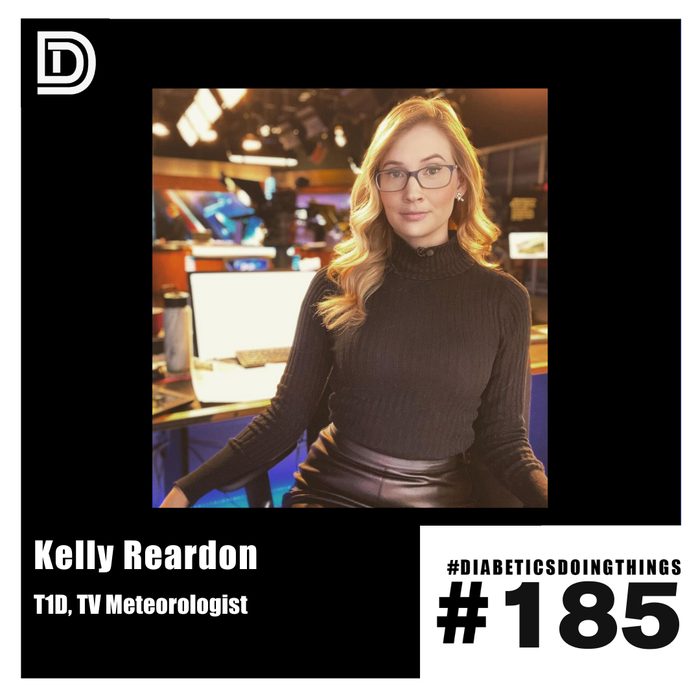
TV Meteorologist Kelly Reardon

Episode summary
Kelly Reardon is a TV meteorologist in western Massachusetts who was diagnosed with type 1 diabetes at 18, two months into her freshman year of college. A college nurse caught it after doctors and an eye exam missed the warning signs for weeks. Kelly talks about adjusting to diabetes away from home, telling professors and coworkers, and wearing her CGM visibly on air, which led viewers and other T1D parents to reach out to her. She covers managing low blood sugar during live broadcasts, her Medtronic 770G pump and its auto mode, and using glucagon. Kelly also opens up about her depression diagnosis, how her fiance supports her, and the strange and funny DMs she gets as a woman on TV.
Key takeaways
- Kelly Reardon wasn't diagnosed with type 1 diabetes until two months into her freshman year of college, after doctors and an eye doctor missed the signs for weeks.
- Kelly says wearing her CGM visibly during a live broadcast and posting about it went viral, and it led her coworkers to fully understand and support her diabetes at work.
- Kelly keeps lows off the air by setting her CGM low alert higher, at 80, and keeping a bag of Welch's fruit snacks at her desk.
- Kelly says her fiance is her biggest support for her diabetes-related depression because he has seen her lows and highs firsthand.
- Kelly remembers diabetes symptoms using what she calls the three polys: polyuria, polyphagia, and polydipsia.
Show notes
This week’s guest is Kelly Reardon, T1D and TV Meteorologist (@kellyrweather on Instagram).
On this episode, Rob, Eritrea and Kelly discuss:
Kelly’s Diganosis as a college Freshman away from home
Challenges with adjusting to Diabetes as an adult
Eritrea talks about “The Three Polys” in Diabetes diagnosis
Glucagon discussion
Conversation about Diabetes Technology and Smart Guard Auto Mode from Medtronic
Incredible conversation about Diabetes and Mental Health
A spicy segment called “Kelly reads the DMs” about being a woman on the internet
Questions this episode answers
How was Kelly Reardon diagnosed with type 1 diabetes?
Kelly was diagnosed at 18, two months into her freshman year of college in Florida. She chalked up thirst, fatigue, and hunger to being a new college student, and an eye doctor blamed her blurry vision on stress before a college nurse sent her to get checked and she was diagnosed with type 1.
How does Kelly Reardon manage low blood sugar while on live TV?
She sets her CGM low alert higher, at 80 instead of 65, keeps a bag of Welch's fruit snacks at her desk, and can ask her producer to push her weather segment back a few minutes if she needs more time. The lowest she has gone on air is 52.
What insulin pump does Kelly Reardon use?
Kelly wears a Medtronic 770G pump with auto mode, which she says took a couple of months to learn her patterns but now has her waking up around 120 most mornings and sleeping through the night with far fewer lows.
Does Kelly Reardon talk about mental health and diabetes?
Yes. Kelly says she is diagnosed with depression and sees a doctor for it, and that diabetes is her number one stressor. She credits her fiance as her biggest support because he has lived with her lows and highs directly.
Full transcript Searchable, with timestamps
Rob Howe: What's going on, everybody? Welcome back to another episode of Diabetics Doing Things. We are back with more. We're coming back in the new year as well. We've got a few other December interviews that we recorded, some big ones coming up, so be sure to keep it locked here on Diabetics Doing Things. Today's interview is extremely, extremely fun. Kelly Reardon joins the show, and she is a TV meteorologist and type 1 diabetic. She lives in Massachusetts, and you can follow her on her Instagram, kellyrweather. She does some amazing reels about working on TV as a person with diabetes, some awesome diabetes content, and just some funny behind-the-scenes news content as well. She's one of my favorite new Instagram friends in 2021, so I'm really excited to have her on the show. We talk a lot about her diagnosis. We talk about diabetes camp. She was diagnosed as an adult, so kind of missing out on some of that diabetes camp experience. We talk about glucagon. We talk about Medtronic technology that Kelly wears. And we also talk about mental health. And Kelly opens up at about the 40-minute mark of this interview, an awesome, awesome, very open conversation about diabetes and mental health. So highly recommend that you stick around for that portion of the interview. If you want to follow her, check her out on Instagram at kellyrweather. And with that, I will leave it up to the crew, me, Eritrea, and Kelly for Kelly Reardon's Diabetics Doing Things interview. Diabetics Doing TV Meteorology. What's up? What's up? Welcome back to another episode of Diabetics Doing Things. We're telling the amazing stories of people with diabetes from all over the world. Very special guest today. If you're in the Northeast, you might see her more than we do, but her name is Kelly Reardon and she is a weather woman. Welcome to the show. Hi, thanks for having me. So excited to have you here. I followed you on social a few months ago and I love your content. It's very funny. And also you are, you do fashion content and like outfit of the day content. So like for you, me and Eritrea, this is like, this is fam now. Diabetes plus daily fashion content. We love it. Styling diabetes. Styling. Yeah. So let's, let's just get to know you, like tell us a little bit more about yourself and then we can kind of start with diabetes from your diagnosis story but like
Kelly Reardon: tell us a little bit about yourself yeah so uh if you don't follow me on instagram or facebook or twitter facebook twitter i really keep for work so it's all really boring other stuff but um instagram like uh i'm a meteorologist for a station tv station in western massachusetts i never planned on getting in tv when i was studying meteorology in college i like would rather die than be on camera. And I always wanted to be behind camera. And then, you know, graduation time's coming and I only had one job offer and I was like, okay, well, I got student lots, I got to take it. And it was actually for like a digital meteorology job at a news website in Ohio, which is basically just the same thing, but you're just like writing stories and doing cool stuff. And then I started doing these really, what I think were corny and awful YouTube videos. You can find them pretty easily if you just type in my name on YouTube. So if you want a good laugh, you can look at that. But I just started talking about weekend weather and not like two weeks after I started doing that, I had a station in Massachusetts contact me and they were like, hey, have you ever thought about going on TV? And the main reason I did it is because that happened to be the town that I was born in. All my family was living there. My grandparents, like everyone was living there. It was a super weird coincidence. I'm like, okay, like, well, that's not like a sign for something cool. I got to take it, even if I was planning on doing this. So it was a rough start. It wasn't great. I first started, it was, you know, there was a learning curve vibrating here. um and uh but yeah so I've been back home I'm near my family and now I do tv and um I know like being type 1 and you know being on tv I really want to talk about it and you know it's very misunderstood disease so yeah I did the JDRF one walk like two years ago I think last year was canceled because you know everything was canceled but um that was really fun because there's a lot of young type ones who watched me on tv that I wasn't aware of that came up to me and talked
Rob Howe: about it. So, oh man, like, let's not, let's like, just start there. Like what that, what's that like to obviously like people in your area, like they see you a lot. So, uh, and like, I don't know how you've discussed or, yeah, you know, obviously like you probably talked a little bit about having
Kelly Reardon: diabetes on air potentially. Right. So on the air, I don't really have much time to talk about it. It's definitely an off air type of thing. But, um, the first time this is back when I was on freestyle libre like uh two years ago maybe three years ago now um the first day i wore it like on the air visible it was like a really hot day so i was wearing like sleeveless dress and you could just see this little white dot and i took a photo of it or the screenshot of me on tv and i just like posted on facebook and twitter was just like hey if you guys were watching today and you wondered what this was you know i'm type 1 this thing is a continuous glucose monitor makes my life so much easier. I don't have to prick my fingers. And it's really great. And the photo like went viral and it got like thousands of likes and retweets and my boss somehow picked up on it. And he was like, people think you're great. And I was like, I wasn't expecting that of a response, but I was like, okay, like people dig this, I guess it's okay. Um, so yeah, occasionally now that it's like a cold season, you probably won't see my sister that much because I'm going to be like dressed for, but yeah, like anytime I have visible on TV, I at least get like one or two messages of people being like, Hey, that's so cool. And they take a photo of their own and they like send it to me. So that's really fun. They feel seen. You help people feel seen by them. Yeah. It's awesome to see like yourself on TV. It's like, Oh, there's someone I can relate
Rob Howe: to is doing something really cool. Right. And like, you're just, you're just being you, you know, you don't you're you're doing doing your job like doing like it's making it seem normal like there's nothing different about you except for you know seeing a sensor uh occasionally and sometimes you don't even do that so it's like wow like this person had like i can connect with them in a different way i think it just opens up opportunities for people to like see themselves in positions that
Kelly Reardon: maybe they hadn't before yeah i think it's cool because like i do it on tv without making like a big fuss about it so people realize like this is nothing you know out of the norm this is totally a normal thing like it should be completely normalized hopefully one day stuff like that like won't even phase people you know like hey there are tons of medical devices out there you know not just IBD stuff um so trying to normalize it you know make it seem like it's a daily thing
Rob Howe: like oh there's Kelly's you know CGM yeah right like it's just I think again like normalizing it and seeing like I think so often we're there's like two sides of the narrative right there's this like people think that it's this super debilitating like and it is a disability and it is debilitating and it is a it is a burden right but like there's this very kind of negative approach and then there's also like the hyper positive like very overachiever style I think I'm I'm very guilty of seeing myself in that way as well and seeing myself as like oh well I'm not Sebastian Sasseville riding my bike across Canada so you know I must not be like doing enough you know? Um, but it's such a nice balance to be able to see somebody who's like, wow, like, yeah, like there's a little girl watching TV somewhere or girls and guys like watching TV and saying, oh, well, I could see myself doing this, like even with my diabetes. And so I don't know, it's such a cool, like simple, but really impactful thing. Yeah. Yeah. I didn't realize how
Kelly Reardon: impactful it would be until again, I posted that photo and I got, uh, there was a lot of, uh, T1D parents that reached out to me and they were like, this is so cool. Like, you know, I'm new to this. I wasn't sure if my child was ever going to be limited in anything they wanted to do, but like, Hey, if you can do live television, what else you can do? Anything, you know? So, um, that was really nice too. Not even just the type 1 diabetics reaching out with the parents, like somewhat feeling relieved that you can just, you know, you can do whatever
Rob Howe: you want. And big shout out to all the T1D parents that listened to our show, uh, and have listened to our show over the years. You guys are awesome. Uh, and yeah, it's just so great to have like the sort of support system around and like the care team, like it just takes many, it takes many forms. So big shout out to everybody who's acting or acting like, or thinking like, or being a pancreas for somebody else out there. You're doing great work. So let's talk a little bit about your diagnosis story, because I know like many guests on our show, you had a little bit of a misdiagnosis
Kelly Reardon: experience upfront. Yeah. So that was probably just because of my age. You know, I was 17. I just turned 18 actually. Um, and I was in college and this was in Florida and I'm from New England. Um, so my sin, my cat's doing some bad things over there. Um, so a lot of my symptoms, I chalked up to being a freshman in college, like, Oh, I'm thirsty all the time. Well, I'm sweating a lot. You know, I'm from New England. I'm not used to the heat. That's normal. I'm just drinking a lot. I'm tired all the time. What college freshman is not tired all the time. You know, I'm eating a lot, but I always have eaten a lot. I'm a hungry gal. So like, you know, everything had an excuse for what it seems like. And I actually went into the nurse for a kidney infection. I woke up and I was like bending over in pain. My back hurt really, really bad. And that's how I ended up being diagnosed. But what's funny is two weeks before that, I woke up not completely blind, but like everything had a complete blur. What looked like a blurry filter over it. Like if my mom was two feet away from me, I'd barely be able to tell it was her. I immediately went to an eye doctor and they like gave me glasses and told me I was stressed.
Rob Howe: Wow.
Kelly Reardon: Like, yeah. So that was pretty amazing. Yeah. So the nurse diagnosed me, but she, you know, just looking at my age, she's like, oh, like you're probably type 2, but, you know, maybe you should go to the hospital in a few days to get diagnosed. I probably should have been, you know, rushed to the emergency, like right then and there. Instead, I was put on metformin, which probably like made it so I could survive another day or so. And then I went to an endocrinologist and she's like, oh, yeah, you're type 1. And then like this was two months into college, by the way. So I like, oh my gosh, halfway across the country. Like I barely knew my roommate, like didn't have any friends. Like I called my mom, just like bawling my eyes out. Like, I don't know what happened. I thought I gave myself diabetes and I didn't know anything about it at first. And I was like, this is awful. My whole family came down. It was like this, this whole thing. And then we had Thanksgiving. I mean, nothing but like turkey and green beans. Cause I didn't know he could eat anything other than that when I first started. But, um, yeah, it was tough. I, I took a break from school for a little bit, but it was my freshman year. If I took more than two weeks off, like I would have never caught up. So I took like a week off of school, just like get my mental state ready. When I got back, I explained my teachers like, Hey, this crazy thing just happened to me. I don't really know much about it. So if you ever see me like dipping in and out of class or like beeping or whatever, like just know this is a medical thing. I'm not like playing on my cell phone or something, but it was hard because being a freshman halfway across the country alone is already extremely hard and extremely stressful. And then to have that on top of that, I was just like, it was a very tough time.
Rob Howe: Yeah. I was going to say that's like a lot of change all at once. And it's such an important time of your life. Like just to leave your house and go anywhere is a huge step, let alone a thousand miles away, let alone at a, you know, just meeting new friends, learning new responsibilities, like getting comfortable with a new schedule and like making, you know, really being like on your own for the first time, at least that was like my experience, like being, you know, there was nobody to wake you up or like, if you overslept, like no, you know, nobody yelled up, yelled up for you to come down, you know? Um, and, and then on top of that, like right away getting thrown into, you know, managing your chronic condition. Yeah. It was tough because like college is supposed to
Kelly Reardon: be starting college is supposed to be such an exciting experience and you're supposed to be so happy. And I just like, if I'm being completely honest, it like, okay, kind of ruined it for me. I obviously got, you know, much better. I, yeah. Like I, once I got it down, like the rest of college was amazing, but like, it was a bummer, like not being able to be super excited right when I first started college, because I wasn't focused on going to parties and, you know, meeting people and hanging out with people on campus. I was busy, like finishing my homework and then trying to figure out what the heck is going on with this new disease that I have. so yeah sorry no no i'm just thinking about like how hard it is to be a girl and moving away like because you're probably used to like your mom making your appointments and things like that and now you have to fully advocate for yourself like when you're talking about talking about your talking to your professors and letting them know like hey all this information that can be really hard for a person who just got diagnosed because you might be want to be shy about it or maybe keep it to yourself. So I wonder if jumping right in and advocating for yourself right away, that maybe made a difference for you in the long run, because then you learned how to do that in other spaces and took it with you further. So that's really interesting to me. Yeah, yeah, it was tough. But I got through it. What's funny is one of my professors, I'll never forget this, was this super, super strict. I'm sure you've all had one that's really, really strict and like scary. And he was German. So that made it even scarier. You know what I mean? Like he was a scary sounding guy. um but he was like if I ever see a cell phone or hear a cell phone I'm going to fill you out of this class so I when I was diagnosed I went up to him after class he was like he was old he's in his 70s and I was like you see this thing right here I swear this is not a cell phone and if it beeps I swear I'm not doing something wrong please don't fail me because I'm just trying to live and he like giggled and was like it's totally okay I appreciate you telling me and everything but like yeah so that was funny and that was one of the reasons why I told my other professors I'm like geez if he thinks this like what are my other professors thinking especially if you're taking a test or something like I don't want them to think I'm cheating you know or doing anything bad
Rob Howe: so what a couple things like before because I want to hold I want to put a pin in that real quick because I think it's it's important and I've shared it a little bit on the pod before but I want to dig into it a little bit more about talking in class about diabetes and like advocating for yourself, but, um, also like the symptoms. So you were talking about, I think there's a couple different times in life where fatigue, frequent urination, weight loss, uh, you know, dehydration, those seem like really normal things. And I think being a freshman in college is definitely one of them. Like, like you said, new climate, new environment, new schedule, like new responsibilities, all of those things, like individually don't seem very like crazy. The other side is like, if you're on like, uh, Oren Liebermann, who is also a journalist for CNN, um, he went, he and his wife were on vacation. They were like hiking through the mountains and he was like, well, I'm losing weight. I'm tired and I'm thirsty. Like all those things are symptoms of hiking. And so, you know, as we get into like it's national diabetes awareness month, uh, in November awareness of symptoms, like they seem on their own, really simple, like a little bit of weight loss, a little bit of dehydration, a little bit of fatigue, like, you know, not feeling great. And you know, some some issues with your eyes. But like you said, you know, it wasn't consistent, just kind of one off stuff. So yeah, I don't know. I think it's just really important to talk about like that these symptoms are clearly symptoms of diabetes. Everybody who shared their story on the show has mentioned that they had the symptoms. And still, we find ourselves like dealing with doctors and clinicians and nurses who say, well, it's probably nothing. It's probably just XYZ. And so again, Again, like it, it's just, as we share and talk about the warning signs and talk about diabetes awareness, like the warning signs are a huge, huge part of that. It's funny.
Kelly Reardon: You're talking about the symptoms just while we put talking about them. Just the last thing we'll say about them is the way I remember them is it's the three polys. So it's polyuria, polyphagia, and polydipsia. And those are the three big indicators of type 1 diabetes told to you guys by a kid who went to diabetes camp for like 13 years.
Rob Howe: with med students. I like your, your science level. You just like totally got my, you're like,
Kelly Reardon: you're way up here. But that's how I remember it. That's just how I remember it. Cause it's like, you eat a lot, you pee a lot and you're drinking a ton of water. So yeah, it's crazy that even the med students know, like those are the big three in diabetes, but still we're out here missing the mark all the time. I feel like that's especially true for older people. You know, there are a lot of people who look out for that in kids and who would know about it, but it's like, if you're in you're like I know people have been diagnosed in their 20s and and you know the doctor's like there's no way what's that I even started having symptoms my senior year in high school never once did my doctor check my glucose so like thinking back you're like oh something was already going on before I went to college yeah yeah I know it was a while she thinks I went undiagnosed for probably like almost two years wow is what she told me yeah that's such a long time to be alive When I went to the hospital, she went, you, I'm looking at you now and I don't know how you're alive. Not to mention not in a coma is what she told me. And I was just like, word. Nice. Yeah. I was like, I went to the doctors. They just, I don't know. They missed it. It's really interesting. And I want, and I mentioned this to Rob, because your demographic to me, typically would get the right kind of attention from a doctor, like would look at you and be like, okay, slender, white woman, athletic, healthy, let's figure this out. But somehow it still got like, nope, nope, ignored. And so like, to me, I was already mind blown by the inefficiency of physicians. And you know, we have great doctors, but there are some terrible ones. But then hearing it from you, like I've never heard someone from your demographic have that type of misdiagnosis. So it is mind boggling. Like I don't get it. Yeah, it was shocking to me, too. Like a college nurse diagnosed me more than my MDs. You know what I mean? Like she probably saved my life for all I know. So potentially. No, definitely. Definitely. Yeah.
Rob Howe: I mean, you know, I think that's something that you realize as you get older a little bit, too, is that I think especially when we're young. or we like anyone in an authority position, we sort of just assume they are, are qualified or they're good. Like we do, I think as, as humans, we think of the best possible outcome, like that was where we start from. Um, and then we sort of develop a healthy skepticism, like throughout our lives, obviously. And so, you know, like Eritrea said, like there are some, there are great doctors and they're that also, because there are great doctors, we know that there are also not great doctors. And so, and also, you know, have you ever had a bad day? I have. And if you are having a bad day, and somebody really needs you, and you're not on your game, you might not help them. And that's, you know, I think for people who are medical practitioners, like that's, that's just a tough burden that they deal with. Because us, we're, we're just one of 20 people, maybe more that they see that day. And they just might miss something, they might just be distracted, they may have just like, you know, had a bad text from their significant other and like have to go into a meeting and not, you know, not do well, or maybe they're feeling that, you know, one or the other, but, uh, you know, at the same time, I think like we, we hold and we should hold our, you know, care teams to a higher standard. Um, but we sometimes also got to remember that they're people. And, uh, you know, so shout out to that college nurse who was able to say, Hey, you need to like get to the endocrinologist ASAP. Yeah. And all the more reason to, to like talk
Kelly Reardon: about the symptoms online because like there could be some random moms scrolling through Instagram and see it. And for all, you know, like could end up saving her child's life because she saw it or, or she's like, you know, I remember something about weight loss and urination. Let me look it up. And then, you know, it's right there.
Rob Howe: The information's right there and brings her daughter or son to the hospital and boom. So, um, the, the one thing I wanted, or the second thing, like I said, as I kind of like waywardly work my way back around at this point was that the first time I ever talked openly about diabetes was in a college classroom. And the professor had like given an example about something and he, and he was like, is anybody that's listening resonate with anyone? I was like, oh yeah, like, you know, this is a lot like my diabetes. And like, I was in a small class. I went to like awesome university, university of Colorado, Colorado Springs, shout out. Like it was, there's probably 40 people in my class. And so like, everybody basically knew me and they were like, way they knew me as this athlete and like basketball player and my guy that was seen around and never once did they consider that I might have had diabetes in that moment and one of my classmates that I knew around that came up to me and shared a story about his nephew who had type 1 and that was the first time I realized that sharing that publicly with people would get a different response than I originally thought so did you have any like fears about sharing your diabetes with even your like friends and family early on? Or like, how did you become more out, so to speak with your dad?
Kelly Reardon: Right, so my family I talked with immediately. I'm close. I have an older brother, older sister. We're really close. We have like a group chat every day. Like they knew everything that was going on. Since I was diagnosed older, my parents understand some things, but since they were never my primary caretaker, like some children, they're not a hundred percent. You know what I mean? like they still even get a little bit confused the difference between my pump and a cgm but like they're trying um but yeah in college like i only told like my roommate right away just because like she was seeing me getting really sick um and then yeah it was it was a really hard change when my blood sugar dropped to a normal level for the first time it felt like my blood sugar was like minus 400 and i thought i was dying and like called my doctor and i was like what's happening and she's like you're gonna have to stick it out and i was like great so i felt really sick for day. So I had to tell my roommate and then the roommates crossed the hall, like I explained and they understood and they were nice. Um, it's not like every class I went to, I went, you know, stood in front of the class and went like, Hey everybody, I'm diabetic. Like I didn't do any of that. Um, but some of my smaller classes, like you mentioned, I did now you think 40 small classes like 15 because I was taking like very high level, like quantum mechanics and math. So not a lot of us on campus and those people on sort of like after time come out and be like you know I know you guys see me pressing on this thing every once in a while have you ever been interested in knowing what the heck this is it's not a 1995 iPod you know it's it's an insulin pump everyone seems to think it's an iPod um work was a little different I I told my my boss at first um and he's very he's definitely boomerang age like you mentioned so he thought like okay I can't tell anyone like this is your thing it's secret I thanks for telling me but won't tell anyone um and then when it started to become more public was when I wore my CGM on the air that day uh and now everyone at work knows um I'm type 1 and on top of that they all know how to give me vaccine in case I pass there's literally a spot in the first aid kit at work for me and I have a little sign that says if Kelly is unconscious use this start here I love it I love it yeah so it's really funny so everyone knows what it is I literally just tell people like hey if I'm unconscious it's 99.99% probably low blood sugar and you know put this up my nose call 9-1-1 so um I don't have to wear it and it's nice because now I don't have to worry about it like if people see me like if I go low during a commercial break or in between my weather hits and I'm like you know bent over my desk people know like it's serious you know they know i'm not just like oh you know i didn't sleep well last night or you know i have a headache or they know it's like kelly are you okay like do you need something do you need five minutes like um so that's been really nice too because obviously live tv low blood sugar there can be some issues um so like i definitely like sorry for for cutting
Rob Howe: you off because i definitely want to talk about live tv like there's the risk of going low right Right. And we, we've talked to other performers. We recently had a musician on, we've talked to athletes about going low or high, like when you're on the air and like when, when the spotlight is on. So the first, the first question I have before we get into that is like your best, your best scheme. Like, have you ever had to use it? Have you ever used your nasal glucagon?
Kelly Reardon: I have not. Okay. I've never used any glucagon actually. I remember I followed you one day when you said you just felt like trying it out, the needle one. And you said it was, it was okay. Yeah. I had that, but now I have the vaccine and I've heard, don't use it unless you're actually unconscious because I've heard it's horrible. I heard it's a little intense, but yeah, I've never
Rob Howe: used that, but yeah, I used glucogon for the first time last year. Yeah. It was, uh, it was, it was interesting. Yeah. It worked. And I think Eritrea now is, is using it, has used it as well
Eritrea: because I use it to practice too. It was fun. So are we bad people for this? Well, I didn't like
Rob Howe: practice, but I, you know, I was like, is this the moment where I use it? I was like pretty low and I, you know, wanted to use it. And you wanted to eat your wings. I'll never forget. Yeah. I had, I had wings coming. I was like, I had wings like delivery, like on my delivery app, like they were going to show up and I was like, well, if I eat 50 gummy bears right now, I'm not
Kelly Reardon: going to like, it's going to ruin my dinner. So I think, I think I had something similar where I was like, like one 62 arrows down and like my sensor ran out as like my last sensor. And I was like, you know what, if Rob, how can do this, I can do this shit. And I just like stabbed myself up with the g-book and was like we're gonna ride this out was this the old school one that you have to like mix together it wasn't okay it's so fancy that's what i feel i feel like i have the louis vuitton of glucagon i feel extremely tesla about this okay so it's like this little pen thing that you just and that's it and that's it doesn't even hurt that bad yeah it doesn't even hurt that bad
Rob Howe: i just think it's so important to hear people talk about glucagon in a way because like you're talking about the red kit right like the old the original the og lily kit where like you gotta it's like heroin you gotta squirt the needle like it's got the solution you gotta put it in the vial shake it like pull it out and like now we have like the gvoke gvoke hypopen and you can just like jab in there like real simple and then you got the Baqsimi where it's like inhalable so yeah i don't know i think if you're out there listening uh glucagon is really important to have around for
Kelly Reardon: people who take insulin that's just we have options there are options out there for us and
Rob Howe: figure out which one works for you. And severe low blood sugar is scary. So, you know, having something in your back pocket, having a sign for your coworkers, if Kelly's unconscious start here, like that is so important. It's such, such a good thing to practice. People who aren't, you know,
Kelly Reardon: used to diabetes, they know something's wrong with me. They're freaking out. They're not thinking clearly. They're going to look in the first aid kit. They're going to be throwing everything around panicking, you know? And if you put a sign, just a giant sign that says, Hey, spray this up your nose it's not that hard whereas the glucagon kit like that is so intimidating what are the chances someone doesn't mix it properly and injects you when it doesn't work you know what i mean like it's it's super intimidating and there's one time i was with my um fiance before i got vaccine and i had the red kit you were telling me about and i was trying to teach them how to do it and then it's like yes so i do this and mix it together wait for it to be clear and then i put it back on the needle to give it to you and i was like i didn't even know that like wait like wait you're supposed to wait i didn't know that either you're supposed to wait for it to clear out and be clear color i didn't know but i was so touched that he looked it up and knew this and i was like oh my gosh you you like look that up i have no idea but he knew more about and he put a ring on it so i mean good that hope we're gonna get to the conversation about that man because it's on my list of things to talk about because he is a winner like that dude gotta be a winner but also you're absolutely right about the glucagon thing the whole thing itself is intimidating even the the cap that goes on the needle have you guys ever looked at it it's like huge and gray it looks it anyway whatever sorry i remember my parents having conversations with
Rob Howe: my dumb bros that like we were 16 and they were like okay if robert passes out like you idiots are gonna have to be responsible for him and it's like not you idiots like great no for real but uh yeah anyway i'm glad we had this discussion about glucagon i think it's really important to normalize with it, uh, continue to have those open discussions about people actually using it because it was almost 18, you know, 17 years with diabetes before I use. Well, I have a question for
Kelly Reardon: Kelly. Did you feel like your relationship with your coworkers changed after you were a little bit more open about like your diabetes and stuff? Like, did you make more friends this way? Did it like change the culture of the conversation around chronic illness and disabilities there for you? It did. Yeah. Um, this is might sound weird, but they had like a whole new, um, I don't want to not sound humble, but they have this whole new like respect for me like they for a bit did not realize how much I was going through in between commercial breaks in between my weather lives, you know, throughout the entire day of a very busy career. And there is also this, she's on the evening shifts, I don't see her anymore, but I used to see her. And she's camera operator, and she's type 1, and she hasn't told anyone at work. um and she saw me with my like bag one time in the break room and came to me and talked about it and was like you know I think this is really cool you're open about it she's very you know secretive about it that's fine that's totally her um that's cool I get it so but yeah like my now my co-worker who he's in his 50s and he's like a very like fatherly figure now like are you okay how are you doing like do you need anything and so they like they're starting to really understand like just how much of a struggle it can actually be to like have so many things like hidden in the background and people not realizing how much you're doing, you know, while you're working a career. So, well, I can't imagine how scary it was for you. Sorry. Go ahead, Rob. No, I mean,
Rob Howe: but like, you're talking about it, like it's invisible. Most people don't see it, like, unless you have devices. Yeah. You know, some people still, you know, just do multiple daily injections and finger pricks and like, you can keep that really secret and it can be very invisible and it's a heavy burden. I think there's a lot, you know, like you said, it's everybody's choice and everybody's own journey, whether they share it or not. But what I have found, and it seems like you have found as well as like when you are more open about it, you have, you find allies to share the burden with and just people who are, you know, give you an extra beat and, you know, ask how you are and like, give you, like you said, respect and just understanding of what you go through on a daily, weekly, you know, hourly basis. Yeah. It also
Kelly Reardon: makes it easier, you know, like getting help makes everything better, no matter what medical thing you're dealing with mental health, your thing you're dealing with having help with people
Rob Howe: from people is, is huge. So totally. So we were talking about low blood sugars. You're on the air. Do you have a story for us of like when you're on air and, and you got that low blood sugar,
Kelly Reardon: get those sweats. So this is the number one thing I get asked by anyone who, you know, talks to me in my DMs about diabetes. It's like, you're on live TV. What do you do with your blood sugar is low? Well, my biggest thing that I try to do is prevention, which obviously I'm sure that's what all of us try to do. Um, but I have a few tricks up my sleeve. I set my CGM low level a little bit higher, um, just to 80 rather than like 65. Um, and then I have alert before low on. So if I'm like even a hundred, but if I have two arrows down, you know, I've time to treat it. So So that has been, that has eliminated, you know, like probably 95% of what would have been severe lows on air. And then right behind me at my desk, I have this giant bag of Welch's fruit snacks, just right there, ready to go. But obviously, as you guys know, sometimes it takes a minute to kick in, or sometimes, you know, it takes five bags of fruit for, you know, for whatever reason, it's stubborn and not going up. but since I've been open with like my director, my producer, the anchors, if I absolutely need to, this actually happens in on news all the time, I can push my, I call them weather hits, it's just the time that I'm on the air talking about the weather, I can push them off a few minutes and it's not a huge deal because when we have live reporters in the field, there are all sorts of reasons why they may miss their slot and need to be pushed down, so it's a very normal thing to rearrange the newscast so it's not a huge deal to be like hey like I don't want people to think I'm drunk on the air because you know I'm in the 50s like can we push this like five minutes at least um and try to get through it so I'm gonna make a terrible joke we want we want that weather
Rob Howe: in the 50s we don't want the blood sugar that's a new one okay that's a new one I have to say
Kelly Reardon: um I have done the weather I think the lowest I went on the air I was 52 and I did it didn't feel great you know it was awful and I was like horrendously shaking but you know I can't really see it on tv because I'm kind of like far away um you may have been able to hear shakiness in my voice a bit but I probably people probably just thought I was like tired or something um for most people it wasn't noticeable but that wasn't great I don't want to have to do that often obviously um but with my cgm with my low alert a little bit higher and the suspend before low alert well before low things um that has taken care of most of it and that has been huge there have been days where like my cgm say it expired and i didn't feel like changing it or something those are the days that i get those lows because it's like i didn't have this thing warning me and you don't realize how important it is until you go a day without a cgm man no kidding man
Rob Howe: And you've talked about your technology a little bit. You, uh, it sounds like you wear a Medtronic pump. Yes. Nice. You're on 770G. Awesome. Yeah. So we were like, we were talking about like auto mode, uh, before like, uh, and I did my latest YouTube video is on auto mode.
Kelly Reardon: You love auto mode is what I hear. Yeah, I liked it. So my, um, yeah, my diabetes nurse warned me that it takes a bit for the computer to understand your levels. And she was like, you know, for some people, it's a few weeks for some people could be two to three months, but the doctor gets that, you know, they understand that and it will take some time, but it'll get there. Um, so, and it did take a little bit of time. Like there was a beginning where, you know, it was afraid to give me too much insulin and I would just stay high for a bit. But like now that it knows me, it knows my body, I wake up at 120 within a 10 point range, probably 95% of the mornings that I wake up. And that's really nice because if you follow me on Instagram, you know, I wake up at 1 30 in the morning. I go to bed at 5 30 at night and the summer that's, yeah, I know. I feel the same about it the summer when it's sunny outside and kids are laughing and playing and the birds are chirping. It's not always easy. So to get good sleep is especially important for me and to reduce the frequency and severity of lows at nighttime, which auto mode does for me was huge and life changing because I'm sure you guys know exactly how it can feel to have multiple nights, you know, bad nights of lows. And by the fourth day, you're like, I'm so burnt out. This is impossible. And I can't really have bad days like that on TV. Like I have to look like I'm a hundred percent every day. I don't really have a choice. So getting good sleep at night has been the number one biggest difference I noticed since the metronic on a mode that that's one thing I think I even take for
Rob Howe: granted is like waking up in range uh I just forget how much of a crapshoot it used to be like high or low you know you wake up and without you know without a cgm alerting you or without something like helping you out through the night and yeah I think I'm about the same way probably nine eight nine days out of ten I wake up right in range right where I need to be ready to start the day, which is, is so nice. Such a huge like life hack. Right. I feel like I need a medtronic
Kelly Reardon: pump. Now you guys stop it, please, please stop the free sponsorship of the set, but no, I have the non-spawn, but like, so you said something that's really interesting. How does you, cause having diabetes, in my opinion, most people with diabetes have some type of mental health going on because it's really taxing chronic illness to have. So for someone who's supposed to look 100%. How are you doing that other than just sleeping real good, Kelly? Because so to put it all out there, if I can be honest with you guys, I am diagnosed with depression, I in the background deal with a lot of heavy stuff. 100%. I know diabetes is the cause of that because it is my number one stressor. And I know the stats and people with diabetes are so much more likely to have depression. So I do have a doctor that I talked to about that. He's been really great helping me in medication. But my number one thing that gets me through is my fiance, to be completely honest. He's the only person in my life that 100% actually understands everything I go through. Like my blood, my sister and brother, you know, they get low blood sugar, but they don't live with me. So they don't, they don't see how often it affects me. Like they may think about it like, you know, oh, she has to take injections every once in a while, you know, like big whoop. Obviously that's not the case. And he, you know, we sleep in the same bed at night. So he knows I get low blood sugar. He's seen me super low. He's seen me get a cold and be super high as a result and get even, you know, sicker because when I get sick, my blood sugar runs super high. I get super insulin resistant. He's like the only one who actually gets it. And on top of that, he's okay with listening to me vent about it. There was a guy that I dated for, it didn't last more than a month one time. And I told him I was like, low, it didn't feel well. And he was just like, okay, like, so when are we leaving? Like, when are we walking out the door? And I was just like, nah, you don't understand what I'm saying. Yeah. So there are some people out there, not so nice who just like, don't care. I don't know. Or just don't really realize how taxing it can be and being together with him for a few years now like he truly understands how much impacts me and he's a great listener so it's really nice to feel the vent to someone who actually knows what I'm talking about not to someone who like barely understands type 1 and is just trying to be a good listener and just like be like oh you're great he can like he like ask questions that are like very like specific to my Medtronic and everything like that so sounds like he's a keeper well okay so while we're talking about this amazing dude kelly tell rob
Rob Howe: your schedule like how you well yeah because you mentioned this like yeah so that that was the i'm glad you prompted this eritrea just we're just like living in the same brain but um you earlier you dropped this little nugget of knowledge you wake up at 1 30 in the morning uh like obviously like, you know, uh, news people and like radio DJs and like, et cetera, like you guys are, you guys have a whole day before the rest of us wake up and you go to bed at five 30 in the afternoon. Like, how do you like your partner? Obviously his schedule probably is not that way.
Kelly Reardon: Like how, how do you guys handle that? So what's funny is his job right now is actually the complete opposite of mine, but it's so opposite that it actually works. When I wake up for work, he just got home from work two hours ago and he's just chilling. So we hang out for like, you know, an hour and a half while I'm getting ready for work. And it's really nice to wake up at one 30 and have someone to talk to because he'll, it's wake you up. You know, obviously he's like my favorite person. So it's really a good way to like start my day. Um, so it actually works for us. We literally hang out, but just like opposite times, like I'll say, we'll be talking about our plans for the day. And I'm like, Oh, I have to do this today. And he, he means wait, you mean tomorrow? And we're like, Thursday, because like, it's my today, it's his tomorrow. Like, that's how opposite our schedules are. But it works out. And then I get home at one o'clock, he's still at home getting ready for work. And then he leaves work at two o'clock. And that's when I'm like, you know, settling down for the night, the nights and getting everything. So it works out. It works out. He did just get a remote job working from home that is going to be nine to five that's going to change things a little bit um but since he's at home you know we can make it work because i get home at one o'clock so i'll still be able to see him it'll just be like i won't be able to see him as often at 1 30 in the morning which i kind of liked but you know yeah that's like we can do like a late lunch yeah it's it's it's really strange it's we make it work though it's so funny but yeah that was like my favorite thing about our entire conversation when i met kelly and she was like this is what me and my fiance do and i was just like I don't wake up at 1 30 in the morning and I still make my man wake up with me so right here girl you and me the same person I mean that early morning hangout time like I think every girl does this but it's like something to do while you're getting ready is clutch especially if that's the time that you get to see your partner like what an awesome time to be like what's up homie what's up with you yeah especially when it's also pitch black when I wake up in the morning it's so hard to wake up when it is so dark outside. Like you don't feel like you're awake. You don't speak to anyone. So your brain's not like fully awake. So it's just nice because like having conversation with him, like it literally wakes me up and not just puts me in a good mood, but it literally like wakes me up and get me, gets me ready for the day and waking up in the dark and just having no one to talk to is like, God, I didn't like it that much. That's tough. That's lonely. I mean,
Rob Howe: like, I mean, yeah, like that's when you're like waking up and especially if you're, I feel like, you know, I don't let me put words in your mouth, but when you're like single, you wake up at one 30 in the morning, you have like texts to respond to that people were like, you know, they're asleep, you know? So it's like, it's just a really weird, like kind of in between time. I was thinking even when you were talking about depression, like, like seasonal affective disorder, just from waking up, like when it's dark and like not getting light. And especially in the winter time,
Kelly Reardon: where like it doesn't get light for like four or five hours. What was especially hard was I just started doing weekdays about nine months ago, but I did weekend mornings for a while. And that's a little bit later, but still 2am. But I would wake up and look at Instagram and see my friends like actively like at the club and like at the bar and they're like still out. And I'm just like, wow. What's that like? It was really hard, but like at the same time, I love my job. So like it's all worth it but like you know being in my 20s and seeing that I was like I felt like I was missing out on so much um obviously that's changed a lot since being on weekdays it takes a little bit of a change to get on normal schedule on weekends what I do is like Friday afternoons I just like go into like a mini coma for like five or six hours and then I try to get onto a normal schedule for the weekend but yeah waking up at 2 a.m on the weekends when you have friends in your 20s was like that was gonna be my next question is like how do you take a day off like what day does Kelly Reardon news weather lady turn off and just get to be Kelly and chill because like I struggle with anxiety and depression and I am very extroverted and I love talking to people and all my followers are my friends and all that but there's definitely these days where I don't want to fucking talk to anybody and I just want to like not even turn tv on just like stare at the wall because my brain is just so full. So like, how do you balance that with also being Kelly? Cause you are so sweet and so nice and awesome. So to be completely honest, I try to do that at least once a week. I know that might sound like a lot to some people, but given all the stress that we go through during the week, like if I don't have that one day, I feel like I like never can fully decompress and the stress just like keeps building and keeps building. And what's really nice is my fiance who I live with. It's just us two. He also gets that. So he doesn't like judge me for it. You know, there'd be a lot of people out there like, come on, like, let's go do something adventurous. And I like had a really bad day before blood sugars. I'm like, I just don't want to leave this couch right now. And he gets it and he chills me. We play video games together. He's great. He really understands it. But yeah, I try to at least once a week, just like literally shut out the world, which I know might sound counterintuitive, but like you need rest, you know sleeping is not enough you need to be awake and also rest and chill well I think too and this
Rob Howe: is a great transition not to pat myself on the back but uh like when you're a public figure like you're you're seen you have to be in front of people performing on a regular basis not just in your career but also like you know on on social media like which is part of your job as well just continuing to build your build your brand and and create you know content for the station I assume as part of your job as well. So like you need that break. You need, you need time to like, just be a person and sit down. And I think that's something that to give my wife a shout out. Like I, I was not a, I was a person who was very active and like would, didn't really consider myself a homebody at all prior to meeting her. And then definitely in 2020, like being at home all the time and like having to adjust to that kind of lifestyle was very new for me, but I like it. It's actually really great. So it's hard now, like trying to get people like going back to normal, quote unquote, or like traveling a lot and like having a demanding schedule, like just remembering like, oh, like I don't have to do this. I can just, you know, pause, take a breather, take a step back, create a little space for myself. But this is this is the transition I was looking for. uh so because you're out there because you're a public figure uh i've seen you create some content about some of the messages that you get and some of the comments that people say uh so what is it like to be a woman a public figure in front of the world on a regular basis and be an attractive woman
Kelly Reardon: with wait can i say it can i say the thing to be a bad bitch on tv because that's what she is ladies and gentlemen don't get it twisted kelly reardon fine with a capital f it sounds better when you
Rob Howe: say it but yes it's like yeah that exact you're welcome you're welcome it's interesting like in
Kelly Reardon: the beginning when i first started like i was new so i didn't like get that many um messages but now my dm instagram i don't know if you know this but the amount of dm requests max is out at 99 plus just as I do know that after that and I've reached reached that for quite some time now um and I'll occasionally look through them I don't accept them so they don't know I looked at it which is a great feature go Instagram that's fabulous but like wow the amount of weather jokes inappropriate weather jokes also um and recently since I've been posting a teeny bit more about diabetes like diabetes jokes like oh you must be sweet you know let's go out I like you so much like you know you must be the sweetest person or sweet like candy and I'm just like oh my god will you be my sugar mama looking at a bunch of lame-os I can just I can I have so many like I'm not even a man and I can make so many stupid jokes the bar is set so low for these people but anyway anyway ah to be in kelly's dms i cannot imagine they're really funny if you want me to
Rob Howe: sample like one or two oh my god please oh my gosh yeah you have to do it now you have to um
Kelly Reardon: oh i get proposed to quite often zero to a hundred there yeah and not even like a little bit like i'm this really nice guy have a good amount of money i'm living here i would love to have your hand you know not just like oh like i like you want to marry you type of thing not like a fake nigerian prince these are like legitimate dudes who are like kelly bearded please yeah not a good one all right uh it's hot hot hot up in here high humidity and temperature is running above 100 but not from covid19 but because you've been running through my mind all damn day he said are you tired girl he said are you tired come get off your feet i can't stand it yeah and what's my favorite are the guys who talk to themselves but it's been like a year and a half it's like day one of trying to get your attention like that oh my god just watch i've never responded to this guy it's still going it's yeah yeah that was at least like 20 full screen scrolls. I mean, but you're just like working in so many niches. Like we've got weather lady, we've got chronically ill, we've got the glasses, like the sexy librarian thing. Like it's just so much for morning television weather. Like, do you understand you're running
Rob Howe: your, you got these men unhinged. This is top of mind for me right now, because our, our good friend of the pod, T1D Dan posted this on his Instagram this afternoon. So at time of publishing, this was a couple weeks ago but it was the denzel from malcolm x meme where denzel says that brother is starving and that's how i feel with those those guys in your dms those brothers are starving
Kelly Reardon: they're out there oh my god it's not even the dms have you read the comments some of them have no shame and just do it right in the comments like they don't care wow this is uh this has been what it's like to be a woman on the internet in 2021 yeah it's been tldr if i sold my feet pictures by now I'm a millionaire I say that all the time but TLDR it sounds like having a good partner is the consensus here I can't wait for you to join the married people club because then you can use that excuse all the time because I think that's what Rob was talking about he's like I get to be a homebody now it's like I blame shit on Hasan all the time it's like oh he wants us to stay home tonight it's like really he's not even here I just like don't want to go so like being part of the Married Club is the best club to be in. I can't wait for you to join. Even the fiance stage is fun. Three months. We're getting there.
Rob Howe: Fiance. So I'll actually give you a piece of advice since we've shifted away from diabetes that I got from one of the diabetes health coach gurus, Matt Vandevecht. When Erica and I got engaged, he was here in town and we did like a little meetup and this was pre-COVID. And he goes, hey, enjoy fiance while you can. He's like, if I have one regret is that I didn't use it enough and now I can never use it again. So you got three more months of using fiance, you know,
Kelly Reardon: apply liberally. Yeah, I will. What's funny is it took me like a month to actually say fiance. I would be like my, oh, my fiance, you know, like I, I was so used to saying my boyfriend that took a lot of time when we get married, it's probably going to take me another. It's not, you know why? Because being like my husband carries weight, baby. Yeah. It's like, I can't, I can't because my husband, I was like, I saw somebody at work was like, oh yeah, Musa don't need this job because she got a husband. I was like, you're right about that. So it's like something about having a husband. I know it's lame. And so like internalized misogyny that men elevate our value because that's not true, but it is nice. It's a nice
Rob Howe: flex. You think it's nice, but you've never had the pleasure of being like my wife, like Borat. And that's like that. I mean, that's just incredible. It's an incredible feeling of
Kelly Reardon: validation. I know Bob started doing it right away. Didn't you like, after you got married, you were like my wife, my wife. I was ready. I was ready. I had, I had them in the chamber. I was
Rob Howe: ready to get like, get them, get them. My wife uses off. Um, okay. Back on the topic. This has been delightful, uh, and an awesome conversation with you, Kelly. Thank you so much. Uh, I do want to ask you though, like if you were going to go back, uh, and tell your recently diagnosed self, uh, one thing about, you know, what your life with diabetes is going to be like,
Kelly Reardon: what would you tell yourself? Uh, it's going to be okay. And you can eat carbs. You can eat them, eat the carbs, just count everything and you'll be fine. At first, I literally thought I had to like go on keto and thought that was like completely necessary. And some people do that. That's cool. Again, I'm all for it. But there are ways to still like eat like a normal human being and still be in good control. And at first I thought I would not be able to eat anything normal and be a normal person. And that's probably what's the hardest thing for me was I was like, oh i'm gonna have this permanently changed diet for the rest of my life and now like i you know i eat anything i want so i would just tell myself it's cool and you can have a piece of cake it's all right yeah as you should as you should period carbs are good and i don't know why people have this carb fear it's just intense and unnecessary so yeah i agree well and you know yeah just you know just pre-bolus count it like it'll be okay especially with auto mode it helps reduce you know, the high, if you just count a little bit. So, well, and I think too, it's just a lot
Rob Howe: of that is internalized. A lot of that is societal, you know, like I think even outside of diabetes, carbs get a bad rap. Um, and you know, I think the other thing is like, we're just not, we don't know that much about the human body as a collective society. I think we're like 2% of what's going on in there for the most part. So we're learning all the time. And like you said, you know, whether it's keto or it's like, you know, fully plant-based or whatever the case may be, like if it works for you, uh, keep working it and, you know, and still have that slice of pizza or Chinese food or all those other like really difficult diabetes foods to count carbs for. Uh, and just know that, like you said, there's more technology, there's more medicine innovation coming out every day. And, uh, even though we haven't gotten to a cure yet, I do feel like people who are diagnosed with diabetes today have it a lot better than people who were diagnosed like us. Um, and that gives me a lot of hope for future generations. So, um, anyway, Kelly, thank you so much for the time today uh you are awesome like as advertised like you're you're just the best so thank you so much
Kelly Reardon: for taking the time with it her uh takeover is coming up guys so when this episode hits um her takeover will be coming up november 8th uh so keep an eye out for that follow her on instagram uh kelly what is your instagram give us your handle kellyrweather yes and then takeover we'll be starting early in the morning so i better get those credentials the day before it's yes you're gonna get them on friday night no problem but thank you so much for being here you are amazing i can't wait to see you show us fits on fits on fits um yeah don't miss out on kelly's content
About Kelly
Kelly Reardon is a TV meteorologist in western Massachusetts living with type 1 diabetes, known on Instagram as @kellyrweather for her weather content, fashion posts, and diabetes advocacy.