

Cyrine Farhat- T1D, Diabetes Advocate, Discussing Humanitarian Crisis in Lebanon
Episode summary
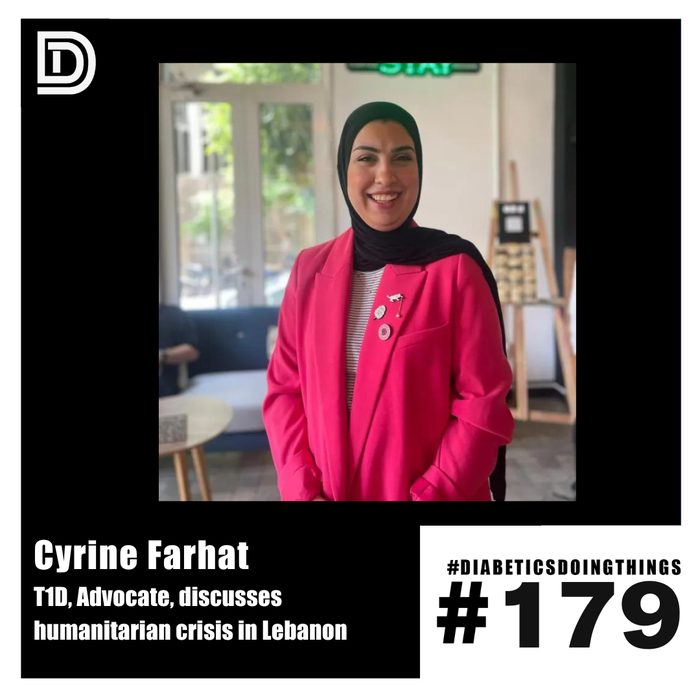
Cyrine Farhat is a type 1 diabetic from Lebanon and the founder of Positive on Glucose, an advocacy platform. She was diagnosed as a child in 2007, during a period of family financial strain, and says that shaped her into an advocate. A year after the 2020 Beirut port explosion, she joins Rob Howe and Eritrea Musakan to describe daily life amid Lebanon's economic collapse: constant power outages, hours-long fuel lines, a devalued currency, and pharmacies without insulin or test strips. She explains how she sources and distributes donated insulin through local clinics, and recounts the earlier insulin shipment Rob and Eritrea sent to Lebanon after the blast. She talks about panic attacks, depression, and therapy, and about choosing to stay positive despite the crisis.
Key takeaways
- Cyrine was diagnosed with type 1 diabetes in 2007 at 16, during a time her family had limited money, which pushed her into advocacy early.
- Cyrine says Lebanon's currency has devalued about 90 percent, and banks have restricted people from withdrawing their own savings.
- Pharmacies in Lebanon often have no insulin or test strips, so Cyrine says people ask travelers to carry medication into the country in their luggage.
- Rob and Eritrea sent insulin, donated by a friend whose son no longer needed his prescription, to Lebanon through Cyrine's network after the Beirut blast.
- Cyrine runs Positive on Glucose largely alone, working with primary healthcare clinics to get donated insulin to people who need it.
Show notes
This week’s guest is Cyrine Farhat (@positiveonglucose_diabetes on Instagram)
Rob and Eritrea are back on the intro and we discuss ONE YEAR of “Doing Things Day” takeovers from people with Diabetes from across the world. It’s especially relevant for this episode, because Cyrine was the first takeover in our series, only days after the horrible events of the Beirut Blast. It was those events that inspired Rob and Eritrea to send as much insulin as they could get their hands on to the Diabetes Community in Beirut.
After the intro, Rob, Eritrea and Cyrine discuss:
The Humanitarian Crisis in Lebanon
Living with Diabetes during a crisis
The difficulties accessing insulin in Lebanon
The power of community
And much more!
In the episode, Cyrine mentions a few resources and articles, we’ve linked them below:
Fundraiser: Donate for Glu-cause
https://ihjoz.com/events/6159?utm_medium=social&utm_source=heylink.me
Blog post from T1international explaining the situation
https://www.t1international.com/blog/2021/08/31/global-advocacy-success-series-cyrine-lebanon/
BBC video report explaining the situation:
https://www.youtube.com/watch?v=IMkx4MEEnB0
Reuters report explaining medication situation:
https://www.reuters.com/world/middle-east/bitter-pill-lebanons-medical-crisis-set-get-even-worse-2021-06-02/
SPONSORED! This episode is sponsored by Type Zero Health, a T1D owned business who make exceptional clean exercise products that don’t spike your blood sugar. Type Zero is the official exercise partner of Diabetics Doing Things and you can save 20% on your order from TypeZeroHealth.com by using ROBHOWE at checkout.
Questions this episode answers
Who is Cyrine Farhat?
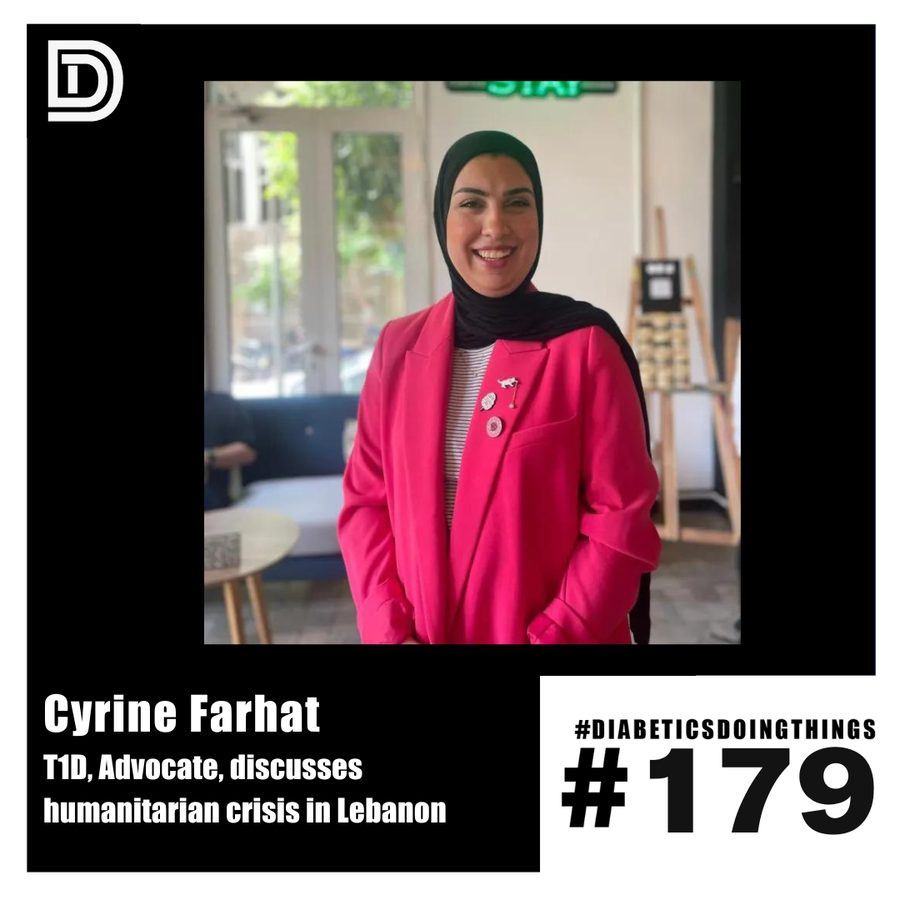
Cyrine Farhat is a type 1 diabetic from Lebanon who runs Positive on Glucose, an advocacy account that helps connect people with diabetes in Lebanon to donated insulin and supplies.
Why is insulin hard to find in Lebanon?
Cyrine says Lebanon's economic collapse and currency devaluation have left pharmacies without stock, so people rely on insulin carried in from other countries, often in travelers' luggage.
Did Diabetics Doing Things send insulin to Lebanon?
Yes. Rob and Eritrea sent insulin donated by a friend whose son no longer needed his prescription to Lebanon shortly after the 2020 Beirut port explosion, and Cyrine helped distribute it.
How does Cyrine stay positive during the crisis?
She says she reminds herself of what she has survived and accomplished, and treats helping others as her purpose, though she also describes panic attacks, depression, and going to therapy.
Full transcript Searchable, with timestamps
Rob Howe: What up, what up? Welcome back to Diabetics Doing Things. I'm your co-host, Eritrea Musakan. We are back. It's been a nice little holiday, a nice little sabbatical. And we took Labor Day off for the pod. And that allowed me a little bit of space to move and uproot my life. But we're here. I'm in my new home studio. We gotta make it a little bit more audio friendly at some point, but that'll happen.
Eritrea Musakan: yeah it's gonna get real it's gonna get real fast we're gonna get really quickly into this home right rob you're gonna get all set up all good honestly we were talking about it it looks
Rob Howe: like an airbnb because there's no pictures of any like family or anyone up so there's no it's all just generic it's furniture it's all you know functional there's no like personal touches yet so we've got to get those in but we're we're in so uh thanks for everybody who was patient with me being away and not being on social media. Um, yeah, but you came back fast. I think you were on
Eritrea Musakan: social. I saw your face on Instagram today, sir. With everything I'm back. I'm back. Um, we got
Rob Howe: some good, uh, good stuff coming up, uh, for diabetics doing things. We got one of my favorite events, uh, that I'm, I'm not going to tell you guys what it is, but if you're a real fan, you'll know what it is coming this fall. It'll be, uh, I'll be doing one of my favorite diabetes these entertainment activities back as the host. So stay tuned for that this fall. It's going to be really fun. But today we have a really special guest. And before we get to Cyrine's episode and kind of why we're doing that, one of the reasons it's really special to me is that when Eritrea started at Diabetics Doing Things, we started doing our Takeover Mondays and Doing Things Day from all around the world. And Eritrea was like, well, we should definitely start like overseas. and before we go back to the US and I have this friend in Lebanon, her name is Cyrine, we should have her on the pod and so, or we should have her on the takeovers and this was before we did takeovers with podcast episodes. So we decided that since we missed her on the pod last year that we should bring her back and she's an amazing person and a friend of the pod. So I'm really excited for you guys to hear this episode.
Eritrea Musakan: Cyrine's just an amazing human being in general. I think that you summed it up really, really well. uh I was really nervous coming into diabetics doing things I felt like I didn't have a whole bunch to like contribute and then my first project I guess I like feel like I I don't know she hit it out of the park for me you know because Cyrine just brings everything um I feel like when you listen to this episode if you don't feel her energy then like I don't even know because it just translates so well even through audio um and last year when she took over it was right after the Beirut blast. So I remember that we weren't going to do it anymore because we didn't think that she would be safe or, you know, maybe she won't be taking care of herself to take care of this or, you know, whatever. I just didn't want to overwhelm her. And we were concerned as well.
Rob Howe: Like it was Beirut blast. If you guys don't remember, there was a huge explosion at the harbor in Beirut and it, it like broke windows like 500 miles away. It was like this incredible, huge explosion of like decaying oil or like some sort of like old explosives that like were decommissioned and they caught fire and exploded and decimated the entire city and what i didn't realize at the time was that and a lot of what we talk about today is that the beirut blast was a terrible terrible event but it brought to the forefront a lot of really horrible economic issues that Lebanon was already undergoing. They were already undergoing and they kind of put the global spotlight on them briefly. And now, if you Google it today, like Lebanon economic crisis, there's articles about, is it a failed state? Is it completely bankrupt? Basically, a full, like the Lebanese currency has been devalued thousands of percentage points from two years ago and people have, you know, their, their homes, their bank accounts are just worth
Eritrea Musakan: nothing. It's honestly a really, it almost makes me feel guilty to live the life that I live. Like knowing that I have people that I love who are in a situation like Cyrine's or, you know, the situation that Cyrine lives every single day. And then if any of you follow her on social media, or if you don't, you definitely can check her out. I will link of course her Instagram in the show notes but you wouldn't know like like watching her stories like once in a while there'll be you know a glimpse of what she's going through but you wouldn't know that her entire work building was completely one side of it was gone in that blast like it's an experience where a cup of coffee is a luxury and you can't put gasoline in your vehicle on a regular basis like these people cannot afford to live in these conditions they can't afford anything imagine it and then we talk about it in this episode, but it goes a step further when you have a chronic illness because diabetes doesn't stop. It doesn't give a single anything about where you live or what
Rob Howe: you're going through or what's happening. So look at you. You, uh, you, uh, you refrain from using like horrible curse words. Look at, look at you go. I've been working on it a lot. That's so much growth. I'm proud of you. You know what, Rob? So, um, yeah. Last year though, we had my dear friend, Julia Cotton, uh, who amazing front of the pod, her son had been diagnosed with type 2 diabetes and was able to, with diet and lifestyle, was able to get off of insulin, uh, and, and, you know, help really reverse his diabetes. And, um, it just, I'm very, very proud of the work that he did to get there. And because his mom is such an amazing person, she continued to refill his prescriptions for insulin. So, uh, we were, she gave me a ton of it, uh, to distribute. And so, uh, I had honestly never seen so much insulin in one place at one point. So like at that point, I had never, it was honestly kind of like a PTSD, a little bit of like looking at it, knowing how much it costs, like knowing how difficult it is for so many people to get. So I was able to pass along some of it to some people here locally, but the organizations in the middle of COVID like weren't guaranteeing the donations would make it. And so we were really hesitant to send it somewhere. So we felt like the Beirut blast was a great opportunity for us to just send a bunch of insulin over to people in Lebanon and Cyrine was able to help distribute it to people who needed it there on the ground. So that was-
Eritrea Musakan: It was intense though. It was such a labor of love. Rob texted me. It was such a random text message. It was like, hey, can we do this? And I was just like, I think we can do this. And we just literally like the power of five or six diabetics or people who know diabetics, because the girl who took it to Lebanon, shout out Nassim, does not have diabetes. Like she was just like, oh, I just happen to be part of the community and I'll, I'll help you out. Like,
Rob Howe: and you know, you talk about power of community, but also just like timing and like everything came together in like two days. And I think the craziest part was like, yeah. So like I'm going to UPS to try to send it to upstate New York to get it to Nassim. So she can take it overseas on a plane. And I got to UPS store at like 4.30 and they were like, our last pickup for the day is like, just got here. So you got to go somewhere else. And like, but they gave me, so I'm like burning up the streets of Dallas. Like it's, it's a middle of the pandemic. So there's no one out. Made it all the way to the FedEx store for, before their last pickup was able to overnight it to Naseem who took it over. And like within 48 hours, like it went from my house to, or from And Julia on the weekend gave it to me. It went from my place to UPA or to FedEx to upstate New York to Lebanon to people who needed it. And that was that was just a really cool thing.
Eritrea Musakan: And I never told you this, Rob, but when Cyrine sent me the picture, she got it. I cried. I literally just like burst into tears. I was like, I can't believe me having this job and knowing you who knew someone else help someone that we don't even know. like yeah we help serene but who who knows you know yeah and it's just like i guess it's just like a small thing in my heart that like nothing is not on purpose and that this is like for a bigger reason anyway let me not cry this whole episode i cry you guys so i'm really sorry but
Rob Howe: like i think you know you never know you never know why somebody comes into your life you know julia and i met through improv comedy and you know became have become friends you know for most of a decade because of that. And I never knew that her son was going to be diagnosed with diabetes and that she, you know, and she had the presence of mind to, with a giving heart, you know, accumulate a bunch of insulin and give it to me to find somebody to give it to. And, you know, then you had just come into the fold at Diabetics doing things, you know, Cyrine is over there. And it was just, I don't know, the culmination of a lot of events all at once and really powerful stuff. And, you know, again, not to give us too many pats on the back, obviously, like there's a
Eritrea Musakan: lot of work that continues. No, it's just once in a while, once we do something good, I feel like we should, because I think that we, sometimes you do things behind the scenes and we just don't say anything. Rob is really good at being real Kobe about it, where if like he makes it, he just does, it's just like, there's not a whole lot of celebration there, but once in a while, when we do something like this, where I feel like we make a real impact and I get to not touch, but almost just see it, it's more or less to motivate more people. So it's like, you can do it too. Lots of people have connections and it's not just to neighboring countries. We do it in my DFW type 1 Dallas group all the time. Someone will text and be like, Hey, I don't have a Dexcom for the week. Once my shipment gets here, can I give you one? So like the power of community can be small. We don't know the domino effect of it all. Right. So I guess more or less that story, I share it so that you guys can maybe take, you know, if you, if you see somebody that you can help out, help them out, if it doesn't, you know, do too much to you, I guess. But yeah, it's a good episode. I'm excited for you guys to hear Cyrine's story to hear in real time. There's a lot of resources available. She says them all throughout the podcast, but we're going to link them for you in the show notes for places to donate or more information to read about what's going on in Lebanon and how you can be part of, you know, helping in any way.
Rob Howe: So I encourage you to stick with it. This is a really great interview. Use those resources in the show notes as well. They can help you just learn a little bit more about what's going on and Lebanon. It's not something that's on the news every night here in the US. There's a lot of other stories that are kind of pushing it down, but still really, really heartbreaking stuff that's happening there to people on the ground, people with diabetes. So Cyrine, I'll let you take it from here after a word from our sponsors. What's up, guys? I got a very important announcement for you today. Not only is this episode sponsored by Type Zero Health, but Type Zero is now our official fitness partner of diabetics doing things. And that's exciting for me, because if you can hear and actually mixing up some type zero NO booster in my shaker cup right now, because I'm about to go work out like I normally do late in the day. And what I want to tell you first about type zero is that for people with diabetes, you can get the boost and the pump you need to crush your workout without having to worry about spiking your blood sugar because type zeros and NO booster is clean. It's caffeine free. It uses natural ingredients, no artificial flavors or colors, and it doesn't spike your blood sugar, but it gets you the pump you need. It also doesn't have caffeine. So I can have it later in the day, like I am right now. It's about 5.30. I've just gotten through my workday and I'm about to go hit the gym. I use it when I play basketball, when I go on a run, when I hit the weight room, which I've been doing a lot lately. And I've been using it to help me shift into workout mode while I'm at home. I get that shaker cup going, mix it up. I'm using the cherry limeade flavor right now. You got to check it out. TypeZeroHealth.com for more information. If you use TypeZeroHealth.com, Use code ROBHOWE. That's my name, Rob Howe. No spaces at checkout and you can get 20% off. Type Zero is a T1D-owned business and you know how I love T1D-owned businesses. Check out episode 132 for my interview with the founder of Type Zero, John Jensen. You can hear his story there. Also check out Type Zero's clean nitric oxide supplement. I've been taking it for a few weeks now and it has really powered my recovery. Again, no caffeine, just beetroot, pine bark, arginine and citrulline, which are natural ingredients. It helps me recover, which is a big part of how I implement my training these days. I've got to be able to recover. I take on a lot of mental, non-physical strain. And then with my workout schedule, it's hard for me to recover and bounce back. And this has really helped me. I even left a review on Amazon with a photo of my whoop strap where it shows month over month how my recovery increased after I introduced the clean nitric oxide supplement. So check that out. Again, typezerohealth.com, the official fitness partner of Diabetics Doing Things, and use code Rob Howe for 20% off at checkout. All right, back to the episode. Welcome back to another episode of Diabetics Doing Things. We are back international. Eritrea and I are up early this morning and our very special guest, very, very, very special, Cyrine. You might remember her from last year's takeover. Cyrine's coming to us live from Lebanon. She's here on a generator and she's going to tell us a lot about herself and her life with diabetes, but also what's going on over in Lebanon and kind of taking us behind the scenes since we covered the Beirut blast about a year ago. So Cyrine, first of all, welcome to the show. Thank you so much for making the time and for literally being on a generator because the power grid is so shut down over there. So I think this is the first podcast from a generator in the history of diabetics doing things.
Cyrine Farhat: Well, yeah. Well, I'm glad Lebanon is making history somehow. Thank you for having me. It's always like good to be back and to talk with people that resonate with the struggles of diabetics anywhere um all over the world and also to showcase diabetics doing things regardless of the situation anywhere in the world so thank you again um so yeah it's kind of weird to be back um post the bayou explosion um and especially that we thought the bayou explosion was rock button but somehow we keep on sinking so i don't think the world knows how bad things that things are here um but we still try to have a positive perspective on things because we're still alive and we have to make something out of the time we have here so yeah um i and i and i love that i
Rob Howe: think like the spirit of of the people of lebanon you can tell like even a few days ago eritrea shared you were participating in Airtria's outfit of the day, uh, you know, just, and, you know, being joyful and finding joy, even, even when there's not a whole lot to be joyful about around you. And we love that about your, your spirit as well. So before we get into kind of everything that's going on present day, let's rewind a little bit to how you joined the type 1 diabetes family. uh so what do you remember about your diagnosis and when was it just walk us through the whole
Cyrine Farhat: thing so um my diagnosis was post the 2006 war in lebanon funny enough um so i like it was i think in april um 2007 april or may i don't remember anymore and um i i just like felt sick you know I was a sick kid and my mom took me to the doctor. They gave me a diagnosis. They thought it was a UTI or something. And then they were shocked to find out I had diabetes. So it wasn't like the best, I think, diagnosis story because I'm an only kid. I come from a middle-income family. My mom doesn't work. My dad was a freelancer. So I think that kind of shaped my way into advocacy from the start because diabetes came to me in a time of lack and I always had to kind of fight to have access to things. And I think that defines your perspective on life and like what you're entitled to and how you push for things in life. So I had to prove myself over and over again as a teenager to kind of have access to like things teenagers had, which was like to go out with friends because back then in Lebanon, we didn't, for example, have insulin pens. We had the glass bottles. So I couldn't like take insulin out with me and go out with friends. And like over the years, I had to show people that girls can do things while having diabetes in a Middle Eastern community. Like we can work, we can get married, we can have kids, we can excel, we can be superstars. And I think I always had to push. And that is why or where I learned to be positive from, because I really didn't have any other choice. You know, it was a choice for me to be positive while living with this condition or else I wouldn't be able to kind of be like a normal person in my community. So I think briefly that like wraps up 15 years with diabetes. So now we're equal 15 years without diabetes and then with diabetes, you know.
Rob Howe: So you're like half and half. Yeah. Last year was my half and half because I was 16 and last year I was 32. too. So, um, yeah, I was like, Oh wow. Okay. Half my life with diabetes now. There you go. I don't know if you're like me, like now I don't really remember. I remember events and I remember like happy times from when I was like, you know, didn't have diabetes, but I don't remember just eating without giving, you know, testing my blood sugar or giving insulin that all that sort of
Cyrine Farhat: blends together now. Yeah. I like, I tend to always regret things that I left uneaten or unfinished like damn it I should have drank all these juice bottles and enjoyed all that cake like now I have to count carbs and stuff so but like yeah I think life with diabetes um it's a muscle like um it's this muscle that you have to train just like when you go to the gym and I tend
Rob Howe: to train that mental muscle so it works yeah I love I love that perspective yeah Eritrea you awake
Eritrea Musakan: over there yeah I'm awake it's just Cyrine made me cry already so I was like whenever you said I I know I'm so lame, but when you said the thing about her doing the outfits of the day, like, I just literally immediately started crying. I think it's hard when I, it's hard to talk to someone that I love so much, who's literally on the other side of the planet that I've never been able to like hold in my arms, but that I truly genuinely care so much for. And I'm like, so concerned about. So it's hard for us to have these conversations and to be so candid when there is such a hard situation that's happening in Lebanon. And that I like, yeah, like I just have to compartmentalize the feeling because otherwise it's too much it's overwhelming and I'm not even
Rob Howe: there you know what I mean so yeah talk to me about how you guys met each other I don't even
Eritrea Musakan: remember how I met you like you just landed in my life somehow someone sent your profile to me and I think it was Yasmin I think it was Yasmin Al-Shulabi she sent me a profile and was like you should talk to this girl and I was just like okay and so then I just I I'm really weird like when people say you should reach out to so-and-so Rob knows this I won't I will like watch your account for a little while and like see what you're about and then if I feel like we click I'll message and that's kind of what happened with Cyrine like I just started my position here at DDT and I was like really looking for different individuals and like your soul literally shines through my phone like I can see the light that you are and it is so intense and so gravitating and so I don't know it's like magnetic and you were our first takeover for a reason like literally I met Cyrine it's so insane you guys the story is crazy I met Cyrine we started chatting three days later we started talking about the first takeover I was like do you want Lebanon to be first she was like yeah I'll do it let's do it blah blah blah a week later the blast happens like two days before her take the blast happens and I was like oh my god is my friend even alive like is my friend even okay and she was like i'm totally fine and i was like okay don't do the takeover get yourself together and she was like what do you mean don't do the takeover this is the best time to do the takeover
Rob Howe: yeah i i remember like talking because i think it was the first you were the first one our first takeover that we were working on for doing things day and eritrea had been around for maybe like a month or six weeks and we were one and one of our goals was to like have people from other parts and different parts of the world talk about what diabetes was like there. And then immediately after that, we, you know, we had this meeting, we talked about you taking over. It was all good. And then the bigger blast happened. And so this is about a year ago. And immediately I was like, well, we got to talk to Cyrine, like make sure she's okay. And then you were like, no, no, I'm still going to take over. Like, we're still going to talk about this. And it was just, it was one of the most impactful things I've ever seen. It was just, and obviously, like you said, you sort of thought it was rock bottom and then things have continued to kind of get worse and worse. And, you know, I guess the word I would use to describe it just based on my external research and, you know, I don't know what Western media kind of hides from us as well, but like total economic collapse is sort of the, yeah. And I see, I see you nodding there. And at the same time, I want to talk about as a whole, when Eritrea and I talk about humanitarian crises, which are happening all the time. And I think that's something that we struggle with as well. And even just me and my wife talking about it's hard to be happy when there's so many different terrible things happening to people around the world. And I always think of whether it's Lebanon, whether it's Afghanistan, whether it's Palestine, whether it's China, there are people with diabetes in the middle of that and they need insulin and they need test strips and they need, you know, care. And, you know, some of them we've, we've been fortunate enough to have on the podcast and on the Instagram and they're not just, they're not just profiles, they're people. And so, you know, tell us a little bit for you as a person with diabetes in Lebanon, on. What's, what's going on? What, what, what is your kind of day-to-day life? Because like, because you're here right now on a, on a generator, you're, you know, you only have a certain amount of power left before you've got to migrate, you know, home. So give it, give us a little, give us the rundown and, and then, and then how do we stay positive in that? And how do you stay positive, uh, you know, in the midst of all of these terrible things going on?
Cyrine Farhat: so um I think the best way to share how things are is to tell you like a story of one of my days which was I think last Saturday I woke up um I was sweating because there was no electricity it was I think the first time that our building generator just dies because there was not even fuel for that I wake up I was like okay damn it I want to have coffee I walked I walked my stove I don't have a lighter because like I turn my stove on with electricity so like okay damn it now I can't have coffee so I'm like sitting there I'm like being super annoying super agitated looking at my husband like I want my coffee and then we're like okay let's go out somewhere and have breakfast then we remember that we don't have enough fuel then um our janitor Our janitor tells us that there won't be electricity for the next 48 hours. And so now I wonder, okay, it's fine. I cannot have coffee, but what do I do with my insulin? So I grab whatever insulin I have in my fridge, which are like three months of insulin supplies. And I just grab them. I'm like, okay, I'll go to my office because we have electricity there. because I luckily work at an international organization that can afford to pay even more money to like always have electricity at the office so I go there it's like 1 p.m by now I put my insulin in the fridge and now we're ready to have breakfast so we go to the like our regular breakfast place they don't have electricity so you know like I was like and it's just 1 p.m you know like these are like the smallest things that no one even thinks about and then we're like okay let's go search for fuel we go to somewhere else we get our coffee we thought like I can't I can't describe the fuel lines this is something that you have to see for yourselves I'll share videos with you but some fuel like some cars waiting for fuel pile up to up to kilometers like it's it's insane on the highway so we we find one that is just opening and there are only like a hundred cars in front of us so we park so we stay in the car for an hour and a half and when we get like in line to fuel up our car they only give us nine liters of fuel so i break i literally break down you know i don't have i still don't have enough fuel. I didn't have proper breakfast. I go home. It's 3 p.m. I still have electricity. I buy a lighter to cook lunch. We have lunch. We're sweating. It's not even seven yet. No electricity. That is like a part of a day here. And it's only a small section because that also includes there's no insulin at pharmacies. We ask people to get insulin from outside the country in their suitcases. There are no test strips. We had a long time and we didn't have any sensors. The company just imported a batch last week, which would be enough for two weeks for people. And that's just diabetes. I'm not talking cancer. I'm not talking dialysis. uh i'm not talking about many other things i'm not talking about people like married i'm sorry like pregnant women who need like um things to stabilize their pregnancy like all this stuff and that's just a part of the struggle there are so many more things that i i honestly like i can't even remember right now because they've become such a normal way of living for us like they're normal and then you look at someone living somewhere else and you're like wait that's a human right and every night before I go to bed I think to myself if I was born anyone anywhere else my personality my set of skills my intelligence my PR skills everything that I have my kindness who would I be but instead I'm here so and yet I'm positive on glucose I'm positive because I know I am here for a reason and I chose to be a light it's a personal effort and some days I really don't want to be on social media I don't want to smile I just want to cry all day I worry about my stuff but some people have it worse and it's my duty to be there for these people so we fundraise and we push and I email the who and I email the IDF and I push and push and push and when they don't answer once I email twice and the third time and I keep trying until I get at least one insulin pen to someone who needs it and I think that's like that's everyone's duty you know to be a light in people's lives because everyone has a purpose and my purpose is to serve people with diabetes and I hope that wasn't too dramatic I told you I was gonna cry the whole time I told you I was gonna cry the whole time she's just this is how she is like how can oh my god Cyrine like to hear you say there's somebody who has it worse than me like there are because there are some people are literally going through the trash some people don't have a place to sleep and I see them I see them in my parking lot digging from the trash I see them everywhere and so I do the smallest things I tip people I give people money I give people food because some people have it worse than me I still have insulin I am still alive I'm still here and as long as I am it's my duty to help people but i don't know how sustainable that is because if things keep crashing and just so people understand what crashing is our currency has evaluated 90 which means people don't like okay so the average salary is now 29 people don't have money to buy food or afford electricity anymore and if you had savings all that savings is devaluated right so we're stuck in the banks because this problem started when banks um did a haircut and they literally um took people's money money like people have millions of dollars now can only like get out of the millions of dollars like fifty thousand dollars and people who have like one thousand two thousand um ten thousands like their small savings they've devaluated like they would they can do nothing with this anymore so it's insane I really urge people to read about what's happening here because this is as um like many I think international governmental governmental agencies label this this is the world the worst economic crisis that has happened in the world in 150 years and people can read about it so and I talk to people from international organizations and they tell me well this is not a humanitarian crisis yet so we can't really step in and help well yeah thank you for being reactive how about we be proactive and prevent an actual humanitarian crisis so yeah i mean everything that has happened in my life until now has pushed me into advocating because there is no other way i've been interrupting so i don't want to interrupt robin no i i mean i
Rob Howe: you know i think that we don't i don't know there's not there's just no way to contextually that in the west we can understand what you're going through i mean just because there's um you know we only had i think two days of electric grid failure here uh during the during the winter this year and you know me personally i you know it was traumatic because we don't ever consider that the grid will go down. We don't ever think about gas stations not having gas. We don't ever think about money not being worth what it was worth yesterday. And that's because of our privilege here in the United States. We just think that those things are, we take those things for granted. We think that those things are given and they aren't. And I think when we see people elsewhere, like you said, if you were born anywhere else, you wouldn't have these problems. And I think about that a lot. People like me who were born here in the United States, we just got lucky. We got selected to come to a place where we don't have to worry about those things. And we didn't do anything to deserve that. That's just, that's just the luck of the draw. And, you know, so, you know, what do we do as, as people with privilege and people who care about other people, like you said, like your, your purpose is to, is to help people because, you know, you've been put in this situation for a reason. And that reason is to, to lift other people up. What can we do as, as people looking from afar, what can we do to help those people on the ground with diabetes who need, who need medicine, who need supplies, who need just to be heard? Uh, you know, what can we, what can we do from, from overseas, from afar to help you guys
Cyrine Farhat: there on the ground? Um, before I actually tackle that exact issue, I want to talk on a broader perspective and I hope people will just listen like listen to me okay I want you today to not look at me as someone who is Arab who is Middle Eastern who has a certain color who comes from a certain background I urge people to read I urge people to inform themselves I urge people to look at things from different perspectives wherever you are in the world there's always going to be a humanitarian crisis somewhere. But don't take your emotions, like don't have your emotions drive you to do things and help. I want you to be informed because that even has a longer effect on communities worldwide. As a human being, I urge people from anyone who's watching this, share it with your friends because this is not just about Lebanon. This is not just about diabetes. This is about every person in a crisis anywhere that needs a helping hand. It's your duty as human beings to help fellow human beings. We were born to kind of have this oneness and to unite regardless of how we look like and where we come from. That is an international perspective. As for Lebanon, there are many ways to help. And I keep posting about this on my diabetes Instagram. I tell people, if you don't have the money to donate, you have the voice to share and talk about it. If you're not vocal on Instagram and social media, just be informed and talk about it behind your screens to people that might be able to contribute in any way. You can donate. You can help have drives at your countries. You can help ship medication here, whether it's just one box of insulin and you carry on, which literally doesn't bother. because that one box of insulin might help someone just diagnosed. Right now, I'm not able to find insulin. And excuse my husband in the back. So there are many ways to help. Be creative, you know, and really listen to what your intuition tells you because you always have this one-of-a-kind solution that only you can do with your set of resources and your set of connections. so be a voice to anyone in the world and be kind of a way to push things forward and pay things forward and create that change because nothing ever will change anywhere in the world if you don't if we don't remember that we are all connected and it's our duty to help each other through any kind of crisis um so i was reading online and i wanted to ask you serene about as far as like donations go and people like helping people in lebanon and sending money because I've offered and I'm telling you like Cyrine let me send you money and she's always like no wait no hang on no it you know I might not even get here so I know that there's like some sort of way to do it I'm just not sure like all the semantics but if someone on this side of the U.S. wanted to help someone in Lebanon like what would be the best way to do that I know donating to the government's a no-go like every google search says that like the Lebanese government don't give them no cash so what would as someone who is from Lebanon what would you suggest would be the best way to get someone some kind of financial resources um just an fyi most of the ngos here uh belong to people in the government or wives of people in the government so they always have this way of like using money to some other um um favors to buy a main coat yeah or you know the chanel brush thing and have a brunch and take nice photos oh my god yeah i mean we did try to do a gofundme and uh unfortunately the gofundme for some reason after we got all the money decided that they don't want to send the money to lebanon and they had us um you know return all the money back which is which was such a shame um we started something called it's it's like a donation account and we can get the money in Lebanon it's kind of safe but it's it's a bit complicated for people because it's literally a ticketing platform that gave like a space for people to donate money so people can do that until we find other ways I'm currently begging banks to help me open a bank account because ever since the crisis happened two years ago banks stopped opening bank accounts so I'm telling them this is for a cause please I need a bank account so I can get fresh money for people with diabetes i was promised that within the coming week or so they might help me open one so we'll have to wait and see but like i think the best way is to actually get medication into lebanon because even if you send us money and my apologies to all the ngos who are receiving money there are no medication here the only way to buy medication is like the closest country is turkey and we've done it before so you and so okay back so backstory um me and rob apparently we've sent insulin to lebanon before it makes me feel like you know narco i'm just kidding man let me let me
Rob Howe: just let me tell you as well like let me tell you and and granted like our it was like mission impossible yo we were we had such a little window because there was a friend a mutual friend of both of both you and Eritrea who was in upstate upstate New York. Nassim was in upstate New York, which in, in terms of like, in terms of the distance from Dallas to upstate New York is like, you know, Lebanon to Kenya, you know? And so it's like, uh, we, we got to get it there and we have to send it overnight. And so I go to like a UPS store and turns out the UPS store, like cannot help me that they like will not ship or like they couldn't get it there on time because I was there like 10 minutes too late. It was like 5 PM and they couldn't, they couldn't ship it. So I had to drive. I had like a 15 minute window to drive from where I was to like a hub of like FedEx and it's in the middle of COVID. So like, you know, mask, you know, it was, nothing was really open. And so we got, we got it there. And with like five minutes to spare, we sent it and it, it made it to Nassim and then she brought it over to, to you guys. And it was my friend, Julia, who is one of the best people I've ever known. Uh, she, her, her son was diagnosed with type 2 diabetes and he's very young. And he was, uh, he took all of the, uh, all the, his doctor said, you know, if you, if you eat right and you exercise, you probably won't need to take insulin, but we're going to give you this prescription anyway. And so she kept filling the prescription, even though he didn't need it because she knew that somebody was somewhere would need it. And so she gave me that box of insulin, like three weeks before we met you. And then we were like, this is where it's got to go. So we were able to get like, I don't know, it was like 60 pens over to you guys. It was like, it was the most insulin I've ever seen at one time. And I'm so glad that we were able to get it to people in Lebanon.
Cyrine Farhat: That's the power of community. That's what Cyrine's talking about. Like you have to, it's we have to basically build these connections in America like if you're an American and you happen to know somebody from the Middle East are you from Lebanon where are you from because that is a question that I ask all the time or even like if I know someone's going to another country in the group I'll ask I'll be like hey guys I know a girl who's going to France anybody got a plug in France so I can give her a bunch of insulin and then they can give it to one of y'all because like we can't just hear so-and-so is going to travel overseas good for them like no there's humanitarian crisis is happening all over the place and if you can hand that person off some insulin that's maybe going to get to someone who would have died without it like let's do that let's make those connections naturally stop being so shy about it like nobody's coming to save us we have to save ourselves we have to save each other well actually just to shout out to Nassim she actually just started collecting insulin again and she's going to send them with her mother I think over the coming month or something oh we got to get her some stuff so i was like no no like this can't be happening again this is too weird but like yeah i mean um that's how we're bringing medication to the country now and i think the ministry of health has issued some kind of special permit that allows people to get medication and and with their luggage like people are literally just shipping luggage filled with medication so um yeah i think that's like the best way to go and just so people know how I give medication away. So basically, Positive on Glucose is an organization. It's currently a one-woman job. Just so everyone knows, I've been running this thing for the past two years alone. God help me. And I work with primary healthcare clinics. And that's how I identify and help people. Because that's the best way to go. There are diabetes educators. They have a facility. They do all the work for me. I trust them. And we don't have the financial capacity at the moment to like have our own clinic. So that's the way to go. And if you donate to any organization, please ask, be informed. How do they give people their medication? How do they give people their stuff? What's the mechanism they use? Because unfortunately a lot of organizations take things but we don't really know how or who they deliver it to. And I've seen that with diabetes organizations here. Like people come to me and they're like, I need insulin. Well, did you talk to A? Did you talk to B? Yeah, they said they can't help you. Like, what? You know, so just be informed and ask and see how these people are actually helping and then donate and help them.
Rob Howe: Cyrine, in the show notes of this episode, I'd like to work with you to include some links to some essential reading, some things that you, so you were talking about being informed. For people over here, I'd love to make it as easy as possible to help them like understand what's going on and then also provide links and resources for them to donate to that, you know, you like are vetted and are good places. So we'll work with you on that to include when we publish this episode. I think it's really important to make this actionable. And yeah, I mean, there's obviously like limited things that we can do, but I think that like getting involved with people, like you said, finding people and helping people rather than kind of relying on, you know, establishment organizations will, uh, you know, hopefully we can, you know, make some progress that'll help some people right away because obviously like some, you know, uh, even here in the United States, like with, uh, mutual aid organizations and organizations that help get medical supplies and insulin to people who need it. There's often a lot of red tape when it comes to organizations because they, they have, you know, whatever the rules are around some of those things are, are sometimes difficult. So, uh, getting it to the people is what we're trying to help do. And, and you know by by sort of any means necessary literally yeah 100 oh we only have a few minutes
Cyrine Farhat: left with serene i love you friend you're so pretty um yeah it makes me feel nervous about our topics because i'm just like okay what's the next thing before the generator goes out oh my god and that like every day that's how you're living your life the other day i was talking to serene and she was like at work and i was at work obviously bsing because americans when we go to work we're like bullshitting we don't want to work and so anyway um serene was like no i'm working really hard because the generator is about to go out and i was just like what like ah so it's just such a different different side of the coin like different perspective just different life and i'm so thankful to you and all your positivity to be completely honest on days when i feel like i just want to cry all day i'm just like well i mean what's your problem like you're fine like you're not if serene's fine but then i know that you do have days where you're not so positive on glucose and like I think the reason I cry is because I remember how you posted that you felt like you were suffocating she was like I feel like I'm suffocating I feel like I've been buried alive and I'm just like so I guess when you're not so positive what helps you feel better um I mean I just tune in to like I remind myself of what I've accomplished and what I'm still able to do and I remind myself that if I just stay there on the couch moping I'm help I'm really helpless like I need to do something and I mean there are days where it gets um really intense and like you know that I've been coping with panic attacks and anxiety and I like I had depression and I've been going to therapy and like that that alone was hard and then all of this is hard and like when you see some kid eating from the trash or like this 80 year old guy waiting like at a fuel up a few lineup and like waiting for hours and it just breaks your heart you feel invisible you feel helpless you feel like you're talking and posting on social media and you're reaching out to international humanitarian aid and no one's looking at you like you're nothing you're invisible and it hurts and then I cry it out I'm like girl you've been through a lot of things you've coped with a lot of things you've lost things that are that were very hard to get over um and you're still here you smile you enjoy life you have good people you have friends your family's fine get your shit together and like go find insulin for someone and it works it really works until the next time i see someone eating from the garbage and then this like goes on again
Rob Howe: Well, you talked about it being a choice that you make, uh, and just a brave choice that you make to be positive. And, uh, you know, air train, I talk a lot about like toxic positivity. And this is just the opposite of that is like, when you have no other choice, uh, to choose to be positive, just take so much bravery and courage, uh, and leadership and guts too. So, you know, uh, what you guys are doing over there is, uh, is incredible. And we want to do whatever we can to help you guys, even if that's just having more conversations and turning over the microphone to the people of Lebanon who are struggling. And I think also just not in a way that's appealing to mainstream media in the West, where they can craft a big narrative around it. Just people need help and they need basic human rights. Like you said, before it becomes a humanitarian crisis and before you know, it becomes very tragic and obviously already extremely tragic. But, you know, the world's eyes need to be turned to the suffering of the people of Lebanon. And because, you know, I remember a few years ago, I went to Medtronic headquarters in Europe, in Switzerland. And one of the people who was showing me around for the day, one of the employees was from Beirut. And And she was telling me, she's like, you know, this city that was a melting pot of European and Arab culture right there on, you know, a beach city, a beautiful, vibrant, you know, colorful, musical culture. and I think about that now and I think about those people who are like sort of dormant because of the economic fallout and the joy that's been taken out of a place and a place that's been a very proud nation that's sort of been you know reduced to I don't know rubble is probably not the right word but it's a shadow of its former self but I know that the people are still there and And I just, I wonder like when you go out and you, and the people of Beirut and in Lebanon, what is that like vibrant culture? Where, where does that manifest itself differently now? Does that feel different today? Does that feel like a million years ago that it was, that it was this sort of thriving city and culture?
Cyrine Farhat: Okay. To answer that question, I will ask you a question. what is your favorite low-key thing that you like to do in Dallas like which is a comfort thing
Rob Howe: like a place you like to go eat at yeah like yeah just like a like go to a restaurant or go have a cup of coffee or something yeah just like get out get out and go downtown and yeah let's just say going to uh going to weekend coffee uh in in downtown Dallas that's like a great comfort
Cyrine Farhat: thing for me. So at the moment I'm 30, you know, like this is where I get comfortable with life. I get established. I enjoy, I enjoy life. You know, I like, I have a good job. I can, I can make money by this age, but I wonder if I can go to the coffee place that I love so much because a, I don't have enough fuel. B they might not have electricity. See the coffee has become so expensive it's like a big chunk of my salary take that idea times four million people living here people are sad and honestly Lebanese people don't deserve to be sad because they're the happiest people we're party animals we enjoy life enjoy the small things we're hospitable we like food and culture and like a big family Sunday event where we barbecue and just drink and enjoy life and laugh and they took that away from us because no Lebanese family is able to even afford a good um barbecue anymore so it's really sad and I have to thank the international community for all the tourists tourists that come because if it weren't for the tourists that still come because now we're so cheap um we wouldn't be still here and my heart breaks of what will happen in September because it will be the end of the high season and all the like small coffee shops restaurants that barely have enough people now won't have anyone to be able to afford them anyway not because they want to be expensive but because everything is actually expensive and then they're barely making any profits so like this is such a like again um i'll make sure to like give you links to read about everything so i give you instagram accounts for people to go and see what what is happening um it's just a sad city it's a sad country at the moment and somehow we still manage to kind of yes wait for fuel for four hours and then go somewhere like go for a drive and yes pay that extra amount for a good coffee just sit with our friends because we're Lebanese and this is what Lebanese do they just want to have a good time and like if you look at my stories yesterday that makes perfect sense so you sent me videos of these girls like she was sitting at a restaurant like at a cafe and there's these girls running around like laughing like children and they're like braiding serene's hair and like laughing and serene's like stop and they won't stop touching her so like there's joy there like similar to all other kinds of trauma like there is joy there it's just so i guess it's just so much more meaningful because of the situation like man the people of Lebanon are so resilient so amazing so proud and I can't wait to visit you Cyrine we're already planning that trip so yeah I mean like she said tourism is a big form of income for the country so I mean I want to contribute I mean anything if anybody's listening and you guys can think of someone who's going overseas try to try to go like that's all I can say to people is try to know more about Lebanon try to love people from Lebanon. If you have a friend in Lebanon, you're so lucky. I feel so lucky to know you.
Rob Howe: Oh, thank you so much. Well, Cyrine, I want to thank you for spending some of your very like vital, like minimal electricity hours with us and telling your story. Want to wish you safe travels this weekend. I know you're getting out of the city for a little while to go on vacation. I hope you've come back renewed and refreshed. And yeah, we are going coordinate with you to make sure that we get all the right links and the right information to people. But thank you again so much for your heart, for your people and for people with diabetes. Uh, we really appreciate you taking the time and, uh, yeah, you'll always be our first takeover from, uh, from doing things day. So, uh, you're part of the diabetics doing things, uh, international family, uh, no matter what. So thanks so much.
About Cyrine
Cyrine Farhat is a type 1 diabetic from Lebanon and founder of Positive on Glucose, where she advocates for people with diabetes and helps distribute donated insulin during Lebanon's economic crisis.