

Cliff Scherb - Glucose Advisors
Episode summary
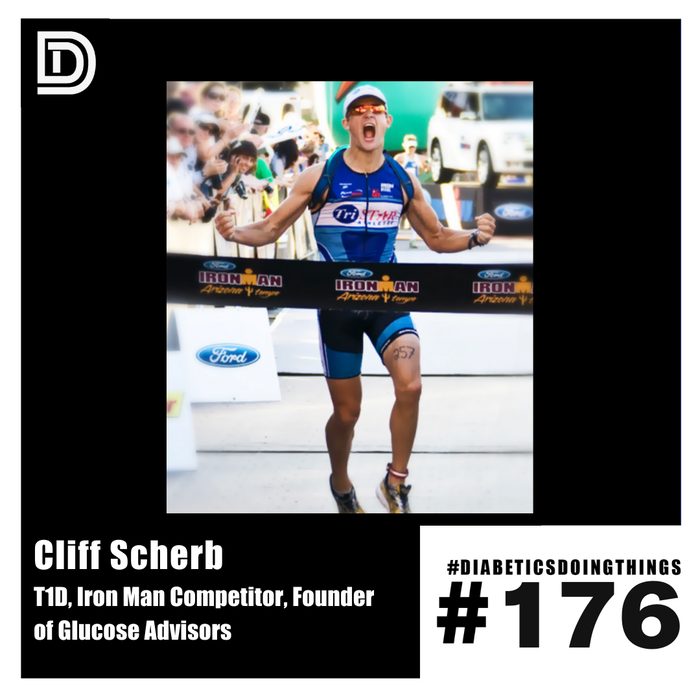
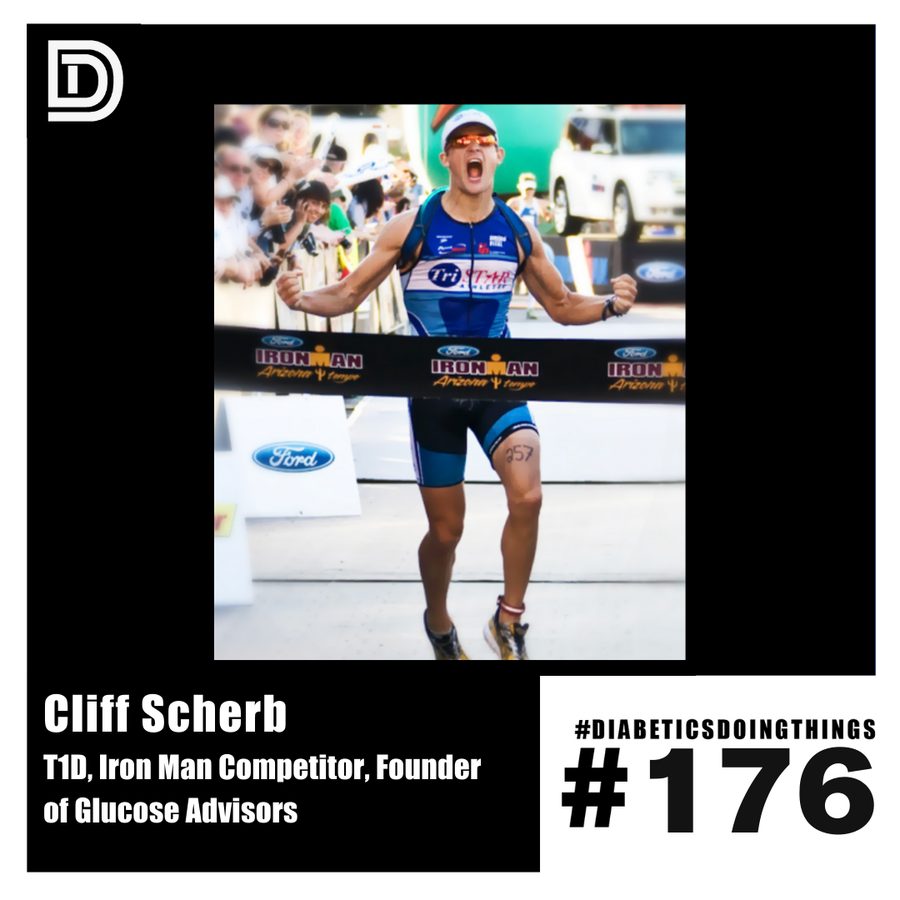
Cliff Scherb was diagnosed with type 1 diabetes at age nine and grew up playing sports with his family's full support. He became a semi-professional triathlete, set out to be the fastest type 1 triathlete, and posted a 9 hour 7 minute full Ironman and a 4 hour 16 minute half Ironman, both T1D records at the time, since broken by another type 1 athlete. After years coaching non-diabetic endurance athletes, he founded Glucose Advisors, a coaching company that helps people with type 1 diabetes manage insulin, nutrition, and exercise. He and Rob discuss early gaps in endocrinology care, access to health coaching, Glucose Advisors' scholarship program, and working with elite type 1 athletes.
Key takeaways
- Cliff Scherb holds a 9 hour 7 minute full Ironman time and a 4 hour 16 minute half Ironman time, both set as a type 1 diabetic and later broken by another T1D athlete.
- Scherb says switching from injections to an insulin pump, on a friend's advice, is what let him finally race faster.
- Glucose Advisors has given out about $22,000 in scholarships so people who can't pay full price still get coaching, Scherb says.
- Scherb says standard endocrinologist visits every few months are too infrequent for the daily insulin adjustments athletes and active people need.
- Scherb says he kept his diabetes private from training partners early in his career out of fear it would be seen as weakness.
Show notes
This week’s guest is Cliff Scherb (@glucoseadvisors on Instagram)
Rob and Eritea tee up this interview and break down how long an Iron Man is, hint: it’s long!
Cliff and Rob discuss, among other things:
Cliff’s early days with Diabetes and his family allowing him the space to fail
Transitioning from an Endurance Athlete Trainer to a Diabetes Health Coach and Endurance Trainer
Setting a goal to be the Fastest T1D Triathlete
Reverse engineering success
Managing blood sugars during Triathlons and Iron Man runs
Addressing access issues to Diabetes Health Coaching
And much more!
SPONSORED! This episode is sponsored by Real Good Foods, who has been a supporter and friend of the pod for a number of years. Use code DiabeticsDoingThings on RealGoodFoods.com for $15 off a $15 or more purchase!
Questions this episode answers
What is Cliff Scherb's Ironman record as a type 1 diabetic?
Scherb completed a full Ironman in 9 hours and 7 minutes and a half Ironman in 4 hours and 16 minutes, both type 1 diabetes records at the time, later broken by another type 1 triathlete.
What is Glucose Advisors?
Glucose Advisors is a diabetes health coaching company founded by Cliff Scherb that helps people with type 1 diabetes with insulin dosing, nutrition, and exercise, including event-specific dosing for athletes.
Does Glucose Advisors offer financial help for coaching?
Scherb says the company runs a yearly scholarship that asks applicants what they can afford, and has given out about $22,000 in scholarship support to date.
How did Cliff Scherb manage insulin during Ironman races?
He describes his early years as trial and error, and says switching from injections to an insulin pump, along with years of testing basal rates and timing, let him race faster and more consistently.
Full transcript Searchable, with timestamps
Rob Howe: What up, what up, what up?
Eritea: Welcome back, diabetics.
Rob Howe: Yeah, we're, we're, we still got diabetes, y'all. Newsflash, newsflash, we still got it.
Eritea: And we're still doing things. How's it going?
Rob Howe: I'm doing good. I've had a good week. We've got a great episode coming up that I interviewed the founder of Glucose Advisors, Cliff Scherb, back in the summer. and this has just sort of been sitting on the shelf for a little while, but, uh, I'm super grateful that he came on and was very patient. And I kind of told him, I was like, we got a lot of stuff going on as we do got a lot of things that we're doing, but this episode is pretty intense. Uh, we, we talk about triathlons, we talk about glucose advisors and their programs. We talk about access and health coaches and, you know, a lot of different things around, you know, the need for health coaches, the positive outcomes that people get. And at the same time, like that, it's not accessible for everyone. And Cliff's really open about that. And I think that what they're doing at glucose advisors is really cool.
Eritea: It sounds like it's going to be a dope episode. Actually, I guess, spoiler alert, I haven't heard this one. So I'm excited to see what's going on. Yeah, that's right. When I heard that you got like a runner on in my head immediately, he's a runner, he's a track star. It's like been stuck in my head all day. So I'm excited to see what I can
Rob Howe: learn from this episode. Yeah. And it's really cool to talk about Cliff's journey. And he digs into it in the episode of trying to run an Ironman as a type 1 diabetic a few years ago, you know, seven, eight years ago, where there just wasn't as much information as there is now. There weren't as many programs. And I think that's one thing as an entrepreneur that I really value and I really look for in other companies as well is, are you meeting a need? Like, did you meet a need for yourself? Are you the first customer? And I think that's what Cliff and his team have really done. He's also done some cool work with Diabetes Strong, you know, and our friends over there. So yeah, I'm really excited to show everyone this episode. And, uh, you know, we've been talking a lot about running. You've been running, you've been running a lot.
Eritea: So I want to go backwards a bit. What's an Ironman. Should I know that? I, so when I was growing up at Sweeney, we had Ironman soccer, but so in my head, Ironman is soccer. I don't know anything
Rob Howe: about Ironman running. Yeah. So I'm probably going to, you know, I'm going to actually Google as we're on right now, because that is, that is the power that we have as a company, as the ability to Google what's going on with an Ironman. So are you ready? Okay. It's a 2.4 mile swim, which I don't know if anybody out there, you might be like a great swimmer. I like 2.4 miles of swimming is unbelievable. That's so far. After you get out of the water, you go on 112 mile bike ride. After you get off the bike, you run a marathon, 26 miles. Girl, why? I'm telling you, it is it is the like it's the peak of endurance athletics oh man now now i cannot wait to listen
Eritea: to this episode but yeah no okay so thank you for answering my question as the producer of this show i probably should have googled it myself but you know we you know rob's got my back so yeah i have been running um i'm like on day 17 or 18 something like that um it is tough i would say that last episode of Casey really got me like inspired for it. Once you guys hear it, you'll be able to see what I mean, but it is really just putting one foot in front of the other, like he said. Um, and honestly being prepared, like having the Gvoke really makes me feel better. I feel less like I used to be really nervous running alone. I don't, I don't like to run by myself just in case I have a low. Um, but now when I have my Gvoke pen on me, this is not a sponsored ad at all. I just feel a little bit more comfortable. Like I just know that if I'm going to have an emergency, like I'm going to be okay. And I would much rather have to deal with a high blood sugar than a low blood sugar while I'm sweating outside in the Texas heat. So yeah, I mean, it hasn't been too bad. It's definitely a journey. And I feel like I can definitely say that I think that I'll be ready to run what I want to run next November, but we'll see. Yeah. I have no doubt. I have no doubt.
Rob Howe: What are right now, especially since it's a hundred degrees every day in Texas and so humid,
Eritea: what kind of distances are you running so i run about two and a half miles i'm more working on like being able to run for longer because i can walk forever like i'm a girl for walks i don't i feel like if you've been following me on instagram for a while you know like this girl right here could walk all day so yeah but running i feel like i'm at like a 10 minutes 12 minutes like that's my top running and that's just like running slowly at a regular pace but it's tough and my miles are still 15 minutes so it's getting there it's a struggle but i'm
Rob Howe: definitely not a track star yeah you always keep you you're a runner she's a track star yeah right now for me like running running has always been tough i'm very large like i'm a big guy big bones like lots of lots of bone spurs and junk in my joints um but right now i've been doing this program this is not sponsored max schmarzo who is stronger with science or stronger by science on Instagram. Awesome, dude. I'm doing, I've been doing his always an athlete program for about, uh, about six months now. And we're, you know, in this unilateral bilateral phase, uh, where we're doing a lot of single leg power. And part of that is like tempo running. So where you're not always like running for speed, like top speed, maximum exertion, but you're pacing yourself and like striding it out. So that's been really interesting for me. And, um, I played my first basketball game in, you know, since COVID since March of 2020 last weekend, your boy did not shoot the ball very well. I was a brick from outside, but I still got 20 and 10 and we got the win. So, I mean, uh, it's, uh, there's some things that don't change and I'm putting 20 on your head.
Eritea: That's just how, that's just how it's going to be. Former NBA superstar Rob Howe at the YMCA.
Rob Howe: like i can just imagine i was so this is actually i'm actually in a over 30 league for the first time like this this league is like everybody's over 30 and i was the number one pick in the in the whole because it's like a draft league anyway it's the first time i've ever played in this thing but i was like honestly i don't think anybody's better than me in this league and i think i was right so because my first game was the number one pick versus the number two pick and i got buckets
Eritea: on him so that's just how it goes are you the tallest dude i just need to know if you're the
Rob Howe: tallest guy there. I think there's a couple other guys who are the same height as me, but yeah, it's, it's, uh, I'm generally these days, uh, in the old man leagues, I'm generally like the,
Eritea: in the top five of tallest people. Oh, you're so graceful about it. You just accept it. Like, and I'm in the old man league. It's totally cool. Meanwhile, over here, I'm bawling my eyes out, turning, getting even close to your numbers. Like, Oh my God. Well, I mean, I'm also in the
Rob Howe: young man's league. I'm still nice there too. It's just like, don't get it. Don't get it mixed up. I just needed, I needed to tune up a couple of tune up games before I came to back to the young fellas. So, uh, yeah, it's the thing that changes the most in basketball at least is like your just ability to bounce back and like how many times you can run back and forth. Uh, that third quarter, uh, in the old man league is pretty slow compared to, compared to the young man league. Um, but yeah, you know, you just got to age gracefully. It's just part of it. And, uh, click back, back to the topic, Cliff and I talk a little bit about that as well as like, as he's, uh, matured as an athlete, as a coach and wanted to give back to other people who are trying to do what he's done and what he continues to do. Pretty exciting. So before we go to Cliff Scherb, though, I do want to kick it to a quick break so we can hear from our sponsors. So here they go. This episode is sponsored by Real Good Foods. Real Good Foods has been a friend of the pod for number of years now, and they're back sponsoring this episode. They have become one of the fastest growing frozen food companies in the US. Everything that they make is nutrient dense, high in protein, low in carbs, and made from real food ingredients. Instead of using processed flowers, everything Real Good Foods makes is 100% grain-free and gluten-free, which is how they keep the carbs so low. And they make food for every occasion, breakfast sandwiches, which are my favorite Real Good Foods product, poppers, enchiladas, entrees, pizza, and even ice cream. Everything they make is super convenient, which helps when you're trying to eat cleaner, but you're crunched for time. It's easy to prep and you can enjoy in a few minutes. And the best part is everything is super tasty and it's available at Costco, Walmart, Target, Kroger, and in almost every grocery store chain nationwide. Or you can order online and have them delivered straight to you the same day through Instacart, which if you haven't tried it yet, there's a 14-day free trial available. Best of all, we are going to have a code so that you can get $15 off a $15 purchase. So you can get that online at realgoodfoods.com if you use code DIABETICSDOINGTHINGS. So again, for $15 off a $15 purchase, use code DIABETICSDOINGTHINGS at checkout at realgoodfoods.com. Check them out at realgoodfoods.com or at Real Good Foods on all their social platforms. Thanks again to Real Good Foods for sponsoring this pod and being a cool friend of the pod for people with diabetes for a number of years. Okay, now back to the episode. All right, hello, and welcome back to another episode of Diabetics Doing Things. We are telling the amazing stories of people with diabetes from all over the world. And I'm very excited to introduce my very special guest today, Mr. Cliff Scherb from Glucose Advisors University. Welcome to the show.
Cliff Scherb: Hey, thanks for having me, Rob. Excited to be here.
Rob Howe: I'm excited to have you as well. Um, you know, anytime that you're digging into people who have a business that helps people with diabetes, uh, obviously like those are, uh, two things that embody me as an entrepreneur and also a person with diabetes. So, uh, always digging stories with founders. I can nerd out over early stage companies and, you know, all the work that goes into that sweat equity, but man, I, uh, I'm super glad that we were able to find the time. And I'd love to hear a little bit more just about you personally. And, you know, before we kind of dig into the meat of the interview, just talk about your background in the diabetes world.
Cliff Scherb: Sure. So, uh, I have a really hard time still. So I've been sitting here in this chair for a little while, but I get up and I move throughout my day and, uh, I'm a very active person. So, uh, from the early age of nine was diagnosed. I think, you know, I explored my role in diabetes through sports activity and exercise. And when I was first diagnosed, my family said, hey, you can do whatever you want. And as long as you take care of yourself, you're good to go. So I took headlong into sports and all sorts of things I was doing, basketball, baseball, water polo, you name it. And then eventually found triathlon. And that was kind of my big hobby for a long time. And then I became a semi-professional athlete and really did that for the better part of most of my life. And I've been coaching on the side for endurance sports, running a company for endurance athletes that are non-diabetic. And then out of that spawned, you know, a lot of people were saying, well, what are you doing with all that diabetes information? You're learning on other people and helping other people. Can you help me too? And so that's kind of where I now working with a lot of type ones, helping them with advanced insulin decision support. So in a nutshell, it's kind of, yeah, I threw a lot at you there, didn't I?
Rob Howe: You did. I'm like sifting through like we can just stop there and we could go for cover like the whole hour on on that. Like I so a good thing I I mean, I feel like I am underneath all of those and I have so many questions about each. I'd love to before we get into endurance sports, because that's something that we haven't talked a whole lot about on this pod. And I'd really love to hear your experiences as but talk a little bit about your early days. as you mentioned, your parents being very encouraging to you that you could, you know, chase whatever dreams that you want, as long as you take care of yourself, which is very representative of my story. And as you know, I'm sure more than ever now, not representative of everyone's story, both either from the healthcare practitioner side or from their support system. You know, when you think about your early life with diabetes and that encouraging word and that, that relationship that you and your family built with diabetes, you know, what, what sticks out to you that, you know, when you, when you're talking to people today and they don't have that sort, they're sort of missing that, um, you know, what comes up for you there? Yeah, I think right off
Cliff Scherb: the bat, you know, my, my family allowed me to fail. They allowed me to say, Hey, you know, you're young, take your chances, you know, go, go and try things, try new ventures. You know, you want to try sports. Great. If you, if you don't find, if you don't want to do a corporate job fine. And it allowed to follow my passion and follow my dream. And, you know, I wanted to be very successful in sports back then in my early 20s. I had a job working for Merck Pharmaceuticals at a college and it was a sales job and it's great. And they, you know, I said, I'm not really happy in this job. My friend said, well, just do what you want to do. And I said, well, I really want to, you know, be the fastest type 1 triathlete. And eventually I did that, which was really cool. Uh, but without their support, right. That would have been really hard. And so, you know, whenever I meet people, whether it's endurance sports or really just for better management, you know, I tell them the sky's the limit and we take the handcuffs off and say, go for it. And it's been, uh, you know, I like to do that one, one person at a time.
Rob Howe: talk to me a little bit about you know a first of all audacious goal setting fastest uh person with diabetes triathlete right or fastest diabetic triathlete that's i mean that's a goal that's like that's immeasurable right like you have a target like a number on the wall uh backing out from that like i i love stories about achievement that's what i i might identify with you know achieving goals that's just who i am i can't fight it anymore you know when you had that number on the wall or in your mind, like, how did you like approach that challenge? Because there's so much to triathletes like in diabetes, triathlons and diabetes, whether it's, uh, stress and cortisol or long distance, uh, cardio, like steady state cardio for long periods of time, uh, you know, replenishing your body fuel wise, but also keeping your blood sugar, you know, you're nodding your head now. So I know that we're, we're hitting on some hot buttons. Like what were some of the challenges that went into that and those things that you had to solve for? Oh boy.
Cliff Scherb: you know the early years were all crash and burn rob they were just learning on myself on my body you know when i was young there were no endocrinologists could say hey yeah doing an Ironman is probably going to be an okay thing right and i was just like i love this sport it scratches the itch to to push and when generally you know uh people tell me not to do something i want to do it more sometimes and in that case i knew that there weren't a lot of type ones doing it. And I didn't even know what the targets were, but I wanted to race the world championships in Hawaii. And, you know, over the course of the career you know, my record was nine hours, seven minutes. It was eventually taken down by another type 1, a very, very talented type 1. And then I have the half Ironman world championship record too. But really I was just overcoming on every day Rob was like, you know, all right, I tried this with my food. I tried this with my insulin. How did that play out? And some days it was miserable and some days it was really tough. And that all of that learning, I then created a decision support system after that, which is what we teach our students today. And if you can solve for those crazy scenarios, it's a lot easier to help people who are, Hey, I just want to have a, you know, I want to go for a walk or a hike or whatever. So, uh, I was just doing what I loved and I didn't really give much thought of like, is this going to be something I do someday? It was just doing my thing.
Rob Howe: And, you know, we we've seen, and I think there's been a lot of, uh, there's very popular people with diabetes, ultra marathoners, like, uh, Robin Arzon comes to mind, people who do endurance sports. We've a friend of the pod, um, Eric Tozer doing the seven marathon challenge, uh, seven Days and Seven Continents, Eric Dutcher, Chronic Superhuman, who does a lot of the obstacle courses. You know, these are popular things and people with diabetes want to try to push themselves. What would you kind of say to somebody who's evaluating that? Because I think you said something earlier that I really identify a lot with about failing. And I think that diabetes makes you better at failure. And, you know, whether failure in your personal life or your professional life or what have you, because you know what it's like to miscalculate some carbs or, uh, you know, miss a, an insulin dose or miss time something. And, you know, something goes wrong, but you don't quit. You just adjust and you keep moving forward and you know, you don't let it get to you. So I I'd love to, you know, hear, you know, those types of stories.
Cliff Scherb: Yeah. Well, I think, uh, the fact is right. Endurance sports requires you to keep coming back and, and training, preparing and refining. It's this long, long battle that you're facing, not too dissimilar to diabetes, kind of go hand in hand, you're learning every single day about how things are working. And I think that, you know, not everybody has that support network system to fail. And that's a shame. And, you know, there's a lot of times just don't, don't have the right information or support to do better. And, you know, I can think on so many races where, you know, man, I'm just this close to like getting it right, you know? And it wasn't until I had, uh, uh, I'm good friends with Paul Madden and, uh, he is a great, great guy. And at one point in my early life, you know, he, he and I knew each other from Camp Joslin many, many years ago. And then he said, you know, you're, you're still on injection therapy. Why aren't you on a pump? Uh, you know, I was like, no, you know, I think I've really got it figured out. Uh, you know, I don't, I don't need help. And, uh, I realized I couldn't race any faster until I, I had pump because I was doing things like lining up four shots before bed, just to eat my dinner, you know, uh, doing crazy stuff with my basal rates, like taking really small amounts so that I could be active throughout the day and then having, you know, tons of insulin on board at night. So just really wild things and experimenting a lot with insulin delivery. And, uh, and eventually, you know, that led into helping people with glucose advisors because, uh, we designed an app called engine one and engine one was like a, you know, tell me what to eat or how to dose for exercise and activity. And so this was like eight, nine years ago, kind of before the We Are Not Waiting movement. And so I think it was a little too early to the party. And a lot of the key stakeholders were like, oh, yeah, that's nice. Come talk to us at some point. So we realized that not everybody wants an app to solve a problem. And that Glucose Advisors, as a coaching company with a method attached to it, is a better way to help people. because it really is a conversation to help people.
Rob Howe: Well, you mentioned something earlier too, when you were starting your pursuit of success in endurance sports, there weren't a lot of endocrinologists who had a plan for that or would even encourage it, probably because they just don't have the knowledge, right? Or the time or to dedicate to those individual patient groups.
Cliff Scherb: 100%, yeah. I mean, some of the wacky inputs, right? You're going from one extreme, like complete rest to, you know, this really hard undertaking in one day and the disparities of insulin don't match up with a six month trip to the endocrinologist. Here's your dose, right? We're all dosing ourselves every single day. And some have more success of it than others. So, yeah. Well, I think it brings
Rob Howe: up for me at the end of last year, I believe it was the New York times. And I'll include the article in the show notes, if I'm wrong, it might've been the New Yorker, something in New York. It was an article about the positive outcomes driven by health coaches. And they focused on diabetes, but some other chronic illnesses as well. So, you know, because there is that need, right, where you're going to the endocrinologist, you know, at most probably four months or three months. And that's, I think, represents a smaller percentage of the general population, right? Six months, maybe a year is more likely, or you don't have a relationship with an endocrinologist and you're getting all of your prescriptions from your primary care physician, who I think even more doesn't have the time to spend with each of those patients or the specialty to address something like living a life with diabetes, where you want to do some sort of endurance race or professional sports, or even just, you know, everyday activities, like you said earlier, like walking and hiking, they may not have the experience to help you solve for that. So can you share some of the stories, you know, you know, without, you know, identifying people specifically of like how you and the glucose advisors team, maybe even early on, we're connecting the dots for people in a meaningful way.
Cliff Scherb: Yeah, absolutely. Uh, I think one of the bigger areas that's underserved is nutrition. And so a lot of people will come to us saying, Hey, I'm gaining a lot of weight. You know, I don't understand what's going on. Like my, my endocrine has really helped me solve for good blood sugar control, but, you know, at the end of the day, I just keep putting on all this weight. And so then we say, okay, well, you know, what kind of therapy on and, you know, let's look at the nutrition side of this. And so, you know, there's a lot of great RDs out there and nutritionists, but the pulling the whole thing together rarely happens. And so, you know, under our umbrella, we think, okay, hey, it's lifestyle, it's goal orientation, you know, how can we marry that together with really good insulin delivery. And I think that we do a good job of that. And, you know, helping people lose weight is, it's helpful. I think that it's, it's, there's stress involved with cortisol that's, you know, makes it more difficult. And we all know there's plenty of stress to go around for everyone. So we're busy helping people try to lose weight. So that's one example. Another example, Uh, we worked with some high, high performance athletes too. Uh, that's where we're kind of born with a lot of our, um, education system is, you know, how we worked with, um, elite type ones. Uh, one person, JC Aragonian was a professional tennis player. We worked with him, uh, Sebastien Sasseville was, uh, uh, uh, endurance athlete ran across
Rob Howe: Canada, ran across Canada, climbed Everest. Like, you know, that guy is the poster boy for wild achievements.
Cliff Scherb: He is a legend. Sits on some pretty high purchase there. So we help them, for instance, with event-specific dosing, which is another major problematic area. So whether or not you're on closed loop or you're on injection therapy, how much you're supposed to take before you do some of these events, it's wildly different depending upon nutrition and are you on a specific diet. And so that's another use case, I think, is helping the athletes, certainly. And then there's this matter of just lifestyle across the board. Hey, I just want to lower my A1C by a half point or, you know, if I lower it by just, you know, 5%, 10%, my complications go down. And my, you know, if I learn from you guys how to do a better job with my blood sugar management, that means like long term, like the rest of my life, I've got that. I figured this out, but nobody's ever showed me how to do it. I mean, it's terrible that a lot of us have to learn on our own bodies to get there. So, you know, we think we're able to help people not only with the education, but also these special use cases. You know, I mean, I think holistically, we look at diabetes as, hey, you want to be moving, be active and lead and eat a healthy, nutritious, balanced diet generally.
Rob Howe: And you mentioned a couple of things, you know, first of all, everybody's goals and needs for their life. And you said lifestyle a few times, which I think also, you know, when I think of my, my role in the diabetes world is, uh, and what I wanted it to be early on, uh, was to try to be the person that I needed when I was diagnosed at 16 to see somebody living, uh, or, or even my parents needed to say like, Oh, this guy seems pretty cool. his life, he's doing the things that he wants to do. And he has diabetes. So maybe I can do those things too. And I think I'm sure for, you know, athletes or people who want to lose weight or just want to have a little bit more of a balanced life, like you guys are connecting the gap. And we've had other, you know, coaches and friends of the podcast who have come on and do very similar things. But there's a big need for that. There's a lot of knowledge gap for the majority of people with diabetes who don't know tactically how to do the things that they want to
Cliff Scherb: do. Yeah, absolutely. It's fascinating to me how we've got the technology rolling along here with closed loops and, uh, you know, love, love the products that are coming out right now, but they're all reactive and they're not proactive in the approach of how you manage insulin. And so, you know, that's what I've studied a lot of my life is, you know, what lifestyles need what, what, you know, diets need what, and what are the insulin dimensions there. So a lot of times, you know, it's like, okay, I'm high at three o'clock in the afternoon all the time. Well, there's a lot of different reasons why you're high at three o'clock, maybe, maybe not. And the fluctuations of physiology are complex. So, you know, having some sort of advanced system, which, you know, I help people get their dosing right is what we try to do. And you're not going to prevent everything from going haywire, but you're certainly going to at least say, oh, I know why it happened. Here's, you know, at least how I can soften the landing or I can get back into a better spot more quickly.
Rob Howe: Well, and you, I think the knowledge here, you, you hinted at earlier as well, talking with, you know, one of your friends, colleagues with diabetes who recommended an insulin pump, that sort of recommendation engine of the community of somebody who's been in your shoes or is doing what you want to do can make a recommendation. Like even myself, I didn't wear a CGM until the end of 2017, because I didn't think it was for me. And somebody had to tell me, you know, Rob, like you would love this. This is going to change your life. And they were right. So, you know, I think a little bit of that is just having somebody to help you make decisions because there's a lot of different products. There's a lot of different strategies, you know, finding the right person to connect those dots for you is super important.
Cliff Scherb: Yeah. And I wish, Rob, that it was the endocrinologist that filled this space, but our system, our healthcare system, at least in the U.S., it's not going to work. We look at, you know, the endocrinologist and we say, we need you guys big time, but we also know that you need help too. And so, you know, team effort. And I think that's where we're coming from is, okay, how can we work together? And, you know, the way glucose advisors we set it up is it is a community that helps together in a lot of different ways, support, you know, emotionally, but also, you know, I think more on the, on the, hey, here's how successful type ones are doing it. And we love showcasing the J.C. Aragonese and the Sebastian Sassels of the world. But the reality is everybody is on a day-to-day just trying to live their best life. And that's what we're trying to do, help people.
Rob Howe: So let's talk about that a little bit. We've talked about the disparity between information that patients get from endocrinologists or the frequency that they're getting information. And, um, you know, you really can't these days talk about coaching without talking about access. So, you know, how, how are you guys trying to solve for those disparities in healthcare across race and class, uh, for what options do you provide for financial assistance for people who, you know, we let's, let's call a spade a spade. Diabetes is expensive. And like you said, the U S healthcare system is not doing us any favors. How do you guys help, uh, you know,
Cliff Scherb: people with those specific, you know, need states? Yeah. Well, I would say that one, I've come from a position now where I, you know, inventing a wheel that I think is helping people. I hate to see people reinvent the wheel. And then even more, it makes me sad to think that some people not be able to access and get that help. And when I started glucose advisor, I said, well, we'll always have a place that people can come to and apply. Um, we can't take every single person, but we open up a scholarship and we do it once a year. And it's pretty comprehensive, pretty big, and we don't exclude anybody. And we ask people to say, what can you pay? What would you pay? And we have everybody look within and say, well, this is what my finances look like. This is what I can afford or what I can't afford. And then you write more or less a bit of a bio about yourself and we say, great, we'd love to help you because we know that not everybody's going to be able to pay full freight for, you know, for more coaching. So, you know, that has been growing and, you know, we have to monitor how much we can take on that department. But I'd say right now, I like to give back and that's my space to give back and our advisors to give back there. So yeah, to date, we've done about $22,000 worth of, you know, scholarship gift
Rob Howe: at this point. Well, it's great. And I think, you know, it's one of those challenges that especially for small companies is hard to solve for. But obviously, you guys are seeing the, you know, I'm sure for those people, for those patients, that $22,000 has exponentially increased their life in a much quality of life, increase their relationship with diabetes in a number that's a high multiple of that of that total dollar amount. Absolutely. It's, it's really
Cliff Scherb: exciting when somebody comes in and you know, they need help and, and they come in and you change their life for forever. I mean, that's one of the reasons why I stay motivated and excited to, to help people every single day. I, you know, wake up and I'm like, cool, I'm going to work.
Rob Howe: This is great. Yeah. I mean, like, like, I think you said it earlier, you know, sometimes it doesn't feel like work, but like when you're chasing that passion and you're doing, you know, what you're supposed to be doing and you're aligned with that vision, that's what they say, right? Do what you
Cliff Scherb: love and you'll never work a day in your life. Lucky, lucky if you can have that. Yeah. Definitely
Rob Howe: feel lucky for that. Yeah. Yeah. Talk to me about when, when you're, you know, cause you're, you're a founder. And so let's have a little bit of like a founder conversation when you're telling people maybe outside of the diabetes world or who don't have a direct tie into diabetes and you're talking to them, maybe, you know, uh, in passing at an airport, at a conference, what have you, uh, what are the stories that come to mind for like the dots that you've connected with people? Like, obviously you've talked about JC and about Sebastian and those guys are, are incredible. And both of them also great guys. So definitely want to shout out to both of them. But when you're thinking of those stories that really bring to life, what you do at glucose advisors, what come, what, what do you tell those people?
Cliff Scherb: I think that we, you know, if I met somebody passing, I'd say, you know, we really change your lives, right? We're helping them live more free, right? I think that up front, there's a lot of mental demand to learn something new, like anything you do, right? But that, hey, on the backside of this, you're going to have the ability to have more freedom. And at the end of the day, I don't want people to stay in our program any longer than they have. I want them to be like so successful that they're like, see ya, I'm going to take care of myself, right and that's success for us so if somebody comes in and says well what do you do you know do you keep your money program for years and years no we educate them they have success and boom out the door they go and their their blood sugars are better or you know they feel more confident in scenarios that they didn't have so i think those are the dots that we're really trying to connect um and as a founder if people have that that's a success for us um you know
Rob Howe: for us. Yeah. Totally. And I think, you know, not just solving a problem today, but for, you know, like you said, changing somebody's life for the rest of their life, they have now more tools than they had before to live the life that they want to live.
Cliff Scherb: Yeah. Yeah. And I think it's, it's a shame when you hear, you hear these stories all the time, people, you know, they get diagnosed and it's like, well, here's your insulin and take your three shots a day. And I don't know if you want to pump carbs, go ahead. And, uh, you know, you hear them and then they say, Oh, shoot, I, this is way more complicated. I'm in over my head that my endocrinologist, I, I gotta get an appointment in another couple of months and we'll change my dose. Like that's nuts. It's crazy. I, you know, even for me recently, I,
Rob Howe: um, a close friend of mine's nephew, uh, or yeah, I guess nephew, um, was diagnosed with diabetes, 18 years old. So, uh, you know, there's that weird kind of line where you're no longer a pediatric patient, but you're not really an adult, you know, and you don't know. And if you, even if you are out on your own at college or working or whatever, you're, you still are limited from a life experience standpoint. And a doctor tells you that you have diabetes and they hand you a prescription and they say, good luck. And, you know, for me, I am not, and I made a decision not to be a diabetes coach, but I was like, you know what, I can help this person. And I can say, hey, let's just go talk to this guy and his mom and talk about, hey, here I am. I'm a person with diabetes. And I think there's so much fear. When there's lack of information, I think, whether you're in business or you're in diabetes or whatever, when you have a lack of information and you don't know where to go, you can feel really afraid. You can feel really anxious. And I think that that just happens in spades so much for people at the front lines of a diabetes diagnosis. And that informs so much of what their life is like for the next year, sometimes decade.
Cliff Scherb: Right. Yeah. And what's interesting right now is, and I think the challenge, you've got a lot of type ones that are helping each other, which is a very positive thing. It also shows that the need is there greatly. And that need for, you know, sophisticated education is there too. so sometimes it's hard to cut through some of the chatter like what works for some people may not work for some others experience and backgrounds are challenging I think there you know maybe there's a tiered system that you know we all think have to think about in terms of okay well you know what is this person's background and experience at least from our perspective we're looking for you know very high qualified physicians physicians assistants or people with massive experience and diabetes and education to, to, to be a part of our program, but Hey, you know, wherever you got to get the information, you got to get it right. I mean, if you're out there and you're just learning on yourself the way I was before, sorry, I'm a dinosaur before Facebook and Instagram, right. Uh, you got to find it and that's how you get your help. So, uh, nowadays there's a lot of solutions, uh, but you know, I think finding the good ones is the challenge.
Rob Howe: a hundred percent um and you know what like you said i think what works for somebody else may not work for for you with diabetes right i think that's that's the challenge with the disease with so many different inputs and so many different considerations and people being so different and unique uh that's what makes people special it's what might makes diabetes super pain pain in the butt because it's so you know what works for you may not work for me and and on down the line um i want to shift i want to shift gears a little bit because i because i'm curious like you know you you keep burying the lead here of your uh achievement as a triathlete and uh you know crossing that finish line you know and i know you you mentioned that your your record has been broken since your ironman record uh has been broken by another person with diabetes but you at that moment where you cross that finish line and you saw that number and you hit that
Cliff Scherb: goal? What did that feel like? Boy, for me, it was like, I didn't realize what had happened. And in fairness, I had just been chasing my own dream for so long that when it actually happened, I didn't really look at that. I didn't know what had happened until it happened because I was standing next to the pro women. They leave about 10 minutes before and age groupers start about 20 minutes back. So my time was faster than the pro women. And I fell across the line with this other guy. We had been racing back in the last mile. And when it when it happened, and I realized that at such a time, it actually made me want to then tell the world about what I had done. Before that, I was very quiet about diabetes. I didn't really share it beyond my own family. I never let, you know, uh, key training partners know if I was low enough that it was impacting my performance. Cause you know, there was like, Hey, we're, we're going toe to toe here and training, you know, I don't want people to flinch and think, you know, there was weakness there. So in sports, it was very high performance. And, and I think that when I hit that number, I was like, Oh yeah, this is the best. But, uh, to this day, I, even when I say it was nine hours and seven minutes, it gives me a little chill. I'm like, it's a, it's a nine hours. I mean, it sounds like a long time. Like, yay. Took you a long time to do the race, but that's pretty fast in Ironman.
Rob Howe: So, well, and I mean, let's, let's talk about it, right? It's like four mile swim marathon run.
Cliff Scherb: 2.4 mile swim.
Rob Howe: Okay.
Cliff Scherb: Yep. 112 mile bike and a 26.2 mile marathon run. So, yeah.
Rob Howe: Man, just a long day, a long day. And I imagine, uh, you know, we can't, we can look at that nine hour mark and say, man, that looks great. Uh, anything like, how did your diabetes, how was your diabetes journey throughout? Did it go as planned? Did you kind of have to stick and move or adjust on the fly? How did it go?
Cliff Scherb: Uh, so it, it went absolutely perfect and the stars came into alignment. All the hard work I've been doing came together. I was peaked out fit on the day. I tested three times that day and it was like 90 to 130. That's like, that's hard to do. Just sometimes sitting in your chair, right? So I was pretty stoked on that and felt great throughout the whole day. And I felt electric on the run. The last five miles of that marathon were real, real grit and hurt bad. and when I crossed the line, it was just like things opened up. I mean, it was just crazy. And I still look back on it very fondly with that memory. And I was riding so high from that particular day that I said, you know what, I have a registration for the half championships. And that was down in Clearwater, Florida. So I was in Panama City Beach and I said, you know what, I'm just going to rent a car. I'm going to go drive down and do a half fireman next weekend. Let's do it. and I got down there and I said, you know, let's roll the dice. I went for the swim, swim went great, found the bike. It was a flat, great conditions, low wind, uh, bike day. Uh, had a great ride came off the bike and I'm like, yeah, let's just go for a run and see what happens. And I clocked a four 16, which four hours and 16 minutes, then he came the fastest for a type 1 at the half distance. So I was like back to back weekends, you know, two PRs, like, this is amazing. Like I should have probably just retired. It was pretty, pretty epic. You reached the mountain top. Yeah. Uh, and I was shot for like two months after that. I was like sleeping and, um, didn't want to look at my bicycle. It was, um, yeah, but, uh, so maybe there's a lot of things that I learned, um, to get to that point. Right. And, you know, there's a lot of iterations that a lot of the algorithms I designed after that for sports management in particular, we're revolving around, um, these massive inputs of our demand and sensitivity and timing. So a lot of it's like an orchestra when you watch the conductor, you know, playing cute symbols and, you know, bass and this, it all has to come together. Um, your body does amazing job of it. Uh, if you're not a diabetic, you are diabetic. It's a hard work. It's kind of
Rob Howe: like what Steve jobs says, uh, you know, my job is to play the orchestra, you know, and, you know, all of these disparate pieces coming together. And like you said, your body does a great job of it. If you don't have diabetes, unfortunately that key, that key piece, uh, you know,
Cliff Scherb: throws everything kind of out of whack. Yeah. Yeah. So it was a giant puzzle piece that came together for me and I had lots of races that, um, were good and some that were awful. Uh, but that's just the way it goes. And I think, you know, that's what made me come back for more is I kept learning something, I kept improving and finding that space to want to push it. And back to, you know, your original question, you know, you know, how did things play out, you know, your childhood and, you know, that support is always the thing that I fell back on when I had
Rob Howe: bad, bad times. I, yeah, I couldn't agree more. And I still, I mean, I think all of the success I've had diabetes wise is due to the foundation that was set by my care team, my parents early on, which, you know, I know is, you know, informing a lot of the work that we're trying to do here to connect those dots for people who don't necessarily have those support systems. So one thing I want to focus on before, kind of before we wrap is you said something that I loved to hear, which was you had two PRs and then for two months after you were tired and you just didn't, you know, you're out of energy and you were tapped. And I think it's so important to tell people about those things because we're so quick in our sort of culture to celebrate these achievements. We don't see the, you know, behind closed doors recovery time and how important that is to not just a person who's an athlete or an endurance athlete or a person with diabetes, but a founder as well. And, uh, and a person who achieves, like you gotta, gotta give yourself
Cliff Scherb: some rest. Yeah. I was pretty shattered physically. Uh, and, and I, there was a big release, I think emotionally for all the work that I'd done for so many years, you know, I was training 30 to 40 hours a week in my 20s. And it was a big undertaking, no doubt was a semi pro. And those restful periods are super critical for you to calibrate what happened, you know, get yourself physically back in space, and then develop that hunger to come back to something. So even in our own diabetes, isn't it right, we never come off the rails, never, you always are driving been down the road. And so, uh, even in sports, at least we get some rest. So I, I try to help people even in the diabetes management, like, okay, where do you get your break? Like, how, how do you figure some amount of time that you can do that? Because we're all human and, uh, you know, we're not machines and, um, we're certainly not, we're not our pancreas either.
Rob Howe: So it's right. Yeah. Although we do some, you know, we do a pretty good job, uh, think, you know, thinking like a pancreas, uh, for, for lack of a better term is, you know, it's, it's always amazing to me to see people of all ages and, uh, you know, the resilience and perseverance it takes to manage a life with diabetes or any, or many chronic illnesses. And there's no break, there's no vacation, there's no PTO. You got to find a way to get those kind of like mental breaks throughout. And you mentioned earlier, technology is doing, uh, you know, coming a long way and doing a lot for us, but also that, you know, understanding the management outside of the
Cliff Scherb: technology is super important as well. Yeah. With that, that great technology comes, you know, newfound great responsibility and, you know, we're helping a lot of people get up and running with that, but that you're really get those things set up correctly so that they work for you and not you working more for them, but it's exciting where we're headed. That's for sure. And, um, I I'm a DIY looper myself and I enjoy that. And yeah, that's not for everybody, but uh you know there's cool cool things coming and and it's an option and i think that's what's
Rob Howe: cool right now in the technology space is um there's a good technology option you know available for your preferences obviously some of those things have costs and you know there's different stakeholders like insurance for example uh they go into those but i love the idea if you're more of a diy person there's a loop system for you if you uh have been on medtronic there's a medtronic hybrid closed loop. There's a tandem hybrid closed loop. There's a Dexcom integration with different things. There's Medtronic integration with things. There's an InPen. I'm just rattling off brand names now at this point, but I think it's important to find what works for you and your goals and what your lifestyle with diabetes is going to look like. And I'm glad that we're able to have those because when I was diagnosed in 2005, all the things that they were saying were coming are now on the market, which is kind of cool. That is very cool. That's very cool. I
Cliff Scherb: think the only thing I remember being advertised when I was first diagnosed was there'll be a cure some point in your lifetime. And I'm still hanging on for that one. But at the end of the day,
Rob Howe: we're all living better. So it's okay. We are. And man, Cliff, thank you, first of all, for coming on the show. And again, I, you and I have had scheduling challenges. It's been kind of a tough two weeks for me, but the, uh, this, this was great, man. And I think just, uh, I'm glad we were able to connect and hear your story and hear some familiar faces that you have worked with and also men celebrate, uh, those accomplishments and you kind of blazing a trail for people with diabetes, uh, competing at the highest levels of, uh, of, you know, Ironmans and marathons and
Cliff Scherb: things of that nature. So thank you, man. Yeah. Thanks so much for having me, Rob. And for all you do bringing everybody together and showcasing, uh, all these things that are available and possible. Uh, it's, it's a great pod and I really enjoy it. Um, I, anybody who's out there, um, please feel free to reach me anytime, uh, glucose advisors.com. I'd be happy to chat with anyone
Rob Howe: anytime. So, yeah. Yeah. And we will include links to glucose advisors in the show notes. Um, and I, I do want to ask you just, I, and I'm putting you on the spot here. We can even, I may, I may even cut this out of the episode, but if people reach out to us who are athletes, and are asking specific management questions. Is that a good way to make an introduction to you guys?
Cliff Scherb: Send them along. I'm happy to drink from the fire hose. As many questions you guys can send my way. And yeah, any kind of questions, I'm happy to entertain them.
Rob Howe: Great. Well, I'm going to keep that as a, just in the file away in the expanses of my mind. It's like, because I get a lot of questions from parents and from athletes just because of my background. So I will absolutely send them your way.
Cliff Scherb: Awesome. Well, Rob, thank you so much for your time and excited to be on here.
About Cliff
Cliff Scherb is the founder of Glucose Advisors, a diabetes health coaching company. Diagnosed with type 1 diabetes at age nine, he became a semi-professional triathlete and set type 1 diabetes records in the full and half Ironman.