

Kendall Simmons - First NFL player with T1D to win a Super Bowl
Episode summary
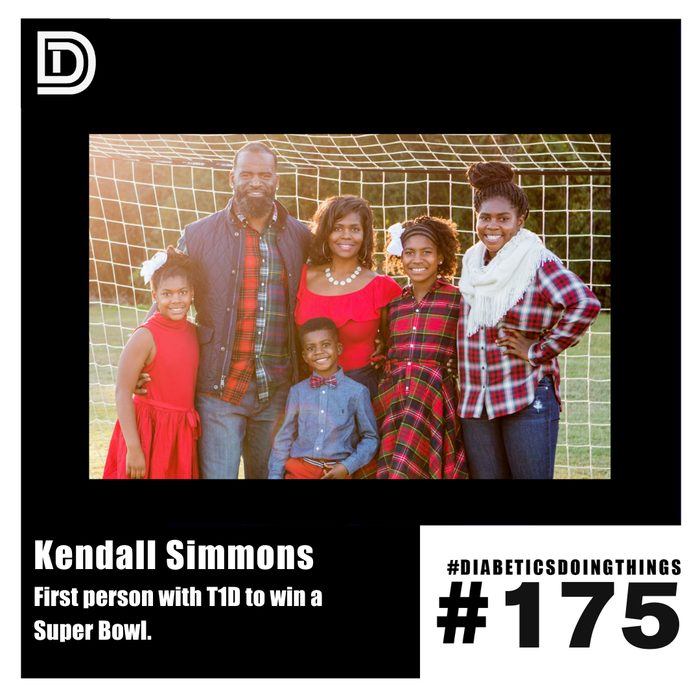
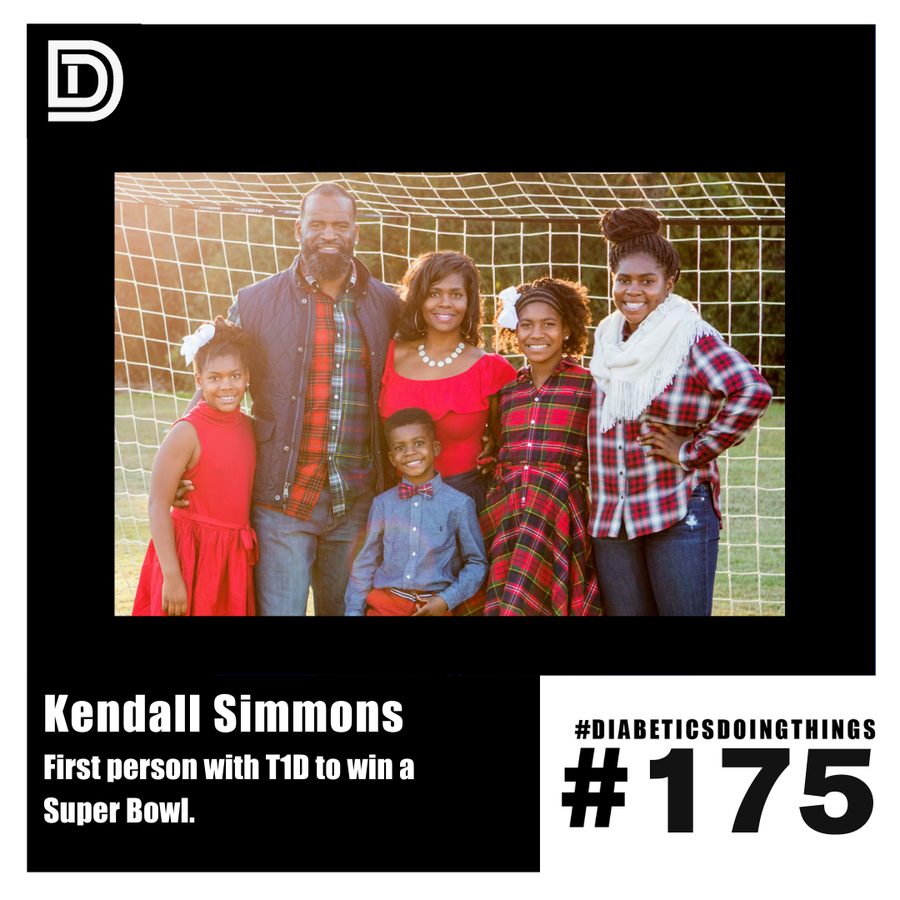
Kendall Simmons was a first round draft pick for the Pittsburgh Steelers who was diagnosed with type 1 diabetes in 2002, going into his second NFL season. He went on to win two Super Bowls while managing blood sugar during games, where adrenaline often sent his numbers swinging and he took as many as 10 shots and 20 checks in a single game. Kendall talks about leaning on his wife, the Rooney family, and teammate Aaron Smith for support, learning to read his own body since CGMs were not reliable yet, and dealing with media scrutiny as a young player. He now coaches at Auburn University, speaks about his faith, and is the namesake of the Myabetic Simmons Diabetes Duffel.
Key takeaways
- Kendall Simmons was diagnosed with type 1 diabetes in 2002 after his rookie season with the Pittsburgh Steelers and went on to win two Super Bowls.
- He says adrenaline during games was his biggest blood sugar challenge, sometimes requiring 8 to 10 shots and 10 to 20 checks per game.
- Without a reliable CGM at the time, Kendall says he learned to read his own body like an internal CGM, watching for shaking hands or spacing out as signs of a low.
- He credits teammates like Aaron Smith, the Rooney family, and his wife for helping him manage diabetes openly instead of hiding it.
- Kendall tells parents to let kids experience the natural consequences of diabetes instead of hovering, so they learn to manage it themselves.
Show notes
This week’s guest is Kendall Simmons (@kendall_sim73 on instagram)
Rob and Kendall discuss, among other things:
What it was like for Kendall to be diagnosed after his first year in the NFL
The story of his diagnosis
Dealing with criticism about Diabetes in the media
The role faith has played in his life with Diabetes
Working with Myabetic on the Simmons Diabetes Duffel
What it means to be “normal”
Giving back to the next generation of athletes as a coach at Auburn University
Stories about dealing with difficult blood sugars during exercise and football games
What Kendall would tell a young person with Diabetes who wants to chase their dream
And much more!
SPONSORED! This episode is sponsored by Type Zero Health, a T1D owned business who make exceptional clean exercise products that don’t spike your blood sugar. Type Zero is the official exercise partner of Diabetics Doing Things and you can save 20% on your order from TypeZeroHealth.com by using ROBHOWE at checkout.
Questions this episode answers
Who was the first NFL player with type 1 diabetes to win a Super Bowl?
Kendall Simmons, an offensive lineman for the Pittsburgh Steelers diagnosed with type 1 diabetes in 2002, won two Super Bowls with the team.
How did Kendall Simmons manage his blood sugar during NFL games?
He says adrenaline was his biggest challenge, often requiring 8 to 10 insulin shots and 10 to 20 blood sugar checks per game, and he relied on sideline trainers and glucose gel to stay in the game.
Did Kendall Simmons use a CGM or insulin pump as an NFL player?
No. He says his doctor told him a pump would not survive the physical position he played, and CGMs were not reliable yet, so he managed diabetes with injections and by learning his own body's signals.
What is the Simmons Diabetes Duffel?
It is a diabetes supply bag made by Myabetic and named after Kendall Simmons, released in partnership with Type Zero Health.
Full transcript Searchable, with timestamps
Rob Howe: Welcome back to another episode of Diabetics Doing Things. We're telling the amazing stories of people with diabetes from all over the world and I'm super excited to introduce you, before we get into the episode, introduce you to our latest guest, Kendall Simmons. He's the first person with type 1 diabetes to win a Super Bowl. And he didn't just win one, he won two Super Bowls. Kendall was diagnosed in 2002, shortly after his first year in the NFL, and we dig into all of those stories in this podcast. Kendall is also the namesake behind the Simmons Diabetes Duffel, which we just did a giveaway with Myabetic and Type Zero. So congratulations to our winner, Scriven. Also, Eritrea and I did not record an episode of Testing, Testing Our Blood Sugar, our little pre-show this week. So it's just this interview with Kendall. And I got to say, you're going to love it. I first interviewed Kendall in 2020 for Imagine Camps, Imagine Spotlights for Beyond Type 1 and the American Diabetes Association. So be sure to check that out. I'll link it in the show notes on YouTube. It's an amazing interview. Kendall's an amazing guy, and I think it's so important to hear from people who are achievers, but who are also real people. So we also dig into Kendall's life after football. And I think it's super important to know that while our sports careers don't last forever, our diabetes certainly does at this point. So please enjoy this interview with the amazing diabetic doing things, Kendall Simmons. What's up, guys? I got a very important announcement for you today. Not only is this episode sponsored by type zero health, but type zero is now our official fitness partner of diabetics doing things. And that's exciting for me because if you can hear I'm actually mixing up some type zero NO booster in my shaker cup right now because I'm about to go work out like I normally do late in the day. And what I want to tell you first about type zero is that for people with diabetes, you can get the boost and the pump you need to crush your workout without having to worry about spiking your blood sugar because type zeros and NO booster is clean. It's caffeine free. It uses natural ingredients, no artificial flavors or colors, and it doesn't spike your blood sugar, but it gets you the pump you need. It also doesn't have caffeine. So I can have it later in the day. Like I am right now, it's about five 30. I've just gotten through my workday and I'm about to go hit the gym. I use it when I play basketball, when I go on a run, when I hit the weight room, which I've been doing a lot lately, and I've been using it to help me shift into workout mode while I'm at home. I get that shaker cup going, mix it up. I'm using the cherry limeade flavor right now. You got to check it out. TypeZeroHealth.com for more information. If you use TypeZeroHealth.com, use code ROBHOWE. That's my name, Rob Howe. No spaces at checkout and you can get 20% off. TypeZero is a T1D owned business and you know how I love T1D owned businesses. Check out episode 132 for my interview with the founder of TypeZero, John Jensen. You can hear his story there. Also check out type zeros, clean nitric oxide supplement. I've been taking it for a few weeks now, and it has really powered my recovery. Again, no caffeine, just beetroot, pine bark, arginine, and citrulline, which are natural ingredients. It helps me recover, which is a big part of how I implement my training these days. I've got to be able to recover. I take on a lot of mental non-physical strain. And then with my workout schedule, it's hard for me to recover and bounce back. And this has really helped me. I even left a review on Amazon with a photo of my whoop strap where it shows month over month how my recovery increased after I introduced the clean nitric oxide supplement. So check that out. Again, typezerohealth.com, the official fitness partner of Diabetics Doing Things and use code ROBHOWE for 20% off at checkout. All right, welcome back to another episode of Diabetics Doing Things. We are telling the amazing stories of people with diabetes from all over the world. Very excited to introduce my very special guest. First time on the pod, but we've done an interview about a year ago with Imagine Spotlights as part of the Beyond Type 1 and American Diabetes Association collab. Mr. Kendall Simmons, welcome to the show. Glad to be here. How you doing, man? I'm doing great, and thank you so much for taking the time to be with us today. I know you are an assistant coach with the Auburn Tigers, so you guys are getting ready for the college football season here in 2021, so thanks so much for taking the time with us today. Yeah, for sure. So you have, your story is incredible. And I'm going to link a couple of the previous interviews that you've done in the diabetes community in the show notes. But as far as I'm concerned, you know, based on my research, you are the first person with type 1 diabetes to win a Super Bowl. And, you know, until somebody could tell me, like, you know, show me the receipts of somebody else, like, I'm going to claim that for you. I think that's, I think you are the first one. Well, I'll tell you what, I
Kendall Simmons: honestly have never looked to see, but I'm gonna let you claim that for me. And I appreciate that.
Rob Howe: I love that. So, you know, you had a great NFL career. And, you know, I think one of the things I'd love to talk about, you know, as we kind of get started, we normally start start off these interviews with talking about diagnosis. And you were diagnosed as an adult and kind of right in the middle of your professional sports career. So tell me what that was like. What was that like? Not only, you know, going through the actual, you know, diagnosis and, you know, learning about insulin and learning about testing your blood sugar, but also just kind of like mentally, emotionally. What was that like for you as a young man going through that diagnosis?
Kendall Simmons: I'll tell you what, it was actually at the, really the beginning of my professional career. I had only played one year with Pittsburgh and I was going into my second year when I was diagnosed and went through everything. Honestly, Rob, I don't know if I could have handled it mentally if I had to deal with what the kids have to deal with nowadays with social media. We didn't have it back then. People have heard me kind of tell this story before and I make fun of it. MySpace was the big thing and it had really just kind of gotten started. So I didn't have to face the scrutiny or what kids have to go through with social media nowadays. So I was blessed in that part. The only thing that I had to worry about the most was the newspapers, the high expectations of being a first round draft pick for the Pittsburgh Steelers. You are expected to contribute immediately and make an impact. That pressure, people not understanding what the world of diabetes was about and how it affected you mentally and physically. I had no clue about it myself. So you're talking about going into it blind? That's an understatement.
Rob Howe: Well, and I think at that point, too, you know, for our listeners out there, it's such a competitive environment to get to anyway. Like, very few players, and, you know, I don't have the statistics in front of me, but very few play high Division I level football, Division I A football at the time. even less get drafted in the NFL anyway. And then to get drafted in the first round, that is an elite group of folks. And then, you know, to have something like a diabetes diagnosis kind of sprung on you there, you know, as you're getting ready for your second season, you know, that can be difficult. That's a tremendous hurdle is adjusting to a lot of different things all at once.
Kendall Simmons: Yes. Yes, it was. The one thing, actually more than one thing, several things was playing in my favor. God already knew what he had in store. I didn't. I was freaking out about it and did not really want to deal with it, but I had no other choice. Two, my wife fell into it blind like myself, but she was so supportive and tried to do her best in helping me out and making adjustments. At home, we were newly married, so that's throwing something else on the plate. You know, we got married right before training camp my rookie year, so there's something else you got to deal with me. and then also having the Rooney family and that organization having two kids with type 1 diabetes having Jonathan Hayes who is still a current NFL coach who was a tight end back which still is in who had diabetes the training staff dealing with it I had so many things in my favor that a lot of people who live with diabetes don't have those paths kind of opened up for them I was blessed So the way I looked at it is if I fail, it's my fault. I'm not taking advantage of opportunities I had in front of me.
Rob Howe: Well, and, you know, I think that speaks to your mindset in general. But I think also you hear people with diabetes say a lot that it does take a village and everybody's village looks a little bit differently. And, you know, like you said, kind of the steps were ordered. You had people in the organization with experience in diabetes and a relevant personal experience and also were invested in your success. And, you know, how did you how did that manifest itself for you as a young as a young man, a young professional? You know, did you give you confidence going into, you know, being able to throw yourself completely into into your dream of playing professional football at a high level?
Kendall Simmons: It did. It definitely gave me confidence. The thing I had to fight the most was my own personal scrutiny. I'm a very big critic of myself. And sometimes that can be a detriment. when you played very well your rookie year I won the Joe Greene Rookie of the Year Award for the team for being the best rookie i made all rookie team all nfl rookie team all that stuff so you come in and you set expectations and you kind of meet those to a degree and then you have a giant hiccup how do you get back to that level how do you repeat i'm struggling right now and i don't know how to respond to this my body's not doing what I'm used to it doing so that was a lot of things where I had to learn how to pace myself and not look for that instant gratification that a lot of us young people struggle with and we fall susceptible to because of we want things to happen right then instead of learning how to fight and struggle for what you really want and get
Rob Howe: through it. Well, and you talked about your success on the field, on and off the field, really, you know, first round draft pick, the Joe Green Award for the rookie of the year on the team, like pretty much anything up to that point that you set your mind to and you work towards, you were able to achieve and you had achieved that success. And as you know, now, you know, diabetes sometimes doesn't abide by those same rules. Like sometimes it just is so unpredictable and has so many inputs. You know, exercise is a difficult thing. And a lot of people, you know, in the diabetes community and struggle with, you know, going high or low during exercise. And obviously when you're training to be an NFL, you know, you're an NFL player, like lifting weights and, you know, workouts is a huge part of your weekly routine. Do you remember like any times that diabetes got in the way of workouts or practices or OTAs or
Kendall Simmons: even games while you were in the NFL? Several. I mean, I mean, more than several. I can count hundreds of times where it affected my play, my mental focus, all of those things. The one blessing that was for me in practice was the trainers. I always kept a close eye on the head O-line coach. He was on it. I could tell him, I could say, hey, give me a minute. I was lucky enough at that one time. I could say, I don't feel good. All right, go ahead and take care of yourself. Get out of the drill. Put somebody else in. You know, I know they got pictures of me sitting on the back of the gator, sucking glucose gel down and eating tablets and, you know, having a trainer, you know, check my blood sugar and stuff and sitting there to the point, OK, I feel better and get back in. The other part is, is that. One of to me, in my mind, one of the best defensive linemen I ever played against who really taught me how to play the game. His name is Aaron Smith. Number 91. I love the guy. his dad had type 1 didn't take care of himself had all the resources in the world and Aaron had to sit there and watch him struggle he had made a decision that nobody said I'm gonna do what I want to do he end up kind of succumbing to you know the symptoms of it Aaron had another opportunity to kind of take care of somebody so he saw that in me he could tell I'm somewhat of a playful person but when he saw that deer in the headlights look you know what I'm talking about you're staring falls in the distance and I wasn't talking or I was kind of dragging. He's like, hey, get out. He would force me out and make me go take care of myself. That gave me confidence and that made me comfortable because one of my peers, somebody that I looked up to who understood it more about it than I did at the time, was helping take care of me. Guys would ask me questions, which made me more, opened up more about what I was living with and also kind of forced me to do some research, learn about what I was living with, because how can I answer questions for them when they see it in their family, when they got somebody there, hey, I can ask these questions, maybe we can get better insight on what my family is living with. So it kind of put me in a position where you had to own up to what you were living with. And game time was the most challenging of all the times of me living with diabetes. No lie, from the time I walked into Heinz Field or any other stadium to the time the game was over with, I took at least 8 to 10 shots manually or checked my blood sugar at least 10, 15, 20 times. Adrenaline and the supplements back at the time was affecting my blood sugar. I didn't realize the adrenaline was really the biggest culprit. I learned that, okay, this supplement here, If I take it, it's spiking my blood sugar. This ain't going to work. It makes me feel better, but it actually is a counter effect because my blood sugar is high. Now I'm, you know, too high to do anything. So I had to kind of take supplements, figure out which one worked. But the biggest problem was the ups and downs of the adrenaline rush. That is what I struggled with the most during the game. And I had to learn how to kind of take little doses here and there to manage my blood sugar. But it was all trial and error.
Rob Howe: You know, it's so refreshing for me to hear that. the, the, even at the NFL level, you guys, you know, diabetes still kind of throws those curve balls in. Cause I remember, you know, my going into college, I, I, I switched from injections to a pump my, between my sophomore and junior year and my basal insulin prior to getting on a pump had, had helped me mitigate some of those adrenaline spikes because game time, there's no bigger, you know, that that's when you're the most adrenalized, you're the most excited, you know, a little bit of that stress too. And that your body's going through that natural getting ready state and that causes your blood sugar to go up and you know that can just be a really defeating thing sometimes and you know it's i echo your sentiment as well without my trainers being willing to adjust on the fly and experiment and try new things uh you know it might have been a different uh story for me on on game day so how did you adjust the way that you prepared for games you know from your rookie year obviously you don't have diabetes to you know towards the end of your career after you had developed that routine and really gotten into the rhythm of what that was going to be like what do you remember as like the big changes to your routine um i don't know if
Kendall Simmons: anybody's ever put it this way but i was thinking about it as you was asking the question um really listening to my internal cgm in my body because at the time cgms wasn't really uh reliable and they were just on the, on the, you know, being put into use. And so I didn't really understand what CGM was, didn't know anything about it. I wanted to pump, but my, you know, doctor said you are going to destroy a pump because the position that you play, it won't stay on. So you're managing well with, you know, injections. So learning that whenever I would space out and got quiet, I knew I was going high. I mean, I felt like I had center blocks around both my legs. and I was struggling to move. I knew I was about 300, 400. When I got up to the line of scrimmage, and this is no lie, Rob, I couldn't tell you how many times I got to the line of scrimmage and had completely forgot to play that Ben Roethlisberger had called in the huddle. Didn't know the snap count. Didn't know the play. My whole concentration was at the time was try not to fall on your face. The hardest struggle for me was that playing offensive line, you can't tap your head like a skilled position guy and say, hey, I need to come out for a minute. You can't do that. You have to fight through. And so it taught me more mental toughness and learning how to really focus and pay attention to my body more than anything else I've dealt with. It also taught me how to not rely on my raw strength. I had to learn how to take better steps, maybe exaggerate the angle that I need to get to because I know I'm slower than I normally would be. so I got to get a little bit deeper here and just hold on for dear life you know what I mean and so it really taught me a lot about the game as far as playing as a player and what I could push myself through physically we are a lot stronger mentally than we give ourselves credit for we are quick to wave the white flag and say I'm out this is too tough but when you're in a position like I was in and you're blessed and you never thought you'd ever get there if people think it's crazy but you will push yourself beyond points of okay this is crazy no I'm gonna push myself and until something really bad happens I know that I can handle this and it taught me that so um my internal cgm is just listening to my body the shaking um when guys saw me in the hole and my hands were shaking like this, they knew my blood sugar was low. I would tell them all the time, hey, point that out to me because sometimes I'm doing it and I don't even know it. And they would say, hey man, you okay? And I look down and my hands would just be shaking. And I'm like, okay, all right, I need to figure this out. And I would get over to the sideline after 10 plate draw and it would be at 23. And people are like, how in the world were you standing up doing that? I would just do like this. That's the only reason why. And I would think at That freaks parents out. I know I might be jumping ahead, but to a degree, you kind of have to let your kids find their own way and let them figure that out. You can't freak out when you're looking at your phone or the bleachers and you see that because they smell blood in the water. Unless your kid is showing some kind of negative reaction and he's struggling, let them figure it out because that's the way they grow as a person.
Rob Howe: Yeah, I agree. I think I talk a lot about diabetes makes me better at failure because I know, I know what it's like to maybe not be as prepared or have to adjust or overcome some adversity. And, you know, for me, I, I, I take everything back to sports. So I think about the basketball, the shooters mentality, uh, where if I'm thinking about the last miss, then I'm not concentrating on the next shot and I'm not going to be ready when my number is called, you know, when my name is called. And I think that's where, you know, I try to, I try to, when I, you know, I don't, I don't offer too much advice at times, but when I try to encourage people about their diabetes, I think of like, don't think about the last miss or don't think about the last high or the last low, because there's going to be more ahead of you. And it's, you know, it's all kind of about
Kendall Simmons: adjusting on the fly. It's just like life. I mean, it really is. I mean, it's, it's just like life. But it's constantly in your face every day. I think what the biggest thing for me is, is being prepared, anticipating, remembering that, okay, this last situation, I was in the same spot. I went low. I didn't bring enough insulin or I didn't have enough glucose tabs with me or whatever it may be. Now I know that I'm going to be in the same position again. I need to have those things and maybe almost be over-prepared. It's better to not be over-prepared and not have
Rob Howe: enough stuff and be out there. Definitely. It's kind of like being a Boy Scout, right? You, you know, be prepared is, is that that's the best motto I can, I can say for, for a life with diabetes. And, you know, I think, I think it's, it's just an, it adds one, one extra step. So, you know, one or multiple extra steps to everything that we're kind of used to doing, you know, prior to, prior to life with diabetes, you guys had the Steelers, you guys had some immediate success, you know, as, as you got into the league, you came into that team and you guys, you know, very quickly went to the Superbowl and were competing for a title. What was that like to step on the field, you know, at the highest level of football and just, you know, hear your name called over the loudspeaker and to be out there with your team?
Kendall Simmons: Absolutely amazing. It still hasn't sunk in that I played with such great players. And I guess, you know, let me rephrase that. Honestly, when now I see some of my teammates, I had a chance to go to Jerome Bettis' Hall of Fame induction. I blocked for that guy for like five years and saw some of the stuff that he would do as such a big guy and how nimble and how good his feet were. It was amazing. And I just didn't think about the fact that this guy is a future Hall of Famer. One of my best friends, and I look at him like a brother, Alan Faneca, is being inducted in August. Troy Polamalu, everybody know the hair, everybody know the number. watching him do some of the amazing things. I saw more stuff out of him really amazing in practice that people didn't get the chance to see than in games and playing with those guys and being a part of that. They all had something going on individually, physically, that people don't know about. Allen dealt with epilepsy. He had to take medicine all the time. If not, he could have a seizure. Jerome Bettis was an extreme. He had asthma really bad. I watched him have asthma attacks and then go out there and run over Brian Urlacher, you know, on the goal line. Being around those guys and seeing them succeed, it taught me, OK, if they can deal with this, I can too. We all got our own limitations and how we handle them is, you know, is part of life. So I saw them succeed. Let me keep doing the same thing. They were a great example. And to me, that team was a blessing for me because I honestly, I don't think I would be sitting here talking to you. right now if I wouldn't have had a chance to be a part of the Pittsburgh Steelers because that really set the foundation for me and if I have an opportunity I try my best to try to help people in some way or another hopefully maybe be somewhere that foundation they need to kind of keep pushing
Rob Howe: definitely and you know I think what you said about you know those guys you know Jerome Bettis you know even casual NFL fans know who he is Troy Polamalu the same thing and you would never guess that those guys are struggling with, you know, some sort of hidden, hidden illness or hidden adversity. And I think that's one thing about diabetes as well. Many of us carry it very well, you know, Super Bowl champion, you know, we carry this heavy burden, sometimes make it look easy. And, you know, it's always important for me to remember that you never know what somebody's going through behind the scenes, you never know what adversity they had overcome just to get to where they are. And, you know, I think for you, you mentioned this a little bit earlier, there wasn't a there wasn't social media when you were around but you were a number one you know a top first round draft pick and there were some harsh and uneducated things kind of written about you in the media about diabetes um did you ever get caught up in that or did you ever have moments of doubt where you're like you know maybe they're right and or you know how to how did you in those sort of low moments um you know find the the extra gear or that extra fuel to to overcome those
Kendall Simmons: challenges? Really, I don't want to lie and say I never got caught up in it because it was hard not to look at the newspaper or look at the news and see those writers come into the locker room all the time. And that's their job. They question you that, hey, how you doing? And if you're not performing or you just look tired and sick, that is almost confirming to them that, okay, this guy might not make it. You know, your first round pick, they put all this into you and one year in, and it's looking like you're not going to be the same and your career might be in jeopardy. And it makes you question it. I had never dealt with anything like that before. So I'm not going to lie to say it. Sometimes I did think about, man, I don't know if I can do this. But having that support, Aaron, the Roonies, my wife, God first more than anything that really helped me. Also too, I saw it as one of those opportunities that I need to take a step back and look at how fragile my life and my career was at the time because no lie. I honestly think if you could have a real conversation with most professional athletes, they'll tell you that ego's involved. The ego gets big at times and every now and then And he needs to kind of bring you down a peg or two just to get you to realize that it ain't all about you. It's really not. You are doing some things that is not in line with what I think is the right thing to do. And I was in that position. So it helped me to be a little bit more humble around myself, start trying to look at things a little bit better, and start giving more than thinking I needed to receive. that's the way I looked at it.
Rob Howe: Well, and you've been very outspoken about your faith and you're a man of faith. How, in those moments, when you're talking about your ego kind of being bruised a little bit or having to come to terms with not being in control of your life, so to speak, and those steps being ordered, how does your faith help you in your life with diabetes?
Kendall Simmons: The biggest part for me is is being serviceable for people, being a servant, then receiving. That's what Jesus did. He was a servant first. And to me, I feel like when we put ourselves out there and help people, it minimizes our issues. It makes our problems seem so small when you get to learn about people and see what they're struggling with. And you're like, okay, what am I really tripping about? this person got so much going on in their life and I'm complaining about this and if you can help them a little bit it's so gratifying and it makes you feel good once I became a speaker and started talking about my life with diabetes it gradually evolved into how God was helping me through all the issues I was dealing with and just open up more and I saw how it affected people when I'm sitting here talking and I see a mother in the crowd and she's crying or I have a little kid in Hawaii and they go into a Christian school and all that stuff is based off faith. And a little kid is eight, nine years old getting up quoting scripture to me and is almost bringing me to tears on stage. I knew I was in the right space. And we have little examples like that all day during our life, but we're so distracted with things. Social media, trying to impress people, trying to be quote unquote normal, we miss out on a lot of that. And me included still, and I try to help myself by, okay, try to be a little bit more social with people. When you start seeing that you're not doing what you're supposed to be doing and what he put you in line to do, you wonder why things are going awry. So that's just me. That's my whole vision on all of it, to be honest with you.
Rob Howe: Well, you mentioned, you know, you speak and you're, you know, use your platform to talk to people who are struggling with their diabetes and talk about your life with diabetes. But you always weren't, you weren't always that way, right? You even in your, I remember a story you told out to dinner with like some close friends and you know, your, your wife was, was the person who sort of encouraged you to be a little bit more open. When did you cross that sort of threshold of, you know, I'm not just going to keep this to myself and my teammates and my, and my training staff, but I'm going to share my story of my life with
Kendall Simmons: diabetes with more people um it probably was really it was and i this is me amazing it was a little kid and i think i told you this before little kid was same number i did 73 play guard he might have been eight years old and he wrote me a letter and he just said mr simmons i really appreciate how you're handling your diabetes i was just diagnosed myself and the way you are handling it is teaching me that I can deal with anything. And when you have a little kid you've never seen before tell you that you are having an impact on your life, on their life, and that motivates you to keep going. And I always tell my kids is people are watching you at all times, whether you know it or not. And the way you carry yourself and how you handle things speaks volumes of your character it speaks volume about how we raised you and everything else and you don't realize that as an adult that people are constantly watching especially as a professional athlete we are um mentors idols however you want to put it regardless whether we want be or not and just my actions on how i was handling it how it struck me i really was but on the outside people saw okay look you have on it well um i'm like okay maybe i can do this but get up and speaking about it it took me a while to come out of my shell with that um and once i started talking i felt a weight come off my shoulders and i felt more comfortable and i felt at ease with what i was living with and that's why i always try to encourage people if you can find one or two people that you can just talk to about. You got to talk about it because when you hold it in, you become better. You see all the negative things instead of the positive that can come out of any situation you live with in life. So I always try to encourage you to find somebody to talk to. If you want to call me and talk to me, you say, hey, look, I don't need any advice. I just want to vent. I'd be like, cool. I will sit here and I'm going to say nothing. And you can say whatever you want. Unless you ask me my opinion, I just want you to feel better at the end of the conversation.
Rob Howe: well I you know I can't speaking from my own experience I can't agree with that enough I that for me you know the first year or so we were doing this podcast I was also starting my own company and so I would work all day on the podcast and I'd be tired and I'd have my interview scheduled for the afternoon and I you know 10 minutes before the interview I was like I don't really want to do this I'm tired I gotta just go rest or whatever but I would stick to that appointment and every time I came out of that conversation feeling better feeling like my cup was full because someone was willing to just have that conversation. And so, you know, whether it's normalizing stories about diabetes or just, uh, you know, connecting with somebody over an issue that you both deal with and it's very real and very tangible, uh, you know, changed, honestly, changed my life. And I think, you know, we were talking about it before we started recording, you know, six months ago or so we had this terrible ice storm here in Texas. And afterwards, I was just feeling really down in the dumps and I'm, you know, kind of really questioning a lot of the things I was doing. I went back to the interview that we did last summer with the Imagine Spotlights. And I, cause I remember coming away from that conversation, I felt much better than when I went in and, you know, having those recorded out there, you know, for me, I was like, wow, okay. You know, coach Simmons, you know, brought, you know, brought me back from, you know, feeling, you know, down about myself. And I have, I have good days and bad days just like anybody else. But just knowing that there is a community and there is a connection And there are inspiring people living with diabetes who just the smallest detail, it doesn't necessarily have to be a Super Bowl winning story. I think the story that really got me the most fired up was when your wife told you to not go to the bathroom and give the injection and to give it there at the table. And, you know, that being the first time that she sort of felt comfortable doing that. And I just remember that was so tangible for me. So, yeah, even those little tiny details that you don't think are making an impact, somebody somewhere is hearing those. Sharing that story is so important.
Kendall Simmons: Yeah, I'm 42 years old and I'm going into year 17, 17, 18 years living with diabetes. And I'm just like everybody else. I'm a human being. And there's still times where I'm uncomfortable with giving myself a shot in front of people. It's part of life. But I tell you what I love the most is I hope we get past all this COVID stuff because I miss the interaction with people. I miss having the opportunity to go to camps and see kids interacting because it really helped me come out of my shell. I pull up to a camp and they're, hey, come on in here. We got kids in here testing. You're like, oh, goodness. What are my numbers going to be at right now? I'm hoping they're okay. But it's like, okay, it's an accountability thing. And all right, these kids are 250. And they're not really tripping about it. All right, look, yeah, I'm a little high right now. I mean, you both, let's take something and bring it down. It's kind of helping each other along that path. I hold a rope, you hold a rope. We're going to walk down through here and try to keep each other upright. And I think that is the amazing thing about communicating and being in a space with people and showing that you're actually human too. And I tell them that I'm like, I just feel blessed to have an opportunity to play professional sport. I'm no different than anybody else. I have my struggles too. So we're all in this together.
Rob Howe: So I'm really looking forward to camps coming back, you know, at large, you know, hopefully here in the near future as well. Because, yeah, there's just something special about being in a room full of people who know what you're going through and, you know, watching everybody test their blood sugar and dose before meals. It's just a really impactful thing. I'd encourage anybody who hasn't been a part of it to definitely do that. You're now on the other side of the sideline. Now you're coaching and you're kind of giving back to the next generation of athletes. I guess two questions you know how do you have you coached anybody with diabetes yet in your coaching career and you know how do you use your story to empower those players that you're working
Kendall Simmons: with I hadn't had a chance to coach anybody with diabetes yet before I got into coaching I guess I kind of volunteered here and there and watched there were a couple guys that were on the team that had diabetes so I try to talk to them and help them really right now in my position I use more of my failures as a way to try to guide the guys that I'm a point you know part of just let them know like look don't look at it as the coach it's not giving you an opportunity he's fussing at you all the time or I'm behind this guy and I'm better than this person why am I not getting their play and I try to tell them really honestly maybe right now ain't your time um these guys earned it yeah you might be a little bit better than them but they've got more time in on the field and a little bit more tread on their tires than you so the coach is probably comfortable with it and they're looking at you but if you keep working and don't give up um your time's gonna come and and not being selfish about that those are things that I try to be a calm voice within the storm, you know, with the guys from there, they're feeling down and try to let them know that everything is going to be all right. And I'll tell them in a heartbeat, hey, you know what, I'll be honest with you right now, maybe you might need to move on. You've been in a situation for a minute and it's not changing. And I don't want to see you go anywhere, but for your own mental health, you might need to just okay let's explore another option you've already graduated so you got your degree that's what's the whole point is to get a degree um degree first let the ball be the icing on the cake now you want the icing on the cake so but you need to go and make sure you're finding the right opportunity don't put yourself back in the spot where you were and you could have just stayed here so look at the pros and cons whether it's going to benefit me league or is it just well all right maybe it's just my path that God want me on I'm just not going to be that guy and I never was meant to be so I need to be happy with where I'm at
Rob Howe: and that's a tough thing with athletes right because you talked earlier about ego and you talked and you know and coupling that with perseverance and also you know understanding when when it's your time or what other paths there might be that's a difficult place to be in uh you know I was a guy that had to wait my turn and it uh if you had asked me when I was 20 how I felt about it, I would, it would be a very different answer than I give you today, for sure. I remember being, being young and being frustrated and working hard and feeling like you're doing it and just not being your time. But, you know, if you're feeling like that out there, hopefully your time is coming one way or another. And I think like what you said as well, sometimes, you know, just to be able to say, to be blessed to be an athlete at a high level at a college or a professional level, even if you're not, you know, I always say, don't Google my stats because that'll be a little bit of disappointment for you. But, you know, you're in the right place. And, you know, you can have that sense of gratitude to live a privilege and a cool life and be grateful for those moments because, you know, you don't remember all the score, right? You remember the interactions that you had with the guys around you and the adventures that you kind of had along the way.
Kendall Simmons: Yeah, that's what I miss the most about the game is the interaction, the hanging out. And just, you know, the things that you experience together, I miss that more than anything. Yeah, you know, playing, you know, every now and then. But other than that, I would just give me some time just to hang out with you guys. You know, go through that hard practice or that hard run of pushing each other and that camaraderie. Hey, we got kids together the same age, sitting around laughing, talking and watching them play and stuff like that. That's the stuff that I miss the most more than anything else.
Rob Howe: well we'll change the subject just a little bit uh you recently worked with with myabetic who are you know friends of the pod and and we're partnering with a with a giveaway for for your latest bag so the simmons diabetes duffel is named after you so you got you got a diabetes gym bag that people from all over the world are going to be taking to the gym or to on road trips or on weekend trips storing their diabetes stuff uh what does that feel like how did that you know how did you know that something with your name on it is impacting people's lives who live with
Kendall Simmons: diabetes? It's really absolutely mind-blowing because you think about things like that. I know a lot. I thought about, okay, before this even came out, what could I do to give to the public or whatever it may be to kind of promote myself to a degree, but help people who live with diabetes. And, but then I've always been that type of person. I don't like care that much for self-promotion. That's just not who I am. And for them to kind of go at it and ask me to do it was an absolute honor. And I'm amazed by it. And we, you know, have a few people that have bought it. I don't know who all have gotten it, but the people that do, I hope it has benefited me well and in service you the way that you wanted to. And I definitely appreciate it. And it's just an absolute honor for Myabetic to ask me to be a part of something like that.
Rob Howe: Yeah. I think you come back to, you know, you wouldn't, you wouldn't have asked if they, if you had asked before you got diagnosed with diabetes, you know, you wouldn't have even thought that that was part of the path. And now, you know, just it's amazing. The doors sometimes it's hard to look at diabetes as an opportunity to help people or an opportunity to get outside of yourself. But, uh, you know, I've been fortunate. And I think you as well, just to, to be able to have an impact on people in ways that you never would have planned, uh, when you were planning out your life early on. And, you know, some of those things, leaving yourself open for surprise is something that, you know, I would encourage everybody with diabetes out there. It doesn't always have to be negative. Certainly there are those tough days. And I think we talked a lot about that, but you know, there's those bright moments sprinkled in there as well. And, you know, as we kind of wrap up the interview and get towards, you know, the end of our conversation, I'd love to ask what you think about, you know, when you go speak and when you have your conversations with people in the community, what would you, what do you tell a young person or a parent of a young person with diabetes, or even a person who was diagnosed as an adult, like you were, what do you tell them, you know, when they tell you they want to chase their dream or what
Kendall Simmons: piece of advice would you give them? I'm going to start with the parents because I always look at them and, um, you, everybody know the term helicopter parent. You worry about your child, you worry about them and you wonder if they can handle it. To me, living with diabetes will prepare them for life. We always talk to our kids and fuss at them about being prepared, thinking ahead, anticipating. You have no other choice when you live with diabetes. That is an everyday 24-hour deal. And if you give them that opportunity instead of doing it for them, letting them kind of fall on their face every now and then you know you don't want to end up in hospital because they're not checking their blood sugar but every now and then you gotta let them see the consequences of their actions that are lack of actions because it's going to prepare them for life it for me it makes everything else look easier to prepare for um so i just say give your child a chance if they're not showing any signs of freaking out and and struggling with it they got it under control um and i love when i see young kids five six seven eight years old not younger they are like look mama get away from me i got this and i'm like boy i i ain't even where i'm still not where you at right now i love that too man it's so it's inspiring to see those
Rob Howe: little they're like doing the math and they're doing the insulin yeah and they know they got
Kendall Simmons: their cgm on their phone they're just doing it i love it yeah and so i would think as a parent um we children react off of you young adults react off of you if they see you struggling it makes them more anxious and stuff so i always tell mothers especially i can see the eyes mommy do yourself a favor go in another room or two three rooms down put a pillow over your face and go out of screaming and crying and get all out your system try your best not to let your the child see you emotionally kind of falling apart because it starts making them think, okay, man, what I'm dealing with is really, really, really, really bad. It can be at times, but if it's not something right off the bat, then let them kind of deal with it and just be support, more or less listen than giving an instruction because you have to remember, mom and daddy, you're not the one living with it. Unless you are, you don't really understand what they're going through physically and mentally. Try to be there and ask questions and let them talk to young people. Don't ever give up on your journeys. If it's something that you really want, there's a sacrifice to it. What are you willing to sacrifice? Diabetes is one of those things that's already, I'm not calling it sacrifice, but it's going to be that hurdle. It's do I have to give up? Do I need to put my phone down more? Get off social media? Do I need, you know, pay more attention to my numbers rising at this certain time when I get ready to prepare for my dream? How do I combat that? Also, don't fall to peer pressure because your friends are doing this and they don't have to take shots. They don't have to do that. You really don't know what they're doing. They might've taken a shot or whatever medication for you saw them. You never even know. and my thing there's no such thing as normal we all are built from a mold that god has made for us and absolutely broke it we are specific to how he wants us to live our life society makes us think we all have to be in this box it's not that way be you and it's hard to figure out who you are unless you fall down a few times and you got to be willing to go through that um so just push yourself. Be okay with failing. Failing is the way to learn and grow. And diabetes is the perfect playing field for that because you're going to fail a lot. You're going to. Day in and day out,
Rob Howe: it'll remind you. It'll keep you humble for sure. Oh, no question. You mentioned too, and I want to just circle back to this a little bit about sacrifice and about dedication and perseverance. And, you know, when I have conversations with people like yourself, I don't know that the general public or, you know, your everyday person understands the sacrifice it takes to reach the highest level of success in something. So, cause I'm sure you played with guys, uh, over the years that were extremely talented or had all the gifts and maybe just, you know, maybe they just didn't make it and, or, or maybe, uh, they weren't as dedicated or didn't have that, that mindset, or maybe they got caught up with their friends or peer pressure or what have you. Um, you know, I think that's just so applicable to a life with diabetes and really, you know, understanding that it's, it's a marathon, not a sprint. And, and you really have to make sacrifices to get what you want. you know i don't know i'm kind of rambling now but i guess that's you know talk a little bit about the sacrifices that you had to make to get to where you know you ended up to get getting
Kendall Simmons: um knowing like i said that internal cgm i knew i felt the best when my numbers were between 100 and like 140 150 maybe 160 pushing that's where i felt quick as a cat i felt confident And my antennas were up. I was alert and fighting to make the sacrifice. Okay. I can't have, I can't go to my favorite restaurant here in Auburn, Cheeseburger Cheeseburger, and have ginormous thing of fries and famous milkshakes and stuff. And knowing, doing that consistently and knowing I need to train and be at where I want to be at. I learned steaks and the fat affect my blood sugar I love, I don't know if you ever had it or heard of it, have you heard of the Great Wall of Chocolate at P.F. Chang's?
Rob Howe: I have, I have, I'm a fan for sure
Kendall Simmons: okay so you're a fan, you know exactly what I'm talking about that thing there for me was so hard to give up and not have because the way the chocolate affected my blood sugar and it was always delayed. I would bottom out after taking my insulin and then wake up later and my blood sugar's at 400. I'm like, what in the world is going on here? Those type of things and learning and making those type of sacrifices to perform mentally and physically is what I had to learn how to do. If not, I was going to be out. Now, I had to deal with injuries. You know, as being a diabetic yourself, our immune system is weaker than everybody else's. I healed slower than a normal athlete would. So knowing that I really had to be on top of those sacrifices and made sure when I had surgery, because I was going to heal slow, what could I do to keep my numbers in optimal position to help speed up my recovery? Those things you're constantly thinking about. So you got to learn how to sacrifice things and not get jealous when you see somebody else having something that you want, knowing that your end goal is the
Rob Howe: most important thing. Yeah, I think that comparison, and we see it a lot in the online community of diabetes, comparing your numbers to somebody else's or comparing your life to somebody else's is the surefire way to remove yourself of all joy. That'll take away all of that gratitude in your life. So, um, no, I, that's great advice. And, you know, I, uh, I also, I haven't had one of those great wall of chocolates in quite some time, but, uh, yeah, maybe one of these days we can have a, uh, we'll all get to sit down and count those carbs out together and figure out a way through
Kendall Simmons: it. That would be fun. Exactly. I, you know, I think that I think about that all the time. I'm like, I would like to cut a piece and try to figure out how many carbs and how many calories is in one of those big six layer slices, it would probably freak me out of how much insulin that it would really actually take in a delayed process of making an extended bolus what would take to cover all that.
Rob Howe: Well, I tell you what, I will admit that once upon a time I did Google how many carbs are in that great wall of chocolate. Do you remember? I do. I remember it was over four digits. It was a 1000 plus carb transaction. dead serious so that's why when you have some you uh you wake up with that 400 spike for sure because there's so many carbs in that so yeah we'll have to split that like 50 ways or something with uh exactly uh well coach simmons man thank you so much for taking the time to talk with us today uh as as usual uh you just knocked it out of the park and it's so good to connect with you and talk to you uh so thank you so much for coming on the pod and and best of luck to you and the team this season uh in college football and looking forward to uh staying connected with
Kendall Simmons: you and all the things that you're doing. I really appreciate it, Rob. You're doing a great job. Myabetic, thank you as well for the bag, the opportunity. It's a great honor and definitely going to keep pumping and trying to get people to take part in it and all your products as well. You know, I would suggest to anybody, get an opportunity to speak to Rob or anybody. Talk about what you're living with. If you feel better at the end of the day, right now, just being able to talk to you. I already feel a little bit lighter at the end of this. Yeah, me as well.
Rob Howe: I know it's going to power me through the rest of my day. So best of luck to you at training camp. For those of you who are interested in a Myobetic Simmons duffel bag, we are giving one away. So we're going to give that away with full of some merch and some other products from Type Zero as well. So be on the lookout for the link that'll come out with this pod. And yeah, thank you, Coach Simmons, appreciate your time today and have a great one.
Kendall Simmons: Appreciate it. All y'all as well.
About Kendall
Kendall Simmons is a former NFL offensive lineman who played for the Pittsburgh Steelers and won two Super Bowls. He was diagnosed with type 1 diabetes in 2002, his second year in the league, and now works as an assistant coach at Auburn University.