

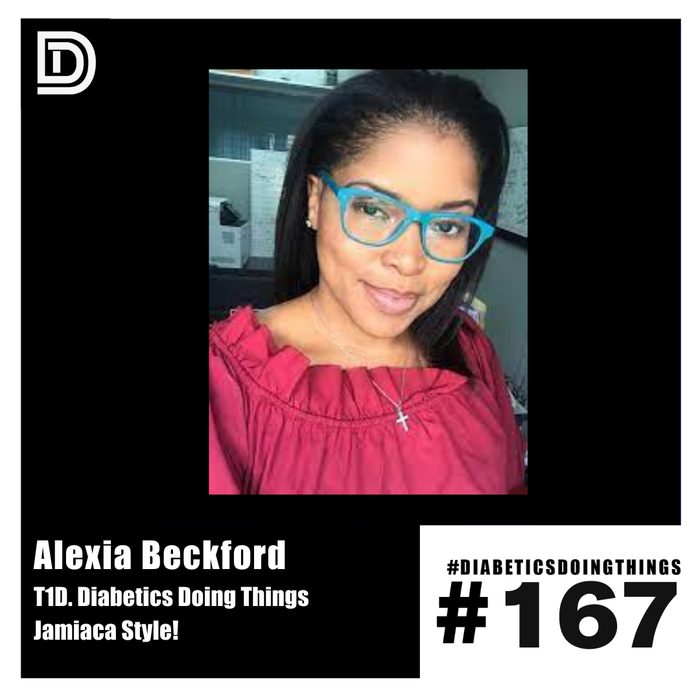
Diabetes in Jamaica with Alexia Beckford

Episode summary
Alexia Beckford was diagnosed with type 1 diabetes in Jamaica at age 20, after a doctor handed her a one-paragraph pamphlet and a referral to the Jamaica Diabetes Association. She describes going eight years without seeing an endocrinologist, developing diabetic ketoacidosis, and waking from a coma with IVs in both hands. She explains gaps in Jamaica's health system: government pharmacies that skip certain insulins, hospital rules that block an outside endocrinologist from treating a patient unless formally invited onto the team, and insulin costs tied to currency swings. She also talks about the stigma she faces, being told she caught diabetes or lacks faith, and why she now shares her story publicly so other Jamaican type 1 diabetics feel less alone.
Key takeaways
- Alexia was diagnosed with type 1 diabetes at 20 in Jamaica and given only a one-paragraph pamphlet on juvenile diabetes.
- She went eight years without seeing an endocrinologist and was initially put on insulin and metformin by a general practitioner.
- In 2015 she developed diabetic ketoacidosis and spent two days in a coma.
- Alexia says Jamaican hospital protocol requires a patient's primary team to formally invite an endocrinologist before one can adjust insulin, which delayed her care after ankle surgery.
- Alexia says people in Jamaica often tell newly diagnosed patients they 'caught' diabetes or blame their faith, and she pushes back by explaining her pancreas simply doesn't produce insulin.
Show notes
Allow us to introduce you to Alexia Beckford, (@beckfordalexia on Instagram).
Alexia lives with T1D in Jamaica, and in this episode we discuss what it’s like to live with Diabetes in Jamaica
Alexia, Rob and Eritrea discuss, among other things:
Alexia’s Diagnosis Story
What it’s like to live in Jamaica with Diabetes
Turning a negative Into a positive
How ignorant comments about Diabetes and other chronic illnesses happen around the world
How lack of information contributes to bad outcomes for Jamaican Diabetics
How Alexia has used social media and relationships in Jamaica to raise awareness for Diabetes
Questions this episode answers
What is it like to have type 1 diabetes in Jamaica?
Alexia Beckford says Jamaica has a government health card that discounts insulin by 20-30%, but certain insulins like Lantus and Apidra aren't stocked at government pharmacies, so patients pay more out of pocket or rely on private insurance.
How was Alexia Beckford diagnosed with type 1 diabetes?
She was diagnosed at 20 after frequent urination, thirst and fatigue; her blood sugar came back at 23 mmol/L (about 415 mg/dL), and she was referred to the Jamaica Diabetes Association, where she got about 45 minutes of guidance on eating and injecting insulin.
Why didn't Alexia see an endocrinologist for eight years?
She says no one told her to find one after diagnosis, and a general practitioner treated her with insulin and metformin instead; she didn't see a specialist until a 2015 hospitalization for diabetic ketoacidosis forced the issue.
Is there stigma around type 1 diabetes in Jamaica?
Alexia says yes. She describes being asked if she has 'the bad kind' of diabetes, being told she 'caught' it, and hearing she lacks faith, since Jamaica's public health messaging focuses mostly on type 2 diabetes.
Full transcript Searchable, with timestamps
Rob Howe: What's happening? Or should I say, Wagwan?
Eritrea: Welcome back to Diabetics Doing Things, guys.
Rob Howe: We have a very special guest for you today.
Eritrea: Oh, yeah.
Rob Howe: Eritrea is continuing to run the show, run point on the takeovers for Diabetics Doing Things and Doing Things Day. And as part of those takeovers now, we're almost always including podcasts as a part of them so that we can get to know what it's like to live with diabetes in different parts of the world. Our very special guest today is Alexia Beckford from Jamaica.
Eritrea: yeah uh call me mrs worldwide from now on talk to me nice in the words of alexia um it's such a good interview i had never met or talked to a person from jamaica with type 1 diabetes so to have her just literally put her life on the table and be like this is what it is was absolutely an
Rob Howe: amazing experience i think just talking to her and like hearing how exactly similar like because you'll hear her in, um, speaking in with her accent and it's Patois is the, uh, Patois is the, is the Patois. Okay. Yeah. Cause O I O I S is French. So Patois and her vernacular, like it's a little bit different. It's a regional dialect, but there, she's saying the exact same thing that everybody here in the U S always complains about. Like, can you eat that? Or do you have the bad kind of diabetes. And I think it's so cool to see people's responses are so similar to our own here in the US, even if they're from somewhere else and they've never even been stateside or they've never interacted with people who are saying those things. So very cool. Alexia's perspective is really interesting because like many of our international guests, especially from smaller countries like Jamaica, there's a diabetes stigma and people don't typically share their chronic illness journey there yet. And I think that's just here in the US and in some other parts of the world, UK, Australia, Canada, people are becoming more outspoken about sharing who they are and sharing that journey, but it's still very culturally behind closed doors in many places.
Eritrea: And I think all of our similarities with Jamaica are kind of on a spectrum of how they lead into more dangerousness because she, and she'll tell, and I'll let Alexia tell it, but there's a great story that she tells of how just basically the culture there breeds the same type of culture it does here where those negative assumptions create dangerous situations of life and death right and
Rob Howe: you know i think you just get a really a different look at what many people in the united states experience every day which is you get diagnosed with diabetes you're handed a prescription and you don't get any other information and you know for somebody who was diagnosed at age 20 like Alexia, you know, you are older than 18, but you're basically in the same position as you were when you were 16, 17, uh, from a maturity level from a station in life. And I think Alexia does a really awesome job of being brave and showing so much courage with talking about how hard it is to manage a life with diabetes. And, um, you know, when you hear people say things like, oh, well, you must not take care of yourself, or you just don't have faith, uh, that you could be healed. Uh, when in reality, you're waking up every day, giving yourself injections, testing your blood sugar, changing your pump sites, changing your CGM, advocating for yourself at doctors, all those things are things that you're choosing to do for yourself and they matter and it's hard work. And to say anything else is to minimize all of our experiences. So thanks to Alexia for coming on. Uh, I'm really excited to share this episode. We are consistently doing
Eritrea: things guys and come with us to Jamaica. I feel like this is a refreshing little, I don't know. It's, it's great. She's great. I love it. And you know, I've been to Jamaica one time. It was
Rob Howe: amazing. Um, like on a cruise, I just went on a cruise for like, which is, you know, wild stuff. I don't know, but, um, I'm not a big cruise ship guy anymore, but, um, that was the first summer I had diabetes. I actually, um, I went on that cruise. I remember cause, uh, my dad and I tried to go scuba diving somewhere. And I put on the signup sheet that I had diabetes and they wouldn't let me go because the, uh, the insurance wouldn't cover it. And it like hurt my feelings. And it was the first time I remember, um, not being able to do something. And my dad, I remember I was like 16 and like, you know, feeling kind of sad, uh, because we were having this, you know, about to do this cool thing. And he put his arm around me and he's like, son, maybe next time we just don't tell him. And, uh, you know, then we like went, went to the beach somewhere, of course, like it's, we're in, we're in the Caribbean, but anyway, small story for me. Uh, great, amazing episode coming from Alexia here and, uh, really looking forward to seeing your feedback from Alexia Beckford. Okay. Welcome back to another episode of diabetics doing things. We're telling the amazing stories of people with diabetes from all over the world, all over the world. The key, the key phrase today, because joining us from Jamaica is Alexia Beckford. Welcome to the show.
Alexia Beckford: and Eritrea is here too of course thank you so much wagwan thank you okay that means what's up
Rob Howe: yeah right to translate so I watched I was telling Eritrea about this I watched top boy on Netflix uh and they all it's about like some London gangsters and they talk and they um they all say wagwan so like yeah I'm I'm with it I'm tracking uh I was trying to integrate it into of my like everyday sayings but it just never caught on people were like dude what are you
Eritrea: saying i don't understand the the chet hanks of diabetics doing things oh boy yeah man it will come like if you hang around that's enough it will come it'd be like easier like yo well gone
Rob Howe: yeah i love it see what we're already like we're already into like the differences in culture that's
Eritrea: why we're having people on the show it's so great so jamaican food in dallas rob no real talk though
Rob Howe: some good Caribbean food here in town is it's hard to find.
Eritrea: They have it upstate. I feel like the Caribbean culture in the United States, Alexia is really popular in New York and Florida, Florida. And, you know, even Seattle has a lot of Jamaica, but I feel like, you know, we're lacking here in Texas.
Rob Howe: Well, we were kind of talking about that beforehand. I feel like Texas doesn't seem like a super cultural melting pot. It doesn't seem like a very welcoming place. Sometimes I think as a reputation for cowboys big trucks um and that doesn't necessarily lend to the most culturally diverse places but i think that's you know we're very culturally diverse here in dfw at least well i
Eritrea: mean hopefully but i was talking like some jamaicans will come there with some great food because like or i'm sure they'll dm us they'll say hey we're diabetic yes you know we want to reach our jamaican community wherever you may be listening from so if you live in dallas you know where some great Jamaican food is, please DM us, but also yeah, because the Caribbean cafe in,
Rob Howe: uh, in the farmer's market, pretty solid, pretty solid. I used to live, I used to live there. So that's why I know about it. But, uh, anyway, um, Alexia, you have diabetes and, uh, I know we're going to talk a lot about diabetes community or lack thereof in Jamaica, but why don't you clue us in and tell us your diagnosis story. How did you come to join the T1D family?
Alexia Beckford: Oh, well, I think, what was it? Yes, it was. I was 20 years old at the time. I had like finished up college, working in my family business. And I was like super healthy. Like I was going to gym. I didn't drink soda. I didn't do all of these things. And then I had, all of a sudden I was getting like frequent urination, thirst, lack of energy, all of these things. And it was very shocking for me because I've never had that before so the speeding things that along went so the general practitioner and he he didn't test my blood sugar he did a urine test and he said it was high but I had to do a blood test and they were recommended that I fast and I'm not good at fasting fasting is not my portion so when they gave me the glucose to drink like I actually vomited on the nurse on the plebotomous because like and then I remember less than two weeks later I called him and I'm like okay what's the result and he was like uh uh I'm like am I diabetic and I was on the bus when I called and I think I just started to cry because it does hit you I started to cry and this lady came over to me and I said I'm diabetic and she said it's going to be okay and um you know I went to him I went to him the second time just to get the results in person and they came with this little book one paragraph on juvenile diabetes that was it he gave me a letter to the diabetes association of Jamaica I went there at the time my blood sugar was 23 I don't know how to do the big numbers because from my diagnosed I always know those small numbers that was 23 and in 45 minutes they were just telling me how to eat how to inject and that was it so i mean you're used to your life before you know and then now you have to be like so you keep your insulin this is what you do so it's a lot and just so just for those who are
Rob Howe: listening at home uh 23 millimolars blood sugar reading is uh over 400 about 415 milligrams per deciliter so doing that live conversion for you here guys yeah thanks so like i you know
Alexia Beckford: I didn't know as I said sometimes I see these big numbers but like I only know the little numbers so when she gave me the insulin like everything was relief but you have to understand nobody in my immediate family has diabetes nobody has type 1 so I think after I was diagnosed and trying to deal with that it was just a point of I just had to change my diet and at that time they we never really had a lot of that stuff like nobody told me how to read the label for carbs I was just looking at the sugars I was not looking at the carbs and carb counting nobody taught me that so I remember for like for the first two three weeks it was hard and my father just said to me listen you just have to deal with it because he realized I was getting depressed because there wasn't a lot of literature or the literature I was finding was like type 2
Rob Howe: and i mean and obviously i think like when you're left to your own devices and you have to rely on yourself to answer these questions it can be super overwhelming
Alexia Beckford: yes it is and i mean come on like you're 20 you know i'm 20 i'm thinking about okay i have a degree to do i'm saving money this is an additional expense like nobody never in my wildest dreams could I have imagined how much of my savings would just go to being alive or staying alive. They don't tell you that. Nobody prepares you for that, especially here.
Rob Howe: So talk to me a little bit about what it's like. We've been talking about access more often here on the pod in the United States. Talk about what is healthcare like in Jamaica? How does it work for you to get your insulin or your prescriptions or what have you on like a monthly basis?
Alexia Beckford: Okay. So we have a, we have a government program, which is, um, which is enabled by the national health fund. So you'll get a health card and they will give you like discounted rates on your insulin. So I believe it can wait from 20 to 30%. So you'll get a discounted rate. So if your insulin is like, I'd say $30 per pen or $40, you'd probably pay like 25 or 30. But what is greatly what greatly assists you excuse me when I worked somewhere was I had private insurance as well but at the time when I was just diagnosed I never had private insurance I just had the government card so when you're diagnosed you have to wait for the card and then they will give you a machine you'll get a machine free but the first year I was diagnosed they called to say they give me a machine but I never got a machine so I had to buy that outside of it and then you have government pharmacies that stock certain types of insulin not all insulins but certain types so for i think for the one i take lantus and apidra it's not stocked at the government pharmacies because that it's a little bit more pricey than the general Humalog or just the regular
Rob Howe: so like in here in the us right we would i mean that would characterize we have like brand name medicines and then generics. It's similar in the insulin world, not exactly one-to-one, but yeah, it's a little bit here. It's not necessarily on a pharmacy basis, but it is on insurance coverage. So for example, government insurance or like Obamacare here may not cover certain brands of insulin for a multitude of reasons. And then same thing with private insurance, different private insurers cover different types of insulin for a lot of different
Alexia Beckford: reasons. Mostly price though. And here's the thing, what they don't tell you is that at the time when I was that age, oh, the Jamaican dollar was a lot stronger than it is now. And, you know, insulin is imported. So when the dollar goes up, your meds are going to go up.
Rob Howe: And those are the things that, you know, especially when you're 20 years old, you're not thinking about global economics affecting how much your medicine costs.
Alexia Beckford: no you're not you're trust me that's far from your mind you're like i was in survival mode that that's the that's the mode you're in because you're like you before being diagnosed you have these goals for your life you know like what you're trying to accomplish and you are barely making it like you're trying to save for school you have meds you're trying to eat properly and eating properly is not cheap so with the lack of like community in jamaica and not having a whole lot of people to help you find your way how did you eventually find a good endocrinologist and get on Apidra because that's a pretty fancy insulin to be honest yeah okay that's it let me tell you what happened i was and i think this is something i have to speak to as well, I went to the diabetes association, but obviously I was stressed some more over the course that I had that GP who knew a bit more about diabetes. She had put me on insulin and metformin, which is a pill for type 2, which is a big no, no, because as you know, you're type 1, you're not supposed to be on a pill. It's insulin. That's what I was being given. And that is what
Rob Howe: some doctors do here. And some do, uh, I think S SGLT two inhibitors is the category and metformin is the generic or the primary brand, whatever. And for type ones, many of, I have some close friends, in fact, who have lived with diabetes for like over 20 years. And so they have a hard time with insulin absorption. So it is prescribed in some cases, but yes, you're right. Like as a,
Alexia Beckford: as a general rule, it's mostly a type 2 drug. Yeah. But I heard the thing, the doctors are not explaining to the patients. They're not giving them that option. So what happened is in 2015, my blood sugars were all over the place and I developed ketoacidosis so I went in a coma for like a day or two and then when I'm at a hospital I had I had to see all these different doctors and they realized that whatever I was on was not working so they had put me on some different types of insulin and just calibrating it was a headache so long and short of it after I came out of the hospital I got really sick I was allergic to the insulin everything and I found myself researching researching I actually to to go to a specialist you need a referral I was in so much pain I had so much nerve pain and everything I showed up at his office and said to his and said to his assistant listen I need to see him I'm in so much pain this is not working and called my doctor on the phone and said, listen, I've come from the hospital. I'm still in so much pain. It's not working. And he did tests and he set me straight. And I wish somebody had told me in the beginning to be like, find an endocrinologist, find one ASAP. That's not here. Like I didn't get that.
Rob Howe: And how long had you lived with diabetes before, before your daughter, you know,
Alexia Beckford: this hospital experience? I had, okay. I had lived with it for like eight years.
Rob Howe: wow so you went eight years with diabetes without seeing an endocrinologist
Eritrea: yes yes alexia and i feel like i have to say this she looks 26 but she was diagnosed 20 years ago she's my age i was like oh yeah girl i was diagnosed she's like oh yeah me too and i was
Rob Howe: like the math that's that caribbean that's that those caribbean genes that's like yeah yeah i'm
Eritrea: telling you because you were diagnosed in 2003 right yes yes yes so it's a long time ago so i just wonder has the care in jamaica change like do you know like as a standard has it changed or are they still kind of doing things the same way giving patients i think you know to the thing when i was just diagnosed and i think it was definitely after college i was diagnosed right i think what has changed is that the ministry of health is like putting up more information about okay make sure you get fitness make sure eating right to prevent you from type 2 diabetes because when that ad just came out they were saying to prevent you from um getting diabetes and it was just general and I was upset because I'm like listen be specific in who you're targeting so I feel like we have the program Jamaica Moves which is about telling people trying to move and eat right and protecting mental health but I also believe that from a cultural perspective we have to we have to do our part too because culturally people be like you know no man my uncle did have sugar and he no one stopped drinking the rum and then cut off in foot and you're like
Rob Howe: yeah and i mean those kinds of conversations happen here too i mean there's i mean there's an awareness you know and i saw something on the internet the other day like talking about social issues and things like that where it's really not a lack of awareness anymore but in a lot of cases for chronic illnesses, I think it is like, you know, most people's experience in the United States is very similar to that. Like they had an uncle or a grandmother or a dog or a cat who had diabetes and that's how they learned about it. And what we don't do a great job of in mass is talking about the differences between the different types of diabetes, even within type 2 diabetes or within type 1 diabetes, like the different types, there's so much information that we just are not covering.
Alexia Beckford: yeah and i definitely have to agree with that and i you know i find myself just educating people on a day-to-day basis and saying listen i don't have type 2 my pancreas does not produce any insulin okay it just doesn't it does not want to work it's not because i don't have enough faith it's not because god didn't want to do a breakthrough it just don't work because I find that depending on who you're talking to the narrative changes so it's almost as if you want to blame me and I have to check you right there like don't be telling me like all right don't go there so I think it just depends on who you talk to because they say oh you don't have enough faith sometimes that's why you're not healed and I find that so offensive like you don't know me and I got so upset one day and I had to say to somebody like I get up every day and eject myself four times a day like do you think I want to do that like are you real do you really listen to the words coming out of your mouth like who would want to do that who wants to get up and be a pin cushion and test and test and test and that hurts but they're coming from a narrative of not knowing I'm brushing it off because culturally you know you want to make light of a situation but it's not like it hurts and just because I'm not crying about it that doesn't mean there isn't a side of me like yo this is hard and to Alexia's point with the ministry of health and wellness before this interview I was doing like a few days ago I was doing some research and they put out this uh book in 2020, which is like an interim guideline of the clinical management of diabetes in Jamaica, they only talk about type 2. So, so that kind of feeds into this culture of blame and shame. And just in general, as an idea that these people have put it on themselves because they, you know, and that's terrible. So, well, and I think that's doing a disservice to people with
Rob Howe: type 2 who can't change their diabetes. You know, I think that was something, you know, I bought into a narrative for many years as I think many people with type 1 do, which is that, you know, type 2 people with type 2 diabetes are totally in control of their outcomes and, you know, they can reverse it if they just wanted to, or if they just did what they were supposed to do. And I think, you know, learning and again, it all comes back to learning and opening yourself up to other narratives because that's not true. And I think that oversimplification, I think oversimplification in general is very dangerous. And I think it takes away a lot of really positive things from people working really hard. Just like you said, Alexia, all of us are doing some really inconvenient, really painful, really annoying things every day, multiple times just to stay alive. And then, you know, it feels very hurtful and I think it can be triggering or, you know, just make you feel really gross when somebody says, oh, well, you just don't have enough faith or I know exactly what you're going through. It's not that hard. And it just is very, it can be very,
Alexia Beckford: it feels very attacking. Minimizing. Yeah. It's taking our problem, making it fit. And I feel like, you know, because it's outdoor persons out here, we say it's sugar. So you minimize it, but you will never tell somebody who's has cancer, you wouldn't minimize their experience so why are you minimizing my experience because you don't know my experience like you don't know how i feel and i think that is something that as a culture is going to take time because as i said we don't speak about certain things we just don't let's talk about that for a second as jamaicans
Rob Howe: we don't so you i think you said like that's cultural it's not just diabetes it's it that's you know, putting on a happy face, it was what we would say here is like putting, putting on to show that you're okay, whether that's diabetes, cancer, financial, uh, et cetera. You're not like that though, from a diabetes perspective. Like, so is that weird for people
Alexia Beckford: that you're sharing this journey publicly? I think it's, I think it's, you know, it is very weird for some because I'm like, okay, I have type 1 and I put it out there. And that's not something that you you just talk about that's not something that you really talk about because as I said when I was coming up I did not see a lot of people openly say they're type 1 or even type 2 persons were really discussing it like I'd go to a family event and be like so there's no diet anything there's no low carb juice are we having some sweet business come on come what's happening like I discuss it with my pharmacist and and and I think what I've started to do is you know let's be very let's be very vocal about it and what I have found from my perspective is that even doctors and people I come across they're like oh you really read up your on your thing but I'm like if I'm gonna have this I need to know what's happening right um but definitely Rob I put myself in a position of if I were my younger self I would want somebody to tell me
Rob Howe: I demand that you're you're taking words right out of my mouth that's the same thing I wanted to do you know is like be the person that I needed when I was 16 years old and somebody that I could look up to and say hey you know what this person has diabetes too and I can you know rely on them to
Alexia Beckford: live whatever life I want to live definitely I think that's so important it's crazy that Jamaicans don't want to talk about diabetes when 17.9 sorry for the statistic 0.9 percent of them are impacted by the prevalence of diabetes weeding that like hey it's 1.2 percent that's not i'm not sure about that one i think it's 1.2 has the chance of being diabetic or is a diabetic or knows a diabetic you know how in america it's like one in every three knows a diabetic diabetic or is impacted in jamaica it's 1.2 so i'm just like that's a lot of people that's a lot of people but here's what they do they they brush it off so you say to somebody you know and you can go to a bar anywhere and you'll be like my grandma's diabetes they will know somebody who is diabetic or has sugar but there's no acknowledgement in terms of they should take better care of themselves so alexia if you went to a bar and you took an insulin shot at the bar what would happen they'd be looking at me like yeah i have sugar or something them would have a little bit i think what happened when persons see their stare and the typical jamaican response is what wrong with you what's wrong what's wrong with you all right and if you said to them you know sir they see with the injection they're like yeah it's the bad one you have it's very that's the first thing they'll tell you you have the bad one because as you said the ministry of health focuses on type 2 so when they see you injecting yourself they're like it's the bad one you have lord i feel sorry for you and you know all these little random questions like you're injecting your vein and all of these things come up yeah man they ask that and i'm very open about it i'm like no i'm not a drug addict you know because i don't think persons they don't want to speak about it
Rob Howe: well and i think too you know that that question comes up you know it doesn't sound as cool when people in america say it but it's like oh do you have what kind of diabetes you have do you have the bad kind uh or do you you know because they see you doing you know looking normal and they're like and they're like oh well do you have the bad kind you must not because you seem normal
Alexia Beckford: yeah because i don't look it because usually out here you can't tell if a person's recently diagnosed because their face will look really slim and in part always say your face will drawn like when you look really skinny them say boy you look drawn so people say you know i have diabetes and they're um i actually found a dancehall artist i found his song and he said in the first mix of the song like 2017 mash me up to catch diabetes and i'm like that's not the norm right because i'm the one person in that i'm dancehall fraternity who have it but they're not talking about it right you'll have to remember you know to me because i have no idea what you
Rob Howe: just said okay so it's like i think i got it i think i got it i think i got it so i feel happy with that i feel happy about this go ahead no i'll no go ahead explain it okay so he's like he was
Alexia Beckford: like yo in 2017 we catch diabetes which is basically in 2017 he got diagnosed so instead of saying diagnosis they say you catch it yeah yeah that's what they say they say you catch it continue to perpetuate the stigma yes and i will even say something else to you you go to certain doctors and they say you're on the borderline because i've heard people talking
Rob Howe: they're like they're borderline diabetic and we talk about here in the united states too i think that's where that that stat from eritrea came from is like one in three people in the united states has some sort of diabetes or pre-diabetes i think there's some crazy like a hundred million people in the u.s right now have pre-diabetes or something like that just like where their a1c levels are high enough where eventually they're going to have to start taking diabetes medication
Alexia Beckford: definitely but it's i i've had people come up to me and they're like oh i i'm on the borderline they're on the borderline and my first thing to you is like what are you doing like how are you managing your stress how are you managing your sugar levels like whatever you're doing you need to do some stuff because you do not want to cross that line like you need to get yourself control like this is something that you need to do so as i said we don't have we don't have a lot of discussion is not a strong community because after they broke into my house last year like somebody checked my profile and saw that I was type 1 diabetic and the girl actually dm me and she said I'm type 1 too and I felt alone and then I saw you and I'm like girl we're here we are here so you made more friends now like a community of type 1 I think I met like one or two people and my doctor has called me because he said that this teenager was diagnosed and she wasn't taking it well and her mom wasn't taking it well and he wants to give her my number and I'm like yeah you can reach out to me and then one of my sister's friends is type 1 type 1 as well but she can't afford she had never seen an endocrinologist and she doesn't have the money to get certain types of insulin so she was hospitalized quite a bit and it's kind of it's disheartening because I remember my sister was in the island and she called me and she said, can you give my friend some money? Cause she needs to get insulin that I felt that.
Rob Howe: You know, this is something that I'm going to need to articulate more clearly in another avenue other than this podcast, but I was doing some research this week on people who, um, get overdraft bank fees. So if they overdraw their account and they get the, you know, 35 in the U S it's $35 at most banks. Um, for every, like every person who gets one is more likely that they're going to get 10 more over the course of the year. So again, like adding up those costs. And I was thinking about that for a second about insulin. It's like, if you, if you need an emergency supply and you're able to get one, you're still going to be in an emergency situation the next time you need to fill your prescription or, and you know, but so a lot, a lot of these programs are only able to use one time over a certain time period, but that person could just be stuck in a economic situation where they can't, that they can't get out of in a short amount of time and they need medicine. So, I mean, I, I just, my heart breaks when you share stories about, you know people you know like people that are in your family that can't get the access they need so they have bad outcomes and they're going to the hospital all the time and that cycle just keeps repeating because they can't get the access that they need yeah and and here's the thing about
Alexia Beckford: it too if she's she's diagnosed because as i said it was my sister's friend and she was in high school and i'm saying to her have you ever been to an endocrine she's like no and i'm like but the hospital is supposed to have one on staff so even if you were there and you're type 1 one is supposed to visit you that's how it's done so if you're hospitalized in a colonel supposed to visit you do the blood work and you they you have a follow-up clinic which is a bit cheaper than going to the specialized visits the clinic is longer but that's more affordable and i'm saying that's not adding up and it's all about knowing your rights as a patient and that's that that's the next thing we don't really know our rights as patients here
Rob Howe: well and i think it takes you know learn learning to advocate for yourself it's important to have examples of people of how to do that so if you don't have an example of how to advocate for yourself more people can't i mean they just there's a lack of information being shared
Alexia Beckford: i think i think that's definitely true but i found myself not really seeing an advocate because i was hospitalized two times for long periods in 2017 and 2018 and i had to be my own advocate there was no one there I never saw anybody there the patient care advocate didn't visit the ward and I couldn't visit them because I had fractured my ankle so and I saw doctors who from the orthopedic orthopedic department trying to change my insulin not consulting an endocrinologist not consulting plastic surgery not consulting infectious disease and I have to be like but no like how are you changing my medication and you are not an endocrinologist that's not your speciality your speciality is bone like you need to consult that not making sense i actually had like a robin rich i don't think you know how upsetting it is to be in a hospital not being able to move and somebody wants to change your insulin and you have to email your endocrinologist and he's emailing you that he cannot come onto the team because he has not been invited by that team that is how it works here like whoever is your primary care has to invite the endocrinologist had to invite other teams to consult and for him to tell me don't let them change your insulin i went in and they were putting me on type r insulin and i'm like this is not making no sense i'm coming out of surgery my blood sugar is high and i have to be like are Are you like, are you guys real? You're not real. I came out of surgery. Don't you expect my blood sugar to be high? Wouldn't you tell me after I come out of surgery to increase my my lantus to cover, to increase my Apidra, to help monitor, to ensure my sugars are tighter? That's what I would do. And I don't have no five year degree.
Rob Howe: Well, and I think that actually happens here a lot of the United States in hospitals, because when you're admitted to the hospital, you are under the care of the hospital. And so like if I was in your example, if I was admitted to the hospital for a broken ankle, but I had to go into surgery, so they wouldn't, they took me off my insulin pump or put me and put me on like an insulin drip or something, which is typically what they do. If my blood sugar was 400 and I felt terrible, I would normally just give myself a bolus and, you know, come back down. But in a hospital, sometimes you're, unless they have authorization from an endocrinologist who's not necessarily your endocrinologist, they have to authorize them to be able to give you more insulin. or else they could, you know, if something happens to you, if you go too low, for example, and went into a, for example, a coma, they could be sued for malpractice. So it's a really backward system, especially for people with chronic illnesses that are going into the hospital
Alexia Beckford: for another reason. Yeah. And I just feel like it needs to be more collaboration. And in my, in my estimation, when I first got fractured, like I did my research, I went there and I said, okay can you put an endocrinologist on the team it's the first time I'm doing major surgery I am on antibiotics before I go in surgery to prevent me from getting infection like I did everything I could possibly do but I think a little bit of the difference like kind of just not to not to piggyback I hate that word I hate that COVID word piggyback but Rob said you know in the United States like that does happen in hospitals in emergency situations but like I broke my ankle in 2015 I've had fractured like I have plates and nails in my leg and I had my endocrinologist collaborate with the orthopedic surgeon who did my leg and there was no need for an invitation like that seems almost ridiculous that in Jamaica the protocol is we don't work with you based off of other issues if that part person doesn't isn't a staff member of our hospital or isn't already on our team like that sounds crazy to me and what was funny is that my endocrinologist is a staff member is a senior staff member okay so he had to be invited and I was like really and I mean third person right at the time like you have a good job you're insured like at the time at the time I was going through jobs but I was on my I was on my ex-boyfriend's insurance so I was on his insurance I still had the insurance because he didn't terminate it thank thank God for him. And when I did the surgery, my insulin was not at the hospital enough. So I couldn't get Lantus. I couldn't get Apidra. So if somebody, if you're my friend of each, I had to be like, okay, buy two, three pens, buy four pens, keep it on hand. And bring it. And bring it because it's not there. You're not going to get it. Yeah. They don't have that one. That's too costly. You're not going to get it.
Rob Howe: Yeah. And I mean, like hospitals, when they go do budgets, the insulin is expensive. We all know that. Right. Um, and you know, for them to keep a bunch on hand costs a lot of money. So they, uh, you know, again, like people who are not making these doctors are not making those decisions. It's hospital management people, um, really gets us into trouble. Um, I do want to talk a little bit about your coma experience. Um, if, if you're, if you're open to doing that, because I think I don't think we've ever had, we've never had anybody on the podcast talk about going into a coma and some of the complications that come with extreme low blood sugars, um, or even high blood sugars. What, uh, give us the circumstances that, um, uh, you know, went along with that.
Alexia Beckford: You know what happened? I just, I just was, I remember just being very thirsty. I remember just going to my regular doctor and my partner at the time dropped me off and I was like I'm like okay go to work I went to my regular doctor I'm like okay I'm gonna call my mom and I remember she rushed me to the hospital and I remember like I I do remember like going in and just using the bathroom and remember not being able to pull up my pants not being able to do anything I wasn't even speaking the same I had an accent when I started to talk that's the little bit I remembered And I remember that when I woke up, I had a catheter. I had IVs in both hands. Like I was so weak. I like, I didn't even know. I had to ask the nurse, you know you're bad when the nurse's station is here and your bed is there. Because they have to constantly watch you. That's how the hospital thing is. If your bed is right beside the nurse's station, you know they're watching you constantly. And I heard I was there for like two days. like I was I was I was like not there like everything was going good but I was not there and I just remember just waking up and I'll be like where am I the girl is like in the hospital and like I never had my phone I never had my bag I never had anything because you know they're visiting always and I remember just being like back every year you remember as like it was like a shock to me but then understanding that you know I was not on the right insulin that would have helped manage my sugars you know my potassium levels all these things right and coming back from that was hard because my body felt like after I got released my body felt like I was being sucker punch I came out I have nerve pains never before like I was super skinny my entire it's like I can't even put it into words because it's a different experience and then when I was in the hospital one of the catheters balloon it burst and I'm begging the nurse to take it out because I'm in severe pain and this nurse is going to say to me if I've never experienced labor before she can't take it out without a doctor's authorization and I'm like listen I am in severe pain I can walk a little bit so you need to call a doctor and you need to take it out because I'm in pain like I'm in pain pain like you need to take it out call him get him under the ward something because that was like at 3 a.m in the morning so you need to take it out yeah if you if you Rob let me tell you something it's if you don't know your rights all of these
Rob Howe: things, all these things that happen. Well, and I think, you know, having a chronic illness changes your relationship with doctors, right? Because I think when you're younger or before you've had any complications with an illness, you assume that your doctor knows everything about how to treat you and you have no reason to question that. And that's not their fault all the time. You know, specialists specialize in different areas for a reason. And the human body is very complex. But I think, you know, one of the things I tell people who are newly diagnosed, it was interesting, you were talking about, you know, someone from the Federation reaching out and saying, you know, talk to this person and her mom, because they're having a hard time. You know, one of the things I tell people who are recently diagnosed is that you can, if you don't like your doctor, you don't like what they're telling you, you can find another one. But, you know, again, that comes up into an access problem, because some people live in small towns, or even small cities that only have one endocrinologist, one or two. And, uh, or it's a long trip across town to the other one, or the other one is out of their insurance network. And there's a lot of different obstacles that prevent people from getting the care that they need.
Alexia Beckford: Well, I would just say when I was, when I had ketoacidosis and that was 2015, 2014, 2015, I remember this endocrinologist came and I had like a small juice. Like it was a little bit of juice had like 20 grams of sugar and this lady behaved away when she saw it she was disrespectful to her senior residents when she was doing the analysis because in the morning when they come to you they do ward rounds she did not acknowledge me as a patient she just read my number and I remember leave a hospital and somebody said oh would you go to her I said never not happening not today not tomorrow not the next day i am not going back to that woman that woman is straight up disrespectful she's rude so you have many endocrinologists out here and the cost will vary cost will vary right i mean i would say if you're in jamaica and you cannot afford an endocrinologist find a diabetic clinic at a hospital and ensure that you you can at least see an endocrinologist and that will be more cost efficient than seeing them privately.
Rob Howe: That's what I'd recommend. Good advice. You know, and I think I'm glad that you're speaking up because I think there, I know that there are people with diabetes in Jamaica who don't know what to do, don't know how to advocate for themselves, don't know where to go. And, you know, because there's no, and I think this is, you know, something I say pretty regularly, even in the United States, through this podcast and through Instagram or YouTube or whatever, we're not going to reach those people who really need help because they're not looking for diabetes information. They don't even know the first thing to look for. So, you know, getting in the front lines of these hospitals, of these clinics, of these wards is the best way, you know, to meet people where they are, because those are the people who need the most help right away,
Alexia Beckford: knowledge, information, and care. Yeah. And I think what's very important is care because nobody, I mean, you can say to me, let's be real now Christmas in Jamaica, you're going to say, don't eat this, don't eat that, don't eat this. Let's be honest. Most of these families are not going to prepare no low carb meals. Let's be real. So you're going to have the, you're going to have rice and peas you're gonna have curry goats you're gonna have chicken or whatever different meats and it's a standard to have fruit cake and sourdough which is a drink which is rum and sugar so instead of saying you can't eat this you can't eat that it's better to say okay here are your portions here's what you need to do like when your carb counts and things like that counts not to say you can't eat it but remember if you're high you may have to bolus for certain things this is what you need to do right don't let's be at a person like and you know what i dislike are you supposed to be eating that i dislike it i dislike it and i dislike it you are not the food police this podcast is helping me confirm that that feeling is international that's what i'm saying i'm like wow all feels it we are all going through the same stuff it
Rob Howe: doesn't matter cultural barriers language barriers everybody's asking the same stuff
Alexia Beckford: where's the t-shirt rob yes i can eat that in every language yes because you go out and i it's a brony like i somewhere i'm like it's a brony oh you're not supposed to eat a brony and i was
Rob Howe: eating brony yeah and i think though you know you're bringing up a bigger point medical literature diabetes literature culturally right so in the in america you can come you can come over to the u.s and we'll take you to the hospital and they'll give you a meal plan it's not going to have any of your home jamaican foods in it because because that's not what they wrote it for they wrote it for for americans right uh and a specific kind of americans white americans mostly why because white people wrote it so um they were like you know what you know chicken with no seasoning and white rice or brown rice and uh you know baked potato that's what you should have you know, care every day. Um, and that's not going to work. Uh, that doesn't work for me. And I live here. So it's like, um, you know, again, when I'm having conversations with newly diagnosed people, which it's very tangible for me right now, because recently I had a discussion with a young man who very similar to you just got a prescription for insulin and a paragraph on what diabetes is. And then, you know, go to the endocrinologist in two weeks was, was what happen to him. And I was like, okay, um, well, we, um, need to cover some basics. You know, we need to say like, okay. Uh, he, cause he's like, I love, I love this particular restaurant. And I, and I, I heard that I'm not gonna be able to eat there anymore. And I was like, no, you can, for sure. We just got to learn to carb count. And he was like, the amount of relief on this, um, he was 18 years old, loves this fast food restaurant. and just the relief on his face that he didn't have to give up something that he loved was worth the price of admission right there. It was just for me, like seeing that a little piece of information from somebody who's has a lived experience that they know that they can get through that is so, so, so important. So whether you're in Jamaica or you're in the U S or if you feel lost, connect with somebody with diabetes and ask them the questions. Cause I think that's
Alexia Beckford: the best life hack I can give you. Definitely. I think, and I, you, you know, you're so right with that. I mean, we have to connect with each other. And I always say, when you share a story or you share a testimony or what you're going through, you're actually employing somebody who's going through that, who has been through that because sometimes, yes, we are online, but online is such a big space and you can feel alone. It really is. Yeah. So as you said, just to be able to carb count, because when I was just diagnosed, no one taught me how to carb code no so i guess alexia not to cut you off sorry but if you could say something to yourself now like looking back like to 20 year old alexia who first got diagnosed like what would you say i would you know what i'd say to my 20 year old self i'd tell my 20 year old self listen it's gonna be okay have faith let's trust it's gonna it's gonna be okay you're gonna have some up days some down days you're gonna cry but it's gonna be okay that's what I'd tell myself I'd definitely tell myself it'd be okay because you you have to for me just going through life and everything I'm just diabetic related and just life in general I am a firm firm believer in God and faith and for me like I know like when you have this disease you cannot have any pride provider because you will be broke and need help and you have to reach out to people and be like listen I don't have a lot of money right now and I need help getting insulin I need help with something I need help with test strips like don't be afraid to you know reach out because we're all put here for a purpose to help somebody and you don't know I'm helping you today you could be helping me tomorrow right and there's no shame in that there's no shame you didn't go shopping you never wasted your money life happened like bills happen and you're trying so like i would definitely say you have this disease nothing is wrong with it always go through them bad days sometimes the bills take over like it's rough it's rough it's rough don't make nobody like don't make nobody make you feel bad because it's hard like it's hard it is and i mean you know
Rob Howe: I don't think we say it enough. It is hard. You know, we, we talked about at the beginning of the year, having a conversation about whether you identify as disabled or not, whether we identify as disabled. And sometimes I think with diabetes, we try really hard to not seem like it's bothering us, but it's really hard and it takes a lot of energy and it takes a ton of money and it takes a lot of extra thought that most people don't have to go through. And to say that you're not, you don't identify as disabled is just, I think overlooking and minimizing all of the work that you do just to stay alive every day. And you said that at the beginning, like if I, if it was easy for me to fix this, or if I just had more faith, why would I be waking up every day, giving myself injections all day or changing a pump site or changing a CGM or trying to get better access to insulin or, or more information? Um, you know, all, all of those things are, are in play. And, You know, I'm, I'm glad that, uh, you, you know, a found your voice to share, you know, against a lot of obstacles, uh, you know, cultural and otherwise in Jamaica, and that you're here telling the story and being that person that you needed when you were diagnosed. It's, that's inspiring. And I know it's going to make a big impact in your local community, but also just in the greater diabetes community.
Alexia Beckford: Thank you so much. You know, it just, it means a lot to us to be able, and I don't think, you know, you guys are doing such amazing work so you know I'm saying it in patwa but definitely have a big you guys up a lot like a lot a lot big ups meaning like I forgive which is you know translating kudos to you guys for all the work you've been doing because you've just been doing amazing we're kind of showing different faces right not just persons who are like in the states but persons in different countries like Lebanon and all these places so you're like okay you know I thought it was bad but it's not so bad you know my place don't really bum out so I shouldn't really feel a little way it's hard yes but you know so you know you're giving that voice so yes we have this issue yes it's not hard but you're not alone so definitely love what you guys are doing definitely I have definitely big up you guys for either just you know conceptualizing it and then executing it and say yeah so that's really big big big I mean the bigger picture is that not we don't just want to do it for it's not because it's not for us the point is to build that international community of diabetics doing things because now for Jamaica we have a face yeah so the point here is for all those people who are who have the opportunity to if you type in diabetes to Spotify this is the podcast so if you get the chance to listen to this and you live in Jamaica you live in one of these countries where or our community where there's nobody else or you think there's nobody else when we do these types of episodes maybe you don't know who gets to listen to this and who this is going to impact so I think that's what the beauty is in it um so if you do listen to that reach out to Alexia Alexia where can they get to you where can they reach you oh wow okay so you can reach out to me at Beckford Alexia on Instagram you can reach out to me on Facebook alexia beckford can send me an email alexia.beckford jm at gmail right so all my information is there you know reach out to me definitely jump on her instagram she has a really cute shop i don't know if she ships internationally that's the only reason i haven't ordered i'm like i'm working on that girl i'm working on it baby steps but it's so bus big we're gonna bus big big big
Rob Howe: I love it. Uh, Alexia, thank you so much for coming on the pod and for doing an amazing takeover. Uh, you, if you haven't seen your takeover, check it out on the diabetics doing things, Instagram. Um, that's why we're doing this to tell amazing stories of people from all over experienced diabetes in their own world. And you know, what we're learning is that those worlds are a lot more similar than they appear to be. So thank you again.
About Alexia
Alexia Beckford lives with type 1 diabetes in Jamaica and shares her experience on Instagram (@beckfordalexia), including her diagnosis, hospital stays, and advocacy for better diabetes care and awareness in Jamaica.