

Traveling & Relationships with Diabetes with Tanner Saunders

Episode summary
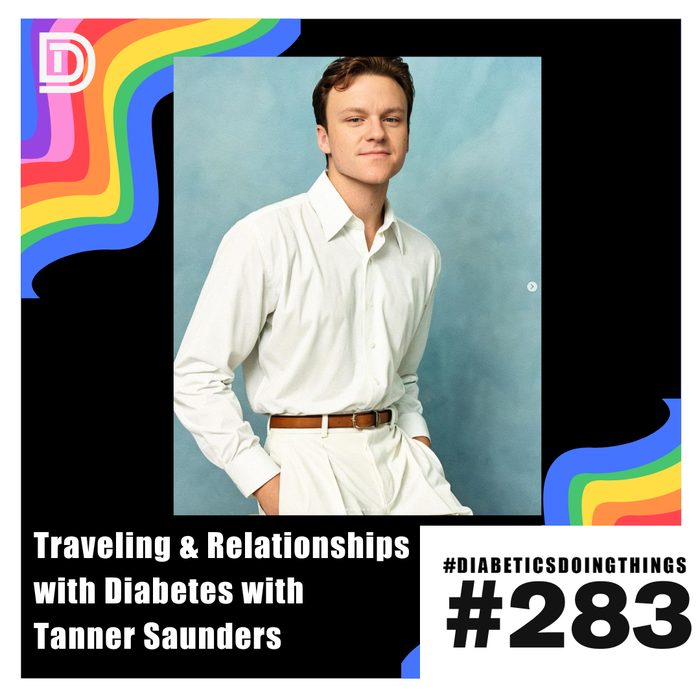
Tanner Saunders was diagnosed with type 1 diabetes at age seven in a small West Texas town. He learned to give his own insulin shots almost immediately and grew up self-reliant, helped by a tight-knit school and community that treated his diabetes as just another fact about him. Saunders met his now-husband Matthew, also diabetic, at a food and media job in New York; they have been together seven years and both use Omnipod and Dexcom. He works as a travel journalist at The Points Guy and talks about packing insulin and supplies for flights, telling flight attendants when needed, and using credit card points to make travel affordable. He shares how he and his husband split supplies and manage lows together while staying independent.
Key takeaways
- Tanner Saunders gave himself his first insulin shots at age seven after watching his parents' hands shake trying to do it.
- Saunders says he keeps an emergency bag on every flight with a backup glucometer, insulin, syringes, and fast-acting sugar within reach.
- He and his husband Matthew, who is also diabetic, do not share CGM alerts with each other because Saunders says it would add to alert fatigue.
- Saunders recommends using The Points Guy and credit card rewards to afford travel instead of assuming trips require being wealthy.
- He says he once had to unbuckle during landing to reach Skittles in the overhead bin after going severely low on a flight to Switzerland.
Show notes
June is Pride Month and to celebrate Pride in the Diabetes community, we are highlighting amazing stories from the LGBTQ+ diabetes community to show that diabetes doesn’t stop you from being who you are and living your best life. Please be welcoming and respectful to our guests and if you feel the need to be bigoted, hateful or discriminatory, we will protect our guests and respond in-kind. Happy Pride!
In this episode of Diabetes Doing Things, Tanner Saunders shares his personal journey of being diagnosed with diabetes at a young age, highlighting the intersection of travel, diabetes management, and finding a supportive community. The conversation also includes stories about him and his partner, who both have diabetes and work in the journalism industry, emphasizing their synchronized approach to managing their health condition. Additionally, the episode explores his experience working in travel while living with diabetes, discussing the challenges and strategies involved in traveling with the condition.
Topics discussed:
Personal Journey with Diabetes
Being diagnosed with diabetes at a young age
Embracing self-reliance and independence in managing insulin injections
Importance of empowerment and self-care in living with diabetes
Normalizing diabetes in small-town communities and schools
Challenges of explaining the condition to peers and adults
Balancing freedom and support from parents
Relationship Dynamics with Diabetes
Couple's experiences: Meeting through work and bonding over diabetes
Synchronized management using Omnipod and DexCom
Navigating conflicts and daily life while supporting each other
Traveling with Diabetes
Informing airline staff about the condition
Managing supplies and blood sugar levels during flights
Travel accessibility regardless of financial status
Setting goals, utilizing resources like the Points Guy, and using credit cards for travel benefits
Exploring local and international destinations for personal growth
Finding joy in travel experiences despite challenges like the COVID-19 pandemic
References:
00:00 Exploring the World with Diabetes: A Special Guest on Travel Stories00:03 Exploring the Connection Between Travel, Independence, and Diabetes with Tanner Saunders
03:05 Growing Up with Diabetes: A Journey of Independence and Community Support
07:53 Navigating Diabetes Advocacy and Independence from a Young Age
14:58 A Unique Love Story: Navigating a Relationship with Diabetes Together
18:39 Navigating Independence and Partnership with Diabetes: A Heartfelt Journey
26:41 Navigating Travel as a Diabetic: Personal Experiences and Tips
31:43 Navigating Air Travel with Diabetes: Personal Experiences and Precautions
35:38 Traveling with Diabetes: Tips and Tricks for Staying Prepared
42:20 Unlocking Travel Experiences: Tips and Inspiration
50:05 Exploring the Mundane to Find Marvelous Experiences: An Inspiring Conversation with Tanner Saunders
54:24 Empowering Pride Message with a Call to Action
Questions this episode answers
Does Tanner Saunders tell flight attendants he has diabetes?
He says he does when he feels low or anticipates needing help, especially after once going severely low on a flight to Switzerland and having to reach his bag in the overhead bin during landing.
What do Tanner Saunders and his husband use to manage their diabetes?
Both are on Omnipod and use Dexcom, and their devices happen to be on synced change schedules, so they can tell whose pump or sensor is beeping.
How does Tanner Saunders afford to travel so much with diabetes?
He suggests setting a destination goal, researching resources like The Points Guy, and putting purchases, including diabetic supplies, on a rewards credit card to build points toward flights and hotels.
What is in Tanner Saunders' diabetes travel kit?
He carries a backup glucometer, extra Humalog and Lantus, extra strips, glucose gel packs, Skittles, nasal glucagon, and extra syringes in case his pump fails or he loses his phone.
Full transcript Searchable, with timestamps
Rob Howe: Hi everyone. June is Pride Month and to celebrate pride in the diabetes community, we are highlighting amazing stories from the LGBTQ plus diabetes community to show that diabetes doesn't have to stop you from being who you are and living your best life. Please be welcoming and respectful to our guests and if you feel the need to be bigoted, hateful or discriminatory, we will protect our guests and respond in kind. Happy Pride! Hello, and welcome back to another episode of Diabetes Doing Things. We are telling the amazing stories of people with diabetes from all over the world. And all over the world is going to be a key discussion point today because we're going to talk a little bit about travel. And our very special guest, Mr. Tanner Saunders, thanks for coming. Welcome to the show.
Tanner Saunders: Yeah. Oh, my God. Thank you. I'm so honored. I've been a fan of the podcast, followed you guys for a while. I'm home for once, and it's nice to be able to talk about travel and diabetes. one thing that I know very dearly and one thing that I know very dearly and love.
Rob Howe: Yeah, exactly. Like we don't always get to love our diabetes, right? So it's always fun to have like something fun to like wrap around it. And Erica and I also love being able to travel. And that's one of the more common topics that people interact with us on. And also we just see in the diabetes community. So yeah, I know you and I have been following each other, I think, you know, sometime around the later pandemic months, you know, along alongside some, I think, like mutual aid diabetes things. That's how we got introduced. But I'd love to know like your diagnosis story and kind of how you found the diabetes community. Let's start there.
Tanner Saunders: My diagnosis story. I mean, obviously, it's probably like so many others. I was young. I had just turned seven. I'm from West Texas and it just gotten sick so much. It was like my maybe longer than many people's like mine was like a two week process of just being like, go to school, get sick, feel fine, want enchiladas. I'd be like, take me to get enchiladas. We did that like cycle for a while. And then my mom said I had like two enchiladas, had been puking my guts up, drank like four giant like Tex-Mex glasses of water. You know, those ones that are just a giant. And she was like, something's wrong. And she took me to the hospital. That's when we found out I was in the ICU for like seven or eight days. I think my blood sugar was like close to a thousand when I went in. That's been nearly 25 years. And I just very quickly realized I am not going to let this change. Like even at like just turning seven, I was like, no, no, no. I think for me it was that, you know, they had me, I watched my parents practice giving an insulin shot on a on an orange and the fear and the way my both of my parents hands was shaking I just immediately was like you two will never touch me with a needle so I gave myself the third shot and I think since then maybe like two people have given me an insulin shot because I was like basically like incapacitated and yeah so I just decided very quickly like independence is my route and I think that's sort of what has led me up into the the
Rob Howe: position that I'm in right now. Have you sound like as you've grown like that independent spirit like comes out in other places or, you know, it did that just like was that your sort of
Tanner Saunders: first experience with it? Yeah, I would say it's definitely my first experience with it, but it is carried on throughout my life. I mean, every day still growing. I think it's just like I realized then even then just being like, I don't want to be the person that needs to be taken care of. And I know that's that that's different for everyone. But just I don't know, I'm truly not trying to joke, but like seeing my parents try to give this orange a shot just made me realize, like, if I want things to be comfortable, I'm gonna have to figure it out myself. And my parents gave me every opportunity in the whole world. And you know, it's not quite that black and white. But yeah, it was good. And then also just one other thing I should say about my diagnosis story. I went to school in a really small town. And I think this was like another thing that just made me think like I can do this my class was like 15 kids um and so then my time in school like moving forward was easy because like it was never like oh Tanner the diabetic or Tanner's Tanner's got this thing it was always like oh Tanner's showing this symptom maybe he needs a juice and that was when we were in first grade and so I think like all of those things kind of together like this community that was always looking after me and then my my own self Just knowing like you got to keep yourself in check so you can do the things you want to do really brought me a good life.
Rob Howe: I love that like community aspect. Like obviously it's super unique. I don't think I've ever heard of anybody else's like class getting to go and like learn about diabetes kind of like as a group. But like what a cool way to normalize it among the like your peers and your friends and like people that are going to be around you for a long time. and like growing up in a small town, like you're connected to the people in your class, like for until you graduate, right? Or like move and like some people even longer than that. You know, thinking back to the conversation that my parents had with my friends, like close friends, like there were a few of them that like, you know, got the glucagon talk or it's like, you know, if Rob is one of my friends, still like every time I see him, he brings it up. He's like, yeah, your dad was just like, jam this into his leg and he passes out. And I was like, I don't know if you're like thinking, I think you're just more excited about getting to like stab me with a needle than you are about actually helping me. But that's neither here nor there. So like, you know, I love the way that you framed it as well. Like you having to take ownership of that. And I think Erica and I talk a lot about like grief and diabetes and how it forces you to grow up like faster than your peers. And like when you're really young, like you have this new sort of view on mortality and that you are in charge of that. And it's interesting to see like how fast that happens for people, especially when you're so young, like, you know, first grade, that, you know, most of your peers are not thinking about their own mortality on a regular
Tanner Saunders: basis. Yeah, no, I think that's exactly it. I think that, you know, I guess like I never thought about mortality. Like I didn't understand all of these things. But the cool thing was like I. The people in my life, the doctors, my parents helped me realize in a way. Now you are different and not in the way we've always told you you're different. Like, hey, hey, like this, here's a set of facts that you need to know about yourself that will always make you different in some way. And I that's how my parents kind of presented it to me. And so I ran with that. And I was like, kind of like hair flip, like, oh, I was like, oh, now I'm extra different. But it was good. Like they set me up to sort of like that whole thing. Like I did this thing, like every year, I ended up changing schools later on and was like, maybe in like sixth grade or fifth grade and said like, hey, like to the teacher, like I need to introduce myself. And I introduced myself like, hey, I'm Tanner. I am diabetic. You might not know what that means, but like sometimes I take shots and I might have to have a snack. And if you have a question about that, like, let's talk about it. So I think those sort of things like sort of helped me. So like growing up, I was kind of growing with my diabetes in a way that was helping me become so independent that it sort of allowed me to open up these doors that that I think a lot of other people have. And I think the other thing is, too, like my parents just also very quickly were like, you have to be your own person. And I personally have like a lot of anxiety and distress about other people who have like diabetic helicopter parents that don't give them any freedom. Like maybe my parents gave me too much freedom. But, you know, it goes both ways. Like, I feel like I found a really happy middle ground or I was gifted a really happy middle ground. And it's been it's been nice.
Rob Howe: Being diagnosed is so weird, isn't it? Sorry, Rob. Isn't it weird to be to be smarter than adults at a really young age? Well, like I save me, ma'am, teacher.
Tanner Saunders: Yeah, exactly. Yeah, that's Rob, what you said about I definitely have some friends who just they would kill to stab me with the glucagon. And most of those kids don't know about the nasal spray now. But some kids were, you know, they were that was like fun, but I trusted them. I trusted them oftentimes more than teachers. And I also had amazing teachers. But I think that just goes back to the idea that I knew any situation I get myself into. And I think that lends myself to what I do now, like traveling constantly, being in foreign places with strangers all the time that like I sort of set a mental boundary of like someone here has to be able to help you if you can't help yourself. and that but but the onus of that falls on me you know i love this because it's so tricky sorry i'm
Rob Howe: not gonna cut you off again go ahead no no i i love it i i just like i've been thinking a lot about like how tricky it is like your whole life as a kid especially like in school you're taught to like listen to authority and like because it's for your safety and like adults know better and then diabetes throws you this weird curveball where it's not that and all of a sudden you know better than other people and it's also like the the stakes are way higher it's not just like you're going to get left on a field trip it's like oh no like if i don't get this like if i don't get glucagon or if i don't get sugar like i'm going to be in a really like tough spot and also you adult don't want that because like it's going to cause you a bunch of problems yeah let me take ownership of that and then you're nine years old it's like i don't know it's just a it's a weird weird growing up thing. And it's also a weird like advocacy is something we talk a lot about on this podcast. And like, it's a really strange way to learn to advocate for yourself at the highest level, which is personal safety. And I don't know, I think it's just it's such a tight rope to balance. And, you know, you're talking about freedom and you're talking about, you know, your parents letting you do the things that you wanted to do. And I have seen and I think Erica has seen as well, like the benefits in your life that that can give you. And at the same Sometime I hear from the other side, like I, you know, I send empathy and love to all the helicopter parents who are just trying to protect their kids from a terrible scenario. Like it's just a really tough line to watch. Some might even say dichotomy. Oh, my God. You in this word. Okay. First of all, I think it's so interesting that you said you're so independent, but you're still you seem very like I don't even see that you're standing on neutral ground. I'm so on one side and Rob's on the other. I'm not going to speak for him, but apparently he's very, very independent. Like he handles his lows other than packing his gummy shout out Erica bag. He's got this. I am the opposite. I will not suffer alone. You're going to suffer with me. Bring me some syrup. Hold my hand while I cry and be low. Like all of that. And you're very in the middle where it's like, will I do the thing by myself if I have to? Yes. But also I'm going to let the people in the room know. So my question is, how did you get to a place where you were okay with being in that dichotomy in both places at the same time?
Tanner Saunders: yeah you know that i think that's a good question i think part of that is with the independence right like being diagnosed so young like sure i was like mostly always able to take care of myself but for for the good chunk of that i was still dependent on other people you know like if i ran out of snacks like someone had to help me get them or like if i was in school like i couldn't just run off, even though I did a few times when like a teacher pissed me off. And I was like, no, no, no, no, no, that's not how this works. But it's like trial and error and like, grace, I gave myself grace, I did the people around me to understand like, what's right and what's wrong. And I think more so now than, you know, I'm 31 years old. And God, when swings are crazy. And I think as the older I got and started to realize like, oh like I'm having like an insane mood swing then I would start to realize like oh is this because I'm actually mad and my mom would always say like check your blood sugar and I would be like shut up Shanna I'm just mad and then she would be like check your blood sugar Tanner and I would and it would be like 400 and she'd be like sit down so I had to like also learn at some point that like I'm not always right like I might think I know what's best but like oftentimes I am totally wrong um and the people who care are the ones who put me in my place uh i still get crazy i'll go crazy but you know it's it is kind of a dichotomy and i don't know trust me i don't always find myself in the middle of it um but i try to or once i've leveled out and can not see red anymore
Rob Howe: i'll be like we were all right nobody should hold me accountable for any of my actions while my blood sugar was not in range i do not respond for that person that's a drunk version of me that does not exist like sorry if i was rude to you when my blood sugar was high no i wasn't no wasn't me i'm like shaggy wasn't me i i love that though like you know shout out to shanna for her like presence of mind as well to know you and like know like hey this isn't you know we talked about this a lot with lows like sometimes your low blood sugar brain is like the your tunnel vision the sky is falling everything's bad and it's like oh well hey that's just like you know a symptom of hypoglycemia uh same thing of hyperglycemia like you know and shout out to her for being able to recognize like hey like you're acting a little bit off like what's your butcher and then i loved your response because it's like i see myself so much in it that anytime anyone questions what my blood sugar is i just turn into like an x-men like I feel like I turned into a different beast in the entire world. Oh, wait, you diverged from the conversation. What about when you beep? Have you ever beeped and someone's like, are you okay? And I'm like, no, Vince, I'm not okay.
Tanner Saunders: Story, like literally story of my life. But to both of those points, now I'm married to a diabetic. And so for the last seven years, I have been with another diabetic. and that's where the version of the people who've taken care of me has come out. And so suddenly I'll find myself to my husband, Matthew, being like, you need to check your blood sugar. And it's not like, hey, you need to check your blood. It's like, you need to check your blood sugar. And then it's like, no, no, no, you're just pissing me off. And it's like, no, no, no, you need to check your blood sugar. And so now I have that back at me. And that has been also a calming force just to be like, oh, okay. we both just like we know when we're in check we know when it's attitude like when one of us is actually like frustrated with something or when one of us needs to check our blood sugars
Rob Howe: so let's let's spill the tea how how did you guys meet what's it like because i've never been in a relationship with someone with diabetes so i get i get to you know like you know trey said i don't play the diabetes card very often with my partner but you know it's there for me to play i i can keep it in my back pocket as long as I so what's it like for you like in in those moments like where you guys are having discussions or disagreements or having challenges with diabetes like both like in like what you're talking about conflict resolution but also just supporting each other in those moments and also like how'd you meet yeah I start with how
Tanner Saunders: we met so I had just moved to New York I had been living here for probably about a year and I started working for this like food and drink website and Matthew my now husband this was seven years ago also worked there he's a photographer I'm a journalist and but we worked on separate teams wow power couple yeah we're kind of kind of a power couple power high couple power low couple we're usually perfectly in sync but yeah like on my first day I walked in and his desk was pretty far from mine but I saw like five vials of Humalog and my first thought was I have my own health insurance now that's a diabetic i should find his endocrinologist and then i saw him and then it was kind of like who's his endocrinologist uh yeah and so the company that we worked for was kind of like a it was a little bit of a rowdy food and drink publication here in new york like we're always like out at bars and like hanging out and so you know have a couple drinks and i'd see him and like we never worked together in any capacity and i'd see him at a happy hour and then it would be like hey who's your doctor who's your doctor his version of the story is like this this weird kid just like kept coming up to me and being like who's your doctor and then i don't know we just kind of i kept asking who his doctor was until we now have the same doctor yeah it just like played
Rob Howe: out and then you never know which which pickup line is going to really work i think is the key right like you know exactly nobody's talking about who's your doctor as a pickup line and i think more people should be so much plausible deniability i don't care about you i just want
Tanner Saunders: to know who your doctor is exactly yeah exactly he was always like you you just were like eyes glazed over having a time of your life who's your doctor and i was like yeah and look it worked like it worked here we are but that said it was yeah but it was crazy because i i have other friends who are diabetic, but like having a relationship with someone, you know, someone you spend so much time with and, you know, we eventually ended up living together. We've lived together since 2020. And just the little things it is we like read each other and we know. And that doesn't mean it's easy at all. Like there are days where I'm just like, hey, I know your blood sugar is so high. Like you're having a day and then it might be me the next day or we'd be so much. Our home is we're both on the Omnipod and we both have Dexcom. I will say like 50 percent of our conversations is just being like, it's me. No, it's me. It's me. And I'm like, it's me. Because, you know, they kind of go. And I'm like, it's me. I know for a fact. So recently, our our Dexcoms and Omnipod changes are in sync. So if one of us beeps, we're kind of like, hey, it's probably one of us. Like, we don't have to fight about it. And the other best thing is we always have enough supplies, which I know is a blessing. But like, just like I will get a shipment in of things. He'll get a shipment in of things. And so we kind of lean on each other until we can, you know, because the one thing about being diabetic is like you never get enough. they don't write you enough and so talk about it if i have like a little bit of hangover supplies then you know he eats into mine and i eat into his and that that's just a weird thing our joke is that if anyone ever broke into our apartment they would want to steal our tv or like the laptops or whatever but i was like if you just open the refrigerator you have a gold mine in the vegetable box but you wouldn't know to look for it life hack if you're married to a person
Rob Howe: with diabetes you're not using the butter drawer you're using the vegetable box because there's a lot of insulin so i want to i want to come back to the husband thing because i have okay i have so many questions okay so number one i have famously said and god please don't make me regret it that i would never date someone with diabetes just because it's so much all the time so as someone was diagnosed as a kid and then meeting him and obviously I'm sure there's a thrilling love story more to tell but was that ever something that crossed your mind where you're just like I don't
Tanner Saunders: know if I could do this girl like it's a lot of beeping no like literally no I like truly no I I never thought about it never considered it like when I moved to New York I was just on a mission to make myself a career. I moved here to sort of become a travel writer, become a travel journal. I was like, I had a goal. I knew where I wanted to work. I had a plan and Matthew was very much not a part of it. And so it just had never crossed my mind. And once it all happened, it happened so naturally and easily that it just, I kind of can't imagine anything else. I couldn't imagine like having a non-diabetic partner. Honestly, I think I would be like, hey i'd be like do you have some skittles or syringe in your bag because i forgot mine and they'd be like no no no no no it's so cute that you guys have each other really this is
Rob Howe: gonna sound so silly but in my head when you were talking i started hearing that i'm just a girl song that's so popular on tiktok it really reminded me of like hanging out with my best friend who also has diabetes and is a girl and it's like do i need tampons or do i need Dexcoms Either way, I got extra right here from this lady. So it's such a cool feeling of like I'm safe in my little spot, you know, and to have that with your significant other is really beautiful. I think my other second question was you were talking so much about your independence. And, you know, as men, I'm starting to get the vibe that you guys enjoy being independent. OK, is your partner as independent as you are or is he like like me or he's like, hold my hand, cuddle me, tell me I'll be OK when I'm low.
Tanner Saunders: like it's just as independent as you yeah definitely we're both equally independent and like i don't know and also maybe like my my vision of it all is a little clouded because we've been together for quite a while and i i can't really imagine life without that but like we do check in on each other and say like hey you're you're beeping you're low or if like one of us is asleep and like the dexcom hasn't woken one of us up yet like we'll be the first to wake each other up and And then it's usually just like, OK, good night. The Sprites, the Sprites over there. Yeah. So I don't know. It's kind of a mix. We we check in on each other a lot. And but we do so much together. We're just like so ingrained that I guess at some point, like your independence, right, when you're in a relationship and now we're married, your independence kind of melds into this like mutual independence. And diabetes is very much both of our experience together now. but I'm often out by myself he's often out by himself and in those moments it's very much Tanner it's the Tanner show and I'm back to knowing what I need to do for myself
Rob Howe: do you share alerts with each other we do not oh I love this you're like I have no beefs on my own
Tanner Saunders: girl bye yeah that is one thing we have not done I don't think we ever will uh it's just too much and also like I am frequently like in a different time zone or or different situation and like I I think that, I don't know, we have gone a long time and have never had a bad, bad, bad incident. And I just don't think that would be, sure, I'm sure it would be helpful. But like, we're both so, can be so rollercoastery that it would probably just make us get really mad at each other.
Rob Howe: Well, and we talk a lot about in the diabetes community, like alert fatigue. and that's something you know that when Erica and i are going to events they're talking a lot about like the mental burden of diabetes and like technology trying to like reduce some of that because it also does add a lot when you're keeping somebody you know somebody else's alerts on you you know like and then also your own alerts you know the combined power you know with our powers combined we can both be extremely overwhelmed all the time and it's like you know we don't want that right and you know i also have never shared my alerts with anyone so i kind of like you know sit alone because well mostly i know the air trans air stress fits out her water i never had the cgm to share with anyone as a young adult so like and you know when erica is around me my alarms are making alarms out so you know it's it's it's usually fine anyway but i did admit that on the air now so now everybody knows that no one's ever i mean we're gonna have to unpack that during the robin air trace show because girl what do you mean you have to share that show with me because you're not lying on my watch. Not on my watch, partner. There's going to be like big Robin Erica next episode because I also have to admit that like I don't use the butter dish to store my insulin. So like there's just a lot of things that are going to come out that may give me excommunication. Men are so weird. But okay, so Tara, how long have you guys been together? You and your husband.
Tanner Saunders: We've been together for seven years.
Rob Howe: Okay.
Tanner Saunders: Yeah, we lived together for four.
Rob Howe: A lot of the independence thing, I don't know. I don't want to say it's all men because I if you're listening to this episode and you are a man who's a crybaby like me please reach out I need to know but do you think that it has anything to do with like diagnosis or line of work or do you think it's because you're men I don't know why I was thinking like maybe your line of work just how independent being a photographer and being a journalist is like that's so on your own figuring stuff out unpacking a story etc so I wonder if that has anything to do with like how independent both of you are and how okay with being independent both of you are
Tanner Saunders: i i guess i just don't know because i know other diabetics who are guys who like can't even prick their own finger to this day like 20 years later and that doesn't make any sense to me i think i would say maybe i should like back backtrack and say like my independence was never true independence it was just fear of other people you know and and their ability to take care of me not to say like had the best doctors have had like the best teams but just like for me that was where it clicked i don't know if matt like had that same experience i wasn't like there and you know his family life different different times like he was diagnosed when he was 13 but i know other diabetics guys who are totally different than me like they want to make sure everyone is in check they want to share with everyone and that's i i don't know i don't i think that's just like a real human difference but
Rob Howe: I agree. I think it's so personal. And, you know, I kind of, I usually talk about it when it's like devices, because everybody has their personal preferences and like the things that they like to do and the places they like to go, whatever the case may be. And it's just a person by person case. And, you know, you could have the same interests everywhere else. And like your, your preferences on like, like Dexcom share, for example, or, you know, sharing your CGM with somebody, you know, those are, those are all like very personal and vary so much from person to person. And I think this is like a great way to segue into something that I think is pretty universally popular, but also has a lot of nuance to it, which is travel. So you talked about it. I love I love that we get to talk about this because you said like your goal when you moved to New York was to become a travel journalist. And now you're doing that. So first of all, props to like, you know, manifesting and like making your life happen for yourself. So you work for the points guy. You work at the points guy. And you talk about, and one of the things I love about that site is like the travel tips and like, you know, hacks. We love a hack at Diabetics Doing Things. We love any kind of like, you know, a way to kind of work around the system or like, you know, take the road less traveled, so to speak. So something that I want to talk about before we get into like some of your favorite trips that you've been on and like some of your favorite like articles you've gotten to write and participate in. do you take any like extra precautions or or accommodations when you're traveling like you know boarding flights early or carrying the extra medical back like where do you stand on that
Tanner Saunders: yeah i man what a question only because i i travel so much that it's hard for me to think about sometimes the things that i do being different or that anyone else does you know what i mean just because I'm on the road constantly. But I will say, like, I think that the most fair answer to that is no. Like, I don't really think of myself any differently than than most other people getting on a plane or wherever they're going. But that took me like a lot of time to sort of understand. So I got so lucky. I think the reason that like all this life happened for me the way that it did when I was in seventh grade in Littlefield, Texas, which is about 30 miles west of Lubbock, is like a little farming town. I saw a sign, but big enough. I had a sister city. Yeah, exactly. Like Dallas. I had a sister city. It was a suburb of Tokyo. And I just like sent in an application and I got picked and it was like totally free, got to go. And that was the first time where I like significant travel had a conversation with my parents like they were not invited went with some like city council members and luckily one person happened to be a nurse like a wife of a city council member or something and so I went to Japan for two weeks and just remember feeling so bogged down by the diabeticness that was surrounding me because of other people. So like I had the insulin, the frozen insulin packs, like our room that I was sharing suddenly had to have a refrigerator, even though no one else's did. And we went to a tea house and like, they were like, you can't have these snacks. But I was like, why? I didn't know we were getting them in the first place. And so I think that was like that moment. I was like, I'm not going to let this happen to me again. So I shifted how I planned to travel even in seventh grade and like figured it out so now i don't travel with ice packs i keep like a ziploc baggie with insulin try to make sure that it's in the right place when it needs to be when i'm flying it can't be you know i keep a pack of emergency supplies in my backpack everything i could need for like max three day delay basically and then switch to syringes uh but yeah everything has sort of changed and I don't think of it any differently. And I hope other people who travel do what's best for them. But I've just had so many experiences. What has taught me what's not right for me that I'm like a fully fleshed out full time diabetic traveler. I love that. I had
Rob Howe: a couple of similar experiences early on traveling with diabetes. I've shared this story before, but like one of the only times in my life, fortunately, knock on wood, that diabetes like really prevented me from doing something was I went to, I went on vacation, like the summer after my diagnosis and I wanted to go snorkeling, but on the waiver, it had like, you know, diabetes is one of the, you know, check the box if you have any of these illnesses. And I checked it, not embarrassed, you know, I was like, I'm not embarrassed. I'm going to do this, but then they wouldn't let me do it. And then my dad kind of like put his arm around me like, Hey, maybe next time, like we don't check that box and you can, you know, we'll be safe and you can do that. And then the next one was like taking the accommodation at the airport to pre-board when I was like 17. And I was going to like a basketball tournament. So here I am very able-bodied presenting, very young, like getting up to go, like if you need extra assistance. And I just remember like the interaction with the gate agent was not very good. Like they were very much like questioning whether I was able to do it. And at the time, like, you know, I was a kid, I didn't have a lot of experience and I didn't really know how to take that. So I still don't do that to this day. I know that I can if I had to, but it's sort of a pull in case of emergency type of situation. So, yeah, I mean, I definitely understand like, you know, doing things by the book sometimes can make things more difficult.
Tanner Saunders: Yeah, I think I think you have to learn how you kind of tiptoe that line, right? Like, we as diabetics are legally have a disability. But we as just humans, we kind of typically fall on the side of like, where the majority of the time, our disease does not prevent us from falling into the bigger group of people. So like boarding an airplane, I think, is an example. Like, I don't think ever one time have I tried to board an airplane because I could as someone with a disability. But on hindsight, like when I get a new job, first thing I do is I let every person know I'm diabetic. I let every manager, every boss, every HR person, because of the accommodations in that side of the world. like I want them to be there like if I'm having a bad day when I was in school like let every single person know so like we kind of have to walk a more interesting line of how we decide to do that and it's in my experience it's about how you feel and in the environment in the world that you're in like there's no right or wrong based off of who you are and how you function
Rob Howe: so you don't priority board do you tell the flight attendant that you have diabetes
Tanner Saunders: if i had that to yourself if i had to tell every flight attendant i would be talking to so many of them they would be like this kid again shut up tanner no i i totally get it but i do i do like make sure that the situations that i'm in i have told flight attendants that i'm diabetic because i have gotten like severely low before i think i think the most important thing when you're traveling is just like having your stuff that you need in front of your body within reaching distance at all time like one of the worst experiences i ever had i was going on a work trip uh i was landing in switzerland i'd flown from new york to switzerland perfect flight have watched some movies great landing beautiful mountains and my blood sugar just like bottomed out and i don't know why but my had left my bag up in the overhead bin and we were descending and it was that point where they were like sit sit like the flight attendant was like screaming at me and I was like we have to pick right now like either I die strapped into this chair or maybe I die bumping my head on the on the overhead bins but I gotta get my skittles and that that's like the only time that's ever happened and so now like the first thing I do when I get on a plane is like I have a little bag like a cute little ziploc bag that has everything I could need in an emergency because also you know they're like in an emergency you can't take anything with you like this little bag has what i could need to hopefully make it for a minute yeah and and it's weird and i feel weird when i'm like the person next to me is like what's this kid doing and i'm just like i don't
Rob Howe: have blinders on everyone should have blinders i'm busy trying to keep myself alive no so i do this thing where i similarly used to travel a lot this year i've just been taking a chill but um i would hand the flight attendant a post-it like just like you know at the front and not all the time but just like when i remember um because once we had someone on the pod keisha who told us who's a flight attendant herself with diabetes who told us that in an emergency situation like say you just have a seizure for whatever reason it's really helpful to them to know that you have diabetes so i always i think because i was a small child also diabetes i was like very preoccupied with keeping herself alive i think my first yeah my first clinical trial was a couple months after I was diagnosed like living as a child in another country. So telling people I have diabetes is my personal safety trampoline or net where I feel like if I tell people and I don't keep myself alive, which I probably will, then they can keep me alive. Right. So I think we all have these mental obstacles that we struggle with or we think about when it's like, how independent am I in my in my care and how much does that impact my life when I'm traveling all the time as a travel journalist all over the world? and places where people don't speak the language i tell people in my hotels too do you do that
Tanner Saunders: do you tell anybody when you're traveling no i usually don't um yeah i mean maybe i should maybe but yeah i just think i think it's just it's so constant and i i guess for me it's like my system is i'm always checking in with someone who knows where i am and that's a constant but i mean honestly i think that's a that's a really interesting idea like the sticky notes because when it comes down to it like i don't even wear like a medical alert bracelet i have a bracelet that says splenda which is my dog's name but that definitely wouldn't tell anyone that i'm diabetic
Rob Howe: the nuance in an emergency for somebody to pick up on that would be like i don't know if they would get it why does he love splenda so much i i love the sticky note because it immediately is the person is able to realize like what you're saying and you know on a plane there's a lot of ambient noise and there's other things going on. So like, I think like, Hey, this is happening to me or a medical ID card or a medical ID alert bracelet. I think those are really helpful because I also am like a very large person. So like I will on a plane, especially like I take up a ton of faith. And so like, you know, I've had a couple of times, like go talk to a client and be like, Hey, like I have diabetes. Like there's nothing crazy going on, but can I have a Sprite? And like, yeah, just can I go get like a little bit of extra sugar or something? Or can you bring me an extra snack? I have diabetes. Like I need to, you know, my blood sugar is low. And sometimes that can be like, you can tell that they're like annoyed or they're in the middle of something else. And it's like, hey, yeah, I'm sorry to like, sorry to put this burden on you, but I might die. I need to, I need to like get this taken care of. At the last minute too, lack of preparation. Right. I mean, you're talking, you're talking to a guy for years who would just like completely was vibed, like no preparation, just like going out, no parachute, all good. And, you know, it can be challenging. I think now, and this is another good segue, like I am much more prepared. You mentioned Erica helps me make sure that my low snacks are reordered and I carry a bag. I saw you were messing with the bag earlier. So what's in your travel bag? How do you prep with your travel diabetes kit?
Tanner Saunders: Open your purse. I got it. I got it right here. This is my handy dandy bag. So in this, I've got an extra glucometer just in case. God forbid I lose my phone. It's stolen. I say that like it doesn't happen to me all the time. me losing it not getting stolen extra Humalog extra Lantus extra strips uh gel packs gel packs for me are essential because when you fly as much as i do i cannot afford to buy as many air airport sprites as would be necessary because they're like eight dollars and you know i might go on a trip in one day like i can't throw all of that away skittles i've got my nasal glucagon which i've never had to use and i hope i never do just honestly i think i prefer the jam on the show kelly came on here and was like that hurt oh okay i mean they both sound horrible like luckily i
Rob Howe: feel like use it if you need to you know yeah use it use it if i need to just it's it just
Tanner Saunders: i don't know the the the nasal one is kind of wild to me and that's kind of to Gvoke Gvoke is
Rob Howe: a good one it doesn't hurt i've done it while i'm conscious i was robbed so try them out if you want okay okay and your glucagon a chance yeah and then my other thing is just like extra syringes
Tanner Saunders: like i've met some other diabetics who never travel with the syringe and insulin and are so dependent on the tech and i i just think some i mean this out of love some of the newer diabetics who maybe haven't the baby diabetics the baby diabetics like adult baby diabetics love them all dearly but just haven't necessarily had the more tactile diabetes where it's just like your your your pockets are full of lancets and syringes and insulin then for maybe it's just like a fear mechanism for me like i need seven syringes within my eyesight at any time even though i've been out
Rob Howe: guyver like you will have to do you know rob always says every homeowner is a farmer i should say every person with diabetes is an engineer because we be in this bitch doing all kinds of shit actually so last year i was in berlin with this baby diabetic i love her she's on my team at work and she could not get her insulin out of like the thing with you know how they give you a big syringe to pull the insulin out of into the cartridge and she just couldn't do it and i was like give it to me and i shit you not i sat there and tried the syringe for maybe five minutes and I was like, fuck this syringe. And I got one of our regular insulin syringes and I did it with the small one. And she was like, wait, you can do that? That works. And I looked at her and I was like, girl, did it go in the hole? Is the car being filled? It worked. Okay. Like we just, we keep it pushing, baby. Like what are you supposed to do? Yeah. I mean, I think you have
Tanner Saunders: to have. Oh, no, I was just going to say, you also don't know like when you're not going to be able to charge your phone or like I was on a plane recently and all of the outlets it was like an international flight like eight hours and the TVs didn't work the outlets didn't work and it was like thank god I had a syringe because my pump had been dying like I had gone straight to the airport from a long day of work and like I just can't rely on I like the little things I know no matter what if like we lose all technology today my little syringe and my little vial is
Rob Howe: still there i know how to use it yeah i i love that like you know you're so right Erica like everybody has to become a sort of an engineer and like you have to diy because like it's the middle of the night and the pharmacy's closed and you didn't you know something died or your your backup battery didn't work or you know something like that like you have to always sort of be prepared for the unexpected and yeah i mean i i haven't replaced the syringe in my travel kit in a while. I'm going to do that before I go on my next trip because like the difference sometimes like there's no, you can go from, there's no way to get this insulin out of my pump cartridge or out of my tubing to, okay, I have exactly what I need to get to the next thing because of a syringe. Even if you don't have an extra vial insulin or whatever the case may be, you can get it out of there with a little ingenuity and a good syringe. Whether the will, there's a way. And what I need is insulin. So I'm going to tell you something, And that kind of shit happens to me. I get so hype. I'm like, I am her because one thing I know how to do is take care of me, period. So like, yes, no, no, no. OK, well, I do want to talk about like, let's just, you know, forget diabetes for a second. Let's talk about travel tips, because, you know, obviously like working for the points guy and like getting to experience like some really incredible and also unique travel experiences. like what are your like best practices or like what should somebody who's curious about going to certain places or you know having certain travel experiences and like what even stands out to you as some of your favorites i will say i really loved your coverage of the new Aman hotel in new york which i will probably never get to go to and i just loved your perspective on like i am in an absurd place and this is unbelievable but like you know being a real person in here is very strange so what what comes to mind for you well well thank you uh for saying
Tanner Saunders: that because talk about a real out of body experience was staying in the most expensive hotel room in New York and just being like, I don't know. I grew up on a cotton farm in Texas. Like, what am I doing here? I mean, I think it's all I think it's all of the things like I hope that anyone who's listening, diabetic or not like, no, you can. There are ways for you to travel without needing to be rich or needing, you know, all of these things that I think kind of feels like an outlier. I mean, like things that make you an outlier, like travel is there, whether it's like in your own backyard or if it's around the world. I think that I've gotten really lucky that I had a family that traveled. We drove around Texas a lot and then we drove further is like one set of goal. Decide where you want to go and start researching it, how you can do it. And then start digging, like use resources like the points guy, like weird, very good resource for people who want to travel and maybe don't necessarily know how. The one thing that we do really well is we help people spend their money in ways that will help them have access to travel. A lot of that is through credit cards. So if you're putting, you know, if you're paying for all of your diabetic supplies, like I put most of mine on one of my credit cards, it's a points card and that kind of stuff starts to all add up like it's not fast and furious but it's a good way to do that but besides that i think just like set a goal and start researching like find out the times when it's most affordable to go if you want to fly in business class figure out how many points do i need to make that happen like and you can figure it out i hate to say that there's like a favorite place japan will always hold a special place in my heart because it was the first time I really was like, see ya, I'm doing this by myself. But yeah, I've met so many great people in all of my travels.
Rob Howe: All right. I have a special place in my heart for Japan. It was going to Japan like on a solo trip was one of the things that I, you know, talking about setting a goal was one of the things I wanted to do in my 20s and I got a chance to do that. And, you know, it was one of the best experiences of my life and I hope I get to go again soon because it's just such a cool place. But I love that. And I think, you know, thinking about, like you said, using the resources that are available to help you make those goals come to life and, you know, get able to do things a certain way, whether it's like flight business class or use points that you spend on your like monthly expenses to stay at an amazing hotel down the road sometime. And, you know, working towards that, I think is really cool. And, you know, I also like just following people who travel and like, like you said, like seeing somebody else's perspective and helping to figure out where you want to go because the world is a big place. It's kind of can be challenging or you can get analysis paralysis. Like I love to go everywhere. Anywhere sounds good, you know, sometimes. So being able to find someone whose perspective you value and, you know, get to think about seeing yourself in a place like that, I think is really cool.
Tanner Saunders: Yeah, I think that it's just, you just have to decide. I think the biggest thing about travel is that we're usually our worst, our own worst enemy and deciding like, I can't do this. I don't have someone to go with me. I can't afford it. And that's, you know, that one's a little different. But there are ways around all of these things. And I think that kind of goes back to our conversation about independence. Like, I got so lucky, I think after that trip to Japan, when I was like, 12, 13, that I just was like, I'm gonna go anywhere I want to, I'm gonna figure out a way to do it. So like when I graduated high school, me and my best friend hopped in my Jeep and we drove from West Texas to Chicago and then across the lakes to Boston and down the East Coast and then across the South. My parents are freaking crazy for letting us do that. Brooke, Brooke, hi, Brooke. Crazy for letting us do that. But like they trusted us and like we didn't have much money. We just went for it. And those like little building blocks, like once you get a taste of it, you figure out like. What can I do next? Like what how far can I drive until you're if you live in the United States, you're pretty close to somewhere cool. I promise you that. And like if you don't know what that is, email me and I will help you find a place because it's we live in such an amazing, beautiful place here. Like it doesn't have to be Europe. It doesn't have to be Japan.
Rob Howe: People always say, why don't Americans leave America? People always say they're like, why don't Americans leave America? And I'm just like, because our country, no offense, I'm not, listen, I'm not an American, like, you know, die hard. But because America is the size of Europe, like we are the size of Europe and some of Asia, baby girls. So like most people that live in California don't necessarily get all the way to the other side of the country. So like I totally see that being like you can get in your car and drive for 18 hours. And I promise you're going to in Rob Howe's mind, you're going to go somewhere. But you might not go where you want to go, but you're going to go somewhere. You know, I it I'd never really clicked for me until shortly after college. one of my buddies and I drove from Colorado to Moab, Utah. And we just like went on a camping hiking trip. And I mean, Moab, if you've never been, it's amazing. It's like, it's got two of like the top 10 national parks, literally right next to each other, canyons and arches. And the amount of people from Asia and Europe that I met there, like kind of blew my mind because they were coming to America because they don't have that stuff in Europe. And like, when you really think about it, you want to get even more like esoteric almost all the planets from star wars are based on places in the u.s like based on and so we have this such unique geography and you know i don't know it's i think it's just a it's just a really cool opportunity for us to you know get outside of our own backyard and for us to you know you don't have to go across the world you can if you want you should set your goals to do those things but you know i think that's something that we can all do better to remember like you don't have to have this grand experience you can just hop in a car with some friends take a drive and to quote myself via eritrea you'll go somewhere you know be exactly where you plan it but you'll end up and you might still have a grand experience because it sounds like we're tanner and brook hi brook again you guys had an amazing time that like now you can i remember like when covet happened and i really i always go somewhere new for my birthday like that's just like my thing right because i've been traveling so i was really small and i really just was like I need to get the fuck out of this country but I can't because Kobisha has taken over so at the time I was like where can I go where can I go and I was like you know where I've never been Wyoming I had never been and so we got in the car and drove I think like 20 I remember Rob and I had just started being friends and so we were like talking about like work stuff we I just started working for the pot and stuff and I remember being in the car and like telling the person I was with I was like wow like I'm so excited about this work and then we went to Wyoming Wyoming and I had a grand time and i think we recorded an episode while i was in myoming rob so you can still go really cool places whether you're wherever you are if you have yeah very eye-opening to know that not just your mind can get you or not just diabetes can get in the way of you wanting to travel but your i guess preconceived notion of the experience can make you want to just stay home so not me though girl y'all stay safe you you touched on this earlier tanner but going somewhere opens your mind to like what's possible. I think you were talking about this with your trip to Japan from a kid from West Texas in a small town, probably not too many people in your town had been to Japan or even thought about going. And it just can, the compounding effect of getting outside of your comfort zone going, experiencing new things, I'm butchering this clove, but like even mundane things are exciting when you go somewhere else and you're seeing something new. A brick wall in a new place is suddenly the coolest thing, you know? And so So, yeah, I would encourage everybody to do that and also to follow along with your on your professional life with your with your articles that you're writing at the Points Guy. You can learn a lot. And, you know, I loved your perspective. And I think it's really cool to see one of our own people with diabetes out there in the world.
Tanner Saunders: Yeah, absolutely. Follow the Points Guy. Like anyone who my email address, just my name, Tanner.Saunders, thepointsguy.com, like shoot me a line. we respond like if you have an idea of a trip like i might not be able to tell you this specific answer but i can point you to an article that can you know i want more people to have the experiences that i have had that i've been privileged enough to have that i fought to have and you know it's not all the not all the trips are good some days i have lows and highs and i'm just like oh god I had the Eiffel Tower. My blood sugar is 450 because I just ate a croissant. But I don't know. We can all figure it out together.
Rob Howe: The quote was, creativity is piercing the mundane to find the marvelous. Bill Moyers. Let's hope he's not canceled. But it's a really beautiful quote. And I think what you said. I don't think that was the one I was thinking of. But I do like that one. I think it gets the point across. Yeah. So it's like, I thought Bill Moyers. But anyways, that was really beautiful. And I think that saying that you fought for the life that you have now is something we forget about when we're living it every single day. Right. Like sometimes I think about this. Like, OK, right now I'm going to the horrible thing or my house like that. I have no power. Like my fence flew away and like blah, blah, blah. But like I wanted to be able to buy my house. I prayed for this struggle and now it is mine. Yeah. So it's like sometimes we forget that we prayed or hoped for the experiences that we're living right now. And it sounds like you're living a pretty good one. Like that's how I want to be you. I want to travel like we should go to newly married, newly married, having a good time with, you know, a partner with diabetes.
Tanner Saunders: You know, not bad for a kid from West Texas. I think so. You guys would give Matt back in a second. You'd be like hard pass. How do you do this? But you would keep Splenda, the corgi. She's great.
Rob Howe: A corgi named Splenda. You guys did. Was there other diabetes names before we named them?
Tanner Saunders: No. When we saw Splenda, it was pretty much like we had decided that she just is a Splenda. she's also kind of like gold and yellow but she's real fake that's the best thing is like she would be playing with you two right now and if someone else walked in the door she'd be like bye bitch and just gone um but that yeah so she's splenda through and through and talk about anyone who has to deal with thieving she just i mean truly she's like guys just shut up both of you she would be the first to let us die but that's okay
Rob Howe: that's not like Enzo knows he knows the low alarm so he knows when I go for a low alarm I'm going for candy so he's coming with what's this dinner for coolage line from what's that HBO show these queens are trying to kill me
Tanner Saunders: these gays they're trying to kill me that's Splenda all the time she's like can someone just put one of those injections in me with as much insulin as possible I say that she loves us. She's a good dog, but she definitely did not sign up for this.
Rob Howe: Well, it's good to know if anything ever happened to you guys that she would love the next family just as much.
Tanner Saunders: Yeah, exactly. She would love probably more, probably more.
Rob Howe: No beeps, no beeps.
Tanner Saunders: Well, Tanner, thank you so much for your time today. It was lovely to chat with you.
Rob Howe: You're on Instagram as at Tizanner. We're going to tag you in the post and include a link to your email in the show notes. So if you guys want to hear more from Tanner, please go ahead and reach out. and thank you for being part of our Pride Month interviews as well. Happy Pride.
Tanner Saunders: Yeah, thank you guys so much. Follow me, follow the points guys, the points guy. And I truly mean it. Like anyone out there, reach out to me. Like I'm a friend. I'm there to answer any questions.
Rob Howe: You said it. I'm going to be reaching out.
Tanner Saunders: Yeah, do it. Do it. Yes. Yeah, yeah. All right, guys. We'll see you next time.
About Tanner
Tanner Saunders is a travel journalist for The Points Guy. He was diagnosed with type 1 diabetes at age seven in West Texas and is married to Matthew, who is also diabetic.